University of Mississippi University of Mississippi
eGrove
eGrove
Electronic Theses and Dissertations Graduate School
2019
Decoding and Optimizing Magnesium Phosphate Binders for
Decoding and Optimizing Magnesium Phosphate Binders for
Additive Construction Applications
Additive Construction Applications
Hashem Khaled AlmashaqbehUniversity of Mississippi
Follow this and additional works at: https://egrove.olemiss.edu/etd
Part of the Civil Engineering Commons
Recommended Citation Recommended Citation
Almashaqbeh, Hashem Khaled, "Decoding and Optimizing Magnesium Phosphate Binders for Additive Construction Applications" (2019). Electronic Theses and Dissertations. 1537.
https://egrove.olemiss.edu/etd/1537
This Dissertation is brought to you for free and open access by the Graduate School at eGrove. It has been accepted for inclusion in Electronic Theses and Dissertations by an authorized administrator of eGrove. For more
DECODING AND OPTIMIZING MAGNESIUM PHOSPHATE BINDERS FOR ADDITIVE CONSTRUCTION APPLICATIONS
A Dissertation
presented in partial fulfillment of requirements for the degree of Doctor of Philosophy in the Department of Civil Engineering
The University of Mississippi
by
Hashem K. Almashaqbeh May 2019
Copyright Hashem K. Almashaqbeh 2019 ALL RIGHTS RESERVED
ii ABSTRACT
The inclusion of 3D printing (3DP) technologies in the construction field has the potential to solve many structural related problems and will reduce construction cost and time. 3DcP technology is facing some drawbacks, such as scarcity of printable materials, accompanied by material science challenges, including production process, process-related material requirements, construction-related material requirements, and handling of non-homogeneous and time-dependent material properties. Therefore, extensive work is needed to improve and utilize materials for AC applications. The two main challenges that need to be urgently investigated, to incorporate 3DP in construction (3DcP) applications are (1) development of the 3DcP process for non-homogeneous materials to facilitate the production of multilateral mason materials and (2) improvement of the printing process.
Modified magnesium phosphate cement (MPC) composites have a high potential for AC applications due to its superior properties such as high compressive strength, rapid setting time, and excellent durability.
This work aims to give more insight about the physical, mechanical, thermal, and chemical performance of the MPC paste composites. Our primary outcome from this research is to improve the MPC composites with different additives, including boric acid, GnP, and acetic acid for potential utilization in 3DcP applications. Furthermore, Martian and Lunar regolith simulants can be mixed with the MPC composites to create mortars as a possible extraterrestrial 3DP in-situ construction material mainly to support the NASA habitation exploration mission.
iii
Before adjusting the required properties for an AC application, many aspects need to be studied in depth to provide a better understanding of MPC behavior under different conditions. The main highlights of the experimental results show that each additive can change the phase compositions of the MPC pastes and affect its physical and mechanical performance towards fitting the 3DcP requirements. Moreover, the research conducted creatively utilized artificial neural networks (ANN) to investigate and subsequently optimize both the MPC pastes and composite formulation for desirable in-service performance.
The novel approach and terminology proposed in this dissertation are expected to provide critical fundamental scientific bases on a new class of construction material for both extraterrestrial habitats and terrestrial construction applications, where sand and clay can replace regolith.
iv DEDICATION
I dedicate this dissertation to my wonderful parents (Mr. Khaled Al Mashaqbeh and Mrs. Hiyam Al Mashaqbeh), my lovely wife and my stunning sister who supported me through my long
v
ACKNOWLEDGMENTS
Firstly, I would like to express my sincere gratitude to my advisor, Dr. Hunain Alkhateb, for her support, patience, motivation, enthusiasm, immense knowledge and encouragement during these past four years. Dr. Alkhateb has been inexhaustibly supportive and has given me the freedom to pursue various projects of personal interest without objection. It has been invaluable to work under an advisor that consistently takes the time to listen to all the little problems and roadblocks that one encounters along the way. She has shown the generous ability to solve dilemmas and provide aid without hesitation. Without her help, this work would not exist.
I would like to thank the Department of Civil Engineering; I could not have financed my studies without their assistantship. Also, I would like to thank the members of my graduate committee: Professor Ahmed Al-Ostaz, Professor Yacoub Najjar, and Dr. Alexander Lopez, for their guidance and suggestions.
Special thanks go Dr. Najjar and Dr. Al-Ostaz for their support during this research and for their insight and counsel.
I would like to offer my special thanks to my parents and my wife for their help and support during this work.
I am also particularly grateful for the assistance given by my colleagues: Fielding Ables and Rami Alsughier. Also, I would like to acknowledge the help provided by Dr. Amrita Mishra, Damian Stoddard and Nick Scott of the Mechanical Engineering Department/The University of Mississippi.
vi
I would like to thank Dr. Sanjay of the University of Memphis and his graduate student Tej P. Poudel for conducting the XRD testing for my specimens. Thanks are due as well to Dr. Hongyu Zhou of the University of Alabama in Huntsville and his graduate student Adam L. Brooks for facilitating the thermal conductivity test used in this work. Also, I would like to thank Chris Watters, Hitachi High Technologies America Inc, and Dr. Lax Saraf at Clemson's EMF, for offering the SEM images of this research.
Finally, I want to thank NASA for funding this research and to all others who have participated in this research, regardless of the magnitude of their efforts.
vii
TABLE OF CONTENTS
CHAPTER I: INTRODUCTION AND LITERATURE REVIEW
1.1 INTRODUCTION ... 1
1.2 ADDITIVE MANUFACTURING (AM) ... 2
1.2.1 HISTORY OF 3D PRINTING... 2
1.2.2 ADDITIVE CONSTRUCTION (AC) ... 5
1.3 MAGNESIA BASED BINDERS (MBBS) ... 10
1.3.1 MAGNESIUM OXYCHLORIDE CEMENT (MOC) ... 12
1.3.2 MAGNESIUM OXYSULFATE (MOS) CEMENT ... 13
1.3.3 MAGNESIUM PHOSPHATE CEMENT (MPC) ... 14
1.4 ARTIFICIAL NEURAL NETWORKS (ANNS) ... 22
1.5 NEED OF RESEARCH ... 24 1.6 OBJECTIVES ... 27 1.7 APPROACH ... 28 1.7.1 MPC PASTE CHARACTERIZATION ... 29 1.7.2 ANN MODELING... 30 1.8 DISSERTATION OUTLINE ... 31
CHAPTER II:MATERIALS AND METHODS 2.1 INTRODUCTION ... 32
2.2 MPC MATERIALS ... 32
2.2.1 MAGNESIUM OXIDE (MgO) ... 33
2.2.2 MONOPOTASSIUM PHOSPHATE (KDP) ... 35
2.2.3 BORIC ACID (H3BO3) ... 36
2.2.4 ACETIC ACID (CH3COOH) ... 38
2.2.5 GRAPHENE NANOPLATELET (GnP) ... 38
viii
2.3 MIX DESIGN AND SAMPLES PREPARATION ... 41
2.3.1 GROUP ONE (BORIC ACID) ... 41
2.3.2 GROUP TWO (GnP) ... 43
2.3.3 GROUP THREE (ACETIC ACID) ... 45
2.4 CHARACTERIZATION SCHEME ... 46
2.4.1 PHYSICAL CHARACTERIZATION... 46
2.4.1.1 INITIAL SETTING TIME ... 46
2.4.1.2 FLOW TEST ... 48
2.4.2 MECHANICAL CHARACTERIZATION ... 49
2.4.3 X-RAY POWDER DIFFRACTION (XRD) ... 50
2.4.4 FOURIER-TRANSFORM INFRARED SPECTROSCOPY (FTIR) ... 51
2.4.5 SCANNING ELECTRONIC MICROSCOPY (SEM) ... 52
2.4.6 THERMAL CHARACTERIZATION ... 52
CHAPTER III:OPTIMIZING MAGNESIUM PHOSPHATE CEMENT WITH BORIC ACID: PHYSICAL, MECHANICAL, THERMAL, AND CHEMICAL CHARACTERIZATION 3.1. INTRODUCTION AND LITERATURE REVIEW ... 53
3.2 MIX PROPORTIONS ... 56
3.3 PHYSICAL PROPERTIES OF THE MPC PASTE ... 59
3.3.1 INFLUENCE OF BORIC ACID ... 59
3.3.2 INFLUENCE OF WATER CONTENT (W/P RATIO) ... 63
3.4 MECHANICAL PROPERTIES OF MPC ... 65
3.4.1 INFLUENCE OF BORIC ACID ... 65
3.4.2 INFLUENCE OF M/P RATIO ... 66
3.4.3 INFLUENCE OF WATER CONTENT (W/P RATIO) ... 68
3.5 PHASE ANALYSIS ... 71
3.5.1 XRD ANALYSIS ... 71
3.5.2 FTIR ... 75
3.6 MICROSTRUCTURE ANALYSIS ... 77
ix
3.8 THE ROLES OF BORIC ACID IN THE MPC PASTE FORMATION ... 86
3.8.1 RETARDATION MECHANISM ... 86
3.8.2 MPC PASTE FORMATION ... 86
CHAPTER IV:INFLUENCE OF GNP ON THE PROPERTIES AND THE MICROSTRUCTURE OF MPC PASTES 4.1 INTRODUCTION AND LITERATURE REVIEW ... 93
4.2 MPC MIX PROPORTIONS ... 96
4.3 INFLUENCE OF GNP ON THE SETTING BEHAVIOR AND THE WORKABILITY ... 97
4.4 INFLUENCE OF GNP ON THE COMPRESSIVE STRENGTH ... 99
4.5 PHASE ANALYSIS ... 103
4.6 FOURIER-TRANSFORM INFRARED SPECTROSCOPY (FTIR) ... 106
4.7 MICROSTRUCTURE ANALYSIS ... 107
4.8 THERMAL CONDUCTIVITY ... 110
CHAPTER V:USING A HYBRID SYSTEM OF BORIC AND ACETIC ACID TO ENHANCE THE INITIAL SETTING TIME OF THE MPC PASTE 5.1 INTRODUCTION AND LITERATURE REVIEW ... 112
5.2 SPECIMENS PREPARATION ... 113
5.3 INFLUENCE OF ACETIC ACID ON THE MPC SETTING BEHAVIOR ... 115
5.4 COMPRESSIVE STRENGTH ... 118
5.5 PHASE ANALYSIS ... 119
5.6 THERMAL CONDUCTIVITY ... 121
CHAPTER VI:ARTIFICIAL NEURAL NETWORKS (ANNS) 6.1 INTRODUCTION AND LITERATURE REVIEW ... 123
6.2 EXPERIMENTAL PROGRAM ... 126
6.3 DATABASE DESCRIPTION ... 127
x
6.4 ANN MODEL DEVELOPMENT ... 133
6.5 ANN NETWORK DEVELOPMENT OF DATABASE #1 ... 134
6.5.1 ANN1-1 MODEL ... 135
6.5.2 ANN1-2 Model ... 139
6.6 ANN NETWORK DEVELOPMENT OF DATABASE #2 ... 143
6.6.1 ANN2-1 MODEL ... 143
6.6.2 ANN2-2 MODEL ... 147
6.7 ANN NETWORK DEVELOPMENT OF DATABASE #3 ... 151
6.7.1 ANN3-1 MODEL ... 151
6.7.2 ANN3-2 MODEL ... 155
6.8 MODELS COMPARISON ... 159
6.9 SENSITIVITY ANALYSIS AND DATA SIMULATION ... 160
CHAPTER VII:CONCLUSIONS AND RECOMMENDATIONS 7.1 CONCLUSIONS ... 166
7.1.1 CONCLUSIONS BASED ON CHAPTER III (INFLUENCE OF BORIC ACID) ... 166
7.1.2 CONCLUSIONS BASED ON CHAPTER IV (INFLUENCE OF GNP) ... 169
7.1.3 CONCLUSIONS BASED ON CHAPTER V (INFLUENCE OF AA) ... 170
7.1.4 CONCLUSIONS BASED ON CHAPTER VI (ANN) ... 172
7.2 RECOMMENDATIONS ... 173
xi
LIST OF TABLES
Table 1. Chemical composition of the used MgO powder ... 34
Table 2. Physical and chemical charactrization of the used monopotasium phosphate ... 36
Table 3. Physical and chemical properties of the used boric acid powder ... 37
Table 4. Thermal, mechanical, and electrical properties of the used GnP ... 40
Table 5. Mix proportions of the prepared MPC specimens. ... 57
Table 6. The flow measurements of the MPC pastes. ... 61
Table 7. Magnesium phosphate/potassium phosphate crystalline phases investigated in this work. ... 71
Table 8. Experimental results for thermal conductivity test of dry MPC paste. ... 85
Table 9. The shreds of evidence of the proposed hypotheses. ... 91
Table 10. The mix proportions of the GnP modified MPC specimens. ... 97
Table 11. Experimental results for thermal conductivity test of dry MPC paste. ... 110
Table 12. The mix proportions of the acetic acid modified MPC specimens. ... 114
Table 13. Experimental results for thermal conductivity test of dry MPC paste. ... 121
Table 14. The ANN modeling range of each MPC parameters/properties. ... 128
Table 15. Input/outputs of ANN1-1, ANN2-1, and ANN3-1 models. ... 130
Table 16. Input/outputs of ANN1-2, ANN2-2, and ANN3-2 models. ... 130
Table 17. Input/output variables of the first group regressions models. ... 131
xii
Table 19. Statistical measurements of the developed regressions models. ... 133
Table 20. Statistical measurements of ANN1-1 model. ... 136
Table 21. Statistical measurements of the ANN1-2 model. ... 140
Table 22. Statistical measurements of the ANN2-1 model. ... 144
Table 23. Statistical measurements of the ANN2-2 model. ... 148
Table 24. Statistical measurements for ANN3-1 model. ... 152
Table 25. Statistical measurements of the ANN3-2 model. ... 156
Table 26. Statistical measurements of ANN1-1(training all), ANN2-1(training all), and ANN3-1(training all) models. ... 159
Table 27. Statistical measurements of ANN1-2(training all), ANN2-2(training all), and ANN3-2(training all) models. ... 160
xiii
LIST OF FIGURES
Figure 1. Magnesium oxide compound structure. ... 34
Figure 2. Monopotassium phosphate compound structure. ... 35
Figure 3. Boric acid compound structure. ... 37
Figure 4. Acetic acid compound structure ... 38
Figure 5. Graphene atomic structure ... 39
Figure 6. GnP atomic structure ... 39
Figure 7. PLE atomic structure ... 41
Figure 8. Mixing procedures of the prepared MPC paste for group one. ... 43
Figure 9. Casting procedures of the prepared MPC cubes. ... 43
Figure 10. Mixing procedures for GnP modified MPC paste. ... 45
Figure 11. The Vicat needle apparatus. ... 47
Figure 12. The flow table. ... 49
Figure 13. Compression test of an MPC specimen. ... 50
Figure 14. Bruker's X-ray diffractometer. ... 51
Figure 15. Cary 630 FTIR machine. ... 51
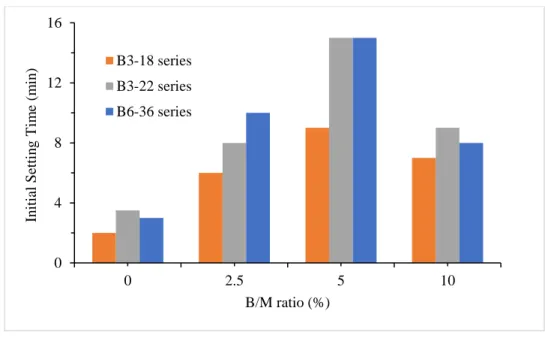
Figure 16. Influence of B/M ratio on the initial setting time of the MPC paste for different W/P and M/P molar ratios. ... 60
xiv
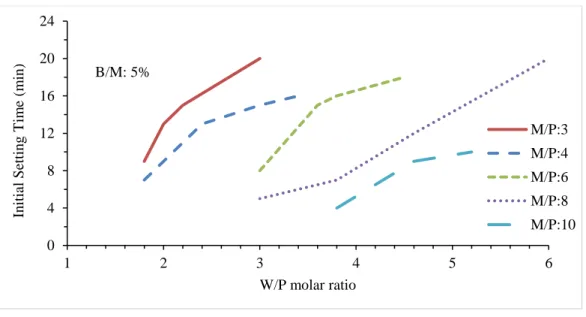
Figure 18. Effect of different W/P molar ratio on the initial setting time of MPC for different M/P molar ratio. ... 64
Figure 19. Effect of different W/P molar ratio on the fluidity of MPC for different M/P molar ratio. ... 64
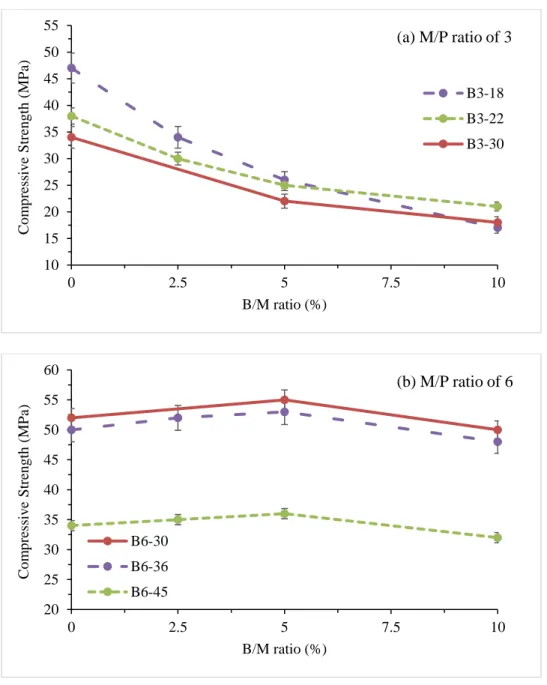
Figure 20. Influence of B/M ratio on the compressive strength of the MPC a) M/P ratio of 3, and b) M/P ratio of 6. ... 66
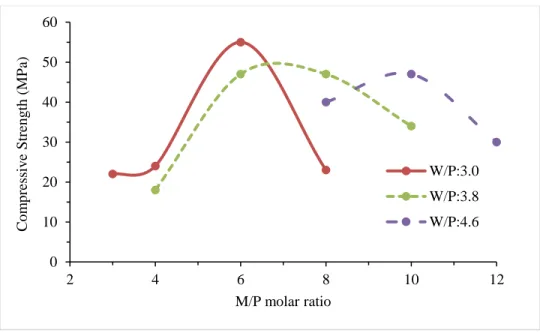
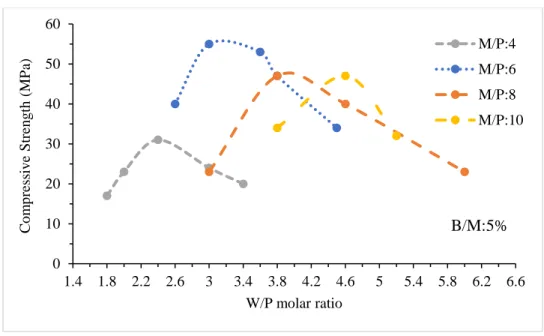
Figure 21. Influence of M/P molar ratio on the compressive strength of MPC paste for different W/P molar ratios. ... 68
Figure 22. Influence of W/P molar ratio on the compressive strength of the MPC system. ... 70
Figure 23. Influence of W/P molar ratio on the compressive strength of the MPC system
with/without the presence of boric acid. ... 70
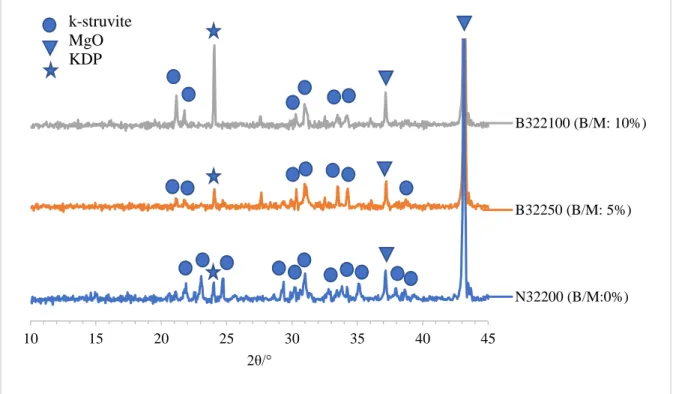
Figure 24. The XRD patterns for MPC paste with low M/P ratio. ... 74
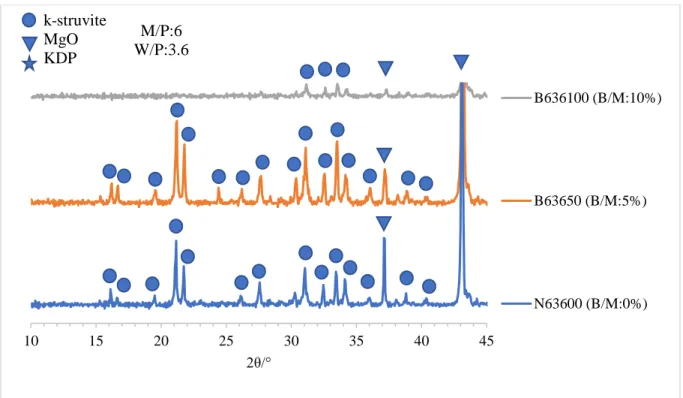
Figure 25. The XRD patterns for MPC paste with high M/P ratio. ... 75
Figure 26. FTIR spectra of MPC paste with different B/M ratios a) low M/P ratio and b) high M/P ratio. ... 76
Figure 27. SEM images of MPC paste with low M/P molar ratio; a) B/M ratio of 0%, b) B/M ratio of 5%, and c) B/M ratio of 10%. ... 81
Figure 28. SEM images of MPC paste with high M/P molar ratio; a) B/M ratio of 0%, b) B/M ratio of 5%, and c) B/M ratio of 10%. ... 83
Figure 29. Influence of boric acid content on the thermal conductivity of the MPC paste. ... 85
xv
Figure 31. Influence of GnP content on the fluidity of the MPC paste. ... 99
Figure 32. Influence of GnP content on the compressive strength of the MPC paste. ... 102
Figure 33. Influence of PLE content on the compressive strength of the MPC paste. ... 102
Figure 34. XRD diffractograms of the MPC pastes with different GnP contents and without using the surfactant. ... 105
Figure 35. XRD diffractograms of the MPC pastes with different surfactant contents. ... 105
Figure 36. XRD diffractograms of B636, SR25, and GS25 specimens respectively. ... 106
Figure 37. FTIR spectra of MPC paste with GnP content. ... 107
Figure 38. The microstructure of the GnP modified MPC paste without using the PLE. ... 108
Figure 39. The microstructure of the GnP modified MPC paste with the PLE. ... 109
Figure 40. Influence of GnP content on the thermal conductivity of the MPC paste. ... 111
Figure 41. Influence of using acetic acid with/without the presence of boric acid on the initial setting time of the MPC paste. ... 116
Figure 42. Expansion cracks of MPC specimens with different AAC. ... 116
Figure 43. MPC paste with 5% of B/M ratio and 7.5% of ACC. ... 117
Figure 44. Influence of using acetic acid with boric acid on the initial setting time of the MPC paste. ... 118
Figure 45. Influence of acetic acid concentration on the compressive strength of the MPC paste with the presence of the boric acid. ... 119
xvi
Figure 47. Influence of acetic acid concentration on the thermal conductivity of the MPC paste. ... 122
Figure 48. MPC testing program; a) Initial setting time test, b) flow table test, and c)
compression test. ... 127
Figure 49. ANN1-1(tr-ts-val) model predictions accuracy for a) flow (%), b) initial setting time (min), and c) compressive strength (MPa). ... 137
Figure 50. ANN1-1(training-all) model predictions accuracy for a) flow (%), b) initial setting time (min), and c) compressive strength (MPa). ... 138
Figure 51. ANN1-1(tr-ts-val) model predictions accuracy for a) M/P ratio (%), b) W/P ratio (%), c) B/M ratio (%), d) AAC (%), and e) GnP/S ratio (%). ... 141
Figure 52. ANN1-1(training all) model predictions accuracy for a) M/P ratio (%), b) W/P ratio (%), c) B/M ratio (%), d) AAC (%), and e) GnP/S ratio (%). ... 142
Figure 53. ANN2-1(tr-ts-val) model predictions accuracy for a) flow (%), b) initial setting time (min), and c) compressive strength (MPa). ... 145
Figure 54. ANN2-1(training all) model predictions accuracy for a) flow (%), b) initial setting time (min), and c) compressive strength (MPa). ... 146
Figure 55. ANN2-2(tr-ts-val) model predictions accuracy for a) M/P ratio, b) W/P ratio, and c) B/M ratio, d) AAC ratio, and e) GnP/S ratio. ... 149
Figure 56. ANN2-2(training all) model predictions accuracy for a) M/P ratio, b) W/P ratio, and c) B/M ratio, d) AAC ratio, and e) GnP/S ratio. ... 150
xvii
Figure 57. ANN3-1(tr-ts-val) model predictions accuracy for a) flow (%), b) initial setting time (min), and c) compressive strength (MPa). ... 153
Figure 58. ANN3-1(training all) model predictions accuracy for a) flow (%), b) initial setting time (min), and c) compressive strength (MPa). ... 154
Figure 59. ANN3-2(tr-ts-val) model predictions accuracy for a) M/P ratio, b) W/P ratio, and c) B/M ratio, d) AAC ratio, and e) GnP/S ratio. ... 157
Figure 60. ANN3-2(training all) model predictions accuracy for a) M/P ratio, b) W/P ratio, and c) B/M ratio, d) AAC ratio, and e) GnP/S ratio. ... 158
Figure 61. ANN2-1 model prediction of flow based on a) B/M ratio, b) W/P molar ratio, c) AAC, and d) GnP/S ratio. ... 162
Figure 62. ANN2-1 model prediction of initial setting time based on a) B/M ratio, b) W/P molar ratio, c) AAC, and d) GnP/S ratio. ... 163
Figure 63. ANN2-1 model prediction of compressive strength based on a) B/M ratio, b) W/P molar ratio, c) AAC, and d) GnP/S ratio. ... 165
1 CHAPTER I
INTRODUCTION AND LITERATURE REVIEW
1.1 INTRODUCTION
Construction industries have always been inflexible, difficult to change, slow in evolution, and the latest in adapting to modern technology. Although the construction industries seem unchangeable, many researchers have indicated that the construction industry will be engaged to the world of digital technology. Some examples of insertion of modern technology in the construction field include machine learning, virtual reality, and three-dimensional printing (3DP).
3DP, which is also known as Additive Manufacturing (AM), is the coming soon technology that will change the industry world. This year, NASA announced that it will build its new spacecraft by assembling more than 100 3D printed parts, which will perform some lunar missions by the next year. Moreover, NASA aspires to build the first lunar and Martian habitat using 3DP technology. On Earth, a 37-square-meter house was built in a suburb of Moscow in less than 24 hours by using 3DP technology; and in last June, A French family has become the first family in the world to live into a four-bedroom 3D printed house.
The goal of embedding AM technology in the construction industry is to reduce time and cost. The ability to create larger structures in a very short time may become possible with this technology, especially in the case of emergencies, such as the establishment of emergency shelters
2
after earthquakes and natural disasters. The benefits of embedding AM in the field of construction are not limited to that, also, it can reduce the number of on-site labor and reduce the material waste.
1.2 ADDITIVE MANUFACTURING (AM)
Additive Manufacturing (AM) is a developing deposition process for creating manufactured objects, by placing a specific material layer by layer to obtain the acquired 3D object. The object which is produced by AM is a projection of a 3D software drawing. The printing process in AM is composed of a computerized system that connects the printing machine with the 3D design model, such as a Computer-Aided Design (CAD) model or Additive Manufacturing File (AMF).
AM has many attracting advantages such as the high quality of the products finishing, the accuracy of correspondence to the software models, the reduction in the time needed for manufacturing processes, the minimization of the number of laborers needed for fabricating products and the reduction in the production waste [1]. Despite the many advantages of AM, there are some challenges that face this technology including (1) limitation in adequate materials (2) difficult implementation in large structure productions and (3) high cost compared to traditional industry. Hence, more work is needed to utilize materials that can be used for AM technologies and different applications. [1,2]
1.2.1 HISTORY OF 3D PRINTING
AM term was inspired by the 3-dimensional printing (3DP) technique, which is creating objects by adding layer upon layer. The development of equipment and methods for AM
3
technology were established in the 1980s. In 1984, Méhauté with a group of French inventors, initiated the stereolithography (SLT) process to be used in AM applications [3]. Two years later, Chuk Hull developed the SLT process where the material layers were formed from photopolymers and cured by ultraviolet (UV) light lasers [4]. The process depends on creating cross sections for the desired object. Hull's contribution in stereolithography strategy is involved in many applications today [4, 5]. In 1988, S. Scott Crump improved a unique application of plastic extrusion called fused deposition modeling (FDM), this process is the most technology used by the 3DP applications until these days [6]. In 2009, the FDM 3DP procedure patents expired.
There are several AM technologies that were determined according to the method of 3D printing; based on the machine used, and the material’s type and consistency which include: (1) vat photopolymerization, (2) material jetting, (3) Powder Bed Fusion (PBF), (4) binder jetting, (5) directed energy deposition, (6) and material extrusion.
In the vat photopolymerization method, the model is constructed layer by layer, though, the material used should be in a liquid phase during the process. The vat polymerization process uses plastics and polymers, and the resin is cured and hardened using UV light. 3D Systems ProX 950 machine is an example of the vat photopolymerization method. The vat photopolymerization is known for its high-quality finishing and rapid procedure, moreover, its ability to get out relatively large-scale objects. On the other side, it is considered relatively expensive compared to the other methods [7].
Material jetting applies a similar method of the inkjet document printing in the 2D printing system, but instead of dropping the ink onto a paper, the PolyJet 3D printers drops the photopolymer liquid onto a build sheet. The material will be projected to create a layer over layer until completion of the final model, and then, the object will be cured using a UV light to get the
4
final solid shape of the sample. In the material jetting technique, a gel-like material is required during the process to work as a mold and to support the desired model. This technology is known of its high accuracy and smooth finishing; however, it is relatively slow [1,8-10].
The PBF process is based on spreading the powder material over the previous layers. Some of the drawbacks of this method include the slow process, a deficiency in the structural properties for the produced objects and the size limitations of the products. However, it is relatively inexpensive compared to other methods and includes a wide range of material options [11].
In the binder jetting method, a powder-like material is used to create layers of powered material including plastics, ceramics, and metals. Then, a liquid bonding agent is injected between the layers to form the desired object. This method is considered to be cost -effective [12].
In the material extrusion process, which is also known as Fused Deposition Modelling (FDM), the material is dropped from a nozzle and deposited on a pre-created surface layer by layer, under constant pressure, and a constant speed, the bonding between layers occurs by applying temperature or using chemical agents. Generally, this process is used for polymers and plastics. Recently, cement and concrete materials have been utilizing in this method. One of the disadvantages of this process is the physical limitation due to the nozzle used. In addition, it needs a more time to complete the AM process compared to other processes [13].
Directed energy deposition applies similar principles to the material extrusion process, except that the extruder nozzle can rotate freely at multiple axes. This method is used for joining a new part to an existing object; it is usually used for metals such as cobalt-chromium and titanium [14].
5
After the great development in the field of AM, especially in the binder jetting and material extrusion techniques, AM applications have been expanded to the construction industry. An equivalent technology to the material extrusion and inkjet printing has been developed to introduce the AM technology into the field of construction [15]. As the concrete is the most used material for construction, it has received more attention to be utilized in 3DP technologies. Recently, using AM technologies in construction has evolved towards delivering full-scale objects and large structural elements [16]. The use of AM technology in the field of construction has been called Additive Construction (AC).
1.2.2 ADDITIVE CONSTRUCTION (AC)
The beginning of AM application in the construction industry has taken a significant interest to open the door for constructing more complex architectural models that were difficult to be created in usual conditions and by means of traditional construction methods. AC is a digital controlling process of creating construction elements from building material and join them together to form a final structural shape. AC has alternative terms, such as 3D Construction Printing (3DCP), Large-Scale Additive Manufacturing (LSAM), and Freeform Construction (FC). Since the concrete is the most commonly used material in construction, concrete-extrusion technologies predominately dominate the scope of additive construction. A more specialized term used to refer to concrete extrusion is '3D printed Concrete'. [2,16, and 17].
The potential advantages of applying 3DCP are; saving time, decreasing the on-site labor requirements on site, optimizing suitable materials which reduces material waste, improving the high-finishing quality, allowing an increase in the structural geometrical complexity, and
6
reducing the overall construction cost, with the capability of eliminating the presence of traditional formworks [17,18].
AC technology is facing some drawbacks such as scarcity of printable materials accompanied with material science challenges including production process, process-related material requirements, construction-related material requirements, and handling of non-homogeneous and time dependent material properties. Therefore, immense work is needed to improve the AC processes and to utilize materials that have a potential in AC applications [2,18, and 19]. The main two challenges that need to be investigated to improve the quality of AC production are: (1) developing of 3DP process of the non-homogeneous materials in order to facilitate the production of multilateral mason materials (2) improving new materials that delivers unique specifications and properties which are needed for both the printing process and the construction durability [18 and 19].
In the extrusion-based method, which is the primary method for AC, specific process-related characteristics are needed to evaluate, control and improve the performance of AC production [20], the main four process-related characteristics are:
a) Pumpability: is the ability of the material to move through the delivery system [21]. b) Printability: is the yielding shear strength development of the material during the
transformation and deposition of the 3D printing procedure [22].
c) Buildability: is the ability of the wet layers of the material to resist the deformation due to applying self-weight loading conditions as the added layers are becoming cumulative, this process-related characteristic controls the thickness and the numbers of the layers that can be obtained in a certain 3DP event [22].
7
d) Open time: is the time that the 3DP material can conserve the features mentioned above within a reasonable predetermined toleration specification [20,21].
Recently, many researchers studied the possibility of obtaining high-precision concrete objects using AC technology. Anatasiou et al. proved mathematically that any 3D structure (whatever its shape) could be built by layer upon layer deposition approach [23]. Thus, many researchers have studied the main material properties that can affect the efficiency of printed products. For the concrete-like material, the rheological non-homogenous fresh properties are the most critical aspects that can affect the performance of the AC production. Some of these critical fresh properties are:
a) Setting time: is the time required for the material to transform from the liquid or viscous state to the plastic state, the setting time for any concrete-like material depends on several factors including water content, temperature, salt amount s, and chemical combinations [24].
b) Thixotropy: is the subsequent reduction of the paste viscosity with time, when the sample is under shear stress. [25]
c) Green strength: is the strength of the concrete at the early aged hardening and before achieving the full-time curing [26].
d) Workability: is the ease of handling and processing the concrete paste without any segregation [27].
In 3DPC, the mix design must satisfy the required fresh and hardened properties. For example, the required setting time and workability should be obtained, meanwhile, the mix should meet the required green strength to support additional layers. Jianchao et al. tried to find the optimal mix design for 3DP using different types of cementitious binders. The results showed that
8
the optimal mix design was related to several parameters including pumping rate, used temperature, and required compressive strength [28]. Also, Paul et al. studied the ability of different concrete mixtures to be used for AC applications. They reported that the rheological properties and thixotropic behavior of concrete are the most critical factors for 3DPC [29].
Many construction additives have been investigated to improve the material properties to enable better 3DP. Zhang et al. tried to develop a new concrete ink for 3DP applications. They investigated the effects of several additives on the fresh properties of concrete ink including fluidity, workability, and green strength. The results demonstrated that the buildability of the concrete ink was improved by using nano-clay (NC) and silica -fume (SF) by 150% and 117%, respectively. After trying many concrete mixtures, they were able to build 260 millimeters, in height, of concrete by using a mega-scale 3D printer with a nozzle diameter of 20 mm and a building rate of 8000 mm/min [30]. Soltan et al. designed a reinforced cementitious binder with short polymer fibers to be used for 3DP programs. The rheological properties (workability and thixotropy) were adjusted for a 3D printer with a circular nozzle of 8-13 mm diameters. In order to achieve good printability, they investigated the influence of many additives including; calcium aluminate (CA), micro silica (MS), ground silica (GS), and Attapulgite nano-clay (ANC). The results indicated that a small dosage of CA could increase the hardening rate and the initial flow of the system. Moreover, the hardening rate was increased, and the initial flowability was maintained by adding a small dosage of MS and GS. Finally, using small amounts of ANC can improve the cohesion of the mixture, but it had a slight effect on the hardening rate. [31]. Asprone et al. have suggested a new 3D printing technique to produce a 3 m reinforced concrete beam. They divided the member into different segments, and they printed each one of them separately, then all the parts were assembled together with the steel reinforcement. The results indicated that
9
the shear damage at the interfaces between different RC beam segments caused a large deflection, which led to reducing the overall performances of the RC beams [32]. Kazemian et al. reported that the using of SF and NC enhanced the shape-stability of 3D printed cement paste [33].
Due to the limited available material for AC applications, the concept of utilizing new materials for AC application has begun to take great global attention. Perrot et al. studied the possibility of using an earth-based material with the 3DP application. They used a 3D printer with two extruders including circular cross-section extruder of 35 mm in diameter and rectangular cross-section extruder of 21 x 40 mm2. The maximum flow rate was 40 L/min, while the max pressure in the pump was 20 bar. The results indicated that using earth-based material in 3D printing application was possible [34]. Ketela et al. adjusted the rheology properties of a silicate-based slurry to study the possibility of printing this material with a 3D printer using laser triangulation-based 3D-scanning. After investigating the relations between the rheological properties and the printability of the slurry, they suggested using a printability index -to evaluate the extent of the mismatch between what is designed on a digital CAD and what is actually printed- to control and evaluate the 3D printed slurry. The results indicated that using of silicate-based slurry in 3DP needed further work [35].
Recently, some evidence has indicated that the use of AC may reduce environmental pollution by reducing carbon dioxide emissions rate. Achillas et al. reported that the AC techniques could reduce the amount of carbon dioxide in the atmosphere. The carbon dioxide produced by AC is less compared to that produced by traditional construction methods, this could be connected to the reduction in the material waste generated by AC technologies compared to traditional construction technologies. Moreover, taking into consideration that AC techniques do not require molding and casting operations [36].
10
According to many researchers, the inclusion of AM technologies in the field of construction will solve many structural related problems and will reduce cost and time. Therefore, applying AC technologies under multiple construction conditions is becoming a pressing necessity. In addition, utilizing concrete alternatives which can withstand difficult construction conditions is becoming a demanding requirement in the field of AC; also, the properties of these materials must be suitable for 3DP. In the last decade, magnesium -based binders (MBBs) have shown a great promise to be used in different AC applications.
MBBs exhibit many superior properties such as high compressive strength, high initial setting time, excellent volume stability, and excellent durability, the ability to harden at low temperature, low drying shrinkage, fire-proof behavior, and excellent resistance to abrasion [37 and 38]. Therefore, MBBs are strong candidate materials for 3DP application in both biomedical and construction fields [39 and 40].
1.3 MAGNESIA BASED BINDERS (MBBS)
Cement is a substance that sets and hardens which is used to bind or hold materials together through a chemical reaction. Cement is usually used to produce concrete by binding sand and gravel together. Globally, concrete is the second most consumed material after water, more than 5 billion cubic yards of concrete are produced annually [41]. Therefore, cement has become one of the essential materials for all kinds of construction. Generally, cementitious binders can be classified as hydraulic or non-hydraulic cements. The hydraulic cement hardens due to the chemical reaction between the anhydrous ingredients and water, this type of cement, once initially set, it can continue setting and developing strength under water, such as Portland cement. For the non-hydraulic cement, no water is required to complete the setting and the strength development.
11
Portland cement is the most common type used in concrete production, due to its high mechanical properties, excellent durability, in addition to the abundant availability of its raw materials. The two primary raw materials used in the cement industry are limestone and clay, limestone (CaCO3) provides calcium (CaO), and it is decomposed at 1000 ◦C; clay provides silicates (SiO2), and it is decomposed at 600◦ C. Usually in the manufacturing process of OPC, the raw materials are heated in a rotary kiln to very high temperatures (up to 1400 ◦C) to produce the clinker, this process requires intense energy. Producing OPC is not only energy consuming but also it is associated with high carbon dioxide emissions into the atmosphere [42]. The energy consumed to produce 1 ton of hydraulic cement exceeds 5 billion joules of electrical power and fuel energy, and it generates about 0.9 ton of carbon dioxide [43].
With the significant growing concern about global warming and environmental pollution, researchers focused more on studying cement-like materials and alternatives that are more sustainable and environmental-friendly than OPC. For instance, some of the newly developed cement-like materials include chemically bonded ceramics (CBCs) [43]. In general, CBCs are obtained from an acid-base chemical reaction, which is basically an aqueous phase formation between a metal cation and an oxyanion source (formula of AxO-zy) [44]. When the magnesium oxide (MgO) is used as a metal cation, magnesia-based binders are obtained.
MgO can be formed by heating magnesite (MgCO3) at a temperature to around 750 ◦C [45]. The reactivity of the magnesia depends on two main factors, the calcination temperature, and the particle size. MgO has the ability to absorb CO2 from the atmosphere to form carbonates and hydroxycarbonates; this ability has led to an increasing interest in magnesia-based binders (MBB)s [46]. Besides, magnesium-based cement (MBC) needs much less energy for production and
12
releases less carbon dioxide compared to OPC. The mentioned earlier qualifications for MBCs nominate them actively to be a sustainable, and eco-friendly alternative for OPC [47 and 48].
Generally, the three most common types that belong to MBBs are magnesium oxysulfate cement (MOS), magnesium oxychloride cement (MOC), and magnesium phosphate cement (MPC).
1.3.1 MAGNESIUM OXYCHLORIDE CEMENT (MOC)
Magnesium oxychloride cement (MOC) or Sorel cement is a type of magnesia cement that is formed from the reaction between magnesium oxide (MgO) and a solution of magnesium chloride (MgCl2). At the beginning of the twentieth century, the attention to MOC had increased due to its marble-like appearance, and then it was overlooked due to the availability and the low price of OPC. Recently the interest in MOC has increased due to the less associated carbon dioxide emissions during the manufacturing process.
There are many advantages to MOC compared to OPC including high early strength, high fire resistance, excellent resistance to abrasion, high compatibility with glass fibers due to its high alkalinity, and its ability to be used with a wide range of aggregate types and resources [49].
When MgO dissolves in MgCl2 solution, a homogeneous gel is formed from the precipitation of MgCl2 salts. This gel can produce several crystalline phases depending on the molar ratio between magnesia and magnesium chloride and to the mixing temperature. The main four reaction phases that are responsible for strength and durability of MOC system are 2Mg(OH)2•MgCl2•4H2O (phase 214), 3Mg(OH)2•MgCl2•8H2O (phase 318), 5Mg(OH)2•MgCl2•8H2O (phase 518), and 9Mg(OH)2•MgCl2•5H2O (phase 915) [50]. The most
13
stable one among those phases is phase 518. When phase 518 is formed in the MOC system, better microstructure and mechanical strength will be achieved [51].
There are many factors that can affect the performance of MOC systems such as the curing temperature, magnesia particle size, the molar ratio between magnesia and magnesium chloride (Mg/MgCl2), and the molar ratio between water and magnesium chloride (W/MgCl2). Usually, a high Mg/MgCl2 molar ratio is required to achieve a high-performance MOC paste, while the remaining magnesia (the unreacted magnesia) will work as a filler. In addition to that, a high W/MgCl2 is needed to improve the workability and to ensure the formation of phase 518 [52].
Finally, it is worth noting that despite the many advantages of MOC, its use in multiple applications is limited because of its very poor water resistance capacity [53].
1.3.2 MAGNESIUM OXYSULFATE (MOS) CEMENT
Magnesium oxysulfate (MOS) cement is a type of MBCs, which is produced by the chemical reaction between magnesium oxide (MgO) and magnesium sulfate solution (MgSO4) [54 and 55]. After the global pollution crisis, the attention has begun with such types of cement due to the low emission of carbon dioxide during their manufacture.
MOS has many superior properties such as good fire resistance, lightweight, and good cohesiveness [56]. Furthermore, MOS cement has a good steel-protection property, because of the absence of chloride sources in its gradient [55 and 57]. Therefore, MOS has been used in many civil engineering applications including insulating slabs, refectory structures, and reinforced concrete panels [55]. On the other hand, the use of MOS cement in large-scale applications has been constrained due to its low compressive strength [57].
14
The mechanical properties of MOS cement is primarily dependent on the phase compositions produced during the hydration reaction. Four crystalline phases exist in the MOS cement system including; 5Mg(OH)2.MgSO4.3H2O (5:1:3 phase), 3Mg(OH)2 .MgSO4.8H2O (3:1:8 phase), Mg(OH)2 .2MgSO4.3H2O (1:2:3 phase), and Mg(OH)2.MgSO4.5H2O (1:1:5 phase) [58]. All of these crystalline phases are highly dependent on the molar ratio between MgO and MgSO4 (M/MgSO4), the molar ratio between water and MgSO4 (H2O/MgSO4), and the curing temperature [59]. The reason for the low mechanical strength of MOS cement is the difficulty of obtaining stable crystalline phases at room temperature, e.g., 5.1.3 phase and 1.2.3 phase become stable only if the mixing temperature is more than 48 °C, and 100 °C, respectively [57]. One of great methods to improve the mechanical strength of MOS system is using additives. Many additives have been used over the years by researchers such as phosphoric acid, citric acid, tartaric acid, in the literature it has shown they improved the mechanical strength of MOS cement.
1.3.3 MAGNESIUM PHOSPHATE CEMENT (MPC)
Magnesium phosphate cement (MPC) is a bonding material that belongs to the chemically bonded ceramics (CBCs) [44, 60]. The chemical bonding in MPC is formed by an acid-base reaction between dead burned magnesia and phosphate [61, 62].
Compared to OPC, MPC has many outstanding properties such as rapid setting time, high early strength, very good volume stability, very good durability including chemical attacks, the ability to harden at low temperature (about -20 °C), low drying shrinkage, fire-proof behavior, excellent resistance to abrasion, and excellent bonding to old concrete structures [38, 61]. Therefore, MPC is one of the important promising cement-like materials that can be used in several applications in the field of civil engineering [60,61]. Traditionally, MPC was used as a repair
15
material including rehabilitation of civil structures, concrete pavement, and damaged runways. Recently, MPC has been used in several applications such as treatment of wastewater [63] and biomedical implants. More Recently, MPC is a high potential candidate for the 3D printing materials for both biomedical implants and complicated building structures [39,40].
As previously mentioned, MPC is produced by mixing dead burnet magnesia and phosphate; the phosphate compounds can be used in several forms such as phosphoric acid, ammonium dihydrogen phosphate, and potassium dihydrogen phosphate. In the last several decades, ammonium dihydrogen phosphate was used to produce MPC [61,62,64, and 65]. The main reaction product is a crystalline structure known as magnesium ammonium phosphate hexahydrate [MgNH4PO4.6H2O] or merely the mineral struvite [43]. The main problem with ammonium phosphate is that during the reaction an unpleasant odor is released due to the ammonia gas. Therefore, a new MPC system was proposed to solve this problem, which is to use potassium dihydrogen phosphate (KDP) instead of ammonium dihydrogen phosphate. This new system is better and contains a more suitable phosphate salt for MPC. The main reaction product of the new system has also a crystalline structure known as magnesium potassium phosphate hexahydrate [MgKPO4.6H2O], or simply K-type struvite. This compound is found to be isostructural with struvite, with the replacement of ammonia ion by the potassium ion [66].
The hydration mechanism of MPC to produce the K-struvite compound can be described by the following equation:
MgO + KH2PO4 + 5H2O MgKPO4.6H2O ….(1)
The dissolution of MgO in an acid phosphate solution is taking place leading to increasing the solution pH which leads to the K-struvite precipitation [67]. Another formation mechanism of K-struvite crystals was proposed by Qiao [62]. K-struvite crystal formation depends on the
16
precipitation/dissolution reaction conditions. At first, MgO dissolves through the reaction leading to a continuous increasing pH of the solution. Then a crystalline structure known as phosphorrösslerite (MgHPO4·7H2O) begins to form and dissolves in the solution. After that another crystalline structure (Mg2KH(PO4)2·15H2O) starts to appear and dissolves in the solution to produce the K-struvite crystals. Another mechanism was proposed by Ding et al. based on hydrated MPC paste involving two major compounds: K-struvite and unreacted magnesia. The main finding in his research is that the K-Struvite is not necessary to be only in a crystalline form, it can be existing in crystalline and amorphous structures. On the other hand, the unreacted magnesia works as fine aggregates in the hardened matrix leading to better mechanical properties [68]. Fei Qiao et al. explained the mechanism of the exothermic reaction that produces the K-struvite; when water is added to the magnesia and the monopotassium phosphate, phosphates rapidly dissolve in water, leading to form an endothermic valley. Then two exothermic peaks will appear, the first one due to the dissolution of magnesia in the acid solution and the second one due to the formation of the K-struvite [69].
Many previous studies have proved that the fresh and hardened properties of MPC can be affected by the reactivity of the magnesia, magnesia to phosphate molar ratio (M/P), and water to the sold ratio (W/S) [60]. For example, Biwan Xu et al. studied the effect of M/P molar ratios on the behavior and the microstructure of MPC. They found that high M/P ratios can reduce the mechanical strength and decrease the setting reaction. Conversely, using low M/P ratios can produce a denser microstructure and can lead to better crystallization. According to their study, the optimal value of M/P ratio is 4 [60]. Li et al. investigated the influence of different M/P molar ratios ranging from 3 to 6 on the compressive strength of MPC system. They reported that M/P ratio of 4 is the optimal for the compressive strength [61]. Qiao et al. studied the effects of different
17
M/P ratios ranging from 6 to 12 on the setting behavior and the compressive strength of MPC pastes. The results indicated that setting time decreases by increasing of M/P ratio. Moreover, as M/P ratio increases the compressive strength increases until it reaches a maximum at a ratio of 8, then it decreases with increasing M/P ratio beyond the optimum [62].
There are some studies in the literature which have focused on the relation between M/P ratio and the microstructure of the MPC paste. The microstructure of MPC specimens was investigated by Hongyan et al. They prepared several samples by changing the M/P ratio from 4 to 12. The results showed that the lowest porosity, lowest intrinsic permeability, and the highest compressive strength were obtained when the M/P was 6 [47]. Chau et al. studied the relation between M/P ratio and the microstructure of the MPC paste, starting from phase identification, to morphology examination. According to their study, the final form of K-struvite could be obtained from the growth condition process which is a highly dependent on the M/P ratio. They reported that the mechanical strength of the MPC paste is entirely reliant on the crystallinity of the K-struvite, while the crystallinity of the K-struvite is highly dependent on the M/P ratio. The study proved that the poor crystallinity was observed with low M/P ratio, while the good crystallinity was observed at high M/P ratios. The best crystalline structure and the best mechanical strength were achieved when M/P ratio was 10 [43].
Several studies have demonstrated that the amount of water used is one of the most critical factors that can tailor the MPC properties. Yue et al. studied the influence of W/S ratio for a series of MPC specimens. They reported that the setting time has increased with increasing W/S ratio [70]. Yang and Wu showed that the using high W/S ratio could reduce the compressive strength of MPC paste [71]. Quanbing Yang et al. reported that the fluidity of MPC mortar was increasing rapidly by increasing the W/S ratio. Furthermore, they found that the lower the W/S ratio led to
18
higher compressive strength [72]. Xiaojie et al. investigated the effects of water content on several MPC properties including temperature evolution, viscosity, and mechanical strength. The results proved that the higher water content, the lower hydration temperature, the higher viscosity values, and the lower mechanical strength [73].
MPC binders are known for their very rapid setting, hence to increase the utilization of this cement alternative fin infrastructure construction applications, there is a pressing need to control and retard the reaction to obtain the required workability. Without the presence of a retarder in the MPC mixes, the setting time is in the range of 30 seconds to 15 minutes. One of the most popular retarders suggested for MPC mixes is borax (Na2B4O7·10H2O) besides, there are other compounds which could be used including boric acid (H3BO3) and sodium triphosphate (Na5P3O10).
Halla et al. [74] examined the influence of three different retarders on the setting behavior of the MPC, including sodium triphosphate (STP), boric acid, and borax. The results indicated that a longer setting time could be achieved by using boric acid and borax, while the influence of STP was very limited. On the other hand, Young’s modulus and flexural strength decreased using all of these retarders. Moreover, Formosa et al. [75] used the boric acid to improve the setting time of MPC paste. They demonstrated that the using of boric acid as a setting retardant increased the setting time and improved the workability. Lahalle et al. [76] studied the effect of boric acid on the dissolution process of MPC compounds, the results reported that the boric acid did not affect the dissolution process of the major compounds (MgO and KH2PO4), but it slowed down the precipitation process of the K-struvite.
The influence of mixing borax and polycarboxylate superplasticizer (PCE) as a hybrid retarder on the rheological properties, flow and setting time, of MPC specimens was studied by Hongo et al. [77]. They reported that the adding PCE in the mixture could delay the chemical
19
reaction by obstructing the dissolution of MgO and MKP. However, the presence of PCE and borax together in the mix, cannot improve the workability of the system, since the presence of borax prevented the absorption of PCE by MgO particles. Nevertheless, the improvement in the setting time due to the use of borax was not enough to handle the paste for real-life applications the maximum setting time that could be achieved, by using borax compound, is 7 minutes [78].
A series of MPC specimens with different borax contents were studied by Jianming et al. [79], to investigate the influence of borax on the hydration and the rheological properties. Hydration temperature, pH value, fluidity, setting time, and compressive strength measurements were conducted using XRD and SEM. techniques. They concluded that the borax could decrease the hydration rate-or increase the setting time- by forming a thin film onto MgO surface which hinders the dissolution process of these MgO particles. This reduction in the hydration rate can decrease the water consumption by the reactants (MgO and MKP); as a result, the fluidity of the system had increased.
As shown from the literature above, MPC is still facing many unresolved challenges, many researchers are searching for compatible additives to astound these challenges and to improve the overall performance of MPC such as fly ash (FA), silica fume (SF), metakaolin, slag, acetic acid (AA), and graphene oxide (GO) [80-84].
FA was used to improve the compressive and flexural strength of MPC [80]. The reported results showed that the using FA improved the compressive strength, and on the other hand it reduced the flexural strength. Also, the influence of combining FA and SF with MPC produced denser products and improved the mechanical strength of the system and the water resistance. The hypothesis for the combined effect on the results, was (1) Physically; they could work as a filler, so they filled the micropores and improved the mechanical strength, (2) Chemically; the silicon
20
oxide in the SF could react with MgO particles to form MgSiO3, which improved the bonding strength of the system and enhanced its physical properties [81]. Xu et al. [82] used two different designed methods to incorporate FA in MPC mortars. At first, they used the FA as a filler to replace the solid contents (MgO and KDP), and they used it as a reactive material to replace only the MgO. Using FA as a reactive material was better and led to better fresh properties, denser microstructure and higher compressive strengths.
Other additives such as AA and GO were studied [83-84] to improve the setting time and the microstructure. AA improved the setting time and the microstructure of the system leading to better mechanical strength [83]. The experimental results reported by Lu et al. [84], indicated that GO reduced the setting time and the workability. On the other hand, adding small weight percentages of GO improved the mechanical strength, while using high weight percentages reduced the mechanical strength of the paste.
According the literature provided, there are several factors that can play a significant role in tailoring the mechanical and rheological properties of MPC. These critical factors can include M/P molar ratio, W/S molar ratio, and physical and chemical characteristics of the used retarder. Many contradictions and deficiencies have been found in the literature, starting from understanding the MPC behavior under different conditions, and ending with the influence of various retarders. At first, there is an apparent contradiction in the literature regarding the optimal M/P molar ratio. As some studies have confirmed that the optimal value for M/P ratio is ranging between 4 and 6, others have confirmed that it is more than 10. Also, there were few studies that examined the relationship between the M/P ratio and the workability.
On the other side, it is clear that the MPC system is susceptible to the water content regarding the rheological properties. In some cases, adding or dropping a small amount of water
21
can make a big difference in terms of initial setting time and flowability which is a great challenge that facing the use of MPC for various applications, especially for AC.
Another drawback that was found from the previous studies is the calculation of the water content ratio for the MPC mixing proportions. The published work primarily uses the mass ratio between the water and the solid content to describe the amount of uses water rather than using a molar ratio between the water and MPC main reactant (MgO or MKP). This expression may cause a misinterpretation of the real impact of water content on the fundamental understanding of the MPC behavior. The rapid setting time of MPC is found to be one of the most significant challenges that are facing its utilization in various applications. However, there are only a few studies that have focused on the impact of several retarders on the performance of MPC. According to the thorough literature we conducted, there is only one study which has discussed the effect of borax in depth. However, there is no published research on the effect of boric acid on the chemical reaction of MPC and its influence on hardened and fresh properties.
Utilizing of MPC for AC application requires specific rheological and hardened properties. The most critical properties that can affect the performance of the AC process are (1) setting time, (2) fluidity, and (3) green strength. These critical features are fo und to be very correlated to the mix design of MPC paste. Therefore, the used mix design must satisfy the required fresh and hardened properties.
Before adjusting the required properties for AC application, there are many aspects that need to be studied in depth to provide a better understanding of MPC behavior under different conditions. Therefore, a fully experimental program should be established in order to study the effect of different factors on the performance and microstructure of MPC. This experimental
22
program must satisfy the optimization of MPC paste under different conditions including physical, chemical, mechanical, and electrical characterization.
1.4 ARTIFICIAL NEURAL NETWORKS (ANNS)
Artificial neural network (ANN) is an intelligent artificial system that has been used to solve and analyze a wide variety of mathematical and statistical problems. The idea of using artificial neural networks in various fields came from neural networks in animals and human brains [85]. ANN is very useful when used to create a model for a complex system especially when the relationship between the input and output groups is indirect or incomprehensible. Moreover, the ANN techniques have the ability to describe nonlinear relations between several variables. ANN consists of four main components including (1) neurons, (2) connections, (3) propagation function, and (4) learning rule.
ANN is composed of several processing nodes called neurons. All of these neurons are connected to each other through weighted connection lines to establish an intelligent network that capable of producing the appropriate output. The function of these connection lines is transferring the outputs of several neurons to the input of the other neurons, where the input values are computed by the propagation functions. The learning rule is the used algorithm which adjusts and modifies the connection weights and threshold values during the several iterations.
Based on connection type classification, there are two types of ANNs; feedforward neural networks and feedback neural networks. In the feedforward neural network, each neuron in the same layer is receiving the input from the previous layer and providing the output for the next layer to be used as input again. In the feedforward networks, all the neurons are engaged in a set of layers including inputs layer, middle (hidden) layers, and outputs layer. There are no
23
connections between the neurons in the same layer. Usually, feedforward neural networks are used for approximations and predictions.
In feedback neural networks, each neuron is receiving the input from all the previous neurons and providing one output for all next neurons to be used as one of their inputs. In other words, if the total number of neurons is n, each neuron should have (n-1) inputs and one output. Usually, feedback neural networks are used as optimization tools.
ANN can be applied to accomplish many tasks in different engineering fields such as designing, forecasting, prediction, statistics, clustering, and classification [86]. In order to get an efficient ANN model, the datasets should be divided into three groups included training, testing, and validation data points [87]. At first, the relationships between each node will be generalized by using the training datasets to achieve the initial estimation for data patterns. Then the testing datasets will be processed to produce approximately correct estimation for the data patterns and to compromise the relations between each node. Finally, the model will be validated using the validation datasets to ensure that the model is effective and can predict accurate outputs.
Recently, ANN has been used widely to model many engineering experiments included concrete and construction areas. Many of these models have been prepared to predict the fresh and hardened properties of cement pastes and mortars [88]. Onal and Ozturk utilized an artificial neural network analysis to find the relationship between microstructural properties and compressive strength values of cement mortar [85]. Lee used the ANN technique to predict the mechanical strength of concrete cubes [89]. In the last few years, the using of ANN technique has gone further. Mohamed et al. utilized an ANN model to predict surface area fraction and phases correlation functions of cement material. Their model proved that ANN techniques are beneficial in predicting SEM images the related correlation functions [90]. Dias and Pooliyadda performed an ANN model
24
to estimate the mechanical strength and the flowability of high strength concrete blended with chemical admixtures and mineral additives [91].
MPC is very sensitive to the water and magnesia contents, and it can be affected by changing the proportions between MPC components. The hardened and fresh properties of MPC are highly dependent on the M/P ratio, W/P ratio, and boric acid content. Practically, it is very hard to obtain the mechanical and fresh properties for every mixture. Therefore, it is beneficial to perform an ANN model that can predict several MPC properties for different paste mixtures. Moreover, this model will be very efficient to use these mixes for the 3D printer. The inputs of this model will be the required compressive strength, initial setting time, and flow, where the outputs will be the MPC mix proportions including M/P ratio, W/P ratio, and boric acid content (B/M). Thus, all inputs will be adjusted based on 3D printer requirements without wasting any material.
1.5 NEED OF RESEARCH
In the last decade, additive manufacturing (AM) is becoming one of the most promising technologies for all industries. According to several studies, the implementing of AM technologies in construction field has the potential to solve many structural related problems and will reduce cost and time. The potential advantages of applying additive construction (AC) technology are; saving time, decreasing the on-site labor requirements on site, optimizing suitable materials which reduces material waste, improving the high-finishing quality, allowing an increase in the structural geometrical complexity, and reducing the overall construction cost, with the capability of eliminating the presence of traditional formworks.
25
Despite the fact that the construction industry contributes more than 4% of the US gross domestic product (GDP), but it is still very far from exploiting modern technology in all of its fields. Compared to other industries, construction is the most time-consuming and labor-intensive industry all over the world. Therefore, the researchers are moving toward expanding the use of technology in all aspects of this field. Recently, some new/high-level technologies have been used in order to improve the construction industry such as drone imagery, robotics, and digital project.
From the beginning of the twentieth century until the present time, concrete production has been based on the production of Portland cement (OPC). According to the U.S., Environmental Protection Agency; OPC industries are the third largest source of emitted carbon dioxide in the united states of America [92]. Moreover, some of recent studies have shown that the contribution of cement industries in the emission of carbon dioxide was about 4.8% of the world total [94]. Therefore, the global attention to the global warming, especially after the high concentration of carbon dioxide in the atmosphere, has led many researchers to find an alternative to OPC. Thus, the current trend towards finding less carbon dioxide-emitting cement industries is becoming increasingly desirable and should be accomplished in the next few decades [95].
The idea of finding an alternative to OPC is not new, in recent decades, many cement types have been listed as sustainable cement and can be used as an alternative to OPC including geopolymer cement, calcium aluminate cement, super sulfated cement, and magnesium-based cement [96].
In the last few decades, Magnesium based cements (MBCs) have received significant attention from researchers because it is considered as eco-friendly cement. Compared to OPC, MBCs production is considered to be low energy consumer and low carbon dioxide emitter. From another point of view, MgO can absorb CO2 from the atmosphere to form hydroxycarbonate. Some
26
research has shown that during its operation, MBCs can absorb the amount of carbon dioxide equivalent to those emitted during its production [97].
Several studies have been established to investigate the performance of the MPC mixes. From the literature we conducted, it is clear that there is a conflict in understanding and decoding the behavior of MPC. Besides, only few studies have investigated the influence of different retarders/additives on the performance of the MPC. Therefore, it is necessary to go deeper and to understand the behavior of the MPC system under different conditions in order for it to be used it for AC application. The research we are currently conducting is serving multiple transdisciplinary top-notch material design and technological topics. It is a proof of concept of the feasibility of 3D printing ordinary Portland cement (OPC) alternatives such as MPC binders, to be utilized in terrestrial and extraterrestrial construction applications. Fresh and hardened properties for MPC pristine and modified pastes and mortars have been evaluated to meet the additive construction requirements.
In addition, artificial neural networks (ANN) has been utilized in a very emerging technological field, where the potential of connecting a customized material science research to real-world applications is becoming a necessity for real-time correction during a 3D printing process, or to predict performance-based property. Two ANN models have been optimized in this paper, in the first model the input is the MPC paste or mortar ingredients and the output is the predicted performance of interest; in the second model the input is the performance of demand and the output is the mix ingredients. For this study three-layers, feed-forward error backpropagation ANN model is developed utilizing a TR-SEQ1 model. It is expected that the simulated results we have obtained are in a very good agreement with the experimental results conducted. The statistical accuracy measurements of the model indicated that prediction of the compressive strength, flow