AZOJETE, June, 2019. Vol. 15(SP.i2):21-34
Published by the Faculty of Engineering, University of Maidiguri, Maidiguri, Nigeria.
Print ISSN: 1596-2490, Electronic ISSN: 2545-5818 www.azojete.com.ng
ORIGINAL RESEARCH ARTICLE
APPLICATIONS OF SPACE TECHNOLOGY FOR ACCELERATED INFRASTRUCTURES
DEVELOPMENT FOR RURAL AREAS DEVELOPMENT IN NIGERIA
S. O. Onuh, S. Y. Aiyeola*, C. T. Tofade and L. O. Adesina
Centre for Satellite Technology Development, National Space Research and Development Agency, Obasanjo Space Centre, Opposite Pyakassa Junction, Airport Road, Abuja, FCT, Nigeria
ARTICLE INFORMATION
Submitted: 03/01/2019 Revised: 17/02/2019 Accepted: 03/04/2019
ABSTRACT
Rural to urban migration still persists in Nigeria despite government’s claim of rural development programs. This situation if not checked portends negative signal for the already over-populated urban areas, particularly in areas of food security, sanitation, housing, crimes, etc. The development of rural areas is measured by the availability of infrastructures and economic opportunities that are available to the people. These infrastructures include: transportation infrastructure, educational infrastructure, healthcare infrastructure, energy infrastructure, water supply/sanitation infrastructure, information and communication technology (ICT) infrastructure and so on. Rural areas in Nigeria urgently require accelerated infrastructure development to alleviate poverty. When this is done rapid growth is ensured and poverty is drastically reduced. The world today has become increasingly reliant on information and communication technologies (ICT) and with it comes the need for societies and communities to stay connected and be integrated into the global information super highway. Space technology today has also become an integral part of global information infrastructure, connecting people across the world and serving communications needs of governments, businesses and individuals. For Nigeria to be technologically developed, the “digital divide” (that is the imbalance between urban and rural dwellers in which the rural dwellers have far lesser access to the same quality of knowledge), information, and education resources that are more readily available to urban areas because of the absence of required communication infrastructure need to be removed. The digital divide brings a virtual, but real impediment to the advancement of the society and individuals in remote rural settlements. This paper seeks to discuss the applications of space technology for accelerated rural infrastructures development in rural areas in Nigeria
© 2019 Faculty of Engineering, University of Maiduguri, Nigeria. All rights reserved. 1.0 Introduction
It is believed that the development and growth of the society inhabited by human depend to a large extent on the functionality, availability and sustainability of infrastructural facilities. A key parameter for measuring economic development is the sufficiency of infrastructure possessed by a nation. Infrastructure means services that are accessible to the inhabitants of a society which
makes life worth living. Generally, the term infrastructure refers to the physical structures installation and manpower established by a country to facilitate industrial, agriculture, maintenance of security, commercial production, and rendering of social services to a community. These include communication facilities, transportation infrastructure, utility supply (such as water and electricity), housing, education, and health care infrastructure (Ezekwe, 1992). Figure 1 depicts the infrastructures needed to make life meaningful for rural dwellers in Nigeria.
Figure 1: Types of Infrastructure
Each of the infrastructures in Figure 1 comprises many other sub-units. Transport infrastructure for example comprises roads, ports, airport and railways, while education infrastructure includes structure required for managing schools, schools can be primary, secondary, and tertiary. Also included in education infrastructure are facilities such as libraries, laboratories and the teachers. Facilities needed for the production and distribution of electricity such as dams, substations, transmission and distribution lines make up power infrastructure. Trained personnel, hospitals with necessary equipment, regulatory agencies, community health facilities and rescue teams make up the healthcare infrastructure. Other infrastructures also have their components.
Infrastructure is the cornerstone of civilization. As the society and economic organizations become complex, the relevance of infrastructure grows (Chidi and Izuwah, 2017). Despite Nigeria’s economic success in the last decade, strong economic growth wasn’t followed by the required infrastructure investments and the country’s infrastructure stock is becoming inadequate to support its huge population and level of economic activities.
1.1 The needs for Infrastructure in Rural Areas
The success of agricultural and manufacturing activities is determined by infrastructure (World Bank, 2015).
The use of information and communication technologies extends the reach of education, promote growth, and advance cultural and social services. They also improve the delivery of health and other services.
Infrastructure helps in regional economic integration.
The economic growth and success of US, South Korea, Singapore, and Taiwan can be attributed to investments in social infrastructure such as transportation system, health, education and health.
Energy Transport
Healthcare
Information
Water supply Education
Communication Infrastructure
Investments in sanitation, water, housing, transport, and energy, and improve lives and reduce poverty
Availability of infrastructure ensures growth and development
Regular power supply or electricity is crucial for production units of any economy and it augments the production of goods and services
A well-developed transport networks reduces the cost of bringing raw materials and farm produce from rural areas to other parts of a country
Countries with better infrastructure attract more foreign investments
1.1.1 Transportation Infrastructure
Transportation allows products, its use, and consumption to occur at different locations. It has been observed that transportation plays key roles in the economic, political, and social development of any country by providing means through which different parts of the country are brought together. This ensures the rural areas are not isolated from other parts of the country (Aderamo and Magaji, 2010). The absence of good transportation infrastructure in rural areas has led to low productivity, low standard of living, and low income for rural dwellers. It is evident that this situation would result to high level of poverty.
Good transportation system is known as enhancer of rapid marketing and industrialization in rural areas. This will enhance improved productivity through increase in export of processed goods from the small and medium companies. Figure 2 depicts an example of transport infrastructure.
Figure 2: Example of transportation infrastructure (Chidi K. C. Izuwah, Snr. 2017) 1.1.2 Healthcare Infrastructure
Healthcare infrastructure can be understood in quantitative and qualitative terms as the quality of care and accessibility to healthcare facilities available in a country. Healthcare infrastructure is judged by the quality of technological, physical and human resources available at a given time. Physical part of it refers to the buildings and other fixed structures such as good access roads, pipes borne water, electricity and so on which are within the healthcare environments. The technology aspect has to do with the equipment that are used in hospitals (Erinosho, 2006). The technology also includes consumables and computer equipment, while the human resource comprises the health professionals including the pharmacists, midwives, nurses, doctors, accountants, laboratory technologists and other sundry workers. Healthcare delivery in any
country is anchored on all these components put together and they determine the healthcare infrastructure of a country (Ademiluyi et al., 2009).
Healthcare infrastructure and human resources are depicted in Figure 3 (Thet Khin, 2012).
Figure 3: Healthcare Infrastructure (Thet Khin, 2012).
1.1.3. Information and Communication Technology (ICT) Infrastructure
The world today is regarded as a global village and telecommunication plays key roles. It is an important infrastructure for social and economic development; and a major catalyst for information and knowledge that can create development opportunities for rural communities and helps to improve the living conditions of the rural poor. Poverty is a problem in Nigeria and the mostly affected are the rural dwellers. Information Communication Technology (ICT) is very crucial in reducing poverty. Mobile telephone is an integral part of information communication technology and it has become ubiquitous and it is also an important medium of information dissemination of our time (Ogunsola et al., 2015). ICT has brought so many benefits to different aspects of human endeavor. Development finds ICT as the pivot around which it revolves. It makes available to the rural populace, up-to-date information on activities such as market locations, prices of goods at different markets, agricultural practices, and food processing techniques. ICT is a tool for income growth and enhanced productivity and it invariably leads to poverty reduction (Onwuemele, 2011).
1.1.3.1. ICT for Rural Area Development
The use of ICT in rural areas is often hampered by inadequate or non-existent infrastructure. However, if they are deployed, they can improve many aspects of rural life, providing people with better networking opportunities and facilitating access to outside expertise. ICT also enables rural populations to open up new markets and gain access to digital services, such as credit insurance or crop failure insurance, or consult the latest weather report, making their agricultural activities both more productive and more secure. Moreover, ICT offers solutions for overcoming problematic access to educational and health services in rural areas. However, right from the outset, special care needs to be taken to ensure that proposed solutions are tailored to local conditions, for rural areas are often characterized by a lack of experience in the use of ICT or existing services are not suited to the local language or specific cultural situation (Onwuemele, 2011).
1.1.3.2. ICT for Social Security
ICT enable security systems to provide targeted assistance specifically tailored to the respective situation, providing decentralized, and therefore faster, access to data, and facilitating data transfers and analysis. Thus, they not only increase the range of social services, but also create transparency and curb corruption.
1.1.3.3. Application of ICT in Health Sector
E-health and telemedicine solutions offer numerous possibilities for improving medical care, even in rural areas. Examples include experts who offer their know-how and carry out analyses remotely. However, in the health sector, more than any other, the necessary skills are vital, as they are the only way of gaining acceptance for and properly implementing new solutions (Onwuemele, 2011).
1.1.3.4. ICT for Sustainable Infrastructure
ICTs can significantly help to make infrastructure more sustainable. For example, they can provide numerous ways of handling resources more responsibly in future and reducing damage to the environment, for instance through the use of intelligent electricity grids or more environmentally compatible production processes. Smart cities use millions of sensors and all kinds of communication channels to manage traffic flows efficiently and thus reduce greenhouse gas emissions. ICTs are also indispensable for water management, being used to develop weather forecasting models, gather data on water resources and plan, administer and secure access to supplies to meet users’ needs. These kinds of infrastructure require special attention because they need to be fully secure to prevent any unauthorized access or manipulation by outside agents. At the same time, they must protect the data of anyone whose motion profiles are used to operate and improve systems. Furthermore, sufficient capability must be made available for the monitoring and operation of such infrastructure (Onwuemele, 2011).
1.1.4. Educational Infrastructure
Education is said to entail activities which promote learning, and it can be described as the process of providing necessary knowledge which is used as a tool for assisting and guiding human beings towards achieving desired life and self-rewarding life and also for the good of the society (Idialu and Idialu, 2012). Unfortunately, one of the challenges facing education in Nigeria today is the death or lack of infrastructure due to insufficient/poor funding. The country is faced with educational system that is bedeviled by some challenges which greatly impact on the outcome of its products. One of such challenges is inadequate funding which has effect on infrastructural development (Omagu, 2016). The absence of quality infrastructure in our schools lowers the quality of education. Yearly budgetary allocation to the sector may be grossly inadequate and it covers the primary, Secondary, Monotechnics, Colleges of Education, Universities and Polytechnics. It also caters for other aspects of the education regulating bodies such as the National Universities Commission (NUC), the Universal Basic Education (UBE), and National Board for Technical Education (NBTE) (Odiba, 2012).
1.1.4.1. Effects of Insufficient Funding on Infrastructural Development in Education Sector in Nigeria
Budgetary allocation for education is the amount of money set aside for its development (Ijaiye and Lawal, 2000). The main sources of revenue generation to fund education are derived from profits from exports and imports, taxes and duties on petroleum, and the centrally collected value added tax (VAT). The derived revenue from these sources is inadequate to cater for education and other sectors of the economy. Insufficient funding has been a major challenge for the education sector since independence. In fact, the yearly budgetary allocation and funding for educational institutions in Nigeria falls far below the recommended 26% by UNESCO. This budgetary inadequacy has led the poor state of infrastructural facilities and teaching materials available in our schools. Poor funding of the sector has also resulted into graduating poorly educated teachers and graduates, deteriorating facilities, battered classroom floors, leaking roofs, and window glasses replaced with wire gauze. This has resulted in poor state of infrastructural facilities and materials for teaching and learning. It has also resulted into an army of poorly educated school teachers and graduates in varied disciplines, deteriorating facilities, antiquated equipment, cracked walls, leaking roofs and windows with wire gauze in place of glasses (Omagu, 2016). Figure 4 shows an example of poor facilities in schools in Nigeria (Kolawole, Y, 2018).
Figure 4: Example of poor facilities in schools (Kolawole, 2018) Source: https://infoguidenigeria.com/problems-education-nigeria/ 2. Space Technology as an Infrastructure for Rural Area Development in Nigeria
Over the past five decades, space technology has been regarded as either the dream and future of mankind or an endeavor of the Cold War space race. Neither of these views is relevant today. The essential role space serves today is that it is a critical infrastructure for the world.
Space is no longer the “big boys club”. Today, about 60 countries own and operate at least one satellite, and almost everyone benefits from the services these satellites render. Space technology has become an indispensable infrastructure on which everyone relies. Space technology has the capabilities to provide information vital for the environment, education, food security, public health, water resource management, human rights, disaster relief and nuclear security. Services derived from this technology not only improve the efficiency and effectiveness of many terrestrial activities but also provide much of the information and understanding needed to prevent and mitigate a variety of risks (Kazuto, 2012).
Space-based technologies are embraced in developing countries and some of the applications are rooted in education. This was not so in the past, as the technologies were considered ancillary tools for only wealthy nations. Space technology includes the spacecraft otherwise known as satellite, space stations, other supporting infrastructure, equipment, and procedures. The development of space technology can play significant roles in the development of rural areas in Nigeria (Kazuto, 2012). The objective of this section is to elucidate the use of space technology as a vital infrastructure to develop and improve the life of rural inhabitants as it applies to tele-education, telemedicine and telecommunication.
2.1. Space Technology for Tele-education
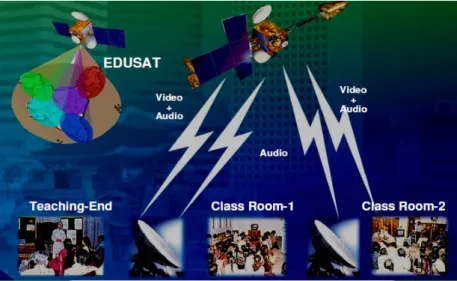
In 1980 the U.S. Agency for International Development (AID) initiated the Rural Satellite Program (RSP) to explore the potential of telecommunications as a means of extending scarce expert resources and expanding educational opportunities to remote and rural areas (Shaw, 2005). There is no doubt that the world today has become increasingly dependent on information and communication technologies (ICT) and with it comes the need for societies and communities to stay connected and be integrated into the global information super highway. Communication Satellites today have become an integral part of global information infrastructure, connecting people across the world and serving communications needs of individuals, businesses and governments. Distance learning is a very useful and promising application of satellite-based technology. With this, high-quality educational institutes can share their resources with their counterparts that are underserved and this can be used to train the trainers. The train the trainer programme via space technology is to ensure that teachers in the remote/rural areas have access to the tools, curricula and the necessary assistance they need. Tele-education concept is shown in Figure 5 (Onuh et al., 2019). The Figure depicts the links from satellite, the teaching end, class rooms 1 and 2. The Edusat is an example of satellites used for tele-education. It is a satellite owned by Indian and it was launched to exclusively serve the educational sector in India. The tele-education network makes it possible for data to be transferred from the teaching end to remote classrooms. The data transferred include lecture notes, presentation materials, exercises, courseware, and other component needed to make learning effective (Onuh et al., 2019). While some satellite applications that have been used to advance access to and quality of education in some countries are shown in Table 1, which indicates all the educational activities that can be achieved through space technology such as examinations, communicating with teachers, accessing digital library resources, communication with pair learners, group work, receiving materials and sending assignments. From the table the possible ways of how space technology can help in achieving all these possibilities. For instance, examination can be conducted via internet access, one-and two-way interactive connectivity, and VSAT network, while receiving of materials can be realized through internet access, one-and two-way interactivity, VSAT network, and data broadcast.
Figure 5: Tele-education concept (Onuh et al., 2019) Table 1: Application of satellite in education
Educational Activity Internet Access Interactive Television One-and two-way interactivity VSAT network Data Broadcast Broadcast Examinations x x X Communicating with teachers x x x X Accessing digital library resources x x X Communicating with pair learners x x x X Group work x x x X Receiving materials x x X x x Sending assignments x x X
2.1.1. Compositions of Tele-education Network
The Edusat, a satellite owned by India is an example of satellites used for tele-education. The satellite was launched to exclusively serve the educational sector in India. The tele-education network makes it possible for data to be transferred from the teaching end to remote classrooms. The data transferred include lecture notes, presentation materials, exercises, courseware, and other component needed to make learning effective (Mamta and Manoj, 2009). Tele-education network comprises the following:
Satellite
The satellite is the spacecraft launched for educational purposes. The satellite is used to provide virtual classroom concept to provide education to children and adults in rural and remote areas. This concept is also employed to offer quality higher education to students in areas without access to good technical Institutes, and adult learning programs and training modules for teachers. The satellite could be equipped with C, Ku, Ka and other frequency-band transponders. Teaching End
The teaching end consists of an earth station and a small studio. In the studio, recorded and live lectures can be found and it is linked to the uplink earth station. The lectures, which are audio signals and visual images are transmitted to the spacecraft (satellite). The satellite beams the transmitted signal back to the earth spanning a large geographical area. The presentation PC, digital camera and DVD player are all attached to a switcher which is used to select the signal of interest among those from the presentation PC, digital camera and DVD player. The PC used by the presenter has a digital monitor that is used as a “white board”. The teacher can use digital pen to draw pictures and write texts on the white board and whatever the teacher writes at his end can be transmitted to the students end. A microphone is directly attached to server. The mixed output that is, the audio and video is sent to the modem through server. The modem then converts the digital inputs to analog and sends it to antenna using high quality cables. Remote Classrooms
In the classrooms live lectures are received. We have two types of classrooms-non-interactive and interactive. At the location of the classrooms, receiving antennas are installed. The antenna installed at the non-interactive classroom has receive-only capability and the students can only interact with the resource person via a telephone line, internet and mobile phones. In the case of interactive classroom, the students can interact with the resource person at the teaching end using voice link via the satellite using an audio return channel (Onuh et al., 2019). The use of satellite for tele-education is also illustrated using Figure 6.
Figure 6: Tele-education network (Sohanvir and Suresh, 2010)
Space-based learning programmes are cost-effective and independent of ground-based infrastructure. This technology is used to improve access to education everywhere in the world thereby bridging the gap between the sparsely and densely populated areas. This technology
has recorded tremendous success in some countries and it is still being embraced throughout the world. The following are some of the successes recorded (Kazuto, 2012-2014):
Case Study 1: Brazilian Education
Case Study 2: China-Using Television for Education Case Study 3: Virtual University for Africa
Case Study 4: Education in India called EDUCAT 2.2. Space Technology for Telemedicine
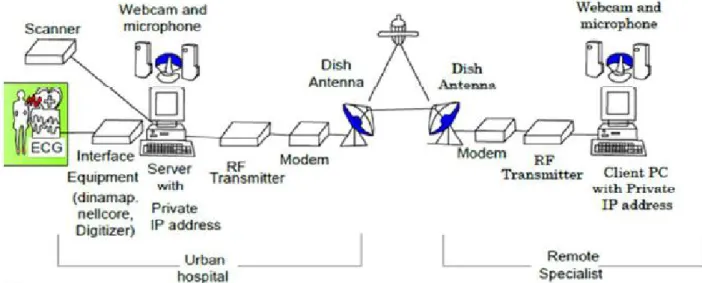
Telemedicine is referred to as the delivery of healthcare services by healthcare professionals employing information and communication technologies for the transfer and exchange of relevant information required for prevention, diagnosis, and treatment of injuries and diseases, and for continually educating healthcare providers (Carlo et al., 2016). Innovative healthcare technology and delivery methods are required for the provision of high-quality healthcare for low density population areas. Space technology provides such solution. Space technologies have had tremendous impact in human health. Space resources, such as GIS and communication satellites make it possible to deliver remotely healthcare services to rural areas (Kazuto S, 2015). Telemedicine provided by satellites in space, scientific research, geographical information systems (GIS), and space spin-offs are providing new ways to improve human health in rural areas. Telemedicine is the use of two-way telecommunications technology, multimedia and computer networks that is used to enhance and deliver healthcare. Space technology makes it possible for medical researches to be conducted. The microgravity environment available in space is an example of excellent laboratory. In space, microbes and cells behave differently, hence monitoring reaction and processes in space in the absence of gravity variable has the advantage of giving a better understanding of infectious diseases. Rural areas lack adequate number of experienced doctors. Space-based telemedicine can remove the healthcare divide between rural and urban dwellers (Jabir, et al, 2009). Connecting rural hospitals to the world medical centres requires the provision of high speed internet connection Very Small Aperture Terminal (VSAT), fibre optics and so on to rural hospitals. The Very Small Aperture Terminal link may have the following hardware specifications:
Indoor unit: Comprises of IP based satellite modem, and a personal computer
Outdoor units: Comprises of Radio Frequency (RF) Transmitter and a satellite dish antenna of required diameter depending on the operating frequency band and other hardware.
There are two possible configurations for the VSAT connection: A. Point-to-point connection
In this configuration, the VSAT provides network connection between the server and the client computer and static IP addresses are assigned to the server and client computers. This configuration is depicted in Figure 7:
Figure 7. Point to point connection using VSAT (Onuh et al., 2019) B. Point-to-Multipoint connection
In the point-to-multipoint configuration, the VSAT provides Internet connection for the PC with public IP address. This configuration has the advantage of connecting to any consultation hospital or specialist which are connected to the Internet Figure 8 is used to depict this configuration:
Figure 8: Point to multipoint connection using VSAT (Onuh Spencer Ojogba et al, 2019) 2.3. Space Technology for Telecommunication
Information sharing is one of the ways people interact. This is peculiar to both the rural and urban dwellers. Information sharing is done using personal computers, mobile phones and other electronic communication devices. Space-based technologies enables communication to be extended to rural area with the use of communications satellites, which makes global telecommunications possible by relaying signals in form of audio, video, and data to and from one or more locations. Space-based technologies can reduce the cost of ground-based infrastructure requirements and even offer cost effective options for service delivery. For instance, installation of a large number of signal transmitting and relaying towers to broadcast
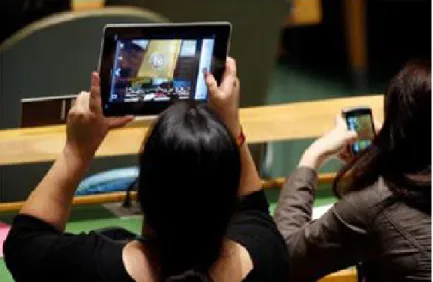
television programmes to distant locations may not be necessary when space-based communication is used. To achieve this, one satellite dish could be installed in a rural area to pick up the broadcast signal received from a satellite (UN, 2012). Example of communications using space-based technology is depicted in Figure 9. Communication is an important component and a driving force for rural development. It is used for bringing the much needed social and behavioral changes among the vulnerable rural society. Communication via satellite is able to simultaneously reach a huge population, spread over long distances (Nair, 2009). Mobile market in recent time has experience huge growth across the globe. However, mobile service providers are finding it difficult to extend their services to rural areas due to the absence of infrastructure in these areas. While it is inefficient and impractical to terrestrially extend mobile services, the use of small cells and space technology offers cost-effective and quick solution to connect rural areas to mobile networks. Mobile market has grown to the extent that subscription in cities are actually tapering off. Mobile subscription in those areas is often more than 100% meaning that we have more subscriptions than people. But there is an aspect which remains untapped in the global mobile service market: the nearly two billion potential subscribers in rural areas, who are not within the coverage of the mobile network (Gilat, 2015). We can bridge this gap by employing satellite technology to extend mobile services to rural areas.
Figure 9. Space-based communication using mobile devices (UN, 2012).
3. Conclusions
While this paper has focused primarily on infrastructural development, the need for infrastructures in rural areas in Nigeria, the use of space technology as a critical infrastructure for these areas, the Nigerian government too, has a role to play. It is observed that most of the firms in Nigeria prefer the urban to rural area due to the presence of the required critical infrastructure and because the technical personnel and critical infrastructures for manufacturing and technological development are lacking in the rural areas. These infrastructures, even when available in the rural areas are not adequately maintained. There is an urgent need for the government to aggressively address this ugly situation. Adequate infrastructure in rural areas will attract investors to those areas and rapid development will take place. Furthermore, the inhabitants will be gainfully employed. To tackle the challenge of infrastructural deficit in Nigeria, local, state and federal governments should prioritize funding of infrastructure by setting aside
substantial amount in their annual budgets for the provision, upgrading and maintenance of existing ones. Government at all levels should promote private sector provision of services. Private sector financing can be promoted by the government ensuring that: (i) a friendly legal environment is established which may include clearly assigned property rights, a framework for management of contracts, including means of recourse, (ii) removal of barriers/obstacles to market entry, and elimination of distortive grants for those services and goods and services capable of being financed by the private sector, and (iii) removal of physical and financial obstacles to private sector development, such as improving access to affordable credit, and improved access to basic facilities.
References
Ademiluyi, IA. and Aluko-Arowolo, SO. 2009. Infrastructural distribution of healthcare services in Nigeria: An overview. Journal of Geography and Regional Planning, 2(5): 104-110.
Aderamo, AJ. and Magaji, SA. 2010. Rural Transportation and the Distribution of Public Facilities in Nigeria: a Case of Edu Local Government Area in Kwara State. Journal of Human Ecology, 29(3): 171-179.
Carlo, C., Gabriele, P. and Giuseppe, P. 2016. Telemedicine for Developing Countries. Applied Clinical Informatics, 7(4): 1-26.
Chidi, KC. and Izuwah, S. 2017. Infrastructure Development as a Panacea to National growth, being a Paper Presented by the Ag. DG Of ICRC at the Fellows Investiture of the Institute of Directors Nigeria, 1-114.
Erinosho, OA. 2006. Health Sociology for Universities Colleges and Health Related Institutions. Bulwark Consult, Abuja,
Ezekwe, G. 1992. Engineering Infrastructure: the missing link. First distinguished Lecture in Engineering and Technology, University of Lagos, Lagos.
Gilat, 2015. Extending Mobile Networks into rural areas via Satellites. Gilat Satellite Networks Ltd, pp.1-13.
Idialu, JU. and Idialu, E. E. 2012. Entity, Ownership, Educational Subsidies and Funding of Nigerian Tertiary Institutions. Current Research Journal of Social Sciences, 4(1): 56-61.
Ijaiye, MA. and Lawal, WA. 2000. Education Sector Financing and Government Spending in Nigeria: An Investigation, Ilorin. Journal of Business and Social Science, 11: 3-11.
Jabir, SA., Osama, AH. and Amer, N. 2009. Design of Telemedicine Systems for Rural and Urban Areas in Iraq. Asian Research Publishing Network (ARPN) Journal of Engineering and Applied Sciences, 4(2): 64-72.
Kolawole, Y. 2018. Fifteen Problems of Education in Nigeria and Possible Solutions: Available at: https://infoguidenigeria.com/problems-education-nigeria/
Kazuto, S. 2015. Bringing Space Down to Earth: Global Agenda Councils. A Community of the World Economic Forum III, 1-52.
Kazuto, SC. 2012. Global Agenda Council on Space Security. Global Agenda Councils. A Community of the World Economic Forum I, 1-44.
Mamta, G. and Manoj, K. 2009. Edusat-E-learning through satellite-reaching the unreached. International Journal of Recent Trends in Engineering, 1: 1-3.
Nair, GM. 2009. Space Technology Applications for Rural Development in India. Eighth Bharat Ratna Rajiv Gandhi Memorial Lecture, New Delhi, India, 1-9.
Odiba, I. 2012. Strategic Planning as a Tool for Managing Nigeria’s Tertiary Education for National. International Journal of Economic Development Research and Investment, 3: 118-123. Ogunsola, GO., Salman, KK. and Popoola, OA. 2015. Effect of Telecommunication on Poverty Status of Rural Households in Nigeria. Global Journal of Human-Social Science: Economics, 15(3): 1-9.
Omagu, FE. 2016. Infrastructural Development in Nigeria: A Panacea for Transforming Educational Sector for Sustainable National Development. International Journal of Capacity Building in Education Management (IJCBEM), 3(1): 13-19.
Onuh, SO., Aiyeola, SY., Tofade, CT. and Adesina, LO. 2019. Space Technology, an Essential Infrastructure for Rural Area Development. American Journal of Environmental and Resource Economics, 4(3): 25-31.
Onwuemele, A. 2011. Impact of Mobile Phones on Rural Livelihoods Assets in Rural Nigeria, A Case Study of Ovia North East Local Government Area. Global Journal of Human-Social Science: Economics, 9(2): 1-14.
Shaw, WD. 2005. Distance Education via Satellite: A Case Study of the Indonesian Distance Education Satellite System. Online Journal of Space Communication, January, Article 8.
Sohanvir, C. and Suresh G. 2010. On using satellite-based networks for capacity building and education for all: A case study of Rajiv Gandhi project for EduSat-supported elementary education. Educational Research and Reviews, 5 (4):158-168.
Thet Khin, PE. 2012, Health Infrastructure, an opening speech at 2012. World TB Day Commemoration Ceremony, 1-29.
United Nations Office of Outer Space Affairs (UNOOSA), 2012. Benefits of Space: Agriculture. Available at: www.unoosa.org/oosa/en/benefits-of-space/agriculture.html