ScholarWorks
Walden Dissertations and Doctoral Studies Walden Dissertations and Doctoral Studies Collection
2019
Recidivism Differences and Measures of
Predictability for Federally Convicted Child
Pornographers
Ricardo J. Rodriguez
Walden University
Follow this and additional works at:https://scholarworks.waldenu.edu/dissertations
Part of thePublic Policy Commons, and theQuantitative, Qualitative, Comparative, and Historical Methodologies Commons
This Dissertation is brought to you for free and open access by the Walden Dissertations and Doctoral Studies Collection at ScholarWorks. It has been accepted for inclusion in Walden Dissertations and Doctoral Studies by an authorized administrator of ScholarWorks. For more information, please [email protected].
Walden University
College of Social and Behavioral Sciences
This is to certify that the doctoral dissertation by
Ricardo J. Rodriguez
has been found to be complete and satisfactory in all respects, and that any and all revisions required by
the review committee have been made.
Review Committee
Dr. Joseph Pascarella, Committee Chairperson, Criminal Justice Faculty
Dr. David DiBari, Committee Member, Criminal Justice Faculty
Dr. John Walker, University Reviewer, Criminal Justice Faculty
Chief Academic Officer Eric Riedel, Ph.D.
Walden University 2019
Abstract
Recidivism Differences and Measures of Predictability for Federally Convicted Child Pornographers
by
Ricardo J. Rodriguez
MS, St. Thomas University, 2008 BA, Florida Atlantic University, 2005
Dissertation Submitted in Partial Fulfillment of the Requirements for the Degree of
Doctor of Philosophy Criminal Justice
Walden University August 2019
Abstract
There is a gap in research on the effectiveness of mandatory-minimum sentences on the recidivism rates of federal child pornography offenders, resulting in policy that may be ineffective and costly. Relevant research can further understanding of criminogenic behavior that results in the exploitation of children and aid future policy making
decisions. Therefore, the purpose of this study was to better understand the relationship between federal sentencing and federal child pornographer recidivism. Central to this study is the research question of whether there exists a statistically significant difference between the likelihood of recidivism in 2 child pornographer cohorts that receive
different sentences, probation or mandatory incarceration. The employed frameworks for this study were retributivism and the self-regulation model. A quantitative analysis was used to examine the recidivism rates of the 2 different cohorts as well as the predictive value of various factors related to recidivism. The sample population consisted of 70 offenders convicted of a federal child pornography offense between 2012 and 2016 from 3 states and 7 federal judicial districts. Purposive sampling was employed via publicly available secondary data. Key findings revealed that the analyzed data does not support the existence of a relationship between recidivism and the given sentence. Second, crime of conviction was the only examined factor that supported predictability for future recidivism. The implications of this study will mean evidence for potential policy modifications, alteration of an existing economically draining strategy, and the positive social change of reduced harm and exploitation of children.
Recidivism Differences and Measures of Predictability for Federally Convicted Child Pornographers
by
Ricardo J. Rodriguez
MS, St. Thomas University, 2008 BA, Florida Atlantic University, 2005
Dissertation Submitted in Partial Fulfillment of the Requirements for the Degree of
Doctor of Philosophy Criminal Justice
Walden University August 2019
Dedication
This dissertation is dedicated to the protectors of the vulnerable—the passionate heroes who work tirelessly to help those who often cannot help themselves. For the calling of sacrifice in service to others be it military or law enforcement is a noble and just cause. J. Edgar Hoover once said, “no amount of law enforcement can solve a problem that goes back to the family.” Although this may be true, the continued pursuit of child exploitation eradication will undoubtedly assuage at least one family problem: predation.
Acknowledgments
I would like to acknowledge the guidance and support of my committee members: Drs. Joseph Pascarella and David DiBari. The assistance and constructive feedback you provided has made a tremendous difference throughout this entire process. I especially want to give an extra nod of gratitude for the patience Dr. Pascarella demonstrated
despite the endless string of e-mails and texts, the steady and responsive support did more than guide this study. Thank you also to Drs. Jenny Ricketts and Jaime Bestard. Your support, expertise and countless hours of help were of remarkable value.
When it comes to support, I have had no greater pillar than my loving wife, partner, and best friend, Sarah. Her unwavering love and encouragement continue to be the warm light that has penetrated every cloud of challenge and setback I have
encountered. You have witnessed the late nights and long hours; you have been a valuable sounding board in every facet of life to include this study. Thank you, from the bottom of my heart, I render the highest level of gratitude for being a tremendous wife, mother, and friend. You are a blessing like no other.
To my son Tristan, my “Monkey Bunkey,” the light of my life, thank you. Your sweet smile, warm hugs, and endless encouragement to successfully complete my “doctor school” has been pivotal fuel for my fire and needed every step of the way. One of the goals of this study is to contribute to the discussion of child protection. What I do professionally and academically begins with the sincerest desire to make this world a
better place for you. You inspire me. Being your father is my greatest joy and the crowning achievement of my entire life. Thank you for your patience and belief. A sincere thank you for my parents, Dr. Isabel Rodriguez-Dehmer and Mr. Richard Dehmer, I love you both so much. Thank you, mom, for your fierce support and unwavering insistence that the stars are mine to reach and conquer. Your doctoral journey was a definite inspiration. To my pop, thank you for always being that steadfast Godly father figure in my life; your wisdom and love has been a true gift for which I will always be grateful. To my father in heaven, Hiram Rodriguez, may you smile down with pride as I chase down goals and dreams, the desire of every father the first time he holds his son.
I would also like to thank two people who have been beacons of kindness, love and generosity, my grandparents, Raymond and Carmen Cintron. Grandma, you kept me fed in this life both physically and spiritually with your amazing food, endless smiles and infectious laughter, and a fierce unconditional love. You cared for me like I was a
priceless gift. Your impact and memory are as strong today as it ever was, thank you, I love you. To grandpa, I simply say thank you for your unwavering love and support. From our shared cinematic love and appreciation for the Three Stooges, to your quiet reassuring smiles, entertaining stories and strong embraces, some of my best childhood memories are those I have shared with you.
I would like to thank my godfather, Idal Pazos. From before I could walk or speak you have been a kind and loyal friend, cheering me on loudly, even from afar, and always believing I would do great things in this life. Thank you so much for always being there
and helping to keep my father’s memory alive. To my little “big” brother, Joseph Dehmer, I am so proud of you and appreciate the energetic fervor that you apply to everything, including your love and encouragement. I am so thankful God gave me you, even 18 years into my life. You are my brother but have grown into a true friend and I love you. To Fernando and Evelyn Lopez, thank you for always being unwavering sources of support and love. You have watched me grow and given me the kindest, most sincere words and hugs every step of the way. Your belief in me and constant prayers have truly impacted my life, I love you both very much.
I would like to thank my father and mother in-law, Gary and Judy Plant. Sarah is an extension of the unwavering love and support you so generously give day in and day out. Thank you both for your excitement at the prospect and realization of any and all of my milestones! You have treated me like a son and I could not be happier with any semblance of pride I make you feel. I love you guys so much.
Last and most certainly not least, I would like to thank God. I have felt the impact and movement of God’s hand on my life since I was a child guiding my decisions and opening doors that would have otherwise remained closed. Much of this journey requires individual grit and tenacity; however, there is an element of providence that must be acknowledged. Thank you for your faithfulness and peace granted to me in the quiet moments of this quest. Though I was discouraged, though I may have been dismayed, you were faithful to your promise and were with me every step of the way, Joshua 1:9.
i Table of Contents
List of Tables ... iv
List of Figures ...v
Chapter 1: Introduction to the Study ...1
Introduction ...1
Background ...2
Problem Statement ...3
Purpose ...5
Research Questions and Hypotheses ...6
Theoretical Framework ...8
Nature of the Study ...9
Definitions...11
Assumptions ...12
Scope and Delimitations ...13
Limitations ...14
Significance...14
Summary ...16
Chapter 2: Literature Review ...18
Introduction ...18
Literature Search Strategy...20
ii
Retributivism... 22
Self-Regulation Model ... 25
Literature on the Three Main Parts of the Study...29
Federal Sentencing ... 29
Child Pornographers ... 34
Recidivism ... 38
Summary and Conclusion ...41
Chapter 3: Research Method ...42
Introduction ...42
Research Questions ...42
Research Design and Rationale ...44
Methodology ...46
Population ... 46
Sampling Procedure ... 46
Instrumentation ... 47
Operationalization: Variable Description ... 50
Data Analysis Plan ... 53
Threats to Validity ...53
Internal Validity ... 54
External Validity ... 55
iii Ethical Procedures ...56 Summary ...58 Chapter 4: Results ...60 Introduction ...60 Data Collection ...62 Demographics ... 65 Results ... 70
Chapter 5: Discussion, Conclusions, and Recommendations ...81
Introduction ...81
Interpretation of Findings ...81
Limitations of the Study...85
Limitations to Generalizability of Results ... 86
Recommendations for Future Research ...87
Implications...89
Conclusion ...90
iv List of Tables
Table 1. Demographics of Sex Offenders ... 65
Table 2. Time on Supervised Release Statistics ... 66
Table 3. Frequency of Federal Sentence Received ... 66
Table 4. Age of Offender ... 67
Table 5. Frequency of Reoffend/Recidivate ... 68
Table 6. Race of Offender ... 68
Table 7. Crime of Conviction ... 68
Table 8. Time on Supervised Release (Years) ... 69
Table 9. Federal Judicial District ... 70
Table 10. Federal Child Pornographer Recidivism Rate Comparison ... 71
Table 11. Binary Logistic Regression ... 75
Table 12. Comparison of Predictor Variables... 76
v List of Figures
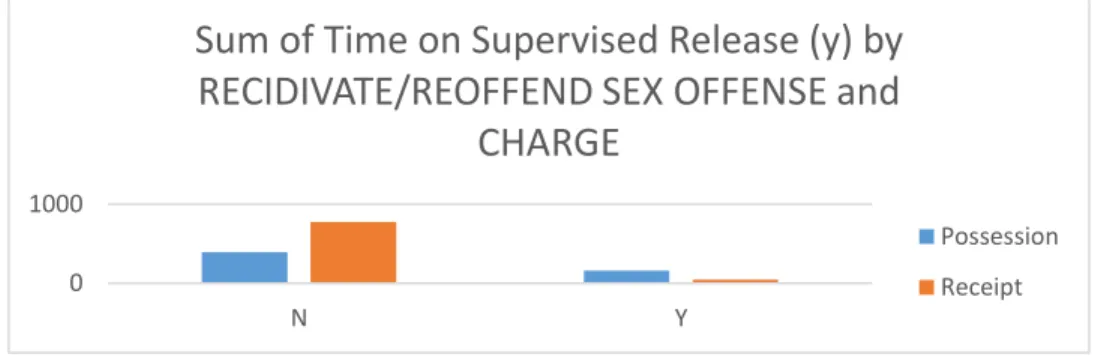
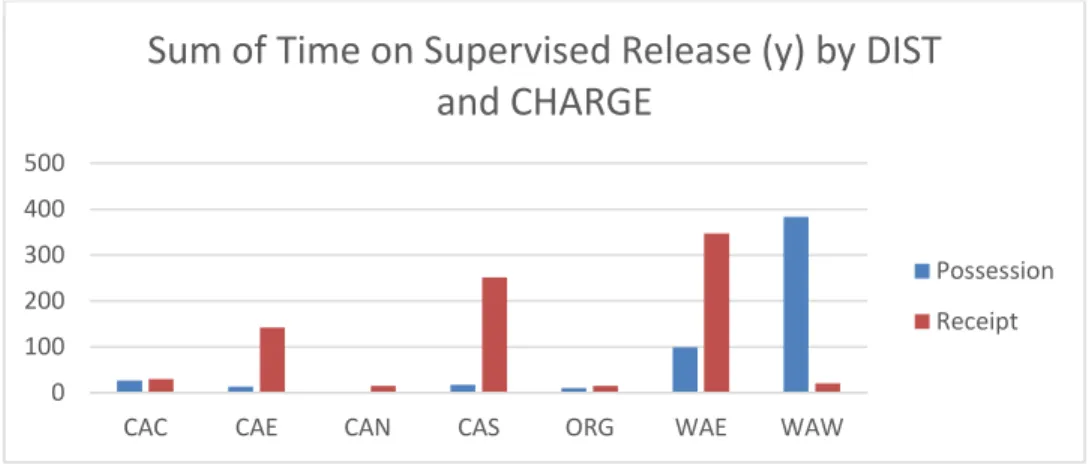
Figure 1. Sum of time on supervised release (y) by recidivate/reoffend sex offense ...89 Figure 2. Sum of time on supervised release (y) by district and charge ...90
Chapter 1: Introduction to the Study
Introduction
Although the damaging nature of child pornography is not a divisive issue, there is a lack of agreement on how best to address, punish, or rehabilitate child pornography offenders because several forms of federal child pornography crimes exist. In this study, I examined two crimes—possession of child pornography and receipt of child
pornography—and the difference in recidivism for first-time offenders charged with each. The legal difference between the two crimes is that possession indicates the offender knowingly possessed an image or video that the offender believed to be a real child and receipt is the same except the offender “knowingly received” (Doyle, 2013).
Child pornography offenses are on the rise (Armstrong & Mellor, 2016; Kuhle et al., 2017; Seto & Eke, 2015; Steele, 2015), so the U.S. Congress has approved set guidelines and mandatory sentences to address the increase in child pornography. Additionally, federal circuit courts have received evidence establishing a relationship between child pornography and child molestation (Pisegna, 2016), which merit greater attention and efforts on child protection. Although this quantitative study will not reveal the cause of federal child pornographer’s recidivism, it can provide information about the relationship between sentence experience, recidivism, and the factors that may predict reoffending. This addresses a lack of research on federal sentencing, child pornography offenders, and recidivism. There also needs to be a better review of sentencing efficacy and child pornographer recidivism predictability to mitigate child exploitation.
In addressing a gap in knowledge, this study may lead to policy modifications. For example, there are unanswered questions regarding federal sentence experience and its effectiveness in reducing recidivism in child pornographer recidivism. The two crimes are so similar that some offenders are charged with one or both based primarily on prosecutorial discretion. Yet the difference in sentence experience can be as long as a 5-year incarceration. Thus, this study can provide better understanding and subsequent efforts for positive social change.
Background
Retributivism demands justice such as a mandatory-minimum sentence, yet a possession charge may yield a term of probation. Thus, it is important to examine the sentence experience or even the type of charge and any effect these have on recidivism. Research has shown that post-conviction programs aimed at recidivism reduction for child pornographer offenders were found to not only be ineffective but somewhat
associated with increased recidivism rates (Cohen, Cook, & Lowenkamp, 2016). Further, Cohen and Spidell (2016) found that the recidivism rate for federal child pornography offenders with no physical sexual abuse admissions was nearly the same as those who committed child sexual abuse. By definition, child pornographers victimize children through the perpetuation of demand for material depicting the sexual exploitation of children, whereas contact or physical sexual abuse is the direct victimization of a child. Yet recidivism rates between the two groups are highly similar, which leads to concerns regarding the efficacy of mandatory-minimum sentences. Moreover, there has been a
shift toward sentencing factors that deal more with the policies and less with the offender (O’Hear, 2006).
Going beyond the efficacy of federal sentencing, the literature is lacking on the nature of child pornography offenders despite the ample information about sex offenders in general. For instance, Merdian, Thakker, Wilson, and Boer (2013) suggest that a narrow examination of child pornographer typology can yield a better understanding of current offending and future criminogenic tendencies. Seto et al. (2015) also addressed the drawbacks of previous child pornography studies in that child pornographer risk factors have been unexplored. Further, there is a research gap between federal sentencing policies and their impact on child pornography offenses (Wollert, 2012). Therefore, I conducted this study to provide a better understanding on recidivism between two groups of offenders—those convicted of possession of child pornography and those convicted of receipt of child pornography.
Problem Statement
There is significant legal and academic debate as to whether a collector of child pornography should face the same ramifications as a person who commits child sexual abuse. Child pornography is sexual exploitation on a person under the age of 18 years mainly through online technologies, anime depicting fictional characters of children, or textual descriptions of sexual contacts between an adult and a minor (Seto & Eke, 2015). Child pornography is a serious offense in the United States and the federal government has made concerted efforts against the proliferation of child pornography. This is
especially the case regarding the production of contraband via more stringent sentencing guidelines (U.S. Legal, 2015). Production of child pornography carries with it a 15-year federal sentence.
There has been a substantial increase in online sexual offenses despite the Prosecutorial Remedies and Other Tools to End the Exploitation of Children Today Act of 2003 (The PROTECT Act) and the Adam Walsh Child Protection and Safety Act of 2006, which are in place to penalize sexual offenders (Cohen & Spidell, 2016). In
addition, the U.S. Department of Justice has initiated several task forces and funded units within federal law enforcement agencies to combat child pornography (Cohen & Spidell, 2016). However, the supply and proliferation of child pornography is increasing. For instance, the number of sex offenders convicted of online child pornography has increased under federal post-conviction supervision by 1,400% since 1994 (Cohen & Spidell, 2016). As with basic economics, the increase is due to the demand, which is attributable to the marked availability, affordability, and utilization of devices in digital space (Cohen & Spidell, 2016; Seto & Eke, 2015; U.S. Legal, 2015). Consequently, there is a continuous increase in the number of post-convictions where offenders are
prosecuted for possession, receipt, distribution, and or production of child pornography (Cohen & Spidell, 2016).
Research has documented a relationship between viewing child pornography and sexual abuse such as molestations. One study went as far as to suggest that a child pornography offense is a “stronger indicator of pedophilia” than a physical-sexual
offense against a child (Seto et al., 2015). Likewise, research has found 26.8% of
pedophilic individuals among a group of child sexual abusers (Schmidt, Mokros, & Bane, 2013), which is comparable to over 33% of sampled convicted child molesters who admitted to self-stimulation while viewing child pornography prior to their hands-on offense (Seto et al., 2015). In addition, repeated use of child pornography in this fashion psychologically stabilizes the abuse of children and subsequently diminishes guilt and inhibitions toward predation (Merdian et al., 2013). Ultimately, experts posit a link between child pornography and the physical sexual exploitation of children (Seto et al., 2015). A recent report by the Department of Justice also confirms this relationship between child pornography and sexual abuse of children (Pisegna, 2016). However, the courts have differing perspectives on how this relationship impacts the offenders and the prosecution of the offenders (Pisegna, 2016).
There are federal initiatives and law enforcement that continue to combat child pornography and child exploitation. Yet post-convictions continue to increase due to free access to online resources. Therefore, there is a need for further investigation to
understand the rate of recidivism among child pornography offenders, which constitutes the purpose for conducting this study.
Purpose
The purpose of this quantitative study was to compare recidivism in federal child pornography offenders given two different sentences—mandatory-minimum (5-year’ incarceration) or probation—and to examine which sentence yields a lower recidivism
rate. Additionally, I examined several factors as potential predictors of recidivism: crime of conviction, age, race, time on supervised release. I divided the federal child
pornography offenders into two groups based on sentence: those sentenced to a mandatory-minimum term of 5 years’ incarceration and those given probation and no incarceration. For the second analysis I divided the groups by crime of conviction rather than sentence. Examining the statistical relationships among the recidivism rates for these two groups as well as potential predictive values may encourage better policy to help offenders readjust into society (Grossi, 2017). Therefore, this study will help to address the gaps in the literature regarding sentence effectiveness and recidivism predicting.
Research Questions and Hypotheses
Research Question 1: Is there a difference in recidivism between federally convicted child pornography offenders exposed to a mandatory-minimum sentence (Group A) and those federally convicted child pornography offenders expose to a term of probation (Group B)?
H₁ 1: The likelihood of recidivism for Groups A and B are significantly different.
H01: The likelihood of recidivism for Groups A and B are not significantly different.
Research Question 2: To what extent does federal conviction of possession of child pornography, federal conviction of receipt of child pornography, age, race, and time on supervised release (1 to 5 years, 6 to 10 years, 11 to 20 years, and 21 to 99 years) offer a measure of predictability for the likelihood of recidivism?
H₁ 2: Federal conviction of possession of child pornography, federal conviction of receipt of child pornography, age, race, and time on supervised release (1 to 5 years, 6 to 10 years, 11 to 20 years, and 21 to 99 years) offer a measure of predictability for projecting the likelihood of recidivism.
H02: Federal conviction of possession of child pornography, federal conviction of receipt of child pornography, age, race, and time on supervised release (1 to 5 years, 6 to 10 years, 11 to 20 years, and 21 to 99 years) do not offer a measure of predictability for projecting the likelihood of recidivism.
The independent variable for Research Questions 1 is federal sentence (probation and mandatory-minimum incarceration). The dependent variable for Research Questions 1 and 2 is the likelihood of recidivism. The independent variables for Research Question 2 are specific federal crime of conviction (possession of child pornography and receipt of child pornography), age, race, and time on supervised release (1 to 5 years, 6 to 10 years, 11 to 20 years, and 21 to 99 years).
I examined the possibility of a significant difference between recidivism in Groups A and B. To do so, I compared them via a Chi-square test of independence. This will compare the frequency rate of recidivism between the two groups. I used a binary logistic regression analysis to assess the levels of predictability between Groups A and B recidivism rates and additional variables in Research Question 2.
Theoretical Framework
The theoretical basis for this study is retributive justice theory (Holtman, 2011) and the self-regulation model (SRM; Wad & Hudson, 1998). The U.S. Congressional premise for mandatory-minimum sentences is to provide an appropriate penalty. This is the basic principle of retributive justice, which maintains that the optimal response to crime is a proportionate punishment (Berman, 2011). The concept of retributive justice predates civilization; although lex talionis (law of retaliation) is commonly associated with Roman judicial codices, the basic premise can be found in early biblical and Babylonian texts (Fish, 2008). The functional concept of retributive penalties frame the structure by which current federal child pornographers have been and continue to be sentenced. Central to retributivist theory is the notion that there is an intrinsic value to the suffering of wrongdoers (Tadros, 2011). Thus, a statistical understanding of the impact mandatory-minimum sentences has on the population of this study might illuminate the effectiveness of this theory.
Both groups in this study have numerous things in common such as child pornography, sex offending, computer skills, and federal offending; however, the main commonality is that they both received an opportunity for post-conviction reentry back into society. Ward and Hudson’s (1998) SRM addresses the cyclical nature of sex offenders in relation to self-regulation and positive mood states. In short, offenders will take steps to avoid what repeats offending cycles, but often do so by satisfying an internal compulsion. This little yet instant gratification becomes decreasingly effective, which
leads to cyclical behavior. This provides a solid foundation for understanding the nature of recidivism despite interventions such as federal convictions or incarceration.
Nature of the Study
The nature of this quantitative study was to ascertain the statistical occurrence of the differences between the recidivism rates of two groups, thereby gaining a more
accurate understanding regarding the impact of mandatory-minimum sentences on federal child pornographer recidivism. To explore this relationship, I chose a quantitative
approach, which allowed me to determine whether there is a statistical significance between child pornography offenders who are incarcerated and those sentenced to probation. Quantitative methodology is central to the exploration of covariation via the acquisition and analysis of quantifiable data (O’Sullivan, Rassel, & Berner, 2016; Patten & Bruce, 2007). In quantitative research, to determine what variables are central to answering the questions and hypothesis, the researcher must examine the relationships between and among variables (Creswell & Creswell, 2017). Primarily, I sought to reveal the nature of the relationship between the variables and the likelihood of recidivism. I studied this through numeric data that will assist in a better understanding of the research problem (McNabb, 2002). Given the nature of the research purpose, and the data
available, a quantitative design is a logical choice to accomplish the overall goal.
The research questions are concerned with two key and possibly related aspects— the difference in recidivism between those incarcerated via mandatory-minimum
rates of recidivism would reveal something about mandatory-minimum sentences. The research questions both address recidivism as they pertain to federal child pornography offenders. Given that recidivism is a binary result, and it is a numeric value, I quantitative method of observation was the most appropriate method to answer the research questions (Creswell & Creswell, 2017). I acquired the data for a set of federal child pornography offenders and observed to answer the research questions. Although each offender may have prior criminal offenses, I did not account for past sex offenses. Specific to federal statutory penalty ranges, 5-year and probationary sentences are reserved for first time child pornography offenders only; those with prior sex convictions automatically have 10 years’ incarceration added to their sentence (U.S. Sentencing Commission [USSC], 2012).
The recidivism occurrences provided the necessary data to understand better the covariation relative to the sentence. However, the participants were not randomly
assigned for this study. Therefore, a correlational research design was used to capture the data in its natural element (Trochim, Donnelly, & Arora, 2015). Regarding the alignment, the research questions drove the methodology, the nonrandom nature of the quantitative method drove the design, and the correlational design is consistent with the research aims of the original questions.
Definitions
This study will contain terms than can have meanings that are interchangeable, such as recidivate and reoffend. Other terms can be construed as industry or criminal justice specific. The definitions for this study are as follows.
Child pornography: Any visual depiction of sexually explicit conduct involving a minor (persons less than 18 years old). Images of child pornography are also referred to as child sexual abuse images. Additionally, this refers to child sexual exploitation.
Child pornography offender: For this study, a person that knowingly possesses or receives child pornography. Although federal law also prohibits the production,
distribution, and importation of child pornography, these activities and offenders are not the focus of this study.
Federal judicial system: The laws, courts, and jurisdiction strictly regulated by the federal government.
Incarceration or imprisonment: Post-conviction punishment where the offender is required to spend time segregated from society for a set duration.
Probation: For this study, probation is post-conviction sentence where the federally convicted child pornography offender is monitored and treated without any incarceration.
Mandatory-minimum sentence: A federal mandate by statute that limits the discretion of sentencing judges by requiring sentences of imprisonment for a “not less than” designated period. For this study, the federal crime of receipt of child pornography
carries with it a 5-year mandatory-minimum sentence. Therefore, the sentencing judge of an offender convicted of this crime must impose a sentence of imprisonment not less than 5 years.
Recidivism: For this study, recidivism is a conviction for any subsequent sexual offense for which the conviction would require the offender to register as a sex offender had the first offense not taken place.
Sentencing: The judicial phase where the presiding federal judge imposes the offender’s punishment
Sex offense: Any criminal act that would require registration as a sexual offender subsequent to a conviction for said crime.
Sex offender: For this study, a sex offender is a person over the age of 18 that has been convicted of a sexual offense in any jurisdiction for which they are required to register as a sex offender.
Time on supervised release: The period a federal convicted child pornographer is required to be monitored, also the same amount of time the offender is on federal
probation.
Assumptions
The initial assumption for the data used in this study is that it accurately reflects and chronicles the judicial events examined such as convictions, sentences, demographics and periods on supervised release. Although this cannot be proven true, the countless examinations of the information contained in these records by the offenders themselves,
their defense attorneys, federal prosecutors, and presiding judges lends value to the accuracy of said records. The assumption that this archival data are accurate sets for the parameters by which a quantified analysis can be made do reveal the true nature of the relationship between variables.
Scope and Delimitations
To examine the likelihood of recidivism in federal child pornography groups defined in this study, I used a quantitative methodology. The initial research question is aimed at comparing two groups by sentence experience and determining if one sentence is more effective in recidivism reduction. The second research question for this study is a correlational analysis of several variables and factors that may provide predictive value in terms of predicting recidivism in federally convicted child pornography offenders. The scope of this study consists of offenders who have only one sexual offense, a federally convicted sexual offense. This was done to establish a baseline to remove the need to account for a mediating effect of previous criminal history related to sexual offenses. Data were limited to secondary data for federal convicted child pornography offenders to include judgement and commitment orders, sentencing records, and publicly available information on sex offender registries. In accordance with Walden University
Institutional Review Board (IRB), identifying information and characteristics were removed from each record prior to analysis.
Limitations
One cautionary limitation when making analytical use of archival data is the lack of control the researcher has over the method of data collection (Barnes, Dang, Leavitt, Guarana, & Uhlmann, 2015). However, these data are compiled with the full knowledge and review of each offender. The data collection method includes multiple examination by individuals closely related to the criminal case as well as each offender at many stages throughout the criminal proceedings. An empirical study of federal court records found that apart from slight variations in sensitive information such as financial and health information, federal criminal records were found to be accurate even more so that civil proceedings (Ardia & Klinefelter, 2015). Because I used nonexperimental methods and was unable to control for ancillary factors that may have some influence on the dependent variable, which is the likelihood of recidivism, this study does not have a claim to
establish a cause and effect relationship among the variables.
Significance
One of the founding tenets of the federal prison system is rehabilitation. Therefore, a mandated exposure period should reduce the probability of reoffending if not reduce the rate altogether. However, federal sentences may not be preventing recidivism, at least as it relates to federal child pornography offenders and recidivism. Recidivism studies have shown the lack of recidivism reduction from prison. For example, Cullen, Jonson, and Nagin (2011) concluded that prison has a marginal effect
on recidivism reduction and even stronger evidence to suggest that it has a “criminogenic effect” (p. 48S). Thus, prisons may be making matters worse.
In the case of this study, recidivism is important to examine in child pornography offenders because their offenses lead to the sexual exploitation of children and the propensity for hands-on sexual abuse (Cullen et al., 2011). Therefore, this study has social change implications for less danger for children worldwide and a reduced economic drain. Moreover, this study has net benefits that is comprised of tangible benefits, intangible benefits, and program cost (Donato, Shanahan, & Higgins, 1999). The tangible benefits of this study, resulting from more discussions on prison reduction and treatment increase, are a significant annual savings of offender incarceration costs as well as housing space. The intangible benefits are the positive social effect on children. Lastly, the program cost would be covered by the tangible benefits savings from term reductions.
My study can also provide new knowledge to the community of federal
sentencing policymakers, which may change their attitude toward the status quo (Jacobs & Weaver, 2015). Moreover, the change would come as a result of evidence-based research on recidivism and collaborative efforts between those involved in federal
sentencing decisions, and sex offender treatment facilitators. The implication of applying the results of my study to future assessments of existing federal sentencing policies includes additional conversations concerning the merits of correctional philosophies such as incapacitation and rehabilitation. The first step in examining the effectiveness of
mandatory-minimums is to assess the recidivism rates. If these rates are consistently rising and failing to meet post-release expectations, then an alternative must be sought. Given the amount of money required to house each offender for 5 years, approximately $120,000 (Bureau of Prisons, 2012), a sentence reduction by 3 years could cover the cost of a high-quality treatment program. If managed correctly, the newly reallocated financial resources might even have enough surplus to invest further in crime prevention programs.
Overall, the results of my study may have significant implications for policy changes in federal sentencing, particularly as they pertain to a specific group, child pornography offenders. Criminogenic typology of the offenders examined preclude generalization to other groups such as drug dealers, terrorists, and white-collar criminals. Although recidivism is not crime specific, the strategies to reduce it are.
Summary
Chapter 1 offered a brief summary of the purpose of this study. In this study, I examined federal child pornographer recidivism and the relationship with sentence experience as well as potential measures for predictability. I examined the problem from a retributivist perspective as well as from a SRM. The two initial independent variables are mandatory-minimum sentence and probation. These were examined to assess their relationship with recidivism occurrence. The five subsequent predictor variables are associated with each offender and were analyzed to understand better the potential value in terms of recidivism predictability. The dependent variable for both research questions was the binary outcome—recidivism or no recidivism. I used secondary or archival data,
analyzing it with a Chi-square test of significance and binary logistic regression. The secondary data were collected from three different sources, filtered conviction records provided by the U.S. Attorney’s Office, Public Access to Court Electronic Records (PACER), and the national sex offender registry. This study may provide information that can encourage policy changes that can lead to more efficient punishment of offenders, which can protect more children.
The second chapter provides an exhaustive review of relevant literature and the underlying framework for this study. Moreover, a rationale for this study and the variables will be discussed. Thereafter, Chapter 3 will include the chosen methodology, data collection, justification, and analytical procedures for this study.
Chapter 2: Literature Review
Introduction
Though federal sentencing, the typology of child pornography offenders, and recidivism have been explored independently both academically and politically, there is a lack of research on the interaction of these factors. Further, literature suggests that the penalties are disproportionate and do not achieve the original mandates of the U.S. federal correctional system. A common notion that is misaligned with Congress’ original intent on effecting social change is mandatory-minimum sentences. In several ways, literature has not addressed the relationship between federal sentencing and child pornographer recidivism, especially regarding whether federal child pornography sentencing policies have efficacy. Thus, I conducted a quantitative examination of data on federal sentencing, child pornography, and sex offender recidivism, which can provide evidence-based guidance on the impact and effectiveness of mandatory-minimum
sentences on federal child pornography offenders.
Although there is minimal information about the impact of federal sentencing on child pornographer recidivism, there was an abundance of information related to federal sentencing. Given that sentencing policies are set forth by Congress, based on research provided by the USSC, there are varying legal, political, and scholarly opinions. Kim, Spohnextant, and Hedberg (2015) refer to federal sentencing as a complicated and collaborative process between judges and prosecutors, and this often leads to disparities. To understand these disparities and why they matter in child pornographer sentencing, it
is important to look at the origins of federal sentencing, especially mandatory-minimum sentences. Literature suggests that federal sentencing has two primary goals: crime control and fair or just punishment. However, what is considered just can fluctuate over time given the nature of social norms, political policy priorities, and continued
understanding of the crime itself. Federal sentencing guidelines were established in 1987 and are nonbinding rules that maintain a uniform sentencing system for federally
convicted offenders. Yet, these guidelines have been under scrutiny such as in United States v. Booker. In this case, the Supreme Court found that the mandatory guidelines were unconstitutional and should be considered only advisory. However, mandatory-minimum sentences still exist and establish a binding mandatory-minimum sentence for each crime despite a judge’s compulsion to reduce the sentence. In fact, the primary purpose of mandatory-minimum sentences was to reduce or remove disproportionate judicial discretion that can undermine the uniformity in federal sentencing.
Although researchers have focused on one or maybe two of the three main issues in this study, there is a lack of research that affects conclusions concerning policy or sentencing reform. Many studies address the failures or inadequacies of federal sentencing. Other studies address recidivism on sex offending but not on child pornography recidivism. The following literature review was conducted to examine issues of recidivism and mandatory minimum sentences. Also covered are the traditional elements of the relevant theorists and theories, which provide the theoretical framework and support the need for this study.
Literature Search Strategy
The objective of the literature review was to examine relevant research that address child pornographer recidivism, federal sentencing, and the relationship between the two. There is ample information about federal sentencing, child pornographers, and recidivism. Research and assessments of each of those areas have been documented via several disciplines such as legal, political, policy, psychology, criminal justice, and academic. As such, multidisciplinary databases associated with various fields of study were used to search for relevant literature.
Peer-reviewed journals were identified by database searches through Walden University Library and Miami-Dade College Library resources. The databases used are ProQuest, Google Scholar, ICPSR - Inter-University Consortium for Political and Social Research Datasets, LegalTrac, SAGE Journals, EBSCOhost. Although several resources were leveraged to attain the scholarly research necessary for this study, the Walden University Internet-based library was the primary tool used. The Walden University Library was a useful resource given its vast inventory that crosses nearly every
geographical boundary and academic disciplines. Specific to this study, searches included the key terms federal sentencing, child pornographer recidivism, sex offender,
mandatory-minimum sentences, federal offender recidivism, retributivism, self-regulation model, child exploitation offender, child pornographer typology, sentencing guidelines, and trends.
A review of literature related to the key words found in my topic yielded
references to other studies that were related provided additional information on how best to frame my topic. I then began collecting full-text articles for further review and
comparison to past research to determine what if any advances in conclusions have been made regarding child pornographer recidivism as it relates to federal sentencing
experience. An exhaustive review of the literature led to the identification and selection of the independent variables used in this study.
Theoretical Foundation
The bi-fold issue of FMM sentences and federal child pornographer offenders present is whether current sentencing policies reduce recidivism and whether the 5-year mandatory-minimum sentence for receiving and distributing child pornography helps prevent further child exploitation. Addressing these issues requires a baseline
understanding of mandatory-minimum sentences and child pornography offenders, especially those committing the federal crimes related to child pornography. The literature provides various ideas and dominant theories related to federal sentencing as well as sex offenders as it pertains to child pornography and their tendency to recidivate or commit child sexual abuse. The following literature review also shows the efficacy of policies as they relate to retributivism and the SRM. Lastly, this literature review
demonstrates the significant gap in research and conclusive or evidenced-based data on the effectiveness of mandatory-minimums on the rehabilitation and recidivism rates of federal child exploitation offenders.
Retributivism
Retributivist theory or retributivism is at its core a punishment theory. Based on the theory, wrongdoers deserve punishment that is proportional to their crime, which helps satisfies justice. Although a possible oversimplification, this criminal justice philosophy is moral in that it focuses on what is “right” and “just.” Retributivism is the only punishment theory that does not rationalize or allow for the punishment of innocents in pursuit of a greater good; it does not exploit people as a means to an end; it provides a delineated account of the necessary level of punishment; and it maintains that only individuals who possess moral culpability receive just punishment (Christopher, 2002). Berman (2011) attributes the strength of retributivism to two key questions: “What do wrongdoers deserve?” and “What is the meaning of the word ‘deserve’?” Answers to these questions align retributivism to the criminal justice needs of the day. Sentencing standards and litigious decisions are always changing in terms of punishment.
Retributive justice theory dates to the days of the Norman Conquest when servants pledged allegiance to the lord of the land, establishing the concept of
wrongdoings or crimes against the state not a person (Meyer, 2017). The concept was that every action impacts the community. However, pure retributivism demands that the proportion is measured against the crime committed, not the offense almost committed. For example, whether a person attempts to steal but is caught in the act or successfully commits the theft. Some interpretations of the theory would suggest that these offenders should not receive the same sentence, which has deterrent value. However, ardent
retributivists argue that wrongdoers are better punished despite zero deterrent effect; the person deserves a consequence because of an action he or she chose. When it comes to federal child exploitation offenders, the person, the consequence, and basis for the consequence are factored in defense of mandatory-minimum sentences. In this case, justice does not consider the background, race, age, intellect of the person who committed a qualifying crime. The consequence, in the case of this study, is a 5-year mandatory-minimum sentence or a sentence of probation. Lastly, the predicate actions that trigger consequences are examined for factors that may extend the consequence or support the view that the base consequence is sufficient. For example, Immanuel Kant, a supporter of retributivism, stated that a crime committed should always result in the infliction of punishment on the offender merely because of the offense (as cited in Primoratz, 1990). This summarizes the philosophical function and purpose of
retributivism or punishment theory. However, retributivism is also about balance or the use of two wrongs to restore a right, as punishment can be considered force or coercion much like a crime can (Hegel, as cited in James, 2017)
Another issue is efficacy in prevention or enforcement. Mandatory-minimum sentences were founded on principles of retributivism, yet recidivism reduction is further accomplished by deterrent efforts (Lowe, 2016). This is significant considering that deterrence theory is sometimes referred to as the opposite of retributive justice theory. The premise of federal sentencing guidelines is to promote respect for the law via an appropriate punishment for the offense, provide adequate deterrence against future
conduct, protect the public from additional harm by an offender, and provide the offender with necessary educational training, medical, or correctional treatment (Hunt &
Dumville, 2016). Because the aims of just punishment and deterrence present conflict, there are debates on the efficacy, or lack thereof, regarding mandatory-minimums.
Although the debate over this theory and the efficacy of others in the realm of criminal justice has persisted among lawmakers and scholars for centuries, events in American jurisprudence have cemented the supremacy of retributivism. For example, the Supreme Court of the United States went on record in Spaziano v. Florida (1984) to say that retributivism is the “primary justification for the death penalty” (p. 32). This was a powerful endorsement for what is still currently a contentious topic. Again, there must be some perceived value in the punishment, even fatal punishment, for such a level of punishment to be sought.
This study adds to the existing foundations of retributivism. The fact that that retributivism is a cornerstone of federal sentencing is well established in mandatory-minimum sentences. The mandatory-mandatory-minimum sentences for child exploitation offenses can be very high, and in the opinion of many federal judges, quite severe. Although just punishment is one of the chief goals of federal sentencing, accomplishing this purpose does not mean that the federal child pornography offenders will not reoffend. Thus, a review of the retributivist goal and its corresponding measures may be necessary. There needs to be an adjustment to account for the potential failure of the federal criminal justice system in preventing future child exploitation offenses by previously convicted
federal child pornography offenders. The acquisition and quantitative examination of recidivism rates among probationers versus mandatory-minimum offenders can reveal whether retributivist goals that drive mandatory-minimums help prevent future crime or just satisfy an immediate need for punishment.
Self-Regulation Model
A review of retributivism is the first half of considering justice. After receiving punishment, it is hoped that offenders have learned their lesson and transition back into society; however, there is recidivism, relapse, and reoffending. Therefore, the SRM can be used to examine not only what happens after punishment but also what the person does. The person has little to no control over what their sentence will be, but they do have control over how they respond. Researchers have examined for years why, sex offenders relapse or act out in specific ways. Ward and Hudson (1998) initially proposed the SRM around 1998 to account for the failure of sex offender prevention programs. This is a nine-stage process to examine nearly every facet of the offender’s post-punishment response. Before SRM, it was commonplace for correctional institutions to employ the use of relapse prevention programs that relied on self-control measures derived from social learning theory, which has been used for years to treat narcotics addiction. Nevertheless, as with sentencing, inmate housing, and other areas, researchers have discovered that dealing with sex offenders requires a unique approach. Studies have shown that certain prevention models are not applicable to sex offenders, as the dynamics of sexual offending do not typically follow the same spectrum as other addictions (Ward
& Hudson, 1998; Yates, Kingston, & Hall, 2003; Yates & Kingston, 2006). The maladaptive application and failure of relapse prevention programs that spurned the creation, use, and success of SRM (Ward & Hudson, 1998; Ward, Louden, Hudson, & Marshall, 1995).
The SRM process examines the offenders’ success in achieving goals as well as pitfalls, their active or passive role, all resulting in four pathways that are hypothesized to lead back to sexual offending. Research has found SRM to be both valid and helpful in determining risk and recidivate predilection among previously convicted offenders (Yates & Kingston, 2006). At its core, SRM is a decision-making process coupled with set goals that direct “action through the control and integration of cognition, affect, and behavior” (Yates, Prescott, & Ward, 2010, p. 4). SRM is, therefore, more appropriate in the
treatment and development of sexual offenders, given the heterogeneity and often
unyielding desire to offend sexually. For instance, the term sex offender is used to capture the array of proclivities and actions of a parson. An individual may be convicted of sexual assault but still find satisfaction in the sexual offense of child pornography to be the less conspicuous option.
As previously discussed, there are four key pathways to the SRM. The first is the avoidant-passive pathway. This is the internal process the offender undertakes to inhibit the innate desire to commit a sexual offense; this internal process is, however,
insufficient to curtail such desire due to disinhibition or under-regulation. Simply stated, these individuals just attempt to avoid the action with little to no control over the internal
desire or urge for which the struggle is predicated. Moreover, the individual who has gone down this pathway does not possess the necessary cognitive contingency tools to deal with their preference. In the realm of child pornography offenders, this is very common, as seeking out such contraband is the lowest form of avoidance. Such a person lacks the rudimentary skills and desire to keep from reoffending. Moreover, this curiosity is spurned by an attraction that perhaps has never been fully explored or understood by the offender. From the early 80s, this singular pathway was thought to be the one-size-fits-all approach to relapse prevention. However, sexual offenders have a varied
assortment of approaches and motivations. Nevertheless, the SRM has been shown to be a valid and successful approach despite these variances (Bickley & Beech, 2002; Proulx, Perreault, & Ouimet, 1999; Webster, 2005; Ward et al., 1995; Yates et al., 2003).
The second pathway is the avoidant-active pathway. Similar to the previous one, this pathway describes an offender that has at least an elevated desire or active approach to avoiding additional sex offenses. Nevertheless, this person is no more successful at avoidance due to the employment of insufficient and more importantly, ineffective prevention strategies. Impulse or situational advantage often causes this offender to reoffend.
The third pathway is the approach-automatic pathway. This is characterized by what has been described as well-entrenched behavioral and cognitive schema. In short, the offender’s success or failure is situational. Further, the exposure to opportune scenarios for offending make planning or intention irrelevant. As such, people with
conditions of pedophilia, hebephilia, and ephebophilia will falter, according to this pathway. Avoiding such scenarios becomes immeasurably tricky when a person’s predisposition is to act upon these conditions through the visual depiction of the appropriate child or age and gender.
The final pathway is the approach-explicit pathway. This is thought to be the opposite of the aforementioned approach. This type of offender takes well-maneuvered steps to ensure access or success. This person is characterized by long-standing
developmental experiences that endorse and rationalize sexual aggression. Ironically, this person is said to have substantive self-regulation abilities given that will relinquish opportune scenarios for a more predetermined perfect situation.
One study revealed that incest offenders are prone to avoidant-passive pathways, again, the lowest form of self-regulation. Rapists, however, were found to exhibit behaviors and coping strategies consistent with automatic and avoidance-explicit. This accounts for base sexual aggression for which is there is no satisfaction until the first opportunity, as well as hostility, has to be satisfied with premeditated precision. As with other places in this study, a gap exists about research and conclusions for SRM and child pornography offenders. However, given that they have been legally and formally characterized as sexual offenders, the recidivate coping weaknesses will be evident in one of the previously described pathways. While this study is not the place for speculation, child pornography offenders often confess to destroying their files, folders, and even their hardware to purge and avoid, and further contact, only to reacquire new
devices and access to satiate their natural impulse. Thus, this emulates highly the characteristics of avoidance-active pathways for which measures are taken, just to fail because the steps merely deal with the symptom, and not the problem.
Literature on the Three Main Parts of the Study Federal Sentencing
Ratcliffe (2015) posits that sentencing courts should place more emphasis on child pornography offenders rather than the child pornography offenses. While this is legally problematic because the offenses themselves are standardized and at the point of sentencing, the offenders either have pled guilty or have been convicted of the same crime, regardless of their personal history. Nevertheless, rehabilitation and recidivism avoidance are a unique journey. However, mandatory-minimums do apply a one-size-fits-all approach. As such, this raises two areas of concern: Are mandatory-minimum
sentences working regarding recidivism prevention for federal child pornography offenders? Moreover, what is the recidivism prevention impact of mandatory-minimum sentences compared to those given probation?
As one author writes, the existing federal sentencing system was birthed in one era and delivered in another. Tonry (2015) points out that the original intent of the Sentencing Reform Act of 1984 was to strike at the heart of disparate and inequitable indeterminate sentencing. Theoretically speaking, this created a paradox for which we now have to reconcile. In a time of severe and consistent downward departures on the part of federal judges, notwithstanding a general outcry for child pornography sentence
reduction, a homogenous application of justice conflicts with retributivist roots which demands that justice be calibrated to individual culpability. This harkens back to Ratcliffe’s point that sentencing should be more focused on the offender rather than the offense. One might argue that the presiding or sentencing judge has the opportunity to take such individual factors into account during the application of the sentencing
guidelines, which after all, are merely after United States v. Booker advisory. Regardless, a sentencing system that attempts to account for every possible aspect or relevant factor of offense severity and culpability would be impossible to implement. Even still, such a system would remove the mystery of potentially increased punishment and therefore nullify any viable deterrent effect (USSC, 2015). Even the sentencing commission concedes in their opening remarks of the Sentencing Guidelines manual that they are evolutionary and that there is an inherent expectation that continued research should result in revisions if not substantial modifications via Congressional amendments.
The central critique of mandatory-minimum sentences in recent literature is its inherent severity. Federal incarceration on its own is considered severe, a factor in sentences that regardless of any mitigating circumstances prescribe a pre-set term of imprisonment, then the severity is viewed as excess. Justice Anthony Kennedy stated, "our resources are misspent, our punishments too severe, our sentences too long" (Asim, 2004, para. 4). Although Cassell (2004) maintains that mandatory-minimums are
redundant, he also qualifies this assertion with the caveat that any conclusion or criticism, as relates to sentencing harshness, should be measure against the goals the sentences are
meant to achieve. In the case of child pornography offenses, Congress has historically and consistently expressed satisfaction with the increase in penalties in child pornography cases, particularly with the goal of reducing the possibility of downward departure by sentencing judges that do not necessarily agree with set guidelines. In fact, when Congress implemented the five-year mandatory-minimum for receipt of child
pornography in 2003, the USSC recognized their distinct intent to punish the offender. In a statement from Senator Orin Hatch, he summed up the 2003 bill that modified child pornography sentences as being the culmination of hard work to protect children. Yet the question remains, does an increase in punishment protect children from child
pornography crimes, moreover and specific to this study, child pornography recidivism? To answer such a query would be like picking a consequentialist flower from a
retributivist garden.
A 1996 study by the National Institute of Justice, focused merely on the cost of crime, about victims, and additional social costs as a result of fear. The costs were
divided into intangible and tangible losses. The results were given for a variety of crimes, specific to sex offense. They concluded that the total loss per victim was approximately $99,000, roughly $9,500 for tangible damages and $89,000 for loss of quality of life and intangible losses (Miller, Cohen, & Wiersema, 1996). When one considers the number of children that have been sexually exploited for visual depictions the amount of aggregate loss is staggering.
The point of relevant literature on the subject is not that federal child exploitation offenders should be punished: it is about how effective, or ineffective, current policies are in achieving the goals for which they were established. A common theme among legal and scholarly work on child pornographer sentencing is that the use of mandatory-minimums is redundant, unwise, unfair, and unnecessary. Congress began
implementation of mandatory-minimums before Federal Guidelines were adopted. Now that the Guidelines exist, they capture numerous facets and factors of the offender’s life and activity to provide the sentencing judge the most appropriate punishment for his crime. However, mandatory-minimum can and often do exceed what the Guidelines would prescribe. Even the USSC has urged Congress to reconsider
mandatory-minimums. Mandatory-minimums were and continue to be quite helpful and persuading offenders facing lengthy mandatory-minimums to divulge critical pieces of information for a reduced sentence via conviction of a different (non-mandatory-minimum) offense. This is entirely appropriate for narcotics cases; however, for child exploitation offenses, there does not exist the same yield or leverage. Moreover, if a federal prosecutor
attempted to strong arm a defendant by merely relying on the Guidelines themselves, this would be conjecture at best considering existence of severe sentencing disparity among judicial districts and offenses.
The crux of the federal sentencing factor in this study is inconsistency. In this study, there are only two federal charges being considered, possession of child
stated that possession of child pornography often results in the offender receiving probation. While this is true, the guidelines provide sentencing judges the ability to incarcerate a person for up to ten years for a mere possession charge. However, given that there is no mandatory-minimum sentence for possession, judges can and often do settle for probation, even if guidelines suggest a harsher sentence should be administered. Lowe (2016) posits that such deviation is not only typical, but such inconsistent application has rendered existing non-production child pornography guidelines useless in furthering the core principles of retributivism. This is in stark contrast to the charge of receipt and or possession of child pornography, another production charge. The term
non-production refers to child pornography charges whereupon the offender was not involved in the creation or production of the child exploitation media. Such a charge carries with it a more severe 15-year mandatory-minimum sentence. Nevertheless, receipt and
distribution charges are often used and sought after by federal prosecutors because of the leverage value they contain. If a person regardless of what kind of strict or lenient judge they get will be facing five-years of incarceration, they are inevitably more likely to not only plea to a lesser charge but provide and proffer information of investigative value.
Also crucial to this issue is the offender himself. Mandatory-minimums do not distinguish between an offender that has distributed 50 videos and an offender that has distributed 500. Realistically, higher child exploitation media collections garner higher sentences, but that is not always the case. While guidelines account for such mitigating and aggravating factors as collection size, mandatory-minimums do not. This means that
two people with vast differences in culpability and length of involvement will and often do get the same sentence. Therefore, are mandatory-minimums furthering justice, or creating more problems by increasing the number of sex offenders that are eventually released into the community? The number of sex offenders prosecuted and released into post-conviction federal supervision has grown well over 1,000 percent since 1994 (Faust & Motivans, 2015; Motivans & Kyckelhahn, 2007). This increase has created a demand for better understanding of the previously convicted federal child pornography offender.
Child Pornographers
Child pornography has existed for decades, the notoriety and proliferation have been increased because of the internet (Goller, Jones, Dittmann, Taylor, & Graf, 2016). Nevertheless, the illegality of material has been consistent throughout the years. The increase in demand for the content has also fueled in increase in convictions. This, in turn, has created a larger population of people previously convicted of a child
pornography offense. As with any crime set, comes the question of how many or how often do these previously convicted child pornographers offend?
As previously discussed, Congress has increasingly intensified its stance against child pornography via stiff sentencing guidelines and substantial mandatory-minimum sentences. As these policy decisions were not arbitrary, relevant research was utilized to support said actions. Hamilton (2011) maintained that more severe child pornography sentences would induce a marked reduction in the demand child pornography. Therefore, decreased demand means fewer instances of child pornography production. To reiterate,
production of child pornography is the first-hand creation of media depicting the sexual exploitation of a child. Of course, demand is central to the issue. The Department of Justice has expressed that there exists a commercial incentive in the creation and distribution of child pornography, notwithstanding the dissemination of material advertised as new or limited circulation. In short, child pornography is a highly traded commodity. As such, they take time, money, or dedicated interest to accumulate, which may make it that much hard to give up.
According to the USSC, the bulk of recidivism studies specific to child pornography offenders contain an insufficient sample size or center around offenders outside of the United States. As such, in 2011, the USSC conducted their study of 673 offenders and found that approximately five percent of non-production offenders recidivated with some sexual offense, albeit child pornography or otherwise (USSC, 2012). This means that approximately one-third of the two groups in this study are consistently found to sexually re-offend. Granted, recidivism is defined as any sexual, technical, or documented violation or arrest. What is key, is the fact that the average time of imprisonment for those that reoffended was approximately 22 percent longer than those that did no recidivate. While the study cautioned its audience against drawing definitive conclusions, the results were nevertheless telling. When applying the
previously addressed SRM model, specifically the avoidant-active pathway, it seems to be the beginnings of an explanation as to why those with more extended stays in prison seem to re-offend slightly more than those with shorter prison stays.
Seto and Eke (2015) found that there is a 16 percent "sexual" recidivism rate among child pornographers, and 12 percent of those were repeat child pornography offenses (p. 427). An older study found that approximately 25 percent of federal child pornography offenders recidivated within 3.8 years of release. However, Seto and Eke’s study did not distinguish between production and non-production child pornography offenders. The distinction between the two offenses is crucial. Not only do child pornography production charges result in a longer prison term, ten-year mandatory-minimum sentence, the elements of the crime are different. Non-production child
pornography offenses can be committed without ever having any interaction with a child. Production offense requires some involvement in the creation of said child exploitation material. While the distinction is important, there are some that question whether those that merely possess child pornography images differ in some way to those that commit physical sex offenses. One study found that child pornography offenders recidivate at a much lower rate, and had higher demographic commonalities then contact sex offenders (Faust, Bickart, Renaud, & Camp, 2014).
The research questions in this study seek to further examine the differences between those that possess child pornography and those that receive it, with that, those that are given probation against those that are sentenced via a mandatory-minimum five-year sentence. In addition to having been convicted of a federal child pornography offense, all of the offenders contained in this study have one other thing in common, this is their first offense. As most recidivism studies show, prior criminal history is a reliable