Nijmegen
The following full text is a publisher's version.
For additional information about this publication click this link.
http://hdl.handle.net/2066/196382
Please be advised that this information was generated on 2019-12-04 and may be subject to
change.
F
ORUM
R
EVIEW
A
RTICLE
Epigenetics and Trained Immunity
Charlotte D.C.C. van der Heijden,1,* Marlies P. Noz,1,* Leo A.B. Joosten,1
Mihai G. Netea,1,2 Niels P. Riksen,1and Samuel T. Keating1
Abstract
Significance:
A growing body of clinical and experimental evidence has challenged the traditional
under-standing that only the adaptive immune system can mount immunological memory. Recent findings describe the
adaptive characteristics of the innate immune system, underscored by its ability to remember antecedent foreign
encounters and respond in a nonspecific sensitized manner to reinfection. This has been termed
trained innate
immunity. Although beneficial in the context of recurrent infections, this might actually contribute to chronic
immune-mediated diseases, such as atherosclerosis.
Recent Advances:
In line with its proposed role in sustaining cellular memories, epigenetic reprogramming has
emerged as a critical determinant of trained immunity. Recent technological and computational advances that
improve unbiased acquisition of epigenomic profiles have significantly enhanced our appreciation for the
complexities of chromatin architecture in the contexts of diverse immunological challenges.
Critical Issues:
Key to resolving the distinct chromatin signatures of innate immune memory is a
compre-hensive understanding of the precise physiological targets of regulatory proteins that recognize, deposit, and
remove chemical modifications from chromatin as well as other gene-regulating factors. Drawing from a rapidly
expanding compendium of experimental and clinical studies, this review details a current perspective of the
epigenetic pathways that support the adapted phenotypes of monocytes and macrophages.
Future Directions:
We explore future strategies that are aimed at exploiting the mechanism of trained
im-munity to improve the prevention and treatment of infections and immune-mediated chronic disorders.
Anti-oxid. Redox Signal.
29, 1023–1040.
Keywords:
epigenetics, trained immunity, monocyte, macrophage, memory, innate immunity
Introduction
I
nnate immunity isthe first in line and one of the most important components of host defense. Recently, a para-digm shift has occurred through the discovery of memory properties in innate immune cells (91, 106). In contrast to adaptive immune responses, the innate immune system has traditionally been viewed as primitive and generic, lacking the ability to differentiate individual species of pathogen or the quantity of encounters. However, an unequivocal body of clinical and experimental evidence now argues for a shift in our understanding of the innate immune system (91), underscored by its capacity to confer broad immunological protection.Innate immune cells, such as monocytes/macrophages and natural killer cells (NK-cells), can recollect a previous for-eign encounter and, therefore, mount immunological mem-ory. This biological process of innate immune memory has been calledtrained immunity(92), and it is illustrated by the observation that stimulation of innate immune cells with a pathogen augments the subsequent immune response to similar or unrelated immunological stimuli (66, 106). The enhanced immune response is associated with a profound change in the intracellular metabolism and epigenetic regu-lation at the level of histone modifications (4, 115).
Besides the primary function of the innate immune system to mediate first-line host defense against a broad spectrum of
1
Department of Internal Medicine, Radboud University Medical Center, Nijmegen, The Netherlands.
2
Department for Genomics & Immunoregulation, Life and Medical Sciences Institute (LIMES), University of Bonn, Bonn, Germany. *Both these authors share first authorship.
ªMary Ann Liebert, Inc. DOI: 10.1089/ars.2017.7310
pathogens and to regulate tissue homeostasis, recent studies have argued that functional reprogramming of innate immune cells may also play an important role in immune-mediated diseases (9, 134, 135). Monocytes and macrophages are involved in the pathogenesis of many highly prevalent chronic disorders, in-cluding insulin resistance (obesity as well as diabetes mellitus), tumor growth, and autoimmune or autoinflammatory diseases such as rheumatoid arthritis and inflammatory bowel disease. Further, innate immune cells play a central role in the develop-ment of atherosclerosis, a chronic low-grade inflammatory condition of the vessel wall, with macrophages being the most abundant immune cells in the atherosclerotic lesion that regu-lates plaque progression and stability (28, 88). The involvement of innate immune cells in atherosclerosis, as well as in other immune-mediated diseases, illustrates the pivotal role of the innate immune system in common inflammatory disorders with a high medical and economic burden.
To exploit the concept of trained immunity to improve vaccination strategies or prevent atherosclerosis and other chronic inflammatory diseases, it is crucial to unravel the underlying mechanism. This review provides a comprehen-sive state-of-the-art framework on the intracellular events that coordinate trained immunity, namely intracellular me-tabolism and epigenetic rewiring of gene transcription. Un-derstanding the specific immunometabolic pathways and epigenetic signatures of innate immune memory is crucial for the development of novel therapeutic approaches for infec-tious and chronic inflammatory diseases.
Memories Are Not Just About the Past
Unlike acquired immunity, which primes the adaptive immune system for an enhanced response to subsequent en-counters with the same pathogen, innate immune memory instructs an altered future response that is nonspecific. Non-specific immunological memory has long been known to occur in plants (33) and invertebrate animals (103, 105, 114), both of which lack an adaptive immune system, suggesting an ancient biological process (93). The first indication of the potential importance of this phenomenon for vertebrate host defense came from the broad protection conferred against unrelated diseases by pioneering vaccination programs. As early as the 1930s, Bacillus Calmette–Gue´rin (BCG), one of the world’s most administered vaccines against Myco-bacterium tuberculosis, was found to greatly improve the survival of infants beyond the tuberculosis mortality burden (3, 20, 38, 75, 113, 129). The nonspecific beneficial effects of BCG vaccination were further demonstrated by randomized clinical trials reporting reduced mortality from various in-fections in low-birth-weight children in Africa (1, 13).
Perhaps the most striking example in humans supporting a nonspecific training of the immune system was a series of studies revealing a heightenedex vivo immune response to the fungal pathogenCandida albicansin human volunteers recently vaccinated with BCG (66), consistent with previous reports of BCG-mediated protection against disseminated candidiasis in experimental animals (15, 130). The enhanced immune response was detected not only for the lymphocyte-derived IFNcbut also for monocyte-derived TNFaand IL6. Further, the heterologous protection conferred by BCG training was replicated in mice with known deficiencies in adaptive immune responses (66).
Appreciation for the importance of innate immune mem-ory has since expanded beyond vaccines to include various microbe-associated molecular patterns (MAMPs). For ex-ample, protection against lethalC. albicansinfection in mice by prior administration of a nonlethal dose is dependent on the enhanced proinflammatory and microbicidal function of trained monocytes and macrophages (106). Similar effects are observed for human primary monocytes trainedin vitro
with theC. albicans cell wall componentb-1,3-(d)-glucan (b-glucan), which show an enhanced secondary response to stimulation with various Toll-like receptor (TLR) agonists such as the bacterial lipoprotein Pam(3)CSK4 (TLR2) and lipopolysaccharide (LPS) endotoxin (TLR4). This in vitro
model (8) exemplifies the main properties of trained immu-nity: Infection with one pathogen augments the subsequent immune response to unrelated immunological stimuli. In striking contrast, primary stimulation by a high dose of LPS has been long known to induce a persistent refractory state with reduced capacity to respond to restimulation by a pro-cess called LPS-induced tolerance (40). Conceptually also a form of innate immune memory, inappropriately activated immune tolerance is responsible for the immunoparalysis induced by Gram-negative sepsis (36, 142). The adapted phenotypes inducedin vitroare highly reproducible across cells prepared from unrelated donors and indicative of a specific program of cell differentiation (115). The distinct and opposing functional programs of training and tolerance provide a useful contrast for understanding the extremes of a spectrum of adaptive characteristics that can be acquired by the innate immune system in response to diverse immuno-logical challenges (Fig. 1).
FIG. 1. Innate immune memory underlies a spectrum of adaptive characteristics that are acquired in response to diverse immunological challenges.Monocyte (Mo) memo-ries of past encounters with microbial and nonmicrobial products can elicit vastly different responses to future expo-sures on differentiation to macrophages (Mu). Trained im-munity, induced by BCG, b-glucan, or oxLDL, defines an immunological memory that calibrates an enhanced non-specific response to subsequent infections by enhancing the inflammatory and antimicrobial properties of innate immune cells. In contrast, primary stimulation with LPS induces a persistent refractory state known as tolerance, with a mark-edly reduced capacity to respond to restimulation.b-glucan,
b-1,3-(d)-glucan; BCG, Bacillus Calmette–Gue´rin; LPS, li-popolysaccharide; oxLDL, oxidized low-density lipoprotein.
Trained immunity is a double-edged sword
Despite its benefits in the context of infections, long-term activation of the innate immune system may play a mala-daptive role in the pathogenesis of chronic inflammatory diseases (59). One example of such a disease is atheroscle-rosis, the result of a chronic, low-grade vascular inflamma-tion in which the immune system plays a central role. A complex interplay between endothelial cells, smooth muscle cells, and circulating immune cells creates a proinflammatory microenvironment in the vascular wall supporting the for-mation of an atherosclerotic plaque (25). In this process, the most abundant inflammatory cells are monocytes and mac-rophages. By migrating into the vessel wall, monocytes de-termine early plaque development, and after differentiation into macrophages they ingest lipid particles to become foam cells (59). Moreover, local damage-associated molecular patterns such as modified low-density lipoprotein (LDL) particles and proteoglycans stimulate membrane-bound re-ceptors such as TLR2 and TLR4 (154). The subsequent se-cretion of proinflammatory cytokines and chemokines further fuels the proinflammatory environment that is associated with the development, progression, and (in)stability of ath-erosclerotic plaques (59).
Training of human primary monocytes with MAMPs in-duces a marked elevation in the production of pro-inflammatory cytokines and chemokines that are strongly implicated in the development and progression of athero-sclerotic plaques (135). Vaccination with BCG accelerates
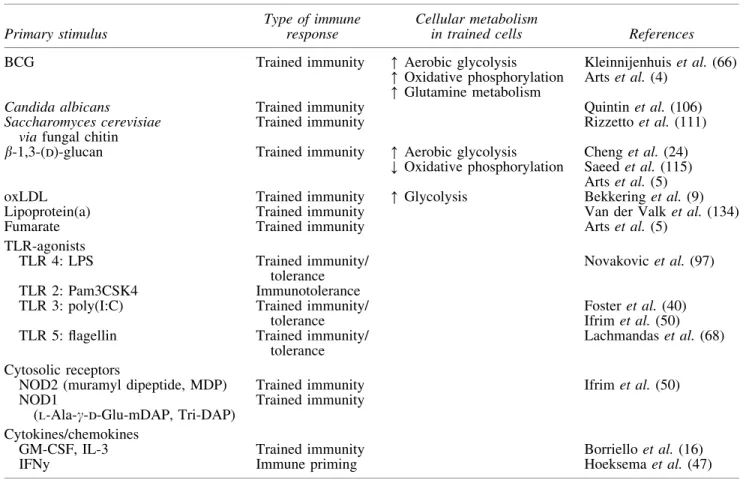
atherosclerosis in rabbits fed a cholesterol-rich diet (69). In contrast, other studies have reported a protective effect in atherosclerosis-prone mice (100, 131), which might be due to its cholesterol-lowering action. Perhaps most compelling are recent observations that nonmicrobial products, including lipoproteins that are known drivers of cardiovascular disease, can also induce trained immunity (Table 1).In vitro stimu-lation of human primary monocytes with a low concentration of oxidized low-density lipoprotein (oxLDL) programs a sustained atherogenic macrophage phenotype that is char-acterized by elevated expression of CD36 and SR-A scav-enger receptors leading to enhanced foam cell formation, as well as amplified proinflammatory cytokine production and matrix metalloprotease expression (9). Similarly, brief ex-posure to lipoprotein(a) induces a proinflammatory pheno-type in monocytes that are restimulatedin vitro(134). Indeed, circulating monocytes isolated from patients with symp-tomatic atherosclerosis exhibit a proinflammatory phenotype compared with cells isolated from healthy controls (10). This effect was also observed in patients with an increased car-diovascular risk due to elevated circulating levels of lipo-protein(a) (134).
These findings convey the concept that trained immunity is a biological process with broad implications for cardiovas-cular disease (59). Such a model implies that monocytes are stimulated by environmental signals in the circulation that could induce epigenetic reprogramming, thereby increasing their responsiveness to secondary stimulation, for instance within the arterial wall or atherosclerotic plaque. The ability
Table 1. Inducers of Innate Immune Memory in Monocytes
Primary stimulus
Type of immune response
Cellular metabolism
in trained cells References
BCG Trained immunity [Aerobic glycolysis Kleinnijenhuiset al.(66)
Artset al.(4)
[Oxidative phosphorylation
[Glutamine metabolism
Candida albicans Trained immunity Quintinet al.(106)
Saccharomyces cerevisiae viafungal chitin
Trained immunity Rizzettoet al.(111)
b-1,3-(d)-glucan Trained immunity [Aerobic glycolysis
YOxidative phosphorylation
Chenget al.(24) Saeedet al.(115) Artset al.(5)
oxLDL Trained immunity [Glycolysis Bekkeringet al.(9)
Lipoprotein(a) Trained immunity Van der Valket al.(134)
Fumarate Trained immunity Artset al.(5)
TLR-agonists
TLR 4: LPS Trained immunity/
tolerance
Novakovicet al.(97)
TLR 2: Pam3CSK4 Immunotolerance
TLR 3: poly(I:C) Trained immunity/ tolerance
Fosteret al.(40) Ifrimet al.(50) Lachmandaset al.(68) TLR 5: flagellin Trained immunity/
tolerance Cytosolic receptors
NOD2 (muramyl dipeptide, MDP) Trained immunity Ifrimet al.(50) NOD1
(l-Ala-c-d-Glu-mDAP, Tri-DAP)
Trained immunity Cytokines/chemokines
GM-CSF, IL-3 Trained immunity Borrielloet al.(16)
IFNy Immune priming Hoeksemaet al.(47)
for macrophages to adopt unique properties as a function of their microenvironment raises important considerations for macrophage populations in atherosclerotic lesions that are hypoxic, as well as rupture-prone versus stable plaques. Further, accelerated atherosclerosis remains the principal cause of morbidity and premature mortality in patients with diabetes mellitus (81), and a role for trained immunity in diabetic versus normoglycemic environments warrants ex-ploration (59, 135). Several other factors associated with metabolic disease such as free fatty acids, uric acid, and ad-vanced glycation end-products elicit inflammatory responses in monocytes via pattern recognition receptor stimulation, raising the unexplored possibility that they too could induce functional reprogramming and innate immune memory in the context of cardiovascular complications (30, 135).
Cellular metabolism determines the phenotype of innate immune cells
The extensive range of physiological macrophage functions in host defense and maintenance of tissue homeostasis neces-sitates a broad spectrum of precisely regulated states of mac-rophage activation. Although it has long been appreciated that changes in oxygen and glucose consumption accommodate the metabolic requirements of activated macrophages, the impor-tance of intracellular metabolism for shaping the immune re-sponse has only recently emerged (98). Moreover, engagement of distinct metabolic pathways not only follows energy re-quirements but also distinguishes and supports discrete mac-rophage phenotypes. This metabolic reprogramming is best exemplified by the polarization of classically activated (M1 or M[IFNc]) and alternatively activated (M2 or M[IL-4]) macrophages. Paralleling their respective pro- and anti-inflammatory phenotypes, these subtypes are characterized by distinct arginine metabolism as well as by differences in fatty acid synthesis and usage [recently reviewed by Van den Bosscheet al.(133)]. Although glycolytic metabolism is up-regulated across both polarized states, activation of the pentose phosphate pathway (PPP) is only observed in classically acti-vated macrophages, where it supports inflammatory responses by generating amino acids for protein synthesis, nucleotides for proliferation, as well as NADPH for the production of reactive oxygen species that are necessary for phagocytic killing (98). Though energetically less efficient than mitochondrial oxi-dative phosphorylation (OXPHOS), the relatively rapid ex-pandability of glycolysis allows faster production of ATP to meet cellular requirements (90, 98). In alternatively activated macrophages, these biochemical processes remain coupled: Enhanced glycolytic generation of pyruvate fuels the tricar-boxylic acid (TCA) cycle and parallels the induction of OXPHOS (132). This contrasts sharply with inflammatory macrophages, which are characterized by impaired OXPHOS and anabolic repurposing of the TCA cycle (98, 133). This metabolic shift is comparable to theWarburg effect charac-teristic of cancer metabolism that amends tumor cells to hypoxic environments by upregulating glycolytic gene ex-pression via the hypoxia-inducible factor 1 alpha (HIF1a) transcription factor (TF) (125, 141). Further, instead of feeding into the TCA cycle to ultimately fuel OXPHOS, pyruvate is fermented to lactate by HIF1a-dependent pathways. A similar process drives the glycolytic switch in inflammatory macro-phages despite the availability of oxygen (98, 132).
Cellular metabolism orchestrates innate immune memory. A metabolic switch comparable to that of classically ac-tivated macrophages underlies the adapted phenotype in-duced byb-glucan training. Stimulation of human monocytes withb-glucan induces glycolysis paralleling elevated glucose consumption and increased pyruvate to lactate conversion (24). Moreover, markedly reduced oxygen consumption in
b-glucan-trained macrophages indicates a concomitant re-duction in OXPHOS (24). Recent studies reported long-term upregulation of glycolytic rate-limiting enzymes in circulat-ing monocytes from individuals vaccinated with BCG and demonstrated that genetic variation in hexokinase 2 and phosphofructokinase modulates induction of trained immu-nity (4). Contrasting the classical Warburg switch induced by
b-glucan, the immunometabolic profile of BCG training is characterized not only by increased glycolysis and lactate production but also by augmented oxygen consumption (4). However, inhibition of the electronic transport chain did not alter the reprogramming of macrophages in BCG training, demonstrating the secondary role of OXPHOS in develop-ment of the adapted phenotype (4). By contrast, inhibition of glycolysis with 2-deoxyglucose abrogated BCG training. Further, inhibition of the Akt/mechanistic target of rapa-mycin (mTOR)/HIF1apathway at several stages abolished training by b-glucan and BCG in vitro as well as experi-mental animals (4, 24). Emphasizing the relevance of this pathway in humans, administration of the antidiabetic drug and indirect mTOR inhibitor metformin decreased the ability for circulating monocytes to mount a trained responseex vivo
tob-glucan exposure in healthy individuals (5). Interestingly, the PPP was also found to be upregulated inb-glucan-trained cells. However, evidence so far suggests that the role of the PPP in trained immunity is relatively small, since inhibition of this pathway had no effect on the adapted phenotype (5). The relevance of this metabolic rewiring in the context of atherosclerosis is illustrated by the consistent finding that glycolytic enzymes are upregulated in monocytes and monocyte-derived macrophages that are isolated from patients with established atherosclerosis (10, 119).
Despite the metabolic skewing ofb-glucan-trained mac-rophages toward glycolysis, concentrations of the TCA cycle metabolites citrate, succinate, malate, fumarate, and 2-hydroxyglutarate are increased in comparison to naive macrophages (5). This suggested that the TCA cycle was not entirely adjourned and led to the speculation that these specific metabolites were being replenished through glu-taminolysis (5). Indeed, increased glutamine metabolism was one of the consistent immunometabolic changes in macrophages trained with b-glucan and BCG (4, 5, 24), and it plays an important role in immune activation (120). Demonstrating the importance of this process, the gluta-minase inhibitor BPTES blocked the induction of trained immunity by b-glucan (5) and BCG (4) in vitro and in experimental animal models (5).
Immunometabolic pathways that are important for the functional reprogramming of immune cells extend beyond those involved in glucose metabolism and OXPHOS. Cells trained withb-glucan displayed upregulation of more than half of the genes involved in cholesterol biosythesis, identi-fying this pathway together with glutaminolysis and glycol-ysis as one of the most essential for innate immune training (5). Underlining the importance of the cholesterol synthesis
pathway even further, treatment with the HMG-CoA-reductase atorvastatin attenuated b-glucan-induced innate immune training in a murine model (5). Since, next to sterols, the essential lipids in the human cell membrane are phos-pholipids and glycolipids, fatty acid synthesis is also an im-portant pathway in immune cell function (133). Indeed, recent data indicate that inflammatory stimuli such as LPS and cytokines trigger an increase in fatty acid synthesis in macrophages (5). However, in contrast to the abrogation of training when cholesterol synthesis was inhibited, blockade of fatty acid synthesis did not alter the proinflammatory macrophage phenotype induced byb-glucan training (5).
Molecular mechanisms of macrophage memory. For a monocyte, memories of past encounters with microbial products can be truly transformative insofar as they can elicit vastly different future responses to microbial ligands. The gross implication of training or tolerance is a fundamental phenotypic shift involving changes to major metabolic and signaling pathways that facilitate the overall cellular mem-ory. Underlying much of this reprogramming are widespread transcriptional changes associated with metabolic pathways, many of which occur early in the training regimen and pre-cede the adapted phenotype (5).
Because distinct cell types and subtypes of multicellular organisms arise from identical genetic material, gene control and expression are fundamental determinants of differentia-tion and phenotype. However much remains to be understood about how genetic information is interpreted by individual cells in health and disease. Only when we unravel the DNA strands to appreciate the constituent assembly of chromatin can we begin to recognize the complexity of genome orga-nization and regulation (29).
Chromatin reorganization and innate immune memory Epigenetic regulation of gene expression. Gene tran-scription is tightly controlled by the interplay and long-range communication of regulatory events at gene promoters that are proximal to the transcription start site and distal genetic ele-ments called enhancers (21). Accessibility of the DNA to protein TFs and other transcriptional machinery at these reg-ulatory regions is essential for gene expression. The dynamic polymer of DNA and nucleosomal histone proteins known as chromatin facilitates functional compartmentalization of the genome to assemble structurally open, transcriptionally per-missive configurations or condensed, repressive domains (57). Since the initial description of the nucleosome particle as the repeating unit of chromatin in 1977 (39), it has become in-creasingly clear that core nucleosome components are distin-guishable by post-translational chemical modification and instructive of chromatin architecture (54, 136).
Histone modifications influence chromatin structure and function. The octameric nucleosome is composed of four core histone proteins: two H3 and H4 homodimers and two H2A/H2B heterodimers, encircled by*147 bp of DNA (57). Unstructured N-terminal histone tails that extend from nu-cleosomes are substrate for post-translational enzymatic modifications, which are cooperatively associated with var-ious states of transcriptional competency and chromatin
or-ganization. Amid a vast repertoire of histone modifications (73), acetylation (lysine residues) and methylation (arginine and lysine residues) are the most broadly studied and ex-tensively characterized (Fig. 2). The capacity for histone modifications to designate functional genomic regions and support transcriptional processes significantly amplifies the information potential of the genetic code through mecha-nisms that modulate chromatin structure and function. Their influence on higher order chromatin accessibility is pre-dominantly facilitated by establishing high-affinity bind-ing sites for the recruitment of chromatin readers: core transcriptional machinery, as well as multisubunit protein complexes that actively restructure, relocate, install, or evict nucleosomes (7).
Histone acetylation. Histone acetylation, for example at lysine-9 (H3K9ac) and lysine-27 (H3 histone-lysine-27 acetylation [H3K27ac]) of H3 histones, almost exclusively demarcates transcriptional competency (35). In addition to promoting open chromatin architecture by neutralizing the electrostatic charges on the histone tail and subsequently altering interactions with adjacent nucleosome compo-nents (55), acetylated histones are recognized and bound by bromodomains—a structural motif found in specialized chromatin reader proteins (116). Components of many histone acetyltransferase (HAT) complexes harbor bromodomains, which anchor the HAT complexes to acetylated chromatin, allowing them to propagate the acetyl signature to adjacent nucleosomes. Similarly, the bromodomain components of ATP-dependent chromatin remodeling complexes are critical for their recruitment to acetylated promoters (55). Another class of histone-acetyl readers known as the bromodomain and extra-terminal (BET) domain-containing family of pro-teins can regulate gene expression by recruiting TFs as well as chromatin remodeling complexes, and they are increasingly implicated in transcriptional responses that are associated with inflammation (59) and innate immunity (94, 110). Histone modifications are reversible, and their presence on the chro-matin is determined by opposing activities of enzymatic writers and erasers. Histone deacetylase (HDAC) enzymes remove acetyl groups from histone tails. Thus, HAT/HDAC activity balance is an important determinant of gene regula-tion, and it has accordingly emerged as a potential therapeutic target for the treatment of various diseases (48, 62, 108, 127). Histone methylation. Contrasting histone acetylation, the position of the modified residue within the histone tail deter-mines the functional readout of histone methylation. Reg-ulatory elements of repressed genes are often characterized by H3 histones that are methylated at lysine-9 and lysine-27. Conversely, methylation of lysine-4 and lysine-36 is associ-ated with the assembly of transcriptionally permissive chro-matin structures. Enzymes that catalyze the transfer (lysine methyltransferase [KMT]) and removal (lysine demethylase [KDM]) of histone methylation demonstrate remarkable speci-ficity toward amino acid positions within the histone tail (51). Further, specific enzymes and complexes determine the extent of individual lysine methylation: Mono- (m1), di- (m2), or trimethylated (m3) histone lysine residues are differen-tially distributed across chromatin and attributed discrete functional roles in gene regulation. Transcriptional activity positively correlates with the degree of H3 histone-lysine-4
trimethylation (H3K4m3) at gene promoters (11). On the other hand, monomethylation of this residue (H3 histone-lysine-4 monomethylation [H3K4m1]) is a stereotypical fea-ture of enhancers (6). Specialized protein domains, including the chromodomain, tudor domain, malignant brain tumor (MBT) domain, and the plant homeodomain (PHD) finger domain, interpret methylated histones by recruiting various chromatin-remodeling complexes (49, 128).
DNA methylation regulates gene expression. The epi-genetic methyl modification is unique in the way that in addition to histones, it can also be written directly to the DNA template. Again, the genomic location of the modification is key to the functional outcome. Postreplicative methylation of the 5-carbon ring of cytosine nucleotides (5-methylcytosine, 5mc) immedi-ately adjacent to guanine residues (5¢ -cytosine-phosphate-guanine-3¢ dinucleotide [CpG]) is primarily associated with promoter silencing by two main mechanisms. First, 5mc is mechanistically interpreted by proteins possessing the methyl-CpG-binding domain, which, in turn, recruit transcriptional re-pressors and chromatin remodeling complexes to establish transcriptionally incompetent chromatin (43). Second, 5mc can physically modulate the binding of TFs to gene regulatory ele-ments (52). On the other hand, 5mc regulates gene splicing, transcriptional elongation, and distal regulatory activities of highly transcribed genes (53). Recent advances in
methyl-capture and sequencing technologies have propelled efforts to characterize the DNA methylome across various tissues and disease states, including myeloid differentiation (2, 37), mac-rophage polarization (140), and cytokine production (151).
Epigenetic cross-talk. The emerging picture of epigenetic regulation is one of remarkable complexity. Protein complexes that read chromatin marks can further recruit certain classes of epigenetic enzymes that cooperatively shape the chromatin landscape. For example, binding of heterochromatin protein 1 (HP1)viaits chromodomain to H3K9m2/3 promotes further repressive methyl marks by enlisting additional KMTs, as well as DNA methyltransferases (41, 124). Together with the ac-tivities of short (micro RNAs [miRNAs]) and long noncoding RNA (lncRNA), histone and DNA modifications are collec-tively defined as epigenetic (80). Through complex interactions with TF networks and other transcriptional machinery, epige-netic modifications collaboratively support the functional ex-change between repressed and active states of chromatin to contextualize gene expression.
Chromatin modifications associated with macrophage differentiation and identity
Epigenome-wide variations underlying cellular function and fate are definable at unprecedented resolution by current FIG. 2. Post-translational che-mical modifications distinguish between chromatin architecture and transcriptional competency. As the repeating structural unit of chromatin, the nucleosome consists of*147 bp of DNA wrapped around an octamer of the core histone pro-teins H2A, H2B, H3, and H4. Un-structured N-terminal histone tails are substrate for a variety of post-translational modifications, which are dynamically written to and erased from specific amino acid residues by specialized enzymes. Shown here are lysine modifications that occur on the tails of H3 and H4 histones. Histone lysine acetylation (orange hexagons) is ubiquitously associated with tran-scriptional competency and is regu-lated by the competing activities of HAT and deacetylase (HDAC) en-zymes. By contrast, the extent of modification and the position of the modified residue within the histone tail determine the functional readout of histone lysine methylation (purple hexagons). The influence of histone modifications on higher order chro-matin accessibility is predomi-nantly facilitated by establishing high-affinity binding sites for the recruitment of protein complexes that actively remodel chromatin. HAT, histone acetyltransferase; HDAC, histone deacetylase; K, ly-sine; KDM, lysine demethylase; KMT, lysine methyltransferase.
analytical technologies. To this end, the importance of histone modifications to cellular identity is underscored by the massive reconfiguration of lysine methylation and acetylation patterns at gene regulatory elements during naive monocyte to mac-rophage differentiation (97, 115). Crucially, the intersection of transcriptome and epigenome profiles revealed a positive correlation between transcriptionally permissive H3 histone modifications and the activity of regulatory elements (115). The most dynamic of these changes were observed for H3 acetylation, with one report describing approximately equal numbers of promoters exhibiting significant enrichment or depletion of H3K27ac (97, 115).
A similar pattern of H3K27ac was observed at distal en-hancer regions on differentiation, with 1894 and 2142 regions displaying significant loss and gain of this modification, re-spectively (115), in accordance with the function of enhancers as key determinants of cell identity, especially within the my-eloid lineage. The complements of active enhancer elements in a given tissue are typically co-occupied by combinations of lineage-determining TFs enforcing tissue- and cell-type-specific programs of gene expression (45, 99). Enhancers are distin-guished from promoters by their specific enrichment of H3K4m1 (6) and can be classified as active or poised de-pending on the presence or absence of H3K27ac (45). A comprehensive study of hematopoiesis in mice revealed that a significant proportion of lineage-specific enhancers are established de novo in parallel with H3K4m1 enrichment. Further, clear distinctions were observed across the respective enhancer repertoires after the definitive differentiation step from monocyte to macrophage (71). Enrichment of H3K27ac during human macrophage differentiation is often accompa-nied by increased deposition of H3K4m1. By contrast, a ma-jority of sites that lose H3K27ac retain their H3K4m1 signature and remain sensitive to cleavage by DNase I due to their open chromatin architecture (115).
Epigenomic patterns distinguish training and toler-ance. Because many studies reporting adaptive characteris-tics of the innate immune system predate the modern era of molecular biology, insufficient understanding at the molecular level meant that the magnitude of this process was perhaps underappreciated. Although much detail remains to be eluci-dated, several studies published in recent years demonstrate the essential role of epigenetic reprogramming in innate im-mune memory across various phyla (93, 96, 105, 112, 126). These seminal findings not only shed light on the molecular mechanisms underlying the capacity for monocytes to inte-grate micro-environmental experiences into their programs of gene expression that is a type of chromatin-based memory but also emphasize the potential reversibility of innate immune phenotypes (97).
Several studies describe the enrichment of H3K4m3 at promoters associated with trained immunity, for instance at genes encoding proinflammatory cytokines and intracellular signaling molecules after stimulation with b-glucan (106, 115), as well as at promoters of genes implicated in athero-genesis in cells trained with oxLDL (9). Further, the heter-ologous benefit of BCG vaccination is associated with persistent H3K4m3 enrichment at the promoters of genes encoding TNFa, IL6, and TLR4 (66). Similarly, H3K4m3 distinguishes attenuated (tolerizable) and induced ( non-tolerizable) genes in immune tolerance. Although promoters
of both classes of genes are trimethylated at H3K4 on LPS stimulation, this mark is selectively maintained at non-tolerizable promoters after restimulation (40). The positive correlation of H3K4m3 and transcriptional activity is well described across various organisms and cell types (6, 72, 114). Accordingly, inhibition of this modification by using the pan-methyltransferase inhibitor 5¢-methylthioadenosine (MTA) precludes the adapted phenotypes induced by b -glucan (50), BCG (66), and oxLDL (9).
Although quantifying H3K4m3 can be informative of transcriptional competency or activity at discrete loci, it hardly exhausts the broad regulatory potential for histone modifications in innate immune memory. Recent deep se-quencing analyses revealed distinct epigenomic signatures that are characteristic of trained immunity and tolerance (24, 97, 115). By generating epigenome-wide maps of H3K4m1, H3K4m3, H3K27ac, and DNase I sensitivity, Saeed et al.
(115) defined distinct clusters of genomic regions reflecting putative transcriptional regulatory elements. Importantly, several of these clusters are differentially modulated in b -glucan training and LPS tolerance. This is most apparent at *500 promoters that concurrently gain H3K27ac and H3K4m3 exclusively inb-glucan-trained cells (115). Para-lleling naive monocytes,b-glucan treatment results in partial establishment of macrophage-specific regions within the first 24 h of thein vitrotraining protocol. In contrast, LPS-treated cells exhibited stunted differentiation and delayed establish-ment of chromatin marks. This temporal observation is con-sistent with a failure of LPS-tolerized macrophages to deposit active histone marks at promoters of tolerized loci in response to a second LPS stimulation, including genes associated with lipid metabolism and phagocytic pathways (97).
Most remarkable, however, is the epigenetic distinction observed across the respective repertoires of distal enhanc-ers within these phenotypic extremes of the innate immune memory spectrum (97, 115). LPS andb-glucan pretreatment induced a distinct set of enhancers generating signal-dependent differences in gene expression. Some enhancer regions (1212) show consistent enrichment of H3K27ac across both treatment conditions, whereas more than 40% of all dynamic enhancers gainde novoH3K27ac exclusively in cells trained withb-glucan. On the other hand, acetylation of a much smaller subset of enhancers is restricted to LPS-tolerized cells (115). Taken together, these studies suggest thatb-glucan induces comprehensive epigenetic rewiring of promoters and enhancers, whereas LPS tolerance is charac-terized by a subtle epigenetic signature closely reflecting that of naive macrophages.
The epigenome modulating effects ofb-glucan were further exemplified by the exciting finding that it can partially reverse LPS tolerance. Exposure of LPS-tolerized cells tob-glucan for 24 h in vitro restored their capacity for cytokine production (97). Importantly, this reversal of immunoparalysis to a more responsive phenotype was also observed in monocytes isolated from volunteers with experimental endotoxemia restimulated withb-glucanex vivo. The effects ofb-glucan were demon-strated by the reinstitution of the transcriptional response to LPS at otherwise tolerized genes. This process was associ-ated with the restoration of H3K27ac at enhancers previ-ously precluded by LPS exposure, demonstrating the ability for b-glucan to effectively erase and reprogram innate im-mune memory. These findings indicate thatb-glucan-induced
receptor pathways remain at least partially responsive in LPS-tolerized cells, and they could lead to novel immuno-modulatory strategies for the clinical management of sepsis (97).
DNA methylation in innate immune memory. Despite its historically robust associations with genome organization and transcriptional regulation, much less is known about the po-tential role of DNA methylation in innate immune memory. Epigenome-wide analyses have demonstrated a general loss of 5mc duringex vivomonocyte to macrophage differentiation (97, 138). The vast majority of differentially methylated re-gions occurred at distal enhancers, with only a small fraction enriched at gene promoters. In terms of macrophage subtypes, a distinct methylation pattern was observed for LPS-treated cells. On the other hand, the methylome ofb-glucan-treated cells more closely resembled that of naive macrophages (97). Similar to its histone counterpart, 5mc is enzymatically re-versible. The first step of this process requires oxidation of 5mc by the ten-eleven-translocation (TET) family of dioxygenases (18) to generate 5-hydroxymethylcytosine (5hmc). This vari-ant can then be further processed to formylcytosine and 5-carboxylcytosine—newly characterized epigenetic marks that appear to be associated with silenced (26), poised (122), or activated (109) enhancer elements. The importance of 5mc and 5hmc dynamics in the course of innate immune memory re-mains an open question. The answer necessitates an ability to accurately distinguish these variants of cytosine methylation. The method used by the aforementioned study (97), bisulfite sequencing, is the gold standard for 5mc analysis and in-volves the conversion of unmethylated cytosine residues to uracil. Importantly, both 5mc and 5hmc are resistant to bi-sulfite conversion (121), meaning that DNA demethylation could be underestimated by using this method. By extension, such a method of analysis confounds the discovery of 5hmc-specific functions in genome regulation. To this end, a recent study highlights advantages and caveats of commonly used epigenome-wide 5hmc profiling technologies and
demon-strates that the interpretation of 5hmc data is significantly influenced by the sensitivity of the method used (121).
Transcriptional and epigenetic memory
The biological consequences of this epigenetic repro-gramming are numerous and varied. Where they intersect is at the level of transcriptional regulation; however, the precise mechanisms of this control require further investigation. Among the catalogue of gene expression changes associated with innate immune memory is a subset of genes whose pattern of expression reveals a profound transcriptional memory. Within this cluster, a broad distinction can be drawn between genes that are primed for transcriptional activation and those that are persistently altered.
A recently emerged paradigm of primed transcriptional memory centers on the induction ofde novoor latent en-hancers (99). In unstimulated macrophages, these genomic regions are unbound by TFs and are largely devoid of the histone modifications that are characteristic of distal regu-latory elements. However, they acquire signature epigenetic features of enhancers such as an open chromatin architec-ture marked by H3K4m1 and H3K27ac in response to spe-cific stimuli. On removal of the activating stimulus, Ostuni
et al. (99) demonstrated the persistence of H3K4m1 de-spite loss of H3K27ac at a fraction of decommissionedde novo enhancers. Moreover, the enhancers that retained the H3K4m1 signature exhibited a stronger response to rechallenge (Fig. 3). This chromatin-dependent transcrip-tional memory may at least partly explain the differential activation of enhancer repertoires, supporting the unique phenotypic properties adopted by macrophages as a func-tion of anatomical locafunc-tion (42), and similar mechanisms are likely to shape chromatin architectures that are asso-ciated with innate immune memory. Indeed, the dynamics and genomic locations of H3K4m1-marked enhancers differ significantly betweenb-glucan training and LPS tolerance (97). Further, these findings are reminiscent of previous descriptions
FIG. 3. Latent enhancers prime a transcriptional memory in macrophages. Constitutively un-marked distal regulatory elements acquire signature epigenetic fea-tures of enhancers such as an open chromatin architecture marked by H3K4m1 and H3K27ac in response to specific stimuli. On removal of the activating stimulus, regions that retain the H3K4m1 enrichment me-diate a faster and more robust re-sponse to restimulation, supporting a role for this specific modification in the epigenetic memory of mac-rophages. H3K27ac, H3 histone-lysine-27 acetylation; H3K4m1, H3 histone-lysine-4 monomethylation.
of H3K4m1-dependent metabolic memory in monocytes and other cell types (57).
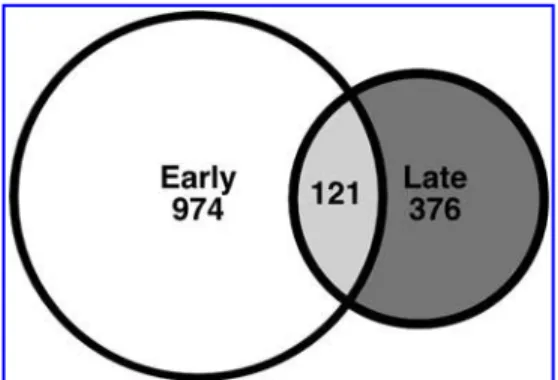
Contrasting primed memory, persistent memory is charac-terized by transcriptional activity that is sustained beyond removal of the activating stimulus. Monomethylation of H3K4 underlies persistent, high-glucose-mediated pro-inflammatory gene expression that is refractory to glycemic correction in vascular endothelial models of glycemic vari-ability and diabetic mice (17). This epigenetic signature, written by the Set7 KMT, was later observed in monocytes of diabetic patients (101). Intersection of the transcriptome data from early and late timepoints described by Novakovicet al.
(97) reveals a cluster of genes whose transcriptional response tob-glucan is maintained for 5 days in culture (Fig. 4). This includes genes downregulated 24 h after stimulation that are also downregulated on day 6, as well as genes upregulated on day 1 that remain in a state of heightened transcriptional activity for the duration of the experiment. Of course, this is a simplification as the activity of some genes may oscillate between altered and basal transcriptional states at interme-diate time points. Nonetheless, this model may provide a useful framework to understand changes in gene expression that are associated with metabolic and other pathways that occur early in the process of trained immunity and support the phenotype of fully differentiated, trained macrophages. Discernment of the epigenetic proponents of persistent gene expression will inform about not only mechanisms that sus-tain the memories of macrophages but also long-term epi-genetic programming of myeloid cells.
The heterologous protection conferred by vaccination with BCG far exceeds the lifespan of innate immune cells in the circulation (66). The remarkable finding that the trained phenotype and gene-specific H3K4m3 enrichment can be observed 3 months and even up to 1 year after vaccination has inspired interest in the physiological mechanisms mediating innate immune memory at the level of immune progenitor cells. Myeloid cell progenitors can mediate long-term TLR2-induced tolerance (146); however, much less is known about this process in trained immunity. Evolutionary conservation
of innate immune memory across various phyla provides valuable opportunities to understand this biological process in humans (60). Using an experimental infection model, Torreet al.recently demonstrated that the induction of innate immune memory in planarians (phylum Platyhelminthes) is driven by a specific population of pluripotent stem cells (126). Although much controversy surrounds the transmissibility of histone modifications across generations in vertebrates, the role of DNA (de)methylation in myeloid differentiation is actively investigated (2, 137). Further, the heritability and potent gene-regulating functions of 5mc underscore the en-thusiasm surrounding the role of this modification in sus-taining cellular memories (14). Future studies should aim at characterizing the DNA methylomes of myeloid progenitors and terminally differentiated cells in the broader context of innate immune memory.
In light of the epigenetic changes and different modes of transcriptional memory that define innate immune memory, a key challenge is to understand the operational epigenetic machinery (145). Several epigenetic enzymes have been cently associated with macrophage function [recently re-viewed by Hoeksema and de Winther (45)]; however, their roles in training and tolerance remain untested. One study reported significant upregulation of Set7 in response to b -glucan training (115). Although the importance of the MLL1 KMT to epigenetic enhancer signatures in macrophages has been recently described for processes such as TLR4 signaling (56, 65), the potential role of Set7 remains to be established. As an interesting link to metabolic regulation, genes encod-ing KDMs JMJD1A and JMJD2B are transcriptionally acti-vated by HIF1ain response to hypoxia in primary epithelial cells as well as transformed cell lines (12, 67). In this search for epigenetic regulators, another potentially important clue was revealed by the study of Torreet al.(126). The trained phenotype of planarians is dependent on a KMT that shares homology with human Set8. This enzyme specifically methylates lysine 20 on H4 histones (87), a modification that is yet to be explored in the innate immune memory of ver-tebrates (60).
Recent evidence suggests that the identities of some of the factors responsible for the myriad epigenetic changes gov-erning innate immune memory may be revealed through a deeper understanding of upstream signaling events that sus-tain epigenetic pathways and shape the deposition of chro-matin marks (91).
Epigenetics and immunometabolism
Inhibition of either glycolysis or mTOR signaling inter-rupts the characteristic chromatin modification pattern and adapted phenotype of trained immunity, confirming a role for metabolic changes in epigenetic reprogramming. Further linking metabolic rewiring of cellular metabolism with innate immune memory, evidence increasingly supports the inte-gration of metabolic information and transcriptional control
viathe enzymatic consumption of metabolites in epigenetic reactions (57). Specifically, the enzymatic activities of many chromatin modifiers are regulated, in part, by concentrations of metabolic intermediates (32). Fluctuating metabolite concentrations, therefore, potentiate continual adjustment of gene expression by modulating the epigenome to influence chromatin dynamics (57).
FIG. 4. Training with b-glucan induces a program of persistent transcriptional memory. Persistent transcrip-tional memory is characterized by transcriptranscrip-tional activity that is sustained beyond removal of the activating stimulus. In-tersection of transcriptome data derived from macrophages at early (24 h) and late (6 days) time points post b-glucan stimulation described by Novakovicet al.(97) (GSE85246) reveals a cluster of 121 genes whose transcriptional response is maintained for the duration of the experiment.
It is, therefore, reasonable to speculate that the profound metabolic changes associated with trained immunity could sustain epigenetic patterns or drive further alterations to the chromatin landscape at important regulatory regions through an interesting interplay between metabolites and gene regula-tion. Critical metabolic intermediates such as NAD+ and acetyl-CoA, which are altered inb-glucan-trained monocytes (24, 91), serve as cofactors or substrates for numerous HDACs and HATs, respectively (Fig. 5). The methylome is also sen-sitive to metabolic variation through changes to cellular levels ofa-ketoglutarate, an essential cofactor for several lysine and cytosine demethylating enzymes (57, 82). Importantly, TCA cycle intermediates succinate and fumarate can inhibit certain demethylation reactions (143). The striking elevation of suc-cinate and fumarate induced by the metabolic rewiring of trained macrophages, therefore, represents a plausible mech-anism behind the integration of immunometabolic and epige-netic programs in trained immunity.
Drawing on these molecular interactions, we recently demonstrated that the accumulation of fumarate as a function
of glutamine replenishment of the TCA cycle connects im-mune pathways with epigenetic programs by inhibiting the H3K4 demethylase KDM5, thereby elevating the enrichment of H3K4me3 at the promoters of genes encoding proin-flammatory cytokines (5). Moreover, exogenous fumarate it-self induces a trained macrophage phenotype in terms of cytokine production that is again abolished by inhibition of glutaminolysis and glycolysis. At the epigenomic level, fu-marate training echoes a proportion of the chromatin patterns induced byb-glucan, implicating its probable involvement in at least partially mediating the effects of classical training stimuli. Perhaps most remarkable is the observation that fu-marate positively regulates transcription of genes encoding KDM5 isoforms, in addition to the epigenetic activity of these enzymes. From this interplay emerges a regulatory dichotomy with relevance for trained immunity: KDM5 activity and the downstream increases in cytokine production mediated by fumarate were attenuated bya-ketoglutarate (83).
Another important observation transpiring from this study was the induction of H3K27ac in cells trained with fumarate (5). This raises two main possibilities. First, fumarate could positively regulate the expression of genes encoding HATs or, reciprocally, negatively regulate HDAC gene expression by inhibiting demethylation of active chromatin marks. Sec-ond, fumarate inhibits KDM5 demethylases to regulate the chromatin-modifying activities of HATs or HDACs by altering their post-translational lysine methylation status (Fig. 5).
Finally, other metabolites could directly influence epige-netic regulation by mechanisms that are yet to be thoroughly characterized. A pertinent example is succinylation—a post-translational modification of proteins in which a succinyl group is added to a lysine residue from succinyl-CoA (153). In ac-cordance with the marked increases observed for succinate in trained immunity, lysine succinylation is considered an in-flammatory signal for innate immune cells (125). Importantly, this modification is written to several sites of histone tails in human and yeast cells (144). Although details of the functional consequences of histone succinylation are currently un-described, this modification induces a structural chromatin change that is greater than the change caused by lysine acet-ylation, by converting a positively charged residue to a nega-tive charge (144). Future studies are predicted to strengthen this regulatory connection between chromatin biology and the metabolic characteristics of innate immune memory.
Multiple roles for lysine methylation in innate immune memory
The very definition of epigenetics has drawn its share of recent criticism (86), though perhaps largely from argument that is more semantic than biologic and stemming from an etymology rooted in developmental biology and heredity (139). It is now clear that epigenetic processes are not only restricted to roles in development but also shape the pheno-types of nondividing cells. Certainly more deserving of at-tention is the controversy surrounding the hierarchical significance of epigenetic modifications in gene expression. A stringent interpretation of the histone code hypothesis (51) tends to attribute regulatory primacy to chromatin modifi-cations while appreciating that TFs bind specific DNA se-quences to activate nearby genes. However, rather than displace the long-standing importance of TFs, the emerging FIG. 5. Chromatin modifications unite
immunometa-bolism and gene expression. The activities of many chromatin-modifying enzymes are regulated in part by con-centrations of intermediates of energy metabolism. Re-purposing of the TCA cycle modulates the epigenome of trained immunity. Members of the sirtuin family of HDAC enzymes are sensitive to intracellular NAD+/NADH ratios. Acetyl-CoA is the essential acetyl group donor to lysine acetylation (by HATs), linking intermediary carbon metabo-lism with chromatin dynamics and transcription. Histone ly-sine demethylating events are influenced by the elevated levels of succinate and fumarate that are associated with metabolic rewiring of trained macrophages. In particular, fumarate inhibits KDMs, thereby elevating the enrichment of H3K4m3 at the promoters of genes encoding proin-flammatory cytokines. H3K4m3, H3 histone-lysine-4 tri-methylation; TCA, tricarboxylic acid.
picture is one where epigenetic enzymes and chromatin modifications synergize with traditional regulators of tran-scription. To this end, a conceptual framework that en-compasses the molecular tagging of chromatin components to designate functional genomic regions and support tran-scriptional responses to distinct signaling cues is consistent with the current understanding of gene regulation.
Though not entirely overlooked, the role of TF networks for the induction of innate immune memory has not received the same attention as chromatin modifications. Approxi-mately 12% of known TFs are variably expressed during macrophage differentiation, tolerance, and training (115). Further, discrete binding motifs within condition-specific dynamic epigenomic regions indicate the importance of particular TFs for the distinct transcriptional programs of trained and tolerized macrophages (97, 115).
Although pre-treatment with a pan-methylation inhibitor impedes the epigenetic rewiring and, consequently, blocks the adapted phenotype of trained cells (9, 50, 66), histones and DNA are not the only gene-regulating factors modulated by methylation. Post-translational methylation has in recent years emerged as a ubiquitous and pivotal determinant of TF stability and trans-activity, revealing the dual regulatory roles of KMTs and KDMs in histone-dependent and -independent mechanisms of transcription (Fig. 6) (22, 70). Similar regu-latory functions are attributed to post-translational lysine acetylation (102, 123). Of particular relevance to the induc-tion of innate immune memory for its potential influence on cellular metabolism is the post-translational methylation re-cently shown to regulate HIF1a function. Set7-mediated methylation of HIF1adiminishes its occupancy on glycolytic gene promoters, thereby inhibiting gene expression (78). Importantly, this modification is reversed by lysine-specific histone demethylase 1 (LSD1) (64), an epigenetic enzyme that is influenced by cellular levels of flavin adenosine di-nucleotide and is, therefore, sensitive to metabolic variation (44). It is currently unknown as to whether similar methyl-dependent regulation of HIF1a, or other TFs that direct the
overall metabolic shift, impacts the induction of trained immunity.
This avenue of inquiry could also reveal novel regulatory mechanisms that are immediately associated with the trained cell’s response to secondary stimuli. The rapidity and mag-nitude of macrophage responses to TLR stimulation is facil-itated by the expeditious deployment of stimulus-responsive TFs such as AP-1, NFjB, and STAT family members to regulatory elements of inflammatory genes (91). As de-scribed earlier, these transcriptional responses are intensified in trained immunity by the sustained accessibility of chro-matin owing to specific epigenetic patterns. However, the same pathways that support chromatin modifications may also influence TF dynamics. Much like histones, the func-tional consequences of TF lysine methylation are site specific (Table 2).
In addition to their interactions with modified histones, binding of TFs can, in fact, facilitate the localization of epigenetic enzymes to sites of chromatin modification (58). A recent finding suggests that the stress-responsive TF ATF7 is a key regulator of long-term maintenance of epigenetic changes that enhance macrophage resistance to pathogens (150). In resting cells, ATF7 suppresses a group of innate immune-related genes by recruiting the H3K9 KMT G9a. In response to LPS stimulation, ATF7 is phosphorylated by p38 kinase and released from the chromatin. This causes a con-comitant decrease in transcriptionally repressive H3K9m2 levels, culminating in a partially disrupted chromatin struc-ture. Once ATF7 is depleted from the chromatin, it is not entirely reinstated back at the original binding sites, thus maintaining the expression of target genes for long periods as a type of epigenetic and transcriptional memory (149, 150). Interestingly, many chromatin-modifying enzymes are themselves regulated by post-translational modifications, including lysine methylation and acetylation, suggesting a highly ordered and dynamic network of components that are capable of writing and erasing modifications at both the chromatin template and each other. For example, the
FIG. 6. Lysine methylation regulates gene expression by chromatin-dependent and chromatin-independent mechanisms. In addition to chromatinized histone sub-strates, epigenetic lysine methyl writers can exert their influence on gene expression by specific methylation of amino acid residues on the surface of non-histone proteins. The functional consequences for substrates such as key transcription factors include changes in protein stability and activity that modulate downstream transcriptional outcomes.
enzymatic activity of a specific HAT known as p300/CBP-associated factor is post-translationally regulated by meth-ylation and acetmeth-ylation at numerous lysine residues (85, 117). Individual epigenetic enzymes, therefore, possess the po-tential to indirectly control multiple chromatin modifications. Mapping the inter-enzyme modification network of chro-matin regulators has considerable capacity to expand our understanding of gene regulation (58).
Conclusion and Future Perspective
The defining premise of innate immune memory rests on the cell’s ability to retain and recall information about previous exposures. This cellular memory is facilitated by major shifts in metabolic and transcriptional pathways. It is becoming in-creasingly clear that such changes are inextricably and bi-directionally linked through epigenetic mechanisms. These findings add to the growing body of literature supporting a prominent role for the epigenome in recording adaptive ex-periences. In particular, they shed light on the potential mechanisms underlying primed and persistent transcriptional memory in innate immune training and tolerance. Further, stable and heritable epigenetic changes have the capacity to explain the long-term memory effects of trained immunity observed months after BCG vaccination (66).
Trained immunity is a fundamental property of the mam-malian immune response, and it is increasingly investigated as an adjuvant to potentiate next-generation vaccines (79). In recent years, there has been a shift by some in the field to understand the broader therapeutic possibilities. For exam-ple, inducers of trained immunity such as BCG andb-glucan represent current (19, 89) and prospective approaches to the clinical management of various cancers. The restoration of cytokine production in experimental endotoxemia by b -glucan at the level of histone modification and transcriptional reactivation highlights the potential of epigenetic therapy in the broader context of immune paralysis (97). On the other hand, innate immune reprogramming may have adverse ef-fects in various pathological contexts, particularly under chronic inflammatory conditions in which trained immunity is induced by endogenous ligands. The enhanced and mala-daptive immune responsiveness foreshadows important consequences as well as novel therapeutic opportunities for
the development, progression, and stability of atherosclerotic lesions (27). Further exploration may uncover new clinical strategies to treat vascular complications arising from the deleterious hyperactivity of innate immune cells sustained by features of metabolic syndrome and the diabetic milieu (135). Indeed, hyperglycemia can induce long-term epigenetic modulation of inflammatory gene expression (23, 101).
Clinical exploitation will be enhanced by the rapidly ac-cumulating knowledge of the molecular mechanisms under-lying the metabolic and epigenetic rewiring of adaptive innate immune responses. Pharmacological modulation of metabolism has shown potential in other pathophysiological situations. For example, inhibition of glycolysis limits path-ological neovascularization (118). The emerging picture of trained innate immunity outlines a process driven by complex interactions between metabolic and epigenetic factors. Not surprisingly, the immune-modulating effects of metabolic inhibitors are, at least partly, mediated by epigenetic changes. Such studies have already disclosed important clues to the identities of the nuclear machinery responsible for main-taining chromatinized signatures of innate immune memories (5), providing an early framework for the development of clinical strategies that target epigenetic regulators. Several drugs that inhibit epigenetic enzymes are already approved for clinical use in the fields of oncology and hematology (104). Small-molecular histone mimic BET inhibitors (iBET) have shown promise for treatment of inflammation (95). Though effective in blocking LPS-induced tolerance when co-administered in human monocytes, iBET treatment was unable to reverse memories of previous LPS stimulation (97). While offering arguably greater precision for the adjust-ment of discrete transcriptional events, direct pharmacolog-ical manipulation of the epigenetic proponents of trained immunity raises some important considerations. As described earlier for the pan-methyl inhibitory properties of MTA, certain HDAC inhibitors exhibit broad substrate specificity. Even compounds that target specific enzymes may have un-intended effects, as the complex interplay between epigenetic enzymes and traditional transcriptional machinery forecasts the potential pleiotropic impact of epigenetic drugs across a broad spectrum of protein substrates and gene regulatory processes (77, 107). The complexities of pharmacological epigenetic modulation are further exacerbated by cell-type-Table2. Lysine Methylation Regulates Transcription Factor Function
Transcription factor Methylated lysine Regulatory function KMT KDM
HIF1a K32 Repression Set7 (64, 78) LSD1 (64)
K391 Degradation LSD1 (74) NFjB-p65 K37 Activation Set7 (34) K218 Activation NSD1 (84) FBXLII (84) K221 Activation NSD1 (84) FBXLII (84) K310 Repression SETD6 (76) K314 Degradation Set7 (148) K315 Degradation Set7 (148)
STAT3 K49 Activation EZH2 (31)
K140 Repression Set7 (147) LSD1 (147)
K180 Activation EZH2 (63)
STAT1 K685 (predicted) Set7 (61)
HIF1a, hypoxia-inducible factor 1-alpha; KDM, lysine demethylase; KMT, lysine methyltransferase; LSD1, lysine-specific histone demethylase 1.
specific roles of the chromatin-modifying machinery. For example, macrophage and endothelial cell HDAC3 play op-posing roles in the development of atherosclerosis in mice (46, 152). For these reasons, recent technological and sci-entific advances such as single-cell transcriptomic and epi-genomic profiling will form the cornerstone of future research efforts.
Indeed, we are only beginning to scratch the surface of a remarkably intricate system of long-term gene regulation and transcriptional memory. In combination with DNA sequence profiling, epigenomics could determine the functional sig-nificance of genetic variants to innate immune function (19), including those occurring in regulatory and noncoding re-gions. Epigenomic and transcriptomic profiling could also unravel the contributions of miRNA and lncRNA to trained immunity, which remain largely unexplored but are of sig-nificant regulatory potential (91). Further, TF substrates of epigenetic enzymes can be inferred from chromatin and gene expression profiles and protein substrate motifs (61). Suc-cessful future therapeutic approaches to the manipulation of innate immune memory of infectious and autoinflammatory diseases will emerge only from a comprehensive under-standing of key molecular events and epigenetic interactions. Acknowledgments
L.A.B.J. and M.G.N. were supported by an ERC Con-solidator Grant (No. 310372) and a Spinoza grant of the Netherlands Organization for Scientific Research. N.P.R., L.A.B.J., and M.G.N. received funding from the European Union Horizon 2020 research and innovation program under grant agreement No 667837. Figures include Shark Party
font by Aryel Filipe. References
1. Aaby P, Roth A, Ravn H, Napirna BM, Rodrigues A, Lisse IM, Stensballe L, Diness BR, Lausch KR, Lund N, Biering-Sorensen S, Whittle H, and Benn CS. Rando-mized trial of BCG vaccination at birth to low-birth-weight children: beneficial nonspecific effects in the neonatal period?J Infect Dis204: 245–252, 2011. 2. Alvarez-Errico D, Vento-Tormo R, Sieweke M, and
Bal-lestar E. Epigenetic control of myeloid cell differentiation, identity and function.Nat Rev Immunol15: 7–17, 2015. 3. Aronson JD. Protective vaccination against tuberculosis,
with special reference to BCG vaccine. Minn Med 31: 1336, 1948.
4. Arts RJ, Carvalho A, La Rocca C, Palma C, Rodrigues F, Silvestre R, Kleinnijenhuis J, Lachmandas E, Goncalves LG, Belinha A, Cunha C, Oosting M, Joosten LA, Ma-tarese G, van Crevel R, and Netea MG. Immunometabolic pathways in BCG-induced trained immunity.Cell Rep17: 2562–2571, 2016.
5. Arts RJ, Novakovic B, Ter Horst R, Carvalho A, Bek-kering S, Lachmandas E, Rodrigues F, Silvestre R, Cheng SC, Wang SY, Habibi E, Goncalves LG, Mesquita I, Cunha C, van Laarhoven A, van de Veerdonk FL, Wil-liams DL, van der Meer JW, Logie C, O’Neill LA, Di-narello CA, Riksen NP, van Crevel R, Clish C, Notebaart RA, Joosten LA, Stunnenberg HG, Xavier RJ, and Netea MG. Glutaminolysis and fumarate accumulation integrate immunometabolic and epigenetic programs in trained immunity.Cell Metab24: 807–819, 2016.
6. Barski A, Cuddapah S, Cui K, Roh TY, Schones DE, Wang Z, Wei G, Chepelev I, and Zhao K. High-resolution profiling of histone methylations in the human genome.
Cell129: 823–837, 2007.
7. Becker PB and Workman JL. Nucleosome remodeling and epigenetics.Cold Spring Harb Perspect Biol5: 1–20, 2013. 8. Bekkering S, Blok BA, Joosten LA, Riksen NP, van Crevel R, and Netea MG. In vitro experimental model of trained innate immunity in human primary monocytes.
Clin Vaccine Immunol23: 926–933, 2016.
9. Bekkering S, Quintin J, Joosten LA, van der Meer JW, Netea MG, and Riksen NP. Oxidized low-density lipopro-tein induces long-term proinflammatory cytokine produc-tion and foam cell formaproduc-tion via epigenetic reprogramming of monocytes. Arterioscler Thromb Vasc Biol 34: 1731– 1738, 2014.
10. Bekkering S, van den Munckhof I, Nielen T, Lamfers E, Dinarello C, Rutten J, de Graaf J, Joosten LA, Netea MG, Gomes ME, and Riksen NP. Innate immune cell activation and epigenetic remodeling in symptomatic and asymp-tomatic atherosclerosis in humans in vivo.Atherosclerosis
254: 228–236, 2016.
11. Bernstein BE, Kamal M, Lindblad-Toh K, Bekiranov S, Bailey DK, Huebert DJ, McMahon S, Karlsson EK, Kul-bokas EJ, 3rd, Gingeras TR, Schreiber SL, and Lander ES. Genomic maps and comparative analysis of histone modi-fications in human and mouse.Cell120: 169–181, 2005. 12. Beyer S, Kristensen MM, Jensen KS, Johansen JV, and
Staller P. The histone demethylases JMJD1A and JMJD2B are transcriptional targets of hypoxia-inducible factor HIF.J Biol Chem 283: 36542–36552, 2008. 13. Biering-Sorensen S, Aaby P, Napirna BM, Roth A, Ravn
H, Rodrigues A, Whittle H, and Benn CS. Small ran-domized trial among low-birth-weight children receiving bacillus Calmette-Guerin vaccination at first health center contact.Pediatr Infect Dis J31: 306–308, 2012. 14. Bird A. DNA methylation patterns and epigenetic
mem-ory.Genes Dev16: 6–21, 2002.
15. Bistoni F, Vecchiarelli A, Cenci E, Puccetti P, Marconi P, and Cassone A. Evidence for macrophage-mediated pro-tection against lethalCandida albicans infection. Infect
Immun51: 668–674, 1986.
16. Borriello F, Iannone R, Di Somma S, Loffredo S, Sca-mardella E, Galdiero MR, Varricchi G, Granata F, Portella G, and Marone G. GM-CSF and IL-3 modulate human monocyte TNF-alpha production and renewal in in vitro models of trained immunity.Front Immunol7: 680, 2016. 17. Brasacchio D, Okabe J, Tikellis C, Balcerczyk A, George P, Baker EK, Calkin AC, Brownlee M, Cooper ME, and El-Osta A. Hyperglycemia induces a dynamic cooperativity of histone methylase and demethylase enzymes associated with gene-activating epigenetic marks that coexist on the lysine tail.Diabetes58: 1229–1236, 2009.
18. Breiling A and Lyko F. Epigenetic regulatory functions of DNA modifications: 5-methylcytosine and beyond.
Epi-genetics Chromatin8: 24, 2015.
19. Buffen K, Oosting M, Quintin J, Ng A, Kleinnijenhuis J, Kumar V, van de Vosse E, Wijmenga C, van Crevel R, Oosterwijk E, Grotenhuis AJ, Vermeulen SH, Kiemeney LA, van de Veerdonk FL, Chamilos G, Xavier RJ, van der Meer JW, Netea MG, and Joosten LA. Autophagy controls BCG-induced trained immunity and the response to in-travesical BCG therapy for bladder cancer.PLoS Pathog