UNDERSTANDING INTRODUCTORY STUDENTS‘ APPLICATION OF INTEGRALS IN PHYSICS FROM MULTIPLE PERSPECTIVES
by
DEHUI HU
B.S., University of Science and Technology of China, 2009
AN ABSTRACT OF A DISSERTATION
Submitted in partial fulfillment of the requirements for the degree
DOCTOR OF PHILOSOPHY
Department of Physics College of Arts and Sciences
KANSAS STATE UNIVERSITY Manhattan, Kansas
Abstract
Calculus is used across many physics topics from introductory to upper-division level college courses. The concepts of differentiation and integration are important tools for solving real world problems. Using calculus or any mathematical tool in physics is much more complex than the straightforward application of the equations and algorithms that students often encounter in math classes. Research in physics education has reported students‘ lack of ability to transfer their calculus knowledge to physics problem solving. In the past, studies often focused on what students fail to do with less focus on their underlying cognition. However, when solving physics problems requiring the use of integration, their reasoning about mathematics and physics concepts has not yet been carefully and systematically studied. Hence the main purpose of this qualitative study is to investigate student thinking in-depth and provide deeper insights into student reasoning in physics problem solving from multiple perspectives.
I propose a conceptual framework by integrating aspects of several theoretical constructs from the literature to help us understand our observations of student work as they solve physics problems that require the use of integration. I combined elements of three important theoretical constructs: mathematical resources or symbolic forms, which are the small pieces of knowledge elements associated with students‘ use of mathematical ideas; conceptual metaphors, which describe the systematic mapping of knowledge across multiple conceptual domains – typically from concrete source domain to abstract target domain; and conceptual blending, which describes the construction of new learning by integrating knowledge in different mental spaces.
I collected data from group teaching/learning interviews as students solved physics problems requiring setting up integrals. Participants were recruited from a second-semester calculus-based physics course. I conducted qualitative analysis of the videotaped student conversations and their written work. The main contributions of this research include (1) providing evidence for the existence of symbolic forms in students‘ reasoning about differentials and integrals, (2) identifying conceptual metaphors involved in student reasoning about differentials and integrals, (3) categorizing the different ways in which students integrate their mathematics and physics knowledge in the context of solving physics integration problems, (4)exploring the use of hypothetical debate problems in shifting students‘ framing of physics problem solving requiring mathematics.
UNDERSTANDING INTRODUCTORY STUDENTS‘ APPLICATION OF INTEGRALS IN PHYSICS FROM MULTIPLE PERSPECTIVES
by
DEHUI HU
B.S., University of Science and Technology of China, 2009
A DISSERTATION
submitted in partial fulfillment of the requirements for the degree
DOCTOR OF PHILOSOPHY
Department of Physics College of Arts and Sciences
KANSAS STATE UNIVERSITY Manhattan, Kansas
2013
Approved by: Major Professor N. Sanjay Rebello
Copyright
DEHUI HU 2013
Abstract
Calculus is used across many physics topics from introductory to upper-division level college courses. The concepts of differentiation and integration are important tools for solving real world problems. Using calculus or any mathematical tool in physics is much more complex than the straightforward application of the equations and algorithms that students often encounter in math classes. Research in physics education has reported students‘ lack of ability to transfer their calculus knowledge to physics problem solving. In the past, studies often focused on what students fail to do with less focus on their underlying cognition. However, when solving physics problems requiring the use of integration, their reasoning about mathematics and physics concepts has not yet been carefully and systematically studied. Hence the main purpose of this qualitative study is to investigate student thinking in-depth and provide deeper insights into student reasoning in physics problem solving from multiple perspectives.
I propose a conceptual framework by integrating aspects of several theoretical constructs from the literature to help us understand our observations of student work as they solve physics problems that require the use of integration. I combined elements of three important theoretical constructs: mathematical resources or symbolic forms, which are the small pieces of knowledge elements associated with students‘ use of mathematical ideas; conceptual metaphors, which describe the systematic mapping of knowledge across multiple conceptual domains – typically from concrete source domain to abstract target domain; and conceptual blending, which describes the construction of new learning by integrating knowledge in different mental spaces.
I collected data from group teaching/learning interviews as students solved physics problems requiring setting up integrals. Participants were recruited from a second-semester calculus-based physics course. I conducted qualitative analysis of the videotaped student conversations and their written work. The main contributions of this research include (1) providing evidence for the existence of symbolic forms in students‘ reasoning about differentials and integrals, (2) identifying conceptual metaphors involved in student reasoning about differentials and integrals, (3) categorizing the different ways in which students integrate their mathematics and physics knowledge in the context of solving physics integration problems, (4)exploring the use of hypothetical debate problems in shifting students‘ framing of physics problem solving requiring mathematics.
vi
Table of Contents
List of Figures ... ix List of Tables ... xi Acknowledgements ... xii Dedication ... xiii Chapter 1 - Introduction ... 1 1.1 Motivation ... 11.2 Brief Introduction to the Theoretical Framework ... 3
Mathematical Resources ... 3
Metaphors in Mathematical Thinking ... 3
Conceptual Blending ... 4
1.3 Research Questions ... 5
1.4 Main Contributions of This Research ... 5
1.5 Overview of Dissertation ... 6
Chapter 2 - Literature Review on Students‘ Use of Calculus ... 8
2.1 Introduction ... 8
2.2 Student Understanding of Calculus Concepts ... 8
2.2 Student Application of Calculus Concepts in Physics ... 11
2.4 Summary ... 14
Chapter 3 - Conceptual Framework ... 16
3.1 Introduction ... 16
3.2 Resources Framework ... 16
General Description of Resources ... 16
Mathematical Resources ... 19
3.3 Conceptual Metaphor Framework ... 22
Metaphors in Everyday Language ... 22
Metaphors in Mathematical and Physics Thinking ... 23
3.4 Conceptual Blending Framework ... 24
vii
Chapter 4 - Research Methodology ... 28
4.1 Introduction ... 28
4.2 Data Collection ... 28
Settings of This Study ... 28
Student population ... 29
Group Teaching/Learning Interviews ... 30
Interview tasks ... 31
4.3 Data sources ... 33
Chapter 5 - Understanding Student Reasoning about Differentials and Integrals – Symbolic Forms and Metaphors ... 34
5.1 Introduction ... 34
5.2 Data analysis ... 34
5.3 Description of Symbolic Forms ... 35
Symbolic Forms Associated with Differential Template ... 36
Symbolic Forms Associated with Integral Template ... 37
5.4 Description of Conceptual Metaphors ... 38
5.5 Case Studies ... 41
Episode 1: Student Activation of ‗Small Amount‘ and ‗Adding Up Small Amounts‘ Symbolic Forms ... 41
Episode 2: Student Activation of ‗Point‘ Symbolic Form ... 44
Episode 3: Student Activation of ‗Differentiation‘ and ‗Function Matching‘ Symbolic Forms ... 47
Episode 4: Student Activation of ‗Variable of Integration‘ and ‗Adding Up One Quantity Over‘ Symbolic Forms ... 50
5.6 Summary ... 51
5.7 Discussion about the frameworks ... 54
Chapter 6 - Using Conceptual Blending to Describe How Students Set Up Mathematical Integrals in Physics ... 56
6.1 Introduction ... 56
6.2 Data Analysis: Identifying the Blends ... 56
viii
Frame 1: Integral-Sum Across ... 58
Frame 2: Differential Algorithm ... 62
Frame 3: Equation Mapping ... 66
Frame 4: Chopping and Adding ... 69
Summary of the Four Blends ... 73
6.4 Summary ... 74
6.5 Discussion about Conceptual Blending Framework ... 76
Chapter 7 - Shifting Students‘ Epistemological Framing Using Hypothetical Debate Problems 78 7.1 Introduction ... 78
7.2 Epistemological Framing ... 79
7.3 Rationale for Hypothetical Debate Problems ... 82
7.4 Analysis of Students‘ Framing ... 84
7.5 Results ... 86
7.6 Summary ... 91
Chapter 8 - Conclusion and Discussion ... 93
8.1 Overview of this Dissertation ... 93
8.2 Research Question One ... 94
8.3 Research Question Two ... 95
8.4 Research Question Three ... 96
8.5 Discussion about Theoretical Frameworks ... 97
8.6 Future Directions ... 99
Extending The Study ... 99
Development of Pedagogical Strategies ... 99
8.7 Implications of Research ... 100
Appendix: Interview Tasks ... 102
ix
List of Figures
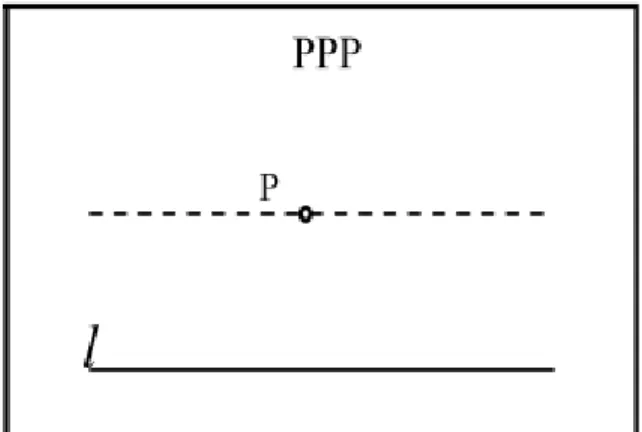
Figure 3.1 Euclid's Fifth Postulate ... 26
Figure 3.2 Playfair's Parallel Postulate ... 26
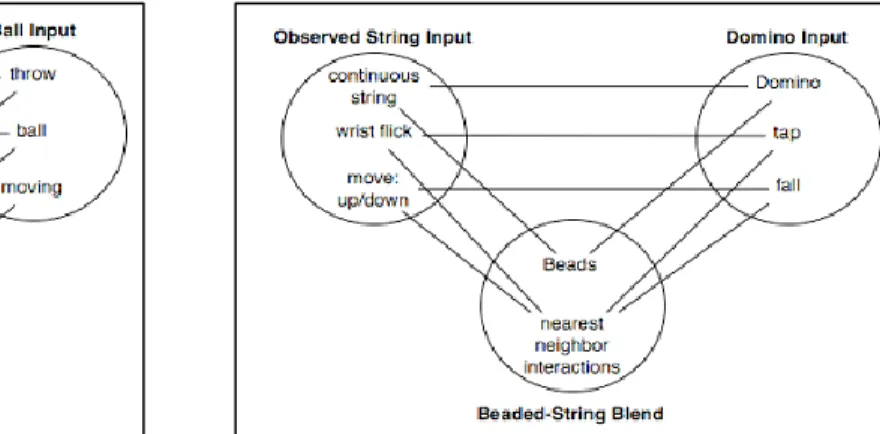
Figure 3.3 Wave-Ball Blend from Wittmann (2010) ... 27
Figure 3.4 Beaded-String Blend from Wittmann (2010) ... 27
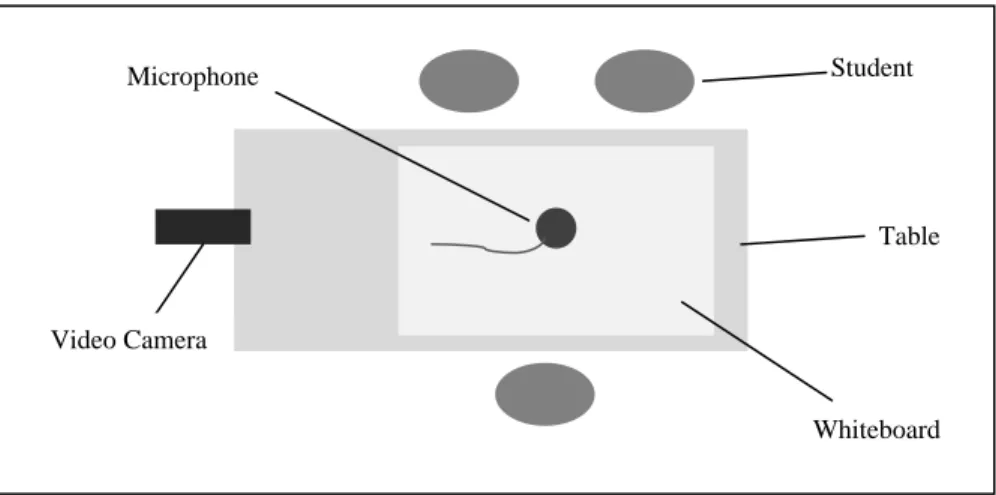
Figure 4.1 Top View of the Interview Layout ... 30
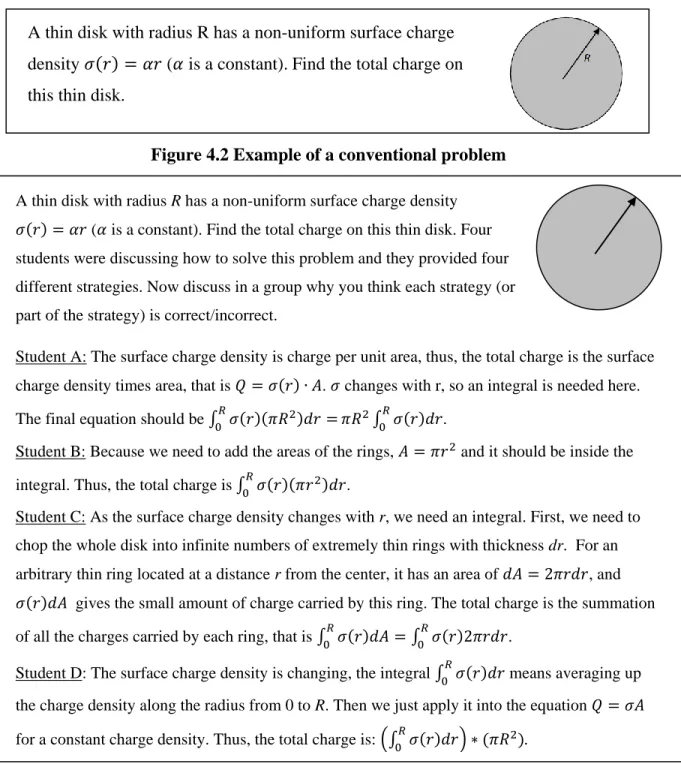
Figure 4.2 Example of a conventional problem ... 32
Figure 4.3 Example of a hypothetical debate problem ... 32
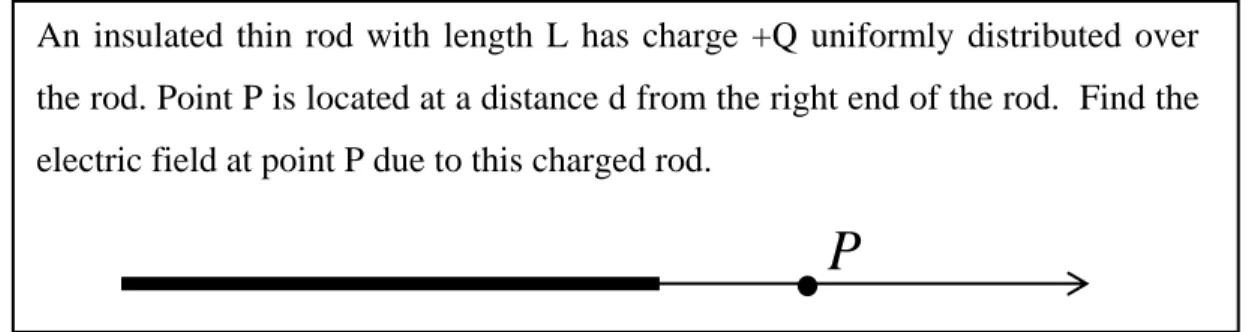
Figure 5.1 Line of charge problem. ... 42
Figure 5.2 Gesture used in episode one ... 43
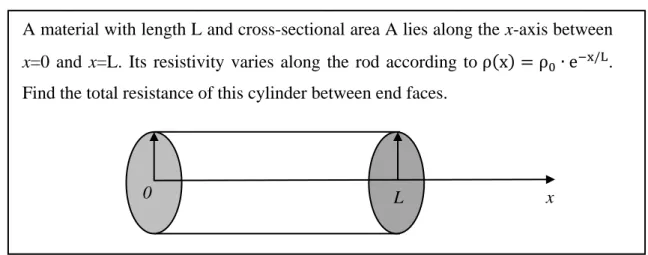
Figure 5.3 Resistor problem ... 47
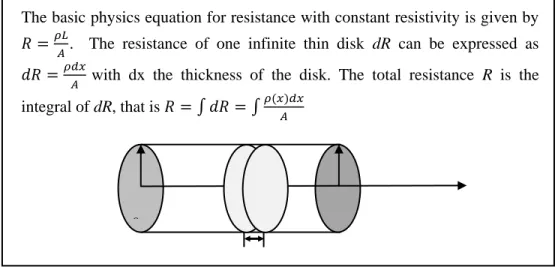
Figure 6.1 Partial solution to the interview task in Figure 5.3. ... 57
Figure 6.2 Equation set up by Phil ... 59
Figure 6.3 Blend under ‗Integral-Sum Across‘ frame ... 62
Figure 6.4 Picture drawn by Alan. ... 63
Figure 6.5 Equation set up by Alan. ... 63
Figure 6.6 Equation set up by Zad. ... 64
Figure 6.7 Expression for dR. ... 64
Figure 6.8 Expression for total resistance. ... 64
Figure 6.9 Blend under ‗Differential Algorithm‘ frame. ... 66
Figure 6.10 Equation set up by Jared. ... 66
Figure 6.11 Blend under ‗Equation Mapping‘ frame. ... 68
Figure 6.12 David's gesture about ―separating into pieces.‖ ... 69
Figure 6.13 David's gesture about ―resistivity.‖ ... 69
Figure 6.14 David's gesture about ―different values.‖ ... 70
Figure 6.15 Solution from David and Alice. ... 70
Figure 6.16 Picture drawn by David. ... 70
Figure 6.17 Blend under ‗Chopping and Adding‘ frame. ... 72
Figure 7.1 Standard figure. ... 83
x
Figure 7.3 Percentage of time students were involved in each frame. ... 87 Figure 7.4 Equations set up by students in the conventional problem. ... 88 Figure 7.5 Picture drawn by students in the hypothetical debate problem. ... 90
xi
List of Tables
Table 4.1 Demographics of 13 Subjects ... 29
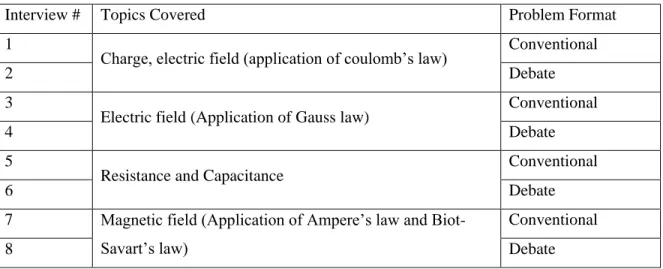
Table 4.2 Topics of Interview Tasks ... 31
Table 5.1 List of symbolic form associated with differential template ... 36
Table 5.2 Symbolic forms associated with integral template ... 37
Table 5.3 List of conceptual metaphors ... 39
Table 6.1 Description of the four blends. ... 73
xii
Acknowledgements
First and foremost, I would like to thank my major advisor Dr. Sanjay Rebello, for his guidance and tremendous support in the past four years. This work would not be possible without his insights and advice. He provided me lots of inspiring conversations to keep me motivated and excited about my research work. He helped me grow and prepared me for my future professional life.
I also want to give a special thanks to Dr. Eleanor Sayre who gave me lots of helpful advice and made me think more thoroughly about my research. I admire her a lot for her unending energy and passion for physics education research.
My other dissertation defense committee members, Dr. Andrew Bennett, Dr. Kay Ann Taylor, Dr. Steve Warren, have given me invaluable feedback on this dissertation work. I am so grateful for having them in my dissertation committee. I want to express my gratitude to Dr. Larry Weaver and Dr. Tim Bolton for mentoring me on my teaching as well as giving me the opportunity to collect data in their classes.
I have been very fortunate to be a member of the KSU PER group. I want to thank everyone in this big family for being so nice to me and giving me confidence all the time. In particular, Dr. Bashirah Ibrahim, Dr. Josh Von Korff, and Dr. Dong-Hai Nguyen provided me so much help on my research. Dr. Adrian Madsen, Amy Rouinfar, and Ying Chen have been so supportive for my life. I cannot imagine what my life would be without you. I also want to thank our administrative assistant Kim Coy for her help. She has done an amazing job!
Finally, I must thank my fiancée Yan Cheng for standing with me and keeping me sane during my graduate life. This dissertation would not exist without your unceasing love and support. My parents, Shunqin Liu and Quanming Hu, have given me consistent support and encouragement. It was their unconditional love that kept me working hard and moving forward.
This research project was supported in part by the National Science Foundation grant 0816207.
xiii
Dedication
1
Chapter 1 - Introduction
1.1 Motivation
This study is concerned with the application of mathematics in physics problem solving. Mathematics is often regarded as the backbone of physics and science in general. Physics classes often involve the intensive use of mathematics and they often require much more than the straightforward application of mathematical operations and algorithms. Mathematics is often used in physics to describe the fundamental relationships between physical quantities. Physics problem solving requiring mathematics could be modeled as the following sequence of steps: mapping a physical situation onto a mathematical model, processing mathematical representations, interpreting mathematical results in physics, and evaluating whether the results adequately describe the physical system (Redish, 2005). A significant portion of students in physics courses often struggle to apply mathematical skills in physics problem solving (Yeatts & R. Hundhausen, 1992; Nguyen & Meltzer, 2003; Shaffer & McDermott, 2005).
This research project is specifically focused on students‘ use of mathematical integrals in physics problem solving. Mathematical integration is widely used across many physics topics from introductory to upper level physics courses. In introductory mechanics, students may use integration as a tool to find the mass or momentum of inertia of physical objects with non-uniform density. In electrostatics, students need to set up integrals to find the electric field due to a charged bar or disk with non-uniform charge distribution. Developing expertise to use integration in physics is both necessary and important for students to fully understand mathematics and physics concepts as well as transfer their learning to new situations. Setting up integrals in a physics problem can be divided into several steps: setting up the expression for infinitesimal quantity (e.g., dE, dB), accumulating infinitesimal quantity, determining the variable of integration, and turning the integral into a form that can be evaluated mathematically (Nguyen & Rebello, 2011). Hence, using integration in physics requires students to not only know how to evaluate an integral, but also to correctly use differentials and integrals to express relations between physical quantities. For example, to construct the expression from a more fundamental equation from Coulomb‘s law , a student needs to develop the understanding of the differential terms (i.e., dq, dE) in the context of an electric field.
2
Studies have reported that students are typically able to evaluate a pre-determined mathematical integral, but often struggling with setting up integrals in physics problems (Orton, 1983a; Mahir, 2009). Previous studies in physics education research have documented students‘ deficiencies in the application of mathematical integrals in physics (Cui et. al., 2006; Manogue, Browne, Dray, & Edwards, 2006; McDermott, Rosenquist, & van Zee, 1986; Meredith & Marrongelle, 2008; Pollock, Thompson, & Mountcastle, 2007; Wallace & Chasteen, 2010). These studies investigated students‘ deficiencies with understanding the mathematical aspect of integration (Orton, 1983a; Orton, 1983b; Artigue, Menigaux, & Viennot, 1990; Mahir, 2009; Sealey, 2006); understanding when and why integration is needed in a physics situation (Meredith & Marrongelle, 2008; Cui, Rebello, Fletcher, & Bennett, 2006; Nguyen & Rebello, 2011); using mathematical symbols and notations in a physical situation (Yeatts & Hundhausen, 1992; Wallace & Chasteen, 2010; Nguyen & Rebello, 2011); and procedural knowledge of setting up integrals (Orton, 1983a; Nguyen & Rebello, 2011).
Studies have reported students‘ difficulties when applying mathematical integrals in physics; however, student reasoning underlying these difficulties has not yet been carefully studied. We cannot simply attribute students‘ difficulties to a lack of mathematics or physics knowledge. There is a gap between what mathematics education researchers have found about students‘ understanding of calculus concepts and what physics education researchers have found about students‘ poor performance in physics problems. The main purpose of this study is to take one small step toward bridging this gap and to explore students‘ thinking about mathematical concepts in physics contexts. I use the resources model to discuss the mathematical resources associated with major calculus concepts that students use when they set up integrals. Further, I utilize the analytical tools from cognitive science, such as conceptual metaphors, to analyze the resources that students use in physics contexts. While the resources model and conceptual metaphor theory provide a fine-grain analysis of students‘ reasoning, the conceptual blending framework offers us a language to discuss the overall picture of how students combine their knowledge in mathematics and physics to set up integrals. In additional to investigating student reasoning, I also explore the use of a non-traditional type of problem -- hypothetical debate problem -- as instructional tool to facilitate students‘ use of integrals in physics problem solving.
3
1.2 Brief Introduction to the Theoretical Framework
In the studies described in this dissertation I explored both students‘ deep reasoning about specific mathematical concepts in physics contexts as well as students‘ strategies for setting up integrals. I amalgamated elements of three theoretical frameworks -- mathematical resources, conceptual metaphors, and conceptual blending – to construct a more complete picture of student reasoning process when applying integrals in physics problem solving.
Mathematical Resources
Resources are context-sensitive, small-scale knowledge elements that can be applied in many different situations (diSessa & Sherin, 1998; Hammer, 1996a). A resource by itself can neither be deemed correct nor incorrect, but it can be activated appropriately or inappropriately depending upon the context. Physics learning involves the activation of various kinds of resources, such as phenomenological primitives or p-prims that are based on intuitive knowledge about physical world (diSessa, 1993), mathematical resources (Sherin, 2001), as well as epistemological resources (Hammer & Elby, 2002). In some contexts, it may also involve the activation of mathematical resources (Sherin, 2001). When applying mathematics in physics, students bring to bear their intuitive sense about mathematical symbols and notations. Symbolic forms are the kinds of mathematical resources that may be activated by students in conjunction with cognitive processes associated with using and interpreting equations in physics contexts. A symbolic form consists of a symbol template (such as []=[], or []+[]+[]…) and a conceptual schema associated with the template. The conceptual schema is a kind of mathematical primitives, a simple structure corresponding to the understanding of the relations among mathematical entities. As an example, the conceptual schema of balancing is associated with the mathematical template . In the physical situation ―a book is at rest on a desk‖, the normal force acting on the book due to the desk is balanced by the gravitational force on the book due to the earth.
Metaphors in Mathematical Thinking
A conceptual metaphor describes a cognitive mechanism which allows the use of sensorimotor experience in the source domain to conceptualize a subjective experience in the target domain (Lakoff & Johnson, 1980). In the phrase ―I am feeling up,‖ indicates that the
4
speaker is experiencing the emotion of happiness. This emotion is associated with the physical experience of having an upright posture (Lakoff & Johnson, 1999). One important characteristic of conceptual metaphor theory is that we typically conceptualize nonphysical notions such as time, mind, emotion, and ideas in terms of concrete physical terms such as objects, substances, entities, and motions with which we have more experience. According to cognitive linguistics Lakoff and Johnson (1980), our human intellectual system is metaphorically structured and metaphors exist pervasively in our everyday thought and language. Metaphors were first studied in linguistics, but later on evidence for using metaphors was also found in mathematical and scientific language.
Lakoff and Núñez (2000) extended the idea of conceptual metaphors to understand mathematical concepts. They introduced the grounding metaphor as one of the main types of metaphors involved in the conceptualization of basic mathematical ideas, such as arithmetic. The term ―grounding‖ implies that the fundamental mathematical ideas emerge directly from our everyday activities. For example, adding numbers is construed as adding objects to a collection, such as ―adding an apple to the basket.‖ This grounding metaphor described the mapping from the domain of physical objects to the domain of numbers. Núñez described conceptual metaphors as ―fundamental cognitive mechanisms which project the inferential structure of a source domain onto a target domain, allowing the use of effortless species-specific body-based inference to structure abstract inference‖ (Núñez, 2000).
Conceptual Blending
Conceptual blending or conceptual integration theory describes how the mind combines two or more mental spaces to make sense of linguistic inputs (Fauconnier & Turner, 1998a). Mental spaces are used as general terms, referring to small interconnected conceptual packets constructed in a local context. Mental spaces are partial assemblies containing elements that are structured by frames and cognitive models. Blending is the process of selectively taking some elements from each mental space to compose a new mental space -- the blended mental space. For example, the phrase ―computer virus‖ is a blend constructed from two input mental spaces–a biological mental space and computer mental space. A biological mental space contains elements like a biological system, cell, virus, and immunity mechanism. A computer mental space includes elements like memory, software, and programs. In the blended space, a computer
5
program and virus are fused into a new, single entity ‗computer virus‖ - a computer program that can replicate itself and spread from one computer to another, usually making unauthorized and undesirable changes to the computer.
The conceptual blending framework has also been extended and elaborated to understand students‘ reasoning and actions in mathematics and physics (Zandieh, Knapp, & Roh, 2008; Wittmann, 2010). Bing and Redish (2006) used the language of conceptual blending to model how students combine physical and mathematical knowledge to construct solutions to physics problems in the context of algebra-based physics. They pointed out that the difficulties students experienced were often not from their lack of prerequisite knowledge but from inappropriate blending of mental spaces.
1.3 Research Questions
In summary, this study has two main purposes. First, I focus on investigating student reasoning and conducting both small-grain and large-grain analysis about how students set up integrals in various physics contexts. Second, I study the extent to which a non-traditional type of problem – the hypothetical debate problem could be potentially used to shift students‘ framing of physics problem solving requiring mathematics. Specifically, I address the following research questions:
1. How do students reason about calculus concepts as they set up integrals in physics contexts?
What are the mathematical resources that students activate?
What are the conceptual metaphors that students use in association with these mathematical resources?
2. How do students blend their knowledge in calculus and physics to set up integrals in physics?
3. How does students‘ framing of solving physics problems requiring mathematics differ when dealing with hypothetical debate problems?
1.4 Main Contributions of This Research
This dissertation contributes both to theoretical development and instructional applications in physics education. To answer the first research question ―How do students
6
reason about calculus concepts as they set up integrals in physics contexts‖, I extended Sherin‘s symbolic forms framework to categorize the mathematical resources that students activated in the context of solving physics integration problems. I also amalgamated two frameworks – symbolic forms from physics education research and conceptual metaphors from cognitive linguistics, to help us make interpretations of student reasoning about mathematical concepts in physics contexts. The first question aims to provide a fine grained analysis of student problem solving and develop an in-depth understanding of student reasoning. The second research question aims at providing us a more complete picture of the overall strategies that students used. To answer this research question, I described the ways in which students combine their knowledge in calculus and physics to set up integrals from the perspective of conceptual blending. Investigating students‘ problem solving behavior from this perspective also allows us to see the connection between students‘ small-grained knowledge elements and large-grained problem solving strategies when solving physics integration problems. In addition to exploring and understanding student thinking, I also studied if a nontraditional type of problem (i.e., hypothetical debate problem) could be potentially used to change students‘ framing of using mathematics in physics problem solving to answer the third research question.
1.5 Overview of Dissertation
Chapter two offers a literature review of previous research on students‘ understanding of major calculus concepts, specifically integrals and differentials; as well as students‘ difficulties with applying those concepts to solve physics integration problems. Chapter three is focused on the conceptual frameworks including a review of the relevant frameworks -- resources, conceptual metaphors, and conceptual blending. It also includes a description of how those frameworks are extended and closely integrated in this research. In chapter four I discuss the context of this research study, the student population, and data collection processes used in the study. In chapter five I introduce the resources model and conceptual metaphor framework, and then describe the mathematical resources that students activated about differential concept and the conceptual metaphors associated with those resources implicitly in this study. In chapter six, I provide a review of the conceptual blending framework and then discuss how this framework is used to provide a more complete analysis of student problem solving approaches when dealing with physics integration problems. In chapter seven, I discuss the development of hypothetical
7
debate problems and the pedagogy underlying those problems. Then I compare students‘ framing of physics problem solving requiring mathematics in conventional problem and hypothetical debate problem. Chapter eight summarizes the main results of the study and talks about the implications of this research on mathematics and physics teaching, as well as the direction for future research.
8
Chapter 2 - Literature Review on Students‟ Use of Calculus
2.1 Introduction
Students‘ performance on calculus and physics problems requiring integrals are two topics that are particularly relevant to my study. In this section, I will present a review of previous studies in both of these two areas. Mathematics education research has well documented students‘ understanding of calculus concepts, such as differentiation, integration, and Riemann sums. Since all of the students in our calculus-based physics classes have previously taken calculus, previous research in mathematics education provides us the necessary background to understand their prior mathematics knowledge and what I could possibly expect to observe in their mathematical thinking in physics contexts. It also allows us to see what mathematics educators value in students‘ understanding of these concepts and reflect on which of these aspects physicists might perceive as valuable in students‘ thinking. The following section reviews the previous studies conducted by mathematics education researchers with regard to students‘ conceptual and procedural knowledge when solving calculus problems. Then I will also discuss several studies in physics education research on students‘ ability to apply integrals in physics scenarios from both introductory and upper-division physics courses. Previous findings from both mathematics and physics education research provide insights and motivation for this study.
2.2 Student Understanding of Calculus Concepts
Studies in mathematics education have shown that students are capable of following routine procedures to calculate a derivative, evaluate an integral, or find the area under a curve; however, they may lack conceptual knowledge of those concepts (Orton, 1983a; Mahir, 2009) Orton (1983b) conducted clinical interviews with 110 students to investigate their understanding of elementary calculus. He categorized students‘ mistakes as structural (conceptual or fundamental), executive (procedural or operational), or arbitrary. Overall, the errors made by students were structural and students found that the execution of a procedure was relatively easy. In an interview study on the topic of rate of change and differentiation, Orton found that the most difficult items were those concerned with understanding differentiation and graphical approaches to rate of change. Students revealed many misunderstandings in explaining the symbols δx, δy,
9
δy/δx, dx, dy, and dy/dx. Taking the example of dx, three main types of incorrect responses were apparent. Twenty-nine students explained dx as ―the differential of x,‖ or ―the rate of change of x.‖ A further 25 students explained dx as ―the limit of δx as δx→0.‖ Another 20 students thought that dx was an ―amount of x‖ or ―x-increment,‖ in other words it was more or less the same as δx. It is clear that students did not understand the symbols of differentiation or the approach to differentiation. Orton pointed out that ―some students are introduced to differentiation as a rule to be applied without much attempt to reveal the reasons for and justifications of the procedure.‖
In another interview study about the integration concept, Orton (1983a) found that very few students understood integration as the limit of a Riemann sum. Most students had little idea of the procedure of applying integration, which involves dissecting an area or volume into narrow sections, summing the areas or volumes of the sections, and obtaining an exact answer for the area or volume by narrowing the sections. Without exploring the structure of Riemann sums, students encountered a lot of trouble in setting up integrals in a real world situation.
Artigue (1990) administered questionnaires to both physics and mathematics students to investigate their conceptions about differentials (e.g., dx, dl). In particular, she discussed two extreme tendencies in students‘ responses. First, the differential element lost all meaning except that it indicated the variable of integration which may have excluded other meanings. Second, the differential element had material content. For instance, ―dl is a small length‖ or ―a little bit of wire.‖ Artigue argued that the terms such as ―small‖ or ―little bit‖ were associated with ―looseness in reasoning‖ indicating students‘ lack of rigorous understanding of the mathematical concept, even though this reasoning is convenient and effective in physics.
Mahir (2009) reported on a study that students‘ conceptual and procedural performance on five calculus problems after a one-year calculus course. Sixty-two students completed interview tasks that covered the major calculus concepts, including integrals, the integral – area relation, integral as a sum of areas, and the fundamental theorem of calculus. Mahir found that almost all the students did very well on the first two problems which only involved the use of integral algorithm and techniques, or the procedural knowledge. When a problem could be solved by either a procedural or a conceptual approach, the majority of students tended to apply a procedural approach. Students who followed a conceptual approach were much more likely to
10
solve the problems correctly (correctness is more than 70%) than those who used a procedural approach (correctness is less than 20%). Mahir concluded that the conceptual performance of the participants on calculus problems was not satisfactory and he suggested that conceptually based instruction might help improve students‘ conceptual understanding of calculus concepts.
Ferrini-Mundy and Graham (Ferrini-Mundy & Graham, 1994) conducted interviews with six calculus students to probe their understanding of basic concepts of calculus - function, limit, continuity, derivative, and integral. Their paper provided a detailed discussion about the interview with one student and common reasoning patterns revealed by most students. They concluded that most students perceived integral as a signal to ―do something‖ or perceived definite integral as ―the area between the graph of the function and the x-axis‖ and ―the sum of the areas of the small rectangles under the curve.‖
More recently, Bennett et al. (2011) investigated how engineering students develop their understanding of function and integration concepts as they progress through their calculus courses. They used the APOS framework introduced by Dubinsky (2001) as a scale to measure students‘ mathematical conceptual understanding. They found that about 25-30% of the students in Calculus I or II were at the Action level which means this group of students could only follow algorithms to arrive at an answer but did not know what the procedure meant; about 35% of students were at the Action/Process level which means students could follow prescribed steps and show some understanding. For instance, they might recognize some mistakes and contradictions, but they might not be able to explain what went wrong.
Mathematical researchers also probed students‘ performance when applying the integral concept in real world situations. Sealey (2006) conducted a teaching experiment in a calculus class to investigate student understanding of definite integrals and Riemann sums. The participants were from a traditional first semester college calculus class. She reported on the work of two groups when they solved two problems requiring the use of integrals in real world contexts. One problem asked for the total force exerted by the water on a dam and the other one involved the compression of a spring and the calculation of spring potential energy. In the first problem, students recognized the use of integral but had difficulty constructing the appropriate integral. Then they used approximation method based on the structure of Riemann sums and were eventually able to set up the correct integral. In the second problem, students attempted to
11
use area under the curve concept, however, they could not explain why the area under the curve was equal to energy and they were not confident about the correctness of the force graph. She concluded that understanding the structure of Riemann sums was necessary for students to construct the correct integral in a real world context. However, students might not be able to relate area under a curve to the structure of a Riemann sum when they used the area under a curve as a tool to evaluate a definite integral.
Thompson & Silverman (2008) specifically addressed the structure of a Riemann sum. A Riemann sum can be viewed as a process of accumulating bits of a quantity and each bit is formed multiplicatively. For example, to understand the concept of work done as accruing incrementally means that one must think of each momentary total amount of work as the sum of past increments, and of every additional incremental bit of work as being composed of a product of force applied through a displacement. They illustrated students' difficulties in understanding accumulation mathematically and they emphasized the importance of giving explicit attention in accumulation function when teaching definite integrals to students.
In summary, previous studies from mathematics education research reported that many students did not acquire a complete conceptual understanding of the integral concept or the structure of a Riemann sum after they took calculus class. They tend to focus on algebraic procedures when solving calculus problems and their understanding of integrals was bereft of contextual meanings. These findings of student understanding of calculus concepts can have important implications for their application of those concepts in a physics context.
2.2 Student Application of Calculus Concepts in Physics
In mathematics, students often learn algorithms to evaluate integrals without necessarily referring to any concrete physical situations. Some of students‘ conceptual difficulties with physics integration problems could be attributed to their insufficient understanding of mathematics concepts, such as their understanding of integral as a sum and the area-integral relation (Pollock, Thompson, & Mountcastle, 2007; Wallace & Chasteen, 2010; Bajracharya, Wemyss, & Thompson, 2010; Nguyen & Rebello, 2011). A significant number of students have difficulties with setting up a physics problem rather than with the calculus aspect of the problem. In other words, their difficulty is related to the physics context, and not the procedural aspect of
12
doing the calculus in the problem. (Yeatts & Hundhausen, 1992; Cui et al., 2006; Nguyen & Rebello, 2011;).
Based on their teaching experience on an integrated calculus and physics course, Yeatts and Hundhausen (1992) described students‘ difficulties in three categories when transferring from calculus to physics. The first category is ―notation and symbolism‖, which means students have strong reliance on the symbols used in each context. The second category -―distraction factor‖, happens when the surface feature of the problem hinders the underlying mathematical process. The third category is ―compartmentalization of knowledge‖, occurs when students stored knowledge of different disciplines in different ―cabinets‖ and students activate knowledge in each ―cabinet‖ only in the corresponding discipline.
Cui et al. (2006) conducted semi-structured think aloud individual interviews with introductory level calculus-based physics students to investigate their retention and transfer from calculus to physics. In the first interview, students were given a physics problem and an isomorphic calculus problem requiring the same calculus concept. All eight participants were confident about their calculus knowledge, however, none of them were confident about their physics solution and unclear about when calculus is applicable in a given physics problem. Most participants did not see the connection between the physics problem and isomorphic calculus problem. In another interview with a different cohort of students, students were given three different physical situations each consisted of a pair of problems. They found that seven out of the eight interviewees appropriately applied integration but four of them recalled similar in-class examples and the other three only had a rough idea of an integral as a sum of infinitesimal elements. Most students responded that they had difficulties with determining the variable of integration and deciding the limits of integration while applying integrations in physics. Six out of the eight interviewees perceived the use of calculus in physics as ‗plug and chug‖ without the need of understanding.
Then Meredith and Marrongelle (2008) specifically investigated when students recognized the use of integrals in electrostatics problems from the resources perspective. Sherin‘s (2001) symbolic forms were used as a framework to describe the resources activated by students. A symbolic form is defined as a cognitive mathematical primitive which allows students to ―associate a simple conceptual schema with an arrangement of symbols in an
13
equation.‖ The ‗dependence‘ symbolic form is the most common cue used by students and it is identified when students decide to integrate because a quantity changes depends on another quantity, for instance, non-constant density. The ‗parts-of-a-whole‘ cue is identified when students recognize they need to sum up the little pieces of a physical quantity to get the total quantity. The ‗parts-of-a-whole‘ symbolic form is more powerful and flexible in many physics contexts than the ‗dependence‘ symbolic form. Dependence symbolic forms can cue integration in novel situations and allow students to invent equations, however, Meredith and Marrongelle (2008) pointed out that ―the use of dependence symbolic form led to inaccuracies if the quantity being integrated was not a rate or a density‖. Also, students typically do not pay attention to units when they choose variable of integration; instead they pay attention to what is changing.
Recognizing that a problem needs integration is the first important step for setting up integrals in physics contexts. Extending the previous work, Nguyen and Rebello (2011) conducted individual teaching/learning interviews to investigate students' common difficulties when setting up integrals in electricity problems more systematically. They divided the procedure of applying integral concept in physics into four steps: recognizing the need for an integral; setting up the expression for the infinitesimal quantity; accumulating the infinitesimal quantity; and computing the integral. They found that many students did not understand the meaning of differential terms such as dx, dr in physics equations, which were consistent with the findings from Orton (1983b). When setting up the expression for the infinitesimal physical quantities, many students simply ignored the differential term or to appended it to the integrand, or even prefixed d to whatever quantity was changing. When accumulating the infinitesimal quantity, almost all students did not pay attention to how these quantities should be added up. For example, when integrating the differential term ⃑ , they did not consider that fact that electric field ⃑ is a vector and it should be added up by components. They also encountered a number of difficulties in computing the integrals. Some could be attributed primarily to students‘ misunderstanding of the physical meaning of symbols in the integrals. A few students still had difficulties in determining the limits of integrals. It also supported the findings about students‘ difficulties with setting up integrals from the study of Cui et al. (2006).
There are research studies that have focused on middle- and upper-division physics students‘ performance on the application of integrals in physics. Wallace and Chasteen (2010)
14
reported students‘ performance on a conceptual test they had developed titled Colorado Upper-Division Electrostatics assessment (CUE). They discussed the results of one problem in the context of Ampere‘s law which involves finding the magnetic field of an infinite non-magnetizable cylinder with a uniform volume current. They found that students from traditionally taught courses had an average score of 28% on this problem and the reformed classes scored from 38% to 69% on average. In order to further determine student difficulties, they conducted individual interviews with six students working on an Ampere‘s law problems. They identified several difficulties students have and one of students‘ difficulties was due to students not viewing the integral in Ampère‘s law as representing a sum, which aligned with the work of Manogue et al. (2006) on the same topic.
Wilcox et al. (2012) analyzed students‘ responses to traditional exam questions that involved finding the electric potential due to a continuous charge distribution in a junior level Electricity and Magnetism (E&M) course. Students‘ common challenges included determining expressions for the differential charge element (dq) and finding the limits of integration for a specific charge distribution. When setting up the integral, nearly half of the students had difficulty expressing the differential charge element.
2.4 Summary
In summary, a review of the literature regarding students‘ understanding and application of integral concept shows that students‘ deficiencies when applying integral concept in physics can be categorized in the following aspects:
(1) Understanding of integral concept in mathematics aspect: Students do not view an integral as the limit of a Riemann sum. They often think the limit is an approximation, not an exact answer. Students‘ lack understanding of an integral as a Riemann sum (Orton, 1983a; Orton, 1983b; Artigue et al., 1990; Mahir, 2009; Sealey, 2006).
(2) Understanding why integration is needed in a physics situation: A majority of students did not experience difficulties with recognizing whether integration is required in a situation. However, they might not understand why integration is needed. Students typically draw on familiar examples or look at surface features of the problem, such as whether a quantity is changing (e.g., non-constant density) rather than thinking of whether the problem requires
15
adding up small pieces of quantity to get the total quantity, when deciding whether integration is need or not in a physics context (Meredith & Marrongelle, 2008; Cui et al., 2006; Nguyen & Rebello, 2011b).
(3) Use of mathematical symbols and notations in a physical situation: Students experience tremendous difficulties with correctly use mathematical symbols to express relations of physical quantities or to interpret the meaning of mathematical equations in a physics context. For instance, a common difficulty students have is how to correctly use the differential terms such as dr, dm, dq in physical scenarios (Yeatts & Hundhausen, 1992; Pollock et al., 2007;D. Nguyen & Rebello, 2011a; Wilcox et al., 2012).
(4) Knowing how integration should be used in physics: Students seem to have deficiencies related to the procedural knowledge of setting up an integral. When setting up integrals, they need to think of how the physical object can be chopped into pieces, find the quantity/effect due to one small piece, and then add up all the effects/quantities. Students‘ lack of procedural knowledge of setting up integrals has been investigated in the past (Orton, 1983a; Nguyen & Rebello, 2011a).
This review of literature provides us a good knowledge of what students are capable or incapable of when applying integration in physics. However, students‘ underlying thought process or mechanism of their thinking is still not clear. To take this step further, we bring in several frameworks to help us understand students‘ reasoning and explain observed student difficulties. In the next chapter we will review in detail each of those frameworks.
16
Chapter 3 - Conceptual Framework
3.1 Introduction
The main purpose of this study is to extend existing theoretical frameworks to interpret our observation of student performance in the context of solving physics problems that require the use of integration. In order to gain deep insights into students‘ reasoning, I amalgamated aspects of two theoretical perspectives: the resources framework from physics education research and conceptual metaphor framework from cognitive linguistics. There is very little research on how these two frameworks can be integrated to make sense of student reasoning. I will review each framework and provide a discussion about how they can be tied together to explain student thinking in our context of research. In addition to a fine grained analysis of student reasoning, I also adapted the conceptual blending framework from cognitive science to make sense of the ways in which students combined their knowledge from calculus and physics to set up integrals. I investigated the effect of hypothetical debate problems from the perspective of students‘ epistemological framing about using mathematics in physics. Hence, this chapter will review three pieces of framework: resources, conceptual metaphor, and conceptual blending.
3.2 Resources Framework
General Description of ResourcesIn physics education research, there are two main approaches for modeling and characterizing student thinking: the unitary, misconception-based approach (Chi & Taylor, 2005) and the manifold or knowledge-in-pieces approach (DiSessa, 1983). The central idea of the unitary framework is that students possess robust cognitive structures or misconceptions that need to be dismantled in order to build the correct conception (Clement, 1983; Chi & Taylor, 2005). The manifold or knowledge-in-pieces framework is based on the assumption that one‘s conception is determined by activation of various resources depending on the context (Hammer, 1996a). The knowledge-in-pieces approach has been proven useful for modeling student reasoning and learning in a growing body of evidence about the flexibility and variability in student reasoning (Hammer, 2000; Hammer, Elby, Scherr, & Redish, 2004; Elby & Hammer, 2010).
17
Consistent with the knowledge-in-pieces perspective, cognitive resources are fine-grained knowledge elements that one brings into a situation, and the activation of one resource often depends on context (DiSessa & Sherin, 1998; Hammer, 2000). Typically, I think of resources as chunks of knowledge elements that can be applied productively in many situations. Resources might be unproductive for learning physics if used inappropriately in a situation. Resources are often associated to each other as a network and the activation of one resource often leads to the activation of other resources or clusters of resources. When the same locally coherent set of resources becomes activated again and again, it may eventually be strongly connected and established to be activated as a unit. Learning physics largely entails the activation of existing resources, including conceptual (Hammer, 2000; Wittmann, 2006), procedural (Black & Wittmann, 2009), epistemological (Hammer & Elby, 2002), and other types of resources.
When making sense of physical phenomena and processes, students use a form of intuitive knowledge through their interaction with the physical world, such as walking, pushing, pulling, and throwing objects. This intuitive sense of knowledge is often referred to as ―sense-of-mechanism‖ or phenomenological primitives (p-prims) according to diSessa (1993). diSessa identified several clusters of p-prims used by students when explaining the motion of objects in mechanics, such as Ohm‘s p-prims, force as mover, and dying away. This intuitive sense of knowledge could be applied directly to physics learning; however, if misapplied, it could cause conflicts and barriers for students‘ construction of formal physics knowledge. Epistemological resources control how a student perceives the nature of learning under a situation and what conceptual resources are activated. For example, when learning physics many students appear to view physics knowledge as coming from authority.
A summary of the importance characteristics of the resources framework is mainly based on previous work by Sayre & Wittmann (2008) and Bing & Redish (2009).
1. Resources are associative networks. Just like neurons in our brain are structured as a network, resources are associated and not isolated units (Redish, 2004). The activation of one might lead to the activation of another related resource or cluster of resources. Learning can be considered as a process of constructing connections between neurons. Knowledge in long-term memory is well structured as patterns, which are sometimes referred to as knowledge structures. An associational pattern of resources is also described as a coordination class which involves a
18
readout strategy and a causal net (DiSessa & Sherin, 1998). Wittmann (2006) also created the representation of resources graph to express the network of linked resources. When the same locally coherent set of resources becomes activated again and again, it will eventually be strongly connected and established to be activated as a unit.
2. Resources can be active or inactive. A resource might be activated or inhibited in a situation depending on the interaction of the individual with the local environment. In a physics class, a student might activate the resource of ―knowledge as memorized stuff‖ or ―knowledge as fabricated stuff‖ based on his or her own perceptions about learning physics, the way the teacher teachers, how other students behave, as well as other social and physical factors (Redish, 2004). Whether a resource is activated or not depends on the individual‘s real-time perception or judgment (i.e., framing) about the situation (Hammer et al., 2004). Framing is also called the control structure, determining which resources are selected for activation and which ones are inhibited (Bing & Redish, 2009).
3. Resources may or may not have internal structure. Resources are often used as a compiled knowledge element, whose internal structure often seems not explorable to the user. In physics education research, a significant amount of research (diSessa, 1983; Minstrell, 1992; Hammer, 1996b; Sherin, 2006) has primarily focused on the role of intuitive sense of knowledge played in physics learning, such as primitive resources or p-prims (diSessa & Sherin, 1998), meaning that they are used unitarily without the user being concerned about their internal structure. When a cluster of resources are activated together frequently, they might become more tightly related and more likely to be activated together spontaneously by the user in a particular context. This creates ―bigger‖ or ―larger-scale‖ resources with higher level structures, such as a schema or a concept (e.g., force) (Sayre & Wittmann, 2008).
4. Resources do not have inherent correctness or incorrectness. Resources are abstracted from our everyday experience and exposure to the physical world. Hence, resources that are appropriate in one situation may not be applicable in another situation. For example, closer is stronger is one of the most commonly used resources in students‘ learning physics (Hammer, 2000). This resource may be extracted from a variety of real world experiences: when you are closer to a fire in winter you feel warmer; the closer you are to a light bulb, the brighter you can feel. The resource ‗closer is stronger‘ may be applied in many different contexts and it would be
19
meaningless to say whether this resource is right or wrong without considering the specific context in which the resource is applied. Take a very familiar example in physics: when asked to explain why it is hotter in the summer than that in winter, some students might say because the earth is closer to the sun in the summer. Consider a different situation: when discussing the electric field due to a point charge, students might say that the electric field is weaker as it gets further away from the point charge. This resource is appropriate in explaining the electric field, however, it is inappropriate in explaining the change of the season. Hence, resources, by nature, are not correct or incorrect; they can only be productively or unproductively used in a situation.
Mathematical Resources
Some resources are abstracted from our observation of everyday phenomenon or interaction with the physical world, such as p-prims (DiSessa & Sherin, 1998). Other types of resources, such as mathematical resources, also play important roles in students‘ physics learning. Intuitive mathematics knowledge is a kind of mathematical resources formed in the very early stage of a person‘s life, even before they received any formal mathematical instruction (Fuson, 1992). Those resources include counting (i.e., enumerating a series of objects), subitizing (i.e., distinguishing between sets of one, two, and three objects), pairing (i.e., grouping two objects for collective consideration), and ordering (i.e., ranking relative magnitudes of mathematical objects) (Lakoff & Núñez, 2000). Intuitive mathematical knowledge is useful and involved in both low-level and high-level mathematical learning and thinking, as well as in physics learning. While intuitive mathematical resources are typically formed in young children, even infants, more complex mathematical resources are often developed through receiving years of formal mathematics practices.
Through exposure to formal mathematical expressions in mathematics and other domains requiring application of mathematics, students not only learn the ‗rules‘ of how to perform calculations, but also develop a sense of mathematical notations and equations (Sherin, 2001). In physics, mathematical equations are used to represent relations in a physical system. I also want students to obtain an understanding of what the equation means beyond the symbolic manipulations. Sherin (1996, 2001) provided evidence that successful physics students learn to express simple ideas in equations and to read these same ideas from those equations.
20
Symbolic Forms
Symbolic Forms in Algebra-based Physics
Sherin (2001) introduced symbolic forms (i.e., cognitive mathematical primitives) to understand student interpretation of mathematical equations in physics problem solving. Symbolic forms allow students to associate meanings with certain structures of mathematical expressions. A symbolic form has two components: a symbolic template (e.g., []=[], ) and a conceptual schema. The conceptual schema is ―a simple structure associated with the symbolic form that offers a conceptualization of the knowledge contained in the mathematical expression‖ (Sherin, 2001). Sherin observed that students not only applied known equations or given principles, but also invented their own equations from intuition. When observing five pairs of intermediate level engineering students solve physics problems, Sherin discovered the existence of symbolic forms based on that fact that students ―learn to associate meanings with certain structures in equations.‖ One problem was based on the physical scenario that a person gives a block a shove so that the block slides across a table and then comes to rest. Students were asked to talk about the forces acting on the block and discuss what would happen if the block was heavier. A pair of students invented an equation for the coefficient of friction based on their understanding of the situation ―the coefficient of friction has two components: one that‘s a constant and one that varies inversely as the weight.‖ This expression was not from the textbook; instead they constructed this equation from their understanding of the physical scenario. One symbolic form identified by Sherin from this expression was ―parts-of-a-whole.‖ The symbol template that two or more terms are separated by plus (+) signs contains a conceptual schema ―a whole is composed of two or more parts.‖ Sherin‘s symbolic forms were primarily based on student reasoning of algebraic equations.
Symbolic Forms in Calculus-based Physics
Meredith & Marrongelle (2008) investigated students‘ use of mathematical resources regarding when they recognize the use of integrals in electrostatics contexts. The ‗dependence‘ symbolic form is the most common cue used by students and it is identified when students decide to integrate because a quantity changes depends on another quantity, for instance, non-constant
21
density, associated with the symbolic template [..x…]. The ‗parts-of-a-whole‘ symbolic form, contained in the template []+[]+[]+…, is identified when students recognize they need to sum up the little pieces of a physical quantity to get the total quantity. Meredith & Marrongelle pointed out that ‗parts-of-a-whole‘ symbolic form is more powerful and flexible in many physics contexts than the dependence symbolic form.
Jones (2010, 2013) extended the symbolic forms framework to analyze student understanding of the integral concept. He interviewed nine students who were enrolled in an introductory level physics course which was designed primarily for students in physics and engineering. All students were interviewed twice in their study. In the first interview, students were given open-ended mathematics problems related to integrals; in the second interview, students were given open-ended physics integration problems involving real-world objects. He identified four major symbolic forms associated with the integral symbol template ―∫ .‖ The area symbolic form basically takes the integral expression and interprets it as an area in the x-y plane. The adding up pieces symbolic form refers to the evidence that students sliced the area on a graph into infinitely small pieces and added those pieces to find the total amount. However, Jones argued that under this symbolic form, the limiting process occurred before the addition process took place. Thus, this symbolic form diverged from the Riemann sum process. The function mapping symbolic form conceives the integral as a ―pairing of objects,‖ which matches the integrand with an ―original function.‖ According to the problematic add up then multiply or adding up integrand symbolic form, the first box inside the integral ―∫ ‖ was added up over the infinitesimally small pieces and the resultant summation was then multiplied by the quantity represented by the differential. Among the four major symbolic forms, Jones concluded that the adding up pieces symbolic form is a more productive way to view integral in both mathematics and physics contexts.
Other Mathematical Resources
In addition to symbolic forms, several pieces of work examined students‘ use and development of mathematical resources in physics contexts requiring mathematics from different subfields. Sayre & Wittmann (2008) described students‘ creation of ‗coordinate system‘ resources when choosing various coordinate systems in physics mechanics problems. Black and
22
Wittmann (Black & Wittmann, 2009) identified a list of procedural mathematical resources from student work during the formation of the ‗Separate Variables‘ procedural resource in the context of solving differential equations in an intermediate mechanics problem. Unlike p-prims, these resources are less primitive, usually with internal structures, developed later in their learning.
3.3 Conceptual Metaphor Framework
Metaphors in Everyday LanguageLakoff and Johnson (1980) introduced the theory of conceptual metaphor when studying the linguistic phenomenon of human beings. The conceptual metaphor is a cognitive mechanism which allows the use of sensorimotor experience (e.g., George Lakoff & Johnson, 1980). Conceptual metaphor is a cognitive mechanism, which allows the use of sensorimotor experience (e.g., grasping an object) to conceptualize a subjective experience (e.g., an emotion). This theory is based on the assumption that our ordinary conceptual system is metaphorically structured and the evidence that metaphors are pervasive in our life, mostly reflected in the language we use (Lakoff & Johnson, 1999). Conceptual metaphors describe the systematic mapping across multiple conceptual domains – concrete source domains and abstract target domains. The source domains are the mental schemata derived directly from sensorimotor experience, whereas target domains are domains formed by subjective or non-sensorimotor experience.
Similar to resources, metaphors also include primary metaphors and more complex metaphor. I provide a brief summary of both types of metaphors:
1. Primary Metaphors are formed through conflation in the early stage of our life (Grady, 1997). In young children, their sensorimotor experience and subjective experiences are often automatically conflated together. When these two domains of experiences are activated at the same time, they do not separate out these two domains. After a period of differentiation, they are able to distinguish the domains, but the associations still persist. Primary metaphors often arise naturally and unconsciously in our thought and language without the need of exploring its internal structure. Primarily metaphors are often reflected in our everyday language, such as ―a big problem,‖ ―a warm welcome.‖
2. Complex Metaphors are made up of primary metaphors. Two or more primary metaphors can be brought together to form larger complex metaphors. Location event-structure