IRJBB
Biodegradation of azo dye compounds
Kamlesh Shah*
*Department of Biotechnology, P.S.Science and H.D.Patel Arts College, S.V.Campus, Kadi, Gujarat. India Email: [email protected]
Azo dyes are one of the oldest industrially synthesized organic compounds characterized by presence of Azo bond (-N=N-) and are widely utilized as coloring agents in textile, leather, cosmetic, paint, plastic, paper, and food industries During textile processing, inefficiencies in dyeing result in large amounts of the dyestuff (varying from 2% loss when using basic dyes to a 50% loss when certain reactive dyes used) is being directly lost to the wastewater, which ultimately finds its way into the environment. The physico-chemical method of industrial effluent treatment does not remove the dyes effectively. Microbial degradation and decolorization of azo dyes has gained more attention recently because of eco-friendly and inexpensive nature. Microbes and there enzymes could decolorize the dyes by both aerobic and anaerobic metabolis. This review provides a general idea of decolorization and biodegradation of azo dyes with various microbes and highlights the application of for the treatment of azo dye-containing wastewaters.
Keyword: Azo dye, biodegradation, decolorization, dyestuff, wastewater, enzymes, microbes
INTRODUCTION
There are more than 100,000 different synthetic dyes available on the market, produced in over 700,000 tons annually worldwide (Adedayo et al., 2004). They are used in the textile, paper, cosmetics, food and pharmaceutical industries due to their ease of production, fastness and variety in colour compared to natural dyes. Some of them are dangerous to living organisms due to their possible toxicity and carcinogenicity. Disposal of azo dyes from dyestuff synthesis and textile processing industry into the water resources causes reduction in water transparency and oxygen solubility (Corso and Almeida, 2009) and shows a negative impact on germination and growth of plant species, that imbalances the ecological function. So removal of textile dyes from the effluent before its disposal in the water bodies is very important. In the last few decades, several physicochemical methods have been developed for removal of dye from textile effluent, but these methods are not suitable due to the production of large amounts of toxic sludge, aromatic amines, and secondary waste products (Alhassani et al., 2007).
Numerous biotechnological approaches have been suggested to overcome the problem of physiochemical treatment methods using microorganisms for the treatment of textile dyes and industry effluent as microorganisms play crucial roles in the mineralization of xenobiotic compounds (Kurade et al., 2012). The biodegradation of textile dyestuff is used widely because of their cost effective, ecofriendly nature, and as well as produces less toxic and/or non-toxic compounds (Wang et al., 2008).
Such bioremediation includes the use of fungal, yeast and bacterial cultures for the removal of dye from textile effluent (Stajic et al., 2006; Zhao et al., 2006; Waghmode et al., 2012a).
Dyes make up an abundant class of organic compounds characterized by the presence of unsaturated groups (chromophores) such as –C=C–, –N=N– and –C≡N–, which are responsible for the dye colours, and of functional groups responsible for their fixation to fibres, for example, –NH2, –OH, –COOH and –SO3H (Molinari et
International Research Journal of Biochemistry and Biotechnology
Vol. 1(2), pp. 005-013, October, 2014. © www.premierpublishers.org, ISSN: XXXX-XXXX
al., 2004). Dyes may also significantly affect photosynthetic activity in aquatic life by reducing light penetration intensity and may also be toxic to some aquatic fauna and flora due to the presence of aromatics, metals, chlorides, etc. (Dhaneshvar et al., 2007).
Colour in the effluent is one of the most obvious indicators of water pollution and the discharge of highly colored synthetic dye effluents is aesthetically displeasing and can damage the receiving water body by impeding penetration of light. Moreover, azo dyes as well as their breakdown products are cytotoxic or carcinogenic (Khehra et al., 2006).
Dyes are synthetic aromatic organic compounds, which are normally used for coloration of various substances. During textile processing, inefficiencies in dyeing result in large amounts of the dyestuff (varying from 2% loss when using basic dyes to a 50% loss when certain reactive dyes used) is being directly lost to the wastewater, which ultimately finds its way into the environment. Among all the chemical classes of dyes, azo dyes are considered to be recalcitrant, non-biodegradable and persistent (Saratale et al., 2010). Dye containing wastewater treatment is considered to be one of the challenging areas in the environmental fraternity.
A number of physico-chemical methods, such as adsorption, coagulation, precipitation, filtration and oxidation, have been used to treat dyestuff effluents, but these methods have many disadvantages and limitations. It is, therefore, important to develop efficient and cost-effective methods for the decolorization and degradation of dyes in industrial effluents and contaminated soil (Bhatt et al., 2000). Biological methods of removal involve use of microorganisms such as bacteria and fungi to convert the pollutants into nontoxic harmless substances. Biological processes convert organic compounds to water and carbon dioxide, have low cost sustainable and are easy to use.
DYES
Dye classification
The compounds which absorb electromagnetic energy in the visible range (~350-700 nm) are colored. These colored compounds are known as dyes. Dyes contain chromophores (delocalised electron systems with conjugated double bonds), and auxochromes (electron-withdrawing or electron donating substituents). The chromophore imparts the color to the dye molecule and auxochrome intensifies the color of the chromophore by altering the overall energy of the electron system. Usual chromophores are C=C, C=N, C=O, N=N, -NO
2 and
quinoid rings. The auxochromes are -NH
3, COOH,
-SO
3H and -OH (Zollinger, 1987). The dyes are classified
on the basis of chemical structure or chromophore viz. azo (monoazo, disazo, triazo, polyazo), anthraquinone,
phthalocyanine, triarylmethane, diarylmethane, indigoid, azine, oxazine, thiazine, xanthene, nitro, nitroso, methine, thiazole, indamine, indophenol, lactone, aminoketone, hydroxyketone stilbene and sulphur dyes.
Azo Dyes
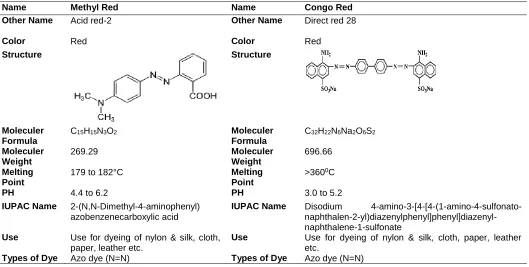
Azo dyes are commonly used in several industries including textile, dyeing, printing and cosmetic industries (Table 1). Azo dyes have diversity in structure but their most important structural feature is presence of azo linkage i-e -N=N- . This linkage may be present more than one time and thus mono azo dyes have one azo linkage while two in diazo and three in triazo respectively. These azo groups are connected on both sides with aromatics like benzene and naphthalene moiety. Sometimes aromatic heterocyclic units are also present being connected with azo groups. (Zollinger, 1991).Different shades of the same dye having various intensities of color are due to these aromatic side groups. Azo dyes containing sulfonate groups as substituent are called as sulphonated azo dyes. Azo groups in conjugation with aromatic substituents or enolizable groups make a complex strcture which lead to huge expression of variation of colors in dyes (O’Neil et al., 2000).
Toxicity of dyestuffs
Many dyes are visible in water at very low (1 mg l-1) concentrations. The dye concentrations in the textile
processing wastewaters are in the range of 10-200 mg l-1. Therefore, usually the discharge of highly colored wastewater in open waters presents aesthetic problem. As dyes are designed to be chemically and photolytically stable, they are highly persistent in natural environments. The release of the dyes in a natural environment may cause the ecotoxic hazard.
Table 1. Azo dye structure and characteristics.
Characteristics of methyl red and congo red
Name Methyl Red Name Congo Red
Other Name Acid red-2 Other Name Direct red 28
Color Red Color Red
Structure Structure
Moleculer Formula
C15H15N3O2 Moleculer
Formula
C32H22N6Na2O6S2
Moleculer Weight
269.29 Moleculer
Weight
696.66
Melting Point
179 to 182°C Melting
Point
>3600C
PH 4.4 to 6.2 PH 3.0 to 5.2
IUPAC Name 2-(N,N-Dimethyl-4-aminophenyl) azobenzenecarboxylic acid
IUPAC Name Disodium 4-amino-3-[4-[4-(1-amino-4-sulfonato- naphthalen-2-yl)diazenylphenyl]phenyl]diazenyl-naphthalene-1-sulfonate
Use Use for dyeing of nylon & silk, cloth, paper, leather etc.
Use Use for dyeing of nylon & silk, cloth, paper, leather etc.
Types of Dye Azo dye (N=N) Types of Dye Azo dye (N=N)
aberrations in mammalian cells (Puvaneswari et al., 2006).
Dye removal techniques
Textile dyestuff and wastewater is recalcitrant to the degradation. Several physicochemical and biological techniques can be employed to remove color from the dye containing wastewaters. Several factors, including dye type, wastewater composition, dose or costs of required chemicals, operation costs, environmental fate and handling costs of generated waste products determine the technical and economic feasibility of each single technique. In general, each technique has its own limitations. The use of one individual process may often not sufficient to achieve complete decolorization.
Importance of biological treatment relative to physicochemical methods
Together with industrialization, awareness towards the environmental problems arising due to effluent discharge is of a critical importance. A dye house effluent typically contains 0.6–0.8 g l-1 dye (Gahr et al., 1994). Pollution caused by dye effluent is mainly due to durability of the dyes in the wastewater.Therefore both color creating and the color using industries are compelled to search for novel physicochemical treatments and technologies which are directed particularly towards the decolorization of the dyes from the effluents. There are many reports on
the use of physicochemical methods for color removal from dyes containing effluents (Vandevivere et al., 1998). The various physical/chemical methods such as adsorption, chemical precipitation, photolysis, chemical oxidation and reduction, electrochemical treatment were used for the removal of dyes from wastewater effluent.
Physical and chemical methods:
In advanced countries, the coagulation–flocculation is most widely used method in textile wastewater treatment plants. It can be used either as a pre-treatment, post-treatment, or even as a main treatment system (Gähr et al., 1994). This method can efficiently remove mainly sulphur and disperse dyes, whereas acid, direct, reactive and vat dyes presented very low coagulation–flocculation capacity (Vandevivere et al., 1998). Filtration methods such as ultrafiltration, nanofiltration and reverse osmosis have been used for water reuse and chemical recovery. In the textile industry, these filtration methods can be used for both filtering and recycling. It is not only pigment-rich streams but also mercerizing and bleaching wastewaters.
Biological methods
Bioremediation is the microbial clean up approach is on the front line and priority research area in the environmental sciences. This field has recent origin and grown exponentially over the last two decades. In this system microbes can acclimatize themselves to toxic wastes and new resistant strains develop naturally, which can transform various toxic chemicals to less harmful forms. The mechanism behind the biodegradation of recalcitrant compounds in the microbial system is because of the biotransformation enzymes (Saratale et al., 2009). Several reports suggest the degradation of complex organic substances, which can be brought about by an enzymatic mechanism like; laccase, tyrosinase (Zhang and Flurkey, 1997), hexane oxidase (Saratale et al., 2009) and aminopyrine N-demethylase etc. A number of biotechnological approaches have been suggested by recent research as of potential interest towards combating this pollution source in an ecoefficient manner; mainly the use of bacteria and often in combination with physicochemical processes. Azo dyes constitute the largest class of dyes used in industries, which are xenobiotic in nature and found to be recalcitrant to biodegradation.
The isolation of new strains or the adaptation of existing ones to the decomposition of dyes will probably increase the efficacy of bioremediation of dyes in the near future. The use of microbial or enzymatic treatment method for the complete decolorization and degradation of an industrial dyes from textile effluent possess has considerable advantages; 1) eco-friendly nature, 2) cost-competitive, 3) less sludge producing properties, 4) the end products with complete mineralization or non toxic products and 5) could help to reduce the enormous water consumption compared to physicochemical methods (Saratale et al., 2009). Moreover, the effectiveness of the microbial decolorization depends upon the adaptability and the activity of selected microorganisms. Large number of species has been tested for the decolorization and mineralization of various dyes and steadily increasing in recent years (Pandey et al., 2007). The isolation of potent species and there by degradation is one of the interest in biological aspect of effluents treatment (Mohan et al., 2002). A wide variety of microorganisms are capable of decolorization of a wide range of dyes using wide range of microorganisms including bacteria (Parshetti et al., 2006; Kalyani et al., 2008; Saratale et al., 2009), fungi, yeasts (Saratale et al., 2009), actinomycetes (Parshetti et al., 2006), algae (Daneshvar et al., 2007) and plants (Phytoremediation) capable of decolorize and even completely mineralize many azo dyes under certain environmental conditions.
Mechanism of color removal
Azo compounds are susceptible to biological degradation
under both aerobic and anaerobic conditions (Field et al., 1993). Decolorization of azo dyes under anaerobic conditions is thought to be a relatively simple and non-specific process, involving fission of the azo bond to yield degradation products such as aromatic amines. The efficacy of various anaerobic treatment applications for the degradation of a wide variety of synthetic dyes has been many times demonstrated. Under anaerobic conditions a low redox potential (<50 mV) can be achieved, which is necessary for the effective decolorization of the dyes. Color removal under anaerobic conditions is also referred as dye reduction in which literature mostly covers the biochemistry of azo dye reduction.
The mechanism of microbial degradation of azo dyes involves the reductive cleavage of azo bonds (–N=N–) with the help of azo-reductase under anaerobic conditions involves a transfer of four-electrons (reducing equivalents), which proceeds through two stages at the azo linkage and in each stage two electrons are transferred to the azo dye, which acts as a final electron acceptor, resulted into dye decolorization and the formation of colorless solutions. The resulting intermediate metabolites (e.g., aromatic amines) are further degraded aerobically or anaerobically (Chang et al., 2000). Thus in the presence of oxygen usually inhibits the azo bond reduction activity since aerobic respiration may dominate utilization of NADH; thus impeding the electron transfer from NADH to azo bonds (Chang et al., 2001). The potential toxicity, mutagenicity, and carcinogenicity of such compounds are well documented and have been reviewed elsewhere (Chung et al., 1992).
Biodegradation of textile dyes
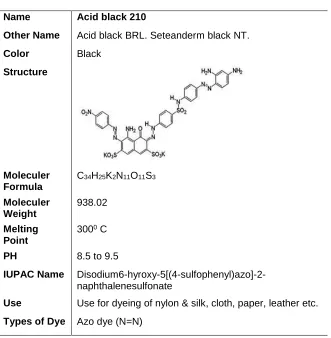
Table 1.1. Characteristics of acid black 210
Name Acid black 210
Other Name Acid black BRL. Seteanderm black NT.
Color Black
Structure
Moleculer Formula
C34H25K2N11O11S3
Moleculer Weight
938.02
Melting Point
3000 C
PH 8.5 to 9.5
IUPAC Name Disodium6-hyroxy-5[(4-sulfophenyl)azo]-2-naphthalenesulfonate
Use Use for dyeing of nylon & silk, cloth, paper, leather etc.
Types of Dye Azo dye (N=N)
structures is a secondary metabolic event that starts when nutrients (C, N and S) become limiting. Therefore, while the enzymes are optimally expressed under starving conditions, supplementation of energy substrates and nutrients are necessary for the propagation of the cultures (Christian et al., 2005).
Most studies on an azo dye biodegradation have focused on the fungal cultures mainly belonging to white rot fungi and used to develop bioprocesses for mineralization of azo dyes (Parshetti et al., 2006). The Phanerochaete chrysosporium is the most widely studied of white-rot fungi, as well as Trametes (Coriolus) versicolor, Bjerkandera adusta, Pleurotus, Aspergillus and Phlebia species, and variety of other isolates also studied for the degradation of various textile dyes ( Swamy and Ramsay 1999; Pointing et al., 2000). A detailed investigation was also carried out on isolated Geotrichum candidum Dec1 capable of decolorization a number of anthraquinone dyes. The broad substrate specificity exhibited by this isolate is due to production of extracellular peroxidase-type enzymes and glycosylated haem-based peroxidase (DyP) (Kim and Shoda 1999a).
However, application of white-rot fungi for the removal of dyes from textile wastewater have inherent drawbacks; long growth cycle, requiring nitrogen limiting conditions,
naturally white rot fungi not found in wastewater, hence the enzyme production may be unreliable (Robinson et al., 2001), long hydraulic retention time for complete decolorization still limit the performance of the fungal decolorization system (Saratale et al., 2009) as well as preservation in bioreactors will be a matter of concern (Stolz, 2001).
Much of the experimental work involving the anaerobic decolorization of dyes (predominantly azo dyes) was conducted using mono cultures. Species of Bacillus, Pseudomonas, Aeromonas, Proteus, Micrococcus and purple non-sulphur photosynthetic bacteria were found to be effective in the anaerobic degradation of a number of dyes (Chang et al., 2001; Saratale et al., 2009). The anaerobic reduction of azo dyes utilized in the textile industry by a strain of Bacillus cereus isolated from soil. However, the permeation of the dyes through biological membrane into the microbial cells was cited as the principal rate-limiting factor for decolorization.
In contrast, under aerobic conditions, the enzymes mono- and di-oxygenase catalyze the incorporation of oxygen from O
2 into the aromatic ring of organic compounds prior
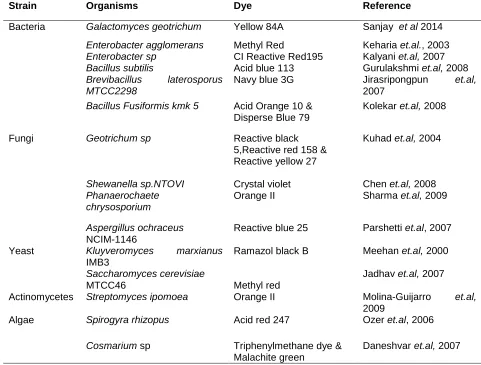
Table 2. Microbes Use in Azo Dye Degradation
Strain Organisms Dye Reference
Bacteria Galactomyces geotrichum Yellow 84A Sanjay et al 2014
Enterobacter agglomerans Methyl Red Keharia et.al., 2003
Enterobacter sp CI Reactive Red195 Kalyani et.al, 2007
Bacillus subtilis Acid blue 113 Gurulakshmi et.al, 2008
Brevibacillus laterosporus MTCC2298
Navy blue 3G Jirasripongpun et.al,
2007 Bacillus Fusiformis kmk 5 Acid Orange 10 &
Disperse Blue 79
Kolekar et.al, 2008
Fungi Geotrichum sp Reactive black
5,Reactive red 158 & Reactive yellow 27
Kuhad et.al, 2004
Shewanella sp.NTOVI Crystal violet Chen et.al, 2008
Phanaerochaete chrysosporium
Orange II Sharma et.al, 2009
Aspergillus ochraceus NCIM-1146
Reactive blue 25 Parshetti et.al, 2007
Yeast Kluyveromyces marxianus
IMB3
Ramazol black B Meehan et.al, 2000
Saccharomyces cerevisiae
MTCC46 Methyl red
Jadhav et.al, 2007
Actinomycetes Streptomyces ipomoea Orange II Molina-Guijarro et.al,
2009
Algae Spirogyra rhizopus Acid red 247 Ozer et.al, 2006
Cosmarium sp Triphenylmethane dye &
Malachite green
Daneshvar et.al, 2007
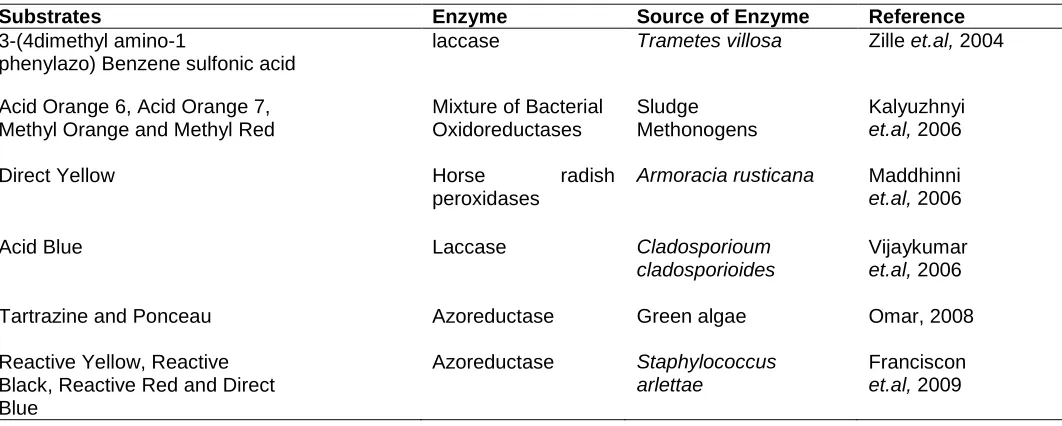
produce aromatic amines (Stolz, 2001). Table 3 shows some common enzymes used in Biodegradation of Dye. These enzymes, after purification, characterization and comparison were shown to be flavin-free. The aerobic azo reductases were able to use both NAD(P)H and NADH as cofactors and reductively cleaved not only the carboxylated growth substrates of bacteriabut also the sulfonated structural analogues. Recently, cloned and characterized the genetic code of the aerobic azo reductase from Pagmentiphaga kullae K24. Only few bacteria with specialized azo dye reducing enzymes were found to degrade azo dyes under fully aerobic conditions (Nachiyar et al., 2005). Table II and III Shows Some Microbe and Enzyme used in Decolorization and Degradation of Dye.
Cladosporium sp. comprise fungi which are not characterized by sexual phase of multiplication, and, therefore, belong to the group Fungi imperfecti,. This genus comprises more than 30 species. The most
isolated species are Cladosporium elatum, Cladosporium
harbarum, Cladosporium spherospermum and
Table 3. Enzymes mediated Decolorization of some dyes
who got peritonitis caused by Cladosporium sp. (Tasic et al., 2006).
Uses
Dye are used in the textile, paper, cosmetics, food and pharmaceutical industries due to their ease of production, fastness and variety in color compared to natural dyes. Dye injected into the blood allows the flow through coronary arteries to be viewed by x-ray. Research has involved optimization of conditions for degradation and studies of the biochemical mechanisms by which complex azo dyes are degraded. Dye sublimation printers, which are the best type for producing crystal clear results for your ID cards. By using fluorescent dyes, slices no longer have to be collected using a sharpened blade. Dyed wool, not yet spun, was found. Intravascular injection (should be prevented by checking the needle position with radio-opaque dye ). Dyers bring color into their work using natural or synthetic dyers bring color into their work using natural or synthetic dyes. Hydrocarbons in the environment are biodegraded primarily by bacteria, yeast, and fungi. The reported efficiency of biodegradation ranged from 6% to 82% for soil fungi, 0.13% to 50% for soil bacteria, and 0.003%to 100% for marine bacteria. Many scientists reported that mixed populations with overall broad enzymatic capacities are required to degrade complex mixtures of hydrocarbons ( Shah et al 2013)
CONCLUSION
As an emerging technique, microbial degradation is one
of the best techniques to detoxify the azo dyes. To understand the decolourization and degradation mechanism of azo compounds under aerobic conditions, detailed information is needed about the initial enzymatic transformation of azo linkages. The authors in our laboratory are involved in the isolation of potent fungi and consortium for efficient decolourization of azo dyes from textile effluents.
ACKNOWLEDGEMENT
I wish to thank our department of biotechnology & chemistry for providing the necessary facilities for this study and Binal Patel M.Sc. biotechnology students, H.V H.P. Institute of post graduates studies and Research, Kadi
REFERENCES
Adedayo O, Javadpour S, Taylor C, Anderson WA, Moo-Young M (2004). Decolourization and detoxification of methyl red by aerobic bacteria from a wastewater treatment plant. World Journal of Microbiology and Biotechnology. 20: 545–550.
Alhassani HA, Rauf MA, Ashraf SS (2007). Efficient microbial degradation of Toluidine Blue dye by Brevibacillus sp. Dyes Pigments. 75: 395–400.
Bhatt M, Patel M, Rawal B, Novotny C, Molitoris HP, Sasek V (2000). Biological decolorization of the synthetic dye RBBR in contaminated soil. World Journal of Microbiology and Biotechnology.16: 195-198.
Substrates Enzyme Source of Enzyme Reference
3-(4dimethyl amino-1
phenylazo) Benzene sulfonic acid
laccase Trametes villosa Zille et.al, 2004
Acid Orange 6, Acid Orange 7, Methyl Orange and Methyl Red
Mixture of Bacterial Oxidoreductases
Sludge Methonogens
Kalyuzhnyi et.al, 2006
Direct Yellow Horse radish
peroxidases
Armoracia rusticana Maddhinni et.al, 2006
Acid Blue Laccase Cladosporioum
cladosporioides
Vijaykumar et.al, 2006
Tartrazine and Ponceau Azoreductase Green algae Omar, 2008
Reactive Yellow, Reactive Black, Reactive Red and Direct Blue
Azoreductase Staphylococcus arlettae
Chang JS, Chou C, Chen SY (2001) Decolorization of azo dyes with immobilized Pseudomonas luteola. Process Biochemistry. 36: 757–763.
Chang JS, Kuo TS, (2000). Kinetics of bacterial decolorization of azo dye with Escherichia coli NO3.Bioresource Technology. 75: 107–111.
Chen CH, Chang CF, Ho CH, Tsai TL, Liu SM (2008). Biodegradation of crystal violet by a Shewanella sp. NTOU1. Chemosphere, 72: 1712-20.
Christian, V., Shrivastava, R., Shukla, D., Modi, H., Vyas, R B M. (2005). Mediator role of veratryl alcohol in the lignin peroxidase-catalyzed oxidative decolorization of Remazol brilliant blue R. Enz. Microbiol. Technol. 36: 426-431
Chung KT, Cerniglia CE (1992). Mutagenicity of azo dyes: structure- activity relationships. Mutation Res. 277: 201-220.
Corso CR, Almeida AC (2009). Bioremediation of dyes in textile effluents by Aspergillus oryzae. Microb. Ecol. 57: 384–390.
Dhaneshvar N, Ayazloo M, Khatae AR, Pourhassan M (2007). Biological decolourization of dye solution containing malachite green by microalgae Cosmarium sp. Bioresource Technology. 29: 1-7.
Ezeronye OU, Okerentugba PO (1999). Performance and efficiency of a yeast biofilter for the treatment of a Nigerian fertilizer plant effluent, World.Journal of Microbiology and Biotechnology. 15: 515-516.
Field JA, DeJong E, Feijoo CG, DeBont JAM (1993). Screening for ligninolytic fungi application to the biodegradation of xenobiotics,TIBTECH.11: 44- 49. Gahr F, Hermanutz F, Oppermann W (1994). Ozonation
an important technique to comply with new German laws for textile wastewater treatment. Water Sci. Technol. 30: 255–263.
Gurulakshmi M, Sudarmani DNP, Venba R, (2008). Biodegradation of Leather Acid dye by Bacillus subtilis, Advanced biotech. pp 12-18.
Jadhav JP, Govindwar SP (2007). Biotransformation of malachite green by S.cerevisiae. Yeast. 23: 316-323. Jirasripongpun K, Nasanit R, Niruntasook J,
Chotikasatian B (2007) Thinnest. Int. J. Sc. Tech. 12: 6-11.
Kalyani DC, Patil PS, Jadhav JP, Govindwar SP (2007). Suki. Biores. Technol. 99:4635-4641.
Kalyani DC, Patil PS, Jadhav JP, Govindwar SP (2008). Biodegradation of reactive textile dye Red BLI by an isolated bacterium Pseudomonas sp. SUK1. Bioresource Technology. 99: 4635– 4841.
Kalyuzhnyi S, Yemashova N, Federovich V (2006). Kinetics of Anaerobic Biodecolorization of Azo Dyes. Water Sci.Technol. 542:73-79.
Karcher S, Kornmuller A, Jekel M (2001). Screening of commercial sorbents for the removal of reactive dyes. Dye Pigment. 51(2-3):111-125.
Khehra MS, Saini HS, Sharma DK, Chadha BS, Chimni SS (2006). Biodegradation of azo dye C.I. Acid Red 88
by an anoxic-aerobic sequential bioreactor. Dyes and Pigments. 70: 1-7.
Keharia H, Madamwar D (2003). Bioremediation concepts for treatment of by containing water: A review. Indian Journal of Experimental Biology. 41: 1068.
Kim SJ, Shoda M (1999). Purification and Characterization of Novel peroxidase from Geotrichum candidum Dec/ involved in decolorization of dyes. Applied and Environmental Microbiology. 65: 1029-1035.
Kolekar YM, Powar SP, Gawai KR, Lokhande PD, Shouche YS, Kodam KM, (2008). Decolorization and degradation of Disperse Blue 79 and Acid Orange 10, by Bacillus fusiformis KMK5 isolated from the textile dye contaminated soil. Bioresource Technol. 99: 8899-9003.
Kuhad RC, Sood N, Tripathi KK, Singh A, Ward OP, (2004). Developments in microbial methods for the treatment of dye effluents. Adv. Appl. Microbiol. 56: 185-213.
Kurade MB, Waghmode TR, Kagalkar AN, Govindwar SP (2012). Decolorization of textile industry effluent containing disperse dye Scarlet RR by a newly developed bacterial-yeast consortium BL-GG. Chem. Eng. J. 184: 33–41.
Kurade MB, Waghmode TR, Govindwar SP (2011) Preferential biodegradation of structurally dissimilar dyes from a mixture by Brevibacillus laterosporus. J.Hazard. Mater. 192: 1746–1755.
Maddhinni VL, Vurimindi HB, Yerramilli A (,2006). Degradation of azo dye with Horseradish Peroxidase HRP,J.Indian Inst.Sci.86: 507-514.
McMullan G, Meehan C, Conneely A, Kirby N, Robinson T, Nigam P (2001). Mini-review: microbial decolourisation and degradation of textile dyes. Applied Microbiology and Biotechnology. 56: 81-87.
Mohan SV, Rao CN, Prasad KK, Karthikeyan J (2002). Treatment of simulated reactive yellow 22 (azo) dye effluents using Spirogyra species. Waste Management. 22: 575–582.
Meehan G, Banat IM, Mcmullan G, Nigum P, Smyth F, Marchant R (2000). Decolorization of Remazol Black-B using a thermotolerant yeast, Kluyveromyces marxianus IMB3. Environ Int, 26:75-79.
Molina-Guijarro JM, Perez J, Manoz-Dorado J, Guillen F, Moya R, Hernandez M, Arias ME (2009). Detoxification of azo dyes by a novel pH-versatile, salt-resistant laccase from Streptomyces ipomoea. Int. Microbiol. 12: 13-21
Molinari R, Pirillo F, Falco M, Loddo V, Palmisano L (2004). Photocatalytic degradation of dyes by using a membrane reactor. Chemical Engineering Process, 43: 1103-1114.
Azoreductase from Pseudomonas aeruginosa. Enzyme Microbiol. Technol, 36: 503-509.
O'Neill C, Lopez A, Esteves S, Hawkes FR, Hawkes DL, Wilcox S (2000). Azo-dye degradation in an anaerobic-aerobic treatment system operating on simulated textile effluent. – Appl. Microbiol. Biotechnol. 53: 249-254.
Omar HH (2008). Algal Decolorization and Degradation of Monoazo and Diazo Dyes, Pak.J.Bio.Sci.1110:1310-1316.
Ozer A, Akkaya G, Turabik M (2006),Dyes Pigment. 71: 83-89.
Pandey, A., Singh, P. and Iyengar, L. (2007). Bacterial decolourization and degradation of azo dyes. International Biodeterioration and Biodegradation. 59:73-85.
Parshetti G, Kalme S, Saratale G, Govindwar S (2006). Biodegradation of malachite green by Kocuria rosea MTCC1532. Acta. Chim. Slov. 53: 492-498.
Patovirta RL, Reiman M, Husman T, Haverinen U, Toivola M, Nevalainen A (2003). Mould specific IgG antibodeies connected with sinusitis in teacher of mould-damaged shool: a two-year follow-up study. Int. J. Occup.Med.Environ.Health. 16(3): 221-30.
Puvaneswari N, Muthukrishnan J, Gunasekaran P (2006). Toxicity assessment and microbial degradation of azo dyes. Indian J. Exp. Biol. 44: 618-626.
Pointing SB, Bucher VVC, Vrijmoed LLP (2000). Dye decolorization by sub-tropical basidiomycetous fungi and the effect of metals on decolorizingability. World J. Microbiol. Biotechnol. 16:199–205.
Robinson T, Chandran B, Nigan P (2001). Studies on the production of enzymes by white-rot fungi for the decolourization of textile dyes. Enzyme and Microbiol. Technology. 29: 575-579.
Saratale RG, Saratale GD, Parshetti GK, Chang JS, Govindwar SP (2009). Outlook of bacterial decolorization and degradation of azo dyes: a review. International Journal of Environmental Research and Public Health. 11-59.
Saratale RG, Saratale GD, Kalyani DC, Chang JS, Govindwar SP (2009). Enhanced decolorization and biodegradation of textile azo dye Scarlet R by using developed microbial consortium-GR. Bioresource Technology. 100: 2493–2500.
Sanjay PG, Mayur BK, Dhawal PT, Akhil NK, Pil JK, Tatoba RW (2014) Decolorization and degradation of xenobiotic azo dye Reactive Yellow-84A and textile effluent by Galactomyces geotrichum., Chemosphere xxx (2014) xxx–xxx (Article in Press)
Shah KR, Vaishali P (2013) Petroleum Hydrocarbon pollution and its Biodegradation International Journal of Chemtech Applications. 2(3): 63-80
Sharma P, Lakhvinder S, Dilboghi N (2009). Biodegradation of Orange. J Sci Ind Res, 68: 157-161. Stajic M, Persky L, Friesem D, Hadar Y, Wasser S, Nevo
E, Vukojevic J, (2006). Effect of different carbon and
nitrogen sources on laccase and peroxidases production by selected Pleurotus species. Enzyme Microb. Technol., 38: 65–73.
Sudha M, Saranya A, Selvakumar G, Sivakumar N (2014). Microbial degradation of Azo Dyes: A review Int. J. Curr. Microbiol. App. Sci. (3) (2): 670-690.
Stolz A (2001). Basic and applied aspects in the microbial degradation of azo dyes. Appl. Microbiol. Biotechnol. 56: 69-80.
Swamy J, Ramsay JA (1999). The evaluation of white rot fungi in the decolourization of textile dyes. Enzyme and Microbial Technology. 24: 130-137.
Tasic S, Miladinovic-Tasic N, Zdravkovic D, Avramovic M, Misic M (2006). Fungal peritonitis caused by fungi of the Cladosporium genus in patient on peritoneal dialysis, 5th Congres of medical mycrobiology, Belgrad. 139.
Unlu M, Ergin C, Cirit M, Sahin U, Akkaya A (2003). Molds in the homes of asthmatic in Isparta, Turkey. Asian. Pac. J.Allergy. Immunol. 21(1): 21-4.
Vandevivere PC, Bianchi R, Verstraete W (1998). Treatment and reuse of wastewater from the textile wet-processing industry: review of emerging technologies. J. Chem. Technol. Biotechnol. 72: 289– 302.
Venturini S, Tamaro M (1979). Mutagenicity of anthraquinone and azo dyes in Ames Salmonella typhimurium test Mutat. Res. 68: 307–312.
Vijaykumar MH, Veeranagouda Y, Neelkanteshwar K, Karegoudar TB, (2006). Degradation of 1:2 Metal Complex Dye Acid Blue 193 by a newlyisolated fungus
Cladosporium cladosporioide, World
J.Microbiol.Biotechnol. 22: 157-162
Welham A (2000). The theory of dyeing (and the secret of life). J. Soc. Dyers Colour. 116: 140-143.
Waghmode TR, Kurade MB, Kabra AN, Govindwar SP, (2012a). Biodegradation of Rubine GFL by Galactomyces geotrichum MTCC 1360 and subsequent toxicological analysis by using cytotoxicity, genotoxicity and oxidative stress studies. Microbiology. 158: 2344– 2352.
Wang X, Cheng X, Sun D (2008). Autocatalysis in Reactive Black 5 biodecolorization by Rhodopseudomonas palustris W1. Appl. Microbiol. Biotechnol. 80: 907–915.
Zhang X, Flurkey W (1997). Phenoloxidases in Portabel mushrooms. Journal of Food Science. 62: 51-55. Zollinger H (1987). Azo dye sand pigments. Colour
chemistry-synthesis, properties and applications of organic Dyes and pigments. Color Chemistry. New York, USA: VCH Publishers; p. 92-102.
Zollinger H (1991). Synthesis, Properties and Application of Organic Dyes and Pigments, Color chemistry: New York, USA: VCH Publishers: 496: 456-980.
Zille A, Ramalho P, Tzanov T, Millward R, Aires V, Cardoso MH, Ramalho MT, Gubitz GM, Cavaco- Paulo A (2004). Predicting Dye Biodegradation from Redox Potentials, Biotechnol.Progr. 20:1588-1592.
Zhao X, Hardin IR, Hwanga HM, (2006). Biodegradation of a model azo disperse dye by the white rot fungus Pleurotus ostreatus. Int. Biodeterior. Biodegrad. 57:1– 6.
Zhou H, Smith DW (2002) Advanced technologies in water and wastewater treatment, Journal EnvironmentalEngineering Science. 1: 247-264.
Accepted 10 October, 2014.
Citation: Shah K (2014). Biodegradation of Azo Dye compounds. International Research Journal of Biochemistry and Biotechnology, 1(2): 005-013.