P R O T O C O L
Open Access
Study protocol: systematic review and
meta-analysis of randomized controlled trials in
first-line treatment of squamous non-small cell
lung cancer
Amy M DeLozier
1, Jacqueline Brown
2, Fanni Natanegara
1, Luping Zhao
1, Zhanglin Lin Cui
1, Stephen L Able
1,
Lee Bowman
1, Joseph Treat
1and Lisa M Hess
1*Abstract
Background:
There is a high unmet need for effective treatments for patients with squamous non-small cell
lung cancer (NSCLC). Eli Lilly and Company is conducting a phase III, randomized, multicenter, open-label study
of gemcitabine plus cisplatin plus necitumumab (GC + N) versus gemcitabine plus cisplatin (GC) for the first-line
treatment of patients with stage IV squamous NSCLC. Given GC is not the only treatment commonly used for
the treatment of squamous NSCLC, this study was designed to compare the survival, toxicity, and quality of life
outcomes of current treatment strategies for squamous NSCLC in the first-line setting.
Methods/Design:
A systematic review and meta-analysis (including indirect comparisons) of treatments used in
squamous NSCLC will be conducted to assess the clinical efficacy (overall and progression-free survival), health-related
quality of life (HRQoL), and safety (grade 3
–
4 toxicity) of GC + N compared to other treatments used in squamous
NSCLC. PRISMA (Preferred Reporting Items for Systematic Reviews and Meta-Analyses) guidelines will be followed for
all aspects of this study. A systematic literature review will be conducted to identify randomized controlled trials
evaluating chemotherapy treatment in first-line NSCLC. Eligible articles will be restricted to randomized controlled
trials (RCTs) among chemotherapy-naïve advanced NSCLC cancer patients that report outcome data (survival, toxicity,
or quality of life) for patients with squamous histology. Following data extraction and validation, data consistency and
study heterogeneity will be assessed. A network meta-analysis will be conducted based on the available hazard ratios
for overall and progression-free survival, odds ratios for published toxicity data, and mean difference of HRQoL scales.
Sensitivity analyses will be conducted.
Discussion:
This is a presentation of the study protocol only. Results and conclusions are pending completion of this
study.
Systematic review registration:
PROSPERO CRD42014008968
Keywords:
Non-small cell lung cancer, Chemotherapy, Non-squamous, Cancer, Meta-analysis, Network meta-analysis
* Correspondence:[email protected] 1Eli Lilly and Company, Indianapolis, IN, USA
Full list of author information is available at the end of the article
Background
Lung cancer is the leading cause of cancer-related deaths
worldwide, accounting for 1.3 million deaths annually [1].
It is defined as cancer that forms in the tissues of the lung,
usually in the cells lining air passages, and is divided into
two main subtypes: small cell lung cancer (SCLC) and
non-small cell lung cancer (NSCLC). NSCLC is the
pre-dominant subtype form and accounts for about 85% of all
lung cancers [2]; it is further divided by cell histology into
adenocarcinoma, squamous cell carcinoma, and large-cell
carcinoma, with adenocarcinoma the currently
predomin-ant histology. Although the overall age-adjusted incidence
rates for lung cancer are declining in many developed
na-tions, lung cancer remains the leading cause of
cancer-related deaths worldwide with an overall 5-year survival
rate of about 15% [3], resulting in a significant disease
bur-den worldwide.
The treatment of lung cancer is based on the type
and stage of tumor, as well as the patient
’
s general
med-ical condition. For patients diagnosed with early stage
disease (i.e., stages I and II), surgery offers the best
op-tion for survival and cure. Adjuvant chemotherapy is
in-creasingly used in those with stage II disease and
occasionally for those with stage IB, depending on the size
of the tumor. For those with stage III lung cancer,
chemo-radiotherapy alone or in addition to surgery is used to
treat patients; however, while treatment is administered
with a curative intent, the 5-year survival for patients
with regional disease is approximately 26%, which
de-creases to 3.9% for patients with metastatic disease
[3]. Treatment for patients with advanced disease tends
to be palliative, although extension in survival may be
achieved. The standard first-line drug treatments for
advanced NSCLC, neoadjuvant, adjuvant, or
chemora-diotherapy, are generally based on the combination of a
second- or third-generation cytotoxic drug with a
plat-inum agent (cisplatin or carboplatin).
There are many drug therapies available for treatment
of NSCLC; however, not all current therapies are
suit-able for use in tumors of all histologies. The results of
clinical trials have indicated that drugs such as
peme-trexed have greater efficacy among patients with
adeno-carcinoma than those with other NSCLC histologies
(e.g., squamous cell carcinoma) [4]. Other newer agents,
such as bevacizumab, are indicated for adenocarcinoma
because of higher toxicities observed in patients with
squamous histology [5]. Drugs such as erlotinib and
gefitinib are not restricted by histology, but have greater
efficacy among patients with epidermal growth factor
receptor (EGFR) mutations [6,7]. The frequency of EGFR
mutations in patients with squamous cell carcinoma, as
opposed to those with adenocarcinoma, is very low
[8]. Therefore, histology-specific treatment options are
limited for patients with squamous cell carcinoma,
which accounts for about 25% of all non-small cell
lung cancers [9].
There is thus a high unmet need for effective
treat-ments for patients with squamous NSCLC, as disease
burden is large and there is currently a lack of targeted
drug therapies for NSCLC squamous cell tumors. Eli
Lilly and Company is currently developing necitumumab
as a first-line treatment in patients with stage IV squamous
NSCLC. The current phase III study (ClinicalTrials.gov
identifier: NCT00981058) is a randomized, multicenter,
open-label study of gemcitabine-cisplatin chemotherapy
plus necitumumab (GC + N) versus gemcitabine-cisplatin
(GC) chemotherapy alone in first-line treatment of patients
with stage IV squamous NSCLC. The target patient
popu-lation for this trial is comprised of male and female
patients with histologically or cytologically confirmed,
ad-vanced squamous NSCLC, previously untreated for
meta-static disease.
The purpose of this systematic literature review and
meta-analysis is to compare survival, toxicity, and quality
of life outcomes of current treatment strategies with
necitumumab among patients with squamous NSCLC.
Methods/Design
This systematic literature review and meta-analysis
(in-cluding indirect comparisons) will be conducted of
treat-ments used in squamous NSCLC to assess the clinical
efficacy, quality of life, and safety of GC + N compared
to other treatments used in squamous NSCLC. To
complete this objective, the following specific aims will
be pursued:
1. To conduct a systematic literature review of
randomized trials of all relevant treatments used for
the first-line treatment of advanced squamous
NSCLC;
2. To extract relevant data from the relevant published
literature;
3. To perform indirect and direct comparisons of
GC + N to all identified comparators for the
following outcomes:
3.1 Overall survival;
3.2 Progression-free survival;
3.3 Toxicity; and
3.4 Quality of life
Search strategy
2, and 3 detail the specific search strategies for PubMed,
Ovid, and Embase, respectively.
The following is a list of the conference databases that
will be searched:
American Association for Cancer Research, AACR
American College of Radiation Oncology
American Society for Radiation Oncology, ASTRO
American Society of Clinical Oncology, ASCO
Asia Pacific Lung Cancer Conference, APLCC
Asia Pacific Oncology Summit, APOS
Asian Oncology Summit, AOS
Atualizacoes em Oncologia
Australian Lung Cancer Conference, ALCC
Austrian Society of Haematology and Oncology,
ASHO
The Association for Cancer Surgery, BASO
Biennial Congress of the European Association for
Cancer Research, EACR
British Thoracic Oncology Group Conference,
BTOG
Clinical Oncology Society of Australia, COSA
Cancer Symposium of the Society of Surgical
Oncology, CSSSO
Chicago Supportive Oncology Conference, CSOC
Clinical Interventional Oncology, CIO
Congres National de la Societe Francaise de
Radiotherapie Oncologique, SFRO
Congress of the European Society for Medical
Oncology, ESMO
Congress of the European Society of Surgical
Oncology, ESSO
Congress of the International Society of Oncology
and Biomarkers, ISOBM
Educational Cancer Convention Lugano of the
European School of Oncology, ECCLU
European Lung Cancer Conference, ELCC
European Multidisciplinary Cancer Congress
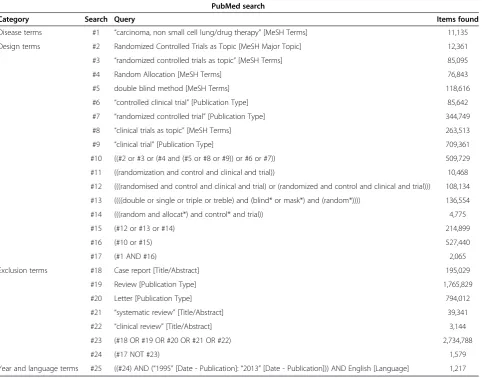
Table 1 PubMed search strategy
PubMed search
Category Search Query Items found
Disease terms #1 “carcinoma, non small cell lung/drug therapy”[MeSH Terms] 11,135
Design terms #2 Randomized Controlled Trials as Topic [MeSH Major Topic] 12,361
#3 “randomized controlled trials as topic”[MeSH Terms] 85,095
#4 Random Allocation [MeSH Terms] 76,843
#5 double blind method [MeSH Terms] 118,616
#6 “controlled clinical trial”[Publication Type] 85,642
#7 “randomized controlled trial”[Publication Type] 344,749
#8 “clinical trials as topic”[MeSH Terms] 263,513
#9 “clinical trial”[Publication Type] 709,361
#10 ((#2 or #3 or (#4 and (#5 or #8 or #9)) or #6 or #7)) 509,729
#11 ((randomization and control and clinical and trial)) 10,468
#12 (((randomised and control and clinical and trial) or (randomized and control and clinical and trial))) 108,134
#13 ((((double or single or triple or treble) and (blind* or mask*) and (random*)))) 136,554
#14 (((random and allocat*) and control* and trial)) 4,775
#15 (#12 or #13 or #14) 214,899
#16 (#10 or #15) 527,440
#17 (#1 AND #16) 2,065
Exclusion terms #18 Case report [Title/Abstract] 195,029
#19 Review [Publication Type] 1,765,829
#20 Letter [Publication Type] 794,012
#21 “systematic review”[Title/Abstract] 39,341
#22 “clinical review”[Title/Abstract] 3,144
#23 (#18 OR #19 OR #20 OR #21 OR #22) 2,734,788
#24 (#17 NOT #23) 1,579
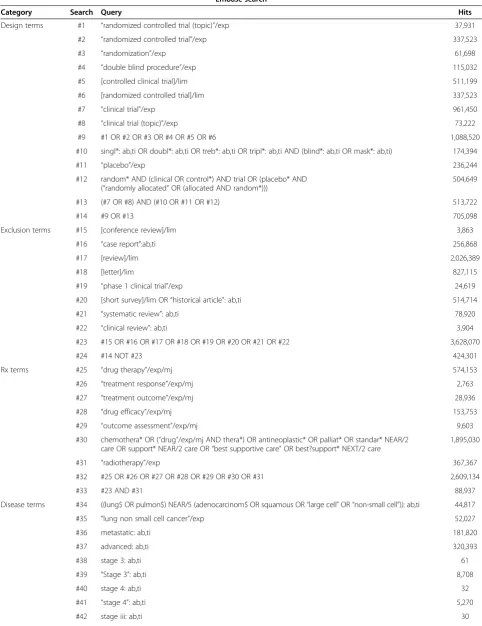
Table 2 Embase search strategy
Embase search
Category Search Query Hits
Design terms #1 “randomized controlled trial (topic)”/exp 37,931
#2 “randomized controlled trial”/exp 337,523
#3 “randomization”/exp 61,698
#4 “double blind procedure”/exp 115,032
#5 [controlled clinical trial]/lim 511,199
#6 [randomized controlled trial]/lim 337,523
#7 “clinical trial”/exp 961,450
#8 “clinical trial (topic)”/exp 73,222
#9 #1 OR #2 OR #3 OR #4 OR #5 OR #6 1,088,520
#10 singl*: ab,ti OR doubl*: ab,ti OR treb*: ab,ti OR tripl*: ab,ti AND (blind*: ab,ti OR mask*: ab,ti) 174,394
#11 “placebo”/exp 236,244
#12 random* AND (clinical OR control*) AND trial OR (placebo* AND (“randomly allocated”OR (allocated AND random*)))
504,649
#13 (#7 OR #8) AND (#10 OR #11 OR #12) 513,722
#14 #9 OR #13 705,098
Exclusion terms #15 [conference review]/lim 3,863
#16 “case report”:ab,ti 256,868
#17 [review]/lim 2,026,389
#18 [letter]/lim 827,115
#19 “phase 1 clinical trial”/exp 24,619
#20 [short survey]/lim OR“historical article”: ab,ti 514,714
#21 “systematic review”: ab,ti 78,920
#22 “clinical review”: ab,ti 3,904
#23 #15 OR #16 OR #17 OR #18 OR #19 OR #20 OR #21 OR #22 3,628,070
#24 #14 NOT #23 424,301
Rx terms #25 “drug therapy”/exp/mj 574,153
#26 “treatment response”/exp/mj 2,763
#27 “treatment outcome”/exp/mj 28,936
#28 “drug efficacy”/exp/mj 153,753
#29 “outcome assessment”/exp/mj 9,603
#30 chemothera* OR (“drug”/exp/mj AND thera*) OR antineoplastic* OR palliat* OR standar* NEAR/2 care OR support* NEAR/2 care OR“best supportive care”OR best?support* NEXT/2 care
1,895,030
#31 “radiotherapy”/exp 367,367
#32 #25 OR #26 OR #27 OR #28 OR #29 OR #30 OR #31 2,609,134
#33 #23 AND #31 88,937
Disease terms #34 ((lung$ OR pulmon$) NEAR/5 (adenocarcinom$ OR squamous OR“large cell”OR“non-small cell”)): ab,ti 44,817
#35 “lung non small cell cancer”/exp 52,027
#36 metastatic: ab,ti 181,820
#37 advanced: ab,ti 320,393
#38 stage 3: ab,ti 61
#39 “Stage 3”: ab,ti 8,708
#40 stage 4: ab,ti 32
#41 “stage 4”: ab,ti 5,270
European Multidisciplinary Conference in Thoracic
Oncology, EMCTO
Hematology Oncology Pharmacy Association
Annual Meeting, HOPA
International Conference and Exhibition on Cancer
Science and Therapy, IMPAKT
International Conference of the Society for
Integrative Oncology
International Lung Cancer Congress
International Symposium on Targeted Anticancer
Therapies, TAT
Italian Society of Surgical Oncology Conference
Medical Oncology Group of Australia, MOGA
Oncology Platform and Poster Presentation, CSM
2009
Scientific Association of Swiss Radiation Oncology,
SASRO
Scientific Meeting of the International Society for
Biological Therapy of Cancer
Scientific Meeting of the Society for Immunotherapy
of Cancer, SITC
Symposium of the International Society of Oncology
Pharmacy Practitioners
UK Radiation Oncology Conference
World Conference on Interventional Oncology,
WCIO
World Congress on Cancer Science and Therapy
Eligibility assessment
To be eligible, published studies must meet the criteria
outlined in Table 4. Briefly, eligible articles must report
at least one of the following outcomes (overall survival,
progression-free survival, quality of life, or toxicity) for
patients with squamous NSCLC. Eligible articles must
Table 2 Embase search strategy
(Continued)
#43 “stage iii”: ab,ti 31,468
#44 stage iv: ab,ti 41
#45 “stage iv”: ab,ti 20,205
#46 “stage iii/iv”: ab,ti 6
#47 “stage iii/iv”: ab,ti 4,552
#48 “stage iiib/iv”: ab,ti 2
#49 “stage iii/iva”: ab,ti 1
#50 stage* iii: ab,ti 32
#51 stage* iii*: ab,ti 49
#52 stage* iv: ab,ti 41
#53 stage* iv*: ab,ti 52
#54 stage iii*: ab,ti 47
#55 stage iv*: ab,ti 46
#56 inoperable: ab,ti 12,989
#57 in* operable: ab,ti 13,465
#58 unresectable: ab,ti 15,735
#59 non* resectable: ab,ti 1,208
#60 late* stage: ab,ti 84
#61 late: ab,ti AND stage: ab,ti 41,346
#62 metast*: ab,ti OR advance*: ab,ti 900,959
#63 relaps* OR recurr* OR unresect* OR non?resect* OR in?operable OR non?operable OR un?operable OR advanc* OR metasta* OR late NEAR/2 stage
1,895,338
#64 #34 OR #35 61,621
#65 #36 OR #37 OR #38 OR #39 OR #40 OR #41 OR #42 OR #43 OR #44 OR #45 OR #46 OR #47 OR #48 OR #49 OR #50 OR #51 OR #52 OR #53 OR #54 OR #55 OR #56 OR #57 OR #58 OR #59 OR #60 OR #61 OR #62 OR #63
1,943,775
#66 #64 AND #65 33,907
#67 #33 AND #66 2,689
Language and year #68 [1995–2013]/py AND [english]/lim 12,998,680
report data from randomized controlled trials published
since 1995. Abstracts of all potentially eligible citations
will be reviewed and excluded if it can be definitively
stated that no eligibility criterion is met. All other
publica-tions will be considered potentially eligible. Full-text
arti-cles of all potentially eligible citations will be obtained and
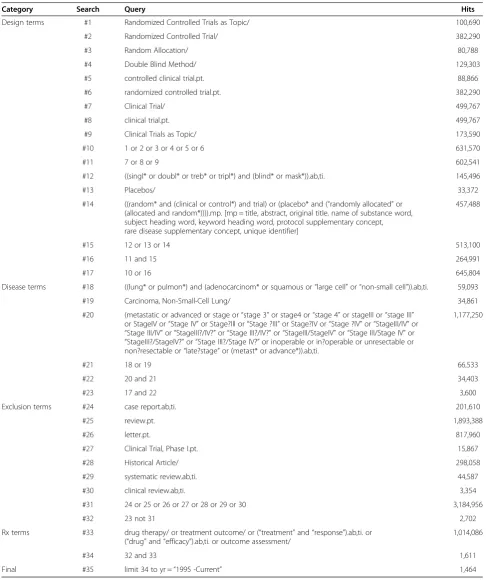
Table 3 Ovid/MEDLINE search strategy
Ovid/MEDLINE search
Category Search Query Hits
Design terms #1 Randomized Controlled Trials as Topic/ 100,690
#2 Randomized Controlled Trial/ 382,290
#3 Random Allocation/ 80,788
#4 Double Blind Method/ 129,303
#5 controlled clinical trial.pt. 88,866
#6 randomized controlled trial.pt. 382,290
#7 Clinical Trial/ 499,767
#8 clinical trial.pt. 499,767
#9 Clinical Trials as Topic/ 173,590
#10 1 or 2 or 3 or 4 or 5 or 6 631,570
#11 7 or 8 or 9 602,541
#12 ((singl* or doubl* or treb* or tripl*) and (blind* or mask*)).ab,ti. 145,496
#13 Placebos/ 33,372
#14 ((random* and (clinical or control*) and trial) or (placebo* and (“randomly allocated”or (allocated and random*)))).mp. [mp = title, abstract, original title, name of substance word, subject heading word, keyword heading word, protocol supplementary concept, rare disease supplementary concept, unique identifier]
457,488
#15 12 or 13 or 14 513,100
#16 11 and 15 264,991
#17 10 or 16 645,804
Disease terms #18 ((lung* or pulmon*) and (adenocarcinom* or squamous or“large cell”or“non-small cell”)).ab,ti. 59,093
#19 Carcinoma, Non-Small-Cell Lung/ 34,861
#20 (metastatic or advanced or stage or“stage 3”or stage4 or“stage 4”or stageIII or“stage III” or StageIV or“Stage IV”or Stage?III or“Stage ?III”or Stage?IV or“Stage ?IV”or“StageIII/IV”or “Stage III/IV”or“StageIII?/IV?”or“Stage III?/IV?”or“StageIII/StageIV”or“Stage III/Stage IV”or “StageIII?/StageIV?”or“Stage III?/Stage IV?”or inoperable or in?operable or unresectable or non?resectable or“late?stage”or (metast* or advance*)).ab,ti.
1,177,250
#21 18 or 19 66,533
#22 20 and 21 34,403
#23 17 and 22 3,600
Exclusion terms #24 case report.ab,ti. 201,610
#25 review.pt. 1,893,388
#26 letter.pt. 817,960
#27 Clinical Trial, Phase I.pt. 15,867
#28 Historical Article/ 298,058
#29 systematic review.ab,ti. 44,587
#30 clinical review.ab,ti. 3,354
#31 24 or 25 or 26 or 27 or 28 or 29 or 30 3,184,956
#32 23 not 31 2,702
Rx terms #33 drug therapy/ or treatment outcome/ or (“treatment”and“response”).ab,ti. or (“drug”and“efficacy”).ab,ti. or outcome assessment/
1,014,086
#34 32 and 33 1,611
Table 4 Eligibility criteria and screening matrix
Eligibility criteria
Patients Male or female patients with histologically or cytologicallyconfirmed squamous NSCLC
Study participants must have not received chemotherapy treatment prior to first-line chemotherapy for NSCLC at the time of randomization in the study
Interventions The study assesses a chemotherapy treatment in each of the study arms
No limits are placed on the type of chemotherapy used
Outcomes One or more of the following outcomes must be quantitatively reported in the publication: overall survival, progression-free survival, toxicity, or quality of life
At least one of the required outcome variables must be reported separately for patients with advanced or metastatic (stage III/IV) NSCLC that is of squamous histology
Study design RCTs
Time frame 1995 to present
Ineligibility criteria
Interventions Not first-line treatment with first-line defined as patients with no prior exposure to chemotherapy
Radiation therapy in the absence of concurrent chemotherapy in any treatment group
Study design Review articles, news, editorials, commentaries
Time frame Publication date prior to 1995
Matrix for patients with“squamous histology” Squamous inclusion
obvious in abstract?
Squamous results obvious in abstract?
Inclusion Comments
Yes Yes Yes
No Yes Yes
Yes No Yes/No Need full text to determine the inclusion
No No Yes/No Need full text to determine the inclusion
Only non-squamous inclusion obvious in abstract?
Squamous results obvious in abstract?
Inclusion Comments
Yes Yes Not possible case
No Yes Yes
Yes No No
No No Yes/No Need full text to determine the inclusion
Abstract mentions just NSCLC as inclusion?
Squamous results obvious in abstract?
Inclusion Comments
Yes Yes Yes
No Yes Yes/No This may be multisite cancer study, need
full text to determine the inclusion
Yes No Yes/No Need full text to determine the inclusion
No No Noise in the search Need full text to determine the inclusion
Multiple cancers If mentions lung cancer Yes/No Need full text to determine the inclusion
If does not mention any specific tumor types Yes/No Need full text to determine the inclusion
If only mentions breast cancer or other types and does not mention lung cancer
Noise in the search
Matrix for“not first-line treatment”
Condition Line of treatment to be considered Inclusion Comments
Naïve NSCLC patients 1st Yes
First- or front-line treatment 1st Yes
Untreated NSCLC patients 1st Yes
Metastatic chemo-naïve NSCLC patients
1st Yes
reviewed to determine final eligibility. The eligibility of
both the abstracts and full-text articles will be assessed
in-dependently by two reviewers using the criteria and
screening matrix presented in Table 4. If the two reviewers
do not agree on the eligibility of an article, a third reviewer
will serve as the tie breaker. Systematic reviews and other
review articles will be scanned to ensure no eligible
ran-domized controlled trials (RCTs) are missed.
Data extraction and verification
In a process similar to that used for assessing eligibility,
two reviewers will independently extract the data
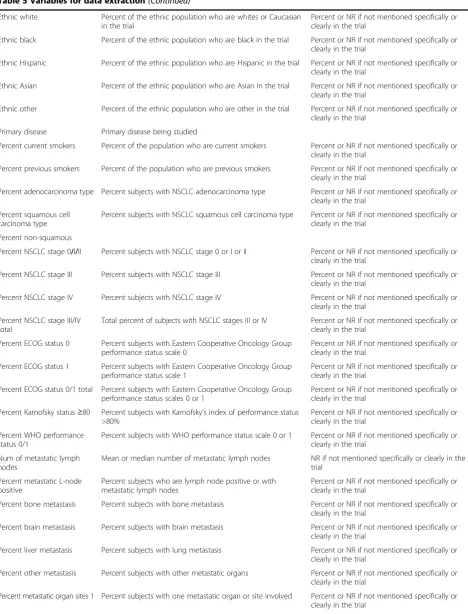
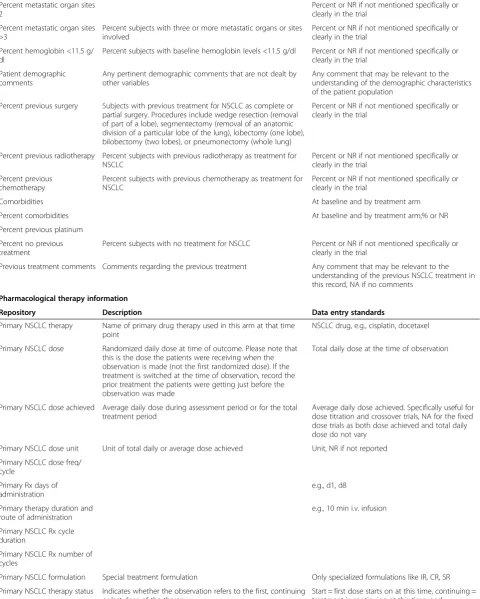
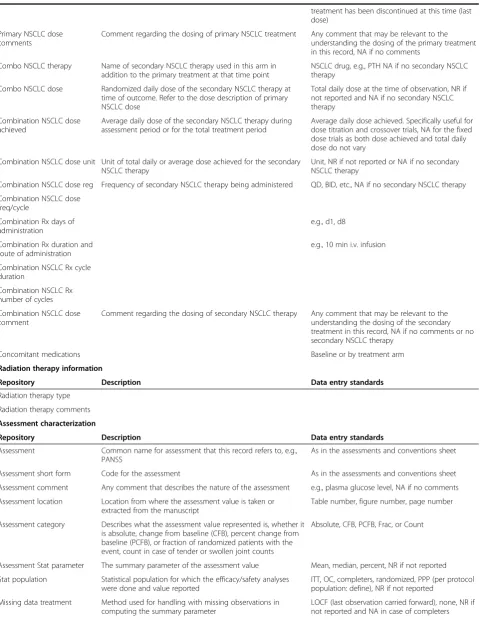
ele-ments listed in Table 5 from each eligible article. These
data are extensive and it is not expected, nor is it
re-quired, that all studies will report all data fields included.
However, attempts to collect as extensive of data as
pos-sible will be made to increase the potential range of
sen-sitivity and descriptive analyses. In addition to the data
extraction, two reviewers will also assess bias using the
Cochrane Risk of Bias Tool and will measure study
qual-ity using the Physiotherapy Evidence Database (PEDro)
scale (see the
“
Assessment of bias and study quality
”
sec-tion). Data from both reviewers will be compared. If any
data element does not match, the reviewers will meet
and attempt to resolve the discrepancies. In cases of
non-resolution, a third reviewer will be consulted. All
rules and decision criteria used in the data resolution
process will be recorded for quality assurance and
meth-odological consistency purposes. To further ensure the
accuracy of the extracted data, a subset of 10% of all
ex-tracted articles will be verified by an individual not
in-volved in the data extraction process. In cases of error
detection, the full database will be reviewed to ensure
accuracy.
Analysis plan
A PRISMA (Preferred Reporting Items for Systematic
Reviews and Meta-Analyses) diagram will be developed
based on the search strategy and eligibility assessment to
show the flow of included and excluded studies. The
de-scriptive statistics from each trial of patients with
squa-mous cell carcinoma will be included and described.
These variables will include treatment group, number of
patients, mean age (standard deviation), number and
percent male, number and percent with stage IV disease,
overall survival, progression-free survival, toxicity, and
quality of life.
A network diagram visually describing existing
treat-ments for squamous NSCLC will be created after all
eli-gible studies have been identified. However, some
publications may not present data in a format that
al-lows them to be included in the study despite otherwise
meeting eligibility criteria (e.g., mixed populations not
reported separately, mixed histologies not reported
sep-arately, mixed lines of therapy not reported separately).
In the case of a disconnected network resulting from the
absence of data for the appropriate patient population,
authors of such articles will be contacted and asked to
provide the needed data from their publications that
would enable connection to the studied network.
The primary purpose of this study is to perform
indir-ect and dirindir-ect comparisons of GC + N versus all
identi-fied
comparators
for
overall
survival
(OS)
and
progression-free survival (PFS). Individual hazard ratios
(HR) or median time-to-event (median time) and 95%
confidence intervals (90% or 99% confidence intervals
will be converted to 95%) for overall survival will be
in-cluded in the network meta-analysis using a Bayesian
approach that ensures the preservation of randomization
in the network [10]. The HR will be used as the primary
unit of analyses to evaluate differences in effect size
be-tween treatment groups. Data for analysis will be
ex-tracted directly from the text of each eligible article,
calculated from data included in the text, or extrapolated
from the Kaplan-Meier plot according to the method of
Parmar and colleagues [11]. Graphs and figures will be
digitized using TechDig software and/or
xyscan
tool
(Debian, Inc) if necessary, and digitized values will be
extracted.
Heterogeneity will be explored by comparing the fixed
and random effects models to ensure that the network
has good properties. Additionally, heterogeneity will be
explored by visual inspection of forest plots. The
consistency assumption will be tested by examining
net-work diagrams to identify any closed
“
loops
”
where
in-consistencies can occur. When the network is complex
with multiarm trials, the
“
node-splitting
”
approach
de-fined by Dias and colleagues [12] will be used to identify
Table 4 Eligibility criteria and screening matrix
(Continued)
Second-line treatment 2nd No
(Rx)-resistant NSCLC patients 2nd No
Recurrent or progressive disease 2nd No
(Rx)-responder/non-responder patients
2nd No
If no clear information on line of treatment
Table 5 Variables for data extraction
Arm-phase-period information by study arm and overall
Arm Unique arm number. Unique number for the treatment arm is
a grouping variable that is used to highlight which outcome is in the same group of subjects
Integer, in case of sub-analysis arm use A.a format. Placebo = 0, for sub-arm 0.1
Number of study arms 1, 2, 3
Open label versus blinded
Phase of study 1, 2, 3, or unknown
Objectives OS, PFS, RR, TPD, etc.
Patients randomized Number of patients randomized to the arm Number value
Arm description Description of the treatment arm usually includes the drug name, dose, and frequency
e.g., methotrexate 10 mg QW (once a week)
Sub arm analysis Indicates if the analysis is in a subset of study arm Yes, NA. Use all in case of AE or dropout data is reported for the randomized trial population
Arm comment Comment referring to the arm Comment in relevance to the understating of arm
or NA
Study phase Description of the specific phase within the overall study from which the data is derived
Lead-in, active, follow-up
Study phase description Qualifies the“Study Phase”field with any additional information deemed necessary or helpful for that arm
e.g., open-label follow-up
Phase duration Length of time of the study phase from which the data is derived for the arm
Time
Phase duration unit Time unit for phase duration for the arm Units
Phase comment Comment concerning the study phase Any comment that is relevant to the understanding of the phase or NA
Period Used if necessary to separate crossover periods within a crossover trial
If the phase has multiple periods, the number of the period. Integer in sequence, or NA
Period description Used to qualify the“Period”field with any additional information deemed necessary or helpful
e.g., treatment A, titration, maintenance, NA
Period duration Length of time of the period in a study phase from which the data is derived
Time, NA
Period duration unit Time unit for period duration Units, NA
Period comment Comment concerning the period Any comment that is relevant to the understanding
of the period or NA
Repository Description Data entry standards
Demographics and medical history information at baseline by study arm and overall—adjusted and unadjusted
Age Mean (or median) age in years of patient population or treatment arm population
Age in years or NR if not mentioned specifically or clearly in the trial
Percent female Percent of females in the patient population or treatment arm population
Percent or NR if not mentioned specifically or clearly in the trial
Weight Mean body weight of the patient or treatment arm population Weight in kg, normalize if needed or NR if not mentioned specifically or clearly in the trial
Height Mean height of the patient or treatment arm population Height in cm, normalize if needed or NR if not reported
BMI Mean body mass index of the treatment arm population BMI in kg/m2, normalize if needed or NR if not reported in the trial
DBP Mean (or median) diastolic blood pressure mmHg
SBP Mean (or median) systolic blood pressure mmHg
Inclusion Description of treatment arm or sub-arm inclusion criteria under the trial protocol
e.g., for sub-group females only, or NR if not mentioned specifically or clearly in the trial
Exclusion Description of treatment arm or sub-arm exclusion criteria under the trial protocol
Table 5 Variables for data extraction
(Continued)
Ethnic white Percent of the ethnic population who are whites or Caucasian in the trial
Percent or NR if not mentioned specifically or clearly in the trial
Ethnic black Percent of the ethnic population who are black in the trial Percent or NR if not mentioned specifically or clearly in the trial
Ethnic Hispanic Percent of the ethnic population who are Hispanic in the trial Percent or NR if not mentioned specifically or clearly in the trial
Ethnic Asian Percent of the ethnic population who are Asian in the trial Percent or NR if not mentioned specifically or clearly in the trial
Ethnic other Percent of the ethnic population who are other in the trial Percent or NR if not mentioned specifically or clearly in the trial
Primary disease Primary disease being studied
Percent current smokers Percent of the population who are current smokers Percent or NR if not mentioned specifically or clearly in the trial
Percent previous smokers Percent of the population who are previous smokers Percent or NR if not mentioned specifically or clearly in the trial
Percent adenocarcinoma type Percent subjects with NSCLC adenocarcinoma type Percent or NR if not mentioned specifically or clearly in the trial
Percent squamous cell carcinoma type
Percent subjects with NSCLC squamous cell carcinoma type Percent or NR if not mentioned specifically or clearly in the trial
Percent non-squamous
Percent NSCLC stage 0/I/II Percent subjects with NSCLC stage 0 or I or II Percent or NR if not mentioned specifically or clearly in the trial
Percent NSCLC stage III Percent subjects with NSCLC stage III Percent or NR if not mentioned specifically or clearly in the trial
Percent NSCLC stage IV Percent subjects with NSCLC stage IV Percent or NR if not mentioned specifically or clearly in the trial
Percent NSCLC stage III/IV total
Total percent of subjects with NSCLC stages III or IV Percent or NR if not mentioned specifically or clearly in the trial
Percent ECOG status 0 Percent subjects with Eastern Cooperative Oncology Group performance status scale 0
Percent or NR if not mentioned specifically or clearly in the trial
Percent ECOG status 1 Percent subjects with Eastern Cooperative Oncology Group performance status scale 1
Percent or NR if not mentioned specifically or clearly in the trial
Percent ECOG status 0/1 total Percent subjects with Eastern Cooperative Oncology Group performance status scales 0 or 1
Percent or NR if not mentioned specifically or clearly in the trial
Percent Karnofsky status≥80 Percent subjects with Karnofsky’s index of performance status >80%
Percent or NR if not mentioned specifically or clearly in the trial
Percent WHO performance status 0/1
Percent subjects with WHO performance status scale 0 or 1 Percent or NR if not mentioned specifically or clearly in the trial
Num of metastatic lymph nodes
Mean or median number of metastatic lymph nodes NR if not mentioned specifically or clearly in the trial
Percent metastatic L-node positive
Percent subjects who are lymph node positive or with metastatic lymph nodes
Percent or NR if not mentioned specifically or clearly in the trial
Percent bone metastasis Percent subjects with bone metastasis Percent or NR if not mentioned specifically or clearly in the trial
Percent brain metastasis Percent subjects with brain metastasis Percent or NR if not mentioned specifically or clearly in the trial
Percent liver metastasis Percent subjects with lung metastasis Percent or NR if not mentioned specifically or clearly in the trial
Percent other metastasis Percent subjects with other metastatic organs Percent or NR if not mentioned specifically or clearly in the trial
Percent metastatic organ sites 1 Percent subjects with one metastatic organ or site involved Percent or NR if not mentioned specifically or clearly in the trial
Table 5 Variables for data extraction
(Continued)
Percent metastatic organ sites 2
Percent or NR if not mentioned specifically or clearly in the trial
Percent metastatic organ sites >3
Percent subjects with three or more metastatic organs or sites involved
Percent or NR if not mentioned specifically or clearly in the trial
Percent hemoglobin <11.5 g/ dl
Percent subjects with baseline hemoglobin levels <11.5 g/dl Percent or NR if not mentioned specifically or clearly in the trial
Patient demographic comments
Any pertinent demographic comments that are not dealt by other variables
Any comment that may be relevant to the understanding of the demographic characteristics of the patient population
Percent previous surgery Subjects with previous treatment for NSCLC as complete or partial surgery. Procedures include wedge resection (removal of part of a lobe), segmentectomy (removal of an anatomic division of a particular lobe of the lung), lobectomy (one lobe), bilobectomy (two lobes), or pneumonectomy (whole lung)
Percent or NR if not mentioned specifically or clearly in the trial
Percent previous radiotherapy Percent subjects with previous radiotherapy as treatment for NSCLC
Percent or NR if not mentioned specifically or clearly in the trial
Percent previous chemotherapy
Percent subjects with previous chemotherapy as treatment for NSCLC
Percent or NR if not mentioned specifically or clearly in the trial
Comorbidities At baseline and by treatment arm
Percent comorbidities At baseline and by treatment arm;% or NR
Percent previous platinum
Percent no previous treatment
Percent subjects with no treatment for NSCLC Percent or NR if not mentioned specifically or clearly in the trial
Previous treatment comments Comments regarding the previous treatment Any comment that may be relevant to the understanding of the previous NSCLC treatment in this record, NA if no comments
Pharmacological therapy information
Repository Description Data entry standards
Primary NSCLC therapy Name of primary drug therapy used in this arm at that time point
NSCLC drug, e.g., cisplatin, docetaxel
Primary NSCLC dose Randomized daily dose at time of outcome. Please note that this is the dose the patients were receiving when the observation is made (not the first randomized dose). If the treatment is switched at the time of observation, record the prior treatment the patients were getting just before the observation was made
Total daily dose at the time of observation
Primary NSCLC dose achieved Average daily dose during assessment period or for the total treatment period
Average daily dose achieved. Specifically useful for dose titration and crossover trials, NA for the fixed dose trials as both dose achieved and total daily dose do not vary
Primary NSCLC dose unit Unit of total daily or average dose achieved Unit, NR if not reported
Primary NSCLC dose freq/ cycle
Primary Rx days of administration
e.g., d1, d8
Primary therapy duration and route of administration
e.g., 10 min i.v. infusion
Primary NSCLC Rx cycle duration
Primary NSCLC Rx number of cycles
Primary NSCLC formulation Special treatment formulation Only specialized formulations like IR, CR, SR
Primary NSCLC therapy status Indicates whether the observation refers to the first, continuing or last dose of the therapy
Table 5 Variables for data extraction
(Continued)
treatment has been discontinued at this time (last dose)
Primary NSCLC dose comments
Comment regarding the dosing of primary NSCLC treatment Any comment that may be relevant to the understanding the dosing of the primary treatment in this record, NA if no comments
Combo NSCLC therapy Name of secondary NSCLC therapy used in this arm in addition to the primary treatment at that time point
NSCLC drug, e.g., PTH NA if no secondary NSCLC therapy
Combo NSCLC dose Randomized daily dose of the secondary NSCLC therapy at time of outcome. Refer to the dose description of primary NSCLC dose
Total daily dose at the time of observation, NR if not reported and NA if no secondary NSCLC therapy
Combination NSCLC dose achieved
Average daily dose of the secondary NSCLC therapy during assessment period or for the total treatment period
Average daily dose achieved. Specifically useful for dose titration and crossover trials, NA for the fixed dose trials as both dose achieved and total daily dose do not vary
Combination NSCLC dose unit Unit of total daily or average dose achieved for the secondary NSCLC therapy
Unit, NR if not reported or NA if no secondary NSCLC therapy
Combination NSCLC dose reg Frequency of secondary NSCLC therapy being administered QD, BID, etc., NA if no secondary NSCLC therapy
Combination NSCLC dose freq/cycle
Combination Rx days of administration
e.g., d1, d8
Combination Rx duration and route of administration
e.g., 10 min i.v. infusion
Combination NSCLC Rx cycle duration
Combination NSCLC Rx number of cycles
Combination NSCLC dose comment
Comment regarding the dosing of secondary NSCLC therapy Any comment that may be relevant to the understanding the dosing of the secondary treatment in this record, NA if no comments or no secondary NSCLC therapy
Concomitant medications Baseline or by treatment arm
Radiation therapy information
Repository Description Data entry standards
Radiation therapy type
Radiation therapy comments
Assessment characterization
Repository Description Data entry standards
Assessment Common name for assessment that this record refers to, e.g., PANSS
As in the assessments and conventions sheet
Assessment short form Code for the assessment As in the assessments and conventions sheet
Assessment comment Any comment that describes the nature of the assessment e.g., plasma glucose level, NA if no comments
Assessment location Location from where the assessment value is taken or extracted from the manuscript
Table number, figure number, page number
Assessment category Describes what the assessment value represented is, whether it is absolute, change from baseline (CFB), percent change from baseline (PCFB), or fraction of randomized patients with the event, count in case of tender or swollen joint counts
Absolute, CFB, PCFB, Frac, or Count
Assessment Stat parameter The summary parameter of the assessment value Mean, median, percent, NR if not reported
Stat population Statistical population for which the efficacy/safety analyses were done and value reported
ITT, OC, completers, randomized, PPP (per protocol population: define), NR if not reported
Missing data treatment Method used for handling with missing observations in computing the summary parameter
Table 5 Variables for data extraction
(Continued)
Scale lower limit Scale lower limit The lower limit of the scale for the assessment, NA
if not applicable
Scale upper limit Scale upper limit The upper limit of the scale for the assessment, NA
if not applicable
Assessment categories or words
Scale category description Category that is associated with each point of the scale
Total levels Total categories/points in the scale The total number of categories associated with each point of the scale, e.g., 0 to 4 point scale
Total symptoms Total symptoms in the scale The total number of symptoms associated with the
respective assessment, NA if not applicable
Total score lower limit Lower limit of the scale, this is calculated as the number of levels multiplied with the lowest possible scale
Integer value, NA if not applicable
Total score upper limit Upper limit of the scale, this is calculated as the number of levels multiplied with the highest possible scale
Integer value, NA if not applicable
Assessment level For ordered categorical data“scales.”Indicates which level in the categorical scale the assessment is referring to
Integer level from 1 to number of levels, if fractional responder type, enter responder threshold value, eg.,≥5% weight loss from baseline for total body weight assessment, etc., NA if not applicable
PROs Scale, mean value, SD by group, time point
Time, assessment, and baseline value information
Repository Description Data entry standards
Assessment visit Clinical visit at which the assessment is done Visit 1 (usually baseline) is the first visit in the active phase. Lead in visits start at−1 and count backwards, NR if not reported
Assessment time reported Time at which the assessment is done during the study and as reported in the manuscript
Visit 1 = baseline = time 0 and the lead in assessment time starts at−1 and count backwards
Assessment time unit reported
Unit for reported assessment time Time unit as reported
Assessment time range reported
In case if the assessment values are average over a time interval
e.g., weeks 2 through 28 enter 2–28
Assessment time normalized Normalized time in days at which the assessment is done during the study and as reported in the manuscript
The normalized time value using the normalized unit as days, e.g., 4 weeks = 28 days
Assessment time unit normalized
Unit for standard assessment time Days is the standard unit
Assessment value Assessment value reported at that time point Assessment value as reported
Assessment unit Assessment unit as reported Assessment unit as reported, NA if not applicable
Assessment SE SE of reported assessment value SE as reported, NR if not reported
Assessment SD SD of reported assessment value SD as reported, NR if not reported
Assessment CI type
Assessment lower CI
Assessment upper CI
Assessment value normalized Assessment value converted into normalized assessment units Still insert value here, report if normalized units are the same as the reported units
Assessment value unit norm Normalized assessment value units See assessments and conventions sheet for normalized assessment standard
Assessment SE normalized Standard error of normalized assessment value SE in the same units as normalized assessment, may need to be calculated from SD andN; if not provided, NA
Table 5 Variables for data extraction
(Continued)
Assessment CI type normalized
Assessment lower CI normalized
Assessment upper CI normalized
Assessment number Number of patients assessed at that time point and the value derived
Integer value, but for responders and dropouts, this value is calculated from the percentages reported in the trial
Assessment value comment Comment pertaining to the assessment value that cannot be dealt by other variables
e.g., the assessment value is the mean of last 7 days of before each clinical visit, etc.
Hazard ratio 95% confidence intervals, progression-free survival, and overall survival—adjusted and unadjusted
Baseline visit Clinical visit at which the baseline assessment is done Visit 1 = baseline = time 0, NR if not reported
Baseline time Time at which the baseline assessment is done Visit 1 = baseline = time 0
Baseline time unit Unit for reported baseline time Time unit as reported
Baseline time normalized Normalized time in days at which the baseline is done during the study and as reported in the manuscript
The normalized time value using the normalized unit as days, e.g.,−4 weeks =−28 days
Baseline time unit normalized Unit for standard baseline time Days is the standard unit
Baseline value Absolute baseline value for that assessment Absolute baseline value
Baseline value unit Assessment unit as reported Assessment unit as reported, NA if not applicable
Baseline SE SE of the absolute baseline value SE as reported, NR if not reported
Baseline SD SD of the absolute baseline value SD as reported, NR if not reported
Baseline CI type
Baseline lower CI
Baseline upper CI
Baseline value normalized Baseline value converted into normalized baseline units Still insert value here report if normalized units are the same as the reported units
Baseline value unit normalized Normalized baseline value units See assessments and conventions sheet for normalized assessment standard
Baseline SE normalized Standard error of normalized baseline value SE in the same units as normalized baseline, may need to be calculated from SD andN; if not provided, NA
Baseline SD normalized Standard deviation of normalized baseline value SD in the same units as normalized baseline, may need to be calculated from SE andN; if not provided, NA
Baseline CI type normalized
Baseline lower CI normalized
Baseline upper CI normalized
BaselineN Number of patients from which the baseline value is derived Integer
Baseline value comment Comment pertaining to the baseline value that cannot be dealt by other variables
e.g., the baseline value is the mean of last 7 days of the run in period
Reference specifications
Repository Description Data entry standards
Ref code Numerical code assigned for the literature citation. Maps the record to the assessment details
Integer
Protocol or trial number Protocol ID or the number of the trial report As reported, NA if not applicable
Date modified Date of initial entry or subsequent modification of the data point
mmddyy format
Table 5 Variables for data extraction
(Continued)
Modification comment Any comment that is relevant to modification by the curator Initial entry if new record, brief statement of change (s)
Copyright status Provided by the client or procured by the service provider Client provided or yes in case the manuscript is procured by the service provider
Author Authors of publication As reported
Journal Journal name Standard abbreviated forms can be used, generally
as in the PubMed
Publication year Year of the publication Integer
Title Title of the study
Volume Volume number of the publication e.g., 180
Pages Page numbers of the publication e.g., 1–24
Trial name alias Trial name that trial is commonly referred to NR if not reported
Inclusion description Provide description of inclusion criteria Can be cut and paste from PDF, can be placed in an attached note
Exclusion description Provide description of exclusion criteria Can be cut and paste from PDF, can be placed in an attached note
Study design Brief description of the study design Parallel-fixed arm, dose escalation, effect titration, crossover, etc.
Location of the trial Geographical location where the study is conducted Primary nationalities list
Number of countries Number of countries the study is conducted Integer
Number of centers Number of centers the study is conducted Integer
Trial start date Date when the trial started mmddyy format
Trial end date Date when the trial completed mmddyy format
Placebo-controlled or active comparator
Was there a control group and was it placebo PBO control/active comparator
Active comparator therapy If this was an active comparator trial what was the comparator therapy
e.g., PTH
Percent randomized to placebo
Percent of subjects in the trial who are randomized to placebo Integer
Add-on/washout study Was the study drug added on to standardized background Rx, was background Rx washed out prior to starting primary Rx, or was standardized background therapy withdrawn once primary RX started
Add-On, Washout, Replacement, None
Study blind Was the trial blinded for the treatment phase Yes, double blind
Number of arms Number of treatment arms the patients are randomized to Integer
Arm description Codes and description for arms 0 = placebo and others in sequence
Dose descriptions Brief descriptions of the treatment drugs and the respective doses along with regimens received
0 = placebo, 1 = metformin 10 mg QW…
Dose ranging within study Does the trial contain at least two primary treatment arms where different dose strengths were administered
Yes, No. Placebo does not count as a dose strength
Primary longitudinal data Were multiple time values reported for the primary assessment endpoint
Yes, No.
Active phase trial duration What was the duration of the active phase of the trial Time, units, i.e., 3 weeks
Steady state effect achieved? Does it appear that effect stabilized over time for primary endpoints
Yes, No. Not clear
Was there a lead-in phase? Was there a standardized lead-in phase in the study other than a simple screening visit
Yes, No
Lead-in phase duration If so, what was the duration If yes, time, units, i.e., 6 months. If no, 0
Was there a follow-up phase? Was there a standardized follow-up phase that at least some patients were enrolled in after the active phase ended
inconsistencies. Density plots of the posterior samples
from models based on direct, indirect, and mixed
evi-dence will be compared. In addition, the heterogeneity
parameters (variance and standard deviation) and
good-ness of model fit measures (residual deviance and
devi-ance information criterion (DIC), a Bayesian criterion
for model comparison) between the direct and indirect
models will be compared.
OS and PFS data will be analyzed using a log
trans-formation of the HR and treating this as a continuous
outcome. For studies with median time information, we
will also use log transformation of the median time and
treat this as a continuous outcome in sensitivity
ana-lyses. HRs are preferred summary statistics to median
time per Michiels and colleagues [13], and hence, the
analysis will utilize HR data for the primary outcome
measure.
Ideally, the literature will provide values for log (HR)
and the standard error (SE) for log (HR). If the SE for
log (HR) is not available, an attempt will be made to
es-timate the missing value from the SE for median time,
as-suming an exponential distribution of survival time
and log (HR) =
−
log (median time ratio). Alternatively,
an estimate of the SE for log (HR) will be made on
the basis of the number of subjects with events as
speci-fied below:
1.
“
MedianTime
”
will be converted into log (median
time);
2. The SE for log (median time) is estimated as (log
(upper confidence limit)
−
log (lower confidence
limit))/2/quantile (confidence level) if a treatment
arm has non-missing value for all three variables;
3. If confidence limit is missing, then the number of
subjects with events can be used to estimate the
standard error for log (median time) as 1/sqrt(
n
) for
a treatment arm.
Individual odds ratios and/or toxicity rates for each
grade 3
–
4 toxicity from each study will be included,
re-spectively, in an NMA using a Bayesian approach that
en-sures the preservation of randomization in the network.
Odds ratios will be calculated for studies reporting toxicity
rates. Prior to creating the odds ratios, we will ensure that
similar versions of toxicity scaling criteria have been used.
Data for analysis will be directly extracted from the text of
the article or calculated from data in the text.
A network meta-analysis of GC + N to all identified
comparators will be conducted for health-related quality
of life (HRQoL) measures (including EQ-5D and the
Lung Cancer Symptom Scale (LCSS)) during and
follow-ing therapy. The most common quality of life
instru-ments as reported across studies will be analyzed. Initial
analyses will be limited to those quality of life outcomes
for which GC + N data are available. For each identified
measure, a standardized mean difference in quality of life
outcomes from each study will be included. First, the
number of trials per HRQoL instrument will be
deter-mined. If the number of trials per HRQoL instrument is 2
or more, then these data will be analyzed. For each
instru-ment, data will be assessed according to the guidelines for
that particular instrument and then pooled across studies
to determine the standardized mean difference.
A meta-regression will be conducted using the key
co-variates of patient age and stage of disease (percent of
patients with stage IV), as these variables have
prognos-tic value in squamous NSCLC. Additional covariates
may be identified following the literature review and will
be considered for inclusion in
post hoc
analyses to
con-trol for potential bias.
Table 5 Variables for data extraction
(Continued)
Duration of follow-up phase If so, what was the duration If yes, time, units, i.e., 6 months. If no, 0
Primary endpoint What is the primary outcome or assessment reported in the trial
e.g., HBA1C
Secondary endpoints
Other efficacy endpoints available
List of the other secondary efficacy or biomarker outcomes reported in the trial
e.g., HOMA
Most frequent AEs (incidence) List the most frequently reported AE’s e.g., vomiting, nausea, headache, dizziness
Adverse events Grade,%,nby group, treatments for AEs, hospitalizations secondary to AEs and overall, ICU admissions secondary to AEs and overall
Median and mean if reported Progression-free survival and overall survival in months (TTPD, TTTF)
Survival rates Percent alive atXmonths
Response rates At what time?
Sensitivity analyses
We anticipate that some studies will not report all
rele-vant data. In order that such studies can still be included
in the analysis, we may consider imputing missing data
using established methods as appropriate [14]. If
imput-ation is made, the Bayesian model as described above
will be used as the primary analysis and will be
com-pared with analyses including the imputed values.
Sensi-tivity analyses may be conducted to examine the effect
of this method using an approach proposed by
Carpen-ter and colleagues [15], which entails imputing missing
data under a missing at random assumption, and then
reweighting the imputed data to allow for non-random
selection. Sensitivity analyses as outlined for OS and PFS
will also be conducted for HRQoL; however, the use of
disparate HRQoL instruments or assessment time points
may result in an inability to evaluate the study endpoint.
Sensitivity analyses will be performed to assess the
ro-bustness of the findings. At a minimum, the following
analyses will be conducted if there are at least three
studies available for analysis:
1. Repeat the meta-analysis using a frequentist
approach;
2. HR only (primary aim) versus HR or median time;
3. By geographical site of study enrollment;
a. e.g., Western versus Eastern hemispheres
b. e.g., Americas versus Europe versus Asia
4. Limit to patients with stage IV disease;
5. Direct comparisons only;
6. By excluding phase II trials;
7. By age
—
studies with a mean age over the age of 70;
8. Limiting the analysis to high-quality studies (
≥
6) as
determined by the PEDro scale;
9. Removing studies considered to be biased according
to the Cochrane Risk of Bias Tool.
Assessment of bias and study quality
The risk of bias will be appraised using the Cochrane
Risk of Bias Tool (www.cochrane-handbook.org). This
tool was developed specifically to assess the internal
val-idity of RCTs. It consists of the following seven criteria:
1) randomization generation, 2) allocation concealment,
3) blinding of outcome assessors, 4) blinding patients
and personnel, 5) incomplete outcome data (i.e.,
with-drawals), 6) selective outcome reporting, and 7) other
risks of bias. The final item will include fraudulent
re-sults, other methodological flaws in the RCTs, and the
potential for bias.
To assess publication bias, the fail-safe
N
will be
calcu-lated. If the number of unpublished trials that may
in-validate the findings is less than five, it will be noted in
the conclusions as a potential limitation of the findings.
If the number of unpublished trials to invalidate the
findings is five or greater, it will be noted in the results.
Furthermore, funnel plot analyses will also be conducted
to provide a visual representation demonstrating where
unpublished data may exist. This is planned to help
guide the interpretation of the study findings and the
direction of bias.
Quality of selected trials for inclusion in the review
will be assessed. The PEDro quality scale, an 11-item
scale designed for rating the methodological quality of
randomized controlled trials [16], will be used to
evalu-ate the quality of selected trials. Here the two reviewers
will independently assess studies for methodological
val-idity prior to inclusion. Identified studies that meet the
inclusion criteria will then be grouped according to the
class of statin used in the trial. High quality scores will
be defined as a PEDro score
≥
6 and low quality scores
will be defined as a PEDro score <6.
Missing data are expected in the majority of data fields
collected in this meta-analysis. In cases of missing data,
het-erogeneity will be tested on all outcome variables to ensure
that studies are comparable. Forest plots will be created for
OS, PFS, toxicity, and quality of life endpoints. In the case
of non-overlapping confidence intervals, the research team
will discuss the need for
post hoc
subgroup analyses.
Discussion
The study design for this systematic review and
meta-analysis is presented here to follow PRISMA standards.
Industry-sponsored or industry-led studies are
increas-ingly under scrutiny regarding transparency and risk of
bias [17]. This study protocol has been designed prior to
any knowledge of the study data or outcomes from
exist-ing published literature and is beexist-ing disseminated in an
at-tempt to provide the scientific community with the ability
to evaluate the methods and plans of our study before it is
conducted. The study protocol has been designed to meet
PRISMA standards [18,19] and is being disclosed so that
our methods can be retrieved and evaluated against the
final analyses and interpretation of findings.
Our ultimate goal is to provide reliable and trustworthy
data regarding the comparative efficacy of necitumumab
against other possible options for care so that decision
makers can come to their own conclusions regarding the
value of this molecule currently in development.
Competing interests
All study authors disclose that they are employees of Eli Lilly and Company.
Authors’contributions
AD participated in the study design, development of the study protocol, drafting of the analysis plan, and writing of the manuscript and will be responsible for data and eligibility review. JB conceived of the study design, review of the study protocol, and substantive input to the manuscript. FN developed the study protocol analysis plan and will be responsible for final analyses. LZ developed the study protocol analysis plan and will be responsible for final analyses. ZC developed the study protocol analysis plan and will be responsible for final analyses. SA will be responsible for data and eligibility review. LB and JT conceived of the study design and development of the study protocol. LH conceived of the study design, development of the study protocol, writing of the manuscript, and drafting of the analysis plan and will be responsible for data and eligibility review. All authors reviewed and approved the final version of the manuscript.
Acknowledgements
This study was funded by Eli Lilly and Company.
Author details 1
Eli Lilly and Company, Indianapolis, IN, USA.2Eli Lilly and Company, Erl Wood Manor, Windlesham, Surrey, UK.
Received: 23 April 2014 Accepted: 4 September 2014 Published: 16 September 2014
References
1. ALA:Lung Cancer Fact Sheet - American Lung Association.2013 [http://www.lung.org/lung-disease/lung-cancer/resources/facts-figures/ lung-cancer-fact-sheet.html]
2. CancerCare:Lung Cancer 101.2013 [http://www.lungcancer.org/find_ information/publications/163-lung_cancer_101/268-types_and_staging] 3. SEER:“Cancer Statistics.”Cancer of the Lung and Bronchus.2013
[http://seer.cancer.gov/statfacts/html/lungb.html]
4. Scagliotti G, Hanna N, Fossella F, Sugarman K, Blatter J, Peterson P, Simms L, Shepherd FA:The differential efficacy of pemetrexed according to NSCLC histology: a review of two phase III studies.Oncologist2009,14(3):253–263. 5. Johnson DH, Fehrenbacher L, Novotny WF, Herbst RS, Nemunaitis JJ,
Jablons DM, Langer CJ, DeVore RF, Gaudreault J, Damico LA, Holmgren E, Kabbinavar F:Randomized phase II trial comparing bevacizumab plus carboplatin and paclitaxel with carboplatin and paclitaxel alone in previously untreated locally advanced or metastatic non-small-cell lung cancer.J Clin Oncol2004,22(11):2184–2191.
6. AstraZeneca:Iressa. Gefinitib.2014 [http://www.iressa.com] 7. Genentech:Erlotinib Tablets.2013 [http://www.tarceva.com] 8. Gahr S, Stoehr R, Geissinger E, Ficker JH, Brueckl WM, Gschwendtner A,
Gattenloehner S, Fuchs FS, Rieker RJ, Hartmann A, Ruemmele P, Dietmaier W:
EGFR mutational status in a large series of Caucasian European NSCLC patients: data from daily practice.Br J Cancer2013,109(7):1821–1828. 9. Howlader N, Noone AM, Krapcho M, Garshell J, Neyman N, Altekruse SF,
Kosary CL, Yu M, Ruhl J, Tatalovich Z, Cho H, Mariotto A, Lewis DR, Chen HS, Feuer EJ, Cronin KA:SEER Cancer Statistics Review, 1975–2010.Bethesda: N.C. Institute; 2013.
10. Shen W, Zhu B, Han B, Natanegara F:Bayesian Network Meta-Analysis for Health Technology Assessment and Evaluation for Investigative Treatment.In
ICSA/ISBS Joint Statistical Conference: 9–12 June 2013.Washington, DC: 2013. 11. Parmar MK, Torri V, Stewart L:Extracting summary statistics to perform
meta-analyses of the published literature for survival endpoints.Stat Med
1998,17(24):2815–2834.
12. Dias S, Welton NJ, Caldwell DM, Ades AE:Checking consistency in mixed treatment comparison meta-analysis.Stat Med2010,29(7–8):932–944.
13. Michiels S, Piedbois P, Burdett S, Syz N, Stewart L, Pignon JP:Meta-analysis when only the median survival times are known: a comparison with individual patient data results.Int J Technol Assess Health Care2005,
21(1):119–125.
14. Littell JH, Pillai V:Systematic Reviews and Meta-Analysis.New York: Oxford University Press; 2008.
15. Carpenter J, Rucker G, Schwarzer G:Assessing the sensitivity of meta-analysis to selection bias: a multiple imputation approach.Biometrics2011,
67(3):1066–1072.
16. de Morton NA:The PEDro scale is a valid measure of the methodological quality of clinical trials: a demographic study.Aust J Physiother2009,
55(2):129–133.
17. Lundh A, Sismondo S, Lexchin J, Busuioc OA, Bero L:Industry sponsorship and research outcome.Cochrane Database Syst Rev2012,12, MR000033. 18. Liberati A, Altman DG, Teztlaff J, Mulrow C, Gøtszche PC, Ioannidis JPA,
Clarke M, Devereaux PJ, Kleijnen J, Moher D:The PRISMA statement for reporting systematic reviews and meta-analyses of studies that evaluate healthcare interventions: explanation and elaboration.BMJ2009,
339:b2700.
19. Moher D, Liberati A, Teztlaff J, Altman DG:Preferred reporting items for systematic reviews and meta-analyses: the PRISMA statement.BMJ2009,
339:b2535.
doi:10.1186/2046-4053-3-102
Cite this article as:DeLozieret al.:Study protocol: systematic review and meta-analysis of randomized controlled trials in first-line treatment of squamous non-small cell lung cancer.Systematic Reviews20143:102.
Submit your next manuscript to BioMed Central
and take full advantage of:
• Convenient online submission • Thorough peer review
• No space constraints or color figure charges • Immediate publication on acceptance
• Inclusion in PubMed, CAS, Scopus and Google Scholar
• Research which is freely available for redistribution