REVIEW
Recent progress on deep eutectic
solvents in biocatalysis
Pei Xu
1,2, Gao‑Wei Zheng
3, Min‑Hua Zong
1,2, Ning Li
1and Wen‑Yong Lou
1,2*Abstract
Deep eutectic solvents (DESs) are eutectic mixtures of salts and hydrogen bond donors with melting points low enough to be used as solvents. DESs have proved to be a good alternative to traditional organic solvents and ionic liq‑ uids (ILs) in many biocatalytic processes. Apart from the benign characteristics similar to those of ILs (e.g., low volatil‑ ity, low inflammability and low melting point), DESs have their unique merits of easy preparation and low cost owing to their renewable and available raw materials. To better apply such solvents in green and sustainable chemistry, this review firstly describes some basic properties, mainly the toxicity and biodegradability of DESs. Secondly, it presents several valuable applications of DES as solvent/co‑solvent in biocatalytic reactions, such as lipase‑catalyzed transester‑ ification and ester hydrolysis reactions. The roles, serving as extractive reagent for an enzymatic product and pretreat‑ ment solvent of enzymatic biomass hydrolysis, are also discussed. Further understanding how DESs affect biocatalytic reaction will facilitate the design of novel solvents and contribute to the discovery of new reactions in these solvents.
Keywords: Deep eutectic solvents, Biocatalysis, Catalysts, Biodegradability, Influence
© The Author(s) 2017. This article is distributed under the terms of the Creative Commons Attribution 4.0 International License (http://creativecommons.org/licenses/by/4.0/), which permits unrestricted use, distribution, and reproduction in any medium, provided you give appropriate credit to the original author(s) and the source, provide a link to the Creative Commons license, and indicate if changes were made.
Introduction
Biocatalysis, defined as reactions catalyzed by bio-catalysts such as isolated enzymes and whole cells, has experienced significant progress in the fields of either biocatalysts or reaction medium during the past dec-ades. One noteworthy example is the greener synthetic pathway developed by Savile for the redesigned synthe-sis of sitagliptin, an active ingredient used to treat dia-betes (Savile et al. 2010). Generally, biocatalysis refrains many weaknesses, such as the lack of enantio-, chemo- and regioselectivity and utilization of metal catalysts in organic synthesis in the production of valuable com-pounds by the chemical method (Bommarius and Paye
2013).
Along with the rapid emergence of new biocatalyst technology, the shift to green chemistry puts high stress on the biocatalytic process. Among the Twelve Principles of Green Chemistry developed by Anastas and Warner
(1998), one concept is “Safer Solvents and Auxiliaries”. Solvents represent a permanent challenge for green and sustainable chemistry due to their vast majority of mass used in catalytic processes (Anastas and Eghbali 2010). Environmental benignity is the ideal pursuit of exploiting each generation of solvents.
Solvents for a biocatalysis reaction have experienced several generations of development. Water has been con-sidered as the greenest solvent considering its quality and quantity. However, the high polarity of the water mol-ecule hinders its application in all biocatalytic reactions, because of some substrates’ insolubility in aqueous solu-tion due to their high hydrophobicity. Tradisolu-tional organic solvents (water miscible or water immiscible), in the form of co-solvents or second phase, can provide solutions for the above-described challenges to some degree. But inevitably, organic solvents face their own disadvantages such as high volatility, inflammability and activity inhi-bition to the biocatalyst. Ionic liquids (ILs) are the first enzyme-compatible untraditional media developed by the green and sustainable concept (given their low vapor pressure). Numerous reactions, e.g., hydrolytic and redox reactions as well as formation of C–C bond, have been successfully performed in such ILs-containing media
Open Access
*Correspondence: [email protected]
1 Laboratory of Applied Biocatalysis, School of Food Sciences and Engineering, South China University of Technology, Guangzhou 510640, China
(Potdar et al. 2015; Roosen et al. 2008; van Rantwijk and Sheldon 2007). Despite the excellent performance of ILs in biocatalysis, more doubts about their ungreenness and environmental influence have been gradually presented (Zhao et al. 2007; Thuy Pham et al. 2010; Petkovic et al.
2012).
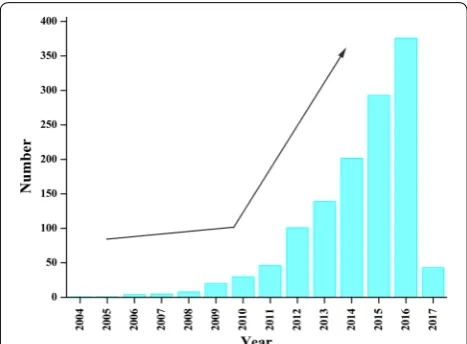
Deep eutectic solvents (DESs), the recognized alter-native of ILs, first came to the public vision in 2001 (Abbott et al. 2001). Since then, research on DESs faced a prosperous increase in many fields, such as extraction, materials synthesis, and biotransformation (Atilhan and Aparicio 2016; Carriazo et al. 2012; Dai et al. 2013b; Gar-cia et al. 2015; Gonzalez-Martinez et al. 2016; van Osch et al. 2015). A brief statistics of the published literature starting form 2004 is presented in Fig. 1. This review will provide an overview of the (un)greenness of DESs and recent applications in biocatalysis. Finally, how DESs affect biocatalytic reactions are discussed.
DESs and their properties
DESs
DESs are eutectic mixtures of salts and hydrogen bond donors (HBDs) with melting point low enough to be used as solvents. A eutectic liquid is generally formed by two solids at eutectic temperature, in which the process fol-lows a thermal equilibrium. A deep eutectic system refers to a eutectic mixture with a melting point much lower than either of the individual components. A classic exam-ple is that ChCl/urea (1:2 mol ratio) mixture has a melt-ing point of 12 °C (far lower than the meltmelt-ing point of the ChCl and urea, 302 and 133 °C, respectively), which makes it a liquid to be used as a solvent at room tempera-ture. In addition, the complex hydrogen bonding network existing in DES also makes it a special solvent for differ-ent applications (Hammond et al. 2016).
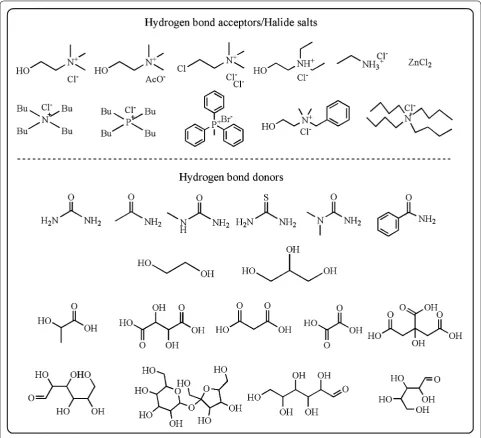
Up to now, many kinds of DESs have been developed with various compounds (Fig. 2). They are generally pre-pared by mixing a hydrogen bond acceptor (HBA), such as quaternary ammonium salt with a metal salt or HBD at moderate temperature with constant stirring. The first examples of DESs were prepared by heating ZnCl2 with a series of quaternary ammonium salts, in which choline chloride is the HBA obtained at the surprisingly lowest melting point of 23–25 °C (Abbott et al. 2001). In 2014, Abbott et al. proposed a general formula of Cat+X−zY for DESs, where Cat+ refers to ammonium, phosphonium or sulfonium cation and X generally represents a halide anion (Smith et al. 2014). This formula represents four classes of DESs according to the nature of the compo-nents used.
Class I: Cat+X−zMClx, M = Zn, Sn, Fe, Al, Ga, In. Class II: Cat+X−zMClx yH
2O, M = Cr, Co, Cu, Ni, Fe. Class III: Cat+X−zRZ, Z = CONH
2, COOH, OH. Class IV: MClx + RZ = MClx+-·RZ + MCl1 x−+, M = Al, Zn 1
and Z = CONH2, OH.
The main difference between Class II DESs and I is the inherent water, which makes it possible for many hydrated metal halide salts to be used as HBDs to synthe-size DESs, since they have relatively lower cost.
Another set of DESs, “natural deep eutectic solvent (NADES)”, are developed by utilizing many primary metabolites, such as amino acids, sugars, choline and organic acid (Choi et al. 2011). NMR-based metabo-lomics analysis indicated that NADES indeed existed as the third liquid other than water and lipid in an organ-ism. For example, a mixture of sucrose, fructose and glu-cose (1:1:1, molar ratio) forms a clear and uniform liquid at room temperature. They can help plants survive anhy-drobiosis and play a role in the synthesis of intracellular macromolecules. These NADES may preserve the link-age between understanding of cellular metabolism and physiology.
Properties
DESs have some special physical traits which are very useful for biocatalytic process, i.e., a wide liquid state range, nonflammability and low volatility (Abbott et al.
2011; Paiva et al. 2014; Smith et al. 2014; Zhang et al.
2012). Low temperature of freezing point (Tf) makes it possible for DESs to remain as a liquid in a biocatalytic process, because most biocatalytic reactions proceed in a liquid environment, in either monophasic or biphasic system. As reported, the Tf of a DES depends on many factors. Increased hydroxyl group of HBD increased the value of Tf. For example, the HBD in ChCl/Gly has three hydroxyl groups and melts at −40 °C, while the HBD in Fig. 1 The number of published papers on DESs starting from 2004
ChCl/EG has two hydroxyl groups and melts at −66 °C (Zhang et al. 2012). DESs with different mole ratios of HBA to HBD also show different Tf, but no obvious tendency was observed. The glycerol-based DESs with methyl triphenyl phosphonium bromide as HBA (1:2– 1:4, molar ratio) have a Tf range from −5.5 to 15.8 °C (Shahbaz et al. 2011). Besides, DESs are commonly not flammable and have very low volatility, because their individual components are generally solids or inflam-mable liquid. These two properties decrease the risk of explosion and burning for an organic reaction if DESs are used as solvents instead of volatile organic solvents, thus making it safe to operate. What is more, density
and viscosity are the other two important characteris-tics which affect the mass transfer when selecting a sol-vent for use. Generally, the viscosity of DESs lies in the constitution and is higher than that of the molecular sol-vent ethanol (Smith et al. 2014). The specific relationship between these factors has been documented at length in another review (Zhang et al. 2012). Most properties change as a function of temperature (Zhao et al. 2015). For instance, as the temperature increases, the density and viscosity decrease.
molar ratio (e.g., 1:2 of HBA/HBD) with constant stir-ring at moderate temperature. This simple synthesis is 100% atom economic, requiring no further purification. Besides, the commonly used components of DESs, such as ChCl and glycerol, are all from natural materials. Espe-cially, NADESs are absolutely formed by primary metab-olites, such as glucose, malic acid and succinic acids (Dai et al. 2013a). These raw materials exist naturally and have relatively low cost of production. By contrast, the com-mon preparation of ILs has two steps: first alkylation of an amine/phosphine/sulfide to afford an intermediate salt, followed by anion exchange to give the ILs (Hallett and Welton 2011). The complexity of synthesis will spon-taneously increase the production cost. Thus, the synthe-sis of DESs is easier and costs less than that of ILs.
Toxicity
A good question about whether DESs are toxic was pro-posed in 2013 (Hayyan et al. 2013b). The answer for that is some of them are toxic. Most of them are basically sol-uble in water. Especially in the cases of Class I and Class II DESs, the metal ion will inevitably leave a trace in the environment, thus exerting pressure on recycling these solvents.
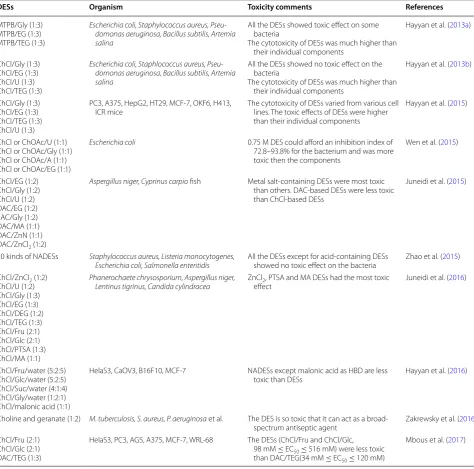
To date, only a few groups have investigated the toxi-cological properties of DESs in detail (Table 1). Hayyan and co-workers first investigated the toxicity and cyto-toxicity of ChCl- and phosphonium-based DESs, of which glycerine, ethylene glycol, triethylene glycol and urea were used as the HBDs (Hayyan et al. 2013a, b). They pointed out that the toxicity and cytotoxicity of dif-ferent DESs varied with the structure of the components used. ChCl-based DESs were less toxic than phospho-nium-based DESs. Afterward, the toxicity of ammonium-based DESs was evaluated in in vitro cell lines and in vivo animal models (Hayyan et al. 2015). In this study, the DESs tested showed higher toxicity than their individ-ual components,which was consistent with other DESs reported previously. Later, some ternary DESs consisting of ChCl, water and natural substance were also examined for their cytotoxicity (Hayyan et al. 2016). Selection of DESs parents is very important for the toxicity of result-ing DESs. The IC50 of ChCl/Gly/H2O toward Hela S3 cell was almost 2.4-fold higher than that of ChCl/fructose/ H2O (427 mM vs 177 mM), though in the former DES Gly had higher concentration (1:2:1 vs 5:2:5, respectively). Glycerol is a wildly used sweetener and humectant in the food industry and used in strain preservation; so the tox-icity of glycerol-based DESs is expectable to some degree. However, the toxic DESs can be used for beneficial purposes, e.g., as effective anti-bacterial agents. The DES choline/geranate can inhibit the growth of some bacteria,
fungi and viruses, making it a possible broad-spectrum antimicrobial agent (Zakrewsky et al. 2016).
In our work, a method of bacterial growth inhibition was used to assess the toxicology of four types of DESs based on ChCl, which was coupled with amine-, alco-hol-, sugar- and organic acid-based HBDs (Zhao et al.
2015). The organic acid-based DESs significantly inhib-ited bacterial growth, suggesting the limitation of utiliz-ing organic acid when designutiliz-ing DESs. This findutiliz-ing was in accordance with Hayyan’s study, which found that ChCl/MA was greatly toxic toward the tested mamma-lian cells (Hayyan et al. 2016). The other three types of DESs displayed less toxicity to the tested Gram-positive
(Staphylococcus aureus and Listeria monocytogenes) and
Gram-negative (Escherichia coli and Salmonella
ente-ritidis) bacteria. Interestingly, a further MIC test
dem-onstrated that the two Gram-negative bacteria were less sensitive than Gram-positive bacteria toward the organic acid-based DESs. A mechanism of this difference may be related to the oligosaccharide constituent.
All the examples give us information, that is, reason-able design and post-processing of DESs are very impor-tant for us to utilize this solvent. Novel DESs can be made according to the properties of parent components for special use. Some DESs showed toxicity to some extent, but there is limitation for these studies, due to the fact that the tested organisms are different with what we use in a biocatalytic process. For a typical reaction, one can determine the effect of DESs they use on the biocatalyst, under the guidance of previous researches.
Biodegradability
Biodegradability is another important property except toxicity when talking about the “greenness” of DESs. A large proportion of DESs are considered as “readily bio-degradable”, possibly because most of the components forming DESs are natural products (Radosevic et al.
2015; Zakrewsky et al. 2016). Taking the NADES, for instance, all the individual components come from natu-ral materials and can be metabolized by different kinds of organisms in nature. Glycerol can enter the pathway of glycolysis or gluconeogenesis for final metabolism and the sugar portion can also be directly utilized (Mbous et al. 2017).
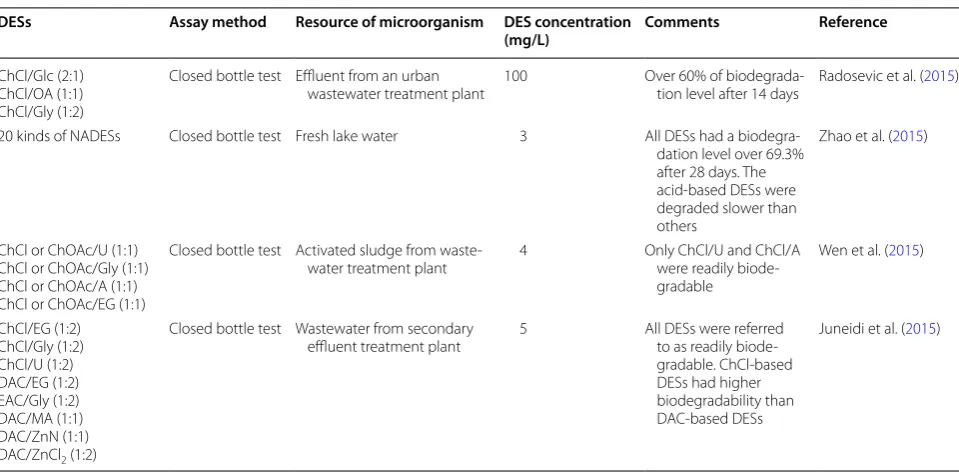
study, in which all the ChCl-based DESs had degradabil-ity of over 69.3% after 28 days (Zhao et al. 2015). How-ever, Wen et al. found a different conclusion (Wen et al.
2015). They found that only two (ChCl/U and ChCl/A) of the eight DESs tested could be regarded as readily bio-degradable. The two DESs showed a degradability close to 80%; nevertheless, the others provided a degradability below 50% in contrast. In the same year, Juneidi et al. also presented a comprehensive study on the biodegradabil-ity for cholinium-based DESs (Juneidi et al. 2015). It is
worth mentioning that this work involved in the toxic-ity and biodegradabiltoxic-ity of DESs-containing a metal salt and a hydrated metal salt (i.e., ZnCl2 and ZnN). There was a significant difference between the degradability of DAC:ZnN and DAC:ZnCl (about 80% vs 62%). Even the biodegradability of the former was better than that of the conventional IL [BMPyr][NTf2] (77%). The inherent structure of HBAs and HBDs is the basic factor which determines the biodegradability of different DESs, i.e., the number of hydroxy groups (Radosevic et al. 2015).
Table 1 The toxicity of some DESs
DESs Organism Toxicity comments References
MTPB/Gly (1:3) MTPB/EG (1:3) MTPB/TEG (1:3)
Escherichia coli, Staphylococcus aureus, Pseu-domonas aeruginosa, Bacillus subtilis, Artemia salina
All the DESs showed toxic effect on some bacteria
The cytotoxicity of DESs was much higher than their individual components
Hayyan et al. (2013a)
ChCl/Gly (1:3) ChCl/EG (1:3) ChCl/U (1:3) ChCl/TEG (1:3)
Escherichia coli, Staphlococcus aureus, Pseu-domonas aeruginosa, Bacillus subtilis, Artemia salina
All the DESs showed no toxic effect on the bacteria
The cytotoxicity of DESs was much higher than their individual components
Hayyan et al. (2013b)
ChCl/Gly (1:3) ChCl/EG (1:3) ChCl/TEG (1:3) ChCl/U (1:3)
PC3, A375, HepG2, HT29, MCF‑7, OKF6, H413,
ICR mice The cytotoxicity of DESs varied from various cell lines. The toxic effects of DESs were higher than their individual components
Hayyan et al. (2015)
ChCl or ChOAc/U (1:1) ChCl or ChOAc/Gly (1:1) ChCl or ChOAc/A (1:1) ChCl or ChOAc/EG (1:1)
Escherichia coli 0.75 M DES could afford an inhibition index of 72.8–93.8% for the bacterium and was more toxic then the components
Wen et al. (2015)
ChCl/EG (1:2) ChCl/Gly (1:2) ChCl/U (1:2) DAC/EG (1:2) EAC/Gly (1:2) DAC/MA (1:1) DAC/ZnN (1:1) DAC/ZnCl2 (1:2)
Aspergillus niger, Cyprinus carpio fish Metal salt‑containing DESs were most toxic than others. DAC‑based DESs were less toxic than ChCl‑based DESs
Juneidi et al. (2015)
20 kinds of NADESs Staphylococcus aureus, Listeria monocytogenes,
Escherichia coli, Salmonella enteritidis All the DESs except for acid‑containing DESs showed no toxic effect on the bacteria Zhao et al. (2015) ChCl/ZnCl2 (1:2)
ChCl/U (1:2) ChCl/Gly (1:3) ChCl/EG (1:3) ChCl/DEG (1:2) ChCl/TEG (1:3) ChCl/Fru (2:1) ChCl/Glc (2:1) ChCl/PTSA (1:3) ChCl/MA (1:1)
Phanerochaete chrysosporium, Aspergillus niger,
Lentinus tigrinus, Candida cylindracea ZnCleffect2, PTSA and MA DESs had the most toxic Juneidi et al. (2016)
ChCl/Fru/water (5:2:5) ChCl/Glc/water (5:2:5) ChCl/Suc/water (4:1:4) ChCl/Gly/water (1:2:1) ChCl/malonic acid (1:1)
HelaS3, CaOV3, B16F10, MCF‑7 NADESs except malonic acid as HBD are less
toxic than DESs Hayyan et al. (2016)
Choline and geranate (1:2) M. tuberculosis, S. aureus, P. aeruginosa et al. The DES is so toxic that it can act as a broad‑
spectrum antiseptic agent Zakrewsky et al. (2016) ChCl/Fru (2:1)
ChCl/Glc (2:1) DAC/TEG (1:3)
HelaS3, PC3, AGS, A375, MCF‑7, WRL‑68 The DESs (ChCl/Fru and ChCl/Glc, 98 mM ≤ EC50≤ 516 mM) were less toxic
than DAC/TEG(34 mM ≤ EC50≤ 120 mM)
For a special DES, the difference in result between vari-ous reports should be attributed to the difference of the measure condition, the molar ratio of DESs and the wastewater microorganisms.
In summary, DESs exhibit relatively low toxicity toward organisms in a laboratory scale and could be classified as biodegradable green solvents. These benign charac-teristics may attract more attention of researchers to shift from the classical imidazolium and pyridinium ILs to DESs. More organic chemistry reactions could be explored in such solvents.
The application of DESs in biocatalysis
Recent decades have witnessed the dramatic publications of ILs in chemical synthesis with isolated enzymes or whole cells (Wang et al. 2012). By comparison, only doz-ens of studies about the biocatalysis in DESs have been published. The following parts will introduce the recent applications of DESs in biocatalytic reactions, in which DESs played different roles such as solvent, co-solvent or substrate.
DESs as solvent for enzyme catalysis
As a new generation of solvent, DESs have distinctive characteristics, e.g., abundant hydrogen bond and low Tf. The components of DESs may display inhibitory effect on enzyme activity. For example, urea could induce the unfolding of enzymes and further make them inactive (Attri et al. 2011). Even so, some hydrolases still exhibited better activity in DES compared with ILs and catalyzed
a lot of hydrolysis and transesterification reactions as well as Henry reaction and aldol reaction in this special solvent.
Lipase
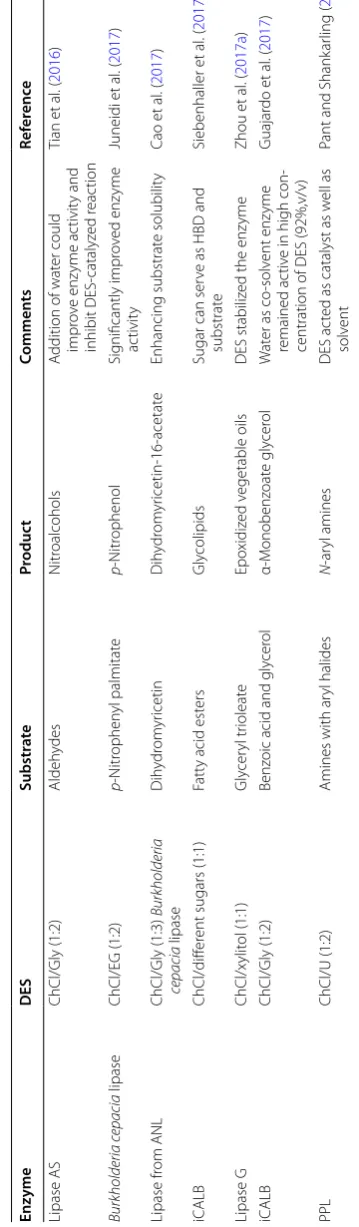
Lipases, which are commonly investigated in an organic environment, are the popular choices for enzymatic reac-tion carried out in DESs (Table 3). In 2008, Kazlauskas et al. first tried the lipase-catalyzed biotransformation reaction in DESs (Fig. 3) (Gorke et al. 2008). Four lipases (iCALB, CALB, CALA and PCL) were investigated for their transesterification activity in eight DES-containing systems. In glycerol-containing DESs, all the enzymes showed conversions of ethyl valerate to varying degrees. Especially in ChCl/Gly, PCL exhibited the lowest con-version (22%), still much higher than that in toluene (5.0%). Interestingly, the alcohol component, either eth-ylene glycol or glycerol, could compete with 1-butanol. When the concentration of the substrate 1-butanol was much lower than the EG component (400 mM vs 10 M), the CALB-catalyzed reaction still displayed a nearly equal amount of product esters. The reason for this may be the high hydrogen bond network, which hinders the reaction of the alcohol components with the substrate. Additionally, the iCALB exhibited great aminolysis activ-ity in ChCl:Gly-containing system (52 μmol h−1 mg−1), which was five times higher than in BMIM[BF4] (9 μmol h−1 mg−1). This example opened the possibilities for exploring various biocatalytic reactions in DES-con-taining solvents.
Table 2 The biodegradability of some DESs
DESs Assay method Resource of microorganism DES concentration
(mg/L) Comments Reference
ChCl/Glc (2:1) ChCl/OA (1:1) ChCl/Gly (1:2)
Closed bottle test Effluent from an urban
wastewater treatment plant 100 Over 60% of biodegrada‑tion level after 14 days Radosevic et al. (2015)
20 kinds of NADESs Closed bottle test Fresh lake water 3 All DESs had a biodegra‑ dation level over 69.3% after 28 days. The acid‑based DESs were degraded slower than others
Zhao et al. (2015)
ChCl or ChOAc/U (1:1) ChCl or ChOAc/Gly (1:1) ChCl or ChOAc/A (1:1) ChCl or ChOAc/EG (1:1)
Closed bottle test Activated sludge from waste‑
water treatment plant 4 Only ChCl/U and ChCl/A were readily biode‑ gradable
Wen et al. (2015)
ChCl/EG (1:2) ChCl/Gly (1:2) ChCl/U (1:2) DAC/EG (1:2) EAC/Gly (1:2) DAC/MA (1:1) DAC/ZnN (1:1) DAC/ZnCl2 (1:2)
Closed bottle test Wastewater from secondary
effluent treatment plant 5 All DESs were referred to as readily biode‑ gradable. ChCl‑based DESs had higher biodegradability than DAC‑based DESs
Table 3 Examples of lipase -c atalyz ed r eac tions in DESs Enz yme DES Substr at e Pr oduc t Commen ts Ref er enc e iCALB , CALB
, CALA and PCL
ChCl/Gly (1:2) ChCl/U (1:2) EAC/Gly (1:1.5)
Eth
yl valerat
e with 1
‑butano But yl valerat e ChCl/Gly sho w
ed good com
‑
patibilit
y with all the lipases
G or ke et al . ( 2008 ) iCALB
ChCl/U (1:2) ChO
A
c/Gly
M
igly
ol oil 812
Tr
igly
cer
ide
H
igh yield sho
w
ed the pot
en
‑
tial of DES as solv
ent in the
biodiesel synthesis Zhao et al . ( 2011a ) iCALB
ChCl/Gly (1:2) ChCl/U (1:2)
Vin
yl est
er and alcohols
Est
ers
Some HBDs could compet
e
with the substrat
e Durand et al . ( 2012 ) No vo zyme 435 ChCl/Gly (1:2) So ybean oil Biodiesel This w or
k expanded the sub
‑
strat
e spec
trum of biodiesel
synthesis Zhao et al . ( 2013 ) No vo zyme 435
ChCl/Gly (1:2) ChCl/U (1:2)
Phenolic est ers Phenolic est ers W at er cont
ent in DES–
wat er mix tur es mak es g reat diff er ‑
ence on r
eac tion efficienc y Durand et al . ( 2013 ) iCALB ChCl/U Phenolic est ers Phenolic est ers First in vestigat
ed the eff
ec
t of
wat
er ac
tivit
y and U cont
ent on pr oduc t yields Durand et al . ( 2014 ) Lipo zyme C alB L No vo zym 435
ChCl/U (1:2) ChCl/GlyZ (1:1)
Oleic acid and decanol
D ec yl oleat e Est ers pr oduc
t could be easily
separat
ed fr
om the aqueous
reac
tion mix
tur
es
Kleiner and S
chör ken ( 2015 ) No vo zyme 435
ChCl/U (1:2) ChCl/Glc
Glucose and vin
yl hexanoat e Glucose ‑6 ‑ O ‑hexanoat e
Glucose component in DESs can ac
t as substrat
e Pöhnlein et al . ( 2015 ) Lipo zyme TLIM, No vo zym 435 ChA c/U (2:1)
Glucose with fatt
y acid vin
yl
est
ers; meth
yl glucoside with
fatt
y acids
Sugar fatt
y acid est
ers
U
tilization of combination of ILs and DESs
Zhao et al . ( 2016 ) CALB , Alcalase ‑CLEA, PPL ChCl/Gly (1:1.5) Ar omatic aldeh ydes and ket ones Aldol pr oduc ts First t est
ed the lipase
‑catalyz
ed
aldol r
eac
tion in DES
G onzalez ‑M ar tinez et al . ( 2016 ) Lipase fr om Candida rugosa ChCl/U/Gly (1:1:1) p ‑N itr ophen yl palmitat e p ‑N itr ophenol Gly cer ol ‑containing DESs
enhance the ac
tivit
y and sta
‑
bilit
y mor
e than ur
ea ‑based DESs . T he eff ec
ts of DESs on
ac
tivit
y and stabilit
y of lipase
w er e par tially cor relat ed with the solvat ochr omic param ‑ et ers . F or example
, the stabil
‑
ity of lipase was cor
relat
ed
with h
ydr
ogen bond acidit
y
of DESs mix
tur es Kim et al . ( 2016 ) Thermomy ces lanuginosus lipase Pseudo zyma antar ctic a lipase B
ChCl/U (1:2) ChCl/Gly (1:2)
Rapeseed oil and cook
ing oil
Biodiesel
Impr
ov
ed the additional value
of cook ing oil Kleiner et al . ( 2016 ) Lipo zyme TLIM, No vo zym 435 ChA c/U (2:1)
Glucose with fatt
y acid vin
yl
est
ers; meth
yl glucoside with
fatt
y acids
Glucose
‑based fatt
y acid est
ers
U
tilization of combination of ILs and DESs
Zhao et
al
. (
2016
Table 3 c on tinued Enz yme DES Substr at e Pr oduc t Commen ts Ref er enc e Lipase AS ChCl/Gly (1:2) Aldeh ydes N itr oalcohols A
ddition of wat
er could impr ov e enz yme ac tivit y and inhibit DES ‑catalyz ed r eac tion Tian et al . ( 2016 ) Burk holderia c epacia lipase ChCl/EG (1:2) p ‑N itr ophen yl palmitat e p ‑N itr ophenol Sig nificantly impr ov ed enz yme ac tivit y Juneidi et al . ( 2017 ) Lipase fr om ANL ChCl/Gly (1:3) Burk holderia cepacia lipase Dih ydr om yr icetin Dih ydr om yr icetin ‑16 ‑acetat e Enhancing substrat e solubilit y Cao et al . ( 2017 ) iCALB ChCl/diff er
ent sugars (1:1)
Fatt
y acid est
ers
Gly
colipids
Sugar can ser
ve as HBD and
substrat e Siebenhaller et al . ( 2017 ) Lipase G ChCl/x ylit ol (1:1) Gly cer yl tr ioleat e Epo xidiz ed v egetable oils DES stabiliz
ed the enz
yme Zhou et al . ( 2017a ) iCALB ChCl/Gly (1:2) Benz
oic acid and gly
cer ol α‑ M onobenz oat e gly cer ol W at
er as co
‑solv
ent enz
yme
remained ac
tiv
e in high con
‑
centration of DES (92%,v/v)
Guajar do et al . ( 2017 ) PPL ChCl/U (1:2)
Amines with ar
yl halides
N
‑ar
yl amines
DES ac
ted as catalyst as w
ell as
solv
ent
Pant and Shank
ar
ling (
2017
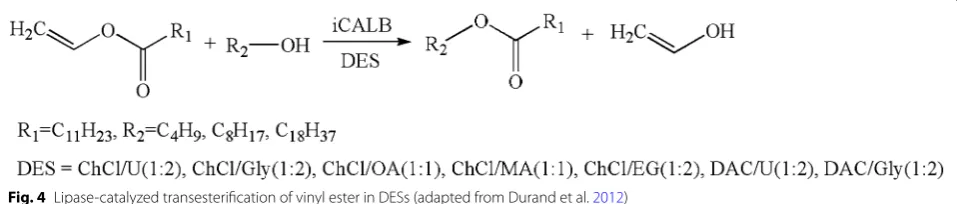
In a following research by Durand (2012), the iCALB-catalyzed transesterification of vinyl ester was used to study the advantages and limitations of seven kinds of DESs (Fig. 4). The same competing phenomenon was observed between the DES component and the alcoho-lysis reaction. When the reaction occurred in ChCl:U or ChCl:Gly-containing system, alcohol substrate with different chain lengths showed no influence on the con-version and selectivity. A preliminary grinding of the immobilized enzymes could improve specific surface area in DESs, enhancing the reaction efficiency. Recently, they has intended to improve the lipase-catalyzed reac-tion efficiency in ChCl-based DESs (Durand et al. 2014). As mentioned earlier, albeit the liquid state of DESs at room temperature, their viscosity should be considered for the mass transfer once being used in a biocatalytic reaction. In this work, the effect of water content and urea concentration was systematically assessed. The thermodynamic activity of water (aw) was used as the study object. When the ChCl/water was lower than 1.75 in the ternary mixture, water trended to be bound to the salt and could not affect the lipase activity. In cases of higher aw, excess water molecules could affect its role as the solvent, leading to the occurrence of side reac-tions. When the water content in the mixture was 1 and 1.5 mol, the urea content showed no significant effect on the lipase stability. However, the denaturation effect of urea increased with the increase of urea content at higher water content.
In some cases, DES can play a bifunctional role, that is, substrate and solvent, in lipase-catalyzed reactions. Sev-eral DESs with sugars (e.g., arabinose, xylose, glucose and mannose) as HBD was used as substrate other than sol-vent to form glycolipid, which was detected by MS-based methods (Fig. 5) (Siebenhaller et al. 2017). This approach of using DESs exhibits an apparent advantage that high concentration of the sugar substrate can push the reac-tion forward in the product direcreac-tion.
Lipase-catalyzed promiscuous reactions, such as carbon–carbon bond formation, Henry and Aldol reactions, have attracted some groups’ attention (Gonzalez-Martinez et al. 2016; Guan et al. 2015; Tian et al. 2016; Zhou et al. 2017b). Gonzalez-Martinez and co-workers investigated the lipase-catalyzed aldol reactions in DES-containing system in 2016 (Gonza-lez-Martinez et al. 2016). A model reaction between 4-nitrobenzaldehyde and acetone was set up to exam-ine the feasibility of DES as a reaction medium for the promiscuous aldol process (Fig. 6a). Three hydrolases, CALB, Alcalase-CLEA and PPL, were explored. Com-pared to the other two enzymes, PPL displayed great activity at different reaction temperatures (30–60 °C) in a system containing ChCl:Gly. The ratio of ChCl to Gly (1:1.5 or 1:2, molar ratio) posed little effect on the conversion and product composition. For this, the ratio was not probably the main aspect that affected the reaction efficiency under the optimized condi-tions. Different mole ratios of the HBA to HBD may Fig. 3 Lipase‑catalyzed transesterification of ethyl valerate to butyl valerate in DESs (adapted from Gorke et al. 2008)
change the hydrogen bonding formation, further lead-ing to the change of the stereochemical structure of the enzyme, which affects the reaction in turn. Sec-ondly, they tested the suitability of the ChCl:Gly-con-taining system by exploring different substrate groups, i.e., substituted benzaldehydes with acetone, cyclo-pentanone and cyclohexanone. In most cases, satis-factory results were obtained. At the same year, Tian et al. explored the Henry reaction catalyzed by lipase AS in ChCl/Gly(1:2)-containing media (Fig. 6b) (Tian et al. 2016). Water as a co-solvent was important in the reaction, not only improving enzyme activity, but also inhibiting spontaneous reaction. More recently, a chemoenzymatic epoxidation of alkenes catalyzed by CALB was reported. DES, ChCl/sorbitol, effi-ciently stabilized the biocatalyst, allowing the enzyme
to remain active in an oxidative solvent system (Zhou et al. 2017b). The idea of trying lipase-catalyzed pro-miscuous reaction is of great significance to discover new functions for enzymes in DESs and synthesize many valuable chemicals.
Protease
Proteases also find promising applications in DESs-containing systems. To explore the feasibility of DES in biocatalysis, Zhao and co-workers evaluated the pro-tease-catalyzed transesterification activities in glycerol-based DESs glycerol-based on choline salt (chloride or acetate form) (Fig. 7a) (Zhao et al. 2011b). This work indicated again the key role of water in the reaction system. While water content increased from 2% (v/v) to 4%, the activity of immobilized subtilisin exhibited a remarkable 1.8-fold Fig. 5 Lipase‑catalyzed production of glycolipids in DESs (adapted from Siebenhaller et al. 2017)
increase (from 0.50 to 0.90 μmol min−1 g−1) in choline acetate/glycerol (1:1.5). This phenomenon was more obvious for immobilized α-chymotrypsin. Under reaction conditions with addition of water to the DESs solution, the biocatalytic efficiencies of these two proteases were better than those in t-butanol. Apparently, certain DES could activate the protease activity to some extent. This report also demonstrated that immobilization materials could function with water molecules to lower aw to stabi-lize the forward reaction.
Except transesterification reaction, proteases-cata-lyzed peptides synthesis in DESs also proved to be suc-cessful. Different ChCl-based DESs using glycerol, urea, xylitol and isosorbide as HBDs were used as solvents for the production of peptides catalyzed by α-chymotrypsin (Maugeri and Leitner 2013). High productivities of 20 g L−1 h−1 were afforded at the optimal conditions with ChCl/glycerol and addition of 10–30% (v/v) water. The α-chymotrypsin showed good recycling ability in this DES solution system. Recently, the immobilized papain on a magnetic material was successfully used for the synthesis of N-(benzyloxycarbonyl)-alanyl-glutamine (Z-Ala-Gln) in ChCl/urea (1:2) as well, the yield of which reached about 71.5% (Fig. 7b) (Cao et al. 2015). In this example, more glutamine (Gln) dissolved in DES buffer remarkably improved the yield and a high Gln/Z-Ala-OMe ratio of 3–4 could effectively inhibit the side reac-tion to form Z-Ala-OH.
Epoxide hydrolase
Epoxide hydrolases (EH), another important hydrolase, catalyze the enantioselective hydrolysis of epoxides to the corresponding diols, which are important chiral synthetic intermediates. Up to now, there are only two examples of using DES in EH-catalyzed reactions. The first example was reported in 2008 (Gorke et al. 2008). By the addi-tion of 25% (v/v) ChCl/Gly to the buffer, the conversion of styrene oxide catalyzed by EHAD1 increased from 4.6 to 92%. No change in the enantioselectivity was observed with the increase of conversion. The other one was car-ried out by Widersten et al. (Fig. 8) (Lindberg et al. 2010). Ethane diol, glycerol and urea were used as the hydrogen bond donors. The DES ChCl/Gly still exhibited a supe-rior solvent property for this reaction than the other two DESs. Surprisingly, the regioselectivity of this hydroly-sis reaction varied with the alteration of solvents. More
Fig. 7 Protease‑catalyzed reactions in DESs (adapted from (a) Zhao et al. 2011b) (b) Cao et al. 2015;
amounts of (1R, 2R)-2-MeSO (2-methylstyrene oxide) diols were produced when the diol-and triol-containing DESs were added into the buffer as co-solvents, while the effect of glycerol on the StEH1 catalysis was the least. Many researchers considered that the decrease of enzy-matic efficiency in higher ILs concentrations could be attributed to the denaturation of enzyme. However, in this work, the authors proposed that higher DES concen-trations could cause the destabilization of enzyme–sub-strate or reaction intermediate complexes according to steady-state kinetic parameters of StEH1 at different DES concentrations. In addition, the substance concentration with the addition of DES had a 1.5-fold improvement compared to the DES-free buffer. This enhancement, to some degree, was related to the hydrogen bond in the solvent environment. The excellent dissolution-promot-ing ability of DES has already been used in nature prod-uct extraction (Dai et al. 2013b).
Other enzymes
In other examples of enzymatic reactions, many enzymes, such as haloalkane dehalogenases (Stepankova et al.
2014), benzaldehyde lyase (Maugeri and Domínguez de María 2014) and phospholipase D (Yang and Duan
2016), also showed improved reaction efficiency in the DES-containing system (Table 4). For the diglycosidase from Acremonium sp. DSM24697, the deglycosylation of hesperidin happened when ChCl combined with urea, glycerol and ethylene glycol was added into the buffer, whereas the enzyme activity was inhibited by DES to some extent (Weiz et al. 2016). The apparent advantage of this approach is the enhanced substrate solubility by DES. Such a property has been successfully applied in the extraction of the natural product [e.g., flavonoid (Zhao et al. 2015) and grape skin phenolics (Cvjetko Bubalo et al. 2016)]. This case is beneficial for the modification of many natural products, which have good solubility in DES.
DES as solvent for whole‑cell biocatalysis
Whole-cell biocatalysis using bacteria or fungi as cata-lyst, e.g., Acetobacter sp. and recombinant
Saccharo-myces cerevisiae, has been successfully applied in some
organic reactions (Gangu et al. 2009; Wachtmeister and Rother 2016; Xu et al. 2016). In comparison with isolated enzymes, whole-cell catalysts, either in the form of natu-ral organisms or genetically recombinant strains, have a series of advantages, such as lower cost than purified enzymes (Tufvesson et al. 2011), perfect cofactor regen-eration system (Hummel and Gröger 2014), applicability in untraditional media (Dennewald and Weuster-Botz
2012) and feasibility of multi-step cascade reactions in one cell (Chen et al. 2015; Peters et al. 2017).
Generally, a monophasic system forms when DES is added to aqueous buffer due to its good solubility in water. As a result, the DES-containing medium will serve as an efficient buffer system for a whole cell-catalyzed process. DES can improve, to some degree, the substrate concentration in the reaction system and further increase the reaction efficiency.
The first example of whole-cell biocatalysis in DES was the reduction of ethyl acetoacetate catalyzed by baker’s yeast (Fig. 9) (Table 5) (Maugeri and de Maria 2014). The yeast worked well when ChCl/Gly (1:2) was added into an aqueous buffer, and even enantioselectivity had a com-plete inverse when altering the proportion of DES used. The tested ChCl/Gly may go into the cell and inhibit the enantioselective enzyme activity or affect the configu-ration of partial enzymes. A similar enantioselectivity inversion by the addition of DES was further expanded to a series of arylpropanone substrates (Vitale et al. 2016). Both the examples used wild-type baker’s yeast as a bio-catalyst. It is worth understanding how DESs affect the intracellular enzymes. Recombinant E. coli cells express-ing oxidoreductases were also investigated for their cat-alytic reduction of ketones in DES-containing system (Muller et al. 2015). The cells performed surprisingly even in an 80% (v/v) DES-containing system for a broad range of aromatic substrates (Fig. 10).
In short, genetically modified recombinant hosts over-expressing different kinds of enzymes with different func-tions, especially ketoreductase (Ni and Xu 2012), open the way to the industrial production of many valuable compounds. The cost-effective, nonhazardous DESs will present greatly stimulative potential in these biocatalytic processes.
DES as extractive agents in biotransformation
The separation of the product or unreacted substrate from a reaction should be considered in an industrial catalytic process, especially the biocatalytic reaction, regardless of the utilization of isolated or immobilized biocatalyst. DESs also show great ability to separate the desired com-pounds from a reaction mixture. Many products are tra-ditionally extracted using organic liquids, such as ethyl acetate, n-butyl alcohol, n-hexane and isopropyl ether.
Table 4 O ther e xamples of enz yma tic r eac tions in DESs Ca taly st DES Substr at e Commen ts Ref er enc es Haloalk ane dehalogenases ChCl/EG (1:2) 1‑ Iodohexane Impr ov ed enz yme ther mostabilit y and substrat e solubilit y St epank ova et al . ( 2014 ) Benzaldeh yde lyase ChCl/Gly (1:2) But yraldeh yde; valeraldeh yde; benzal ‑ deh yde; 2 ‑furaldeh yde Impr ov ed e. e. M auger
i and D
omínguez de M
ar ía ( 2014 ) Phospholipase D ChCl/EG (1:2) Phosphatidylcholine with l ‑ser ine
>90% yield of phosphatidylser
ine
Yang and Duan (
2016
)
Digly
cosidase
ChCl/Gly (1:2); ChCl/EG (1:2)
Hesper idin Enhanced substrat e solubilit y W eiz et al . ( 2016 ) Horseradish per oxidase; c yt ochr ome c
ChCl or EA
C with U
, Gly and EG
(1:1.5,1:2)
Guaiacol
Enhancing the func
tional stabilit y of pr ot ein Papadopoulou et al . ( 2016 ) Chondr oitinases ABCI ChCl/Gly (1:2) Chondr oitin Impr oving ther mal stabilit y r emar k‑ ably Daneshjou et al . ( 2017 ) β‑ d ‑glucosidase ChCl/EG (2:1) Daidzin
Application of DES in the synthesis of bioac
tiv
e compound
Cheng and Zhang (
2017 ) Bo vine liv er catalase ChCl/EG (1:2) H ydr ogen per oxide
DES could change the K
m and K
cat of
enz
yme in DES
‑containing solution.
Struc
tur
e t
est f
ound that the 3D
struc
tur
e was influenced b
y the
addition of DES
to separate HMF and 2,5-diformylfuran (DFF) from the reaction mixtures, and the purity of the latter reached up to 97% (Qin et al. 2015). The two examples discussed above to some extent were based on the characteristics of the hydrogen bond donor of the separated chemical com-pounds. Maybe, the formation of a new hydrogen bond existed between the DES and target compounds.
Hydrophobic DES containing quaternary ammonium salt/decanoic acid mixture could extract volatile carbox-ylic acids from aqueous solution (van Osch et al. 2015). The DESs extracted acetic acid, propionic acid and butyric acid more efficiently than a traditional solvent like trioctylamine. For example, DecA:N8881-Cl extracted twice as much acetic acid as trioctylamine (38.0% vs 18.6%). DecA:N7777-Cl extracted 91.5% of the butyric acid. This kind of DES costs less than some ammonium and phosphonium ionic liquids for extracting butyric acid (Blahušiak et al. 2013; Marták and Schlosser 2016). However, another challenge about the separation of acid from DES is put forward subsequently. The traditional distillation method could facilitate the process owing to the extremely low volatility and high thermal stability of DESs (Wu et al. 2015).
DESs function in biomass pretreatment
DES pretreatment of biomass is a good alternative of IL-based processes. Currently, most attention has been
focused on the use of ILs, especially imidazole- and cho-line-based ILs (Sheldon 2016), for preprocessing cellu-lose-based biomass to improve the following enzymatic hydrolysis process indirectly. DESs are able to dissolve biopolymers like polysaccharides by breaking the super-molecular structure formed by intersuper-molecular hydrogen bonds (Ren et al. 2016). For example, ChCl/imidazole can be used to pretreat corncob at a relatively low tempera-ture of 80 °C and the final glucose yield reached 92.3% after the enzymatic hydrolysis (Procentese et al. 2015). Due to the diversity of HBDs, researchers have more choice of using different HBDs in conjunction with ChCl for pretreatment; thus, different results are obtained nor-mally, even for the same biomass like corncob (Zhang et al. 2016). Considering the relative cheapness of ILs, it is useful to develop more cellulase-compatible DESs, making it possible to omit the separation of DESs from the system.
Influence of DESs on biocatalysis
As shown in the last chapter, many positive examples show the great promising future of DESs in biocatalysis. It is of interest to elucidate under what circumstances and how the biocatalysts retain their biological function and stability in DESs.
Effect of the characteristics of DESs on the biocatalytic process
The tunability of DES contributes to much more possi-bility of designing vast kinds of DES, thus bringing vari-ous effect on a biocatalytic reaction system. The selection of HBAs and HBDs make a big difference in the whole process. For instance, ChCl/Gly is usually used as a good solvent/co-solvent for enzymatic reaction, while the per-formance of ChCl/MA is not satisfactory (Durand et al. Fig. 9 Baker’s yeast‑catalyzed reduction reaction in DESs (adapted
from Maugeri and de Maria 2014)
Table 5 Examples of whole-cell biocatalytic reactions in DES
Microbial DES Substrate Product Comments References
Baker’s yeast ChCl/Gly (1:2) Ethyl acetoacetate Ethyl 3‑hydroxybu‑
tyrate Increasing the DES content switched the enantioselectivity Maugeri and de Maria (2014)
Acetobacter sp. CCTCC
M209061 ChCl/U (1:2) 3‑Chloropropiophe‑none (
S)‑3‑Chloro‑1‑phe‑
nylpropanol Combination of ILs and DESs in the biphasic system effectively improved the substrate concentration
Xu et al. (2015)
Recombinant E. coli over‑
expressing ADH ChCl/Gly (1:2) Ketones Alcohols The increased by the addition of DESe.e. of many aromatic substrates Muller et al. (2015) Baker’s yeast ChCl/Gly (1:2) Aryl‑containing
ketones Aryl‑containing alcohols (S)‑oxidoreductases of baker’s yeast was possibly inhibited by DES Vitale et al. (2016) Recombinant E. coli
CCZU‑T15 ChCl/Gly (1:2) 4‑chloro‑3‑oxobu‑tanoate (S)‑4‑chloro‑3‑hy‑droxybutanoate Addition of Tween‑80 improved significantly substrate concentration from 2 to 3 M
Dai et al. (2017)
Lysinibacillus fusiformis
CGMCC 1347 ChOAc/U (1:1)ChOAc/EG (1:1) ChCl/Lac (4:1) ChCl/Raf (11:2)
Isoeugenol Vanillin NADESs were first used in whole‑cell
2012). Different HBDs also form DESs with different viscosities (Zhang et al. 2012), which affects the mass transfer of all the reactants (substrate, product, cata-lyst, etc.) and further changes the reaction rate. At this point, the hydrogen bond is another concern posed by various HBDs. There is a difference of just one hydroxyl group between Gly and EG; however, the resulting DESs showed remarkable difference on the lipase-catalyzed reaction (Durand et al. 2012).
Hydrogen bonding of DESs is the main power which makes them distinctive with their individual components. This special force can activate the enzyme by increas-ing the enzyme affinity with the substrate (Juneidi et al.
2017). It is also necessary to consider the ratio of HBA/ HBD, which might affect the solvatochromic parameters and the hydrogen bond formation between the reaction mixtures (Kim et al. 2016). A molecular dynamics simula-tion of lipase in ChCl/U firstly proved that the hydrogen bond between DES components could hinder the attack of U to the enzyme function domains, thus resulting in a stabilized enzyme (Monhemi et al. 2014).
In addition, DES concentration and water content are two interacting factors with significant influence on the reaction efficiency. A high amount of water not only decreased the viscosity of the DES solution, but also ena-bled the contact between the enzyme molecule and sub-strate (Guajardo et al. 2017). But too much water might have a destructive effect on the hydrogen bond network of DES and weaken the benefit of DES.
Influence of DESs on biocatalyst structure and activity
Firstly, DESs can change the secondary structure of enzymes. Take the horseradish peroxidase (HRP) for example (Wu et al. 2014): higher HBD molar ratio (e.g., from 2:1 to 1:2) in ChCl-based DES increased the α-helix content in the HRP. More α-helix and less β-sheet in the structure were beneficial for their activity and sta-bility. The improvement in activity may result from the looser tertiary structure of HRP. A recent report con-firmed that the ChCl component had a disruptive influ-ence on the α-helix, which would cause a decrease of the enzyme activity. However, the glycerol component could markedly increase the α-helix content and decrease the
β-sheet content, leading to a more stable enzyme. Thus, a trade-off effect between HBA and HBD, either activation or deactivation, can be observed for a certain DES.
Secondly, DESs can affect the 3-D structure of enzymes in an aqueous environment. The functional configura-tion of enzymes is essentially related to the folding and unfolding degree. Several factors including hydrophobic-ity, solvent polarity and hydrogen bond characteristics of ILs can affect separately or together the protein stabil-ity and activstabil-ity (Weingartner et al. 2012). Similarly, the concentration of DESs in an aqueous solution had sig-nificant effect on the unfolding and refolding process of the enzyme, which could be determined by spectroscopy technologies such as intrinsic fluorescence and CD spec-troscopy (Esquembre et al. 2013). The two methods can effectively estimate the folded degree of proteins com-pared to the native-like secondary and tertiary structures. A redshift of the fluorescence emission spectra of tryp-tophan residues in lysozyme was observed when trypto-phan side chain was exposed to a polar surrounding of water molecules. In neat ChCl/U and ChCl/Gly solution, the emission maximum of lysozyme shifted from 335 nm (observed in buffer) to 332 and 329 nm, respectively (Esquembre et al. 2013). However, higher concentration of DESs can cause the irreversible unfolding of lysozyme at high temperatures. Meanwhile, the protein accumula-tion in low content of DESs buffer at room temperature was interestingly reversible.
In whole-cell biocatalysis, DESs increased the perme-ability of cells, lowering resistance to mass transfer resist-ance, thereby improving the reaction efficiency (Xu et al.
2016). ILs similarly can improve the permeability of cells (Xiao et al. 2012). In other cases, DESs can enhance the affordable substrate concentration for a cell catalyst, thereby improving the catalytic rate and yield of the product (Xu et al. 2016). The worst situation is that DESs possibly react with the cell membrane and induce cell apoptosis, finally leading to cell death.
Conclusion and perspective
with different Tf, polarity, density and viscosity. Some DESs show toxic profile toward laboratory organisms, which depends on the used components, test conditions and organisms. However, most DESs can be considered as “readily biodegradable” solvents. DESs can work as solvents, co-solvents or extracting solvents in a specific biocatalytic reaction. Remarkably, as solvents, DESs (e.g., Gly-based DESs) can activate and stabilize the enzyme, thus achieving a high reaction efficiency. Multiple hydro-lases (lipase, protease and epoxide hydrolase) and other enzymes exhibit great catalytic performance in these solvents, which displays their vast potential to replace ILs and organic solvents in biocatalytic reactions. An in-depth understanding of how DESs activate and stabi-lize enzymes will promote the application of DESs in bio-catalysis to step off laboratory scale.
However, DESs in biocatalysis needs researchers to ful-fill their full physical–chemical characterization and the important toxicity data. The plausible relationship between the structure and function of enzymes and DESs will be an interesting field to explore. Additionally, the downstream separation of target product from DESs is also a big chal-lenge. More utilization of environmental-friendly and eco-nomical solvents in biocatalysis will embody the greenness and sustainability of green chemistry.
Abbreviations
ChCl: choline chloride; MTPB: methyltriphenylphosphonium bromide; DAC: N,N‑diethyl ethanol ammonium chloride; Gly: glycerol; EG: ethylene glycol; DEG: diethylene glycol; TEG: triethylene glycol; U: urea; A: acetamide; OA: oxalic acid; MA: malonic acid; PTSA: para‑toluene sulfonic acid; Glc: glucose; Lac: lactose; Raf: raffinose; Fru: fructose; Suc: sucrose; ZnN: zinc nitrate hexahydrate; Choline and geranate: choline bicarbonate/geranic acid; PC3: human prostate cancer cell line; A375: human malignant melanoma cell line; HepG2: human liver hepatocellular cell line; HT29: human colon adenocarcinoma cell line; MCF‑7: human breast cancer cell line; OKF6: human oral keratinocyte cell line; H413: carcinoma‑derived human oral keratinocyte cells; HelaS3: human cervi‑ cal cancer cell line; CaOV3: human ovarian cancer cell line; B16F10: mouse skin cancer cel line; AGS: human gastric cancer cell line; WRL‑68: human hepatocyte cell line; CALA Candida antarctica lipase A iCALB: Candida ant-arctica lipase B immobilized on acrylic resin; CALB: Candida antarctica lipase B; CRL: Candida rugosa lipase; PCL: Pseudomonas cepacia lipase; PPL: Porcine pancreas lipase; Alcalase‑CLEA: protease from Bacillus licheniformis; Lipase AS: lipase from Aspergillus niger; StEH1: potato epoxide hydrolase; EHAD1: epoxide hydrolase from Agrobacterium radiobacter AD1; BMIM[Tf2N]: 1‑butyl‑ 3‑methylimidazolium bis(trifluoromethanesulfonyl) imide; [BMPyr][NTf2]: 1‑butyl‑1‑methylpyrrolidinium Bis(trifluoromethanesulfonyl)imide; [Bmim] HSO4: 1‑butyl‑3‑methylimidazolium hydrosulfate.
Authors’ contributions
PX and WYL drafted the manuscript. GWZ, MHZ and NL modified the manu‑ script. All authors read and approved the final manuscript.
Author details
1 Laboratory of Applied Biocatalysis, School of Food Sciences and Engineering, South China University of Technology, Guangzhou 510640, China. 2 State Key Laboratory of Pulp and Paper Engineering, South China University of Technol‑ ogy, Guangzhou 510640, China. 3 State Key Laboratory of Bioreactor Engineer‑ ing, East China University of Science and Technology, Shanghai 200237, China.
Acknowledgements
We wish to thank the National Natural Science Foundation of China (21676104; 21336002; 21376096), the Open Funding Project of the State Key Laboratory of Bioreactor Engineering, and the Program of State Key Labora‑ tory of Pulp and Paper Engineering (2017ZD05) for partially funding this work. We also thank Professor Romas Kazlauskas for editing this manuscript.
Competing interests
The authors declare that they have no competing interests.
Publisher’s Note
Springer Nature remains neutral with regard to jurisdictional claims in pub‑ lished maps and institutional affiliations.
Received: 12 March 2017 Accepted: 16 July 2017
References
(1992D) OECD 301D Guidelines for testing of chemicals closed bottle test. Organisation of economic cooperation and development, Paris Abbott AP, Capper G, Davies DL, Munro HL, Rasheed RK, Tambyrajah V (2001)
Preparation of novel, moisture‑stable, Lewis‑acidic ionic liquids contain‑ ing quaternary ammonium salts with functional side chains. Chem Commun 19:2010–2011
Abbott AP, Harris RC, Ryder KS, D’Agostino C, Gladden LF, Mantle MD (2011) Glyc‑ erol eutectics as sustainable solvent systems. Green Chem 13(1):82–90 Anastas P, Eghbali N (2010) Green chemistry: principles and practice. Chem
Soc Rev 39(1):301–312
Anastas PT, Warner JC (1998) Principles of green chemistry. green chemistry: theory and practice, Oxford University Press, New York
Atilhan M, Aparicio S (2016) Deep eutectic solvents on the surface of face centered cubic metals. J Phys Chem C 120(19):10400–10409 Attri P, Venkatesu P, Kumar A, Byrne N (2011) A protic ionic liquid attenuates
the deleterious actions of urea on alpha‑chymotrypsin. Phys Chem Chem Phys 13(38):17023–17026
Blahušiak M, Schlosser Š, Marták J (2013) Extraction of butyric acid with a sol‑ vent containing ammonium ionic liquid. Sep Purif Technol 119:102–111 Bommarius AS, Paye MF (2013) Stabilizing biocatalysts. Chem Soc Rev
42(15):6534–6565
Cao SL, Xu H, Li XH, Lou WY, Zong MH (2015) Papain@magnetic nanocrys‑ talline cellulose nanobiocatalyst: a highly efficient biocatalyst for dipeptide biosynthesis in deep eutectic solvents. ACS Sustain Chem Eng 3(7):1589–1599
Cao SL, Deng X, Xu P, Huang ZX, Zhou J, Li X, Zong M, Lou W (2017) Highly efficient enzymatic acylation of dihydromyricetin by the immobilized lipase with deep eutectic solvents as co‑solvent. J Agric Food Chem 65(10):2084–2088
Carriazo D, Serrano MC, Gutierrez MC, Ferrer ML, del Monte F (2012) Deep‑ eutectic solvents playing multiple roles in the synthesis of polymers and related materials. Chem Soc Rev 41(14):4996–5014
Chen FF, Liu YY, Zheng GW, Xu JH (2015) Asymmetric amination of secondary alcohols by using a redox‑neutral two‑enzyme cascade. ChemCatChem 7(23):3838–3841
Cheng QB, Zhang LW (2017) Highly efficient enzymatic preparation of daid‑ zein in deep eutectic solvents. Molecules 22(1):186
Choi YH, van Spronsen J, Dai YT, Verberne M, Hollmann F, Arends I, Witkamp GJ, Verpoorte R (2011) Are natural deep eutectic solvents the missing link in understanding cellular metabolism and physiology? Plant Physiol 156(4):1701–1705
Cvjetko Bubalo M, Ćurko N, Tomašević M, Kovačević Ganić K, Radojčić Redovniković I (2016) Green extraction of grape skin phenolics by using deep eutectic solvents. Food Chem 200:159–166
Dai YT, Witkamp GJ, Verpoorte R, Choi YH (2013b) Natural deep eutectic sol‑ vents as a new extraction media for phenolic metabolites in Carthamus tinctorius L. Anal Chem 85(13):6272–6278
Dai Y, Huan B, Zhang HS, He YC (2017) Effective biotransformation of ethyl 4‑chloro‑3‑oxobutanoate into ethyl (S)‑4‑chloro‑3‑hydroxybutanoate by recombinant E‑coli CCZU‑T15 whole cells in ChCl Gly‑water media. Appl Biochem Biotechnol 181(4):1347–1359
Daneshjou S, Khodaverdian S, Dabirmanesh B, Rahimi F, Daneshjoo S, Ghazi F, Khajeh K (2017) Improvement of chondroitinases ABCI stability in natural deep eutectic solvents. J Mol Liq 227:21–25
Dennewald D, Weuster‑Botz D (2012) Ionic liquids and whole‑cell–catalyzed processes ionic liquids in biotransformations and organocatalysis. Wiley, New York, pp 261–314
Durand E, Lecomte J, Baréa B, Piombo G, Dubreucq E, Villeneuve P (2012) Evaluation of deep eutectic solvents as new media for Candida antarc-tica B lipase catalyzed reactions. Process Biochem 47(12):2081–2089 Durand E, Lecomte J, Barea B, Dubreucq E, Lortie R, Villeneuve P (2013) Evalua‑
tion of deep eutectic solvent–water binary mixtures for lipase‑catalyzed lipophilization of phenolic acids. Green Chem 15(8):2275–2282 Durand E, Lecomte J, Barea B, Villeneuve P (2014) Towards a better under‑
standing of how to improve lipase‑catalyzed reactions using deep eutectic solvents based on choline chloride. Eur J Lipid Sci Technol 116(1):16–23
Esquembre R, Sanz JM, Wall JG, del Monte F, Mateo CR, Ferrer ML (2013) Thermal unfolding and refolding of lysozyme in deep eutectic solvents and their aqueous dilutions. Phys Chem Chem Phys 15(27):11248–11256
Gangu SA, Weatherley LR, Scurto AM (2009) Whole‑cell biocatalysis with ionic liquids. Curr Org Chem 13(13):1242–1258
Garcia G, Aparicio S, Ullah R, Atilhan M (2015) Deep eutectic solvents: phys‑ icochemical properties and gas separation applications. Energy Fuels 29(4):2616–2644
Gonzalez‑Martinez D, Gotor V, Gotor‑Fernandez V (2016) Application of deep eutectic solvents in promiscuous lipase‑catalysed aldol reactions. Eur J Org Chem 8:1513–1519
Gorke JT, Srienc F, Kazlauskas RJ (2008) Hydrolase‑catalyzed biotransforma‑ tions in deep eutectic solvents. Chem Commun 10:1235–1237 Guajardo N, Domínguez de María P, Ahumada K, Schrebler RA, Ramírez‑Tagle R,
Crespo FA, Carlesi C (2017) Water as cosolvent: non viscous deep eutec‑ tic solvents for efficient lipase‑catalyzed esterifications. ChemCatChem 9(8):1393–1396
Guan Z, Li LY, He YH (2015) Hydrolase‑catalyzed asymmetric carbon‑carbon bond formation in organic synthesis. RSC Adv 5(22):16801–16814 Hallett JP, Welton T (2011) Room‑temperature ionic liquids: solvents for synthe‑
sis and catalysis. 2. Chem Rev 111(5):3508–3576
Hammond OS, Bowron DT, Edler KJ (2016) Liquid structure of the choline chloride‑urea deep eutectic solvent (reline) from neutron diffraction and atomistic modelling. Green Chem 18(9):2736–2744
Harifi‑Mood AR, Ghobadi R, Divsalar A (2017) The effect of deep eutectic solvents on catalytic function and structure of bovine liver catalase. Int J Biol Macromol 95:115–120
Hayyan M, Hashim MA, Al‑Saadi MA, Hayyan A, AlNashef IM, Mirghani MES (2013a) Assessment of cytotoxicity and toxicity for phosphonium‑ based deep eutectic solvents. Chemosphere 93(2):455–459 Hayyan M, Hashim MA, Hayyan A, Al‑Saadi MA, AlNashef IM, Mirghani MES,
Saheed OK (2013b) Are deep eutectic solvents benign or toxic? Chem‑ osphere 90(7):2193–2195
Hayyan M, Looi CY, Hayyan A, Wong WF, Hashim MA (2015) In vitro and in vivo toxicity profiling of ammonium‑based deep eutectic solvents. PLoS ONE 10(2):e0117934
Hayyan M, Mbous YP, Looi CY, Wong WF, Hayyan A, Salleh Z, Mohd‑Ali O (2016) Natural deep eutectic solvents: cytotoxic profile. Springerplus 5:913 Hummel W, Gröger H (2014) Strategies for regeneration of nicotinamide
coenzymes emphasizing self‑sufficient closed‑loop recycling systems. J Biotechnol 191:22–31
Juneidi I, Hayyan M, Hashim MA (2015) Evaluation of toxicity and biodeg‑ radability for cholinium‑based deep eutectic solvents. RSC Adv 5(102):83636–83647
Juneidi I, Hayyan M, Ali OM (2016) Toxicity profile of choline chloride‑based deep eutectic solvents for fungi and Cyprinus carpio fish. Environ Sci Pollut R 23(8):7648–7659
Juneidi I, Hayyan M, Hashim MA, Hayyan A (2017) Pure and aqueous deep eutectic solvents for a lipase‑catalysed hydrolysis reaction. Biochem Eng J 117((Part A)):129–138
Kim SH, Park S, Yu H, Kim JH, Kim HJ, Yang YH, Kim YH, Kim KJ, Kan E, Lee SH (2016) Effect of deep eutectic solvent mixtures on lipase activity and stability. J Mol Catal B‑Enzym 128:65–72
Kleiner B, Schörken U (2015) Native lipase dissolved in hydrophilic green sol‑ vents: a versatile 2‑phase reaction system for high yield ester synthesis. Eur J Lipid Sci Technol 117(2):167–177
Kleiner B, Fleischer P, Schörken U (2016) Biocatalytic synthesis of biodiesel utilizing deep eutectic solvents: a two‑step‑one‑pot approach with free lipases suitable for acidic and used oil processing. Process Biochem 51(11):1808–1816
Krystof M, Perez‑Sanchez M, de Maria PD (2013) Lipase‑catalyzed (Trans)esteri‑ fication of 5‑hydroxy‑methylfurfural and separation from HMF esters using deep‑eutectic solvents. Chemsuschem 6(4):630–634 Lindberg D, Revenga MD, Widersten M (2010) Deep eutectic solvents (DESs)
are viable cosolvents for enzyme‑catalyzed epoxide hydrolysis. J Bio‑ technol 147(3–4):169–171
Marták J, Schlosser Š (2016) New mechanism and model of butyric acid extrac‑ tion by phosphonium ionic liquid. J Chem Eng Data 61(9):2979–2996 Maugeri Z, de Maria PD (2014) Whole‑cell biocatalysis in deep‑eutectic‑sol‑
vents/aqueous mixtures. Chemcatchem 6(6):1535–1537
Maugeri Z, Domínguez de María P (2014) Benzaldehyde lyase (BAL)‑catalyzed enantioselective CC bond formation in deep‑eutectic‑solvents–buffer mixtures. J Mol Catal B Enzym 107:120–123
Maugeri Z, Leitner W, Domínguez de María P (2013) Chymotrypsin‑cata‑ lyzed peptide synthesis in deep eutectic solvents. Eur J Org Chem 20:4223–4228
Mbous YP, Hayyan M, Wong WF, Looi CY, Hashim MA (2017) Unraveling the cytotoxicity and metabolic pathways of binary natural deep eutectic solvent systems. Sci Rep 7:41257
Monhemi H, Housaindokht MR, Moosavi‑Movahedi AA, Bozorgmehr MR (2014) How a protein can remain stable in a solvent with high content of urea: insights from molecular dynamics simulation of Candida antarctica lipase B in urea: choline chloride deep eutectic solvent. Phys Chem Chem Phys 16(28):14882–14893
Muller CR, Lavandera I, Gotor‑Fernandez V, de Maria P (2015) Performance of recombinant‑whole‑cell‑catalyzed reductions in deep‑eutectic‑ solvent–aqueous‑media mixtures. Chemcatchem 7(17):2654–2659 Ni Y, Xu JH (2012) Biocatalytic ketone reduction: a green and efficient access to
enantiopure alcohols. Biotechnol Adv 30(6):1279–1288
Paiva A, Craveiro R, Aroso I, Martins M, Reis RL, Duarte ARC (2014) Natural deep eutectic solvents –solvents for the 21st century. ACS Sustain Chem Eng 2(5):1063–1071
Pant PL, Shankarling GS (2017) Deep eutectic solvent/lipase: two environ‑ mentally benign and recyclable media for efficient synthesis of N‑aryl amines. Catal Lett 147(6):1371–1378
Papadopoulou AA, Efstathiadou E, Patila M, Polydera AC, Stamatis H (2016) Deep eutectic solvents as media for peroxidation reactions catalyzed by heme‑dependent biocatalysts. Ind Eng Chem Res 55(18):5145–5151 Peters C, Rudroff F, Mihovilovic MD, Bornscheuer U (2017) Fusion proteins of
an enoate reductase and a Baeyer‑Villiger monooxygenase facilitate the synthesis of chiral lactones. Biol Chem 398(1):31–37
Petkovic M, Hartmann DO, Adamova G, Seddon KR, Rebelo LPN, Pereira CS (2012) Unravelling the mechanism of toxicity of alkyltributylphospho‑ nium chlorides in Aspergillus nidulans conidia. New J Chem 36(1):56–63 Pöhnlein M, Ulrich J, Kirschhöfer F, Nusser M, Muhle‑Goll C, Kannengiesser
B, Brenner‑Weiß G, Luy B, Liese A, Syldatk C, Hausmann R (2015) Lipase‑catalyzed synthesis of glucose‑6‑O‑hexanoate in deep eutectic solvents. Eur J Lipid Sci Technol 117(2):161–166
Potdar MK, Kelso GF, Schwarz L, Zhang CF, Hearn MTW (2015) Recent develop‑ ments in chemical synthesis with biocatalysts in ionic liquids. Molecules 20(9):16788–16816
Procentese A, Johnson E, Orr V, Campanile AG, Wood JA, Marzocchella A, Rehmann L (2015) Deep eutectic solvent pretreatment and subsequent saccharification of corncob. Bioresour Technol 192:31–36