The Thirty-Third AAAI Conference on Artificial Intelligence (AAAI-19)
Logic Attention Based Neighborhood
Aggregation for Inductive Knowledge Graph Embedding
Peifeng Wang,
1∗Jialong Han,
2Chenliang Li,
3Rong Pan
1∗1Sun Yat-sen University, China,2Tencent AI Lab, China,3Wuhan University, China 1{wangpf3@mail2., panr@}sysu.edu.cn,2[email protected],3[email protected]
Abstract
Knowledge graph embedding aims at modeling entities and relations with low-dimensional vectors. Most previous meth-ods require that all entities should be seen during training, which is unpractical for real-world knowledge graphs with new entities emerging on a daily basis. Recent efforts on this issue suggest training a neighborhood aggregator in con-junction with the conventional entity and relation embed-dings, which may help embed new entities inductively via their existing neighbors. However, their neighborhood aggre-gators neglect the unordered and unequal natures of an en-tity’s neighbors. To this end, we summarize the desired prop-erties that may lead to effective neighborhood aggregators. We also introduce a novel aggregator, namely, Logic Atten-tion Network (LAN), which addresses the properties by ag-gregating neighbors with both rules- and network-based at-tention weights. By comparing with conventional aggregators on two knowledge graph completion tasks, we experimentally validate LAN’s superiority in terms of the desired properties.
Introduction
Knowledge graphs (KGs) such as Freebase (Bollacker et al. 2008), DBpedia (Auer et al. 2007), and YAGO (Mahdis-oltani, Biega, and Suchanek 2014) play a critical role in various NLP tasks, including question answering (Hao et al. 2017), information retrieval (Xiong and Callan 2015), and personalized recommendation (Zhang et al. 2016). A typical KG consists of numerous facts about a prede-fined set of entities. Each fact is in the form of a triplet
(subject, relation, object)(or(s, r, o)for short), where s
andoare two entities andris a relation the fact describes. Due to the discrete and incomplete natures of KGs, various KG embedding models are proposed to facilitate KG com-pletion tasks,e.g.,link prediction and triplet classification. After vectorizing entities and relations in a low-dimensional space, those models predict missing facts by manipulating the involved entity and relation embeddings.
Although proving successful in previous studies, tradi-tional KG embedding models simply ignore the evolving nature of KGs. They require all entities to be present when
∗
This work was done during Peifeng Wang’s internship at Ten-cent AI Lab. The corresponding author is Rong Pan.
Copyright c2019, Association for the Advancement of Artificial Intelligence (www.aaai.org). All rights reserved.
work_as play_for
live_in nationality
Emerging Entity Basketball_Player Chicago_Bulls
American
News
Article
KG
?
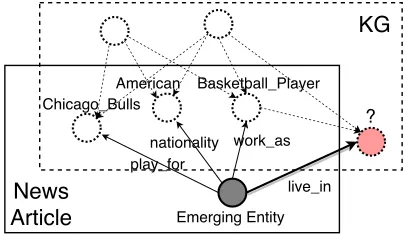
Figure 1: A motivating example of emerging KG entities. Dotted circles and arrows represent the existing KG while solid ones are brought by the emerging entity.
training the embeddings. However, Shi and Weninger (2018) suggest that, on DBpedia, 200 new entities emerge on a daily basis between late 2015 and early 2016. Given the infeasi-bility of retraining embeddings from scratch whenever new entities come, missing facts about emerging entities are, un-fortunately, not guaranteed to be inferred in time.
By transforming realistic networks,e.g.,citation graphs, social networks, and protein interaction graphs, to simple graphs with single-typed and undirected edges, recent ex-plorations (Hamilton, Ying, and Leskovec 2017b) shed light on the evolution issue for homogeneous graphs. While learn-ing embeddlearn-ings for existlearn-ing nodes, they inductively learn a neighborhood aggregator that represents a node by aggre-gating its neighbors’ embeddings. The embeddings of un-seen nodes can then be obtained by applying the aggregator on their existing neighbors.
Inspired by the above example, the inductive KG embed-ding problem boils down to designing a KG-specific neigh-borhood aggregator to capture essential neighneigh-borhood infor-mation. Intuitively, an ideal aggregator should have the fol-lowing desired properties:
• Permutation Invariant- Unlike words in text or pixels in
an image, neighbors of an entity are naturally unordered. When having neighbors likeChicago BullsandAmerican as input, the aggregator should be irrelevant to potential permutations of the neighbors.
• Redundancy Aware- Facts in KGs tend to depend on
each other.E.g., the fact that one plays forChicago Bulls always implies that she/he is aBasketball Player. It is ben-eficial to exploit such redundancy in an entity’s neighbor-hood to make the aggregation informative.
• Query Relation Aware - For common KG completion
tasks, the query relation in concern,e.g.,“live in”, is given beforehand. An aggregator may exploit such information to concentrate on relevant facts in the neighborhood,e.g., “play for”Chicago Bulls.
This paper concentrates on KG-specific neighborhood ag-gregators, which is of practical importance but only received limited focus (Hamaguchi et al. 2017). To the best of our knowledge, neither conventional aggregators for homoge-neous graphs nor those for KGs satisfy all the above three properties. In this regard, we employ the attention mech-anism (Bahdanau, Cho, and Bengio 2015) and propose an aggregator called Logic Attention Network (LAN). Aggre-gating neighbors by a weighted combination of their trans-formed embeddings, LAN is inherently permutation invari-ant. To estimate the attention weights in LAN, we adopt two mechanisms to model relation- and neighbor-level informa-tion in a coarse-to-fine manner, At both levels, LAN is made aware of both neighborhood redundancy and query relation. To summarize, our contributions are: (1) We propose three desired properties that decent neighborhood aggregators for KGs should possess. (2) We propose a novel aggregator,i.e., Logic Attention Network, to facilitate inductive KG embed-ding. (3) We conduct extensive comparisons with conven-tional aggregators on two KG completions tasks. The results validate the superiority of LAN w.r.t. the three properties.
Related Works
Transductive Embedding Models
In recent years, representation learning problems on KGs have received much attention due to the wide applications of the resultant entity and relation embeddings. Typical KG embedding models include TransE (Bordes et al. 2013), Distmult (Yang et al. 2014), Complex (Trouillon et al. 2016), Analogy (Liu, Wu, and Yang 2017), to name a few. For more explorations, we refer readers to an extensive survey (Wang et al. 2017). However, conventional approaches on KG em-bedding work in a transductive manner. They require that all entities should be seen during training. Such limitation hin-ders them from efficiently generalizing to emerging entities.
Inductive Embedding Models
To relieve the issue of emerging entities, several induc-tive KG embedding models are proposed, including Xie et al. (2016b), Shi and Weninger (2018) and Xie et al. (2016a) which use description text or images as inputs. Although the resultant embeddings may be utilized for KG completion, it is not clear whether the embeddings are powerful enough to infer implicit or new facts beyond those expressed in the text/image. Moreover, when domain experts are recruited to introduce new entities via partial facts rather than text or im-ages, those approaches may not help much.
In light of the above scenario, existing neighbors of an emerging entity are considered as another type of input for inductive models. In Hamaguchi et al. (2017), the authors propose applying Graph Neural Network (GNN) on the KG, which generates the embedding of a new entity by gating all its known neighbors. However, their model aggre-gates the neighbors via simple pooling functions, which ne-glects the difference among the neighbors. Other works like Fu, Lee, and Lei (2017) and Tang, Qu, and Mei (2015) aim at embedding nodes for node classification given the entire graph and thus are inapplicable for inductive KG-specific tasks. Schlichtkrull et al. (2017) and Xiong et al. (2018) also rely on neighborhood structures to embed entities, but they either work transductively or focus on emerging relations.
Finally, we note another related line of studies on node representation learning for homogeneous graphs. Similar to text- or image-based inductive models for KGs, Duran and Niepert (2017), Yang, Cohen, and Salakhutdinov (2016), Veliˇckovi´c et al. (2018) and Rossi, Zhou, and Ahmed (2018) exploit additional node attributes to embed unseen nodes. Another work more related to ours is Hamilton, Ying, and Leskovec (2017a). They tackle inductive node embedding by the neighborhood aggregation scheme. Their aggrega-tors either trivially treat neighbors equally or unnecessarily require them to be ordered. Moreover, like all embedding models for homogeneous graphs, their model cannot be di-rectly applied to KGs with multi-relational edges.
Preliminaries
Notations
LetE andRbe two sets of entities and relations of sizen
andm, respectively. A knowledge graph is composed of a set of triplet facts, namely
K={(s, r, o)|s∈ E, r∈ R, o∈ E}. (1)
For each(s, r, o) ∈ K, we denote the reverse ofrbyr−1, and add an additional triplet(o, r−1, s)toK.
For an entitye, we denote byNK(e)itsneighborhoodin
K,i.e.,all related entities with the involved relations. For-mally,
NK(e) ={(r, e0)|(e, r, e0)∈ K}. (2)
We denote the projection ofNK(e)onE andRbyNE(e)
and NR(e), respectively. Here NE(e) are neighbors and NR(e)areneighboring relations. When the context is clear,
Basketball_Player
Michael_Jordan Chicago
live_in
Chicago_Bulls America English Illinois Rahm_Emanuel play_for nationality work_as language contains-1 mayor
Scoring Function
Input Embeddings Transformed Embeddings Output Embeddings
Transform by relation Weighted Aggregation
Decoder
Encoder
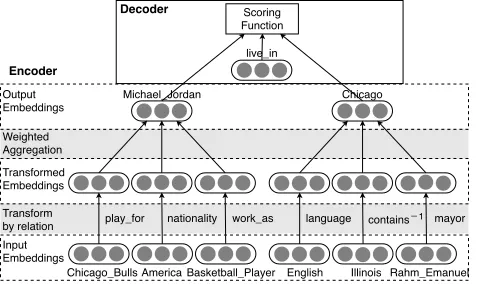
Figure 2: The encoder-decoder framework.
Given a knowledge graph K, we would like to learn a neighborhood aggregatorAthat acts as follows:
• For an entityei onK,Adepends on ei’s neighborhood
NK(i)to embedeias a low-dimensional vectorei;
• For an unknown triplet(s, r, o), the embeddings ofsand
ooutput byAsuggest the plausibility of the triplet.
When a new entity emerges with some triplets involvingE andR, we could apply such an aggregatorA on its newly established neighborhood, and use the output embedding to infer new facts about it.
Framework
To obtain such a neighborhood aggregatorA, we adopt an encoder-decoder framework as illustrated by Figure 2. Given a training triplet, the encoder(s, r, o)encodessandointo two embeddings withA. The decoder measures the plausi-bility of the triplet, and provides feedbacks to the encoder to adjust the parameters ofA. In the remainder of this section, we describe general configurations of the two components.
Encoder As specified in Figure 2, for an entityeion focus,
the encoder works on a collection of input neighbor embed-dings, and outputei’s embedding. To differentiate between input and output embeddings, we use superscriptsI andO
on the respective vectors. LeteIj ∈ Rd, which is obtained
from an embedding matrixWe∈Rn×d, be the embedding
of a neighborej, where(r, ej)∈NK(i). To reflect the
im-pact of relationronej, we apply a relation-specific trans-forming functionTr(.)oneIj as follows,
Tr(eIj) =eIj−wr>eIjwr, (3)
wherewr is the transforming vector for relationr and is restricted as a unit vector. We adopt this transformation from Wang et al. (2014) since it does not involve matrix product operations and is of low computation complexity.
After neighbor embeddings are transformed, these trans-formed embeddings are fed to the aggregatorAto output an embeddingeO
i for the target entityei,i.e.,
eOi =A({Tr(eIj)|(r, ej)∈NK(i)}). (4)
By definition, an aggregatorAessentially takes as input a collection of vectorsX={xj}(xj ∈Rd) and maps them
to a single vector. With this observation, the following two types of functions seem to be natural choices for neighbor-hood aggregators, and have been adopted previously:
• Pooling Functions.A typical pooling function is
mean-pooling, which is defined byA(X) = |X1|P
jxj. Besides mean-pooling, other previously adopted choices include sum- and max-pooling (Hamaguchi et al. 2017). Due to their simple forms, pooling functions are permutation-invariant, but consider the neighbors equally. It is aware of neither potential redundancy in the neighborhood nor the query relations.
• Recurrent Neural Networks (RNNs). In various
natu-ral language processing tasks, RNNs prove effective in modeling sequential dependencies. In (Hamilton, Ying, and Leskovec 2017a), the authors adopt an RNN variant LSTM (Hochreiter and Schmidhuber 1997) as neighbor-hood aggregator,i.e.,A(X) = LSTM(x1, . . . ,x|X|). To
train and apply the LSTM-based aggregator, they have to randomly permute the neighbors, which violates the per-mutation variance property.
Decoder Given the subject and object embeddingssOand
oO output by the encoder, the decoder is required to mea-sure the plausibility of the training triplet. To avoid poten-tial mixture with relationsrin the neighborhood, we refer to the relation in the training triplet byquery relation, and denote it byq instead. After looking upq’s representation
q from an embedding matrix Wr ∈ Rm×d, the decoder
scores the training triplet (s, q, o) with a scoring function
φO(s, q, o) :
Rd ×Rd×Rd → R. Following Hamaguchi
et al. (2017), we mainly investigate a scoring function based on TransE (Bordes et al. 2013) defined by
φO(s, q, o) =−|sO+q−oO|L1, (5)
where|.|L1denotes the L1 norm. To test whether the studied aggregators generalize among different scoring function, we will also consider several alternatives in experiments.
Logic Attention Network
As discussed above, traditional neighborhood aggregators do not preserve all desired properties. In this section, we describe a novel aggregator, namely Logic Attention Net-work (LAN), which addresses all three properties. We also provide details in training the LAN aggregator.
Incorporating Neighborhood Attention
Traditional neighborhood aggregators only depend on col-lections of transformed embeddings. They neglect other use-ful information in the neighborhoodNK(i)and the query re-lationq, which may facilitate more effective aggregation of the transformed embeddings. To this end, we propose gen-eralizing the aggregators fromA(X)toA(X;NK(i), q).
Specifically, for an entityei, its neighborsej should con-tribute differently toeO
preserving the permutation invariance property, we em-ploy a weighted or attention-based aggregating approach on the transformed embeddings. The additional information in
NK(i)andqis then exploited when estimating the attention
weights. Formally, we obtaineO i by
eOi = X
(r,ej)∈NK(i)
αj|i,qTr(eIj). (6)
Hereαj|i,q is the attention weight specified for each neigh-borejgiveneiand the query relationq.
To assign larger weightsαj|i,q to more important neigh-bors, from the perspective ofei, we ask ourselves two ques-tions at progressive levels: 1) What types of neighboring re-lations may lead us to potentially important neighbors? 2) Following those relations, which specific neighbor (in trans-formed embedding) may contain important information? In-spired by the two questions, we adopt the following two mechanisms to estimateαj|i,q.
Logic Rule Mechanism Relations in a KG are simply not
independent of each other. For an entitye, one neighboring relationr1may imply the existence of another neighboring relationr2, though they may not necessarily connecteto the same neighbor. For example, a neighboring relationplay for may suggest the home city,i.e.,live in, of the current athlete entity. Following notations in logics, we denote potential de-pendency betweenr1andr2by a “logic rule”r1 ⇒r2. To measure the extent of such dependency, we define the confi-denceof a logic ruler1⇒r2as follows:
P(r1⇒r2) = P
e∈E1(r1∈NR(e)∧r2∈NR(e))
P
e∈E1(r1∈NR(e))
. (7)
Here the function1(x)equals1whenxis true and0 other-wise. As an empirical statistic over the entire KG,P(r1 ⇒
r2)is larger if more entities with neighboring relationr1also haver2as a neighboring relation.
With the confidence scoresP(r1⇒r2)between all rela-tion pairs at hand, we are ready to characterize neighboring relations rthat lead to important neighbors. On one hand, such a relation r should have a large P(r ⇒ q), i.e., it is statistically relevant toq. Following the above example, play forshould be consulted to if the query relation islive in. On the other hand,r should not be implied by other rela-tions in the neighborhood. For example, no matter whether the query relation islive inor not, the neighboring relation work asshould not be assigned too much weight, because sufficient information is already provided byplay for.
Following the above intuitions, we implement the logic rule mechanism of measuring neighboring relations’ useful-ness as follow:
αLogicj|i,q = P(r⇒q) max({P(r0
⇒r)|r0
∈NR(ei)∧r 0
6
=r}). (8)
We note thatαLogicj|i,q promotes relationsrstrongly implying
q(the numerator) and demotes those implied by some other relation in the same neighborhood (the denominator). In this manner, our logic rule mechanism addresses both query re-lation awareness and neighborhood redundancy awareness.
Neural Network Mechanism With global statistics about
relations, the logic rule mechanism guides the attention weight to be distributed at a coarse granularity of relations. However, it may be insufficient not to consult finer-grained information hidden in the transformed neighbor embeddings to determine which neighbor is important indeed. To take the transformed embeddings into consideration, we adopt an at-tention network (Bahdanau, Cho, and Bengio 2015).
Specifically, given a query relationq∈ R, the importance of an entityei’s neighborejis measured by
αNNj|i,q=softmax(α0j|i,q) = exp(α
0 j|i,q) P
j0∈NE(i)exp(α 0 j0|i,q)
. (9)
Here the unnormalized attention weightα0j|i,qis given by an attention neural network as
α0j|i,q =u>a ·tanh(Wa·[zq;Tr(eIj)]). (10)
In this equation,ua andWa ∈ Rd×2d are global attention
parameters, whilezq is a relation-specific attention parame-ter for the query relationq. All those attention parameters are regarded as parameters of the encoder, and learned directly from the data.
Note that, unlike the logic rule mechanism at relation level, the computation of αNN
j|i,q concentrates more on the neighbor ej itself. This is useful when the neighbor en-tityej is also helpful to explain the current training triplet. For example, in Figure 2, the neighborChicago Bullscould help to imply the object oflive insince there are other ath-letes playing forChicago Bullswhile living inChicago. Al-though working at the neighbor level, the dependency on transformed neighbor embeddingsTr(eIj)and the relation-specific parameter zq makeαNNj|i,q aware of both neighbor-hood redundancy and the query relation.
Finally, to incorporate these two weighting mechanisms together in measuring the importance of neighbors, we em-ploy a double-view attention and reformulate Eq. (6) as
eOi = X
(r,ej)∈NK(i)
(αLogicj|i,q +αNNj|i,q)Tr(eIj). (11)
Training Objective
To train the entire model in Figure 2, we need both positive triplets and negative ones. All tripletsKfrom the knowledge graph naturally serve as positive triplets, which we denote by
∆. To make up for the absence of negative triplets, for each
(s, q, o)∈∆, we randomly corrupt the object or subject (but not both) by another entity inE, and denote the correspond-ing negative triplets by∆0(s,q,o). Formally,
∆0(s,q,o)={(s0, q, o)|s0 ∈ E} ∪ {(s, q, o0)|o0 ∈ E}. (12)
To encourage the decoder to give high scores for positive triplets and low scores for negative ones, we apply a margin-based ranking loss on each triplet(s, q, o),i.e.,
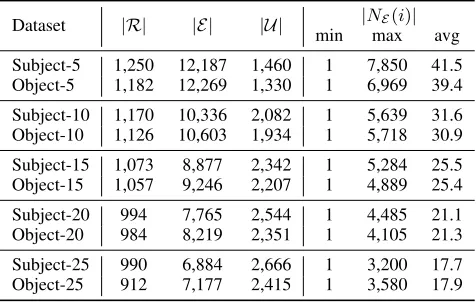
Table 1: Statistics of the processed FB15K dataset.
Dataset |R| |E| |U | |NE(i)|
min max avg
Subject-5 1,250 12,187 1,460 1 7,850 41.5 Object-5 1,182 12,269 1,330 1 6,969 39.4
Subject-10 1,170 10,336 2,082 1 5,639 31.6 Object-10 1,126 10,603 1,934 1 5,718 30.9
Subject-15 1,073 8,877 2,342 1 5,284 25.5 Object-15 1,057 9,246 2,207 1 4,889 25.4
Subject-20 994 7,765 2,544 1 4,485 21.1 Object-20 984 8,219 2,351 1 4,105 21.3
Subject-25 990 6,884 2,666 1 3,200 17.7 Object-25 912 7,177 2,415 1 3,580 17.9
Here[x]+ =max{0, x}denotes the positive part of x, and
γis a hyper-parameter for the margin. Finally, the training objective is defined by
min X
(s,q,o)∈∆
X
(s0,q,o0)∈∆0(s,q,o)
lO(s, q, o). (14)
Subtask on Input Embeddings The above training
ob-jective only optimizes the output of the aggregator,i.e.,the output entity embeddingseO. The input entity embeddings
eI, however, are not directly aware of the structure of the entire KG. To make the input embeddings and thus the ag-gregation more meaningful, we set up a subtask for LAN.
First, we define a second scoring function, which is simi-lar to Eq. (5) except that input embeddingseI fromW
eare used to represent the subject and object,i.e.,
φI(s, q, o) =−|sI+q−oI|L1. (15)
The embedding of query relationq∈ Ris obtained from the same embedding matrixWras in the first scoring func-tion. Then a similar margin-based ranking losslI(s, q, o)as Eq. (13) is defined for the subtask. Finally, we combine the subtask with the main task, and reformulate the overall train-ing objective of LAN as
min X
(s,q,o)∈∆
X
(s0,q,o0)∈∆0(s,q,o)
[lO(s, q, o)+lI(s, q, o)]. (16)
Experimental Configurations
We evaluate the effectiveness of our LAN model on two typ-ical knowledge graph completion tasks,i.e.,link prediction and triplet classification. We compare our LAN with two baseline aggregators, MEAN and LSTM, as described in the Encoder section. MEAN is used on behalf of pooling func-tions since it leads to the best performance in Hamaguchi et al. (2017). LSTM is used due to its large expressive capabil-ity (Hamilton, Ying, and Leskovec 2017a).
Data Construction
In both tasks, we need datasets whose test sets contain new entities unseen during training. For the task of triplet classi-fication, we directly use the datasets released by Hamaguchi
Table 2: Evaluation accuracy on triplet classification (%).
Subject Object Both
Model 1000 3000 5000 1000 3000 5000 1000 3000 5000
MEAN 87.3 84.3 83.3 84.0 75.2 69.2 83.0 73.3 68.2 LSTM 87.0 83.5 81.8 82.9 71.4 63.1 78.5 71.6 65.8
LAN 88.8 85.2 84.2 84.7 78.8 74.3 83.3 76.9 70.6
et al. (2017) which are based on WordNet11 (Socher et al. 2013). Since they do not conduct experiments on the link prediction task, we construct the required datasets based on FB15K (Bordes et al. 2013) following a similar protocol used in Hamaguchi et al. (2017) as follows.
1. Sampling unseen entities. Firstly, we randomly sample
R = {5%,10%,15%,20%,25%} of the original test-ing triplets to form a new test set T for our induc-tive scenario (Hamaguchi et al. (2017) samples N =
{1000,3000,5000} testing triplets). Then two different strategies1are used to construct the candidate unseen en-tities U0. One is called Subject, where only entities ap-pearing as the subjects in T are added to U0. Another is called Object, where only objects in T are added to U0. For an entitye ∈ U0, if it does not have any neigh-bor in the original training set, such an entity is filtered out, yielding the final unseen entity setU. For a triplet
(s, r, o)∈ T, ifs ∈ U ∧o∈ U ors∈ E ∧o∈ E, it is removed fromT.
2. Filtering and splitting data sets. The second step is to en-sure that unseen entities would not appear in final training set or validation set. We split the original training set into two data sets, the new training set and auxiliary set. For a triplet (s, r, o) in original training set, ifs, o ∈ E, it is added to the new training set. Ifs ∈ U ∧o ∈ E or
s ∈ E ∧o ∈ U, it is added to the auxiliary set, which serves as existing neighbors for unseen entities inT. Finally, for a triplet(s, r, o)in the original validation set, ifs∈ U oro∈ U, it is removed from the validation set.
The statistics for the resulting2×5 = 10datasets using SubjectandObjectstrategies are in Table 1.
Experiments on Triplet Classification
Triplet classification aims at classifying a fact triplet(s, r, o)
as true or false. In the dataset of Hamaguchi et al. (2017), triplets in the validation and testing sets are labeled as true or false, while triplets in the training set are all true ones.
To tackle this task, we preset a thresholdδrfor each re-lation r. IfφO(s, r, o) ≥ δ
r, the triplet is classified as pos-itive, otherwise it is negative. We determine the optimalδr by maximizing classification accuracy on the validation set.
1
Table 3: Evaluation results for link prediction.
Subject-10 Object-10
Model MR MRR Hits@10 Hits@3 Hits@1 MR MRR Hits@10 Hits@3 Hits@1
MEAN 293 0.310 48.0 34.8 22.2 353 0.251 41.0 28.0 17.1 LSTM 353 0.254 42.9 29.6 16.2 504 0.219 37.3 24.6 14.3
LAN 263 0.394 56.6 44.6 30.2 461 0.314 48.2 35.7 22.7
Table 4: Effectiveness of logic rules on Subject-10.
Model MRR Hits@10 Hit@3 Hits@1
MEAN 0.310 48.0 34.8 22.2
Global-Attention 0.331 49.7 37.7 24.0 Query-Attention 0.355 51.9 39.5 27.0 Logic Rules Only 0.375 54.7 42.7 28.0 LAN 0.394 56.6 44.6 30.2
Experimental Setup
Since this task is also conducted in Hamaguchi et al. (2017), we use the same configurations with learning rate α = 0.001, embedding dimension d = 100, and margin γ = 300.0 for all datasets. We randomly sample 64 neighbors for each entity. Zero padding is used when the number of neighbors is less than 64. L2-regularization is applied on the parameters of LAN. The regularization rate is0.001.
Evaluation Results
The results are reported in Table 2. Since we did not achieve the same results for MEAN as reported in Hamaguchi et al. (2017) with either our implementation or their released source code, the best results from their original paper are re-ported. From the table, we observe that, on one hand, LSTM results in poorer performance compared with MEAN, which involves fewer parameters though. This demonstrates the ne-cessity of the permutation invariance for designing neigh-borhood aggregators for KGs. On the other hand, our LAN model consistently achieves the best results on all datasets, demonstrating the effectiveness of LAN on this KBC task.
Experiments on Link Prediction
Link prediction in the inductive setting aims at reasoning the missing part “?” in a triplet when given(s, r,?)or(?, r, o)
with emerging entitiessororespectively. To tackle the task, we firstly hide the object (subject) of each testing triplet in Subject-R (Object-R) to produce a missing part. Then we re-place the missing part with all entities in the entity setEto construct candidate triplets. We compute the scoring func-tionφO(s, r, o)defined in Eq. (5) for all candidate triplets, and rank them in descending order. Finally, we evaluate whether the ground-truth entities are ranked ahead of other entities. We use traditional evaluation metrics as in the KG completion literature,i.e.,Mean Rank (MR), Mean Recipro-cal Rank (MRR), and the proportion of ground truth entities ranked top-k (Hits@k,k∈ {1,3,10}). Since certain candi-date triplets might also be true, we follow previous works
Table 5: Different scoring functions on Subject-10.
Encoder Decoder MRR Hits@10 Hit@3 Hits@1
MEAN Distmult 0.297 45.8 33.5 21.2 MEAN Complex 0.286 44.7 32.2 20.4 MEAN Analogy 0.242 38.3 26.5 17.1 MEAN TransE 0.310 48.0 34.8 22.2
LAN Distmult 0.378 53.4 43.2 29.3 LAN Complex 0.371 53.1 42.2 28.7 LAN Analogy 0.375 53.2 42.6 29.2 LAN TransE 0.394 56.6 44.6 30.2
and filter out these fake negatives before ranking.
Experimental Setup
We search the best hyper-parameters of all models accord-ing to the performance on validation set. In detail, we search learning rate αin{0.001,0.005,0.01,0.1}, embedding di-mension for neighbors d in {20,50,100,200}, and mar-ginγin{0.5,1.0,2.0,4.0}. The optimal configurations are
α= 0.001, d= 100, γ= 1.0for all the datasets.
Experimental Results
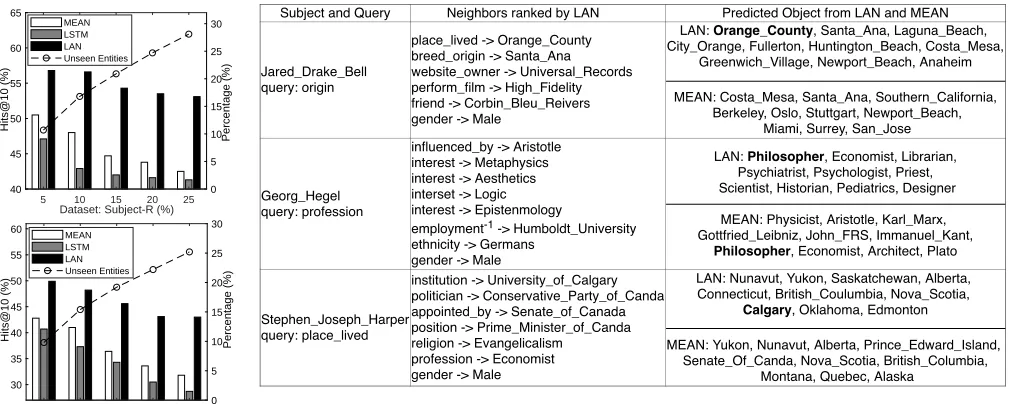
The results on Subject-10 and Object-10 are reported in Ta-ble 3. The results on other datasets are similar and we sum-marize them later in Figure 3. From Table 3, we still observe consistent results for all the models as in the triplet classifi-cation task. Firstly, LSTM results in the poorest performance on all datasets. Secondly, our LAN model outperforms all the other baselines significantly, especially on the Hit@k metrics. The improvement on the MR metric of LAN might not be considerable. This is due to the flaw of the MR metric since it is more sensitive to lower positions of the ranking, which is actually of less importance. The MRR metric is pro-posed for this reason, where we could observe consistent im-provements brought by LAN. The effectiveness of LAN on link prediction validates LAN’s superiority to other aggrega-tors and the necessities to treat the neighbors differently in a permutation invariant way. To analyze whether LAN out-performs the others for expected reasons and generalizes to other configurations, we conduct the following studies.
Necessity of Query Relation Awareness In this
0 5 10 15 20 25 30
Percentage (%)
5 10 15 20 25
Dataset: Subject-R (%) 40
45 50 55 60 65
Hits@10 (%)
MEAN LSTM LAN Unseen Entities
0 5 10 15 20 25 30
Percentage (%)
5 10 15 20 25
Dataset: Object-R (%) 30
35 40 45 50 55 60
Hits@10 (%)
MEAN LSTM LAN Unseen Entities
Figure 3: Results on Subject-R and Object-Subject-R.
Subject and Query Neighbors ranked by LAN Predicted Object from LAN and MEAN
Jared_Drake_Bell query: origin
place_lived -> Orange_County breed_origin -> Santa_Ana website_owner -> Universal_Records perform_film -> High_Fidelity friend -> Corbin_Bleu_Reivers gender -> Male
LAN: Orange_County, Santa_Ana, Laguna_Beach, City_Orange, Fullerton, Huntington_Beach, Costa_Mesa,
Greenwich_Village, Newport_Beach, Anaheim
MEAN: Costa_Mesa, Santa_Ana, Southern_California, Berkeley, Oslo, Stuttgart, Newport_Beach,
Miami, Surrey, San_Jose
Georg_Hegel query: profession
influenced_by -> Aristotle interest -> Metaphysics interest -> Aesthetics interset -> Logic interest -> Epistenmology
employment-1 -> Humboldt_University ethnicity -> Germans
gender -> Male
LAN: Philosopher, Economist, Librarian, Psychiatrist, Psychologist, Priest, Scientist, Historian, Pediatrics, Designer
MEAN: Physicist, Aristotle, Karl_Marx, Gottfried_Leibniz, John_FRS, Immanuel_Kant,
Philosopher, Economist, Architect, Plato
Stephen_Joseph_Harper query: place_lived
institution -> University_of_Calgary politician -> Conservative_Party_of_Canda appointed_by -> Senate_of_Canada position -> Prime_Minister_of_Canda religion -> Evangelicalism
profession -> Economist gender -> Male
LAN: Nunavut, Yukon, Saskatchewan, Alberta, Connecticut, British_Coulumbia, Nova_Scotia,
Calgary, Oklahoma, Edmonton
MEAN: Yukon, Nunavut, Alberta, Prince_Edward_Island, Senate_Of_Canda, Nova_Scotia, British_Columbia,
Montana, Quebec, Alaska
Table 6: The sample cases. The left column contains the emerging entity and the query relation. The middle column contains the neighbors ranked in a descending order according to the weights specified by LAN. The right column contains the ranked prediction from LAN and MEAN. The correct predictions are marked in bold.
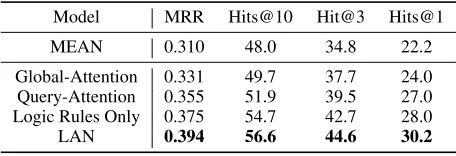
logic rule mechanism is removed. The other is referred to as Global-Attention, which is also an attention network except that the query relation embeddingzq in Eq. (10) is masked by a zero vector. The results are reported in Table 4. We ob-serve that although superior to MEAN, Global-Attention is outperformed by Query-Attention, demonstrating the neces-sity of query relation awareness. The superiority of Global-Attention over MEAN could be attributed to the fact that the attention mechanism is effective to identify the neighbors which are globally important regardless of the query.
Effectiveness of Logic Rule Mechanism We find that the
logic rules greatly help to improve the attention network in LAN. We confirm this point by conducting further ex-periments where the logic rule mechanism is isolated as a single model (referred to as Logic Rules Only). The re-sults are also demonstrated in Table 4, from which we find that Query-Attention outperforms MEAN by a limited mar-gin. Meanwhile, Logic Rules Only outperforms both MEAN and Query-Attention by significant margins. These results demonstrate the effectiveness of logic rules in assigning meaningful weights to the neighbors. Specifically, in order to generate representations for unseen entities, it is crucial to incorporate the logic rules to train the aggregator, instead of depending solely on neural networks to learn from the data. By combining the logic rules and neural networks, LAN takes a step further in outperforming all the other models.
Generalization to Other Scoring Functions To find out
whether the superiority of LAN to the baselines can general-ize to other scoring functions, we replace the scoring tion in Eq. (5) and Eq. (15) by three typical scoring func-tions mentioned in Related Works. We omit the results of LSTM, for it is still inferior to MEAN. The results are listed in Table 5, from which we observe that with different
scor-ing functions, LAN outperforms MEAN consistently by a large margin on all the evaluation metrics. Note that TransE leads to the best results on MEAN and LAN.
Influence of the Proportion of Unseen Entities It’s
rea-sonable to suppose that when the ratio of the unseen en-tities over the training enen-tities increases (namely the ob-served knowledge graph becomes sparser), all models’ per-formance would deteriorate. To figure out whether our LAN could suffer less on sparse knowledge graphs, we conduct link prediction on datasets with different sample ratesRas described in Step 1 of the Data Construction section. The re-sults are displayed in Figure 3. We observe that the increas-ing proportion of unseen entities certainly has a negative im-pact on all models. However, the performance of LAN does not decrease as drastically as that of MEAN and LSTM, in-dicating that LAN is more robust on sparse KGs.
Case Studies on Neighbors’ Weights
rela-tionplace livedhelps the aggregator to focus on the neigh-boring relation institution, then the neighbor entity Univer-sity of Calgaryassists in locating the answerCalgary.
Conclusion
In this paper, we address inductive KG embedding, which helps embed emerging entities efficiently. We formulate three characteristics required for effective neighborhood ag-gregators. To meet the three characteristics, we propose LAN, which attributes different weights to an entity’s neigh-bors in a permutation invariant manner, considering both the redundancy of neighbors and the query relation. The weights are estimated from data with logic rules at a coarse relation level, and neural attention network at a fine neighbor level. Experiments show that LAN outperforms baseline models significantly on two typical KG completion tasks.
Acknowledgements
We thank the three anonymous authors for their construc-tive comments. This work is supported by the National Nat-ural Science Foundation of China (61472453, U1401256, U1501252, U1611264, U1711261, U1711262).
References
Auer, S.; Bizer, C.; Kobilarov, G.; Lehmann, J.; Cyganiak, R.; and Ives, Z. 2007. Dbpedia: A nucleus for a web of open data.The semantic web722–735.
Bahdanau, D.; Cho, K.; and Bengio, Y. 2015. Neural ma-chine translation by jointly learning to align and translate. In ICLR.
Bollacker, K.; Evans, C.; Paritosh, P.; Sturge, T.; and Taylor, J. 2008. Freebase: a collaboratively created graph database for structuring human knowledge. InSIGMOD, 1247–1250. Bordes, A.; Usunier, N.; Garcia-Duran, A.; Weston, J.; and Yakhnenko, O. 2013. Translating embeddings for modeling multi-relational data. InNIPS, 2787–2795.
Duran, A. G., and Niepert, M. 2017. Learning graph rep-resentations with embedding propagation. InNIPS, 5119– 5130.
Fu, T.-y.; Lee, W.-C.; and Lei, Z. 2017. Hin2vec: Explore meta-paths in heterogeneous information networks for rep-resentation learning. InCIKM, 1797–1806. ACM.
Hamaguchi, T.; Oiwa, H.; Shimbo, M.; and Matsumoto, Y. 2017. Knowledge transfer for out-of-knowledge-base en-tities: A graph neural network approach. InIJCAI, 1802– 1808.
Hamilton, W.; Ying, Z.; and Leskovec, J. 2017a. Induc-tive representation learning on large graphs. InNIPS, 1024– 1034.
Hamilton, W. L.; Ying, R.; and Leskovec, J. 2017b. Rep-resentation learning on graphs: Methods and applications. IEEE Data Eng. Bull.40:52–74.
Hao, Y.; Zhang, Y.; Liu, K.; He, S.; Liu, Z.; Wu, H.; and Zhao, J. 2017. An end-to-end model for question answering over knowledge base with cross-attention combining global knowledge. InACL, volume 1, 221–231.
Hochreiter, S., and Schmidhuber, J. 1997. Long short-term memory.Neural computation9(8):1735–1780.
Liu, H.; Wu, Y.; and Yang, Y. 2017. Analogical inference for multi-relational embeddings. InICML, 2168–2178. Mahdisoltani, F.; Biega, J.; and Suchanek, F. 2014. Yago3: A knowledge base from multilingual wikipedias. InCIDR. Rossi, R. A.; Zhou, R.; and Ahmed, N. K. 2018. Deep inductive network representation learning. InWWW, 953– 960.
Schlichtkrull, M.; Kipf, T. N.; Bloem, P.; Berg, R. v. d.; Titov, I.; and Welling, M. 2017. Modeling relational data with graph convolutional networks. The Semantic Web. Shi, B., and Weninger, T. 2018. Open-world knowledge graph completion. InAAAI, 1957–1964.
Shi, C.; Li, Y.; Zhang, J.; Sun, Y.; and Philip, S. Y. 2017. A survey of heterogeneous information network analysis. In TKDE, volume 29, 17–37. IEEE.
Socher, R.; Chen, D.; Manning, C. D.; and Ng, A. 2013. Reasoning with neural tensor networks for knowledge base completion. InNIPS, 926–934.
Tang, J.; Qu, M.; and Mei, Q. 2015. Pte: Predictive text em-bedding through large-scale heterogeneous text networks. In SIGKDD, 1165–1174. ACM.
Trouillon, T.; Welbl, J.; Riedel, S.; Gaussier, ´E.; and Bouchard, G. 2016. Complex embeddings for simple link prediction. InICML, 2071–2080.
Veliˇckovi´c, P.; Cucurull, G.; Casanova, A.; Romero, A.; Li`o, P.; and Bengio, Y. 2018. Graph attention networks. InICLR. Wang, Z.; Zhang, J.; Feng, J.; and Chen, Z. 2014. Knowl-edge graph embedding by translating on hyperplanes. In AAAI, 1112–1119.
Wang, Q.; Mao, Z.; Wang, B.; and Guo, L. 2017. Knowledge graph embedding: A survey of approaches and applications. InTKDE, volume 29, 2724–2743. IEEE.
Xie, R.; Liu, Z.; Chua, T.-s.; Luan, H.; and Sun, M. 2016a. Image-embodied knowledge representation learning. In IJ-CAI, 3140–3146.
Xie, R.; Liu, Z.; Jia, J.; Luan, H.; and Sun, M. 2016b. Repre-sentation learning of knowledge graphs with entity descrip-tions. InAAAI, 2659–2665.
Xiong, C., and Callan, J. 2015. Esdrank: Connecting query and documents through external semi-structured data. In CIKM, 951–960. ACM.
Xiong, W.; Yu, M.; Chang, S.; Guo, X.; and Wang, W. Y. 2018. One-shot relational learning for knowledge graphs. In EMNLP.
Yang, B.; Yih, W.-t.; He, X.; Gao, J.; and Deng, L. 2014. Embedding entities and relations for learning and inference in knowledge bases. InICLR.
Yang, Z.; Cohen, W. W.; and Salakhutdinov, R. 2016. Re-visiting semi-supervised learning with graph embeddings. In ICML, 40–48.