Journal of Computing and Security
http://www.jcomsec.org
A Workload-Adaptable Method for Migrated Software to the Cloud
Zahra Reisi
a, Omid Bushehrian
a,∗, Farahnaz Rezaeian Zadeh
b aDepartment of Computer Engineering and IT, Shiraz University of Technology, Shiraz, Iran.bDepartment of Electronics, Computer and Information Technology Engineering, Foolad Institute of Technology, Fooladshahr,
Isfahan 8491663763, Iran.
A R T I C L E I N F O.
Article history: Received:26 June 2015 Revised:09 April 2016 Accepted:21 July 2016
Published Online:26 August 2016
Keywords:
Migration to Cloud, Auto-Scaling, Learning Automata, Transient Workload.
A B S T R A C T
Due to the elastic nature of the cloud environments, migration of the legacy software systems to the cloud has become a very attractive solution for service providers. To provide Software-as-a-Service (SaaS), an application provider has to migrate his software to the cloud infrastructure. The most challenging issue in the migration process is minimizing the cloud infrastructure (VM’s) costs while preserving the quality requirements of the service consumers. In this paper a self-adaptive method for migrated applications to the cloud is proposed in which an intelligent auto-scaling component continuously monitors the incoming application workloads and performs vertical or horizontal scaling. Since reacting to the transient workload changes always results in useless sequences of “acquire-release” actions of cloud resources and imposes unwanted overhead costs on the service provider, the auto-scaling component recognizes the transient workloads using a Learning Automata and only reacts to the stable ones. The OpenStack platform is used for evaluating the applicability of proposed method in real cloud environments. The experimental results demonstrate the ability of the proposed method in recognizing the transient workloads and consequently reducing the overall costs of the service provider.
c
2015 JComSec. All rights reserved.
1
Introduction
The SLAs (Service Level Agreements) between service provider and service consumers are the most important artifact upon which the required resource capacities of the migrated application to the cloud are planned. However the fluctuating workload of recent cloud ap-plications requires an elastic mechanism to adapt the amount of the acquired resources to the current work-load [1, 2]. It is essential for the cloud provider to min-imize the cost of rented resources while preserving the
∗ Corresponding author.
Email addresses:[email protected](Z. Reisi),
[email protected](O. Bushehrian),
[email protected](F. Rezaeian Zadeh)
ISSN: 2322-4460 c2015 JComSec. All rights reserved.
QoS requirements specified in the SLAs during the ap-plication execution. To achieve this, an important task is to find the optimal amount of resources for different kind of workloads before migrating the application to the cloud which is performed during the capacity planning activity. Usually the service provider scaling is driven by a set of scaling rules which specify the correct time for scaling up or down [3, 4].
272 A Workload-adaptable Method for migrated software to the Cloud — Z. Reisi, O. Bushehrian, et al.
QoS falls below a predefined threshold. The scaling rules are defined for changing (add/delete) the num-ber of VM instances (horizontal scaling) or changing the size of current VMs (vertical scaling).
However an important open issue regarding the auto-scaling mechanisms is the adaptation of scaling rules based on runtime conditions: The scaling rule set may involve some probabilistic rules whose trig-gering probabilities change over time based on the stability or instability of the application workloads. For instance, consider scaling rule saying that “if the workload changes toLi then add one VM to current
VM group”. However, if the workloadLi is not
sta-ble and immediately vanishes, changing the current VM set and software deployment is useless. Generally, reacting to the transient workload changes always re-sults in useless sequences of “acquire-release” actions of cloud resources which impose unwanted overhead costs to the service provider due to the configuration changes. Therefore, it is essential to foresee the future conditions of the system workload by learning from previous events.
In this paper, a new self-adaptive method for mi-grated applications to the cloud is proposed. The main objective of our strategy has been predicting the tran-sient workloads and reacting intelligently to them. We believe that by this strategy, the total resource costs of the service provider is reduced significantly as the reconfiguration process happens only when the change is stable. We have implemented the proposed model on the OpenStack1 environment.
The paper is organized as follows: Section 2 includes a review of the literature on auto-scaling in the cloud. Our strategy is introduced in Section 3 and the exper-iment results are demonstrated in Section 4. The con-clusion and the future work are described in Section 5.
2
Related Work
Workload prediction is the most applied technique for auto-scaling in cloud environments. The main objec-tive here is to address the challenges of horizontal and vertical scaling. A framework is proposed in [5] for automatic scaling called “SmartScale” in which the horizontal or vertical scaling is applied at each stage to make a trade-off between cost changing configuration and SLA violation. SmartScale uses horizontal and vertical scaling together and in correct time by means of the decision tree technique. The scaling process is executed when the workload is changed. In [6], a controller is embedded within the auto-scaling compo-nent for capacity planning to find the optimal number
1 http://www.openstack.org
of resources corresponding to the upcoming workload. In [7] a linear regression with an auto-correlation func-tion is used for predicting the number of web requests. The main objective of this mode is to find an optimal trade-off between cost and latency when resources are allocated. The relationship between the number of VMs and the latency is defined based on an M/M/m queuing model. In [8] an efficient model is proposed for resource allocation based on the prediction techniques. Hereby using the second order Auto Regression Mov-ing Average method (ARMA) it was shown that usMov-ing a small number of VMs can effectively satisfy both QoS requirements and cost reduction. In [9] the scal-ing problem is formulated as an integer programmscal-ing problem. The architecture for scaling has two parts in-cluding runtime and pre-runtime. The results showed an optimal trade-off between cost and SLA objectives.
In some studies on transient and stable workloads, the stableness of the workload is defined statically [10, 11]. However, it is highly dependent to workload changes. To address this shortcoming, in [12] a dy-namic threshold based on meta-rules is proposed by which the threshold is adapted based on the workload changes.
An important and ignored aspect in most of the previous studies is the effect of transient workload on the cloud cost which is paid by the service provider. We addressed this shortcoming in our previous paper in [13] where an intelligent Auto-Scaling Engine (iScale) is presented which recognizes the transient workload changes using a Learning Automata and only reacts to the stable workloads.
In this paper the architecture presented in [13] is ex-tended by augmenting a new component called “Virtu-alization Manager” which is responsible for interfacing with cloud platform to perform vertical or horizontal scaling.
3
Cloud Auto-Scaling Approach
Corresponding to each workload change from Li
toLj adurability threshold is required to classify the
new workloadLj as “stable” or “transient”. If
work-loadLj is not changed before its corresponding
dura-bility threshold, it is recognized as a “stable” load, otherwise, it is a “transient” load. These thresholds are computed based on the cloud costs paid due to the newly required resources for supporting workload
Ljand SLA violation penalty. The durability of each
load change from Li toLj is learned by a Learning
AutomataLAij based on its durability history. If a
load change fromLi toLj is learned as “stable” by
LAij, it means that the act of scaling out/in the
cur-rent configuration to the new configurationCjis more
profitable than keeping the current configuration. Assuming that the migrated software initially is deployed on a set of virtual machines acquired from the IaaS provider, scaling up/down the system based on changing the workload means that the allocated resources to the software and the assignment of soft-ware components to the virtual machines may change and a new configuration is installed for the software. Before starting the migration process, the required configurationGi to support the known workloadLi
has to be specified by the designer during an activity called Capacity Planning [14]. Here, based on the QoS requirements of the end-users specified in the Service Level Agreements (SLA), the designer determines the required capacity (the number of virtual machines and the size of allocated resources on each one) and the optimal assignment of software components to virtual machines. So in this case, the SLA constraints are not violated for each known workloadLi. The outcome of
this activity is the Configuration Plan of the migrated software which is defined as a mapping between each workloadLiand its corresponding configurationGi.
The resources inGiare sufficient to provide the
ser-vices to the end-users when the workload is changed to
Liaccording to the predefined SLA [13]. Each
configu-rationGiis formally defined as triple (C, M, A) where
C is the set of software components to be started, M is the set of VM’s on which the software components are deployed and A is a function that maps each com-ponentck ∈Cto avmj∈M.
3.1 Architecture
The proposed self-adaptable architecture is shown in Figure 1. As explained in the previous section, a con-figuration is a set of virtual machines which are al-located to the application components. The current configuration is selected by theScaling Manager com-ponent based on the Configuration Plan.Load Watch monitors the incoming traffic of virtual machines to detect changes in the workload so that the Scaling Manager component decides if the current
configura-tion needs to be adapted to the new workload. After identifying a change in the workload, the new work-load is classified into one of the predefined workwork-load classes by measuring the time intervals between subse-quent requests. ALearning Automaton (LA)decides when to scale up/down the current configuration by learning from the previous history of workloads. The idea is to change the current configuration only if the new workload is not transient. LA learns the type of workload (transient/stable) gradually from the past events. When the decision about the next configu-ration is made by the Scaling Manager, the Virtu-alization Manager component prepares the resizing commands according to the standards of the cloud infrastructure platform and sends them to change the current configuration.
3.2 Virtualization Manager
Scaling commands are prepared by the Virtualization Manager. Virtualization Manager receives the new configuration and uses VM resizing to scale up (or down) the current configuration.
Virtualization Manager consists of the following sub-modules:
(1) Rectifier: This module monitors the current workload and current configuration periodically and triggers a configuration change request if needed. This configuration change request is es-sential when the last action chosen by the LA in Scaling Manager was wrong and needs to receive penalty. This situation happens when the LA action is “not change the current configuration” however after the predefined threshold is passed it is observed that the load is not transient and the LA action was false.
(2) Adapter: This module hides the variations of the cloud infrastructure API from the other mod-ules. It translates the auto-scaling requests (ver-tical/horizontal) to the specific language of the IaaS platform. Hence changing the cloud infras-tructure API has no effect on other modules in the proposed architecture.
3.3 Cost model and Parameters
Suppose that the input workload isLcand the current
configuration of the application isCi. If the workload
changes to another class such asLj, it may be reacted
by the auto-scaling engine either by scaling out the configurationCi and installing the new configuration
Cj or ignoring the load change and continuing with
Equa-274 A Workload-adaptable Method for migrated software to the Cloud — Z. Reisi, O. Bushehrian, et al.
SaaS
iScale
…
VM 1
Component
1, 1 Component 1, n
VM m
Component
m, 1 Component m, n VM 2
Component
2, 1 Component 2, n
Configuration ……..
Load Watch
Durability Threshold Workload
Next Configuration
Learning Automata
IaaS
Configuration Plan
Scaling Command Virtualization Manager
Rectifier
Adapter Scaling Manager
Figure 1. The Components of the Auto-Scaling Architecture
tions (1) and 2 respectively as follows [13]:
CostH(t, i, j) =
Z tcij
0
Pchange(t)
+CostCj ×(t−tcij) +CostLicense(i, j) (1)
Costv(t, i, j) =Costci×t (2) Wheretcij denotes the reconfiguration time fromCi toCj,Pchange(t) is the SLA violation function related
to the horizontal configuration,CostCj is the cost of new configuration, and CostLicense(i, j) is the cost
of new software licenses in configuration Cj. These
two equations compute the cost that has to be paid to the cloud provider up to time t plus the penalty that has to be paid to the end-users due to violating SLA during the configuration change (only when the scaling is horizontal) plus the cost of the new software license (only when the scaling is horizontal). If the action is ignoring the workload change, the current configuration is kept and the total cost incurred up to time t is calculated as follows:
IgnoreCost(t, i, j) =
Z t
0
Pcilj(t) +CostCi×t (3)
The penalty function due to the violation of SLA at time point t is denoted by Pcilj(t), the cost of the current configuration is shown byCostCi. This formula computes the cost of penalty which is paid to the end-users due to the violation of SLA plus the cost of keeping configurationCi up to timet.
The threshold valueαij is the time point at which
the cost of changing the configuration calculated by Equation(1) or (2), and the cost of keeping the current configuration calculated by Equation (3) are equal. During the workload change, as the SLA violation is increased gradually, the cost of keeping the cur-rent configuration is always less than the cost of re-configuration up to timeαij . This reasoning is
obvi-ous due to the fact that functionPcilj(t) is assumed as a strictly increasing function.
3.4 Learning Method
October 2015, Volume 2, Number 4 (pp. 271–279) 275
A Learning Automaton can be presented formally as the tuple: x, φ, α, P, A, G), where x is the input set,α={α1,· · · , αr}is a set of automaton actions,F:
φ×β 7→φis the production function which determines the new automaton state based on the current state and the inputs,P(n) ={P1(n),· · ·, P r(n)}denotes the action probabilities at stage n, G: φ 7→ αis a function that maps the current state into the current output, φ = {φ1, φ2,· · ·, φk} is the set of internal
states and A is the learning algorithm [15].
In the proposed method, to learn the durability of each individual load change, corresponding to each load change fromLitoLja learning automatonLAij
with two actions “ignore”, “scale” is defined.“Ignore” means stay on the current configuration and “scale” means change to the new configuration. Once a load change happens, the learning algorithm compares the observed durability of the last workload with its predefined threshold; if it was greater, the “scale” action has to be rewarded, otherwise, the “ignore” action is rewarded.
Suppose thatmis the number of configurations and
nis the number of workload classes. For each current workload Li and next workload Lj (i 6=j) the
sta-bility ofLj has to be learned by aLAij so we need
n×(n−1) LAs for all combinations of workloads. However, to determine that the changeLiLj is stable
or not, the observed stability ofLjhas to be compared
with the value of durability thresholdαc,j, which is
de-pendent on the current configurationCcas explained
in previous subsection. For example, ifαc,j= 100 and
Ljlasts for 120 time units,Ljis assumed to be stable.
However, if the change toLj happens when the
cur-rent configuration isCtandαt,j = 150,Ljis assumed
to be transient. As a result, for each current configu-rationCcthe interpretation of stability is different.
As a result, for each current configuration Cc a
separateLAij is needed. Since there aremdifferent
configurationsCc andndifferent workloads, the total
number of m×n×(n−1) LAs is needed in the proposed approach.
4
Experiments
OpenStack is one of the popular open source software packages in cloud computing domain. This software controls a set of computing, storage and network re-sources and provides a rich REST API to manage them [16]. The auto-scaling activity is done by Heat
2 component which is compatible with AWS Cloud
and contains a set of templates which are configured within the OpenStack.
2 https://wiki.openstack.org/wiki/Heat
Heat Engine
API Service
Alarm Evaluator
Compute Agent
Instance Instance
Instance
High watermark Alarm
Stores user Meta-Data
Ceilometer
Figure 2. Heat Engine scales out stack [20]
API component sends the API request to Heat-Engine in order to be processed. The user puts all the information related to the application in a text file (compute instances, storage, floating IPs). Then, dur-ing the application execution, the required resources in the text file are provisioned by Heat whenever the scaling is requested. The environment of OpenStack is monitored by Ceilometer and collects the required information about the resources and system perfor-mance. Finally, a combination of Heat and Ceilometer activities will complete the scaling process [17–19].
The scaling process in Heat is depicted in Figure 2. The API service controls lifecycle alarms, the Compute agent gathers the statistical information and Alarm evaluator brings the alarm definition using the API Service. After delivering the alarm by Ceilometer, the Heat engine should start the scaling operations.
4.1 Experimental setup
The proposed approach is evaluated in single node OpenStack. The installation is performed with Heat and Devstack. The aim of experimental evaluation is to assess the accuracy of the proposed cost-aware scaling method in cloud services. The experiments are carried out on the OpenStack simulator, which is a framework for modeling and simulating the cloud computing infrastructures and services. The pricing scheme is based on the Amazon EC23 pricing model.
Four types of VMs are provided in OpenStack: small, medium, large and xlarge, and they have different virtual resource costs, as shown in Table 1.
Pre-defined classes are listed in Table 2. For each workloadLia configurationGi is defined. The
work-load used in this study is generated using the Rain tool [21]. Rain tool is a Markov-chain based workload gen-eration toolkit which can easily use defined or empiri-cal probability distributions to mimic different classes
276 A Workload-adaptable Method for migrated software to the Cloud — Z. Reisi, O. Bushehrian, et al.
0 1 2 3 4
0 500 1000 1500 2000 2500
W
or
kL
oa
d Cla
ss
Time (second)
Detected Load Class Recommend Configuration
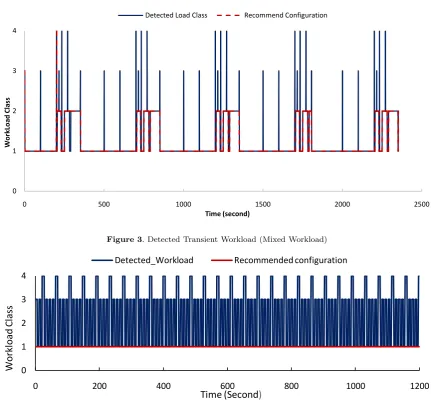
Figure 3. Detected Transient Workload (Mixed Workload)
0 1 2 3 4
0 200 400 600 800 1000 1200
W
or
kl
oad
C
las
s
Time (Second
)
Detected_Workload Recommended configuration
Figure 4. Detected Transient Workload (Transient Workload)
Table 1. The Patch Dimensions of the Antenna
Configuration Memory CPUs Disk Price (per hour)
Small 2 Gb 1 20Gb $0.026
Medium 4 Gb 2 40Gb $0.116
Large 8 Gb 4 80Gb $0.232
xLarge 16 Gb 8 160Gb $0.420
of load variations. We implemented the Simple Scal-ing Method (SSM) and the proposed scalScal-ing method (ASM). In the SSM re-configuration is performed after each workload change regardless of its durability.
The first one will give a baseline for comparison purposes. Two types of composite workloads are used for experiments: Mixed and Transient. The former is a combination of stable and transient loads and the latter only consists of transient workloads.
Table 2. Different Classes of Workload
Workload Class Mean time between requests(ms)
L1 100
L2 150
L3 200
L4 300
4.2 Experimental Results
Experiment 1: Workload Type Recognition
Figure 5. Total Cloud Cost
0 0.2 0.4 0.6 0.8 1 1.2 1.4 1.6 1.8
Total Cost SLA Cost Cloud Cost
Co
st
($
)
Scaling Method
SSM ASM
Figure 6. Cloud Cost and SLA Penalties
in Figures 3 and 4, after a short period of time the LA converges and detects the workload type accurately.
Experiment 2: Total Cost
The total cost includes the SLA violation penalty and the cloud service usage for ASM and SSM approaches that is depicted in Figure 5. In this experiment it was observed that the total cost is initially the same in both methods. However after a short time, the total cost corresponding to the ASM method is drastically decreased in comparison to the SSM.
This is due to the fact that the ASM method pre-dicts the workload type and applies the configuration with lower cost (it switches to the new more costly configuration only when the new load is stable; oth-erwise it keeps the current configuration).The results showed that the ASM had 52% reduction in total cost in comparison to the SSM.
The cost of SLA violation and cloud service usage is shown separately in Figure 6. Due to the performing useless reconfigurations in transient workload changes, the SSM approach resulted in higher cost of SLA violation. Each reconfiguration has indispensable SLA violation due to different service stop/start.
Experiment 3: SLA ViolationIt was observed
that for transient workload pattern the SLA violation
0 10 20 30
SSM ASM
Ti
m
e (
sec
on
d)
Scaling Method
Figure 7. Comparing the SLA Violation Times
0 10 20 30 40 50
Mixed Transient
# o
f r
ec
on
fig
ur
at
io
n
Scaling Method
SSM ASM
Figure 8. Number of Reconfigurations
period was decreased by applying the ASM method as shown in Figure 7. Since ASM avoids useless re-configurations during the transient load changes, less SLA violations are resulted in this method.
Experiment 4: The Number of Reconfigura-tions
In Figure 8, the number of reconfigurations in ASM method is compared with that of SSM method when using mixed and transient workloads. ASM approach was able to reduce nearly 50% of the reconfigurations in comparison to the SSM method. Obviously this is due to the fact that ASM method avoids a reconfigu-ration when the load is not stable. The effect of this behavior is very obvious when the workload pattern is transient rather than mixed.
5
Conclusion
formu-278 A Workload-adaptable Method for migrated software to the Cloud — Z. Reisi, O. Bushehrian, et al.
lated in order to achieve a cost effective configuration for the applications in cloud. The proposed technique is implemented using the Heat APIs in the well-known OpenStack platform. The experimental results show that the proposed method has higher accuracy, lower configuration costs, and reduced duration of the SLA violations in comparison to the SSM method.
References
[1] Chunming Rong, Son T. Nguyen, and Mar-tin Gilje Jaatun. Beyond lightning: A survey on security challenges in cloud computing. Com-puters & Electrical Engineering, 39(1):47 – 54, 2013. ISSN 0045-7906. doi: http://dx.doi.org/ 10.1016/j.compeleceng.2012.04.015. URLhttp:
//www.sciencedirect.com/science/article/
pii/S0045790612000870. Special issue on
Re-cent Advanced Technologies and Theories for Grid and Cloud Computing and Bio-engineering. [2] Jin Chen, G. Soundararajan, and C. Amza. Au-tonomic Provisioning of Backend Databases in Dynamic Content Web Servers. In2006 IEEE International Conference on Autonomic Com-puting, pages 231–242, June 2006. doi: 10.1109/ ICAC.2006.1662403.
[3] C. C. Lin, J. J. Wu, J. A. Lin, L. C. Song, and P. Liu. Automatic Resource Scaling Based on Ap-plication Service Requirements. InCloud Com-puting (CLOUD), 2012 IEEE 5th International Conference on, pages 941–942, June 2012. doi:
10.1109/CLOUD.2012.32.
[4] Tzu-Chi Huang and Sherali Zeadally. Flexible architecture for cluster evolution in cloud com-puting. Computers & Electrical Engineering, 42: 90 – 106, 2015. ISSN 0045-7906. doi: http:// dx.doi.org/10.1016/j.compeleceng.2014.08.006.
URL http://www.sciencedirect.com/
science/article/pii/S0045790614002195.
[5] S. Dutta, S. Gera, A. Verma, and B. Viswanathan. SmartScale: Automatic Application Scaling in Enterprise Clouds. In Cloud Computing (CLOUD), 2012 IEEE 5th International Confer-ence on, pages 221–228, June 2012. doi: 10.1109/ CLOUD.2012.12.
[6] Jorge M Londo˜no-Pel´aez and Carlos A Florez-Samur. An Autonomic Auto-scaling Controller for Cloud Based Applications.International Jour-nal of Advanced Computer Science & Applica-tions, 1(4):1–6, 2013.
[7] J. Jiang, J. Lu, G. Zhang, and G. Long. Opti-mal cloud resource auto-scaling for web appli-cations. In Cluster, Cloud and Grid Comput-ing (CCGrid), 2013 13th IEEE/ACM
Interna-tional Symposium on, pages 58–65, May 2013. doi: 10.1109/CCGrid.2013.73.
[8] N. Roy, A. Dubey, and A. Gokhale. Efficient Autoscaling in the Cloud Using Predictive Mod-els for Workload Forecasting. InCloud Comput-ing (CLOUD), 2011 IEEE International Confer-ence on, pages 500–507, July 2011. doi: 10.1109/ CLOUD.2011.42.
[9] Jingqi Yang, Chuanchang Liu, Yanlei Shang, Bo Cheng, Zexiang Mao, Chunhong Liu, Lisha Niu, and Junliang Chen. A cost-aware auto-scaling approach using the workload prediction in service clouds. Information Systems Frontiers, 16(1):7–18, 2014. ISSN 1572-9419. doi: 10.1007/ s10796-013-9459-0. URL http://dx.doi.org/
10.1007/s10796-013-9459-0.
[10] Emiliano Casalicchio and Luca Silvestri. Au-tonomic Management of Cloud-Based Systems: The Service Provider Perspective, pages 39–47. Springer London, London, 2013. ISBN 978-1-4471-4594-3. doi: 10. 1007/978-1-4471-4594-3 5. URL http://dx.doi.org/10.
1007/978-1-4471-4594-3 5.
[11] Jonathan Kupferman, Jeff Silverman, Patricio Jara, and Jeff Browne. Scaling into the cloud. Technical report, University of California, Santa Barbara, 2009.
[12] Guillermo Botella and Alberto A Del Barrio. Comparison of Auto-scaling Techniques for Cloud Environments. Actas de las XXIV Jornadas de Paralelismo, 2013.
[13] Omid Bushehrian and Zahra Reisi. iScale: An In-telligent Auto-Scaling Engine for Migrated Appli-cations to the Cloud. ARPN Journal of Systems and Software, 4(5):116–122, 2014.
[14] Farahnaz Rezaeian Zadeh, Akhilesh Ku-mar Pandey, Mohamad Davarpanah Jazi, and Abhishek Kumar. Capacity Planning Scien-tific Workflow on Cloud through Ant Colony Approach. InEighth International Conference on Computer communication networks (ICCN 2014), pages 19–25. Elsevier, 2014.
[15] Hamid Beigy and M.R. Meybodi. Learning automata based dynamic guard channel algo-rithms. Computers & Electrical Engineering, 37 (4):601 – 613, 2011. ISSN 0045-7906. doi: http:// dx.doi.org/10.1016/j.compeleceng.2011.04.003.
URL http://www.sciencedirect.com/
science/article/pii/S0045790611000413.
2405186.2405188. URL http://doi.acm.org/ 10.1145/2405186.2405188.
[17] Auto scaling with Heat and Ceilometer.
URL http://techs.enovance.com/5991/
autoscaling-withheat-and-ceilometer.
[18] Ceilometer + Heat = Alarming. URLhttp://
slideshare.
net/NicolasBarcet/ceilometer-heatequalsalarming-icehousesummit.
[19] Hyungro Lee, Gregor von Laszewski, Fugang Wang, and Geoffrey C Fox. Towards understand-ing cloud usage through resource allocation anal-ysis on xsede. Technical report, Technical Report March 25 2014, Community Grids Lab Publica-tions.
[20] Pratibha R Gupta, Sheetal Taneja, and Aparna Datt. Using Heat and Ceilometer for providing Autoscaling in OpenStack.International Journal of Information, Communication and Computing Technology Jagan Institute of Management Stud-ies, New Delhi, pages 84–89, July 2014.
[21] Aaron Beitch, Brandon Liu, Timothy Yung, Rean Griffith, Armando Fox, David A Patterson, et al. Rain: A workload generation toolkit for cloud computing applications. Technical report, Univer-sity of California, Tech. Rep. UCB/EECS-2010-14, 2010.
Zahra Reisireceived the B.Sc degree in soft-ware engineering from the Hakim Sabzevari University in 2010, IRAN, the MSc degree in software engineering from the Shiraz Uni-versity of Technology, IRAN. Her research interests include cloud computing and data mining.
Omid Bushehrianreceived the BSc in soft-ware engineering from AmirKabir University of Technology (Tehran Polytechnics), IRAN, the MSc and Ph.D degrees in software engi-neering from the University of Science and Technology, IRAN. He is currently a faculty member at Shiraz university of Technology, IRAN. His main research interest is cloud computing and software quality.

![Figure 2. Heat Engine scales out stack [20]](https://thumb-us.123doks.com/thumbv2/123dok_us/39600.2004462/5.595.320.531.79.235/figure-heat-engine-scales-out-stack.webp)