
Preformulation parameters characterization to design, development and formulation of metoprolol succinate extended release tablets for oral use
6
0
0
Full text
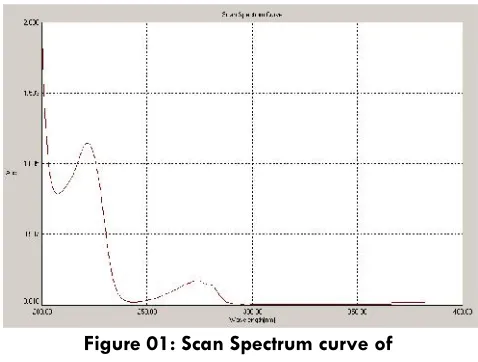
(2) 290. ultimately provide a rational for formulation design, or support the need for molecular modification. Excipients9,10 are selected in formulation development on the basis of its compatibility and functionality with the selected active pharmaceutical ingredient. The % compressibility was calculated because we want to prepare tablet by direct compression method due to cost effective factor as well as easy and less time to manufacture. Directly compressed11 display compression characteristics and have swelling properties that lead to a rapid formation of external layer, allowing drug release modification. The drug is freely soluble in water which is good for dissolution study.. Method and Materials Metoprolol succinate USP12 obtained as a gift samples from Sania Human cure pvt. Ltd, kashi nagar, Uttaranchal (India), HPMC K4M, HPMC K15M, HPMC K100M were obtained from Colorcon Asia Pvt.Ltd.,Goa, India. Sodium stearyl fumerate, colloidal anhydrous silica was purchased from SD Fine Chemicals (Mumbai, India). Ethyl cellulose, microcrystalline cellulose (pharmaceutical grade) was purchased from G.R.Traders, Hyderabad. All other chemical were of high analytical grade obtained from Vision College of pharmaceutical sciences & Research, Boduppal, Hyderabad. Double distilled water was used throughout the study. Preparation of Calibration Curve of Metoprolol succinate in Phosphate Buffer 6.8 The UV scanning of drug sample was carried out using a solution of drug dissolved in 6.8 pH phosphate buffer solution12,13. The lambda max (max) was observed at 222nm. The graph is shown in Figure 1. The calibration curve of Metoprolol succinate was obtained by dissolving the drug in 6.8 pH phosphate buffer solution and the absorbance was measured at 222nm by keeping 6.8 pH phosphate buffer solution as blank. Beers law14 was obeyed in the concentrations range of 1- 30 μg/ml in 6.8 pH phosphate buffer solution. 100 mg of Metoprolol succinate was accurately weighed and taken in 100 ml volumetric flask. Drug was dissolved in 6.8 pH phosphate buffer solution and ultra sonicated for 10 min to ensure complete dissolving of drug, which give a concentration of 1000 µg/ml. From stock I, 10 ml is taken and. Int. J. Pharm & Ind. Res. Vol - 01. diluted to 100 ml which give a concentration of 100 µg/ml solution, this is stock II. From the above stock II solution 0.5, 1.0, 1.5, 2.0 and 3.0 ml were withdrawn into 10 ml volumetric flasks and diluted up to the volume with 6.8 pH phosphate buffer solution. The result is shown in Table 1. The graph is shown in Figure 2. Determination of Solubility15 of Metoprolol succinate Excess of drug was placed in distilled water and this solution was occasionally stirred for 24 hours at room temperature. After 24 hours sample was filtered and filtrate was suitably diluted and absorbance was taken at 222.0 nm against distilled water as blank on UV – Visible spectrophotometer (UV – 3000). The result is shown in table 2. Observation: Absorbance of Metoprolol succinate in distilled water: 0.631 A.. Stability of Metoprolol succinate in Solvents16. Stability of Metoprolol succinate in distilled water Stability of Metoprolol succinate in distilled water was determined by keeping the known concentration (20 μg/ml), in kinetic mode of UV–Visible spectrophotometer (UV–3000 Lab India) for 30 min. The data obtained is shown in table3. Stability of Metoprolol succinate in 0.1N HCl Stability of Metoprolol succinate in 0.1N HCl was determined by keeping the known concentration (15 μg/ml), in kinetic mode of UV–Visible spectrophotometer (UV–3000 Lab India) for 30 min. The data obtained is shown in table 4. Stability of Metoprolol succinate in Phosphate Buffer 6.8. Stability of Metoprolol succinate in Phosphate Buffer 6.8 was determined by keeping the known concentration (20 μg/ml), in kinetic mode of UV–Visible spectrophotometer (UV–3000 Lab India) for 30 min. The data obtained is shown in table 5. Spectral Analysis of Additives at 222nm to determine any interference with Drug The highest concentration of the additives that would be present in 500 ml of dilution media was estimated on the basis of amount present in per tablet of different batches and the same quantities of different additives were taken in 100ml volumetric flasks made. Issue - 04. Oct – Dec 2011.
(3) 291. up volume with water and shaken thoroughly and filtration was done, filtrate taken for spectral scan at 222.0nm in UV–Visible spectrophotometer (UV–3000, Lab India). Determination of interference of additives in the estimation of Metoprolol succinate The highest concentration of the additives that would be present in 500 ml of dilution media was estimated on the basis of amount present in per tablet of different batches and the same quantities of different additives were taken in 10 ml volumetric flasks containing 10 ml of 20 μg/ ml concentration of Metoprolol succinate solution. The flasks were kept for 24 hours with occasional shaking and filtration was done. The absorbance of filtrate were measured at 222 nm on UV–Visible spectrophotometer (UV–3000) and compared with the absorbance of control drug sample of 20 μg/ ml concentration without additives. Observations are shown in table 6. Determination of % Compressibility 14 I = Dt - Db * 100 Dt Bulk Density (Db) = 0.327 (Calculated) Tapped Bulk Density (Dt) = 0.38 (Calculated) I = (0.38 – 0.327 / 0.38) * 100 = 13.94. Figure 01: Scan Spectrum curve of Metoprolol succinate showed at 222 nm. Table 01: Absorbance Vs concentration at 222 nm Concentration Absorbance Set 1 Set 2 Set 3 Average ± SD (μg/ml) 0 0.000 0.000 0.000 0.000 5 0.185 0.188 0.191 0.188±0.003 10 0.356 0.360 0.352 0.356±0.004 15 0.487 0.480 0.484 0.484±0.003 20 0.646 0.649 0.652 0.649±0.003 30Calibration 0.981 0.987 0.993 0.987±0.006 curve of metaprolol succinate usp in. phosphate Buffer (pH 6.8) at 222.0 nm. Studies17. IR Spectroscopic Studies18 IR Spectra of pure Metoprolol Succinate and in combination with tablet excipients (physical mixture) were recorded between 4000-450cm-1. The chemical. 1.2. y = 0.0323x + 0.0136 2 R = 0.999. 1 Absorbance. Drug–Excipient Compatibility A small amount of drug substance with excipients that is, physical mixture of the drug and excipients (in 1:1 ratio were prepared to have maximum likelihood interaction between them) was placed in a vial, and rubber stopper was placed on the vial and sealed properly. A storage period study was done for 1 st, 2nd , 3rd month at 40ºC/75%RH. After storage the sample were observed physically for liquefaction, caking, odour or gas formation, discoloration. The compatibility study is also carried out by IR Spectroscopy curves are shown below. The overall observations are recorded in table 7.. structure of Metoprolol Succinate shown in figure 7. The spectra are shown in figure 8.. 0.8 0.6 0.4 0.2 0 0. 5. 10. 15. 20. 25. 30. cocentration((μg/ml). Figure 02: Calibration curve of Metoprolol succinate USP in Phosphate buffer (pH 6.8) at 222 nm Table 02: Solubility of Metoprolol succinate in Distilled Water Solvent Distilled water. Solubility 95896 μg/ ml. Interference Freely soluble. Concentration mcg / ml. Int. J. Pharm & Ind. Res. Vol - 01. 35. Issue - 04. Oct – Dec 2011.
(4) 292. Table 04: Stability of Metoprolol succinate in 0.1N HCl in Kinetic Mode of UV- Visible Spectrophotometer at max 222.0 nm (Absorbance of 15 μg/ ml drug solution is 0.439). Figure 03: Metoprolol succinate in Distilled water in kinetic mode for 1800 seconds. Time (seconds) 0 200 400 600 800 1000 1200 1400 1600 1800. Absorbance. dA. 0.439 0.445 0.440 0.439 0.437 0.437 0.439 0.442 0.439 0.437. 0.000 -0.004 0.001 0.000 -0.002 -0.002 0.000 0.003 0.000 -0.002. Table 03: Stability of Metoprolol succinate in Distilled Water in Kinetic Mode of UV- Visible Spectrophotometer at max 222.0 nm (Absorbance of 20 μg/ ml drug solution is 0.658) Time (seconds) 0 200 400 600 800 1000 1200 1400 1600 1800. Absorbance. dA. 0.658 0.668 0.659 0.657 0.658 0.662 0.662 0.661 0.663 0.663. 0.000 0.010 0.011 0.009 0.000 0.004 0.004 0.003 0.005 0.005. Figure 05: Metoprolol succinate in Phosphate Buffer 6.8 in kinetic mode for 1800 seconds. Table 5: Stability of Metoprolol succinate in Phosphate Buffer 6.8 in Kinetic Mode of UV- Visible Spectrophotometer at max 222.0 nm (Absorbance of 20 μg/ ml drug solution is 0.646). Figure 04: Metoprolol succinate in 0.1N HCl in kinetic mode for 1800 seconds. Int. J. Pharm & Ind. Res. Vol - 01. Time (seconds) 0 200 400 600 800 1000 1200 1400 1600 1800. Issue - 04. Absorbance. dA. 0.646 0.649 0.646 0.641 0.646 0.646 0.648 0.644 0.645 0.643. 0.000 0.003 0.000 -0.005 0.000 0.000 0.002 -0.002 -0.001 -0.003. Oct – Dec 2011.
(5) 293. Figure 07: Chemical structure of Metoprolol Succinate USP Figure 06: Spectral Analysis of Additives and Drug. Table 06: Interference of Additives in the Estimation of Metoprolol succinate in Distilled water at 222.0 nm (Absorbance of plain drug solution (20 μg/ ml): 0.658 A) S.No.. Additives. Absorbance. Interference. 1. Hpmc K4M. 0.654. Nil. 2. Hpmc K15M. 0.659. Nil. 3. Hpmc K100M. 0.655. Nil. 4. Ethyl Cellulose. 0.650. Nil. 5. Micro crystalline cellulose. 0.660. Nil. 6. Colloidal Anhydrous silica. 0.656. Nil. 7. Sodium stearyl fumerate. 0.654. Nil. Figure 08: IR Spectra of Metoprolol succinate USP. Table 07: Drug-Excipient Compatibility Observations Additives( 50 mg each) with drug Drug (Metoprolol succinate) Drug+ Hpmc K4M Drug+ Hpmc K15M Drug+ Hpmc K100M Drug+ Ethyl Cellulose Drug+ Micro crystalline cellulose Drug+ Colloidal Anhydrous silica Drug+ Sodium stearyl fumerate. Observations at 400C/75%RH for 1st month. Observations at 400C/75%RH for 2nd month. Observations at 400C/75%RH for 3rd month. Remark. No Change. No Change. No Change. Accepted. No Change No Change No Change No Change. No Change No Change No Change No Change. No Change No Change No Change No Change. Accepted Accepted Accepted Accepted. No Change. No Change. No Change. Accepted. No Change. No Change. No Change. Accepted. No Change. No Change. No Change. Accepted. Results and Discussion There was no significant change in the absorbance value of Metoprolol succinate up to 30 minute, which indicates that Metoprolol succinate is stable in distilled. Int. J. Pharm & Ind. Res. Vol - 01. water as well as in Phosphate Buffer pH 6.8. The calibration curve shows a linear relation between concentration (0 – 30 µg / ml) and absorbance. It shows that Beer Lambert law is obeyed in the. Issue - 04. Oct – Dec 2011.
(6) 294. concentration range of 5 – 30 μg / ml. There was no significant change of absorbance was observed between additives and drug sample solutions. This indicates there was no interference with Metoprolol succinate during analysis by UV spectrophotometer. Spectral Analysis of Additives at 222.0 nm had shown no interference with Drug. Calculated value of % compressibility (13.94) indicates that Metoprolol succinate is suitable for direct compression as well as having good flow property so almost negligible chances of weight variation during filling of dye by the blend. Compatibility studies performed on the physical mix of Metoprolol succinate and different tablet excipients at temperature 400C/75%RH no physical changes observed. The characteristics spectral bands of Metoprolol succinate were not significantly affected in the physical mixture of drug and excipients. All the characteristics bands of the drug were retained at their respective positions in the IR spectra of drug-excipient physical mixtures. This indicates that during the formulation the components have not undergone any chemical reaction during any stage of tablet formulation. No significant shift in the position of the characteristics bands observed this shows that there was no interaction between Metoprolol succinate and the selected tablet excipients in the physical mixtures.. Conclusion In the light of this research work, it may be concluded that tablets of Metoprolol succinate can be made by direct compression method by using K4M, HPMC K15M, HPMC K100M, Sodium stearyl fumerate, colloidal anhydrous silica, Ethyl cellulose, microcrystalline cellulose as suitable excipients as all they showed the compatibility with the Metoprolol succinate.. References 1. Ansel,H.C., Allen, L.V., and Popvich, N.G., Pharmaceutical Dosage Forms and Drug Delivery systems, Seventh Edition(1999), Lippincott Williams and wilkins, Philadelphia, USA, 179-228. 2. www.drugs.com/cdi/metoprolol-succinate-extendedrelease-tablets.html 3. www.rxlist.com/toprol_xl-drug. 4. Khan,K.A., and Rhodes, C.T., The Production of Tablets by Direct Compression, Can. J. Pharm,Sci., 1973, 8: 1-5. 5. Shangraw, R.F., Compressed Tablets by Direct Compression Granulation Pharmaceutical Dosage. Int. J. Pharm & Ind. Res. Vol - 01. 6.. 7.. 8. 9.. 10.. 11.. 12. 13. 14.. 15.. 16.. 17. 18.. 19.. 20.. Forms: Tablets, Vol.-1, Marcel Dekkar, USA, Second Edition, (1989), 195-246. Raymond C Rowe, Paul J Sheskey and Sian C Owen, Handbook of Pharmaceutical Excipients, Fifth Edition (2006), Ph. Press, Royal Pharmaceutical society of Great Britain, AphA, Washington DC, 188-191,278282,346-349,430-433,705-707. Lordi NG. Sustained release dosage forms. In Lachman L, Liberman HA, Joseph LK. The Theory and Practice of Industrial Pharmacy, 3rd ed. Varghese Publishing House, Bombay, 1986, 430-456. www.tapi.com Lachman,L., Liberman, H.A., and Kanig, J.L., The Theory and Practice of Industrial Pharmacy, Lea & Febiger, Philadelphia, 1986,171-195. 10. Armstrong, N.A., Selection of Excipients for Direct Compression Tablet Formulation, Pharm.Technol. Eur., 1997, 9: 24-30. Antonio Moronim, A Novel Copovidone Binder for Dry Granulation and Direct Compression Tableting, Pharm. Technol., 1986, 24: 8 –12. www.usp.org USP34-NF29, edision 2007, pg no:2695 -2696. Backett, A.H., and Stenlake, J.B., Practical Pharmaceutical Chemistry, First Edition, Reprint, 2004, CBS Publishers and Distributors, New Delhi, 275 – 325. Carstensen, J.T., Pharmaceutical Preformulation, 1998, Technomic Publishing Company, Inc., New Holland Avenue, Lancaster, Pennysylvania, USA, 13 – 24, 41 –48, 259 – 274. M.M.Gupta, T.R.saini, Preformulation parameters characterization to design,development and formulation of vancomycin hydrochloride tablets for psudomembranous colitis, IJPRD/2009/PUB/ ARTI/VOL-1/ISSUE-9/NOV/002 www.ikev.org/ICH Q1A(R2) Guideline/Stability Testing of New Drug Substances and Products. Vogal’s Textbook of Quantitative Chemical Analysis, Fifth Edition, reprint, 1996, English Language Book Society, London, 645–51, 752–55. Jhon coates, coates consulting, Newtown,USA. Interpretation of infrared spectra, A practical Approach,infrared.als.lbl.gov/BLManual/IR.Interpr-etation. Pdf Pavia, D.L., Lampman, G.M., and Kriz, G.S., Introduction to Spectroscopy, Third Edition, 2001, Harcourt College Publishers, Orlando, Florida, USA, pp. 36-107,353 – 359.. Issue - 04. Oct – Dec 2011.
(7)
Figure

Related documents
Recognizing that these criteria were developed spe- cifically for a nursing home population, Beers convened another expert panel in 1997 to develop criteria applica- ble to the
Culturing of acute myeloid leukemia (AML) KG1a cells in FN-coated PU/PLLA 60:40 shows increased cell adhesion and cell adhesion-mediated drug resistance to the drugs cytarabine
Over a one-year recruitment period per study site, all treatment naïve adult patients newly diagnosed with wet age-related macular degeneration, visual impairment due to
To understand the impact of prophages on the epidemiology of various types of MRSA, the prophages in all SCC mec isolates collected in 2010 (322 isolates) and 2014 (232 isolates)
genetic background can be controlled while performing nested associations for fine mapping; and (iv) the use of RILs allows repeated measures of phenotypes on the same
To analyze the various security attacks in the Intelligent Transportation System(ITS) in IOT environment for the vehicle to vehicle Integration and Vehicle to
A fuzzy analytical hierarchy process (FAHP) model using trapezoidal fuzzy numbers has been proposed for risk assessment of occurrence of debris-flow hazards and
The objectives of the present study were to assess the effectiveness of pentobarbital and thiopental in terms of controlling refractory intracranial hypertension in patients with
