IJBC 2019; 11(1): 26-32
A Randomized Controlled Trial of the Effects of Supervised Aerobic
Training Program on Anthropometry, Lipid Profile and Body
Composition in Obese Adult Leukemic Patients
Intsar S. Waked*
Department of Physical Therapy for Surgery, Faculty of Physical Therapy, Cairo University, Egypt
A R T I C L E I N F O Original Article
Article History: Received: 06.10.2018 Accepted: 11.12.2018
Keywords:
Leukemia survivor Aerobic training Obesity Body mass index Waist circumference Hip circumference Waist to hip ratio Body fat Total fat Trunk fat
*Corresponding author: Intsar S. Waked, PhD PT, Department of Physical Therapy for Surgery, Faculty of Physical Therapy, Cairo University, El-Tahrirst.Dokki - Giza, P.O. Box: 11432, Egypt.
Tel: +96 65 32107885
Email: [email protected]
ABSTRACT
Background: The purpose of this randomized study was to examine the effects of a supervised aerobic training program on anthropometry, lipid profile and body composition of obese adult leukemia survivors.
Methods: Fifty-four obese adult leukemia survivors were allocated randomly into two groups of equal number. The intervention group underwent a supervised aerobic training program for 30-40 minutes, 3 days per week for 12 weeks while the control group did not receive any specific supervised type of exercise and only did the usual daily routine activities. Anthropometry, lipid profile and body composition assessments were performed at baseline and after 12 weeks using a standard calibrated digital scale, digital stadiometer, blood sample analysis and densitometry (DEXA), respectively.
Results: The study showed marked reduction in the mean values of anthropometric measurements (weight, Body mass index (BMI), waist circumference (WC), hip circumference (HC) and waist to hip ratio (WHR) at the end of the study in intervention compared with control group (P<0.05). The results of the study showed a favourable lipid profile at the end of the study. The mean values of triglycerides (TG) and low-density lipoprotein (LDL) were decreased markedly, while high-density lipoprotein (HDL) mean values were increased significantly after aerobic training program in intervention group compared with control group. Regarding body composition, the mean values of fat-free mass (FFM) were increased significantly while the percentage of total fat mass (TFM) and trunk fat (TF) were markedly reduced after receiving the training program in intervention group compared with control group (P<0.05).
Conclusion: 12 weeks of supervised aerobic training program can significantly reduce body weight, BMI, WC, HC, WHR in adult subjects who are obese leukemia survivors. In addition, it could result in a favourable lipid profile and a change in body composition.
Iranian Journal of Blood & Cancer
Journal Home Page: www.ijbc.ir
Please cite this article as: Waked IS. A Randomized Controlled Trial of the Effects of Supervised Aerobic Training Program on Anthropometry,
Lipid Profile and Body Composition in Obese Adult Leukemic Patients. IJBC 2019; 11(1): 26-32.
Introduction
Acute lymphoblastic leukemia (ALL) is the most
common type of leukemia. Over the past several years, survival rate of ALL has improved markedly exceeding 80%. As a result, the functional outcome and quality of
life of the survivors attract significant attention for the
researchers.1
Literature studies have reported that 40-50% of children with ALL would be overweight during or following chemotherapy.2-8 Long-term survivors of ALL who constitute the largest group of childhood cancer survivors are more likely to be obese in adulthood compared to the general population, which is itself a risk factor for several adverse morbidities.9,10
Volume 11 | Issue 1 | March 2019
The mechanisms suggested for the occurrence of
obesity in children treated for ALL are the following; i)
Increase in total energy intake caused by glucocorticoids consumption,4 ii) Decrease in total energy expenditure due to increased fatigue,3 iii) Parental over-protection of children may also contribute to decreased energy expenditure,11, 12 iv) Some children might have pulmonary problems preventing them from participation in physical activity13 and v) Alterations in growth hormone levels due to treatment with glucocorticoids.14, 15
Height and weight problems are too common after treatment of patients with ALL. Height standard deviation scores are reduced during the treatment either with chemotherapy alone or following combination chemotherapy with cranial radiation, while weight gain continues in both arms even after completion of the treatment. A great number of patients with ALL also complain of short stature resulting in long-term problems.16, 17
Childhood cancer survivors are a group of particular concern expected to have long-term numerous negative consequences of overweight and obesity including pulmonary and cardiac problems, diabetes mellitus, coronary artery disease, atherosclerosis as well as metabolic abnormalities, all of which are exacerbated by overweight.18-20
Low physical activity and increased sedentary life style of leukemia survivors also play important roles in this negative cycle. Based on previous reports on rehabilitation programs in adult cancer survivors during and after chemoradiotherapy, physical exercise has been suggested to further improve health outcome and quality of life.21-23
Physical exercise may improve body composition in healthy non-obese and obese children.24 Numerous clinical trials have also shown that decrease in body fat in elementary school children are attributed to the physical activity programs.25-28 Identifying the effects of regular physical activity in adults with hematological malignancy
is thus of medical interest; however, the literatures is
limited. The purpose of this study was to evaluate the effects of supervised aerobic training program on
anthropometry, lipid profile and body composition in
young obese adult patients with leukemia.
Materials and Methods
This randomized controlled trial was conducted between June 2017 to September 2018. Young adult ALL patients were recruited from Hematology department, King Khalid hospital, Al Majmaah, KSA. A supervised aerobic training program was applied for patients in the intervention group in physical therapy department at the same hospital, in contrast to the control group who continued to have normal daily activities without any supervised exercise program. The exercise program was explained through videos illustrating the training program. Patients were requested to sign the informed consent after they accepted for participation into the study. Investigation was carried out in accordance with
the principles of the Declaration of Helsinki.
Inclusion criteria were: Patients with ALL who had completed the treatment before the onset of puberty with BMI more than 25 Kg/m2. Patients were physically able to participate in the aerobic exercise program. The exclusion criteria included: patients with a history of antecedent neurological, developmental, or genetic disorders and patients with relapsed or secondary ALL. Patients who had received testicular, mediastinal, or craniospinal irradiation, or those who had a documented diagnosis of
growth hormone insufficiency were excluded. Exclusion
criteria also included patients on hormone therapy or medications known to interfere with lipid metabolism or diseases affecting cholesterol metabolism such as diabetes mellitus, thyroid dysfunction or nephrotic syndrome.
Sample Size Estimation, Selection and Randomization
The sample size was estimated using G power (version 3.0.10). To avoid a type II error, we aimed to recruit 54 participants, giving 80% power, at α=0.05 and effect size=0.8. To select a sample, a daily research through
hospital computer system and medical records were reviewed for assessing a patient for eligibility. Eligible patients were randomly divided into two groups of
equal number (27 for each). Intervention group received aerobic training program; while control group did not
receive any supervised exercise program. A computer-generated randomization list was created accordingly by department’s secretary using the online software
(http://www.graphpad.com/quickcalcs/index.cfm).29 The department’s secretary concealed the randomization sequence until the end of the trial.
Anthropometry Measurements
Weight and height were measured using standard calibrated digital scale and digital stadiometer, respectively. Before each measurement, the scale was calibrated and adjusted for zero-balance. Weight was measured in kilogram and height was measured in centimeter. BMI was measured using Quetelet’s
formula dividing weight (in kilograms) by height (in meters) squared (kg/m2). Waist and hip circumferences were measured using an inelastic measuring tape. Waist
circumference (WC) was measured at the narrowest level
between the lowest rib and the iliac crest at the end of normal expiration. Hip circumference was measured at the symphysis-trochanter femoris level. Waist-to-hip ratio
(WHR) was calculated as waist circumference divided
by hip circumference. WC and WHR are two popular proxy measures of abdominal obesity.30 Anthropometric measures were assessed for all study participants at the
beginning and after 12 weeks (at the end of the study).
Body Composition Assessment
Body composition was assessed was assessed by
DEXA (QDR-4500 DEXA, Hologic Inc., Waltham, MA, USA) through whole-body scans. Measurements
were performed at the beginning and after 12 weeks.
Percentage of fat free mass (FFM), percentage of total fat mass (TFM) and Percentage of trunk fat (TF) were analyzed. Fat-free mass (FFM) was defined as the sum
of the lean tissue and bone mineral content. Trunk fat
was defined as fat mass in the trunk region. DEXA is
a relatively new technique that provides a more direct analysis of body composition. It requires little cooperation by the patients and the radiation exposure is extremely small. It compares attenuation characteristics of x-ray to known standards for estimation of fat, lean and bone mineral mass.
Estimation of Lipid Profile
Blood samples were collected in the morning after a 12-hour overnight fasting at baseline. Measurements were repeated after 12 weeks at the end of the study. Serum
triglycerides (TG), High density lipoprotein (HDL-C) and Low density lipoprotein (LDL-C) were assessed in
this study.
Intervention Procedures
Supervised Aerobic Training Program
Patients in intervention group received supervised aerobic training program. An electronic bicycle ergometer was used for the training. The program involved three
stages; (1) warming up stage that consisted of five
minutes warming up in the form of pedaling at speed
of 60 revolutions per minute without load. (2) active
stage consisted of 30 minutes of pedaling at speed of 60 revolutions per minute with an adjusted load to achieve
60% of the predictive age maximal heart rate (MHR). (3) cooling down: consisted of five minutes cooling in the
form of pedaling at speed of 60 revolutions per minutes without load.31 The Program was done three 3 sessions per week for 12 weeks.
The intensity of the exercise was examined individually for each patient in the intervention group before the beginning of the training program. Each patient was able to complete the exercises and reach the target heart rate. Each patient was scheduled for a baseline assessment including the maximal exercise test. After the maximal exercise test, the patient’s maximum heart rate and the
resting heart rate were estimated. Then, the target heart
rate (THR) was determined which was the heart rate that
the patient should have reached during the aerobic exercise intervention.32 Hear rate was monitored before starting the exercise and every 5 minutes during each exercise session and was documented in their exercise diary.
MHR was calculated by the following equation:
(MHR=220 - age in years). Meanwhile, moderate work
load was calculated as 60% of MHR. A pulsometer was attached to the ear of the patient to measure heart rate. Signs for cessation of the exercise were: fever, restlessness, nausea, headache, dizziness or any other discomfort symptoms.
Statistical Analysis
Statistical package for the Social Sciences (version 23.0)
was used for statistical analysis. Continuous variables
were summarized as mean±standard deviation (SD)
and categorical variables as frequency and percentage
(%). Shapiro–Wilk test was used to detect a normal
distribution of data. Independent t-test was used to compare the differences between both groups while paired t-test used to detect differences within each group
for normally distributed data. For all statistical tests a P value of 0.05 was considered significant, using
two-tailed tests.
Results
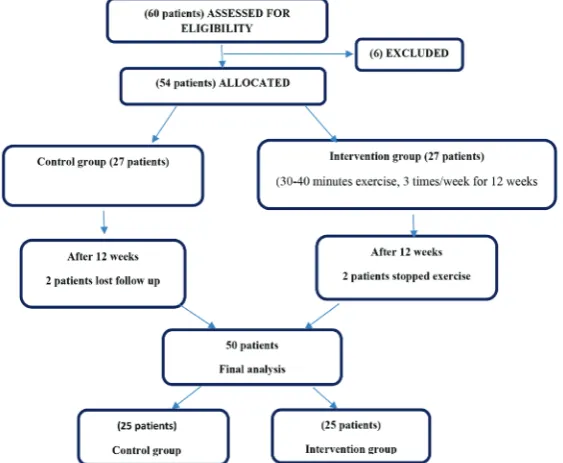
Figure 1 illustrates participating patients, their follow up and dropout through the study. Data for 50 patients (25 patients in intervention group and 25 in control group) were available for the final analysis. Demographic data
of the study population was illustrated in Table 1.
There was significant reduction in mean values of
weight, BMI, waist circumference, hip circumference and waist to hip ratio at the end of the study compared to the baseline in the intervention group, while in control
group there were no significant differences comparing
baseline and end of the study values. There were also
Figure 1: Flow diagram illustrating participating patients and dropout through the study.
Volume 11 | Issue 1 | March 2019
marked decrease in mean values of weight, BMI, waist circumference, hip circumference and waist to hip ratio at the end of therapy in the intervention group in comparison
with control group after the period of the study (P<0.05) (Table 2).
Lipid Profile and Body Composition
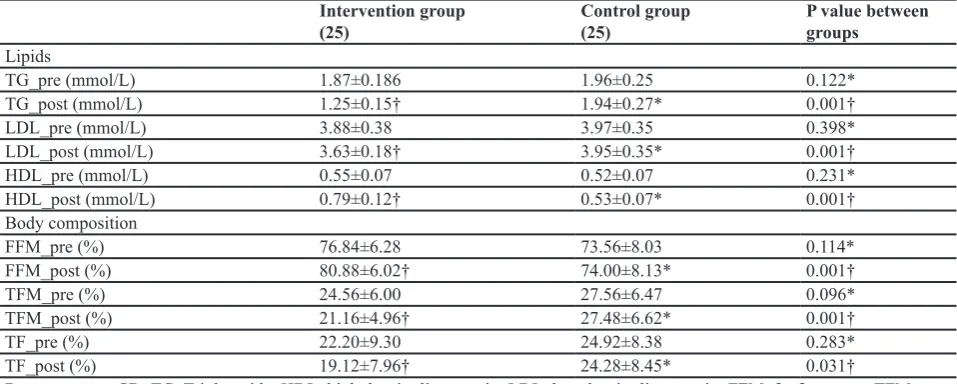
There was significant reduction in triglyceride and low
density lipoprotein levels and marked increase in high
density lipoprotein level in intervention group (P<0.05).
Regarding the body composition, the percentage of fat free mass was markedly increased while the percentage of total fat mass as well as percentage of trunk fat was
significantly reduced in intervention group in comparison to control group (P<0.05) (Table 3).
Discussion
Obesity is defined clinically as a state of increased body weight, more specifically increased fat tissue
mass. Obesity is frequently reported in subjects treated for childhood leukemia. Obesity is a major cause of impaired health and increased mortality as it is linked to higher risk of developing various chronic diseases such as cardiovascular disease, type 2 diabetes mellitus and cancer.33-35 In this randomized controlled trial, we examined the effect of supervised aerobic training Table 1: Demographic data of the case and control groups
Intervention group
(25 patients) Control group (25 patients) P value
Age (Year) 33.36±5.24 32.44±5.30 0.540*
Gender N (%)
Female 9 (36%) 8 (32%) 0.768*
Male 16 (64%) 17 (68%)
Height (m) 1.58±0.059 1.59±0.056 0.283*
Data are mean±SD; *No significant difference
Table 2: Anthropometry measures in both groups before and after 12 weeks
Intervention group
(25) Control group (25) P value between groups Weight (baseline) (Kg) 76.55±8.95 75.87±8.67 0.788*
Weight (after 12 weeks) (Kg) 69.41±7.38† 76.58±8.81* 0.003† BMI (baseline) (Kg /m2) 31.02±2.54 30.44±2.57 0.425*
BMI (after 12 weeks) (Kg /m2) 27.92±2.36† 30.12±2.76* 0.004†
WC (baseline) (cm) 99.84±9.43 97.36±9.74 0.365* WC (after 12 weeks) (cm) 87.00±6.71† 96.92±9.78* 0.001† HC (baseline) (cm) 102.48±5.41 100.89±4.91 0.284* HC (after 12 weeks) t (cm) 96.92±3.03† 100.32±5.71* 0.011† WHR (baseline) 0.98±0.108 0.97±0.11 0.761* WHR (after 12 weeks) 0.89±0.06† 0.96±0.12* 0.012†
Data are mean±SD; BMI, body mass index; WC, waist circumference, HC, hip circumference; WHR, waist hip ratio; *no significant differences; † highly significant differences
Table 3: Lipid profile and Body composition for both groups before and after 12 weeks
Intervention group
(25) Control group (25) P value between groups
Lipids
TG_pre (mmol/L) 1.87±0.186 1.96±0.25 0.122*
TG_post (mmol/L) 1.25±0.15† 1.94±0.27* 0.001†
LDL_pre (mmol/L) 3.88±0.38 3.97±0.35 0.398*
LDL_post (mmol/L) 3.63±0.18† 3.95±0.35* 0.001†
HDL_pre (mmol/L) 0.55±0.07 0.52±0.07 0.231*
HDL_post (mmol/L) 0.79±0.12† 0.53±0.07* 0.001† Body composition
FFM_pre (%) 76.84±6.28 73.56±8.03 0.114*
FFM_post (%) 80.88±6.02† 74.00±8.13* 0.001†
TFM_pre (%) 24.56±6.00 27.56±6.47 0.096*
TFM_post (%) 21.16±4.96† 27.48±6.62* 0.001†
TF_pre (%) 22.20±9.30 24.92±8.38 0.283*
TF_post (%) 19.12±7.96† 24.28±8.45* 0.031†
Data are mean±SD; TG, Triglyceride; HDL, high density lipoprotein, LDL, low density lipoprotein; FFM, fat free mass; TFM, total fat mass; TF, trunk fat; *no significant differences; †highly significant differences
program on BMI, body composition and lipid profile of
young adult leukemic survivors.
The results of the current study showed that there was marked reduction in the mean values of anthropometric measurements of weight, BMI, waist circumference, hip circumference and waist to hip ratio at the end of the study in intervention group in comparison to control group
(P<0.05). Wolin et al. reported that exercise training
for 150-250 minutes per week effectively reduces body weight. 36 It is proved that participation in eight weeks of aerobic training results in improved BMI in obese men.37 Literatures proved that aerobic exercise is a powerful weight loss strategy, especially helpful for body fat loss.38, 39
The results of the study showed a favorable lipid
profile in the intervention group at the end of 12
weeks of exercise while no changes were observed in control group. The results of the study found that
the supervised aerobic training has beneficial effects
in adult patients who were leukemia survivors. The possible explanations for this useful exercises are
suggested as the followings 1) physical exercise may
stimulate growth hormone production that is responsible for the prevention of lipid accumulation, activation of lipid mobilization and increased visceral fat mass.14
2) exercise increases catecholamine and lipoprotein
lipase activity.40, 41 3) Aerobic exercise also increases post exercise peak oxygen consumption which is closely
correlated with total fat percentage. 4) Physical exercise has beneficial effects on cancer related fatigue.42 5) Physical exercise improves sleeping pattern, improves physical performance, increases walking distance and improves psychological factors in adults with cancer.43
Wolin, et al. reported that benefits are more likely when
exercises are given at least 3 days per week for at least 10 weeks with a focus on structured or supervised aerobic activity.36 O’Hagan et al reported that moderate aerobic exercise for at least 150 minutes per week may improve risk factors for metabolic syndrome like body composition, insulin resistance and glycated haemoglobin.44 Even for low intensity exercises, intervention without diet control also improved body composition. Intsar and Kamal examined the effects of combined training
program consisting of aerobic, resistance and flexibility
in children with ALL. Their results showed decrease in weight, especially the body fat in leukemic children who underwent combined aerobic and resistance exercise programs.45
Conclusion
Twelve weeks of supervised aerobic training program can considerably reduce body weight, BMI, WC, HC and WHR in adult leukemia survivors. In addition, it
could cause a favorable change in lipid profile and body
composition.
Acknowledgement
Appreciated thank to the patients who participated in this research.
Conflict of Interest: None declared.
References
1. Gohar SF, Comito M, Price J, Marchese V. Feasibility and parent satisfaction of a physical
therapy intervention program for children with
acute lymphoblastic leukemia in the first 6 months
of medical treatment. Pediatr Blood Cancer. 2011; 56(5):799-804. doi: 10.1002/pbc.22713. PubMed PMID: 21370414.
2. Ventham JC RJ. Childhood leukaemia: a model
of pre-obesity. Proc Nutr Soc. 1999;58(2):277-81. PubMed PMID: 10466167.
3. Reilly JJ, Ventham JC, Ralston JM, Donaldson
M, Gibson B. Reduced energy expenditure in preobese children treated for acute lymphoblastic leukemia. Pediatr Res. 1998 Oct;44(4):557-62. doi: 10.1203/00006450-199810000-00015. PubMed
PMID: 9773846.
4. Reilly JJ, Brougham M, Montgomery C, Richardson
F, Kelly A, Gibson BE. Effect of glucocorticoid therapy on energy intake in children treated for acute lymphoblastic leukemia. J Clin Endocrinol Metab.
2001; 86(8):3742-5. doi: 10.1210/jcem.86.8.7764.
PubMed PMID: 11502805.
5. Shaw MP, Bath LE, Duff J, Kelnar CJ, Wallace
WHB. Obesity in leukemia survivors: The familial
contribution. Hematol Oncol. 2000; 17(3):231–7. doi:
10.1080/088800100276406.
6. Didi M, Didcock E, Davies HA, Ogilvy-Stuart AL,
Wales JKH, Shalet SM. High incidence of obesity in young adults after treatment of acute lymphoblastic
leukemia in childhood. J Pediatr. 1995; 127(1):63-7. PubMed PMID: 7608813.
7. Mayer EI, Reuter M, Dopfer RE, Ranke MB. Energy
expenditure, energy intake and prevalence of obesity after therapy for acute lymphoblastic leukemia during
childhood. Horm Res Paediatr. 2000; 53(4):193-9.
doi: 10.1159/000023566. PubMed PMID: 11044803.
8. Nysom K, Holm K, Michaelsen KF, Hertz H, Müller J, Mølgaard C. Degree of fatness after treatment for
acute lymphoblastic leukemia in childhood. J Clin
Endocrinol Metab. 1999; 84(12):4591-6. doi: 10.1210/ jcem.84.12.6205. PubMed PMID: 10599724. 9. Gustafsson G, Schmiegelow K, Forestier E, Clausen
N, Glomstein A, Jonmundsson G, et al. Improving outcome through two decades in childhood ALL in the Nordic countries: the impact of high-dose methotrexate in the reduction of CNS irradiation. Nordic Society of Pediatric Haematology and
Oncology (NOPHO). Leukemia. 2000; 14(12):2267-75. PubMed PMID: 11187918.
10. Florin TA, Fryer GE, Miyoshi T, Weitzman M, Mertens AC, Hudson MM, et al. Physical inactivity in adult survivors of childhood acute lymphoblastic leukemia: a report from the childhood cancer survivor study. Cancer Epidemiol Biomarkers Prev.
2007;16(7):1356-63. doi:
10.1158/1055-9965.EPI-07-0048. PubMed PMID: 17627001.
11. Thornton J. Overcoming protected child syndrome. kids, exercise, and chronic illness. Phys Sportsmed.
1997; 25(11):97-100. doi: 10.3810/psm.1997.11.1448.
Volume 11 | Issue 1 | March 2019
PubMed PMID: 20086876.
12. Borer KT. The effects of exercise on growth. Sport
Med. 1995; 20(6):375-97. doi:
10.2165/00007256-199520060-00004. PubMed PMID: 8614759.
13. Jenney ME, Faragher EB, Jones PH, Woodcock A.. Lung function and exercise capacity in survivors
of childhood leukemia. Med Pediatr Oncol. 1995; 24(4):222-30. PubMed PMID: 7700166.
14. van der Does-van den Berg A, de Vaan GA, van
Weerden JF, Hählen K, van Weel-Sipman M,
Veerman AJ. Late effects among long-term survivors of childhood acute leukemia in the Netherlands: a
Dutch childhood leukemia study group report. Pediatr Res. 1995; 38(5):802-7. Doi:
10.1203/00006450-199511000-00027. PubMed PMID: 8552452 .
15. Bjorntorp P. The regulation of adipose tissue
distribution in humans. Int J Obes Relat Metab Disord. 1996; 20(4):291-302. PubMed PMID: 8680455.
16. Birkebaek NH, Clausen N. Height and weight pattern up to 20 years after treatment for acute lymphoblastic
leukaemia. Arch Dis Child. 1998; 79(2):161-4. PubMed PMID: 9797600.
17. Uruena M,Stanhope R,Chessells JM LA. Impaired pubertal growth in acute lymphoblastic leukaemia.
Arch Dis Child. 1991; 66(12):1403-7. PubMed PMID:
1776886.
18. Mertens AC, Yasui Y, Liu Y, Stovall M, Hutchinson R, Ginsberg J, et al. Pulmonary complications in survivors of childhood and adolescent cancer: a report from the Childhood Cancer Survivor Study. Cancer.
2002; 95(11):2431-41. doi: 10.1002/cncr.10978.
PubMed PMID: 12436452.
19. Maffeis C, Tatò L. Long-term effects of childhood
obesity on morbidity and mortality. Horm Res. 2001;
55 Suppl 1:42-5. doi: 10.1159/000063462. PubMed
PMID: 11408761.
20. Cohen LE. Endocrine late effects of cancer treatment. Endocrinol Metab Clin North Am. 2005
Sep;34(3):769-89. doi: 10.1016/j.ecl.2005.04.008.
PubMed PMID: 16085170.
21. Bellizzi KM, Rowland JH, Arora NK, Hamilton AS, Miller MF, Aziz NM. Physical activity and quality of life in adult survivors of non-Hodgkin’s
lymphoma. J Clin Oncol. 2009; 27(6):960-6. doi: 10.1200/JCO.2008. PubMed PMID: 19139438.
22. Meyerhardt JA1, Giovannucci EL, Ogino S, Kirkner GJ, Chan AT, Willett W, et al. Physical activity and male colorectal cancer survival. Arch
Intern Med. 2009; 169(22):2102-8. doi: 10.1001/ archinternmed.2009.412. PubMed PMID: 20008694.
23. Loprinzi PD, Lee H. Rationale for promoting physical activity among cancer survivors: literature review and
epidemiologic examination. Oncol Nurs Forum.2014; 41(2):117-25. doi: 10.1188/14.ONF.117-125. PubMed PMID: 24578072.
24. Fehr HG, Lotzerich H, Michna H.. The influence of
physical exercise on peritoneal macrophage functions: histochemical and phagocytic studies. Int J Sports
Med. 1988; 9(1):77-81.doi: 10.1055/s-2007-1024983.
PubMed PMID: 3366525.
25. Morris FL, Naughton GA, Gibbs JL, Carlson JS,
Wark JD. Prospective ten-month exercise intervention in premenarcheal girls: positive effects on bone and
lean mass. J Bone Miner Res. 1997; 12(9):1453-62.
doi: 10.1359/jbmr.1997.12.9.1453. PubMed PMID: 9286762.
26. Ball EJ, O’Connor J, Abbott R, Steinbeck KS, Davies
PS, Wishart C, et al. Total energy expenditure, body
fatness, and physical activity in children aged 6-9 y. Am J Clin Nutr. 2001; 74(4):524-8. PubMed PMID:
11566652.
27. Gutin B, Cucuzzo N, Islam S, Smith C, Moffatt R, Pargman D. Physical training improves body composition of black obese 7- to 11-year-old girls.
Obes Res. 1995; 3(4):305-12. PubMed PMID: 8521146.
28. Owens S, Gutin B, Allison J, Riggs S, Ferguson M, Litaker M, et al. Effect of physical training on total and visceral fat in obese children. Med Sci Sports
Exerc. 1999; 31(1):143-8. PubMed PMID: 9927022. 29. GraphPad Software 2018 [https://www.graphpad.
com/quickcalcs/index.cfm].
30. Snijder MB, van Dam RM, Visser M, Seidell JC. What aspects of body fat are particularly hazardous
and how do we measure them? Int J Epidemiol. 2006; 35(1):83-92. doi: 10.1093/ije/dyi253. PubMed PMID: 16339600.
31. Whaley M, Kaminsky LA, Dwyer GB, Getchell LH, Norton JA. Predictors of over and under achievement of age predicted maximal heart rate. J Med Scien
Sport Exerc. 1996; 24(10):1173-9. PubMed PMID:
1435167.
32. Ogden C, Flegal KM, Carroll MD, Johnson CL.. Prevalence and trends in overweight among US
children and adolescents, 1999-2000. JAMA. 2002; 288(14):1728-32. PubMed PMID: 12365956.
33. Jarfelt M, Lannering B, Bosaeus I, Johannsson G, Bjarnason R. Body composition in young adult survivors of childhood acute lymphoblastic
leukaemia. Eur J Endocrinol. 2005; 153(1):81-9. doi: 10.1530/eje.1.01931. PubMed PMID: 15994749.
34. Haslam DW, James WP. Obesity. Lancet.
2005; 366(9492):1197-209. doi:
10.1016/S0140-6736(05)67483-1. PubMed PMID: 16198769.
35. Visscher TL, Seidell JC. The public health impact
of obesity. Annu Rev Public Heal. 2001; 22:355-75.
doi: 10.1146/annurev.publhealth.22.1.355. PubMed
PMID: 11274526.
36. Wolin KY, Ruiz JR, Tuchman H, Lucia A. Exercise in adult and pediatric hematological cancer survivors:
an intervention review. Leukemia. 24(6):1113-20.
doi: 10.1038/leu.2010.54. doi: 10.1038/leu.2010.54.
PubMed PMID: 20410923.
37. Shenbagavalli A, Mary RD.. Effect of Aerobic
Training on Body Mass Index on Sedentary Obese
Men. J Exerc Sci Physiother. 2008; 4(2):125–8.
38. Goodpaster BH, Delany JP, Otto AD, Kuller L, Vockley J, South-Paul JE, Thomas SB, Brown J,
McTigue K, Hames KC, Lang W JJ. Effects of diet and physical activity interventions on weight loss and cardiometabolic risk factors in severely obese adults:
a randomized trial. JAMA. 2010;304(16):1795–802. 39. Donnelly JE, Blair SN, Jakicic JM, Manore MM,
Rankin JW SB. American College of Sports Medicine position stand. Appropriate physical activity intervention strategies for weight loss and prevention of weight regain for adults. Med Sci Sport Exerc.
2009;41(2):459–71.
40. Boutcher SH. High-intensity intermittent
exercise and fat loss. J Obes. 2011; 868305. doi:
10.1155/2011/868305.
41. Kindermann W, Schnabel A, Schmitt WM, Biro G, Cassens J, Weber F. Catecholamines, growth hormone, cortisol, insulin, and sex hormones in anaerobic and aerobic exercise. Eur J Appl Physiol Occup Physiol.
1982; 49(3):389–99. PubMed PMID: 6754371.
42. Dimeo F, Stieglitz RD, Novelli-Fischer U, Fetscher
S, Keul J. Effects of physical activity on the fatigue
and psychologic status of cancer patients during
chemotherapy. Cancer. 1999; 85(10):2273-7. PubMed PMID: 10326708.
43. Courney KS. Exercise interventions during cancer treatment: biopsychosocial outcomes. Exerc Sport
Sci Rev. 2001; 29(2):60–4. PubMed PMID: 11337824.
44. O’Hagan C, De Vito G, Boreham CA. Exercise prescription in the treatment of type 2 diabetes mellitus: current practices, existing guidelines and
future directions. Sport Med. 2013; 43(1):39-49. doi: 10.1007/s40279-012-0004-y. PubMed PMID:
23315755.
45. Intsar SW, Kamal SA. Bone mineral density, lean body mass and bone biomarkers following physical exercise in children with acute lymphoblastic leukemia undergoing chemotherapy intsar. Iran J
Blood Cancer. 2018; 10(3):69-75.