Research Paper:
Effects of Lower Limbs Kinesio Taping
on Balance Ability in Children With Cerebral Palsy: A Pilot
Randomized Clinical Trial
Mirjavad Tabatabaee1 , Alireza Shamsoddini1* , Moslem Cheraghifard2
1. Exercise Physiology Research Center, Baqiyatallah University of Medical Sciences, Tehran, Iran.
2. Department of Occupational Therapy, School of Rehabilitation Sciences, Iran University of Medical Science, Tehran, Iran.
* Corresponding Author:
Alireza Shamsoddini, PhD.
Address: Exercise Physiology Research Center, Baqiyatallah University of Medical Sciences, Tehran, Iran. Tel: +98 (21) 82482402
E-mail: [email protected]
Objectives: Cerebral Palsy (CP) is a non-progressive brain damage that leads to movement and balance disorders. One of the new rehabilitation approaches for such children is Kinesio
taping. The present study aimed to investigate the effect of lower limbs kinesio taping on static
and dynamic balance in children with CP.
Methods: In this pilot randomized clinical trial, 30 children with CP were randomly classified
into two control and intervention groups each containing 15 subjects. In the intervention group, Kinesio tape was applied with 30% tension on anterior muscles of lower limbs. However, in
the control group, Kinesio tape was used just in a sham mode. In both groups, Kinesio tape was used along with occupational therapy interventions for two weeks. Berg Balance Scale (BBS) and forward Functional Reach (FR) tests were used before, two days, and two weeks after intervention. Two-way repeated measures ANOVA was used to study the intervention effects, within-group data were analyzed with the paired t-test, and between-group effects were assessed using independent t-test.
Results: Short term results (two days after intervention) indicated no significant difference between the scores of BBS (P=0.7) and FR (P=0.08) in the intervention group, and BBS (P= 0.8) and FR (P=0.1) in the control group. Long term results indicated a significant change in BBS (P<0.001) and FR (P<0.001) in the intervention group, however, no significant changes were observed in FR (P=0.1) and BBS (P=0.8) in the control groups.
Discussion: Application of Kinesio tape on lower limbs of children with CP improved their balance. Therefore, this method can be used in rehabilitation clinics for functional improvement of children with Cerebral Palsy.
A B S T R A C T
Article info:
Received: 12 Aug 2018
Accepted: 23 Jan 2019
Available Online: 01 June 2019
Keywords:
Cerebral Palsy, Postural
balance, Kinesio tape
Citation Tabatabaee M, Shamsoddini A, Cheraghifard M. Effects of Lower Limbs Kinesio Taping on Balance Ability in Children With Cerebral Palsy: A Pilot Randomized Clinical Trial. Iranian Rehabilitation Journal. 2019; 17(2):157-164. http:// dx.doi.org/10.32598/irj.17.2.157
: http://dx.doi.org/10.32598/irj.17.2.157 Use your device to scan
Highlights
● Lower-limb Kinesio taping can improve balance ability in children with Cerebral Palsy.
● Long-term application of Kinesio taping is more effective for improving balance than its short-term use.
Plain Language Summary
Cerebral Palsy (CP) is a group of permanent movement disorders that appear in early childhood. CP is caused by
abnormal development or damage to some parts of the brain that control movement, balance, and posture. One con -tributing factor to children’s problems with gait and reaching movement is poor balance control ability. Kinesio taping
technique is a relatively new technique applied in rehabilitation programs of CP. The present study aimed to investigate the effect of lower-limb Kinesio taping on the balance ability of children with CP. The result shows that lower-limb
Kinesio taping can improve balance ability in children with CP, especially its long-term application.
1. Introduction
erebral palsy is defined as a non-progres -sive brain damage caused by abnormal brain development and brain injuries
be-fore, during, or after birth [1, 2]. Statistics
indicate that 70% to 80% of patients with Cerebral Palsy have spastic type of it; they experience
movement and balance problems [3, 4]. In children with
Cerebral Palsy, altered muscle function causes balance
problems, making it difficult for the person to stand and walk [4]. Due to permanent tension of muscles in such
patients, they have permanent spasticity.
These conditions along with other complications make a kind of immobility. Therefore, muscular function and strength do not have a linear relationship with aging
and gaining weight [5]. Since balance is the last stage
of cortical growth in children, spastic Cerebral Palsy is
followed by more balance and movement disorders [3,
6,7]. Balance has two static and dynamic modes. Static
balance is referred to the ability of body in maintaining
and controlling center of gravity within a specifically supported range and keeping its standing position via
feet [8-10]. Weak static balance causes movement limi
-tations followed by reduced ability of understanding the
surroundings, communicating with family members and friends [11-15].
Dynamic balance disorder creates functional problems
for daily activities [16]. Successive falls caused by pa
-resis and disability of the person to control posture fluc
-tuations along with static and dynamic balance control
are some prevalent complications of dynamic balance
disorder [17]. Balance is one of the main components
of movement and increases functional skills [18]. Reac
-tions of static and dynamic balance are weaker in chil
-dren with Cerebral Palsy [19]. Children with spastic
Cerebral Palsy have abnormal muscle tone and status control, both of which affect functional balance [20].
Functional balance is one of the components of status stability that makes it possible for the children to act in -dependently in all the daily and social activities in home,
school, and society. Functional balance should be evalu
-ated in order to understand whether the child is indepen
-dent in his/her daily activities or not [21]. Children with
Cerebral Palsy have low physical activity; therefore,
they experience some disorders in their daily activities
such as independent walking, climbing stairs, and run
-ning. Stature control and balance are significant com
-ponents of functional movement in sitting and standing activities, and walking [22].
According to the significance of balance function and its effects on individual functions, communication with
the society and independence, it can be said that balance
disorders are considered as one of the most important
challenges for the children and rehabilitation of such
dis-orders is the main goal of physiotherapists and occupa
-tional therapists [23].
Kinesio tape is a new technique applied by an elastic tape called Kinesio Flex Tape [13]. This tape stimulates peripheral sensory system of the skin. This sensory sys -tem is related to pains, movement control, and
proprio-ception [24] and can improve proprioception and weak
muscles, and reduce edema and muscle spasms [25].
A case study by Losa (2015) indicated that using Kine
and dynamic balance [26]. Yasukawa claimed that Kine
-sio tape stimulates sensory-movement system and, con -sequently, voluntary control and coordination of phys-iotherapy programs of children with Cerebral Palsy is
improved [12]. Sliwinsky (2007) indicated that Kinesio
tape controls muscle tone and directly improves
move-ment activities of the patients [27]. The studies showed
that KT technique as part of a multimodal therapy
pro-gram can affect the rehabilitation of children with CP to
improve motor function and dynamics [28].
There are some limitations in such insufficient studies
conducted on the balance and reduced life quality of the
pa-tients. But to date, no study specifically examined the effect of the kinesio taping on the dynamic and static balance of children with CP. Therefore, the present study aimed at in
-vestigating the effect of lower limbs kinesio taping on static
and dynamic balance in children with Cerebral Palsy.
2. Methods
The current Randomized Clinical Trial (IRCT2017082135822N1) was conducted on 30 chil
-dren with spastic diplegia and quadriplegia and Cere -bral Palsy, aged 3-10 referred to Tavanafarin and Nasim rehabilitation clinics in Tehran, Iran, from November
2017 to May 2018 and subjects were randomly divided into intervention and control groups. The current study was approved by the Human Research Ethics Commit
-tee of the Baqiyatallah University of Medical Sciences (ethical code: IR.BMSU.REC.1396.526).
All patients' parents signed the informed consent form
and offered the opportunity to ask any questions regard
-ing the study procedures. Inclusion criteria of the study were: 1. Diagnosis of spastic diplegia and quadriplegia Cerebral Palsy by neurologist; 2. Minimum walking ability; 3. Ability of understanding and executing the orders; 4. Age from 4 to 10 years old; 5. No other medi
-cal interventions; and 6. No genu recurvate.
The children receiving simultaneous interventions or with sensitivity toward taping were excluded from the
study. The participants were classified into two 15-pa
-tient intervention and control groups. Then, the specified tests and evaluations were performed by the researcher
in the clinic. Kinesio tape was used as a treatment tool in the intervention group, and as a sham tool in the control group. Moreover, both groups used physiotherapy and occupational treatment along with Kinesio tape. The
re-searcher was trained by workshops to use Kinesio tapes.
Taping was applied on ankles and tibialis muscles to improve dorsi flexion, on rectus femoris to improve knee extension, and on hamstring muscles to inhibit knee flex -ion. Therefore, the applied tension was from the begin-ning to the end of muscle. However, in inhibitory ac-tions, it was applied from the end toward the beginning
of the muscle. Moreover, for tape muscle modification,
the muscle was tensioned up to 30% of the primary
length, and for function modification up to 100% of the
primary length of the muscle [12].
In kinesio taping, the child bends slightly from the trunk to make in the paravertebral muscles stretch [26]. Taping
was done for 14 days, 24 hours a day, on both feet, and was changed every four days. The tests and evaluations
were performed in the intervals of before taping, two
days after taping, and 14 days after taping, which meant at the end of interventions. Functional balance was tested via Berg balance scale including 14 items evaluated in an answer range of 0-4 for each item. Reliability of this test
was reported 95% by Azad et al. [29].
Forward functional reach tests individual’s balance while standing near a wall and stretches the hands. Therefore, the extent of stretching of the hand, evaluated by yardstick, was recorded. Duncan and Stevensky indi
-cated that functional access test had a concurrent validity
in balance evaluation [30].
Data analyses
Shapiro-wilk test was employed to evaluate normal distribution of the data. It was indicated that the vari
-ables of the current study had a normal distribution. To compare the variables of each group, paired t-test was
used before and after intervention, and for comparison
of intervention data in two different groups, independent t-test was used at two separate times. Also, the effects
of time (before, after 2 days, at the end) and groups
(in-tervention or control) and their interactive effects were estimated by two-way repeated measures ANOVA. Data were analyzed with SPSS V. 20 software (P<0.05).
3. Results
Totally, the current study recruited 30 patients with Cerebral Palsy (18 males and 12 females). Average
age of participants was seven years in the intervention
group, and 6.93 years in the control group. There were 10 male and five female subjects in the interventions
group, and eight male and seven female subjects in the control group. In both groups, 53.3% of the participants
means and standard deviations of FR and BBS tests of both groups in different times. In the primary evalua
-tion, result of independent t-test showed, no significance difference between FR scores of each group (P=0.6). It was the case for BBS scores as well (P=0.1).
Table 2 presents ANOVA results for the estimated vari
-ables. The main effects of time (before, after 2 days, and after two weeks) and interaction between time and group (group×time) were significant for both variables. How
-ever, the main effects of groups (intervention, control) were not significant for any of the variables. Results of independent t-test showed no significant difference be
-tween groups in second (P=0.882) and third evaluations in FR scores (P=0.120). Triple evaluations, performed on changes of each group using paired t-test, indicated no significant difference between the first and second evalu
-ations of FR scores in the intervention group (P=0.082),
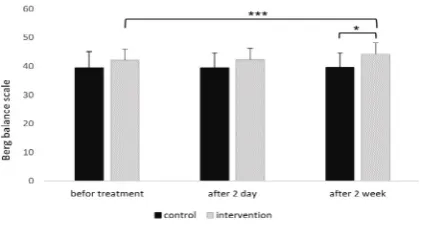
Table 1. Mean±SD of Berg Balance scale and functional reach in the two groups
Time Group
Variable
After 2 Weeks After 2 Days
Before
44.13±5.26 42.20±5.34
42.13±5.71
Intervention
Berg Balance Scale
39.40±4.01 39.40±4.01
39.40±3.86
Control
20.60±2.50 18.86±2.77
18.66±2.66
Intervention Functional reach
19.33±1.75 19.06±1.98
19.06±1.86
Control
Table 2. Summary of analysis of variance in the two groups
P f
Effects Variables
<0.001 20.88
Time
Berg Balance scale Group 0.392 0.058
<0.001 20.88
Time×group
<0.001 54.63
Time
Functional reach Group 0.072 0.790
<0.001 30.57
Time×group
Figure 1. The results of one comparison of means
The results of one comparison of means were significant (P<0.01) and are shown by stars.
Figure 2. The interaction plot of groups by time of measur-ing dynamic balance
however, a significant difference was observed before and after intervention evaluations (P<0.001).
In the control group, no significant difference was ob
-served between the first and second evaluations (P=0.1), and first and third evaluations (P=0.1) (Figure 1). Results of independent t-test also showed no significant differ
-ence between groups in the second (P=0.116) evalua
-tion but significant difference in the third evalua-tion in BBS scores between the intervention and control groups (P=0.01). Paired t-test showed no significant difference between the first and second evaluations of BBS scores in the intervention group (P=0.774), however, a signifi
-cant difference was observed between the first and third evaluations of the intervention groups (P<0.001). In the control group, no significant difference was observed be
-tween the first and second evaluations (P=0.8) and with the first and third evaluations (P=0.8) (Figure 2).
4. Discussion
The current study aimed at analyzing the effects of Ki
-nesio tape on static and dynamic balance of children with spastic Cerebral Palsy in three intervals of before, two days after, and two weeks after the start of interventions. After two days, results indicated no significant change in the static and dynamic balance, however, a significant change was observed after two weeks of interventions.
It indicated that the variables were improved by Kinesio tape through this time.
Children with spastic Cerebral Palsy have problems in their movements and balance. Weak balance causes
some limitations in movement ability and is followed
by reduced ability of understanding the surroundings,
and communicating with family members and friends [15, 31]. It can be inferred that Kinesio tape applies a
reinforcement tension on ankles and knees in order to improve walking position and the contact of feet with
ground [32, 33]. Therefore, this can lead to improved
balance in children with Cerebral Palsy. On the other hand, Kinesio tape induces central nervous sensory
sys-tem, and in this regard, adjusts muscle functions and
spatial-temporal reactions, which consequently leads to
reduced postural fluctuations and improved balance [34].
Da Costa et al. conducted a study on instantaneous ef
-fects of Kinesio tape for up standing movements, balance,
and dynamic control of four children with left hemiplegia.
Their results indicated reduced up standing time and timed up and go, which were consistent with the current study
results. Comparison before and after intervention balances
indicated no significant difference which was not consis
-tent with the current study results. The researchers con
-cluded that neuromuscular tape was effective in dynamic activities, but not in static activities [35].
Pour Momeni et al. analyzed the effects of Kinesio tape on balance and spasticity of patients with stroke. During the study, Kinesio tape was used for both groups for one hour. Intergroup results indicated that the Timed Up and Go test (TUG) score and gastrocnemius muscle tone re
-duced significantly. The intergroup comparison indicat
-ed that Kinesio tape was more effective on patients with stroke that had left hemiplegia. These results were con
-sistent with those of the study [36]. Kaya et al. analyzed
the effects of Kinesio tape on functions and activities of children with spastic Cerebral Palsy. They concluded
that Kinesio taping technique is an alternative approach to improve proprioception, movement functions, and
daily activities of children with Cerebral Palsy [37].
Cortesi et al. used Kinesio tape on gastrocnemius mus
-cles of patients with MS. This technique significantly reduced the fluctuations and improved balance in such
patients [38]. In another research, consistent with the
current study, Losa claimed that Kinesio tape is a posi
-tive forward step toward rehabilitation of children with Cerebral Palsy and can improve their static and dynamic
balance [26]. Losa et al. proved that using Kinesio tape
for ankles and knees of children with Cerebral Palsy can improve their balance and walking. These results were consistent with those of the current study. However, the analysis of spasticity and movement range in the current study indicated that Kinesio tape had no significant ef -fect on them [39].
The small sample size may be considered a potential
limitation for the current study findings inference. More -over, a follow-up is required to evaluate the maintenance
effectiveness of Kinesio tape on static and dynamic bal
-ance in children with Cerebral Palsy. Lack of evaluat
-ing the independence in activities us-ing tests such as
functional independence measure to evaluate transfer of
learning was another limitation of the current study.
5. Conclusion
Based on the results of the current study (long term af
-fectability) and other researches, Kinesio tape is effec
-tive on children with spastic diplegia and quadriplegia
Cerebral Palsy and can improve their balance. There-fore, Kinesio tape can be used as an alternative method
to rehabilitate and treat children with spastic diplegia and
Ethical Considerations
Compliance with ethical guidelines
The current study was approved by the Ethics Commit
-tee of Baqiyatallah University of Medical Sciences (code: IR.BMSU.REC.1396.521). A biographical form was filled
by the patient, and an ethical approval form was signed by the patient’s companion.
Funding
The study was conducted with the financial support of Ex
-ercise Physiology Research Center, Life Style Institute, Baqi
-yatallah University of Medical Sciences, Tehran, Iran.
Authors' contributions
Conceptualization: Mirjavad Tabatabaee, Alireza
Shamsoddini; Methodology: Alireza Shamsoddini, Mir
-javad Tabatabaee, Moslem Cheraghifard; Investigation: Mirjavad Tabatabaee; Writing original draft: Mirjavad Tabatabaee, Moslem Cheraghifard; Data analysis: Mos
-lem Cheraghifard; Review & editing: Alireza Shamsod
-dini, Moslem Cheraghifard; and Supervision: Alireza Shamsoddini.
Conflict of interest
The authors declare no conflict of interest
References
[1] A’sgari T, Hadian MR, Nakhostin-Ansari N, Abdolvahhab M, Jalili M, Faghih-Zadeh S. [Berg balance scale reliability for evaluation in children with spastic diplegia (Persian)]. Ar-chives of Rehabilitation. 2007; 8(2):13-6.
[2] Hadian MR, Nakhostin Ansari N, Asgari T, Abdolvahab M, Jalili M. [Inter & intra rater reliability of Berg Balance scale for evaluation of the balance in children with spastic hemieplegia (Persian)]. Journal of Modern Rehabilitation. 2007; 1(2):31-7.
[3] Graham HK, Selber P. Musculoskeletal aspects of Cerebral Palsy. The Journal of Bone and Joint Surgery British Volume. 2003; 85(2):157-66. [DOI:10.1302/0301-620X.85B2.14066]
[4] Stanley FJ, Blair E, Alberman E. Cerebral palsies: Epidemiol-ogy and causal pathways. Cambridge: Cambridge University Press; 2000.
[5] Panteliadis CP, Darras BT. Encyclopaedia of paediatric neu-rology: Theory and practice. Stuttgart: Thieme Medical Pub-lishers; 1999.
[6] Kembhavi G, Darrah J, Magill-Evans J, Loomis J. Using the berg balance scale to distinguish balance abilities in
chil-dren with Cerebral Palsy. Pediatric Physical Therapy. 2002; 14(2):92-9. [DOI:10.1097/00001577-200214020-00005] [PMID]
[7] Hayes MS, McEwen IR, Lovett D, M’lisa MS, Smith DW. Next step: Survey of pediatric physical therapists’ educational needs and perceptions of motor control, motor development and motor learning as they relate to services for children with developmental disabilities. Pediatric Physical Therapy. 1999; 11(4):164-82. [DOI:10.1097/00001577-199901140-00002]
[8] Steultjens EM, Dekker J, Bouter LM, van de Nes JC, Cup EH, van den Ende CH, et al. Occupational therapy for stroke patients: When, where, and how? Stroke. 2003; 34(3):676-87. [DOI:10.1161/01.STR.0000057576.77308.30] [PMID]
[9] Mazzone S, Serafini A, Iosa M, Aliberti M, Gobbetti T, Paolucci S, et al. Functional taping applied to upper limb of children with hemiplegic Cerebral Palsy: A pilot study. Neuropediatrics. 2011; 42(06):249-53. [DOI:10.1055/s-0031-1295478] [PMID]
[10] Franjoine MR, Darr N, Held SL, Kott K, Young BL. The performance of children developing typically on the pediatric balance scale. Pediatric Physical Therapy. 2010; 22(4):350-9. [DOI:10.1097/PEP.0b013e3181f9d5eb] [PMID]
[11] Amirsalari S, Dalvand H, Dehghan L, Feizy A, Hosseini SA, Shamsodini A. [The efficacy of botulinum toxin type A injection in the hamstring and calf muscles with and with-out serial foot casting in gait improvement in children with Cerebral Palsy (Persian)]. Tehran University Medical Journal. 2011; 69(8):509-17.
[12] Yasukawa A, Patel P, Sisung C. Pilot study: Investigating the effects of Kinesio Taping® in an acute pediatric rehabilita-tion setting. American Journal of Occuparehabilita-tional Therapy. 2006; 60(1):104-10. [DOI:10.5014/ajot.60.1.104] [PMID]
[13] Taylor RL, O’brien L, Brown T. A scoping review of the use of elastic therapeutic tape for neck or upper extrem-ity conditions. Journal of Hand Therapy. 2014; 27(3):235-46. [DOI:10.1016/j.jht.2014.03.004] [PMID]
[14] Skirven TM, Osterman AL, Fedorczyk J, Amadio PC. Reha-bilitation of the hand and upper extremity, 2-volume set e-book: Expert consult. Amsterdam: Elsevier Health Sciences; 2011.
[15] Harada N, Chiu V, Damron-Rodriguez J, Fowler E, Siu A, Reuben DB. Screening for balance and mobility impairment in elderly individuals living in residential care facilities. Physical Therapy. 1995; 75(6):462-9. [DOI:10.1093/ptj/75.6.462] [PMID]
[16] Bell KJ, Õunpuu S, DeLuca PA, Romness MJ. Natu-ral progression of gait in children with CerebNatu-ral Palsy. Journal of Pediatric Orthopaedics. 2002; 22(5):677-82. [DOI:10.1097/00004694-200209000-00020] [PMID]
[17] Charles J, Gordon AM. A critical review of constraint-induced movement therapy and forced use in children with hemiplegia. Neural Plasticity. 2005; 12(2-3):245-61. [DOI:10.1155/NP.2005.245] [PMID] [PMCID]
[18] Cherng RJ, Su FC, Chen JJ, Kuan TS. Performance of static standing balance in children with spastic diplegic Cerebral Palsy under altered sensory environments. American Jour-nal of Physical Medicine & Rehabilitation. 1999; 78(4):336-43. [DOI:10.1097/00002060-199907000-00008]
[20] Pountney TE, Mulcahy C, Green E. Early development of postural control. Physiotherapy. 1990; 76(12):799-802. [DOI:10.1016/S0031-9406(10)63184-7]
[21] Chen CL, Shen IH, Chen CY, Wu CY, Liu WY, Chung CY. Validity, responsiveness, minimal detectable change, and minimal clinically important change of Pediatric Bal-ance Scale in children with Cerebral Palsy. Research in De-velopmental Disabilities. 2013; 34(3):916-22. [DOI:10.1016/j. ridd.2012.11.006] [PMID]
[22] Iosa M, Fusco A, Morone G, Pratesi L, Coiro P, Venturi-ero V, et al. Assessment of upper-body dynamic stability during walking in patients with subacute stroke. Journal of Rehabilitation Research & Development. 2012; 49(3):439-50. [DOI:10.1682/JRRD.2011.03.0057] [PMID]
[23] Allum J, Bloem B, Carpenter M, Hulliger M, Hadders-Algra M. Proprioceptive control of posture: A review of new concepts. Gait & Posture. 1998; 8(3):214-42. [DOI:10.1016/ S0966-6362(98)00027-7]
[24] Mackin EJ, Callahan AD, Osterman AL, Schneider LH, Skirven TM. Hunter Mackin callahan-rehabilitation of the hand and upper extremity. Maryland Heights: Mosby; 2002.
[25] Kuo YL, Huang YC. Effects of the application direction of Kinesio taping on isometric muscle strength of the wrist and fingers of healthy adults-a pilot study. Journal of Physical Therapy Science. 2013; 25(3):287-91. [DOI:10.1589/jpts.25.287]
[26] Iosa M. The application of Kinesio Taping in children with Cerebral Palsy. Developmental Medicine & Child Neurology. 2015; 57(1):11-2. [DOI:10.1111/dmcn.12601] [PMID]
[27] Śliwiński Z, Halat B, Kufel W, Michalak B, Kiljański M. The ef -fect of Kinesio Taping applications on motor activity in children with developmental defects. Fizjoterapia Polska. 2007; 7(1):52-62.
[28] Shamsoddini A, Rasti Z, Kalantari M, Hollisaz MT, Sobha-ni V, Dalvand H, et al. The impact of Kinesio taping techSobha-nique on children with Cerebral Palsy. Iranian Journal of Neurol-ogy. 2016; 15(4):219-27. [PMID] [PMCID]
[29] Azad A, Taghizadeh G, Khaneghini A. Assessments of the reliability of the Iranian version of the Berg Balance scale in patients with multiple sclerosis. Acta Neurologica Taiwanica. 2011; 20(1):22-8.
[30] Duncan PW, Weiner DK, Chandler J, Studenski S. Func-tional reach: A new clinical measure of balance. Jour-nal of Gerontology. 1990; 45(6):M192-M7. [DOI:10.1093/ geronj/45.6.M192]
[31] Labaf S, Shamsoddini A, Hollisaz MT, Sobhani V, Shak-ibaee A. Effects of neurodevelopmental therapy on gross mo-tor function in children with Cerebral Palsy. Iranian Journal of Child Neurology. 2015; 9(2):36-41. [PMID] [PMCID]
[32] Booth B, Doyle M, Montgomery J. Serial casting for the man-agement of spasticity in the head-injured adult. Physical Thera-py. 1983; 63(12):1960-6. [DOI:10.1093/ptj/63.12.1960] [PMID]
[33] Griffin JW. Use of proprioceptive stimuli in therapeutic exercise. Physical Therapy. 1974; 54(10):1072-9. [DOI:10.1093/ ptj/54.10.1072] [PMID]
[34] Shumway-Cook A. Normal postural control. Motor con-trol: Theory and practical applications. Philadelphia: Lippin-cott Williams & Wilkins; 2001.
[35] Added MAN, Costa LOP, Fukuda TY, De Freitas DG, Salomão EC, Monteiro RL, et al. Efficacy of adding the kinesio taping method to guideline-endorsed conventional physiotherapy in patients with chronic nonspecific low back pain: A randomised controlled trial. BMC Musculoskeletal Disorders. 2013; 14(1):301. [DOI:10.1186/1471-2474-14-301] [PMID] [PMCID]
[36] Jalaee F, Pourmomeni A, Karimi M, Baharlouei H. [Effects of gastronomies kinesio taping on postural control and spas-ticity in patients with chronic stroke (Persian)]. Journal of Is-fahan Medical School. 2015; 33(329):467-78.
[37] Kaya Kara O, Atasavun Uysal S, Turker D, Karayazgan S, Gunel MK, Baltaci G. The effects of Kinesio taping on body functions and activity in unilateral spastic Cerebral Palsy: A single‐blind randomized controlled trial. Developmental Medicine & Child Neurology. 2015; 57(1):81-8. [DOI:10.1111/ dmcn.12583] [PMID]
[38] Cortesi M, Cattaneo D, Jonsdottir J. Effect of Kinesio tap-ing on standtap-ing balance in subjects with multiple sclerosis: A pilot studym. NeuroRehabilitation. 2011; 28(4):365-72. [DOI:10.3233/NRE-2011-0665] [PMID]