Iranian Journal of Chemical Engineering Vol. 11, No. 4 (Autumn 2014), IAChE
Fabrication and Evaluation of Functionalized Nano-titanium
Dioxide (F-NanoTiO2)/ polysulfone (PSf) Nanocomposite
Membranes for Gas Separation
A. Dehghani Kiadehi, M. Jahanshahi, A. Rahimpour*, A. A. Ghoreyshi
School of Chemical Engineering, Babol University of Technology, Babol, Iran
Abstract
TiO2 nanoparticles were pretreated with ethelendiamine (EDA) to synthesize
amine-functionalized TiO2. The mixed matrix membranes (MMM) comprised of
amin-functionalized TiO2 inside polysulfone (PSf) matrix were fabricated and characterized
for gas separation. The effects of the amin-functionalized TiO2 loading on the gas
permeation properties of the MMM were investigated by varying the amin-functionalized TiO2 loading in the PSf matrix from 0–10 wt%. The fabricated amin-functionalized TiO2/PSf MMM were characterized by scanning electron microscopy
(SEM), Fourier Transform Infrared spectroscopy (FT/IR) and pure gas permeation test. Gas permeation measurement showed that MMMs embedded with different amount of amin-functionalized TiO2 exhibited different separation performances. For example, in
MMMs containing 10 wt% amin-functionalized TiO2, the permeability of N2, CH4, CO2
and O2 increased up to 0.69, 0.8, 3.5 and 1.1 GPU respectively. Due to the higher
interaction of amine groups on F-nano TiO2 with polar gases, amin-functionalized TiO2
possessed better performances in terms of permeability and selectivity in comparison to pure TiO2. The results revealed that the functionalization of TiO2 has improved the gas
permeability of prepared membranes.
Keywords: Gas Separation, Nanocomposite Membrane, Functionalized Nano TiO2
1. Introduction
Application of polymeric membranes in gas separation processes is growing rapidly. This is due to low capital and operating cost and low energy consumption, so improving the performance of polymeric membranes for gas separation is considered to be a dominant factor in the field of membrane technology [1]. Generally, for economic consideration, the permeability and selectivity of the membranes should be maximized for
nanoparticles such as MgO and TiO2 are
emerging materials due to their potential applications for membrane-based separation purposes. Titanium dioxide (TiO2) as a filler
has received considerable attention because of its excellent chemical and thermal stability, hydrophilicity and gas separation properties [7, 8].
Freeman et al. [9] reported that the relative permeability of PTMSP/TiO2 was improved
by increasing the free volume of polymer matrix and void formation at PTMSP–TiO2
interface. Hu et al. [8] shows that the addition of TiO2 to poly (amide–imide) in the
NCM has shown an increase in the selectivity of the gas pairs CO2/N2 and H2/N2 and the
specific interaction of CO2 and H2 with the
TiO2 domain has been considered for this.
Matteucci et al. investigated the influence of TiO2 particle on the gas transport properties
of the MMM based on both glassy [9] and rubbery polymer [10]. Upon the incorporation of TiO2 into the polymer
matrix, the dispersion of these nanoparticles was varied depending on the amount of loading. From this study, the permeability and selectivity of gas pairs consisted of CO2
and nonpolar gas appeared to increase with increasing particle loading.
The choice of suitable polymer is quite important from the view of compatibility with the inorganic fillers as well as ability to resist plasticization under aggressive feed steams. PSf is considered to be a good candidate possessing not only good thermo-mechanical strength, permeability and selectivity but is also cost effective. Its high resistance to plasticization at a pressure above 30 bar makes it suitable for membrane development [11].
One of the most important parameters in MMMs fabrication is good dispersion of nanoparticles in polymer matrix. The results of previous works show that the small sizes of particles with high specific area disperse appropriately in polymer matrices [12]. Recently, with advances in nanotechnology, addition of chemically modified or functionalized nanoparticles into polymeric materials has become a subject of considerable attention. In this advance, the inorganic particles (such as TiO2 and SiO2)
are connected with organic coatings (like amine or carboxyl) by physical and/or chemical interactions between the particles and organic modifiers. In the chemical treatment, there is a strong attachment so nanoparticles dispersion is good in polymer matrix.
In the present work, TiO2 nanoparticles were
functionalized by ethylenediamine (EDA) and the amino-functionalized TiO2
nanoparticles were blended with PSf to prepare mixed matrix membranes. The changes in the structure and gas permeability of the membranes caused by different weight ratio of F-nano TiO2 were investigated. The
single gas permeation and separation performance of gas N2, O2, CO2 and CH4
were measured.
2. Experimental
2-1. Materials
Polysulfone beads (PSf;Udel P3500, Solvay polymers) as the membrane substrates polymer and 1-Methyl-2-pyrrolidone (NMP, >99.5%, Merck, Germany) as the solvent and TiO2 (particle size of 25 nm, Degussa) as
Scharlab S. L., Spain) were used for functionalization of Nano TiO2. Oxygen (O2,
99.9999%) and nitrogen (N2, 99.9999%)
were obtained from Balon Gas Asia Co. Carbon dioxide (CO2, 99.9999%) and
methane (CH4, 99.9999%) were obtained
from Technical Gas Services, Dubai, United Arab Emirates.
2-2. Nano TiO2 functionalization
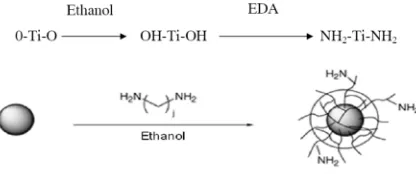
EDA was used to functionalize TiO2
nanoparticles according to the procedure shown in Fig. 1. The proper amount of the nano TiO2 was added to 50 ml ethanol and
dispersed by sonication. After that, ethylenediamine (EDA) was added to the solution [13]. Then, the solution was refluxed under stirring using magnetic stirrer equipped with reflux condenser, thermometer and oil bath for better heat distribution at 65°C for 3
h. After amination the TiO2-NH2 was filtered
with filter paper. As the final stage, the amine functionalized nano TiO2 were dried
in an oven at 80°C for 24 h to remove the
unreacted amine agent and the adsorbed water vapour or other organic vapours.
Figure 1. Schematic of amino-functionalization of nano TiO2 using a EDA
2-3. Preparation of membrane
Phase inversion induced by immersion precipitation technique was applied for preparation of mixed matrix PSf membrane
with functionalized TiO2 nanoparticles at
different concentrations (0, 2, 5 and 10 wt%). For preparation of MMMs, a predetermined mass of the nanoparticles was dissolved in NMP. This functionalized TiO2 nanoparticles
solution added to the polymer solution (20 wt%) and the mixture allowed mixing for 6 h at room temperature. The polyester non-woven fabric was attached to a clean glass plate and after 10 min sonication the dope solution was then extended on to the polyester fabric using a casting knife. The thickness of the ready membranes was between 150-175 µm. The whole composite
was immersed in the precipitation bath including DI water after a few seconds to start the phase inversion. After that, the membranes were stored in water bath for at least 1 day to leach out the residual solvents completely.
2-4. Characterization of membrane structure and surface properties
Scanning Electron Microscopy (TESCAN, operating at 15 KV) was used to observe morphology, surface structure, cross-sectional images and dispersion of TiO2
nanoparticles in the membranes. For the cross-section scanning, membranes were fractured in liquid nitrogen. Then, all samples were coated with a gold layer for observation by a sputter coater (BAL-TEC, SCDOOS). ATR–FTIR spectra of the MMMs were recorded with a WQF-510A spectrophotometer in the range of 500–4000 cm−1.
2-5. Permeation test
apparatus shown in Fig. 2. The constant pressure permeation system was used at room temperature. Before the feed side exposure to the selected gas at a specific pressure, the membranes were held under vacuum for about 5min to make a steady state. A circular sample with 28.5 cm2 effective areas (A) was cut from membranes samples and placed in the cross flow stainless steel membrane module. Digital mass flow meters measured permeate flows while the feed flow rate was controlled by a mass flow controller (ALICAT, 91260 Model). The gas permeability of membranes was calculated by solution-diffusion mechanism [12].
Figure 2. The diagram of the set-up for the permeation measurement.
The permeation coefficient is calculated by using the following equation:
p A
Q L Pi
(1)
Where Pi is the gas permeation through the
membrane, which is expressed customarily in GPU (1 GPU= 10−6 cm3 (STP)/cm2 s cm Hg); Q the gas permeation rate (cm3
(STP)/s); A the effective membrane area for
permeation (cm2); and
∆p the pressure
difference across the membrane (cm Hg) and L the membrane thickness (cm). The ideal separation factor ái,j can be estimated by
using the following equation which is the ratio of pure gas i and j permeances:
L P
L P
j i
j i,
(2)
3. Results and discussion
3-1. Functionalization of TiO2 nanoparticle
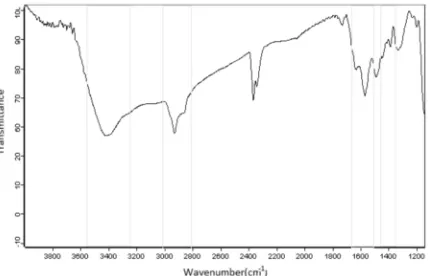
To confirm the functionalization of nano TiO2 by EDA, the FTIR spectrum of
chemically modified TiO2 nanoparticles was
shown in Fig. 3. The FTIR spectrum of pure TiO2 nanoparticles was provided elsewhere
[14]. A comparison between FTIR spectra of pure and functionalized TiO2 nanoparticles
indicated the formation bands at 2920 cm-1 (CH3) and 3409 cm-1 (OH stretching
frequency of amino groups), and 1650 cm-1
(N-H stretching vibration) which corresponded to the functional groups of EDA. The band at around 1480 cm-1 is assigned to vibration of second amine groups (C-N). These bonds prove that the amine group has been chemically attached to the TiO2 nanoparticles.
3-2. Morphology of F-TiO2 /PSf mixed-matrix
membranes
SEM was used to observe the compatibility between the sieves and polymer matrix. Fig. 4 shows the surface and cross sectional SEM images of 5 wt% F-TiO2/PSf MMM. From
cross section SEM micrograph of MMMs, the particles distributions of F-TiO2 in
MMMs were verified. As can be seen from
C
O2
Figure 3. FTIR spectrum of Functionalized-TiO2 nanoparticles.
Fig. 4, the membrane has asymmetric structure consisting of a finger-like porous as a result of the strong affinity between solvent and water in coagulation bath [1]. The surface image of this MMM (Fig. 4a) indicated that F-TiO2 particles were not
agglomerated and well distributed along the surface of the PSf matrix. The cross sectional image (Fig. 4b) of the same MMM also discovered that F-TiO2 particles were well
dispersed throughout the PSf matrix. Because of the affinity between the PSf matrix and F-TiO2 particles, there were no interface voids
or sieve in matrix morphology. Amine group could be used to bond polymer chains onto the F-TiO2 surface, thus increasing good
correlation between the TiO2 and the bulk
polymer phase. In order to investigate the morphological structure of F-TiO2/PSf
MMM at different F-TiO2 loading, the SEM
images were carefully examined (Fig. 5). The surface image of 2 wt% F-TiO2/PSf MMM
indicated that F-TiO2 particles were well
dispersed throughout the PSf matrix (Fig. 5a). No evidence of particles agglomeration or interface void can be found through these images, thus good agreement was suggested between the PSf matrix and F-TiO2 particles.
As the TiO2 loading was further increased up
to 10 wt% (Fig. 5c), the titanium dioxide tends to agglomerate and is not well dispersed throughout the PSf matrix. Furthermore, the defects and interface voids around the TiO2 agglomerates could also be
found on the surface of this MMM (Fig. 5c). The interface voids are dependent on the content of F-TiO2. These voids increased
with increasing F-TiO2 loading ratio. For
instance at 2 wt% of F-TiO2, there were no
interface voids while in the case of 10 wt%, the voids have been observed.
Figure 4. SEM photographs of F-TiO2 (5 wt%) /PSF mixed matrix membrane embedded with amine functionalized TiO2 (a) surface image (b) cross section image.
Figure 5. SEM images of surface of F-TiO2/PSf MMM at different TiO2 loading: (a) 2 wt% F-TiO2; (b) 5 wt% F-TiO; (c) 10 wt% F-TiO.
(a)
(b)
(b)
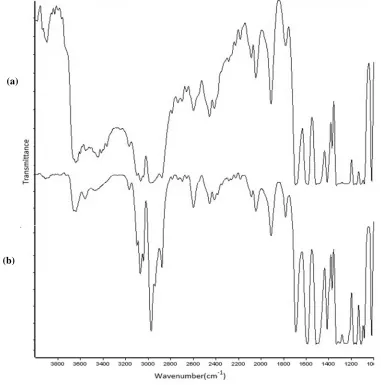
Fig. 6 presents ATR–FTIR spectra of the F-TiO2/PSf mixed matrix membrane with
different filler loading. The spectral of F-TiO2/PSf mixed matrix membrane exhibits
some characteristic absorption peaks of EDA, which means the particles were successfully modified by EDA. In the spectra of mixed matrix membranes, the bands at around 2900 cm−1 belong to methyl group [
– (CH) n–] [15, 16]. The band at 1658 cm-1 is assigned to vibration of amine groups (C-N) in the mixed matrix membranes, which is attributed to functionalization of TiO2. The
band at around 3450 cm−1 is assigned to
vibration of amine bands which overlapped with the OH band at around 3409 cm-1 [17]. Additionally, the intensity of peaks increases with increasing F-TiO2 loading in polymer
matrix. The presence of amine groups into polymer matrix can affect the gas permeability. CO2 molecules interact with
the polar and electronegative groups in the main chain of polymer, during permeation. Therefore, the strong interaction between CO2 molecules and amine groups on the TiO2
surface is one of the important reasons for higher CO2 permeability [18, 19].
Figure 6. FTIR spectra of F-TiO2 /PSf mixed matrix membrane: (a) 5 wt%; (b) 10 wt% (b)
3-3. Gas permeability and selectivity of F-TiO2
/PSf mixed matrix membrane
In order to investigate the effect of F-TiO2
loading on the MMM gas separation performance, F-TiO2/PSf MMM with
different F-TiO2 loadings were fabricated.
For comparison, neat PSf membranes and TiO2/PSf were also prepared with the same
procedure. The single gas permeation experiments showed that the permeability of all gases increased with TiO2 nanoparticles
loading from 0 wt% to 10 wt%. This increase might be due to the fact that the number of pinholes increased with increasing TiO2
nanoparticles loading ratio, and consequently diffusion mechanism increased. Furthermore, this increase may be a trend because of the interaction between polymer phase adhered well to F-TiO2 surface. EDA with a reactive
end group could be used to bond polymer chains onto the TiO2 nanoparticles surface,
thus promoting good adhesion between the TiO2 nanoparticles and the bulk polymer
phase which in turn contributes to the high gas permeability [10]. Gases permeability for F-TiO2/PSf membrane is higher than those
without functionalized TiO2 loading and
increases with increasing TiO2 loading ratio
at fixed pressure.
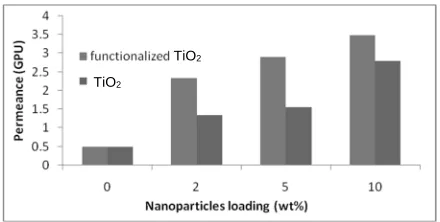
Figure 7. Effect of Nanoparticles loading on CO2 permeability.
Figure 8. Effect of Nanoparticles loading on N2 permeability.
Figure 9. Effect of Nanoparticles loading on O2 permeability.
The CO2 permeability of the F-TiO2/PSf
mixed matrix membranes initially increased with increasing F-TiO2 concentrations. The
CO2 permeability of the F-TiO2/PSf
membrane reached to 2.33 GPU at F-TiO2
loading of 2 wt%. When the F-TiO2
concentration was increased to 10 wt%, the CO2 permeability increased remarkably to
3.4 GPU. The O2 and N2 permeability were
increased from 0.60 to 1.1 and 0.45 to 0.69 respectively when the F-TiO2 loading in the
polymer matrix was increased from 2 wt% to 10 wt%.
The results suggest that the interaction between polymer-chain segments and F-TiO2
may disrupt the polymer-chain packing and thus enhance the gas diffusion due to more free volumes introduced among the polymer chains and defects at polymer/nanoparticles interface. The amine group, confirmed by
TiO2
TiO2
TiO2
TiO2
TiO2
FTIR in Fig. 6, has stronger interaction with polar gas, such as CO2 and O2 than non-polar
gas, e.g. CH4 and N2. In that case, the polar
gas solubility can be enhanced and the gas permeability is increased. Although the interaction between CH4 and amine-group
can enhance the CH4 permeability, as seen
from the results, the functionalized TiO2
nanoparticles have more effects on the CO2
permeability than the other gases. The strong interaction between CO2 molecules and
amine groups on the TiO2 surface is one of
the important reasons for higher CO2
permeability. CH4 and N2 permeation
mechanism is adsorption and diffusion in inner surface matrix. Hence, the CO2
permeation mechanism is surface diffusion, adsorption and diffusion through the polymer matrix. Another reason for increasing gas transport is that the voids created between polymer chains and TiO2 nanoparticles
increased with increasing TiO2 nanoparticles
loading ratio in the polymer matrix [11]. The strong interaction between CO2
molecules and amine groups on the F- TiO2
surface is an important reason for higher CO2
permeability. CO2 molecules may interact
with the polar groups in the mixed matrix membrane. Functional amine groups on the surface of the inorganic nanofiller in F-TiO2/PSf MMMs can also increase the gas
permeability due to the interactions between polar gas and functionalized inorganic filler [9].
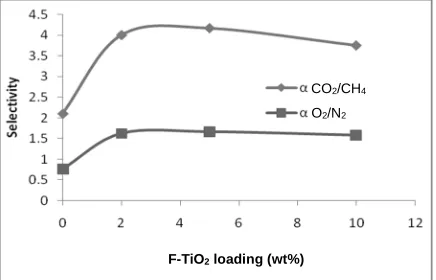
The separation performance of MMMs was investigated by ideal selectivity calculation of gas pairs. Selectivity results of O2/N2 and
CO2/CH4 are shown in Fig. 11. As can be
seen, this figure exhibits a general increase in MMMs selectivities relative to pure
polysulfone. When the F-TiO2 loading was
further increased from 2 to 10 wt%, the selectivity of CO2/CH4 and O2/N2 decreased.
This tendency arises from the increase in free volume and voids which in turn decrease the size-selective nature of membrane. Also, the non-selective interfacial voids that are larger than the penetrating gas molecules may exist at higher loadings of F-TiO2, due to the poor
adhesion of F-TiO2 surface and PSf matrix.
An apparent reduction in ideal selectivities of gas pairs is observed in MMMs containing 10 wt% F-TiO2 nanoparticles which can be
related to unselective voids and micron-size aggregates formation in polymer matrix. Selectivity of gas pairs CO2/CH4 and O2/N2
reached 3.75 and 1.58 respectively at 10wt%
loading of F-TiO2 in MMMs.
Figure 10. Effect of Nanoparticles loading on CH4 permeability.
Figure 11. Effect of F-TiO2 loading on O2/N2 and CO2/CH4 selectivity.
TiO2
TiO2
CO2/CH4
O2/N2
4. Conclusions
A number of mixed matrix membranes were successfully prepared by addition of amine F-TiO2 at different weight concentrations (0
to 10 wt%). Functionalization of TiO2
nanoparticles with ethylenediamine (EDA) clearly impact on the MMMs gas permeation properties and morphology. The SEM images for surface area of MMM indicated that amine-functionalized-TiO2 nanoparticles
were well dispersed in the PSf membrane matrix at a loading of 5 wt% F- TiO2. The
effect of F-TiO2 concentration on gas
permeation was studied. The gas transport in the mixed matrix membranes through the interstice between F-TiO2 and polymer chain
is the major reason for the enhanced gas permeability achieved because of F-TiO2
loading. The result showed that the F-TiO2
can improve the membrane permeability for all gases. With increasing F-TiO2
concentration, F-TiO2/PSf membrane
permeability for CO2 increased from 2.32 to
3.49 GPU and selectivity of CO2/CH4
decreased from 4 to 3.75. It was found that as the weight ratio of F-TiO2 increases in PSf
composites, the permeability of CO2
increased but the selectivity decreased slightly.
References
[1] Kesting, R. E. and Fritzche, A. K., Polymeric Gas Separation Membranes, Wiley Interscience, New York, (1993). [2] Robeson, L. M., "Correlation of separation
factor versus permeability for polymeric membranes", J. Membrane. Sci., 62, 165 (1991).
[3] Robeson, L. M., "Polymer membranes for gas separation", Solid. State. Mater. Sci. 4, 549 (1999).
[4] Peng, F., Lu, L., Sun, H., Wang, Y., Liu, J. and Jiang. Z., "Hybrid organic inorganic
membrane: solving the trade-off between permeability and selectivity", Chem. Mater., 17, 6790 (2005).
[5] Kim, J. and Van der Bruggen. B., "The use of nanoparticles in polymeric and ceramic membrane structures: review of manufacturing procedures and performance improvement for water treatment", Environ. Pollut., 158, 23 (2010).
[6] Adams, R. T., Lee, J. S., Bae, T. H., Ward, J. K., Johnson, J. R., Jones, C. W., Nair, S. and Koros. W. J., "CO2/CH4 permeation in
high zeolite 4A loading mixed matrix membranes", J. Membrane. Sci., 367, 197 (2011).
[7] Shao, L., Samseth, J. and Hägg, M. B., "Cross linking and stabilization of nanoparticle filled poly(1-trimethylsilyl-1-propyne) nanocomposite membranes for gas separations", J. Appl. Poly. Sci., 113, 3078 (2009).
[8] Hu, Q., Marand, E., Dhingra, S., Fritsch, D., Wen, J. and Wilkes, G., "Poly(amide– imide)/ TiO2 nano-composite gas
separation membranes: fabrication and characterization", J. Membrane. Sci., 135, 65 (1997)
[9] Matteucci, S., Kusuma, V. A., Sanders, D., Swinnea, S. and Freeman, B. D., "
#_>ADF;;==@Gas
transport in TiO2 nanoparticle-filled poly
(1-trimethylsilyl-1-propyne) ", J. Membrane. Sci., 307, 196 (2008).
[10] Matterucci, S., Kusuma, V. A., Swinnea, S. and Freeman, B. D., "
#_>ADF;;==@Gas transport
properties of MgO filled poly (1-trimethylsilyl-1-propyne) nanocomposites", Polym. Sci., 49, 757 (2008).
[11] Van der Bruggen, B., "Chemical modification of polyethersulfone nano-filteration membranes", J. Appl. Polym. Sci., 114, 630 (2009).
[12] Andrady, A. L., Merkel, T. C. and Toy, L. G., "Effect of particle size on gas permeability of filled super glassy polymers", Macromolecules, 37, 4329 (2004).
[13] Razmjou, A., Mansouri, J. and Chen. V., "The effects of mechanical and chemical modification of TiO2 nanoparticles on the
membranes", J. Membrane. Sci., 37, 73 (2011).
[14] Rajaeian, B., Rahimpour, A., Tade, M. O. and Liu, S., "Fabrication and characterization of polyamide thin film nanocomposite (TFN) nanofiltration membrane impregnated with TiO2
nanoparticles", Desalination, 313, 176 (2013).
[15] Chiang, C. H., Ishida, H. and Koenig, J. L., "The structure of [gamma]- amino-propyltrie-thoxysilane on glass surfaces", J. Coll. Interface. Sci., 74, 396 (1980). [16] Ukaji, E., Furusawa, T., Sato, M. and
Suzuki, N., "The effect of surface modification with silane coupling agent on suppressing the photo-catalytic activity of fine TiO2 particles as inorganic UV filter", Appl. Surf. Sci., 254, 563 (2007).
[17] Stuart, B., Infrared Spectroscopy: Fundamentals and Applications, John Wiley & Sons, New York (2004).
[18] Cong, H., Radosz, M., Francis Towler, B. and Shen, Y., "Polymer–inorganic nano-composite membranes for gas separation", Sep. Purif. Technol.,55, 281 (2007).