Geschke Center
Doctor of Nursing Practice (DNP) Projects Theses, Dissertations, Capstones and Projects
Winter 12-16-2016
Innovation through an Academic Practice
Partnership: A New Clinical Nurse Leader (CNL)
Implementation Model
Nancy P. Taquino
University of San Francisco, [email protected]
Follow this and additional works at:https://repository.usfca.edu/dnp Part of theNursing Administration Commons
This Project is brought to you for free and open access by the Theses, Dissertations, Capstones and Projects at USF Scholarship: a digital repository @ Gleeson Library | Geschke Center. It has been accepted for inclusion in Doctor of Nursing Practice (DNP) Projects by an authorized administrator of USF Scholarship: a digital repository @ Gleeson Library | Geschke Center. For more information, please [email protected].
Recommended Citation
Taquino, Nancy P., "Innovation through an Academic Practice Partnership: A New Clinical Nurse Leader (CNL) Implementation Model" (2016).Doctor of Nursing Practice (DNP) Projects. 82.
Innovation through an Academic Practice Partnership:
A New Clinical Nurse Leader (CNL) Program Implementation Model
Nancy P. Taquino, RN, MN, CNL
University of San Francisco
Committee Chair
Dr. Robin Buccheri, PhD
Committee Member
Dr. Wanda Borges, PhD
Acknowledgments
First and foremost, I dedicate this work to my husband Paul, who has been a source of
inspiration and my cheerleader through this journey. Thank you for your belief in me. Thank you
to my amazing adult children, Michael, Chris and Katie who have been understanding and
supportive, although clearly perplexed, about my motivation and drive to accomplish this goal.
To my USF grad nurse sisters, Eileen and Barbara, who have listened so patiently to my long
discourses about the latest exciting article or discussion from class. And finally, to my
professors. Thank you to Marjorie Barter, my mentor for the past twenty years. You have been a
source of inspiration and guidance through the rich career in nursing that I have loved so much.
To my committee chair, Robin Buccheri, who is the ultimate professional role model, so
knowledgeable and skilled with amazing empathy and ability to stimulate students to stretch to
achieve their best. You always knew when I needed encouragement and inspired me to climb the
next hill. Finally, to Wanda Borges, who motivated me to begin thinking about the DNP. You
have been an amazing mentor. We began this project as an idea, and have watched it develop and
grow into a partnership through dialogue and collaboration. Finally, I would like to acknowledge
the legacy of the undergraduate SONHP faculty from 1975, who inspired me to see nursing as a
sacred profession. My formation as a nurse was developed through exposure to their unrelenting
commitment and dedication to the patient as the center of care. This laid the foundation for my
vision as a clinical nurse and a nursing leader: strive always to improve care for patients, support
the professional work environment for nurses, and articulate the contributions that nursing makes
TABLE OF CONTENTS
Section I. Title and Abstract
Title ... 1
Acknowledgments ... 2
Abstract ... 8
Section II. Introduction Problem Description ... 11
Description of Setting ... 12
Available Knowledge ... 17
PICOT Question: Clinical Nurse Leader ... 18
PICOT Question: Academic Practice Partnerships ... 21
Rationale ... 23
Conceptual Framework ... 25
Specific Aim ... 26
Section III. Methods Context ... 27
Effect of Prior Work on Context ... 28
Setting the Stage ... 30
Intervention ... 31
Gap Analysis ... 31
Project Milestones ... 32
SWOT Analysis ... 32
TABLE OF CONTENTS (cont.)
Budget Return on Investment Plan ... 35
Communication Responsibility Matrix Plan ... 35
Cost Benefit Analysis ... 36
Description of the Intervention ... 37
Study of the Intervention ... 41
Measures ... 41
Process Measures ... 41
Outcome Measures ... 41
Analysis ... 43
Ethical Considerations ... 43
Privacy and Protection of Participants ... 43
Jesuit Values and American Nurses Association Ethical Standards ... 44
Section IV. Results Program Evaluation and Outcomes ... 46
Section V. Discussion Key Findings ... 52
Contextual Elements ... 54
Unintended Consequences ... 55
Summary ... 55
Limitations ... 57
TABLE OF CONTENTS (cont.)
Section VI. Other Information
Funding ... 60
Section VII. References ... 61
Section VIII. Appendices Appendix A. Project Approval Forms ... 68
Appendix B. Gap Analysis ... 80
Appendix C. Gantt Chart ... 83
Appendix D. Cost/Benefit Analysis ... 85
Appendix E. Responsibility/Communication Matrix ... 87
Appendix F. SWOT Analysis ... 89
Appendix G. Budget ... 90
Appendix H. Return on Investment Plan ... 93
Appendix I. CQI Method ... 94
Appendix J. Level of Evidence and Quality Guide ... 95
Appendix K. Evaluation Tables ... 97
LIST OF TABLES
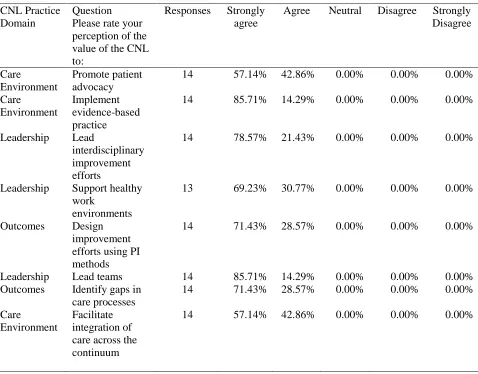
Table 1. Nursing Leader Perception of the Value of CNL Program
Competencies ... 65
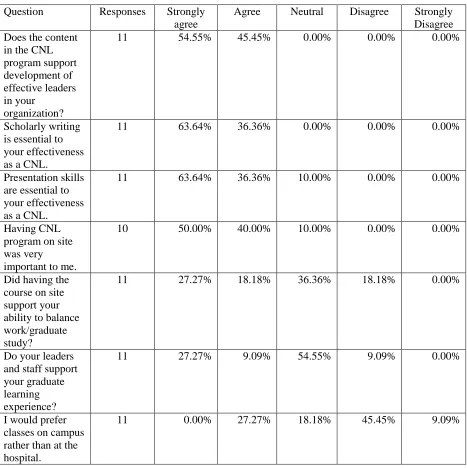
Table 2. CNL Student Perceptions of the Value of Hospital-Based CNL
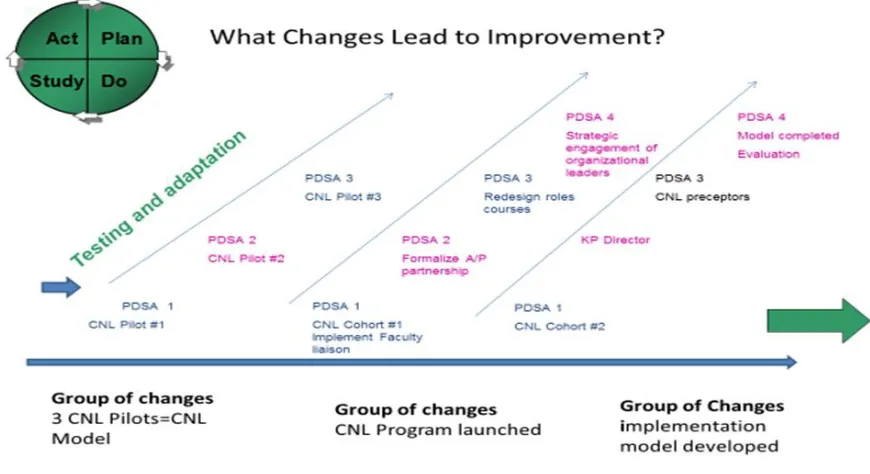
LIST OF FIGURES
Abstract
Problem
The Institute of Medicine’s 2000 report To Err is Human shocked the health care industry
and the public with descriptions of widespread medical errors and care fragmentation within the
health care system and concluded that hospital patients were being placed at great risk. The
report described a troubled health care system in which estimates of 44,000 patients die annually
because of medical error (IOM, 2000). The IOM reports that followed, Crossing the Quality Chasm: A New Health Care System for the 21st Century (2001) and The Future of Nursing: Transforming the Work Environment for Nursing (2004), were catalysts for the development of the first new nursing role in the past 40 years - the Clinical Nurse Leader (CNL). Innovative
academic practice partnership models are needed to integrate the CNL role as a strategic
intervention to improve patient quality and safety outcomes in acute care settings. Academic
practice partnerships are mechanisms designed to create opportunities for collaboration between
practice sites and academic centers to improve care for patients, while meeting the strategic goals
of each partner.
Context
In May 2015, the regional patient care service department of a large integrated health
care system in Northern California launched the Nurse Scholars Academy, an ambitious
professional development initiative. The program was established to prepare nursing leaders
within the organization with the capacity to lead the transformation of health care systems
through attainment of advanced education, which includes Master of Science in Nursing (MSN)
Intervention
The intervention is described as the CNL implementation model. The model consists of
four components: (a) academic practice partnership advisory charter; (b) academic practice
partnership roles (MSN CNL program director, MSN CNL faculty liaison, and hospital-based
CNL preceptor/mentor); (c) CNL preceptor/mentor educational module; and (d) electronic CNL
program implementation toolkit.
Measures
Process and outcome measures were chosen to study both the process and outcomes of
the intervention. All the measures were developed de novo. The process measures include the
elements of the model: (a) academic practice partnership charter example, (b) CNL program
director role and responsibilities description, (c) CNL faculty liaison role and responsibilities
description, (d) CNL preceptor/mentor role description, and (d) CNL preceptor/mentor
educational program outline. Likert-type scale questionnaires were developed to assess the
impact of the intervention on the organizational leaders within the pilot hospital and the MSN
CNL students participating in the pilot site hospital model.
Results
The participants’ responses to the Organizational Leader Questionnaire indicated that
nursing leader participants from the pilot site hospital are familiar with the competencies of the
CNL, and perceive that graduates with these competencies bring value to the organization. This
could indicate an association between the hospital-based CNL implementation model and
organizational leader perception of the value of CNL practice. This association supports an early
hypothesis by the DNP student that the CNL program implementation model can impact
The student survey responses to the CNL Student Questionnaire demonstrated that the
hospital-based model is very important to most of the participants, who prefer to attend courses
held at the hospital rather than travel to attend courses at the university. Students valued the
skills associated with scholarly communication in both written and oral presentations, and
reported incorporating new CNL competencies into their current leadership roles. The quality
improvement, education, and leadership courses were considered the most impactful courses so
far in the program, and students report applying valuable content from these courses in their
work setting.
Conclusions
The CNL program implementation model is a strategic tool for both academic and
organizational leaders who are seeking innovative ways to develop long-term, sustainable
academic practice partnerships. Academic practice partnerships support both the integration of
CNL education and new models of CNL practice within organizations, and can close the
Section II. Introduction
Problem Description
The 2000 Institute of Medicine (IOM) report To Err is Human shocked the health care industry and the public with findings of widespread medical errors and care fragmentation within
the health care system and concluded that hospital patients were being placed at great risk. The
report described a troubled health care system in which estimates of 44,000 patients die annually
because of medical error (IOM, 2000). The IOM reports that followed, Crossing the Quality
Chasm: A New Health Care System for the 21st Century (2001) and The Future of Nursing: Transforming the Work Environment for Nursing (2010), were catalysts for the development of
the first new nursing role in the past 40 years - the Clinical Nurse Leader (CNL) (American
Association of Colleges of Nursing [AACN], 2007).
The IOM 2010 report The Future of Nursing described the CNL role as “an innovative
strategy for restructuring care delivery settings and services to improve quality” (p 2).
Innovative academic practice partnership models are needed to integrate the CNL role as a
strategic intervention to improve patient quality and safety outcomes in acute care settings
(AACN, 2007). Academic practice partnerships are mechanisms designed to create opportunities
for collaboration between practice sites and academic centers to improve patient care, while
meeting the strategic goals of each partner.
The goal of this project was to develop, test, and evaluate a CNL implementation model
within an academic practice partnership. The model was developed using evidence-based
interventions that support CNL practice, best practices for successful academic practice
Academic and practice leaders can lead this effort to collaborate and together merge
different cultures and teams to work together, instead of in silos, towards the goal of improving
the health of the public through CNL integrated practice (Beal, et al 2012). The CNL program
implementation model provides an infrastructure that can be adapted and used in other settings
across the country as a strategic approach to improving patient and system outcomes through
academic practice partnerships. The CNL practice is a new model of care. The model may be
useful for university CNL program directors as a mechanism to engage health care systems in
similar programs that integrate MSN CNL students in their settings, thereby increasing the
numbers of CNL graduates and strengthening the viability of CNL programs.
Health care systems face increasing pressure to improve outcomes, reduce costs, and
demonstrate a change from provider-centric practice to patient-centered practice (IOM, 2010).
Nursing leaders are held accountable for the financial implications of poor quality outcomes in
the current pay-for-performance environment (Jeffers & Astroth, 2013). As leaders of clinical
microsystems, nurses have the opportunity to transform care environments that provide excellent
patient-centered quality care in fiscally efficient practice models.
To meet the current health care challenges, nurse leaders are needed at the microsystem
level to implement change efforts that improve fragmentation in care, poor outcomes, and high
costs in health care settings. Nursing leaders need competencies based on firm foundations in
leadership, evidence-based practice, systems, finance, ethics, and improvement science theory.
MSN CNL programs prepare future nursing leaders with these competencies.
Description of Setting
In May 2015, the regional patient care service department of this large integrated health
professional development initiative. The program was established to prepare nursing leaders
within the organization with the capacity to lead the transformation of health care systems
through attainment of advanced education, which includes the MSN CNL program and the
Executive Doctor of Nursing Practice (EDNP) program. The MSN CNL program is within the
scope of this project, and the ELDNP program is beyond the scope of this project.
Frontline nursing leaders in good standing within the health care system of 21 hospitals,
holding exempt leadership positions, such as assistant nurse manager, nurse manager, house
supervisor, quality nurse, and transitions in care nurses, are eligible to apply to the organization’s
Nurse Scholar Academy to be considered as a candidate for the MSN CNL program. Once
approved by the Academy, they can apply to the university for entrance to the MSN CNL
program. If applicants are accepted to the university as an MSN CNL student, they receive
generous tuition support from the Academy to attend the MSN CNL program.
Leaders from the Nurse Scholar Academy identified a pilot hospital to launch a hospital
based MSN CNL program. Nursing leaders from this hospital site had experience with CNL
students and some familiarity with CNL competencies learned from prior CNL pilot programs.
Senior leaders from this partner hospital were supportive and excited to be the pilot hospital for
the initiative, and a meeting to plan the program with university leaders was scheduled.
The university leadership team, including the associate dean, CNL faculty liaison, CNL
core faculty, and CNL program director, met with senior leaders from the partner hospital to
design the MSN CNL program. The class structure for the MSN CNL program was determined
by university team in collaboration with hospital leaders, and was designed to meet course
objectives and at the same time minimize disruption to unit operations. A day of the week for
work three shifts. Classes were held at the hospital. Time away from the hospital was reduced by
eliminating student travel time to the college campus, which also reduced costs associated with
providing manager backfill for those managers attending the program. Tailored to meet the
operational needs of the hospital team, the program was held on site at the hospital one day a
week for a 4-hour block of time, from 2:00 pm to 6:00 pm.
This program represents the integration of different organizational cultures and systems.
Two additional CNL cohorts will begin within the next year. The practice setting stakeholders
include regional and local hospital leaders: chief executive officers, chief nursing officers,
nursing directors, managers, nursing staff, and CNL leader/students. The university stakeholders
include the university dean, associate dean, CNL program directors, CNL faculty liaison, and
CNL faculty and staff.
The CNL program implementation model was developed, tested, and evaluated during
this project. The CNL program implementation model can be used as a strategic planning tool for
future CNL cohorts and can be replicated and adapted for CNL academic practice partnerships
with other health care systems in the future. The project is endorsed by the associate dean at the
University of San Francisco (USF), leaders from the organization Nurse Scholar Academy, and
the chief nursing executive (CNE) from the partner hospital.
Partnership with the organization’s newly developed Nurse Scholars Academy provided
an opportunity to design a CNL implementation program in a unique way that benefits both the
organization and university. The benefits to the organization include developing a highly skilled
nursing leadership team prepared to advance the scholarship of nursing practice, thereby
improving patient outcomes. The program graduates are a pipeline of internal MSN-prepared
a program can also be quantified based on the impact of the program on retention and
recruitment rates for skilled nursing leaders.
The university benefits from increased enrollment of CNL students from the
organization. The specialized and expensive private school program is facing competition from
less expensive, online CNL programs. The CNL role has not been widely accepted in this
geographic area due to a variety of factors. According to a U.S. News and World Report poll,
California nursing salaries averaged $98,000 and were among the highest in the nation, as
compared with the national average of $71,000 (Registered nurse: Salary details, 2015). Higher
salaries, along with state legislated nurse-patient ratios and a highly unionized work
environment, have improved working conditions for nurses, but have also taxed the financial
resources of health care systems.
The CNL role is new, and the evidence supporting the return on investment (ROI) of this
model is limited. Consequently, health care financial leaders, focused on financial viability in a
turbulent market, are reluctant to add an additional high salary role into existing nursing care
models. Understanding the scope of CNL competencies and the potential positive impact of CNL
practice has been embraced by only one large health care system in the area. This factor
negatively affects demand for CNL program graduates, CNL program student enrollment, and
poses a risk to future program viability.
In a highly competitive geographic location, the CNL program implementation model can
be adapted and used by the university to increase student admissions to the CNL program and
increase CNL program stability. This implementation model provides a purposeful infrastructure
that develops, evolves, and supports the complex systems that require attention to merge
health care system environment to integrate CNL practice and supplies the structure to support a
long-term sustainable partnership between the health care system and the university.
Implementation of the CNL program in an academic practice partnership is an exciting
opportunity. Through collaboration, the university and the health care system can leverage their
resources to elevate nursing scholarship within an organization, improve the quality of care, and
prepare nursing leaders to lead clinical improvement programs that will result in improved
patient outcomes.
An implementation plan, with a defined infrastructure that maintains close alignment of
goals and communication between the two organizations, is vital to success (Beal, et al., 2012).
The MSN CNL implementation model project includes processes and tools for the development,
implementation, and evaluation of the following model components of the MSN CNL program.
This model provides a sample infrastructure that can be adapted to other settings. The CNL
implementation toolkit is composed of the following components:
a. MSN CNL academic practice partnership advisory council charter
b. MSN CNL academic practice partnership communication matrix
c. CNL MSN academic practice partnership role descriptions
i. MSN CNL faculty liaison
ii. MSN CNL academic practice partnership director
iii. CNL preceptor mentor
d. CNL preceptor/mentor educational module
Available Knowledge
The 2000 IOM report To Err is Human shocked the health care industry and the public
with findings of widespread medical errors and care fragmentation within the health care system
and concluded that hospital patients were being placed at unnecessary risk. Health care costs in
the United States represent 17% of the gross national product, and the U.S. spending per capita is
one of the highest among 13 high-income countries (Squires & Anderson, 2015). Of even greater
concern, Americans have a lower life expectancy, see a physician less frequently, and have a
higher prevalence of chronic disease, despite high health care costs in comparison with 20 other
high-income nations (Squires & Anderson, 2015).
A large proportion of federal budget monies have been allocated to health care over the
past 18 years. When 20% of the budget is allocated to health care dollars, other vital public
services, such as education, social services, pensions, and defense are negatively impacted as less
monies are available (Squires & Anderson, 2015). The IOM (2001) report Crossing the Quality Chasm described two factors that continue to characterize the U.S. health care system – poor
quality and high cost. This created a sense of urgency for health care systems and major
government funding sources, such as Medicare, to introduce cost containment measures and, at
the same time, to improve high-risk patient care environments and to streamline and personalize
systems of care. The Future of Nursing report called for nursing leaders to assume leadership roles in closing this quality gap by exploring new nursing roles and care delivery models (IOM,
2010).
A proposed solution to this crisis was the new CNL role in nursing. The 2004 IOM report
Keeping Patients Safe described the role of the nurse in ensuring patient safety, care quality, and
the development of the CNL, the first new nursing role in the past 40 years (AACN, 2007). The Future of Nursing report described the CNL role as “an innovative strategy for restructuring care delivery settings and services to improve quality” (IOM, 2010, p. 2).
The CNL initiative was launched by AACN in collaboration with the American
Organization of Nurse Executives (AONE) and was specifically designed to address the current
problems in health care delivery systems (AACN, 2007), including those outlined in the 2004
IOM report. The AACN (2007) defined the CNL as a master’s prepared generalist with expert
knowledge of leadership, clinical systems outcomes management, and care environment
management. A national academic practice partnership task force of academic and practice
leaders developed guidelines for partnership models to pilot CNL education and integration into
practice.
PICOT Question: Clinical Nurse Leader
The PICOT question that guided the search for evidence in this project was: In acute care
hospitals (P), how does employing CNLs (I) compared to hospitals not employing CNLs (C)
affect patient and system outcomes (O) from 2005 to the present (T). A comprehensive
electronic search was conducted in September 2016 reviewing evidence that examined the CNL
role in acute care hospitals and CNL patient and system outcomes in the following databases:
Cochrane Database of Systemic Reviews, CINAHL Complete, Pub Med, Scopus, and Joanna
Briggs. These databases were searched using combinations of the following search terms:
clinical nurse leader, patient outcomes, outcomes and clinical nurse leader role. Limitations were
set to include English only, research, systemic reviews, randomized controlled trials, and
publication dates no earlier than 2009. The search yielded 153 articles. Articles were considered
articles, opinion pieces, and reviews without reference to outcomes of the CNL role were
excluded. Seven articles met inclusion and exclusion criteria and were selected for review.
The Research Evidence Appraisal Tool (Dearholt & Dang, 2012) was used to appraise
the evidence for this review. A thorough and accurate appraisal of the evidence is a critical step
in implementing evidence-based changes in practice with confidence (Melynk &
Fineout-Overholt, 2014). The appraisal tool includes criteria to evaluate the strength and quality of the
evidence.
The AACN sent an invitation to universities interested in developing curriculum for the
CNL (Sherman, 2008). To be considered for a pilot project, interested nursing academic centers
were required to enlist a clinical practice site partner to ensure that the new CNL graduates could
begin practice in a supportive clinical practice setting. Using a grounded theory method,
Sherman (2008) conducted a qualitative study to explore the reasons that chief nursing officers
(CNO) chose to participate in the CNL project and found that chief nursing officers control
budgets, are accountable for the quality of care in organizations, and are credible sources for
understanding the research question. A convenience sample of 10 CNOs in Florida were
recruited to participate in semi-structured face-to-face interviews consisting of eight open-ended
questions. This study described specific outcomes that CNOs hope to achieve with CNL
integration. Five factors were identified from the data analysis that described the reasons for
CNO interest in participation in the CNL project: (a) existing organizational needs, (b) desire to
improve clinical outcomes of care, (c) opportunity to redesign care models, (d) improve the
professional image of nursing, and (e) improve collaborative relationships with physicians
point for dialogue in other settings exploring CNL practice, and offer transferable findings to
many organizations.
Moore and Leahy (2012) conducted a qualitative descriptive study designed to explore
the experience of CNLs who have implemented the role. The study methods included
distribution of an investigator-developed survey with demographic data and 13 open-ended
questions sent to a convenience sample of 49 CNL certified attendees from the 2009 CNL
summit. The authors reported that CNLs experience: (a) challenges in role integration related to
lack of leadership support and (b) role confusion related to lack understanding of CNL practice.
They also found that the major source of job satisfaction is the opportunity to improve outcomes
(Moore & Leahy, 2012). These findings are similar to other literature describing challenges for
clinical nurse specialists (CNS) when the role was first implemented (Moore & Leahy, 2012).
The authors recommended proactive strategies based on the CNS’ experiences, which includes
formal planning for CNL role introduction, clarification of CNL practice, and strong nurse
administrator support (Moore & Leahy, 2012).
Bender and colleagues conducted two quantitative studies to evaluate improvement in
patient satisfaction and interdisciplinary collaboration in units with a CNL (Bender, Connelly, &
Brown, 2013; Bender, Connelly, Glaser, & Brown, 2012). These studies were followed by a
synthesis review of the CNL literature that also included seven qualitative studies that evaluated
experiences of both nursing leaders and CNLs who have implemented the role (Bender, 2015).
The review supported the development of a theoretical model describing CNL practice. Using a
grounded theory method to identify CNL practice, a predominant theme of continuous clinical
communication; strengthening inter and intra professional relationships; building and sustaining
teams; supporting staff engagement” (Bender, 2015, p 3).
Based on the integrated synthesis, Bender (2016) developed a conceptual model for CNL
integrated care delivery that can guide the implementation of innovative CNL practice models in
health care settings. The four domains of the model include: (a) organizational readiness for
CNL practice, (b) clear job description describing CNL practice, (c) prominent domain of CNL
practice as continuous clinical leadership (in job description), (d) CNL accountability for clinical
and system outcomes (in job description), and (e) value to the organization (Bender, 2016).
Bender (2016) described CNL practice as a highly systematic process of microsystem
care delivery redesign to structure CNL competencies (clinical leadership, care environment
management, clinical outcomes management) into a workflow that improves patient and system
outcomes in a microsystem. Bender’s model provides a framework for standardization of CNL
practice and sets the stage for development of studies that can more extensively evaluate the
impact of CNL practice on system and patient outcomes.
PICOT Question: Academic Practice Partnerships
In academic practice partnerships (P) what are the best practices (I) that support CNL
program and practice integration (O) from 2007-present (T).
A comprehensive electronic search was conducted in September 2016 reviewing
evidence that examined best practices in establishing academic practice partnerships with CNL
programs in the following databases: Cochrane Database of Systemic Reviews, CINAHL
Complete, and Pub Med. The databases were searched using combinations of the following
search terms: academic practice partnerships, best practices, and clinical nurse leader.
trials, and publication dates no earlier than 2009. The initial search did not yield any articles. The
search limitations for research, randomized controls trials were removed, which then yielded 198
articles. Articles were considered for inclusion if they included academic partnership best
practices. Since limited research evidence is available, exploratory articles, consensus guidelines,
and expert opinion articles were considered. Eight articles were selected for review. The
Non-Research Evidence Appraisal Tool (Dearholt & Dang, 2012) was used to appraise the evidence
for this review.
Leaders in practice and academia have long recognized the need to collaborate to
advance nursing practice, position nurses to lead change, and improve outcomes in troubled
health care systems (Beal et al., 2012). The IOM (2010) Future of Nursing report has been a catalyst for academic and practice leaders to accelerate the development of academic practice
partnership models (Nabavi, Vanaki, & Mohammadi, 2012). Innovative, collaborative
approaches implemented through partnership models provide a mechanism to strengthen nursing
practice and improve the health of the public (Beal et al., 2012; Sherman, 2008).
The development of new approaches to advance professional nursing and improve patient
outcomes through partnerships should be encouraged. One such approach could be the
development of a new model to accelerate the translation of new knowledge into practice by
educating nurses to be facilitators and champions of evidence-based practice implementation
(Kitson & Harvey, 2016).
Academic practice partnerships leverage the expertise of both university faculty and
practice setting leaders to improve the health care system, extending mutual benefits to both
partners to build capacity for the future (Todero, Long, & Hair, 2015). The AACN-AONE
for partnerships and are included in Appendix L. These steps provide a foundation for new
academic practice partnerships positioned for success and sustainability.
Effective partnerships can be challenging to establish and to maintain. Merging
organizational cultures with different leadership structures, systems of accountability, and
metrics by which to measure success can be difficult (Moore, 2013). Collaborative relationship
agreements that are intentional and formalized facilitate a healthy partnership (AACN-AONE,
2012; Todero et al., 2015). Effective partnerships share common elements: senior leadership and
support from both organizations that drive the partnership vision, intentional and formalized
relationships at the senior leader level within both organizations, and formal written agreements
(Nabavi et al., 2013). The agreements outline the common vision, communication structures, and
mutual outcomes and reinforce the commitment to open and transparent communication with
regular contact (Beal et al., 2012; Nabavi et al., 2013; Todero et al., 2015).
The CNL role is new, and research supporting the positive impact of CNL practice on
outcomes is emerging. Because of the Affordable Care Act (ACA), health care systems are
struggling to adapt to changes in patient acuity, access to health care, and new
pay-for-performance reimbursement models (Jeffers & Astroth, 2013). Leaders are hesitant to implement
new models of care, such as CNL integrated practice, in fiscally challenging times. Continued
growth and success of the CNL role is dependent upon academic practice partnerships that
collaborate to design innovative programs that demonstrate the value of the CNL practice
(Jukala, Greenwood, Motes, & Block, 2013).
Rationale
To meet the current health care challenges, nurse leaders are needed at the microsystem
costs in health care settings. Nursing leaders need competencies based on firm foundations in
leadership, evidence-based practice, systems, finance, ethics, and improvement science theory.
Executive leaders in the health care system have recognized the need to empower
frontline nursing leaders with new knowledge and skills needed to improve outcomes. The MSN
CNL program prepares future nursing leaders with these competencies. The specific aim for this
DNP project is to develop, implement, and evaluate a CNL program implementation model
through an academic practice partnership in an acute care hospital by December 2017.
The MSN CNL program has potential to improve the current high turnover rate of
nursing managers and to be an effective recruitment tool for new nursing leaders. The university
faces increasing competition from less expensive, online CNL programs. The CNL role is new,
and the evidence supporting the ROI of this model is limited. Consequently, health care financial
leaders, focused on financial viability in a turbulent market, are reluctant to add an additional
high salary role into existing nursing care models. Understanding the scope of CNL
competencies and the potential positive impact of CNL practice has been embraced by only one
large health care system in the area. This factor negatively affects demand for the CNL program
that translates to low student enrollment, which poses a risk to future program viability.
A CNL program implementation model provides a purposeful infrastructure that
develops, evolves, and supports the complex systems that require attention to merge different
organizational cultures in a newly developed partnership. The CNL program implementation
model will also prepare the health care system environment to integrate CNL practice, providing
a structure for a long-term sustainable partnership between the health care system and the
university. Implementation of the CNL program in an academic practice partnership is an
leveraged to elevate the nursing scholarship within an organization, improve quality of care, and
prepare nursing leaders to lead existing clinical improvement programs that will result in
improved patient outcomes.
Conceptual Framework
The conceptual framework for the project is comprised of two components: self-efficacy
theory and the PARIHS (promoting action on research implementation in health services)
framework. The conceptual framework will guide the development of mentoring competencies
that are required for effective implementation of the program director, faculty liaison, and
preceptor mentor roles, which are the new roles developed in the CNL implementation model.
Albert Bandura (1999) is credited with developing self-efficacy theory of social
cognition. According to the theory, people can learn through experience, and a major determinant
to effective learning is the concept of self-efficacy. Self-efficacy leads to confidence in one’s
ability to confront challenges and succeed. The CNL is a new practice role, and successful
implementation requires nurses to make a career transition as they assimilate CNL competencies
(Gilmartin, 2015). The role transition to the advanced generalist CNL is dependent on both
personal characteristics, such as self-efficacy, and organizational readiness for CNL practice
(Bender, 2016; Gilmartin, 2015).
Successful career transitions are dependent on the ability of the individual to adapt to
increasingly complex roles (Gilmartin, 2015). Clinical nurse leader confidence with performing
core role functions affects self-efficacy. Gilmartin suggested that the acceptance of CNL
integrated practice as a new model of care is dependent on developing the self-efficacy of new
CNLs. The CNL implementation model provides a framework to develop CNL student
The second component of the framework guiding this project is the PARIHS framework.
The PARIHS framework is a structured approach used to introduce new clinical knowledge into
practice. Successful implementation of evidence into practice is based on the quality of the
evidence, characteristics of the setting and context, and the way the evidence is introduced into
practice (Kitson & Harvey, 2016). The PARIHS framework defines three levels and
competencies for facilitators who work with clinical teams to translate clinical evidence into
practice. Complex clinical projects require facilitators who are experienced in implementation
methods to work with improvement teams (Kitson & Harvey, 2016).
The conceptual model is the foundation for facilitation of competency development in
new roles within the CNL program model. The CNL preceptor mentors will develop confidence
in their ability to guide the CNL students during their course projects, and support CNL practice
integration in the future after attending the CNL Preceptor Mentor Educational Program. This
newly developed program will support introducing new evidence-based knowledge and will
develop the preceptors as novice facilitators using the PARIS framework. Changing models of
care and program curriculum can be threatening to stakeholders. The new roles within the CNL
program implementation model represent a change in the status quo. University faculty,
preceptors and CNL students must be firmly grounded in self-efficacy, effective facilitation
skills, and personal resilience to be effective change agents and manage the transformation
associated with a new role (Gilmartin, 2015).
Specific Aim
The specific aim of this DNP project is to develop, test, and evaluate a new CNL program
implementation model in a pilot site hospital that is part of an integrated health care system in
CNL practice and perceptions of the value of the MSN CNL program held by nursing leaders in
the partner hospital, and the CNL students who are enrolled in the MSN CNL program.
Section III. Methods
Context
The key stakeholders in this project include members from both partner organizations.
Health care system partner stakeholders include the pilot site hospital administrators, nursing
leaders, CNL student employees, regional CNOs, Nurse Scholar Academy leaders, and their
administrative support teams. The university stakeholders include the dean and associate dean of
the School of Nursing and Health Professions (SONHP), MSN program director, MSN CNL
partnership director, MSN CNL core faculty, and university administrative support team.
The organizational and university leaders participating in this project were aware and
open to the need for change in the way nursing leaders are educated to lead frontline teams as
leaders of clinical microsystems. This was an opportunity to position nurses to transform care
environments to provide excellent patient-centered quality care in fiscally efficient practice
models.
To meet the current health care challenges, nurse leaders are needed at the microsystem
level to implement change efforts that improve the fragmentation in care, poor outcomes, and
high costs in health care settings. Clinical nurse leaders are educated to demonstrate
competencies based on a firm foundation in leadership, evidence-based practice, systems,
finance, ethics, and improvement science theory. In partnership with the Nurse Scholar Academy,
this was an opportunity to design a CNL program implementation program in a unique way to
The senior leaders who sponsored this project acknowledged the need for change to
develop a highly skilled nursing leadership team prepared to advance the scholarship of nursing
practice, thereby improving patient outcomes. They envisioned that MSN CNL program
graduates would be a pipeline of internal MSN-prepared nursing leaders for succession planning
and executive leadership positions. The benefits of such a program can be quantified in several
ways but one way is the impact of the program on retention and recruitment rates for skilled
nursing leaders in an organization.
Through collaboration, university and health care system resources are leveraged to
elevate nursing scholarship within an organization. This collaboration can also help improve the
quality of care, and prepare nursing leaders to lead existing clinical improvement programs that
will result in improved patient outcomes.
Effect of Prior Work on the Context
During the evolution of this project, two different faculty positions, a CNL faculty liaison
and a partnership director, were developed and implemented by the DNP student and are
elements of the implementation model. The CNL faculty liaison role is described first. In 2014,
the DNP student, as a CNL faculty from the university, collaborated with the associate dean and
hospital leaders to develop a CNL pilot project. The project was proposed as a new model for
CNL student internships within a regional quality department and one of the hospitals in the
health care system. The goal of the pilot project was to provide students with a structured CNL
student practicum experience and to demonstrate the value of CNL practice to the health care
leaders within the organization. Students developed and implemented improvement projects in
report that CNL practice is a strategic solution to improve quality, safety, and cost at the point of
service.
University CNL courses include a clinical practicum where students apply CNL theory in
clinical environments. Students are educated to complete a microsystem assessment, identify
gaps in care, and design an improvement project that addresses the care gap. The CNL faculty
liaison worked with students in health care settings to design improvement projects using the
performance methodology of the organization, the Institute for Healthcare Improvement (IHI)
Model for Improvement (MFI) (2016). Students gained experience leading and collaborating
with multidisciplinary microsystem teams on projects selected by the organization or hospital
quality leader and the hospital CNO.
Students presented their projects at the end of each semester to senior leaders in the pilot
hospital. These individuals possessed the position power that drives organizational priorities and
budgets, and securing their support was critical to success. Five students developed 10 projects in
different microsystems over the course of three semesters. This strategy demonstrated the value
of the CNL skill set. The CNO of the pilot site hospital requested to be the first partner hospital
to participate in the hospital based MSN CNL program offered through the new academic
practice partnership between the organizational Nurse Scholar Academy and MSN CNL
program, targeted to begin in 2015.
The CNL faculty liaison, along with the associate dean, CNL core faculty team, and CNL
program directors, met with senior leaders from the CNL pilot hospital to design the MSN CNL
program. The class structure was designed to minimize disruption to unit operations by
eliminating student travel time for nursing leaders and reducing costs associated with providing
needs of the hospital team, the program was held on site at the hospital one day a week for a
4-hour block of time, from 2:00 pm to 6:00 pm.
Setting the Stage
Based on a strength, weaknesses, opportunities, and threats (SWOT) analysis, the first
step taken by the academic partner was the development of a CNL program proposal that created
a compelling case for the impact of CNL practice to improve patient and organizational
outcomes. Understanding of the organizational culture and priorities was needed to develop a
cogent proposal, and the SWOT analysis was critical to this step.
As the first step in this process, the CNL faculty liaison and associate dean delivered
formal presentations to the senior leadership and hospital nursing leadership team. The purpose
of the presentation was to introduce the MSN CNL program of study and the value of the CNL
role to practice site leaders who were unfamiliar with CNL practice. The MSN CNL curriculum
pattern, CNL competencies, and selected current research describing positive outcomes of CNL
practice were included in the presentation materials.The leaders expressed their expectations for
CNL graduates related to the necessary knowledge and skills required to be effective nurse
leaders within the organization. These expectations included a formal graduate level theoretical
foundation in transformational leadership, evidence-based practice, along with the ability to
apply theory in practice by leading interdisciplinary improvement teams using improvement
science methods. In other words, they expect CNLs to impact patient and system outcomes as
leaders within the organization. These expectations were communicated to the core faculty who
teach in the program, and the focus areas identified by organizational leaders are emphasized
The students complete a formal PowerPoint presentation in most classes each semester,
and hospital leaders were invited to attend. The student presentation provides the opportunity to
develop student confidence and expertise and to demonstrate the value of the CNL program and
CNL practice to senior leaders at the partner hospital. This practice builds trust and credibility
between leaders and faculty. The working relationships between regional and local practice site
leaders and university leaders were established during the CNL pilots and continue into this
phase of the partnership.
The CNL program implementation model represents the integration of different
organizational cultures and systems. Two additional CNL cohorts will begin within the next
year. The practice setting stakeholders include regional and local hospital leaders, chief
executive officers, CNOs, nursing directors, managers and nursing staff, and CNL
leader/students. The university stakeholders include the university dean, the associate dean, CNL
program directors, CNL faculty liaison, and CNL faculty and staff.
Intervention
A partnership infrastructure that maintains close alignment of goals and communication
between the two organizations is vital to success (Beal et al., 2012). The intervention in this
project is the CNL program implementation model. The model consists of four components: (a)
academic practice partnership advisory charter; (b) academic practice partnership roles (MSN
CNL program director, MSN CNL faculty liaison, and hospital-based CNL preceptor/mentor);
(c) CNL preceptor/mentor educational module; and (d) electronic CNL program implementation
toolkit.
The MSN CNL program implementation model was developed based on completing a
formal gap analysis, which is used by organizations as the first step in implementing a new
program. The desired future state for the project is a vital academic practice partnership in which
both partners work together to leverage the expertise within both organizations to prepare nurses
and nurse leaders prepared to lead the transformation the health care environment, and improve
patient and system outcomes. The current state of the academic practice partnership between the
university and the health care system at the beginning of the project was a working relationship
focused on finding clinical placements for students. A formal academic practice agreement that
outlined a shared vision, goals and outcomes for a MSN CNL partnership did not exist. The CNL
program implementation model was developed to address this gap.
The future state, current state, and next actions were developed by the DNP student in
collaboration with key stakeholders from both partner organizations Specific objectives were
developed to address the gap between the current state and the future state. The gap analysis is
the foundation for planning the CNL implementation model. Five objectives were identified: (a)
formalize the academic practice partnership based on best practices, (b) improve the CNL
theory-to-practice gap, (c) develop an academic practice infrastructure to support CNL program
implementation, (d) build internal capacity within the organization to implement CNL practice,
and (e) develop and evaluate a CNL program implementation model to facilitate initiation of new
synergistic academic practice partnerships (see Appendix B: Gap Analysis).
Project Milestones
The objectives identified in the gap analysis are the primary milestones of the project. A
Gantt chart was developed to define the milestone timeline and specific tasks associated with
SWOT Analysis
A SWOT analysis that explored the internal strengths and weaknesses and external
opportunities and threats for the model was conducted. This analysis was used to refine the
model based on feedback from the team involved with the work, which included key academic
and practice partner stakeholders.
An internal strength identified was a positive working relationship between the
organizational leaders and the university leaders, which was established during the initial CNL
pilots. These relationships became a foundation for the new partnership. The strategies used by
the CNL faculty liaison and associate dean during the pilots were replicated, including formal
presentations of the CNL program and predicted outcomes from CNL practice, along with the
predicted benefits to the health care system from CNL practice. Senior leaders from the hospital
were invited to describe their expectations for CNL graduates, and coursework was structured to
meet those expectations. The hospital leaders attended student formal presentations at the end of
each semester, which helped to build trust and credibility between leaders and faculty and
reinforced the value of CNL practice. As a result, the hospital leaders provided support and
encouragement to the leader/students in the program
An additional strength was the experience gained by the CNL faculty liaison role during
the CNL pilots. The DNP student, an adjunct faculty member, designed and served in this role.
The CNL faculty liaison worked with students and leaders at the health care organization,
providing guidance for CNL student practicum projects. Microsystems for student immersions
were identified collaboratively by the faculty liaison, practice faculty, and CNO and were based
on the following criteria: (a) nursing leaders receptive to CNL students and new models of care,
for CNL students to work with unit teams on project. The projects met the following criteria: (a)
new or existing microsystem clinical initiative, (b) project meets learning objectives of CNL role
courses, and (c) appropriate scope for a semester project.
There were several internal weaknesses identified in the analysis of the organization.
Lack of experience with CNL integrated practice models in the organization was noted as a
vulnerability, with potential to create both student and leader dissatisfaction if expectations of the
role were not congruent with organizational expectations for CNL graduates. Recent turnover
rates for new assistant managers, who are CNL graduates, were found to be high. The CNL
program implementation model created opportunities for senior leaders to participate in the
educational experience of their employees. Senior leaders were invited to present as guest
speakers during leadership and quality improvement courses. These senior leaders also
presented at the celebration event honoring the CNL students at the beginning of their program
and attended CNL student presentations each semester. Active senior leadership engagement
during the program sent a clear message of support and encouragement to the CNL students.
Employee perception of leadership support creates a positive work culture and correlates with
higher employee retention (AACN, 2013).
An external opportunity existed for the academic practice program to be a model for
other health care systems and universities, setting both organizations apart as leaders in
innovation of a new practice model. This model is supported by recommendations from the IOM
(2010) Future of Nursing report, in which the CNL is an innovative solution that can transform nursing practice care at the microsystem level.
An external threat to the project was a possible shifting of financial or strategic priorities
systems, an unstable health care environment is a possibility, which could negatively impact the
funding and/or focus of the project. In a similar fashion, university priorities could shift
resources away from this project to meet other priorities (see Appendix F).
Detailed Statement of the Work
The work breakdown schedule (WBS) consists of the following five project development
stages: initiation, planning, execution, control, and closeout. Each stage includes multiple steps,
along with completion dates. In the first stage (initiation), the evidence-based practice change
was identified. Melynk, and Fineholt’s (2015) evidence based practice approach was used to
develop the CNL program implementation model during the initiation stage of the project. The
following steps of the approach were used to define the project intervention: 1) using the PICO
format, clinical questions were developed to find evidence in the literature that described
improved outcomes related to CNL practice and best practices for developing and sustaining
academic practice partnerships 2) a comprehensive literature search was conducted to find the
best evidence 3) the evidence was critically appraised and rated using the JHEBP research and
non research appraisal tools 4) input from clinical experts from the university and the partner
hospital was integrated into the CNL program implementation model were consulted. The CNL
program implementation model was developed in the first stage of the project using this
approach.
In the second stage (planning), the basic structure of the project was outlined. The third
stage (execution) is the most extensive, outlining steps to accomplish the work of the project.
The fourth (control) and fifth (closeout) stages include project milestones to ensure that needed
adjustments are included in the final CNL program implementation model and a complete
Budget Return on Investment Plan
Net revenue for the university generated by student tuition from 30 students enrolled in
the new KP USF CNL program partnership is $674,889 for the academic year 2016-2017. Cost
of the CNL program implementation model is $75,111 in payroll expense for the same period.
The ROI for the university is 8.9%, based on the ROI calculation (net revenue/cost of a program
= ROI). The ROI for the pilot hospital was calculated based on cost avoidance. The pilot
program will cost the pilot hospital $6,795 in payroll expenses. The expense can be recouped
with the avoidance of one hospital-acquired infection (HAI) and the associated $15,000
reimbursement penalty for HAI, with a surplus of $8,205 (see Appendix H).
Communication Responsibility Matrix Plan
The communication responsibility matrix plan describes the structure for communication
among the different project stakeholders, which includes the regional advisory council,
university leadership team, pilot site hospital team, MSN CNL core faculty, CNL preceptor
mentors, health care system senior leadership, and community advisory board (see Appendix E).
Cost Benefit Analysis
The ROI calculation ([net revenue - cost of program]/cost of the program) was used to
determine cost benefit analysis for the university. The USF MSN CNL program was selected as
the major academic partner in the Nurse Scholar Academy. Competition from less expensive
MSN programs is a potential threat; and therefore, the stakes are high to ensure that the practice
partner is satisfied with the product offered and the outcomes achieved. The success of the
program was dependent on ensuring a positive learning experience for students through careful
University costs include faculty salary costs for partnership activities, CNL
preceptor/mentor education program development, and teaching time. The director’s salary and
benefits expense costs are reflected for year one of the program and are estimated. Thirty percent
of revenue from tuition is included as an expense in the operating budget to account for
recruitment, admission, and business administrative staff salaries and benefits. The ROI for the
university was calculated by dividing the cost of the project model by the net revenue from
student tuition (approximated). The ROI for the university is 8.9%.
The ROI for the medical center was based on cost avoidance using the IHI ROI
improvement model calculation. Expenses included salary, taxes, and benefits for hospital-based
CNL mentor/preceptors, CNL preceptor/mentor education, and active mentoring of CNL
students with faculty (estimated). If one hospital-acquired infection (HAI) is avoided, the
medical center will recoup the costs of this model project. Therefore, the break-even point is the
avoidance of one HAI. It was anticipated that the CNL MSN program will improve the current
retention rate of 50% for assistant nurse managers. The program was projected to improve job
satisfaction, as nursing managers gain confidence through advanced education in their ability to
effectively lead teams to improve outcomes within microsystems. The total cost of the CNL
program can be recovered one-year post graduation by retaining 10 CNL graduate students
within the organization and avoiding recruitment costs. (see Appendix H).
Description of the Intervention
Component 1: Academic Practice Partnership Advisory Council. The regional CNL
program academic practice partnership advisory council was formed and charged with oversight
of the CNL program implementation at a system level. A committee charter was developed in
practice partnerships as a starting point (AACN, 2007). The purpose of this advisory group was
to develop a forum for ongoing evaluation of the CNL implementation model. Attendees
included representatives from both the university CNL core faculty and regional nursing leaders.
The CNL program director and practice site regional leader co-chair the meetings of the advisory
group. Long-term partnership outcomes are in development and will be measured and reported
through both organizational leadership channels. All outcomes from this project will be reported
through this council.
A proposal for local advisory groups at host hospital sites will be developed. The purpose
of this advisory group is to develop a forum for ongoing evaluation of the CNL implementation
model at each of the local hospital sites. Attendees will include representatives from both the
university CNL core faculty and local nursing leaders. Meetings will be chaired by the faculty
liaison and host hospital CNO.
Component 2: Partnership roles. The DNP student designed the CNL faculty liaison
role, which has been tested and refined during the project. The faculty liaison is a visible
presence at the hospital and works with hospital leaders to facilitate working relationships
between faculty and facility leaders and to organize program logistics, such as securing
classrooms and facility orientation for faculty. Based on the initial pilot program, the CNL
faculty liaison works with leaders at the health care setting to identify ideas for student practicum
projects that are aligned with current quality improvement priorities. This process reinforces the
value of CNL practice within the setting. The projects were identified based on the following
criteria: (a) new or existing microsystem clinical initiative, (b) project meets learning objectives
The CNL faculty liaison teaches the CNL role courses and acts as the preceptor for the
students, providing guidance in the application of the IHI MFI as a framework for CNL role
course projects (IHI, 2016). The CNL coursework in leadership, evidence-based practice, and
teamwork is integrated with improvement science content. Students are guided in learning to
provide and to receive constructive feedback on their projects through peer-to-peer consultation
on project aims, measures, and implementation strategies. Application of course theory occurs
when students work with microsystem teams to design an improvement project
The IHI MFI performance method used by the organization is integrated as the
framework for student practicum projects by the faculty liaison. Course requirements, such as
project presentations and final paper formats, are aligned with familiar organizational templates.
Students present their leader with a bound copy of the project summary each semester, and
leaders use them as a guide for other quality initiatives, again adding value to the organization.
A CNL program director role was developed to ensure program stability using the model.
The program director acts as the primary communication conduit with different cultures and
systems from both organizations. The program director operates within both organizational
systems and acts to facilitate the integration of multiple stakeholder interests, as the program
expands to include students from multiple hospitals within the system. Coordination of complex
communication is the responsibility of the program director, who as the conduit between both
organizations, represents the perspectives of both partners. The program director facilitates
opportunities for the CNL core faculty to integrate practice site expectations in CNL coursework,
to ensure program relevance and added value to the organization. The program director supports
faculty liaisons in their roles and co-chairs the regional advisory group in setting direction for the
collaboration between both organizations though relationship building and political acumen and
are catalysts that drive changes in both the academic and practice site environments.
Component 3: Preceptor/mentor educational module. The threat identified in the
SWOT analysis included lack of experienced CNL preceptors to provide guidance for CNL
students new to the role. This threat has the potential to create both student and leader
dissatisfaction if expectations of students from the preceptor/ mentor are not congruent with
organizational expectations for CNL graduates. Likewise, preceptor mentors need a firm
foundation in the CNL program curriculum and AACN required CNN competencies to meet
student learning needs (AACN, 2013).
The risk of misalignment of expectations of CNL graduates will be mitigated with the
development of a CNL preceptor/mentor role for interested nursing leaders within the
organization who will have a university affiliate faculty appointment. A job description,
application process is developed. This strategy will imbed the organization with internal leaders
who understand the CNL role and curriculum and can help build internal capacity to integrate
CNL practice from within the organization.
An educational program for CNL preceptor/mentors was developed. The program is a
one-day educational event hosted at the university and taught by CNL faculty. The program will
be tested and evaluated with the partnership hospital as a part of the project. This educational
program for CNL preceptor/mentors can be adapted and implemented in other hospitals within
the system as the program continues to recruit CNL students.
Component 4: Electronic CNL program implementation toolkit. The CNL program
implementation model components were developed during the project. The following model
example, (b) CNL program director role and responsibilities description, (c) CNL faculty liaison
role and responsibilities description, (d) CNL preceptor/mentor role description, and (d) CNL
preceptor/mentor educational program outline.
The CNL program implementation model components were consolidated in an electronic
toolkit. Instructional design staff at the university provided the DNP student with a shell course
from the CANVAS platform, which is the learning technology program used by the university.
The toolkit is included in a shell course titled: CNL Program Implementation Model within an
Academic Practice Partnership. The toolkit will be used to orient CNL faculty teaching in later
student cohorts at additional partner hospitals within the integrated health care system in
Northern California. (See Appendix L)
The CANVAS course can also be useful for adaptation by university faculty, as a starting
point for initiation of new academic practiced partnerships. Long term, the CANVAS course can
be used as a method to disseminate a strategic approach for academic practice partnerships
designed to introduce and integrate CNL practice in health care systems.
Sustainability Plan.
The sustainability plan includes development of the CNL program implementation tool
kit. The toolkit is available on the university CANVAS site and will be used as a resource for
faculty teaching in the MSN CNL academic practice partnership program. The toolkit describes
the evidence supporting model development, and contains standardized information related to the
unique characteristics of the hospital based CNL program model. The information is presented in
modules that provide the background, context, and roles that have been developed in a new
approach to providing MSN CNL education within a defined academic practice partnership.