Geschke Center
Doctor of Nursing Practice (DNP) Projects Theses, Dissertations, Capstones and Projects
Spring 5-6-2014
Motivational Interviewing Education for San
Mateo County’s Adolescent Healthcare Providers:
Focus on Healthy Diet and Physical Activity
Emilie J. Gruhl
University of San Francisco, [email protected]
Follow this and additional works at:https://repository.usfca.edu/dnp
Part of theFamily Practice Nursing Commons, and thePediatric Nursing Commons
This Project is brought to you for free and open access by the Theses, Dissertations, Capstones and Projects at USF Scholarship: a digital repository @ Gleeson Library | Geschke Center. It has been accepted for inclusion in Doctor of Nursing Practice (DNP) Projects by an authorized administrator of USF Scholarship: a digital repository @ Gleeson Library | Geschke Center. For more information, please [email protected].
Recommended Citation
Gruhl, Emilie J., "Motivational Interviewing Education for San Mateo County’s Adolescent Healthcare Providers: Focus on Healthy Diet and Physical Activity" (2014).Doctor of Nursing Practice (DNP) Projects. 25.
Motivational Interviewing Education for San Mateo County’s Adolescent Healthcare Providers:
Focus on Healthy Diet and Physical Activity
DNP Project Report
Emilie Gruhl, DNP (c), MSN, RN
University of San Francisco
Abstract
Motivational interviewing has been endorsed by San Mateo County as an evidence-based effective form of behavior change counseling. Eighty percent of pediatric healthcare providers in San Mateo County have been trained in motivational interviewing, however 70% of the providers use it less than 50% of the time. The goal of this project was to reeducate the adolescent providers of San Mateo County in motivational interviewing with an emphasis on individualized training and feedback, directed toward healthy diet and exercise. Results of the quality improvement project showed an average 2.5-point increase in provider confidence on a
zero to ten-point scale, and average increase in the use of motivational interviewing of 2 patients
per day. Providers reported overall satisfaction with the project and demonstrated continued
interest in further use of motivational interviewing. Recommendations for continued quality
improvement include extension of the project for further support in motivational interviewing
practice and increasing macrosystem involvement by training more providers throughout San
Mateo County.
Keywords: adolescent health, behavior change counseling, childhood obesity, motivational
TABLE OF CONTENTS Section I
Abstract………...2
Section II: INTRODUCTION………...5
Background Knowledge………5
Local Problem………5
Aim Statement………....6
Review of the Evidence………...6
Obesity………...7
Healthy Lifestyle Behavior Counseling………8
Motivational Interviewing……….9
Evidence-Based Research on Motivational Interviewing……….13
Comparisons of Motivational Interviewing to Standard of Care……13
Effectiveness of Motivational Interviewing Training………...17
Theoretical Framework: Bandura’s Self-Efficacy Theory………..22
Section III METHODS………23
Ethical Issues………23
Setting………24
Planning the Intervention………...25
Implementation of the project………27
Planning the study of the intervention………...28
Methods of Evaluation……….29
Analysis……….31
Program Evaluation……….33
Section V DISCUSSION………..35
Summary………...35
Relation to other evidence………...36
Barriers to implementation/ limitations……….37
Interpretation………...38
Conclusions………...39
REFERENCES……….41
TABLE 1: Results………50
Appendix A: Approval Documents………51
Appendix B: Budget and Cost Benefit Analysis………...55
Appendix C: Communication Matrix………57
Appendix D: Presentation………...58
Questionnaire for Pediatric Providers………...63
Appendix E: Gap Analysis………..64
Appendix F: Work Breakdown Structure………...65
Gantt Chart………...68
Milestone Report………...69
Appendix G: SWOT Analysis……….72
Appendix H: Budget and Cost Benefit Analysis of Funded Extension Project……….73
Motivational Interviewing Education for San Mateo County’s Adolescent Healthcare Providers:
Focus on Healthy Diet and Physical Activity
San Mateo County Medical Center has endorsed motivational interviewing as an evidence-based effective form of behavior change counseling. The majority of pediatric
providers have been trained in motivational interviewing, yet most state they use it with less than 50 percent of their patients. With obesity on the rise, focus on early behavior change will help prevent chronic illnesses associated with obesity, such as cardiovascular disease, a $444 billion medical cost to the US government in 2010 (Centers for Disease Control and Prevention (CDC), 2010). Research has shown that continued training, including review of provider technique with assessment tools, and feedback on provider use of motivational interviewing increases adherence and competency (Cuccaire et al., 2012; Madson, Loignon, & Lane, 2009; Martino et al., 2006; Miller, Yahne, Moyers, Martinez & Pirritano, 2004; Soderlund, Madson, Rubak, & Nilsen, 2011). The under use of motivational interviewing in San Mateo county pediatric healthcare settings, creates an opportunity to reeducate and train providers, thus honing their skills and increasing their self-efficacy in using motivational interviewing in their daily practice.
Background Knowledge
Thirty four percent of San Mateo County’s youth are overweight or obese (San Mateo County Health Department, 2010). Motivational interviewing has been endorsed by San Mateo County Medical Center as an evidence-based effective form of behavior change counseling for weight management. Eighty percent of providers have been trained in motivational interviewing by the county; however they are not applying the skills to practice. Providers report low
When a convenience sample of ten pediatric providers from seven different pediatric clinics in San Mateo County were asked about their use of motivational interviewing; 8 providers reported being trained in motivational interviewing. Three providers use it with less than 25% of patients daily, 4 providers use it with 25%-50% of patients, and 3 providers reported using it with 50% or more of patients daily. When providers were asked their confidence level in using motivational interviewing on a scale of 0 to 10 (0= lowest confidence and 10= highest), 4 providers scored a 3 or below, 4 providers scored a 5 to 7 and 1 provider scored a 9. Barriers to its use were time and low skill level. Dr. Janet Chaikind, Medical Director for pediatrics for San Mateo County and the San Mateo Medical Center Medical Executive Committee IRB approved this project to aid in the sustainability of the use of motivational interviewing by the pediatric providers in San Mateo County.
Aim
The aim of the project was to increase confidence and use of motivational interviewing in adolescent healthcare providers in San Mateo County by providing reeducation, feedback and resources on motivational interviewing style and skills.
Review of the Evidence
The long-term relationships created by pediatric providers in the primary care setting are crucial for the prevention and early detection of obesity in adolescents (Bodenheimer & Handley, 2009; Cohen et al., 2011; Schwartz et al., 2007; Whitlock, Orleans, Pender, & Allan, 2002). Recommendations from the American Academy of Pediatrics and the American Heart
Association clearly advise discussion with children, including adolescents and their families,
about healthy lifestyle choices for cardiovascular disease and diabetes prevention (American
obesity is a problem, however, 80% of pediatric providers report frustration discussing weight
management in their daily practice (Jelalian, Boergers, Alday, & Frank, 2003; Rensicow, Davis,
& Rollnick, 2006). Of the 131 million visits of children ages 2 to 18 identified in the National
Ambulatory Medical Care Survey from 1997- 2000, only 35% of well child visits involved behavior change counseling to improve diet and physical activity (Cook, Weitzman, Auinger, & Barlow, 2005). Barriers to counseling are time, provider perceived patient lack of motivation, provider skill set, lack of reimbursement, and low self–efficacy in behavior change counseling
techniques such as motivational interviewing (Cohen et al., 2011; O’Brien, et al., 2004; Rensicow et al., 2006; Story et al., 2002). With obesity on the rise, evidence-based practice to
improve the long-term health of future US adults is paramount.
Obesity. There has been a dramatic rise in adolescent obesity over the past 30 years
(Centers for Disease Control and Prevention (CDC), 2013). Between 1988-2008 the rate of
obesity rose from 11% to 20% in adolescents ages 12-19 (CDC, 2013). Recent 2010 data
suggests that 31.7% of children ages 2-19 are overweight, illustrating an upward trend (Tucker et
al., 2013). Among adolescent children, non-Hispanic black and Mexican American teens had
significantly higher rates of obesity than non-Hispanic white youth (p<.05) (Whitlock, Williams, Gold, Smith, & Shipman, 2005). In addition, there is overwhelming data that overweight and obese body mass indexes (BMI) plague 60% of the adult US population and are very serious risk factors for both cardiovascular disease, the leading cause of death in the US for men and women, and diabetes (CDC, 2010; CDC, 2011). A summary of the evidence for the United States
Preventative Task Force in 2005,found that the probability of adult obesity is greater than or
equal to 50% among children older than 13 years whose BMI percentiles meet or exceed the 95th
parent is obese or if the child is obese later in childhood. Authors of the study stressed the
importance of lifestyle interventions for overweight and obese adolescents (Whitlock et al.,
2005).
Healthy lifestyle behavior counseling. Despite the national guidelines to improve diet and physical activity in the US pediatric and adult populations, the prevalence of behavioral change counseling on these topics is low (Barlow & Dietz, 2002; Cook et al., 2005; National Research Council & Institute of Medicine, 2009; O’Brien et al., 2004; Rensicow et al., 2006; Schwartz et al., 2007; Story et al., 2002). When 940 providers, including pediatricians, pediatric nurse practitioners, and registered dieticians responded to a mailed questionnaire on the
in the previous study, Story et al. (2002), may have been correct in their prediction that obesity knowledge and management was overrepresented in their research.
Cook et al. (2005) analyzed data from 3,514 well child visits from the 1997-2000 National Ambulatory Medical Care survey to determine rates of diet and physical activity counseling in
all pediatric age groups. Authors found that adolescents were only counseled on diet and
exercise in 27% and 22% of all well child visits respectively. Jelalian et al.(2003)surveyed 1,066 pediatric providers in southern New England on their attitudes on management of obesity.
Only 34% of providers reported frequently discussing weight management with adolescents that
are mildly overweight, yet providers ranked obesity as fourth in its importance for health
promotion in adolescents. Only smoking, risky sexual behavior, and drug and alcohol use were
deemed more important. When correlations were made in the data it was found that providers who had past successes in diet and exercise behavioral change counseling were more likely to continue using it, suggesting that further training in behavior change counseling, such as motivational interviewing, would be beneficial (Jelalian et al., 2003).
Motivational interviewing. The nonjudgmental, empathic, and collaborative approach of
motivational interviewing is perfect for youth (Naar- King & Suarez, 2011). Miller and Rollnick (2002) define motivational interviewing as a patient-centered guiding method of behavior
counseling used to elicit and strengthen the patient’s motivation for change. The patient, rather than the provider, presents the reasons for change. The provider does not assume the
cardiovascular disease, hypertension, diabetes, and smoking cessation (Rollnick, Miller & Butler, 2008).
Style and key principles of motivational interviewing. The motivational interviewing
style is empathetic, warm, compassionate, collaborative, and respectful (Berg Smith, 2013; Rollnick, Miller & Butler, 2008). Style is used in collaboration with the key principles of motivational interviewing. The key principles of motivational interviewing are:
1. Resist the righting reflex. Healthy adolescent development is critical to success in adulthood. This essential transition period from child to adult is a time when increasing independence and normative experimentation are crucial (Naar-King & Suarez, 2011; Berg-Smith et al., 1999). Most adolescents are typically in the exploratory or
experimenting phase of a health compromising behavior (Naar-King & Suarez, 2011). If the practitioner attempts to make him/her see the “right way,” the adolescent will most likely resist. The key to motivational interviewing is to let the patient discover the “right way” by directing nonjudgmental, patient-led discussions toward the behavior that needs modification (Berg-Smith, 2013; Miller & Rollnick, 2002; Rollnick, Miller & Butler, 2008).
2. Listen with empathy. Take time to listen to the adolescent. Much of the issues adolescents face revolve around risk and are tied to social and behavioral factors (Naar-King & Suarez, 2011). Seek to understand the youth’s perspective and reflect on what he/she is saying. People are more persuaded by what they hear themselves say than what someone else tells them (Berg-Smith, 2013).
(Berg-Smith, 2013; Rollnick, Miller, & Butler, 2008). By using motivational interviewing with the adolescent, the provider is allowing the adolescent control in decision-making and responsibility for his/her actions (Berg- Smith et al., 1999; Naar-King & Suarez, 2011; Rollnick, Miller, & Butler, 2008).
4. Acceptance. When a patient feels accepted for who s/he is and what s/he does, no matter how unhealthy, it allows the patient the freedom to consider change rather than to defend against it (Berg-Smith, 2013). Identity exploration is crucial to the developing adolescent. This occurs through multiple role explorations. Social acceptance by peers will help to give the adolescent a sense of well being, while rejection can lead to more risky behavior. There is also a constant flux between the importance of parental and peer acceptance. Being aware of the adolescent’s desire for acceptance is crucial to productive motivational interviewing (Naar-King & Suarez, 2011).
5. Style is everything. The style in which the provider approaches the patient will allow for open communicationand talk about change. The style of motivational interviewing adheres to the adolescent’s desire for self-control and navigates around the normal
resentment to authority figures (Naar-King & Suarez, 2011).
The four processes of motivational interviewing. In addition to the style and principles
of motivational interviewing, the flow is also vital to successful communication with the patient. The four processes of motivational interviewing which help to guide the flow of the conversation are; engaging, focusing, evoking and planning (Miller & Rollnick, 2013).
further engages the patient in the conversation. Obesity is multifactorial and numerous behavior changes could be discussed, thus focusing the discussion is very important.
Evoking and planning. The OARS mnemonic is used to remember effective motivational interviewing communication used in the evoking stage. OARS stands for Open ended questions,
Affirmation, Reflective Listening and Summarize (Berg-Smith, 2013; Miller & Rollnick, 2013). Open-ended questions are key to eliciting the client’s thoughts. Examples of open-ended
questions focused around the mutually agreed upon target behavior of exercise is: Tell me about your exercise habits or what are your concerns about your exercise habits? After asking an open-ended question the provider uses reflective listening in a nonjudgmental manner.
Reflective listening illustrates to the adolescent that the provider is listening and encourages the patient to elaborate, amplify, confirm, or correct the provider. Reflections are not questions; the intonation of the providers voice goes down. In addition to reflecting the patient’s thoughts, it is also important to affirm. By affirming, the provider is expressing hope and confidence that the patient has the ability to make change. During the evoking phase the provider listens for “change talk.” Change talk represents the client’s movement toward change. Examples of change talk are phrases such as: I want to…, I can…, I will…, or I plan to… which show the patient is ready to take action.
When a client expresses change talk, it may be time to transition and direct the
conversation toward planning. Prochaska and DiClemente’s (1982) transtheoretical model of change is used in motivational interviewing to help analyze patient’s readiness to progress through the four processes. Prochaska and DiClemente’s (1982) five stages of change are:
precontemplation, contemplation, preparation, action, and maintenance. In the precontemplation
aware of the problem and is considering making a change, but not in the next month. In the
preparation stage, the patient is ready for change in the near future and has thought about how to
take action. In the action stage, the patient implements the change. The maintenance stage
involves sustaining the behavior change (Prochaska & DiClemente, 1982). If the patient is in the earlier stages of change, and not eliciting change talk, they are not expected to plan or take action, the conversation is focused on barriers to change rather than on action planning (Miller &
Rollnick, 2013; Rollnick, Miller, & Butler, 2008). If change talk is heard, summarizing is a way to transition the conversation toward planning. An example of a summary is: You are having a hard time finding time to exercise. You would like to exercise more for your health and to have
more energy to do your homework and go out with friends. Did I get it all? In this way, the patient hears his/her own motivations for change. This is when the provider can move the conversation forward by evoking the plans for change. For example: How would it look to incorporate exercise into your life? By asking this forward moving question, the conversation moves along the direction of planning and promotes action.
Evidence-based research on motivational interviewing. The use of motivational interviewing for behavior change counseling has been endorsed by the American Heart
Association, the Veterans Health Administration, The American Academy of Pediatrics, and The American College of Obstetrics and Gynecology (Artinian, et al., 2010; American Academy of Pediatrics, 2006; American College of Obstetrics and Gynecology, 2009; Cucciare et al., 2012). Numerous systematic reviews and over hundreds of research articles have shown its
Comparisons of motivational interviewing to standard of care.
Cardiovascular disease prevention in adults. Artinian et al. (2010) reviewed the evidence-based literature on promoting physical activity and lifestyle changes to reduce cardiovascular risk factors in adults for the American Heart Association and found motivational interviewing to have moderate efficacy towards behavior change. Specifically it was noted that motivational interviewing increased fruit and vegetable consumption and increased physical activity.
Thompson et al. (2011) published a systematic review of the evidence of motivational interviewing from four meta analyses, one systematic review, three literature reviews and five primary studies pertaining to cardiovascular health. The authors found that although the power was low in many of the studies, overall the evidence illustrates that motivational interviewing is more effective than traditional information or advice. Specifically the authors found that providers trained in motivational interviewing were more effective in creating optimal results in reducing BMI and lowering hypertension in cardiovascular patients.
in maintaining change.
Although there is ample research on motivational interviewing, evidence-based research focused on children and adolescents is new. Many of the studies show promise, but are low in power, thus more large scale research is necessary.
Childhood Obesity. Schwartz et al. (2007) compared the use of motivational interviewing
to the standard of care (directed advice and educational pamphlets) on diet and exercise, in 725 pediatric primary care office settings across the country to assess its feasibility in behavior change related to childhood obesity. Motivational interviewing was used in well child visits of 91 children age ranged from 3 to 7 years old. The authors compared BMI at baseline and at 6 months, among three groups: a group with standard care, a group with a motivational
interviewing trained provider, and a group with a motivational interviewing trained provider and registered dietician. At the 6-month follow up, the mean decreases in BMI were 0.6, 1.9 and 2.6 percentiles in the control, minimal, and intensive groups respectively, however after analysis the results were not significant (p=.85). There was a significant decrease in reported snack
consumption at home (p=.01) between the minimal and the control group and a significant decrease in dining out (p=.04) between the intensive group and the minimal group. In addition, 94% of the patients in the motivational interviewing groups stated that the visit helped them to think about making dietary changes. The study only included one motivational interviewing session at baseline for the control and minimal groups and 2 for the intensive group which, when compared to other research, may not be enough to have a sustaining effect.
motivational interviewing in the office, and motivational interviewing in the office with a follow up phone call to the parents regarding behavior change. Data were collected on BMI and
behavior changes at baseline, 6, and 12 months. Although the BMI did decrease from baseline to 6 months the p-value was not low enough to show significant difference between the groups (p=.094). The authors found that increasing fruit and vegetable intake (p= <.001), decreasing amount of TV watched per day (p=.035) and increasing the amount of time spent doing physical activity all showed a significant difference between the control and intervention arms, illustrating motivational interviewing was more effective than the standard of care in these areas. The
study, girls who elected to enroll in an all-girls physical education class were randomized into the standard physical education class or the New Moves program. The New Moves class incorporated nutrition and social support/self-empowerment sessions, individual motivational
interviewing sessions, lunch get-togethers once a week, and parent outreach activities. Follow-up after 9 months showed that the girls in the intervention groFollow-up increased their stage of change
for physical activity (p=.039), physical activity goal-setting behaviors (p=.021), and their
self-efficacy to overcome barriers to physical activity (p=.003), as compared to control girls.
Improvements were also seen for dietary goal-setting (p=.002), fruit and vegetable intake
(p=.002), and regular breakfast eating (p=.028) as compared to the control.
Berg- Smith et al. (1999) studied the effect of brief motivational interviewing sessions with 127 adolescents with known resistance to dietary adherence over 3 months. Sessions lasted between 5 and 30 minutes and were tailored to the patient’s individual level of readiness for change. Results showed a significant decrease in dietary fat intake (p <. 001) between the control and intervention groups and 89% of participants in the motivational interviewing group implemented an action plan for change.
sustainable effectiveness on healthy lifestyle choices.
Effectiveness of motivational interviewing training. The amount and type of training
needed to reach effective and sustainable use of motivational interviewing by clinicians is addressed in the literature. Madson, Loignon, & Lane (2009) conducted a systematic review of 28 studies on motivational interviewing training from healthcare professionals including primary care, mental health, substance abuse, medical students, and trained dieticians. Trainings ranged from 9-16 hours with six of the trainings including follow up booster sessions. Most training techniques included a didactic portion, such as a workshop, and a form of experimental activity. Objectives included in the studies were confidence, knowledge, interest in learning more about motivational interviewing, intention to use motivational interviewing, and actual integration into practice. The review concluded that knowledge and understanding of motivational interviewing skill increased however, this does not necessarily transfer to practice unless there is follow up, feedback, and continued use by the clinicians.
Soderlund, Madson, Rubak, and Nilsen (2009) conducted a systematic review of
motivational interviewing training research specifically for general healthcare professionals. Ten studies were included in the review, most of the studies included physicians and nurses. Out of the 10 studies, only 3 were from the United States, the majority was conducted in Europe. The studies ranged in training methods and time. When combined, the average training time was about 9 hours. The authors analyzed the various studies effects on motivational interviewing competence, use of motivational interviewing, and patient health outcomes. The authors found that providers trained in motivational interviewing showed more empathy, used reflections and supported behavior change more effectively than control groups. In addition the authors found that providers whose training in motivational interviewing included feedback and audio taped assessment of their skills had better long term sustainability of their motivational interviewing practice. The authors warned however, that the research on motivational interviewing in the general healthcare setting is extremely varied in its method of training and it is difficult to decipher what training method is most effective (Soderlund et al., 2009).
Miller, et al. (2004) conducted a randomized trial of motivational interviewing training techniques for 130 healthcare professionals treating substance abuse disorders. Authors
compared effects of a 2 day workshop, a combination of workshop with performance feedback using audiotapes, a workshop with 6 individualized telephone consultations, a combination of all three (workshop, feedback and telephone consults), and the self directed approach. Authors found that much of the intended knowledge and increase in provider proficiency was seen directly after the 2-day workshop, but over the 12 month assessment time, providers that
groups). Authors found the greatest change in provider proficiency was a decrease in use of inconsistent counseling responses.
Carroll et al. (2006) researched reeducation of motivational interviewing in 423 providers in the substance abuse population. It was concluded that retraining, including ongoing
supervision, feedback, and mentoring significantly increased patient return visits for sessions (p-value=. 05) and the likelihood of subject to be enrolled in treatment 28 days after their
designated treatment date (p-value=. 05).
Olmstead, Carroll, Canning-Ball, and Martino (2011) researched the cost effectiveness of the various training techniques. The objective was to study the clinician’s motivational
in motivational interviewing, but there was less net benefit to the sites than then the expert-led training method.
The Veterans Health Association published a preliminary study of the effects of minimal motivational interviewing training on primary care practitioners (Cucciare, et al., 2012). Providers were given 1 half-day training, then a 60 minute virtual training, followed by another half-day training. The sessions were spaced two weeks apart. The objectives of the study assessed confidence, knowledge, ability to apply skills to answer vignettes, perceived comfort level or skill with lifestyle counseling, and job related burnout. These objectives were assessed immediately before and after the training. Researchers found that confidence, knowledge and ability to apply MI skills increased significantly (all with p= <.001) however, significant changes in perceived comfort level and job related burnout was not seen. Further research on long term support in motivational interviewing in the primary care setting is warranted.
Careful review of the evidence indicates that most of the research on motivational interviewing training has been done in the substance abuse arena. A combination of didactic training and long-term feedback on provider competence in motivational interviewing is the most effective strategy that has been published. Primary care settings are beginning to research the effects of training on their providers competence and patient outcomes, however the research is not high quality yet. Primary care settings could benefit from the valuable research already designed and tested in the substance abuse/mental health settings to improve their training and sustainability of the effective use of motivational interviewing for general healthcare.
Nurse practitioner provided motivational interviewing. Van Nes & Sawatsky (2009)
poised for utilization of motivational interviewing because it is rooted in the foundations of holistic health and focuses on the psychosocial role the family and community play in the patient’s perception of optimal health. In addition, research on nurse practitioner care has repeatedly shown that NPs have longer consultation times than physicians and patients are willing to return for follow up visits with a higher degree of compliance, illustrating their role in creating effective patient-provider relationships essential to the successful utilization of
motivational interviewing (van Nes & Sawatsky, 2009). Theoretical Framework
Bandura’s (1977) theory of self-efficacy is used as a theoretical framework for the implementation of this evidence-based change in practice project. Bandura (1977) states that a person’s ability to make change in personal behavior is dependent on their efficacy expectation,
or belief that they can successfully execute the behavior required to produce certain outcomes.
Efficacy expectations also determine how much effort someone will put into a change and how
long they will persist with the change despite the challenges; the stronger the perceived
self-efficacy, the more sustainable the change. Those who persist through difficult challenges
reinforce their sense ofself-efficacy, and more likely sustain the change (Bandura, 1977).
Words of encouragement increase self-efficacy. Psychological responses involve mood, stress level and physical reactions to the task. Elevated mood and low stress about a function can increase self-efficacy. Outcome expectation, the other main component of self-efficacy, is the person’s estimate that a particular behavior will lead to a certain outcome. Efficacy expectation and outcome expectation are differentiated because a person can believe that a particular action will produce a certain outcome, but if they don’t believe they have the ability to do it, they will not perform the task.
For this project, self-efficacy theory was used to help formulate a plan to support provider
change in practice to include motivational interviewing. It was used when deciding to assess
provider confidence level and use of motivational interviewing as measurable components of self-efficacy. Having confidence to perform the task is a measure of the provider’s efficacy outcome expectations. An increase in use of motivational interviewing would illustrate the provider’s perceived combination of outcome and efficacy expectation in performing motivational interviewing. Continued success in use of motivational interviewing would increase self-efficacy, and thus in turn, allow it to become incorporated into daily practice.
Bandura’s (1977) descriptions of the components necessary to increase provider’s efficacy
expectation were taken into account when creating the training plan. The plan included
individualized training time with the provider to personalize the providers needs based on their
perceived self-efficacy. The training also included continued feedback, modeling of behavior,
and time to practice skills in a low stress environment to increase efficacy expectations.
Methods
Ethical Issues
Wellness Center. The training took place in the providers’ office during administrative time; there were no ethical issues that affected the patient population during the training. All information given to the providers was evidence-based, there was no new research being conducted on provider care. The University of San Francisco Doctorate in Nursing Practice Department approved the project as an evidence-based quality improvement project and accepted it as IRB exempt. The San Mateo Medical Center’s medical executive committee also approved the project and its IRB exempt status (See Appendix A for project approval documents)
Setting
Daly City Youth Health Center is a collaboration between Jefferson High School District and San Mateo Medical Center, and its mission is “to invest in our community through its youth and young adults by providing comprehensive programs that increase resilience, encourage responsibility, and promote self determination” (Daly City Youth Health Center, n.d.). Sequoia Teen Wellness Centeris a collaboration of San Mateo Medical Center and Sequoia Union High
School District, serving all San Mateo County’s youth ages 12-21regardless of ability to pay,
citizenship or school enrollment. Their goal is to treat teens with respect and provide support,
while maintaining privacy (Sequoia Teen Wellness Center, n.d.). San Mateo Medical Center’s
mission is to "open doors to excellence in healthcare." It serves the healthcare needs of all
residents of San Mateo County, with an emphasis on education and prevention (San Mateo
Medical Center, 2013).
Seven percent of San Mateo’s population is below poverty level, however the majority of patients seen at Daly City Youth Health Center and Sequoia Teen Wellness Center live below the poverty level. Seventy nine percent of the population is female. Forty five percent are
between the ages of 19-21, 39% between the ages of 16-18, and 15% between the ages of 13-15. Process.Typically, appointments at the San Mateo Clinics are made 1-2 days in advance or on an urgent basis. There are also follow up appointments made in advance. Every patient, regardless of type of visit, has vital signs checked, including height and weight. Providers use the electronic medical record eClinicalWorks. Both clinics make changes to their process based on feedback from providers on flow and time constraints. Providers agree that changes occur best when there is adequate dialogue and communication between clinicians, medical assistants and administrative staff. Experience with previous project implementations for change in practice have highlighted that the major barrier to continued use is time. Providers clearly stated that if the change will increase their workload, they are less likely to adhere.
Patterns.There are monthly medical staff meetings for each clinic. There are also monthly meetings for all of San Mateo County’s pediatric providers. The medical staff meetings are where evidence-based changes or recommendations to care are introduced. This is also where difficult cases are discussed and peer-to-peer discussions occur.
Planning the Intervention
The literature on training providers in motivational interviewing clearly states that
or more half to full day didactic motivational interviewing training sessions that did not include follow up feedback sessions. They stated they understood the concepts, but when it came time to incorporate motivational interviewing into their daily practice, they had negative experiences that decreased their self-efficacy. The first arm of the project included a PowerPoint presentation for the providers of each clinic with evidence-based information about the effectiveness of
motivational interviewing, its crucial role in promoting healthy lifestyle behaviors in teens, and its relevance in preventing costly chronic conditions in adulthood. The first part of the project intended to give providers the evidence behind the benefits of using motivational interviewing, to analyze provider’s baseline confidence and use of motivational interviewing, and to create buy-in for providers to volunteer for the second part of the project. The second part of the project included three sessions of individual motivational interviewing training. The three training sessions aimed to provide personalized training and feedback.
Cost benefit analysis. Direct cost for implementing the project was 1,450.00; this
that in 2010, 2/3 of the population was overweight, therefore 200,000,000 citizens are at high risk for cardiovascular disease. If it is inferred that each overweight or obese adult contributes to the total cost of cardiovascular disease than that would equate to $2,220 spent per overweight adult. The total direct and indirect cost per provider for the project was $385.00. The benefit if all four providers in the study prevented one patient from cardiovascular disease would be $7,290 saved in government healthcare spending (See Appendix B for cost benefit analysis).
Responsibilities/communication plan. Communication about the project plan, its
milestones, and variance in the plan was organized via the communication matrix (see Appendix C for communication matrix). Every two weeks, communication on the progress of the project was sent to the chair of the DNP committee, Karen Van Leuven, via email. Any variance to the plan was communicated immediately to the chair and committee members, as well as the medical directors of the clinics, Ilana Sherer and Sylvia Espinoza, via email and detailed in the milestone report. Dr. Hemal Mehta, pediatric provider for the Fair Oaks Health Center in San Mateo County, a board certified obesity specialist and expert in motivational interviewing, agreed to precept for the project residency.
Implementation of the Project
Motivational interviewing session dates were scheduled during administrative time. Each of the three sessions was an hour long. Sessions were spaced two weeks apart and followed a plan presented in a training manual given to each provider. The first training session discussed the spirit and style of motivational interviewing and the basic OARS concepts. The second session educated providers on the flow of the interview and how to move the conversation forward. The third session focused on creating individualized solutions to common traps providers often fall into, such as not resisting the righting reflex or not moving the conversation forward by noticing or helping to evoke change talk. Throughout the training, providers were asked to give examples from their daily practice to help individualize the training to their patient base. Providers were also asked to give feedback on the training and their learning experience.
Planning the Study of the Intervention
Results of the questionnaire given out to providers at the introductory presentation were evaluated to determine the status quo of motivational interviewing confidence and use in San Mateo County. The providers averaged 4 on the confidence scale of 0-10 and used motivational interviewing on average with 3 patients per day. Eighty percent of providers had been trained in motivational interviewing and 90% showed interest in further training. Based on these results, the goals created for the project were to increase confidence on the scale by 2 points and to increase use by 3 patients per day. In order to meet the goals, providers would receive 3 individual training sessions focused on increasing self-efficacy in motivational interviewing. Providers were given a training manual for aid during the training sessions and for self-study. Email was used throughout the training to remind providers to incorporate motivational
Timeline. In September 2013, USF’s Doctorate of Nursing Practice department and the
San Mateo Medical Center’s executive IRB board approved the project. The initial presentation to providers was created in November 2013, and presented in December 2013. During the presentation the providers were recruited for the individual training to begin in January 2014. In December 2013, the lead of the project took an advanced course in motivational interviewing and created a training manual for providers. In January 2014, the three individual training sessions began at Daly City Youth Heath Center and Sequoia Teen Wellness Center with four recruited providers, two from each clinic. At the beginning of each first session, provider baseline confidence and use were assessed. Prior to sessions 2 and 3, and at the end of the final session, providers were asked to give feedback on the project including barriers or suggested changes. Final levels of confidence and use were assessed at the end of session 3.
Communication about completion and variance to the proposed plan and timeline were
documented via the Milestone Reporting Matrix (see appendix F for Work Breakdown Structure, Gantt Chart and Milestone Reporting Matrix).
Methods of Evaluation
The project plan was discussed with the end point users, including the pediatric providers and the medical directors of the clinics. Careful discussion about how to best implement the project led to agreement that individual training with each provider was not only the most evidence-based approach, but would also increase provider attendance.
Overwhelming interest in the topic and provider readiness to change contributed to
scale and used it in 100% of patients). The busy nature of the clinics presented a challenge. Motivational interviewing may increase the length of a visit and cause providers to run behind schedule or decide not to use it to stay on time. In addition, providers may not find time to practice in between trainings, which may influence the retention of new information learned.
The fact that most providers had been previously been trained in motivational
interviewing and still requested further training created an opportunity for implementation of the project. In addition, the medical director for the county endorses the use of motivational
interviewing, supporting the need for more behavior change counseling and a potential for expansion of the project in the future. Despite previous training in motivational interviewing, providers still have low use in their daily practice, indicating that this project, like previous trainings, may not be sustainable. According to the literature, continued feedback and
reeducation is necessary for sustainability. Further trainings could be offered, but would have to be funded, thus introducing a barrier to ongoing sustainability of the project (see Appendix F for SWOT analysis).
Budget and cost benefit analysis for funded extension project. The potential for the
project be extended in both length and further macrosytem involvement to the other five clinics in the county warrants budgetary evaluation. Cost benefit analysis of this extension project would be beneficial to the County of San Mateo. Sustaining provider confidence in the use of motivational interviewing for obesity prevention may have far ranging effects. Funding would be necessary for the extension and would include the direct cost of trainer time, printing of the training manual, and provider time for training.
The extension project will include the current sites continuing the training for two
motivational interviewing style using validated assessment tools. Further explanations of the reasoning for these additions to the plan are explained in the results and discussion sections. The other five sites would recruit 2 providers from each site for the entire training of 5 training sessions each 3 weeks apart. After the training sessions all 14 providers will receive 5 years of quarterly feedback sessions. The research does not specify how long feedback should continue since studies have not been conducted longer than 12 months, however it does clearly
recommend ongoing booster sessions.
The total estimated cost for initiation of the extension project and ongoing training is $45,780. Implementation of the extension project is an estimated $7,980. Five years of quarterly feedback sessions is an estimated $7,560 per year. If each of the 14 providers trained in
motivational interviewing prevented one overweight child from obesity, this would amount to $23,100.00 annual savings in healthcare spent on cardiovascular disease alone (see cost benefit analysis in Appendix B for details on how this was calculated). If this analysis of one child prevented from obesity per year for each provider trained is extended over five years with quarterly feedback sessions to confirm expert motivational interviewing status of the clinicians, the benefit would grow to $117,600.00. (see appendix G for Budget and Cost Benefit Analysis for funded Extension Project). The long-term benefits of the project clearly outweigh the costs to fund the training. This analysis was conservative in estimating that one patient per year would be prevented from overweight status, as providers see numerous weight management patients daily.
Analysis
=complete confidence in motivational interviewing). Use was determined by the amount of motivational interviewing used on an average patient day. Both of these assessment values were based on provider report. Tools such as the Motivational Interviewing Treatment Integrity (MITI) and the Behavior Change Counseling Index (BECCI) assessment scales have been tested and confirmed for validity and reliability in assessing provider accuracy in conducting
motivational interviewing, however they require the trainer to code audiotapes of the provider’s interviews, which is not compliant with this project’s IRB exempt status (Moyers, Martin, Manuel, & Miller, 2007; Lane, 2002).
Provider’s change in confidence and use of motivational interviewing were evaluated to determine successful change in practice. Objectives were set to measure the effectiveness of the implementation based on the evidence from the literature and the assessment of San Mateo County’s provider baseline levels in motivational interviewing confidence and use determined from the provider questionnaire at the initial presentation. The predetermined objectives of the training sessions were to increase provider confidence by 2 points on the 11-point scale and increase the use of motivational interviewing on an average patient day by 3 patients. Originally, in the project prospectus, the goal for the increase of these objectives was determined using a percentage (50% and 20% respectively). After careful consideration it was understood that a percentage increase would disproportionally affect participants.
Qualitative evaluation included discussion with providers in person and via email to determine what pieces of the training were most useful and allow a voice for feedback on areas that were not helpful or could be improved.
Results
Initially, the project was planned to begin with a presentation on the evidence-based effectiveness of motivational interviewing to each individual clinic. However, when Dr. Hemal Mehta was informed of the project, she requested the presentation be made available all pediatric providers of San Mateo County, thus increasing macrosystem involvement. Results from the questionnaire given to providers during this presentation illustrated need and interest in motivational interviewing training.
Two providers from each site, Daly City Youth Health Center and Sequoia Teen Wellness Center, agreed to take part in the individual training. The initial plan was to include one patient and have them followed through each of the three training sessions to illustrate the effect of motivational interviewing on the patient’s readiness for change. This was modified during project implementation. The providers all agreed to use administrative time for the individual training and to discuss patients during the training and over email throughout the week. This change was made to accommodate the schedule of the providers and to provide consistency in the time between training sessions independent of patient availability.
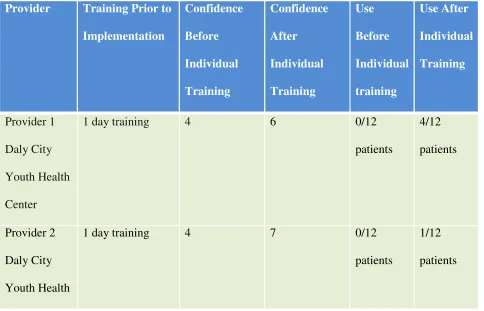
All providers involved increased their confidence in motivational interviewing by at least 2 points on the 11-point scale (average increase = 2.5 points). Use was increased in all providers except one (average increase = 2 patients) (see Table 1 for results). This provider explained that her use did not change, but the content and effectiveness of motivational interviewing was notably different. The provider stated that her use of motivational interviewing was drastically more patient directed and included more reflections, less directed advice, and was more
stated that she had been working with a specific patient for years to take anxiety medications for self-care, but the adolescent was too afraid. She has one session of motivational interviewing with her and barriers to taking the medication were revealed that she had never heard before. She was shocked at the information she was able to get from the patient and the increase in trust the patient had to reveal this information. At the end of one session the patient stated her confidence was a 7/10 to try to take a small dose of her anxiety medication. Another provider, in assessing dietary recall on a 16-year-old female, discovered many areas that could be improved for weight loss. Instead of just choosing the area that needed to be modified, as she would have done before, the provider let the patient scale each area for her confidence in being able to make changes. Improving the content of her breakfast was what the patient was most confident in changing. Although this was not what the provider would have chosen to obtain the most weight loss, it led to the patient having ownership in the decision and increasing her chances of being able to make the change. These specific examples will hopefully lead to positive outcomes for the patient and in turn increase provider self-efficacy in their effectiveness in conducting motivational
interviewing.
Themes that arose from the training that stood out as essential elements to increasing understanding, confidence, and use of motivational interviewing were: having an open mind to learn a completely new way of provider-patient communication, letting go of the expert role, noticing change talk, and understanding when and how to move the conversation forward with complex reflections. Further analysis of this will be explained in the discussion section of the project report.
San Mateo county pediatric providers meeting (see Appendix H for final presentation). The providers involved in the training presented cases to illustrate their progress in motivational interviewing. This presentation increased macrosystem knowledge of the effectiveness of the training and sparked potential for further trainings for providers in other clinics in San Mateo County.
Discussion
Summary
The results show that the quantitative goal was met for the confidence objective and was not met for the use objective. All providers stated they felt confident in identifying when to use it, but still indicated low self-efficacy in using it themselves. The most common reason for this was that the style of motivational interviewing was very different than how they had been trained to communicate with patients. Providers compared it to learning a new language and not quite having the confidence to speak it yet. Letting go of the expert role was the key concept of motivational interviewing that they had the most difficulty changing. Specifically, giving advice and directing the conversation were the most challenging to aspects of their role that they hard a hard time letting go of. Time was the most common barrier to use among providers. As expected, they found it difficult to incorporate into their busy schedule and found that when they did, it increased the time of their visits.
addressing proper use and knowledge of motivational interviewing (Lane, 2002). Provider discussions of these themes during the training and during the final presentation demonstrated significant growth in their understanding of motivational interviewing.
In evaluating the training from the perspective of Bandura’s self-efficacy theory, it was found that the importance of peer modeling could have been addressed more. In the future, group sessions discussing patients and getting peer feedback on use would be helpful to increase self-efficacy.
Relation to other evidence
There are numerous studies and systematic reviews analyzing the effects of training on motivational interviewing. Most of the research on motivational interviewing training has been done in the substance abuse arena and demonstrates that a combination of didactic training and long-term feedback on provider competence in motivational interviewing is the most effective strategy (De Roten et al., 2013; Madson et al, 2006; Moyers & Hendrickson, 2010). Primary care settings are beginning to research the effects of training on providers’ competence and patient outcomes, however the research is not high in quality. The results of this quality improvement project were consistent with Cuccaire et al.’s (2012) research for the VHA that deduced that brief motivational interviewing training to primary care providers with little to no knowledge of motivational interviewing increased knowledge and confidence in promoting lifestyle changes. The project’s training plan matched the research in style and approach, however it was short in length, and limited in scope owing to the non-research status of the project. Furthermore, long term follow up of provider competence in motivational interviewing is warranted to assess sustainability.
This project had several barriers and limitations. First, there was no funding granted from the sites for implementation. This led to limitations in the amount of providers trained, the extent of the training materials and time spent with providers. Only 4 providers were able to take part in the training, if the resources had been greater, more providers could have been trained thus
allowing for an increased macrosystem involvement and more confident evaluation of the results. Secondly, the project implementation only lasted 2 months. According to the research, this is not sufficient to promote sustainable change. With a longer time frame there could have been more sessions and increased learning, feedback, and practice time for the providers. Thirdly, the trainer and lead of the project was not proficient in motivational interviewing prior to the project’s creation. Training consisted of extensive reading and a 3-day advanced motivational interviewing course. The trainer did not have a prolonged period of sole practice and use of motivational interviewing, thus a more experienced trainer could have possibly had a larger effect on the providers increase in confidence and use of motivational interviewing. Lastly, It was realized during project implementation that assessing provider use of motivational interviewing over an average day did not yield the intended information most valuable to the results of the project. Variability in provider use due to patient type, load, and the time
constraints of the day, led to difficulty in attaining responses from the providers that illustrated their practical use of motivational interviewing. One provider stated that in retrospect her initial use number was inaccurate, as she has now realized that she was not really practicing
Interpretation
Madson (2009) discusses two phases of motivational interviewing proficiency. The first phase focuses on the creating the client’s motivation for change. The second phase is based on consolidating the patient’s commitment to acting on their plan for change. The initial proposed plan for the project was to address both of these phases by following one patient through the various stages of readiness for change. The providers did experience practice with patients in differing stages of change however, they did not have experience following one patient thorough the process of creating motivation to consolidating commitment. Success in this experience would have most likely illustrated the positive effects of motivational interviewing and thus may have had an increased effect on confidence and use results.
The research on training suggests that audio taped recordings of provider use of
motivational interviewing in practice are highly effective in providing feedback and increasing provider proficiency in motivational interviewing. The extent of approval for this project likely would not allow recording without IRB approval and consent of the patients and their parents. The benefits and risks of this additional piece to the training would have to be fully addressed to be able to improve the project with audiotaping.
Implications for the future. Future opportunities this project are abundant and include
continuing the training longer to ensure sustainability, obtaining funding for training the rest of San Mateo County, and introducing motivational interviewing to FNP education programs. Research clearly states that healthcare providers have low confidence in motivational
pages to the training manual with examples and spaces for providers to write in their possible reflections. This would demonstrate their ability and give them practice in creating reflections on their own time. Another provider suggested providing case studies and peer feedback at the monthly clinic provider meetings. An example of this was illustrated in the final evaluation presentation. Providers who participated in the training presented cases of their motivational interviewing use to the group. This example of peer modeling provoked discussion about motivational interviewing for providers that were not involved in the training and sparked significant interest in further training. This interest illustrated the success of the project in
presenting positive results as well as the need for further macrosystem evolvement of the training program.
Highlighting motivational interviewing techniques in advance nursing practice training programs, such as in family nurse practitioner programs, would improve NP skill and efficacy in motivational interviewing.
Conclusions
The success of this project and the positive feedback from San Mateo County exemplified the evidence based effectiveness of motivational interviewing, and also solidified the evidence that providers are in need of training in behavior change techniques. With the growing trend of childhood obesity and the recent national interest in this subject, there is potential for grant funding to help support the expansion of this project. Research has begun to show MI
another way to increase the number of providers with confidence in behavioral change management skills. This project and the proposal for its expansion will help to increase the knowledge and awareness of the use of motivational interviewing in pediatric primary care settings where the foundations of weight management and prevention of obesity are crucial for the health of future adults.
References
American Academy of Pediatrics (2006). Active Healthy Living: Prevention of childhood
obesity through increased physical activity. Pediatrics, 117, 1834-1842. doi:
American Heart Association (2013). AHA scientific statement. Physical Activity and Children.
Retrieved from
www.heart.org/HEARTORG/GettingHealthy/Physical-Activity-and-Children_UCM_304053_Article.jsp
American College of Obstetrics and Gynecology (2009). ACOG committee opinion:
Motivational interviewing: A tool for behavior change. Obstetrics and Gynecology , 113, 243-246. Retrieved from
http://www.acog.org/~/media/Committee%20Opinions/Committee%20on%20Health%20 Care%20for%20Underserved%20Women/co423.pdf?dmc=1&ts=20130916T0404533904
Artinian, N.T., Fletcher, G.F., Mozaffarian, D., Kris-Etherton, P., Van Horn, L., Lichtenstein,
A.H.,…Burke, L.E. (2010). Interventions to promote physical activity and dietary
lifestyle changes for cardiovascular risk factor reduction in adults: A scientific statement
from the American Heart Association. Circulation, 122, 406-441. doi:
101161/CIR.0b013e3181e8edf1
Barlow, S.E., & Dietz, W.H. (2002). Management of child and adolescent obesity: Summary and
recommendations based on reports from pediatricians, pediatric nurse practitioners, and
registered dieticians. Pediatrics, 111, 236-238. Retrieved from
http://pediatrics.aappublications.org/content/110/Supplement_1/236.full.pdf+html
Bandura, A. (1977). Self-efficacy: Toward a unifying theory of behavioral change.
Psychological Review, 84, 191-215. Retrieved from
http://0-web.ebscohost.com.ignacio.usfca.edu/
Berg-Smith, S.M. (2013) Motivational Interviewing: Continuing the journey. Advanced
Motivational Interviewing Training Workbook. Retrieved from Berg-Smith A.I.M for
Change Training Dec 4-6, 2013
K. (1999). A brief motivational intervention to improve dietary adherence in adolescents.
Health Education Research, 14, 399-410. Retrieved from http://her.oxfordjournals.org
Britt, E., Hudson, S.M., & Blampied, N.M. (2004). Motivational interviewing in health settings:
A review. Patient Education and Counseling, 53, 147-155.
doi:10.1016/S0738-3991(03)00141-1
Bodenheimer, T., & Handley, M.A. (2009). Goal setting for behavior change in primary care: an
exploration and status report. Patient Education and Counseling, 76, 174-180. doi:
10.1016/j.pec.2009.06.001
Caroll, K.M., Ball, S.A., Nich, C., Martino, S., Frankforter, T.L., Farentinos, C…Woody, G. E.
(2006). Motivational interviewing to improve treatment engagement and outcomes in
individuals seeking treatment for substance abuse: A multisite effectiveness study. Drug
and Dependence, 81, 301 -312. doi 10.1016/j.drugalcdep.2005.08.002
Centers for Disease Control and Prevention (2013). Childhood obesity facts. Adolescent and
School Health. Retrieved from http://www.cdc.gov/healthyyouth/obesity/facts.htm
Centers for Disease Control and Prevention (2012). Chronic diseases and health promotion.
Chronic Disease Prevention and Health Promotion. Retrieved from
http://www.cdc.gov/chronicdisease/overview/index.htm
Centers for Disease Control and Prevention (2011). Table 74: Healthy weight, overweight and
obesity among persons 20 years of age and over, by selected characteristics: United
States, selected years 1960-1962 through 2007-2010. Trend Tables. Retrieved from
Centers for Disease Control and Prevention (2010). Heart disease and stroke prevention:
Addressing the nation’s leading killers: At a glance 2011. Retrieved from
http://www.cdc.gov/chronicdisease/resources/publications/AAG/dhdsp.htm
Cohen, D.J., Balasubaramanian, B.A., Isaacson, N.F., Clark, E.C., Etz, R.S., & Crabtree, B.F.
(2011). Coordination of health behavior counseling in primary care. Annals of Family
Medicine, 9, 406-415. doi:10.1370/afm.1245.
Cook, S., Weitzman, M., Auinger, P., Barlow, S.E. (2005). Screening and counseling associated
with obesity diagnosis in the national survey of ambulatory pediatric visits. Pediatrics,
116, 112-116. doi 10.1542/peds.2004-1517
Cuccaire, M.A., Ketroser, N., Milbourne, P., Midboe, A.M., Cronkite, R. Berg-Smith, S.M., &
Chardos, J. (2012). Teaching motivational interviewing to primary care staff in the
Veterans Health Administration. Journal of General Internal Medicine, 8, 953-961. doi:
10.1007/s11606-012-2016-6.
Daly City Youth Health Center (n.d.). Mission. Who We Are. Retrieved from
http://www.dalycityyouth.org/mission.html
De Roten, Y., Zimmerman, G., Ortega, D, & Despland, J. (2013). Meta-analysis of the effects of
MI training on clinician’s behavior. Journal of Substance Abuse Treatment, 45, 155-162.
http://dx.doi.org/10.1016/j.jsat.2013.02.006
Gold, M, & Kokotailo, P.K., (2007). Motivational interviewing strategies to facilitate adolescent
behavior change. Adolescent Health Update, 20, 1-10. Retrieved from
http://pubs.niaaa.nih.gov/publications/Practitioner/YouthGuide/AAPAdolescentHealthUp
dateBMI.pdf
Hardcastle, S.J., Taylor, A.H., Bailey, M.P., Harley, R.A., & Hagger, M.S. (2013). Effectiveness
cardiovascular disease risk factors: A randomised controlled trial with a 12-month
post-intervention follow-up. International Journal of Behavioral Nutrition and Physical
Activity, 10. doi:10.1186/1479-5868-10-40. Retrieved from
http://www.ijbnpa.org/content/10/1/40
Herman, B. (2012). 120 Statistics on medical director compensation. Becker’s Hospital Review.
Retrieved from
http://www.beckershospitalreview.com/compensation-issues/120-statistics-on-medical-director-compensation.html
Jelalian, E., Boergers, J., Alday, C.S., & Frank, R. (2003). Survey of physician attitudes and
practices related to pediatric obesity. Clinical Pediatrics, 42, 235-245. doi
10.1177/000992280304200307
Lane, C. (2002). The behavior change counseling index (BECCI): Manual for coding behavior
change counseling. Retrieved from
http://motivationalinterview.net/library/BECCIManual.pdf
Madson, M.B., Loignon, A.C., & Lane, C. (2009). Training in motivational interviewing: A
systematic review. Journal of Substance Abuse Treatment, 36, 101-109.
doi:10.1016/j.jsat.2008.05.005
Martino, S., Ball, S.A., Gallon, S.L., Hall, D., Garcia, M., Ceperich, S., Farentinos, C., Hamilton,
J., & Hausotter, W. (2006) Motivational Interviewing Assessment: Supervisory Tools for
Enhancing Proficiency. Salem, OR: Northwest Frontier Addiction Technology Transfer
Center, Oregon Health and Science University.
Miller, W.R., & Rollnick, S. (2013). Motivational intervewing: Helping People Change (3rd
Miller, W. R. & Rollnick, S. (2002). Motivational interviewing: Preparing people for change
(Kindle Edition). New York: Guilford Publications, Inc.
Miller, W. R., Yahne, C.E., Moyers, T.B., Martinez, J., & Pirritano, M. (2004). A randomized
trial of methods to help clinicians learn motivational interviewing. Journal of Consulting
and Clinical Psychology, 72, 1052-1056. doi: 10.1037/0022-006X.72.6.1050
Moyers, T.B., & Hendrickson, S. (2010). What to expect from clinicians when training and using
motivational interviewing: Research findings [PDF format]. Retrieved from
http://www.motivationalinterview.org/Documents/Moyers-and-Hendrickson-june6-pre-conference-workshops.pdf
Moyers, T.B., Martin, T., Manuel, J.K., Miller, W.R., & Ernst, D. (2010). Revised Global
Scales: Motivational interviewing integrity 3.1.1. Retrieved from
http://www.motivationalinterview.org/Documents/miti3_1.pdf
Naar-King, S. & Suarez, M. (2011). Motivational interviewing with adolescents and young
adults (Kindle Edition). New York: Guilford Publications, Inc.
National Research Council & The Institute of Medicine (2009). Adolescent health services:
Missing opportunities. Washington, D.C.: The National Academies Press. Retrieved from
http://books.nap.edu/openbook.php?record_id=12063&page=1
Neumark-Sztainer, D.R., Friend, S., Flattum, C.F., Hannan, P.J., Story, M.J….Petrich, C.A.
(2010). New moves- Preventing weight related problems in adolescent girls. American
Journal of Preventative Medicine 39, 421-432. doi:10.1016/j.amepre.2010.07.017.
O’Brien, S.H., Holubkov, R., & Reis, E.C. (2004). Identification, evaluation, and management of
obesity in an academic primary care center. Pediatrics, 114, e154. Retrieved from: