University of New Orleans Theses and
Dissertations Dissertations and Theses
12-20-2002
Self-Assembly, Templation and Biomimetics
Self-Assembly, Templation and Biomimetics
Xuehe Li
University of New Orleans
Follow this and additional works at: https://scholarworks.uno.edu/td
Recommended Citation Recommended Citation
Li, Xuehe, "Self-Assembly, Templation and Biomimetics" (2002). University of New Orleans Theses and Dissertations. 8.
https://scholarworks.uno.edu/td/8
This Dissertation is protected by copyright and/or related rights. It has been brought to you by ScholarWorks@UNO with permission from the rights-holder(s). You are free to use this Dissertation in any way that is permitted by the copyright and related rights legislation that applies to your use. For other uses you need to obtain permission from the rights-holder(s) directly, unless additional rights are indicated by a Creative Commons license in the record and/ or on the work itself.
A Dissertation
Submitted to the Graduate Faculty of the
University of New Orleans
in partial fulfillment of the
requirement for the degree of
Doctor of Philosophy
in
The Department of Chemistry
by
Xuehe Li
B.S., Hunan University, 1994
M.S., Renmin University of China, 1997
ACKNOWLEDGEMENT
I wish to express my gratitude to all the people who have supported me. I
am indebted to Dr. Bruce C. Gibb, my major professor, for always being patient
and supportive. During my five year study at UNO, he has provided me with
financial, intellectual and spiritual support along the way. I am very fortunate to
have Dr. Ronald Evilia, Dr. Stanley Goldberg (retired), Dr. Jack Timberlack
(retired), Dr. Branko Jursic, Dr. Mark Trudell, and Dr. Guijun Wang on my
committee. They have been very cooperative and given me helpful suggestions
and fresh ideas. I must thank all my coworkers in our group for sharing their
knowledge and experience, joy and frustration with me. Without them, it would
have been impossible for me to finish my research projects. I also want to thank
Dr. Edwin Stevens for X-ray structure analysis, and Dr. Richard Cole and Dr.
Chau-wen Chou for Mass Spec analyses.
I am grateful to my beloved wife, Li Wang. She has been taking care of
me while she herself pursued and successfully obtained her Ph.D degree in
education. I must thank my parents Yue Li and Lan Wang and my sister Xuelai
Li for loving and caring for me. Without them nothing would be possible.
TABLE OF CONTENTS
ACKNOWLEDGEMENT ... ii
TABLE OF CONTENTS... iii
LIST OF TABLES... vi
LIST OF FIGURES... vii
LIST OF SCHEMES... ix
ABSTRACT... xiii
ABBREVIATIONS... xiv
I. INTRODUCTION 1.1 Supramolecular Chemistry ...1
1.2 Moleular Recognition ...2
1.3 Enzyme Mimicry ...4
1.3.1 Carbonic Anhydrase...4
1.3.2 Polyamine Ligands...7
1.3.3 Tripodal Ligands...8
1.3.4 Tach-based Ligands………...9
1.4 Self-assembly...11
1.4.1 Strict Self-assembly ...11
1.4.1.1 Metal Coordination Directed Self-assembly……….12
1.4.1.2 Hydrogen-Bonding Directed Self-Assembly...17
1.4.2.1 Catenanes and Rotaxanes...23
1.4.2.2 Carceplexes ...25
1.5 Templation ...28
1.5.1 Non-covalent Templation ...30
1.5.2 Covalent Templation...34
1.6 Host-Guest Chemistry...35
1.6.1 Stabilization of Reactive Intermediates ...37
1.6.2 Promotion of Reaction Inside Hosts ...40
II. Novel Ligands For Carbonic Anhydrase Mimicry...45
2.1 Trisnicotinic Acid Ligand 83...49
2.2 Trispicolinic Acid Ligand 84...50
2.3 Discussion...53
III. Synthesis and Self-assembly of Tetraphenylmethane-based Subunits ...56
3.1 Synthesis of Tetraphenylmethane based Subunit 100...63
3.2 Selection of Protecting Group...66
3.3 Coupling of Subunit 112...72
IV. Novel Molecular “Baskets”...79
4.1 Formation of Deep-cavity Cavitand 118...80
V. Template Assisted Synthesis of Large Crown Ethers...98
VI. Conclusions...106
VII. Experimental Section...107
7.1 General...107
7.2 Synthesized Compounds...107
7.3 X-ray Structure Analysis of Basket 124...145
VIII. References...171
VITA...182
LIST OF TABLES
Table 2.1 Formation of C2v bis-pryidylketones and C3v tris-pyridylmethanols
...54
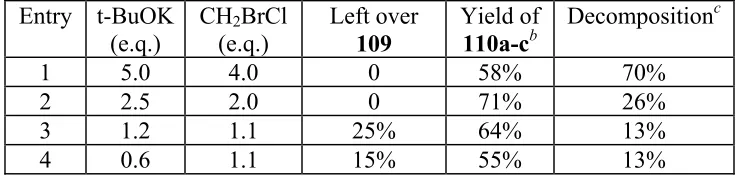
Table 3.1 Model reactions of compound 109...70
Table 3.2 Model reactions of 99 under modified conditions ...72
Table 3.3 Coupling of 112 at different concentrations...76
Table 4.1 Selected data of associate constant between guests G1-G4 and the hosts 119,130, 132 in toluene-d8 at 298K ...96
Table 7.1 Crystal data and structure refinement for basket 124...146
Table 7.2 Atomic coordinates (× 104) and equivalent isotropic displacement parameters (Å2 × 10³) for basket 124...147
Table 7.3 Bond lengths [Å] and angles [deg] for basket 124...152
Table 7.4 Anisotropic displacement parameters (Å2 x 10³) for basket 124 ...163
Table 7.5 Hydrogen coordinates ( x 104) and isotropic displacement parameters (Å2 x 10³) for basket 124...168
LIST OF FIGURES
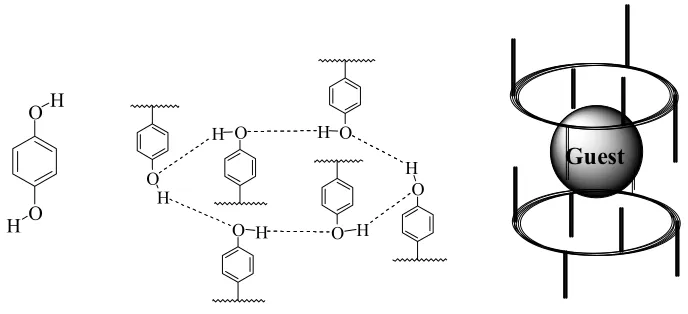
Figure 1.1 Hydroquinone and “guests” molecules assembled into a clathrate
...3
Figure 1.2 The active site of carbonic anhydrase II (CAII) ...5
Figure 1.3 “Facial” binding of a tripodal ligand ...9
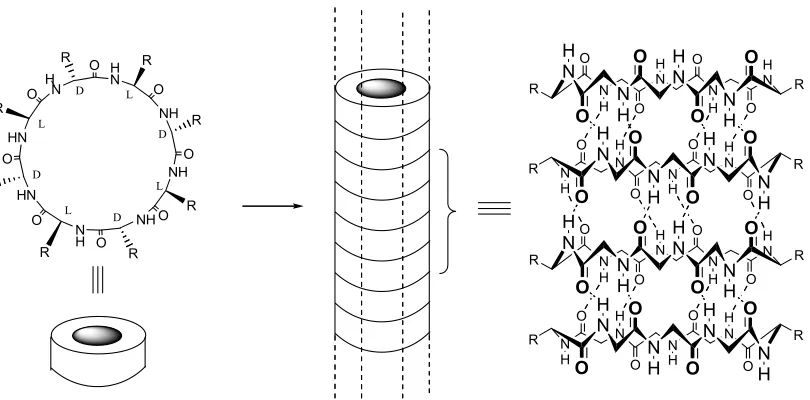
Figure 1.4 Schematic diagram of peptide nanotube formation from cyclic D,L-peptides...22
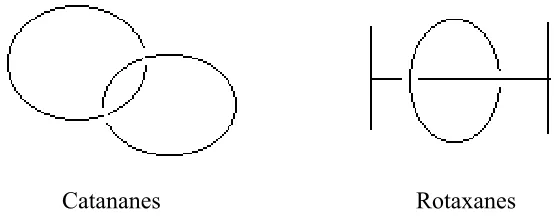
Figure 1.5 Cartoon representation of catenanes and rotaxanes...24
Figure 1.6 Template used in building archways ...29
Figure 2.1 ML2 complexes M·(81)2 and M·(82)2. ...46
Figure 2.2 A dendritic structure containing a designed cleft to control the ligand coordination behavior ...47
Figure 3.1 Some of the possible products derived from the coupling of 101, and the approximate sizes of different products ...62
Figure 3.2 1H NMR spectrum of ‘dimer’ 114...74
Figure 3.3 1H NMR spectrum of ‘timer’ 115...75
Figure 3.4 MALDI-TOF mass spectrum of the mixture of ‘tetramer’ through ‘hexamer’...75
Figure 3.5 Space filling model of the ‘hexamer’ ...77
Figure 4.1 ORTEP view of basket 124...85
Figure 4.2 VT 1H NMR of 124 in DMSO-d6...86
Figure 4.3 1HNMR spectrum of 126...88
Figure 4.4 Cartoon representation of guest orientation within the cavity of the baskets...89
Figure 4.6 The two bis-bridged cavitand isomers...92
Figure 4.7 CPK Model of mono-bridged species 131a...93
Figure 5.1 Reversible acetal cleavage and formation ...101
Figure 5.2 NMR spectra (a) before and (b) after the hydrolysis of the crude product from the reaction between 119 and BBr3...102
Figure 7.1 1H NMR spectrum of 136...139
Figure 7.21H NMR spectrum of 137...140
Figure 7.31H NMR spectrum of 138...140
Figure 7.41H NMR spectrum of 139...141
Figure 7.51H NMR spectrum of 140...142
Figure 7.61H NMR spectrum of 141...143
Figure 7.7 1H NMR spectrum of 142...144
Figure 7.81H NMR spectrum of 143...144
LIST OF SCHEMES
Scheme 1.1 18-Crown-6 and its K+ complex ...3
Scheme 1.2 Mechanism of hydration of CO2 by CAII...6
Scheme 1.3 Catalytic carboxyester hydrolysis by Zn2+ complex of 2a...8
Scheme 1.4 Formation and decomposition of ligand 4...10
Scheme 1.5 Cartoon representation of strict self-assembly...12
Scheme 1.6 Self-assembly of 8 and 9 to form 10...13
Scheme 1.7 Formation of an M6L4 octahedral cage 12...14
Scheme 1.8 Formation of an M6L4 square-pyramidal cone 13...14
Scheme 1.9 Formation of an M18L6 hexahedron 15...15
Scheme 1.10
Fifty molecules assemble to form a supramolecular dodecahedron ...16Scheme 1.11 Self-assembly of coordination D3h cage 21...16
Scheme 1.12 Formation of a “Tennis Ball” 23...18
Scheme 1.13 Formation of a “softball” 25...19
Scheme 1.14 Formation of a “Jelly Doughnut” 27...20
Scheme 1.15 Formation of a “Tetramer” 29...20
Scheme 1.16 Formation of a cylindrical capsule 31...21
Scheme 1.17 Cartoon representation of self-assembly with covalent modification ...23
Scheme 1.18 Formation of [2]catenane 35...25
Scheme 1.20
Formation of a tetra acetal-bridged carceplex 40·Guest...26Scheme 1.21 Two tetrol bowls self-assemble into charged hydrogen- bonded complex 41·Guest...27
Scheme 1.22 Formation of hemicarcerand 44 from DCC 42...28
Scheme 1.23 Condensation of 2-aminobenzaldehyde in the presence of zinc (II) chloride leads to the tetrameric macrocycle 38...30
Scheme 1.24 Potassium ion template directed formation of benzo[18]crown-6 ...31
Scheme 1.25 Self-replicating system designed by Rebek ...33
Scheme 1.26 Radical-relay chlorination under template control ...34
Scheme 1.27
Template-controlled cycloaddition in Koga’s synthesis of Stoechospermol 57...35Scheme 1.28 Photochemical generation of cyclobutadiene ...38
Scheme 1.29 o-benzyne stabilized by hemicarcerand host 64...39
Scheme 1.30 Inner-phase phenylcarbene rearrangement inside hemicarcerand 56...40
Scheme 1.31 Cavity-directed synthesis of cyclic silanol trimer 70...41
Scheme 1.32 Catalytical cycle of cycloaddition of 71 and 72 with a “soft- ball” 25 as catalyst ...42
Scheme 1.33 The reaction of 76 and 77 gives comparable amounts of the
two regioisomers ...43
Scheme 1.34 The disproportionation equilibria of encapsulated reactants ...44
Scheme 2.1 ML2 sandwich complex formation ...45
Scheme 2.2 Sythesis of trisnicotinic acid ligand 83...49
Scheme 2.3 Attemptedsynthesis of trispicolinic acid ligand 84...50
Scheme 2.5 Synthesis of trispicolinic acid ligand 84...52
Scheme 2.6 Formation of new ligands 98...55
Scheme 3.1 Assembly tree of the assembly of DCC 42...57
Scheme 3.2 Acetal formation via a Charged Hydrogen Bond (CHB) complex ...58
Scheme 3.3 Assembly of 1,3-benzenedimethanol...59
Scheme 3.4 The assembly tree (a) and ‘probability tree’ (b) of the assembly
of 1,3-benzenedimethaol to form the ‘dimer’ ...60
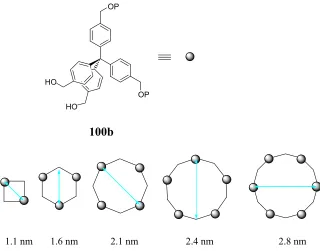
Scheme 3.5 Proposed self-assembly of subunit 100a...61
Scheme 3.6 Multi-generation coupling of proposed subunit 100b...63
Scheme 3.7 Formation of tetraphenylmethane...65
Scheme 3.8 Synthesis of subunit 100...66
Scheme 3.9 Model study on the stability of TBDPS...67
Scheme 3.10 Nucleophilic attack of CH3SOCH2- on the aldehyde group .68 Scheme 3.11 Deprotection of RO-SEM ...69
Scheme 3.12 Model reaction of compound 109...70
Scheme 3.13 Coupling of subunit 112...74
Scheme 3.14 Deprotection of the ‘dimer’ 114...77
Scheme 4.1 Synthesis of basket 119...79
Scheme 4.2 Structure of resorcinarene proposed by Niederl and Vogel....80
Scheme 4.3 Synthesis of 3,5-dibromobenzal bromide ...82
Scheme 4.4 Synthesis of basket 126...87
Scheme 4.5 Synthesis of key intermediate 129...90
Scheme 4.7 Formation of mono-functionalized baskets ...94
Scheme 5.1 Template assisted synthesis of crown ether 136...100
ABSTRACT
Self-assembly, templation and biomimetics are three important,
overlapp-ing areas in supramolecular chemistry. Some contributions to these three areas
are introduced.
Novel substituted trispyridylmethanol derived ligands were synthesized to
mimic the active site of carbonic anhydrase. The key two-step process in
constructing the trispyridylmethanol core structure is proven to be more efficient
than the traditional one-step synthesis.
Self-assembly is a very efficient way to form nanoscale structure from
relatively simple subunits. Tetraphenylmethane-based subunits were synthesized.
The result of self-assembly reactions demonstrated the formation of 1~3 nm sized
molecules in one step. Potential multi-generation self-assembly on this subunit is
also discussed.
A novel and efficient approach for the synthesis of large aromatic crown
ethers, using resorcinarenes as templates, has been developed. This simple
three-step process generated a new family of aromatic crown ethers in up to 50%
overall yield. As intermediates from these three-step syntheses, a large variety of
molecular “baskets”, which have been shown to be excellent hosts for
adamantanes, have also been obtained.
ABBREVIATIONS
Ac Acetate
aq. Aqueous
n-BuLi n-Butyllithium
°C Degrees Celsius
d Day, days
DBU 1,8-Diazabicyclo[5.4.0]undec-7-ene
DCC Deep cavity cavitand
DMA N,N’-Dimethylacetamide
DMF N,N’-Dimethylformamide
DMSO Dimethylsulfoxide
Et Ethyl
h Hour, hours
HMPA Hexamethylphosphoramide
MALDI Matrix-assisted laser desorption ionization
Me Methyl
MOE Ethoxymethyl
Ph Phenyl
i-Pr Isopropyl
SEM Trimethylsilylethoxymethyl
TBAF Tetrabutylamonium fluoride
TBDPS t-Butyldiphenylsilyl THF Tetrahydrofuran
TLC Thin layer chromatography
TMEDA N,N,N’,N’-Tetramethylenediamine
TMS Trimethylsilyl
TOF Time-of-flight
Ts Tosyl (p-Toluenesulfonyl)
I. INTRODUCTION
1.1 Supramolecular
Chemistry
The term “supramolecular chemistry” was introduced in 1969 by Jean-Marie
Lehn as “chemistry beyond the molecule”.1 The 1987 Nobel Prize in Chemistry
awarded to Pedersen, Cram and Lehn signified the formal arrival of this field of
chemistry.
For a long time chemists have tried to understand Nature at a purely
molecular level, i.e., they considered structures and functions involving only
covalent bonds. However, many of the most important biological phenomena do
not involve breaking and forming covalent bonds. Biological structures are
usually made from loose aggregates that are held together by weak, non-covalent
interactions. These interactions are responsible for most processes in the living
system.
It was not until the end of the 19th century that chemists began to recognize
this new, non-covalent facet of chemistry. In 1894, Emil Fischer proposed that an
enzyme interacts with its substrate as a key does with its lock.2 This concept laid
the basis for molecular recognition, the discrimination by a host between a
num-ber of guests. However, supramolecular chemistry remained under-developed for
between molecules. Over the past 30 years, with the development of modern
technology such as NMR spectroscopy, mass spectroscopy, X-ray diffraction,
etc., this area has undergone enormous development. On the other hand,
supramolecular chemistry is still in its forming stage. A systematic structure to
the various subfields that make up supramolecular chemistry is still not available.
Thus, many concepts in this area are overlapping with each other; complete
isolation of these concepts is not always possible.
1.2 Molecular Recognition
Molecular recognition is defined by Lehn as “the energy and information
involved in the binding and selection of substrate(s) by a given receptor molecule;
it may also involve a specific function.”1 Recognition implies the geometrical
and interactional complementarity between the associating receptors and
substrates. Molecular recognition lies at the core of the so-called “host-guest
chemistry” (see section 1.6).
One of the earliest examples of molecular recognition was the clathrates
described by Powell.3 These inclusion compounds were formed when small
“guest” molecules such as methanol, hydrogen sulphide or sulphur dioxide, were
completely enclosed in cavities formed by a “host” such as a hydroquinone
network (Figure 1.1). The host was formed by intermolecular hydrogen bonds of
hydroquinones and there was no covalent interaction between the host and the
undesirable paraffins were removed from gasoline by trapping in a clathrate
lattice.
O H
O H
O H O
H
O H
O
H Guest
O
O H
H
Figure 1.1 Hydroquinone and “guests” molecules assembled into a clathrate.
Another example of molecular recognition is the ability of crown ethers to
selectively bind metal cations. 18-Crown-6, which has a diameter of 260-320 pm
(depending on the conformation), binds K+ strongly (Scheme 1.1). Larger sized
Cs+ fits in 21-crown-7, while smaller Na+ fits in 15-crown-5 and Li+ fits in
12-crown-4.
O O
O
O O
O
O O
O
O O
O
K+
K+
1.3 Enzyme Mimicry
The initial motivation behind supramolecular chemistry was to design
chemical systems that mimic biological processes. This gradually lead to the
formation of biomimetic chemistry; the mimicry of nature. Enzyme mimicry has
drawn much attention in the past forty years. In nature, enzymes (usually protein
molecules) are the key elements in performing chemical reactions within cells.
The active site of an enzyme is usually a three-dimensional entity formed by
groups that come from different parts of the linear amino acid sequence. It takes
up a relatively small part of the total volume of an enzyme and substrates are
bound to enzymes by multiple weak interactions.4
1.3.1 Carbonic Anhydrase
A considerable number of enzymes require a metal ion for catalytic
activity. One of these elements, zinc, is known to be functional in almost 300
enzymes representing all subgroups of the enzyme classification.5 Of these
enzymes, carbonic anhydrase (CA), a family of enzymes responsible for the
hydration of carbon dioxide, are probably the most studied.6 In addition to its
biological role, CA has also been shown to catalyze the hydration of acetaldehyde
and carboxylate esters small enough to fit within the active site.7-10 The
three-dimensional structure of carbonic anhydrase II (CAII), an isozyme found in
human red blood cells,11 revealed the active site as shown in Figure 1.2. The
essential zinc cofactor is coordinated to three histidine residues (His 94, His 96,
and His 119) and a solvent molecule (H2O) in an approximately tetrahedral
water molecule coordinated to the zinc center has a value of ca. 7.5.12,13 At
physiological pH, it is a hydroxide ion that is bound to zinc. It is this species that
nucleophilically attacks electron deficient carbon atoms, such as those in carbon
dioxide and carboxylate esters, resulting in the hydration or cleavage of the
respective molecules. The exact geometry of the active site is determined by the
surrounding hydrogen bond network. The zinc ligands are fully saturated by
hydrogen bond networks within second shell residues, which are referred as
“indirect” zinc ligand (Figure 1.2).14,15
Zn2+ N N H N N N N H O H NH2 O O O O H O O
O H
-Val His Cys Asp Glu Thr-199 Glu-106 -Glu-117 Gln Ala His-119 Cys Asp Asn Gln His-96 Cys NH Asn-244 (backbone)
Scheme 1.2 illustrates the mechanism of hydration of CO2 by CAII.6
Zinc-bound hydroxide attacks the carbon atom of CO2 to form zinc-bound
bicarbonate. Isomerization of the bicarbonate, followed by the exchange of water
molecule for zinc-bound bicarbonate generates the zinc-bound water species and
releases the bicarbonate. Under the physiological environment, the zinc-bound
water is deprotonated and regenerates the zinc-bound hydroxide.
O H His-119 His-96 His-94 O C O O H His-119 His-96 His-94 C O O His-119 His-96 His-94
O C O
O H
H HCO3
-H2O O H His-119 His-96 His-94 O H His-119 His-96 His-94 CO2 H+
Zn2+ Zn2+ Zn2+ Zn2+
Zn2+
Scheme 1.2 Mechanism of hydration of CO2 by CAII.
In attempting to elucidate the carbonic anhydrase enzyme mechanism,
biomimetic approaches have been widely pursued. In essence, a macromolecule
establish how, and why, the chemistry of zinc is modulated by its coordination
environment.
1.3.2 Polyamine Ligands
One approach, used by Kimura et. al, was to utilize a number of
macrocyclic polyamines ligands.16,17 For examples, the zinc aquo complex of
triamine, [12]ane N3 (1) has been shown to possess a pKa value of 7.3, very
similar to CA.18
N N
N H H
H Zn2+
OH2
zinc aquo complex of 1
The alcohol-pendant cyclen (2a) has been shown to possess considerable
esterase activity (Scheme 1.3).19 The tethered alcoholic OH of 2a deprotonated
with a pKa of 7.4 to yield an alkoxide RO–—Zn2+ complex 2b. The zinc-bound
alkoxide anion directly attacked electrophilic ester carbonyls such as those in
4-nitrophenyl acetate, to yield an acyl-intermediate 2c. It was then quickly
hydrolyzed, possibly by the intramolecular zinc-bound water (or –OH), to
complete the hydrolysis and regenerate the initial alkoxide complex 2b.
indicate that the noted similarity in pKa between CA and such zinc complex, may
be more coincidence than an accurate representation of the active site.20
N N
N H
H Zn2+
O
N N
N H H
OH
Zn2+
O
NO2 O
N N
N H
H Zn2+
OH O O
O NO2
-CH3COOH
2a
2b 2cScheme 1.3 Catalytic carboxyester hydrolysis by Zn2+ complex of 2a.
1.3.3 Tripodal Ligands
Another approach towards CA mimicry features the synthetic “tripodal”
ligands.21 Compared to the aforementioned cyclic polyamine ligands, the tripodal
ligands have the following advantages: (1) the rigid tripodal ligands are well
pre-organized to enforce the “facial” binding that is required to create a tetrahedral
metal center (Figure 1.3); (2) the tripodal ligands typically possess only a single
relevant binding conformation whereas macrocyclic ligands are more
conformational flexible; (3) the directional nature of the tripodal ligands makes it
possible to incorporate substituents that directly influence the steric environment
around the metal center, while macrocyclic ligands are not suitably placed to have
X
Z
M
Y
Figure 1.3 “Facial” binding of a tripodal ligand.
An example that illustrated the above virtues was the tris(pyrazolyl)borate
ligand syetem, [TpRR’] (3). With bulky tert-butyl substituents on the 3-position of
the pyrazolyl groups (R = t-Bu), the ligand has been referred as a “tetrahedral
enforcer”, due to its tendency to favor tetrahedral coordination.22 Not only could
the substituents at the 3-position be used to modify the size of the coordination
pocket, they may also be used to influence the electronic properties of the metal
center, such as the incorporation of perfluoroalkyl groups.23,24
N N
N N
N N
B M
x
H
R R'
R R'
R R'
3 4 5
3
1.3.4 Tach-based Ligands
Despite the excellent work done based on the above two systems, neither
aspects of the enzyme’s high acidity and nucleophilicity. In order to incorporate
this feature, a new family of versatile cis-, cis-1,3,5-triaminocyclohexane (tach)
based face-capping N3 ligands have caught chemists’ attention recently. Ligand 4
was synthesized by the condensation of tach with benzaldehyde using Schiff’s
base chemistry. Upon addition of coordination metals, the ligand adopted a
face-capping N3 geometry (5) with the metal cation situated in the bottom of the
cavity. However, due to a destabilizing steric effect, the complex underwent a
spontaneous hydrolysis of two out of the three imine groups, to form the
mono-substituted complex (6), with the “cavity” essentially destroyed (Scheme 1.4).25-27
This problem was overcome by adding an additional ethylene group on the “arm”,
i.e., the novel metal-ligand complex 7 provided a basis for the modeling of the
coordination environment of cabonic anhydrase.28
H2N
NH2
NH2
+ O H
N N
N
Zn2+
N N N
Zn OH2
2+
NH2
H2N N
Zn OH2
2+
- 2PhCHO 2H2O
4
56
N
N N
Zn OH2
2+
7
1.4 Self-assembly
Lehn defined self-assembly as, “the evolution towards spatial confinement
through spontaneous connection of a few/many components, resulting in the
formation of discrete/extended entities at either the molecular, covalent or the
supramolecular, non-covalent level.”1 Nature offers the most spectacular
examples of discrete molecular assemblies, such as the protein quaternary
structure and DNA duplex formation. For synthetic chemists, self-assembly
represents a powerful methodology in the creation of large, discrete, ordered
structures from relatively simple subunits. Self-assembly can be divided into two
categories: strict self-assembly and self-assembly with covalent modification.
1.4.1 Strict Self-assembly
All self-assemblies utilize non-covalent interactions as the driving force to
establish an equilibrium between subunits and assembled products. As opposed to
self-assemblies with covalent modifications (see section 1.4.2), self-assembly
using pure non-covalent forces are classed as “strict self-assemblies”. The final
correct ratios under specific conditions. Because of the nature of non-covalent
interactions, these processes are always reversible. The final product represents
the thermodynamic minimum for the system (Scheme 1.5), and is produced ‘error
free’.
Asselmbly Subunits
Thermodynamic Assembly Products
Scheme 1.5 Cartoon representation of strict self-assembly.
1.4.1.1 Metal Coordination Directed Self-assembly
One approach for the formation of supramolecular species via spontaneous
self-assembly of precursor building blocks is the use of metal ions and
coordination bond formation.29-35 With carefully designed metal and ligand
building blocks, discrete products of different symmetry can be obtained
depending on the specific assembly information stored in the subunits.
As an elegant example, Fujita and coworkers designed the cis-protected
square-planar Pd (II) complex 8 and successfully used it as a building block in the
self-assembly with different ligands to form a series of cage compounds, which
had shown interesting host-guest properties. With the simple linear
4,4’-bipyridine ligand 9, the square planar framework 10 was formed quantitatively
(Scheme 1.6).36 The molecular design was later extended to the construction of
exotridentate ligand 11 self-assembled with 8 in a 2:3 ratio to generate the M6L4
octahedral cage 12 in quantitative yield (Scheme 1.7).37 Ligand 13, which had
different placement of N atoms, was used to assemble a bowl-like M6L4
square-pyramidal cone 14 (Scheme 1.8).38 As another example, the exohexadentate
ligand 15, when treated with 8, gave the M18L6 hexahedron 16 (Scheme 1.9).39
8 9 10
11 12
Scheme 1.7 Formation of an M6L4 octahedral cage 12
13 14
15 16
Scheme 1.9 Formation of an M18L6 hexahedron 16.
Another series of examples that showed how rational design of subunits
could affect the outcome of the assembly products was given by Stang and
co-workers. Tri(4’-pyridyl)methanol 17, a tridentate molecule, served as the vertex
unit, while a rod-like bidentate diplatinum complex 18 served as the edge unit.
When these were dissolved in an organic solvent, metal-ligand interactions drove
twenty vertex units and thirty edge units to assemble into the dodecahedral
structure 20 (Scheme 1.10) in 99% yield, with a formula of C2900H2300N60P120
-S60O200F180Pt60.40,41 This represents the largest so far abiological system that has
17 18 19
Scheme 1.10 Fifty molecules assemble to form a supramolecular dodecahedron.
With the same vertex unit 17, but changing the edge unit to the rigid
molecular “clip” 20, a much simpler D3h cage 21 is obtained (Scheme 1.11).42
20
21
1.4.1.2 Hydrogen-Bonding Directed Self-Assembly
The second commonly used approach for self-assembly utilizes hydrogen
bonding as the driving force to form the structurally ordered species.43-46
Compared to the force involved in metal coordination interactions, hydrogen
bonding is much weaker and more representative to those found in nature.
Considerable efforts in hydrogen-bonded self-assembly have focused on
the design and formation of “self-assembling capsules”, i.e., “receptors with
enclosed cavities that are formed by the reversible noncovalent interaction of two
or more, not necessarily identical, subunits.”43 The aggregates so formed should
have a well-defined structure in solution and be capable of binding behavior that
none of its individual components displays alone.
Rebek et. al. have utilized glycouril derivatives to form a series of
self-assembling capsules that have demonstrated great potential as hosts and reaction
vessels. The first studied in this series was the famous “tennis ball” (23).47 The
subunit 22 consisted of two diphenylglycouril units linked by a durene spacer. In
both solution and the solid state, the two subunits self-assembled spontaneously to
produce the tennis ball-shaped dimer, in which the two subunits were seamed
together by eight hydrogen bonds (Scheme 1.12). This was supported by 1H
NMR spectroscopy study, mass spectrometry, vapor pressure osomometry, and
N N
N N
O
O H
H
Ph Ph
N N
N N
O O
H H
Ph Ph
2
22
“tennis ball” 23Scheme 1.12 Formation of a “Tennis Ball” 23. (the phenyl substituents are ommited for simplicity.) Picture adapted from Professor Julius Rebek’s website http://www.scripps.edu/rebek. Molecular modelers: Arash Rebek and Lubomir Sebo.
The “tennis ball” had an internal volumn of about 60 Å3 and is capable of
encapsulating small guest molecules such as methane or ethane.49 In an effort to
develop self-assembling capsules capable of recognizing and binding larger
molecules, Rebek and co-workers further expanded the size of the spacer between
the two glycouril units, while still keeping an appropriate shape to allow the
dimerization to occur.50 Thus, the much larger “softball” 25 which showed
binding affinities toward larger guest molecules such as 1-adamantanecarboxylic
acid and 1-ferrocenecarboxylic acid was developed. The two subunits 24 were
N N
N N O
O H
H
R R
2
OH
OH N N
O
O
N N
N N
O O
H H
R R
OH OH
N N
O O
R = 4-n-heptylphenyl
24
“softball” 25Scheme 1.13 Formation of a “softball” 25. (R substituents are omitted for simplicity) Picture adapted from Professor Julius Rebek’s website http://www.scripps.edu/rebek.
Molecular modelers: Arash Rebek and Lubomir Sebo.
Other glycouril-based hydrogen-bonded self-assembling capsules
developed by Rebek’s group included the “jelly-doughnut” 2752 assembled from
tri-glycouril derived subunit 26 (Scheme 1.14) and “tetramer” 2953 assembled by
four molecules of 28 (Scheme 1.15). A cylindrical capsule 31 has also been
N N N N R R O O H H N N N N R R O O H H N N N N R R O O H H 2
R = CO2-i-pentyl
26
“jelly doughnut” 27Scheme 1.14 Formation of a “Jelly Doughnut” 27.(R substituents omitted for simplicity) Picture adapted from Professor Julius Rebek’s website http://www.scripps.edu/rebek.
Molecular modelers: Arash Rebek and Lubomir Sebo.
N N N N O O H H Ar Ar NS N H H O O
Ar = 4-dodecylphenyl 4
28
“tetramer” 29Scheme 1.15 Formation of a “Tetramer” 29. (Ar substituents omitted for simplicity) Picture adapted from Professor Julius Rebek’s website http://www.scripps.edu/rebek.
O
O O O O O
R
R R R
H H H H
O O
N
N N N N N
N N N N
N N O O O O O O O O
H H H H
R = C11H23
2
30 31
Scheme 1.16 Formation of a cylindrical capsule 31. (R groups omitted for simplicity) Picture adapted from Professor Julius Rebek’s website http://www.scripps.edu/rebek.
Molecular modelers: Arash Rebek and Lubomir Sebo.
While Rebek’s group uses hydrogen-bonded self-assembly to form
discrete structured species, others are using this methodology to form essentially
infinite lattices.45,55,56 However, due to the difficulty of analysis, the latter is far
less investigated than the former, and none of them has yet been used as receptors.
Organic tubular assemblies are of interest due to their numerous
applica-tions such as transmembrane ion channels and closed reaction chambers.45 In
1993, Ghadiri and co-workers generated peptide nanotubes by the stacking of
D,L-octapeptide rings (Figure 1.4).55 The hydrogen bonds driving the formation
of the assembly products were perpendicular to the plane of individual ring, as in
the tube. The peptide nanotube was obtained as microcrystalline aggregates that
was examined by electron microscopy, electron diffraction, FT-IR spectroscopy,
and crystal modeling. The van der Waals internal diameter is approximately 7 Å.
The size of the nanotube could be controlled by varying the size of peptide rings.
A dodecapeptide was shown to undergo an assembly in a similar manner, and the
resulting micro-crystalline aggregates displayed an expanded van der Waals
internal diameter of 13Å.56
O
N N N N
N O
O O
N N N
H H H H H O O O O H H H O N N N N N O O O N N N H H H H H O O O O H H H O
N N N N
N O
O O
N N N
H H H H H O O O O H H H O N N N N N O O O N N N H H H H H O O O O H H H R R R R R R R R NH NH N HN HN N H NH H N O R O R O R O R O R O R O R O H R D D D D L L L L
Figure 1.4. Schematic diagram of peptide nanotube formation from cyclic D,L-peptides. For clarity, most of the peptide side-chains have been omitted.
1.4.2Self-assembly with covalent modification
In contrast to strict self-assembly, self-assembly with covalent
modification involves a post-assembly covalent bond formation process (Scheme
thermodynamically minimum. Since the irreversible covalent bonds formation is
an essential part of the self-assembly process, kinetic products are isolated.
Self-assembly with covalent modification is a relatively poorly investigated area,
primarily because of the lower efficiency of kinetic assemblies and the lack of
knowledge to control kinetic self-assembly. The syntheses of
catananes/rotax-anes57-59 and carceplexes60,61 are prominent examples in this area.
Asselmbly Subunits
Kinetic Assembly Products Assembly
Intermediates
covalent bond formation
Scheme 1.17 Cartoon representation of self-assembly with covalent modification.
1.4.2.1 Catenanes and Rotaxanes
As illustrated by the cartoon below (Figure 1.5), a catenane is a compound
consisting of two or more rings that are interlocked mechanically, while a
rotax-ane consists of a long, fairly linear molecule threaded through a macrocyclic ring.
Generally, the rings or the chain cannot be separated without breaking a chemical
bond.
Catananes Rotaxanes
Figure 1.5 Cartoon representation of catenanes and rotaxanes.
The discovery of catenanes and rotaxanes relied on the very small chance
that a linear precursor threaded through a macrocyclic component may cyclize (to
form a catenane) or “stoppered” by other bulky components (to form a rotaxane).
It naturally resulted in extremely low yields. To improve yields, one strategy was
to promote the threading (association) of the reactants by non-covalent forces,
followed by the covalent bonds formation to cyclize or stopper the threading.
Scheme 1.18 illustrates one example to synthesize [2]catenane 35.62 Thus, the
electron-rich bis-paraphenylene-34-crown-10 32 acted as a template to direct the
threading of the electron-deficient bis-paraquat 33, which is then cyclized with
α,α’-dibromo-p-xylene 34. The [2]catenane 35 was prepared at 70% yield. This
tetracationic catenane was stabilized by π-π stacking and charge-transfer
interactions between the aryl rings, the solvation of the positive charge by the
crown oxygen atoms, and the C—HּּּO hydrogen bonds from the relatively
acidic aryl C-H proton to the crown oxygen atoms.63,64 Similar to this strategy, a
common feature of the vast majority of catenane and rotaxane syntheses is the
O
O
O O O O
O O O O
N N
N N
Br
Br
O
O
O O O O
O O O O
N N
N N
+ +
1. AgPF6, MeCN, r.t. 2d.
2. NH4PF6 . H2O
Yield: 70%
32 33 34 35
Scheme 1.18 Formation of [2]catenane 35 by the assembly of a bis-paraquat moiety 33 and bis-paraphenylene 34-crown-10 32.
1.4.2.2Carceplexes
In 1983, Cram introduced the concept of a “carcerand”, which is defined
as a “closed-surface, global-shaped molecule with an enforced internal cavity
within which small molecules, ion, or both could be incarcerated.”61 Carcerands
with permanent imprisoned guests are called “carceplexes”.
The first carceplex was reported by Cram’s group in 1985. 65,66 This was
achieved by the coupling of two bowl-shaped cavitands (defined as “macrocyclic
molecules with an enforced cavity”61) 36 and 37 to form the closed capsule
molecule 38 (Scheme 1.19). It was found that the carcerand encapsulated almost
every small-sized species in the reaction solution. Hence, MS analysis revealed
the presence of carceplexes containing solvent molecules (DMF and THF), Cs+
Guest
(CH3)2NCHO
O
O O O O O
CH3
CH3 CH3 CH3
H H H H
O O
O
O O O O O
CH3
CH3 CH3 CH3
H H H H
O O
S S S
S Cs2CO3
THF O
O O O O O
CH3
CH3 CH3 CH3
H H H H
O O
HS HS
SH SH
O O
O
O O O
CH3 CH3 CH3 CH3 H H H H O O Cl
Cl Cl 36 Cl
37 +
38 Ar
Guest Guest = DMF, THF, Cs+, Ar
Scheme 1.19 The first synthesis of carceplex 38 by Cram, et. al.
An even more remarkable success in carceplex formation was achieved by
Sherman et. al.67-71 For example, the acetal-bridged carceplexes 40 were prepared
in excellent yields (up to 87%) from tetrol 39 by bridging the two bowls with
bromochloromethane in the presence of a suitable guest (Scheme 1.20). The
presence of a suitable guest in the reaction mixture was critical in the formation of
the desired carceplex. It was elucidated that the guest molecule acted as a
template in the formation of the carcerand and ultimately, it was trapped inside
the cavity.71
CH2BrCl
O
O O O O O
R
R R R
H H H H
O O
O
O O O O O
R
R R R
H H H H
O O O O O O O O O O 2
Cs2CO3 Guest O
O O O O O
R
R R R
H H H H
O O
HO
OH OH
HO
a.R = Me b. R = Bu
c. R = CH2CH2Ph d. R = (CH2)10CH3
Guest
39 40·Guest
So, what makes this process so efficient? What is the driving force behind
it? Further study by Sherman’s group revealed that an important intermediate was
the novel ternary complex 41·Guest (Scheme 1.21).72-74 Formation of this
com-plex was driven by the formation of charged hydrogen bonds between the two
cavitands and the maximum possible favorable van der Waals interactions
between the forming host’s cavity and the guest molecule. The self-assembled
structure is well preorganized for the subsequent bridging by
bromochloro-methane.
DBU
O
O O O O O
Me
Me Me Me
H H H H
O O
O
O O O O O
Me
Me Me Me
H H H H
O O O H O O H O O H O O H O 2 Guest CDCl3 O
O O O O O
Me
Me Me Me
H H H H
O O HO OH OH HO Guest 4
39 41·Guest
Scheme 1.21 Two tetrol bowls self-assemble into charged hydrogen- bonded complex 41·Guest.
More recently, Gibb et. al. reported the synthesis of novel hemicarcerand
44 with an extended internal cavity (Scheme 1.22).75 In contrast to Sherman’s
carce-plex formation, this process did not involve an apparent (single) template.
As a possible explanation, they suggested an efficient self-assembly of 35 through
and their conjugated bases. Such CHBs were stronger than those in 41. The
resulting dimeric species 43 was then bridged by CH2BrCl to form 44 in a
remarkable 80% yield. This was an excellent example of self-assembly with
covalent modifications. O O O O O O O O R R H H H
H R
H H H H
O O O O O O O O
R R
H H H H R R
H H
H H
O O O O O O O O
R R
H H H H R R
H H
H H
HO HO OH OH
O O O O O O
O H H
H HO R
t-BuOK DMSO
R = CH2CH2Ph
O O O O O O O O R R H H H
H R
H
H H H
O O O O O O O O
R R
H H H H R R H H H H O O O O O O O O R
CH2BrCl 4
42 43 44
Scheme 1.22 Formation of hemicarcerand 44 from DCC 42.
1.5 Templation
Stoddart’s [2]catenane 35 and Sherman’s carceplex 40 are just two examples
of classical template effect being used in organic synthesis. Template-controlled
reactions allow the synthesis of complex molecules which could hardly been
achievable through classic methods.76 Located at the borderline between
supramolecular chemistry and molecular chemistry, templation has become an
important research area in recent years.
The term “template” originated from mediaeval craftsmen. They used
building archways. Figure 1.6 shows an example of using template to build a
stone arch. The template (in black) is used to hold the stone blocks in place while
they are cemented together; the template is removed from the finished archway to
leave the free-standing structure.
Figure 1.6 Template used in building archways. (reproduced from “Templated Organic Synthe-sis” Diederich, F.; Stang, P.J. Ed.
2000, Wiley-VCH)
Down at the molecular level, template effects are ubiquitous in nature.
DNA is a template for RNA, which is in turn a template for protein synthesis.
Inspired by the application of molecular templates in biochemistry, synthetic
chemists have made tremendous efforts in utilizing template effects to construct
complex molecules. As early as in 1926, Seidel reacted 2-aminobenzaldehyde 45
with anhydrous ZnCl2 (Scheme 1.23), but did not recognize that he had prepared
the macrocycle 46.77 It was not until 40 years later that Busch and co-workers
elucidated the structure of the product and investigated how metal cations
H O
NH2 Zn2+ N
N N
N
Zn
2+
45 46
Scheme 1.23 Condensation of 2-aminobenzaldehyde in the presence of zinc (II) chloride leads to the tetrameric macrocycle 46.
So what do we mean by “template” in a chemical sense? Busch gave a
very general definition of a template as “a chemical template organizes an
assembly of atoms with respect to one or more geometric loci, in order to achieve
a particular linking of atoms.”80,81 A template organizes an assembly of atoms in
a specific spatial arrangement and favors the formation of a single product where
the possibility of forming more than one theoretically exists. Templates can be
classified as non-covalent and covalent according to the strength of the
template-substrate interaction.76
1.5.1 Non-covalent tempation
Most classical templates bind non-covalently to their substrate, and assist
in the formation of covalent bond. One celebrated example is the synthesis of
crown ethers. Crown ethers were first synthesized by Pederson in 1967. In his
seminal publication,82 Pederson reported the synthesis and metal ion
properties of crown ethers stimulated great interest in the scientific community.
Great efforts have been made to improve the yields of crown ethers. Mandolini
and co-workers have made a detailed study of the influence of alkali and alkaline
earth metal cations on the cyclization of
2-hydroxyphenyl-3.6.9.12-tetraoxa-14-bromotetradecyl ether 47 in methanol and dimethylsulfoxide.83-85 It was found
that when potassium ion was used as the template, the formation of
benzo-18-crown-6 48 was 1500 times more efficient than the non-templated process. It is
clear that the potassium ion pre-organizes the linear backbone in a position
favorable for the nucleophilic attack to occur (Scheme 1.24).
H O
O O
O O
O
O O
O
O O
O Br
K MeO
O O
O
O O
O Br
K K
47 · K+ 48 · K+
Scheme 1.24 Potassium ion template directed formation of benzo[18]crown-6.
The power of templation can be further demonstrated by Rebek’s
self-replication system outlined in Scheme 1.25.86-90 Molecule 49 and 50 could bind
via double N―HּּּO hydrogen bonds to form the bimolecular complex 49·50.
This brought the reacting groups into close proximity, hence the product 51 could
be generated through this reagent templated pathway. Once 51 was formed, it
ternary complex. Reaction between the template bound substrates was favored
over reaction in free solution, to yield the dimerized template 51·51. Dissociation
of this complex released two template molecules for further reactions. The
reaction was autocatalytic; seeding the reaction with its product leads to a rate
N N
N N H2N
O O O
NH2
C6F5O O
O O N
O O
H
C6F5O O
O O N O O H N N N N N O NH2 O O H H HN O O O N O O H N N N N N O O O H H O
O O N
O O H N N N N N O O O H H HN O O O N O O H N N N N N O O O H H NH O O
OO N O H N N N N N O O O H H
OC6F5
NH2
Simple Bimolecular Reaction Pathway Reactant Templated Pathway Product Templated Pathway 49 50
49
.
5051
.
5149
.
51.
50 ternary complex1.5.2 Covalent Templation
Covalent templates promote the desired reaction of a substrate by
temporarily joining the substrate to a template. The template is then removed to
release the desired product.
Breslow and co-workers have utilized covalent templated methods to
perform a variety of biomemetic controlled reactions, mimicking
enzyme-catalyzed processes.91-95 One example was the template controlled synthesis of
androsterone acetate 54 from readily available sitosterol 52 via a radical-relay
process.96,97 As shown in Scheme 1.26, a biphenyl derived template was added to
the alcohol group on 52. It was then treated under standard “radical-relay”
conditions. The suitable length of the template ensured the selective chlorination
on C-17. A short sequence of further chemical steps completed the side-chain
removal to produce 54 in good yield. Without the aid of a suitable template,
chlorination at this specific position was very difficult to obtain.
HO OC
O
H H
I
Ph-ICl
O C O
H
I Cl
O C O
I -HCl
-PhI
Ph-ICl2
O C O
Cl
I -Ph-ICl
O
AcO 4 steps
52 53
54
Covalent template strategy has also been shown to affect the regio- and
stereochemical outcome in cycloaddition reactions. In the first asymmetric
synthesis of stoechospermol 57, Koga and co-workers utilized this strategy to
control the absolute stereochemical outcome of the key [2+2] photocycloaddition,
which installed the correct stereochemistry at the two ring junction (Scheme
1.27).98 The ester precursor 55 was readily achieved as a 1:1 mixture of
diastereoisomers. Upon irradiation, it afforded 1:1 mixture of cyclobutanes 56
differing only in the stereochemistry of the siloxy substituent. Subsequent
manipulation afforded the desired stoechospermol 57. Therefore, the temporary
connection of the two cyclization precursors had controlled both the regio- and
stereoselectivity of the cycloaddition event.
O O
O
O O
TBSO
hv
O O O
TBSO
O
O H OTBS O O H
H
O
O H
H H
H OH
55 56 57
Scheme 1.27 Template-controlled [2+2] cycloaddition in Koga’s synthesis of Stoechospermol 57.
1.6 Host-Guest Chemistry
Supramolecular chemistry deals with the interactions between molecules.
Put in another way, it involves some kind of (non-covalent) binding or
describe this type of events.99-101 One molecule (a ‘host’) binds another molecule
(a ‘guest’) to produce a ‘host-guest’ complex. Formally, a host is defined as a
molecular entity possessing convergent binding sites, and a guest is a molecular
or ionic entity possessing divergent binding sites.99-101 Commonly a host is a
large molecule or aggregate such as enzyme or synthetic cyclic compound
possessing a sizable, central hole or cavity; a guest may be a monoatomic species,
or a more sophiscated molecule such as hormone, pheromone or
neuro-transmitter.102 The forces that drive the binding between host and guest could be
ion-ion interac-tions, ion-dipole interactions, dipole-dipole interactions, hydrogen
bonding, cation-π interactions, π-π stacking, van der Waals forces, hydrophobic
effects, or combinations of these interactions.
Pederson’s study on metal and crown ether complexation represents one of
the earliest host-guest systems studied.82 Sherman’s carceplex formation is
another well-studied host-guest system.67,68,70,71 In this system, the guest
molecule acts as a template to promote the assembly of the host molecule, and is
itself trapped inside the host during the synthesis. In this case, the incarcerated
guest is rather a “prisoner”. To date, many host-guest complex systems have been
designed and studied in detail. Many work in this area have demonstrated the
capability of host molecules to stabilize short-lived reactive intermediates and
1.6.1 Stabilization of Reactive Intermediates
One ingenious application of host-guest chemistry is the stablization of
short-lived reaction intermediates as guests, protected from destruction by the
constrictive binding of the surrounding host.
Cram et. al. first stabilized the highly reactive cyclobutadiene 59 inside a
hemicarcerand 58, the “Mona Lisa of Organic Chemistry” (Scheme 1.28).103
They generated 59 photochemically from α-pyrone 60 inside the host 58. Prior to
this inner-phase isolation, cyclobutadiene had been made and studied only in
cryogenic matrixes below 8 K.104 However, the inner-phase stabilized
cyclobutadiene was stable up to 60ºC in the absence of oxygen. When a solution
of 58·59 is oxygenated, inner-phase maleic aldehyde 61 was produced. Prolonged
photolysis split incarcerated 59 into two acetylene molecules, which escaped into
the bulk phase. A reaction cycle of reactive intermediates was completed inside
the inner phase of the host: photolysis at 300 nm convert 58·60 into photopyrone
58·62, which rearranged at 90ºC to 58·63. Upon heating 58·63 reverted
O
O O O O O
R
R R R
H H H H
O O
O
O O O O O
R
R R R
H H H H
O O O O O O O O H H
R = CH2CH2Ph
58
O O hv O O heat O O heat H H H H H H O O O2 hv H H 2 hv
-
CO258 60
58 59
58 62 58 63
58 61
Scheme 1.28 Photochemical generation of cyclobutadiene.
Recently, Warmuth reported the isolation of hemicarceplex 64·o-benzyne,
albeit at -75ºC (Scheme 1.29).105 Heating empty host 64 in molten
O
O O O O O
R
R R R
H H H H
O O
O
O O O O O
R
R R R
H H H H
O O
O (CH2)4
O
O (H2C)4
O O
(CH2)4
O O
(CH2)4
O
R = CH2CH2Ph
64
O O O hv
77 K 77 K
hv
64·65
64·66 64·o-benzyneScheme 1.29 o-benzyne stabilized by hemicarcerand host 64.
subsequent photolysis in CDCl3 at 77K furnished the benzocyclopropenone
complex 64·66. Further irradiation (280 nm) in THF-d8 at 77K provided 58·o
-benzyne. Evidence for the formation of this complex came from 1H and 13C
NMR at -75ºC and -98ºC respectively. Warmuth had also demonstrated the
stabilization of highly strained cycloheptatetraene 67 by incarceration in 64.106,107
Scheme 1.30 summerizes the formations carried out within the cavity of 64.
Photolysis of 64·phenyldiazirine lead to 64·67via a photochemical phenylcarbene
rearrangement. Although free 67 had fleeting existence in solution, 64·67 was
react with bulk phase water or methanol, despite their ability to enter the inner
phase through a portal in the host shell. Very unexpected was the quantitative
formation of 64·benzene if 64·67 was exposed to oxygen. Low temperature NMR
studies uncovered the formation of intermediate dioxirane 68, which
decarboxylates after a cycloheptetriene-norcaradiene shift.
hv hv
H N N
-N2
H
phenylcarbene
O O
O2
-CO2
64·phenyldiazirine
64·67
64·68Scheme 1.30 Inner-phase phenylcarbene rearrangement inside hemicarcerand 56.
1.6.2 Promotion of Reactions Inside Hosts
Encapsulation complexes have been used to accelerate, even catalyze,
chemical reactions within their cavities.
The polycondensation of alkoxysilanes is a well-known method for the
low-temperature fabification of silica-based materials (so-called sol-gel
condensation).108-110 However, the regulation of the degree of oligomerization,
especially at an early stage of the process, is very difficult because of rapid
condensation leading to siloxane networks. However, Fujita and co-workers
demonstrated that in the presence of octahedral cage 12 (discussed in section
1.4.1.1), the process was halted after the formation of cyclic trimer 69 within the
aqueous solution of 12 (for structure see page 41) and the mixture was stirred at
100ºC for 5 hours. The 12·70 complex was obtained at 90% yield (Scheme 1.31).
OMe Si Ar
OMe
OMe Si
O Si O
Si O
OH OH
OH Ar
Ar
Ar H2O
Ar = phenyl, 3,5-dimethylphenyl 3-methylphenyl, 2-naphthyl
12 69 12·70
Scheme 1.31 Cavity-directed synthesis of cyclic silanol trimer 70.
Rebek’s group has been successful in utilizing the glycouril-based
“softball” 25 (discussed in section 1.4.1.2) as a reaction vessel and catalyst to
promote cycloaddition reaction between p-benzoquinone 71 and thiophene
dioxide derivative 72.114-116 In their experiments, the solution of 72 (10 mM) and
71 (10 mM) in p-xylene-d10 was added to a “softball” solution (1 mM). The
reaction was monitored by NMR and showed 55% conversion after two days and
75% conversion after 4 days. In the absence of the “softball”, only 10% and 17%
conversions were obtained respectively. The catalytical cycle is shown in Scheme
1.32. In a mixture of 71, 72 and “softball” 25, the resting state of the capsule
thiophene dioxide to give the fully loaded “Michaelis” complex 73.117 A
moderate enhanced cycloaddition ensues, followed by the displacement of the
adduct 74 by two molecules of 71, which released the desired product 75 and
regenerate the catalyst. The exchange of the different encapsulated species in and
out of the “softball” is fast compared to the chemical step, the formation of 74.
O
O
+ SO2
O
O O
O
+ SO2
400C O
O
SO2 + O
O
S O O
O
O
S O O
O
O
+
O
O
Slow
"softball" 25 71 72 73
74 75
Scheme 1.32 Catalytical cycle of cycloaddition of 71 and 72 with a “softball” 25 as catalyst.
In a related ongoing research from the Rebek group, it has also been
shown that host 31 (for structure see page 21) could be used to control the
absolute regioselectivity of cycloaddition reactants. Thus, the cylindrical capsule
31 has been used as a reaction vessel to control the outcome of the products of the
cycloaddition between phenylacety-lene 76 and phenyl azide 77 (Scheme 1.33).117
half-life of several years at 1 M) to give roughly equal amounts of two regioisomeric
triazoles 78 and 79. However, in the presence of 5 mM of the cylindrical host, a
solution of 76 (50 mM) and 77 (25 mM) shows the encapsulated product within a
few days. Isomer 78 is the only product observed, and is liberated upon addition
of dimethylformamide. NMR studies has shown that the “Michaelis complex” 80
(Scheme 1.34) is the most abundant species in solution. It is this complex that
accelerates the rate of the reaction and defines 78 as the only product.
H
+
N N N
N
N N + N
N N
76 77 78 79
H H N
N N N
N N
+
H N N N
N N N
80
II. NOVEL LIGANDS FOR
CARBONIC ANHYDRASE MIMICRY
The successful modeling of the active site of carbonic anhydrase (CA)
relies on a combination of a highly Lewis acidic metal ion, and sufficient steric
bulk to prevent the deleterious formation of [ML2] sandwich complexes (Scheme
2.1).
Mn+ + 2L → [Mn+L2]
Scheme 2.1 ML2 sandwich complex formation.
In considering ligands candidates to mimic carbonic anhydrase (CA), three
specific criteria were taken into account. First, to closely replicate the zinc
binding site of CA, the ligands should consist of three sp2 hybridized nitrogen
donors in a trigonal planar array. Second, the ligands should share a common
functionality that allows the construction of a bulky hydrophobic environment
around the proposed active site. Finally, the ligands should be sufficiently robust
N N N
OH OH
N
HN N NH N NH
81 82
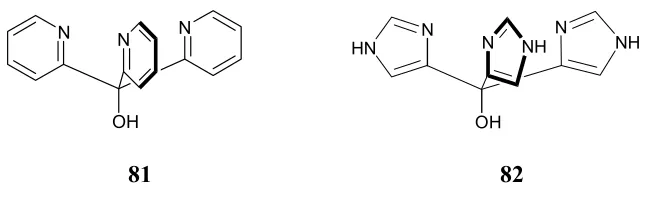
Ligands 81 and 82 closely replicate the three imidazole groups in CA,
however, without the steric bulk, they have a stong tendency to form catalytically
inactive sandwich [ML2] complexes (Figure 2.1).118-122
N N N
OH N N N
OH
M
OH N
HN N NHN NH
OH
N NH HN
NHN N M
M•(81)2 M•(82)2
Figure 2.1 ML2 complexes M•(81)2and M•(82)2.
Although 82 mimics the actual CA active site more closely, ligands
trispyridylmethanol 81 system was chosen to serve as CA mimic, primarily due to
complications arising from the possibility of the sp3 nitrogen atoms of 82
Tris(2-pyridyl)methanol 81 was first reported in 1951 by Wibaut and
co-workers as an analogue to triphenylmethanol.123 Later, Brown and co-workers
indicated the potential use of 81 as a model for the enzyme carbonic anhydrase.124
To minimize the formation of aforementioned ML2 complex, a natural thought is
the addition of sufficient bulky groups on the pyridine rings. However, work
relating to the synthesis of substituted tris-pyridyl methanol ligand derivatives is
rare.120,125,126 It is noteworthy that, recently, Hannon et. al. have demonstrated an
elegant approach in tailoring the hydrophobic environment around tris-(2-pyridyl)
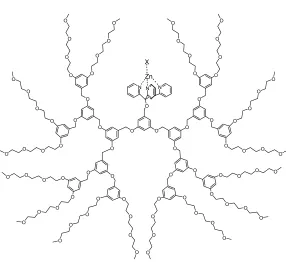
methanol ligands by attching them to dendimeric clefts (Figure 2.2).127 The
resulting ligand efficiently forms the [ZnIIL] species by eliminating the sandwich
complex formation process.
N N N
O
O O O
O O O O O O O O O O O O O O O O O O O O
O O O O O
O O O O O O O O O O O O O O O O O O O O O O O O O O O O O O O O O O O O O O O O O O O O O O O O O O Zn X