M
M
E
E
T
T
A
A
C
C
O
O
G
G
N
N
I
I
T
T
I
I
O
O
N
N
I
I
N
N
R
R
E
E
A
A
C
C
T
T
T
T
E
E
A
A
C
C
H
H
I
I
N
N
G
G
S
S
T
T
R
R
A
A
T
T
E
E
G
G
Y
Y
N
N
g
g
u
u
y
y
e
e
n
n
T
T
h
h
i
i
H
H
u
u
o
o
n
n
g
g
L
L
a
a
n
n
Tan Trao University, Tuyen Quang province, Vietnam
Email: [email protected]
ABSTRACT: Math education in the 21st century is facing new real-world problems, nurturing creative thinking skills and effective ways of learning. In an effort to innovate teaching and learning methods to prepare for a new generation for the demands of the new era, many educators have discovered the value of metacognition. The article explores metacognition in the REACT teaching strategy (Relating, Experiencing, Applying, Cooperating, and Transferring) in order to help students solve practical problems based on context, from which, to acquire knowledge.
KEYWORDS: teaching strategy, metacognition, REACT Strategy.
1. INTRODUCTION
Metacognition is an important, but often overlooked, part of 21st century education that teaches students how to learn. From kindergarten to high school, the curriculum is filled with lessons while a very little time is arranged to guide students in developing metacognitive and cognitive skills that can help them be outstanding in the classroom, and in the working world. Although curriculum and professional development may include instruction on cognitive strategies, daily schedules may not provide clear teaching and intensive practice. Therefore, students need to learn How, when, where, and why use these strategies effectively. Should we assume that children go to school naturally equipped with the ability to study or learn these skills themselves in the process of learning to read, write, and do math, science and social studies? Expanding this hypothesis, students who do not develop their thinking and learning abilities are often excluded because of their limited learning potential.
Research shows that providing a foundation for students through teaching lessons primarily will develop the ability to become self-directed learners who can improve their academic results in the curriculum transition and apply what they learn. Dunlosky asserts "teaching students how to learn is as important as teaching them content, because acquiring the right learning strategy and background knowledge are important to promote lifelong learning." [D+13].
In the next part, I explore the following key issues: The perspectives on metacognition; REACT strategy; Applying metacognition in REACT strategy to teaching mathematics at secondary schools in Vietnam.
2. PERSPECTIVES ON METACOGNITION
The concept of metacognition was first identified in the 70s. It seems that metacognition is the result of research on cognitive, memory and reading development. Many math educators have shown great interest in the study of Mathematics and metacognition. Some views about metacognition will be mentioned as bellows:
Thus, according to me, metacognition involves thinking about one's thoughts, or perceptions, with the goal of increasing learning. Much of the theory of education and research around metacognition is based on the work of developmental psychologist -John Flavell, who applied the term in describing the management of information processing activities during cognitive transferring. More simply, metacognition involves understanding and controlling one's cognitive ability.
3. REACT STRATEGY
Most students learn best when they can connect new concepts to the real world through their own experience or the experience teachers provide for students. In the modern view, human learning (new content and new knowledge) is naturally formed based on what people know and believe (National Academy Press, 1999 [NAP99]). Therefore, educators have shown that students themselves build knowledge instead of getting it from others (parents, teachers, and friends). Since then, the proposal and design of teaching strategies based on learning criteria when they gain new knowledge through exploration and active learning actively on the foundation of encouraging students self-reflection, explanation and control of cognitive ability... However, according to a study conducted by CORD [COR99], most students in schools cannot relate what they are learning and how to use that knowledge in practice. To solve this problem requires teachers to design and use contextual learning models in their lesson.
According to contextual theory, learning happens only when students handle new information and knowledge in a way that is appropriate for their thoughts and experiences. This can be understood that students then use metacognition to reevaluate activities that have taken place and have a way to adjust to provide a solution to the current problem. This process is repeated by students many times, it is a process of self-examination, evaluation and reconsideration of thoughts, using one's own to solve problems, towards high efficiency.
Contextual learning theory focuses on many aspects of the learning environment, which can be a classroom, a laboratory, a computer room, or a workplace. It encourages educators to choose and (or) design environments that combine many different forms of experience (social, cultural, physical, and psychological) in toward desired learning outcomes. In such an environment, students explore meaningful relationships between abstract ideas and practical applications in a real-world context; this concept is internationalized through the
process of discovery, consolidation, and contact [COR07].
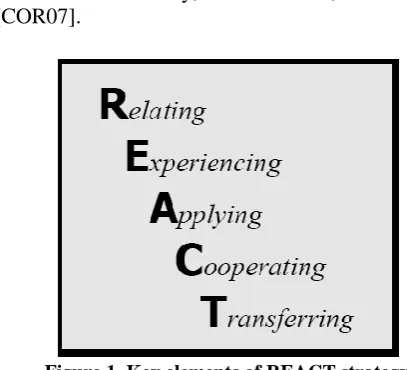
Figure 1. Key elements of REACT strategy
Contextual learning-based education and teaching programs must be structured according to the learning's REACT strategy, including five key elements:
(R) Relating, (E) Experiencing, (A) Applying, (C) Cooperating, and (T) Transferring.
Relating
Relating is a prerequisite activity that students will undertake when they experience contextual learning strategies. When receiving new information from a real situation, learners should always use metacognition to monitor their own thinking activities in order to find the right answer. This is more effective for learners who have a rich life experience or have a solid background.
A teaching activity that uses the context of life experience have to get students' attention to everyday events, must involve new information or a problem to be solved, and help students relate what they know to other similar or more extensive things. The role of teachers is to encourage students to relate what they are learning to experience real life. To achieve this, teachers need to use different learning resources, such as: texts, videos, speeches and even classroom activities.
Experiencing
Applying
Learning will be enhanced when the learning content is expressed in the context that students apply [COR99]. Students will be motivated and encouraged to learn math if teachers set a task for them to be practical issues in life. These problems allow students to realize the necessity of mathematics and understand the relevance of mathematics in the future life of students.
Cooperating
Cooperating is learning in the environment of sharing, feedback and communicating with other learners, which is a fundamental activity in contextual learning. Cooperation in learning plays a very important role in strengthening interpersonal relationships and communication skills of learners. In real-life situations, cooperative skills are very important. Pairing or grouping is an effective strategy when teachers give math tasks for students. Completing a task can be effective when the group is represented, has observations, suggestions and discussions [COR99].
Transferring
In a traditional classroom, the main role of the teacher is to convey knowledge (facts, concepts and formulas ...). The role of students is to memorize events and practice formulas, from which students just need to recall and repeat appropriate events and formulas that will score high on exams and tests. In contrast, in a non-traditional classroom, the role of teachers is expanded to create a series of experiential activities for students, focusing on understanding rather than memorizing and based on the test of the relatives, develop thinking and ability to control one's own thoughts.
Transferring is a strategy that teachers use to define knowledge in a new context or a new story has not been introduced in the previous class from which students with their knowledge and experience (or from experience learning from teachers and classmates) transfer into their own knowledge.
4. METACOGNITION, REACT STRATEGY AND PRACTICAL PROBLEM SOLVING
Although there are many studies on the importance of metacognitive teaching, education practices in Vietnam still focus primarily on content knowledge. We found that the metacognitive strategy guide is still not observed in most classes at the high school level, and interviews with teachers have shown limited knowledge about metacognition and how to nurture it.
These statements are worth thinking, because metacognition is the focus of learning. Learning creates meaningful expressions of knowledge through internal and intermediary processes
including self-awareness, self-criticism, self-monitoring and self-regulation. These are the same processes as the cores of metacognition, but this approach to learning is not easy. Getting this guide can help students gain the knowledge and skills needed to succeed in the 21st century learning process and to grow.
Therefore, teaching with metacognition will benefit students personally and help promote a more positive and effective learning environment.
Example 1. ([Mat18]) Find the length AC using 5cm and 13cm.
I gave some past paper questions to my Year 11s for revision, mostly focusing on angles, proofs and triangles. One of the students said, she doesn’t know where to start. Instead of offering instant help, I suggested she look at the Mathematical Problem-solving Cycle and use it as a checklist. She did think for a while and then said “Oh I get it now!” and solved a complicated task without my help.
She already had all the knowledge she needed, just had to retrieve this from her long-term memory and write the relevant ideas down. In this way, she wouldn’t overload her short-term memory and could concentrate on solving the task step-by-step.
Example 2. The stairway is 3,6 m high. If the number of stairs raised by 3, the height of one stair would lower by 4 cm, how many stairs are there? Solution
L: Linking concepts to what students have already known such as natural numbers, mathematical representations, and two hidden equations
E, A: Perform activities and teachers explain, and then allow students to explore new knowledge. Students apply their knowledge to real-life situations.
C: Students solve problems as a group to reinforce knowledge and develop cooperative skills
Participating groups form the forms of mathematical variables
We have 3.6 3.6 0.24 15
y x
(
y
0.04)(
x
3)
3.6
3.6( 0.04)(x 3) 3.6
x
3.6 0.04 3.6
( )(x 3)
x x
2
3
270
0
x
x
1 15x ((Satisfying); x2 18(unsatisfactory) With two values foundx115,x2 18students use metacognition to re-examine thought processes and steps. From that point on, it was found that the two found values were mathematically correct. However, there is practically no staircase with the number of steps is negative. So the ladder number is 15. And each step is 0.24m high.
T: Students bring what they have learned and apply to new situations and contexts
Example 3. ([LeH16]) At Hanoi University of Science and Technology there are many entrance and exit gates, but there is a special parabolic shaped gate with a recessive downside. Ask students to find ways to measure the height of the gate (distance from the highest point of the gate to the road surface).
Analysis
Students have met many of these parabolic models in life such as cross-sectional lake images, orbital trajectories when javelin athletes and Acropolis in St. Louis (USA), ...
Parabolic gate model can be considered a graph of quadratic function, the height of the gate corresponds to the height from the top of the parabola to the ground. Students can measure the 2-pins position of the gate, identify some positions on the gate, make data tables, and calculate test graphs.
Students need to make some assumptions, for example, the position of the gate changes but keep the parabola shape, how the height of the gate changes, depending on which element?
Clarify the idea: Students can show the height change of the gate as a table or chart.
Simplify: Students can choose the Oxy coordinate system so that the origin of the coordinates coincides with a gate pin.
Generalize: If the student understands the relationship between the top factors of the parabola, the student can also solve the task with similar situations.
To solve this problem, it is necessary to learn more about the assumptions of the problem to be more specific. Therefore, teachers encourage students to discuss the necessary data to collect to simplify the problem. Notice that the parabolic gate shape has been determined. Therefore, if we can identify some special points, we can find the height of the gate. Students explain that the points on the gate will satisfy a property of the parabola.
Students know that quadratic functions take the form , (
a
0
). So if students want this quadratic function graph coincides with the port shape, student first need to select a quadrature coordinate system. To conveniently calculate, select the O root to coincide with a port pin. To determine its equation needs to identify at least 3 points on the gate, such as O(0;0), B(xb;0), M(xM;yM). Students conduct measurements to find the necessary data. For this case, students need to measure: the distance between the pins and determine the coordinates of a point on the gate, for example: the distance between the pins is 10m, ie xb = 10; any point M on a port far from the vertical axis from the root O is xM = 1 and point M is far from ground by yM = 3. Then: Thus, height of parabolic is.
Discuss the result: according to the worker who built the gate, the gate is higher than the calculation given by the students about 7cm. The reason is that the students determine the position of the gate pins and the M points both on the inside of the gate, furthermore the gate must calculate the thickness of the concrete layer of the gate structure.
The problem is more extensive when there is a requirement to calculate the altitude or distance of two parabolic pins in many other cases and the measurement is more complicated, how do students solve them? For example, in battle rehearsal, how does the artillery team need to calculate the right position of the enemy base?
2
y
ax
bx c
2 1 10
3 3
y x x
25 8,33 3
5. FINDINGS
Analysis from the survey results from the proposed mathematical problems.
I conducted tests at Thuong Thanh Secondary School, Long Bien, Hanoi and took any 35 students at grade 9 representing this school. I proposed the above two issues and involved students in solving problems. After the 45 minutes, I let students fill out their thoughts during the problem-solving process. In summary, 32 out of 35 students (91.4%) understood the problem, determined what they had known and hadn’t known and what the purpose of the problem was. Students have linked concepts to what students already know and apply their knowledge to real-life situations.
However, the percentage of students who can make a plan for solving problems is not high, 21/35 students (corresponding to 60.0%) have chosen a strategy and have a specific resolution plan for the problem.
18/35 students (51.4% respectively) solved the problem according to a plan, with the proposed solution; sometimes students solved problems as a group to strengthen knowledge and develop cooperation skills.
Most notably, only 14/35 students (equivalent to 40.0%) reviewed activities in the problem solving process and made adjustments in the process. These students brought what they have learned that apply to new situations.
6. CONCLUSION
Students' metacognitive abilities can thrive in an environment where the thinking process is really an important part of teaching and communicating. To create such an environment, teachers and students must develop thinking language and use it continuously. In addition, teachers should use creative strategies such as writing peer review and collaborative learning to enhance and develop their own thinking skills and how to direct their own thinking. This research initially confirms that students with good metacognitive skills will solve math problems better, promoting their own progress.
REFERENCES
[Bai98] Baird J. R. – A View of Quality in Teaching. In Fraser Benny and Kenneth Tobin (Eds.) - Instructional Handbook of Science Education, Vol 2. Dordrecht: Kluwer Academic Publishers, 1998.
[Bor86] Borasi R.
–
On the nature What is an eigenvalue of problems. EducationalStudies in Mathematics. pp. 125-141, 1986.
[Bro42] Brownell W. A. – “Problem Solving”, The Psychology of Learning, Chap. XII. Forty-first Yearbook of the National Society for the Study of Education, Part II. Chicago: University of Chicago Press, 1942.
[Bro78] Brown A. L. – Knowing when, where and how to remember: A problem of metacognition. In R. Glaser (Ed.), Advances in Instructional Psychology (Vol. 1). Hillsdale, NJ: Lawrence Erlbaum Associates, 1978.
[BS15] Barbacena L. B., Sy N. R. – Metacognitive Model in Mathematical Problem Solving. Metacognitive Model, Vol. 12 (1), pp. 16-22, 2015.
[COR07] CORD – The REACT learning strategy. Center for Occupational Research and Development. www.cord.org, 2007.
[COR99] CORD – Teaching Science Contextually. Waco, TX: CORD Communications, 1999.
[Dun45] Duncker K. – On Problem Solving. Psychological Monographs 1945, 58, 5, whole no. 270, 1945.
[D+13] Dunlosky J., Rawson K. A., Marsh E. J., Nathan M. J., Willingham D. T. – Improving Students’ Learning With Effective Learning Techniques: Promising Directions From Cognitive and Educational Psychology. Psychological Science in the Public Interest. Volume: 14 issue: 1, page(s): 4-58. 2013.
Doi.org/10.1177/1529100612453266
[Fla76] Flavell J. H. – Metacognitive aspects of problem solving. In L. B. Resnick (Ed.), The Nature of Intelligence. Hillsdale NJ: Lawrence Erlbaum Associates, 1976.
[Gla95] von Glasersfeld E. – Radical Constructivism: A Way of Knowing and Learning. London: Falmer Press, 1995.
[Goo00] Goos M. – Metacognition in context: A study of collaborative metacognitive activity in a classroom community of mathematical inquiry, Unpublished doctoral thesis. The University of Queensland, Brisbane, 2000.
[GL85] Garofalo J., Lester F. K. – Metacognition, Cognitive Monitoring and Mathematical Performance. Journal for Research in Mathematics Education, Vol. 16, No. 3, pp. 163-176, 1985.
[Lak76] Lakatos I. – Proofs and Refutations: The Logic of Mathematical Discovery. Cambridge: Cambridge University Press, 1976.
[LeH16] Le Hong Q. – Mathematical modeling in the context of problem-based learning. Journal of Psychology, Vietnam Academy of Social Sciences, No. 10, 2016.
[Mar06] Martinez M. E. – What is metacognition? Phi Delta Kappan, 696-699, 2006.
http://images.pearsonassessments.com.
[NAP99] National Academy of Sciences (US), Washington (DC): National Academies Press (US); 1999.
[Pol73] Polya G. – How To Solve It. Princeton: Princeton University Press, 1973.
[Sch83] Schoenfeld A. H. – Episodes and executive decisions in mathematical problem solving. In R. Lesh and M. Landau (Eds.), Acquisition of Mathematics Concepts and Processes, pp. 345-395. NY: Academic Press, 1983.
[Sch85] Schoenfeld A. H. – Mathematical Problem Solving. San Diego: Academic Press Inc, 1985.
[Sch87] Schoenfeld A. H. – What’s all the fuss about metacognition? Ch. 8 in A. H. Schoenfeld (Ed.), Cognitive Science and Mathematics Education. Hillsdale, NJ: Erlbaum, 1987.
[Sch92] Schoenfeld A. H. – Learning to Think Mathematically: Problem Solving, Metacognition and Sense Making in Mathematics. In D. Grouws (Ed.), Handbook of Research on Mathematics Teaching and Learning, pp. 334-370, New York: Macmillan, 1992.
[Mat18] Matene T. – Metacognition in the mathematics classroom (Part 1), Blackpool Research School. https://researchschool.org.uk, 2018.
[TS90] Thorpe K. J., Satterly D. J. H. – The Development and Inter‐relationship of Metacognitive Components among Primary School Children, Educational Psychology, 1990, 10:1, 5-21, DOI: 10.1080/0144341900100102.