http://dx.doi.org/10.22161/ijeab/2.1.40 ISSN: 2456-1878
Lime Pretreatment Associated Compositional
and Ultrastructural Changes in Selected Root
and Vegetable Processing Residues
Mithra. M. G, Padmaja. G
Division of Crop Utilization, ICAR- Central Tuber Crops Research Institute, Kerala, India
Abstract—The study aimed at exploring the suitability of processing residues from selected root and vegetables for bioethanol production, which are otherwise environmental pollutants. The effect of lime pretreatment at high (HT), low (LT) or room (RT) temperatures on compositional and ultrastructural changes in peels of root crops (sweet potato, elephant foot yam and tannia) and vegetable processing residues (peels from ash gourd and mixed vegetable waste) was studied. Pretreatment resulted in the removal of very little polysaccharides, including starch from these biomasses. Hemicellulose was removed to a higher extent in 24 h RT pretreatment (11.6-12.3%) compared to 7.3-8.5% removal in HT pretreatment. Maximum lignin removal (ca. 33-38%) occurred in RT pretreated (24 h) samples. Approximately 22-25.7% lignin was removed during HT pretreatment (121 °C) for 30 min. which increased to 28-31% when prolonged to 60 min. Pretreatment Efficiency (PE) was low (4.2-14.7%) in HT pretreatment, while 5.7-13.5% and 5.2-14.2% PE was observed in LT and RT pretreatments respectively. Scanning electron micrographs of lime pretreated biomass indicated that starch being a major ingredient of the biomass under study, preferential saccharification of starch by amylases might be necessary to expose the cellulose and hemicellulose for their subsequent saccharification to release fermentable sugars.
Keywords—Composition, Lime pretreatment,
Processing residues, Root crops, Ultrasructure, Vegetable crops.
I. INTRODUCTION
There is an ever-increasing global concern over the rapid depletion of fossil fuel resources, enhanced demand for transportation fuel in developed and developing countries and the environmental challenges caused by the emission of greenhouse gases (GHGs) resulting from the burning of coal and fuel, which is implicated as the main factor for global warming [1, 2]. Bioethanol from renewable resources is recognized as the best transportation fuel which could help reduce dependency on fossil fuels [3]. Despite the cost-effectiveness of corn and sugar based
ethanol, the ethical conflicts on the diversion of food to fuel have necessitated the search for potentially cheap and inedible feedstock for bioethanol production [4-6]. Owing to the low cost and abundant availability, lignocellulosic biomass (LCB) has been widely recognized as the most viable and sustainable feedstock for biofuel production. It is reported that bioethanol from cellulosic and other biomass resources has the potential to reduce GHG emission by 86% [7]. Nevertheless, the sustainability of second generation (2G) ethanol produced from LCBs, despite its potential to replace oil-based fuels depends on the economically feasible production, by overcoming the technological barriers such as recalcitrance to degradation, enzyme costs for effective conversion to sugars, high pretreatment costs and its associated problems viz., formation of inhibitors, cost of chemicals for neutralization etc. [8-10].
http://dx.doi.org/10.22161/ijeab/2.1.40 ISSN: 2456-1878
disadvantages of acid treatment include the need for corrosion-resistant reactors, less efficiency of lignin removal and formation of inhibitors such as furfural, 5-hydroxymethyl furfural and acetic acid [4, 22, 23]. Hence, lime (calcium hydroxide) pretreatment has been attempted for several lignocellulosic feedstocks [11, 24-27]. Lime pretreatment has regained interest as a promising pretreatment technique because it is a cheap chemical that could be safely handled, needs only low temperatures and pressures and could be recovered easily. Besides, lime also facilitates the removal of lignin and acetyl groups and reduces the chances of formation of fermentation inhibitors [11, 28, 29]. The divalent calcium ions in calcium hydroxide are reported to effectively crosslink with lignin, thereby preventing its non-productive binding with cellulase [30, 31].
Sweet potato (Ipomoea batatas Lam) is the second most important root crop with a world production of 103.11 million tonnes [32] and China is the leading producer accounting for almost 80% of the global production. During the processing of sweet potato for starch or flour preparation, approximately 5-6% goes as waste peel and is reported to contain 79% carbohydrate [33]. Elephant foot yam (Amorphophallus paeoniifolius (Dennst.) is a most popular root crop grown and consumed in South Asian countries such as India, Malaysia, Indonesia and the Philippines [34] and during processing, considerable loss (ca. 15%) of peel occurs due to the non-uniform surface morphology of the roots. Tannia (Xanthosoma sagittifolium (L.) is a tropical root crop grown widely in West Africa, tropical America and Asia [35]. Processing of cormels leads to the generation of peels (10-13%) as refuse and consist of the thin skin along with the outer cortex of the roots [35, 36] and except for compositional studies, its value addition has not been reported. Ash gourd (Benincasa hispida Cogn.) is cultivated as a vegetable in India, Japan, China and Australia [37]. Approximately 25% goes as peel waste during commercial processing for sweet manufacture in India, causing major disposal problems [38]. It is estimated that 73-96% of the typical family’s waste comprises of biodegradable materials in lower income groups and 26% in the higher groups in India [39]. Out of the biodegradable wastes generated, a major part is accounted by kitchen/domestic waste, while hotels also contribute significantly to this fraction of solid waste. With a view to exploring the potential of these processing wastes (which are also rich in starch besides cellulose and hemicellulose) for bioethanol production, the effect of lime pretreatment at high, low and room temperatures on compositional and ultrastructural alterations in three root crop processing wastes (peels from sweet potato, elephant foot yam and tannia) and two vegetable wastes such as
ash gourd peel and mixed vegetable wastes (comprising the inedible parts such as peels, seeds and pulp part covering them and damaged parts of common vegetables collected from the households and restaurants) was investigated. As different from the typical LCBs, these wastes also contain appreciable amounts of starch, which comes along with the peel during the peeling operation, enabling them to be categorized as lignocellulo-starch biomass (LCSB). Nevertheless, their ultrastructural and compositional differences as well as the alterations brought about by pretreatments have hitherto not been reported. Hence this study aims at a detailed understanding of the changes brought about during lime pretreatment on the polysaccharide and lignin components so that the best treatment could be identified for further saccharification studies.
II. MATERIALS AND METHODS 2.1 Samples
Peels collected from sweet potato, elephant foot yam, tannia and ash gourd by manual peeling were washed in running tap water to remove the adhering dirt and sand, immediately drained and dried in the sun for 24-36 h, followed by drying in an air oven to reduce the moisture content to <10%. It was then powdered in a hammer mill (particle size: ca. 2-3 mm) and packed in air tight containers till use. In order to utilize the whole waste residues for bioethanol production, the unscreened biomass was used for the various experiments. Besides, mixed vegetable wastes were collected from households and restaurants and these were also dried, powdered and stored for further studies.
2.2. Enzyme Source
Spezyme® Xtra (α-amylase) and StargenTM 002 (Granular starch hydrolyzing enzyme) were supplied by M/s Genencor International Inc. USA (presently Danisco US Inc., USA). Spezyme contained a thermostable amylase (E.C. 3.2.1.1) with an activity of 14,000 α-amylase units (AAU)/g (1.0 AAU = amount of enzyme required to hydrolyze 10.0 mg starch/min under the assay conditions) [40]. Stargen™ 002 contains Aspergillus kawachi α-amylase (E.C. 3.2.1.1) expressed in Trichoderma reesei and a gluco-amylase (E.C. 3.2.1.3) from Trichoderma reesei that work synergistically to hydrolyze granular starch substrate to glucose. It has an activity of 570 Glucoamylase units (GAU)/g and one GAU is the amount of enzyme that will liberate one gram of glucose per hour from soluble starch substrate under the conditions of the assay [41].
2.3. Pretreatments
http://dx.doi.org/10.22161/ijeab/2.1.40 ISSN: 2456-1878
pressure of 0.102 MPa for 30 min. and 60 min. (HT pretreatment) (ii) treatment at low temperature (50 °C) for 6 h and 24 h (LT pretreatment) and (iii) treatment at room temperature (30 ±1 °C) for 24 h and 48 h (RT pretreatment). In the first experiment, the unscreened biomass residues (10 g) were suspended in 100 ml lime solution (10% w/v) in a 250 ml Erlenmeyer flask and exposed to heat in a Pressure Cooker (M/s TTK Prestige India Ltd.) for 30 min. and 60 min. (as separate lots and time after the pressure build up) at 121 °C and pressure 0.102 MPa. The flasks after pH adjustment to 6.0 with Conc. Hydrochloric acid (HCl), were cooled, volume made up to the nearest and filtered. Part of the residue (2.0 g each) at each time period was lyophilized (Thermo-Savant Freeze Drying Chamber FDC-206) for ultrastructural studies using the scanning electron microscope. The remaining residue was dried in an air oven at 50 °C for 20 h followed by high temperature drying at 100 °C for 1 h and stored after cooling to room temperature for further studies.
In the second experiment, one set of biomass slurry was incubated at 50 °C in a thermostatic water bath (Julabo SW22) for 6 h, while the second set was incubated for 24 h. In the third experiment, one set of biomass slurry was incubated at room temperature (30 ±1 °C) for 24 h, while the second set was incubated for 48 h. After the incubation, the pH was adjusted to 6.0 using concentrated HCl and volume raised to the nearest. The filtrates and residues were stored as in the first experiment, for further studies.
2.4. Compositional Studies
The pretreated residues were subjected to compositional analysis comprising starch, total and reducing sugars, cellulose, hemicellulose, ash and lignin by standard procedures. Detailed compositional analyses of the native biomasses selected were reported earlier [42]. In the present study, only the composition of the pretreated biomass has been undertaken as per the methods described under:
2.4.1. Starch
Starch being a major component of the biomass residues under study, the total starch content in the pretreated biomasses was determined using the hydrolytic enzymes such as Spezyme and Stargen as per the procedure standardized earlier [43]. Biomass slurry (0.5g/20 ml) was digested with Spezyme (0.5 ml equivalent to approximately 7000 α-amylase units) for 30 min. at pH 5.5 and 90 °C after which the temperature and pH were brought to 40 °C and 4.5 respectively and digested for 24 h with Stargen (0.5 ml or 285 Glucoamylase units). The reducing sugars released were assayed by the titrimetric method of Moorthy and Padmaja [44]. Enzyme and substrate blanks were also kept to nullify the reducing
sugars originally present in the enzyme and biomass samples respectively. Starch content was calculated from the reducing sugar values using the Morris factor, 0.9. 2.4.2. NDF and ADF
The neutral detergent fiber (NDF) and acid detergent fiber (ADF) were analyzed by the method of Goering and Vansoest [45] with slight modifications to take care of the interference from starch. Native/pretreated residue (0.5 g) was mixed with 0.5 g sodium sulphite and 50 ml cold neutral detergent solution and after boiling the pH was adjusted to 5.5 and Spezyme (0.5 ml) added and boiling continued for 1 h. After incubation for 1 h, the pH and temperature were brought down to 4.5 and 40 °C respectively and incubated with 0.5 ml Stargen for 24 h. The contents after filtration through Whatman no.1 filter paper (Grade 1; 11 µm pore size) and washing with acetone were dried in an air oven at 100 °C for 8 h. The dry weight of residue (W1) was used to calculate NDF as:
NDF (%) = W1 x 100 (1)
Sample weight
ADF was determined from the NDF fraction by treating 0.5 g of it with 50 ml acid detergent solution (20 g cetyl trimethyl ammonium bromide in 1 l of 1 N sulfuric acid) and heating for 1 h after the onset of boiling. The contents after filtration were washed and dried at 100 °C overnight. ADF in the NDF fraction was calculated from the residue weight (W2) using the formula and worked back to express as percentage of the original biomass:
ADF (%) in NDF = W2 x 100 (2) Sample weight of NDF
2.4.3. Structural Carbohydrates and Lignin
http://dx.doi.org/10.22161/ijeab/2.1.40 ISSN: 2456-1878
estimated using anthrone reagent and cellulose content in the pretreated biomass calculated using pure cellulose standard was worked back to the original biomass based on the weight of the dry solids remaining after pretreatment. The ash content was determined in the ADF fraction from treated residue by the standard procedure [47], by keeping in a muffle furnace at 550 °C for 6 h. In order to eliminate the error due to the held up proteins in the lignin fraction, the crude protein content in the ADF fraction (from each pretreated residue) was determined by the Kjeldahl method [47] and subtracted from the ADF values to get the true ADF content. The lignin content of the pretreated biomass was calculated as:
Lignin (%) = True ADF (%) - [(cellulose + ash) %] (3)
2.4.4. Characterization of Pretreated liquor
The reducing sugar content in the filtrate was quantified by the same titrimetric method, while the reducing sugars held back in the residues were computed from the substrate blank values from starch estimation.
2.5 Pretreatment Efficiency
The total reducing sugar content (pretreated liquor + residue) after nullifying the original reducing sugar (RS) content in the native biomass was used to compute the Pretreatment Efficiency on the basis of the potential sugar yielding carbohydrates (cellulose, hemicellulose, starch and total sugars) as:
PE (%) = [(RSpt + RSr) –Rsob]x100 (4) [C+HC+S+TS in original biomass (% dwb)
Where RSpt = RS released from the biomass due to pretreatment (expressed as % of the original biomass); RSr = RS held back in the residue (expressed as % of the original biomass); RSob = RS (%) originally present in the biomass; C: cellulose; HC: hemicellulose; S: starch and TS: total sugars; (C+HC+ S+TS represent the total potential sugar yielding carbohydrate fraction).
2.6 Ultrastructural Studies
The ultrastructure of native as well as pretreated biomass was studied on HITACHI Scanning Electron Microscope S-2400). Dry powder (native) and lyophilized powder (pretreated) were applied on the double side carbon pasted on an aluminium stub. A thin gold-platinum coating was applied for 3 min. using E-1010 Ion Sputter Unit under 10 Pa vacuum and discharge current of 10 mA. The SEM photographs were visualized at 500x magnification.
2.7 Statistical Analysis
The various biochemical constituents were expressed as percentage of the original biomass based on the water insoluble residue weight obtained from each pretreatment. Three replicates were kept for each experiment and duplicate analyses were performed on each replicate. Statistical analysis was performed by Analysis of Variance (ANOVA) for statistical testing of the mean values and was followed by least significant difference (LSD) for pair-wise comparison of mean values by using the statistical package, SAS 9.3 [48].
III. RESULTS AND DISCUSSION
The effect of pretreatment of unscreened powders of selected root and vegetable processing wastes as well as mixed vegetable wastes with lime at high temperature (121 °C; 0.102 MPa) for 30 min and 60 min, low temperature (50 °C; 6 h and 24 h) and room temperature (30 ± 1 °C; 24 h and 48 h) on the compositional and ultra structural changes were studied.
3.1 Compositional Changes due to Pretreatment
3.1.1. Polysaccharides and Lignin
http://dx.doi.org/10.22161/ijeab/2.1.40 ISSN: 2456-1878
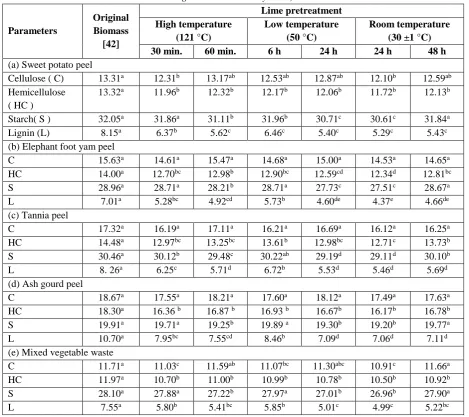
Table 1: Polysaccharide and lignin changes in lime pretreated root and vegetable processing residues (expressed as g/100 g original material on dry basis).
Parameters
Original Biomass
[42]
Lime pretreatment High temperature
(121 °C)
Low temperature (50 °C)
Room temperature (30 ±1 °C) 30 min. 60 min. 6 h 24 h 24 h 48 h
(a) Sweet potato peel
Cellulose ( C) 13.31a 12.31b 13.17ab 12.53ab 12.87ab 12.10b 12.59ab Hemicellulose
( HC )
13.32a 11.96b 12.32b 12.17b 12.06b 11.72b 12.13b
Starch( S ) 32.05a 31.86a 31.11b 31.96b 30.71c 30.61c 31.84a
Lignin (L) 8.15a 6.37b 5.62c 6.46c 5.40c 5.29c 5.43c
(b) Elephant foot yam peel
C 15.63a 14.61a 15.47a 14.68a 15.00a 14.53a 14.65a
HC 14.00a 12.70bc 12.98b 12.90bc 12.59cd 12.34d 12.81bc
S 28.96a 28.71a 28.21b 28.71a 27.73c 27.51c 28.67a
L 7.01a 5.28bc 4.92cd 5.73b 4.60de 4.37e 4.66de
(c) Tannia peel
C 17.32a 16.19a 17.11a 16.21a 16.69a 16.12a 16.25a
HC 14.48a 12.97bc 13.25bc 13.61b 12.98bc 12.71c 13.73b
S 30.46a 30.12b 29.48c 30.22ab 29.19d 29.11d 30.10b
L 8. 26a 6.25c 5.71d 6.72b 5.53d 5.46d 5.69d
(d) Ash gourd peel
C 18.67a 17.55a 18.21a 17.60a 18.12a 17.49a 17.63a
HC 18.30a 16.36 b 16.87 b 16.93 b 16.67b 16.17b 16.78b
S 19.91a 19.71a 19.25b 19.89 a 19.30b 19.20b 19.77a
L 10.70a 7.95bc 7.55cd 8.46b 7.09d 7.06d 7.11d
(e) Mixed vegetable waste
C 11.71a 11.03c 11.59ab 11.07bc 11.30abc 10.91c 11.66a
HC 11.97a 10.70b 11.00b 10.99b 10.78b 10.50b 10.92b
S 28.10a 27.88a 27.22b 27.97a 27.01b 26.96b 27.90a
L 7.55a 5.80b 5.41bc 5.85b 5.01c 4.99c 5.22bc
*Each value is mean from three replicates; statistical comparison for each parameter for each biomass was made with the respective native untreated samples; means with different alphabets in each row are significantly different at p < 0.05.
Saha and Cotta [12]reported that lime (0.1g/g biomass) pretreatment of rice hulls at 121 oC for 1 h yielded more sugars during enzymatic saccharification than lower loading rate of lime and exposure periods. Most of the starch remained unhydrolyzed in the lime pretreated biomass (TABLE 1). The percentage hydrolysis ranged from 3.6% to 5.0% in the RT (24 h) pretreated biomasses, while it was 2.6% to 3.3% in the HT pretreated biomasses (Fig. 1 a and b). Dilute sulfuric acid (DSA) pretreatment was earlier found to hydrolyze 85-94% of starch in these biomasses exposing the cellulose fibers for saccharification [42]. Nevertheless, lime pretreatment at 121 °C retained most of the starch along with cellulose, while 11% of the hemicellulose got solubilized. Saha and Bothast [52] reported that no glucose was released from starch during hot water pretreatment of corn fiber at 121°C for 1 h. Starch changes during pretreatment of
http://dx.doi.org/10.22161/ijeab/2.1.40 ISSN: 2456-1878
www.ijeab.com Page | 311 Fig. 1a: Percentage removal of C, HC and starch from biomass due to RT pretreatment with lime (24 h).
Fig.1b: Percentage removal of C, HC and starch from biomass due to HT pretreatment with lime (60 min.).
Table.2: Percentage solids* remaining in lime pretreated root and vegetable processing residues.
Biomass residue
Percentage solids remaining after lime treatment HT (121 °C) LT (50 °C) RT (30 ±1 °C) 30 min 60 min 6 h 24 h 24 h 48 h
Sweet potato peel 92.50ab 91.35ab 94.25ab 90.10ab 88.13b 95.79a
Elephant foot yam peel 95.85a 93.60a 96.08a 92.48a 91.55a 97.50a
Tannia peel 90.90a 90.00a 92.25a 89.00a 87.40a 93.50a
Ash gourd peel 94.80a 91.43a 95.73a 92.23a 91.03a 97.04a
Mixed vegetable waste 95.00bc 94.73dc 95.75b 94.01d 91.00e 98.64a
http://dx.doi.org/10.22161/ijeab/2.1.40 ISSN: 2456-1878
www.ijeab.com Page | 312 removal occurred from different biomasses by extending
the time to 60 min. (Fig. 2a-e). Lignin removal was much less (18.3-22.5%) when biomass residues were pretreated with lime at 50 °C for 6 h. Nevertheless, on prolonging the reaction time to 24 h, 33-34% removal was observed. Although high temperature is reported to remove more lignin from biomass, the lower extent of removal in the present study might have resulted from the lower exposure time at HT compared to 24 or 48 h at RT. Kim and Holtzapple [51] found that lignin and hemicellulose were selectively removed and cellulose crystallinity increased with delignification of lime pretreated corn stover. There are several reports that the divalent calcium ions of lime have high affinity for lignin and could effectively crosslink lignin [30, 31]. Lime is also reported to remove acetyl groups and lignin-carbohydrate ester linkages, thereby enhancing cellulose digestibility [14]. Xu et al. [26] reported that although calcium ions cross linked lignin under alkaline conditions, lignin complex remained in the residue without getting solubilised and hence the lignin content in the pretreated residue was high. They had also found that only 16-35% reduction in lignin occurred in lime pretreated switchgrass which corroborated with our results. Under alkaline conditions, lignin molecules become negatively charged due to the ionization of carboxyl, methoxy and hydroxyl groups, which then have a high affinity for calcium [3].
3.2. Reducing sugars and Pretreatment Efficiency
Reducing sugars in the pretreated liquor from lime pretreated residues indicated that there was only small increase from the original value in all the three pretreatments, which resulted primarily from the hemicellulose hydrolysis, followed by the mild starch hydrolysis leading to exposure of reducing groups (TABLES 3 and 1). In the case of the various biomasses, maximum increase was noticed in RT (24 h) pretreatment followed by LT (24 h).
Accordingly, the Pretreatment Efficiency (PE) computed based on the potential sugar yielding carbohydrates was also low for the various treatments (TABLE 4). Approximately 4.2-14.7% PE was observed in the HT
pretreatment, while 4.6-13.5% and 5.2-14.2% PE were observed in LT and RT pretreatments respectively. Among the biomasses, the lowest PE was observed for EFY peel, which might be due to the structural variations among the biomasses. Prolonging the reaction time for all the treatments resulted in significant decrease in PE for RT and HT pretreatments, possibly as a consequence of conformational changes in starch whereby some of the exposed reducing groups were reverted. This is also supported by the low RS values in the pretreated liquor from RT (48 h) and HT (60 min.) for most biomasses. Kim and Holtzapple [51] reported that delignification and deacetylation could remove the barriers to enzymatic hydrolysis and even though the crystallinity of biomass was increased slightly on delignification, it had less effect on the ultimate sugar yields. Wang et al. [7] reported much lower solid loss in lime pretreatment of coastal Bermuda grass than NaOH pretreatment. They also found that reducing sugar release during enzymatic saccharification of lime (0.1g/g biomass) pretreated (room temperature) Bermuda grass was less at 48 h, compared to 34 h and also lower at 24 h compared to 6 h at 50 °C. Based on the delignification, slightly higher starch hydrolysis and energy expenditure considerations, RT pretreatment with lime (24 h) and HT pretreatment (60 min.) could be considered as the best pretreatments. Even though energy expenditure is more on the HT pretreatment for 60 min., starch gelatinization occurring at 121 °C might be advantageous for effective saccharification in the next stage. Nevertheless, saccharification studies presently underway could only confirm the relative advantage of lime pretreatment techniques over others such as dilute sulfuric acid and steam pretreatment reported earlier for these residues [42].
Removal of the pretreated liquor by filtration before saccharification might be more difficult due to starch gelatinization. However, since the biomasses under study have a high percentage of starch, treatment of pretreated slurry as a whole might be advantageous compared to the treatment of water insoluble solids.
http://dx.doi.org/10.22161/ijeab/2.1.40 ISSN: 2456-1878
www.ijeab.com Page | 313 Fig. 2a-e. Delignification in processing residues subjected to lime pretreatment. Statistical comparison was between
treatments and bars with different alphabets on the top are significant at p < 0.05.
Table 3: Reducing sugar content (g/L) in the pretreated liquor* from lime pretreated residues.
Type of lime pretreatment and time
Sweet potato peel
Elephant foot yam peel
Tannia peel
Ash gourd peel
Mixed vegetable waste
(a) Native biomass without pretreatment [42]
Initial 6.22f 2.58f 1.34f 5.19f 7.50f
0 5 10 15 20 25 30 35 40
b
a
b
a
a
a
0 5 10 15 20 25 30 35 40
cd
bc
d
ab
a
ab
0 5 10 15 20 25 30 35 40
b
a
c
a
a
a
0 5 10 15 20 25 30 35 40
b
ab
c
a
a
a
0
5
10
15
20
25
30
35
40
HT30min. HT60min.
LT6h
LT24h
RT24h
RT48h
De
lig
n
if
ic
ati
on
(%)
Treatments
c
b
d
a
a
ab
a. SP peel
b. EFY peel
c. Tannia peel
d. AG peel
http://dx.doi.org/10.22161/ijeab/2.1.40 ISSN: 2456-1878
www.ijeab.com Page | 314 (b) HT pretreatment (121o C and 0.102 MPa)
30 min 8.73c 5.18c 1.67e 8.52b 9.52c
60 min 9.20b 4.44f 2.32c 7.72e 9.20e
(c) LT pretreatment (50 o C )
6 h 8.19e 4.78e 1.56f 7.65f 9.27d
24 h 9.20b 5.74b 2.60b 7.97c 10.05b
(d) RT pretreatment (30 ±1 °C)
24 h 9.97a 6.69a 2.70a 9.13a 10.87a
48 h 8.25d 4.98 d 1.70d 7.82d 8.93f
*Statistical comparison was made for each parameter with the respective values in the original (native) biomass for each sample; means with different alphabets in each column are significant at p < 0.05.
Table 4: Pretreatment Efficiency (%)* in sugar release from lime pretreated biomass.
Type of lime pretreatment and time
Sweet potato peel
Elephant foot yam peel
Tannia peel
Ash gourd peel
Mixed vegetable
waste
(a) HT pretreatment (121 °C and 0.102 MPa)
30 min. 12.51b 5.21b 6.17f 14.73a 13.53b
60 min. 12.36c 4.22d 7.70c 12.18e 12.17d
(b) LT pretreatment (50 °C )
6 h 11.18e 4.60c 6.68e 12.53d 11.62e
24 h 11.61d 5.73b 8.65a 11.84f 13.46c
(c) RT pretreatment (30 ± 1 °C)
24 h 12.67a 7.94a 8.55b 13.72b 14.19a
48 h 11.12f 5.17b 7.22d 12.59c 11.49f
* Computed as given in Methods (Equation 4) based on the potential sugar yielding carbohydrates; means with different alphabets in each column are significant at p < 0.05.
3.3 Ultrastructure of Pretreated Biomass
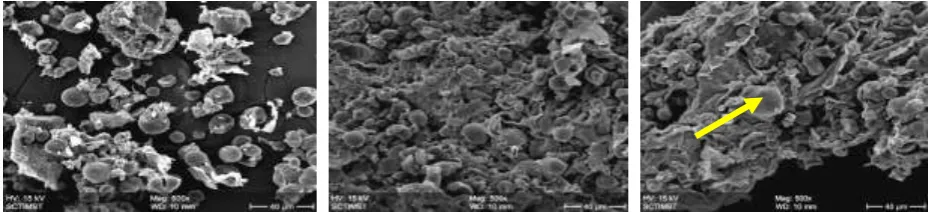
Scanning electron microscopy (x500) was done to understand the ultrastructural changes brought about in the biomass due to lime pretreatment. In the case of peel residues from the three root crops, large number of intact and deformed starch granules was visible (Fig. 3). Starch damage occurring during the grinding and milling operations might have led to alteration in the morphology of starch granules [42]. Broken cell structures were also evident, indicating the absence of rigid fibers in the native biomasses under study, as different from the typical LCBs. Rigid fibrous pattern was earlier reported for cassava leaf and stem powders from our laboratory, while such structures were absent in the peel samples which
http://dx.doi.org/10.22161/ijeab/2.1.40 ISSN: 2456-1878
www.ijeab.com Page | 315
a. SP native b. SP RT 24 h lime c. SP HT 60 min lime
d.EFY native e. EFY RT 24 h lime f. EFY HT 60 min lime
g. Tannia native h. Tannia RT 24 h lime i. Tannia HT 60 min lime
j. AG native k. AG RT 24 h lime l. AG HT 60 min lime
m. MVW native n. MVW RT 24 h lime o. MVW HT60 min lime
Fig. 3 (a-o): SEM photographs of lime pretreated (RT for 24 h and HT for 60 min.) biomass samples (x500); white arrows indicate the deformed cell pores; yellow arrows indicate the plugging of holes by starch
Lime pretreatment at room temperature resulted in greater distribution of intact and broken starch granules on the surface in the case of the root crop peels (Fig. 3 b, e and h). Apertures resulting from the removal of hemicellulose and lignin as reported in the case of lime (0.5g/g biomass at 55 °C) pretreatment of poplar [29] or for 2.5% potassium hydroxide (KOH) treated sugarcane bagasse [54] or 2.0% KOH pretreated corn cobs [55], were not visible in root crop residues subjected to RT lime pretreatment, probably because of the masking of the pores by the enormous starch granules. Broken fiber particles were evident especially in EFY and tannia peels (Fig. 3 e and h). Ash gourd peel which had several well defined holes in the native biomass, changed to a surface morphology having stretched holes with larger diameter.
http://dx.doi.org/10.22161/ijeab/2.1.40 ISSN: 2456-1878
facilitated the deconstruction of cellulose changing to amorphous form, without much change in the absolute content of cellulose. Gelatinized and swollen starch granules were seen in the HT pretreated (60 min.) biomass samples (Fig. 3 c, f, i, l and o). As the gelatinized starch was spread over the surface, broken fiber structures were not very clear, especially in the SEM of root crop peels. In the case of ash gourd peel, open pores were all deformed with coating of gelatinized starch over some of the holes (Fig. 3 l). Swollen starch along with fiber particles were seen in HT pretreated MVW (Fig. 3 o). Scanning electron micrographs of lime pretreated biomass indicated that starch being a major ingredient of the biomass under study, preferential saccharification of starch by amylases might be necessary to expose the cellulose and hemicellulose for their subsequent hydrolysis by cellulases.
IV. CONCLUSION
The present study dealing with a novel approach on the understanding of lime pretreatment effect on starch containing lignocellulosic biomass hitherto not known, showed that RT and HT pretreatments of the biomasses gave high biomass yield coupled with high delignification (34-38% and 29-31% respectively) when compared to the other treatments. Considering the low energy expenditure, slightly higher starch hydrolysis and high lignin removal, these pretreatments are considered the best for the biomasses in the present study. Two clear indications from the compositional and ultrastructural studies were (i) preferential hydrolysis of starch during enzymatic saccharification shall be advantageous, as it exposes the cellulose and hemicellulose for further enzymatic cleavage and (ii) starch swelling in RT pretreatment and gelatinization in HT pretreatment being major changes, whole slurry saccharification would be necessary to get high fermentable sugar yield.
ACKNOWLEDGEMENTS
The authors are thankful to the Kerala State Council for Science, Technology & Environment (KSCSTE) for the financial support and to the Director, ICAR- CTCRI for the facilities provided for the study. The help extended by Dr. J. Sreekumar, Principal Scientist (Agricultural Statistics) for the statistical analyses are acknowledged. The enzymes, Spezyme and Stargen were received by courtesy from M/s Danisco US Inc., USA. The support extended for the SEM analysis by the Sree Chithra Tirunal Institute of Medical Sciences & Technology (SCTIMST), Kerala is gratefully acknowledged.
REFERENCES
[1] Fuglestvedt, J, Berntsen, T, Myhre, G, Rypdal, K and Skeie, R. B. 2008. “Climate forcing from the transport sectors”. Proceedings of the National Academy of Science, U.S.A, 105, 454-458.
[2] Yat, S. C, Berger, A and Shonnard, D. R. 2008. “Kinetic characterization of dilute surfuric acid hydrolysis of timber varieties and switchgrass”. Bioresource Technology, 99, 3855-3863.
[3] Sarkar, N, Ghosh, S. K, Bannerjee, S and Aikat, K. 2012. “Bioethanol production from agricultural wastes: An overview”. Renewable Energy, 37, 19-27.
[4] Sun, Y and Cheng, J. 2002. “Hydrolysis of lignocellulosic materials for ethanol production: a review”. Bioresource Technology, 83, 1–11.
[5] Taherzadeh, M. J and Karimi, K. 2008. “Pretreatment of lignocellulosic wastes to improve ethanol and biogas production: a review”. International Journal of Molecular Science, 9, 1621-1651.
[6] Limayem A and Ricke S.C. 2012. “Lignocellulosic biomass for bioethanol production: Current perspectives, potential issues and future prospects”. Progress in Energy and Combustion Science, 38: 449-467.
[7] Wang, W, Keshwani, D. R, Redding, A. P and Cheng, J. J. 2008. “Alkaline pretreatment of coastal bermudagrass for bioethanol production”. ASABE Paper No. 08, St. Joseph, Mich, USA.
[8] Chandel, A.K, Rudravaram, R, Narasu, M.L, Rao, V and Ravindra, P. 2007. “Economics and environmental impacts of bioethanol production technologies: an appraisal”. Biotechnology and Molecular Biology Revew, 2(1), 14-32.
[9] Yang, B and Wyman, C. E. 2008. “Pretreatment: The key to unlocking low cost cellulosic ethanol”. Biofuels, Bioproducts and Biorefining, 2, 26-40. [10] Alvira, P, Tomas-Pejo E, Ballesteros, M and Negro,
M. J. 2010. “Pretreatment technologies for an efficient bioethanol production process based on enzymatic hydrolysis: A review”. Bioresource Technology, 101, 4851-4861.
[11] Wyman, C. E. 1999. “Biomass ethanol: Technical progress, opportunities and commercial challenges”. Annual Review of Energy and the Environment, 24, 189-226.
[12] Saha, B. C and Bothast, R. J. 1999. “Pretreatment and enzymatic saccharification of corn fiber”. Applied Biochemistry and Biotechnology”, 76, 65-77.
http://dx.doi.org/10.22161/ijeab/2.1.40 ISSN: 2456-1878
fuels production. M. E Himmel, J. O Baker and R. P. Overend, Eds. Washington DC: Amer. Chem. Soc, 1994, pp. 292-324.
[14] Mosier, M, Wyman, C, Dale, B, Elander, R, Lee, Y. Y, Holtzapple, M and Ladisch, M. 2005. “Features of promising technologies for pretreatment of lignocellulosic biomass”. Bioresource Technology, 96, 673-686.
[15] Eggeman, T and Elander R. T. 2005. “Process and economic analysis of pretreatment technologies”. Bioresource Technology, 96, 2019-2025.
[16] Wyman, C. E, Dale, B. E, Elander, R. T, Holtzapple, M, Ladisch, M. R and Lee, Y. Y. 2005. “Coordinated development of leading pretreatment technologies”. Bioresource Technology, 96, 1959-1966.
[17] Hu, G, Heitmann, J. A and Rojas, O, J. 2008. “Feedstock pretreatment strategies for producing ethanol from wood, bark and forest residues”. BioResources, 3, 270-294.
[18] Zhu, J. Y, Pan, X and Zalesny Jr, R. S. 2010. “Pretreatment of woody biomass for biofuel production: energy efficiency, technologies and recalcitrance”. Applied Microbiology and Biotechnology, 87, 847-857.
[19] Hendriks, A.T.W.M and Zeeman, G. 2009. “Pretreatments to enhance the digestibility of lignocellulosic biomass”. Bioresource Technology, 100, 10–18.
[20] Zhang, B and Shahbazi, A. 2011. “Recent developments in pretreatment technologies for production of lignocellulosic biofuels”. Journal of Petroleulm and Environmental Biotechnology, 2, 108-115.
[21] Maurya, D. P, Singla, A and Negi, S. 2015. “An overview of key pretreatment processes for biological conversion of lignocellulosic biomass to bioethanol”. Biotechnology, Doi. 10. 1007/813205-015-0279-4.
[22] Anwar, Z, Gulfraz, M, Asad, M. J. et al. 2012. “Bioethanol production from rice polish by optimization of dilute acid pretreatment and enzymatic hydrolysis”. African Journal of Biotechnology, 11, 992-998.
[23] Conde-Mejia, C, Jimenez-Guterreza, A and EL-Halwagi, M. 2012. “A comparison of pretreatment methods for bioethanol production from lignocellulosic materials”. Safety and Environment Protection 90: 189-202
[24] Kaar, W. E and Holtzapple, M. T. 2000. “Using lime pretreatment to facilitate the enzymic hydrolysis of corn stover”. Biomass and Bioenergy, 18, 189-199.
[25] Rabelo, S. C, Filho, R. M, and Costa, A. C. 2008. “A comparison between lime and alkaline hydrogen peroxide pretreatments of sugarcane bagasse for ethanol production”. Applied Biochemistry and Biotechnology, 148, 45-48.
[26] Xu, J, Chang, J. J, Shivappa, R. R. S and Burns, J. C. 2010. “Lime pretreatment of switchgrass at mild temperatures for ethanol production”. Bioresource Technology, 101, 2900-2903.
[27] Fuentes, L. L. G, Rabelo, S. C, Filho, R. M and Costa, A. C. 2011. “Kinetics of lime pretreatment of sugarcane bagasse to enhance enzymatic hydrolysis”. Applied Biochemistry and Biotechnology, 163, 612-625.
[28] Kumar, P, Barrett, D. M, Delwiche, M and Stroeve, P. 2009. “Methods for pretreatment of lignocellulosic biomass for efficient hydrolysis and biofuel production”. Industrial Engineering Chemistry Research, 48, 3713-3729.
[29] Kumar, R, Mago, G, Balan, V and Wyman, C. E. 2009. “Physical and chemical characterizations of corn stover and poplar solids resulting from leading pretreatment technologies”. Bioresource Technology, 100, 3948-3962.
[30] Sundin, J and Hartler, N. 2000. “Precipitation of kraft lignin by metal cations in alkaline solutions”. Nordic Pulp Paper Research, 15, 306-312.
[31] Torre, M, Rodriguez, A. R and Saura-Calixto, F. 1992. “Study of the interactions of calcium ions with lignin, cellulose and pectin”. Journal of Agricultural and Food Chemistry, 40, 1762-1766.
[32] FAOSTAT. 2014. “Sweet potato production statistics”. http://faostat.fao.org/ accessed on 12 January, 2015.
[33] Adeyosoye, O. I, Adesokan, I. A, Afolabi K. D and Ekeocha, A. H. 2010. “Estimation of proximate composition and biogas production from in vitro gas fermentation of sweet potato (Ipomoea batatas) and wild cocoyam (Colocasia esculenta) peels”. African Journal of Environmental Science and Technology, 4, 388-391.
[34] Arva, H. R, Bhaskar, J. J, Salimath, P. V and Mallikarjuna. A. S. 2013. “Anti-diabetic effect of Elephant foot yam [Amorphophallus paeoniifolius (Dennst.) Nicolson] in streptozotocin-induced diabetic rats”. International Journal of Biomedical and Pharmaceutical Sciences, 7, http://www.researchgate.net/publication/230757446 [35] Duru, C. C and Uma, N. U. 2002. “Post harvest
http://dx.doi.org/10.22161/ijeab/2.1.40 ISSN: 2456-1878
[36] Yahaya, I. A, Nok, A. J and Bonire, J. J. 2013. “Chemical studies on the peel of Xanthosoma sagittifolium (Tannia Cocoyam)”. Pakistan Journal of Nutrition, 12, 40-44.
[37] The Wealth of India. “Raw Materials”, vol. 6. New Delhi: CSIR, 1962, pp. 446-459.
[38] Sreenivas, K. M, Chaudhari, K and Lele. S. S. 2011. “Ash gourd peel wax: Extraction, characterization, and application as an edible coat for fruits”. Food Science and Biotechnology, 20(2), 383-387.
[39] Upadhyay, V. P, Rajeswar Prasad, M, Srivastav, A and Singh, K. 2005. “Ecotools for urban waste management in India”. Journal of Human Ecology, 18, 253-269.
[40] Anon. 2011. “Spezyme®Xtra-High performance α-amylase for starch hydrolysis”. Product Information published by Genencor International, a Division of Danisco, Danisco US Inc, accessed on 17 May, 2010.
[41] Anon. 2014. “STARGEN™ 002: Granular Starch Hydrolyzing Enzyme for Ethanol Production”, Product Information published by Genencor International, a Division of Danisco, Danisco US Inc, accessed on 22 December, 2014.
[42] Mithra, M. G and Padmaja, G. 2016. “Compositional profile and ultrastructure of selected root and vegetable processing residues subjected to steam and dilute sulfuric acid pretreatment”. Current
Biotechnology 7: doi:
10.2174/2211550105666160916124120.
[43] Shanavas, S, Padmaja, G, Moorthy, S. N, Sajeev, M. S and Sheriff, J. T. 2011. “Process optimization for bioethanol production from cassava starch using novel eco-friendly enzymes”. Biomass and Bioenergy, 35, 901–909.
[44] Moorthy, S. N and Padmaja, G. 2002. “A rapid titrimetric method for the determination of starch content of cassava tubers”. Journal of Root Crops, 28, 30-37.
[45] Goering, H. D and Vansoest, P. J. 1975. “Forage fiber analysis”. USDA Agricultural Research Service, Washington.
[46] Updegroff. D.M. 1969. “Estimation of cellulose by anthrone reagent”. Analytical Chemistry, 32, 420-423.
[47] AOAC. Official Methods of Analysis, 16th ed. Washington, DC: Association of Official Analytical Chemists, 1995.
[48] SAS. 2010. SAS Institute Inc, Cary, NC, USA. [49] Chang, V. S, Nagwani, M and Holtzapple, M. T.
1998. “Lime pretreatment of crop residues bagasse and wheat straw”. Applied Biochemistry and Biotechnology, 74, 135-159.
[50] Chang, V. S, Burr, B and Holtzapple, M. T. 1997. “Lime pretreatment of switchgrass”. Applied Biochemistry and Biotechnology, 63-65, 3-19. [51] Kim, S and Holtzapple, M. T. 2005. “Lime
pretreatment and enzymatic hydrolysis of corn stover”. Bioresource Technology, 96, 1994- 2006. [52] Saha, B. C and Cotta, M. A. 2008. “Lime
pretreatment, enzymatic saccharification and fermentation of rice hulls to ethanol”. Biomass and Bioenergy, 32, 971-977.
[53] Pooja, N. S and Padmaja, G. 2015. “Enhancing the enzymatic saccharification of agricultural and processing residues of cassava through pretreatment techniques”. Waste and Biomass Valorisation, 6, 303–315.
[54] Wanitwattanarumlug, B, Luengnaruemitchai, A and Wongkasemjit, S. 2012. “Characterization of corn cobs from microwave and potassium hydroxide treatment”. International Journal of Chemistry, Biology and Engineering, 6, 354-358.
[55] Irfan, M, Syed, Q, Abbas, S, Sher, M. G, Baig, S and Nadeem, M. 2011. “FTIR and SEM analysis of thermo-chemically fractionated sugarcane bagasse”. Turkish Journal of Biochemistry, 36, 322-328. [56] Ghosh, K and Baghel, M. S. 2011. “A