_____________________________________________________________________________________________________
*Corresponding author: E-mail: [email protected];
8(4): 204-214, 2018; Article no.EJNFS.2018.040 ISSN: 2347-5641
Moringa olifera
: Nutrient Dense Food Source and
World’s Most Useful Plant to Ensure Nutritional
Security, Good Health and Eradication of
Malnutrition
Vijai Pratap Singh
1*, Amit Arulanantham
2, Victor Parisipogula
3,
Sian Arulanantham
4and Arnab Biswas
51
Kalhans Education and Environmental Development Foundation, Deoria Mafi, Orwara, Basti, Uttar Pradesh, 272002, India.
2ChildHope, UK. 3Brighter Future, Vizianagaram, Andhra Pradesh, India.
4
The Leprosy Mission, England and Wales,UK.
5
Near Future Labs, UK.
Authors’ contributions
This work was carried out in collaboration between all authors. Author VPS designed the study, managed the literature search and wrote the first draft of the manuscript. Authors AA and SA have commented and edited the manuscript. All authors read and approved the final manuscript.
Article Information
DOI: 10.9734/EJNFS/2018/42468
Received 31st May 2018 Accepted 13th July 2018 Published 17th July 2018
ABSTRACT
Moringa (Moringa olifera Lam.), belonging to the family Moringaceae, is a plant native to the Indian sub-continent and has become naturalised in tropical and sub-tropical areas around the world. Traditionally, the leaves, fruits, flowers, and immature pods of this tree are eaten in many countries. It is an economically important, multipurpose tree with immense nutritional value, containing all essential vitamins and minerals.
In view of the high nutritional and nutraceutical values the aim of this study was to compile a comprehensive review on the functional nutrients of Moringa with their respective health benefits and its significant potential to address malnutrition.
The majority of the research articles reviewed showed that Moringa leaves have very dense nutritional values, with highest number of antioxidants, and is rich in vitamins A, B, C, D, E and K. Apart from vitamins, the plant is also very rich in mineral content and contains Calcium, Iron, Potassium, Magnesium, Manganese and Zinc.
Every part of Moringa tree is nutritious. Taking Moringa leaf as a vegetable, juice or in the form of dried powder can help in curing a number of deficiencies and diseases. Regular consumption of its leaf, in various forms, can control blood pressure, blood sugar and anemia, enhance mental alertness and bone strength. Further studies on recommended daily intake and scientific consensus on therapeutic benefits are needed.
Keywords: Antioxidants; malnutrition; micronutrients; miracle tree; Moringa olifera; super food.
1. INTRODUCTION
Over the past decade momentum around nutrition has been steadily building. With the naming of 2016-2025 as the United Nations Decade of Action on Nutrition, more and more people have begun to recognise the importance of addressing malnutrition in all its forms. In 2015, the UN Sustainable Development Goals enshrined the objective of “ending all forms of malnutrition”, challenging the world to think and act differently on malnutrition- to focus on all its faces and work to end it, for all people, by 2030 [1]. The State of Food Security and Nutrition in the World 2017 report indicated that, after steadily declining for over a decade, global hunger is on the rise again in 2016. Hunger statistics are going in the wrong direction and 2 billion people lack key micronutrients like iron and Vitamin A [2]. According to the report by FAO, globally 815 million people were undernourished in 2016, up from 777 million in 2015 [3]. The highest number of the undernourished live in Asia (520 million), followed by 243 million in Africa and 42 million in Latin America. In India, 190.7 million people are undernourished and 38.4% of children under five are stunted due to long-term nutritional deficiency, while 51.4% of women of reproductive age are anemic. Nutritional deficiency may also affect mental development, school performance and intellectual capacity.
The regions most burdened by under nutrition in Africa, Asia, Latin America, and the Caribbean share the ability to grow and utilize an edible plant, Moringa (Moringa oleifera Lam.), commonly referred to as “The Miracle Tree” due to its nutritional benefits, medicinal properties and ability of environmental conservation [4,5,6]. Moringa is considered one of the world’s most useful trees, as almost every part of the Moringa tree can be used for food, medication or industrial purposes [7]. This tree has the potential to improve nutrition, boost food security and foster rural development [8]. Moringa belongs to the family Moringaceae, comprising 13 species
of which Moringa olifera is more widely cultivated [9]. Commonly known as the drumstick tree or horseradish tree, it is a short to medium-sized tree native to the sub-Himalayan tracts of India. Moringa can be grown in any tropical and subtropical regions of the world with a temperature around 25-35°C. It requires sandy or loamy soil with wide range of pH (5-9) and a net rainfall of 250-3000 mm [10]. Since this plant naturally occurs in varying habitats, is naïve to expect a great magnitude of variation in the concentration of chemical ingredients in different part of the tree. But some studies indicated that Moringa tree grown at different geographical locations differs in nutrient composition [11,12,13]. A comparative study by Asante et al. [13] indicates that leaves of Moringa tree grown in Savannah were less nutritious than leaves from semi-deciduous region. Difference between the nutritional compositions of leaves from different locations could be due to the influence of soil characteristics, climate and environmental factors [14,15]. But Moringa grown in any geographical areas is an economically important, multipurpose tree with immense nutritional value and has significant potential to address malnutrition.
Leading health and wellness experts at the Sterling Rice Group [16], and the popular wellness blog, Well+Good have identified Moringa as the superfood of 2018. According to Well+Good editors, 2018 is all about Moringa. It has twice the protein of spinach and three times as much iron, says nutritionist (and Well+Good Council member) Kimberly Snyder [17].
woman’s milk production it is indeed a “Natural Gift of Nature” [18,19].
Moringa is widely distributed throughout Africa, Saudi Arabia, Southeast Asia, the Caribbean Islands and South America. Traditionally, the leaves, fruits, flowers, and immature pods of this tree are eaten; they are used as a highly nutritive vegetable in many countries, particularly in India, Pakistan, the Philippines, Hawaii, and some African nations [20,21,22]. In developing nations, Moringa is used as an alternative to imported food supplements to treat and combat malnutrition, especially among infants and nursing mothers [23]. The history of Moringa dates back to 150 B.C. Historical proofs reveal that ancient kings and queens used Moringa leaves and fruit in their diet to maintain mental alertness and healthy skin. Ancient Maurian warriors of India were fed with Moringa leaf extract on the warfront [23]. For hundreds of years, traditional healers also have prescribed different parts of Moringa for treatment of hypertension, diabetes, cancer treatment, skin
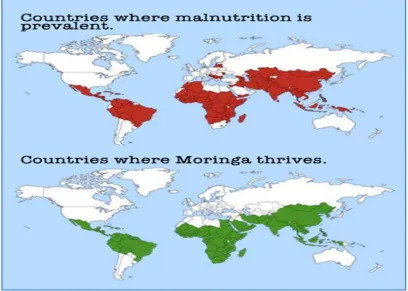
diseases, respiratory illnesses, ear and dental infections, water purification, and have promoted its use as a nutrient dense food source [4,24]. Preparation of Moringa based spice with 20% inclusion of Moringa leaf could be recommended for use as spice for cuisines. This will promote the consumption of Moringa especially by those averse to raw consumption of Moringa leaves [25]. The leaves of Moringa have been reported to be a valuable source of both macro and micronutrients and are now found growing within tropical and subtropical regions worldwide, congruent with the geographies where its nutritional benefits are most needed. Trees for Life, an NGO based in United States of America have promoted the nutritional benefits of the Moringa plant around the world. According to this organization Moringa grows in countries where malnutrition rate is high (Fig. 1) [26]. Several other NGOs like ECHO (Florida, USA), Church World Service (Indiana, USA), GIANT (Georgia, USA), Helen Keller International (Guinea), and Santé et Nature (Congo) are also active in promoting the use of Moringa [27].
2. NUTRITIONAL BENEFITS
Essential nutrients cannot be synthesized by the body and therefore must be provided through diet. A large number of reports on the nutritional quality of Moringa now exist in both scientific and popular literature, highlighting every part of Moringa is nutritious and an alternative medicine that is fast becoming popular in the West region. Studies have shown that Moringa leaves are rich sources of minerals, vitamins and amino acids, beta carotene, anti-inflammatory nutrients and omega 3 and 6 fatty acids [8,28-30]. As commonly known, most vegetables lose their nutrients upon cooking. However, it was observed that Moringa leaves whether fresh, cooked or stored as dried powder for months without refrigeration, did not lose its nutritional value [8]. Three non-governmental organisations (Trees for Life, Educational Concerns for Hunger and Church World Service, Senegal) have advocated the use of Moringa as a form of natural nutrition for the tropics [4].
In southern parts of India, leaves are fed to infants and children since their high content of beta-carotenes could help to prevent the development of blindness by Vitamin A deficiency [31], a common and widespread nutritional disorder amongst children and pregnant women in many developing countries. Besides being an excellent source of Vitamin A, Moringa leaf is also rich in vitamins B, C, proteins and minerals and acts as a good source of natural antioxidants [32]. It also contains a high content of amino acids such as methionine and cysteine [23].
Recent studies have demonstrated the potential bioactive properties of Moringa leaves and also shown the enrichment of carotenoids, tocopherols along iron bioavailability in animal models [33]. A study by Teixeira et al. [34] showed that whole leaf flour of Moringa contained 28.7, 7.1 and 44.4% of crude protein, fat and carbohydrate, respectively, with 3.0 and
103.1 mg/100 g of calcium and iron, respectively. The protein profile revealed 3.1, 0.3, 2.2, 3.5 and 70.1% levels of albumin, globulins, prolamin, glutelin and insoluble proteins, respectively. Ethanolic extract from Moringa leaves showed antioxidant activity that was stable in pH 4 and 9; when the extract was stored in the dark at 5°C and 25°C during a 15 day period, it did not show any significant change in its antioxidant property. Therefore, this plant extract is a potential source of dietary antioxidants [35]. It can also enhance the shelf-life of fat containing foods due to the presence of various types of antioxidant compounds such as ascorbic acid, flavonoids, phenolics and carotenoids [18,36]. Moringa contains all the essential amino acids needed for normal body functioning and must be replenished daily [4,37]. According to Igwilo et al. [37] different parts of Moringa are rich in essential amino acids, while the highest amount is reported in the leaves; thus leaves could be a good amino acid supplement.
The fresh Moringa leaves provide significant quantities of the key nutrients required for a healthy diet. These quantities are several times greater in Moringa leaves than the nutrients found in other fruits and vegetables [4]. Trees for Life’s often-reproduced illustration (Table 1), shows that “gram-for-gram, Moringa leaves contain more vitamin A than carrots, more calcium than milk, more iron than spinach, more vitamin C than oranges, and more potassium than bananas,” and that the protein quality of Moringa leaves rivals that of milk and eggs [24]. Since the dried Moringa leaf powder is concentrated, it contains even more of these essential nutrients with the exception of vitamin C (Table 1) [38]. Moringa has also been receiving increasing attention from the food processing industries. According to the Global Facilitation Unit (GFU), 2008, African companies manufacturing cereals are interested in adding Moringa leaf powder to enrich their products with a low cost, local source of vitamins and minerals.
Table 1. Comparison of nutrient level of Moringa leaves with other nutrient rich fruits, vegetables and products
Fresh leaves Dried leaf powder
4 times the Vitamin A in carrots 10 times the Vitamin A in carrots 7 times the Vitamin C in oranges 1/2 the Vitamin C in oranges
¾ Iron of Spinach 25 times the Iron in Spinach
3. HEALTH BENEFITS
Moringa is a great indigenous source of highly digestible proteins, calcium, iron, vitamin C, K and A [18]. In addition, it contains vitamin B complex, chromium, copper, magnesium, manganese, phosphorus and zinc [39]. It is a complete food in itself. Thurber and Fahey [27] stated that Moringa leaves are a rich protein source which can be used by doctors, nutritionists and community health conscious persons to solve under nutrition problems.
Moringa helps in controlling different health complications such as diabetes, anemia and high blood pressure. An extract from the Moringa leaf has been shown to be effective in lowering blood sugar levels within 3 hours ingestion, though less effectively than the standard hypoglycemic drug, glibenclamid [40], it could be regarded as a more natural alternative. Moringa leaves contain isothiocyanates that attenuate in vivo inflammation [41]. Due to antioxidant properties the regular intake of Moringa leaves through diet can protect normal as well as diabetic patients against oxidative damage [42]. According to Omabe et al. [43] Moringa not only has anti-diabetic and non-cytotoxic properties, but it is also associated with significant anion gap acidosis in alloxan induced type-2 diabetic rats. Moringa leaf juice is known to have a stabilizing effect on blood pressure [44]. This is due to presence of nitrile, mustard oil glycosides and thiocarbamate glycosides in Moringa leaves which were found to be responsible for the blood pressure lowering effect [45,46].
The crude extract of Moringa leaves has a significant cholesterol lowering action in the serum of high fat diet fed rats which might be attributed to the presence of a bioactive Phytoconstituents, notably β- sitosterol [31]. Moringa fruit has been found to lower the serum cholesterol, phospholipids, triglycerides, low density lipoprotein (LDL), very low density lipoprotein (VLDL) cholesterol to phospholipid ratio, atherogenic index lipid and reduce the lipid profile of liver, heart and aorta in hypercholesteremic rabbits and increased the excretion of fecal cholesterol [47].
Moringa was found to have a group of unique compounds containing sugar and rhamnose, which are uncommon sugar-modified glucosinolates [24,48]. These compounds were reported to demonstrate certain chemo-preventive activity, by inducing apoptosis [49].
The aqueous leaf extract was able to inhibit the proliferation of human tumor cells in a dose dependent manner as well as inducing cellular apoptosis [50,51]. It can also regulate thyroid hormone and can be used to treat hyperthyroidism [52]. Phytosterols and phenolic compounds present in Moringa leaves extract promote wound healing activity [53].
In the Philippines, Moringa is known as mother’s best friend because of its utilisation to increase woman’s milk production [18,54]. Moringa leaves have certain quality as alactagogum (i.e. increasing breast milk secretion) [4,54,55] as it contains aphytosterol compound which help in increase of milk production in breastfeeding mothers [56]. Moringa flour is one foodstuff used in the process of making dried noodles as a food improvement that can enhance the productivity of mothers’ breast milk. A study conducted on impact of noodles enhanced by Moringa, fed to the rat, is able to increase the productivity of breast milk of female rats [57].
Moringa leaves help prevent anemia. Results of the metabolic (anaemia) study by Madukwe et al.
antidote to piles, fevers, sore-throat, bronchitis, catarrh, eye and ear infections, as well as healing sores, a reliever of headaches and leaf juice has the capacity to reduce swelling of an inflammation.
Moringa seeds also have several medicinal properties. They contain specific protein fractions for skin and hair care. Two new active components for the cosmetic industry have been extracted from Moringa seed oil cake. They protect the human skin from environmental influences and combat premature skin aging. With dual activity, antipollution and conditioning/strengthening of hair, the Moringa seed extract is a globally acceptable innovative solution for hair care [64]. Moringa seed and flower oil called Moringa oil or ben oil has anti-inflammatory compounds that help relieve the pain and swelling caused by arthritis, rheumatism and joint pain [19,21]. Essential oil from Moringa leaves and extract from seeds showed
anti-fungal activities against dermatophytes such as Trichophyton rubrum, Trichophyton
mentagrophytes, Epidermophyton xoccosum and
Microsporum canis and thus can be used in the future for development of anti-skin disease agents [64]. The phytochemicals derived from Moringa seed extracts are effective mosquito vector control agents and the plant extracts may be used for further integrated pest-management programmes [32]. Bark of Moringa has been used to cure dental caries/toothache, common cold, external sores/ulcer, anti-tumor, snake bite, scorpion bite, headache and scurvy [24]. The ancient traditional medicine of India called Ayurveda has long recognized use of almost all parts of the Moringa tree for treating various illnesses such as inflammation, anemia, bronchitis, asthma, diarrhea, headache, gout, joint pain, rheumatism, hysteria, cholera, heart complaints, fevers, respiratory disorders, digestive disorders, intestinal worms, and diabetes, swelling, skin infections, in the indigenous system of medicine [65-67].
4. MORINGA FIGHTS MALNUTRITION
Moringa has high nutritional potential because its leaves contain a high concentration of nutrients, and phenolic constituents, mainly flavonoids and phenolic acids, which represent a good source of natural antioxidants [68]. The World Health Organization (WHO) has been promoting the Moringa plant as an alternative to imported food supplements to treat malnutrition in poor countries [69]. Daily consumption of Moringa in
the form of juice, fresh leaves or dried leaf powder can contribute significantly to meeting the needs of nutrients and reduce the risks of malnutrition in pregnant women, lactating mothers and young children. Moringa is reported to prevent malnutrition because of the high protein and micronutrient content of the leaves [70]. In Senegal, village women use Moringa leaf powder in their foods for development of growth and improving overall health of children, pregnant women recovered from anemia and had babies with higher birth weights and lactating mothers increased their milk production [71]. Traditionally, a tea made by boiling Moringa flowers is used by lactating mothers to stimulate the flow of breast milk. A 100g portion of fresh leaves gives a woman three times her daily requirements of vitamins A and C, about half her daily requirement of calcium, and significant quantities of iron and protein.
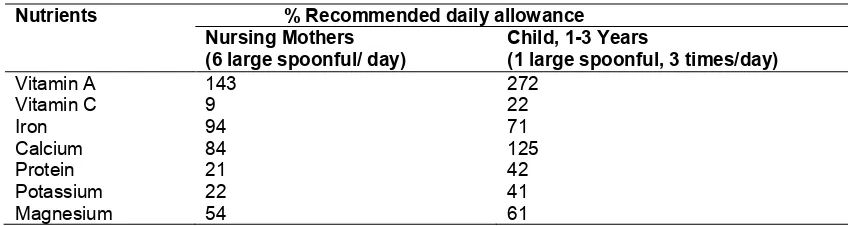
Regular use of Moringa leaf powder has been shown to increase the nutritional status of the subject. Research done by Zongo et al. [72] in Burkina Faso, shows that children who are malnourished given Moringa leaf powder have increased weight than those not given Moringa leaf powder. Research conducted by Srikanth et al. [73] in India with Moringa leaf powder fed to children showed significant weight gain among children with grade I and grade II Protein Energy Malnutrition (PEM). It was found that 70% children with grade II PEM improved to grade I and 60% children with grade I PEM had shown significant improvement in their nutritional status. As nutrient supplement, adding one large spoonful (8 g) of dried Moringa leaf powder to any complementary foods three times each day will ensure that a child is getting a nutrition-rich diet. Technical bulletin of USAID identifies how dried Moringa leaf powder contributes to the recommended daily allowances of young children and women for key nutrients given in Table 2 [74].
Table 2. Recommended daily allowances of nutrients to nursing mothers and child
Nutrients % Recommended daily allowance Nursing Mothers
(6 large spoonful/ day)
Child, 1-3 Years
(1 large spoonful, 3 times/day)
Vitamin A 143 272
Vitamin C 9 22
Iron 94 71
Calcium 84 125
Protein 21 42
Potassium 22 41
Magnesium 54 61
In 1995 to stop classroom hunger and improve the nutritional status of children the Government of India launched National Programme on Nutritional Support to Primary Education (NP-NSPE) commonly known as the Mid day Meal Programme. Under the scheme cooked ‘Mid-Day Meals’ with 300 calories and 8-12 grams of protein were given to children in school. But providing a balanced and nutritious diet to the children is still a challenge in rural area.
Moringa packed with nutritional potential and readily available in all geographical
locations in India, can be used as low cost substitute to address malnutrition in children
by adding Moringa leaf powder in the mid day meal.
5. CONCLUSION AND FUTURE
PROSPECTS
Several scientific studies have proved that Moringa is the most nutrient rich plant yet discovered and the only plant on planet with 96 nutrients and 46 antioxidants. It is rare for a single plant to contain as many essential nutrients and furthermore in high quantities those found individually in several other types of fruits and vegetables. This tree has in recent times been advocated as an outstanding indigenous source of highly digestible protein, calcium, iron, vitamins and carotenoids, and has the potential to be used as nutritional supplements and save millions of lives in poor countries where malnutrition is prevalent because of its high nutritional value. Since this plant naturally occurs in varying habitats have less possibility of great magnitude of variation in the concentration and composition of chemical ingredient in leaves and other part of the tree.
However the effect of soil characteristics and environmental factors affecting the nutrient
levels of leaves and other parts of Moringa oleifera grown across the globe require further studies.
Maringa provides a rich and rare combination of nutrients, amino acids, antioxidants, anti-aging and inflammatory properties used for nutrition and healing. Use of Moringa leaves helps in controlling different health complications such as anemia, high blood pressure, lowering blood sugar level and has great diabetic and anti-cancer properties. However, double blind researches are less prevalent to further substantiate these properties of Moringa. More studies are needed to substantiate the primary mechanisms of Maringa as diabetic and anti-cancer agents.
In view of its multiple uses, the Moringa plant needs to be promoted and widely cultivated around the world where climatic conditions favour its optimum growth. Leaves, pods and flowers of Moringa can be used as a dietary supplement as cooked vegetables or dried, turning them into powder for use in several food preparations. In recent years there has been growing awareness about benefits of Moringa tree that can meet nutritional needs and take care of medicinal requirement of growing population but still under utilised. Further studies on recommended daily intake and more human trials for scientific consensuses on its curative benefits are needed on this potential super food of the future.
COMPETING INTERESTS
Authors have declared that no competing interests exist.
REFERENCES
1. Global Nutrition Report 2016: From Promise to Impact: Ending Malnutrition by 2030. Washington, DC; 2016.
2. Global Nutrition Report 2017: Nourishing the SDGs. Bristol, UK: Development Initiatives; 2017.
(Accessed 15 November 2017)
Available:https://www.globalnutritionreport. org/files/2017/11/Report_2017.pdf
3. FAO, IFAD, UNICEF, WFP and WHO. 2017, The State of Food Security and Nutrition in the World 2017. Building resilience for peace and food security. Rome, FAO; 2017.
(Accessed 7 December 2017)
Available:http://www.fao.org/3/a-I7695e.pdf 4. Fuglie LJ. The Miracle Tree: Moringa oleifera: Natural nutrition for the tropics. Church World Service, Dakar: 1999. p. 68; revised in 2001 and published as The miracle tree: The multiple attributes of Moringa: CTA, Wageningen and CWS, New York, Dakar. 2001;172.
5. Palada MC. Moringa (Moringa oleifera
Lam.): A versatile tree crop with horticultural potential in the subtropical United States. Hort. Sci. 1996;31:794-97. 6. Ashfaq M, Basra SMA, Ashfaq U. Moringa;
A miracle plant of agro forestry. J. Agri. Soc. Sci. 2012;4:115-22
7. Khalafalla MM, Abdellatef E, Dafalla HM, Nassrallah AA, Aboul-Enein KM, Lightfoot DA, El-Deeb FE, El-Shemy HA. Active principle from Moringa oleifera Lam. leaves effective against two leukemias and a hepatocarcinoma. African J. Biotech. 2010; 9:8467-71.
8. Hsu R, Midcap S, Arbainsyah DWL.
Moringa oleifera medicinal and Economic uses. International course on economic botany, National Herbarium, Leiden, The Netherlands; 2006.
9. Ramachandran C, Peter KV,
Gopalakrishnan PK. Drumstick (Moringa oleifera): A multipurpose Indian vegetable. Econ. Bot. 1980;34:276-83.
10. Azeez FA, Nosiru MO, Clement NA, Awodele, DA, Ojo D, Arabomen O. Importance of Moringa oleifera tree to human livelihood: A case study of Isokan local government area in Osun state. Elixir Agric. 2013;55:12959-63.
11. Aslam MF, Anwar R, Nadeem U, Rashid TG, Kazi A, Nadeem M. Mineral composition of Moringa oleifera leaves and pods from different regions of Punjab, Pakistan. Asian J. Plant Sci. 2005;4:417-21.
12. Liyanage R, Jayathilaka C, Perera OS, Kulasooriya SA, Jayawardana BC,
Wimalasiri S. Protein and micronutrient contents of Moringa oleifera (Murunga) leaves collected from different localities in Sri Lanka. Asian J. Agric. Food Sci. 2014; 02:265-69
13. Asante WJ, Nasare IL, Tom-Dery D, Ochire-Boadu K, Kentil KB. Nutrient composition of Moringa oleifera leaves from two agro ecological zones in Ghana. African J. Plant. 2014;8:65-71.
14. Lamidi WA, Murtadha MA, Ojo DO. Effects of planting locations on the proximate compositions of Moringa oleifera leaves. J. Appl. Sci. Environ. Manage. 2017;21:331-38.
15. Moyo B, Masika PJ, Hugo A, Muchenje V. Nutritional characterization of Moringa (Moringa oleifera Lam.) leaves. African J. Biotech. 2011;10:12925-33.
16. Amundson Ken, Sterling-Rice Group
identifies food trends for 2018-November 7, 2017.
(Accessed 5 January 2018)
Available:https://bizwest.com/2017/11/07/s terling-rice-group-identifies-food-trends-2018/
17. Well+good Editors, If you like turmeric, you’re going to love Moringa in 2018, December 6; 2017.
(Accessed 5 January 2018)
Available:https://www.wellandgood.com/go od-food/wellness-trends-2018-moringa/ 18. Siddhuraju P, Becker K. Antioxidant
properties of various solvent extracts of total phenolic constituents from three different agroclimatic origins of drumstick tree (Moringa oleifera Lam.) leaves. J. Agri. Food Chem. 2003;51:2144-55. 19. Anwar F, Latif S, Ashraf M, and Gilani AH.
Moringa oleifera: A food plant with multiple medicinal uses. Phytother. Res. 2007;21: 17-25.
20. Anhwange BA, Ajibola VO, and Oniye SJ. Chemical studies of seeds of Moringa oleifera and Detarium microcarpum seeds. J. Bio. Sci. 2004;4:711-15.
21. Anwar F, Ashraf M, Bhanger MI. Interprovenance variation in the composition of Moringa oleifera oil seeds from Pakistan. J. American Oil Chemists’ Society. 2005; 82:45-51.
22. Oluduro AO. Evaluation of antimicrobial properties and nutritional potentials of
23. Dhakar RC, Maurya SD, Pooniya BK, Gupta BN, Sanwarmal M. Moringa: the herbal gold to combat malnutrition. Chronicles of Young Scientists. 2011;2: 119-25.
24. Fahey J. Moringa oleifera: A review of the medical evidence for its nutritional therapeutic, and prophylactic properties. Part 1. Trees for Life Journal; 2005. (Accessed 15 November 2017)
Available:http://www.tfljournal.org/ article.php/20051201124931586
25. Balogun M, Arise A, Arise R, Kolawole F, Oyebanji O. Effect of addition of Moringa oleifera leaf on the nutritional quality, microbial and sensory properties of spices. Croatian J. Food Tech. Biotech. Nutr. 2015;11:91-94.
26. Mathur B, Trees for Life; 2005. (Accessed 5 January 2018) Available:https://treesforlife.org/our-work/our-initiatives/moringa/moringa-book 27. Thurber MD, Fahey JW. Adoption of
Moringa oleifera to combat undernutrition viewed through the lens of the "Diffusion of Innovations" theory. Ecol. Food Nutr. 2009; 48:212-25.
28. Anjorin TS, Ikokoh P, Okolo S. Mineral composition of Moringa oleifera leaves, pods and seeds from two regions in Abuja. Nigeria. Int. J. Agri. Biol. 2010;12: 431-34.
29. Wakil S, Kazeem M. Quality assessment of weaning food produced from fermented cereal-legume blends using starters. Int. Food Res. Jour. 2012;19:1679-85.
30. Kasolo JN, Bimenya GS, Ojok L, Ochieng J, Ogwal-okeng JW. Phytochemicals and uses of Moringa oleifera leaves in Ugandan rural communities. J. Med. Plants Res. 2010;4:753-57.
31. Ghasi S, Nwobodo E, Ofili JO. Hypocholesterolemic effects of crude extract of leaf of Moringa oleifera Lam. in high- fat diet fed Wistar rats. J. Ethnopharmacol. 2000;69:21-25.
32. Prabhu K, Murugan K, Nareshkumar A, Ramasubramanian N, Bragadeeswaran S. Larvicidal and repellent potential of
Moringa oleifera against malarial vector,
Anopheles stephensi Liston (Insecta: Diptera: Culicidae). Asian Pac. J. Trop. Biomed. 2011;2:124-29.
33. Saini R, Manoj P, Shetty N, Srinivasan K, & Giridhar P. Dietary iron supplements and
Moringa oleifera leaves influence the liver hepcidin messenger RNA expression and
biochemical indices of iron status in rats. Nutr. Res. 2014;34: 630-38.
34. Teixeira EMB, Carvalho MRB, Neves VA, Silva MA, Arantes-Pereira L. Chemical characteristics and fractionation of proteins from Moringa oleifera Lam. leaves. Food Chem. 2014;147:51-54.
35. Arabshahi DS, Devi DV, Urooj A. Evaluation of antioxidant activity of some plant extracts and their heat, pH and storage stability. Food Chem. 2007;100: 1100-105.
36. Dillard CJ, German JB. Phytochemicals: nutraceuticals and human health: A review. J. Sci. Food Agric. 2000;80:1744-56. 37. Igwilo IO, Ezeonu FC, Udedi SC, Ozumba
NA. Comparative studies on the amino acid content of different parts of Moring aoleifera plant found in Awka, South-East, Nigeria. BCAIJ. 2011;5:124-27.
38. Trees for Life. Moringa Book. 2005;1-32. (Accessed 6 March 2018)
Available:ttps://treesforlife.org/our-work/our-initiatives/moringa/moringa-book 39. Fuglie LJ. New uses of Moringa studied in
Nicaragua. ECHO Development Notes 68, 2000.
40. Oliveira JTA, Silveira SB, Vasconcelos IM, Cavada BS, Moreira RA. Compositional and nutritional attributes of seeds from the multipurpose tree Moringa oleifera
Lamarck. J. Sci Food Agric. 1999;79:815-20.
41. Waterman C, Cheng DM., Rojas-Silva P, Poulev A, Dreifus J, Lila MA, et al. Stable, water extractable isothiocyanates from
Moringa oleifera leaves attenuate inflammation in vitro. Phytochem. 2014; 103:114-22.
42. Jaiswal D, Rai PK, Mehta S, Chatterji S, Shukla S, Rai DK, et al. Role of Moringa oleifera in regulation of diabetes-induced oxidative stress. Asian Pac. J. Trop. Med. 2013;6:426-32.
43. Omabe M, Nwudele C, Omabe KN, and Okorocha AE. Anion gap toxicity in alloxan induced type 2 diabetic rats treated with antidiabetic noncytotoxic Bioactive Compounds of Ethanolic Extract of
Moringa oleifera. J. Toxicol. 2014;1-7. Article ID 406242.
(Accessed 20 March 2018)
Available:https://doi.org/10.1155/2014/406 242
44. Dahot MU, Memon AR. Properties of
45. Faizi S, Siddiqui B, Saleem R, Siddiqui S, Aftab K, and Gilani A. Novel hypotensive agents, niazimin A, niazimin B, niazicin A and niazicin B from Moringa oleifera; Isolation of first naturally occurring carbamates. J. Chem. Soc. Perkin Trans. 1994;1:3035-40.
46. Faizi S, Siddiqui BS, Saleem R, Siddiqui S, Aftab K, Gilani AH. Fully acetylated carbamate and hypotensive thiocarbamate glycosides from Moringa oleifera. Phytochem. 1995;38:957-963.
47 Mehta LK, Balaraman R, Amin AH, Bafna PA, Gulati OD. Effect of fruits of Moringa oleifera on the lipid profile of normal and hypercholesterolaemic rabbits. J. Ethnopharmacol. 2003;86:191-95.
48 Amaglo NK, Bennet RN, Io CRBL, Rosa
EAS, Io TVL, Giuffrida A., lo CAL, Crea F, Timpo GM. Profiling selected
phytochemicals and nutrients in different tissues of the multipurpose tree Moringa oleifera L., grown in Ghana. J. Food Chem. 2010;122:1047-54.
49 Brunelli D, Tavecchio M, Falcioni C,
Frapolli R, Erba E, Iori R, et al. The isothiocyanate produced from
glucomoringin inhibits NF-kB and reduces myeloma growth in nude mice in vivo.
Biochem. Pharmacol. 2010;79:1141- 48.
50 Makonnen E, Hunde A, Damecha G. Hypoglycaemic effect of Moringa stenopetala aqueous extract in rabbits. Phytother. Res. 1997;11:147-148.
51 Sreelatha S, Jeyachitra A, Padma PR. Antiproliferation and induction of apoptosis by Moringa oleifera leaf extract on human cancer cells. Food Chem. Toxicol. 2011; 49:1270-75.
52 Tahilani P, Kar A. Role of Moringa oleifera leaf extract in the regulation of thyroid hormone status in adult male and female rats. Pharmacol. Res. 2000;41:319-23.
53 Stussi AI, Basocak V, Pauly G, Mccaulley J. Moringa oleifera: An interesting source of active ingredients for skin and hair care. SÖFW Jour. 2003;129:45-52.
54 Estrella MCP, Mantaring JBV, David GZ. A double blind randomized controlled trial on the use of Malunggay (Moringa oleifera) for augmentation of the volume of breast milk among non-nursing mothers of preterm infants. Philipp. J. Pediatr. 2000;49:3-6. 55 Estrella MCP, Jacinto BV, Man T, Grace
ZD, Michelle AT. A double-blind, randomized controlled trial on the use of
malunggay (Moringa oleifera) for augmentation of the volume of breast milk among non-nursing mothers of preterm infants. Philipp. J.Pediatr. 2000;49:3-6.
56 King JS, Raguindin PFN, Dans LF.
Moringa oleifera (Malunggay) as a
galactagogue for breastfeeding mothers: A systematic review and meta-analysis of randomized controlled trials. Philipp. J. Pediatr. 2013;61:34-42.
57 Kiranawati TM, Nunung N. Improvement of noodles recipe for increasing breast milk: Design of the Moringa noodles. American J. Food Sci. Tech. 2014;88-92.
(Accessed 5 January 2018)
Available:http://pubs.sciepub.com/ajfst/2/3/ 2/index.html
58 Madukwe EU, Ugwuoke AL, Ezeugwu JO. Effectiveness of dry Moringa oleifera leaf powder in treatment of anaemia. 2013;5: 226-28.
DOI: 10.5897/IJMMS2013.0884
59 WHO. Global prevalence of vitamin A deficiency in populations at risk 1995-2005. WHO Global Database on Vitamin A Deficiency. Geneva, World Health Organization; 2009.
60 West KP Jr., Gernand A, Sommer A. Vitamin A in nutritional anemia. In: Kraemer K, Zimmermann MB, eds. Nutritional anemia. Basel, Sight and Life Press. 2007;133-153.
61 West KP Jr. Extent of vitamin A deficiency among preschool children and women of reproductive age. J. Nutri. 2002;132:2857-66.
62 Babu SC. Rural nutrition interventions with indigenous plant foods-a case study of vitamin A deficiency in Malawi. Biotech. Agron. Soc. Environ. 2000;4:169-79 63 Anonymous. The Wealth of India (A
Dictionary of Indian Raw Materials and Industrial Products), Publication and Information Directorate, CSIR, New Delhi. 1962;6:425-429.
64 Chuang PH, Lee CW, Chou JY, Murugan M, Shieh BJ, Chen HM. Anti-fungal activity of crude extracts and essential oil of
Moringa oleifera Lam. Bioresour. Technol. 2007;98:232-36.
65 D'souza J, Kulkarni AR. Comparative studies on nutritive values of tender foliage of seedlings and mature plants of Moringa oleifera Lam. J. Econ. Tax. Bot. 1993;17: 479-85.
Moringa oleifera Lam. on carbon tetrachloride induced liver cell damage in albino rats. Ann. Biol. Res. 2010;1:27-35. 67 Chopra RN, Chopra IC, Handa KL, Kapur
LD. Chopra’s indigenous drugs of India. Academic Publishers, Calcutta, India. 1994;366-367.
68 Valdez-Solana MA, Verónica Y, Mejía-García, Alfredo TV, Guadalupe GA, José SP, et al. Nutritional content and elemental and phytochemical analyses of Moringa oleifera Grown in Mexico. J. Chem. 2015;1-9. Article ID 860381.
Available:http://dx.doi.org/10.1155/2015/86 0381
69 Johnson BC. Clinical perspectives on the health effects of Moringa oleifera: A promising adjunct for balanced nutrition and better health. KOS Health Publications, California. 2005;1-5.
70 Anjorin TS, Ikokoh P, Okolo S. Mineral composition of Moringa oleifera leaves,
pods and seeds from two regions in Abuja, Nigeria. Int. J. Agric. Biol. 2010;12:431-34. 71 Sambou DB. Supplementation for pregnant
and breast-feeding women with Moringa oleifera powder. Development Potential for Moringa Products. International Workshop, Dar es Salaam, Tanzania, 29 Oct.-2 Nov; 2001.
72 Zongo U, Zoungrana S.L, Savadogo A, Traore AS. Nutritional and clinical rehabilitation of severely malnourished children with Moringa oleifera Lam. leaf powder in Ouagadougou (Burkina Faso). Food Nutr. Sci. 2013;4:991-97.
73 Srikanth VS, Mangala S, Subrahmanyam G. Improvement of protein energy malnutrition by nutritional intervention with
Moringa oleifera among anganwadi children in rural area in Bangalore, India. Int. J. Sci. Stud. 2014;2:32-35.
74 USAID, Moringa- An Excellent Source of Nutrition. Technical Bulletin 24, April; 2012. _________________________________________________________________________________