Tomasz Grzegorzek¹
, A–D, F, Bogdan Kolebacz¹
, B, E, F,
Grażyna Stryjewska-Makuch¹
, B, E, F, Alicja Kasperska-Zając²
, C, E, F,
Maciej Misiołek³
, A, C, E, FThe Influence of Selected Preoperative Factors
on the Course of Endoscopic Surgery in Patients
with Chronic Rhinosinusitis
1 Department of Laryngology, Independent Public Clinical Hospital No. 7, Medical University of Silesia in Katowice, Poland
2 Department of Internal Diseases, Allergology and Immunology, Medical University of Silesia in Katowice, Poland
3 Clinical Department of Laryngology in Zabrze, Medical University of Silesia in Katowice, Poland
A – research concept and design; B – collection and/or assembly of data; C – data analysis and interpretation;
D – writing the article; E – critical revision of the article; F – final approval of article; G – other
Abstract
Background. Epidemiological data shows the increasing prevalence of chronic rhinosinusitis which poses signifi-cant health, social and economic problems in today’s world. Endoscopic paranasal sinus surgery is currently the method of choice in the treatment of chronic rhinosinusitis when conservative treatment methods fail. Therefore, maintaining a high percentage of therapeutic success with a constantly growing number of surgical procedures poses the major challenge to otolaryngologists. Appropriate surgical conditions have a great influence on the course of surgical procedure, the risk of complications and postoperative outcomes.
Objectives. The aim of this study was to analyse the influence of selected perioperative factors on the course of endoscopic surgery in patients with chronic rhinosinusitis.
Material and Methods. A group of 212 patients (105 women and 107 men) aged 19 to 74 (mean age 46.5) diag-nosed with chronic rhinosinusitis were enrolled in the retrospective study. All patients underwent endoscopic sinus surgery. The analysis was concerned with the impact of such factors and clinical parameters as gender and age of patients, disease progression, previous (conservative and surgical) treatment, comorbidities, detrimental external factors, the scope of surgical treatment influencing the duration of surgery, bleeding in the surgical field and the total blood loss during surgery.
Conclusions. It was found that the mean duration of surgery in the study group was 40.2 min, the mean blood loss was 312.17 mL and the mean degree of intraoperative bleeding scale reached 2.15. The intraoperative conditions dete-riorate together with the increasing age of patients. Selected factors and clinical parameters, such as impaired nasal patency, olfactory disorders, the occurrence of nasal polyps, prior surgical treatment, the presence of aspirin-induced asthma and cardiovascular diseases, intranasal glucocorticoid therapy, a high degree of inflammatory changes in the sinuses and a large extent of surgery substantially influence the deterioration in intraoperative conditions. Knowledge of these factors and their impact on surgery enables more thorough, multidisciplinary preparation of patients for surgery, and thus enables the optimisation of surgical conditions (Adv Clin Exp Med 2014, 23, 1, 69–78).
Key words: chronic rhinosinusitis, endoscopic sinus surgery, FESS, nasal polyps. Adv Clin Exp Med 2014, 23, 1, 69–78
ISSN 1899–5276
ORIGINAL PAPERS
© Copyright by Wroclaw Medical University
Rhinosinusitis is one of the more common reasons for medical appointments with laryngolo-gists. It is a disease with diverse symptomatology, and rhinosinusitis-related symptoms affect nega-tively the quality of life and can significantly im-pair daily functioning.
noted in Germany [2]. This data shows that chron-ic rhinosinusitis poses signifchron-icant health, social and economic problems in today’s world. Thus, more and more attention is paid to developing the most effective treatment method.
The treatment regimen in patients with symp-toms of chronic rhinosinusitis recommended by EPOS 2012 (European Position Paper on Rhino-sinusitis and Nasal Polyps of 2012) is based on the administration of glucocorticoids and the rinsing of the nasal cavity with saline solution. A lack of treatment results in patients with mild symptoms after 3-month therapy is an indication for com-puted tomography (CT) of paranasal sinuses and should lead to a decision to treat patients surgical-ly, which will also enable effective pharmacothera-py at a later stage. The inclusion of long-term treat-ment with intranasal glucocorticoids after surgical procedure provides a better therapeutic effect and an extension of the period between successive op-erations. In many treatment regimens long-term macrolide therapy [3, 4] is also used and in some cases tetracyclines are administered [4]. Studies conducted at the cellular level have shown anti-proliferative and anti-inflammatory effects of vita-min D analogs in the cells of nasal polyps in pa-tients with chronic rhinosinusitis [5].
Surgical procedure plays an important role in the treatment regimen of chronic rhinosinusitis. It is currently based on the concept of functional endoscopic surgery. The aim of functional endo-scopic sinus surgery (FESS) is to restore the pat-ency of natural sinus ostia, which provides proper ventilation of the inside of the sinus and improves its drainage, leading to the healing of the inflamed mucous membrane [6, 7].
The proper course and the expected therapeu-tic effect of endoscopic paranasal sinus surgery requires a number of conditions to be followed. These include the stage of preparing patients for surgery, the proper qualification for surgery, the
proper performance of surgery and the right pro-vision of post-operative care. The precise control of the above stages of treatment will improve the operating conditions and reduce the likelihood of perioperative complications and thus improve the effectiveness of treatment [8, 9].
Based on one’s own clinical experience and the contemporary medical literature on this mat-ter, an attempt was made to assess individual pre-operative factors and their impact on the course of surgery.
Material and Methods
A group of 212 patients (105 women and 107 men) aged 19 to 74 (mean age 46.5) diagnosed with chronic rhinosinusitis were enrolled in the retrospective study. All patients underwent en-doscopic paranasal sinus surgery according to the concept of Messerklinger and Stammberger, i.e. functional endoscopic sinus surgery (FESS). Sur-gical procedures were performed from July 2010 to April 2011.
During the analysis of medical records of the patients, the following preoperative factors and clinical parameters were taken into account:
– age and gender of patients,
– symptoms and signs and the presence of pathological changes in CT of the paranasal sinus-es (Table 1) important in the diagnosis of chronic rhinosinusitis (according to the recommendations of EPOS 2012),
– a history of previous surgical procedures due to the inflammation of the nose and paranasal si-nuses (nasal polyp removal, Caldwell-Luc proce-dure, endoscopic sinus surgical procedures),
– the use of intranasal or systemic glucocorti-coids due to chronic rhinosinusitis,
– comorbidities (aspirin-induced asthma, car-diovascular diseases, diabetes),
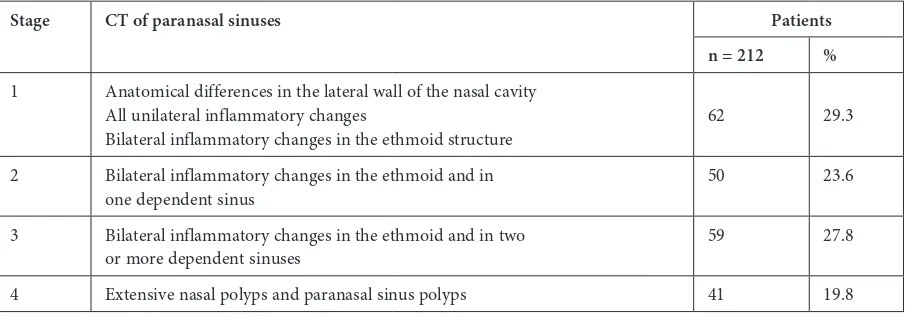
Table 1. Modified classification of severity of chronic rhinosinusitis based on CT of sinuses according to Kennedy
Stage CT of paranasal sinuses Patients
n = 212 %
1 Anatomical differences in the lateral wall of the nasal cavity All unilateral inflammatory changes
Bilateral inflammatory changes in the ethmoid structure 62 29.3
2 Bilateral inflammatory changes in the ethmoid and in
one dependent sinus 50 23.6
3 Bilateral inflammatory changes in the ethmoid and in two
or more dependent sinuses 59 27.8
– detrimental external factors (smoking, work in dusty areas, constant stay in air-conditioned rooms).
Subsequently, the study of medical documen-tation concerned the following intraoperative pa-rameters: duration of surgery (in min), blood loss during surgery (in mls), the degree of bleeding in the surgical field evaluated by the surgeon. The above parameters were collected and underwent statistical analysis.
Statistical Analysis
Data was collected and analyzed in a spread-sheet. The verified data was then transferred to a statistical program where the appropriate analy-sis was performed.
Distribution of quantitative variables was ver-ified by the Shapiro-Wilk test. Depending on the distribution, the Student’s t-test and the Mann-Whitney U test for comparing two subgroups were used interchangeably with analysis of vari-ance (ANOVA) and the Kruskal-Wallis analysis of variance of ranks for more subgroups.
Depending on the distribution, the correlation of quantitative variables was analysed using Spear-man’s rank correlation.
The results were shown in the tables contain-ing the average value of the examined parameter and its standard deviation for qualitative parame-ters or quantities with the percentages for qualita-tive parameters.
For the purposes of the whole analysis, a p-val-ue < 0.05 was considered significant. STATISTICA
programme (data analysis software system) ver-sion 10.0 from StatSoft, Inc. was used for the calculations.
Results
Age of the Patients
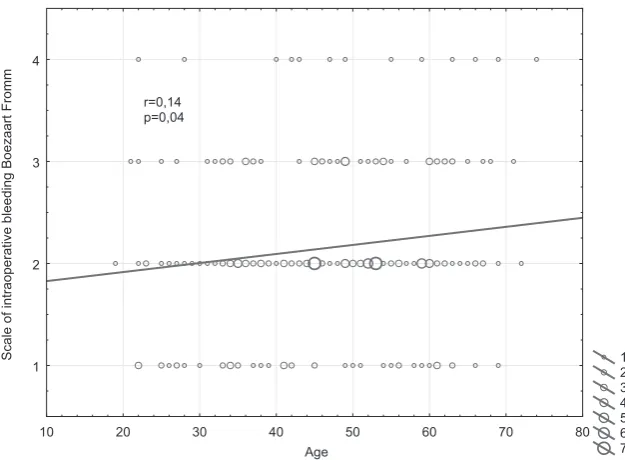
The analyzed group consisted of patients aged between 19 and 74. The mean age was 46.5 years (SD 12.9). The study showed a significant deteri-oration in intraoperative conditions with an in-crease in the age of patients undergoing surgery (Fig. 1).
Gender of the Patients
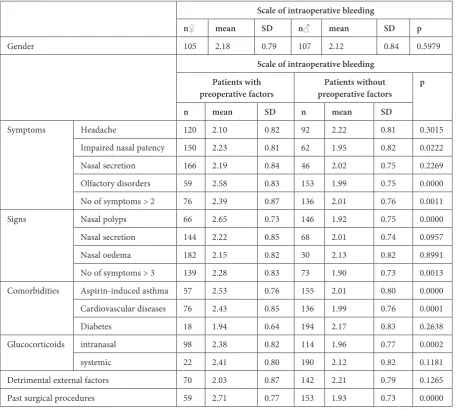
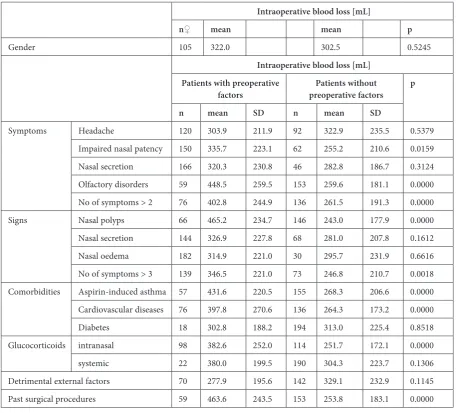
The gender ratio was almost equal in the study group with 107 (50.5%) male patients and 105 (49.5%) female patients. No influence of the gen-der on intraoperative conditions was demonstrat-ed (Tables 2–4).
Patient-reported Symptoms
After the analysis of the symptoms reported by patients while collecting the medical history, it was found that patients often complain of muco-purulent nasal discharge and impaired nasal pa-tency. The study of the relationship between the operating conditions and symptoms showed that impaired nasal patency, impaired sense of smell and the number of patient-related symptoms had a statistically significant effect on the assessment
1 2 3 4 5 6 7 10 20 30 40 50 60 70 80
Age 1
2 3 4
Scale of intraoperative bleeding Boezaart From
m
r=0,14 p=0,04
of intraoperative parameters. For other symptoms, such as the presence of mucopurulent nasal secre-tion and headache, no statistically significant ef-fect on the operating conditions was demonstrat-ed (Tables 2–4).
Laryngological Examination
Oedema of the nasal mucosa and the presence of mucopurulent nasal secretion were the most fre-quently observed clinical symptoms reported dur-ing the laryngological examination. The presence of nasal polyps and a large number of symptoms had a statistically significant relationship with the deterioration in operating conditions. Such a rela-tionship was not found in the case of the presence of mucopurulent nasal secretion and oedema of the nasal mucosa (Tables 2–4).
Comorbidities
The most common comorbidities included cardiovascular diseases, diabetes and aspirin-in-duced asthma. The analysis showed that both as-pirin-induced asthma and cardiovascular diseases have a significant impact on the deterioration in intraoperative conditions. In diabetes, such a rela-tionship was not observed (Tables 2–4).
Previous surgical procedures due to nasal in-flammation and rhinosinusitis.
The data obtained from the medical history in the study group showed that 59 patients (27.83%) had undergone surgical treatment before due to nasal and sinus inflammation (e.g. nasal polyp removal, Caldwell-Luc maxillary sinus surgery, FESS). After the statistical analysis, it was found that the duration of surgery in these patients was extended significantly and the increase in intraop-erative bleeding scale and blood loss was reported (Tables 2–4).
Table 2. The influence of preoperative factors on the time of surgical procedure
Time of surgical procedure [min]
n♀ mean SD n♂ mean SD p
Gender 105 39.1 12.9 107 41.2 14.1 0.2669
Time of surgical procedure [min] Patients with preoperative
factors Patients without preopera-tive factors p
n mean SD n mean SD
Symptoms headache 120 39.5 13.2 92 41.1 14.0 0.3996
impaired nasal patency 150 42.2 13.7 62 35.3 12.0 0.0007
nasal secretion 166 40.5 13.5 46 38.9 13.7 0.4722
olfactory disorders 59 47.6 13.4 153 37.3 12.5 0.0000
no of symptoms > 2 76 45.8 13.3 136 37.1 12.7 0.0000
Signs nasal polyps 66 46.7 13.2 146 37.3 12.7 0.0000
nasal secretion 144 40.3 13.8 68 39.9 13.1 0.8050
nasal oedema 182 40.7 13.9 30 37.3 11.4 0.2140
no of symptoms > 3 139 41.4 13.6 73 37.9 13.2 0.0808
Comorbidities aspirin-induced asthma 57 43.7 13.0 155 38.9 13.6 0.0225
cardiovascular diseases 76 43.6 12.8 136 38.3 13.6 0.0066
diabetes 18 41.1 14.1 194 40.1 13.5 0.7637
Glucocorticoids intranasal 98 41.8 13.4 114 38.8 13.6 0.1010
systemic 22 43.2 13.2 190 39.8 13.6 0.2751
Detrimental external factors 70 40.3 15.4 142 40.1 12.6 0.9419
Glucocorticoid Therapy
Glucocorticoids had been commonly used in patients before surgery. More than 50% the study group had undergone general or intranasal gluco-corticoid therapy (107 patients, 50.5%). In patients treated with general glucocorticoids, no significant differences in the analysed parameters were found compared to those who had not used the agents prior to surgery. In the group of patients treated with intranasal glucocorticoids both a significant-ly higher value of the intraoperative bleeding scale and blood loss during surgery were found com-pared to patients who had not taken glucocorti-coids. However, the difference in the duration of surgical procedure was not statistically significant (Tables 2–4).
An additional analysis was performed with re-lation to the observed close rere-lationship between the use of glucocorticoids prior to surgery and the degree of progression of pathological changes
in CT. Intraoperative conditions in patients pre-operatively treated with systemic and intranasal glucocorticoids were compared with intraopera-tive conditions in patients who had not taken the agents. Another analysis was performed for each stage in regards to the progression of inflammato-ry changes in CT of the paranasal sinuses, accord-ing to the Kennedy Scale. This additional compar-ison revealed that in the study group there was yet again no relationship between systemic glucocorti-coid therapy and intraoperative conditions. How-ever, in the group of patients who used intranasal glucocorticoids, relationships changed significant-ly. For the same stages regarding the progression of inflammatory sinus changes, no differences in intraoperative conditions were observed in both groups of patients.
Table 3. The influence of preoperative factors on the intraoperative bleeding scale by Boezaart Fromm
Scale of intraoperative bleeding
n♀ mean SD n♂ mean SD p
Gender 105 2.18 0.79 107 2.12 0.84 0.5979
Scale of intraoperative bleeding Patients with
preoperative factors preoperative factorsPatients without p
n mean SD n mean SD
Symptoms Headache 120 2.10 0.82 92 2.22 0.81 0.3015
Impaired nasal patency 150 2.23 0.81 62 1.95 0.82 0.0222
Nasal secretion 166 2.19 0.84 46 2.02 0.75 0.2269
Olfactory disorders 59 2.58 0.83 153 1.99 0.75 0.0000
No of symptoms > 2 76 2.39 0.87 136 2.01 0.76 0.0011
Signs Nasal polyps 66 2.65 0.73 146 1.92 0.75 0.0000
Nasal secretion 144 2.22 0.85 68 2.01 0.74 0.0957
Nasal oedema 182 2.15 0.82 30 2.13 0.82 0.8991
No of symptoms > 3 139 2.28 0.83 73 1.90 0.73 0.0013
Comorbidities Aspirin-induced asthma 57 2.53 0.76 155 2.01 0.80 0.0000
Cardiovascular diseases 76 2.43 0.85 136 1.99 0.76 0.0001
Diabetes 18 1.94 0.64 194 2.17 0.83 0.2638
Glucocorticoids intranasal 98 2.38 0.82 114 1.96 0.77 0.0002
systemic 22 2.41 0.80 190 2.12 0.82 0.1181
Detrimental external factors 70 2.03 0.87 142 2.21 0.79 0.1265
Detrimental External Factors
(Smoking, Air-conditioning,
Dustiness)
Based on medical history, it was shown that 70 (33%) patients from the study group had reg-ular contact with harmful external conditions at work or the place of residence. The study of the re-lationship between this exposure and intraopera-tive conditions did not demonstrate any statistical-ly significant correlation (Tables 2–4).
The Severity of Inflammatory
Changes in Sinus CT
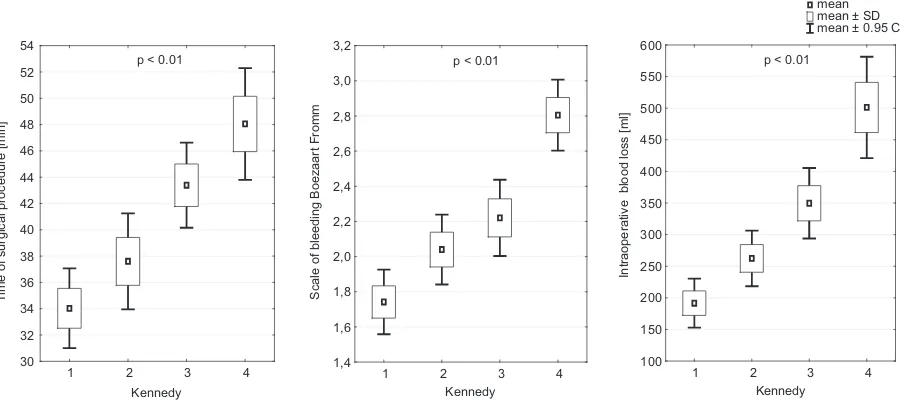
The progression of inflammation in CT was de-scribed according to the Kennedy Scale (Table 1). The mean severity of inflammatory changes in the study group reached 2.37 (SD 1.10). The statisti-cal analysis demonstrated a significant relationship
between the progression of the inflammatory pro-cess and the examined intraoperative parameters (Fig. 2).
Discussion
The overview of medical literature provides little information on the effect of preoperative fac-tors on intraoperative conditions. The analysis of the available reports indicates that mostly disease severity, comorbidities, medications used prior to surgery and a history of previous surgical treat-ment due to rhinosinusitis are the preoperative factors that influence surgery [10–15].
In the group of 212 patients efforts were made to determine the impact of the selected preopera-tive factors on the course of surgery. Among the demographic factors, age and gender were al-so analyzed. There was no significant relation-ship between the gender of patients and operating
Table 4. The influence of preoperative factors on blood loss during surgery
Intraoperative blood loss [mL]
n♀ mean mean p
Gender 105 322.0 302.5 0.5245
Intraoperative blood loss [mL] Patients with preoperative
factors preoperative factorsPatients without p
n mean SD n mean SD
Symptoms Headache 120 303.9 211.9 92 322.9 235.5 0.5379
Impaired nasal patency 150 335.7 223.1 62 255.2 210.6 0.0159
Nasal secretion 166 320.3 230.8 46 282.8 186.7 0.3124
Olfactory disorders 59 448.5 259.5 153 259.6 181.1 0.0000
No of symptoms > 2 76 402.8 244.9 136 261.5 191.3 0.0000
Signs Nasal polyps 66 465.2 234.7 146 243.0 177.9 0.0000
Nasal secretion 144 326.9 227.8 68 281.0 207.8 0.1612
Nasal oedema 182 314.9 221.0 30 295.7 231.9 0.6616
No of symptoms > 3 139 346.5 221.0 73 246.8 210.7 0.0018
Comorbidities Aspirin-induced asthma 57 431.6 220.5 155 268.3 206.6 0.0000 Cardiovascular diseases 76 397.8 270.6 136 264.3 173.2 0.0000
Diabetes 18 302.8 188.2 194 313.0 225.4 0.8518
Glucocorticoids intranasal 98 382.6 252.0 114 251.7 172.1 0.0000
systemic 22 380.0 199.5 190 304.3 223.7 0.1306
Detrimental external factors 70 277.9 195.6 142 329.1 232.9 0.1145
conditions. In the latter case, it was shown that operating conditions deteriorate together with the increase in age. Available studies show no re-lationship between the gender of patients and in-traoperative conditions either [10, 15]. The same authors do not find the relationship between the age of patients and the degree of intraoperative bleeding and the duration of surgery. On the oth-er hand, Ramadan and VanMetre, describing the population of patients over the age of 65, noticed statistically increased bleeding during the surgical procedure in this group [16]. Ban et al. also found a higher incidence of mild complications (includ-ing bleed(includ-ing) in patients over the age of 65. Ac-cording to the authors, this is associated with long- -term symptoms of rhinosinusitis prior to surgery and diabetes occurring more frequently in patients aged over 65 [17].
As early as in 1992 Kennedy listed the severi-ty of the disease as a major factor influencing the course of endoscopic sinus surgery and, conse-quently, the results of treatment [13]. These obser-vations were confirmed by the present studies [10, 18–21].
Laguna compared three groups of patients with various severity of pathological changes before sur-gery based on endoscopic and imaging examina-tion (i.e. CT). The results of these studies indicate that the worst intraoperative conditions occurred in the group of patients with the most severe rhi-nosinusitis and extensive nasal polyps [15].
Similarly, Albu and Baciut found a linear rela-tionship between the severity of the disease, as de-scribed in the endoscopic examination as well as in CT of the sinuses and intraoperative bleeding in endoscopic surgery of the maxillary sinus. The
analysis showed that together with the increase in the scale of disease severity, the degree of intraop-erative bleeding increases, according to the scale proposed by Fromm and Boezaart [18]. In anoth-er study, Albu et al. demonstrated that chronic rhinosinusitis with nasal polyps substantially in-creased blood loss during the surgical procedure, decreased the quality of the operating field and ex-tended the duration of surgery in comparison with patients without nasal polyps [20].
In the studies conducted in France, the sever-ity of clinical changes was described according to the Lund-Mackay Scale based on CT of the para-nasal sinuses. The authors confirmed the reports from other medical centres and proved that the greater the severity of the changes according to the Lund-Mackay Scale, the more significant intraop-erative bleeding was [10].
The analysis of the patients in this study also showed the relationship between intraoperative conditions and disease severity. A positive corre-lation was found between the severity of the dis-ease observed in CT of the sinuses as well as in na-sal endoscopic examination and a worsening of intraoperative conditions. The analysis describes the relationships between individual preoperative symptoms and the course of surgery. Reports that analyse the impact of preoperative symptoms on the course of surgery have not been published in such a detailed way as yet.
Chronic rhinosinusitis and comorbidities are among the factors that deteriorate the general con-dition of patients prior to endoscopic surgery and may have an impact on the course of surgery and treatment results. Nair et al. are of the opinion that intraoperative bleeding is dependent on many
Fig. 2. The relationship between the time of surgery, intraoperative bleeding scale, blood loss during surgery and the severity of inflammation in paranasal sinuses based on the Kennedy scale
mean mean ± SD mean ± 0.95 C
1 2 3 4 30 32 34 36 38 40 42 44 46 48 50 52 54
p < 0.01
1 2 3 4 1,4 1,6 1,8 2,0 2,2 2,4 2,6 2,8 3,0 3,2
p < 0.01
1 2 3 4 100 150 200 250 300 350 400 450 500 550 600
p < 0.01
Ti
me of surgical procedure [min] Scale of bleeding Boezaart From
m
Intraoperative blood loss [ml]
factors, of which advanced underlying disease, ar-terial hypertension, blood clotting disorders and heart diseases are the most significant [22]. Sim-ilarly, Cassano et al. demonstrated a relationship between arterial hypertension and a higher risk of perioperative bleeding. Such a relationship was not observed in diabetic patients [23]. The impact of comorbidities on operating conditions during en-doscopic ethmoidectomy in patients with nasal polyps was also analysed by Mortuaire et al. The re-sults of these studies showed no statistically signifi-cant effect on operating conditions for the diseases such as bronchial asthma, hypersensitivity to non-steroidal anti-inflammatory drugs or allergy [10].
Gromek, on the contrary, observed a greater tendency for intraoperative bleeding in patients with hypersensitivity to non-steroidal anti-inflam-matory drugs [24]. The analysed material showed the influence of aspirin-induced asthma as well as cardiovascular diseases on the deterioration in in-traoperative conditions. It should be noted that the presence of aspirinduced asthma has always in-volved a very extensive inflammation of sinuses and the presence of nasal polyps, which could de-termine the results of the study.
There are several studies which indicate that also a past history of surgery due to rhinosinus-itis and nasal inflammation can hinder the course of endoscopic procedures [10, 24]. Gromek not-ed in her studies increasnot-ed intraoperative blenot-ed- bleed-ing in patients with a past history of polypecto-mies. According to the author, it was caused by severe adhesions in the nasal cavities after previ-ous surgery [24].
In this study a clear relationship was observed between the previous surgical treatment and the deterioration in intraoperative conditions. It seems that the deterioration in intraoperative condi-tions may be caused by adhesions and fibrosis of the nasal mucosa due to previous surgical proce-dures which narrow the operating field as well as show an increased tendency to bleeding. Lack of landmarks (e.g. the middle nasal concha, uncinate process, etc.) may increase the time of the surgical procedure, making it difficult to perform surgery and increases the risk of complications, including bleeding. Reoperations are often performed on pa-tients with a high intensity of pathological chang-es. For these reasons, during the first surgery, pos-sible reoperation should be considered. Therefore, attempts should be made to maintain the anatom-ical landmarks. Furthermore, before qualifying pa-tients for reoperation, it is necessary to check if all methods of conservative treatment have been used and endoscopic examination should be performed before reoperations to evaluate the operating field conditions.
As previously shown, the severity of sinus in-flammation before surgery is the most important factor that influences the course of surgical proce-dure. It seems that it is possible to improve operat-ing conditions by reducoperat-ing the severity of the dis-ease prior to planned endoscopic treatment.
Glucocorticoids are the most commonly used agents prior to endoscopic paranasal sinus surgery. Sieśkiewicz et al. conducted the study on the influ-ence of orally administered glucocorticoids on in-traoperative conditions. Patients with chronic rhi-nosinusitis with nasal polyps and with the similar disease progression were enrolled in the study. The authors of the study report that preoperative use of oral prednisone significantly improves the quality of the surgical field and reduces surgery time [25].
On the other hand, Albu et al. conducted the study on the influence of intranasal glucocorti-coids on the intraoperative conditions. The study was performed separately for patients with chronic rhinosinusitis with and without nasal polyps. The results showed decreased blood loss during sur-gery, improvement in the quality of the surgical field and the reduced surgery time in the groups treated with intranasal glucocorticoids both in pa-tients with and without nasal polyps [20].
loss during surgery and worse quality of the surgi-cal field can be expected in patients who had pre-operatively used intranasal glucocorticoids com-pared to the whole patient population undergoing endoscopic sinus surgery.
The authors concluded that selected preoper-ative factors and clinical parameters such as im-paired nasal patency, imim-paired sense of smell, the presence of nasal polyps, prior surgical treatment, the presence of aspirin-induced asthma and cardio-vascular diseases, a higher degree of inflammatory
changes in sinuses are crucial for the course of en-doscopic paranasal sinus surgery. Their presence affects the deterioration in operating conditions, the increase in intraoperative bleeding and the ex-tended duration of surgery. Intraoperative condi-tions also deteriorate with the increase in the age of the patient. The knowledge of these factors and their impact on the course of surgery may provide a more thorough, multidisciplinary preparation of patients for surgery, and therefore the optimisa-tion of operating condioptimisa-tions.
References
[1] Meltzer E, Hamilos D: Rhinosinusitis diagnosis and management for the clinician: a synopsis of recent consensus guidelines. Mayo Clin Proc 2011, 86, 427–443.
[2] Bachert C, Hörmann K, Mösges R, Rasp G: An update on the diagnosis and treatment of sinusitis and nasal polyposis. Allergy 2003, 58, 176–191.
[3] Perić A, Vojvodic D, Vukomanovic-Durdevic B: Nasal polyps with more intense epithelial eosinophil infiltration respond worse to long-term low-dose treatment by clarithromycin. Adv Clin Exp Med 2011, 20, 3, 325–334.
[4] Fokkens W, Lund V, Mullol J: European Position Paper on Rhinosinusitis and Nasal Polyps group. European position paper on rhinosinusitis and nasal polyps 2007. Rhinol Suppl 2007, 1–299.
[5] Frączek M, Rostkowska-Nadolska B, Sliupkas-Dyrda E, Kuśmierz D, Pniak J, Latocha M: The influence of vita-min D derivatives on the expression of apoptotic genes in nasal polyp fibroblasts. Adv Clin Exp Med 2010, 19, 6, 679–684.
[6] Messerklinger W: Endoscopy of the Nose. Baltimore: Urban-Schwarzenberg; 1978, 3, 40–44.
[7] Wigand ME: Endonasal sinus surgery with endoscopical control: from radical operation to rehabilitation of the mucosa. Endoscopy 1978, 10, 255–260.
[8] Timperley D, Sacks R, Parkinson RJ, Harvey RJ: Perioperative and intraoperative maneuvers to optimize surgical outcomes in skull base surgery. Otolaryngol Clin North Am 2010, 43, 699–730.
[9] Misiołek M, Orłowski K, Suchodolski M, Misiołek H: Wybrane aspekty postepowania okołooperacyjnego w chirurgii nosa i zatok przynosowych. Mag Otorynolaryngol 2012, 1, 22–26.
[10] Mortuaire G, Bahij J, Maetz B, Chevalier D: Lund-Mackay score is predictive of bleeding in ethmoidectomy for nasal polyposis. Rhinology 2008, 46, 285–288.
[11] Matsuwaki Y, Ookushi T, Asaka D: Chronic rhinosinusitis: risk factors for the recurrence of chronic rhinosi-nusitis based on 5-year follow-up after endoscopic sinus surgery. Int Arch Allergy Immunol 2008, 146, Suppl 1, 77–81.
[12] Jiang RS, Su MC, Liang KL: Preoperative prognostic factors for olfactory change after functional endoscopic sinus surgery. Am J Rhinol Allergy 2009, 23, 64–70.
[13] Kennedy DW: Prognostic factors, outcomes and staging in ethmoid sinus surgery. Laryngoscope 1992, 102, 1–18.
[14] Watelet JB, Annicq B, van Cauwenberge P, Bachert C: Objective outcome after functional endoscopic sinus surgery: prediction factors. Laryngoscope 2004, 114, 1092–1097.
[15] Laguna D, Lopez-Cortijo C, Millan I, Gonzalez FM, Garcia-Berrocal JR: Blood loss in endoscopic sinus surgery: assessment of variables. J Otolaryngol Head Neck Surg 2008, 37, 324–330.
[16] Ramadan HH, VanMetre R: Endoscopic sinus surgery in geriatric population. Am J Rhinol 2004, 18, 125–127.
[17] Ban JH, Kwon HJ, Lee KC: Outcomes of endoscopic sinus surgery in an elderly population: comparison with those in an adult population. Clin Otolaryngol 2010, 35, 300–306.
[18] Albu S, Baciut M: Failures in endoscopic surgery of the maxillary sinus. Otolaryngol Head Neck Surg 2010, 142, 196–201.
[19] Ko MT, Chuang KC, Su CY: Multiple analyses of factors related to intraoperative blood loss and the role of reverse Trendelenburg position in endoscopic sinus surgery. Laryngoscope 2008, 118, 1687–1691.
[20] Albu S, Gocea A, Mitre I: Preoperative treatment with topical corticoids and bleeding during primary endoscopic sinus surgery. Otolaryngol Head Neck Surg 2010, 143, 573–578.
[21] Wabnitz DA, Nair S, Wormald PJ: Correlation between preoperative symptom scores, quality-of-life question-naires, and staging with computed tomography in patients with chronic rhinosinusitis. Am J Rhinol 2005, 19, 91–96.
[22] Nair S, Collins M, Hung P, Rees G, Close D, Wormald PJ: The effect of beta-blocker premedication on the surgi-cal field during endoscopic sinus surgery. Laryngoscope 2004, 114, 1042–1046.
[23] Cassano M, Longo M, Fiocca-Matthews E, Del Giudice AM: Endoscopic intraoperative control of epistaxis in nasal surgery. Auris Nasus Larynx 2010, 37, 178–84.
[25] Sieśkiewicz A, Olszewska E, Rogowski M, Grycz E: Preoperative corticosteroid oral therapy and intraoperative bleeding during functional endoscopic sinus surgery in patients with severe nasal polyposis: a preliminary investi-gation. Ann Otol Rhinol Laryngol 2006, 115, 490–494.
Address for correspondence:
Tomasz Grzegorzek Department of Laryngology Medical University of Silesia Ziołowa 45/47
40-635 Katowice Poland
Tel.: + 48 501 291 409
E-mail: [email protected]
Conflict of interest: None declared