IJBCP
International Journal of Basic & Clinical Pharmacology
Original Research Article
Knowledge, attitude and practice of in-home medication
disposal in U.A.E.
Manal Al Sha’rawy, Shifaa Abdin, Layal Kourbaj, Leena Kamal, Abdelmola R. Abdelkarem,
Rana Ibrahim, Suleiman I. Sharif*
INTRODUCTION
Various presentations of medications are stored in almost every household unit. These include left over, unused and expired medications. The number of such stored medications is progressively increasing by the trend of patient’s self-medication practice. It has been suggested that indiscriminate purchase of medicines, inappropriate storage conditions, exchange of medicines with family members and friends and irrational use of medications
without medical consultation may all result in serious health problems.1 In addition, it has been stressed that
storage of unused medications could be adopted as a measure of non-adherence among patient’s population.2
In an earlier study of the 300 household units surveyed in United Arab Emirates (UAE), almost 85% of household chairs admitted throwing expired medications in general household waste, while only (3%) of household chairs dispose of unwanted medications by flushing in toilet,
ABSTRACT
Background: Medication disposal is one of the topics overlooked by the population in the United Arab Emirates. The present study aims at assessing the knowledge, attitude and practice of public to appropriate disposal of medications in Sharjah, UAE.
Methods: A cross-sectional study on randomly selected subjects was conducted using a pre-piloted questionnaire written in Arabic and English and distributed to 250 subjects. The survey was designed with 22 questions to assess knowledge, attitude and practice on safe disposal of expired medication.
Results:More than half (120, 54.8 %) of the participants were females of age 17-25 (100, 45.7%) and with a university or a higher degree (124, 56.6%). A total of 131 (59.8%) of the participants reported that they do not take any precautions when disposing hazardous products and they just throw them in the general waste. Regardless of their educational level, 90 (41.1%) of the respondents believed that throwing medications in the general waste is the safest way of disposal. The majority of participants (202, 92.3%) reported that they never received counselling from pharmacists on safe disposal of expired and unused medications.
Conclusions: International guidelines on safe medication disposal need to be adopted by health authorities. Providing secure collection boxes in various residential areas and increasing public awareness of medication’s safe disposal are important steps that could be implemented in the UAE. Pharmacists should also play a major role in guiding and instructing patients on this topic.
Keywords: Disposal, Household chairs, Medications, United Arab Emirates DOI: http://dx.doi.org/10.18203/2319-2003.ijbcp20191110
Department of Pharmacy Practice and
Pharmacotherapeutic, College of Pharmacy, University of Sharjah, United Arab Emirates
Received: 31 January 2019
Revised: 09 March 2019
Accepted: 14 March 2019
*Correspondence to:
Dr. Suleiman El- Sharif, Email: [email protected]
burying in the backyard, or return to the pharmacy.1
Inappropriate disposal of unused and expired medications could endanger the environment by contaminating surface and drinking water, increase risk of emergence of resistant pathogens and prove harmful to humans and marine life in the long-term.3-5 Many studies have reported the existence
of a range of pharmaceutical chemicals in rivers, streams, ground water and even drinking water.1,4-6 Unfortunately,
current water treatment systems do not remove many pharmaceuticals from drinking water, also the medicines accumulating in sewage sludge is of equal concern since some of this water is used in agriculture as fertilizers.7,8
Disposal of unused and expired medications in the domestic waste endangers the health of waste collectors, children and pets. The problem may even be exacerbated by disposal of sharps like lancets, insulin pens, and syringes used by diabetics. It has recently been reported that despite the awareness of UAE diabetics of the hazards of inappropriate disposal of sharps and their knowledge of how to safely dispose of sharps, almost 50% of them dispose used sharps by simply throwing in the domestic waste.6 The issue of unused and expired medications
among UAE households has not been studied extensively despite its potential importance. Therefore, the present study was undertaken to assess the awareness, attitude and practice of the UAE public towards disposal of unused medications at home.
METHODS
The Ethical Committee of the University of Sharjah approved the study protocol. It was an observational, cross-sectional study conducted among 219 household units in the Emirates of Sharjah, Abu Dhabi, and Dubai. A household unit is defined as a place of residence for household chairs and their children. The survey consisted of 22 items with the purpose of assessing public knowledge, attitude and practice with regard to safe and appropriate disposal of unused and expired medications at home. The survey was written in Arabic and English languages and was distributed to chairs of household units after being piloted for face validity by distributing it to six faculty members where legitimate comments and recommendations were considered in the final version of the questionnaire. The survey was carried out over the period of February-March 2017.
A self-administered questionnaire was constructed and developed to contain 22-items with close- ended questions. The first part of the questionnaire dealt with demographic characteristics of the participants including age, gender, level of education, number and age of children. Questions in the second part covered accessibility of participants to a list of medications and inappropriate disposal of which is known to cause health problems. Participants were asked whether they practice purchasing these medications without a prescription, whether they take any precautions when disposing them and if they think the listed medications can be classified as hazardous or not. The last part of the survey questioned participants on whether they
received counselling from the pharmacist, what is their opinion on safe methods of disposal of medications and whether they consider returning unused and expired medications to the pharmacy. Participants were also asked whether they use sharps and if they are aware of the appropriate method of their disposal. The survey was completed in a paper-and-pencil survey form. The researchers provided a personal introduction and briefing of the study, informing the participants of the nature of the study, the purpose of the study and the expected time to complete the questionnaire that was about 15 minutes. All the chairs of household units were invited to participate with informed consent. The data was encoded and analyzed using Statistical Package for the Social Sciences (SPSS, version 20, Chicago, IL, USA). Descriptive statistics was used to describe the study variables using frequencies and percentages. Chi-square test was used to identify any significant difference among the participant’s responses regarding certain statements in the questionnaire with a significant level of p <0.05.
RESULTS
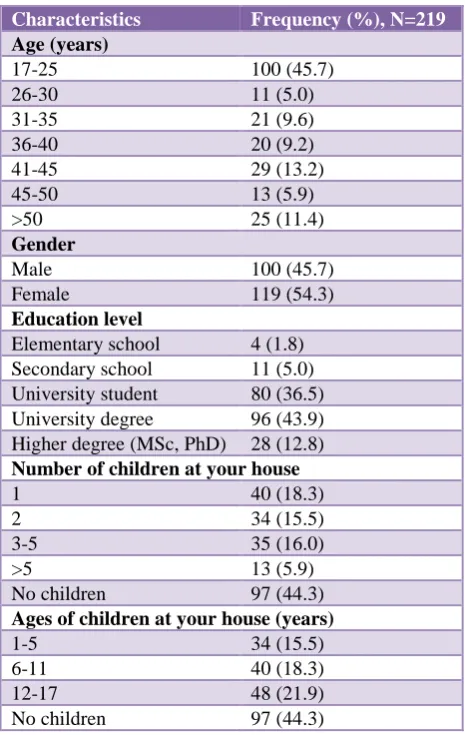
[image:2.595.312.545.403.771.2]A total of 219 surveys were returned back producing a response rate of 87.6%.
Table 1: Demographic characteristics of the participants.
Characteristics Frequency (%), N=219
Age (years)
17-25 100 (45.7)
26-30 11 (5.0)
31-35 21 (9.6)
36-40 20 (9.2)
41-45 29 (13.2) 45-50 13 (5.9) >50 25 (11.4)
Gender
Male 100 (45.7)
Female 119 (54.3)
Education level
Elementary school 4 (1.8) Secondary school 11 (5.0) University student 80 (36.5) University degree 96 (43.9) Higher degree (MSc, PhD) 28 (12.8)
Number of children at your house
1 40 (18.3)
2 34 (15.5)
3-5 35 (16.0)
>5 13 (5.9)
No children 97 (44.3)
Ages of children at your house (years)
1-5 34 (15.5)
Table 2: Association of age, education level and gender with knowledge of safe disposal of medications among chairs of household units.
Question /statement
Frequency (%), method of disposal of medications
Throw in trash Flush in toilet or sink Return to pharmacy Chi square test, p value (P <0.05) What do you think is the safest way for disposing medication?
Age Total 219
17-25 30 (33.3) 14 (50.0) 56 (55.4) 0.04
26-30 8 (8.9) 0 3 (3.0)
31-35 11 (12.2) 2 (7.1) 8 (7.9) 36-40 11 (12.2) 2 (7.1) 7 (6.9) 41-45 16 (17.8) 4 (14.35) 9 (8.9)
45-50 8 (8.9) 2 (7.1) 3 (3.0)
>50 6 (6.7) 4 (14.35) 15 (14.9) Total 90 (100) 28 (100) 101 (100)
Education level Total 219
Elementary School 2 (1.2) 0 2 (2) <0.001 Secondary School 6 (6.7) 0 5 (5)
University Student 18 (20.0) 12 (42.9) 50 (49.5) University Degree 55 (61.1) 13 (46.4) 28 (27.7) Higher degree
(MSc, PhD) 9 (10.0) 3 (10.7) 16 (15.8) Total 90 (100) 28 (100) 101 (100)
Gender Total 219
Male 50 (5.6) 16 (57.1) 34 (34) <0.001 Female 40 (44.4) 12 (42.9) 67 (67)
[image:3.595.61.545.454.662.2]Total 90 (100) 28 (100) 101 (100)
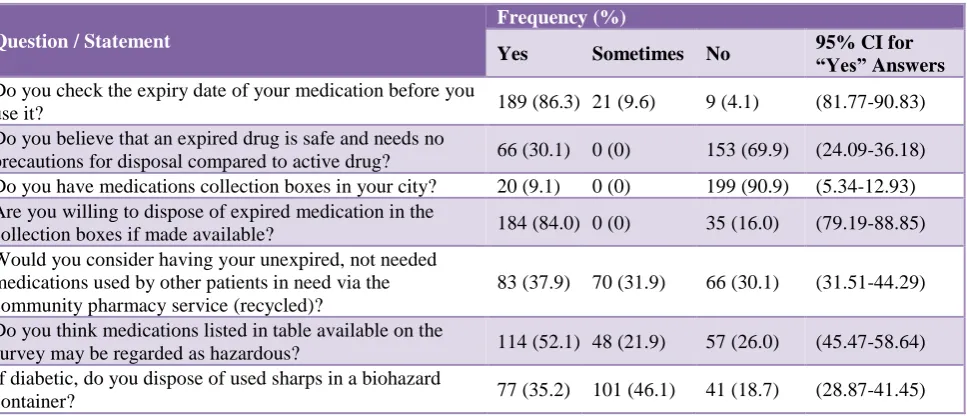
Table 3: Responses of chairs of household units to how they handle expired drugs at home (n =219).
Question / Statement
Frequency (%)
Yes Sometimes No 95% CI for “Yes” Answers
Do you check the expiry date of your medication before you
use it? 189 (86.3) 21 (9.6) 9 (4.1) (81.77-90.83) Do you believe that an expired drug is safe and needs no
precautions for disposal compared to active drug? 66 (30.1) 0 (0) 153 (69.9) (24.09-36.18) Do you have medications collection boxes in your city? 20 (9.1) 0 (0) 199 (90.9) (5.34-12.93) Are you willing to dispose of expired medication in the
collection boxes if made available? 184 (84.0) 0 (0) 35 (16.0) (79.19-88.85) Would you consider having your unexpired, not needed
medications used by other patients in need via the community pharmacy service (recycled)?
83 (37.9) 70 (31.9) 66 (30.1) (31.51-44.29)
Do you think medications listed in table available on the
survey may be regarded as hazardous? 114 (52.1) 48 (21.9) 57 (26.0) (45.47-58.64) If diabetic, do you dispose of used sharps in a biohazard
container? 77 (35.2) 101 (46.1) 41 (18.7) (28.87-41.45)
Table 1 shows that slightly more than 50% of the household chairs were females (120, 54.8%), while 100 (47.5%) were of age group of 17-25 years. More than half (124, 56.6%) of the respondents were holders of a university degree and 80 (36.5%) were still university students. Also shown in Table 1, that married household chairs with children comprised 123 (56.2%).
are classified as hazardous. Interestingly, 144 (65.8%) participants reported that they keep their unused medications to use them later if needed with only 11 (5%) of the participants keep them because of excess available by their insurance providers and the majority (189, 86.3%) of participants claimed that they check the expiry date of each medication before they use it.
Table 2 shows that only 85 (38.8%) participants believed that inappropriate disposal of medications is a leading cause of environmental harm. However, 101 (46.1%) and 90 (41.1%) of the participants believed that returning unused medication to the pharmacy and throwing them in the domestic waste are the safest methods of disposal respectively. In addition, more than two thirds (166, 75.8%) of participants admitted that they throw their unused medication in the domestic waste.
Table 2 shows the significant association between age, educational level and gender and participant’s favoured method of disposal of medications. Table 3 shows responses of participants on how they handle expired medications at home. Table 3 also shows the 95% confidence interval for the “yes” responses, where the majority (189, 86.3%) of participants admitted checking the expiry date of the medication before they use it but only 20 (9.1%) participants are having a collection box at home.
[image:4.595.310.545.71.215.2]The different methods of disposal followed by participants are shown in Figure 1. Returning unused medications to community or hospital pharmacy was selected by 83 (37.9%) of participants while a majority (184, 84%) of participants were willing to take their expired medications to a local medication collection box if it became available in their city.
Figure 1: Methods of disposal of expired medications followed by chairs of household units.
The majority (172, 78.5%) of respondents showed interest in having a system that can help them in disposing their unexpired not needed medications to help other patients in need through the community pharmacy services, and another 184 (84.0%) participants positively responded to the suggestion of having a system for the collection of these medications safely (Table 3).
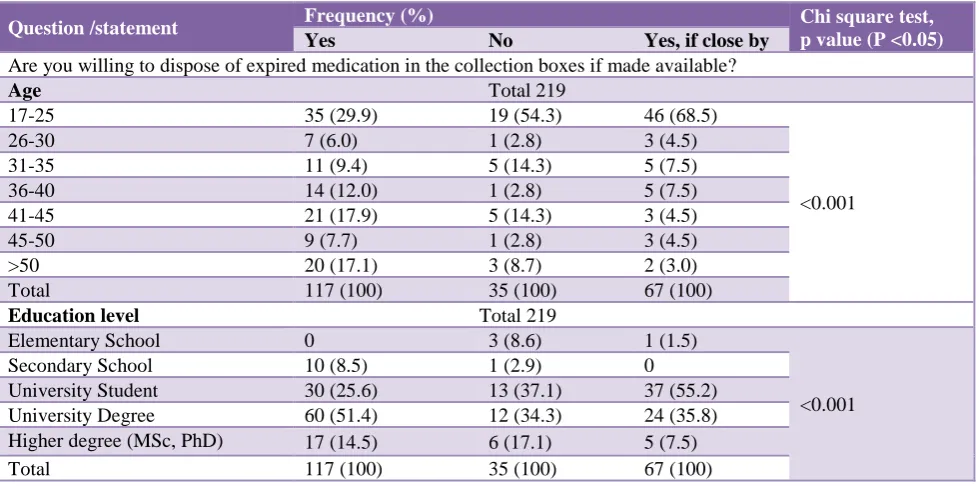
[image:4.595.53.543.509.752.2]A significant association was observed between age (P=0.01) of respondents, availability of children at home (P=0.01), educational level (P=0.01) and participant’s opinion of precautions taken before disposing expired or unused medications. Education was also associated significantly (P=0.033) with the knowledge of disposing medications safely. Again, age, (P=04) educational level (0.001) and gender (0.001) significantly influenced knowledge of household chairs on how to safely dispose their medications (Table 4).
Table 4: Responses of chairs of household units to how they handle expired drugs at home (n =219).
Question /statement Frequency (%) Chi square test,
p value (P <0.05)
Yes No Yes, if close by
Are you willing to dispose of expired medication in the collection boxes if made available?
Age Total 219
17-25 35 (29.9) 19 (54.3) 46 (68.5)
<0.001
26-30 7 (6.0) 1 (2.8) 3 (4.5)
31-35 11 (9.4) 5 (14.3) 5 (7.5)
36-40 14 (12.0) 1 (2.8) 5 (7.5)
41-45 21 (17.9) 5 (14.3) 3 (4.5)
45-50 9 (7.7) 1 (2.8) 3 (4.5)
>50 20 (17.1) 3 (8.7) 2 (3.0)
Total 117 (100) 35 (100) 67 (100)
Education level Total 219
Elementary School 0 3 (8.6) 1 (1.5)
<0.001 Secondary School 10 (8.5) 1 (2.9) 0
University Student 30 (25.6) 13 (37.1) 37 (55.2) University Degree 60 (51.4) 12 (34.3) 24 (35.8) Higher degree (MSc, PhD) 17 (14.5) 6 (17.1) 5 (7.5) Total 117 (100) 35 (100) 67 (100)
0.00% 10.00% 20.00% 30.00% 40.00% 50.00% 60.00% 70.00% 80.00%
Throw intrash Flush in toilet or sink
DISCUSSION
The present study explored the knowledge of household chairs and their usual practice of disposal of expired and unused medications in UAE. While only less than 5% of the participants flush the medications down the sink or toilet, about three quarters (166, 75.8) of the participants admitted disposing of unused and expired medications by throwing in the general waste. These results are comparable to those reported about 10 years ago for the same country (UAE) and for Kuwait, USA, Lithuania and New Zealand.1,9-12 Many international guidelines were
issued regarding the proper disposal of medications to enhance awareness of the public about the danger of inappropriate practice. The Office of National Drug Control Policy issued guidelines for proper disposal of prescription drugs, mentioning that people should not flush medications down the toilet unless otherwise mentioned on medicines label.7,8 Disposal of expired and unused
medications in domestic waste endangers the health of waste collectors, children and pets in addition to the harm to the environment. Such risks are further exacerbated by the fact that almost 50% of household chairs in the present study throw their sharps like lancets, insulin pens and syringes in the general waste. Disposal of sharps in household waste exposes family members, children, waste collectors and pets to sharps stick injuries and possible consequent transmission of blood-borne pathogens such as human immunodeficiency viruses (HIV) and hepatitis B and hepatitis C.13-16
Results of the present study clearly indicated that despite the level of education and the knowledge of the participants of safe method of disposal of medications, 75% of them dispose unused/expired medications by throwing them in the household waste. It is alarming that the majority of household chairs claimed that they never received any counselling from the pharmacist regarding safe disposal of expired/unused medications. The pharmacist as a front-line healthcare provider should provide the public with information not only on how to use but also on how to store and dispose medications. The pharmacy can also be a site where household chairs deposit their unused or expired medications. Counselling patients is very essential to achieve the best therapeutic outcomes. About two thirds of participants in the present study reported that they keep unused medications at home for future use if needed. Such practice may lead to health hazards if the unused medications were exchanged between members of the household unit or used for the wrong condition.
Results of the present study clearly demonstrated that despite the knowledge of chairs of household units with regard to safe methods of disposal of unused/expired medications, they keep on throwing them in the domestic waste and to lesser extent flush in sink or toilet. Adoption by the health authorities to the globally available guidelines and providing secure collection sites would positively impact the health of the public and environment. Special programs and workshops could be designed to help
pharmacists acquire the needed skills and knowledge about suitable methods of disposal of unused medications. Moreover, pharmacists should play a major role in increasing the awareness of the public on responsible and safe disposal of unused and expired medications.
Funding: No funding sources Conflict of interest: None declared
Ethical approval: The study was approved by the Institutional Ethics Committee
REFERENCES
1. Sharif SI, Abduelkarem AR, Bustami HA, Haddad LI, Khalil DS. Trends of home drug storage and use in different regions across the northern United Arab Emirates. Med Prin Prac. 2010;19(5):355-8.
2. Morgan TM. The economic impact of wasted prescription medication in an outpatient population of older adults. J Family Prac. 2001;50(9):779.
3. Wu M, Atchley D, Greer L, Janssen S, Rosenberg D, Sass J. Dosed without prescription: preventing pharmaceutical contamination of our nation’s drinking water. Nat Res Def Council White Paper. 2009;60. 4. Tong AY, Peake BM, Braund R. Disposal practices for
unused medications around the world. Env Inter. 2011;37(1):292-8.
5. US Food and Drug Administration. How to dispose of unused medicines, 2018. Available at: http://www.fda. gov/forconsumers/consumerupdates/ucm101653.htm. Accessed 20 September 2018.
6. Sharif SI, Al Sha’rawy M, Mhithawi H, Alketbi A, Sharif RS, Rashrash M. Assessment of awareness of diabetic patients regarding safe disposable of their insulin syringes and sharps in the UAE. Austin J Pub Heal Epidemiol. 2018;5(2):1072.
7. Woodhouse B. Pharmaceuticals and other wastewater products in our waters: a new can of worms. Southwest Hydrol. 2003;30:12-3.
8. Stackelberg PE, Furlong ET, Meyer MT, Zaugg SD, Henderson AK, Reissman DB. Persistence of pharmaceutical compounds and other organic wastewater contaminants in a conventional drinking-water-treatment plant. Sci Total Env. 2004;329(1-3):99-113.
9. Abahussain EA, Ball DE. Disposal of unwanted medicines from households in Kuwait. Pharmacy World Sci. 2007;29(4):368-73.
10. Law AV, Sakharkar P, Zargarzadeh A, Tai BW, Hess K, Hata M, et al. Taking stock of medication wastage: unused medications in US households. Res Social Adm Pharmacy. 2015;11(4):571-8.
11. Kruopienė J, Dvarionienė J. Pharmaceutical pathways to the environment in lithuania. Env Res Eng Man. 2007;41(3).
12. Braund R, Peake BM, Shieffelbien L. Disposal practices for unused medications in New Zealand. Env Inter. 2009;35(6):952-5.
diagnosed diabetes mellitus in the United States, 1999-2010. J Viral Hepatitis. 2012;19(9):674-6.
14. Tien PC, Schneider MF, Cox C, Karim R, Cohen M, Sharma A, et al. Association of HIV infection with incident diabetes mellitus: impact of using hemoglobin A1C as a criterion for diabetes. J Acq Immune Def Syn (1999). 2012;61(3):334.
15. Antonelli A, Ferrari SM, Giuggioli D, Di Domenicantonio A, Ruffilli I, Corrado A, et al. Hepatitis C virus infection and type 1 and type 2 diabetes mellitus. World J Diab. 2014;5(5):586.
16. Memon MS, Arain ZI, Naz F, Zaki M, Kumar S, Burney AA. Prevalence of type 2 diabetes mellitus in hepatitis C virus infected population: a Southeast Asian study. J Diab Res. 2013;539361.
Cite this article as: Al Sha’rawy M, Abdin S,