Objective knowledge, subjective
knowledge, and prior experience of organic
cotton apparel
Tae‑Im Han
*Introduction
A recent report from Textile Exchange (2017) has revealed a growth in the organic market as well as an increased consumer demand for organic products. In 2016, there was a 4% increase in U.S. production of organic cotton with a rising number of farmers growing this crop as many companies are showing commitments to organic cotton and supporting these farmers. Additionally, organic sales in the non-food category which includes apparel and textile products have increased by 8.8% from the previous year.
Despite the growing demand in the market, consumers generally have poor under-standing about environmental or social matters associated with apparel and textile products (Ha-Brookshire and Norum 2011a; Han and Han 2017). Ha-Brookshire and Norum 2011a had mentioned the lack of opportunities to learn about sustainability
Abstract
The purpose of this research is to examine the relationships between objective knowl‑ edge, subjective knowledge, and prior experience of organic cotton apparel and their effects on purchase behaviors. The sample of the present study consisted of Millennial consumers living in the United States. Multiple regression and cluster analysis were used to assess the relationship among variables. Objective and subjective knowledge related to organic cotton apparel had a weak relationship suggesting they are distinct measures of knowledge. Direct experience, indirect experience, and education level were significant predictors of subjective knowledge, however, they had insignificant effects on objective knowledge. Furthermore, consumers who are willing to pay more for organic cotton and willing to search actively for organic cotton apparel displayed a higher level of subjective knowledge and had more experience with the product. Objective knowledge was found to have a limited relationship with pro‑environmental behaviors. The current study examined distinct types of knowledge associated with organic cotton apparel and their relationship to pro‑environmental behaviors which provides a sound basis for better understanding consumers’ organic apparel purchase. It is widely accepted that product knowledge affects consumer behaviors, however, how product knowledge is measured varies extensively across consumer research. The findings offer a valid explanation for the contradictory findings in previous research in terms of the effect of product knowledge on purchase behaviors.
Keywords: Organic cotton, Consumer behavior, Knowledge, Prior experience
Open Access
© The Author(s) 2019. This article is distributed under the terms of the Creative Commons Attribution 4.0 International License (http://creat iveco mmons .org/licen ses/by/4.0/), which permits unrestricted use, distribution, and reproduction in any medium, provided you give appropriate credit to the original author(s) and the source, provide a link to the Creative Commons license, and indicate if changes were made.
RESEARCH
*Correspondence: [email protected]
issues regarding apparel and textile products and suggested that further educational efforts are needed to provide an in-depth understanding on the topic. This could also be problematic to companies because lack of environmental knowledge associated with a product may act as a barrier to consumers of engaging in pro-environmental behaviors (Organic Trade Association 2015). Knowledge is closely related to making sustainable choices and previous studies state that higher knowledge of environmen-tal issues leads to higher engagement in pro-environmenenvironmen-tal behaviors including ethi-cal purchase behaviors (e.g., Laroche et al. 2001; Schlegelmilch et al. 1996).
Given the significance of its effect on consumer behavior, product knowledge has been widely examined by researchers. While some studies (Brucks 1985; Feick et al. 1992; Flynn and Goldsmith 1999; Selnes and Gronhaug 1986) have distinguished different types of knowledge such as objective knowledge (i.e., how much an individual actually knows about a product), subjective knowledge (i.e., how much an individual thinks he/ she knows about a product), and prior experience with the product, more studies have focused on a single type of knowledge.
Considering the low level of knowledge about organic cotton apparel and the crucial role that knowledge takes in pro-environmental behaviors, it would be important to examine the influence of knowledge on consumers’ purchase of organic cotton apparel. Which type of knowledge will have a greater association with consumers’ purchase of organic cotton apparel? How are knowledge types related to each other? By exam-ining distinct types of knowledge, the findings of this study may contribute to a better understanding of organic apparel consumers and offer a valid explanation for the con-tradictory findings in previous research in terms of the effect of product knowledge on purchase behaviors (Laroche et al. 2001; Schlegelmilch et al. 1996).
The current literature offers very limited information on the effect of different types of knowledge (i.e., objective and subjective knowledge) or prior experience (i.e., direct and indirect experience) on consumer behavior toward sustainable apparel products. These topics have been more commonly applied to other pro-environmental purchase behav-iors, most representatively, sustainable food consumption. Therefore, there is a need to study how knowledge types and prior experience affect organic apparel consumers. As a result of the lack of literature in the domain of sustainable apparel purchase, the hypoth-eses of this study were mostly developed based on the literature of other product sec-tors or general consumer behaviors, not limited to apparel or textile products. Because product knowledge influences various phases of consumer behaviors such as informa-tion search (Brucks 1985), learning (Daugherty et al. 2008), attitude formainforma-tion (Aertsens et al. 2011), and consumption behaviors (Aertsens et al. 2011; Ellen 1994), it would be meaningful to examine product-specific findings from the study and their correspond-ence with previous findings of pro-environmental behaviors as they can contribute to the understanding of the sustainable apparel consumers.
retail stores than conventional cotton apparel (Browne et al. 2000; De Pelsmacker et al. 2005).
Literature review
Objective and subjective knowledge
Some researchers make a clear distinction between two types of product knowledge: objec-tive and subjecobjec-tive knowledge (e.g., Brucks 1985; Flynn and Goldsmith 1999; Selnes and Gronhaug 1986). Objective knowledge refers to how much an individual actually knows and subjective knowledge (also known as perceived or self-assessed knowledge) involves how much an individual thinks he/she knows about a product.
Objective and subject knowledge may seem to be strongly correlated, however, the strength of correlation between the two types of knowledge is generally not very strong. The correlation values are often reported to range from .3 to .6 (e.g., Brucks 1985; Feick et al. 1992). In relation to pro-environmental behaviors, Ellen (1994) found an insignificant relationship between objective and subjective knowledge indicating that an individual’s per-ception on how much he/she knows does not reflect their true knowledge levels. A more recent meta-analysis (Carlson et al. 2009) on relationship between objective and subjective knowledge reported an average correlation value of .37 across 103 studies in their data-set. This study suggested that the correlation is generally stronger for products than non-products and hedonic non-products than utilitarian non-products. Pieniak et al. (2010) studied the relationship between consumers’ objective and subjective knowledge of organic foods and reported a moderate (r = .29) correlation between the two knowledge types which was con-sistent with findings from aforementioned studies.
The majority of studies in the domain of pro-environmental purchase behaviors measure knowledge using a single type of knowledge construct which may have caused the contra-dictory results in its effect on consumer behaviors (Laroche et al. 2001; Schlegelmilch et al. 1996). For example, a recent apparel study that examined organic cotton apparel purchase (Oh and Abraham 2016) suggested that product knowledge affects consumers in many ways such as forming positive attitudes and price acceptance of organic cotton apparel. However, product knowledge in this study was measured by a single construct, subjective knowledge. As evidenced by the low correlation between the two measures, there is a need to closely examine the influence of each knowledge type separately when determining the effect of product knowledge on purchase related behaviors. Based on these conceptual con-siderations, the first hypothesis was created. Cohen (1988) suggested rules of thumb for interpreting correlation coefficient values for large, medium, and small effects; |.5| large (strong), |.3| medium (moderate), and |.1| small (weak). This study hypothesized that the correlation between the two types of knowledge will not be strong; based on Cohen’s (1988) guidelines, less than .5.
Demographic characteristics and knowledge
Studies that examine pro-environmental behaviors often incorporate demographic variables to see their effects on various constructs. Several studies have supported the positive effect of education on knowledge. For example, a number of studies have shown that those who have higher level of education are more likely to have higher level of knowledge of organic food (e.g. Gracia and De Magistris 2007; Stobbelaar et al. 2007; Storstad and Bjørkhaug 2003). House et al. (2004) examined acceptance behavior of genetically modified foods and education was the only demographic vari-able that was significantly correlated to objective knowledge; people with higher edu-cation had higher objective knowledge scores. Ellen (1994) found that people who have obtained higher education are more likely to have higher levels of objective and subjective knowledge and be more committed to recycling behaviors.
Also, the positive effect of income on knowledge has often been supported in stud-ies of pro-environmental behaviors. Han and Han (2017) categorized consumers based on their level of subjective knowledge and previous experience of fair-trade apparel and found that the segment with higher subjective knowledge and more prod-uct experience had significantly higher income level than other consumer segments. In addition, Ellen (1994) found that higher income is positively and significantly asso-ciated with both objective and subjective knowledge related to recycling behaviors.
Because the number of consumer studies that examine pro-environmental apparel purchase behaviors is considerably less compared to that of sustainable food con-sumption or performance of other pro-environmental behaviors, very limited infor-mation is offered concerning how demographic variables such as education and income level influence objective and subjective knowledge related to organic cotton. Based on the consideration, the next hypothesis was created.
Hypothesis 2 Education and income level will have a positive effect on objective knowledge and subjective knowledge of organic cotton apparel.
Direct and indirect product experiences
Park et al. (1994) examined the link between product experience and knowledge. Product experience in their study included both direct experience such as product usage and purchase experience and indirect experience such as information search. They found that product experience is positively related to both objective and subjec-tive knowledge. Consumers’ direct and indirect experience with a product were posi-tively associated with the level of product information stored in their memory and self-assessed knowledge. Accordingly, the following hypothesis was proposed.
Hypothesis 3 Direct experience and indirect experience will have an effect on objec-tive knowledge and subjecobjec-tive knowledge.
Previous research suggests that direct and indirect product experience offer different information to consumers. Regarding a direct experience, consumers engage in an active learning process (Hoch and Deighton 1989) providing them with a more credible source of information compared to an indirect experience. Hamilton and Thompson (2007) suggest that direct (i.e., product trial) and indirect (i.e., exposure to product description) product experience result in distinct levels of mental construal. Their study showed that higher level of experiential interaction with a product leads to a more concrete mental construal. Information acquired from an indirect experience entails abstraction (Liber-man et al. 2007) which leads to a nonconcrete or abstract mental construal. Daugherty et al. (2008) examined the influence of direct and indirect experience on consumer knowledge levels. They found that direct experience had a greater impact on product knowledge than indirect experience. Similarly, Ha and Hoch (1989) suggested that direct product experience triggers better memory as consumers obtain information that is vivid and concrete. Findings from previous research on direct and indirect experience led to creating the following hypotheses.
Hypothesis 4 Direct experience will have a stronger effect on knowledge than indirect experience.
Pro‑environmental behaviors: willingness to pay (WTP) and willingness to search (WTS) for organic cotton apparel
2001; Weatherell et al. 2003). The two measures of WTP and WTS well reflect consum-ers’ approach behaviors towards organic cotton apparel because high price and limited availability are crucial factors making them feel reluctant to actually buy the products.
Lack of knowledge and confusion are reported to be barriers of purchasing organic products (Organic Trade Association, 2015). While product knowledge is often viewed as a major determinant of pro-environmental behaviors, the literature offers very little empirical suggestion of how it affects organic apparel purchase behaviors. It would be important to examine the role of product knowledge because consumers in general have very poor understanding of organic cotton apparel (Ha-Brookshire and Norum 2011a). Subjective knowledge is often reported to have a stronger effect on pro-environmen-tal behaviors than objective knowledge. Ellen’s (1994) study indicated that subjective knowledge has a significant effect on source reduction, recycling, and political action behaviors, while the effect of objective knowledge was only limited to recycling behav-iors. House et al. (2004) also found that subjective knowledge is significantly associated with the consumers’ willingness to accept genetically modified foods; higher subjective knowledge led to stronger willingness to accept. However, objective knowledge did not have a significant effect on willingness to accept genetically modified foods.
In addition, pro-environmental behaviors are strongly influenced by prior experience with the product. People tend to be resistant to change and thus, their buying behaviors are often heavily driven by habit, convenience, and responses to social norms (Vermeir and Verbeke 2006). Prior experience is closely related to obtaining product knowledge as well as future purchase behaviors (Han and Han 2017; Pollard et al. 2002). In terms of organic purchasing behaviors, consumers’ prior and direct experience with organic products played a significant role in predicting future purchase intentions (Kim and Chung 2011). Furthermore, Salazar et al. (2013) examined the effect of indirect experi-ence of the product by examining consumers’ herd behaviors (i.e., the tendency to mimic the behaviors of a larger group) and found that the probability of individuals selecting environmentally-friendly products increased when consumers had observed the choice of environmentally-friendly products from their peers. The last hypothesis was created based on the previous research findings.
Hypothesis 5 Pro-environmental behaviors (WTP and WTS for organic cotton apparel) are associated with higher product knowledge and more prior experience with the product.
Methods
Measurement instruments
consideration them guessing the answer. For example, an incorrect response with a cer-tainty level of 5 generated a score of 0 (minimum score for a single statement); an incor-rect response with a certainty level of 3 generated a score of 2; a corincor-rect response with a certainty level of 1 generated a score of 5; and a correct response with a certainty level of 5 generated a score of 9 (maximum score for a single statement). The final score of objec-tive knowledge was computed by adding the scores of the 4 statements that can be in a range from 0 to 36.
Subjective knowledge and indirect experience were measured by multiple items adapted from previous studies. Four items measured subjective knowledge (Flynn and Goldsmith 1999) which included statements like “I know a lot about organic cot-ton apparel.” and “Compared to most other people, I know more about organic cotcot-ton apparel.” (1 = strongly disagree, 7 = strongly agree). Indirect experience (Smith et al. 2008) was measured by 3 items such as “What proportion of the people who are impor-tant to you buy organic cotton apparel?” (1 = none, 7 = all) and “How likely is it that people who are important to you buy organic cotton apparel? (1 = extremely unlikely, 7 = extremely likely). Both measures demonstrated high internal consistency; Cron-bach’s alphas were .94 and .88 respectively. Direct experience, WTP, WTS, education level, and income were measured using a single item. Product purchase or trial can be considered as a direct experience as consumers can have hands-on involvement with the product. Therefore, to measure the level of direct experience, participants were asked “How many times have you purchased organic cotton apparel?” (0 time; 1 time; 2–3 times; 4–5 times; more than 6 times). WTP and WTS involve how much more an individual is willing to pay and how much effort an individual is willing to put during the searching process respectively to purchase organic cotton apparel. Because organic cotton apparel products are typically more expensive and difficult to find due to its low availability in the market compared to conventional products (Browne et al. 2000; De Pelsmacker et al. 2005), WTP and WTS items were created to reflect such features of the product. WTP was measured by asking the question “How much more will you pay for organic cotton apparel compared with conventional cotton apparel?” (I will not pay more for organic cotton apparel; less than 5%; 5–10%; 10–20%; 20–40%; more than 40%). To measure WTS, the statement “I would go out of my way to find organic cot-ton apparel to purchase.” was presented to participants and they indicated their level of agreement on a 7-point scale (1 = strongly disagree, 7 = strongly agree). Finally, educa-tion level and income were measured by the following items: What is your annual per-sonal income? (less than $10,000; $10,000–$24,999; $25,000–$34,999; $35,000–$49,999; $50,000 to $74,999; more than $75,000) and What is the highest level of education you have attained? (Did not complete high school; high School/GED; some college; associ-ate degree; bachelor’s degree; master’s degree; advanced graduassoci-ate/professional work or Ph.D.; other).
Sample
Amazon Mechanical Turk, an online platform built for data collection, was used to recruit participants and their age was restricted to limit the sample to Millennial (also known as the Generation Y) consumers. Birth years of this age group range approxi-mately from the late 1970s to 2000 (Schewe and Noble 2000). These young consumers are more likely to be concerned about the environment and their opinions about social and environmental issues affect their parents’ purchasing decisions (Coddington 1993; Gorman et al. 2004). Thus, it would be important to examine organic cotton apparel consumption among this consumer segment.
Results
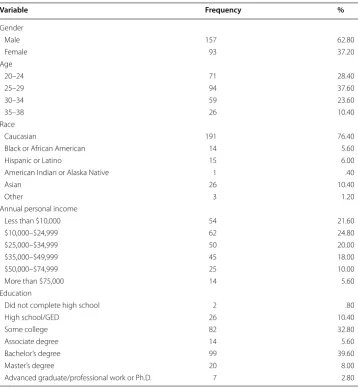
Table 2 shows the descriptive statistics of the four variables: objective knowledge, sub-jective knowledge, direct experience, and indirect experience related to organic cotton apparel. The mean of subjective knowledge, direct experience, and indirect experience were considerably low illustrating that consumers typically believe they know very little about organic cotton, although the mean score of objective knowledge was moderately
Table 1 Demographic characteristics of sample
Variable Frequency %
Gender
Male 157 62.80
Female 93 37.20
Age
20–24 71 28.40
25–29 94 37.60
30–34 59 23.60
35–38 26 10.40
Race
Caucasian 191 76.40
Black or African American 14 5.60
Hispanic or Latino 15 6.00
American Indian or Alaska Native 1 .40
Asian 26 10.40
Other 3 1.20
Annual personal income
Less than $10,000 54 21.60
$10,000–$24,999 62 24.80
$25,000–$34,999 50 20.00
$35,000–$49,999 45 18.00
$50,000–$74,999 25 10.00
More than $75,000 14 5.60
Education
Did not complete high school 2 .80
High school/GED 26 10.40
Some college 82 32.80
Associate degree 14 5.60
Bachelor’s degree 99 39.60
Master’s degree 20 8.00
high. In addition, their own purchase experience as well as significant others’ purchase of organic cotton apparel seem to be very limited. Subjective knowledge was strongly correlated with direct experience (r = .54 p < .001) and indirect experience (r = .48, p < .001) with the product, however, its correlation with objective knowledge was low (r = .06) and insignificant (Table 3), confirming the first hypothesis of this study. Direct experience was also strongly correlated with indirect experience (r = .42, p < .001) which means that consumers who have more purchase experience of organic cotton apparel tend to have more people around them purchasing the product.
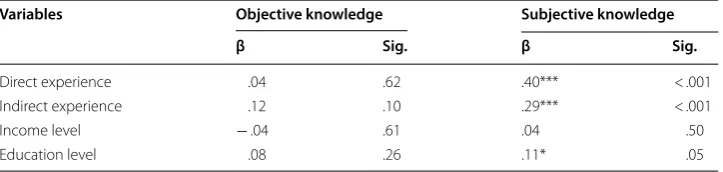
Multiple regression analyses were conducted to examine which variables have strong influence on obtaining higher objective and subjective knowledge (Table 4). The regres-sion model predicting objective knowledge from the four variables, direct experience, indirect experience, income level, and education level, were statistically insignificant; R2 = .01, F(4,245) = 1.50, p = .20. Interestingly, all variables had insignificant effects on objective knowledge. However, the regression results indicated that the four variables explained 37.50% of the variance in subjective knowledge, R2 = .375, F(4,245) = 38.43, p < .001. Direct experience (β = .40, p < .001), indirect experience (β = .29, p < .001), and education level (β = .11, p = .05) were significant predictors of subjective knowledge whereas income was not a significant predictor (β = .04, p = .50). Accordingly, hypoth-esis 2 and 3 were partially supported. The multiple regression results of subjective
Table 2 Descriptive statistics of variables
Variables Mean SD
Objective knowledge (0–36 scale) 25.12 6.02 Subjective knowledge (1–7 scale) 2.52 1.34 Direct experience (1–5 scale) 1.69 1.10 Indirect experience (1–7 scale) 2.99 1.26
Table 3 Correlations among variables
* p < .05; ** p < .01; *** p < .001
1 2 3 4
1. Objective knowledge 1 .06 .09 .13* 2. Subjective knowledge 1 .54*** .48***
3. Direct experience 1 .42***
4. Indirect experience 1
Table 4 Result of multiple regression analysis (n = 250)
* p < .05; ** p < .01; *** p < .001
Variables Objective knowledge Subjective knowledge
β Sig. β Sig.
Direct experience .04 .62 .40*** < .001 Indirect experience .12 .10 .29*** < .001
Income level − .04 .61 .04 .50
knowledge revealed that direct experience had the strongest effect on increasing subjec-tive knowledge of organic cotton apparel followed by indirect experience and education level confirming hypothesis 4.
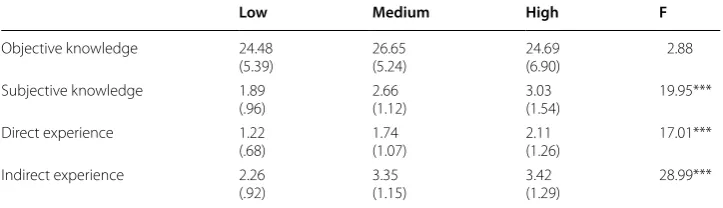
In order to assess hypothesis 5 and to offer segment-specific insights, two-step clus-ter analysis was used. Three segments were identified based on participant’s pro-envi-ronmental behaviors (i.e., WTP and WTS for organic cotton apparel) and differences were examined across segments in terms of objective knowledge, subjective knowl-edge, direct experience, and indirect experience. There were significant differences in WTP and WTS across the three segments as confirmed by the ANOVA results in Table 5, WTP: F(2,247) = 408.32, p < .001; WTS: F(2,247) = 139.71, p < .001. As shown in Table 6, participants’ subjective knowledge, F(2,247) = 19.95, p < .001; direct experi-ence, F(2,247) = 17.01, p < .001; and indirect experiexperi-ence, F(2,247) = 28.99, p < .001 signifi-cantly differed across the three groups, while the difference in objective knowledge was insignificant, F(2,247) = 2.88, p = .06. According to Tukey’s post hoc test, participants who display low level of pro-environmental behaviors had significantly lower scores of subjective knowledge (low: M = 1.89, SD = .96; medium: M = 2.66, SD = 1.12; high: M = 3.03, SD = 1.54), direct experience (low: M = 1.22, SD = .68; medium: M = 1.74, SD = 1.07; high: M = 2.11, SD = 1.26), and indirect experience (low: M = 2.26, SD = .92; medium: M = 3.35, SD = 1.15: high: M = 3.42, SD = 1.29) than those who exhibit high or medium level of pro-environmental behaviors. Therefore, hypothesis 5 was supported by these results.
Discussion
This study examined different types of product knowledge and experience related to organic cotton apparel: objective knowledge, subjective knowledge, direct experience and indirect experience. The correlations of knowledge and experience types as well as
Table 5 Cluster means (standard deviation) of self-perceived knowledge and purchase experience
*** p < .001
Low (n = 90) Medium (n = 65) High (n = 95) F
WTP 1.37 (.48) 1.71 (.46) 3.29 (.50) 408.32*** WTS 1.41 (.50) 3.78 (.94) 3.91 (1.55) 139.71***
Table 6 Differences in objective knowledge, subjective knowledge, direct purchase experience, and indirect purchase experience
Means (standard deviation). ** p < .01, *** p < .001
Low Medium High F
Objective knowledge 24.48
(5.39) 26.65(5.24) 24.69(6.90) 2.88 Subjective knowledge 1.89
(.96) 2.66(1.12) 3.03(1.54) 19.95*** Direct experience 1.22
(.68) 1.74(1.07) 2.11(1.26) 17.01*** Indirect experience 2.26
their effects on purchase behaviors were examined. To illustrate a more accurate and realistic depiction of individual’s pro-environmental behaviors, this study focused on WTP and WTS for organic cotton apparel given that high price and limited availabil-ity are major factors that hold consumers back from actually purchasing the products (Browne et al. 2000; De Pelsmacker et al. 2005).
First, this study found that objective and subjective knowledge related to organic cotton apparel had a weak relationship. The correlation value of the two variables was only .06 which was in line with previous studies that suggest consumers’ self-assessed knowledge does not truly reflect their true knowledge level (e.g., Ellen 1994; Feick et al. 1992; Brucks 1985). What consumers think they know and what they really know seem to be two separate matters in terms of organic cotton apparel. This finding illustrates that objective and subjective knowledge are distinct meas-ures of knowledge that have limited relationship and thus, need to be distinguished when studying their effects. Using a single type of knowledge may have caused the disagreement in the effect of product knowledge on consumer behaviors in previous studies. For example, several studies found no association between knowledge and pro-environmental behaviors (e.g., Bartiaux 2008; Laroche et al. 2001) while other studies found that higher level of knowledge leads to increased likelihood of behav-ing in a way that protects the environment (e.g., Ellen 1994; Oh and Abraham 2016). These contradictory findings in previous studies may be explained by identifying how knowledge was measured in each study. As evidenced by the findings of the present study, objective and subjective knowledge have limited relationship and pro-duce varying results. Therefore, identifying whether objective or subjective meas-ures are employed would be crucial in clarifying the effect of product knowledge on pro-environmental behaviors.
Direct experience, indirect experience, and education level were significant pre-dictors of subjective knowledge and these prepre-dictors explained a considerable amount of variance (37%) in subjective knowledge. However, these predictor vari-ables had no effect on objective knowledge. The results suggest that people do not obtain objective knowledge of organic cotton from their direct or indirect experi-ence with the product, instead, it may require more effort for consumers to obtain objective knowledge, perhaps, by actively searching for and learning about accurate product related information.
Furthermore, objective knowledge seemed to have very limited association with pro-environmental behaviors. There was no difference in objective knowledge scores when categorizing consumers based on their WTP and WTS behaviors. Consumers who were willing to pay more for organic cotton and go out of their way to find organic cotton apparel to purchase had a higher level of subjective knowledge and more experience with the product. This implies that organic cotton apparel retail-ers or marketretail-ers should consider promoting their business by giving more expo-sure of the product or product-related information to consumers so that they have the opportunity to increase their familiarity level and gain more direct and indirect interaction with the product.
apparel as they were willing to pay more and be actively engaged in the shopping pro-cess. These findings were consistent with previous research that suggests subjective knowledge has a stronger effect than objective knowledge on pro-environmental behav-iors (Ellen 1994; House et al. 2004). Because subjective knowledge involves individual’s confidence on his/her knowledge, it may be a more important determinant of decision making behaviors than objective knowledge. Selnes and Gronhaug (1986) mentioned that “objective measures seem preferable when focusing on ability differences among consumers, while subjective measures should be preferred when focusing on motiva-tional aspects of product knowledge” (p. 86).
Conclusions
The current study examined product knowledge associated with organic cotton apparel and its relationship to pro-environmental behaviors which provides a sound basis for better understanding consumers’ organic apparel purchase. It is widely accepted that product knowledge affects consumer behaviors (e.g., Laroche et al. 2001; Schlegelm-ilch et al. 1996), however, how product knowledge is measured varies extensively across consumer research. This study suggests that product knowledge should be treated as a multidimensional construct; it is necessary to categorize the construct into distinguish-able types. The finding of this study made theoretical contributions to research by offer-ing insights on the relationships between different types of knowledge of organic cotton apparel: objective knowledge, subjective knowledge, and prior experience. In particular, objective knowledge was found to have limited relationship with subjective knowledge and prior experience. This study also identified factors that are closely related to con-sumers’ purchase of organic cotton apparel. Subjective knowledge and prior experi-ence with the product appear to have stronger association with purchase behaviors than objective knowledge in this context. The findings have practical importance particularly to retailers or marketers who are trying to sell the products because consumers’ pur-chase could be positively motivated when marketing strategies focus on certain qualities and eliminate barriers consumers face when buying the products.
various sources, this study measured one’s own purchase experience and exposure to others’ experience with the product respectively as they seem to be the most predomi-nant forms of product experience. Yet, other forms of product experience may not lead to same effect, for example, the results based on an exposure to product advertisements could be different, although it is also considered as an example of indirect product rience. Thus, future research may incorporate various forms of direct and indirect expe-rience of products to closely examine their effect on pro-environmental behaviors. This will allow researchers to generalize their research findings to a broader category of con-sumer behaviors.
Abbreviations
WTP: willingness to pay; WTS: willingness to search.
Authors’ contributions
The author read and approved the final manuscript.
Acknowledgements
Not applicable.
Competing interests
The author declares no competing interests.
Availability of data and materials
Please contact author for data requests.
Funding
Not applicable.
Publisher’s Note
Springer Nature remains neutral with regard to jurisdictional claims in published maps and institutional affiliations.
Received: 29 May 2018 Accepted: 26 October 2018
References
Aertsens, J., Mondelaers, K., Verbeke, W., Buysse, J., & Van Huylenbroeck, G. (2011). The influence of subjective and objec‑ tive knowledge on attitude, motivations and consumption of organic food. British Food Journal,113(11), 1353–1378. Bartiaux, F. (2008). Does environmental information overcome practice compartmentalization and change consumers’
behaviours? Journal of Cleaner Production,16(11), 1170–1180.
Browne, A. W., Harris, P. J. C., Hofny‑Collins, A. H., Pasiecznic, N., & Wallace, R. R. (2000). Organic production and ethical trade: Definition, practice and links. Food Policy,25, 69–89.
Brucks, M. (1985). The effects of product class knowledge on information search behavior. Journal of Consumer Research, 12, 1–16.
Carlson, J. P., Vincent, L. H., Hardesty, D. M., & Bearden, W. O. (2009). Objective and subjective knowledge relationships: A quantitative analysis of consumer research findings. Journal of Consumer Research,35(5), 864–876.
Carrigan, M., & Attalla, A. (2001). The myth of the ethical consumer‑Do ethics matter in purchase behavior. Journal of Consumer Marketing,18(7), 560–577.
Carrington, M. J., Neville, B. A., & Whitwell, G. J. (2010). Why ethical consumers don’t walk their talk: Towards a framework for understanding the gap between the ethical purchase intentions and actual buying behaviour of ethically minded consumers. Journal of Business Ethics,97(1), 139–158.
Coddington, W. (1993). Environmental marketing: Positive strategies for reaching the green consumer. New York, NY: McGraw‑Hill Inc.
Cohen, S. (1988). Psychosocial models of the role of social support in the etiology of physical disease. Health Psychology, 7(3), 269–297.
Daugherty, T., Li, H., & Biocca, F. (2008). Consumer learning and the effects of virtual experience relative to indirect and direct product experience. Psychology & Marketing,25(7), 568–586.
De Pelsmacker, P., Driesen, L., & Rayp, G. (2005). Do consumers care about ethics? Willingness to pay for fair‑trade coffee. Journal of Consumer Affairs,39(2), 363–385.
Deighton, J. (1984). The interaction of advertising and evidence. Journal of Consumer Research,11(December), 763–770. Ellen, P. S. (1994). Do we know what we need to know? Objective and subjective knowledge effects on pro‑ecological
Feick, L., Park, C. W., & Mothersbaugh, D. L. (1992). Knowledge and knowledge of knowledge: What we know, what we think we know and why the difference makes a difference. Advances in Consumer Research,19, 190–192. Flynn, L. R., & Goldsmith, R. E. (1999). A short, reliable measure of subjective knowledge. Journal of Business Research,46,
57–66.
Gam, H. J., Cao, H., Farr, C., & Kang, M. (2010). Quest for the eco‑apparel market: A study of mothers’ willingness to pur‑ chase organic cotton clothing for their children. International Journal of Consumer Studies,34(6), 648–656. Gibson, J. J. (1966). The senses considered as perceptual systems. Boston: Houghton Mifflin.
Gorman, P., Nelson, T., & Glassman, A. (2004). The Millennial generation: A strategic opportunity. Organizational Analysis, 12, 255–270.
Gracia, A., & De Magistris, T. (2007). Organic food product purchase behaviour: A pilot study for urban consumers in the south of Italy. Spanish Journal of Agricultural Research,5(4), 439–451.
Ha, Y. W., & Hoch, S. J. (1989). Ambiguity, processing strategy, and advertising‑evidence interactions. Journal of Consumer Research, 16(3), 354–360.
Ha‑Brookshire, J., & Norum, P. (2011a). Cotton and sustainability: Impacting student learning through Sustainable Cotton Summit. International Journal of Sustainability in Higher Education,12(4), 369–380.
Ha‑Brookshire, J., & Norum, P. (2011b). Willingness to pay for socially responsible products: Case of cotton apparel. Journal of Consumer Marketing,28(5), 344–353.
Hamilton, R. W., & Thompson, D. V. (2007). Is there a substitute for direct experience? Comparing consumers’ preferences after direct and indirect product experiences. Journal of Consumer Research,34(4), 546–555.
Han and Han. (2017). Segmenting fair‑trade apparel consumers based on product knowledge. International Journal of Costume and Fashion,17(1), 41–57.
Hoch, S. J., & Deighton, J. (1989). Managing what consumers learn from experience. Journal of Marketing,53(April), 1–20. Hoch, S. J., & Ha, Y. W. (1986). Consumer learning: Advertising and the ambiguity of product experience. Journal of
Con-sumer Research,13(September), 221–233.
House, L., Lusk, J., Bruce Traill, W., Moore, M., Calli, C., Morrow, B., et al. (2004). Objective and subjective knowledge: Impacts on consumer demand for genetically modified foods in the United States and the European Union. AgBi-oForum,7(3), 113–123.
Kim, H. Y., & Chung, J. (2011). Consumer purchase intention for organic personal care products. Journal of Consumer Marketing,28(1), 40–47.
Laroche, M., Bergeron, J., & Barbaro‑Forleo, G. (2001). Targeting consumers who are willing to pay more for environmen‑ tally friendly products. Journal of Consumer Marketing,18(6), 503–520.
Liberman, N., Trope, Y., & Stephan, E. (2007). Psychological distance. In A. W. Kruglanski & E. T. Higgins (Eds.), Social psychol-ogy: Handbook of basic principles (Vol. 2, pp. 353–383). New York: Guilford Press.
Mooy, S. C., & Robben, H. (2002). Managing consumers’ product evaluations through direct product experience. Journal of Product and Brand Management,11(7), 432–444.
Nassivera, F., Troiano, S., Marangon, F., Sillani, S., & Markova Nencheva, I. (2017). Willingness to pay for organic cotton: Consumer responsiveness to a corporate social responsibility initiative. British Food Journal,119(8), 1815–1825. Oh, K., & Abraham, L. (2016). Effect of knowledge on decision making in the context of organic cotton clothing.
Interna-tional Journal of Consumer Studies,40, 66–74.
Organic Trade Association (2015). Organic market and consumer trends. https ://ota.com/sites /defau lt/files /index ed_files /ATO31 6Data Trend s.pdf. Accessed 12 Aug 2017.
Park, C. W., Mothersbaugh, D. L., & Feick, L. (1994). Consumer knowledge assessment. Journal of consumer research,21(1), 71–82.
Pieniak, Z., Aertsens, J., & Verbeke, W. (2010). Subjective and objective knowledge as determinants of organic vegetables consumption. Food Quality and Preference,21(6), 581–588.
Pollard, J., Kirk, S. L., & Cade, J. E. (2002). Factors affecting food choice in relation to fruit and vegetable intake: A review. Nutrition Research Reviews,15(2), 373–387.
Rossiter, J. R. (2002). The C‑OAR‑SE procedure for scale development in marketing. International Journal of Research in Marketing,19(4), 305–335.
Salazar, H. A., Oerlemans, L., & Van Stroe‑Biezen, S. (2013). Social influence on sustainable consumption: Evidence from a behavioural experiment. International Journal of Consumer Studies,37(2), 172–180.
Schewe, C. D., & Noble, S. M. (2000). Market segmentation by cohorts: The value and validity of cohorts in America and abroad. Journal of Marketing Management,16(1–3), 129–142.
Schlegelmilch, B. B., Bohlen, G. M., & Diamantopoulos, A. (1996). The link between green purchasing decisions and meas‑ ures of environmental consciousness. European Journal of Marketing,30, 35–55.
Selnes, F., & Gronhaug, K. (1986). Subjective and objective measures of product knowledge contrasted. Advances in Consumer Research,13(1), 67–71.
Smith, R. E., Chen, J., & Yang, X. (2008). The impact of advertising creativity on the hierarchy of effects. Journal of Advertis-ing,37, 47–62.
Smith, R. E., & Swinyard, W. R. (1983). Attitude‑behavior consistency: The impact of product trial versus advertising. Jour-nal of Consumer Research,20(August), 257–267.
Stobbelaar, D. J., Casimir, G., Borghuis, J., Marks, I., Meijer, L., & Zebeda, S. (2007). Adolescents’ attitudes towards organic food: A survey of 15‑ to 16‑year old school children. International Journal of Consumer Studies,31(4), 349–356. Storstad, O., & Bjørkhaug, H. (2003). Foundations of production and consumption of organic food in Norway: Common
attitudes among farmers and consumers? Agriculture and Human Values,20(2), 151–163.
Textile Exchange (2013) All about organic cotton. http://farmh ub.texti leexc hange .org/learn ing‑zone/all‑about ‑organ ic‑cotto n. Accessed 12 August 2017.
Textile Exchange (2017). Organic cotton market report 2017. http://www.biore ‑stift ung.ch/filea dmin/user_uploa d/downl oads/Newsl etter /Texti le‑Excha nge_Organ ic‑Cotto n‑Marke t‑Repor t_2017.pdf. Accessed 14 May 2018.
Vermeir, I., & Verbeke, W. J. (2006). Sustainable food consumption: Exploring the consumer “attitude–behavioral intention” gap. Journal of Agricultural and Environmental Ethics,19(2), 169–194.