Downloaded from
http://journals.tums.ac.ir/
on Monday, August 13, 2012
PET vs. SPECT: in the Context of Ongoing Developments
(Review Article)
Arman Rahmim, PhD
Department of Radiology, School of Medicine,
Johns Hopkins University, Baltimore MD, USA
(Received 9 March 2006, Revised 31 March 2006, Accepted 5 April 2006)
ABSTRACT
This paper intends to compare the abilities of the two major imaging modalities in nuclear medicine imaging: Positron Emission Tomography (PET) and Single Photon Emission Computed Tomography (SPECT). The motivations are many-fold:
(i) To gain a better understanding of the strengths and limitations of the two imaging modalities
in the context of recent and ongoing developments in hardware and software design;
(ii) To emphasize that certain issues, historically and commonly thought as limitations, may now be instead viewed as challenges that can be addressed;
(iii) To point out that existing PET and SPECT scanners in the field can (much) benefit from improvements in image-reconstruction software;
(iii) To point-out (to engineers, physicists and software-developers) important areas of research in PET and SPECT imaging that will be instrumental to further improvements in the two modalities; Key Words: PET, SPECT, Sensitivity, Spatial resolution, Temporal resolution, Dynamic imaging, Attenuation, Collimator, Random coincidence, Animal imaging, Dual isotope imaging, Time-of-Flight
Corresponding author:Arman Rahmim PhD, Division of Nuclear Medicine, Department of
Radiology, School of Medicine, Johns Hopkins University, Baltimore MD 21287, USA
Downloaded from
http://journals.tums.ac.ir/
on Monday, August 13, 2012
I. INTRODUCTION
This paper intends to compare, in the context of
recent and ongoing developments, the abilities of the two major imaging modalities in nuclear
medicine imaging: Positron Emission Tomography (PET) and Single Photon Emission
Computed Tomography (SPECT). Comparison of the two imaging modalities in terms of the
biology needs to be presented elsewhere, and except for very brief comments, this review
focuses on the physics of imaging (hardware and software). At first glance, it may be thought that
the targeting abilities (and therefore biological
aspects) of different compounds in PET vs.
SPECT are the only issues to consider in order to select which to use in each context1. However,
such an isolated approach, in which physical abilities of the two scanners are neglected, is
bound to result in (costly) mistakes and problems.
The importance of physical considerations can be better seen, for example, in the case of cardiac
PET vs. SPECT. Coronary perfusion and myocardial viability are most commonly
performed with SPECT scanners2. At the same time, some data suggest that PET may offer
increased accuracy compared to SPECT (2), particularly for heavier patients, where breast,
1. Certainly, biological considerations are the ultimate
deciding factors when comparing PET vs. SPECT. It is also
worth noting that in the biological context, generalized
comparisons are not appropriate; instead they need to be
performed on a case-by-case basis. For instance, it is often
said that natural occurrence of PET isotopes in biologically
active molecules (as opposed to heavy isotopes used in
SPECT) results in a less challenging task of synthesizing
physiologically useful tracers in PET (1). On the other hand,
in some applications, SPECT agents can provide more
specific targeting abilities than PET agents.
2. While SPECT has applications in neurology and oncology,
majority of SPECT scans are in cardiology. SPECT is now a
cornerstone with any patient with heart disease.
chest wall, and diaphragmatic attenuation interfere with conventional SPECT. This is
because attenuation correction is easily achieved in PET, whereas it is (often) not implemented
accurately in SPECT. However, latest trends in SPECT imaging attempt to accurately address
attenuation correction (see Sec. V), and therefore the latest generation of SPECT cameras (or
improved software for current SPECT cameras) should be able to produce increased accuracy.
In this work, sections II, III and IV compare capabilities in PET and SPECT in terms of
sensitivity, spatial resolution and temporal resolution, respectively. Various ongoing
developments enhancing performance of PET and SPECT are discussed, both in terms of
hardware (e.g. slant-hole and pinhole collimators) and software (e.g. finite resolution
modeling, dynamic image reconstruction). Complications related to attenuation correction
(especially in SPECT) and random-coincidences (in PET) are explained in sections V and VI.
Finally, time-of-flight detection (unique to PET) and dual-isotope imaging (unique to SPECT) are
emphasized in sections VII and VIII as additional areas of research and improvement.
Other corrections (scatter, partial volume and motion corrections) necessary for obtaining
quantitatively accurate images are discussed in Sec. IX. Concluding remarks are presented in
Sec. X.
II. SENSITIVITY
The most important advantage of PET imaging
over SPECT is that of exhibiting a much higher sensitivity (by ~2-3 orders of magnitude): i.e. the
ability to detect and record a higher percentage of the emitted events, which has very important
implications (described in Sec. II-B). This is because, in single photon imaging (planar
Downloaded from
http://journals.tums.ac.ir/
on Monday, August 13, 2012
needed in order to reject photons that are not within a small angular range (or else angle of
incidence will not be known). Collimators therefore exhibit limited geometric efficiencies
(defined as the percentage of detected to emitted photon), of the order of 0.01%.
A) SPECT Collimators
In SPECT, a number of collimator-based approaches to increasing sensitivity are possible.
One approach is to use shorter collimators in order to reject a smaller portion of incident
events; however, this approach degrades the resolution of the scanner (sensitivity vs.
resolution trade-off). On the other hand, novel types of collimators (as opposed to conventional
parallel-hole collimators) have been able to improve sensitivity without adversely affecting
resolution3. Important examples of these include (i) rotating slat collimators (3), (ii)
converging-hole (e.g. fan-beam and cone-beam) collimators (4), and (iii) rotating multi-segment slant-hole
(RMSSH) collimators (5). The first method uses the idea of rotating parallel slats, with the
intrinsic advantage of slats (instead of holes) having a much larger solid angle of acceptance.
The second and third methods, instead, gain in sensitivity by means of scanning a smaller
field-of-view (FoV).
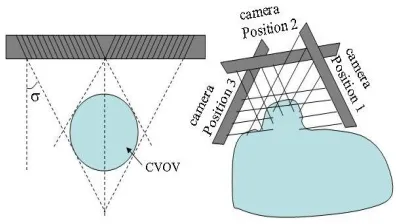
Particularly interesting are RMSSH collimators
(shown in Fig. 1) because in addition to improving the scanner sensitivity by a factor of
~2 or ~4 (depending on whether 2 or 4 segments are used), they can achieve complete angle
tomography, with as few as 180o/(2
σ
) camera positions where σ is the slant angle (e.g. only 3
3. It must be noted that the task of tomography is performed
differently for each collimators design, and therefore
specifically designed reconstruction algorithms need to be
implemented.
camera positions when
σ
=
30
0 which corresponds to a single camera stop for atriple-head scanner assuming sufficient collimator rotation-sampling is performed at the camera
positions (see (5,6)). Furthermore, the amount of camera rotation needed is 180o-2
σ
(i.e. lessthan 180o) making it very convenient for SPECT mammography since the camera can be placed
closer to the breast (making it suitable for detecting small, low-contrast breast legions).
This is also shown in Fig. 1.
Figure 1: (left) A 2-segment slant-hole
collimator. Parallel holes within each segment
are slanted towards a common-volume-of-view
(CVOV) where the organ to be imaged is
placed. The slant-angle
σ
is shown. (right) Three camera stops, equally spaced around theorgan (for
σ
=
30o, only 120o needs to becovered), while the collimator rotates at each
camera stop.
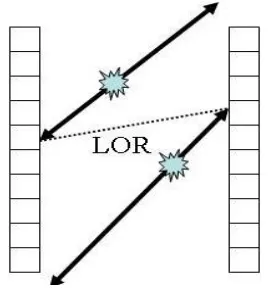
B) Coincidence Detection in PET
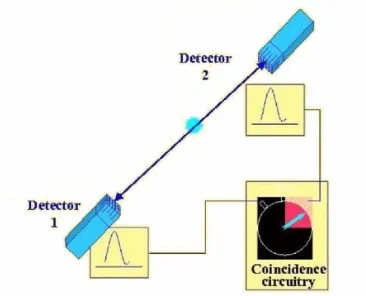
Due to the nature of positron annihilation in
which two opposite gamma rays are emitted from the same event, physical collimators can be
entirely removed in PET, with the collimation instead performed electronically using the
coincidence-detection method (see Fig. 2). This implies a much larger angle of acceptance at
Downloaded from
http://journals.tums.ac.ir/
on Monday, August 13, 2012
Figure 2: In PET imaging systems,
coincidence detection is used, in which two
events arriving within a certain coincidence
time window are used to trace the path along
which the annihilation occurred.
There are a number of important implications to this significant gain in sensitivity for PET:
(1) Improved image quality: primarily due to the random (Poisson) nature of radioactive
emissions, noise is an inherent component of nuclear medicine imaging. For multiple
measurements, the percentage noise (ratio of standard-deviation σto average µ of total-counts
detected in a certain time interval) along a projection is given by:
% noise =
µ
µ
σ
=
1
(1)because σ = µ in Poison statistics. Improvements in sensitivity (i.e. increasing µ therefore improve signal-to-noise ratios (SNRs)
in the data, which also corresponds to improvements in image SNRs (see (7,8,9) for
details of methods relating data SNRs to image
SNRs).
(2) Possibility of performing shorter scans: an increase in sensitivity implies the ability to
acquire shorter scans with similar SNRs.
(3) Multiple field-of-view (FoV) scanning: the ability to perform shorter scans also implies the
feasibility of performing multiple scans of a patient at different fields-of-views in a
reasonable time. This is a very important consideration in diagnostic oncology.
(4) Improved temporal resolution: as will be elaborated in Sec. IV, higher sensitivity of PET
scanners implies an increased ability to acquire shorter (and therefore higher number of) frames
in dynamic studies, resulting in an improved ability to study image dynamics.
It must be noted that the technique of coincidence-detection used in PET, while highly
improving sensitivity, introduces two issues which have been subjects of further
investigation:
(1) Photon non-collinearity effect (see Sec.
III-C).
(2) Detection of random coincidences (see Sec.
VI);
C) Effect of Short Half-Lives in PET
In the present context, an additional observation
is that the short half-lives of radionuclides used in PET effectively allow for increased detection
sensitivity over a given period of time. This is because compared to SPECT imaging,
radiotracers with shorter half-lives can be injected in higher activities to the patient without
posing any additional radiation damage to the patient (because overall accumulation over time
remains the same) thus generating increased detectable radiation over a smaller time.
An example of this, with much recent interest, is rubidium(Rb)-based PET. Because rubidium has
a very short physical half-life of only 76 seconds, it can be injected in very high (yet safe) amounts
(e.g. 50mCi) allowing for acceptable images in very short times. Compared to routine SPECT
Downloaded from
http://journals.tums.ac.ir/
on Monday, August 13, 2012
over three to four hours4, a complete pharmacological stress-and-rest test may instead
be performed in well under an hour in Rb-based cardiac PET (considerably increasing patient
comfort as well as number of daily patient scans). In addition, the almost-instantaneous
ability of rubidium to image a patient has provided a very high accuracy in identification of
ischemia (10).
III. SPATIAL RESOLUTION
Spatial resolution in PET and SPECT is related
to a number of different factors. A general observation is that improvements in SPECT
resolution are effectively only limited by technology (e.g. collimator design), whereas in
PET imaging, two physics-related limitations, namely positron range and photon
non-collinearity, ultimately limit system resolution (it must however be noted that, as discussed later,
these effects can be modeled in the reconstruction task, as opposed to simply being
treated as resolution-limiting, therefore further improving reconstructed resolutions). We discuss
related issues next.
A) Pinhole SPECT
Pinhole SPECT is an exciting example of
technological advance which has introduced the possibility of considerably enhancing image
resolution in SPECT (to sub-millimeter scale), particularly in the context of small animal
imaging (e.g. see (11) with additional references). However, it must be noted that use
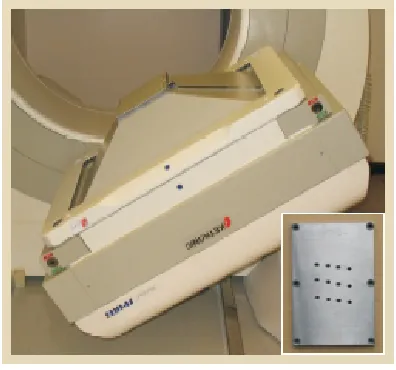
of a small pinhole further decreases system sensitivity. Subsequently, multi-pinhole
collimators have been proposed and implemented (12), an example of which mounted
4. This time can be potentially halved using simultaneous
dual-isotope imaging as elaborated in Sec. VIII.
on a standard clinical SPECT camera is shown in Fig. 3.
Figure 3: Example of a multi-pinhole
collimator mounted on a clinical gamma
camera.
A complicating factor with the high-resolution
pinhole approach is the task of calibrating the SPECT devices (especially in the presence of
camera rotations). An innovative solution to this consideration, which at the same time noticeably
increases system sensitivity, is the design of stationary dedicated pinhole SPECT systems
making use of a large number of compact detectors with multiple pinhole geometries. An
example of such design is the U-SPECT-III system (13) containing 135 pinholes, as shown in
Fig. 4. Therefore, stationary multi-pinhole SPECT imaging using dedicated detectors
provides a combination (and not trade-off) of high-resolution and high-sensitivity, and
furthermore, considerably enhances possibilities of dynamic imaging. However, one may add that
these systems would still likely require axial translation schemes since they cover a very
Downloaded from
http://journals.tums.ac.ir/
on Monday, August 13, 2012
Figure 4: The design of U-SPECT-III
contains a total of 135 gold pinhole apertures:
15 pinholes in each ring (top) with a total of 9
rings (bottom). Not shown here is that pinhole
positions in adjacent rings are rotated
transaxially with respect to each other by 8o in
order to increase the variety of angles at which
each voxel is observed.
B) Finite Resolution Effects in SPECT
In SPECT, the image generated from a
point-source is degraded by a number of factors related to collimators and detectors in gamma cameras,
thus referred to as the collimator-detector response (CDR). Therefore, for any particular
SPECT scanner, the CDR can be a measure of the image resolution; however, this is only if no
further compensation is included. In recent years, a great deal of work has gone into developing
methods to compensate for the CDR.
The CDR is determined by the following four
factors:
(1) Intrinsic Response: Aside from the effect of collimators, the detector system itself
demonstrates an intrinsic uncertainty in position estimation of incident gamma rays. This is
caused by two factors: (a) the statistical signal variation (noise) in signal output of PMTs used
for position estimation, and (b) change/spread in signal energy deposition in the detector due to
scattering (especially for higher energy isotopes e.g. In-111).
(2) Geometric Response: Collimators dimensions define the acceptance angle within which
incident photons are accepted. Subsequently, the geometric response function becomes wider with
increasing distance from the collimator surface, and strongly depends on the particular design of
each collimator.
(3) Septal Penetration: The CDR is further
degraded due to the penetration of some photons through the collimator septa. No analytic
treatment of this effect appears to exist in the literature, and Monte Carlo (MC) simulation
techniques have instead been used (e.g. (14)).
(4) Septal Scatter: This effect is caused by
photons that scatter in the collimator septa and still remain within the detection energy window.
Similar to septal penetration, this effect may also be computed using MC simulation techniques.
Analytic methods taking into account the distance-dependence of the CDR function
(CDRF) have been proposed in the literature (see (15) for a review of both related analytic and
statistical methods). However, compared to statistical methods, such analytic methods suffer
from (i) a general lack of ability to treat statistical noise in the data, and (ii) making
specific approximations, for instance with regards to the shape and/or distance-dependence
of the CDRF, in order to arrive at analytic solutions.
Downloaded from
http://journals.tums.ac.ir/
on Monday, August 13, 2012
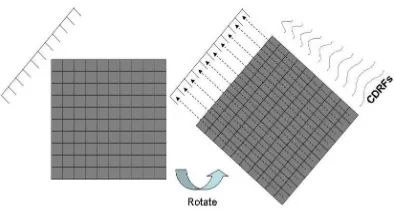
statistical methods in nuclear medicine, and particularly with the development of convenient
and fast rotation-based projectors in SPECT (16,17), as shown in figure 5, iterative
reconstruction methods incorporating distant-dependent CDRFs are increasing in popularity5.
Figure 5: Rotation-based projector methods
incorporating distant-dependent CDRFs make
use of the fact that, for parallel-beam
deometries, the CDRF is spatially invariant in
rows (planes) parallel to the collimator face.
Thus, each row (plane) may be convolved with
the appropriate distance-dependent CDRF.
Incorporation of CDR modeling in
reconstruction algorithms (especially statistical methods) has been shown to result in
improvements in resolution (18), noise (20), and more importantly in task-based measures of
image-quality: e.g. improved uniformity in the myocardial wall as well as improved estimates of
wall thickness (21), improved observer myocardial defect detection in both simulated
(22,23) and clinical (24) data, as well as improved performance for tumor detection and
localization (25).
C) Finite Resolution Effects in PET
In PET imaging, three factors contribute to
5. Use of Gaussian diffusion methods (18,19) can further
increase the speed of rotation-based projectors.
degradation of resolution in the reconstructed images: detector-related effects, photon
non-collinearity and positron range. Detector-related effects (which in PET are due to (i) the width of
crystal scintillators, (ii) inter-crystal scattering, and (iii) Inter-crystal penetration) are continually
improving with advances in technology, and similar to CDR compensation in SPECT, may be
modeled in the reconstruction task (e.g. see (26)) to further improve reconstructed resolutions. In
what follows, we elaborate the remaining two inherent resolution-degrading factors in PET:
Photon non-collinearity: Since the net momentum for an emitted positron, and the
electron with which it annihilates, can be non-zero, this results in deviations from 180o
between the trajectories of the two emitted photons (due to conservation of momentum) as
shown in Fig. 6. This deviation is around 0.25o FWHM, and the corresponding resolution
blurring depends on detector separation D, and is approximately given by
2
180
25
.
0
D
FWHM
×
≈
π
(2)
That is:
D
FWHM
≈
0
.
0022
×
(3)Therefore one expects ~1.1 mm FWHM blurring
for a typical whole-body scanners (D~0.5 m),
Downloaded from
http://journals.tums.ac.ir/
on Monday, August 13, 2012
Figure 6: Depiction of photon
non-collinearity and positron range effects in the
positron annihilation process.
Positron range: Emitted positrons are required to
travel a certain distance, on the average, in the surrounding medium before they can reach
thermal energies in order to be annihilated: this distance is referred to as the positron range
(shown in Fig. 6). Different positron-emitting isotopes exhibit distinct energy distributions, and
therefore also exhibit different positron range values. See (27) for an extensive analysis of
positron range distributions.
Traditionally, positron range has been viewed as
purely resolution-limiting. However, there are two additional approaches (one hardware-based
and the other software based) that can be used to reduce this effect:
(1) Application of a magnetic field: Simulations (28,29) as well as experiments (29) have verified
the possibility of improving PET scanner resolution by application of a magnetic field,
which is known to reduce the positron range. This is a possible advantage of PET systems
compatible with MRI/NMR systems6. It must be
6. However, there are other more important motivations for
implementation of such combined/simultaneous systems (the
interested reader is referred to (30,31) for more details): they
include providing the abilities (i) to avoid inaccuracies of
registration between functional and anatomic images (e.g.
avoiding problems of subject movement and any deformation
noted that this effect is most significant: (i) at field strengths of ~5 Tesla or more; (ii) for
high-energy positrons-emitting radionuclides e.g. Ga-68 and Rb-82.
However, when employing lower-energy positron-emitting radionuclides such as F-18 or
C-11, simulations/experiments with typical human PET scanners (resolutions of ~3 mm or
more) have indicated (28,29) that improvements in resolution will not to be significant. For such
radionuclides, this effect may only become noticeable for small animal scanners (and
remains to be demonstrated): this is because, in addition to having smaller detectors, effect of
photon non-collinearity is also small in animal PET scanners (see Eq. 3), and therefore
reductions in positron range will more readily affect overall scanner resolution.
(2) Modeling into the reconstruction task:
Positron range (and photon non-collinearity) are
conventionally not discussed as physical phenomenon that can be corrected for, rather
they are often seen as limitations of PET imaging. However, with the arrival of statistical
reconstruction algorithms (32,33) (and the concept of the system matrix), even though it is
not possible to determine these effects for each particular detected event, it is possible to
calculate and incorporate their probability distributions into the system matrix (e.g. see
(34)). Such advanced modeling in turn can result in improvements in image resolution. It has also
been suggested (35) that this can improve the noise properties, as also shown (20) in the case
of organs in-between scans); (ii) to perform functional MRI
(fMRI) and PET in exactly the same environment (e.g. for
cross-validation), and (iii) similarly to provide temporal
correlation for PET and NMR spectroscopy as a potentially
very powerful technique. Furthermore, patient motion may be
potentially monitored using MRI, and subsequently
Downloaded from
http://journals.tums.ac.ir/
on Monday, August 13, 2012
of incorporating collimator-detector response modeling in SPECT (see Sec. III-B).
From the above observations, it is evident that improvements in the PET technology as well as
reconstruction algorithms will continue to yield further improvements in high-resolution PET
imaging. There has been notable activity in this field, in the particular context of small animal
PET imaging (see (75) for an elaborate review, including additional considerations), resulting in
reconstructed volumetric resolutions reaching ~1microL (e.g. microPET II scanner (76)). As a
last note, a very promising ongoing technological development is the use of avalanche photodiodes
(APDs) whose compactness compared to bulky photomultiplier tubes (PMTs) offers new
opportunities in high resolution imaging (in addition to their high quantum efficiency,
internal gain and insensitivity to magnetic fields, as well as the potential of these silicon-based
detectors to be ultimately made very cheaply in high volumes,); e.g. see (77,78).
IV. TEMPORAL RESOLUTION
The ability to perform dynamic imaging in nuclear medicine is becoming increasingly
important. This is because in many cases, it is the change in the bio-distribution of
radiopharmaceuticals within the body that offers the most information about the underlying
physiological processes. This in turn brings in the concept of temporal resolution: how
frequently (over a period of time) an imaging instrument is able to capture ‘acceptable’7
images of an object in the FoV.
7. Compared to spatial resolution, it is more difficult to
precisely quantify temporal resolution. This depends on
specifying what may or may not be considered as an
‘acceptable’ image of sufficient quality. The criteria of
sufficient image quality are specific to the particular imaging
task.
It must be noted that the temporal resolution has a dependence on the reconstruction algorithm
being used. For instance, as noted in Sec. III, the use of advanced statistical reconstruction
algorithms, e.g. modeling positron range (in PET) or collimator-detector response (in
SPECT), can improve image qualities (e.g. both resolution and signal-to-noise ratios), thus
improving the temporal resolution. As noted in Sec. II-B, the temporal resolution is also very
closely related to the sensitivity of the scanner. In this sense, PET imaging has an intrinsic
advantage over SPECT for dynamic studies.
A) Dynamic SPECT
In SPECT (without having an assumptions about
image dynamics), it is necessary to perform complete angle tomography via camera rotations
for each dynamic frame, which limits how fast each frame may be acquired (an exception to this
is stationary multi-pinhole SPECT used in animal imaging, as discussed in Sec. III-A,
which does not involve camera rotations, though it involves a limited FoV). Even when using very
fast rotation acquisitions (down to even 5 sec per rotation with a three-head camera), the
acquisitions at each position will provide very low statistics.
An alternative approach in SPECT is to perform slow camera rotations (e.g. a single rotation for
the entire study) while making assumptions about image dynamics. For instance, in fatty acid
myocardial viability studies, it has been assumed that the activity
λ
j(
t
)
of the jth position (voxel)of the heart at time t may be modeled as:
j t b j t a j
j
t
A
e
B
e
C
j
j
+
+
=
− −)
(
λ
(4)
where the abovementioned approach would involve estimating the five kinetic parameters
Downloaded from
http://journals.tums.ac.ir/
on Monday, August 13, 2012
data (36) (also consult (37) for a list of references using this type of approach).
In (38,39) the authors have instead approached this problem by making no strict assumptions
about the functional behaviour of the tracer over time (i.e. unlike Eq. 4) and instead have made the
minimal assumption that the activity at each voxel j does not increase with time8. While such
methods provide less restriction, the problem with not making implicit kinetic model
assumptions can be shown in an example: for a typical image slice of size 64x64 reconstructed
into 16 dynamic frames from data acquired over 64 projections (each with 64 bins), this last
approach requires using 642 measurements to estimate 16x642 unknowns (i.e. activity of each
voxel at each frame), which is highly underestimated. On the other hand, using the
direct parameter estimation model above (e.g. Eq. 4 which contains 5 parameters to be
estimated for each voxel), 5x642 unknowns need to be estimated.
An alternative, more natural approach (37) to dynamic SPECT involves the use of 4D
maximum a posteriori (MAP) reconstruction algorithms in which the behaviour of each voxel
in time is encouraged to conform to a compartmental model9. The interested reader
may refer to Ref. (41, p. 9) for an explanation of 4D-MAP image reconstructions10.
8. In Ref. (40), a more flexible scenario is considered in
which organ uptake (i.e. increasing activity) is allowed at the
beginning.
9. In the mentioned work, the kinetic parameters are updated
after every iteration of the reconstruction algorithm.
10. It must be noted, however, that Ref. (41) discusses the
different context of 4D reconstruction of
cardiac/respiratory-gated data. In such a context, 4D-MAP approaches are used
to encourage the behaviour of each voxel to conform to the
measured or modeled cardiac/respiratory motion.
B) Dynamic PET
Dynamic PET imaging does not encounter the
mentioned complications with dynamic SPECT. A general approach to dynamic PET imaging
consists of independently reconstructing tomographic data obtained within each dynamic
frame (e.g. (42)). Nevertheless, recent work has indicated that the availability of list-mode
acquisition capability in modern PET scanners in which the time-of-detection for each event is also
stored (43) can be used to further improve temporal resolution. This is because conventional
dynamic PET reconstruction methods assume the activity to be constant within each frame.
Instead, new approaches (44,45) make use of temporal basis functions to allow the activity in
each voxel to be represented continuously over time. Next, the coefficients of the basis functions
are estimated making collective use of the entire dataset and the individual times-of-arrival for
each event (this is an example of 4D-PET reconstruction).
Another interesting application of PET is in dynamic-cardiac imaging. As an example, 13
N-labeled ammonia (13NH3) can be used for the
measurement of myocardial blood flow which
makes it possible to measure blood flow at the level of micro-circulation. At the same time,
measurement of myocardial wall motion can be used to assess the global function of the heart
through the ejection fraction. These tasks can be performed by introduction of dynamic frames
each of which are cardiac-gated (which has the additional advantage of reducing cardiac motion
artifacts). It is worth noting that in this context, temporal resolution may be further improved by
truly 5D (3D+dynamic-1D+gated-1D) reconstruction algorithms which make use of the
list-mode data and continuous temporal representation of activities in the voxels, across
Downloaded from
http://journals.tums.ac.ir/
on Monday, August 13, 2012
V. ATTENUATION CORRECTION
Photon attenuation refers to the property of
emitted radiation to interact with tissue and other materials as it passes through the body. For
photon energies encountered in nuclear medicine (68 to 80 keV for 201T1 to 511 keV for positron
emitters), photons can undergo photoelectric interactions (though not significant at 511 keV)
as well as scattering. Mathematically, the surviving probability of radiation (i.e. not being
attenuated) along a path L through an attenuating object can be expressed as:
−
=
∫
x
d
x
P
L L
r
r
)
(
exp
µ
(5)
where the parameter µ is referred to as the linear
attenuation coefficient, which is an energy-dependent measure of photon attenuation.
The critical observation is that in PET, the path length L represent the line-of-response (LOR)
along which the dually-emitted photons travel, and therefore is independent of the point of
origin along the LOR, whereas in SPECT, due to its single photon nature, it changes depending on
the point of emission. The task of attenuation correction in PET is therefore more
straightforward. A number of approaches have been proposed (as reviewed in (47)) most
common of which include incorporation of the measured attenuation factors for each LOR as (i)
pre-correction factors in the measured data or as (ii) multiplicative factors inside the system
matrix of the image reconstruction task.
What we wish to emphasize in this section is that
attenuation correction in SPECT is not a limitation, rather it is simply more challenging to
address; in the past, due to weak hardware/software implementations (as well as a
desire to minimize time and expense costs), attenuation correction has not been widely
performed in SPECT. However, the importance of attenuation correction in SPECT is becoming
increasingly realized11 (e.g. (48,49,50)). As such, it has become widely accepted that artifact-free,
quantitatively accurate SPECT imaging may only be performed including attenuation
correction. Introduction of SPECT/CT scanners has served as a convenient and fast solution to
measurement of the transmission data using x-rays (51). However, effects such as
respiratory-induced misregistration of the emission and transmission data (52) as well as ‘
beam-hardening’ artifacts caused by the polychromatic nature of CT x-rays (53,54) need to be carefully
considered.
In the past, for applications employing
attenuation correction in SPECT, the “multiplicative Chang technique” (55) (as well as
its iterative versions) had been mostly used; however, these techniques are based on the
assumption of uniformly attenuating medium. On the other hand, statistical reconstruction
algorithms have a special ability to model (and compensate) for the presence of uniform or
non-uniform attenuation in the detection process (e.g. the attenuated projector-backprojector pair as
described by Gullberg et al. (56)). With the increasingly realization of the importance (20)
and convenience (16,17) of compensation for both the CDR function as well as non-uniform
attenuation (particularly using convenient rotation-based projectors as elaborated in Sec.
III-B), attenuation compensation statistical
11. Since the thickness of tissue varies for different regions
of the patient’s anatomy, errors introduced by lack of
attenuation correction will also vary regionally (e.g. a lesion
located deep within the body will produce a more highly
attenuated signal compared to a superficial lesion; also, for
instance, in myocardial perfusion imaging, soft-tissue
attenuation due to the diaphragm or breast tissue can cause
Downloaded from
http://journals.tums.ac.ir/
on Monday, August 13, 2012
methods are finally moving towards wide acceptance by the SPECT community.
VI. RANDOM COINCIDENCES IN
PET
The technique of coincidence-detection used in
PET has a complication (not present in SPECT) in that two gamma rays that are
detected/accepted within the same coincidence timing window, may not have originated from
the same event. An example of this is shown in Fig. 7 in which an incorrect LOR is assigned to
two simultaneous gamma rays whose pairs exit the scanner undetected12. Mathematically, the
rate of random coincidences along such an LOR connecting two detectors i and j is given by
j i
S
S
R
=
2
τ
(6)
where
τ
is the coincidence timing window, and Si and Sj refer to the singles rates at the two detectors.Figure 7: A scenario for the detection of
random coincidences in PET.
12. Alternatively, the other pairs could also have been not
detected due to being scattered out of the field-of-view (i.e.
attenuated) or simply passed through the scanner undetected
(detectors are not 100% efficient).
Correction for random coincidences (randoms) is the subject of ongoing research in PET imaging.
In (42) Rahmim et al. have included an elaborate review of relevant techniques (particularly in the
context of statistical image reconstruction). The conventional approach has been to subtract a
(noisy, Poisson-distributed) estimate of the randoms (obtained using the delayed-coincidence
technique) from the measured coincidences. There is, however, two issues with this approach:
(1) Even though this approach corrects for randoms on the average, it increases the noise in
the data.
(2) Data corrected in this way are no longer
Poisson-distributed13, while most existing statistical image reconstruction algorithms
assume Poisson distribution of the data.
Alternatively, to avoid the above two issues, it is
possible to follow an approach in which an averaged (i.e. non-noisy) estimate of the random
rates along each LOR are included in the image reconstruction task (see (42) for more details).
The random rates estimates, required in this approach, can be calculated using: (i) singles
measurements at the detectors (57) to calculate the expected randoms contribution according to
Eq. 6, or ii) variance reduction (smoothing) of the measured noisy (delayed-coincidence)
estimates of randoms (58,59,60).
Defining T and R as the number of true and
random coincidences detected in a scan, and using Poisson-statistics arguments (while
neglecting scattered events), it can be shown that the SNR in the data is given by
R
T
T
SNR
2
+
=
(7)
13. A subtraction of Poisson variables results in a variable
Downloaded from
http://journals.tums.ac.ir/
on Monday, August 13, 2012
when using a delayed-coincidence subtraction technique, while it improves (increases) to
R
T
T
SNR
+
=
(8)
when using the alternative approaches discussed
above. Considering equation 8, we note that while in PET random rates are of the same
approximate order as the trues rates (R~T), in SPECT random-coincidences do not exist (R=0);
however since T(PET)>>T(SPECT), it follows that SNRs are still considerably greater in PET
compared to SPECT imaging.
It must further be noted that the discovery of fast
(and at the same time high-output) scintillators such as LSO have allowed the coincidence
timing window τ to be noticeably reduced (2-4 ns) compared to typical values (~10-12 ns)
achieved with conventional BGO scanners (61). Considering Eq. 6, this improvement can be seen
to reduce the random rates, and thus to further improve count-rate performance of PET scanners
(as a side note: LSO in fact has the potential of exhibiting a timing FWHM resolution of <0.5 ns,
which is a very important consideration in time-of-flight PET; see Sec. VII).
Therefore, as a final note in this section, consideration of fast scintillators in PET, as well
as careful estimations of random coincidences and their inclusion in appropriate (42) image
reconstruction algorithms can result in successful removal of bias in the images while also
minimizing degradation/noise-amplification in the PET data.
VII. TIME-OF-FLIGHT
DETECTION IN PET
An additional improvement in the quality of PET
images may be made making use of the dual nature of emitted gamma rays. Time-of-flight
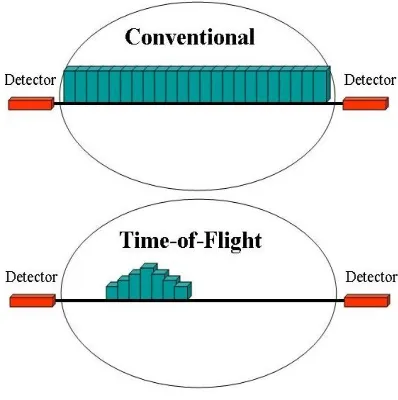
(ToF) PET is based on the observation that by measuring the difference of the arrival times of
the 511 keV photons, a PET camera could restrict the position of the positron emission to a
subsection of the line segment joining the detector pair. This is shown in figure 8.
Figure 8: With conventional reconstruction
(top) voxels along the LOR are incremented
regardless of position along the LOR. With
TOF reconstruction (bottom), each voxel is
incremented by the probability (as measured by
the TOF measurement) that the source
originated at that voxel.
It had been known since the early 1980s that PET scanners capable of encoding time-of-flight
(TOF) information would potentially reduce the statistical noise variance in PET reconstruction
(62,63). However, technological difficulties (slow electronics and the need for fast and at the
same time effectively-absorbing scintillators), had limited development of ToF PET until
recently. With the continuous improvements in the technology of PET imaging (e.g. faster
electronics), and especially since the discovery of the scintillator LSO, time-of-flight PET is now
Downloaded from
http://journals.tums.ac.ir/
on Monday, August 13, 2012
ToF PET, especially in whole body scanning, is expected to considerably improve image noise
behavior compared to conventional schemes in which ToF information is not incorporated. The
reduction factor f in the noise variance for a ToF system capable of a timing resolution of ∆t is
given by (61):
t
c
D
f
∆
≈
2
(9)
where D is the size of the emission source, and c is the speed of light (Ref (65) should be
consulted for a more detailed consideration of the effects of random coincidences and scattered
events). In fact, optimum ∆t values down to
~300ps and ~200ps have been measured for LSO and LaBr3 both of which are very promising ToF scintillators. For a realistic ∆t of ~500ps
(expected for next-generation LSO-based scanners), the noise variance improvements will
correspond to factors of ~4.7 in whole-body
(D~35 cm) and ~2.7 in brain (D~20 cm) imaging.
VIII. DUAL ISOTOPE SPECT
IMAGING
Simultaneous dual isotope imaging using SPECT
is an area of increasing interest. The dual-isotope approach can not be performed in PET imaging due to all its radiotracers being of the same
energy level (511keV), whereas multiple energy windows can be used in SPECT for simultaneous
imaging of radiotracers of different energies.
Examples of this include: (i) 99mTc(140keV) sestamibi stress and 201Tl(75keV/167keV) rest myocardial perfusion imaging, and (ii)
simultaneous use of a 99mTc(140keV) labeled perfusion agent and an 123I(159keV) labeled
neurotransmitter agent (with potential
applications in diagnosis of neurodegenerative
diseases, e.g. Parkinson’s, Huntington’s and Alzheimer’s diseases).
The use of simultaneous acquisition reduces acquisition times and therefore patient
discomfort and image artifacts due to patient motion. Another significant advantage is that the
resulting images from the different isotopes are perfectly registered in space and time.
A complication with dual-isotope imaging is the presence of crosstalk between the multiple
energy windows. In the case of, for instance, imaging with 99mTc(140keV) and
201
Tl(75keV/167keV), the lower-energy 201Tl energy window is contaminated by 99mTc
photons scattered in the patient or collimator (referred to as down-scatter) as well as Pb x-rays
generated by both scattered and unscattered
99m
Tc photons in the collimator. In addition, the
Tc data are also contaminated by scattered (~135keV) and unscattered (167 keV) 201Tl
photons.
To address the above difficulties, current
research has focused on optimization of multiple energy-window acquisition parameters (66,67) as
well as modeling of crosstalk effects (i.e. down-scatter and collimator x-ray generation) in the
reconstruction task (68). Combination of these methods as well as detailed clinical evaluation
are still required in order to make dual-isotope SPECT imaging an acceptable clinical protocol.
IX. OTHER CORRECTIONS
In order to produce fully quantitative data, three other corrections need to be considered. The
reader is referred elsewhere for elaborate reviews of these topics; here we briefly compare their
applications in PET vs. SPECT.
A) Scatter Correction
Scatter correction is one of the most important
Downloaded from
http://journals.tums.ac.ir/
on Monday, August 13, 2012
nuclear medicine imaging. Scattered events can constitute 30-50% of all events in SPECT,
10-20% in 2D-PET and 40-60% in 3D-PET. The difficulty in scatter compensation is given by the
fact that in order to truly estimate the number of scattered events along each projection, the
emission image needs to be known, which is the very aim of the reconstruction task! The reader is
referred to (69) for a thorough review of the various approaches.
An approach of increasing interest is the use of fast analytic (70) or Monte Carlo (71) scatter
calculations inside iterative reconstruction algorithms, such that the scatter estimate is
updated at every step. However, it must be noted that due to the comparatively much larger sizes
of data in PET, most of the research performed in this field is related to SPECT imaging (as an
exception see (72) for an application in PET). Another example of this iterative application (68)
was discussed in the estimation of down-scatter in dual-isotope imaging (see Sec. VIII).
B) Correction for the Partial Volume Effect
The partial volume effect (PVE) arises due to the limited resolution in nuclear medicine imaging
(and is relevant for “small” regions with dimensions smaller than around 2 times the
FWHM of the scanner resolution). It has been shown to result in large biases in the estimates of
regional radioactivity concentrations. The reader is referred to (73) for an elaborate review of this
topic. The methods developed in this area are equally applicable in both PET and SPECT
imaging, and require, for best performance, access to anatomical images (e.g. MRI) of the
subjects.
C) Motion Compensation
The majority of motion-compensation methods
(image-based and projection-based) are equally
applicable in both PET and SPECT. These have been reviewed, for rigid, cardiac and respiratory
motions, in Ref. (41). There are, however, two potential differences between the two modalities
in the context of motion compensation:
(1) In SPECT, there exists a correlation between
projection angle and time (therefore motion); this time-dependence may be potentially used in the
motion compensation task (e.g. (74)).
(2) The enormous size of PET data can cause
difficulties for demanding motion compensation methods. Subsequently, accurate and at the same
time fast methods are needed in PET (see (41) for details).
X. CONCLUSION
The present work has attempted to summarize important themes of ongoing hardware and
software advancements for the two major imaging modalities in nuclear medicine: PET and
SPECT.
In the context of PET imaging, the
coincidence-detection method is viewed as a very powerful method, considerably enhancing sensitivity (Sec.
II-B) and dynamic-imaging (Sec. IV) capabilities of PET. Furthermore, (i) use of very short
half-life tracers (e.g. Rubidium) injected at very high activities (Sec. II-C), as well as (ii) the
introduction of increasingly fast scintillators technology (particularly for LSO), which in turn
has allowed reduction of random coincidences (Sec. VI) and introduced the possibility of
time-of-flight PET (Sec. VII) are expected to further contribute to high-sensitivity imaging
capabilities of PET.
Improvements in PET technology (e.g. detector
design), modeling of finite resolution effects in PET image reconstruction, as well as the
potential of applying magnetic fields (expected to reduce positron range for high-energy
Downloaded from
http://journals.tums.ac.ir/
on Monday, August 13, 2012
areas of ongoing research attempting to improve resolution limitations in PET.
In SPECT, the use of specialized collimators (e.g. slant-hole) are seen as techniques improving
sensitivity without degrading image resolution. Furthermore, the pinhole SPECT technology is
seen as an area of intense recent interest, particularly due to its ability to enhance
resolution capabilities in SPECT (to sub-millimeter range) and to the possibility of
stationary SPECT small animal imaging. Incorporation of non-uniform attenuation in
SPECT (Sec. V) as well as collimator-detector response (Sec. III-B) and scatter (Sec. IX-A)
modeling into statistical, iterative image reconstruction algorithms was also seen as an
area of considerable potential towards
artifact-free, quantitative SPECT imaging. Various issues related to temporal resolution (and
dynamic imaging capabilities) in SPECT and PET were also discussed. In particular, it was
seen that use of suitable (4D and 5D) reconstruction algorithms could further enhance
temporal resolution capabilities in these modalities.
Finally, it should be stressed that existing PET and SPECT scanners in the field can (much)
benefit from improvements in image-reconstruction software (as discussed in this
review), and in the case of SPECT imaging, from the potential of dual-isotope imaging (Sec. VIII)
as well as the use of specialized collimators (Secs. II-A and III-A).
XI. REFERENCES
1. Ollinger JM, Fessler JA. Positron emission tomography. IEEE Sig Proc Mag. 1997; 14:
43-55.
2. Segall, G. Assessment of myocardial viability
by positron emission tomography. Nucl Med Communications. 2002; 23: 323-330.
3. Lodge MA, Webb S, Flower MA, Binnie DM. A prototype rotating slat collimator for
single photon emission computed tomography. IEEE Trans Med Imag. 1996;
15: 500-511.
4. Tsui BM, Gullberg GT. The geometric
transfer function for cone and fan beam collimators. Phys Med Biol. 1990; 35: 81-93.
5. Clack R, Christian PE, Defrise M, Welch AE. Image reconstruction for a novel SPECT
system with rotating slant-hole collimators. IEEE Med Imag Conf. 1994; 4: 1948-1952.
6. Wagner J-M, Noo F, Clackdoyle R. Exact inversion of the exponential x-ray transform
for rotating slant-hole (RSH) SPECT. Phys
Med Biol. 2002; 47: 2713-2726.
7. Strother SC, Casey ME, Hoffman EJ.
Measuring PET scanner sensitivity: relating countrates to image signal-to-noise ratios
using noise equivalents counts. IEEE Trans Nucl Sci. 1990; 2: 783-788.
8. Stearns CW. Estimating an acquisition-specific NEC curve for PET acquisitions.
IEEE Nucl Sci Symp Conf Rec. 2003; 4: 2578-2580.
9. Stearns CW. NEC and local image noise in PET imaging. IEEE Nucl. Sci. Symp. Conf.
Rec. 2004; 5: 3106-3108.
10. Jadvar H, Strauss HW, Segall GM.
SPECT and PET in the evaluation of coronary artery disease. RadioGraphics.
1999; 19: 915-926.
11. McElroy DP, McDonald LR, Beekman FJ,
Wang Y, Patt BE, Iwanczyc JS et al. Performance evaluation of SPECT: a high
Downloaded from
http://journals.tums.ac.ir/
on Monday, August 13, 2012
imaging small animals. IEEE Trans Nucl Sci. 2002; 49: 2139-2147.
12. Schramm NU, Ebel G, Engeland U, Schurrat T, Behe M, Behr TM. High-Resolution
SPECT Using Multipinhole Collimation. IEEE Trans Nucl Sci. 2003; 50: 315-320.
13. Beekman FJ, Vastenhouw B. Design and simulation of a high-resolution stationary
SPECT system for small animals. Phys Med Biol. 2004; 49: 4579-4592.
14. Du Y, Frey EC, Wang WT, Tocharoenchai C, Baird WH, et al. Combination of MCNP and
SimSET for Monte Carlo simulation of SPECT with medium- and high-energy
photons. IEEE Trans Nucl Sci. 2002; 49: 668-674.
15. Frey EC, Tsui BMW. Collimator-detector response compensation in SPECT In: Zaidi
H. Quantitative analysis in nuclear medicine imaging”. New York: Springer. 2006.
16. McCarthy AW, Miller MI. Maximum-likelihood SPECT in clinical computation
times using mesh-connected parallel computers.IEEE Trans Med Imag. 1991; 10:
426-436.
17. Zeng GL, Gullberg GT. Frequency domain
implementation of the three-dimensional geometric point source correction in SPECT
imaging. IEEE Trans Nucl Sci. 1992; 39: 1444-1453.
18. Kohli V, King MA, Glick SJ, Pan TS. Comparison of frequency-distance
relationship and Gaussian-diffusion based methods of compensation for
distance-dependent spatial resolution in SPECT imaging. Phys Med Biol. 1998; 43:
1025-1037.
19. King MA, Pan TS, Luo DS. An investigation
of aliasing with Gaussian-diffusion modeling of SPECT system spatial resolution. IEEE
Trans Nucl Sci. 1997; 44: 1375-1380.
20. Tsui BMW, Frey EC, Zhao XD, Lalush DS, Jahnston ER, et al. The importance and
implementation of accurate three-dimensional compensation methods for quantitative
SPECT. Phys Med Biol. 1994; 39: 509-530. 21. Kohli V, King MA, Pan TS, Glik SG.
Compensation for distance-dependent resolution in cardiac-perfusion SPECT:
impact on uniformity of wall counts and wall thickness. IEEE Trans Nucl Sci. 1998; 45:
1104-1110.
22. Sankaran S, Frey EC, Gilland KL, Tsui
BMW. Optimum compensation method and filter cutoff frequency in myocardial SPECT:
A human observer study. J Nucl Med. 2002; 43: 432-438.
23. Frey EC, Gilland KL, Tsui BMW. Application of task-based measures of image
quality to optimization and evaluation of three-dimensional reconstruction-based
compensation methods in myocardial perfusion SPECT. IEEE Trans Med Imaging.
2002; 21: 1040-1050.
24. Narayanan MV, King MA, Pretorius PH,
Dahlberg ST, Spencer F, Simon E, et al. Human-observer
receiver-operating-characteristic evaluation of attenuation, scatter, and resolution compensation
strategies for Tc-99m myocardial perfusion imaging. J Nucl Med. 2003; 1725-1734.
25. Gifford HC, King MA, Wells RG, Hawkins WG, Narayanan MV, Pretorius PH. LROC
analysis of detector-response compensation in SPECT. IEEE Trans Med Imaging. 2000;
19: 463-473.
26. Mumcuoglu EU, Leahy RM, Cherry SR,
Hoffman E. Accurate geometric and physical response modelling for statistical image
reconstruction in high resolution PET. IEEE Nucl Sci Symp Conf Record. 1996; 3:
Downloaded from
http://journals.tums.ac.ir/
on Monday, August 13, 2012
27. Levin CS, Hoffman EJ. Calculation of positron range and its effect on the
fundamental limit of positron emission tomography system spatial resolution. Phys
Med Biol. 1999; 44: 781-799.
28. Raylman RR, Hammer BE, Christensen NL.
Combined MRI-PET Scanner: A Monter Carlo Evaluation of the Improvements in
PET Resolution Due to the Effects of a Static Homogeneous Magnetic Field. IEEE Trans
Nucl Sci 1996; 43: 2406-2412.
29. Winwar A, Vosberg H, Herzog H, Halling H,
Weber S, Muller-Gartner HW. 4.5 Tesla magnetic field reduces range of high-energy
positrons – potential implications for positron emission tomography. IEEE Trans Nucl Sci.
1997; 44: 184-189.
30. Shao Y. Cherry SR, Farahani K, Slates R,
Silverman RW, Meadors K, Bowery A, Siegel S. Development of a PET detector
system compatible with MRI/NMR systems. IEEE Trans Nucl Sci. 1997; 44: 1167-1171.
31. Mackewn JE, Strul D, Hallett WA, Halsted P, Page RA, Keevil SF, Williams SCR, Cherry
SR, Marsden PK. Design and development of an MR-compatible PET scanner for imaging
small animals. IEEE Trans Nucl Sci. 2005; 52: 1376-1380.
32. Shepp LA, Vardi Y. Maximum likelihood reconstruction for emission tomography.
IEEE Trans Med Imag. 1982; 1: 113-123. 33. Lange K, Carson R. EM reconstruction for
emission and transmission tomography. J Comput Assist Tomogr. 1984; 8: 306-312.
34. Reader AJ, Ally S, Bakatselos F, Manavaki R. One-pass list-mode EM algorithm for
high-resolution 3-D PET image reconstruction into large arrays. IEEE Trans
Nucl Sci. 2002; 49: 693-699.
35. Rahmim A, Cheng JC, Sossi V. Improved
noise propagation in statistical image
reconstruction with resolution modeling. IEEE Med Imag Conf Records. 2005.
36. Limber MA, Limber MN, Celler A, Barney JS, Borwein JM. Direct reconstruction of
functional parameters for dynamic SPECT. IEEE Trans Nucl Sci. 1995; 42: 1249-1256.
37. Kadrmas DJ, Gullberg GT. 4D maximum a posteriori reconstruction in dynamic SPECT
using a compartmental model-based prior. Phys Med Biol. 2001; 46: 1553-1574.
38. Farncombe T, Celler A, Noll D, Maight J, Harrop R. Dynamic SPECT imaging using a
single camera rotation (dSPECT). IEEE Trans Nucl Sci. 1999; 46: 1055-1061.
39. Bauschke HH, Dominikus N, Celler A. An EM Algorithm for dynamic SPECT. IEEE
Trans Med Imag. 1999; 18: 252-261.
40. Farncombe T, Celler A, Bever C, Noll D,
Maeght, Harrop R. The incorporation of organ uptake into dynamic SPECT (dSPECT)
image reconstruction. IEEE Trans Nucl Sci. 2001; 48: 3-9.
41. Rahmim A. Advanced motion correction methods in PET. Iran J Nucl Med. 2005; 13
(24): 1-17.
42. Rahmim A, Cheng JC, Blinder S, Camborde
ML, Sossi V. Statistical dynamic image reconstruction in state-of-the-art high
resolution PET. Phys Med Biol. 2005; 50:4887-4912.
43. Rahmim A, Statistical list-mode image reconstruction and motion compensation
techniques in high-resolution positron emission tomography (PET). PhD thesis.
Vancouver, Canada. 2005.
44. Nichols TE, Qi J, Asma E, Leahy RM.
Spatiotemporal Reconstruction of list-mode PET data. IEEE Trans Med Imag. 2002; 21:
396-404.
45. Verhaeghe J et al. ML Reconstruction from
Downloaded from
http://journals.tums.ac.ir/
on Monday, August 13, 2012
Temporal Splines. IEEE Med. Imag. Conf. Records. 2004; 5: 3146-3150.
46. Verhaeghe J. Five dimensional reconstruction on tensor product splines in cardiac PET.
Proc 8th Intern Meeting on Fully 3D Image Recon in Radiol and Nucl Med. 2005;
167-171.
47. Zaidi H, Hasegawa BH. Attenuation
correction strategies in emission tomography In: Zaidi H. Quantitative analysis in nuclear
medicine imaging. New York: Springer. 2006.
48. Wachers FJ. Should SPET attenuation correction be more widely employed in
routine clinical practice? Eur J Nucl Med. 2002; 29: 412-415.
49. Ficaro EP. Should SPET attenuation correction be more widely employed in
routine clinical practice? Eur J Nucl Med. 2002; 29: 409-412.
50. Hendel RC, Corbett JR, Cullom SJ. The value and practive of attenuation correction
for myocardial persusion SPECT imaging: a joint position statement from the American
Society of Nuclear Cardiology and the Society of Nuclear Medicine. J Nucl Cardiol.
2002; 9: 135-143.
51. Blankespoor SC, Xu X, Kaiki K. Attenuation
correction of SPECT using X-ray CT on an emission-transmission CT system:
myocardial perfusion assessment. IEEE Trans Nucl Sci. 1996; 43: 2263-2274.
52. Osman MM, Cohade C, Nakamoto Y, Wahl RL. Respiratory motion artifacts on PET
emission images obtained using CT attenuation correction on PET-CT. Eur J Nucl
Med Mol Imaging. 2003; 30: 603-606. 53. Hsieh J, Molthen RC, Dawson CA, Johnson
RH. An iterative approach to the beam hardening correction in cone beam CT. Med
Phys. 2000; 27: 23-29.
54. Kachelriess M, Kalender WA. Improving PET/CT Attenuation Correction with
Iterative CT Beam Hardening Correction. IEEE Med Imag Conf Records. 2005.
55. Chang LT. A method for attenuation correction in radionuclide computed
tomography. IEEE Trans Nucl Sci 1978: 638-643.
56. Gullberg GT, Huesman RH, Malko JA, Pelc NJ, Budinger TF. An attenuated
projector-backprojector for iterative SPECT reconstruction. Phys Med Biol. 1985; 30:
799-816.
57. Rokitta O, Casey M, Wienhard K, Pictrzyk
U. Random correction for positron emission tomography using singles count rates. IEEE
Nucl Sci Symp Conf Record. 2000; 3: 17/37 -17/40.
58. Casey ME, Hoffman EJ. Quantitation in positron emission tomography: 7. A
technique to reduce noise in accidental concidence meansurements and coincidence
efficinecy calibration. J Comput Assist Tomogr. 1986: 10:845-850.
59. Mumcuoglu EU, Leahy RM, Cherry SR. Baysian reconstruction of PET images:
methodology and performance analysis. Phys Med Biol. 1996; 41:1777-1807.
60. Badawi RD, Miller MP, Bailey DL, Marsden PK. Randoms variance-reduction in 3D-PET.
Phys Med Biol. 1999; 44:941-954.
61. Moses WW. Time of flight in PET revisited.
IEEE Trans Nucl Sci. 2003; 50: 1325-1330. 62. Snyder DL, Thomas LJ, Ter-Pogossian MM.
A mathematical model for positron-emission tomography systems having time-of-flight
measurements. IEEE Trans Nucl Sci. 1981; 28: 3575-3583.
63. Tomitani T. Image reconstruction and noise evaluation in photon time-of-flight assisted
Downloaded from
http://journals.tums.ac.ir/
on Monday, August 13, 2012
Nucl Sci. 1981; 28: 4582-4589.
64. Moses WW, Derenzo SE. Prospects for
time-of-flight PET using LSO Scintillators. IEEE Trans Nucl Sci. 1999; 46: 474-478.
65. Conti M. Effect of Randoms on Signal-to-noise-ratio in TOF PET. IEEE Med Imag
Conf. Records. 2005.
66. Wang WT, Tsui BMW, Lalush DS,
Tocharoenchai C, Frey EC. Optimization of acquisition parameters for simultaneous 201Tl
and 99mTc dual-isotope myocardial imaging. IEEE Trans Nucl Sci. 2005; 52: 1227-1235.
67. Du Y, Frey EC, Wang WT, Tsui BMW. Optimization of acquisition energy windows
in simultaneous 99mTc/123I brain SPECT. IEEE Trans Nucl Sci. 2003; 50: 1556-1561.
68. Song X, Frey EC, Wang WT, Du Y, Tsui BMW. Validation and evaluation of
model-based crosstalk compensation method in simultaneous 99mTc stress and 201Tl rest
myocardial perfusion SPECT. IEEE Trans Nucl Sci. 2004; 51: 72 -79.
69. Zaidi H, Koral KF. Scatter correction strategies in emission tomography. In: Zaidi
H. Quantitative analysis in nuclear medicine imaging. New York: Springer. 2006.
70. Frey EC, Tsui BMW. A fast projector-backprojector pair modeling the asymmetric,
spatially varying scatter response function for scatter compensation in SPECT imaging.
IEEE Trans Nucl Sci. 1993; 40: 1192-1197. 71. Beekman FJ, de Jong HW, van Geloven S.
Efficient fully 3-D iterative SPECT reconstruction with Monte Carlo-based
scatter compensation. IEEE Trans Med
Imaging. 2002; 21: 867-877.
72. Werling A, Bublitz O, Doll J. Adam LE, Brix
G. Fast implementation of the single scatter simulation algorithm and its use in iterative
image reconstruction of PET data. Phys Med Biol. 2002; 47: 2947-2960.
73. Rousset OG, Zaidi H. Correction for partial volume effects in emission tomography In:
Zaidi H. Quantitative analysis in nuclear medicine imaging. New York: Springer.
2006.
74. Lu W. Mackie TR. Tomographic motion
detection and correction directly in sinogram space. Phys Med Biol. 2002; 47: 1267-1284.
75. Chatziioannou AF. Molecular imaging of small animals with dedicated PET
tomographs. Eur J. Nucl Med. 2002; 29: 98-114.
76. Yang Y, Tai Y-C, Siegel S, Newport DF, Bai B, Quanzheng L, Leahy RM, Cherry SR.
Optimization and performance evaluation of the microPET II scanner for in vivo
small-animal imaging. Phys Med Biol. 2004; 49: 2527-2545.
77. Pichler BJ, Swann BK, Rochelle J, Nutt RE, Cherry SR, Siegel SB. Lutetium
oxyorthosilicate block detector readout by avalanche photodioide arraysfor high
resolution animal PET. Phys Med Biol. 2004; 49: 4305-4319.
78. Shah KS, Grazioso R, Farrell R, Glodo J, McClish M, Entine G, Dokhale P, Cherry SR.
Position sensitive APDs for small animal PET imaging. IEEE Trans Nucl Sci. 2004;