University of New Orleans University of New Orleans
ScholarWorks@UNO
ScholarWorks@UNO
University of New Orleans Theses and
Dissertations Dissertations and Theses
5-15-2009
Information Session
Information Session
Jessica Bizer
University of New Orleans
Follow this and additional works at: https://scholarworks.uno.edu/td
Recommended Citation Recommended Citation
Bizer, Jessica, "Information Session" (2009). University of New Orleans Theses and Dissertations. 952.
https://scholarworks.uno.edu/td/952
This Thesis is protected by copyright and/or related rights. It has been brought to you by ScholarWorks@UNO with permission from the rights-holder(s). You are free to use this Thesis in any way that is permitted by the copyright and related rights legislation that applies to your use. For other uses you need to obtain permission from the rights-holder(s) directly, unless additional rights are indicated by a Creative Commons license in the record and/or on the work itself.
Information Session
A Thesis
Submitted to the Graduate Faculty of the University of New Orleans
in partial fulfillment of the requirements for the degree of
Master of Fine Arts in
Fine Arts
By
Jessica Bizer
B.S. Boston University, 2001
ii
ACKNOWLEDGEMENTS
I would like to thank my thesis committee--Doyle Gertjejansen, Jim Richard and Cheryl
Hayes--for their support during my three years at UNO. Their instruction and guidance
has been critical to the development of my work. Also, I would also like to thank the
entire faculty, as well as the other graduate students, for their input and camaraderie. I
would also like to thank my family and my friends for supporting during this time, and
iii
TABLE OF CONTENTS
List of Illustrations... iv
Abstract ... v
Introduction ... 1
Interaction of Disparate Materials as a Source of Drama ... 2
Narratives Created by the Hierarchical Compositions in my Work ... 10
Connection to 19th Century Romanticism in Contemporary Painting ... 16
Conclusion ... 17
References ... 18
Vita ... 19
iv
LIST OF ILLUSTRATIONS
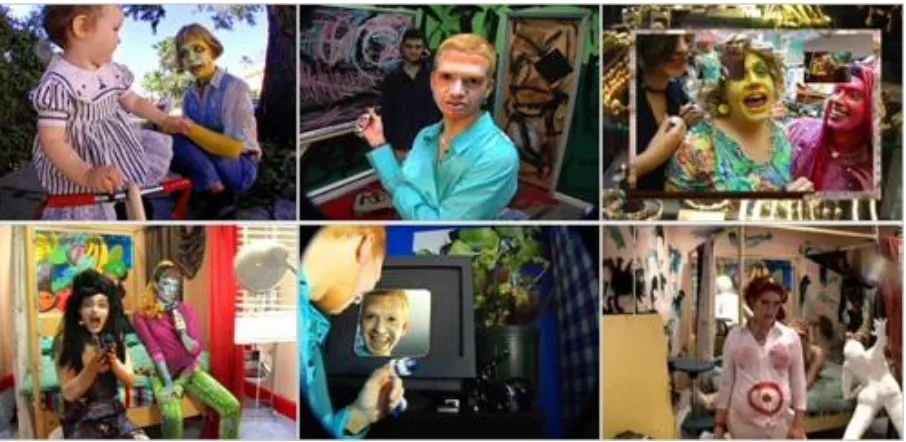
Fig. 1 Ryan Trecartin, video stills from,I Be Area, 2007.
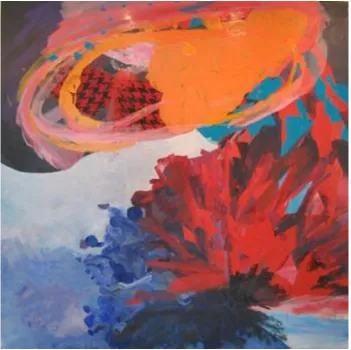
Fig. 2 Jessica Bizer, ThatWas the Weird Part, acrylic and mixed media on canvas, 2009, 80 x 80 in.
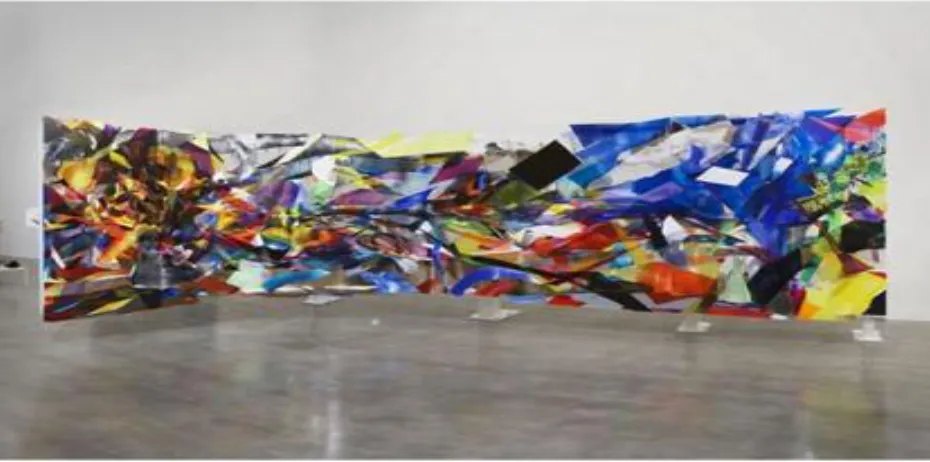
Fig. 3 Kristin Baker, Flying Curve, Differential Manifold, acrylic on acrylic with powder coated steel, freestanding structure, 2007, 96 x 360 in.
Fig. 4 Jessica Bizer, acrylic, fabric and foam on canvas, Love is a Serious Business, 2008, 50 x 50 in.
Fig. 5 Lisa Sanditz, The Road to Decoration City, acrylic on linen, 67 X 86 5/8 in. 2008.
Fig. 6 Morris Louis, Alpha-Phi, from the Unfurled Series, acrylic on canvas, 1961, 180 x 10 in.
v
ABSTRACT
My work concerns the divergent narratives created by fusing varied, often
conflicting, textures, colors and fabrics, into a tenuous order. I intend for these otherwise
clashing materials to create drama that is simultaneously enthusiastic, epic and
ambiguous. While this media's formal properties re an important component of my work,
the material's cultural and art-historical associations are also are critical ingredient.
In this thesis, I will explore the use of the varied collage material, hierarchical
compositions and contemporary influence of 19th Century Romantic themes as they
relate to forming a variety of distinctly contemporary narratives in my compositions. I
will investigate how my artistic point-of-view is informed by art-history, irony and the
work of contemporary painters. Finally, I will discuss how my work engages a
contemporary version of the Sublime.
Keywords: Painting, Contemporary Sublime, Romantic, Fred Tomaselli, Lisa Sanditz,
1
INTRODUCTION
"My hope is that the viewer will, like me, become engaged in a struggle between
viewing a static fiat accompli and feeling as if they were participating in a series of
contradictions and narratives that come to no settling conclusion. I feel that my work
both experiences and argues for the necessity of both." - Jessica Stockholder1
I love the theatrics that result from creating a relationship, however absurd,
among otherwise clashing materials. My work is driven by the drama of fusing varied,
often conflicting, textures, colors and fabrics, into a tenuous order. The formal properties
of these elements play a decisive role in the overall appearance of the work. However,
the optical qualities of the imagery are only a partial feature of its identity. The media in
my work is also defined by the associations gathered from its use in the art and popular
culture of the 20th and 21st Centuries. This issue is a necessary feature of the visual
language I have inherited. In my work, I compound a material's art-historical and cultural
it's formal characteristics, resulting in multi-layered, complex and vacillating narratives. I
condense these themes into highly hierarchical, but fantastical landscapes. This
compositional structure balances the tangle of sensations expressed by the material,
but is consistent with its energy. My goal is for these scenes to represent personal
fantasy worlds, where a variety of visual elements simultaneously play and conflict,
forming enthusiastically divergent narratives. I agree with how Massimiliano Gioni, the
2
issue. Gioni uses the multilayered complexity of Ryan Trecartin's video art (fig. 1), and
the work of the artist's peers, as a reference. According to Gioni, the distinctly
contemporary theatrics in the artist's work, "is a reflection of the world they have
inherited, drowning in information and images. It's as if information is speaking the
characters rather than the other way around."2
Fig. 1 Ryan Trecartin, video stills from, I-Be Area, 2007
The vocabulary of my work and the contemporary art that I admire, reflects this
reality. In contemporary painting, even the most basic stylistic ingredients, such as a
specific brushstroke, color or pattern have art-historical and cultural associations which
compound its purely visual characteristics. In the first section of my thesis, I explain how
specific qualities of particular materials feed my paintings' rambunctious drama. In the
second part of this paper, I discuss how the theatrical interactions among a work's
3
interested in exploring such themes through a contemporary adaptation of a 19th
Century Romantic point-of-view. I address this idea in the third section. I am particularly
influenced by contemporary artists, such as Lisa Sanditz, who apply the exaggerated
themes of Romantic landscapes to contemporary settings. Hudson River School
painters, such as Frederick Church, are a major influence on her work3
The Romantic concept of the sublime also informs my artistic point-of-view. I
discuss this issue in the conclusion of this paper. Traditionally defined as an
overwhelming emotion resulting from a viewer's simultaneous experience with the
vastness, beauty and danger of the natural world, the 19th Century Romantic idea of
the sublime has a contemporary equivalent in the mysterious experience of viewing
images on computer screen. I am influenced by contemporary artists, such as Fred
Tomaselli, who engage this theme.
BODY OF THESIS
Interaction of Disparate Materials as a Source of Drama
I use a visual language in which even the most basic stylistic forms, such as
specific brushstrokes, colors or patterns, are often loaded with art-historical and cultural
associations. When I integrate artistic elements with one another in such an
environment, I intend for their disparate formal and cultural properties to collide and
conflict. The resulting activity is a critical source of action in my work. This issue is
demonstrated by the expressive orange brushstrokes and hounds-tooth fabric in That
4
Fig. 2 Jessica Bizer. ThatWas the Weird Part, acrylic and mixed media on canvas, 2009, 80 x 80 in.
The activity created by the orange loops of paint and black and red fabric at the
top-right composed of celebratory, optimistic colors and attractive smooth textures. My
goal is for the whirlwind's overall energy to be positive, but slightly disordered. This area
of the canvas receives some additional chaotic sensations from the squares of
hounds-tooth fabric, located towards the bottom-left of the orange loop. These patches of fabric
are formally incongruous with the brushstrokes and are in danger of existing only as
superfluous collage material. However, I intend for the fabric's specific angle to
contribute to the whirlwind's outward energy. Additionally, the red paint stained on the
5
Based on this passage, I intend for the fabric squares have a comically absurd, rather
than pointless role in the piece. While this scene contains some feelings of anxiety,
communicated by the potentially threatening dark sky or the pattern's lightning bolt like
design, the work's luscious formal qualities substantially outweigh its negative emotions.
There are additional sources of anxiety in the work, contributed by the turbulent
art-historical past of expressive brushwork. These forces do not affect the piece drastically
enough to overcome the scene's exuberance, but they do intensify the composition's
sense of energy and conflict. For a present-day audience, a contemporary gestural
painting often references major expressive painting trends of the 20th and 21st
Centuries, such as Abstract Expressionism of the 1940s and 50s, Neo-Expressionism of
the late 1970s and mid-80s, and early 21st Century revivals of gestural painting 4.
While each of these movements represents a distinct conceptual goal, these styles
share many historical and critical concerns. Given this background, I intend for an
audience to compare the goals of a present-day expressive work, such as That Was
theWeird Part (fig.2 ), to the history and critical opinion concerning previous gestural
art. Expressive painting often engages a turbulent range of point-of-views. These critical
perspectives can influence viewers' experience with the painting, and contribute to the
theatrics occurring in the piece.
One of the primary reference points for this issue is early Abstract
Expressionism. During that era, many artists desired to rid painting of illusionistic and
symbolic space, reducing an artwork's subject to the formal exploration of materials. At
the beginning of the movement, many viewers believed the style represented a
6
contemporary viewers may think that the marks of That Was the Weird Part (fig. 2),
demonstrate literal reverence to the goals of Abstract Expressionism. However, gestural
painting has experienced vacillating critical opinion since then. The turbulent past of this
style may lead an audience to bring both negative and positive associations to a
contemporary expressive work. For many viewers, these conflicting ideas may increase
the tension and drama they sense in such a painting. A primary reference point for the
degraded opinion of expressive work is the mid-1950s. By this time, many viewers
believed the style's once fresh sensibility had become mundane and irrelevant. Given
the tendency for many contemporary artists to appropriate outdated styles for ironic
purposes, a viewer of That Was the Weird Part (fig. 2) may believe that the work's
expressive style is satirical or sarcastic. The painting's suggestions of irony are
deepened by the negative opinion surrounding a more recent expressive movement,
Neo-Expressionism. This style was a revival of gestural painting that occurred from the
mid-1970s through the mid-1980s. Adherents of Neo-Expressionism sought to revive
personal expression in an art world that, in their perception, wrongly favored a more
somber, conceptual aesthetic. Like Abstract Expressionism, the style was initially
regarded by many as an intrepid development in painting. However, after several years
of popularity, Neo-Expressionism experienced a downgrade in critical opinion. As with
earlier expressive work, many viewers of Neo-Expressionism were "fed up with all the
heroic, high-ticket posturing" associated with the style. Given this critical demotion of
gestural painting, audiences may believe that I am defiantly indulging in now cliché,
mid-century tastes. However, viewers may assume that I am naive of the expressive
7
luscious formal quality. It is mostly, and am using gestural marks for strictly formal
purposes. But, most critically, recent negative opinions regarding expressive painting
may further viewers' perception that I am using gestural marks for ironic purposes.
While I do sincerely enjoy the formal appearance of expressive marks, my
attraction to them is also based in irony. These marks have the potential to appear
dated and archaic when used in a contemporary painting. I enjoy exploring this risk in
my work. It is my intention for such marks to contain a potential for failure. Such an
issue increases the level of tension in my compositions-- necessary foil for the piece's
dominant celebratory characteristics. I agree with how this issue is explained by Susan
Sontag in Notes on Camp. In this essay she describes the appeal of "camp", a stylistic
element that knowingly does not conform to contemporary good taste. "Camp is a vision
of the world in terms of style-- but a particular kind of style. It is the love of the
exaggerated, the "off", of things-being-what-they-are-not."6 I am influenced by
contemporary artists such as Kristen Baker, who address such issues in their work.
Much of the action in her 2005 painting Flying Curve, Differential Manifold (fig. 3),
concerns the conflicts created by her use of an expressive style. This issue compounds
the anxious, exploding energy, already provided by the formal aspects of her work. For
instance, viewers of the work may sense friction between the buoyant primary colors
and burdensome black shapes and grey background of the piece. Additionally, the blast
of sharp-edged shapes gives the composition a sense of chaotic, possibly dangerous
energy (the blast is inspired by a car crash, as are many of her paintings, however there
is not enough recognizable imagery in the piece for this subject to contribute to the
8
seductive, faceted feeling, a major part of its negative emotions comes from viewers'
potentially inconsonant feelings regarding expressive painting. Due to the negative
opinions attached to two of the most crucial recent expressive painting movements,
Abstract Expressionism and Neo-Expressionism, an audience may be surprised to see
a contemporary painting that is both successful and relevant, and fearlessly
demonstrates an expressive style.
Fig. 3 Kristin Baker, Flying Curve, Differential Manifold, acrylic on acrylic with powder coated steel freestanding structure, 2007, 96 x 360 in.
This is a contrast to many paintings by artists of the 1990s, such as Laura
Owen's7 Her work represents a painterly point-of-view, but lacks confidence to
demonstrate that the artist is committed to the style. Viewers of this piece could assume
that Owen's expressive intentions are ironic. Unlike Owen's work, Baker's Flying Curve,
Differential Manifold demonstrates expressive brushwork with confidence and vigor.
9
style is ironic. However, the expressive strokes in Baker's work represent more than a
simple reverence for gestural painting. She uses expressive brushwork in a manner that
conflicts with much of 20th Century art's conceptual goals. This element gives the piece
a fresh and relatively unconventional feeling. For instance, despite its prevailing
nonobjective style, Flying Curve, Differential Manifold has a deliberately glossy surface
that enthusiastically embraces illusionism and sensation. The smooth and reflective
texture of the piece maximizes the suggestion that the composition depicts an explosion
bursting with light. Additionally, the canvas is bent at the center of this activity, further
emphasizing the illusion of a space filled with exploding material. Baker's indulgence in
theatrics and illusionism bring the work into conflict with the traditional strict
formal goals of abstract painting. Also, this issue clashes with the objectives of much
20th Century art. Work at this time often deliberately avoided or subverted reference to
the outside world8. This issue plays an important role in creating the narratives of Flying
Curve, Differential Manifold and much of Baker's other work. I am inspired by her
distinctly contemporary use of grandiose emotion and illusion. These items are used in
an enthusiastic manner, but they are made more engaging for the conflict they introduce
to the piece. If her style were presented in a straightforward context, it would not have
the same power.
While irony plays a major role in contemporary art, the issue is also a critical
component of present-day popular culture. The ironic appreciation of otherwise
distasteful material (such as celebrity gossip magazines or failed clothing trends), allows
people to embrace cultural products they would otherwise ignore or reject. For a broad
10
mass media. The camp perspective is so pervasive, that many cultural products with
ironic appeal were sincerely created to attract sarcastic reactions. I agree with Todd
Gitlin's explanation of the idea in his 2003 book, Media Unlimited. He states that irony
"began as a defense against the clutter that is the sum of all the image makers'
attempts to break through the clutter composed of all the other attempts," and has
become "itself a style that clutters the media system."9 Such an environment contains a
limitless potential for instability and absurdity. Such a setting is a significant influence on
my artistic point-of-view.
Narratives Created by the Hierarchical Compositions in My Work
Another important feature of my paintings are my work's hierarchical, but
fantastical compositions. Most of the time, the structure of my work is based on a
landscape. I intend for this organized compositional format to provide a balance to the
painting's exaggerated emotions. The resulting multi-layered landscapes are settings in
which a variety of visual ingredients simultaneously play and conflict, forming
enthusiastically divergent narratives. Additionally, the anachronistic quality of a
landscape-style composition adds another layer of tension to my work. This hierarchical,
illusionistic structure conflicts with traditional modernist ideas regarding
representation10. The hierarchical structure of one of my paintings, Love is a Serious
Business (fig. 4) both balances and exaggerates the fantastical nature of the work. This
painting concerns an ambiguous, but epic event composed of diverse and exuberant
streams of energy. For instance, the red and white lines blasting from the top of the
canvas could represent a variety of events. Among other scenarios, this scene could
11
gas or liquid. Additionally, the red and white blast could represent a massive explosion
occurring in the distance or directly on top of the fabric. It is also possible to imagine the
oval-shaped material as a source of energy for this explosion. Or, this fabric could
represent a horizon that is completely separate from the blast. The slope of this activity
suggests even more possibilities for the work. For instance, viewers may believe these
angled images are a fantastical landslide or avalanche, occurring either on top of, or
behind the red, orange and blue collage material.
12
Among other scenarios, this scene could illustrate a vivid sunset occurring on horizon
that is composed of some kind of bubbling gas or liquid. Additionally, the red and white
blast could represent a massive explosion occurring in the distance or directly on top of
the fabric. It is also possible to imagine the oval-shaped material as a source of energy
for this explosion. Or, this fabric could represent a horizon that is completely separate
from the blast. The slope of this activity suggests even more possibilities for the work.
For instance, viewers may believe these angled images are a fantastical landslide or
avalanche, occurring either on top of, or behind the red, orange and blue collage
triangles below. These examples illustrate just a few of the varied narratives that I
intend for audiences to imagine. Without the organizing structure of the landscape,
viewers may imagine infinite events generated by this exuberant spectacle. However, I
intend for the scene's structure to limit such possibilities. There are three primary layers
in the work; the collage of foam shapes at the bottom, a collection of fabric ellipses in
the middle and a top composed of a tri-colored explosion. This traditional
landscape-inspired composition creates decisive borders for the work's fluid and ambiguous
activity. The painting's three layered organization suggests there is a sequence to the
work's epic drama. If the explosive activity of Love is aSerious Business was
presented in a random, rather than hierarchical manner, the work would lose many of its
fantastical associations. In this case, the painting would only be read as a generalized
field of activity, rather than a sequence of epic events. I also intend for the landscape
format to introduce illusionistic themes to the work.
This feature introduces additional conflict to the painting, given that the art
13
and Color Field. Both of these movements that avoided reference to the outside world in
favor of formal exploration. For instance, the burst of red and white lines at the top of
the canvas references the personal, intuitive style that characterized much abstract
painting from the late 1940s through the mid-50s. Additionally, loose bands of paint at
the bottom of the composition are often associated with the fluid and crisp appearance
of much Color Field painting, a movement of the early and mid-1960s that similarly
limited its subject matter to formal concerns11. For instance, the field of foam shapes,
located at the bottom of the composition, is a source of intense visual activity. The
interaction of yellow and green, in the center creates tension in the work by
simultaneously expressing movement and frozen forces. Additionally, the smooth
character of these marks and pastel bands of color, vividly contrast with the collages'
erratic and fragmented sensibility. This strongly non-representational energy for Love
is a Serious Business, conflicts with the painting's landscape structure. The piece's
composition suggests that its formal activity is occurring in an imaginary setting, such as
a planet, horizon or atmosphere. Love is a Serious Business simultaneously combines
two traditionally clashing artistic motivations. For many viewers, these opposing feelings
are an additional source of spectacle in the composition.
Additionally, I intend for the blankness of the painting's abstract forms to heighten
the work's mysterious and fanciful nature. For instance, if the composition's mosaic-like
pastel section contained descriptive landscape forms, such as trees or buildings, the
piece would suggest a more narrow range of narratives for the viewer. However, I
intend for the emptiness this area to present viewers with the freedom to imagine more
14
Love is a Serious Business are a fundamental source of the work's mysterious
sensibility. I am inspired by contemporary painters, such as Lisa Sanditz, an artist who
depicts hierarchical abstracted landscapes in a similar manner. Her compositions,
luscious and fantastical scenes that often depict industrial or commercial architecture,
contain a powerful tension between sprawling formal exploration and representation.
She "conveys less in literal quantity than in scintillating panoramas of unfurled paint and
perspective."12 The "unfurled" color of her paintings, described in a Modern Painters
review, connects Sanditz's work to the strictly formal concerns of Morris Louis's series,
also titled "Unfurled" (fig. 5). This issue demonstrates how strongly Sanditz's work
references the purely visual activity that composed much mid-20th Century abstraction.
The Road to Decoration City (fig. 6) is one painting by Sanditz that powerfully
represents the dramatic potential of combining formal exploration with a traditional
landscape format. For instance, the brown and green bands that run diagonally across
the work have distinct formal qualities that contribute to the painting's narrative. They
contain a vibration between frozen and active activity that energizes the composition
through pure visual effects, rather representational forms. However, Sanditz uses these
bands to construct the illusion of mountains and roads. I am interested in how she
combines the traditionally incongruous worlds of abstract and representational art.
Additionally, the relatively blank nature of these undulating bands increases the
potential interpretations of In The Road to Decoration City. I am influenced by how
Sanditz uses this abstract device to create additional possibilities for the work. For
instance, the wavy green bands ambiguously suggest that a road or highway is crossing
15
or range of hills that divides the land. Whatever the scenario, the vibrating energy of
these bands suggests this path continues infinitely. I am inspired how the
non-representational blankness of these stripes actually creates more potential narratives in
The Road to Decoration City, than if the bands of color contained additional realistic
information. Had these stripes exhibited representational details, such as trees or cars,
viewers would be influenced by these clues. This audience would have restricted space
on which to project varied narratives. Rather than simply exist an empty space, the
abstract forms of The Road to Decoration City are fundamental to the work's sense of
mystery and fantasy.
16
Fig. 6 Lisa Sanditz, The Road to Decoration City, acrylic on linen, 2008, 67 X 86 5/8 in.
Connection to 19th Century Romanticism in Contemporary Painting
I intend for the fantastical and epic nature of my compositions represents a
contemporary adaptation of the 19th Century Romantic point-of-view. The Romantic
artists of the 1800s explored the potential for extracting grandiose themes from their
everyday environment, which was dominated by the natural world. Many artists at the
time perceived this landscape as mysterious and uncontrollable 13.
Superficially, the content of Sanditz's work , and my own paintings, has
little in common with threatening imagery and often religious intentions of traditional
Romanticism. However, there are important similarities between the two worlds. Like
the wilderness of the 19th Century, the contemporary aesthetic universe has many
17
sensations in the landscape of Chinese factory towns. These cluttered and densely
packed landscapes, are often a subject for her work. The artist cites Hudson River
School painters, such as Frederick Church, as an important inspiration for constructing
such paintings. For Sanditz, the grandiose style of American Romantic painters, such
as Church, has a contemporary application. According to Sanditz, such a compositional
is appropriate for condensing the "the fractured way we experience things- going to a
place and then revisiting it through photographs of that experience or seeing it on a
Web site or flying above it?I'm trying to get all the different angles that we access things
into one space."14
C
ONCLUSION
The contemporary adaption of Romantic themes extends to present-day artists'
engagement of the Sublime. The 19th Century view of the Sublime is traditionally
defined as an overwhelming emotion resulting from a viewer's simultaneous experience
with the infinite terror and beauty of the natural world. The world of digital imagery
contains a contemporary version of these feelings. This characteristic of modern life has
a major influence on my work.
With no reference in the physical world, the existence of digital imagery, such as
the text and images that appear on a computer monitor, necessarily engages the realm
of imagination. Interacting with this fantastical universe is a necessary ingredient of my
everyday experience, and is a vital source of the imagery I superimpose on my work.
18
seamlessness and completeness. Such a setting provides a fertile ground for the
vibrating drama communicated by my paintings' brushstrokes and collage material. I
agree with Jeremy Gilbert-Rolfe's explanation of the idea in his 1999 book, Beautyand
the Contemporary Sublime. He says "a contemporary sublime might, then, have to
engage an environment in which multiplicitous signification...is not only the norm but the
model, and where the issues are not the incomplete and the rough, but the intersection
of differences."15
These "intersections" are the subject of my work and much of the contemporary
artwork that I admire. I am influenced by how Fred Tomaselli's work, such as Airborne
Event (fig. 7) engages this issue. The work is fanciful and kaleidoscopic in a manner
that references the fantastical and sublime nature of the everyday visual environment.
The glowing and smooth quality of the individual collage items references the
completeness and seamlessness associated with digital imagery. This sensation is
deepened by the impersonal but luscious nature of the painting's glossy surface.
Viewers could imagine the substantial fields of black shiny space as the magical, but
passive presence of a computer screen. The work's condensed perspective also
contributes to this idea. While there are some references to nature in the work, such as
the collage material that pictures birds, leaves and flowers, these images have more in
common with the digital world than the natural environment; they represent nature from
the point-of-view of digitally mass-produced stickers, rather than actual references to
nature. Additionally, the vast volume of these images suggests that they are an ordinary
part of experience, rather than each existing as a unique product of nature. The images
19
sublime. However, the aesthetics of the scene relate more to the blankness16 of a
computer monitor than the vastness of a Romantic landscape. The suggestion of empty
digital space is a defining property of the contemporary sublime17. This element
is mystical and otherworldly, but is also grounded in the everyday experience of viewing
images and text on a computer screen. I agree with Tomaselli's belief that his "paintings
are windows to another world, as a way to lose self in the 'oblime' an experience formed
by a mix of the oblivious and the sublime."18
.
20
This issue motivates me to contain my exuberant, imaginary-based scenes
within efficient, compact compositions- a configuration in which the physical and
imaginary worlds are infinitely engaged in a playfully epic battle over the viewer's
21
REFERENCES
1. Brockhaus, Christoph and Müller-Tamm, Pia .Jessica Stockholder. Duisburg, Gemany: Wilhelm Lehmbruck Museum, 2003.
2. Kennedy, Randy. "His Nonlinear Reality, and Welcome to It."The New York Times. 1 Feb 2009: AR 1.
3. Sheets, Hillary. "Strip Malls in Paradise." ArtNews, April, 2007.
4. Ryan, David. "Introduction. "Talking Painting: Dialogues with twelve contemporary abstract painters. New York: Routledge, 2002.
5. Ibid.
6. Sontag, Susan, Notes on Camp. 1964. Accessed online,
http://www9.georgetown.edu/faculty/irvinem/theory/Sontag-NotesOnCamp-1964.html
7. Benjamin Weissman, "Laura Owens," Frieze Magazine . June-August 2003.
8. Harris, Jonathan. Critical Perspectives on Contemporary Painting. Chicago: University of Chicago Press, 2004.
9. Gitlin, Todd. Media unlimited: how the torrent of images and sounds overwhelms our lives. New York: Macmillan, 2003.
10. Ryan, David. Ibid.
11. Harris, Jonathan. Ibid.
12. Gilbert, Alan. "Lisa Sanditz: CRG Gallery." Modern Painters, January 2009.
13. Vaughan, William. Ibid.
14. Sheets, Hillary. Ibid.
15. Gilbert-Rolfe, Jeremy. Beauty and the Contemporary Sublime, New York,: Allworth Press, 1999.
16. Gilbert-Rolfe, Ibid.
17. Ibid.
22
VITA
Jessica Bizer (Rosin) was born in Seminole, Florida in 1979. She received her
B.S. in Journalism from Boston University in 2001. Bizer took studio art classes at The
City University of New York, Hunter College from 2003-2005, concentrating in painting.
She is a member of the Good Children Gallery in New Orleans. Bizer currently lives and