IRANIAN JOURNAL OF DIABETES AND OBESITY, VOLUME 10, NUMBER 4, WINTER 2018 194
Effectiveness of Compassion- Acceptance and Commitment Combined
Therapy with Cognitive-Behavioral Therapy on Interpersonal Forgiveness in
Female Patients with Type II Diabetes
Shahin Khayatan1, Asghar Aghaei2*, Mohammadreza Abedi3, Mohsen Golparvar4
Introduction
iabetes is a heterogeneous group of metabolic diseases characterized by chronic increase in blood glucose and metabolic disorders of carbohydrates, fat and
protein because of insulin secretion or insulin action insufficiency (1,2). Diabetes has a negative impact on diabetic women and they
D
1. PhD Student in Psychology. Department of Educational Science and Psychology, Isfahan (Khorasgan) Branch, Islamic Azad University, Esfahan, Iran.
2. Professor, Department of Educational Science and Psychology, Isfahan (Khorasgan) Branch, Islamic Azad University, Esfahan, Iran.
3. PhD in Counseling Psychology, Professor in Counseling Department, Faculty of Educational Science and Psychology, University of Esfahan.
4. Associated Professor, Department of Psychology, Faculty of Psychology and Educational Science, Islamic Azad University, Esfahan (Khorasgan) Branch, Esfahan, Iran.
*Correspondence:
Asghar Aghaei: Professor, Department of Educational Science and Psychology, Isfahan (Khorasgan) Branch, Islamic Azad University, Esfahan, Iran.
Tel: (98) 913 110 1969
Email:[email protected]
Received: 19 January 2019
Accepted: 21 March 2019
Published in May 2019
Abstract
Objective: Diabetes is chronic and debilitating disease that affects
all aspects of a person's life. The purpose of this study was to compare the effectiveness of compassion focused (CFT)-acceptance commitment (ACT) combined therapy with cognitive-behavioral therapy (CBT), on interpersonal forgiveness in women with type II diabetes.
Materials and Methods: This was of quasi- experimental study
on three groups (CFT-ACT combined therapy, a
cognitive-behavioral and a control group) and three stages (pre-test, post- test and follow up). Among diabetic women population, 47 patients were selected purposefully and randomly assigned to three groups. Tow experimental groups (CFT- ACT & CBT) received 120 minutes’ sessions of CFT- ACT and CB for10 weeks. The control group did not receive any treatment .Data were analyzed by repeated measures analysis of variance using SPSS-24 software.
Results: The results showed that the scores of experimental group participants in the post test of CFT-ACT and CBT improved significantly compared to the control group in all three components of forgiveness, including reconnection and revenge control, resentment control and realistic understanding (P-value: 0/000). The experimental group of the combined therapeutic model was more effective than the CBT group in the two components of resentment control and realistic understanding.
Conclusion: Based on the findings, the combination therapy of
CFT- ACT and CBT can be used to promote reconnection and revenge control, resentment control and realistic understanding in diabetic patients.
Keywords: Compassion-focused therapy, Acceptance and
Commitment therapy, Cognitive Behavioral Therapy
IRANIAN JOURNAL OF DIABETES AND OBESITY, VOLUME 10, NUMBER 4, WINTER 2018 195
have a negative attitude and feeling toward their illness (3).
Emotional and cognitive changes caused by diabetes may change the perception of interpersonal relationships (4). Forgiveness is positively related to mental health (5). Forgiveness is a deliberate choice in which one decides to abandon his or her right to revenge and anger toward someone else and even treats him generously and kindly. In a study on women who were abused, the results showed that forgiveness is an effective way to re-establish mental health in these individuals (6).
According to the basic principles of
compassion-focused therapy (CFT) external thoughts, factors, images, and external alleviative behaviors should be internalized; so that the human mind as it responds to external factors becomes calm facing with this interior world (7).
Past studies on a reliable scale of self- compassion for diabetic patients showed that self-compassion was associated with reduced suffering and increased internal resistance and decreased HbA1c in diabetic patients (8,9) Since acceptance and commitment therapy (ACT) emphasizes on acceptance, it can be beneficial in short term treatment of diabetes because patients can consistently become compatible with the facts and events that are a very natural part of the disease (10). The other study found that acceptance and commitment therapy could be useful for psychological functioning in patients with type II diabetes (11). Mellton (12) showed that acceptance and commitment based interventions can be effective in increasing the self-efficacy of diabetic patient. Adding compassion based meditations to the ACT protocol is potentially beneficial (13).
The ACT increases self-compassion and reduce in the suffering from mental disorders and depression symptoms (14). Cognitive-behavioral therapy (CBT) is one of the major treatments for chronic diseases therefore were included it to compare the efficacy in this study. In this approach, the patient is helped to
identify and refine the false beliefs about him, the world and the future to prevent the creation of negative emotions and behaviors. Based on the mind-body model in diabetic patients, cognitive distortions and negative automatic thoughts in diabetic patients are responsible for the development of disease complications and immunological changes (15,16). Also, a study showed that CBT was effective in improving the quality of life and reducing stress and blood sugar level in type II diabetic women (17).
Since managing the interpersonal relationships of women with diabetes could help them to effectively manage and control conflicts in interpersonal relationships and feelings, this combination therapy package (CFT+ACT) can create healthy and fresh emotions in women with type II diabetes mellitus who has
experienced hurts in interpersonal
relationships. Based on the above discussion, it can be said that CFT+ACT can help women with type II diabetes to confront with interpersonal problems and improve their interpersonal relationships.
In this regard, this research is aimed to development and comparison of CFT - ACT with CBT on interpersonal forgiveness in women with type 2 diabetes.
Materials and Methods
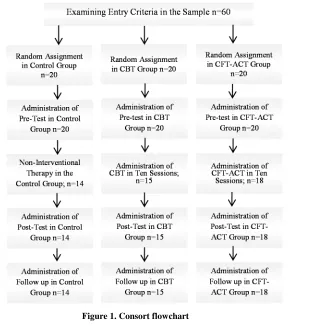
This was of quasi- experimental study with three groups (CFT-ACT, CBT and a control group) and three stages (pre-test, post-test and follow up). Studied sample consisted of all women with type 2 diabetes who were members of Shahid Shabani diabetes center in Isfahan during spring and summer of 2017. Among 14000 patients referring to Shahid Shabani diabetes center, based on diabetes prevalence rate in Iranian females were 7500 (18).
Of these 60 females were purposefully selected considering inclusion and exclusion criteria.
After obtaining informed consents from all the participants assigned randomly through lottery
method in 3 groups including two
196 IRANIAN JOURNAL OF DIABETES AND OBESITY, VOLUME 10, NUMBER 4, WINTER 2018 experimental groups (CFT-ACT and CBT )
and one control group (20 in each group) Then two experimental groups (CFT- ACT and CBT) received 120 minutes sessions of CFT- ACT and CBT in 10 weeks, control group did not receive any treatment.
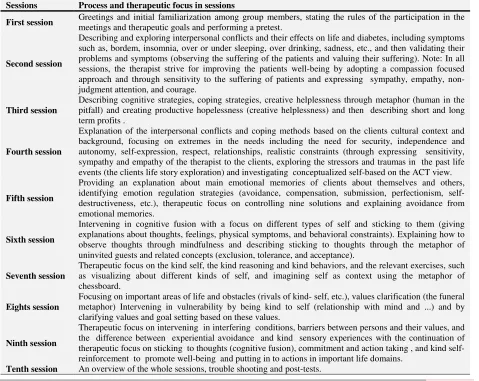
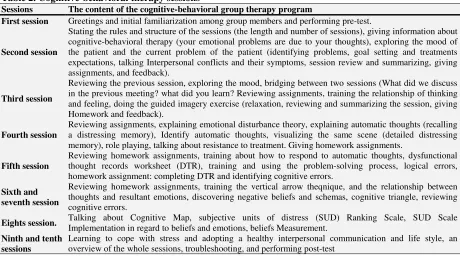
In the process of conducting the research, participants in each groups responded to the forgiveness questionnaire, once before the start of the treatment (pre-test phase), once after the end of the treatment (post-test phase) and once two month after the end of the treatment (follow up phase). A summary of the CFT-ACT combination therapy sessions and cognitive-behavioral therapy are presented in Tables 1 and 2. Inclusion criteria included: the patient's willingness to participate in research and giving informed consent, having minimal literacy skills, age range 30-60. The exclusion criteria were as follows: refusal to participate in study, having severe psychiatric disorders, the occurrence of any other chronic diseases, such as kidney, liver, cardiovascular diseases, etc., absences of more than three sessions, and parallel psychological treatment.
After conducting research, due to the absence for more than three sessions, the researchers decided to remove 2 patients from the CFT-ACT combination therapy, 5 patients from the CBT group and 6 patients from the control group.
Demographic information included; age, education, occupation, and duration of the disease. Interpersonal Forgiveness Scale (IFI) is a 25 items questionnaire prepared by Ehshamzadeh et al. to measure interpersonal forgiveness in Iran. It has 3 subscales of
reconnection and revenge control (12
questions), resentment control (6 questions) and realistic understanding (7 questions). Questions 19 to 25 are responded to on a four Lickert scale (1=strongly disagree, 2=disagree, 3= agree and4= strongly agree) other questions Are reversed. In this way, the maximum score for the entire scale is 100 and at least 25. Obtaining a higher score on this scale indicates a high ability to forgive others mistakes.
Reliability coefficients reported by
Ehteshamzade et al. Based on the test, re-test coefficient for the whole scale and its subscales were 0.71, 0.70, 0.68 and 0.58, respectively, and based on Cronbach's alpha were 0.80, 0.77, 0.66 and 0.57, respectively (19). In this research, the reliability of its sub-scales based on Cronbach's alpha was 0.80, 0.82 and 0.82, respectively.
This study is part of the PhD thesis entitled “development a combination therapy package
of compassion focused therapy with
acceptance and commitment therapy (specific for diabetic women) and to compare its effects on depression, psychological well-being, interpersonal forgiveness and glycosylated hemoglobin with cognitive behavioral therapy in women with type 2 diabetes”. After the adoption of proposals in 95.10.28, the study was approved by Islamic Azad University of Isfahan (khorasgan Branch), Ethics Committee of biomedical research with the license number of IR. IAU. KHUISF. REC. 1397.037. Also this research is registered at the Center of clinical trial registration of Iran (IRCT) with
the code of IRCT20180607039996N1.
Statistical analysis
The following steps were conducted in the qualitative part of the research: searching 26 articles and 3 books with compassion focused therapy and acceptance and commitment therapy (ACT) titles and interviewing 13 diabetic patients participating in the research. Then the content classification (coding) of the collected materials in the first stage was
carried out and conceptual-content
subcategories focused on compassion and ACT therapies were formed, also in this specific package for type II diabetic women, their needs and conditions were investigated based on interviews with them . Evidence was found for content appropriateness via an agreement coefficient of (0.82) between raters. The quantitative part: in the second stage of research, after collecting the data in three stages: pre-test, post-test and follow-up, to test the research hypotheses, data were analyzed using descriptive and inferential methods. At
IRANIAN JOURNAL OF DIABETES AND OBESITY, VOLUME 10, NUMBER 4, WINTER 2018 197
the level of descriptive statistics, the central tendency and dispersion indexes (mean, standard deviation and standard deviation) was used, in inferential statistics, statistical assumptions(normal distribution of variables, the equality of error variances) were at first analyzed and Independent assumption was established, then repeated measures of variance analysis, was used to analyze the research data. These analyzes were performed using SPSS software (version 24). To determine the difference between the groups and to compare the two groups Bonferroni post hoc test was used.
The specific package for women with type II diabetes, have been developed in this study on the basis of interviews with diabetic women, and investigating their needs and conditions. A five –member expert panel with expertise in
psychological treatments assessed the
therapeutic package to ensure its content and structure appropriateness. The agreement coefficient of the mentioned raters was 0.82. The compassion focused therapy package based on Gilbert's theory of compassion therapy (20), acceptance and commitment therapy based on the Vowels and Sorrel (2007) and Forman & Herbert (2008) (21-22) treatment protocol and cognitive-behavioral therapy based on the Free Cognitive group Therapy (2005) (23) were used. The treatment sessions and applied treatments are presented in Tables 1 and 2.
Results
Based on descriptive findings, in terms of education, 34% had an elementary degree (n=16), 48.9% had a high school diploma (n=23), and 17% had advanced degree (n=8). 12.8% of the sample was employed (n=6) and
Table 1. Treatment sessions of CFT-ACT combined therapy.
Process and therapeutic focus in sessions Sessions
Greetings and initial familiarization among group members, stating the rules of the participation in the meetings and therapeutic goals and performing a pretest.
First session
Describing and exploring interpersonal conflicts and their effects on life and diabetes, including symptoms such as, bordem, insomnia, over or under sleeping, over drinking, sadness, etc., and then validating their problems and symptoms (observing the suffering of the patients and valuing their suffering). Note: In all sessions, the therapist strive for improving the patients well-being by adopting a compassion focused approach and through sensitivity to the suffering of patients and expressing sympathy, empathy, non- judgment attention, and courage.
Second session
Describing cognitive strategies, coping strategies, creative helplessness through metaphor (human in the pitfall) and creating productive hopelessness (creative helplessness) and then describing short and long term profits .
Third session
Explanation of the interpersonal conflicts and coping methods based on the clients cultural context and background, focusing on extremes in the needs including the need for security, independence and autonomy, self-expression, respect, relationships, realistic constraints (through expressing sensitivity, sympathy and empathy of the therapist to the clients, exploring the stressors and traumas in the past life events (the clients life story exploration) and investigating conceptualized self-based on the ACT view.
Fourth session
Providing an explanation about main emotional memories of clients about themselves and others, identifying emotion regulation strategies (avoidance, compensation, submission, perfectionism, self-destructiveness, etc.), therapeutic focus on controlling nine solutions and explaining avoidance from emotional memories.
Fifth session
Intervening in cognitive fusion with a focus on different types of self and sticking to them (giving explanations about thoughts, feelings, physical symptoms, and behavioral constraints). Explaining how to observe thoughts through mindfulness and describing sticking to thoughts through the metaphor of uninvited guests and related concepts (exclusion, tolerance, and acceptance).
Sixth session
Therapeutic focus on the kind self, the kind reasoning and kind behaviors, and the relevant exercises, such as visualizing about different kinds of self, and imagining self as context using the metaphor of chessboard.
Seventh session
Focusing on important areas of life and obstacles (rivals of kind- self, etc.), values clarification (the funeral metaphor) Intervening in vulnerability by being kind to self (relationship with mind and ...) and by clarifying values and goal setting based on these values.
Eights session
Therapeutic focus on intervening in interfering conditions, barriers between persons and their values, and the difference between experiential avoidance and kind sensory experiences with the continuation of therapeutic focus on sticking to thoughts (cognitive fusion), commitment and action taking , and kind self-reinforcement to promote well-being and putting in to actions in important life domains.
Ninth session
An overview of the whole sessions, trouble shooting and post-tests.
Tenth session
198 IRANIAN JOURNAL OF DIABETES AND OBESITY, VOLUME 10, NUMBER 4, WINTER 2018 87.2% were house keeper (n=41). The mean
and standard deviation age in CFT-ACT group was 51.05±4.37, in CBT group was 51.2 ± 5.63, and control group was 49.14±3.11. The mean and standard deviation for term of disease in CFT-ACT was 7±5.01, in CBT was 9.2±5.63, and control group was 11.85±7.15. As is shown in Table 3 the mean of reconnection and revenge control is equal to 29.4 in compassion focused therapy and acceptance and commitment therapy group in pre-test but has changed to 35.44 and 36.22 in post- test and follow up respectively.
Reconnection and revenge control is equal to 30.53 in CBT group in pre-test, but has changed to 37.2 and 37.4 in post- test and Follow up respectively.
Reconnection and revenge control is equal to
28.43 in control group in pre-test, but has changed to 32.5 and 33.21 in post- test and Follow up respectively.
In terms of resentment control, the mean of compassion focused therapy and acceptance and commitment therapy group was 14.5 in pre-test that changed to 24.72 and 25 in post-test and follow up respectively.
The mean of resentment control of CBT group was 14.4 in pre-test that changed to 20.93 and 21.46 in post-test and follow up respectively. The mean of control group was 16.93 in pre-test that changed to 17.50 and 17.64 in post-test and follow up respectively. The mean of realistic undrstanding is equal to 15.93 in compassion focused therapy and acceptance and commitment therapy group in pre-test but has changed to 26.66 and 26.33 in post- test Table 2. Cognitive-behavioral therapy sessions
The content of the cognitive-behavioral group therapy program Sessions
Greetings and initial familiarization among group members and performing pre-test.
First session
Stating the rules and structure of the sessions (the length and number of sessions), giving information about cognitive-behavioral therapy (your emotional problems are due to your thoughts), exploring the mood of the patient and the current problem of the patient (identifying problems, goal setting and treatments expectations, talking Interpersonal conflicts and their symptoms, session review and summarizing, giving assignments, and feedback).
Second session
Reviewing the previous session, exploring the mood, bridging between two sessions (What did we discuss in the previous meeting? what did you learn? Reviewing assignments, training the relationship of thinking and feeling, doing the guided imagery exercise (relaxation, reviewing and summarizing the session, giving Homework and feedback).
Third session
Reviewing assignments, explaining emotional disturbance theory, explaining automatic thoughts (recalling a distressing memory), Identify automatic thoughts, visualizing the same scene (detailed distressing memory), role playing, talking about resistance to treatment. Giving homework assignments.
Fourth session
Reviewing homework assignments, training about how to respond to automatic thoughts, dysfunctional thought records worksheet (DTR), training and using the problem-solving process, logical errors, homework assignment: completing DTR and identifying cognitive errors.
Fifth session
Reviewing homework assignments, training the vertical arrow theqnique, and the relationship between thoughts and resultant emotions, discovering negative beliefs and schemas, cognitive triangle, reviewing cognitive errors.
Sixth and seventh session
Talking about Cognitive Map, subjective units of distress (SUD) Ranking Scale, SUD Scale Implementation in regard to beliefs and emotions, beliefs Measurement.
Eights session.
Learning to cope with stress and adopting a healthy interpersonal communication and life style, an overview of the whole sessions, troubleshooting, and performing post-test
Ninth and tenth sessions
Table 3. Mean and standard deviation of forgiveness components in different stages of research
Components of forgiveness Phase Integrated therapy
Cognitive-behavioral therapy Control group Mean SD Mean SD Mean SD Forgiveness –reconnection
and vindictiveness
pre-test 29.4 4.14 30.53 14.4 28.43 3.76 post-test
35.44 2.38 37.2 3.05 32.5 4.09 follow up 36.22 2.67 37.4 3.09 33.21 2.52
Forgiveness- resentment control
pre-test
14.5 2.77 14.4 2.26 15.93 3.67 post-test
24.72 2.86 20.93 2.52 17.5 1.69 follow up
25.00 2.35 21.46 2.53 17.64 1.21
Forgiveness-realistically perception
pre-test
16.44 3.03 16.46 2.75 17.78 3.62 post-test
26.66 3.12 22.80 2.42 19.42 1.74 follow up
26.33 3.30 22.13 2.45 18.21 2.22
IRANIAN JOURNAL OF DIABETES AND OBESITY, VOLUME 10, NUMBER 4, WINTER 2018 199
and follow up respectively.
The mean of realistic understanding is equal to 16.46 in CBT group in pre-test but has changed to 22.08 and 22.13 in post- test and follow up respectively. The mean of realistic understanding control is equal to 17.78 in control group in pre-test, but has changed to 19.42 and 18.21 in post-test and Follow up respectively.
The results of repeated measures analysis of variance indicated that there is a significant difference in reconnection and vindictiveness (F= 61.418, df= 2, P=0001), in reconnection and revenge control (F= 61.418, df= 2,
P=0001), and in realistically perception (F= 0.977, df= 2.7) (Table 4).
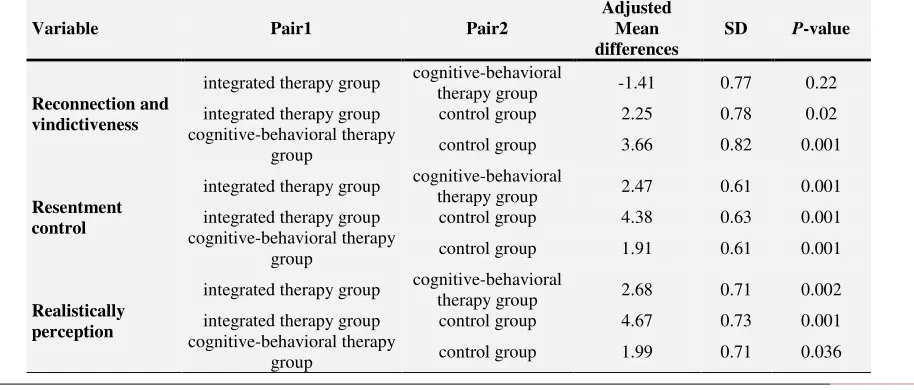
The results of the pairwise comparisons by the Bonferroni test after establishing significance of the results of the repeated measures variance analysis indicated that there exist a significant difference in reconnection and revenge control between CFT-ACT combined therapy and cognitive-behavioral therapy with the control group (P= 0.02 and P= 0.001)
respectively. But there is no significant difference between the two treatments. In resentment control, there is a significant difference between the CFT-ACT combined therapy and cognitive-behavioral therapy with the control group and between CFT-ACT combined therapy with cognitive-behavioral therapy (P= 0.001) In realistic understanding, there is a significant difference between CFT-ACT and combined therapy and cognitive-behavioral therapy with the control group (P=0.001, and P=0.036), respectively, and there is a significant difference between CFT- ACT combined therapy with cognitive-behavioral therapy at (P= 0.002) (Table 5).
Discussion
The findings of the study showed that the mean forgiveness scores of the experimental group (in all three sub-scales) were increased in comparison with the control group after participation in the combined therapy sessions of CFT-ACT and the cognitive-behavioral group that were sustained at follow-up.
Table 4. Results of repeated measure analysis of variance for forgiveness components (Sphericity Assumed) Component Source Type III sum
of squares df Mean square F P-value
Partial eta squared
Observed power Reconnection
and
vindictiveness
Treatment 1098.931 2 549.466 61.418 .000 .583 1.000
Treatment * test group design 34.964 4 8.741 .977 .424 .043 .298
Resentment control
treatment 1219.624 2 609.812 122.183 .000 .735 1.000
Treatment * test group design 400.055 4 100.014 20.039 .000 .477 1.000
Realistically perception
treatment 1018.289 2 509.145 89.023 .000 .669 1.000
Treatment * test group design 430.278 4 107.570 18.808 .000 .461 1.000
Table 5. Bonferroni post-test results related to forgiveness components pairwise comparisons
P-value SD
Adjusted Mean differences Pair2
Pair1 Variable
0.22 0.77
-1.41 cognitive-behavioral
therapy group
integrated therapy group
Reconnection and
vindictiveness integrated therapy group control group 2.25 0.78 0.02
0.001 0.82
3.66 control group
cognitive-behavioral therapy group
0.001 0.61
2.47 cognitive-behavioral
therapy group
integrated therapy group
Resentment
control integrated therapy group control group 4.38 0.63 0.001
0.001 0.61
1.91 control group
cognitive-behavioral therapy group
0.002 0.71
2.68 cognitive-behavioral
therapy group
integrated therapy group
Realistically
perception integrated therapy group control group 4.67 0.73 0.001
0.036 0.71
1.99 control group
cognitive-behavioral therapy group
200 IRANIAN JOURNAL OF DIABETES AND OBESITY, VOLUME 10, NUMBER 4, WINTER 2018 Comparing the post-test results of the two
experimental groups indicate that CFT-ACT
combined therapy showed superior
improvements in the two subscales of resentment control and realistic understanding. These findings are in line with the results of Mohammadi Khorshui and colleagues (11), Melton (12). One explanation of these findings could be that, diabetes is a chronic and debilitating disease, and it creates problems for the individual, thus affecting all aspects of the individual's life. Additionally diabetic female patients cannot fully accept their illness and spend their life with negative attitudes toward their illness. Diabetes is influential in the quality of life of both sexes, but this effect is more prominent in all aspects of women's lives.
In acceptance and commitment approach psychological inflexibility and annoying emotions and thoughts nonacceptance often reinforces these kinds of emotions and thoughts. ACT emphasizes on enhancing acceptance, awareness, being in the present moment and participation in committed
actions that are in line with personal values. Acceptance is considered as a central process in ACT that can be used as a means to decrease the impact of painful experiences on emotional and behavioral functioning.
On the other hand, CFT approach emphasizes on the self-kindness that plays an effective role in emotional relief, thus combining these two approaches can help close the treatment gaps in diabetic female patients. Here, the person learns to accept internal events and learns to walk in to them in a defused, accepting way in the service of his or her values and goals instead of trying to control them. Diabetic women undergoing this approach learn to identify their values and define goals along these values and then act on chosen goals despite the presence of distressing thoughts and feelings.
Educating and informing patients through
interpersonal forgiveness increased
interpersonal and social activities and
improved emotional life of these patients. The results of this study are in line with the results of studies conducted by Tanenbaum
Figure 1. Consort flowchart
IRANIAN JOURNAL OF DIABETES AND OBESITY, VOLUME 10, NUMBER 4, WINTER 2018 201
(8), Friis et al. (9) in regard to compassion focused therapy. Compassion therapy acts like a positive emotion regulation style and reduces one's negative emotions and replaces it with positive ones (24). Gilbert (20) has argued that compassion focused therapy can reduce the
psychological problems of clients by
increasing internal awareness, non- judgmental acceptance, empathy, and continuous attention to inner feelings. Compassion and forgiveness have a two-way relationship; each one is part of the other.
Considering that interpersonal relationships is one of the important areas of person's life is and the role of interpersonal forgiveness in
creating more positive behaviors in
relationships, as research suggests, higher compassion predicts more positive behaviors In interpersonal relationships (24). Therefore, it is necessary to identify influential factors to promote positive mental health. On the one hand, forgiveness can decrease harmful effects of interpersonal problems and interpersonal hurts, which leads to higher adjustment and healthy relationships. On the other hand, a greater willingness to forgive in interpersonal relationships causes sense of satisfaction, intimacy, and Commitment.
Due to the fact that there are no known research studies in regard to present research, similar research has been mentioned.
The aim of this study was to help diabetic female patients to accept their thoughts and feelings using the ACT techniques and improve their interpersonal relationships and conflict resolution, and becoming aware of their ineffective current plan and develop new plans in line with their values by compassion focused approach. This research attempts to fill the treatment gaps in the population of diabetic women. Conducting the research in this way and then documenting the evidence of the structure and process of CFT – ACT combined therapy along with documenting operational validity of this therapeutic package for the problems encountered by women with type II diabetes in interpersonal relationships, can set the stage for an extended use of
CFT-ACT combined therapy besides other
therapies. The results of the present study are consistent with the results of the Yadavaya studies (14) in the field of compassion focused therapy.
CBT was used for the comparison of compassion focused and ACT combined therapy in this study. The results of the effectiveness of the cognitive-behavioral approach in this study are in line with the results of studies by Hermans et al. (16), Dadras (17).
The CFT-ACT combined therapy achieved superior results in the two subscales of resentment control and realistic understanding than CBT group and enhancing interpersonal forgiveness.
One explanation is that in the resentment control it seems that compassion is described as part of forgiveness, which includes changes and healing of a person who is severely annoyed by another, and, from the compassion perspective of forgiveness involves a change in Thoughts, feelings and behaviors in annoyed person (25), and looking to the situation from the eyes of one who has annoyed the person (26).
Part of the ACT involves developing a passion for worthwhile models that gives meaning and purpose to life, from Steven Hayes's point of view (10), compassion can be in fact a value that result inherently from psychological flexibility model.
ACT is essentially process-oriented and obviously emphasizes on the promotion of acceptance of psychological experiences and commitment by utilizing meaningful, flexible and adaptive activities, regardless of the content of psychological experiences, a feature that is not present in the cognitive-behavioral approach (10).
The current study possessed some limitations, the first one being convenience sampling method.
Time limitation (2 months follow up) is the other limitation. Hence the present study recommends that future studies to employ more long-term follow-up tests to determine
202 IRANIAN JOURNAL OF DIABETES AND OBESITY, VOLUME 10, NUMBER 4, WINTER 2018 the duration of treatment effects. It is also
suggested that similar studies be conducted in other samples with different demographic characteristics in order to increase the generalizability of the results.
Conclusions
The finding of the present study showed that, the combination therapy of compassion focused– acceptance and commitment therapy and cognitive– behavioral therapy can be used to promote reconnection and revenge control, resentment control and realistic understanding in diabetic patients.
Acknowledgments
We would like to acknowledge management of treatment, the head of the educational research department, the dear chairman and staff of Shahid Shabani Diabetes Center in Isfahan, and all diabetic patients participating in the research.
Funding
This study is not funded by any research and/or academic organization.
Conflict of Interest
The authors declare that there are no conflicts of interest.
References
1. American Diabetes Association (ADA). National standards for diabetes self-management education.
Diabetes Care. 2005;28(l1):72-9.
2. Barnard KD, Lloyd CE, Holt RI. Psychological burden of diabetes and what it means to people with diabetes. InPsychology and Diabetes Care. 2012;1 -22. Springer, London.
3. Engum A. The role of depression and anxiety in onset of diabetes in a large population-based study. Journal of psychosomatic research. 2007 Jan
1;62(1):31-8.
4. Snoek FJ. Management of diabetes: Psychological aspects of diabetes management. Medicine.
2002;30(1):14-5.
5. Neff KD, Beretvas SN. The role of self-compassion in romantic relationships. Self and Identity. 2013
Jan 1;12(1):78-98.
6. Freedman S, Enright RD. The use of forgiveness therapy with female survivors of abuse. Journal of
Women's Health Care. 2015;6(3):2167-0420.
7. Gilbert P. Introducing compassion-focused therapy. Advances in psychiatric treatment. 2009;15(3):199 -208.
8. Tanenbaum ML, Adams RN, Gonzalez JS, Hanes SJ, Hood KK. Adapting and validating a measure of diabetes-specific self-compassion. Journal of Diabetes and its Complications. 2018;32(2):196 -202.
9. Friis AM, Consedine NS, Johnson MH. Does kindness matter? Diabetes, depression, and self-compassion: a selective review and research agenda. Diabetes Spectrum. 2015;28(4):252-7. 10. Hayes SC. The roots of compassion. Keynote
address presented at the fourth Acceptance and
Commitment Therapy Summer Institute, Chicago, IL. 2008.
11. Khashouei MM, Ghorbani M, Tabatabaei F. The effectiveness of acceptance and commitment therapy (ACT) on self-efficacy, perceived stress and resiliency in type II diabetes patients. Global
Journal of Health Science. 2016;9(5):18.
12. Melton L. development of an Acceptance and Commitment Therapy Workshop for Diabetes. Clinical Diabetes. 2016;34(4):211-3.
13. Tirch D, Schoendorff B, Silberstein LR. The ACT practitioner's guide to the science of compassion: Tools for fostering psychological flexibility. New Harbinger Publications. 2014.
14. Yadavaia JE, Hayes SC, Vilardaga R. Using acceptance and commitment therapy to increase self-compassion: A randomized controlled trial. Journal of contextual behavioral science.
2014;3(4):248-57.
15. Marshall Jr GD, Agarwal SK. Stress, immune regulation, and immunity: applications for asthma. InAllergy and asthma proceedings. 2000;21(4):241. OceanSide Publications.
16. Hermanns N, Schmitt A, Gahr A, Herder C, Nowotny B, Roden M, et al. The effect of a diabetes-specific cognitive behavioral treatment program (DIAMOS) for patients with diabetes and subclinical depression: results of a randomized
controlled trial. Diabetes Care. 2015;38(4):551-60.
17. Dadras S, Alizadeh S, Tavakkoli Mehr M, Ghavam F. The study of the effect of stress management through behavioral cognitive group therapy on the control of diabetes and the improvement of quality of life and stress in diabetic female patients in Urmia. The Journal of Urmia University of Medical
Sciences. 2015;26(8):704-15.
203 IRANIAN JOURNAL OF DIABETES AND OBESITY, VOLUME 10, NUMBER 4, WINTER 2018
18. World Health Organization. Guidelines for the prevention, management and care of diabetes mellitus. 2006.
19. Ehteshamzadeh P, Ahadi H, Enayati MS, Heidari A. Construct and validation of a scale for measuring interpersonal forgiveness. Iranian journal of psychiatry and clinical psychology.
2011;16(4):443-55.
20. Gilbert P. The origins and nature of compassion focused therapy. British Journal of Clinical
Psychology. 2014;53(1):6-41.
21. Vowles KE, Sorrell JT. Life with chronic pain: An acceptance-based approach (therapist guide and patient workbook). Unpublished manuscript. 2007. 22. Forman EM, Herbert JD. New directions in
cognitive behavior therapy: Acceptance-based therapies. General principles and empirically
supported techniques of cognitive behavior therapy. 2009 Feb 4:77-101.
23. Free M. Cognitive therapy in group: guidelines and resources for practice. Tranlated: Mohammadi and Farnam. Tehran: Roshd Publication, first edition. 2005:21. (In Persian).
24. Diedrich A, Grant M, Hofmann SG, Hiller W, Berking M. Self-compassion as an emotion regulation strategy in major depressive disorder.
Behaviour research and therapy. 2014;58:43-51.
25. Enright RD. Forgiveness is a choice: A step-by-step process for resolving anger and restoring hope. American Psychological Association. 2001. 26. Stuntzner S. Compassion & Self-compassion:
Exploration of Utility as Potential Components of the Rehabilitation Counseling Profession. Journal
of Applied Rehabilitation Counseling. 2014;45(4).