Chapter 12
Learning objectives
• After this lecture, you will be able to:
– state the purpose of the build phase, and its difference
from changeover and implementation;
– specify the different types of testing required for a
system at the software change level;
– select the best alternatives for changing from an old IS
system to a new IS system;
– recognise the importance of managing the
Management issues
• From a managerial perspective, this chapter
addresses the following questions:
– How should the system be tested?
– How should data be migrated from the old system
to the new system?
– How should the changeover between old and new
systems be managed?
System build and implementation
• System build: The creation of software by programmers involving programming, building release versions of the
software and testing by programmers and end-users. Writing of documentation and training may also occur at this stage.
• System implementation: Involves the transition or changeover from the old system to the new and the preparation for this
such as making sure the hardware and network infrastructure for a new system are in place; testing of the system and also human issues of how best to educate and train staff who will be using or will be affected by the new system.
• Maintenance: Deals with reviewing the IS project and acting on problems with the system.
Software quality
• The quality of software is dependent on two key
factors:
– the number of errors or bugs in the software;
– the suitability of the software to its intended
purpose; i.e. does it have the features
Examples of source of introducing errors
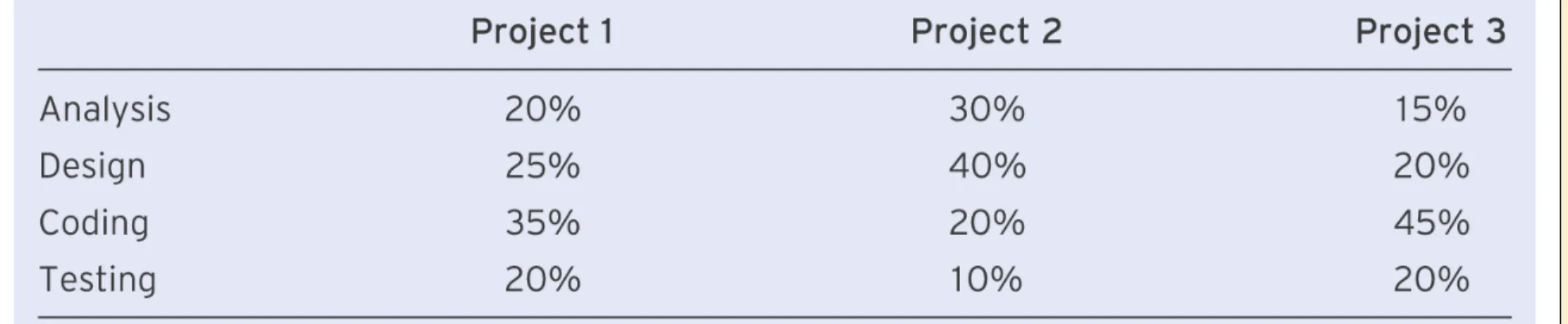
Ideal proportions of time for different
project phases
Table 12.2 Ideal proportions of time to be spent on different phases of a systems
Data migration
•
Data migration
: Data migration is the transfer of
data from the old system to the new system.
When data are added to a database, this is
known as populating the database.
•
Import and export
: Data can be ‘exported’ from
an old system and then ‘imported’ into a new
Testing
•
Test specification
: A detailed description of the
tests that will be performed to check that the
software works correctly.
•
Test plan
: Plan describing the type and
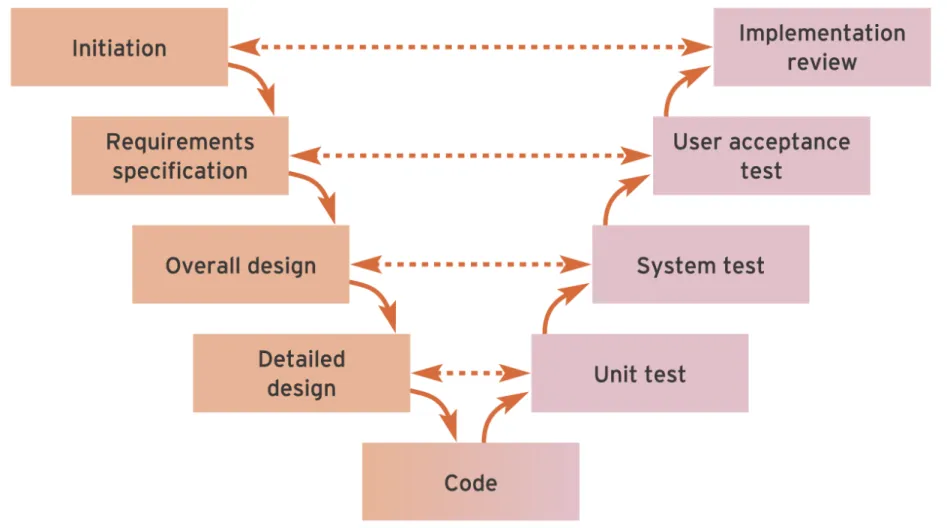
Figure 12.1 The V-model of systems development relating analysis and design
Maintenance
•
Maintenance
: Maintenance occurs after the
system has been signed off as suitable for users.
It involves reviewing the project and recording
Post-implementation review
•
Post-implementation review
: A meeting that occurs
after a system is operational to review the success of
the project.
• The review could include the following:
– faults and suggested enhancements with agreement
on which need to be implemented in a future release;
– success of system in meeting its budget and timescale
targets;
– success of system in meeting its business
requirements – has it delivered the anticipated benefits
described in the feasibility study?
Change Management
• The main activities undertaken by a manager of systems
development projects are essentially concerned with managing change. Managing change takes different forms.
1. Software change management
– managing technical changes to the software requirements as the system is developed through prototyping and testing. 2. Information system change management
– How organisations can manage the transition or
changeover to a new information system from an old system.
3. Organisational change management
– How the introduction of a new system can affect the
1. Software change management
• At each stage of a systems development project, change
(modification) requests or variations to requirements will arise from business managers, users, designers and programmers. These requests include reports of bugs and of features that are missing from the system as well as ideas for future versions of the software.
• These requests will occur as soon as users start evaluating prototypes of a system and will continue through to the
maintenance phase of the project when the system has gone live. As the users start testing the system in earnest in the
implementation phase, these requests will become more frequent and tens or possibly hundreds will be generated each week. This process of change needs to be carefully managed, since otherwise it can develop into requirements creep, a problem on many
Configuration management
• Throughout the implementation phase, updated
versions of the software are released to users for
testing. Configuration management is control of the
different versions of software and program source code
used during the build, implementation and maintenance
phases of a project.
• Alpha release: Alpha releases are preliminary versions of the software released early in the build process. They usually have the majority of the functionality of the system in place, but may suffer from extensive bugs. • Alpha testing: The purpose of ‘alpha testing’ is to identify bugs and any
major problems with the functionality and usability of the software. Alpha
testing is usually conducted by the staff inside the organisation developing the software or by favoured customers.
2. Information system change
management
• Choosing the method to be used for migrating or
changing from the old system to the new system
is one of the most important decisions that the
project management team must make during the
implementation phase.
•
Changeover
can be defined as moving from the
old information system to the new information
system.
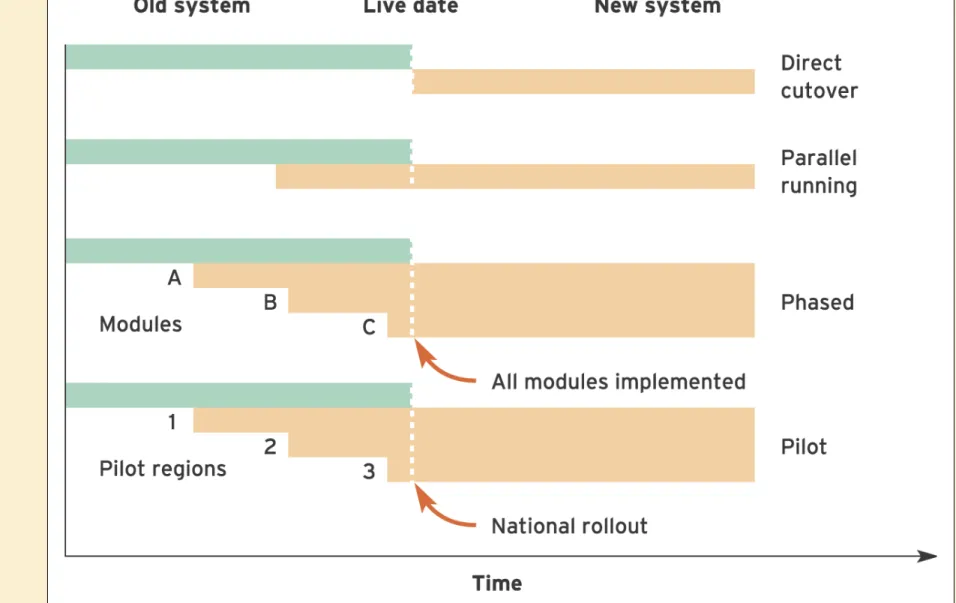
Assessing different changeover methods
3. Organisational change management
•
This deals with managing changes to organisational
processes, structures and their impact on
organisational staff and culture.
• Business process management:
– An approach supported by software tools intended to increase process efficiency by improving information flows between people as they perform business tasks.
• Incremental change:
– Relatively small adjustments required by an organisation in response to their business environment.
• Discontinuous change:
Degrees of change
•
Business process re-engineering (BPR)
:
• Identifying radical, new ways of carrying out
business operations, often enabled by new IT
capabilities
•
Business process improvement (BPI)
:
• Optimizing existing processes typically coupled
with enhancements in information technology.
•
Business process automation (BPA)
:
Alternative terms for using IS to enhance
company performance
Business process management
• Business process management (BPM) is an
important approach to process management that can
be considered both in terms of a philosophy towards
process change and as a supporting technology to
process change in the form of tools for process
design.
• The philosophy of BPM recognises that business
processes, and the way they are managed, are the
key mechanisms that allow the organisation to deliver
value to its customers. The approach thus entails an
analysis of the structure of the organisation, the way
people work together and the way technology is
BPM tools
• Process mapping:
– The use of a flowchart to document the process
incorporating process activities and decision points.
• Business process simulation:
– The use of computer software, in the context of a
process-based change, that allows operation of a
business to be simulated.
• Business activity monitoring (BAM)
Service-oriented architecture (SOA)
• The concept of SOA is to develop a number of reusable
business aligned IT services that span multiple applications across the organisation.
• SOA defines the services in such a way as to be utilised in a manner that is independent of the underlying application and technology platforms.
• The advantage of this approach for business process management is that a business process can link with the business services which are activated by the business processes without the need to know about the underlying application and technology platforms
• The term web services is the technology which is most
Achieving organisational change
• Implementation of processes that are performed by employees requires consideration of organisational change management including factors such as managing a change in culture.
• An essential part of managing change associated with IS introduction is education to communicate the purpose of the system to the staff. It involves:
– explaining why the system is being implemented; – explaining how the staff will be affected;
– treating users as customers by involving them in specification, testing and review;
– training users in the use of the software;
Achieving organisational change
(continued)
•
Resistance to change may manifest itself in the
following ways:
–
aggression
– in which there may be physical sabotage
of the system, deliberate entry of erroneous data or
abuse of systems staff;
–
projection
– where the system is wrongly blamed for
difficulties encountered while using it;
–
avoidance
– withdrawal from or avoidance of
interaction with the system, non-input of data, reports
and enquiries ignored, or use of manual substitutes for
the system.