Pop-Jordanova N. et al. Page 1 of 258
APPROACH TO THE BRAIN-MIND INTERACTION USING QUANTUM TRANSITION
PROBABILITY CONCEPT
Dr. Pop-Jordanova N.* and Pop-Jordanov J.
Macedonian Academy of Sciences and Arts Skopje, R. Macedonia.
Received date: 04 June 2018 Revised date: 25 June 2018 Accepted date: 16 July 2018
INTRODUCTION
The cerebral cortex is, without doubt, the most complex structure formed during human evolution. It represents the fundamental physical substrate from whose activity human memory and consciousness emerge. Recent advancements in the brain sciences have enabled researchers to determine locations and patterns of neural activation associated with various psychological functions. However, the mind-brain puzzle is complex and not yet elucidate. Some fundamental and practical aspects in this interaction are considered through the study of arousal and attention.
This article proposes a theoretical approach to explain the characteristic empirical interdependence between the states of arousal (representing the level of consciousness) and EEG activity. It is summary of several articles concerned to the similar topics published of our team.
The most accepted definition of arousal is that it is "the general activation of the mind which results from the
interaction of the person with the environment" (Kahnemann, 1973). It this context, arousal can be equated to the level of consciousness.
For measuring the level of consciousness, there are five main types of neurophysiological approaches: EEG bispectral index, event-related potentials, neuroimaging of widespread activation, synchronies, and complexities.
The empirical results show that the states of arousal correlate with recorded EEG activity of the brain. Experience confirmed that slow waves (theta and delta) are related to the state of drowsiness or sleep, alpha waves are present in an eyes closed relaxed waking state, while beta waves are related to eye open alert state. Table 1 shows empirical classification of brain waves correlated with the level of arousal.[2]
Corresponding author: Dr. Pop-Jordanova N.
Macedonian Academy of Sciences and Arts Skopje, R. Macedonia.
Original Article www.wjahr.com
Volume: 2. Issue: 4. Page N. 254-258
Year: 2018
WORLD JOURNAL OF ADVANCE
HEALTHCARE RESEARCH
ABSTRACT
Many new approaches in the explanation of brain functions are possible using knowledge from both, computer sciences and modern physics. How the material world (brain) is related to the immaterial product (mind) is the main topic of neuroscience and it represents still unsolved problem. Brain science researche helps to determine locations and patterns of neural activation associated with various psychological functions. However, the mind-brain puzzle is complex and not yet clear. In this article we discuss the neuro-physical mechanisms underlying mind-brain interaction using transition probability concept of arousal, based on field-dipole quantum interactions. We propose a theoretical approach to explain the characteristic empirical interdependence between the states of arousal (representing the level of consciousness) and EEG activity. Additionally, we introduced a relevant parameter for calculation of mental arousal named brain-rate, which is expressing the mean frequency of brain rhythms i.e. EEG-spectrum weighted frequency. Using this formula, we calculated the arousal for normal people and in different clinical disorders. Empirically, we showed that brain-rate measurements can be used to discriminate the groups of under-arousal and over-arousal disorders. This approach is suitable for revealing the patterns of sensitivity/rigidity in the EEG spectrum, including frequency bands related to the permeability of corresponding neuronal circuits.
Table 1: Textbook classification of EEG activity and the mental states (Bendorfer, 2001).
Association with peak performance High correlation with anxiety Alert, eyes open, external attention Relaxed, eyes closed, passive attention Drowsy, sleep stages 1-2, very relaxed Deep sleep, stages 3-4, deep meditation 30 + 20-30 12-20 8-12 4-8 0.5-4 Gamma High beta Low beta Alpha Theta Delta
Level of Arousal Frequency
Hz Brainwaves
Association with peak performance High correlation with anxiety Alert, eyes open, external attention Relaxed, eyes closed, passive attention Drowsy, sleep stages 1-2, very relaxed Deep sleep, stages 3-4, deep meditation 30 + 20-30 12-20 8-12 4-8 0.5-4 Gamma High beta Low beta Alpha Theta Delta
Level of Arousal Frequency
Hz Brainwaves
In practice, generally, slow waves recorded on EEG are related to the state of under arousal (seen in depression, autism, etc.). Fast waves correspond to the state of over arousal (when caffeine intakes, or in the general anxiety, alcoholism, etc.). But, there are also so called “mixed” situations, where both, slow or fast waves are present in EEG, which can be seen in patients with attention deficit hyperactivity disorder (ADHD), obsessive-compulsive disorder (OCD), headache, etc. This situation of mixed brain waves allows differencing subgroups (clusters) in the same disorder, which is important for therapy decision.[3]
Quantum Transition Probabilities
Many questions about brain-mind correlation arise, like: Why is the arousal correlated with EEG frequency? Why in this pattern? Why in this frequency interval? Why alpha band corresponds to “relaxed” state?
Different hypotheses tried to explain how material world (brain) communicate with the non-material world of mind.
The most popular hypotheses used to explain the brain-mind correlation are the following ones: Hypothesis from Eccles (1986) explain this interaction through microsite probabilities;[4] Jibu and Yashue (1995) discussed about proton-corticon dynamics;[5] Penrose/Hameroff (1998) explanation is related to the activity of microtubule proteins;[6,7] Romijn (2002) propose the theory of virtual photons[8] etc.
In all mentioned hypotheses the basic concept is that synaptic activity provoke changes in the electromagnetic fields which corresponds to different mental activities. Common elements in all of them are electric field and dipole molecules on „nano‟ level. Solutions proposed of mentioned authors are mainly conceptual, lacking analytical expressions and numerical results.
If we postulate that the water is a fundamental constituent of brain cells (more than 70%), consequently it must be intrinsically connected with the phenomena of memory and consciousness. The special distribution of positive and negative charges in the water molecule results in the appearance of electric dipole. Having dipole rotation as a main brain process, we applied the quantum-mechanical modeling of water molecules in brain cells, as rotators in time-depending electric field.
The transitions between the states of dipole water molecules as quantum rotators interacting with the time-dependent electric field have been studied earlier by our team, both analytically and numerically.[9,10] Additionally, the mechanism of hidden crossings between the states of rotational energy was discovered, which explain the probability of transitions between these states.[11]
2Cab N ab
P
e
Analytical solution of dipole-field interaction in a system of N dipoles in a oscillatory electric field of frequency ὠ is obtained and a and b are sets of quantum numbers specifying the initial and a final state respectively, while Cab is a parameter depending on the dipole‟s
characteristics.
Obtained mathematical calculations showed that the domain size for the mean frequency of EEG is close to the size of the neuron.
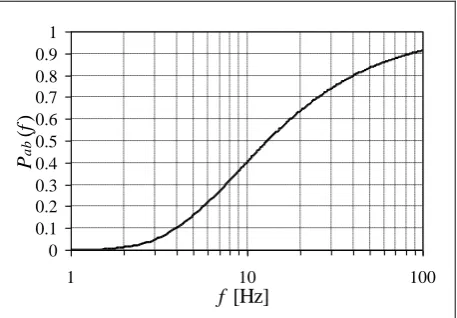
To examine the eventual correlation of the transition probability (P ab) with the probability of mental-neural excitations related to arousal spectrum, and considering a neuron with N= 1012 dipole molecules, we can obtain the following diagram: 0 0.1 0.2 0.3 0.4 0.5 0.6 0.7 0.8 0.9 1
1 10 100
f [Hz]
P
ab
(
f
)
This curve corresponds to the empirically obtained mental arousal spectrum presented on Table 1.[12] This indicates that the arousal sensitivity to EEG frequency may be correlated to the transition probability variation for a system of quantum dipoles in cortical electric field. In this context, mental arousal (alertness) can be conceived as readiness to change the state, which is identical to the probability of transition between two quantum states. Probability to change can be calculated with formula:
ln 2
2
e e
f f
f f
ab
P
A
e
(N = 1012 dipole molecules per neuron and S = Smax for f = fe)
If the number of dipole molecules (N) decrease, due to pruning phenomena during brain development, the P ab
curve shifts toward higher frequencies in the EEG, situation related to adulthood. Derived theoretical diagram for mental arousal in children and adults according pruning process is presented on Fig. 2.
Fig. 2: Derived theoretical diagram for mental arousal ch – children (fe = 6 Hz), ad – adults (fe = 10
Hz).
A possible remark could be that mental activity cannot be reduced to one neuron. However, since only synchronized neurons of neuronal assemblies contribute to EEG, the relevant frequency is just the one-neuron (representative) frequency we are dealing with, when considering the consciousness level.
Brain-rate
If we accept the definition of arousal as a general activation of the brain due to environmental influence, than arousal represents the integral characteristic of the mental state, and it is correlated with the integral EEG spectrum.
It is important to mention that the actual electric activity of the brain is polychromatic, represented by a time-changing EEG spectrum. The main characteristic of such
a spectrum is its weighted mean frequency (gravity), which we named as brain-rate (fb), and which can be
interpreted as the first-order moment of Fourier spectrum, used as a suitable indicator to measure the degree of arousal.[13,14,15] The formula for brain rate calculation is:
i i i i
i i
V
V
f
P
f
f
b,
i i
V
V
Where the index i denotes the frequency band (for delta i= 1, for theta i= 2 etc.) and Vi is the corresponding mean amplitude of the electric potential. Following the standard five-band classification, one has fi = 2, 6, 10, 14 and 18 respectively.
The brain-rate (fb) may indicate the states of under arousal and over arousal, and differentiate the levels of activation of corresponding systems.
Some characteristic values for brain rate calculated for a group of normal healthy people are shown on Fig. 3.
Fig. 3: Brain rate mapping: mean values for 40 healthy adults (eyes closed).
For testing the clinical validity, we calculated brain-rate for different mental disorders in children (Table 2) in two conditions – eyes open (EO) and eyes closed (EC).
Table 2: Brain-rate in EC and EO conditions in children.
Disorder Eyes closed Eyes open
PTSD 7,54 6,27
Panic attack 8,21 7,58
Anxiety 8,19 7,57
Stuttering 8,50 8,27
OCD 8,28 8,25
Ticks 8,47 8,48
Night mares 8,13 8,48
ADHD 7,6 7,8
It is clear that brain rate correlate with the clinical state of the arousal in these conditions; anxiety – related disorders being with the most aroused state and brain injury with the lowest one.
For ADHD patients‟ brain rate is important parameter confirming the hypo arousal theory.[16] Fig. 4 shows comparison of brain rate in different region of the brain in adult ADHD patients and control.
Fig. 4: Brain rate in adult ADHD patients.
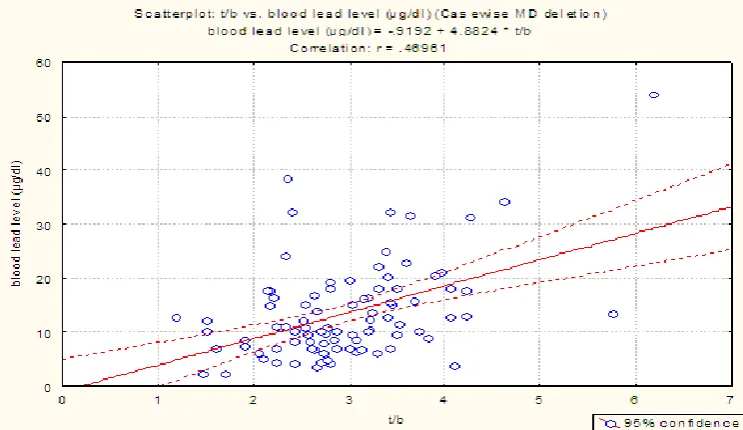
In practice, diagnosis of ADHD is based commonly on the ratio theta/beta. The theta/beta ratio and brain rate
calculation from EEG are positively correlated which give some additional value of brain rate (Fig. 5).[17]
Fig. 5: Brain rate and theta/beta ratio.
It is impressive the difference of brain rate between normal adults, patients with ADD, anxiety, traumatic
brain injuries (TBI) and autism (Table 4). These results confirm the previous ones.
Table 4: Brain-rate in different clinical conditions EO EC.
Additionally to our results, the team from the Technical University in Vienna used brain rate formula for the evaluation of sleep stages and confirmed its validity [18] (Table 5).
Table 5: Brain rate and sleep stages (Kaniusas et all. 2007).
There is opposite change in brain rate and heart rate parameters. Still, brain rate seems more precise.
DISCUSSION AND CONCLUSION
According to our hypothesis, the quantum interaction of the brain‟s electric field with dipole brain constituents determines the general mental activation expressed in consciousness level. Concerning the content of consciousness, large assembles of neurons must be activated. In this occasion, the neurotransmitter interplay by the “degluing” interaction of acetylcholine with the microtubule associated protein MAP2, described by the Woolf scheme,[19] may have a relevant role. It can be supposed that such a mechanism could enable the quantum probability to be realized, producing reconfiguration of molecular as well as neural dipoles and initiating classical transient coherence.
We can conclude that the theoretical approach which is proposed, could explain the characteristic empirical interdependence between the states of arousal (representing the level of consciousness) and the EEG activity.
The analytical formula which is derived, corresponds to the empirical arousal– frequency correlation, both in the form (sigmoid) and the frequency interval. In addition, brain rate parameter derived from this approach, confirmed some possible practical implications.
In preliminary assessment, brain-rate may serve as an indicator of general mental arousal level, similar to heart-rate, blood pressure and temperature as standard indicators of general bodily activation. By comparing EC and EO brain-rate values the diagnoses of inner arousal can simply be achieved.
More studies of brain-rate concept for diagnostics and treatment are needed.
REFERENCES
1. Kahnemann D. Attention and effort. Prentice-Hall, New Jersey, 1973.
2. Bendorfer K. Alpha-Theta Neurofeedback: Its Promises & Chalenges, BFE 5th Annual Meeting, Prien, February, 2001; 16-17.
3. Markovska-Simoska S., Jordanova N., Pop-Jordanov J. Brain rate parameter as a measure of the level of consciousness in ADHD adults, Proceedings of the conference Consciousness and its measures: Joint meeting for COST actions Consciousness and NeuroMath, [Limassol, Cyprus, 2009, November 29 - December 1]: 82-83 (P13), [+1].
4. Eccles JC. Do mental events cause neural events analogously to the probability fields of quantum mechanics? Proc. R. Soc. Lond. B., 1986; 227: 411-28.
5. Jibu M, Yasue K. Quantum Brain Dynamics and Consciousness. John Benjamins Publishing Company, Amsterdam Philadelphia, 1995.
6. Penrose R. Shadows of the Mind, Oxford University Press, New York, 1994.
7. Hameroff SR. Quantum computation in brain microtubules? The Penrose-Hameroff „Orch OR‟ model of consciousness, Philosophical Transactions: Mathematical, Physical and Engineering Sciences, 1998; 356: 1743: 1869-1896.
8. Romijin H. Are virtual photons the elementary carriers of consciousness? Journal of Consciousness Studies, 2002; 9(1): 61-81.
9. Dimitrovski D, Pop-Jordanov J, Pop-Jordanova N, Solov‟ev E. Quantum transition between collective rotational states of water molecules in brain cell as a possible mechanism of memory imprinting. Contributions, Sec.Math.Tech.Sci. MANU, 1999; 19(1-2): 35-58.
10. Pop-Jordanov J., Pop-Jordanova N. Quantum Transition Probabilities and the Level of Consciousness, Journal of Psychophysiology, 2010; 24(2): 136-140.
11. Dimitrovski D., J. Pop-Jordanov, N. Pop-Jordanova, E. Solov‟ev. Hidden – crossing transitions between collective states of coupled quantum rotators as a possible mechanism of memory processing. Information Sciences: An International Journal, 2004; 168(1-4): 267-276.
12. Pop-Jordanov J., Pop-Jordanova N. Quantum Transition Probabilities and the Level of Consciousness, Journal of Psychophysiology, 2010; 24(2): 136-140.
13. Pop-Jordanova N., Pop-Jordanov J. Spectrum Weighted EEG Frequency (“Brain-rate”) as a Quantitative Indicator of Mental Arousal, Прилози. МАНУ (Одд. биол. мед. науки) / Contributions. MASA (Sec. Biol. Med. Sci.), 2005; 26(2): 35-42. 14. Pop-Jordanova N. Chapter 8: Brain Rate as an
Indicator of the Level of Consciousness, States of Consciousness: Experimental Insights into Meditation, Waking, Sleep and Dreams, eds. D. Sleep stages fb = fw from
EEG (Hz)
fhv= fw from HRV (Hz)
Awake 6.85 0.076
REM 5.34 0.076
S1 - -
S2 4.18 0.116
S3 2.72 0.128
Cvetkovic, I. Cosic, Springer, Berlin, Heidelberg, 2011; 187-201.
15. Pop-Jordanov J, Pop-Jordanova N. Quantum interpretation of mental arousal spectra, Contribution, Sec. Math.Tech.Sci. MANU, 2004; 25(1-2): 75-94.
16. Markovska-Simoska S., Pop-Jordanova N. Quantitative EEG Characteristics of Attention Deficit Hyperactivity Disorder in Adults, Macedonian Journal of Medical Sciences, 2010; 3(4): 368-377.
17. Pop Jordanova N., Karamürsel S.(2015) QEEG spectral analysis characteristics of Macedonian and Turkish adults with ADHD, Program and Abstract Book: 41st National Physiology Congress, 9-13 September, Canakkale, Turkey/41. Ulusal Fizyoloji Kongresi, 9-13 Ejlül 2015, [Onsekiz Mart Üniversitesi], Çanakkale, [düz. kurulu M. Deniz... et al.], [Çanakkale], Türk Fizyolojik Bilimler Derneği / Turkish Society of Physiological Sciences, 2015: [SS32/OC32].
18. Kaniusas E, Varoneskas G, Alonderis A, Podlipsky A. Heart rate variability and EEG during sleep using spectrum weighted frequency – a case study, COST B27, EU/ESF, Brussels, 2007.