:LWKDIRFXVRQGHYHORSLQJDQG
WUDQVLWLRQFRXQWULHV
CLEANING UP URBAN
Asian Clean Fuels Association (ACFA), Global Environment Facility (GEF), European Union, ExxonMobil, FIA Foundation, International Petroleum Industry Environmental Conservation Association (IPIECA), Ministry of Housing, Spatial Planning and Environment of The Netherlands, TNT, United Nations Environment Programme (UNEP), US Environmental Protection Agency (USEPA)
September 2009
With a focus on developing and
transition countries
Cleaning up Urban Bus
Fleets
&RQWHQWV
1. 0 Introduction 3
1.1 The Partnership for Clean Fuels and Vehicles (PCFV) 4 2. 0 Options for reducing air pollution from the urban bus fleet 4
2.1 Repair 6
2.2 Refuel 10
2.3 Diesel Retrofit Strategies 11
2.3.1 Retrofit Diesel PM Emission Control Technologies 13
2.4 Repower 19
2.5 Replace 19
3.0 Heavy-Duty Diesel Emission Standards for New Buses and Other
Heavy-Duty Diesel Vehicles 21
4.0 Bus Rapid Transit Systems 22
5.0 Clean bus fleet strategy 23
6.0 Resources 25
Bus Rapid Transit 27
1. Introduction
The World Health Organization (WHO) has estimated that more than 800,000 people die prematurely each year from urban air pollution. Most of these premature deaths occur in urban areas of developing and transition countries. Air pollution has also been linked to non-fatal cancer, bronchitis, and other cardiovascular (heart and circulatory system) diseases. In addition, there is now substantial evidence that air pollution can have serious impacts on pregnancy outcomes and infant death.
Vehicle emissions are a major contributing factor to poor air quality. Key emissions from vehicles include carbon monoxide (CO), unburned hydrocarbons (HC) and volatile organic compounds (VOC), nitrogen oxides (NOx), and particulate matter (PM). Older diesel engines used in bus fleets in cities located in many developing countries have especially high emissions of toxic hydrocarbon species, NOx, and diesel PM. In addition to these pollutants, vehicles, including buses, are a major source of carbon dioxide (CO2) emissions and black carbon that contribute to the transportation sector’s impacts on climate change and a country’s dependence on oil.
In industrialized countries, even as cleaner vehicles are replacing older and dirtier ones and total transportation emissions are beginning to decline, vehicles are still a significant source of air pollution. In developing and transition countries, vehicle numbers are growing exponentially and, without strict controls in place, emissions from transportation sources are becoming an increasingly urgent concern.
According to the World Business Council for Sustainable Development, global personal and goods transport is expected to grow rapidly through 2050, which will drive the worldwide demand for fuel, expected to double by 2050 from present levels of demand. This scenario presents demanding challenges for all involved in the transportation sector to reduce both harmful exhaust emissions and fuel consumption.
This document provides information and resources to policy makers in developing and transition countries on key steps that can be taken to clean up the emissions from bus fleets. The focus of this report is on bus fleets but the strategies detailed here can also be applied to reducing emissions from other heavy-duty diesel vehicles that operate within developing and transition countries including refuse trucks, dump trucks, or highway maintenance vehicles. A brief introduction is also provided to bus rapid transit (BRT) systems that employ clean transit buses. These BRT systems are gaining in popularity in many large cities around the globe as densely populated urban centers try to provide clean, efficient mass transportation options for its citizens.
1.1 The Partnership for Clean Fuels and Vehicles (PCFV)
The Partnership for Clean Fuels and Vehicles (PCFV) was launched at the World Summit on Sustainable Development (WSSD) in Johannesburg in September 2002 by a group of committed partners from governments, the private sector, non-governmental organizations, and nternational organizations. This global Partnership assists developing and transition countries in reducing urban air pollution through the promotion of clean fuels and vehicles. The focus is on the elimination of lead in gasoline fuel, the phase down of sulfur in diesel andgasoline fuels, concurrent with the adoption of cleaner vehicles and vehicle technologies. As most developing and transition countries have made great progress in eliminating lead from gasoline, the Partnership's efforts are growing with respect towards the reduction of sulfur levels in transportation fuels and the introduction of cleaner vehicles.
In December 2005, the PCFV established a goal to reduce sulfur in transportation fuels to 50 parts per million (ppm) or below world wide, concurrent with the introduction of clean vehicles and clean vehicle technologies, with roadmaps and timelines developed regionally and nationally. The Partnership has also developed a Clean Fleet Management Toolkit to assist fleet managers in assessing strategies for reducing emissions from their fleets. This toolkit is available at: www.unep.org/tnt-unep/toolkit/.
For more information on the PCFV please contact:
PCFV Clearing-House
United Nations Environment Program P.O. Box 30552
00100
Nairobi, Kenya
Phone: +254-20-7624184 Fax: + 254-20-7625264 e-mail: [email protected] http://www.unep.org/PCFV
2. Options for reducing air pollution from the urban bus fleet
There are a number of options available for reducing the environmental impact of urban bus fleets (or other heavy-duty diesel vehicle fleets). Some steps are relatively simple, while others are more complicated and require some investment and expertise. However, in every country that has been studied, the monetized health benefits of cleaner air have greatly exceeded the implementation costs of reducing vehicle pollution -- using some of the steps suggested here. For example, in the United States, recent U.S. EPA regulatory programs aimed at reducing the exhaust emissions from new light-duty vehicles, new heavy-duty diesel trucks and buses, and off-road diesel engines have been estimated to provide approximately $16 of monetized health benefits for each $1 in implementation costs.
Options discussed in this document include:
• Refuel: Using cleaner fuels, such as low or ultra-low sulfur diesel fuel, will have a direct impact on emission levels, and it will also enable the use of effective emission control technologies that will further reduce vehicle emissions. • Retrofit: Installing emission control technologies on older vehicles, which currently do not have any emission control technologies, is called retrofitting. This can be a very effective option for reducing harmful emission levels from bus fleets. Retrofit programs have been used with good success on bus fleets in many large cities throughout the United States, Europe, Japan, as
well as cities in China, Mexico, and elsewhere. Bus retrofit programs are an attractive emission reduction strategy because the lifetime of urban buses is usually long, emissions from these older buses are usually high, especially emissions of diesel particulate matter (PM), and buses drive frequently in densely populated areas. Plus, the fleets are highly visible and often use public funds for their capital and operating expenses, creating strong public support for urban bus retrofit programs. These factors make bus retrofit programs a very cost effective strategy for reducing emissions in urban areas. • Repower: A bus chassis has a long useful life that can be measured in decades. The emissions performance of older buses can be improved by removing the entire existing engine and repowering the bus with a new or newer vintage engine that emits fewer pollutants compared to the engine that is replaced. • Replace: When replacing older buses there are a number of options that are substantially cleaner and more fuel efficient than the buses that are retired. New hybrid and compressed natural gas (CNG) buses are both fuel-efficient and emit fewer pollutants than older buses. New, advanced diesel buses, using ultra-low sulfur fuel (less than 50 ppm) and advanced emission control technologies, are also a fuel-efficient and low emitting alternative to older buses.
• Bus Rapid Transport (BRT): Cleaner bus fleets can often maximize their positive benefits on the environment and public health in densely populated cities through the implementation of bus rapid transit systems. BRTs emulate the service attributes of rail-based rapid transit systems through the use of segregated lanes that allow for frequent, fast, and cost-effective transport of large numbers of city commuters, but at a fraction of the construction and other costs.
5HIXHOOLQJRIDEXVÁHHWLQ0H[LFRFLW\ XVLQJXOWUDORZVXOSKXUGLHVHO
$%XV5DSLG7UDQVLW6\VWHPLQSOD\
phot
o : M. Replogle
, ITDP
phot
o : US-EP
2.1 Repair
The first step in an effort to clean up your buses is to know the status of your bus fleet. A well-performed inspection followed by the necessary repair and maintenance procedures will decrease emissions substantially and improve both the fuel economy
and the safety of a bus fleet. A regular maintenance program will also extend the life of the engines used in your bus fleet. Properly maintained buses are a must before considering embarking on a retrofit program that aims to achieve additional emission reductions from your bus fleet.
Typically, 10% to 15% of the vehicles in an ordinary fleet can emit 50% or more of each of the major exhaust pollutants due to malfunctioning engine parts1. Poorly maintained engines
1. National Research Council, 2001 Evaluating Vehicle Inspections and Maintenance Programs, Washington D.C. Internal Inspection/Maintenance (I/M) program in Jakarta
In Jakarta, nine bus companies in cooperation with Swiss contact developed their own internal I/M program. The program checked the vehicles for engine malfunctions and excessive smoke and measured exhaust opacity.
In order to be successful, the program also contained a large education program. The education aimed at raising awareness among technicians and drivers about the environment and technical training on how to conduct a proper inspection and maintenance program. The education also included instruction on safe and fuel saving driving practices.
In total over 13,000 buses were tested in 2001 and 2002, with 89 technicians and 1372 drivers trained. Measures identified through the inspection program that could be easily fixed were cleaning air filters, adjusting fuel injection timing and injection nozzle pressure and calibrating the fuel injection pump. In some cases, air filters and fuel injection nozzles had to be replaced.
This program achieved a 30% reduction of diesel soot and a 5 % decrease in fuel consumption through improved, regular maintenance practices. Another 10% decrease in fuel consumption was attained through improved driving methods. Approximately a third of the vehicles failed the inspection but over 80% of these vehicles could be repaired with only minor additional cost. The inspection test method used in Jakarta, a free acceleration emissions test to measures smoke opacity, is a simple procedure to implement that provides an indication of a gross engine malfunction.
The Jakarta program started out with just two bus companies on a voluntary basis but, by the end of the program, grew to nine bus companies as the economic benefits of inspection and maintenance became more apparent.
www.segarjakartaku.or.id
Tire pressure has a great effect on both fuel economy and safety. Poorly inflated tires increase fuel consumption by 2.5 to 3% for every psi below the optimal tire pressure.
Up to 30% of all vehicles have one or more tires under inflated (IEA 2005).
can often have high consumption of engine oil. Engines with high oil consumption rates create higher levels of hydrocarbon and diesel PM emissions. Identifying and cleaning up the most polluting buses is a very effective strategy for reducing emissions from a bus fleet.
A bus inspection program can both be done voluntarily, as seen by the example below, or a vehicle inspection program may be mandated by public authorities.
Public I/M programs in developing and transition countries
The focus of public I/M programs in the industrialized world has traditionally been on passenger cars. However, when implementing a public I/M program in a developing or transition country some consideration should be given to inspection programs that address heavy-duty diesel buses and trucks.
Trucks and buses are responsible for a major share of the transportation-related emissions in developing countries for a number of reasons: the relative share of freight trucks and buses in the vehicle fleet is large in developing and transition countries, these vehicles drive many miles in urban areas, and buses and trucks emit substantial amounts of diesel particulate matter and NOx emissions that are a primary public health concern for cities in developing and transition countries. In addition, these heavy-duty diesel vehicles stay in the fleet for a very long time.
Inspection/Maintenance program best practices
Based on the experience obtained from I/M programs worldwide, the report “Vehicle Inspection and Maintenance programs: international experience and best practices” by Karl Hausker and colleagues 2 provides some good recommendations for setting up an I/M program. The conclusions
from relevant heavy-duty vehicle inspection and maintenance programs are presented below.
Commitment:
I/M programs are difficult to implement. Governments should only initiate such a program if it is fully committed to making it work.
Institutional design:
The institutional design for an I/M program can either be based on the use of centralized test-only facilities or decentralized test-and-repair centers. These facilities can either be publicly or privately operated.
The report concludes that the centralized test-only facilities have better opportunities to build up the technical know-how and are less inclined to cheating and corruption associated with testing and repairs. Privately managed stations are also favored for their effectiveness and the possibility for international I/M companies to link up with local companies. Privately managed facilities, however, require a strong oversight and public inspection of the facilities (inspecting the inspectors).
2. The full report is available at : http://www.usaid.gov/our_work/economic_growth_and_trade/energy/pubs/ bestpract_vehicle_maint.pdf
Test procedures and emission standards:
I/M test procedures and the emission standards for inspected vehicles should be based on both the current emission standards for new vehicles, statistics for the current fleet’s emissions, and on the cost for vehicle owners and authorities to implement and comply with the requirements.
Policymakers should phase in standards that typically fail 15 to 20 % of the tested vehicles. Adoption of stricter emissions standards may erode political support. As emission standards for newer vehicle are tightened, the I/M standards for these vehicles should be appropriately stringent reflecting newer technology and performance levels. The test procedures used should take into consideration the choice of pollutants to be measured, how accurate the measurements need to be, and the equipment costs to implement the test procedure.
Test facilities for heavy vehicles I/M programs
Most heavy-duty vehicle test procedures for I/M testing measure smoke opacity, CO, HC and NOx emissions, but does not measure PM emissions. However, new methods are being developed to measure PM
emission directly.
Free acceleration test: The engine is accelerated at zero load to full throttle. What is measured is smoke opacity. This is an easy way of identifying engines that have gross malfunctions. However, the test results can be highly variable and potentially impacted by temporary engine adjustments to the fuel pump and fuel injector prior to testing. The test equipment cost
Lug down test: In a lug down test, the engine starts at full throttle and no load. Then a load is added until the engine is “lugging” (that is running hesitantly, jerking). In a lug down test it is more difficult to use temporary engine adjustment to influence test results than in a free acceleration test. Test
equipment costs are more expensive, approximately USD 70,000-100,000. A permanent test facility is also needed to conduct the test.
Dynamometer test: In a full dynamometer test, the vehicle can be tested under various speeds and loads on a chassis dynamometer. This test is considerably more effective than the other test methods in estimating "real world" engine exhaust emissions. However, investment costs can be very high for equipment and a permanent test facility (> USD 500,000).
5HIXHOOLQJRIDEXVÁHHWXVLQJXOWUDORZ VXOSKXUGLHVHO
Enforcement of I/M:
An I/M program must be linked to an overall vehicle and owner registration system that will allow for follow-up and avoid fraud and corruption. Periodic testing at facilities should be complemented with roadside inspections in order to avoid vehicles being prepared for passing the test and then readjusted to pre-inspection status - “clean for a day”.
Managing resources:
Fees for inspection should be set at a level that will insure a high technical level of the program and economic sustainability. The technical and human capacity for doing the test properly is an important consideration, as well as the competence of available maintenance repair shops to fix the failing vehicles.
I/M for heavy duty vehicles in Chile
In Santiago de Chile, a disfunctional I/M program established in 1977 was overhauled in 1994 to work more effectively. The new program included stricter inspection emission standards, tighter emission standards for new heavy-duty vehicles, and a periodic vehicle inspection scheme.
Four private companies were given concession to perform the inspections. Four of the total 25 testing stations were reserved for city buses and heavy-duty trucks. The inspection combined safety and emission control tests. For a heavy-duty truck, both a free acceleration and a full load emissions test is carried out measuring smoke opacity. Full-load tests are useful when testing vehicles certified to more stringent emission regulations. The periodic tests are also complemented with roadside tests in order to avoid vehicles being prepared before the test and then restored to pre-inspection status after a pass. At the start of the improved I/M program, 30% of all the tested buses failed roadside inspections. The inspection failure rate has improved more recently to 10%.
It is impossible to isolate the effects of this I/M program alone, but the effects of Santiago's efforts to clean up the air can be seen in the decreasing ambient concentrations of particulate matter. The concentration of PM10 has decreased from 106 ug/m3 to 65 ug/m3, (still a high value), and the concentration of finer particles (PM2.5) especially associated with diesel exhaust has decreased from 70 ug/m3 to 33 ug/m3.
Source. Frank Dursbeck, pers.comm. and Dursbeck in Kolke R , 2005, Module 4b Inspection & Maintenance and Roadworthiness. GTZ 2005. www.sutp.org.
2. 2 Refuel
Refueling a diesel engine with fuel that contains low levels of sulfur (e.g., 50 ppm or less) will reduce the levels of sulfate, sulfur dioxide, and particulate matter (PM) emissions substantially from diesel vehicles and will enable the introduction of effective emission control technologies on both new and existing vehicles. Lower sulfur levels in diesel fuel will also improve the overall durability of important engine components like fuel injectors and pistons. A more detailed discussion of fuel sulfur impacts on the transportation sector is available in the UN Partnership’s report on fuel sulfur available on the UN Partnership website. Other cleaner fuel options, such as compressed natural gas (CNG), may also be an available option for your bus fleet. A further discussion of CNG buses is found under the Replacement section of this report.
Sulfur Levels in Diesel
Sulfur occurs naturally in crude oil. The level of sulfur in diesel depends upon the source of the crude oil used and the extent to which the sulfur is removed during the refining process. The sulfur present in diesel fuel will form sulfur dioxide and sulfate particles when combusted in diesel engines. Sulfur levels as high as 5,000 to 10,000 ppm in diesel fuel used for highway vehicles are found in some developing countries. In comparison, maximum highway diesel fuel sulfur levels in Europe, Japan, and the United States are currently regulated to be at 10-15 ppm levels.
Diesel fuel with more than 500 ppm sulfur severely impacts the effectiveness of catalyst-based diesel emission control technologies available for heavy-duty buses and vehicles by poisoning the active catalytic materials associated with oxidation catalysts and particulate filters. The performance and durability of any catalyst-based emission control is improved by operation with lower fuel sulfur levels. The durability of engine components is also improved by operation on low sulfur diesel. Desulfurized diesel fuel can be broadly classified into two different categories according to the sulfur level and the PM emission control technologies that are enabled with its use.
• Low sulfur diesel: Diesel fuel with sulfur levels below 500 ppm enables the use of diesel oxidation catalysts (DOCs). DOCs provide reductions in exhaust hydrocarbon and CO emissions but have little impact on black carbon exhaust emissions. However, operation on lower sulfur content diesel fuel, produces lower sulfate-related particulate matter and DOC catalysts can be formulated to be even more effective with respect to hydrocarbon and CO emissions.
• Ultra-low sulfur diesel: Diesel with sulfur levels below 50 ppm enables the use of diesel particulate filters (DPFs) and flow-through filter technologies (FTFs) that reduce particulate matter substantially (including the black carbon component of diesel particulate), in addition to providing effective control of CO and HC emissions. DPFs typically reduce PM emissions by more than 85 percent. Operation of catalyst-based filter technologies is generally preferred with diesel sulfur levels of 15 ppm or less to maximize catalyst performance and durability, and minimize any sulfate-related particulate emissions.
Fuel Desulfurization
In order to reduce or to eliminate sulfur from diesel fuel, refineries need to be upgraded to include desulfurization units. The capital cost of upgrading refineries is significant and is location specific. Indeed, the situation is different in every country depending on if they have their own refineries, the refinery technical status and upgrading needs, and the quality of crude oil used by the refinery. Refer to the UN Partnership’s fuel sulfur report for more details about removing sulfur at the refinery.
As an example, in Mexico, the cost of upgrading their nine existing refineries was estimated to be USD 3 billion by PEMEX 3 earlier this decade. The capital cost and the higher operating
costs are usually estimated to add 0.6 up to 1.2 US cents /liter of diesel fuel. In China, the cost of going from 500 ppm to 50 ppm sulfur levels in diesel fuel was estimated to add about 0.5 cents/liter to the fuel price. Moving to even lower diesel fuel sulfur levels of 10 ppm was estimated to increase the diesel fuel price in China by 1.2 cents/liter4 .
2.3 Diesel Retrofit Strategies
Installing emission control technologies in existing vehicles, retrofitting, is an effective way of reducing emissions from bus fleets or other in-use heavy-duty diesel vehicles. A successful retrofit program incorporates a number of key features including:
• Selecting buses with properly maintained engines – Buses with
poor maintenance histories can emit substantial quantities of soot that can result in damage or poor performance of a retrofit catalyst or filter.
• Choosing proven retrofit technologies and experienced suppliers – Both the U.S. Environmental Protection Agency and California Air Resources Board have available lists of retrofit technologies that have been verified for performance and durability (see Resources section for links to EPA and CARB websites that list verified retrofit technologies).
• Matching the retrofit technology to the vehicle application and
available fuel – Factors such as engine age, exhaust temperature profiles during normal operations, and available fuel sulfur levels can influence the choice of an appropriate retrofit technology. Experienced technology suppliers can assist fleet operators in the technology selection process.
• Proper installation of the retrofit device on the vehicle – Retrofit diesel particulate filters are generally heavier than mufflers and require appropriate support in the exhaust system. In some cases exhaust insulation may be needed to ensure adequate temperatures at the retrofit device location.
• Performing the required maintenance on the retrofit device – Diesel particulate filters, for example, require regular maintenance to remove inorganic ash that accumulates in the filter due to engine lubricant oil consumption. Regular inspections
3. Molina et al, 2004. Air Quality in Mexico: Toward Clean Air – in a decade. 4. http://www.cleanairnet.org/caiasia/1412/article-70708.html
of exhaust systems are also necessary.
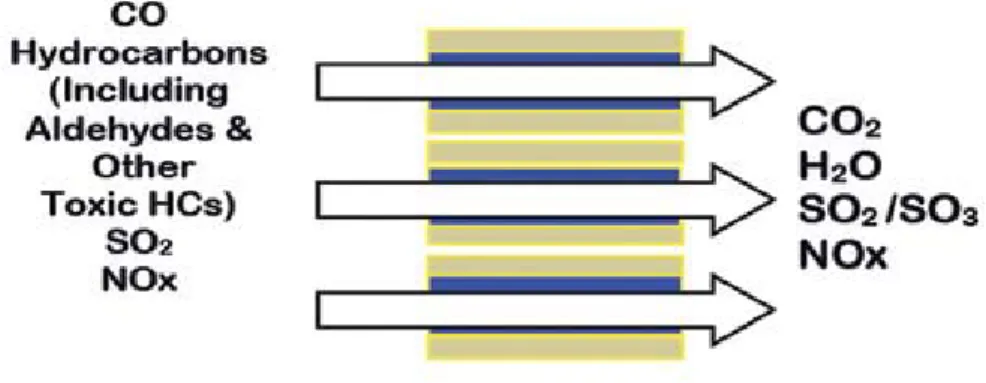
The emission control technologies used most commonly in bus retrofit programs are either diesel oxidation catalyst (DOCs) or diesel particulate filters (DPFs). Both of these retrofit options reduce diesel PM, CO, and hydrocarbon emissions from existing diesel engines. Flow-through filters (FTFs) are an emerging retrofit technology that also provides reductions in PM, CO, and hydrocarbon emissions. An oxidation catalyst, in general, is the least costly retrofit option but also provides the lowest levels of PM emission reductions (20-30% PM reduction) relative to a FTF or DPF technologies. Flow-through filters provide higher levels of PM control (40-75% PM reduction) relative to a DOC, with DPFs based on ceramic, wall-flow filters (high efficiency filters) providing the highest reductions in PM (> 85% PM reduction).
Reducing the emissions of NOx in diesel engines requires more complicated retrofit solutions but advanced emission control technologies are being developed for this purpose. These include NOx adsorber catalysts and selective catalytic reduction (SCR) systems. These NOx reduction technologies are now being used in new light-duty and heavy-duty diesel vehicle applications in the U.S., Europe, and Japan. SCR systems using a urea/water-based reductant are also under development for heavy-duty vehicle retrofit applications with some limited experience in bus retrofit applications in Europe and the U.S. Retrofit urea-SCR systems are expected to be more widely available for buses and other heavy-duty vehicles by the 2010-2012 timeframe. Additional details on retrofit technologies that control diesel PM are provided below.
2.3.1 Retrofit Diesel PM Emission Control Technologies
Diesel Oxidation Catalysts: Diesel oxidation catalysts (DOCs) typically reduce diesel particulate emissions by 20-30% and hydrocarbon and carbon monoxide emissions by 60-90%. DOCs are the most common emissions control technology found on current diesel vehicles. DOCs have physical characteristics similar to catalytic converters used on passenger cars but are formulated to oxidize carbon monoxide (CO), gaseous hydrocarbons (HCs) and the volatile hydrocarbons that are associated with diesel PM. DOCs also reduce smoke levels from diesel engines. DOCs do not, however, reduce the smallest ultrafine or nano-sized PM, nor do they reduce black carbon emissions that are increasingly associated with short-term climate change impacts. DOCs are a proven technology and have been fitted to over hundreds of millions of diesel passenger vehicles, heavy-duty trucks, and buses worldwide. DOCs can be equipped on new vehicles or retrofitted on vehicles already in use. To achieve these emission reductions, DOCs require the use of diesel fuel with less than 500 ppm sulfur.
A DOC generally replaces the muffler (the same size and weight) and takes about 2 or 3 hours to install. The installation is easy, as no other changes apart from replacing the muffler are needed. A typical DOC cost for a transit bus is in the range of USD 1,000 to 2,000. Maintenance of DOCs is generally limited to regular exhaust system inspections.
Flow-Through Filters (FTFs):
Flow-through filters typically reduce PM emissions by 50-85%, and require ultra-low sulfur diesel fuel (50 ppm or less) to maximize their effectiveness and efficiency. FTFs employ wire-mesh or “tortuous flow” metal substrates to trap and oxidize most particulates, but are more permeable than higher-efficiency filters. Flow-through filters may be suited for older heavy-duty diesel vehicles that have higher engine-out PM levels. Both the California Air Resources Board (CARB) and the U.S. EPA have verified FTFs for retrofit applications. CARB has designated FTFs as a “Level 2” PM technology, which means they provide intermediate reductions of diesel PM in the range of 50-85% (higher PM reductions relative to a DOC but lower compared to a high efficiency DPF). Depending on the FTF design and the catalyst formulation used with the FTF, some FTFs can provide PM reductions with fuel sulfur levels above 50 ppm but less than 500 ppm sulfur.
A FTF costs are currently in the range of USD 5,000 to 8,000 depending on the type of FTF design. Do to their more open structure, FTFs generally do not accumulate exhaust ash materials and do not require maintenance associated with ash removal from the filter element.
Diesel Particulate Filters:
Catalyzed diesel particulate filter (DPF) systems are the most effective PM-reducing technology. DPFs are designed to meet certification levels that require PM reductions of at least 85%. Unlike DOCs, DPFs reduce all sizes and forms of PM at equivalent levels, including the smallest, ultrafine particulate matter, nano-sized particles, and black carbon. In urban bus settings, DPFs have reliably demonstrated over 95% reduction in particulate emissions, when coupled with diesel fuel containing less than 50 ppm sulfur.
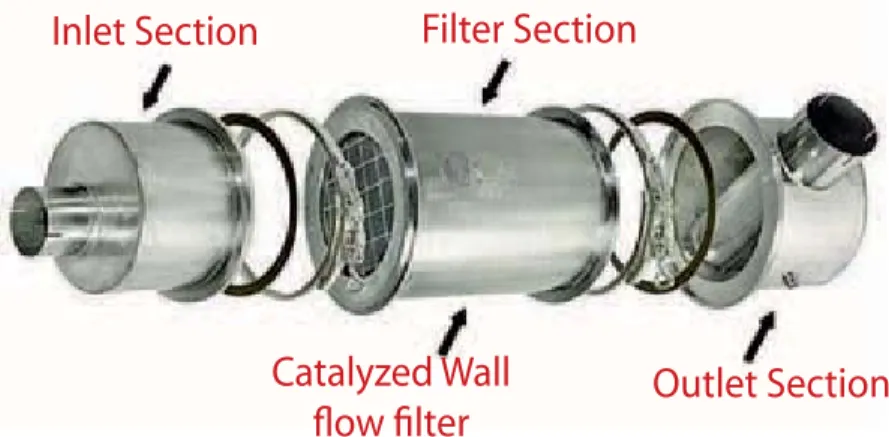
DPFs usually consist of a high efficiency ceramic filter element positioned in the exhaust stream. This ceramic filter is designed to collect a significant fraction of the particulate
emissions while allowing the exhaust gases to pass through the system. Since the collected particulate builds up over time, the filter system must also include a means for burning off or “regenerating” the collected soot. Retrofit particulate filters can combine an oxidation catalyst and an uncatalyzed filter element or make use of a catalyst placed directly on the filter element. Catalyst-based DPFs can “regenerate” captured soot using available exhaust gas energy (so-called “passive” regeneration) or make use of an auxiliary heat source such as a burner or electrical heating element to facilitate regeneration (so-called “active” regeneration). Catalyst-based DPFs require the use of diesel with 50 ppm sulfur or less. Improved performance and durability, and lower sulfate-related particulate emissions are obtained with operation on 15 ppm sulfur diesel or less. In some cases actively regenerated filter systems do not employ catalysts and can be used with diesel fuel sulfur levels above 50 ppm.
Over five million new passenger vehicles have been equipped with DPFs in Europe since mid-2000, and starting in 2007, nearly all new heavy-duty, on-road engines sold in the U.S. and Canada come equipped with a high-efficiency DPF. There is substantial experience with DPF retrofits on buses and other heavy-duty vehicles in many major cities of the U.S. and Europe including New York City, Los Angeles, San Francisco, London, Paris, Stockholm, and Milan. Over 250,000 on-road, heavy-duty, vehicles worldwide have been retrofitted with passively or actively regenerated DPFs. These high efficiency ceramic filters have extremely high capture rates (> 99%) for the black carbon portion of diesel exhaust particulates and can therefore also have important co-benefits on climate change, in addition to their emission benefits. Black carbon emissions have been shown by many researchers to have significant, negative short-term impacts on global warming.
Passively regenerated DPFs are generally only suitable for engines with electronic injection systems and adequate exhaust gas temperature profiles. Actively regenerated DPFs can be used on older engines with higher engine-out PM levels or in applications that have relatively cold exhaust temperature profiles.
A DPF replaces the muffler but is heavier and larger than a DOC. Retrofitting a DPF requires special installation hardware and takes 5 to 8 hours to install. A passively regenerated DPF is more expensive than a diesel oxidation catalyst (DOC) and can cost in the range USD 6,000 and 10,000 to retrofit on a bus and require the use diesel with 50
Inlet Section
Filter Section
Outlet Section
Catalyzed Wall
flow filter
ppm sulfur or less (preferably 15 ppm or less). Actively regenerated DPFs will generally be more expensive than passive filters. Besides capturing soot, DPFs also capture inorganic ash materials that are present in the exhaust. Filter elements require regular cleaning of this ash using appropriately designed cleaning equipment. Cleaning intervals can depend on an engine’s oil consumption characteristics but are typically done on an annual basis. DPF systems are generally provided with on-vehicle monitors that inform the driver or fleet maintenance manager when filter cleaning is necessary.
Closed Crankcase Filters
Many older diesel engines vent their crankcase emissions directly to the atmosphere. These open crankcase vent tubes are another source of diesel particulate emissions and engine lubricant-related emissions from heavy-duty engines. Retrofit closed crankcase filters are available to virtually eliminate these harmful emissions from open engine crankcase vents. Retrofit crankcase filters can be combined with DOCs, FTFs, or DPFs to control emissions from both crankcase vent tubes and exhaust systems.
Some diesel retrofit program experience from developing countries is provided in the following examples.
Retrofit diesel oxidation catalysts in Hong Kong
During the 1990s, almost all commercial vehicles in Hong Kong were fueled by diesel, accounting for about two thirds of the vehicle mileage traveled within the metropolitan region. These diesel trucks and buses accounted for almost all the particulate matter and 75% of nitrogen oxide (NOx) emissions in 1997. Beginning in 2000, the Hong Kong Environmental Protection Department (Hong Kong EPD) began implementing measures to control emissions from all vehicles, targeting the reduction of PM and NOx emissions by about 80% and 30%, respectively, by 2005. The Hong Kong government set aside HK$1.4 billion for this program that included both replacement of some diesel vehicles with cleaner alternatives (e.g., LPG-fueled or electric light buses) and the retrofit of existing diesel trucks and buses.
In 2001, Hong Kong EPD completed a retrofit program that targeted pre-Euro compliant light diesel vehicles. In this effort approximately 24,000 light diesel vehicles were retrofit with diesel oxidation catalysts (DOCs) that reduced diesel PM by about 30% from these pre-Euro diesel vehicles. Since December 2003, all pre-Euro light diesel vehicles (up to 4 tons vehicle weight) have been required to be retrofit with DOCs.
In 2004, Hong Kong completed a DOC retrofit program on pre-Euro compliant medium and heavy-duty diesel vehicles that did not require the use of on-board equipment during idling. Approximately 34,000 trucks were retrofit with DOCs as a part of this program. In 2005, this same retrofit program was extended to "long idling" pre-Euro heavy diesel vehicles with another 2,500 trucks successfully retrofit with DOCs. On these pre-Euro heavy diesel trucks, retrofit DOCs cut particulate emissions in the range of 25 to 35%. These retrofit programs were followed by regulations that required retrofit DOCs on all pre-Euro heavy trucks (from April 2006 for most trucks, from April 2007 for "long idling" heavy trucks).
Bus companies operating in Hong Kong have retrofit about 2,000 older pre-Euro and Euro 1- compliant diesel buses with DOCs, and are now retrofitting Euro 2 and Euro 3-compliant buses with diesel particulate filters. Honk Kong has required that diesel fuel limit fuel sulfur levels to 50 ppm or less since January 2005 and since the end of 2007 Hong Kong has instituted policies that provide financial incentives for the sale of diesel fuel with no more than 10 ppm sulfur. Today all of the highway diesel fuel sold in Hong Kong meets the 10 ppm sulfur limit.
Pilot bus retrofit program with oxidation catalysts, particulate filters, and ultra-low sulfur diesel fuel in Mexico City
The Mexico Center for Sustainable Transport (CTS-Mexico), with funding from the U.S. Environmental Protection Agency, U.S. Agency for International Development and the World Resources Institute, conducted a pilot project to reduce diesel emissions from existing buses in Mexico. The project was conducted in cooperation with the Mexican local public agencies, such as the Mexican Federal Government’s Environmental Ministry (Semarnat) and the Mexico City Secretariat of Environment (SMA). For this pilot project, twenty working buses in the Red de Transporte de Pasajeros del Distrito Federal (RTP) fleet were retrofitted with either a diesel oxidation catalyst (DOC) or a diesel particulate filter (DPF) and were fueled with ultra-low sulfur diesel fuel (ULSD, 15 ppm sulfur max.). Twelve of the newer buses (2001models, with electronic injection systems) were retrofitted with DPFs and eight older buses (with mechanical injection systems) with DOCs. The DPF was a passively regenerating technology that combined a DOC with an uncatalyzed wall-flow ceramic filter element. This DPF technology has been U.S. EPA verified to reduce PM by 90%; CO by 85%; and hydrocarbons by 90%. The DOC was also EPA verified to reduce PM by 20%; CO by 40%; and hydrocarbons by 50%.
Emission testing was measured using RAVEM (Ride-along Vehicle Emissions Measurement), a portable emissions measuring laboratory, to obtain second by second measurement of gaseous and PM emissions during normal Mexico City driving and operating conditions. The buses were assigned to three different routes. Due to budget restrictions, only 15 of the 20 retrofitted buses were chosen for exhaust emissions testing. The emission testing conducted at 4,000 km and 55,000 km for the three routes showed following emission reductions:
Test Route
Emissions, % reduction from baseline
PM NOx CO
4,000 km* 55,000 km* 4,000 km* 55,000 km* 4,000 km* 55,000 km*
DOCs
Modulo 23 12.8 44.5 14.0 5.0 42.7 43.0
Insurgentes Norte
22.4 -- 9.8 -- 72.4
--Montevideo -- 29.2 -- 11.8 -- 77.0
DPFs
Modulo 23 79.2 91.7 +9.5 +1.1 100 100
Insurgentes Norte
92.6 -- 5.1 -- 97.9
--Montevideo -- 90.5 -- +3.0 -- 100
1. The baseline emissions measurements were taken with no retrofit devices, using 350 ppm sulfur fuel.
* using 15 ppm sulfur fuel
This pilot project demonstrated that DPFs, when used with ultra-low sulfur diesel fuel, can reduce harmful diesel PM by up to 99%, even after a year of continuous operation.
Beijing Bus Retrofit Pilot Program
In cooperation with U.S. Environmental Protection Agency and the Beijing Environmental Protection Bureau (BEPB), China’s State Environmental Protection Administration (SEPA) has conducted a diesel retrofit demonstration project in Beijing. The project entailed installation of emissions control equipment on 25 Euro I and Euro II city buses in Beijing, many of which used low-sulfur fuel in combination. The project was conducted from November 2005 to December 2007.
Three emissions reduction retrofit devices were demonstrated on the buses:
• Diesel oxidation catalyst (DOC) that can reduce particulate matter (PM) by as much as 30%;
• Catalyzed flow-through diesel particulate filters (FTDPF) that are continuously regenerated. These FTDPFs can reduce diesel PM by approximately 50%;
• Non-catalyzed wall-flow catalytic filters (WFDPF) that are electrically-regenerated. These WFDPFs can reduce particulates by more than 90% when used with low-sulfur diesel fuel.
The U.S. EPA provided technical and financial support to the diesel retrofit demonstration project. The goals of the demonstration project were to promote clean air; serve as a model for other cities; demonstrate retrofit capabilities; and to demonstrate the importance of ultra-low sulfur diesel fuel. The retrofitted buses were assigned to operate on one of two different fuels to demonstrate the importance of low-sulfur diesel fuel. The first fuel was the Beijing standard No. 2 diesel fuel having a nominal fuel sulfur content of 350 ppm, by weight, and the second fuel was also a No. 2 low-sulfur diesel fuel that is specially refined for minimum sulfur content of less than 50 ppm.
This project also demonstrated the importance of employing adequate maintenance procedures on existing buses before implementing a diesel retrofit program. Installation of retrofit technologies on buses in Beijing that had not been repaired or received regular engine maintenance resulted in poor emission performance and premature failures of the retrofit devices. Once bus engines had received maintenance and repairs, retrofit technologies delivered their expected performance levels and continued to deliver emission reductions during the remainder of the project.
The following retrofit technologies were installed on Euro I and Euro II buses:
Fuel S Level, ppm
Engine Technology
Euro I Euro II
DOC FTDPF DOC FTDPF WFDPF
350 3 3 5 5 0
<50 0 0 0 0 9
Emissions testing using an on-board emission measurement system for DOCs on Euro I and Euro II buses showed conversion efficiency between 3.5 to 22% for PM reduction. The FTDPFs on Euro I and Euro II buses showed PM conversion efficiency ranging from 19 to 70% and the WFDPFs on Euro II buses showed PM conversion efficiency between 85 to 93%.
2.4 Repower
It is not always possible to retrofit an existing bus engine. If the vehicle engine is too old or if low sulfur diesel is not available, replacing the old engine with a newer model with lower emissions, repowering, can be an option for reducing PM and NOx emissions substantially in a bus fleet.
Repowering a bus with a modern engine with electronic controls (typically post-1994) can cost in the range of USD 30,000 to 50,000 . Repowering an older bus engine that includes a mechanical injection system (pre-1994) can cost more, as extensive modifications are required to accommodate the electronic controls in the repowered engine.
Generally, repowering is a less cost effective option compared to replacing or retrofitting an existing bus. Repowering a bus with a newer engine may also allow the application of a retrofit filter to further reduce PM emissions.
2.5 Replace
Eventually old buses need to be retired and replaced with new ones. For older buses that are complicated to repower and the effectiveness of emission reduction technologies is limited, the best option is to retire and replace the old bus with a modern bus.
This will cost more compared to repowering or retrofitting but is sometimes the only effective way of reducing the emissions substantially. The high investment cost, however, can often be compensated by lower fuel costs and lower emissions for modern buses making it a good investment in the longer term. Buying new buses today offers a number of very clean and efficient alternatives.
• A modern diesel bus can be equipped with emission controls, such as a diesel particulate filter, that effectively reduce emission of air pollutants. Emission controls for new buses can also include technologies that substantially reduce NOx emissions (e.g., exhaust gas recirculation [EGR] or urea-SCR systems).
• Compressed Natural Gas (CNG) buses have been deployed for some time in New Delhi and other major cities throughout the world reducing the emissions of air pollutants substantially. If there is access to natural gas in a city, CNG buses can be a low polluting and lower fuel cost alternative as natural gas is generally less expensive compared to diesel fuel. However, a CNG bus will generally cost more than an advanced diesel bus and the necessary CNG fueling infrastructure is also a significant investment. A dedicated CNG bus can also provide lower greenhouse gas emissions compared to conventional diesel options (assuming that the CNG fueling systems used on-board the vehicles have little or no venting of CNG directly into the atmosphere).
• Hybrid electric vehicle (HEV) buses have come to market in the last 5 years. HEV buses can meet very stringent emission standards and reduce fuel consumption and emissions of greenhouse gases by as much as 35%. The lower fuel consumption can offset the higher capital cost of buying a HEV bus as compared to buying a conventional diesel bus.
Hybrid Electric Buses in New York and Sao Paolo New York is a large user of Hybrid Electric (HEV) buses in public transport. More than 1400 HEV buses are running in New York. They are all diesel powered HEV buses meeting very strict emission standards. The HEV buses have demonstrated a 30% improvement in fuel economy compared to conventional diesel buses.
Sao Paolo is another large city that is
successfully deploying HEV buses. Tens of HEV buses, all manufactured by the Brazilian bus manufacturer Eletra, are serving the city and providing 33 to 39% lower fuel consumption of diesel fuel compared to conventional buses. These HEV buses also meet very stringent EuroV and EPA 2007 emissions standards.
CNG buses in Delhi
A Supreme Court ruling in 1998 mandated that the public bus fleet in Delhi be increased to 10,000 and that the entire bus fleet along with 3-wheelers and taxis be converted or replaced with CNG vehicles by 2001.
After a long and difficult process, the expansion of CNG vehicles in Delhi has been impressive. Today Delhi has more than 75,000 CNG vehicles in thecity; 7,400 buses, 4,000 minibuses; 45,000 3-wheelers; 15,000 taxis and 10,350 cars. In 2002 Delhi entire bus fleet became diesel free.
Delhi had an available infrastructure for CNG supply of industrial and household needs before using CNG for transportation. However, CNG filling stations still had to be built and today there are more than one hundred CNG filling stations in Delhi
3.0 Duty Diesel Emission Standards for New Buses and Other Heavy-Duty Diesel Vehicles
Replacing older buses with newer, clean diesel (or alternatively fueled) buses is an available strategy for reducing emissions from transit fleets operating in developing countries. The European Union, Japan, and the United States have each established heavy-duty diesel engine emission regulations for new vehicles that have gradually become more stringent over the past 10-15 years, reflecting the continued evolution of engine and emission control technologies that can be coupled with low sulfur diesel fuel to achieve significant reductions in NOx and particulate matter emissions from new diesel engines. Policy makers in developing countries can choose to adopt similar heavy-duty emission standards that track regulations already in place in the U.S. or Europe, for example, as a strategy for accelerating the introduction of clean vehicles and fuels in to their own market place. Details of the more recent U.S., European Union, and Japan heavy-duty engine emission regulations are provided in the tables below as examples of the available emission control regulatory program options (and available clean diesel heavy-duty vehicles) policy makers in developing countries should consider in requiring cleaner new, heavy-duty vehicles.
Table 2. U.S. Heavy-Duty Vehicle Emission Standards (heavy-duty engine emission standards evaluated using the U.S. federal transient test procedure)
Heavy-Duty Emission Standard NMHC+NOx (g/kWh) NMHC (g/kWh) NOx (g/kWh) PM (g/kWh) Diesel Fuel S Limit (ppm)
US 1998 1.7 5.4 0.13/0.07* 500 US 2004 3.4** 0.7 0.13/0.07* 500 US 2007-2010 0.19 0.27*** 0.013 15, October 2006
*0.07 g/kWh PM standard applies to engines used in urban buses
*US 2004 engines may also certify to a 3.2 g/kWh NMHC+NOx standard with no NMHC standard *US 2007-2010 NOx standard is phased-in starting in 2007 with 100% compliance in 2010; NMHC and PM standard require 100% compliance in 2007
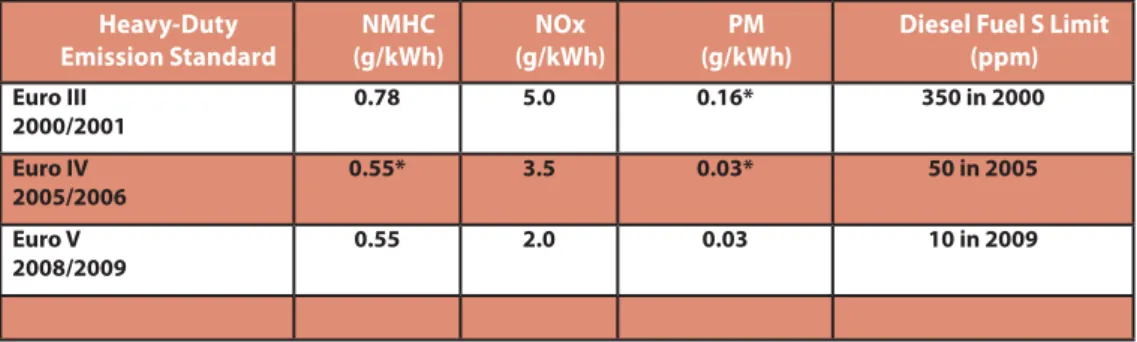
Table 3. European Union Heavy-Duty Vehicle Emission Standards (heavy-duty engine emission standards evaluated using the European transient test cycle)
Heavy-Duty Emission Standard NMHC (g/kWh) NOx (g/kWh) PM (g/kWh)
Diesel Fuel S Limit (ppm)
Euro III 2000/2001
0.78 5.0 0.16* 350 in 2000
Euro IV 2005/2006
0.55* 3.5 0.03* 50 in 2005
Euro V 2008/2009
Table 4. Japan Heavy-Duty Vehicle Emission Standards (heavy-duty engine emission standards evaluated using the European 13-mode steady-state cycle for 2003 and the Japan heavy-duty transient test cycle starting in 2005)
Heavy-Duty Emission Standard NMHC (g/kWh) NOx (g/kWh) PM (g/kWh)
Diesel Fuel S Limit (ppm)
Euro III 2000/2001
0.78 5.0 0.16* 350 in 2000 Euro IV
2005/2006
0.55* 3.5 0.03* 50 in 2005 Euro V
2008/2009
0.55 2.0 0.03 10 in 2009
*THC standard in 2003
In all cases these new heavy-duty vehicle standards have been accompanied with regulatory limits on diesel fuel sulfur levels that enable the use of advanced emission technologies to achieve some of the more aggressive standards for NOx and PM on these vehicles. These diesel sulfur limits are also included in the tables. Ultra-low sulfur diesel for highway vehicles is now the norm in these developed parts of the world. In Europe and Japan there is already wide scale availability of highway diesel with 10 ppm sulfur levels or less (introduced ahead of any regulatory requirement), while the U.S. completed a successful rollout of ultra-low sulfur diesel (15 ppm S max.) in the second half of 2006. Examples of advanced technologies that are now available on new heavy-duty trucks and buses as a result of these regulatory programs include systems that combine EGR with DPFs that are now equipped on new heavy-duty vehicles sold in the U.S. and Japan to comply with the U.S. 2007 and Japan 2005 PM standards, and urea-SCR systems equipped on most Euro IV and Euro V compliant heavy-duty trucks and buses. SCR catalysts will be the preferred strategies for complying with the U.S. 2010 and Japan 2009 NOx standards for heavy-duty highway vehicles. Most recently the European Union has approved Euro VI engine emission regulations that will provide further reductions in heavy-duty NOx and PM emissions from new engines in the post-2010 timeframe.
4.0 Bus Rapid Transit Systems
Bus Rapid Transit (BRT) is a bus-based transit system that delivers fast and cost-effective transportation through the use of dedicated, segregated bus lanes in metropolitan regions of large cities. In this way a BRT system attempts to emulate the performance and service of rail-based mass transit systems but typically at a fraction of the costs of either light rail (or tram) systems or subway systems. Examples of BRT systems can be found in at least 40 cities on six continents including examples in both developed and developing countries. Examples from the developed world include Brisbane in Australia,
Rouen in France, Seoul in South Korea, and Ottawa in Canada. BRT examples from the developing world include Bogota in Columbia, Guayaquil in Ecuador, and Jakarta in Indonesia.
Important elements of successful BRT systems include high quality infrastructure (segregated busways, route networks, enhanced bus stations with level access between the platform and bus floor), efficient operations (frequent service, ample capacity, pre-board fare collection), use of sophisticated technologies (traffic signal coordination/priorities, intelligent transportation systems, automated fare collection), and high levels of marketing and customer service (clear route maps, real-time information displays). When combined with the use of low emission buses (e.g., new buses certified to low emission levels or buses retrofit with emission controls like diesel oxidation catalysts or particulate filters) operating on low or ultra-low sulfur diesel fuel, BRT systems can deliver significant reductions in bus system emissions, more efficient use of fuel, and reductions in greenhouse gas emissions.
Implementation of a BRT system requires significant planning and resources at the local level. Based on available resources, political will, local conditions, and cost constraints, BRT system designs may need to make decisions about the range of attributes that can be included in the overall system. The Resources section at the end of this report provides additional information sources on BRT examples, the planning process required for implementing a BRT strategy, and the lessons learned from BRT systems employed around the world to date.
5.0 Clean bus fleet strategy
1st Step. Prepare the ground
A well functioning inspection program with the required repairs is a prerequisite for a successful effort to clean up your busfleet. The I/M program will give an updated knowledge on the status of your fleet and the repairs will reduce the malfunctioning buses that emit disproportionately larger amounts of pollutants.
2nd step. Look at your fuel
Using high sulfur diesel is bad for both the environment and for your engines. Refueling to a low sulfur diesel is always a good option that directly reduces the emission of sulfates and fine particles. Low sulfur diesel also opens up the use of more advanced retrofit emission control technologies on existing buses and the addition of newer, clean diesel buses to your fleet.
3rd step. Look at your vehicles
Old buses with 2-stroke engines with mechanical injection systems emit a lot and cannot be retrofitted effectively nor be repowered at a reasonable cost and should be retired and replaced.
Old buses with 4-stroke engines with mechanical injection systems (typically pre-1990 models in the U.S. but may vary in other parts of the world) can be retrofitted with DOCs but the total emission reduction is far better by retiring these buses and replacing them with new cleaner buses. Replacing is however more costly. Retrofitting with DOCs requires at least 500 ppm diesel.
Buses with electronic injection systems (typically post-1994 models in the U.S. but may vary in other parts of the world) can both be retrofitted or repowered effectively. Repowering will cost more but extends the lifetime of the bus. Retrofitting with an effective DPF requires 50 ppm sulfur or lower diesel.
The following example from New York City provides information about how a large city transit system has made use of a variety of strategies to significantly reduce emissions from its bus fleet.
The New York Clean Bus Program
New York City Transit Company (NYCT) runs the city buses in New York and has since 2000 had a Clean Bus program
with the aim of making New York buses “the cleanest in the world”. The Clean Bus Program is a good example of a comprehensive strategy for cleaning up a bus fleet. From 1995 to 2006 fleetwide PM emissions
were reduced by 97%, thanks to the accelerated retirement of two-stroke diesel engines, the use of ultra-low sulfur diesel fuel and DPFs in all diesel buses, and a significant commitment to CNG and hybrid-electric buses Refueling
In September 2000, NYCT switched to ultra-low sulfur diesel, which has >90 percent less sulfur than traditional fuel and reduces emissions
Retrofit
After that, NYCT had a demonstration project testing out different retrofit technologies that would match the fuel. Diesel Oxidation Catalysts (OEMs) and Catalyst-based Diesel Particulate Filters (DPFs) were tested with ultra low sulfur diesel (<50 ppm) and low sulfur diesel (350 ppm).
The DPFs with ULSD reduced HC, PM and CO by 80 to 95%; DOCs reduced CO and PM by 20 to 40% and HCs by 70 to 80%. NOx emissions were basically unchanged and the emissions of CO2 can increase slightly. Based on the results from the demonstration program, NYCT has since installed DPFs on every diesel bus in the fleet – more than 4,600 buses.
$EXVIURPWKH1HZ<RUN&LW\7UDQVLW&RPSDQ\
phot
o : R
ich K
assel
NYCT have also repowered quite a few older buses not suitable for retrofitting. To date, 642 buses have been repowered with new diesel engines that are up to 94% cleaner than the old engines they replaced.
Replacing
The first priority was to get rid of the old buses with 2-stroke engines. Beginning in 2000, 392 older buses with 2-stroke engines were retired. The last 2-stroke bus was retired in the summer of 2005. NYCT have replaced the retired buses with new CNG buses, hybrid buses, and new diesel buses with particulate filters.
NYC Transit has the largest hybrid-electric bus fleet in North America, with more than 1400 hybrid buses in the fleet. The number of hybrid-electric buses in the fleet is expected to grow to nearly 1900 by mid-2010.
Repowering
6.0 Resources
This section provides information on other reports or websites that are available for additional information on the strategies cited in this report for reducing emissions from buses or other heavy-duty diesel vehicles
Low Sulfur Diesel Fuel
Information on the U.S. ultra-low sulfur diesel fuel program is available at: www.clean-diesel. org.
Diesel Retrofit Resources
Retrofit technologies verified for emission performance and durability by the U.S. EPA and California Air Resources Board (CARB) are listed on the following websites:
• U.S. EPA-verified retrofit technologies: www.epa.gov/otaq/retrofit/verif-list.htm
• CARB-verified retrofit technologies: www.arb.ca.gov/diesel/verdev/vt/cvt.htm
In conjunction with state and local governments, public interest groups, and industry partners, the U.S. EPA’s National Clean Diesel Campaign (NCDC) (http://www.epa.gov/otaq/diesel/ index.htm) has established a goal of reducing emissions voluntarily from the over 11 million diesel engines in the existing fleet by 2014. As a result, across the United States, diesel retrofit programs and demonstration projects have grown significantly over the past several years.
The U.S. EPA has partnered with leaders from state and local governments, the private sector, and environmental/health groups across the U.S. to form seven regional diesel collaboratives with the aim of leveraging resources and expertise to reduce diesel emissions from in-use vehicles. These collaboratives keep track of past, current, and upcoming diesel retrofit programs/demonstration projects in their respective regions. Below are links to the seven diesel collaboratives in the U.S.:
• Blue Skyways Collaborative: www.blueskyways.org
• Mid-Atlantic Diesel Collaborative: www.dieselmidatlantic.org • Midwest Clean Diesel Initiative: www.epa.gov/midwestcleandiesel/ • Northeast Diesel Collaborative: www.northeastdiesel.org
• Rocky Mountain Clean Diesel Collaborative: www.epa.gov/region8/air/rmcdc.html • Southeast Diesel Collaborative: www.southeastdiesel.org
• West Coast Diesel Collaborative: www.westcoastdiesel.org
Information on regulations under CARB’s Diesel Risk Reduction Program, which includes regulatory programs that have mandatory diesel retrofit compliance options for on-road and off-road, in-use diesel engines, can be found at: www.arb.ca.gov/diesel/mobile.htm.
To demonstrate the benefits of using diesel retrofit technologies and ultra-low sulfur diesel fuel in other countries, the U.S. EPA initiated demonstration projects during 2005 and 2006 in Beijing, China; Bangkok, Thailand; Mexico City, Mexico; Pune, India; and Santiago, Chile. Links
to information on these demonstration projects are provided below:
• Beijing, China: www.epa.gov/OMS/retrofit/china2.htm
• Bangkok, Thailand: www.cleanairnet.org/baq2004/1527/article-59239.html • Mexico City, Mexico: www.embarq.org/en/project/mexico-city-diesel-retrofit • Pune, India: http://urbanairpune.org/clean.html or http://epa.gov/international/air/ india.htm
• Santiago, Chile: http://www.unep.org/pcfv/PDF/TruckFilterProgramme_Chile.pdf.
Additional information on these demonstration programs, as well as other international diesel retrofit projects, is available on EPA’s website at: www.epa.gov/international/air/transport. htm#idrp.
There are several other successful diesel retrofit programs and demonstration projects currently ongoing in other parts of the world as well, including:
Asia
• Hong Kong: www.epd.gov.hk/epd/english/environmentinhk/air/prob_solutions/ cleaning_air_atroad.html
• South Korea: eng.me.go.kr/docs/news/press_view.html?seq=264 • Tokyo, Japan: www.dieselnet.com/standards/jp/tokyofit.html
Europe
• London: www.tfl.gov.uk/roadusers/lez/default.aspx • Sweden: www.dieselnet.com/standards/se/zones.html
• Switzerland: www.bafu.admin.ch/luft/00596/00597/00609/index.html?lang=en • The Association for Emissions Control by Catalyst (AECC) maintains a website that summarizes diesel retrofit programs in Europe: www.dieselretrofit.eu)
North America
• British Columbia, Canada: www.bcairsmart.ca/transportation/heavyduty.html • Ontario, Canada: www.ec.gc.ca/cleanair-airpur/CAOL/canus/great_lakes/c3_e.cfm
In July 2005, the U.S. EPA released a report on diesel retrofit technology application and program implementation experience in the U.S. since 2000. The report, Diesel Retrofit Technology and Program Experience, identifies over 220 retrofit projects throughout the U.S. The report is designed to serve both as a reference tool on diesel retrofit technologies and programs in the U.S. and to document valuable lessons learned from the projects. This report, as well as other documents on clean diesel programs, technologies, emission reductions strategies, and cost-effectiveness, is available on EPA’s website at: www.epa.gov/cleandiesel/publications.htm.
Environmental Defense published a “Cleaner Diesel Handbook” in 2005 that details strategies for reducing emissions from existing diesel engines. The report is available at: www. environmentaldefense.org/documents/4941_cleanerdieselhandbook.pdf.
The Manufacturers of Emission Controls Association (MECA) maintains a website that provides information on the various types of diesel retrofit technologies, funding opportunities in the U.S. for retrofit projects, and other retrofit-related resources: www.dieselretrofit.org.
Bus Rapid Transit
The Sustainable Urban Transport Project provides a number of resources on bus rapid transit systems available at: www.sutp.org/index.php?option=com_frontpage&Itemid=1&lang=uk.
The Institute for Transportation and Development Policy has published a bus rapid transit planning guide available at: http://www.itdp.org/index.php/microsite/brt_planning_guide/.
Other internet resources on BRT systems/experience is available from: the National Bus Rapid Transit Institute in the U.S. (www.nbrti.org), the Bus Rapid Transit Policy Center in the U.S. (www.gobrt.org), and a 2007 World Bank presentation on BRT experience in Asia and Latin America (web.worldbank.org/WBSITE/EXTERNAL/TOPICS/EXTTRANSPORT/EXTURBANTRANS PORT/0,,contentMDK:21323061~pagePK:148956~piPK:216618~theSitePK:341449,00.html).
PCFV Clean Fleet Management Toolkit
The PCFV provides this toolkit to help fleet managers develop a strategy for reducing the environmental impacts of their fleets. It is accessible on-line and provides tools that provide information for a step by step action plan and strategy for reducing the environmental impacts of a fleet. The tools allow the estimation of pollution reductions, fuel savings, and the comparison of various strategy options. It can be accessed at www.unep.org/tnt-unep/ toolkit.
6FUHHQVKRWRIWKH3&)9FOHDQÁHHWPDQDJHPHQWWRRONLW
phot
&OHDULQJ+RXVHRIWKH3DUWQHUVKLSIRU&OHDQ)XHOVDQG9HKLFOHV3&)9 8QLWHG1DWLRQV(QYLURQPHQW3URJUDPPH81(3
32%R[1DLUREL.(1<$
7HOHSKRQH)D[ (PDLOSFIY#XQHSRUJ
phot
o : R
ich K