Process evaluation of
the two-year-olds in
schools demonstration
project
Research Report
January 2015
Vanessa Greene, Puja Joshi, Cathy Street with
Joyce Connor and Susan Soar - National
Children’s Bureau
Ashley Kurtz - Frontier Economics
1
Contents
List of figures
6
List of tables
7
Acknowledgments
8
Executive summary
9
Overview
9
Background to the Demonstration Project
9
Evaluation scope and methodology
10
Key findings of the evaluation
10
Main Findings
13
1
Introduction
16
1.1
Background
16
1.2
Methodology
18
1.2.1
Brief summary of participating schools
18
1.2.2
Overview of evaluation activities
18
1 op ;.3
Report outline
20
2
Set-up, design and roll-out of the provision
21
2.1
Summary of the Chapter
21
2.2
Set-up and planning stages of the provision
22
2.2.1
Influences on approaches to delivery
22
2.2.2
Who led the delivery of the provision and where was it based?
22
2.2.3
Influences on the number of places on offer to two year-olds
23
2.2.4
Addressing legal requirements
23
2.2.4
Applying for Ofsted registration
23
2.3
Development work to prepare for taking two-year-olds into the setting
24
2
2.3.1
Changes to the physical environment of the setting
24
2.3.2
Ethos and pedagogy of provision
24
2.3.3
Integrating two-year-olds with older children
25
2.3.4
Establishing the right environment to support the learning and development
of two-year-olds
27
2.4
Ensuring staff capacity to deliver early years provision
27
2.4.1
Staffing high-quality provision
28
2.4.2
Development work required to build staff capacity
28
2.4.3
Challenges with recruitment
28
2.4.5
Providing learning and development for staff about the needs of two
year-olds
29
2.5
Raising awareness of the places on offer to families
30
2.5.1
When did schools begin the process of raising awareness of places on offer?30
2.5.2
What strategies did schools use to raise awareness about places on offer?31
3
Delivery models
32
3.1
Summary of the Chapter
32
3.2
Staffing models
32
3.2.1
Number of staff within the provision
32
3.2.2
Which staff members were working with two-year-olds and when?
33
3.3
Make-up of places on offer to two-year-olds
34
3.3.1
Type and number of places for two-year-olds
34
3.3.2 Allocation of the hours on offer to two-year-olds
34
3.4
Additional care options on offer to two-year-olds
35
3.4.1
How many schools were offering additional options to two-year-olds in
funded places?
35
3.4.2
Take up the additional care/support options on offer
36
3.5
Engagement with parents
36
4
Schools’ reflections on the learning for two-year-old provision in practice 39
4.1
Summary of the Chapter
39
4.2
Take-up of the ‘early learning for two-year-olds’ entitlement
40
4.3
Plans to expand the offer
40
4.4
Working with children in funded places
42
4.4.1
Criteria for accessing funded early education places for two-year-olds
42
4.4.2
Experiences of working with funded two-year-olds
42
4.5
Schools’ perceptions of their effectiveness at providing provision for
two-year-olds 43
4.6
Perceived strengths in provision and barriers to delivering quality provision
46
5
Perceptions of the provision for two-year-olds amongst parents
48
5.1
Summary of the Chapter
48
5.2
Parents’ experiences of the provision
48
6
Financial considerations of setting-up and delivering provision for
two-year-olds
50
6.1
Summary of the Chapter
50
6.2
Costs of set-up and how they have been funded
51
6.3
Costs for delivery and how have they been funded
55
6.4
Implications for financial sustainability
61
6.4.1
Schools expectations for financial sustainability in the future
63
7
Learning from the demonstration project
68
7.1
The evaluation findings
68
7.2
Barriers and enablers to providing provision to two year-olds in funded places 72
7.3
Main Findings
73
Annex 1: Additional Evaluation Activities
76
Annex 2: List of eligibility criteria
77
Appendix 1: Methodology supplementary information
78
Appendix 2: Schools participating in the demonstration project
81
Appendix 3: Summary of case study schools
83
Appendix 4: Schools’ partnership arrangements
84
Appendix 5: About the authors
85
List of figures
Figure 4.1
Perceived demand for early years places for two-year-olds
41
Figure 6.1 Amount of statutory funding local authorities passed on to schools
60
Figure 6.2 Expectations for future financial sustainability
64
Figure 6.3 Schools’ expectations for local demand for places for two-year-olds
66
Figure 6.4 Schools’ views on what would most improve their provision
67
List of tables
Table 2.1 Delivery arrangements of schools in the demonstration project
22
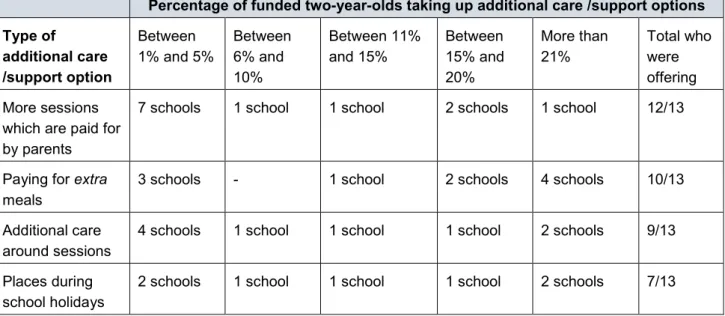
Table 3.1 Take-up of additional care/support options on offer to funded two-year-olds 36
Table 3.2 School strategies for engaging with parents of two-year-olds
37
Table 3.3 School strategies to help parents to support their children at home
38
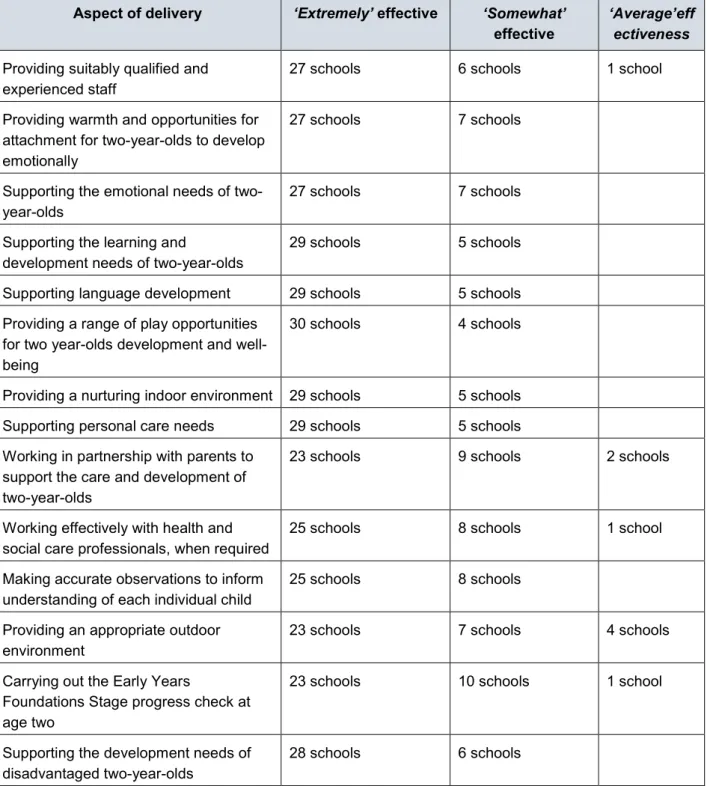
Table 4.1 Schools’ ratings of different aspects of their provision for two-year-olds
45
Table 4.2 Benefits to schools and benefits to parents
46
Table 6.1: School ratings of set-up areas of main expenditure
51
Table 6.2: Staff-related areas of spending during set-up
51
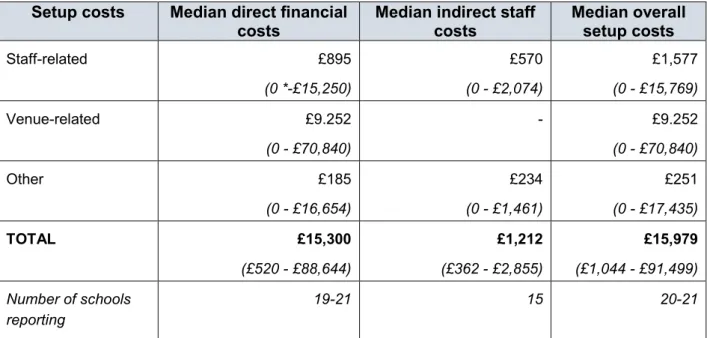
Table 6.3: Median direct and indirect costs of setting up provision for two-year-olds
52
Table 6.4: Funding streams for setting up provision for two-year-olds
53
Table 6.5 Overall delivery costs – per week and per user-hour
55
Table 6.6 Staff delivery in provision for two-year-olds
56
Table 6.7 Imputed value of staff delivery of provision for two-year-olds
57
Table 6.8 Other direct and indirect delivery costs – per week and per user-hour
58
Table 6.9 Funding streams for delivery – per week and per user-hour
59
Table 6.10 Expectations for costs
65
Table 7.1 Barriers and enablers to the development of provision in schools
73
Table Appendix 1: Survey response rates
79
Table Appendix 2: Summary of case study schools
83
Table Appendix 3 Partnership arrangements in two case study schools
84
Acknowledgments
This process and cost evaluation was funded by the Department for Education (DfE). We would like to thank colleagues from the DfE who formed part of the project advisory group, providing expert advice and guidance throughout the evaluation including the development and facilitation of the all-school learning and sharing workshops: Cath Rourke, Maura Lantrua, Neil Dube, David Aickin, Amy Tait and Rosalyn Harper.
We would also like to thank members of the schools advisory group for volunteering their valuable time to the project, particularly in development of the research tools.
Last, but not least, we would like to thank staff members at the schools participating in the demonstration project (detailed in Appendix 2) and the parents of two-year-olds receiving provision in these schools for giving up their valuable time to take part in the evaluation. Their views and experiences are central to the data presented in the report, our interpretations of the findings and our recommendations for developing provision in schools for two-year-olds in the future.
Executive summary
Overview
This report draws together the full findings of the process and cost evaluation of the two-year-olds in schools demonstration project. This was undertaken by the Research Centre of the National Children’s Bureau (NCB), in partnership with the NCB Early Childhood Unit (ECU) and Frontier Economics (FE) from October 2013 until September 2014.
This final report provides data from the final phase of the evaluation, alongside discussion of the lessons learnt from the evaluation overall and recommendations for sustaining and developing provision in schools for two-year-olds in the future. It is the third in a suite of documents, the first being a report detailing the baseline survey findings1 published in April 2014 and the second, a
report of the eight case study schools which is published alongside this final report.
Background to the Demonstration Project
Since September 2010, every three- and four-year-old has been entitled to 15 hours per week of funded free early education over 38 weeks of the year. This entitlement was subsequently extended to provide an entitlement to funded free early education to disadvantaged two year-olds, with the aim of supporting their learning and development. The entitlement was phased in, with around 20 percent of two-year-olds (130,000 children) being eligible in September 2013, for example being offered a place if their family met the income and benefits criteria used for free school meals, and around 40 percent of two-year-olds being eligible in September 2014. The criteria for entitlement to funded places are set out in Annex 2.
Places for funded two-year-olds have been provided across the country in maintained and private, voluntary and independent early years settings, including nursery schools, children’s centres, nurseries, pre-schools and playgroups. The report More Affordable Childcare (DfE 2013) notes that in order to deliver sufficient high-quality funded places for two-year-olds, schools would need to be a key provider, with better use made of school premises and facilities and of teachers skilled in offering high-quality early education. The report notes:
“Schools are central to their local community, trusted by parents. The government would like to see primary school sites open for more hours in the day, from 8-6 if possible, and for more weeks in the year, offering a blend of education, childcare and extra-curricular activities. But this should not be driven by a centrally prescribed approach…To be effective, head teachers need to make decisions that are right for their school, children and parents.”
In 2013, only a small number of schools were known to be offering provision for two-year-olds and there was an urgent need to share and learn from their experiences in order to support other schools who might also offer provision for this age group. Areas of particular interest included arrangements for day-to-day provision, management, staffing and practice, and also, the costs of setting up and delivering early learning and care in schools for this age group.
1 To access the full baseline report please see https://www.gov.uk/government/publications/ two
year-old-Demonstration-project-in-schools-baseline-survey
9
Schools in the demonstration project
In order to build a strong evidence base and develop good practice materials, in 2013, the Department for Education (DfE) introduced a demonstration project with a group of selected schools. Fifty schools were recruited, drawn from a variety of urban and rural settings across England and reflecting areas of the country where higher numbers of places for two year-olds were needed to enable all those who were eligible to access a funded place.
To take part in the project, all schools were expected to have an Ofsted rating of ‘good’ or ‘outstanding’. Each volunteer school received a one off grant payment of £10,000 in return for their active participation in the project evaluation, providing peer support and sharing experiences.
In the end, 49 schools provided data for the evaluation; all were state maintained but varied in type (for example, local authority maintained primary and nursery schools or academies) and whether they had previous experience of offering places for two-year-olds prior to joining the project.
Evaluation scope and methodology
The evaluation explored the different approaches that these 49 schools took to developing and delivering their provision, and investigated how these models of delivery worked in practice in order to understand ‘what works well’ in delivering provision for two-year-olds. Key areas of investigation included: identifying the facilitators and barriers to providing high-quality provision and also sustainable models of provision; providing evidence on the costs of setting up and delivering provision for two-year-olds in schools and identifying implications for the financial sustainability of this provision. As an investigation of processes and costs, the evaluation did not investigate the quality of provision nor was it able to assess the impact of the provision on children’s outcomes.
Key findings of the evaluation
By the end of the evaluation period, nearly all of the schools involved in the demonstration project reported that they were offering places for two-year-olds (at the time of the final survey, three had yet to start, with one planning to do so in June 2014 and two awaiting Ofsted registration). For many of these schools, this was the first time they had offered places for two-year-olds, and whilst various challenges had been encountered, most were reporting success in this endeavour and that demand for the places (in particular, for funded places) was high.
Feedback from focus groups with parents from the eight case study schools was also positive, and early perceptions from school staff suggested that they saw a number of potential benefits of offering places for two-year-olds, not only for the children, but also for parents and the school itself. These perceived benefits included, amongst others: the opportunities presented for building relationships with parents; social opportunities for the children and the potential for early identification of children’s needs.
In terms of the make-up of the places on offer to two-year-olds, some schools (18 out of 34) offering funded places for two-year-olds only, and others offering both funded and fee paying places, with the majority, offering between eight and 36 places.
The allocation of the actual hours of provision varied (for example, term time only or spread over the year/50 weeks), as did the offer of additional care or support options, for example, additional sessions which are paid for by parents and holiday provision. Likewise, a number of different staffing arrangements were identified and there was variation in the frequency of contact with a qualified teacher and/or Early Years Professional.
Influences on the development of provision
Schools’ awareness and understanding of local needs, the strategic aims of both the school and the local authority and the support and advice offered by the local authority, were identified as significant influences on the development and delivery in schools of provision for two-year-olds. Other influences included the availability of space within the school and the amount of funding available at the time of set up. Space was a key consideration for any plans either to increase and/or develop the provision in the future. School staff also highlighted the importance of schools working in partnership with other local providers of early years provision for two-year-olds to share learning, practice and staff expertise.
Not surprisingly, given these local influences, the evaluation found that there was no ‘blueprint’ model for providing places for two-year-olds in schools – moreover, that to work, it is important that there is a ‘fit’ with the provision of the school overall.
Providing high quality provision
Data gathered in the evaluation indicated that all of the schools recognised the need to provide appropriate environments that felt homely, nurturing and stimulating for two-year-olds. This needed to include both indoor and outdoor space, with the provision offering a flexible array of play-based and individualised learning opportunities, led by both children and adults.
Schools highlighted the need for the staff working with two-year-olds to have specific knowledge and skills – for example, an understanding of the needs of two-year-olds and of child development more generally and knowledge of the Early Years Foundation Stage (EYFS). Many had needed to recruit new staff, or undertake staff development and training in order to achieve this. Furthermore, schools reported the need for Continuing Professional Development (CPD) on a variety of topics relevant to two-year-olds and suggested that this is an essential part of ensuring high quality provision.
Recruiting the ‘right’ staff was one of the key challenges identified by some of the demonstration schools. For some, this reflected their financial position, whilst for others, their concerns were more about difficulties with recruiting staff with the required knowledge and skills. This included knowing where to go to find appropriate staff. In the interviews with the case study schools, it was noted that such problems with recruitment have the potential to delay development and delivery of places for two-year-olds in schools and also, could adversely affect the quality of the provision. On a positive note, however, by the time of the final evaluation survey, all of the schools who responded (34 schools) did perceive themselves as effective in providing qualified and experienced staff.
Other challenges identified by the schools in the demonstration project included: the longer-than-expected timeframe for planning and setting up provision; the greater time required for engaging
with parents and the demands posed by working in partnership with parents. There were also a number of different issues around the funding basis of provision for two-year-olds. In some of the schools, it was also noted that the needs presented by some two-year-olds required one-to-one staffing, (i.e. well over the usual staff to two year-old ratios of 1:4 or 1:3 operated by the schools) which obviously had significant staffing and financial implications.
Adaptations and ways of working to offer provision for two year-olds
Many of the schools taking part in the demonstration project undertook some quite major adaptations to the school premises and to their ways of working. The baseline survey, showed a number of the schools had undertaken ‘a lot of work’ to adapt washing/toilet facilities, adapt indoor and outdoor space and adapt the kitchen facilities. Also at baseline, while 13 out of 47 schools described the process of developing the facilities for two-year-olds as ‘easy’, 29 of the 47 schools reported that the process as ‘not easy’.
Schools also reported that working with the parents of two-year-olds had taken considerably more time than originally expected, not least in the early awareness-raising phases and in undertaking home visits. Many of the schools involved in the demonstration project recognised these as a very important element of effective working with parents but highly demanding on staff time and for this reason, visits had not proved possible to undertake in all schools. However, the findings also revealed that the schools employed a variety of strategies to engage parents and that the most commonly used technique (reported by 34 schools) was holding informal conversations with parents about their child’s progress, either during or after school. This was also perceived by schools to be the most effective strategy for engaging with parents.
Financial considerations
The funding required for delivering provision for two-year-olds in schools was a major area of investigation in the evaluation. Questions on this were included in the baseline survey, the case study interviews and a finance survey that schools completed between June-August 2014 (i.e. at the end of the academic year and towards the end of the evaluation time period). This questionnaire covered set-up and delivery costs and included staffing, physical adaptations and funding sources. The final survey also gathered information about schools’ perceptions on future sustainability and possible expansion/development of provision for two-year-olds.
On average, the data gathered suggests that set-up costs and funding were broadly in balance. However, this masks considerable variation across the schools in the demonstration project and it must be noted that there was a low response rate to the finance survey (51% non-responders/up to 24 schools provided data). Many schools found it difficult to provide sufficiently detailed information about the direct and indirect costs of provision and there were indications of under-reporting, all of which make it difficult to present a truly representative picture of the costs of provision in schools for two-year-olds.
In the baseline survey, it was apparent that some of the schools found the financial aspects of delivering provision for two-year-olds challenging. It was reported that some had drawn on existing financial resources/school reserves and/or local authority grants during the set-up phase. There were also variations across the country in terms of the additional money paid by local authorities to schools (for example, some schools reported receiving enhanced hourly rates to reflect the higher levels of need posed by some two-year-olds), variations in hourly rates paid to
schools for funded places, and different payment mechanisms which are likely to reflect a combination of local priorities and approaches to the differing needs of individual schools, fiscal constraints and cost pressures.
Schools identified three main categories of direct costs involved in their provision for two-year-olds: (i) staff-related costs (including recruitment and training); (ii) venue-related costs (including adaptations and renovations, the purchase of equipment, toys and furniture) and (iii) costs for insurance, marketing and engagement work with parents.
In the summer 2014 finance survey, schools reported they were spending the most time on curriculum planning, staff training and marketing to parents. One of the issues also noted in the data gathered was that the 15 hours of provision covered under the entitlement funding for a place failed to take account of the significant planning and engagement work that school staff may need to undertake with families in order for their child to take up a place.
Sustainability considerations
The baseline data, suggested that half of the schools expected to break even and some were expecting to have a budget shortfall (which some planned to cover through their general school budget, whilst others were planning to use revenue from fee-paying places). At the time of the final survey, this mixed picture continued with one third of the respondents expecting financial sustainability to stay about the same, six expecting sustainability to improve and five for it to become more challenging to secure funds or meet rising staff costs.
Most of the respondents reported strong local demand for places, which offered the potential to expand the provision. However, it is also important to note that a number of schools perceived there was limited or no parental demand for fee-paying places in some areas of the country. Among those respondents expecting financial sustainability to improve, reasons included no longer incurring one-off set up costs and also cost savings from working with an academy. A number of schools, concerned about the financial sustainability of the provision, cited expected rises in staff costs/salaries. No longer receiving start-up funding from the DfE or local authority and finding their current revenue insufficient to cover costs, were also noted by some school respondents. Uncertainty about future funding schemes was a clear concern.
Finally, in terms of improving provision for two-year-olds in the future and financial implications, respondents to the finance survey highlighted a wish for additional staff, including specialist support to provide greater flexibility and higher staff ratios. Overall, schools reported that they would welcome information and assistance with the financial planning required for the provision, including greater clarity from local authorities about the types of funding available and the relevant application procedures.
Main Findings
The findings of the evaluation indicate that schools can make an important contribution to offering early education opportunities for two-year-olds and to work in partnership with parents and with other early years providers in order to meet the developmental, social and emotional needs of these children. However, a range of enablers and barriers to the development of provision were
identified which need to be considered if this aspect of schools provision is to be of high quality and sustainable. The following draw on this analysis of the evaluation findings.
For schools
• It is important that schools are aware of and consider local demand when developing schools-based provision for two-year-olds.
• Schools should consider working collaboratively with other local providers of provision for two-year-olds in their area, to learn from their experiences and expertise and potentially, to share resources and training opportunities. There is no ‘blueprint’ model and what is key is that the provision fits well within the local area and also, the ethos and strategic aims of the school overall.
• Schools need to allow a generous amount of time to plan their provision for two year-olds, including thinking about what size/number of places is possible and the physical adaptations that may be required (both indoors and outdoors) in order to create an appropriate environment that is both nurturing, safe and stimulating.
• Schools need to develop a robust business model that balances capacity with flexible delivery and ensures that whatever is provided is high quality, individualised to the needs of the two-year-olds and draws on accepted evidence for meeting the needs of this age group.
• Staffing processes (including the recruitment of new staff, training and CPD) must ensure that staff are equipped with the right knowledge and skills to work with this age group –
including knowledge of child development and the Early Years Foundation Stage.
• Skills (and time/capacity) to engage with and work in partnership with parents, are also vital and schools need to learn from others working in the sector on effective strategies for engaging and supporting parents.
• Planning the provision must take into account the required staff to child ratios but also when necessary, go beyond the minimum statutory requirements and provide individualised one-to-one support for two-year-olds with additional needs. Ensuring that
children’s transition into the setting is as well supported as possible (as this may be the child’s first experience out of the home), is a key consideration.
• Schools should develop their finance recording systems so that they can plan and easily monitor the funds required for offering places to two-year-olds. It is also suggested that schools allow for some contingency funds to cover any unexpected costs, also that their business planning is both realistic and conservative - on the basis that a number of schools in the demonstration project expressed surprise at both the initial investment needed, but also, the time required in the setting up of provision.
For local authorities
• Findings from the evaluation suggest that schools would welcome more advice and support about business and financial planning and the development of appropriate business models to underpin provision in schools for two-year-olds.
• A number of schools faced challenges in recruiting staff with relevant qualifications and may have benefitted from additional support and advice in this area. Quality staffing is the foundation of good-quality provision and therefore investing resources, including but not restricted to financial support, is vital to ensure that schools feel confident in their ability to build an appropriate staff base to deliver their provision.
• Local authorities should review communications to ensure transparency with providers about available funding streams and the relevant procedures for applying. Local authorities should also ensure that procedures are accessible and fair to different types of providers.
• The determination of hourly rates, enhanced or top-up rates where it is identified that a two-year-old has additional needs, needs clarification since the evaluation identified variations across local authorities, both in terms of processes for agreeing additional payments but also, the levels paid to schools. Local authorities should continue to pass on as much of the statutory funding as possible to providers in line with DfE recommendations.
• Schools valued training programmes offered by local authorities to prepare staff for working with two-year-olds. However, availability/accessibility was limited in some areas and it is suggested that local authorities should assess and regularly monitor local training needs and facilitate provision.
For the Department for Education (DfE)
• Schools in the demonstration project gained valuable learning from the events convened by DfE and the sharing of resources via online dissemination routes. DfE plans to develop ‘school champions’ from the cohort of schools involved in the demonstration project, to continue the sharing of experiences and expertise across the sector, to promote policy and support other schools to develop their own provision for two-year-olds may benefit from DfE convening similar events.
• The funding available to develop provision in schools for two-year-olds was a clear concern in the data gathered from a number of schools in the demonstration project. It is therefore recommended that Department continues to explore ways to develop a sustainable funding infrastructure for providers wishing to build capacity in this area of provision, including working with local authorities to develop clear guidelines on this matter.
1 Introduction
The National Children’s Bureau2 (NCB) in partnership with Frontier Economics3 (FE) were
commissioned by the Department for Education (DfE) to carry out a process and cost evaluation of fifty schools who had volunteered to join a DfE demonstration project to explore provision in schools for two-year-olds and this report draws together the findings of the evaluation. The evaluation commenced in October 2013 and ran until September 2014. This final report provides data from the final phase of the evaluation, alongside discussion of the lessons learnt from the evaluation overall and recommendations for sustaining and developing provision in schools for two-year-olds in the future.
The report is the third in a suite of documents, the first being a report about the baseline survey published in April 2014 and the second, a report of the eight case study schools which is published alongside this final report. The remainder of this chapter presents the background to the demonstration project, explains the evaluation methodology, notes some points about interpreting the data gathered and sets out the report structure.
1.1 Background
In 2010, the Coalition Government announced a £7 billion ‘fairness premium’ as part of its approach to fairness and social mobility, part of which supported an entitlement of 15 hours per week of free pre-school education for disadvantaged two-year-olds.
The entitlement, referred to as ‘early learning for two-year-olds’, aims to support disadvantaged children’s cognitive, social and behavioural development and reduce any differences in attainment at school starting age. Places for disadvantaged two-year-olds have been provided across the country in maintained and private, voluntary and independent early years settings, including nursery schools, children’s centres, nurseries, pre-schools and playgroups.
The entitlement was expanded in September 2014 from the 20 per cent most disadvantaged two- year-olds eligible for a place in 2013 to the 40 per cent most disadvantaged two-year-olds. This raises new challenges for local authorities in terms of increasing and maintaining local capacity to ensure sufficient quality places, which may be particularly difficult in areas where high demand and costs for childcare make it less attractive for providers to offer funded places.
The demonstration project evaluation
In 2013, only a small number of schools were known to be offering provision and there was acknowledgement by the Department for Education (DfE) amongst others, that there was important learning to be gathered and shared around the system to help schools prepare their settings and their staff.
In order to build a strong evidence base of good practice and lessons learnt from those offering provision for two-year-olds, and to help all schools who might offer provision for this age group, in summer 2013, the DfE introduced a demonstration project with a group of volunteer schools that
2 For more information about NCB please see http://www.ncb.org.uk
3 For more information about Frontier Economics please see http://www.frontier-economics.com
16
would run from the start of the academic year in September 2013. A £10,000 grant was paid to schools to help with the cost of participating in the project and offering peer support to other schools; up to £2,500 of this grant could also be used for capital purposes.
All participating schools were expected to have an Ofsted rating of ‘good’ or ‘outstanding’ and it was expected that they would:
• Take some two-year-olds who were eligible for the entitlement during the 2013/2014 academic year
• Offer some activities/lessons where the two-year-olds would have the opportunity to interact with three-year-olds
• Provide direct contact with a qualified teacher and/or Early Years Professional
• Demonstrate approaches to helping parents manage their working patterns (for example by providing extended day-care or out-of-term provision) and helping children to make the transition to schools
• Attend the workshops set up by the DfE and cooperate with the external evaluators to support the national evaluation and gathering of good practice
• Offer mentoring and sharing of good practice with other schools
• Carry out their own evaluations within their schools.
During this time, the different approaches used by the schools and their experiences of setting up and delivering provision, would be tested and independently evaluated by NCB and Frontier Economics. Opportunities for the staff in the participating schools to network and share experiences and ‘problem-solve’ some of the challenges encountered in set up or delivery, would also be provided via the workshops. These were convened in London and facilitated jointly by DfE staff responsible for commissioning and supporting the demonstration project alongside the NCB and Frontier Economics team.
In addition to exploring the different delivery approaches utilised by schools, the NCB and Frontier Economics evaluation sought to identify the facilitators and barriers to providing high-quality provision and a sustainable model of provision. It also considered the costs of setting up and delivering provision for two-year-olds in schools and the implications for the financial sustainability of such provision.
As an investigation of processes and costs, the evaluation did not include investigating either the quality of provision or the impact of the provision on children’s outcomes.
Fifty schools volunteered to join the demonstration project before and during the autumn term of 2013. One school left the project very early on in the evaluation; the remaining 49 schools continued and participated in the evaluation activities up until its conclusion in September 2014.
This report
This report draws together key findings from the following data collection sources:
• Baseline Survey of all schools administered in January 2014
• Case studies of eight schools carried out from March to June 2014
• Final Survey of all schools administered in June 2014
• Finance survey of all schools administered in June 2014
Readers of this final report may have read the baseline report4 which was published in April 2014
and/or the case studies report which is published alongside this final report. It is important to bear in mind when interpreting findings that these reports provide a ‘snap-shot’ of how schools were progressing in the delivery of their provision at that time. This final report presents the key findings from the ten month evaluation period as a whole, presenting a fuller picture of ‘what works’ for schools in the set-up, planning, roll-out and delivery stages of a high quality provision. Findings are intended to inform policy development regarding future provision of early learning for two year-olds within schools, and to act as a learning tool to support settings that may be considering implementing provision for disadvantaged two-years-olds within their own setting.
1.2 Methodology
The evaluation utilised both qualitative and quantitative methods. This section provides a brief summary of: (i) the participating schools and (ii) the evaluation methodology, with a note for interpretation. Appendix 1 provides further details about the evaluation methodology.
1.2.1 Brief summary of participating schools
The forty-nine participating schools were all state maintained schools; they varied in type, region and area as well as in their experience of providing for two-year-olds prior to joining the demonstration project.
Just over a third (37%) of settings were community schools, followed by local authority nursery schools (24%) and academies (20%). The highest numbers of schools were in London (29%), followed by the North West (22%), North East (12%), Yorkshire and the Humber (12%) and the West Midlands (10%). The majority (86%) were located in urban (less sparse) areas and just over half of the schools (60%) had not previously delivered provision to two-year-olds before.
Details of the 49 participating schools are provided in Appendix 2 and a summary of the eight case study schools is provided in Appendix 3.
1.2.2 Overview of evaluation activities
Evaluation activities5:
• Two self-completion surveys of all schools. An online survey was administered to schools at two points in time: a baseline survey between January and February 2014 and a final survey between June and July 2014. Surveys aimed to gain a ‘snap-shot’ of schools’ experiences at that time.
4 To access the full baseline report please see https://www.gov.uk/government/publications/ two
year-old-demonstration-project-in-schools-baseline-survey
5 In addition to these evaluation activities a number of standalone learning and dissemination activities were carried out
throughout the evaluation which are not referred to in this report as they were designed to support schools in their delivery. An overview of the learning and dissemination programme can be found in Annex 1.
18
The baseline survey aimed to gather early feedback on schools’ approaches to the planning and set up of provision for two-year-olds, emerging delivery models, and costs of provision. It also explored which aspects schools found challenging and identified areas in which schools would like further information and support. The final survey built on this and included questions regarding any changes to provision, staff development needs and engagement work with parents.
• A finance survey of all schools. Schools completed a finance survey between June and August 2014. The survey aimed to collect detailed information on set-up and delivery costs, staff resources involved in set up and delivery, sources of funding, and take-up of places per term.
• Qualitative interviews in eight case study schools. Interviews were carried out with eight case study schools between April and May 2014. Interviews aimed to gain a detailed view of each school’s experience of developing and delivering provision as well as parents’ experiences. Interviews were carried out with key staff; those who led the provision (N = 9), lead early years practitioner/s (N = 10), the business manager or finance officer (N = 7), local authority representative or school governor (N = 8). Discussion groups were also held with parents of two-year-olds in funded places attending the provision (N = 34).
Interpretation of findings
Full details of the methodology, including data collection and analysis methods, sample sizes and survey response rates, can be found in Appendix 1. However, it is helpful to bear in mind a number of issues in the interpretation of the findings, as outlined below.
As mentioned, this was not an impact evaluation and so, it is unable to report on the quality of provision or on schools’ effectiveness in improving outcomes for disadvantaged two-year-olds. However, instances of good practice have been identified, along with early indications of perceived positive impact among schools and parents – for example, in terms of building ways of working in partnership with parents and the opportunities for early identification of the needs of some two-year-olds. The evaluation also did not compare provision in schools for two-year-olds with other types of early years provision and thus, does not provide any assessment of the relative benefits or otherwise of school-based provision compared to other early years settings. However, if comparisons were reported, the evaluation has attempted to capture and summarise the views and experiences of the participating schools.
Findings on the financial aspects of delivery were mainly based on the finance survey of all schools as well as a small number of questions in the baseline and final surveys and in the case study interviews with business managers/finance officers and those who led the provision. It is important to note that the level of survey non-response was particularly high in the finance survey (51% non-response/up to 24 schools responded), as outlined in Appendix 1, however, the consistency of findings between the different strands of data collection (including case study depth interviews with finance officers/business managers) and different audiences mean that we can be fairly confident that the overall findings are accurate.
As further discussed in Section 6.2, it is also important to bear in mind that a number of schools reported having difficulties completing the finance survey as they did not always have access to information about relevant expenditures where these were covered by the general school budget
or a central agency (e.g. voluntary organisations). In some cases, respondents indicated relevant but unknown costs in the survey itself, while others mentioned caveats by email or during telephone conversations. As such, these estimates are likely to be somewhat lower than the actual costs incurred by schools.
Data from the three surveys have been presented in tables or charts throughout this report. Where percentages do not sum to 100 per cent this is due to rounding, the existence of a proportion of ‘not stated’ answers, or because respondents were able to choose multiple items. The baseline and final surveys were designed to track schools’ progress from set-up to delivery and thus aspects of the provision captured in the final survey may not have been explored in the baseline survey and vice versa.
Qualitative findings from the case study research are useful for illustrating and understanding in depth schools’ experiences of developing and delivering provision for two year-olds as well as parents’ experience. However, it needs to be borne in mind that findings from the case studies are not necessarily generalisable to all participating schools in the same way that the survey findings are.
1.3 Report outline
Chapter 2 outlines how the design, planning and roll-out stages of the provision were led and managed: it explores influences on the schools’ approaches to development and delivery and the types of development work that schools undertook in preparation for their provision. The Chapter also discusses how schools ensured sufficient staff capacity to deliver a quality offer, and the strategies utilised for creating awareness of the offer among parents.
Chapter 3 presents an overview of the delivery models implemented by schools:including staffing models, the number of places on offer, and whether or not schools integrated two-year-olds with older children. The offer of additional care / support options is also discussed.
Chapter 4 explores how delivery models worked in practice: including take-up rates of the offer, and staff experiences of the provision. The strengths and barriers to the effective development and delivery of good-quality provision perceived by schools are also presented.
Chapter 5 presents parents’ views and experiences of the provision: including why they had chosen to attend the provision and the benefits that they felt attending the provision had had on their child to date. Possible areas of improvement are also discussed.
Chapter 6 investigates the costs of setting-up and delivering provision: explores the financial aspects of setting-up and delivering provision for two-year-olds, drawing on evidence collected throughout the ten month evaluation period.
Chapter 7 draws together the research findings and presents learning from the Demonstration project: The implications for practice, along with the next steps of the free early learning for two-year-olds programme are discussed.
2 Set-up, design and roll-out of the provision
This Chapter summarises how the design, planning and roll-out stages of the provision were led and managed. The majority of this Chapter draws together findings from the baseline survey report and the case studies report.6
2.1 Summary of the Chapter
• Assessing and understanding local needs were the biggest influences on schools’ decision-making during the set-up stages of delivery.
• The amount of available space in schools and their current financial standing were also important elements in the development of provision which was a ‘natural fit’.
• All schools offered provision based on the school site, including the small number of schools which were working in partnership with other providers.
• To reflect the needs of two year-olds it was important to staff to create comfortable, safe and stimulating environments. The majority of schools made some structural change to their setting to achieve this. Some schools faced challenges during this process which, on occasion, led to delays in delivery.
• Most schools carried out some planning and development work to the school’s curriculum to meet the needs of funded two-year-olds (including schools with previous experience of providing for two year-olds).
• Schools felt confident in their abilities to meet the needs of two year-olds. Some schools were accessing training, including from their local authority, to further improve/increase their skills and knowledge.
• Most schools recruited new staff and also adapted the roles of existing staff to build their capacity and prepare for delivery. Some faced challenges in recruiting staff with relevant qualifications.
• Schools used several techniques to raise awareness about the offer for two year-olds, including showcasing the offer on the school website and targeting parents with older siblings in the setting. Some schools relied on word of mouth about their offer and/or on targeted letters from the local authority to eligible parents.
• At the baseline stage the main challenges identified were (i) developing facilities and an appropriate environment, (ii) recruitment of qualified and skilled staff, (iii) planning for the longer-term financial sustainability of the provision and (iv) Ofsted registration.
6 Readers are signposted to the relevant previously published report(s) for more detail where appropriate.
21
2.2 Set-up and planning stages of the provision
2.2.1 Influences on approaches to delivery
At baseline, the biggest influences on schools’ decision-making during the set-up stages of developing their provision were sources of information and advice which helped them to assess and understand local needs. The strategic aims of the school (noted by 42 schools out of 47); the strategic aims of the local authority (26 schools out of 47) and the availability of support and advice from the local authority (24 schools out of 47) were other significant influences.
Information gathered from consultations with (i) parents (24 out of 47 schools) and (ii) consultations with staff (12 out of 47 schools), local population and profile data (22 out of 47 schools) and local needs assessments (21 out of 47 schools) was also mentioned.
Interviews with key staff at schools who participated as case studies found that sharing learning and practice with other local settings providing the offer was also influential in these early planning stages (especially for those schools with no prior experience of working with two year-olds).
2.2.2 Who led the delivery of the provision and where was it based?
As detailed in Section 1.2.1, the forty-nine schools participating in the demonstration project varied in type, region and areas as well as in their experience of offering provision for two-year-olds. Table 2.1 provides an overview of how schools were delivering their provision and where the provision was located.
Table 2.1 Delivery arrangements of schools in the demonstration project 1
Delivery arrangements Location of the provision
The school delivering the provision directly
34 schools On the main school site in the school building
30 schools
In partnership with a private sector partner
4 schools In a separate building on the school site
17 schools
In partnership with a children’s
centre 4 schools
In partnership with a nursery 2 schools In partnership with a volunteer
provider
1 school
Base 45 schools7 Base 47 schools
7 Where the base is less than 47 for the baseline survey this is because some respondents did not complete the
question.
22
Four of the eight case study schools (Schools B, E, G and H) delivered provision directly, while two provided through a nursery attached to the school (Schools C and D). Schools A and F worked with in partnership with an onsite Private, Voluntary or Independent (PVI) provider or a Children’s Centre. In these two schools, those who led the provision discussed partnership working as a positive experience overall as it allowed them to maximise access to space and share staff expertise.
2.2.3 Influences on the number of places on offer to two year-olds
The number of places on offer to two-year-olds was largely determined by an assessment of the available space within the setting. Space was also reported as a key consideration for case study schools when considering whether to increase the number of places on offer. This is discussed in detail in Chapter 4. Funding available at the time of set-up, another influence on place numbers, is discussed in Chapter 6.
2.2.4 Addressing legal requirements
Schools are required to adhere to specific legal requirements for providing to two-year-olds including, but not limited to, ensuring that robust health and safety, safeguarding and child protection, and first aid procedures were in place and being implemented and monitored.
At baseline, 35 out of 46 responding schools reported making some form of change to comply with legal requirements. The process of making changes was explored further, but not the nature of the changes.
Thirty-two out of 45 responding schools found the process of addressing legal requirements ‘’OK,’
with a further ten schools reporting the process to be ‘easy’. The remaining three schools reported the process as ‘not easy’. This indicates that some schools may have benefitted from added support in this area during this set-up stage.
In the final survey, six months on from the baseline, schools were asked to rate how confident they felt in understanding safeguarding and child protection procedures, health and safety, first aid and legal frameworks. A total of 30 out of the 34 responding schools stated feeling confident in this area, with no further training required. The remaining four wanted more training, support and/or resources for staff in this area. Positively, all of these schools also reported currently accessing training to continue to increase their skills and confidence in this area.
2.2.4 Applying for Ofsted registration
The 28 schools within the evaluation sample who had not delivered to two-year-olds previously were required to apply for Ofsted for a separate early years registration. There were mixed experiences in terms of how schools found the process of applying for Ofsted registration – out of 46 responding schools, eight reported the process as ’easy’, 14 said it was ‘OK’, 14 that it was ‘not easy’ and three that it was a matter ‘still requiring attention’.
Experiences of registration were explored in more detail with the four case study schools who had not worked with two-year-olds before. Again a mixed picture was found; some case study schools found the registration process difficult, reporting that it had been time consuming resulting in delays to the start of their delivery. (The potential financial implications of these
delays are discussed in Chapter 5). Other case study schools found the process useful in helping them to think through plans for their provision and it did not cause any delays.
The findings indicate that some schools may have benefitted from additional support to navigate the registration process. Going forwards, Government plans to remove the need for schools to register their provision for two-year-olds separately with Ofsted (which, subject to the will of parliament, will take effect by September 2015) may help to address some of these difficulties.
2.3 Development work to prepare for taking two-year-olds
into the setting
2.3.1 Changes to the physical environment of the setting
At baseline, 40 out of 47 schools reported carrying out some development work to the physical environment of their setting to accommodate or prepare for taking two year-olds. Structural changes included:
• Adapting the washing/toilet facilities (out of 45 schools, 18 schools reported this entailed a ‘lot’ of adaptations and 13 schools a ‘little’)
• Adapting the indoor space (e.g. adding toys and chairs; out of 47 schools, 15 schools a reported a ‘lot’ of adaptations and 21 schools a ‘little’)
• Adapting the outdoor environment (e.g. adding a security gate or new play area; out of 46 schools, 15 schools reported a ‘lot’, 19 schools reported a ‘little’)
• Adapting the kitchen facilities (out of 45 schools, eight schools reported a ‘lot’, and a further eight schools reported a ‘little’).
While 13 out of 47 schools found the process of developing facilities ‘easy’ or ‘OK’ (29 out of 47 schools), just over one in ten reported that the process was ‘noteasy’. Staff members interviewed at case study schools provided some insight as to why some schools may found the process more difficult than others. For example, one case study school faced challenges in setting-up the right physical structure and as a result faced delays in starting their delivery. These experiences highlight another area where some schools may have benefitted from added support.
2.3.2 Ethos and pedagogy of provision
As part of developing their offer, schools had to consider the ethos and pedagogy which
would underpin their delivery to two-year-olds. At baseline almost all reporting schools
carried out a ‘
little’
(21 out of 45 schools) or a ‘
lot’
(16 out of 45 schools) of development
work to their school’s pedagogy in preparation for taking two-year-olds. The remaining
schools reported no additional development work.
88 A more in-depth discussion of the exact type of day-to-day activities offered by schools is presented in the case study
report.
24
At the time of the final survey, schools were asked to rate how confident they felt in adapting their provision to suit the development needs of two-year-olds. Positively, 30 of the 34 schools stated feeling confident in this area and that they did not require further training.
Of the remaining four schools who reported wanting more training, support and/or resources for staff in this area, two reported currently accessing training to improve their knowledge and skill, with another booked to attend a related training. The remaining one school reported no plans to access training at the time of the survey.
2.3.3 Integrating two-year-olds with older children
The demonstration project provided an opportunity for DfE to gather information from participating schools on the extent to which schools integrated two-year-olds with older children, what influenced this and whether schools perceived any benefits or risks to children’s outcomes in doing so. Findings are not intended to present best practice but allow for an early understanding of some of the key issues and considerations important when integrating two-year-olds with different age groups.
At the time of the baseline survey, the majority of schools who responded (41 of 47 schools) indicated they were integrating or planning to integrate two-year-olds with older children to a varying extent, including some of the time (19 schools) or all of the time (15 schools) that two- year-olds were within the setting each day. Three schools reported integrating two- and three-year-olds on certain days only and four schools that they did this during the term before the child’s third birthday. A lack of appropriate space available to support integration of two and three year-olds was noted by a further three schools and one school reported they had not yet developed a plan for integration.9
The reasoning behind why and how schools had decided to integrate two-year-olds with older children was explored further with case study schools. Those who led the provision in these schools discussed the importance of two-year-olds feeling part of the whole school and that they were not seen as ‘separate’. For many, integration with older children was viewed as a route to achieving this wider sense of belonging.
9 Two schools did not respond to this question.
25
Physical space available
Outside space was used by all case study schools for two-year-olds to integrate with older children. In addition, ‘free-flow’ time was scheduled during each session to allow two-year-olds to interact and play with older children inside, facilitated by a common space large enough to accommodate this.
Across the eight case study schools, three schools (B, C and E) integrated, or planned to integrate two-year-olds who attended the provision all of the time. Those who led the provision in Schools B and C reported that fully integrating children was a fundamental aspect of their wider provision and ethos. They felt integration created a ‘family atmosphere’ and allowed children to learn from one another. The early years lead in School C perceived:
“The older children straightaway helped the younger ones. The younger ones, their development has come along a lot quicker.” (Early years lead, School C).
Both schools B and C had a number of years experience providing for two-year-olds and were enabled by having the appropriate space to do so. At the time of evaluation fieldwork, school E was in the process of planning the integration of two-year-olds all of the time, including
developing an appropriate space, staffing and safety considerations.
Schools D, F and G integrated two-year-olds some of the time they attended the provision. While it was considered beneficial for two-year-olds to spend time with older children, those who led the provision in School F were mindful of ensuring that eight two-year-olds felt comfortable around a larger amount of older children. They commented:
“We knew that to take them into school, eight two year-olds being part of 120, was quite a sticky wicket…We converted a very small room into a home for the eight two year olds, so that they had a nest, or a retreat to go to should they feel overwhelmed by going in with the three and four year olds.” (Head of Children’s Centre, School F) Interviewees in School D reflected it was important for two-year-olds to have their own time and space to be together separate from other age groups but recognised the perceived benefits of integration some of the day. Those who led the provision in School G noted it was important to consider the individual needs of children when considering integration. While regular ‘free flow’ sessions were scheduled, this was the result of ‘constant review’ of the child’s needs:
“[Integration is] based on the needs of those children, and if we feel that it’s appropriate for those children to mix with the three-year-olds, or appropriate for those three-year-olds to mix with the two year-olds that’s what we’ll do. So it’s just a constant review really of where the children are at and what’s best for them.” (Assistant head teacher, School G) Schools A and H were unable to integrate two-year-olds with older children on a regular basis. As discussed in Section 2.2.2, School A delivered their provision for two-year-olds in partnership with an onsite PVI setting. As the school and PVI setting were located on different floors of the main school building, for the most part, the two-year-olds interacted with three-year-olds when beginning to transition to the nursery school. As in School G, this was flexible and designed to meet the individual needs of the child and whole family. One interviewee explained:
"We look at the needs of the family, the needs of our children and families and then we can meet them wherever their stage of development is, rather than their age." (PVI manager, School A)
School H was similarly restricted in doing so. The three-year-old nursery was in a different part of the school building and only had one point of intake each September. Places for the nursery were oversubscribed and, as such, if a two-year-old turned three during the year they were unable to transition to the three-year-old nursery until the following September.
Overall, findings from the evaluation suggest that further evidence is needed around the practice of integrating two-year-olds with older children and the potential impact on children’s outcomes. Therefore it is suggested that schools continue to assess the needs of the individual children and monitor outcomes closely.
2.3.4 Establishing the right environment to support the learning and
development of two-year-olds
Providing appropriate environments for two-year-olds, both indoors and outdoors, was explored with schools in the final survey. Positively, all responding schools rated themselves as effective at providing both nurturing indoor and outdoor environments. However, the research did highlight that a slightly higher number of schools perceived themselves as more effective at providing an appropriate space indoors as opposed to that of the outdoors:
• In terms of providing a nurturing indoor space, 29 of the 34 responding schools felt ‘extremely’ effective, with the remaining five schools stating that they felt ‘somewhat’
effective.
• In regards to providing a nurturing outside space, 23 of the 34 responding schools felt ‘extremely’ effective; with the remaining ten stating that they felt ‘somewhat’ effective. Case study schools were able to provide more insight about developing their environment for two- year-olds. It was revealed that they all strived to ensure a comfortable, safe and stimulating learning environment which met the needs of two-year-olds and felt that their indoor space was achieving this. Most schools also reported plans to improve their outdoor spaces going forwards. More details about the specific use of both the indoor and outdoor spaces can be found in the case studies report.
2.4 Ensuring staff capacity to deliver early years provision
Research indicates that delivery of quality early years provision relies upon well-qualified staff.10
This section discusses the processes schools engaged in to ensure they had the staff capacity to deliver the provision.
10 See ‘REPEY’ study under ‘related studies’ at http://www.ioe.ac.uk/research/153.html
27
2.4.1 Staffing high-quality provision
Case study schools placed staffing at the heart of ensuring that they were delivering a quality offer. Schools felt that staff working with two year-olds should possess at least the following skills and understanding, alongside their wider training, qualifications and skills:
• An understanding of two-year-olds, and about child development more generally
• Knowledge of the Early Years Foundation Stage11 (EYFS)
• An understanding of other support services to sign-post families to, if required
• The ability to work with parents effectively
• The ability to provide warmth and care for two-year-olds.
2.4.2 Development work required to build staff capacity
The baseline survey revealed that most schools had to undertake some development work in order to build their capacity and prepare their staff for: (i) working with two-year-olds if they had not previously done so; (ii) working with disadvantaged two-year-olds if they had not previously done so; (iii) supporting an increased number of two-year-olds if they were already providing places. Development work included the recruitment of new staff and also adapting the roles of existing staff. Ninety-two per cent of the schools (43 of the 47 schools) responding to the baseline survey also reported that an early years professional/teacher was currently or planned to be working on a day-to-day basis with the two-year-olds.
2.4.3 Challenges with recruitment
Having a well-qualified and appropriately trained staff is the foundation of good-quality provision and therefore investing resources, including but not restricted to financial support, is essential to ensure that schools can build an appropriate staff base to deliver sustainable provision in the future. Positively, whilst not comparable to the responses given at the baseline stage, at the time of the final survey, all responding schools did perceive themselves to be ‘extremely’ effective at providing qualified and experienced staff, with most (27 of the 34 schools) defining themselves as ‘extremely’ effective, and the remaining 7 defining themselves as ‘somewhat’ effective.
However, it was evident through the case study interviews that schools can face a number of challenges in developing their staff capacity. For example, some case study schools reported challenges with recruiting the ‘right’ staff as a result of their financial position; others noted difficulties finding staff available who were of the right quality and with the requisite experience for working with two-year-olds. The nature of these issues and the resulting solutions are discussed in greater detail in the case study report, however, one important conclusion from the evaluation overall is that problems with recruitment have the potential to delay planning and delivery, with the added possibility that the quality of the provision on offer may be affected.
11
https://www.gov.uk/government/policies/improving-the-quality-and-range-of-education-and-childcare-from-birth-to-5-years/supporting-pages/early-years-foundation-stage