Original Research Article
Predictive value of serum bilirubin level for identifying term neonates
at risk for subsequent hyperbilirubinemia
Gangina Sriram, R. Rama Krishna Paramahamsa*
INTRODUCTION
Hyperbilirubinemia is the commonest finding in the first week of life. It is a cause of concern for the parents as well as for the pediatricians and source of anxiety to parents. To the pediatrician jaundice remains the most common and perhaps the most vexing problem in the well-baby nursery. Jaundice is observed during the first
week of life in approximately 60% of term infants and 80% of preterm infants.1
Jaundice usually becomes apparent in a cephalocaudal progression, starting on the face and progressing to abdomen and then the feet, as serum level increase. The yellow color usually results from the accumulation of unconjugated, non-polar, lipid soluble bilirubin pigment in the skin formed from hemoglobin and non-enzymatic ABSTRACT
Background: Infants who are clinically jaundiced in the first few days are more likely to develop hyperbilirubinemia. The present study was made attempt to evaluate the predictive value of serum bilirubin level on day one postnatal age for identifying term neonates at risk for subsequent hyperbilirubinemia.
Method: The present hospital based prospective study involving neonate’s ≥37 weeks of gestational age included 200
healthy term newborn babies (≥37weeks GA) born at GSL medical college and hospital at Rajahmundry during study period. The purpose of this study was explained to the parents/ guardian and written consent was taken prior to the study. Data collected was kept securely. Permission was obtained from the Ethical Committee of GSL medical College before starting the study.
Result: Newborns who developed significant hyperbilirubinemia male: female ratio was 1.07:1. 9(33%) newborns with significant hyperbilirubinemia had jaundice in previous siblings. In the present study, the value of 4.9 mg/dl was determined to have the best combination of sensitivity and specificity to predict neonates at risk of hyper birubinemia subsequently. At this value of 4.9 mg/dl there is high sensitivity and a very high negative predictive value, although a low positive predictive value for predicting neonates likely to develop significant hyperbilirubinemia.
Conclusion: Early screening and appropriate management of hyperbilirubinemia is needed for prevention of complications in the newborn. This decreases the significant burden of untreated severe neonatal jaundice, causing potential neurological sequelae. Prediction of neonatal hyperbilirubinemia has widespread implication especially in our country where there are limited resources.
Keywords: Hyperbilirubinemia, Newborn, Receiver operating characteristic curve, Serum bilirubin level Department ofPaediatrics, GSL Medical College and General Hospital, Rajahmundry, Andhra Pradesh, India
Received: 23 July 2019
Accepted: 29 July 2019
*Correspondence:
Dr. R. Rama Krishna Paramahamsa, E-mail: [email protected]
Copyright: © the author(s), publisher and licensee Medip Academy. This is an open-access article distributed under the terms of the Creative Commons Attribution Non-Commercial License, which permits unrestricted non-commercial use, distribution, and reproduction in any medium, provided the original work is properly cited.
reducing agents in the reticulo endothelial cells.1 It may
also be due impart to deposition of conjugated, non-polar, lipid soluble bilirubin pigment. Conjugated hyperbilirubinemia indicates potentially serious hepatic disorders or systemic illnesses.
Bilirubin production is 2-3 times higher in normal term newborns compared with adults. Unconjugated (indirect) hyperbilirubinemia occurs as a result of excessive bilirubin formation and because the neonatal liver cannot clear bilirubin rapidly enough from the blood.2,3
Under normal circumstances, the level of indirect reacting bilirubin in umbilical cord serum is 1-3mg/dl and rises at a rate of less than 5mg/dl/24hrs. Thus jaundice becomes visible on the 2nd- 3rd day (36-72hrs) usually peaking by the 3rd day at 5-6mg/dl and decreasing to below 2mg/dl between 5th and 7th day of life.1
Immature newborn brain is susceptible to toxicity from unconjugated bilirubin, resulting in neuro developmental or intellectual handicaps and finally frank kernicterus. Hence early detection and appropriate management of neonatal jaundice is of paramount importance in preventing kernicterus.
Although most newborns with jaundice are otherwise healthy, every baby who is jaundiced necessitates attention at the earliest to look for features of pathological jaundice.4 because; unconjugated bilirubin is
potentially toxic to the central nervous system.
While jaundice per se is not preventable none the less early detection of threatening bilirubin levels permit initiation of phototherapy and prevents higher risk and high cost exchange transfusion therapy or kernicterus. The AAP (American Academy of Pediatrics) recommends that newborns discharged before or within 48 hours, should have a follow-up visit after 2-3 days to detect significant jaundice and other problems.5
In India stays of 24-48 hours are now common practice. Several studies suggest that neonatal hyperbilirubinemia is the most common cause for readmission of healthy term babies discharged early.2,6-7 In up to 4% of term
newborns who are readmitted to the hospital during their first week of life, approximately 85% are readmitted for jaundice.8
There have been reports of a correlation between bilirubin values on day one of life and subsequent hyperbilirubinemia.9,10 Infants with high serum bilirubin
levels will have high peak subsequently. Infants who are clinically jaundiced in the first few days are more likely to develop hyperbilirubinemia.2,11
Here comes the role of prediction of neonatal hyperbilirubinemia. The present study was made attempt to evaluate the predictive value of serum bilirubin level
on day one postnatal age for identifying term neonates at risk for subsequent hyperbilirubinemia.
Objectives of this study to determine the value of first day serum bilirubin level that would predict subsequent hyperbilirubinemia.
METHODS
The present hospital based prospective study involving neonate’s ≥37 weeks of gestational age to determine the bilirubin levels on day 1(24±2hrs) that would predict the development of subsequent hyperbilirubinemia in healthy term neonates.
Total of 200 healthy term newborn babies (≥37weeks Gestational Age) born at GSL medical college and hospital, a tertiary care hospital at Rajahmundry during study period. The purpose of this study was explained to the parents/ guardian and written consent was taken prior to the study. Data collected was kept securely. Permission was obtained from the Ethical Committee of GSL medical College before starting the study.
Inclusion criteria
Neonate’s ≥37 weeks who are otherwise healthy, born at GSL medical college and hospital ,a tertiary care hospital, Rajahmundry were included in the study.
Exclusion criteria
Preterm babies <37weeks gestational age, Neonates with significant illness requiring NICU admission > 12 hours, Neonates with Rh- incompatibility, evidence of hemolysis, Neonates with major congenital malformations, Neonates with conjugated hyperbilirubinemia, Neonates with birth asphyxia, septicemia.
The study group was evaluated by predesigned protocol.
The 1st Bilirubin estimation (TSB 1)
Serum bilirubin measurement was done initially within 24±2 hours of life. The babies were then followed up clinically using Kramer’s rule for appearance and progression of jaundice every 12 hours up to 5 days of life.
The 2nd Bilirubin estimation (TSB S)
In babies who developed hyperbilirubinemia subsequently, further investigations were carried out as per indication.
Bilirubin Estimation (Lab Tests)
Done using Diazo method of Pearlman and lee
Principle of this study Bilirubin reacts with diazotized sulphanilic acid in acidic medium to form pink coloure dazobilirubin with absorbance directly proportional to bilirubin concentration. Direct bilirubin being water soluble directly reacts in acidic medium. However, indirect bilirubin is solubilized using a surfactant and then it reacts similar to direct bilirubin Blood group and DCT was done in children of O +ve mothers.
Newborns of Rh -ve mother if they were also Rh -ve or had no evidence of hemolysis were included in the study.
Neonates who developed direct hyperbilirubinemia, features suggestive of sepsis, respiratory distress were excluded from the study. Phototherapy was started for newborns with significant hyperbilirubinemia.
Statistical analysis
Descriptive statistics such as mean, SD and percentage was used. The value of first day serum bilirubin which will predict, with reasonable accuracy, the neonates at risk of subsequent hyperbilirubinemia was determined using Receiver operating characteristic curve analysis. The sensitivity, specificity, positive predictive value and negative predictive value of the test were also calculated.
RESULTS
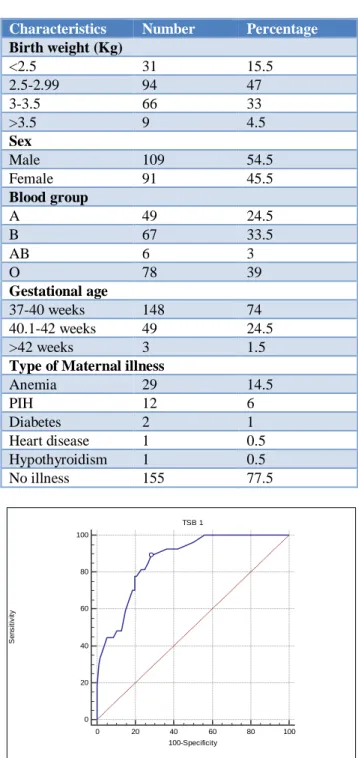
Maximum newborns (47%) had birth weight between 2.5-3kgs. 15.5% of newborns had birth weight below 2.5kgs Only 4.5% newborns had birth weight >3.5kgs. Among 200 newborns enrolled in the study, 45.5% were female babies and 54.5% were male babies with the ratio of 0.83:1.
O group was the most common blood group (78 newborns). Maximum number of newborns had Rh positive type Majority of newborns (74%) had gestational age between 37-40weeks. Only 3(1.5%) babies were post-term >42weeks.
There were 45 (22.5%) mothers had antenatal high risk factors. Anemia 14.5%was the most common risk factor. PIH was present in 6% of mothers.
Majority of the newborns (41%) had first day serum bilirubin level between 4-.9mg/dl. The range of bilirubin value on day 1 was 2.2 - 8.5mg/dl.
The critical bilirubin value that would predict subsequent hyperbilirubinemia was estimated using ROC analysis.
Table 1: The baseline characteristics of enrolled mothers and newborns.
Characteristics Number Percentage
Birth weight (Kg)
<2.5 31 15.5
2.5-2.99 94 47
3-3.5 66 33
>3.5 9 4.5
Sex
Male 109 54.5
Female 91 45.5
Blood group
A 49 24.5
B 67 33.5
AB 6 3
O 78 39
Gestational age
37-40 weeks 148 74
40.1-42 weeks 49 24.5
>42 weeks 3 1.5
Type of Maternal illness
Anemia 29 14.5
PIH 12 6
Diabetes 2 1
Heart disease 1 0.5
Hypothyroidism 1 0.5
No illness 155 77.5
Figure 1: Receiver operating characteristic (ROC) curve for identifying best cut-off for subsequent
hyperbilirubinemia.
At the end of the study, 27 neonates (13.5%) developed significant hyperbilirubinemia. The cut off bilirubin value that will predict subsequent hyperbilirubinemia was determined to be >4.9mg/dl. Sensitivity at that cut off value: 88.89%. Specificity at that cut off value: 71.68%. Positive predictive value at that cut off value: 32.9%. Negative predictive value at that cut off value: 97.6%. Area under ROC(AUC): 0.866. P value: <0.0001 (test for significant -hyperbilirubinemiais significant).
TSB 1
0 20 40 60 80 100
0 20 40 60 80 100
100-Specificity
S
e
n
s
it
iv
it
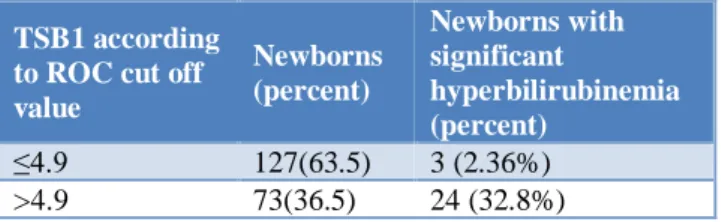
Majority of newborns (63.5%) had day 1 TSB ≤4.9 mg/dl. 73 newborns had TSB1 >4.9mg/dl which has high predictive value for subsequent hyperbilirubinemia. Only 2.36% (3/127) of newborns with TSB1 ≤4.9 mg/dl developed significant hyperbilirubinemia. 24 (32.8%) newborns with TSB1 >4.9 mg/dl developed significant hyperbilirubinemia. Hence newborns with Day 1 TSB≤4.9mg/dl have low risk of developing hyperbilirubinemia.
Early discharge of healthy term newborns from the hospital after delivery has recently become a common practice for medical, social and economic reasons. Hyperbilirubinemia is the most commonly reported cause for readmission during the early neonatal period.12 The
current guidelines of the American Academy of
Pediatrics recommend a follow-up for newborns discharged before 48 hours of life at 2 to 3 days postnatally.13
Table 2: Distribution of TSB levels on day 1.
TSB 1(mg/dl) No. of newborns Percent
2-2.9 11 5.5%
3-3.9 34 17%
4-4.9 82 41%
5-5.9 31 15.5%
6-6.9 32 16%
7-7.9 7 3.5%
8-8.9 3 1.5%
Total 200 100%
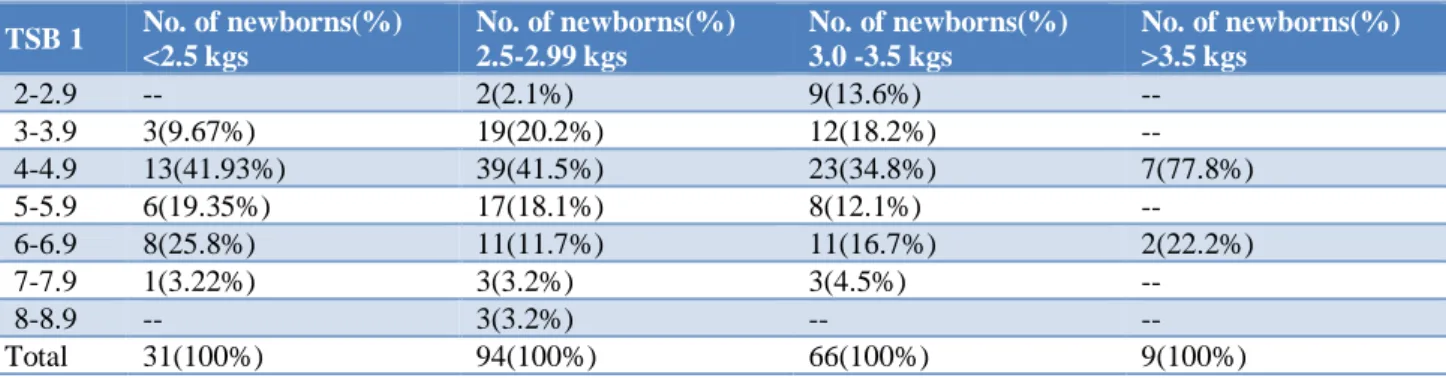
Table 3: Distribution of TSB1 for birth weight.
TSB 1 No. of newborns(%) <2.5 kgs
No. of newborns(%) 2.5-2.99 kgs
No. of newborns(%) 3.0 -3.5 kgs
No. of newborns(%) >3.5 kgs
2-2.9 -- 2(2.1%) 9(13.6%) --
3-3.9 3(9.67%) 19(20.2%) 12(18.2%) --
4-4.9 13(41.93%) 39(41.5%) 23(34.8%) 7(77.8%)
5-5.9 6(19.35%) 17(18.1%) 8(12.1%) --
6-6.9 8(25.8%) 11(11.7%) 11(16.7%) 2(22.2%)
7-7.9 1(3.22%) 3(3.2%) 3(4.5%) --
8-8.9 -- 3(3.2%) -- --
Total 31(100%) 94(100%) 66(100%) 9(100%)
Majority of newborns had TSB1 between 4.0-4.9mg/dl. Only 3 newborns had TSB1 >8mg/dl.
Table 4: Distribution of TSB1 for Gestational Age.
TSB 1 (mg/dl) GA 37-40weeks
No. of newborns(%)
GA 40.1-42weeks No. of newborns(%)
GA >42weeks No. of newborns(%)
2-2.9 10(6.76%) 1(2.04%) --
3-3.9 23(15.54% 10(20.41%) 1(33.3%)
4-4.9 59(39.86%) 21(42.86%) 2(66.7%)
5-5.9 23(15.54%) 8(16.32%) --
6-6.9 24(16.21%) 8(16.32%) --
7-7.9 6(4.05%) 1(2.04%) --
8-8.9 3(2.02%) -- --
Total 148(100%) 49(100%) 3(100%)
Newborns > 42 weeks gestational age had TSB in lower range. Newborns with higher levels of TSB1 were in 37-40 weeks gestational age.
DISCUSSION
However, a complete follow-up is not always possible because of the geography and climate of the area, personal safety, or patient incompliance and the safety of relying on follow up visits after early discharge is questionable as 10% of the population fails to return for follow up visit. Whatever are the demographic risk
factors, one thing that is certain if babies leave the hospital before they are 36 hours old, their peak bilirubin level would occur.
nightmare of bilirubin encephalopathy.
Table 5: TSB distribution on day 1 according to ROC cut off value and Newborns with significant
hyperbilirubinemia.
TSB1 according to ROC cut off value
Newborns (percent)
Newborns with significant
hyperbilirubinemia (percent)
≤4.9 127(63.5) 3 (2.36%)
>4.9 73(36.5) 24 (32.8%)
The present study hypothesis was that a high serumbilirubin level soon after birth i.e., within 24±2 hr of life, would also predict a high peak subsequently.
Birth weight and gestational age
Incidence of Neonatal Jaundice is inversely proportional to gestational age. In present study no newborn with gestational age >42weeks had TSB1 >4.9mg/dl. With increasing gestational age incidence of jaundice was decreasing this is due to maturity of hepatic clearance
In a similar study conducted by Agarwal et al, all newborns with gestational age of ≥35 weeks were included. The range of birth weight for these children was from 1.75-4.0kg.14
In the study done by Bhutaniet al, all newborns with birth weight more than 2.0 Kg for GA of ≥ 36 weeks and birth weight ≥2.5 Kgfor GA of 35 weeks were included.15
Another study done by Alpay et al, all newborns with gestational age of ≥38 weeks were included.16
In present study, near terms babies(35-37weeks) were not included to avoid exaggerated hepatic immaturity which is seen in these babies.
Sex
In present study, newborns who developed significant hyperbilirubinemia male:female ratio was 1.07:1 51.8% (14/27) newborns who developed significant hyperbilirubinemia were male babies and 48.2% were female babies.
Male gender is a known risk factor for hyperbilirubinemia17. In a study done by Naranget al,
incidence of hyperbilirubinemia in males was 64.2%18.
Another study which was done by Singhalet al, the incidence of hyperbilirubinemia in males was found to be 56.8%.19
In similar study done by Alpay et al, 37(61.6%) newborns who developed significant hyperbilirubinemia were male babies.16
C.G vailaya et al, conducted a study, where the incidence was found to be same in male and female babies.20
Maternal illness
The distribution of risk factors is comparable to those in the study done by Agarwal et al.14
In present study 12 (6%) mothers had pregnancy induced hypertension (PIH) 29 (14.5%) mothers had anemia, 1 mother had gestational diabetes, 1 mother was hypothyroid, 1 mother had heart disease.
These variables have been associated with high serum bilirubin levels in the first postnatal week, 9.5% of mothers had premature rupture of membranes.21
Jaundice in previous siblings
In present study 9/27(33%) newborns with significant hyperbilirubinemia had jaundice in previous siblings.
In a similar study conducted by C.G vailaya et al, similar findings were noted, 29% newborns with significant hyperbilirubinemia had jaundice in previous sibling.20
In a retrospective study from the USA by Khoury MJ et al Newborns who had one or more prior siblings with hyperbilirubinaemia showed a three-fold higher risk of developing hyperbilirubinaemia compared with those who had prior sibling without hyperbilirubinaemia the results from that study showed a clear trend of increasing sibling risk with increasing severity of hyperbilirubinaemia.22
Estimation of TSB 1 (24±2 hours)
The first bilirubin level was done at 22-26 hours of birth.
There is variability in the time of appearance of jaundice from newborn-newborn and in the ability of professionals to see jaundice and estimate its severity coupled with the considerable range of TSB associated with its cephalocaudal progression. Moreover the observer variability and the influence of the skin color in clinically evaluating hyperbilirubinemia by ‘Kramer index’ has been the Achilles’ heel of this method.
Seidman et al, used a similar approach in Israeli newborns and found that the risk of bilirubin level of at least 17 mg/dl was 1.6% in those whose bilirubin levels were less than 5 mg/dl at 24 hours versus 6.6% of those whose bilirubin levels were atleast 5 mg/dl at 24 hours.24
In the study done by Agarwalet al, TSB was estimated at 24±6 hours, In newborns with TSB1 <6mg/dl, <1% of newborns developed hyperbilirubinemia whereas in newborns with TSB1 >6mg/dl, 27% developed significant hyperbilirubinemia.14
In a study done by Alpay et al, a similar prospective study in Turkey concluded that use of 6mg/dl as critical value at 24 hours of life predicted nearly all term neonates (Sensitivity of 90% and NPV of 97.9%) with subsequent risk of significant hyperbilirubinemia (>17mg/dl) & will determine all those requiring phototherapy later on. Only2.05% babies with 24 hour TSB < 6 mg/dl developed significant jaundice but none needed any treatment. Study did not include near term babies.16
Subsequent TSB and significant hyperbilirubinemia
Serum bilirubin estimation was repeated if clinical assessment of serum bilirubin >10 mg/dl i.e. presence of jaundice below the level of umbilicus.
In present study Hyerbilirubinemia was defined as TSB level ≥12 mg/dl between 24 to 48 hr of life ≥15 mg/dl between 48 to 72 hr of life and 17 mg/dl beyond 72 hours of life.25
In a similar study conducted by Shivani et al, hyperbilirubinemia was defined as TSB level ≥12 mg/dl between 24 to 48 hr of life ≥15 mg/dl between 48 to 72 hr of life and 17 mg/dl beyond 72 hours of life.26
In C.G. Vailaya et al, study, significant hyperbilirubinemia defined as serum biliirubin value>15mg % in the first week of life in healthy term newborns (NNPD guidelines).20
In Alpay et al, study, serum bilirubin levels of >17 mg/dL after 24 hours of life were defined to have significant hyperbilirubinemia.16
In Agarwal et al study Hyperbilirubinemia was defined as TSB level of 17 mg/dl.14
Determination of cut off bilirubin value
In the present study, the value of 4.9 mg/dl was determined to have the best combination of sensitivity and specificity to predict neonates at risk of hyperbirubinemia subsequently. At this value of 4.9 mg/dl there is high sensitivity and a very high negative predictive value, although a low positive predictive value for predicting neonates likely to develop significant
hyperbilirubinemia. Hence, it is concluded that this test has a good ability to exclude neonates at low risk of subsequent hyperbilirubinemia.
Seidman et al found 5 mg/dl as a better cut off value for predicting significant hyperbilirubinemia with low sensitivity (45.5%), high specificity (91.9%) & high negative predictive value (99%) for risk prediction.24
In the study done by Awasthi Set al, a value of 3.99 mg/dl (average value of first day TSB) was used to predict occurrence of subsequent hyperbilirubinemia.27
The sensitivity and specificity of this test was 67%. However, this study had major flaws. Complete follow up was present in newborns who stayed in the hospital either for neonatal illness or some maternal reason, such as cesarean section. More than 50%of newborns, who were healthy thus discharged early, were not followed up.
Agarwal et al, did study to evaluate predictive value of TSB level 6.0mg% at 24±6 hours postnatal age in identifying near term and term newborns that do not develop hyperbilirubinemia subsequently.14 In this study
first bilirubin estimation was done at 24±6 hours. Subsequent bilirubin estimation was done whenever clinical suspicion of jaundice exceeded 10.0 mg%. Out of 220 newborns studied, 22 developed significant hyperbilirubinemia requiring phototherapy. TSB level of 6mg/dl or less was present in 136 (63.8%) newborns and only one developed hyperbilirubinemia. In the remaining 77 (36.2%) neonates with TSB > 6 mg/dl subsequent hyperbilirubinemia developed in 21 (sensitivity 95%, specificity 70.6%).They concluded that Ideal cut off value was 5.0 mg/dl and babies with TSB levels higher than 6.0 mg% had a significant risk of developing hyperbilirubinemia.
In a similar prospective study in Turkey by Alpay et al, concluded that use of 6mg/dl as critical value at 24 hours of life predicted nearly all term neonates (Sensitivity of90% and NPV of 97.9%) with subsequent risk of significant hyperbilirubinemia (>17mg/dl) and will determine all those requiring phototherapy later on.16
In a study conducted Shivani et al, a value of 6.4 mg/dl (first day TSB) was determined to have the best predictive ability for subsequent hyperbilirubinemia with a sensitivity of 87.5%, specificity of 80.11%, positive predictive value of 37.5% and a negative predictive value of 97.92%.26
In a study done at SVMC, Tirupathi, 80.8% of newborns had TSB1< 5mg/dl and 19.2% had ≥5mg/dl and the cut off value of 5mg/dl can predict subsequent significant hyperbilirubinemia with sensitivity of 100% and specificity of 85.2%.28
of 32.9% and a negative predictive value of 97.6%.
The hypothesis of the study was that high total serum bilirubin levels on day 1 of life measured within 24±2hrs after birth would predict subsequent high bilirubin levels. The determined cut off value of bilirubin was >4.9mg/dl. This value of bilirubin has high negative predictive value (97.6%) which means, neonates having serum bilirubin below this level are at very low risk of subsequent hyperbilirubinemia.
Thus the results obtained are significant with the hypothesis. Prediction of neonatal hyperbilirubinemia has widespread implication especially in our country where there are limited resources. This cut off value of bilirubin can be applied practically to determine newborns at risk of hyperbilirubinemia, for early postnatal discharge of newborns and to reduce financial burden to families where there are economic constraints by discharging newborns early if there is low risk of development of hyperbilirubinemia.
Strengths of the study
In the present study, bilirubin cut off value was determined using receiver operating characteristic analysis and the test is highly significant (P value <0.0001). The data was not evaluated on nomograms. This would better reflect the geographic, cultural and various demographic characters distinctive to present population.
As this is a hospital based prospective study, we don't know the incidence of jaundice in home delivered babies, as home deliveries are still common in rural and tribal areas in India.
CONCLUSION
TSB values are inversely proportional to gestational age. In majority newborns high serum bilirubin level noted in gestational age of 37-40 weeks. TSB cut off value based on ROC analysis would better reflect the demographic characters of present population.
Early screening and appropriate management of hyperbilirubinemia is needed for prevention of complications in the newborn. This decreases the significant burden of untreated severe neonatal jaundice, causing potential neurological sequelae.
Funding: No funding sources Conflict of interest: None declared
Ethical approval: The study was approved by the Institutional Ethics Committee
REFERENCES
1. Stoll BJ, Kliegman RM. Jaundice and hyperbilirubinemia in the Newborn. In: Behrman
RE, Kliegman RM, Jenson HB, Eds. Nelson Textbook of Pediatrics.19th ed. Philadelphia: WB
Saunders Co; 2012:603-604.
2. MJ Maisels, JM DeRidder, EA Kring, M Bala subramaniam. Length of Stay, Jaundice & Hospital Readmission, Pediatr, 1998 Jun 1;101(6):995-8. 3. Report 2002-03, National Neonatal Perinatal
Database Network New Delhi: National Neonatology Forum of India, 2006
4. Narayana S, Aggarwal, Upadhyay A, Deorari Ak, Sindh. M, Paul VK, Survival & Morbidity in Extremely Low Birth Weight (Elbw) Infants Indian Pediatr, 2003;40(2):130-5.
5. American Academy of Pediatrics, Provisional Committee for Quality Improvement and Subcommittee on Hyperbilirubinemia. Practice Parameter: management of hyperbilirubinemia in the healthy term newborn. Pediatrics 1994 oct;94(4):558-65.
6. Hall RT, Simon S, Smith MT. Readmission of breastfed infants in the first 2 weeks of life. J Perinatol. 2000 Oct;20(7):432-37.
7. Lee KS, Perlman M, Ballantyne M, Elliott I, To T. Association between duration of neonatal hospital stay and readmission rate. J pediatr. 1995 Nov 1;127(5):758-66.
8. Kiely M, Drum MA, Kessel W. Early discharge, risks, benefits and who decides. Clinperinatol. 1998;25:539-53.
9. Davidson LT, Merritt KK, Weech AA. Hyperbilirubinemia in the newborn. Am J Dis Child. 1941;61:958-80.
10. Knudsen A. Prediction and non-invasive assessment of neonatal jaundice in the term healthy newborn infant. Acta Paediatr.1996 Apr;85(4):393-7.
11. Maisels MJ, Newman TB. Predicting hyperbilirubinemia in newborns: the importance of timing: Commentaries. Pediatr. 1999 Feb 1;103(2):493-4.
12. Hall RT, Simon S, Smith MT. Readmission of breastfed infants in the first 2 weeks of life. J Perinatol. 2000 Oct;20(7):432.
13. American Academy of Pediatrics, Committee on Fetus and Newborn. Hospital stay for healthy term newborns. Pediatr. 1995;96:788-90.
14. Agarwal R , Kaushal M, Paul VK, Deorah. Early neonatal hyperbilirubinemia using first day serum bilirubin level. Indian pediatr. 1997;34:429-32. 15. Bhutani VK, Johnson L, Siveri EM. Predictive
ability of predischarge hour specific serum bilirubin for subsequent significant hyperbilirubinemia in healthy term and near term new borns. Pediatr. 1999;103:6-14.
16. Alpay F, Sarici SÜ, Tosuncuk HD, Serdar MA, Inanç N, Gökçay E. The value of first-day bilirubin measurement in predicting the development of significant hyperbilirubinemia in healthy term newborns. Pediatrics. 2000 Aug 1;106(2):e16. 17. Watchko JF, Oski FA. Bilirubin 20 mg/dL=
18. Narang A, Gathwala G, Kumar P. Neonatal Jaundice: An analysis of 551 cases. Indian Pediatr. 1997 May;34:429-32.
19. Singhal PK, Singh M, Paul VK, Deorari AK, Ghorpade MG. Spectrum of neonatal hyperbilirubinemia: An analysis of 454 cases. Indian Pediatr. 1992 Mar;29(3):319-25.
20. Raghavendravailaya CG, Aiyer S. Early Prediction of Significant Neonatal Hyperbilirubinemia using Serum Bilirubin Levels in Healthy term & near term Newborns, Gujarath, India. J Pub Health Med Res. 2014;2(1):14-9.
21. Braveman P, Egerter S, Pearl M. Early discharge of newborns and mothers: A critical review of the literature. Pediatr. 1995 Oct 1;96(4):716-26.
22. Khoury MJ, Calle EE, Joesoef RM. Recurrence risk of neonatal hyperbilirubinemia in siblings. Am J Diseases of Children. 1988;142(10):1065-9.
23. Bhutani VK, Johnson LH. Probability of subsequent hyperbilirubinemia in term healthy newborns with no ABO/Rh disease. Pediatr Res. 1996 Apr 1;39(S4):197.
24. Siedman DS, Ergaz Z, Revel Vilk S. The use of bilirubin measurements on the first day of life for prediction of neonatal jaundice In: Programs and
abstracts of the Ross Special Conference. Hot Topics in Neonatology, Washingtom DC. 1996;(96);284-94.
25. American Academy of Pediatrics, Practice parameters , Management of hyperbilirubinemia in the healthy term newborn Pediatr. 1994:94(4):558-67.
26. Randev S, Grover N. Predicting Neonatal Hyperbilirubinemia Using First DaySerum Bilirubin Levels. Indian J Pediatr. 2010;77(2):147-50. 27. Awasthi S, Rehman H. Early prediction of neonatal
hyperbilirubinemia. Indian J Pediatr. 1998;65(1):131-9.
28. Kireeti AS, Srividya L. The role of first day serum bilirubin estimation in predicting significant hyperbilirubinaemia in healthy term newborns. Int J Res Dev Health. 2014;2(2):58-69.