Volume XII, Spring 2020
Phi Alpha Theta, Nu Gamma Chapter
California Polytechnic State University,
CALIFORNIA POLYTECHNIC STATE UNIVERSITY SAN LUIS OBISPO
Published in the United States of America by the Cal Poly History Department 1 Grand Avenue, Building 47, Office 27c San Luis Obispo, CA 93407
Copyright © 2020 California Polytechnic State University San Luis Obispo
Cover art copyright © 2020 Calista Lam
Neither the editors nor Cal Poly assume responsibility for statements of fact or opinion made by the contributors.
All Rights Reserved. Except in those cases which comply with the fair use guidelines of U.S. copyright law (U.S.C. Title 17), no part of this publica-tion may be reproduced, stored in a retrieval system, or transmitted in any form by any means, electronic, mechanical, or otherwise, without the prior permission from the publisher.
All articles appearing in this journal are simultaneously published electron-ically via the DigitalCommons@CalPoly and are therefore subject to the terms specified in the Non-Exclusive License Agreement for Use of Materi-als in the DigitalCommons@CalPoly.
http://digital commons.calpoly.edu/forum/ ISSN 2153-7178
ISSN 2153-7119
Table of Contents
FRONT MATTER
Editor’s Note Journal Staff
ARTICLES
Development of Cal Poly’s School of Architecture and Environmental Design | Robert Chomicz
Darkness in the Parlor: Prostitution Narratives of Urban Exploration in London’s West End | Aiden Evans
Freedom’s Paradoxes: A Case Study of the Slave Schooner Julita | Lucy Wickstrom
What Didn’t Happen: Analyzing Cal Poly’s
Proposed Educational Assistance Program Following the Korean War | Sam McClintock
Consider the Source: The Media’s Coverage of Female FBI Agents in the 1970s | Kali deVarenesse
Urban Palimpsests: Studying Enlightenment Influences in the Post-Earthquake Rebuilding of Lima and Lisbon, 1746–1765 | Emily Chung
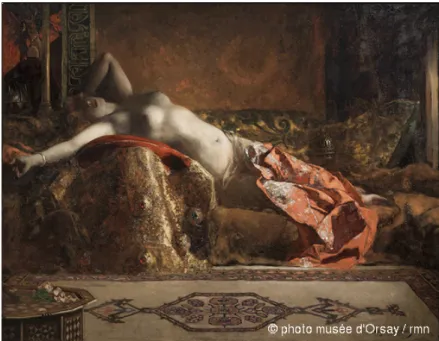
Sedentary Flesh: Nineteenth-Century French Orientalists and Bodies of the Female Other | Amelia Aitchison
BACK MATTER
Editors
3 v vii
17
33
63
87
111
133
Editor’s Introduction and Acknowledgments
Welcome to the twelfth edition of The Forum.
I am often asked by my friends who are in other majors how history students fall into Cal Poly’s “Learn by Doing” philosophy. There is a notion that because we are not building our own rockets or cod-ing websites, we do not follow the motto. This publication demon-strates otherwise.
From the introductory History 100 on, history students dive into physical and digital archives, read scholarly article after scholarly article, newspaper from 1907 after newspaper from 1907, all to write their own original histories. This field is certainly as hands on as any engineering class. Someday I hope to receive compensation from the department for the chronic joint pain caused by all the writing my peers and I had to endure.
Journal Staff
EXECUTIVE EDITOR
Jacob Lafarga
ASSISTANT EDITORS
Amelia Aitchison Isabel Barbee Kelly Barr Sonia Koss Camille Sibel
GRAPHIC DESIGNER
Calista Lam
FACULTY ADVISOR
Chomicz
Author Bio:
Robert Chomicz
Robert is a fourth year transfer history major from Kraków, Poland. His primary research interests include the history of pre-colonial and early colonial Latin America, Ancient Mediterranean history, as well as the history of twentieth-century Central Europe and imperialism. Fol-lowing graduation from Cal Poly, Robert wishes to pursue a master’s degree in history with the aim of teaching at a High School level down the line. Outside of the academics, Robert enjoys hiking, rock climb-ing, strength trainclimb-ing, and a dram of good scotch when budget allows.
Development of Cal Poly’s School of Architecture
and Environmental Design
Robert Chomicz
Abstract:
In the turbulent decade of the 1960s, Cal Poly consciously diverged from a Master Plan created by the state Department of Education in order to create one of the best architecture schools in the nation, which highlighted the university’s unique position as the only polytechnic in the CSU system. This article details Cal Polys commitment to the de-velopment of the program through the examination of the expansion of the Architectural Engineering department into a full-fledged College of Architecture in the years 1948 to 1972. Three landmark academic years are examined in order to highlight the growth of the Architecture program. These are: 1947-1948, 1964-1965, as well as 1972-1973. The analysis focuses on the change in coursework, the increase in degrees offered, the growth of total faculty employed as well as the evolution of the program in terms of an administrative unit.
The Forum Chomicz
conservative reaction on the other. In the vein of reform, the state of California took steps to overhaul its higher education system, during which time small universities, such as Cal Poly, sought to expand the scope of their curricula. In 1960, the California State Board of Educa-tion developed a Master Plan for Higher EducaEduca-tion in order to create a coherent statewide postsecondary education system. The plan was implemented later that year as part of the Donahoe Higher Education Act pursuant to which a California State College System was created.¹ The new system incorporated twenty-three state colleges into a single homogeneous organization separate from the University of California system. Of the universities within the system, California State Poly-technic College, otherwise known as Cal Poly, held a unique position in that it was the only one that offered a degree in Architecture re-lated field.² In 1972, Cal Poly was granted a title of a university. In the same year, a master’s degree in architecture was offered for the first time in the school’s history, culminating the development of the nascent School of Architecture. The development of Cal Poly’s Col-lege of Architecture appears as an anomaly within the framework of the CSU system since the original California Master Plan provided that professional fields such as architecture be the province of the UC
1 California State Department of Education, A Master Plan for Higher Education in California, 1960-1975: Prepared for the Liaison Committee of the State Board of Education and The Regents of the University of California, by Arthur D. Browne, Howard A. Campion, Arthur G. Coons, Glenn S. Dumke, Thomas C. Holly, Dean E. McHenry, Keith Sexton, Henry T. Tyler and Robert J. Wert, (Sacramento, 1960), 1-2. 2 California State Polytechnic College Catalog, 1960-1961 (San Luis Obispo, CA: California State Polytechnic College, 1960), 117.
system universities alone.³ Was the development of Cal Poly’s School of Architecture an oversight by the State Board of Education, in light of the stipulations of the Master Plan for Higher Education? Or was it instead part of a deliberate agenda endorsed and executed by Cal Poly directors? In this paper, I show that the development of Cal Poly’s Col-lege of Architecture and Environmental Design was, in fact, the result of a comprehensive effort by the university’s administrators to develop the school into a nationally recognized architecture program.
The goal of my research is to analyze the expansion of the Architec-tural Engineering Department and its transformation into the College of Architecture in the years 1948-1972. To this end, I will focus on a comparison of the curriculum, faculty membership, and number of majors of study the department offered in three landmark years. These are the academic years of 1947-1948, 1964-1965, as well as 1972-1973. The choice of the College of Architecture and Environmental Design for this research is due to its prestigious standing among Cali-fornia public universities. Architecture is a field of study that is repre-sented by a separate college only at UCLA and UC Berkeley, two of the most respected public universities in the nation, and solely at Cal Poly among non-UCs. Moreover, Cal Poly’s architecture program has been ranked consistently in the top ten in the nation and ranked as the
The Forum Chomicz
best undergraduate school for architecture in 2014.4 The development
of the architecture program demonstrates that Cal Poly was consciously pushing to create a high-profile technical department consistent with its already prestigious engineering school, which would highlight its unique position as the only polytechnic in the CSU system. To demon-strate this, I will first compare the terms of 1947-1948, i.e., the year that the Architectural Engineering Department was first established and 1964-1965, which saw the first addition of a new major to the depart-ment’s offerings.
The Architectural Engineering Department grew enormously from its inception in 1947-1948 to the academic year of 1964-1965, which is best illustrated by a dramatic increase in the number of faculty members as well as by the addition of another B.S. degree. During its inaugural year, the department offered a single four-year Bachelor of Science in Architectural Engineering degree and was staffed by only one professor, Gerald E. Ellis.5 In the term of 1964-1965, the department expanded
to offer a five-year Bachelor of Architecture degree in addition to the B.S. in Architectural Engineering that had been offered since the be-ginning of the program.6 The faculty numbers increased as well, from
4 “America’s Best Architecture Schools 2014,” DesignIntelligence, accessed April 15, 2020, https://www.di.net/articles/america-s-best-architecture-schools-2014/; Shannon McOuat, “Cal Poly Architecture and Landscape Architecture Programs Place High in 2018 DesignIntelligence Survey National Rankings,” Cal Poly News, accessed April 15, 2020, https://calpolynews.calpoly.edu/news_releases/2017/september/architecture. 5 California State Polytechnic College Catalog, 1968-1969 (San Luis Obispo, CA: California State Polytechnic College, 1968), 287-290.
6 California State Polytechnic College Catalog, 1964-1965. (San Luis Obispo, CA: California State Polytechnic College, 1964), 133-135.
a single professor in 1948, to a cohort of sixteen instructors, including the department head, George Hasslein in 1964.7 The addition of the
five-year Architecture major is an excellent illustration of the level of commitment on the part of the university to expand the department. As George Hasslein, head of the Architectural Engineering Department, stated in his 1965 Accreditation Evaluation Report: “The State Edu-cational Code did not permit the institution of any five-year programs until 1963 when it was changed”.8 This change was made in response
to Cal Poly lobbying.9 In his memoirs, former university president
Robert E. Kennedy explained that Cal Poly was able to amend and rewrite a section of the state statute that dealt with instruction in the field of Architecture.10 Cal Poly’s efforts in the state capital were not
the only attempt by the school’s administration to develop the School of Architecture. The addition of fifteen additional faculty members suggests that Cal Poly allocated more considerable financial resources to the department, clearly indicating that expansion was its preroga-tive. Cal Poly’s active pursuit of an amendment to the Master Plan for Higher Education through lobbying at the state capital also reveals the importance that the university assigned to the growth of the Depart-ment of Architectural Engineering in the early years of its existence.
Analysis of the curriculum for the Architectural Engineering major between the terms of 1947-1948 and 1964-1965 reveals a number of
7 Ibid., 133.
8 National Architectural Accreditation Board Evaluation Report, 01 February 1966. Box 402.01 Folder 402 Architecture Department Accreditation. Special Collections and Archives, California Polytechnic State University.
9 Kennedy, Learn by Doing, 192.
The Forum Chomicz
differences that suggest a trend towards more demanding coursework, a hallmark of conscious improvement by the university administra-tion. The most readily apparent change is that specific courses offered in 1947-1948 disappear altogether from the curriculum for the 1964-1965 term, while others remain but are renamed. In fact, only two course series from 1947-48 curriculum, Materials of Construction and Strength of Materials, were still included in 1964-65, albeit with different course numbers. Another difference is the number of major courses and credits required. In 1947-1948 these are forty-two and 104 respectively, whereas in 1964-1965, students were required to at-tend forty-seven courses and accumulate 121 credits in the major. The most dramatic difference appears in the senior year when twenty-seven units of Architecture or Engineering courses were required in 1947-48, while thirty-nine units were required in 1964-65. The final difference is an excess of vocational-type legacy courses, such as fifteen units of Heating and Ventilating (AC 201, 202, 203 and AC 241, 242, 243) or twenty units of Drafting (Arch 141, 142, 143, ME 121, Arch 241, 242, 243) required as part of the degree in 1947-48. It appears that the filler present in the curriculum of the department’s inaugural year had been eliminated by 1964-1965 and replaced with a more demanding subject matter. The more intensive coursework points to the fact that Cal Poly administrators were consciously developing the Architecture and Ar-chitectural Engineering Department into a program of higher quality that could compete with the best universities in the state.
In the span of the following eight years, that is between 1964 and 1972, a series of developments led to the creation of a master’s program in the field of architecture. These developments deserve a brief mention as they directly impacted the Architecture and Architectural
Engineer-ing Department. First, in January of 1968, the Department of Archi-tecture and Architectural Engineering was elevated to a full-fledged school status and was renamed the School of Architecture.11 The new
school offered three majors: a new City and Regional Planning major as well as Architecture and Architectural Engineering.12 Three years
later, in 1971, the School of Architecture was renamed to School of Architecture and Environmental Design, and a new four-year Con-struction Engineering Bachelor of Science degree was added to its offering.13 Finally, the following year, a four-year Bachelor of Science
degree in Landscape Architecture was added along with a Master of Science in Architecture degree.14 The addition of the master’s program
precipitated a reorganization of the entire architecture major.
Direct comparison of academic years 1964-1965 and 1972-1973 shows an astronomic growth of the architecture program. Most im-portantly, the program was elevated from a Department, subordi-nate to the School of Engineering in 1964-1965, to the level of an independent School of Architecture in 1968-1969. The second most significant change was the addition of four degrees by the 1972-1973 term.15 The new degrees consisted of Bachelor of Science degrees in
11 Nancy E. Loe and Dan Howard-Greene, Cal Poly: The First Hundred Years (S-an Luis Obispo, CA: Robert E. Kennedy Library, California Polytechnic State University, 2001), 95.
12 California State Polytechnic College Catalog, 1968-1969, 287-290.
13 California State Polytechnic College Catalog, 1971-1972. (San Luis Obispo, CA: California State Polytechnic College, 1971), 96-100.
14 California State Polytechnic College Catalog, 1972-1973. (San Luis Obispo, CA: California State Polytechnic College, 1972), 100-105.
The Forum Chomicz
City and Regional Planning, Construction Engineering and Landscape Architecture, as well as an M.S. degree in Architecture, bringing the total of degrees awarded to five in 1972-1973, as compared with just two in 1964-1965. It is also noteworthy that the numbers of faculty expanded proportionally to the growth of the program. For example, in 1964-1965, there were sixteen instructors, while eight years later, fifty architecture professors were employed by the school.16 This is an
increase not only in the absolute number of faculty but also an increase in the average of instructors per major, which rose from eight to ten. The number of majors offered, the increase in faculty, the addition of a post-graduate program, and the promotion of a department to a college all point to a concerted effort by Cal Poly to turn its Architecture School into a nationally recognized program.
There is a noticeable difference in the curriculum for architecture, the program’s flagship major, between the years of 1964-65 and the same major in 1972-73, a difference marked by more demanding coursework as well as longer duration. It must be noted that the major was entirely reorganized from a five-year professional Baccalaureate of Architecture to a six-year, professional Master of Science in Architecture degree.17
The coursework itself shows that twenty courses were required in the first two years of 1964-1965, accounting for 48 major units while in 1972-1973, first-year students and sophomores were given a load of twenty-one courses to the tune of 54 units. The difference in the amount of credits is explained by the fact that Introduction to Urban
Environ-16 California State Polytechnic College Catalog, 1972-1973, 100. 17 Ibid., 105.
ment series increased its unit load from two to three credits each, and Engineering Problems-Digital Computers (Arch 250) course became a two-unit class in 1972-73 whereas in 1963-64 it was only worth one credit.18 The later years of both programs also required similar courses,
though they were distributed in a different way over the years. In 1964-1965, architecture students were required 147 credits in 54 major cours-es, while in 1972-1973 that number rose to 189 units and a minimum of 62 courses, taking six years to complete. The additional coursework in the post-graduate studies consisted of a Thesis Project series (Arch 599), two additional quarters of Architectural Design (Arch 561), and 25 further units of 400 and 500 level architecture school electives.19 These
more rigorous standards show that Cal Poly was at this point competing to recruit the best and most committed students, signaling the rise of its School of Architecture to some prominence.
The transformation of the architecture program at Cal Poly from a small department in 1947 to a major college in 1973 was a result of a con-scious development meticulously planned and executed by the univer-sity administrators. It was accomplished by consistent investment in the department as demonstrated by an increase in majors offered, the addition of a post-graduate program, a significant increase in the num-ber of faculty memnum-bers, an increase in numnum-ber of courses offerings, a more demanding curriculum and, most importantly, the founding of the College of Architecture and Environmental Design. Such growth and expansion is evidence that Cal Poly devoted considerable time, effort,
18 Ibid., 101.
The Forum Chomicz
and resources in order to build its School of Architecture into a
nation-ally recognized architecture program. Bibliography
California State Department of Education. A Master Plan for Higher Educa-tion in California, 1960-1975: Prepared for the Liaison Committee of the State Board of Education and The Regents of the University of California,
by Arthur D. Browne, Howard A. Campion, Arthur G. Coons, Glenn S. Dumke, Thomas C. Holly, Dean E. McHenry, Keith Sexton, Henry T. Ty-ler and Robert J. Wert. Sacramento, 1960.
California State Polytechnic College Catalog, 1960-1961. San Luis Obispo, CA: California State Polytechnic College, 1960.
California State Polytechnic College Catalog, 1964-1965. San Luis Obispo, CA: California State Polytechnic College, 1964.
California State Polytechnic College Catalog, 1968-1969. San Luis Obispo, CA: California State Polytechnic College, 1968.
California State Polytechnic College Catalog, 1971-1972. San Luis Obispo, CA: California State Polytechnic College, 1971.
California State Polytechnic College Catalog, 1972-1973. San Luis Obispo, CA: California State Polytechnic College, 1972.
DesignIntelligence. “America’s Best Architecture Schools 2014.” Accessed April 15, 2020. https://www.di.net/articles/america-s-best-
architecture-schools-2014/.
Kennedy, Robert E. Learn by Doing: Memoirs of a University President. San Luis Obispo, CA: Cal Poly Foundation, 2001.
Loe, Nancy E. and Dan Howard-Greene. Cal Poly: The First Hundred Years.
The Forum
Author Bio:
Aiden Evans
Aiden Evans is a fourth year Cal Poly student from Oceano, Cali-fornia currently finishing a double major in English and History. He is primarily interested in nineteenth and twentieth century urban and intellectual history, including issues related to spatial segregation and public memorial practices. In his spare time, he enjoys reading, writ-ing, swimmwrit-ing, and practicing the violin.
Evans
Darkness in the Parlor:
Prostitution and Narratives of
Urban Exploration in London’s West End
Aiden Evans
Abstract:
Prostitution in London’s West End came to constitute a multidimen-sional transgression for middle-class observers during the late-Vic-torian period, contesting traditional distinctions between West and East, middle-class and working-class, and public and private life. First, through the use of Late Victorian urban exploration narratives, I will show that urban explorers applied a rigid conceptual framework to identify the working-class prostitutes occupying London’s affluent West-End. Rooted in class-based hierarchies, these systems of iden-tification presumed that working-class prostitutes were categorically distinct, visible, and undisguisable in London’s West End. Moreover, I argue that this conceptual framework reveals the authors’ binary understandings of prostitutes’ public and private life, which assigned middle-class prostitutes to the domestic and private realms and rel-egated working-class prostitutes to the observable public. Addition-ally, I will show that working-class prostitutes contested the urban explorer’s system of identification by adopting middle-class modes of fashion, dress, and expression. Ultimately, I hope to show that these transgressive activities subverted urban spectators’ systems of knowl-edge on multiple levels. First, they challenged bourgeois understand-ings of the working-class as an object of empirical study and a source
The Forum
of male pleasure, rendering the activities of working-class prostitutes effectively “unreadable.” Second, they confused traditional mid-dle-class conceptualizations of public life, as groups traditionally relegated to marginalized sectors of London unobtrusively entered middle-class social spaces. Finally, and perhaps most importantly, these activities conflicted with the middle-class observer’s traditional understanding of the West End as a familiar location in the urban environment, decreasing their ability to reliably monitor this affluent sector of the London metropolis.
During a temperate July evening in 1869, the crowds at the Cremorne Gardens of Chelsea gradually dispersed, the Gardens’ various atten-dants retiring to their homes in London’s affluent West End. By ten o’clock, however, the Gardens were once again teeming with visi-tors, arriving at Cremorne after sundown to join seven hundred others dancing and promenading upon the venue’s raised platforms. Among these visitors could be seen three hundred prostitutes, “more or less
prononcées.”1 These revelers would continue dancing, promenading,
and enjoying other amusements long into the night. However, wrote Dr. William Acton, “I do not imagine for a moment they could have been aware that a self-appointed inspector was among them.”2 Acton,
a British medical doctor and adjunct to the Female Venereal Hospi-tal in Paris, listed himself among the partygoers at Cremorne, though
1 William Acton, Prostitution Considered in Its Moral, Social, and Sanitary Aspects in London and Other Large Cities and Garrison Towns (London: Churchill and Sons, 1870), 17.
2 Ibid., 17.
Evans
did not enter into the throng of waltzing bodies exchanging partners without embarrassment or inhibition. Instead, he remained at a dis-tance, “circulated listlessly about the garden, and enjoyed in a grim kind of way the ‘selection’ from some favourite opera and the cool night-breeze from the river.”3 Acton did not visit Cremorne to
social-ize with the various partygoers and prostitutes in attendance. Instead, he imagined himself a detached observer present only to bear witness to the night’s events; a self-appointed inspector carefully assessing and documenting the movements of sex workers in the West End. In this way, Acton became one of the many “urban spectators” or “social explorers” of London’s Victorian middle class; men who discretely entered into the city streets, imbedding themselves in London’s met-ropolitan scene with the intent of studying its variegated social condi-tions and developing a coherent, totalizing, and moralizing vision of the urban space.
In addition to its focus on London’s sex industry, Acton’s narrative is significant because of its particular regional focus. While scholars have developed detailed analyses of urban exploration narratives in the nineteenth century and their author’s conceptualizations of pros-titution, these analyses have predominantly focused on narratives centered in London’s indigent East End. At this time, historians have developed profound and insightful studies of London’s social explor-ers, detailing the social and cultural semiotics governing their narra-tives. However, without a greater exploration of narratives centered in the West End, these historical understandings will be incomplete.
The Forum
These narratives are particularly important to our understandings of Victorian middle-class culture, as the West End was a primary cultural space in which bourgeois male observers consolidated their cultural knowledge of the London metropolis, a regional cornerstone uphold-ing their traditional understanduphold-ings of regional identity, social class, and female respectability.
In this essay, I argue that prostitution in London’s West End came to constitute a multidimensional transgression for middle-class observ-ers, contesting traditional distinctions between West and East, mid-dle-class and working-class, and public and private life. First, through the use of Late Victorian urban exploration narratives, I will show that the urban explorers applied a rigid conceptual framework to identi-fy the working-class prostitutes occupying London’s affluent West-End. Rooted in class-based hierarchies, these systems of identification presumed that working-class prostitutes were categorically distinct, visible, and undisguisable in London’s West End. Additionally, I ar-gue that this conceptual framework reveals the authors’ dichotomous understandings of prostitutes’ public and private life, which assigned middle-class prostitutes to the domestic and private realms and rele-gated working-class prostitutes to the observable public. Finally, I will show that working-class prostitutes contested the urban explorer’s system of identification by adopting middle-class modes of fashion, dress, and expression. I aim to show that these transgressive activities subverted urban spectators’ attempts to gain knowledge of London’s West End through empirical methods of analysis.
In their analyses of social exploration narratives of nineteenth-centu-ry London, urban historians have developed detailed understandings
of the middle-class flaneur’s various frameworks of social and cul-tural knowledge, as they emerged in their investigations of London’s working classes.4 Specifically, historians have delineated how social
explorers frequently relied upon a traditional regional opposition be-tween West and East London as the primary organizing scheme in their examinations of the metropolis. Judith Walkowitz notes, for ex-ample, that “Mid-Victorian explorations into the terra incognita of the London poor increasingly relied on the East/West opposition to assess the connecting links between seemingly unrelated parts of society.”5
In doing so, historians have noted that middle-class urban explorers regularly utilized imagery of darkness, disorder, unintelligibility and mystery in their renderings of East End London, conceiving of this territory as a world separate, distinct, and alien from their own.6
In addition to the binary opposition of West and East, historians have noted the convergence of various social discourses and epistemologi-cal categories at work in the urban explorer’s narratives. For example, George Stocking notes the Post-Darwinist influence of “socio-cultur-al evolutionism” among Victorian middle-class soci“socio-cultur-al commentators, which resulted in the tendency to draw analogies between colonial
4 According to Estelle Murail, the archetype of the flaneur, or “man of leisure,” emerged in the urban literature of nineteenth-century French writers Honoré de Bal-zac (1799-1850) and Charles Baudelaire (1821-1867). A specifically male figure, the
flaneur traversed and observed the streets of Paris or London, insisting on the author-ity of sight in uncovering the essence of urban life.
5 Judith Walkowitz, City of Dreadful Delight: Narratives of Sexual Danger in Late-Victorian London (Chicago: University of Chicago Press, 1992), 19-20.
6 Ibid., 18; Peter Keating, “Introduction” in Into Unknown England 1866-1913: Se-lections from the Social Explorers, ed. by Peter Keating (Manchester: Manchester University Press, 1976), 20.
The Forum
subjects and the urban poor.7 Following this, Peter Keating, Deborah
Epstein Nord, and Walkowitz have noted the urban spectator’s tenden-cy to adopt imperialist rhetoric in their reconstructions of the London cityscape, figuring East End inhabitants in terms of the uncivilized Other and transforming this East End into an unexplored geograph-ic territory remaining to be discovered, traversed, and made visible to the enlightened public.8 Additionally, Walkowitz has uncovered
the complex network of social and cultural knowledges in which the urban explorers were embedded during the late 1800s. In doing so, she demonstrates that Late-Victorian conceptions of the public urban space as a site of observation and surveillance in which the urban voy-eur could immerse or disguise himself; an apparatus of bourgeois male pleasure by which to establish knowledge and control over marginal-ized groups and unfamiliar spaces.
Additionally, urban historians of the Late-Victorian period have noted the position of prostitution within the urban explorer’s mental maps of London’s urban scene. In particular, they have observed that the urban spectators figured the working-class prostitute as symbols of female public vice, an indication of the lower-class’s severe state of indigence, and demonstrable proof of the need for urban reform.9
7 George W. Stocking, Jr., Victorian Anthropology (New York: The Free Press, 1987), 159.
8 Keating, Into Unknown England 1866-1913, 14; Deborah Epstein Nord, “The Social Explorer as Anthropologist: Victorian Travelers Among the Urban Poor,” in
Visions of the Modern City, ed. Sharpe and Wallock (Baltimore, MD: Johns Hopkins UP, 1987), 122; Walkowitz, City of Dreadful Delight, 18.
9 Ibid., 21; Epstein Nord, “The Social Explorer as Anthropologist: Victorian Travelers among the Urban Poor,” 132.
Evans
However, scholars have limited their attention to their analyses of ur-ban exploration narratives situated in London’s East End exclusively, neglecting middle-class explorers’ investigations of prostitution in West London. Indeed, the East End presented an image of an abyss, a be-nighted sector of the city that the urban explorer wished to investigate and analyze. But how did the urban explorers adjust their vision to the bright, enlightened streets of the West End of London, that area of the metropolis in which, they supposed, no secrecy was possible and all activity visible to the naked eye?
Urban exploration narratives of the Late-Victorian period assessed West-End prostitutes through an inflexible class structure that symboli-cally associated middle-class prostitutes with the sphere of private, do-mestic life and associated those of the lower or working-classes with the public realm; the sections in West London which were immediately visible, apprehensible, and accessible to the senses. For example, Hen-ry Mayhew developed detailed criteria by which to identify prostitutes from different social classes in his multi-volume work London Labour and the London Poor. Specifically, Mayhew divided West End prosti-tutes into the “higher order” and “lower order,” based upon their relative social positions. He identified the “higher order” not only by the afflu-ence of their patrons but by their comparative seclusion and privacy from the public eye. He noted, that those in the “higher order of prosti-tutes” were “kept as seclusive by men of wealth, high station and title.”10
Mayhew’s use of the term “seclusive” implicitly associated fashionable, middle-class prostitutes with private, domestic spaces. Furthermore,
The Forum
Mayhew noted that the men who attended these workers generally “in-duced them to cohabit with them, or to live in apartments provided for them, where they are kept in grand style” and would frequently provide “tutors” or “governesses” to “train them in accomplishments, to enable them to move with elegance and grace in the drawing-room.”11 In this
description, Mayhew characterized middle-class prostitutes as accesso-ries to the private lives of upper-class men, acquiring training in fash-ionable “accomplishments” that would equip them for domestic life. In doing so, Mayhew precludes the possibility of middle-class prostitutes entering the West End’s public space in any significant capacity, instead relegating them to internal spaces of the apartment or drawing-room.
Mayhew’s system of classification specifically proscribed these mid-dle-class prostitutes from entering the West End’s public urban cen-ters, designating these spaces as unlikely social territories for the “up-per order” sex worker. This woman, he noted, remains “aloof from the gaiety of the Haymarket, and lives as though she were a married woman.”12 In contrast, Mayhew describes his “lower order” as those
“open prostitutes who traverse the streets of the metropolis for their livelihood,”13 consigning working-class sex workers to the West End’s
public space. Additionally, whereas Mayhew’s description of the “higher order” of prostitutes focused primarily upon their location in the domestic and private sphere, his description of the “lower order” consists of lengthy descriptions of their physical attire. Specifically, he notes the various styles and qualities of dress that locate their owners
11 Ibid., 355-56. 12 Ibid., 357. 13 Ibid., 356.
Evans
14 Ibid., 358-59.
15 Epstein Nord, “The Social Explorer as Anthropologist: Victorian Travelers among the Urban Poor,” 123.
in a particular socio-economic class:
Many of them are dressed in a light cotton or merino gown, and ill-suited crinoline, with light grey, or brown cloak or mantle. Some with pork-pie hat, and waving feather – white, blue, or red; others with a slouched straw hat.14
As Epstein Nord has observed, most social explorers of the middle class tended to maintain a binary mental map of London in which “the West represented all that was bright, open, dazzling, and enlightened.”15
May-hew’s belief in the visibility or transparency of working-class prostitutes in the West End reveals this traditional regionalist assumption of the West End as a center of public exposure in which it would be perfectly possible to distinguish those prostitutes of the “lower order” from the respectable women attending the promenade. Ultimately, by relegat-ing middle-class prostitutes to domestic interiors and unkempt work-ing-class prostitutes to highly visible public spaces, Mayhew reinforced the urban explorer’s faith in his ability to identify the criminal activities occurring in London’s West End.
The Forum
life.”16 Moreover, he noted the inadequacy of quantitative information
to index the depth of moral degeneration in the West End:
serious as I know these facts to be, I am convinced that we are dealing only with partial and inadequate causes of a problem that lies much deeper, and which, more perhaps than any other prob-lem, demands the utmost intellectual and moral honesty in those who try to investigate it [...] after all, the roots of the problem lie deep down in spiritual facts.17
Sherwell’s belief in the value of first-hand, observational evidence manifested in his treatment of West End prostitution. For example, he noted that “the closer one’s observation, and the wider one’s ex-perience of the problem becomes,” pointing to unquantifiable facts of urban life such as the “helpless loneliness of London” as empiri-cal proof of the West End’s moral degradation. Ultimately, Sherwell’s analytical approach further reveals the extent to which these urban spectators relied upon visual evidence in their social investigations of working-class prostitution in the West-End.
In their narratives of urban exploration, Mayhew and Sherwell both asserted the value of visual evidence in identifying, assessing, and classifying the working-class prostitutes of London’s West End, up-holding the notion that prostitution was “a symptom: an outward and visible sign of a hidden moral disease.”18 Specifically, these writers
pointed to distinguishing habits of dress and manners of solicitation as
16 Arthur Sherwell, Life in West London: A Study and a Contrast (Methuen & Co., 1897), 1.
17 Ibid., 147. 18 Ibid., 148.
Evans
identifying features of working-class prostitutes of the West End. The urban explorers’ valuation of empirical evidence, their understandings of the West End as an open and observable space, and their practice of designating “lower order” sex workers to the realm of the visible urban centers contributed to a rigid understanding of working-class prostitutes in the West End; one which presumed that they were in-herently distinguishable and assessable. However, various urban explorers experienced a kind of intellectual crisis as working-class prostitutes altered their manners of dress and behavior and contested the epistemological categories that designated them as wholly innate-ly conspicuous public actors. Through such transgressive activities, these social actors subverted urban spectators’ attempts to gain knowl-edge of London’s West End through empirical methods of analysis.
During the late nineteenth century, many working-class prostitutes be-gan adopting middle-class fashions of dress, manners of behavior, and social activities which contested the urban explorer’s expectations of social behavior. Additionally, these alterations allowed them to enter the West End’s public space discretely, without attracting the attention of bourgeois male observers. Several urban spectators noted this tendency among working-class prostitutes. For example, a miscellaneous 1785 poem titled “The Art of Living in London” was re-published in the late-1800s featuring an extended series of footnotes by the editor. Among these was a lengthy invective against the presence of prostitution in London society:
The Forum
transacted in the public streets, in open defiance of law, and a total disregard to modesty
[...]
They ape the manners of persons of distinction and fortune, emulate them in their dress, and even frequent more places of public resort and amusement. The very farmer’s daughter has laid aside her stuffs for muslins, her handkerchief for the meritricous [sic] display of naked charms, and her diffidence for coquetry.19
Walkowitz notes that the new consumer culture in the Late-Victorian period transformed popular understanding of the public space, enabling women of various classes to enter urban centers while still maintaining an image of distinction and respectability.20 The editor of “The Art of
Living in London” clearly registered this occurrence in London, exhib-iting frustration over working-class prostitutes’ tendency to adopt al-ternative manners of dress and the relative freedom of movement that they enjoyed in the public space as a result. Such practices allowed these workers to refashion themselves in accordance with middle-class norms, to disguise their social class and profession and thereby present themselves in public inconspicuously.
This practice of refashioning among working-class prostitutes in the West End violated of the urban spectators’ rigid systems of classifica-tion, which presumed the immediate visibility of this social group. Ulti-mately, this precipitated a kind of intellectual crisis among some social
19 William Green, “The Art of Living in London” (London: Piccadilly), 41-42. 20 Walkowitz, City of Dreadful Delight, 41.
Evans
21 William Acton, Prostitution Considered in Its Moral, Social, and Sanitary Aspects in London and Other Large Cities and Garrison Towns, 20.
22 Walkowitz, City of Dreadful Delight, 39.
explorers, as these transgressive activities contested and weakened their empirical methods of analysis. For example, William Acton remarked upon this new tendency among working-class prostitutes during his vis-its to the Argyll Rooms in West London:
By their dress, deportment, and general appearance, the visitor might be inclined to suppose them to belong to the kept mistress rather than the prostitute class. This is, however, not the case, as with a few exceptions, they fall within the latter denomination.21
Acton’s own knowledge of the prostitutes’ presence relied primarily upon anecdotal, secondary evidence relayed by various informants, revealing the sudden inefficacy of empirical evidence in identifying and categorizing the working-class prostitutes present in the West End. Judith Walkowitz notes that the emergence of various social ac-tors marked London’s streets as contested terrain, “which imperiled the flaneur’s ability to experience the city as a totalizing whole.”22
Acton’s testimony is particularly significant, as it underscores the pri-mary ways in which the social practices of middle-class prostitutes challenged urban spectators to reconfigure their mental maps of Lon-don’s urban space.
The Forum
male pleasure. While middle-class observers had previously been con-fident in their ability to categorize and classify working-class groups by visual markers, working-class prostitutes’ efforts to disguise, or even transcend, their social class effectively rendered them “unreadable” to male spectators. Second, they confused middle-class conceptualizations of public life and disrupted the traditional boundaries limiting access to the city. As groups that were traditionally relegated to marginal sectors of London unobtrusively entered into middle-class social settings, they surreptitiously laid claims to spaces from which they had previously been excluded. In doing so, they contested the urban spectators’ precon-ceived socio-spatial division between London’s East and West Ends. Finally, and perhaps most importantly, these activities revealed the fla-neur’s inability to reliably monitor this affluent sector of the London metropolis. In other words, they conflicted with the middle-class ob-server’s traditional understanding of the West End as a familiar location in the urban environment. In his 1976 work Into Unknown England, Peter Keating noted that the urban explorers believed “a Dark Continent lies at one’s doorstep.”23 In this instance, however, they were searching
for the lights in their own parlors.
23 Peter Keating, Into Unknown England 1866-1913: Selections from the Social Ex-plorers, 21.
Evans
Bibliography
Acton, William. Prostitution Considered in Its Moral, Social, and Sanitary As-pects in London and Other Large Cities and Garrison Towns. London: Churchill and Sons, 1870. https://babel.hathitrust.org/cgi/pt?id=coo.3192 4079586586&view=2up&seq=10.
Epstein Nord, Deborah. “The Social Explorer as Anthropologist: Victorian Travelers Among the Urban Poor.” In Visions of the Modern City, edited by William Sharpe and Leonard Wallock. Baltimore, MD: Johns Hopkins UP, 1987.
Green, William. The Art of Living in London. London: Piccadilly, 18—. https:// babel.hathitrust.org/cgi/pt?id=mdp.39015049809653&view=2up&seq=6.
Keating, Peter. Into Unknown England 1866-1913: Selections from the Social Explorers, edited by Peter Keating. Manchester: Manchester University Press, 1976.
Mayhew, Henry. London Labour and the London Poor: Those that Will Not Work, Comprising Prostitutes, Thieves, Swineless Beggars, Volume 4. 1862. https://babel.hathitrust.org/cgi/pt?id=uiug.30112072143776&view =1up&seq=7.
Murail, Estelle. “A Body Passes By: The Flâneur and the Senses in Ninet-eenth-Century London and Paris.” Senses and Society 12, no. 2 (2017): 162-176.
Sherwell, Arthur. Life in West London: A Study and a Contrast. Methuen & Co., 1897. https://babel.hathitrust.org/cgi/pt?id=hvd.hnau63&view=2up&seq =8.
Stocking, George W. Victorian Anthropology. New York: The Free Press, 1987.
Author Bio:
Lucy Wickstrom
Lucy Wickstrom is a fourth year History major and English minor from the central coast of California. Her research interests include the American Revolution and early national United States, the collection of folktales, British abolition of the slave trade, and family dynamics throughout history. After graduating in Spring 2020, Lucy will attend Tufts University in Massachusetts to obtain a Master’s degree in His-tory and Museum Studies. In her free time, she likes to write short stories, read biographies, watch Shakespeare movie adaptations, and spend time with her sisters and her cat.
Wickstrom
Freedom’s Paradoxes:
A Case Study of the Slave
Schooner Julita
Lucy Wickstrom
Abstract:
After Great Britain abolished the slave trade in 1807, the British Roy-al Navy committed one-fifth of its manpower to the cause of capturing other nations’ illegal slave ships. This effort to enforce abolition lib-erated 250,000 displaced Africans over the course of the nineteenth century and brought the crews that had carried them before officials to have their cases tried. Because of the careful documentation of these cases by the Mixed Commissions, there is a wealth of primary sources detailing the circumstances of these captures and the human beings claimed as cargo.
The Forum
Two Ships
The Racer was a recently commissioned brig-sloop of the British Royal Navy, which would later earn a revered and fearsome reputa-tion for being a voracious capturer of slave ships.1 The Julita was a
Spanish schooner with a crew of twenty-three and an illegal cargo of 353 human beings, forced from their homes and enslaved, bound for Cuba.2 On January 22, 1835, these two ships crossed paths, and the Julita’s career was over, its captives liberated. These Africans joined the 250,000 who were liberated by the British Royal Navy’s efforts to enforce abolition in the nineteenth century; sent to Trinidad, they were then forced into a life of indentured servitude.3
This was one of many similar stories that would play out over a thou-sand times in the course of the nineteenth century, as the British Royal Navy committed one-fifth of its entire strength and manpower to the cause of capturing slave ships.4 A specific case study of the Julita,
however, yields intriguing and crucial insight on the reality of the transatlantic slave trade. The story of the Julita’s captain, who had
1 Peter Grindal, Opposing the Slavers: The Royal Navy’s Campaign against the Atlan-tic Slave Trade (London: I.B. Tauris & Co. Ltd, 2016), 483.
2 “His Majesty’s Commissioners to the Duke of Wellington” (23 Feb. 1835), Parlia-mentary Papers, Irish University Press 14/A/176, no. 91, 143.
3 Henry Lovejoy, “Overview,” Liberated Africans, accessed November 22, 2019, https://liberatedafricans.org/about.php.
4 “Transatlantic Slave Trade Database,” Slave Voyages, accessed November 10, 2019, https://slavevoyages.org/voyage/database ; W.E.F. Ward, The Royal Navy and the Sla-vers: The Suppression of the Atlantic Slave Trade (New York: Pantheon Books, 1969).
Wickstrom
conducted other slave trading voyages and was even previously tured by the Royal Navy, demonstrates the ability of slave ship cap-tains to return easily to their inhumane profession even after capture. The activities of the Racer’s captain, who elected to stay out at sea and continue chasing other ships rather than go to Cuba and participate in the Julita’s trial, reveals the disregard the British, too, had for the African people, even as they were liberating them. In addition, the lan-guage employed, and the motivations detailed in the documentation of the case by the Mixed Commission in Havana, a joint court consisting of British and Spanish officials, divulge a discounting of the Africans’ right to freedom. In this essay, I will utilize a case study of a single slave ship, the Julita, to argue that the widespread prejudice toward Africans in the Atlantic nineteenth century world led even the British officials who were committed to liberating these captured human be-ings to often ignore and contemn the Africans’ humanity.
Extensive scholarship has been conducted on the history of anti-slav-ery, the transatlantic slave trade, and the Royal Navy. W.E.F. Ward’s
The Forum
throughout their mission. Extensive appendixes filled with primary documents are also provided, with lists of relevant international trea-ties and ships captured, for example. Other scholars have performed case studies of slave ships in order to reveal the individuality of each voyage placed under the blanket term “slave trade,” present new prob-lems not typically considered when generally studying the trade, and demonstrate the courage of the Africans in instances of rebellion and resistance when attention is so often placed squarely on lawmakers and politicians instead.5 Rosanne Marion Adderley’s book “New Ne-groes from Africa”: Slave Trade Abolition and the Free African Settle-ment in the Nineteenth-century Caribbean investigates the African di-aspora in the Americas, providing intriguing information and insights about the Mixed Commissions and British Vice-Admiralty Courts that transplanted liberated Africans in the Caribbean to become indentured servants.6 All of these works, and others, compose an impressive
his-toriography of the transatlantic slave trade, the people it enslaved, and those who tried to prevent it.
In this essay, I will rely predominantly on primary documents to con-duct a case study of the schooner Julita, its capture by the Racer, and the 353 Africans who left Whydah on the second of December aboard
5 Robert Harms, The Diligent: A Voyage Through the Worlds of the Slave Trade (New York: Basic Books, 2002) ; Sean M. Kelley, The Voyage of the Slave Ship Hare: A Journey into Captivity from Sierra Leone to South Carolina (Chapel Hill: University of North Carolina Press, 2016) ; Marcus Rediker, The Amistad Rebellion: An Atlantic Odyssey of Slavery and Freedom (New York: Penguin Books, 2013).
6 Rosanne M. Adderley, “New Negroes from Africa”: Slave Trade Abolition and the Free African Settlement in the Nineteenth-century Caribbean (Indianapolis: Indiana University Press, 2006).
Wickstrom
the Spanish ship. I will draw on the original records of the High Court of Admiralty (HCA 35), referring to the correspondence between the Admiralty and the Treasury regarding the capture of the Julita. I will utilize the Irish University Press publication of the Parliamentary Pa-pers and the FO 84 series of the Foreign Office (UK) records to in-vestigate documentation by the House of Commons pertaining to the schooner and, in some cases, related ships. I will contextualize all of this with relevant treaties between Britain and Spain which allowed and prompted the arrests of Spanish slave ships; finally, the exten-sively helpful Transatlantic Slave Trade Database will provide supple-mental data to situate the story of the Julita within the wider history of slavery and liberation.
British Antislavery and the Royal Navy
The movement to end the slave trade in Great Britain was largely a grassroots one. Through the leadership and effort of such abolitionists as William Wilberforce, Olaudah Equiano, and Thomas Clarkson, and the establishment of organizations like the London Society for the Ab-olition of the Slave Trade in 1787, the British public was able to learn truths of the horrors of the transatlantic slave trade, and many of them mobilized.7 Historian Lisa A. Lindsay argues in her book, Captives as Commodities: The Transatlantic Slave Trade, that British abolition-ism was “the first massive grassroots movement for political change, mobilizing millions of British citizens to sign petitions, contribute
The Forum
money, attend meetings and rallies, boycott sugar, and campaign for reformist political candidates.”8 This remarkable shift in British public
opinion led, at last, to the abolition of the slave trade in the British Empire, going into effect on the first day of 1808.9
After the Congress of Vienna in 1815, when the nations of Europe signed a treaty for the abolition of the slave trade under the leadership of Britain, subsequent specified treaties with each individual nation allowed the British Royal Navy to capture illicit slave ships and liber-ate all the Africans onboard.10 The Navy invested a significant portion
of its resources to this enforcement of abolition and British officers acted courageously in their efforts to capture ships, braving difficult weather and dangerous people, as detailed in the works of Ward and Grindal, but there remained many shortcomings in this new system.11
In his article “Eyes on the Prize: Journeys in Slave Ships Taken as Prizes by the Royal Navy,” historian Robert Burroughs uses a case study of the captured slave ship Progresso and other primary docu-ments to demonstrate the limitations of British abolitionism and the effort to liberate Africans. In keeping with the arguments of previous historians, Burroughs points out that accounts of British mistreatment of liberated Africans, along with capturing efforts that failed or were
8 Lisa A. Lindsay, Captives as Commodities: The Transatlantic Slave Trade (New Jersey: Pearson Prentice Hill, 2008), 135.
9 Lindsay, 128.
10 “Declaration of the Powers, on the Abolition of the Slave Trade, of the 8th February, 1815” (8 Feb. 1815), Hertslet’s Treaties, A Complete Collection of the Trea-ties and Conventions at Present Subsisting Between Great Britain & Foreign Powers, volume 1, 9-13.
11 Ibid.; Ward and Grindal.
Wickstrom
exceptionally challenging, were often left out of the national litera-ture, because such stories “provided uncomfortable reminders of the shortcomings of abolitionist policies...[therefore] they were not read-ily incorporated into the dominant narrative that glorified Britain’s antislavery movement.”12 The British desire to exclude the darker
aspects of the Royal Navy’s mission not only misled the public then, but causes problems for today’s scholars seeking to understand the complete truth of the campaign.
Spanish Antislavery and the Treaty Between Great Britain and Spain
Britain and Spain’s infamous historical rivalry, going all the way through the Napoleonic Wars, made their bonding together to abolish the slave trade in the nineteenth century highly unlikely, but certain contemporary movements explain this phenomenon. Historian Emily Berquist details the history of Spanish antislavery in her article “Early Anti-Slavery Sentiment in the Spanish Atlantic World, 1765-1817,” revealing that just as there were sincere and passionate abolitionists in Great Britain, such people existed in Spain. One of the most fa-mous was a man named Jose Maria Blanco y Crespo, who moved to Great Britain and began writing anti-slavery articles in 1811; he also translated many of William Wilberforce’s writings into Spanish so that his countrymen could read them, and finally published his own book entitled Sketch of the Slave Trade, and Reflections about this Traffic
The Forum
considered according to Morals, Politics, and Christianity.13 Berquist
acknowledges, however, that the efforts of Blanco y Crespo and his counterparts were largely unsuccessful, though “they nevertheless demonstrate that there was an independent legislative movement towards the abolition of slavery and the slave trade in the Spanish Empire.”14 The creation of a new Spanish constitution in 1812 “was
exceptionally liberal in granting full representation to indigenous peo-ples, abolishing Indian forced labor, establishing freedom of the press, and gaining control over the church” in the Empire, but did not make provisions for the abolition of the slave trade.15
The first move was made in 1815, when the nations of Europe deter-mined at the Congress of Vienna that “just and enlightened men of all ages” considered the slave trade “as repugnant to the principles of humanity and universal morality.”16 This treaty deemed the “universal
abolition of the Slave Trade as a measure particularly worthy of their attention,” and the ministers of the nations, including Spain, lent their signatures, anticipating future negotiations between Britain and each individual country at a later date.17
For Spain, this later date came on September 23, 1817, when a trea-ty for the abolition of the slave trade was signed between Spain and
13 Emily Berquist, “Early Anti-Slavery Sentiment in the Spanish Atlantic World, 1765-1817,” Slavery & Abolition 31 no. 2 (Jun. 2010): 192.
14 Ibid., 193. 15 Ibid., 195.
16 Hertslet’s Treaties, 11. 17 Ibid., 11–13.
Wickstrom
Great Britain. This treaty guaranteed the “Slave Trade shall be abol-ished throughout the entire Dominions of Spain, on the 30th day of May, 1820.”18 It declared any Spanish ships sailing north of the
equator with enslaved people as “carrying on an illicit slave trade,” and that ships from both Britain and Spain’s “Royal navies...may visit such merchant vessels of the two nations as may be suspected, upon reasonable grounds, of having slaves on board”; this explains why the Racer was legally able to capture the Julita in January of 1835.19 Britain also promised that the king of Spain would be paid
400,000 pounds in compensation for the abolition of a trade which, the British admitted, was lucrative.20 Unfortunately, this treaty did
not prevent all Spanish slave traders from carrying on their business; the Transatlantic Slave Trade Database records 681 vessels flying Spanish flags after 1820.21
The Racer, the Julita, and the Capture
Commander James Hope was twenty-seven years old in 1835, having already been at sea thirteen years. He went on to have an illustrious career until finally retiring in 1878, but his time as commander of the
18 “Treaty between Great Britain and Spain, for the Abolition of the Slave Trade, signed at Madrid, 23rd September, 1817,” (23 Sep. 1817), Hertslet’s Treaties, A Com-plete Collection of the Treaties and Conventions at Present Subsisting Between Great Britain & Foreign Powers, volume 2, 275.
19 Ibid., 277, 279, 281. 20 Ibid., 277.
The Forum
Racer from 1833 to 1838 was one of great success and renown.22 The
sixteen-gun brig-sloop was commissioned in July of 1833, making it a relative newcomer among its fellow Royal Navy ships; in fact, its January 1835 seizing of the Julita was the first capture it ever made.23
On the other side of the conflict was Gabriel Perez, aged thirty-five and described by the Commission as a “native of St. Domingo...a Catholic and married,” and he was not only the captain but also the owner of the Julita, according to his first mate.24 A prolific slave
trad-er, Perez had commanded two other successful voyages since 1830, transporting a total of 721 enslaved Africans to Cuba.25 The Julita’s
capture, however, was not Perez’s first encounter with the Royal Navy. On February 22nd, 1831, a Spanish brigantine called the Primera was captured on its second voyage by the British brig Black Joke on the way to the Americas; it carried 311 Africans and was captained and owned by Gabriel Perez.26 The Africans were emancipated and sent to
Sierra Leone, the Primera condemned, but Perez was back on the seas in less than a year, the first mate and owner of the brig Carolina, which was also captured in September of 1832. The British commissioners from Sierra Leone reported with satisfaction while writing of the
Car-22 “Rear-Admiral Sir James Hope (1808-1881),” Collections of Royal Museums Greenwich, accessed December 1, 2019, https://collections.rmg.co.uk/collections/ objects/14253.html.
23 Grindal.
24 “Abstract of the Evidence in the Case of the Spanish Sch. ‘Julita’” (5 Feb. 1835), TNA, FO 84/171, 119.
25 Ibid., Slave Voyages.
26 “Report of the Evidence in the Case of the Spanish Schooner ‘Primera,’ Gabriel Perez, Master” (21 May 1831), TNA, FO 84/117, 99.
Wickstrom
olina’s fate that the capture of the Primera “has, [Perez] asserts, ruined him; and we hope that similar acts of retribution may befall others of his countrymen, who still outrage humanity by carrying on the slave trade.”27 Though made an example of by the commissioners, Perez
was apparently unaffected by their disapproval--instead, he continued in his chosen profession until the 1835 capture of yet another of his many investments.
The Julita set sail from Havana on March 24th, 1834 with a cargo of hard alcohol and dry goods, bound for Whydah, a coastal West Afri-can kingdom in modern day Benin. Twenty-one-year-old Francisco Calderin, the third mate, testified in his deposition that it was never the intention of the Julita to pick up human beings, but they “were not able to meet [in Whydah] with any gold dust or ivory for sale, and consequently, in return for their cargo took on board 353 slaves of both sexes, as being the only articles to be procured in that coun-try.”28 The condescending tone in Calderin’s phrasing, suggesting that
Whydah did not have any resources of value to contribute other than human beings, denotes a degree of defiance even in the custody of the Mixed Commission. Though he was the one imprisoned now, while the Africans he had overseen onboard would soon go free, he held on to his racism and prejudice.
Gabriel Perez told a different story, swearing that the Julita was bound not for Whydah, but for the island of St. Thomas to deliver alcohol,
The Forum
silver, and cotton goods. He testified that “he certainly made at first for St. Thomas, but happening by chance to touch at Ayudah [Whydah] on the Coast of Africa, this deponent was induced there to land his cargo.”29 Why he was thus “induced,” Perez did not describe.
Inter-estingly, in opposition to what his first mate testified, Perez claimed that he was not the owner of the Julita, and that the true owner, a man named Juan Bertinotti, had commanded him to make the jour-ney to St. Thomas in the first place. Whatever the precise truth was, Perez’s attempt to exonerate himself is clear, but surely, his history with the British Royal Navy and the convicting evidence of hundreds of Africans onboard rendered his exaggerations futile. Commissioner MacLeay in Havana reported that “on the passport of the ‘Julita’ an entry is made, which states that, although allowed to trade to the Cape de Verdes and St. Thomas, she was, under no pretext, to engage in the prohibited traffic of slaves.”30
The Julita departed from Whydah on the second of December. In the span of only one month and nineteen days, ten captives had already died, and an eleventh lost his life on the morning of the twenty-first of January, leading to a three percent mortality rate. This is not at all sur-prising, considering the average mortality rate on the Middle Passage was twenty percent.31 The next day, the Julita was sailing off the coast
of Tortuga with its 342 remaining prisoners when it was met by a ship flying the French flag. This vessel subsequently hoisted English
col-29 Ibid., 118.
30 Ibid., “His...Wellington,” PP.
31 “Abstract of the Evidence in the Case of the ‘Julita’” (5 Feb. 1835), PP, IUP, 14/A/176, second enclosure in no. 91, 144; Lindsay, 96.
Wickstrom
ors, detained the Julita, and sent the captured slave ship to Havana.32
The operation had failed, and once again Gabriel Perez found himself in the custody of the Mixed Commission.
Rather than go to Havana, Commander Hope elected to send the Julita
ahead with one of his men, Lieutenant William Chambers. The Racer
continued on with the goal of making more arrests, which it did, begin-ning with the capture of another Spanish brig called the Chubasco.33
This meant that the verdict of the trial could not be pronounced until Hope’s arrival, for under the law established by Britain and Spain the captor’s attendance was required before adjudication. Hope promised to arrive by February 5th at the latest, but did not make an appearance until the twenty-first, nearly a month after the Julita’s capture; appar-ently, the experience of his first arrest was one so exhilarating that he could not rest until it was repeated.34 Unfortunately, his vainglorious
delay led to the deaths of two more Africans while they all awaited emancipation, the number of surviving former captives now reaching its final total of 340.35 Clearly, Commander Hope’s primary concern
was not the human lives he had been charged to liberate.
Ultimately, the Commission ruled that the capture of the Julita was “good and legal, and that the said schooner, with all her tackle, ap-parel, and whatever may be mentioned in her Inventory, are subject to confiscation, all except the above-mentioned three hundred and forty
32 “Abstract...‘Julita,’” FO 84/171, 120. 33 Grindal.
34 “His...Wellington,” PP.
The Forum
negroes, who are hereby declared free from all slavery and captivi-ty.”36 The Julita’s remains were to be sent to auction, the money earned
benefitting the governments of Britain and Spain, and Perez and his crew all placed in prison “at his Excellency’s disposal.”37 In the end,
the “moiety of the proceeds of the ‘Julita’ which accrues to his Majes-ty’s government amounts to $355,” but unfortunately for Commander Hope, his impetuous decision to keep hunting rather than go to Hava-na cost “the heavy expense of $1164...for the mainteHava-nance of the ‘ Ju-lita’s’ negroes prior to adjudication [which] has entirely resulted from the captor’s not coming into Port until long after the detained ves-sel.”38 Perhaps it was the Commission’s displeasure, perhaps it was the
depletion in his payment, but something prompted Commander Hope to become a more efficient and respectable ship captor. The Racer
went on to gain an admirable reputation, engaging in lengthy pursuits of slave ships and becoming so feared by insurance companies that they once “hired (at considerable expense) some fast vessels in ballast to intercept and warn two notorious slavers expected to be closing the island” while the Racer was relentlessly patrolling the coast of Cuba.39
All in all, this brig-sloop of the Royal Navy captured a total of seven slave ships over the course of its career.40
The relationship between the Julita and the Racer had come to an end, but the journey of the liberated Africans was far from complete. Once
36 “Sentence in the Case of the Spanish schooner, ‘Julita’” (n.d.), PP, IUP 14/A/176, 145.
37 Ibid.
38 MacLeay to Lord Duke (12 Jun. 1835), TNA, HCA 35/31, 22. 39 Grindal, 577, 586-7.
40 Grindal, 777-780.
Wickstrom
emancipated, these people were not escorted home or allowed to go about as they pleased; rather, they were taken by the British to the island of Trinidad, facing indentured servitude. Their lives, before and after their capture, are an essential component of the Julita’s story.
The Slave Trade in Whydah
Eleven voyages took the same route as the Julita in the 1830s, from Havana to Whydah to purchase a total of 4,680 captives. Of those, seven were captured by the Royal Navy; the other four arrived suc-cessfully in the Americas, having taken 1,666 people away from their homes. One hundred sixty-four of those people died on the Middle Passage before ever reaching the Americas.41
Whydah was a booming cosmopolitan city, the capital of the king-dom of Dahomey, located in the Bight of Benin. Its ethnic diversity was due primarily to its high population of enslaved people, import-ed from many different inland regions and either kept in the city or sold into the transatlantic trade. Historian Robin Law has produced the seminal work on Whydah’s history as a slave trading post, enti-tled Ouidah: The Social History of a West African Slaving “Port,” 1727-1892. In this book, Law describes the journey that captives were forced to traverse, revealing that “slaves generally arrived in Ouidah overland from Abomey, via Allada, Tori and Savi...some slaves ar-rived in Ouidah from the east, from Oyo and other places, brought part