A framework for Quality of Service
in the scope of Net Neutrality
2
Table of content
Executive summary
... 3
Part I – Introduction
... 6
1. The role of QoS with regard to net neutrality ... 6
2. Scope and structure of the report ... 8
Part II – General aspects
... 9
3. Relevant provisions of the Regulatory Framework ... 9
4. QoS and related concepts ... 12
4.1 Internet access including interconnection ... 12
4.2 Network performance, QoS and QoE ... 14
4.3 Causes and effects of quality degradation ... 15
4.4 Traffic management ... 18
4.5 Specialized services ... 20
4.6 The term “quality of service” in Art. 22 (3) of the USD ... 22
5. Overview of quality evaluation methods ... 23
5.1 The four areas of quality evaluation ... 23
5.2 Quality evaluation challenges in IP networks ... 24
5.3 Evaluating IP network performance ... 25
5.4 Evaluating performance of applications ... 27
5.5 Current quality evaluation tools ... 29
Part III – Regulatory powers
... 32
6. When to set minimum quality requirements? ... 32
6.1 Degradation of service... 33
6.2 Step a) Indicators and symptoms ... 34
6.3 Step b) Quality evaluation ... 35
6.4 Step c) Analysis of results ... 37
7. How to determine the minimum quality requirements? ... 39
7.1 General aspects ... 39
7.2 Step a) Preparation ... 42
7.3 Step b) Evaluation of potential quality requirements ... 43
7.4 Step c) Analysis ... 45
8. How to assess the fulfilment of the requirements?... 47
9. Findings and next steps ... 48
3
Executive summary
The debate about the open Internet and net neutrality surfaced among European policy makers and regulators during the political process of the revised regulatory framework, which was approved in November 2009. Net neutrality is a concept related to the objective of an open Internet which can be broadly defined as: “promoting the ability of end-users to access and distribute information or run applications and services of their choice”, the wording used
in article 8 (4) (g) of the Framework Directive.
The revised regulatory framework introduces the competence of NRAs to set minimum quality requirements for the performance of electronic communications networks. This BEREC report elaborates on the wording of article 22 (3) of the Universal Service Directive (USD) that relates to that competence “In order to prevent the degradation of service and the hindering or slowing down of traffic over networks, Member States shall ensure that national regulatory authorities are able to set minimum quality of service requirements on an undertaking or undertakings providing public communications networks...”.
More specifically, this BEREC report describes a framework for Quality of Service in relation to net neutrality, elaborating on quality related concepts and quality evaluation methods that are relevant to an understanding of USD article 22 (3). Furthermore, a general procedure is presented for NRAs to carry out their functions in relation to this provision. A deeper study will expand on these topics in a BEREC guidelines document to be developed in 2012. The term quality has different scopes depending on the particular characteristics and the elements of the communication system that is under consideration. The quality of users’ interaction with services at the man-machine interface is assessed by the Quality of Service
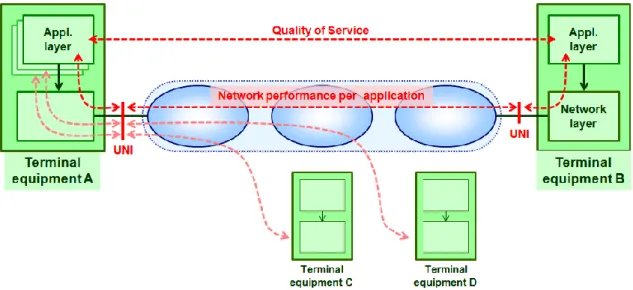
(QoS) concept. QoS, which includes both the network and the terminal equipment, is measured end-to-end, per service. This is despite the fact that the terminal equipment (and user-controlled local network, if applicable) is usually not managed by the network provider. Therefore, for technical purposes the Network Performance (NP) concept is used for measurement of the performance of network portions that are under individual providers’ control. Given that the strict technical term QoS includes many parameters outside the control of the network provider, BEREC understands that USD article 22 (3) should be limited to network performance.
Degradation of network performance may be due to general congestion in the network or it may be caused by targeted throttling of specific applications. Furthermore, congestion may occur in two different ways, either related to unpredictable situations occurring on an irregular basis, or relatively frequently caused by an operator’s failure to meet increased traffic load with sufficient capacity enhancement.
The Internet access service provides connection to the public Internet and thereby connectivity among end users connected to the Internet. Specialized services on the other hand, adopt access restrictions and strict service provisioning, typically implemented in a manner that provides enhanced service characteristics (e.g. end-to-end quality and/or security). These two service models represent an axis of characteristics that demonstrates different degrees of openness and admission control.
One could also envisage another (orthogonal) axis, exhibiting varying degrees of traffic management, with associated performance guaranties that reach from best effort to guaranteed quality levels. This second dimension illustrates that both the general Internet access service and specialized services can implement different traffic management techniques to achieve different levels of quality. Specialized services are typically able to
4
cover the whole range of quality levels, while the open Internet may be less predictable, currently lacking guaranteed levels of performance.Because specialized services intrinsically offer contractual terms ensuring quality of provision, BEREC considers that the application of minimum quality requirements according to USD 22 (3) should generally not be necessary for those services. This report therefore focuses specifically on quality conditions of the Internet access service.
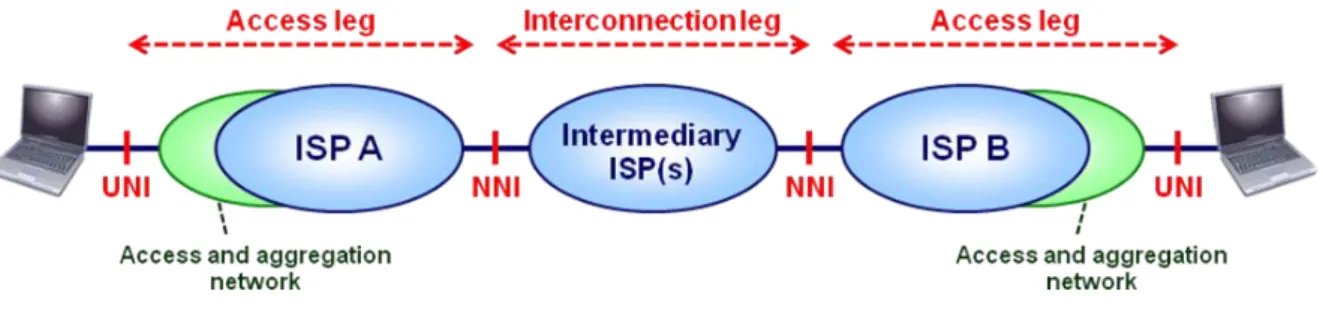
Quality evaluation of the Internet electronic communication service is challenging because of the mesh structure of this network of networks, the distributed responsibility of management of the network equipment and the decoupling of applications and content from the network layer. Use of statistical measurement methods is therefore indispensable. Even though an individual ISP is only able to directly control its own network resources, the interconnection arrangements agreed and implemented, are an important part of the service provisioning. The most relevant quality indicators for evaluation of network performance are throughput, latency, jitter and packet loss. These parameters are today mainly measured over the access leg i.e. from the user-to-network interface to some network internal measurement server. Enhanced methods measuring ISP-to-ISP communication, constituting the interconnection leg, would take into account the fact that Internet access is a service providing access to an interconnected network infrastructure.
Measuring the performance of individual traffic flows originating from specific applications may be a necessary part of any test configuration for detection of blocking and throttling of applications. This is however a challenging test configuration, which will need to distinguish between ordinary congestion situations in the network and targeted application-specific degradation.
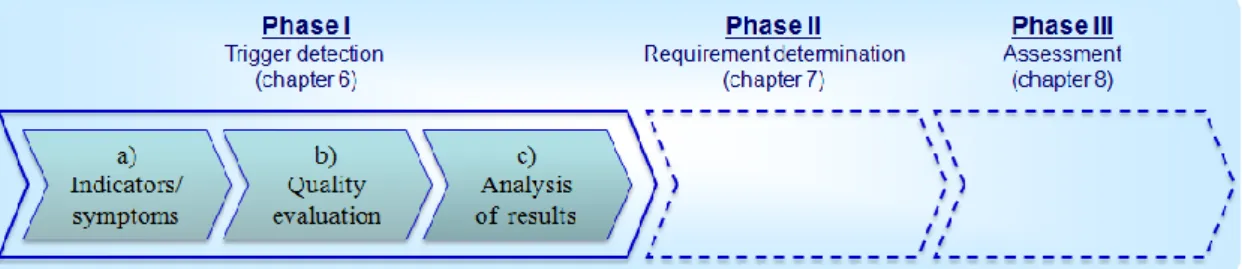
BEREC has identified two main phases for ensuring compliance with USD article 22 (3), possibly followed by a third assessment phase:
1. the detection of “triggers” for imposition of minimum quality requirements, and
2. if a trigger situation is detected in the first phase, a subsequent second phase in which the minimum quality requirements are specified, and
3. a third phase, in which assessment of whether the requirements are fulfilled, is also foreseen in some cases.
Each of these phases is further subdivided into three generic steps: a) preparation of each phase,
b) quality evaluation and c) analysis of results.
During the first, trigger detection phase, the preparation step (1a) will typically consist of collection of indicators received from stakeholders (including end users) and symptoms detected by the NRA. That preparatory step is followed by the quality evaluation step (1b) in order to verify the indicators and symptoms. This phase is typically based on the use of technical quality measurement tools, as described above.
The results of the quality measurements will then be input to the analysis step (1c). During this step, which is the last step in the trigger detection phase, the decision will be taken as to whether or not it is necessary for the NRA to intervene. Frequently occurring degradation of the general Internet electronic communications service or hindering (blocking) or slowing down (throttling) of traffic from individual applications are of particular concern.
NRAs will need to scrutinize the effect of the providers’ traffic management practices. This will include looking into the need to safeguard applications that depend on the underlying
5
network’s quality, prevention of consumer harm, protection of innovation and/or prevention of discriminatory behaviour that restricts competition.The effect of traffic management practices is categorized into two main groups:
degradation of the performance of the Internet access service as a whole, and
degradation of individual applications using the access.
Further work is needed in order to develop detailed recommendations regarding the evaluation of the ISPs’ practices in those respects. This will take place during the BEREC work streams on “Guidelines on quality of service in the scope of net neutrality” and “Competition issues related to net neutrality”.
During the second, requirement determination phase, the preparation step (2a) will typically build on the outcome of the preceding trigger detection phase. This second phase will be entered if the outcome of the first phase is that “triggers” have actually been identified. And the specifics of the degradation leading to this decision will typically point towards the most appropriate quality requirements.
In the next quality evaluation step (2b) potential quality requirements are considered. Again there will be two main groups: requirements on the Internet access service as a whole, and requirements on individual applications using the access. BEREC has identified three levels of requirements: Functional, general technical and detailed technical requirements. The determination of concrete requirements during this step will typically require the use of quality measurements made on live communication.
Potential functionalrequirements to be considered could include requirements on the Internet access service as a whole. For example, it could be required that congestion management must be mainly application-agnostic and/or actual access performance could be required to have an appropriate relationship to the advertised speed. Functional requirements regarding individual applications could for example include prohibition of blocking and/or throttling of specific applications and there could be qualitative requirements obliging adequate performance of specific applications.
When potential technical requirements are being considered, these could for example include general technical requirements, such as obligations regarding typical or minimum actual speed of the Internet access service. NRAs could also consider including the interconnection leg in addition to the access leg in such speed requirements. Applying
detailed technical requirements to the performance of specific applications could in principle be desirable, but BEREC considers this may not be very feasible on today’s best effort Internet.
The analysis step (2c), which constitutes the last step of the requirement determination phase, will probably be partly conducted in parallel to the quality evaluation step, in order to analyse the ability of the different candidate requirements to prevent quality degradation. The requirement chosen must be effective while at the same time being the least intrusive.
USD article 22 (3) prescribes a notification procedure that requires information about the proposed decision by the NRA to be provided to the Commission and also be made available to BEREC. Following this, the NRA is obliged to take the utmost account of any comments or recommendations made by the Commission when finally deciding on the requirements. Further work is needed in order to provide detailed recommendations on the setting of specific minimum quality requirements. The usability of the different options indicated above will be elaborated further during the follow-up BEREC work stream on “Guidelines on quality of service in the scope of net neutrality”.
6
Part I – Introduction
1. The role of QoS with regard to net neutrality
The increasing importance of the Internet for society has led to intense discussions about how to preserve and enhance this shared resource as an open platform for all kinds of electronic communication. End users’ and content and applications providers’ ability to use the Internet, as well as the Internet service providers’ and network operators’ ability to build the underlying infrastructure are important aspects of this ongoing debate. The different actors have interests in the performance of the Internet as well as the resulting quality of applications running on the net.
In the strict sense, net neutrality is the principle of equal treatment between packets moving across the IP infrastructure. However, net neutrality has been used more broadly to describe the openness of the Internet. The debate about the open Internet and net neutrality started in the US, and it gained critical mass for European policy makers and regulators during the political process of the revised regulatory framework, which was approved in November 2009. Net neutrality in its broad definition related to the objective of an open Internet is described as: “promoting the ability of end-users to access and distribute information or run applications and services of their choice”, the wording used in article 8 (4) (g) of the
Framework Directive.
In 2010 BEREC started exploring the regulatory aspects of net neutrality. The Commission also initiated a consultation. In its response to the Commission BEREC noted that ”incidents so far remain few and for the most part have been solved without the need for regulatory intervention. BEREC believes that, at present, it would be premature to consider further intervention with respect to net neutrality on an EU level… This, however, does not mean that problems could not arise in the future. For this reason, BEREC believes that it is important that the conditions of net neutrality and the openness of the Internet be monitored over time by NRAs.” In this context quality of service was identified as one of the key issues
for further work on net neutrality by BEREC in 2011 and 2012.
The regulatory framework introduces the competence of NRAs to set minimum quality requirements for performance of electronic communications services. In this document the wording of article 22 (3) of the Universal Service Directive (USD) “In order to prevent the degradation of service and the hindering or slowing down of traffic over networks, Member States shall ensure that national regulatory authorities are able to set minimum quality of service requirements on an undertaking or undertakings providing public communications networks...” is elaborated on. This document focuses on the issue of quality of service
requirements, even though this is of course only one among several aspects of the broader net neutrality theme.
The provision mandates NRAs to set minimum requirements in order to avoid certain situations. These situations are described as “the degradation of service and the hindering or slowing down of traffic over networks”. This invokes the question: When is degradation of
service and hindering or slowing down of traffic of such nature that imposing remedies in the form of minimum requirements is to be considered appropriate? And furthermore, while the article remains agnostic on this matter, what shape should these minimum requirements take?
The answers to these questions ought to be explored within the context of the framework and in line with basic legal concepts. According to recital 34 of the 2009/136/EC Directive, the underlying goals that the legislator wishes to achieve are: [1] to address discriminatory behaviour that could restrict competition; [2] to ensure that services and applications
7
dependent on the network are delivered at a minimum quality standard; and [3] address service degradation that is to the detriment of consumers.The framework implies that NRAs need to assess end user indications and symptoms that surface in the infrastructure or application markets, which could indicate that problems have emerged. Different approaches can be used for monitoring these developments, from proactive measurement of communications services to a more reactive response based on incidents reported to the NRAs. Specialized services1 are usually provided with clear contractual terms related to quality. The Internet access service, being a more general service, will however be a particular subject of interest for quality evaluation. Different markets and countries may also require or prefer different solutions, but it is also necessary to develop some common understanding at the European level.2
There are different interpretations of the concept “quality of service” (QoS) depending on the context in which it is used. There is a difference between use of the concept within the provisions of the telecoms package on one hand and the strict technical definition of QoS on the other. In the USD the concept refers to a more general quality perception related to the user’s subjective experience when running applications over the network, while the technical specification of QoS consists of well defined performance characteristics of applications. In relation to this it is important to distinguish between the end user, the terminal equipment and the network itself. Even though it is the end users’ perception of the application that is the goal, it is only the network part that is under the operators’ control. Varying quality of the terminals used may have a major impact on the performance of the application. Because of this, the end users’ perception is an important source of indicators of quality problems, but it will only be the performance of the network itself for which minimum requirements can be set.
It is challenging both to measure and guarantee the network performance of the Internet electronic communication service because of the “best effort” way of working of this global network consisting of several interconnected providers’ networks. This also implies that determination of the minimum quality requirements will not be straight forward. Then there is the question about whether to consider individual applications or to look at the performance of the overall electronic communications service provided by the network. Related to this is a question about how to interpret “degradation of service and the hindering or slowing down of traffic” which is the wording used in article 22 (3) in USD. These are questions that are
discussed in this report.
There will be several steps before, if deemed necessary, the minimum quality requirements can be set. When symptoms of degradation of service are discovered, this situation will then have to be evaluated to make a decision on whether or not this could be considered a “trigger point” for intervention. If it is decided to impose minimum quality requirements, the quality level must be determined based on, inter alia, current technology and the performance level available in the market today. There will also be a need to assess the degree of fulfilment of the requirements after they have been decided on. Then in the longer run there is a need to consider the dynamic aspect of the requirement level, to follow up the evolution of technology and services available in the market.
During the different steps described above there will be a need to investigate in more detail the network performance using technical measurement methods. Measurements may include parameters like throughput rate, network connectivity, packet delay, packet delay variation, packet error, packet loss and support of TCP/IP protocols. In addition to
1
The concept “specialized service” is further described in section 4.5
8
measurement of the general network performance, there is also a possibility to measure the performance of individual applications. However, while it will not be feasible to analyse every kind of application, selected applications may be tested for performance and detection of targeted blocking or throttling.This report is also related to BEREC’s “Guidelines on Transparency in the scope of Net Neutrality”, and particularly transparency regarding the quality level offered by the ISPs.
2. Scope and structure of the report
The scope of this report is to discuss how to interpret the new provision in article 22 (3) in the Universal Service Directive which describes the NRAs’ competence to define and potentially impose minimum quality requirements on electronic communications networks.
After the introduction in part I, the report contains a description of general aspects in part II and a description of the available regulatory tools in part III.
Part II consists of chapter 3 describing the relevant provisions of the regulatory framework, chapter 4 defining quality of service and other related concepts and chapter 5 giving an overview of quality evaluation methods. These evaluation methods are applicable to the different phases of the regulatory process described in part III.
Part III outlines the different stages in a regulatory process. First, the NRA must take a decision on whether there is a need to set minimum quality requirements or not, as described in chapter 6. If the conclusion is yes, the level of those quality requirements has to be determined, which is elaborated in chapter 7. A possible assessment phase is also foreseen, as presented in chapter 8.
Finally, chapter 9 summarizes the findings and gives suggestions for further work. Based on the general framework presented by this report on net neutrality and QoS, BEREC intends to develop more specific and detailed recommendations in a separate follow-up guidelines document.
9
Part II – General aspects
3. Relevant provisions of the Regulatory Framework
The purpose of this chapter is to present an overview of the legal framework taken into account in this report. Article 22 USD3 and relevant recitals with respect to article 22 (3) USD are introduced.
The core regulation is article 22 USD, which deals with “Quality of Service”. Hence, it is briefly introduced. To simplify the understanding the provisions’ texts are shortened and the parts of greatest interest highlighted/ underlined:
Article 22 (1) states that
Member States shall ensure that national regulatory authorities are, after taking account of the views of interested parties, able to
- require undertakings that provide publicly available electronic communications networks and/or services to publish comparable, adequate and up-to-date information for end-users on the quality of their services and on measures taken to ensure equivalence in access for disabled end-users.
- That information shall, on request, be supplied to the national regulatory authority in advance of its publication.
Article 22 (2) states that
National regulatory authorities may specify, inter alia,
- the quality of service parameters to be measured and the content, form and manner of the information to be published, including possible quality certification mechanisms, in order to ensure that end-users, including disabled end-users, have access to comprehensive, comparable, reliable and user-friendly information.
- Where appropriate, the parameters, definitions and measurement methods set out in Annex III may be used.
According to article 22 (3),
National regulatory authorities, in order to prevent - the degradation of service and
- the hindering or slowing down of traffic over networks, shall be able to
- set minimum quality of service requirements
- on an undertaking or undertakings providing public communications networks.
The NRA is obliged to provide the Commission, in good time before setting any such requirements, with:
- a summary of the grounds for action, - the envisaged requirements and - the proposed course of action.
This information shall also be made available to BEREC.
The Commission may, having examined such information, make comments or recommendations thereupon, in particular to ensure that the envisaged requirements do not adversely affect the functioning of the internal market.
- NRAs shall take the utmost account of the Commission’s comments or recommendations when deciding on the requirements.
3
See Directive 2002/22/EC on universal service and users’ rights relating to electronic communications networks and services
10
Article 22 describes a multilayered progression of means to secure quality of service, imposing an obligation for member states to ensure that NRAs are able to require providers to publish quality related information and measures taken to ensure equivalence in access for disabled end users (paragraph1). NRAs may specify and provide parameters to providers in this aspect (paragraph 2). In order to prevent degradation of service, NRAs may set minimum quality of service requirements. If doing so, they are obliged to provide information on the envisaged requirements to the Commission and BEREC and to take utmost account of the Commission’s comments or recommendations (paragraph 3).Of relevance in this context is also the amended article 9 (1) of the Access Directive (AD), which now stipulate that NRAs “may, in accordance with the provisions of article 8, impose obligations for transparency in relation to interconnection and/or access, requiring operators to make public specified information, such as accounting information, technical specifications, network characteristics, terms and conditions for supply and use, including any conditions limiting access to and/or use of services and applications where such conditions are allowed by Member States in conformity with Community law...”.
Then a closer look into article 22 (3) USD is relevant. To better understand the paragraph it is vital to keep in mind the following excerpts of recitals in the USD4 (note: these are not quotations and the most relevant phrases in this respect are underlined)
- End-users should be able to decide what content they want to send and receive, and which services, applications, hardware and software they want to use for such purposes, without prejudice to the need to preserve the integrity and security of networks and services. A competitive market will provide users with a wide choice of content, applications and services. (Cf. recital 28)
NRAs should promote users’ ability to access and distribute information and to run applications and services of their choice, as provided for in FD Art. 8. Given the increasing importance of electronic communications for consumers and businesses, users should in any case be fully informed of any limiting conditions imposed on the use of electronic communications services by the service and/or network provider. (Cf. recital 28)
- USD neither mandates nor prohibits conditions imposed by providers, in accordance with national law, limiting end-users’ access to and/or use of services and applications, but lays down an obligation to provide information regarding such conditions. (Cf. recital 29)
- A competitive market should ensure that end-users enjoy the quality of service they require, but in particular cases it may be necessary to ensure that public communications networks attain minimum quality levels so as to prevent (i) degradation of service, (ii) the blocking of access and (iii) the slowing of traffic over networks. (Cf. recital 34)
On this background it seems reasonable to conclude that the regulatory power introduced by art 22 (3) has to be executed with thoughtful caution. A discussion seems to be necessary on possible premises for a trigger that alerts the NRA when there might be reason to consider intervention and, as a remedy, to set minimum quality requirements. The provision in art 22 (3) about the Commission and BEREC consultation procedure indicates that other measures (such as strengthening transparency and improving competition) should be taken into account, before imposing minimum quality requirements.
The minimum quality requirements may be imposed on “an undertaking or undertakings
providing public communications networks”. NRAs may therefore also impose such
requirements on an individual undertaking and therefore NRAs are granted the right to address one specific provider of public communications networks.
11
It should also be noted that the directive does not provide further detail as to what these “minimum quality of service requirements” consist of; should this requirement be interpreted narrowly so as to refer to network performance only, or is it meant to cover the entire ‘user experience’ of a service? Furthermore, it does not provide clear guidance on what should be the trigger for the imposition of such a minimum quality requirement.However, recital 345 gives some indications in this connection, describing some aspects that could be considered:
In order to meet quality of service requirements, operators may use procedures to measure and shape traffic on a network link so as to avoid filling the link to capacity or overfilling the link, which would result in network congestion and poor performance.
The term “procedures to measure and shape traffic” is what is referred to as “traffic management” in this report.
Those procedures should be subject to scrutiny by the national regulatory authorities, acting in accordance with the Framework Directive and the Specific Directives and in particular by addressing discriminatory behaviour, in order to ensure that they do not restrict competition. This indicates that the scrutiny by the NRAs should address discriminatory behaviour that restricts competition.
If appropriate, national regulatory authorities may also impose minimum quality of service requirements on undertakings providing public communications networks to ensure that services and applications dependent on the network are delivered at a minimum quality standard, subject to examination by the Commission.
This indicates that NRAs may also take steps to ensure the quality of applications dependent on the underlying network.
National regulatory authorities should be empowered to take action to address degradation of service, including the hindering or slowing down of traffic, to the detriment of consumers. This indicates that NRAs may address any degradation of service that is to the detriment of consumers.
Summing up, this indicates three sample aspects to consider in the interpretation of USD article 22 (3) regarding traffic management and quality of service:
- discriminatory behaviour restricting competition - applications’ dependence on the underlying network - degradation that is to the detriment of consumers
There is a potential risk for an adverse effect on the functioning of the internal market if individual NRAs use different legal standards in regard to QoS and triggers for intervention. This could lead to a fragmented market for ISPs with cross-border strategies. For this reason, article 22 (3) USD also provides for a mandatory process of consultation involving the Commission and BEREC where such minimum quality requirements are imposed. However, it is the intention of this report to bring more clarity with regard to the definition of “quality”; quality evaluation methods; when to set minimum requirements; how to determine the requirements; and how to assess the fulfilment of requirements.
Discussions on when and how this new power set out in article 22 (3) USD could be used will be dealt with in more detail in chapters 6, 7 and 8.
12
4. QoS and related concepts
Although the end user’s quality of experience is the final goal, including how it provides a potential indicator for network performance, the main objective for QoS evaluation is to identify degradation of service resulting either from congestion or from operators’ practices (e.g. priority given to selected traffic streams over others). Therefore, the approach is not necessarily to use quality of service (QoS) and quality of experience (QoE) concepts as defined in formal standards but to base the analysis on related knowledge in order to achieve pragmatic ways of identifying degradation of service.
4.1 Internet access including interconnection
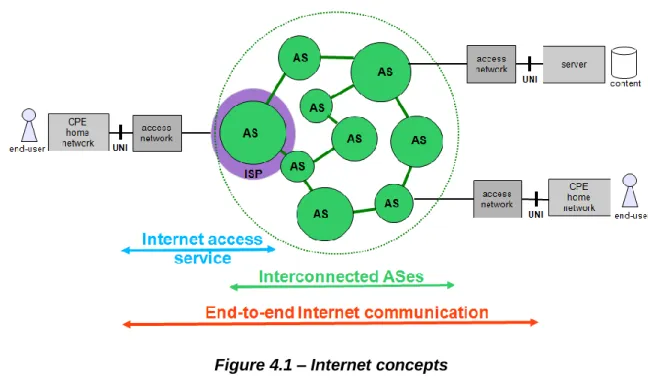
The Internet consists of thousands of interconnected networks. Each network is operated autonomously and is therefore referred to as an Autonomous System (AS)6. Communications paths within an AS are established by the use of internal routing protocols. For end-to-end reachability across several ASes an external routing protocol - an inter-Autonomous System routing protocol called the Border Gateway Protocol (BGP)7 - is needed. Its primary function is to exchange network reachability (connectivity) information between the ASes for calculating routes and eliminating loops. Routing decisions based on path, network policies and/or rule sets can then be taken.
Internet access service is a service providing an end user with connectivity to the Internet. For doing so an ISP has to operate and maintain an IP network – an Autonomous System as described in the previous paragraph – and connect it to the Internet via BGP. The Internet access reaches from the User Network Interface (UNI) to an egress point of the ISP's AS that is connected to the rest of the public Internet. This egress point can be a direct interconnection to another AS or to an Internet Exchange Point (IXP) where several other ASes may be reached. Any destination on the Internet can be reached either directly (destination is connected to a directly connected network) or indirectly (routing to destination is only possible via transit networks).
Figure 4.1 – Internet concepts
6 An Autonomous System (AS) is a set of connected routers under a single technical administration, thus having a single and clearly defined routing policy. Detailed information on the use of ASes is given in RFC 1930. 7 The Border Gateway Protocol (BGP) is the current de facto standard for inter-AS routing, RFC 4271.
13
The Internet access service enables the end user- to communicate with end users connected to the Internet,
- to access content that is hosted on servers connected to the Internet and
- to make use of applications that rely on the communication capabilities of the Internet.
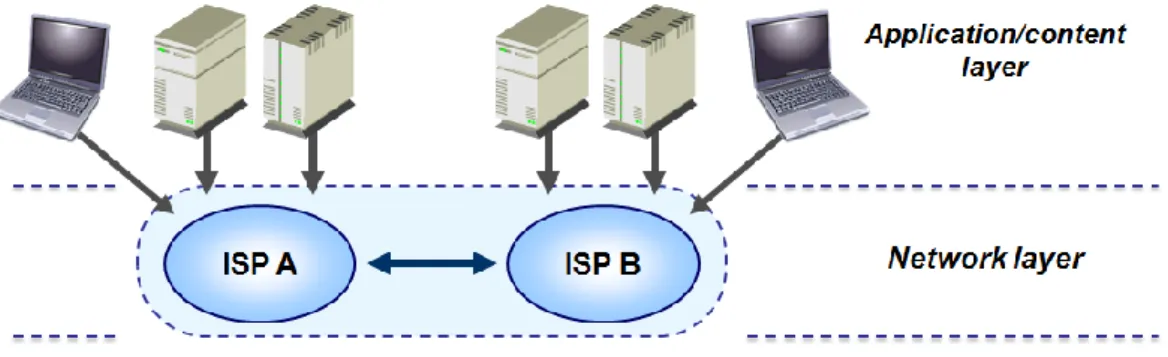
In contrast to traditional circuit-switched networks, applications/services on the Internet are not integrated into the networks. In an IP environment, services are generated at the terminal equipment (the computer), relying on the Internet as a transportation platform (the latter being usually referred to as the “network layer”). The Internet by itself provides only a general electronic communications service.
Applications and content are decoupled from the (physical and logical) network and can only use its available transfer capacity without having any influence on the traffic management mechanisms practised on it. The network does not interact with the applications; its only task is to convey the traffic according to a pre-defined policy. The Internet only provides connectivity between the end points executing the application functionality.
As an example, the use of a VoIP service is shown in the following diagram. There are various sources for impairments that affect the resulting quality of the service and that are attributable to different portions of the network chain. The VoIP application has certain minimum requirements in respect of IP packet transmission that must be met in order to provide good quality. If the network layer quality is low, the end user will only perceive that the VoIP application provides a bad performance. The end user cannot directly identify the specific source of impairment, nor who is responsible for it. This has to be done by objective measurement methods.
14
4.2 Network performance, QoS and QoE
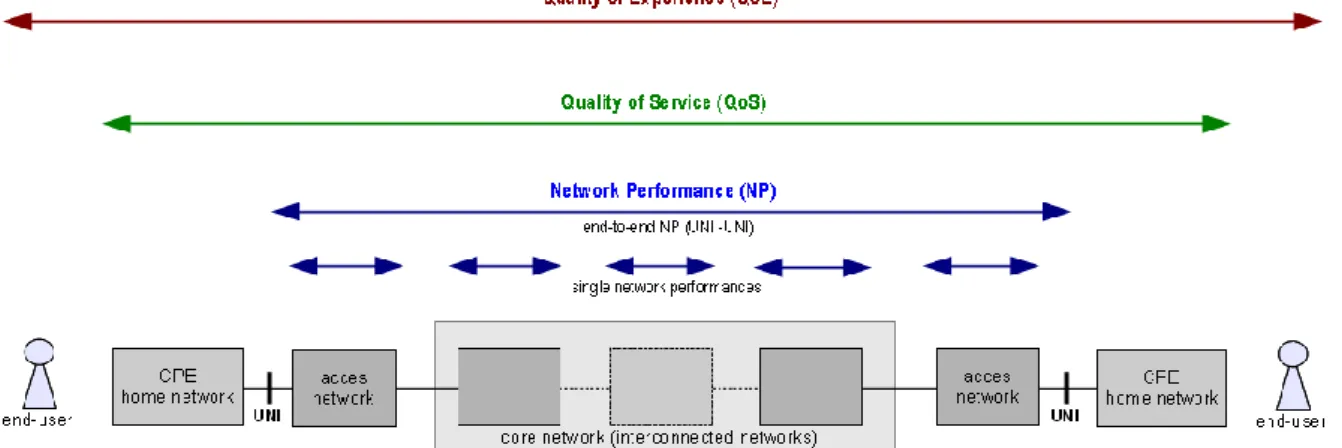
The generic definition of quality is “The totality of characteristics of an entity that bear on its ability to satisfy stated and implied needs”8. Any component of an electronic communications system can be such an entity. Depending on what kind of characteristics and which portion of the communications system is under consideration, the term quality has different scopes. From an engineering perspective the performance of technical elements and functions are of interest. An end user interacts with the communications infrastructure by accessing a service, resulting in a perception of the quality of this service. A user-centric quality perception is given when rating the subjectively perceived service quality and taking into account context of use and user expectations.
Thus, different concepts of quality are used in telecommunications:
For purely technical purposes, i.e. assessment and analysis of technical functions, the Network Performance concept is applied.
The users’ interaction with services at the man-machine interface is assessed by the
Quality of Service (QoS) concept.
The overall acceptability of a service as subjectively perceived by an end user is expressed in terms of Quality of Experience (QoE).
The concepts and scopes of application are illustrated in the following diagram.
CPE: Customer Premise Equipment, UNI: User-to-Network Interface
Figure 4.3 – Network performance, QoS and QoE
Network Performance (NP) is the ability of a network or network portion to provide the functions related to communications between users9. Network performance is determined by the performance of network elements one-by-one. The performance of the network as a whole (end-to-end) is determined by the combination of the performance of all single elements along with their inter-connections. Network Performance is specified in terms of objective performance parameters, i.e. they are measurable (with instruments or observations) and a performance value is assigned quantitatively10.
Quality of Service (QoS) is, as mentioned above, the “Totality of characteristics of a telecommunications service that bear on its ability to satisfy stated and implied needs of the user of the service” in which “service” is a set of functions offered to a user by an
8 See ITU-T Rec. E.800 9 See ITU-T Rec. E.800 10
The relevant parameters, as defined in ITU-T Rec. Y.1540, are packet delay, jitter, packet loss, packet error (and throughput).
15
organization. QoS is always end-to-end, i.e. user-to-user or user-to-content. QoS measurements are also carried out end-to-end and are made using objective (quantitative) or subjective (qualitative) parameters. A QoS measurement is an indication of the performance of a set of functions observable at the user-interface of the service.11Quality of Experience (QoE) is the overall acceptability of an application or service, as perceived subjectively by the end user12. It includes the complete end-to-end system effects (client, terminal, network, services infrastructure, etc.) and may be influenced by user expectations and context. Hence in principle, QoE is measured subjectively by the end user and may differ from one user to the other. However, it is often estimated using objective measurements through complex algorithms describing a statistical (experience) based relationship between subjective and objective measurements.
Relationship between network performance, QoS and QoE
Network Performance contributes towards QoS. The functions of a service depend on the performance of the network elements and the performance of the user’s terminal equipment. Therefore, QoS comprises both network performance and non-network related performance. QoS gives a quality rating of the collective performance of a set of functions that constitute the service. For voice services, for example, the QoS relates to the entire transmission path from mouth to ear.
QoE has a broader scope. It is impacted by the performance of multiple QoS parameters and user expectations and context. In general, there is a correlation between QoS parameters and QoE mean opinion scores (MOS). This relationship (the above mentioned algorithms) is typically estimated empirically and can be used in two ways: either the expected QoE for a user can be predicted by QoS parameter measurements, or the net required QoS can be deduced from a given target QoE for a user.
4.3 Causes and effects of quality degradation
4.3.1 QoS and QoE
As explained in section 4.2, QoS and QoE are end-to-end related, i.e. to-user or to-content. QoS is a measure of the performance of a set of functions observable at the user-interface of the service. QoE additionally takes into account user expectation and context. QoS and QoE observations and measurements can only reflect the quality as it is perceived by the end user, i.e. as perceived at the service interface. It is not possible to identify the direct cause of quality degradation in technical terms.
The concepts of QoS and QoE are used to validate whether a quality agreement (SLA) has been met or to determine the quality of a given service and the user satisfaction with it. The QoS parameters of each specific service can be specified and measured. By doing so all features of a service can be monitored and verified for compliance against e.g. some reference quality level.
For any further investigation on causes of quality degradation and identification of possible malfunctioning network or terminal elements, a more detailed analysis is necessary. However, this requires access to the network(s) and terminals themselves, in order to perform specific diagnostic tests.
11
Note that the quality-related definitions referred to in this chapter are based on the ITU recommendations. However, the Internet community uses a slightly different terminology. IETF defines Quality of Service as “a set of service requirements to be met by the network while transporting a flow” (RFC 2386) which is similar to ITU’s definition of network performance.
16
4.3.2 Network, terminal and application performance
The user-perceivable degradation of QoS/QoE is related to either an inadequate performance of the IP network or the terminal equipment/end user infrastructure, or a combination of both. Network performance and terminal performance are the building blocks of any end user service. The network(s) provide the connectivity and IP packet transfer capability between network termination points.
The terminal equipment sends and receives packets to and from the network via the network adapter (line card). The adapter is controlled by the operating system of the terminal which includes the implementation of several protocols, the so-called protocol stack. The end-to-end packet transfer performance is influenced by the performance of the hardware and software of the terminal equipment.
The user is making use of the packet transfer capabilities when running an application. The application software installed on the terminal equipment executes functions at the application/ content layer (information processing, content presentation etc) above the network layer as indicated in the figure below.13
Figure 4.4 – Application/content layer and network layer
At the end user’s side of a modern IP environment there may also be a local IP network (home network or corporate network for example) for connection of additional terminals and providing end user and service specific functions.
Network and terminal performance are distinguished because they belong to different areas of responsibility (these areas are separated by the UNI, see figures 4.1 and 4.2). The network operator(s) are responsible for maintaining and operating their infrastructure but they do not manage the end user equipment and infrastructure. The end user uses terminal equipment that is independently chosen and configured by him/herself.
4.3.2.1 Degradation of network performance
A decrease of network performance may be caused by a general degradation in the network, for example due to a general congestion, in which case traffic management or capacity increase may be needed, or it may be caused by a targeted throttling of specific applications. Congestion can occur in two ways, and it is essential to distinguish between these. One case relates to unpredictable situations that occur on an irregular basis. This is an unavoidable situation, especially in a best effort network, though the amount of such congestion depends
13 Note that this two layer model simplifies the four layer TCP/IP reference model. The application/content layer in this simplified model includes the upper application and transport layers of the TCP/IP model. The network layer in this simplified model includes the underlying network layer (also referred to as the IP layer) and the link layer (which sometimes also is further divided into data-link and physical sub-layers).
17
on the degree of over-provisioning of capacity. The second case is congestion that occurs on a regular basis, caused by a failure to meet increasing traffic levels with sufficient capacity enhancement.In both cases, quality measurements have to be precise enough to evaluate the potential reduction in quality of service caused by the degraded network performance.
4.3.2.2 Degradation of terminal performance
Besides pure network performance, other factors may influence quality of service. For example, the performance of terminal equipment can impact strongly on the QoS, depending on how it has been implemented or due to aging, software incompatibility, or specific configuration issues14.
The nature of the end user is also relevant. Different types of end users, i.e. private individuals, business customers or content/application providers, have different needs. Depending on the end user’s nature and needs, the perceived impact on QoS can be different.
The quality of the local network (e.g. home network) is equally important. Deterioration of the local network linking the terminal equipment to the access point can significantly reduce the performance of applications and services. Consideration of the quality of the local network (ref. figure 4.1 and 4.2) is also necessary when measuring quality of service.
Ignoring these factors can introduce strong biases into any interpretation of QoS measurement results.
4.3.2.3 Degradation of application performance
In economics the network effect (or network externality) describes what effect the number of users has on the value of a certain good or service. Blocking of access to a certain application or content may have an impact on the economic value of that application or content, through the network effect. But the scope of the framework requires us to look beyond that and challenges us to ask the question: could blocking of access to certain applications or content have a negative impact on the functional or social value? BEREC considers this of particular importance because such effects may directly influence the end user’s quality of experience.
To illustrate with an example: say an operator blocks a p2p file sharing application. This affects the value of that application, as it becomes less useful. With fewer peers available from whom to retrieve the desired information, the application will lose performance and may eventually lose relevance. Taking a different example: say an operator blocks access to a chat application from some subscription package. This makes the application less valuable, because some people can’t use it at all, while others can’t reach those for whom this application is blocked. Alongside the economic impact on the value of an application, its functional and social value is diminished in parallel, and for the same reason: less network reach results in less relevance for users.
The numerical expression of the network effect, the so-called Metcalf’s law, asserts that the value of an application is proportional to the square of the number of its users. This shows that even though individual users may be able to use an application at their end of the communication path, the usability of the application can quickly fall to a low level if users at the other end are hindered.
14
With most ISPs, the end user can change its terminal equipment configuration so that it favours some characteristics of the network, such as latency, or bit rate.
18
Regarding the end user’s perception of QoS/QoE, a degraded application performance will affect the overall quality of the end user service. When using an application, the performance of the network is involved, including the network effect, and this must be taken into account. Applications, especially those based on user-to-user communication, form a community of application users. They create a virtual network among themselves. This system can be used to exchange information between individual users or to distribute content within the virtual network.When evaluating QoS/QoE, the application performance, including the network effect, has to be considered. The extent to which negative impact on the network effect occurs can vary from significant to minor impact on economic, functional and social value. While the economic significance is more closely related to the application as a business entity, this report does not primarily focus on that. Following the perspective of the Universal Service Directive, our primary focus will be on the direct effects on the end-user: functionality and social context.
4.4 Traffic management
Traffic management is essential for the implementation of quality measures in IP based networks. This chapter briefly describes the different aspects of traffic management that are particularly relevant to the discussion on net neutrality.
Traffic management includes “(1) nodal traffic control functions such as traffic conditioning, queue management, scheduling, and (2) other functions that regulate traffic flow through the network or that arbitrate access to network resources between different packets or between different traffic streams”.15
Different traffic management techniques can be classified according to which layer they are performed at and which network nodes they are performed in, ranging from internal to external network nodes and from the network to the application layer. An important aspect to keep in mind is that each IP packet can be inspected individually, taking into account all characteristics, and thus implementing any packet forwarding policy.
We use the following three traffic management categories:
1. Traffic management techniques executed at the network layer in the network internal nodes.16
2. Traffic management techniques executed above the network layer in the endpoints. (Congestion control which is elaborated on later in the section is an important example.)
3. Traffic management techniques executed above the network layer in network internal nodes.17
The last category includes techniques referred to as traffic filtering, traffic shaping and similar terms, and it often uses so-called Deep Packet Inspection (DPI). DPI looks deep into the packets’ content (beyond the IP header) and classifies packets according to a predefined policy. Based on this, packets may be forwarded, delayed or dropped. DPI is typically
15 Overview and Principles of Internet Traffic Engineering, RFC 3272
16 This category includes also traffic management techniques executed below the network layer when the more detailed protocol reference model is used. These techniques can be further divided into two subgroups: (1) Techniques managing packet flows, traffic classes or priority levels (like DiffServ, IntServ and MPLS) (2) Techniques executing in single nodes on a packet by packet basis (like packet scheduling and queue management schemes, e.g. RED, WFQ and PQ)
19
performed at “traffic junctions” and enables the ISPs to control which traffic is allowed into their networks (from the end users’ access or from the interconnection points).DPI, originally used as a network security tool installed in firewalls, is nowadays often used for filtering of packets based on the specific application that packets belong to. In this way the ISPs may either limit the capacity used by individual applications, and/or some applications may be blocked completely. Other application-specific treatment may provide improved performance, typically for real-time applications like telephony, streaming and gaming (this is described later in the section).
Because the Internet does not use admission control for traffic flows entering through its access points, congestion occurs from time to time. During congestion, routers run out of buffer space and are forced to start dropping some packets, and by default this is done randomly. Congestion control is used to avoid escalating this situation into total congestion collapse of the Internet.18
Congestion control is a feedback-based adjustment of the transmission rate at which data is sent into the network.19 Using congestion control causes the endpoints (computers connected to the network) to reduce their transmission rates when congestion is encountered, to avert escalation of the situation. This congestion control function in the endpoints may be further supported by the network, based on functionality in the routers. In many cases when reduction of the traffic load is needed in order to relieve congestion situations, this can be performed in an application-agnostic way,20 constituting an alternative to the application-specific measures typically performed with DPI.
Another method of managing packets within the network is to establish different traffic classes or priority levels, allowing specific traffic flows to experience an improved transfer performance. In this case the network configuration typically includes a control function at the edge of the network that limits the traffic within each class, and separate queues per traffic class inside the network.21
This report assumes that some traffic management practices are more reasonable than others, even though the scope of this document does not include going into a full scale discussion of this topic. But some main ideas are explained below which will be handled in greater detail in further BEREC work within the net neutrality area.
Aspects which are important when considering reasonableness are; degree of end user control, application agnosticism and full blocking vs. moderate throttling. Traffic management practices that the end user can control may often be seen as more reasonable than measures that are taken unilaterally by the ISP. This is a reflection of the objective of avoiding harm to end users.
Furthermore, practices that are independent of the specific applications that are in use, so-called application-agnostic traffic management, will usually be considered more reasonable in relation to net neutrality than application-specific traffic management. This is a consequence of the definition of net neutrality, which points towards equal treatment of traffic.
18
Computer Networks – A systems approach, Larry L. Peterson and Bruce S. Davie 19 Congestion Control in the RFC Series, RFC 5783
20 For example IETF RFC 6057 Comcast's Protocol-Agnostic Congestion Management System or some newer approach being developed in the IETF Working Group Congestion Exposure (Conex), www.ietf.org
20
And finally, complete blocking of specific applications is usually considered more severe than moderate throttling, and is therefore more likely to be regarded as an unreasonable practice. All traffic management practices should of course be revealed by the providers as a part of the transparent provision of information.When specific traffic management practices are being assessed, all aspects of the practice must be taken into account before a conclusion can be drawn as to whether it is considered reasonable or unreasonable. Security and network integrity, legal justification and competition-related considerations are typical examples of additional aspects that need to be included in such an assessment.
4.5 Specialized services
Regarding use of the transmission capacity over the user’s broadband connection, two kinds of end user services may be provided: Internet access services on one hand and specialized services on the other hand.
Internet access service provides connection to the public Internet and thereby connectivity between end points connected to the Internet. Since end-to-end communication is usually routed via several IP networks (see section 4.1) with no inter-network traffic management and with each network following its own traffic management strategy (first-come-first-serve, prioritise, throttle or block IP packets) the end-to-end performance is highly variable. Furthermore the Internet is a connectionless22 data communications network with no guaranteed delivery of data. The network performance of the Internet today has therefore no guaranteed characteristics, which is why it is referred to as being best effort.
Specialized services are usually designed to provide guaranteed characteristics (e.g. end-to-end quality and/or security). These characteristics are generally stated in contractual arrangements. Technically, specialized services typically rely on access restrictions and extensive use of traffic management techniques or strictly enforced capacity planning and provisioning. Whereas in the specialized case customers’ service requests may be rejected when the capacity limits of a network are reached or alternatively they may trigger capacity extensions, best effort networks will still try to serve the customers on a constant capacity basis (implying a decrease in quality).
Two independent dimensions differentiate the service offers provided to customers, as illustrated in figure 4.5 below. Along the horizontal axis the varying degree of openness and admission control is indicated, while along the vertical axis the variation from best effort to enhanced quality levels is indicated. The different service offers can be characterized by these two dimensions. Note that the model relates to use of the transmission capacity at the network layer and not to the application/content layer (ref. figure 4.4).
22
Connectionless data communications means that there is no explicit setup of a connection through the network, and that individual packets are sent independent of each other.
21
Figure 4.5 – The two dimensional modelAccess control dimension
Even though both specialized services and Internet access use the same technology, namely IP, there is a differentiating aspect that enables the operator to achieve stable network performance (IP packet transmission performance) for specialized services:
The specialized services restrict use of those services to specific customers (access control) according to the specific end users’ profile (control of IP traffic characteristics). Therefore the operator can calculate the required capacity and can design his network accordingly. He can allocate network resources for the exclusive use of specialized services. This is not the case with Internet access service, as services/applications on the Internet are decoupled from the network. The operator cannot know the amount of capacity required by the user for individual applications. Therefore he has to estimate an average capacity demand per end user, resulting in a variable network performance.
The model describes the operators’ implementation at the network layer. This has implications for the services provided at the application layer. In figure 4.5 above, “facilities based service provisioning” indicates example usage scenarios, with VoIP, IPTV and VoD typically offered as vertically integrated services with quality guarantees. Similar services are also available over the Internet as so-called over-the-top (OTT) offers, in this case decoupled from the network layer and delivered with best effort performance.
Note that this way of distinguishing between specialized services and Internet access is also close to the FCC description of specialized services in their report and order from December 201023. FCC describes how specialized services typically share the capacity with the Internet access service at the user’s broadband connection to the network. Specialized services are
22
separated from the Internet access service and the concept should not be used for services that are substitutes for the Internet access service.Quality dimension
Another important differentiation between service offers is their capability of providing quality guarantees, varying from best effort to fully guaranteed end-to-end quality. This variation is due to the implementation of different traffic management techniques in the IP network providing the service. These traffic management techniques may include both application agnostic measures (like for example general queue management) and application specific measures (like throttling or blocking of individual applications).
Specialized services and Internet services can both have varying levels of quality guarantee. Today the complete range of quality techniques is used for specialized services, from best effort corporate networks and VPNs to IPTV and VoIP with guaranteed QoS. Internet services however are at present more limited in their use of quality techniques. However, the standardization by IETF of quality architectures could also enable guaranteed QoS for the Internet in the future24. The most challenging aspect regarding implementation of these architectures is the IP interconnection between providers.
4.6 The term “quality of service” in Art. 22 (3) of the USD
The new article 22 (3) of the Universal Service Directive states that “In order to prevent the degradation of service and the hindering or slowing down of traffic over networks, Member States shall ensure that NRAs are able to set minimum quality of service requirements”.
Recital 34 of Directive 2009/136/EC clarifies that the ”degradation of service” can but does
not have to amount to the hindering or slowing down of traffic.
Given that QoS can only be specified for individual services, including many parameters outside the control of the network operator, the new provision in Art. 22 (3) USD should be interpreted as limited to the network performance concept since QoS in the sense defined above (in section 4.2) would require the specification of individual QoS levels for a very large list of end-to-end services. It would also require intervention into areas that are not under the control of the operator.
It does not appear necessary to consider the application of “minimum QoS requirements” to
specialized services, since these intrinsically contain contractual terms relating to quality of provision. The term “minimum QoS requirements” could be understood as (ensuring):
- a sufficient performance level of the Internet access service.
- the absence of selective and/or excessive application-related throttling or hindering. This would be especially needed if that Internet performance was unfairly degraded in order to benefit the development of specialized services.
24 Several RFCs are standardized by IETF specifying quality architectures like Differentiated Services (RFC 2475 and others) and Multiprotocol Label Switching (RFC 3031 and others) that are used extensively inside individual providers’ networks, but that also are applicable to inter-provider solutions.
23
5. Overview of quality evaluation methods
This chapter gives an overview of the most relevant quality evaluation methods available for networks based on the IP technology. The description starts by highlighting the specific challenges that face any evaluation of the quality of IP networks. It is followed by a description of general methods for evaluation of both IP network performance, and performance of individual applications run over IP based networks. The last section gives an overview of currently available quality evaluation tools.
5.1 The four areas of quality evaluation
Before going into the detailed elaboration of quality evaluation methods, a presentation is made in this first section of how the use of quality evaluation methods fits into the process of determining the minimum quality requirements according to USD article 22 (3). The enforcement of this article will typically consist of three phases which are described in detail in the following three chapters.
1. Detection of situations that could trigger imposition of the minimum QoS provision (chapter 6)
2. Collection of relevant data (e.g. current quality performance) in order to decide minimum quality requirements (chapter 7)
3. Assessment of whether the network under evaluation meets the minimum quality requirements (chapter 8)
The quality evaluation methods are also intended to be used in evaluation of the transparency requirements, as described in the BEREC “Guidelines on Transparency in the scope of Net Neutrality”. This constitutes a fourth area of quality evaluation related to net neutrality.
4. Verification of the information provided by ISPs about the quality level they offer (ref. the transparency requirements, USD article 20 and 21)
The figure below shows these four areas of quality evaluation related to net neutrality as separate flows. Each of these flows is divided into three steps numbered a, b and c. The three generic steps that all four flows consist of are
a) Defining the purpose and setting down the process for the quality evaluation b) Carrying out the quality evaluation step using tools selected from the toolbox c) Analysing the results of the quality evaluation step