AN EXAMINATION OF POST-PERMANENCY ADJUSTMENT AND DISCONTINUITY FOR OLDER FOSTER YOUTH IN ADOPTIVE AND GUARDIANSHIP HOMES
Kevin R. White
A dissertation submitted to the faculty of the University of North Carolina at Chapel Hill in partial fulfillment of the requirements for the degree of Doctor of Philosophy in the School of Social Work
Chapel Hill 2015
Approved by:
Mark F. Testa Mark W. Fraser Minli Liao
©2015 Kevin White
ABSTRACT
KEVIN WHITE: An Examination of Post-Permanency Adjustment and Discontinuity for Older Foster Youth in Adoptive and Guardianship Homes
(Under the direction of Mark F. Testa)
For more than two decades, child welfare scholars, practitioners, and advocates
involved with the U.S. child welfare system have engaged in coordinated efforts to increase the number of foster youth who find stable, permanent homes through adoption or
guardianship, and these efforts have been shaped and guided by federal policies and
directives. As a result, the number of children adopted or placed into guardianship out of foster care has increased since the mid-1990s, and the proportion of exits from foster care
due to adoption or guardianship has been growing over time as well. Although this increase in permanency for foster youth is generally deemed a success resulting from improvements in child welfare policy and practice, some voices have also raised concerns that perhaps
foster youth are being placed in permanent homes too quickly, or without adequate preparation, and thus, a high proportion foster youth may experience poor long-term
outcomes and foster care reentry, otherwise known as post-permanency discontinuity. Despite these concerns about the stability of foster care adoptions and guardianships, little is known about how former foster youth fare after legal finalization of permanent
placements. Data on youth and families after finalization are difficult to obtain, and few rigorous studies have examined outcomes for this population or evaluated interventions
The first paper is a systematic review of the literature undertaken to summarize the risk and protective factors for discontinuity and outcomes proximal to discontinuity found in
previous peer-reviewed studies. Proximal outcomes to discontinuity are short-term outcomes that signal child or family adjustment problems after adoption or guardianship (e.g., child
behavior problems, family adjustment, or parental stress), and may also be mediators in the chain of risk between child, family, or service characteristics and discontinuity. For the systematic review, an explicit search strategy is specified in order to conduct a replicable
review, including the dates of searches, search engines and databases used, inclusion and exclusion criteria, and search terms. Search terms are derived using keywords from other
studies and by searching database thesauruses. Also, the search strategy is checked by examining whether important articles are captured.
The second paper describes exploratory and confirmatory factor analyses
implemented to develop a scale for caregiver commitment, a proximal measure to discontinuity. The psychometric properties of the caregiver commitment variable are
discussed and described, including its internal consistency reliability in the sample. Also, this caregiver commitment variable is included as an outcome variable in a multivariate
regression model to investigate the relationship between child behavior problems and
caregiver commitment, holding the effects of other potential confounding variables constant. The third study examines the effects of the Illinois Adoption Preservation and
Linkages Program (APAL) on child behavior problems and caregiver commitment, two outcomes considered to be proximal to discontinuity. APAL is a post-permanency
estimated for assignment to treatment, analogous to an intent-to-treat effect, as well as for treatment compliers.
Overall, dissertation findings suggest several risk factors for poor post-adoption or guardianship child and family adjustment, including an older child age, child behavior
problems, a child history of sexual or physical abuse, inadequate information given to caretakers, and unrealistic expectations of caretakers. In addition, results show that the caregiver commitment scale developed from survey data is a useful proximal measure to
detect post-permanency family problems that may occur prior to discontinuity. This
dissertation also provides evidence that the APAL intervention is associated with fewer child
behavior problems, and that APAL may also improve caregiver commitment, but the findings for caregiver commitment are inconclusive. Areas for future research are highlighted in each of the papers, and this dissertation demonstrates that, overall, more rigorous research is
ACKNOWLEDGMENTS
I am extremely grateful to those who have supported me in completing this
dissertation. Their guidance and helpful criticism were invaluable throughout the project, and I sincerely appreciate their investment of time. Without their help, I could not have finished
this endeavor.
To my Chair, Dr. Mark Testa: Thank you for your patience, mentorship, and support. I am grateful for the opportunity to learn from an experienced, respected, and gifted child
welfare scholar with a deep passion for helping maltreated youth and their families. Your extensive knowledge of research design and methods, as well as your enthusiasm for
improving the quality of research in our field, is truly unique and your work has had a tremendous influence on child welfare policy and practice. I am appreciative of the opportunities you have provided for me to publish articles, teach, learn complex methods,
and meet other researchers with similar interests. Thank you for taking the time to help me acquire the skills I need to be an effective, critical scholar.
Dr. Mark Fraser: Thank you for providing such careful, considerate, and constructive feedback that helped shape this dissertation. You are well-known for your expertise related to intervention research and your attention to detail, but also for going to great lengths to help
doctoral students succeed. I am grateful that you are on my doctoral committee, and I learned a great deal from you during my time here at the University of North Carolina.
as a team. Also, thank you for generously sharing your broad knowledge of the literature on caregiver commitment, as well as information regarding the post-permanency survey. You
helped me to think more clearly about the direction of my dissertation, and helped cultivate my interest in post-permanency research.
Dr. Nancy Rolock: Thank you for your expertise, which pushed me to develop and explain more precisely the concepts and ideas presented in this dissertation. Your passion for improving the lives of maltreated children and their families is evident in your mentorship
and scholarship. I am grateful for your patience and guidance, especially when I encountered complex sampling or conceptual issues. I know I will continue to learn from you in the
future.
Dr. Susan Snyder: Thank you for involvement, advice, and encouragement, not only during the completion of this project, but also over the course of my entire doctoral
education. You have been a positive example for me over the past few years, because you are an accomplished researcher, but also an exceptional teacher who exceeds expectations for
mentoring and encouraging students. Your extensive work in child welfare, both as a practitioner and a researcher, is a gift to the field.
Dr. Coye Cheshire: Thank you for showing me throughout this process what it means
to be a productive, respected, and confident scholar, but also a genuinely good and admirable human being. I look up to you as an unconventional thinker and an innovative researcher
who also cares about teaching and mentorship. And, of course, I am also grateful for our friendship.
human development. I thank God every day for my wife and best friend, Allison, and for my daughter, Emma. I am also eternally grateful to my own parents, Ben and Pam, for showing
me what positive, consistent, and effective parenting looks like. Your struggles with foster parenting and adoption were part of my inspiration for becoming a social worker and a
researcher. I am also grateful to my extended family, including my sisters, Kristin and Felicia, and my father- and mother-in-law, Cap and Joan, without whose care, support, and guidance, this project would have been very difficult, and the quality of my life would be
TABLE OF CONTENTS
LIST OF TABLES ... xii
LIST OF FIGURES ... xiii
INTRODUCTION ...1
References: Introduction ...5
PAPER I: RISK AND PROTECTIVE FACTORS FOR POST-PERMANENCY DISCONTINUITY: A SYSTEMATIC REVIEW ...8
Overview ...9
Consequences of Discontinuity...14
Method ...16
Results ...18
Discussion ...29
Conclusion ...35
References: Paper I ...37
Appendix A. Table 1.3. Summary of Selected Post-Permanency Studies...45
PAPER II: DEVELOPMENT OF A MEASURE OF CAREGIVER COMMITMENT AND INVESTIGATION OF ITS RELATIONSHIP TO CHILD BEHAVIOR PROBLEMS ...54
Overview ...55
Literature Review...57
Discussion ...81
Conclusion ...84
References: Paper II ...86
PAPER III: EVALUATION OF THE ILLINOIS ADOPTION PRESERVATION AND LINKAGES PROGRAM (APAL) USING A REGRESSION DISCONTINUITY DESIGN ... 93
Overview ...94
Method ...97
Results ...108
Discussion ...117
Conclusion ...121
References: Paper III...123
SUMMARY ...130
LIST OF TABLES
Table 1.1 – Keywords and Search Strings ...16
Table 1.2 – Search Results ...18
Table 1.3 – Appendix A. Summary of Selected Post-Permanency Studies ...45
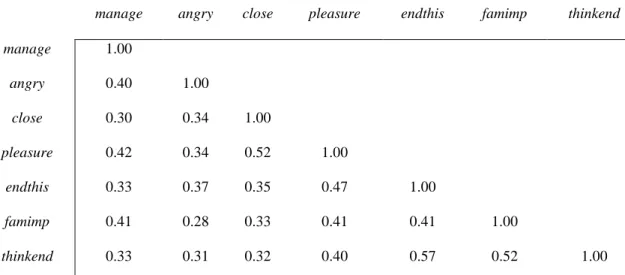
Table 2.1 – Correlation Matrix for Caregiver Commitment Variables ...74
Table 2.2 – Caregiver Commitment Items: Responses and Factor Loadings ...76
Table 2.3 – CFA Results: Fit Indices by Model ...78
Table 2.4 – Results of OLS Regression Analysis ...81
Table 3.1 – Sample Descriptive Characteristics ...110
Table 3.2 – SRD Hierarchical Regression Analyses: Estimated Coefficient (SE) Using BPI Score as the Outcome ...112
Table 3.3 – SRD Hierarchical Regression Analyses: Estimated Coefficient (SE) Using Caregiver Commitment as the Outcome ...115
LIST OF FIGURES
Figure 1.1 – PRISMA Flow Chart ...19
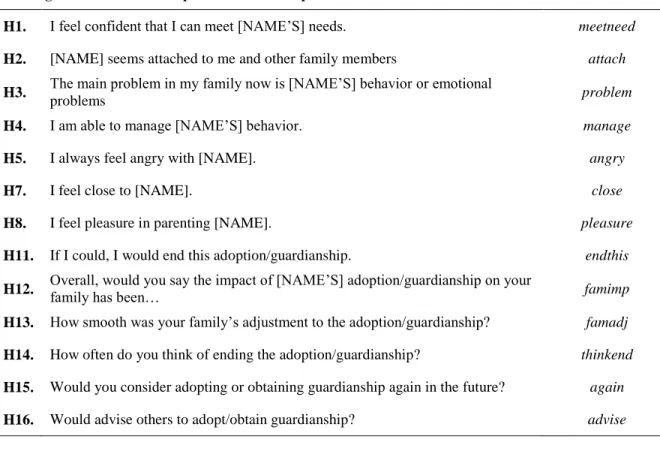
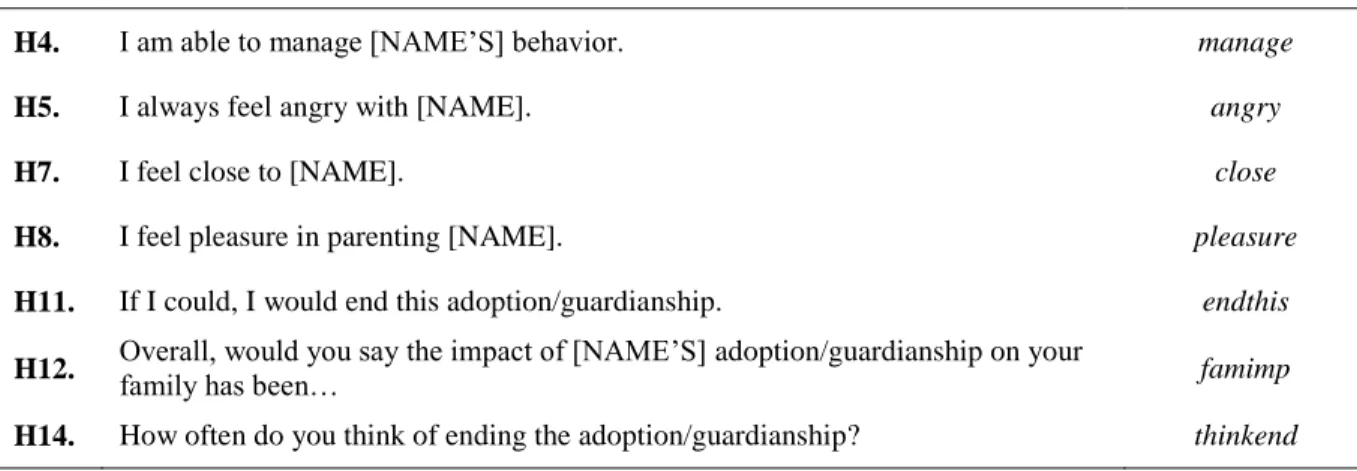
Figure 2.1 – Survey Questions Related to Caregiver Commitment ...66
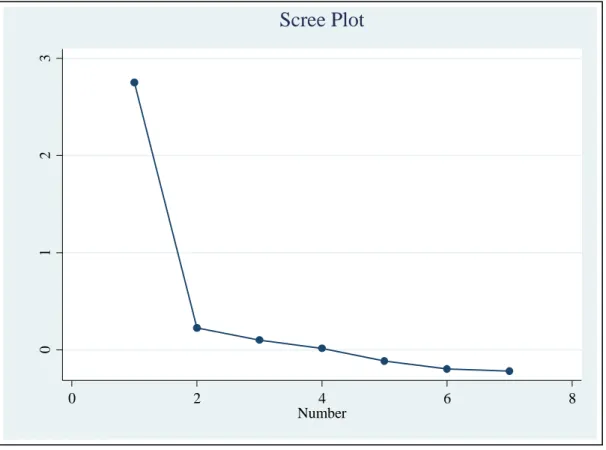
Figure 2.2 – Scree Plot ...75
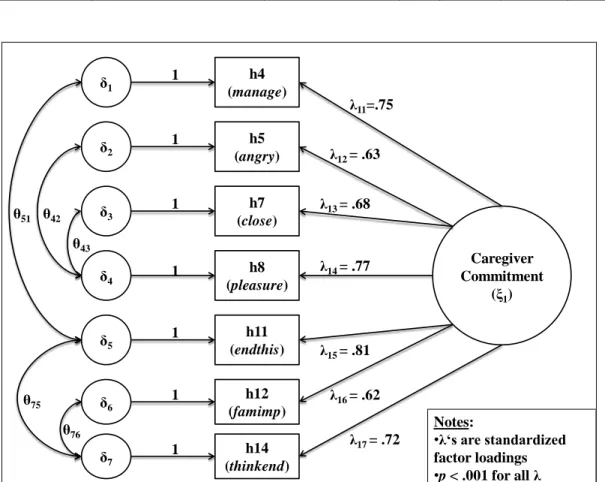
Figure 2.3 – Modified CFA Model ...78
Figure 3.1 – Survey Questions for the Caregiver Commitment Scale ...105
Figure 3.2 – SRD Models ...106
Figure 3.3 – SRD Alternative Models ...107
Figure 3.4 – FRD Two-Stage Least Squares Models ...108
Figure 3.5 – Predicted Values for Model 3 and Scatterplot ...113
INTRODUCTION
AN EXAMINATION OF POST-PERMANENCY ADJUSTMENT AND DISCONTINUITY FOR OLDER FOSTER YOUTH IN ADOPTIVE AND GUARDIANSHIP HOMES
Permanency for foster youth, or the attainment of a long-term, stable home with
loving caregivers, is one of the three central goals of the child welfare system in the United States, along with child safety and well-being (U.S. Department of Health and Human
Services [USDHHS], 2005). When children are removed from their homes and placed into foster care due to child abuse or neglect, the first goal is usually reunification with the removal parent or caretaker. However, slightly less than 50% of children who enter foster
care do not return home because the conditions that led to child removal do not improve or even worsen (Wulczyn, 2004). When this occurs, alternative plans must be made to find a
permanent home for children.
Currently, the two accepted alternative permanency outcomes for youth in foster care
are adoption and guardianship. In adoption, the legal termination of parental rights is required, and children become “full and permanent legal members of another family while
maintaining genetic and psychological connections to their birth family” (USDHHS, 2015a).
In contrast, guardianship does not require termination of parental rights and is somewhat less legally binding than adoption, although more legally permanent than a simple transfer of
more often with relative caretakers, who may want to retain their kinship relationship with the child and prevent permanently severing the legal ties between the biological parents and
child (Testa, 2004).
Due to recent federal policy initiatives, including the passage of the Adoption and
Safe Families Act of 1997, as well as changes in practice and evolving social norms that are more accepting of non-traditional family structures, the number and percentage of children adopted or placed into guardianship out of foster care has increased dramatically over the
past two decades (Allen & Bissell, 2004; Rosenthal & Groze, 1990; Rosenthal & Groze, 1994; Smith, Howard, Garnier, & Ryan, 2006; Smith, Howard, & Monroe, 1998; Testa,
2004). For example, 44,403 youth exited to adoption in 2000, accounting for 17% of the exits from foster care, and 51,225 youth exited to adoption in 2012, making up 21% of exits. Similarly 8,536 youth exited to guardianship in 2000, accounting for 3% of exits from foster
care, and 16,418 youth exited in 2012, which was 7% of all exits from foster care (Annie E. Casey Foundation, 2015).
The increase in the numbers of foster children finding permanent homes through adoption or guardianship is generally heralded as a success due to changes in child welfare practice and policy. However, when youth achieve legal permanency through adoption or
guardianship this does not necessarily imply long-term child stability or well-being. Unfortunately, some adopted and guardianship youth experience post-permanency
discontinuity, defined as reentry into foster care for seven or more days, or a subsidy ending prematurely, after legal finalization of a permanent living arrangement through adoption or guardianship (Testa et al., 2014). A reasonable estimate of the risk of PPD in the United
Goodfield, & Carson, 2001; Barth & Miller, 2000; Berry, Propp, & Martens, 2007; Festinger, 2002; Hartinger-Saunders, Trouteaud, & Matos-Johnson, 2014; Henry, 1999; Koh & Testa,
2011; McDonald, Propp, & Murphy, 2001; Selwyn, Wijedasa, & Meakings, 2014; Testa, 2004). This rate is much higher than the risk of foster care placement for the general
population, which is .34% (USDHHS, 2011). Also, because a high number of children exit foster care to either adoption or guardianship, over 9,000 children may be expected to experience discontinuity each year (USDHHS, 2011).
Child welfare studies have consistently demonstrated that placement instability for youth in foster care is associated with a myriad of negative child well-being outcomes,
including behavioral problems, low educational achievement, and poor mental health (D’Andrade, 2005; Newton, Litrownik, & Landsverk, 2000; Unrau, Seita, & Putney, 2008).
However, little contemporary research has examined the consequences of discontinuity for
adopted or guardianship youth. The studies that have been done on post-adoption and guardianship youth and families have also been limited by serious methodological flaws,
such as inadequate attention to selection bias, and the use of small convenience samples, ambiguous conceptual definitions, or short study windows (Berry et al., 2007; Dhami,
Mandel, & Sothmann, 2007; Groze, 1996; Haugaard, Wojslawowicz, & Palmer, 1999; Smith
et al., 2006; Treseliotis, 2002). In addition, few previous studies have examined risk factors for post-permanency difficulties among particular subgroups of foster youth considered to be
Organization of the Dissertation
This dissertation addresses the issues outlined above. The dissertation presents three
papers that focus on identifying risks and opportunities faced by post-adoption and
guardianship children and families, and evaluating a program designed to prevent placement
discontinuity. The first manuscript is a systematic review of the literature that summarizes risk and protective factors for post-adoption and guardianship problems that have been identified in previous studies. The second manuscript reports on the development of a
measure of caregiver commitment (a proximal outcome of interest related to discontinuity) from two post-permanency surveys conducted by the Illinois Department of Children and
Family Services (IDCFS) with adoptive and guardianship families. Exploratory and
confirmatory factor analyses are used to develop a scale for caregiver commitment, and then the relationship between child behavior problems and caregiver commitment is explored
using multivariate regression. Finally, the third manuscript is an evaluation of the Illinois Adoption Preservation and Linkages (APAL) program using a regression discontinuity
REFERENCES: INTRODUCTION
Bandura, A. (1989). Human agency in social cognitive theory. American Psychologist, 44, 1175-1184. doi:10.1037//0003-066X.44.9.1175
Allen, M.L. & Bissell, M. (2004). Safety and stability for foster children: The policy context. The Future of Children, 14(1), 48-73. Retrieved from
http://www.jstor.org/stable/1602754
Annie E. Casey Foundation, Kids Count Data Center. (2015, Feb. 11). Children exiting foster care by exit reason [database]. Retrieved from
http://datacenter.kidscount.org/data/tables/6277-children-exiting-foster-care-by-exit-reason?loc=1&loct=1#detailed/1/any/false/868,35,15,11/2629,2630,2631,2632,2633, 2634,2635,2636/13050,13051
Barth, R.P., Berry, M., Yoshikami, R., Goodfield, R.K., & Carson, M.L. (1988). Predicting adoption disruption. Social Work, 33(3), 227-233. Retrieved from
https://auth.lib.unc.edu/ezproxy_auth.php?url=http://search.ebscohost.com/login.aspx ?direct=true&db=swh&AN=19187&site=ehost-live&scope=site
Barth, R.P., & Miller, J.M. (2000). Building effective post-adoption services: What is the empirical foundation? Family Relations, 49, 447-455.
doi:10.1111/j.1741-3729.2000.00447.x
Berry, M., Propp, J., & Martens, P. (2007). The use of family preservation services with adoptive families. Child and Family Social Work, 12(1), 43-53. doi:10.1111/j.1365-2206.2006.00426.x
D’Andrade, A.C. (2005). Placement stability in foster care. In G. P. Mallon & P. Hess (Eds.), Child welfare for the twenty first century: A handbook of practices, policies, and programs (pp. 378-391). New York: Columbia University Press.
Dhami, M.K., Mandel, D.R., & Sothmann, K. (2007). An evaluation of post-adoption services. Children and Youth Services Review, 29(2), 162-179.
doi:10.1016/j.childyouth.2006.06.003
Festinger, T. (2002). After adoption: dissolution or permanence? Child Welfare, 81(3), 515-533. Retrieved from http://ehis.ebscohost.com/ehost/detail?vid=3&sid=e4f0639a-
7b25-4d1f-a67a-64f98fbb5471%40sessionmgr13&hid=7&bdata=JnNpdGU9ZWhvc3QtbGl2ZSZzY2 9wZT1zaXRl#db=a9h&AN=6868333
doi:10.1016/0190-Hartinger-Saunders, R.M., Trouteaud, A., & Matos-Johnson, J. (2014). Post adoption service need and use as predictors of adoption dissolution: Findings from the 2012 National Adoptive Families study. Adoption Quarterly (just-accepted).
doi:10.1080/10926755.2014.895469
Henry, J. (1999). Permanency outcomes in legal guardianships of abused/neglected children. Families in Society, 80(6), 561-568. doi:10.1606/1044-3894.1786.
Haugaard, J.J., Wojslawowicz, J.C., & Palmer, M. (1999). Outcomes in adolescent and older-child adoptions. Adoption Quarterly, 3(1), 61-69. doi:10.1300/J145v03n01_05 Koh, E., & Testa, M. F. (2011). Children discharged from kin and non-kin foster homes: Do
the risks of foster care re-entry differ? Children and Youth Services Review, 33(9), 1497-1505. doi:10.1016/j.childyouth.2011.03.009
McDonald, T.P., Propp, J.R., & Murphy, K.C. (2001). The postadoption experience: Child, parent, and family predictors of family adjustment to adoption. Child Welfare, 80(1), 71-94. Retrieved from
http://eds.a.ebscohost.com/ehost/detail/detail?vid=2&sid=1887d6e9-475d-4437-
8969-7e9876028fa5%40sessionmgr4001&hid=4105&bdata=JnNpdGU9ZWhvc3QtbGl2ZS ZzY29wZT1zaXRl#db=a9h&AN=3988123
Newton, R.R., Litrownik, A.J., & Landsverk, J.A. (2000). Children and youth in foster care: Disentangling the relationship between problem behaviors and number of placements. Child Abuse & Neglect, 24(10), 1363-1374. doi:10.1016/S0145-2134(00)00189-7 Rosenthal, J.A., & Groze, V. (1990). Special-needs adoption: A study of intact families.
Social Service Review, 64(3), 475-505. doi:10.1086/603782
Rosenthal, J.A., & Groze, V. (1994). A longitudinal study of special-needs adoptive families. Child Welfare, 73(6), 689-706. Retrieved from
http://eds.a.ebscohost.com/ehost/pdfviewer/pdfviewer?sid=b6fed528-8869-4741-8495-1bd56633b934%40sessionmgr4003&vid=4&hid=4105
Selwyn, J., Wijedasa, D., & Meakings, S. (2014, April). Beyond the adoption order:
Challenges, interventions, and adoption disruption research report. Bristol, England: University of Bristol School for Policy Studies, Hadley Centre for Adoption and Foster Care Studies. Retrieved from http://dera.ioe.ac.uk/19933/1/Final_Report_-_3rd_April_2014v2.pdf
Smith, S.L., Howard, J.A., Garnier, P.C., & Ryan, S.D. (2006). Where are we now? A post-ASFA examination of adoption disruption. Adoption Quarterly, 9(4): 19-44.
doi:10.1300/J145v09n04_02
Testa, M.F., Snyder, S.M., Wu, Q., Rolock, N. & Liao, M. (2014). Post-permanency discontinuity: A mediator and moderator analysis of adoption and guardianship. American Journal of Orthopsychiatry.
Treseliotis, J. (2002). Long-term foster care or adoption? The evidence examined. Child and Family Social Work, 7(1), 23-33. doi:10.1046/j.1365-2206.2002.00224.x
Unrau, Y.A., Seita, J.R., & Putney, K.S. (2008). Foster youth remember multiple placement moves: A journey of loss and hope. Children and Youth Services Review, 30, 1256-1266. doi:10.1016/j.childyouth.2008.03.010
U.S. Department of Health and Human Services, Administration on Children, Youth, and Families, Children’s Bureau. (2005). A report to Congress on adoption outcomes and other permanency outcomes for children in foster care: Focus on older children [pdf file]. Retrieved from http://www.acf.hhs.gov/sites/default/files/cb/congress_adopt.pdf U.S. Department of Health and Human Services, Administration on Children, Youth, and
Families, Children’s Bureau. (2011a). Child welfare outcomes 2008-2011: Report to Congress [pdf file]. Retrieved from
https://www.acf.hhs.gov/sites/default/files/cb/cwo08_11.pdf
U.S. Department of Health and Human Services, Children’s Bureau. (2015a, Feb. 11). Introduction to adoption [website]. Retrieved from
https://www.childwelfare.gov/topics/adoption/intro/
U.S. Department of Health and Human Services, Children’s Bureau. (2015b, Feb. 11). Guardianship [website]. Retrieved from
https://www.childwelfare.gov/topics/permanency/guardianship/
PAPER I
RISK AND PROTECTIVE FACTORS FOR POST-PERMANENCY DISCONTINUITY: A SYSTEMATIC REVIEW
Abstract
Over the past two decades, the number of foster youth who achieve permanency through adoption and guardianship in the United States has increased significantly. This trend has
significant implications for child welfare research, policy, and practice. However, the risk and protective factors for discontinuity, or foster care reentry that occurs after legal
finalization of an adoption or guardianship, have received limited attention in the child welfare literature. Also, many previous studies that examined post-permanency adjustment for former foster youth have been limited by serious methodological and/or conceptual flaws.
The purpose of this study is to investigate the peer-reviewed literature that relates to risk or protective factors for discontinuity or outcomes considered to be proximal to discontinuity. A systematic search located 18 quantitative, quasi-experimental studies published in
peer-reviewed journals that implemented multivariate methods. This review finds that the quality of the research evidence is generally weak, but previous studies do suggest several risk and
Risk and Protective Factors for Post-Permanency Discontinuity: A Systematic Review
Child permanency, or the attainment of a permanent, family living arrangement after
foster care, is a central goal of the U.S. child welfare system (U.S. Department of Health and Human Services [USDHHS], 2005; USDHHS, 2011a). Child welfare scholars, policy-makers, and advocates generally agree that a safe, enduring, family home is the best
placement option for all children who come into contact with the child welfare system. When children are initially placed into foster care due to child maltreatment (i.e., abuse, neglect, or
dependency), the priority and preference for child permanency is reunification with
biological parents or relative caretakers. However, because reunification is not possible for
approximately half of all foster children (USDHHS, 2011b; Wulczyn, 2004), other placement options are needed to ensure permanency for maltreated youth.
Currently, only two permanency options other than reunification exist for foster
children in the United States: adoption and guardianship. Adoption requires termination of parental rights and is more legally binding than guardianship (USDHHS, 2013b);
guardianship involves the transfer of legal custody of a child to another caretaker without
necessarily terminating parental rights (USDHHS, 2013a). Both relatives and non-relatives may provide permanent homes for children through either adoption or guardianship.
However, guardianship has historically been used more often with relative placement than non-relative placement, because guardianship allows for the continued involvement of biological parents in children’s lives through child support payments and visitation, requires
In recent decades, U.S. federal policy has provided directives and incentives for child welfare agencies to increase permanency through adoption and guardianship (Allen &
Bissell, 2004). In particular, the Adoption and Safe Families Act of 1997 (ASFA) prioritized adoption and legitimized guardianship as permanency goals when reunification is no longer
an option and mandated timelines for agencies to move children into permanent homes (Allen & Bissell, 2004; Child Welfare League of America, 2013). Coincident with the evolution of federal policies, social norms regarding adoption and guardianship changed
(with greater acceptance of non-traditional family structures), the pool of non-foster children available for adoption shrank, and child welfare advocates became increasingly concerned
about large numbers of children languishing in the foster care system (Rosenthal & Groze, 1990; Rosenthal & Groze, 1994; Smith, Howard, Garnier, & Ryan, 2006; Smith, Howard, & Monroe, 1998; Testa, 2004). Likely due to the convergence of these political and social
forces, the number of children who exit foster care to adoption and guardianship has grown significantly over the past twenty years (Berry, Propp, & Martens, 2007; Smith et al., 2006;
USDHHS, 2011c; Testa, 2004). For example, from 1998 to 2008, the number of children adopted from public child welfare agencies grew from about 36,000 to approximately 55,000 (USDHHS, 1998; USDHHS, 2011c).
Because of the increasing numbers of children leaving foster care via adoption or guardianship, child welfare scholars and policy-makers have raised concerns due to limited
suggested that because of the high physical, emotional, or behavioral needs of these children, a large proportion of these youth may reenter foster care (Berry et al., 2007; Testa, 2004).
Despite this alarm, little research has examined the prevalence and risk factors for post-adoption or guardianship placement changes (Smith, et al., 2006; Treseliotis, 2002).
Further, the rates of and risk factors for discontinuity, or foster care reentry that occurs after legal finalization of an adoptive or guardianship placement, are difficult to ascertain from prior research due to serious methodological limitations. For example, few previous
post-permanency studies have examined high-risk populations or monitored children’s outcomes for years after adoptions or guardianships are finalized (Berry et al., 2007; Haugaard,
Wojslawowicz, & Palmer, 1999; Smith et al., 2006; Treseliotis, 2002). In addition, many studies used cross-sectional data; small, convenience samples; or samples that combined cases from different types of permanency arrangements such as private, public, and
international adoptions (Dhami, Mandel, & Sothmann, 2007; Groze, 1996; Smith et al., 2006). Sample limitations are prevalent in the literature because adoptions and guardianships
are a relatively low percentage of permanency outcomes (as compared to reunification) for any given child welfare agency (USDHHS, 2011a), and because after legal finalization of adoption or guardianship, foster care cases are closed, children’s names change, families may
move, and states no longer track families except to provide financial subsidies (Festinger, 2002). Thus, data on post-permanency cases is difficult to obtain. Finally, in many previous
& Campbell, 2002) to account for selection biases that potentially confound the association between putative risk or protective factors and post-permanency outcomes.
In addition to methodological problems, much post-permanency research suffers from conceptual limitations. For example, risk factors for discontinuity have often been measured
without standardized instruments in previous studies and/or been ambiguously defined by researchers (Dhami et al., 2007; Rycus, Freundlich, Hughes, Keefer, & Oakes, 2006). Also, scholars have put forth several definitions for placement changes after adoption or
guardianship placement, and these definitions are often combined or confused in the literature. Specifically, disruption is generally defined as placement of a child back into
foster care prior to legal finalization of adoption or guardianship (Festinger, 2002). In contrast, dissolution typically refers to the formal, permanent termination of a permanent placement after it has already been legally finalized (Smith et al, 1998), and discontinuity
refers to changes in adoption or guardianship placement after legal finalization, but includes both temporary and permanent changes (Testa et al., 2014). These three terms are also
sometimes combined in the literature to indicate one event or construct, such as breakdown (Treseliotis, 2002). Other terms for post-permanency placement instability found in the literature include displacement, defined as a change in physical custody of an adopted or
guardianship child without a change in legal custody; post-adoption placement, which signifies the temporary return of a child to foster care to receive necessary services; and
subsidy ended prematurely, which refers to the termination of an adoption or guardianship subsidy prior to a child turning age 18 (Festinger & Maza, 2009; Rolock, 2014).
In this study, post-adoption or guardianship placement changes are examined using
for seven or more days, or a subsidy ending prematurely, for a former foster child subsequent to legal finalization of an adoption or guardianship. Thus, this term has a more global
definition than either displacement or dissolution, in that it includes both temporary and permanent changes in a child’s placement, as well as a subsidy ending before the child is age
18. However, discontinuity is distinct from disruption, because discontinuity only refers to placement instability that occurs after legal finalization of an adoption or guardianship. Also, it is important to note that there are numerous reasons why a subsidy could end prematurely,
such as due to a family moving out of state or a caregiver death (Rolock, 2014). Therefore, including subsidy ending prematurely in the definition of discontinuity may inflate the
discontinuity rate somewhat, because some cases of a subsidy ending may be due to changes in family circumstances rather than placement changes for children (Rolock, 2014).
Despite their limitations, previous studies that examined post-permanency placement
discontinuity or dissolution provide a general indication of discontinuity rates in the United States. The few studies that investigated adoption alone suggest that somewhere between
about 2 to 15% of finalized adoptions end in foster care reentry, but this range of estimates likely masks important differences for older children or children with behavioral needs (Barth, Berry, Yoshikami, Goodfield, & Carson, 2001; Barth & Miller, 2000; Berry et al.,
2007; Festinger, 2002; Hartinger-Saunders, Trouteaud, & Matos-Johnson, 2014; McDonald, Propp, & Murphy, 2001; Selwyn, Wijedasa, & Meakings, 2014). Fewer guardianship studies
studies hampered by significant limitations such as small convenience samples, varying definitions for discontinuity, and short follow-up periods (i.e., less than 2 years).
Thus, the risk for discontinuity may be better than child welfare scholars feared after the implementation of ASFA (Berry et al., 2007), In comparison, the risk for foster care
reentry after reunification is about 12% within one year, and up to 30% within 10 years (USDHHS, 2012a; Wulczyn, 2004). However, the risk for discontinuity is much higher than the risk of foster care placement for the general United States population of 0.34%
(USDHHS, 2011a). Also, because a high number of children exit foster care to either adoption or guardianship each year, what might seem to be a modest percent translates to
markedly higher numbers; for example, about 64,000 children exited to adoption or
guardianship in 2011 (USDHHS, 2011a), suggesting as many as 9,600 of these children may be expected to experience discontinuity.
Consequences of Discontinuity
The experience of removal from a permanent family and placement into foster care is
often traumatic (Bruskas, 2008), adding in some cases to the trauma already experienced due to child abuse, neglect, or dependency. Early trauma experiences are associated with a myriad of negative life outcomes, including cardiac disease, depression, and even premature
death (Bruskas, 2008). Children who experience multiple early adverse experiences are over 20% more likely to report health problems or disability as adults (Chartier, Walker, &
Naimark, 2010), and up to 30% of children who experience two or more traumatic events may be expected to develop major depression as adults (Danese et al., 2009).
Decades of research indicate that placement instability for children in foster care is
educational achievement, mental health issues, behavioral problems, and poor preparation for independent living as adults (D’Andrade, 2005). As a case in point, male foster children who
experience three or four or more placements are 54% and 113% more likely to be delinquent, respectively, as compared to males with just one placement (Ryan & Testa, 2005). Further,
for children in foster care, experiencing an average of two more placements per year is associated with about a two-thirds reduction in the odds of completing high school (Pecora et al., 2006). Multiple changes in foster care placement over a 12-month period also relate to
negative externalizing and internalizing behaviors, including anxiety, depression, aggression, and hyperactivity (Newton, Litrownik, and Landsverk, 2000). Finally, as children get older,
their likelihood of being adopted decreases, and they have more difficulty adjusting to adoptive placements (Haugaard et al., 1999).
There are also significant societal costs due to post-permanency discontinuity.
Decisions to place children in permanent adoptive or guardianship homes are carefully vetted by family court judges, caseworkers, child welfare administrators, attorneys, and
court-appointed child advocates (Allen & Bissell, 2004). Thus, considerable time and public money are spent finding, approving, and monitoring legally permanent placements. One study estimates that adoption is between 3% and 55% cheaper than long-term foster care,
depending on the scope of services provided (Barth, Lee, Wildfire, and Guo, 2006). This range is conservative, however, as it takes into account only the direct costs of providing care
Method
The purpose of this study was to systematically review the literature to determine the
risk and protective factors associated with discontinuity for former foster youth. The first step was a systematic search of several electronic academic databases. Keywords and search
strings were derived by the author using keywords and information from known articles that related to discontinuity, including Barth & Miller (2000); Berry et al. (2007); Dhami et al. (2007); Festinger (2002); Smith et al. (2006); and Testa (2004). These six articles were also
designated as “target studies” that should be captured by the search if the strategy was effective and sufficiently comprehensive. The keywords and strings used in all searches are
shown in Table 1.1.
Five databases were searched, and all searches were limited to articles in peer-reviewed, English-language journals. This review was limited to articles in peer-reviewed
journals because, as noted above, post-permanency research has been limited by poor research design, including small convenience samples, cross-sectional analyses,
measurement limitations, selection biases, and ambiguous constructs. Thus, peer-review provided an important filter to ensure that only studies characterized by rigorous designs, methods, and reporting would be included in the final sample.
Table 1.1 Keywords and Search Strings
1) (risk OR resilienc* OR predictor* OR correlate*) AND ("adoption dissolution" OR "adoption disruption" OR "placement discontinuity")
2) (risk OR resilienc* OR predictor* OR correlate*) AND permanenc* AND guardianship AND "foster care"
3) adoption AND dissolution AND "foster care"
4) guardianship AND (dissolution OR disruption) AND "foster care"
After the literature search was completed, article abstracts were read and screened according to the six inclusion criteria below. If an abstract provided no or limited information
related to the inclusion criteria, the article was selected for full-text review to ensure that no relevant articles were inadvertently excluded. An article was selected for full-text review if
the study:
(1) Examined risk or protective factors for discontinuity or another post-permanency outcome that could plausibly be considered proximal to discontinuity, such as parent
satisfaction, youth behavior, or caregiver commitment; (2) Implemented quantitative methods;
(3) Used either an experimental design or a multivariate quasi-experimental design that accounted for the effects of covariates and confounding variables (e.g., RCT, multivariate regression, MANOVA, or propensity score analysis);
(4) Investigated a child welfare population in the United States or another country with a similar child welfare system (specifically, Western Europe, Canada, or Australia);
(5) Included a majority of youth in the sample (over 50%) with a history of child welfare services involvement;
(6) Included at least some youth in the sample who were ages 6 or older at the time of the
study.
The final stage of this study was a full-text review of the articles selected from the
other articles that related to risk and protective factors for discontinuity, and the full texts of those articles were reviewed as well.
Results
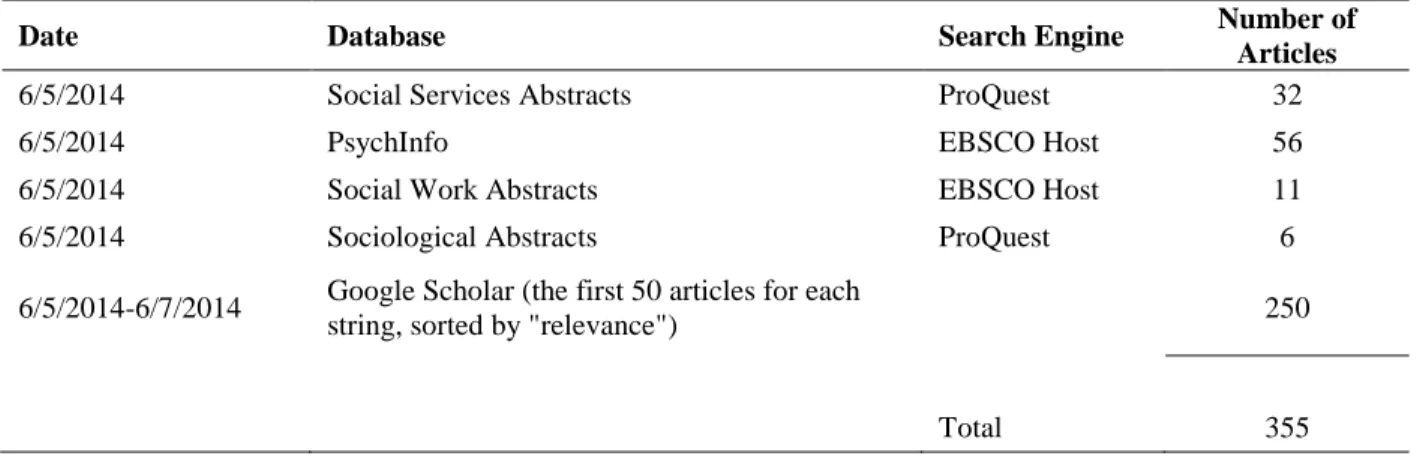
The results of database searches are shown in Table 1.2. The search strategy captured
a total of 355 articles, including five of the six of the target studies. The one target study not found using the initial search strategy (i.e., Dhami et al., 2007) was later captured during full-text review using snowball sampling.
Table 1.2. Search Results
Date Database Search Engine Number of
Articles
6/5/2014 Social Services Abstracts ProQuest 32
6/5/2014 PsychInfo EBSCO Host 56
6/5/2014 Social Work Abstracts EBSCO Host 11
6/5/2014 Sociological Abstracts ProQuest 6
6/5/2014-6/7/2014 Google Scholar (the first 50 articles for each
string, sorted by "relevance") 250
Total 355
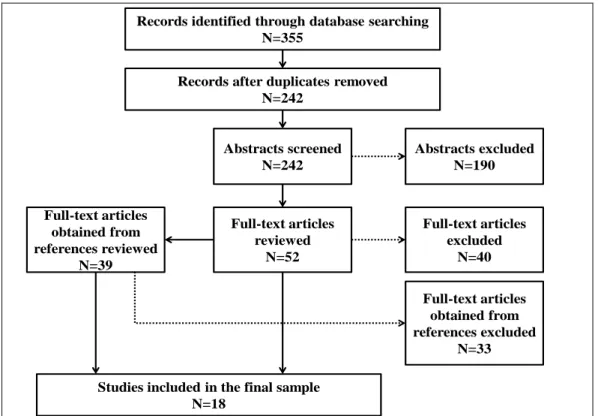
The PRISMA flow chart in Figure 1.1 (Moher, Liberati, Tetzlaff, Altman, & the
PRISMA group, 2009) shows the number of articles excluded at each stage of the review process. In the abstract screening phase, 113 studies were excluded because they were duplicates. Another 190 abstracts were also screened out due to not meeting the six inclusion
criteria specified above, leaving a total of 52 articles for full-text review. In addition, 39 more articles were identified for full-text review through snowball sampling. Then, of the 91
and post-finalization data for youth and/or families. This is consistent with previous research reviews which have also noted that post-finalization-only studies are relatively rare in the
literature (Festinger, 2002; Selwyn et al., 2014).
Records identified through database searching N=355
Records after duplicates removed N=242
Full-text articles reviewed
N=52
Abstracts excluded N=190 Abstracts screened
N=242
Full-text articles excluded
N=40 Full-text articles
obtained from references reviewed
N=39
Studies included in the final sample N=18
Full-text articles obtained from references excluded
N=33
Figure 1.1 PRISMA flow chart
Table 1.3 in Appendix A provides a summary of the 18 studies selected for the final sample. Only three studies explicitly examined risk or protective factors for discontinuity or
dissolution. The rest investigated risk or protective factors for outcomes that could plausibly be considered proximal to discontinuity, such as child behavior problems, parent satisfaction
with the adoption, or impact of the adoption on the family. All the studies in the final sample examined adoptive families, but only one (Koh & Testa, 2011) investigated outcomes for
adjustment of adoptive and guardianship families is a fairly new and evolving topic in child welfare research (Berry et al, 2007; Selwyn et al., 2014).
In regard to research methods and design, 14 studies used multivariate regression to explore the impact of risk or protective factors on post-permanency outcomes while holding
the effects of other factors and confounding variables constant. Other methods that were implemented in studies included structural equation modeling (SEM; Goldman & Ryan, 2011), propensity score analysis (Koh & Testa, 2011), generalized estimating equations
(GEE; Nalavany, Glidden, & Ryan, 2009), and multivariate analysis of variance (MANOVA; Reilly & Platz, 2004). No RCTs were identified in this systematic review, signaling a serious
limitation in the literature. Three of the studies were longitudinal (Berry et al, 2007; Goldman & Ryan, 2011; Koh & Testa, 2011), and thus, addressed some of the common threats to internal validity found in observational research, such as ambiguous temporal precedence and
maturation (Shadish et al., 2002).
Discontinuity
Three studies in the sample attempted to identify risk or protective factors for discontinuity. Berry et al. (2007) used hierarchical multivariate regression to analyze placement outcomes at 6 and 12 months follow-up for a sample of post-adoptive families
who had received intensive in-home services over a period of 10 years, controlling for numerous child, family, and service characteristics. The authors found that child and family
factors, including non-white child, full time employment of the primary caregiver, and an initial placement reason of child maltreatment, were most predictive of placement
discontinuity at 6 months follow-up. However, at 12 months follow-up, although child and
more variance in the outcome, including the types of problems addressed by services (child behaviors, child abuse issues, or parenting issues) and the number of days receiving services
(with longer service durations associated with family “intactness”). The authors concluded that long-term, intensive in-home services may help protect post-adoptive families from
placement discontinuity, particularly when families have problems that relate to child behavior rather than parenting issues. However, the sample consisted only of high need families, because in order to be eligible for intensive in-home services, it was required that
there was an imminent risk of youth out-of-home placement. This was reflected in the relatively high discontinuity rate of 17% for the sample.
Koh and Testa (2011), in the only study in this review that examined both adoptive and guardianship families, explored whether a pre-permanency placement in kinship foster care was protective against foster care reentry as compared to a pre-permanency placement in
non-kinship foster care. The authors implemented multivariate regression, propensity score analysis (with matched groups), and survival analyses, and found no significant impact of
kinship versus non-kinship foster care on post-adoption discontinuity. However, in regard to post-guardianship discontinuity, statistical models suggested the possibility of a protective effect for kinship foster care. Specifically, models estimated with an unmatched sample
indicated that the expected time to foster care re-entry for guardianship cases was about 13 times greater for children placed in kinship foster care versus non-kinship foster care, but this
Using stepwise multivariate regression with survey data, Hartinger-Saunders and colleagues (2014) explored whether post-adoption service needs or access predicted
discontinuity, or reentry of a child into foster care (to receive services or for other reasons), as indicated by parent report. Results indicated that 17% of families reported that they had
experienced discontinuity after adoption. Further, findings showed that needing substance abuse or educational advocacy services was associated with higher placement discontinuity and accessing educational advocacy services or parent support groups was associated with
lower discontinuity. However, results also indicated that accessing substance abuse services was associated with higher placement discontinuity. The authors note that this predictor
variable in the survey data did not indicate whether substance abuse treatment was successful or not, only whether it was accessed. The authors also surmised that there may be unintended consequences of actually receiving substance abuse services, such as unrealistically raising parents’ expectations regarding youth behavior.
Impact on the Family
Several studies examined the impact of risk or protective factors on post-permanency family adjustment or functioning. For instance, Rosenthal and Groze (1990) used stepwise multivariate regression to investigate the relationship between child, family, and service
factors and a parent-report, Likert scale that measured the impact of adoption on the family. Consistent with previous literature, results showed that several risk factors were related to a
negative impact of the adoption, including an older child age at placement, higher parent education levels, child externalizing behaviors (i.e., negative behaviors directed toward the external environment such as hyperactivity, aggression, or defiance; Liu, 2004), suspected
Protective factors were also identified, including single parent adoption, higher family cohesion, family approval for the adoption, more information shared with the parent during
the adoption process, and a higher child enjoyment of school.
Also using stepwise regression, McDonald and colleagues (2001) investigated the
relationship between child, parent, and family variables and family adjustment as measured by a scale developed by the authors. Regression models indicated that a higher number of child special needs, more total children in the home, and a higher family income were
associated with lower family adjustment. Conversely, married adoptive parents and more adopted children in the home were related to better family adjustment. The variable for
special needs of the child accounted for over a third of the variance in family adjustment in the final regression model. Adoptive parents were also very positive about their adoptions, with 76% reporting that they were satisfied with the adoption process. However, parents also
reported problems regarding post-adoption supports, and suggested improvements for more efficient, consistent, and effective services.
Leung and Erich (2002) examined post-adoption family adjustment as measured by the Self-Report Family Functioning Scale (SFI; Beavers, Hampson, & Hulgus, 1985) using stepwise multivariate regression with a sample of intact adoptive families. The study found
that sibling group adoption, child behavior problems, more child contact with legal authorities (e.g., arrests), an older child age at adoption, and more social support from
Erich and Leung (2002) investigated the impact of risk and protective factors on family functioning (i.e., scores on the SFI) using MANOVA. Results were consistent with their
previous study, in that, family functioning was significantly lower for sibling group adoption. In another study that implemented stepwise multivariate regression, Leung, Erich,
Kanenberg (2005) examined the impact of child and family characteristics on family
functioning, but also looked at the impact of adoptive placement with same-sex parents. The study found that both an older child age at adoption and child disability were factors
associated with poorer family functioning. Consistent with previous studies (Barth & Miller, 2000; Selwyn et al., 2014) older child age was one of the strongest predictors of family
functioning in the final regression model. In addition, sibling group adoption, special needs child, and more previous placements of the child were associated with better family
functioning. There was no significant impact in regression models for same-sex adoptive
parents, but an interaction effect indicated better reported adjustment for same-sex families with older child placements.
Belanger, Cheung, and Cordova (2012) used stepwise multivariate regression to examine the relationship between child and service factors and the impact of the adoption on the family in African-American special needs adoptions. Findings showed that parents who
reported children were more difficult (according to the Parenting-Stress Index; Abidin, 1995) also reported a more negative impact of the adoption on the family, with the child behavior
variable accounting for about 17% of the variance in the outcome. Also, consistent with qualitative results from interviews with families, low caseworker support was associated with a more negative impact of the adoption on the family in the final stepwise regression model;
quantitative and qualitative findings, the authors concluded that post-adoptive African-American families in rural communities benefit from flexible post-adoption resources and a
strong relationship with a trustworthy adoption caseworker.
Finally, Reilly and Platz (2003) used multivariate methods to examine the impact of
child, parent, and agency factors and post-adoption support service needs on a parental assessment of the impact of adoption on the family and marriage (among other outcomes— see below). The study used a sample of intact special needs adoptive families. A consistent
finding across regression models was that more appropriate parental expectations for children’s behavior was associated with a better rating for impact of the adoption on the
marriage and family.
Child Behavior Problems
Four studies explored the impact of risk or protective factors on child behavior
problems. For instance, Groza and Ryan (2002) regressed total and subscale scores from the Child Behavior Checklist (CBCL; Achenbach & Ruffle, 2000) on child, family, and service
factors. The study found high rates of behavior problems for adoptees as compared to the general population, but also showed that the majority of adoptive parents were very satisfied in their relationship with their children. Further, a poor parent-child relationship was a
consistent predictor of higher CBCL scores in 10 of 11 estimated regression models, and a child history of sexual abuse was associated with higher CBCL scores in several regression
behaviors as measured by the Eyberg Child Behavior Inventory (ECBI; Eyberg & Ross, 1978) than children not adopted with a sibling.
Averett and colleagues (2009) examined the effects of adoptive parents’ sexual
orientation and other factors on children’s externalizing and internalizing behavior problems
as measured by the CBCL. Results showed no impact of parents’ sexual orientation on outcomes, but found that each one year increase in a child’s age was associated with a .24
and .23 point increase internalizing and externalizing behaviors, respectively. Also, children
with a history of sexual abuse had internalizing and externalizing CBCL scores that were 2.76 and 4.44 points higher, respectively, than children without a history of sexual abuse; and
children with a history of physical abuse had externalizing CBCL scores that were 2.36 points higher than children without a history of physical abuse. More pre-adoption preparation, better family functioning, higher annual income, and female child were all
associated with less problematic internalizing or externalizing behaviors in regression models.
Finally, Goldman and Ryan (2011) estimated SEM models with longitudinal survey data to examine the impact of alcohol, tobacco, and other drug (ATOD) exposure; child gender; child history of sexual abuse; and the number of child placements on the relationship
between child pre-adoption functioning and post-adoption externalizing behaviors as measured by the CBCL. Results showed that higher ATOD exposure was associated with
worse pre-adoption functioning, but no risk or demographic factor alone significantly altered the strong negative relationship between pre-adoption functioning and post-adoption
externalizing behaviors. However, a cumulative moderation model suggested that there was a
functioning and post-adoption externalizing behaviors, suggesting avenues for further research.
Parent Satisfaction
Four studies selected for this review examined parent satisfaction with the adoption as
a post-permanency outcome. Reilly and Platz (2003) investigated the impact of child and family factors on two parent-report outcomes—parent satisfaction with the adoption and parent-child relationship quality. The authors found that more appropriate parental
expectations for children’s behavior was associated with better parent satisfaction and parent-child relationship ratings. In addition, fewer parent-child behavior problems were associated with
higher parental satisfaction. Looking at the same outcomes but in relationship to service needs and use, Reilly and Platz (2004) showed that receiving informal, financial, or other services was positively related to higher parental satisfaction, and having an unmet need for
counseling services was associated with a lower quality of the parent-child relationship. Smith-McKeever (2006) explored parent satisfaction among African-American
adoptive families using stepwise multivariate regression. Study results showed that more child behavior problems (as measured by total CBCL scores), greater frequency of parents’ thoughts about the child, and higher parenting stress were all risk factors for lower parent satisfaction with the adoption, although over 80% of parents reported being “extremely satisfied.” Some factors associated with post-adoption problems in previous studies, such as
Also looking at parental satisfaction as an outcome, Nalavany and colleagues (2009) used generalized estimating equations to test the impact of child learning disability, as well
as the mediation effect of child internalizing or externalizing behaviors, controlling for numerous child and family demographic or risk factors. The authors found that a statistically
significant negative relationship between child learning disability and parental satisfaction was mediated by internalizing or externalizing behaviors. In the final multivariate model, results showed that African-American parent, married parent, and child age were negatively
related to parent satisfaction; adoption preparation and higher family functioning were positively related to parent satisfaction.
Other Outcomes
Nalavany, Ryan, Howard, and Smith (2008) examined the impact of several child and parent factors, including childhood sexual abuse (CSA), on parental commitment to the
adoption, using a dichotomized Likert scale completed by caseworkers. Families were participants in an adoption preservation program, so they were at higher risk for
discontinuity. The results of logistic regression showed that pre-adoptive CSA was associated with more inconsistent parental commitment to the adoption, even after controlling for the effects of child age and gender. Specifically, children with pre-adoptive histories of sexual
abuse were 182% more likely to have an inconsistently committed parent as compared to children without histories of sexual abuse.
Last, Ward (2012) examined the impact of child maltreatment type, as well as child and family characteristics, on the use of different types of support services. Results showed that depending on the type of maltreatment, varying types of support services were used, and
risk factors, the authors showed that having an adopted child with problematic social behaviors was associated with increased use of mental health, family counseling, and
mentoring services. In addition, foster care adoption, siblings in the home, and a household income between 100% and 200% of poverty level (as compared to an income greater than
200% of poverty level) were positively related to the use of mental health, adoption support group, and mentoring services, respectively. Although the study findings were limited because service use may not be a useful proxy for post-adoption adjustment problems (for
example, service use may reflect program availability or family income rather than need), the authors concluded that the results were consistent with previous literature that indicates child
and family characteristics influence post-permanency adjustment, and that children with behavioral problems in particular may struggle to adjust to adoptive placements (Barth & Miller, 2000).
Discussion
Although caution must be exercised when generalizing results across studies in a
qualitative systematic review (Valentine, 2014), several key findings relevant to post-permanency discontinuity warrant further elaboration. First, this review provides evidence that most families stay intact after legal finalization of an adoption or guardianship, even
when they are referred to family preservation services to prevent imminent placement of a child. In addition, most post-permanency youth and families receive at least some kind of
services are most effective when they are flexible, individualized, and available for an extended period of time, such as for months or years after legal finalization.
Risk and Protective Factors Identified Across Studies
Several risk factors for discontinuity were identified in multiple studies included in
this review. First, children who exhibited problematic behaviors, particularly externalizing behaviors such as poor social functioning, aggression, hyperactivity, or defiance, and their families were at greater risk for poor post-permanency outcomes. In addition, families with
adopted or guardianship youth who were older, or who had a history of childhood physical or sexual abuse, generally experienced worse post-permanency adjustment. Finally, parents who
reported unrealistic child behavioral expectations or receiving less information from child welfare agencies also tended to report more post-permanency problems. Thus, the findings of this review are consistent with previous literature reviews on pre-finalization adoption
disruption for older children, which have also identified these same variables as risk factors for family difficulties and discontinuity (see Barth & Miller, 2000 and Smith et al., 2006).
Studies in this review also indicated possible protective factors against discontinuity. For example, the timely provision of intensive, post-adoption family preservation services was helpful for at-risk families, particularly when problems were related to children’s
difficult behaviors (Berry et al., 2007). Results were also generally positive for African-American families, because two studies (Smith-McKeever, 2006; Belanger et al., 2012)
found that African-American parents were willing and able to successfully adopt youth with serious histories of child maltreatment. As one exception, however, Nalavany and colleagues (2009) found lower adoptive parent satisfaction for African-American caretakers. Finally, not
2009; Rosenthal & Groze, 1999) also provided evidence that higher family cohesion and functioning at the time of child placement was associated with better post-permanency
adjustment.
The relationship between several other risk or protective factors and post-permanency
outcomes were less clear from this review, because findings were inconsistent across studies. For example, Ward (2012) showed that the number of children in the home was negatively related to the service needs of post-adoptive families. However, McDonald and colleagues
(2001) found positive impacts on family adjustment for a higher number of adopted children in the home and negative impacts for more total children in the home. Similarly, several studies found that a child’s disability or special needs significantly influenced the
post-permanency functioning of children and families, but the nature of this relationship varied. For instance, McDonald and colleagues (2001) showed that the number of child special needs
had a negative relationship to positive family adjustment, but Leung and colleagues (2005) found that special needs adoption had a positive influence on post-permanency functioning,
and child disability had a negative impact. The contradictory results for child “special needs” may be at least partly due to the fact that this is a broad, somewhat ambiguous term that may be defined differently across studies. Specifically, special needs may refer to a child’s older
age, minority race, disability, and/or sibling group placement (Berry et al., 2007; Groze, 1996).
protective factors and outcomes over time (Berry et al., 2007; Goldman & Ryan, 2011; White & Wu, 2014). Contradictory results then may reflect varying population conditions across
studies and design limitations, as well as different study windows, constructs, methods of measurement, and sampling particulars.
Limitations of the Literature
Many of the studies selected for this review were limited by serious methodological problems, despite the fact that the search was restricted to articles in peer-reviewed journals.
One noteworthy concern is that the results of several studies may have been biased because of the reliance on small convenience samples, and because data were taken from surveys of
parents low to modest response rates (less than 50%). Thus, participation bias is possible because the characteristics of families that responded to surveys may have differed from non-respondents in meaningful ways. Indeed, two studies (Smith-McKeever, 2006;
Hartinger-Saunders et al., 2014) compared the characteristics of the study samples to general samples of adoptive families and found significant differences between groups. In addition, because
most of the studies in this review relied on parent report data, other biases are possible, such as social desirability bias (if parents were motivated to present themselves or their families in a positive manner; DeVellis, 2003), or recall bias (if survey questions required parents to
report information about events that occurred prior to the time of the observation; Jonson-Reid, Kohl, & Blake, 2012).
Also, for several studies in this review, surveys of adoptive parents were restricted to intact families only. This restriction potentially creates selection bias by conditioning on discontinuity, the distal outcome of interest. Specifically, by including intact families only,
most at-risk for post-permanency problems. Related, the selected studies did not define discontinuity or other post-permanency outcomes uniformly, and thus, differing results
across studies may reflect the use of different outcomes of interest, or the same outcomes measured different ways, rather than contradictory results.
Research designs and methods were generally weak for studies selected in this review. For example, 15 of the 18 studies examined cross-sectional rather than longitudinal data, which is problematic because the risk or protective factors that influence discontinuity
are likely different over developmental and historical time (Berry et al., 2007; White & Wu, 2014). Only one study (Koh & Testa, 2011) implemented survival analysis, the appropriate
method for analyzing a time-to-event outcome such as discontinuity that may show data censoring (Guo, 2010).
Although multivariate methods were used in all of the selected studies, statistical
models were frequently estimated with few covariates, or without important covariates that have been found in previous research to influence both risk or protective factors and
outcomes (e.g., child behavior problems). Therefore spurious relationships between risk or protective factors and post-permanency outcomes were possible if estimates from
multivariate models did not account for potential confounding factors (Shadish et al., 2002).
Future post-permanency studies should implement more rigorous designs, such as propensity score analysis, regression discontinuity, or instrumental variables; use survival analysis with
A final research design limitation is that no studies were found that used random assignment of participants to experimental conditions. Although challenging, random
assignment has been demonstrated to be feasible with child welfare and other vulnerable populations (Testa & White, 2014). Further, random assignment provides the best evidence
of a causal relationship between risk or protective factors and outcomes with the least assumptions (Fraser, Richman, Galinsky, & Day, 2009; Shadish et al., 2002). Modifications of simple random assignment, such as the wait-list or Zelen designs (Adamson, Cockayne,
Puffer, & Torgerson, 2006; Shadish et al., 2002), may be particularly useful to examine the impact of services or interventions with adoptive or guardianship families.
Limitations of the Current Study
There are two notable limitations for this review. A significant limitation is that only one study (Koh & Testa, 2011) rigorously examined guardianship families after legal
finalization. Although other informative articles that related to guardianship were identified using the search strategy (see Henry, 1999; Howard, Smith, Zosky, & Woodman, 2006; and
Testa, 2004), these were not included in the final review sample because they either did not employ multivariate analyses with observational data (i.e., analyses were descriptive or bivariate only), or they included pre-finalization youth or families in the analysis sample.
Therefore, clearly more research is needed to rigorously examine post-permanency
adjustment for guardianship families, particularly because guardianship is likely to become
an even more common permanency option for child welfare-involved youth in coming years (Testa, 2004; Testa, 2013).
Another limitation of this systematic review is that literature database searches were
informally or non-commercially published materials such as government reports,
dissertations, theses, and research briefs (Hopewell, McDonald, Clark, & Egger, 2007), and
books were not searched for this review. Thus, the results may be affected by publication bias, which occurs because studies with significant results, or results that conform to scholars’ expectations, are more likely to be submitted to journals and accepted for
publication (Shadish et al., 2002). However, a cursory examination of several recent post-permanency studies in the grey literature indicated findings that were generally consistent
with the results of this review (see Barth, 2009; Biehal, Ellison, Baker, & Sinclair, 2009; Egbert, 2003; Jones & LaLiberte, 2010; Rolock, 2014; Selwyn et al., 2014; USDHHS, 2010;
USDHHS, 2012b).
Conclusion
This systematic literature review located and described 18 studies published in
peer-reviewed journals that evaluated risk or protective factors for post-permanency discontinuity or outcomes proximal to discontinuity. The current state of post-permanency research is
generally weak, because most studies have been limited by problems related to research design and/or methods. However, some risk factors for discontinuity were suggested by similar findings across studies, including child characteristics (older age, behavior problems,
and a history of physical or sexual abuse), unrealistic parental expectations for the child, and inadequate information or training given to parents. These factors are consistent with