APPROACHES TO HYDROCARBON FUNCTIONALIZATION USING HETEROATOM-CENTERED RADICALS
Ryan Kemper Quinn
A dissertation submitted to the faculty of the University of North Carolina at Chapel Hill in partial fulfillment of the requirements for the degree of Doctor of Philosophy in the Department of Chemistry
Chapel Hill 2016
iii ABSTRACT
RYAN KEMPER QUINN: Approaches to Hydrocarbon Functionalization Using Heteroatom-Centered Radicals
(Under the direction of Erik J. Alexanian) I. Intermolecular Aliphatic C-H Functionalizations
An overview of intermolecular aliphatic C-H functionalization reactions is presented. The historical perspective and current state-of-the art methodologies are presented in the areas of C-H oxidation, halogenation, and amination reactions.
II. Aliphatic C-H Bromination Using N-Bromoamides
iv
A site-selective approach for C-H chlorination is outlined. The reaction shows improved efficiency and scope compared to the bromination study. An application toward the synthesis of
(+)-chlorolissoclimide is included.
IV. Catalytic C-H Functionalizations Using Amidyl Radicals
Efforts to convert the C-H chlorination to a catalytic variant are summarized; promising lead results are highlighted. Generation of amidyl radicals using proton coupled electron transfer is also discussed. Initial promising results in this area are highlighted.
V. Alkene Carbooxygenations Using Hydroxamic Acids
v
ACKNOWLEDGEMENTS
The axiom “no man is an island” applies as much in science as in other walks of life. Accordingly I would like to thank all those who have helped me attain my goals. Firstly, I would like to acknowledge my PhD advisor, Prof. Erik J. Alexanian, for his guidance, patience, and intellectual contributions to my doctoral research projects. Erik’s guidance has helped grow from a student who possesses a love for synthetic organic chemistry into a scientist who has a more complete understanding of what it takes to develop new and impactful chemical reactions – and, more importantly, what it takes to make a meaningful contribution to our field.
Secondly, I would like to thank others who took the time to personally serve as my mentors in helping me develop the skills of an organic chemist. My undergraduate research advisor, Prof. Bianca R. Sculimbrene, taught me how to be more intellectually curious and appreciate the value of basic research. Dr. Valerie Schmidt, Andy Bruscoe, and Kyla Bloome each served to varying degrees as my graduate student mentors. Together they helped me succeed as a graduate student by teaching how to run and analyze chemical reactions, read and understand the chemical literature, and think more critically about my research projects. I would also like to thank all members of the Alexanian group past and present.
vi
vii
TABLE OF CONTENTS
LIST OF FIGURES………..………xi
LIST OF TABLES………...……….xv
LIST OF ABBREVIATIONS AND SYMBOLS……….xviii
1 CHAPTER ONE Intermolecular Aliphatic C-H Functionalizations ... 1
1.1 Introduction ... 1
1.2 Background ... 2
1.2.1 Aliphatic C-H Oxidation ... 2
1.2.2 Aliphatic C-H Halogenation ... 7
1.2.3 Aliphatic C-H Amination ... 16
1.3 Summary and Outlook ... 18
1.4 References ... 19
2. CHAPTER TWO Aliphatic C-H Bromination Using N-Bromoamides... 22
2.1 Introduction ... 22
2.2 Background ... 22
2.3 Reaction Development ... 23
viii
2.3.2 Substrate Scope – Steric Selectivity ... 26
2.3.3 Substrate Scope- Electronic Selectivity ... 30
2.3.4 Substrate Scope – Complex Molecules... 32
2.3.5 Mechanistic Studies and Proposed Mechanism ... 34
2.3.6 Substrate Scope – Bromination of activated C-H bonds ... 37
2.4 Summary ... 38
2.5 Experimental Data ... 39
2.5.1 General Methods ... 39
2.5.2 Compound Preparation ... 40
2.5.3 C-H Bromination Procedures with N-Bromoamides ... 60
2.6 References ... 93
3. CHAPTER THREE Aliphatic C-H Chlorination Using N-Chloroamides ... 96
3.1 Introduction ... 96
3.2 Background ... 97
3.3 Reaction Development ... 97
3.3.1 Initial Studies ... 98
3.3.2 Substrate Scope – Steric Selectivity ... 99
3.3.3 Substrate Scope- Electronic Selectivity ... 101
3.3.4 Substrate Scope – Complex Molecules... 105
ix
3.4 Synthesis of (+)-Chlorolissoclimide ... 107
3.5 Summary ... 112
3.6 Experimental Data ... 113
3.6.1 General Methods ... 113
3.6.2 Compound Preparation ... 115
3.6.3 C-H Chlorination Procedures with N-Chloroamides ... 132
3.6.4 Synthesis of Chlorolissoclimide: Experimental Procedures ... 164
3.6.5 Comparison Tables for chlorolissoclimide (1) and haterumaimide Q (2). 179 3.6.6 Cell Viability Assays ... 181
3.7 References ... 182
4. CHAPTER FOUR Catalytic C-H Functionalizations Using Amidyl Radicals ... 185
4.1 Introduction ... 185
4.2 Background ... 186
4.3 Reaction Development ... 188
4.3.1 Initial Studies – Stoichiometric Halogen Sources ... 188
4.3.2 Initial Studies – Photoredox Manifolds ... 192
4.4 Summary ... 195
4.5 Experimental Data ... 195
4.6 References ... 196
x
5.1 Introduction ... 198
5.2 Background ... 199
5.3 Reaction Development ... 201
5.3.1 Initial Studies ... 202
5.3.2 Substrate Scope – Oxyallylation Reactions ... 204
5.3.3 Substrate Scope- Oxycyanation and Oxyacylation Reactions ... 206
5.3.4 Proposed Mechanism ... 209
5.4 Summary ... 210
5.5 Experimental Data ... 211
5.5.1 General Methods ... 211
5.5.2 Compound Preparation ... 212
5.5.3 General Oxyallylation Conditions ... 220
5.5.4 General Oxycyanation Conditions ... 232
xi
LIST OF FIGURES
Figure 1-1. Dioxirane oxidation of methylcyclohexane ...3
Figure 1-2. Dioxirane oxidation of steroid substrate. ... 4
Figure 1-3. Alkane hydroxylation using benzoxathiazine organocatalyst ... 4
Figure 1-4. Biomimetic oxidation of alkanes using an iron catalyst ... 6
Figure 1-5. C-H hydroxylation using a polyoxotungstate catalyst ... 7
Figure 1-6. Free radical chlorination of 3-methyl pentane ... 7
Figure 1-7. Regioselectivity of free-radical bromination ... 9
Figure 1-8. Sterically hindered chlorinating agents ... 12
Figure 1-9. Generation of C-H abstracting agents in N-halo chemistry ... 12
Figure 1-10. Mn-Porphyrin catalyzed C-H chlorinaiton ... 13
Figure 1-11. Aliphatic fluorinations using Selectfluor® ... 15
Figure 1-12. Photocatalytic fluorination with a polyoxmetalate catalyst ... 15
Figure 1-13. Ritter-type aliphatic C-H amination... 16
Figure 1-14. Intermolecular rhodium catalyzed C-H amination ... 17
Figure 1-15. Aliphatic C-H azidation with hypervalent iodine reagent ... 18
Figure 2-1. Bromination of additional cycloalkanes with N-bromoamide 6 ... 25
Figure 2-2. Bromination of cyclohexane in various solvents ... 26
Figure 2-3. Bromination of drug-like molecules ... 33
Figure 2-4. Radical clock experiments with N-bromoamide 6 ... 36
Figure 2-5. Proposed mechanism for aliphatic C-H bromination with N-bromoamides ... 37
Figure 2-6. Bromination of Methylcyclohexane gas chromatogram ... 65
xii
Figure 2-8. Crude NMR of reaction of methylcyclohexane with bromoamide 6 ... 66
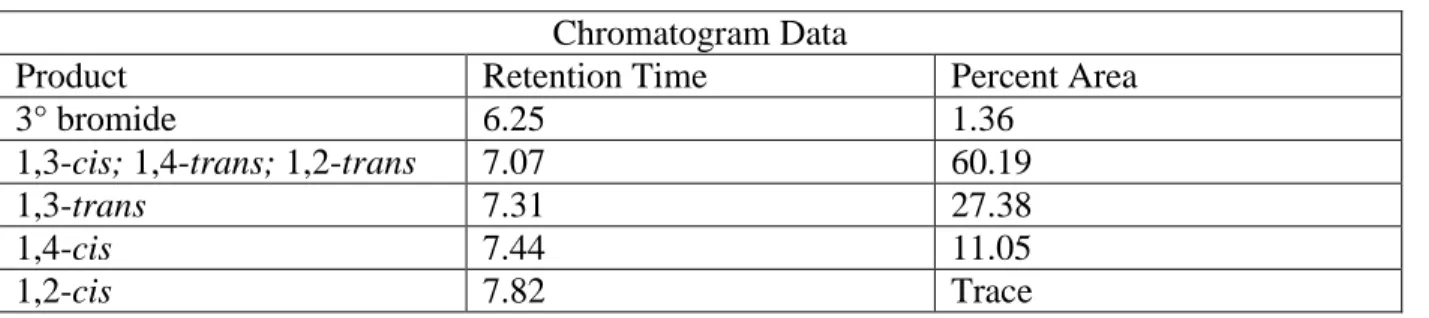
Figure 2-9. Bromination of trans-1,2-dimethylcyclohexane gas chromatogram ... 70
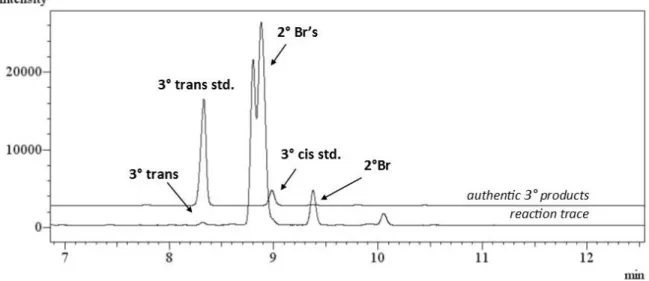
Figure 2-10. Overlaid gas chromatogram for bromination of trans-1,2-dimethylcyclohexane with authentic 3o products ... 70
Figure 2-11. Crude NMR of bromination of trans-1,2-dimethylcyclohexane ... 71
Figure 2-12. Gas chromatogram for bromination of cis-1,2-dimethylcyclohexane ... 72
Figure 2-13. Overlaid gas chromatogram for bromination of cis-1,2-dimethylcyclohexane with authentic 3o products ... 73
Figure 2-14. Crude NMR of reaction of cis-1,2 dimethylcyclohexane with reagent 6 ... 73
Figure 2-15. Crude NMR of reaction of trans-Decalin with reagent 6 ... 75
Figure 2-16. Crude NMR of bromination reaction of cis-Decalin with reagent 6 ... 76
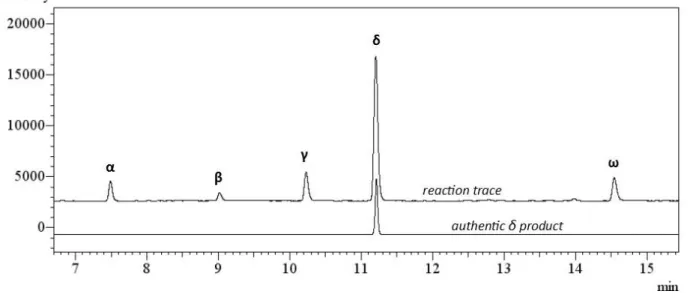
Figure 2-17. Gas chromatogram for bromination of methylhexanoate ... 77
Figure 2-18. Overlaid gas chromatogram for bromination of methylhexanoate with authentic products ... 78
Figure 2-19. Overlaid chromatogram of bromination of hexanenitrile with authentic δ product ... 81
Figure 2-20. Overlaid gas chromatogram for bromination of N-pentylphthalimide with authentic δ product ... 82
Figure 2-21. Overlaid chromatogram for bromination of OTFA-pentanol with authentic δ product ... 83
Figure 2-22. Gas chromatogram for bromination of cyclohexylphthalimide ... 83
Figure 2-23. Overlaid chromatogram for bromination of cyclohexylphthalimide with authentic products ... 84
Figure 2-24. Crude NMR of Reaction of Cyclohexylphthalimide with Reagent 6 ... 85
Figure 2-25. Gas chromatogram for bromination of cyclohexylphthalimide ... 89
xiii
Figure 2-27. Crude NMR of reaction of cyclohexylphthalimide with reagent 6 ... 90 Figure 3-1. Aliphatic chlorination of drug-like molecules ... 105 Figure 3-2. Competitive kinetic isotope experiment ... 107 Figure 3-3. Activities (IC50 values) of chlorolissoclimide, dichlorolissoclimide and haterumaimide Q against cancer cell lines ... 107 Figure 3-4. Retrosynthetic analysis for the synthesis of chlorolissoclimide ... 109 Figure 3-5. Forward synthesis of chlorolissoclimide ... 110 Figure 3-6. Activities of chlorolissoclimide and analogues against aggressive tumor cell lines ... 111 Figure 3-7. Overlaid gas chromatogram for chlorination of methylcyclohexane with authentic 3o product ... 134 Figure 3-8. Overlaid gas chromatogram for chlorination of adamantane with authentic products ... 137 Figure 3-9. Overlaid chromatogram for chlorination of 1,2 trans dimethylcyclohexane with authentic 3o products ... 138 Figure 3-10. Overlaid gas chromatogram for chlorination of 1,2 cis-dimethylcyclohexane with authentic 3o products ... 140 Figure 3-11. Overlaid gas chromatogram for chlorination of methylhexanoate with authentic
δ product. ... 141 Figure 3-12. Overlaid chromatogram for chlorination of N-pentylphthalimide with authentic
δ product. ... 143 Figure 3-13. Overlaid chromatogram for chlorination of hexanenitrile with authentic δ
product ... 144 Figure 3-14. Overlaid chromatogram for chlorination of 1-chloropentane with authentic δ
product ... 145 Figure 3-15. Overlaid chromatogram for chlorination of amylacetate with authentic δ
xiv
Figure 3-17. Overlaid gas chromatogram for chlorination of n-hexane with authentic
products ... 149
Figure 3-18. Overlaid gas chromatogram for chlorination of substrate S1 with isolated products ... 151
Figure 3-19. Overlaid gas chromatogram for chlorination of substrate S2 with isolated products ... 153
Figure 3-20. Overlaid chromatogram for chlorination of substrate S3 with isolated products ... 155
Figure 3-21. Overlaid chromatogram for chlorination of substrate S4 with isolated products ... 157
Figure 3-22. Overlaid chromatogram for chlorination of substrate S5 with isolated products ... 159
Figure 3-23. Overlaid chromatogram for chlorination of substrate S6 with isolated products ... 161
Figure 4-1. Activation of C-H bonds via photoredox catalysis ... 186
Figure 4-2. Alkene carboaminations enabled by proton coupled electron transfer ... 187
Figure 4-3. Intramolecular C-H functionalization enabled by proton coupled electron transfet... 188
Figure 4-4. Catalytic chlorination using trichlorisocyanuric acid (TCIA) ... 191
Figure 4-5. Catalytic C-H chlorination using t-BuOCl ... 192
Figure 5-1. Osmium alkene dufunctionalizations ... 199
Figure 5-2. Alkene difuctionalization types ... 200
Figure 5-3. Palladium-catalyzed carboetherification ... 200
Figure 5-4. Radical-based carbooxygenation using persistent radical TEMPO ... 201
Figure 5-5. Carbooxygenation strategy ... 202
Figure 5-6. Initial oxime formation in oxycyanation reaction ... 208
xv
LIST OF TABLES
Table 1-1. Early Fe and Mn oxidation systems (cyclohexane to cyclohexanone) ... 5
Table 1-2. Selectivity of various free radical chlorination conditions ... 8
Table 1-3. Regioselectivity in the free radical bromination of adamantane ... 10
Table 1-4. Halogenation of methylhexanoate using N-haloamines ... 11
Table 2-1. Bromination of cyclohexane with various N-bromoamidesa ... 24
Table 2-2. Bromination of methylcyclohexane ... 28
Table 2-3. Sterically selective bromination of diverse hydrocarbon substratesa ... 29
Table 2-4. Bromination of methylhexanoatea ... 30
Table 2-5. Electronically selective bromination of functionalized hydrocarbonsa ... 32
Table 2-6. Kinetic isotope effect of varying N-bromoamide reagentsa ... 34
Table 2-7. Bromination of activated C-H bonds using N-bromoamidesa ... 38
Table 2-8. Selectivity for bromination of methyl cyclohexane with bromoimide 6 ... 66
Table 2-9. Bromination of 1-methyl-3-cyclohexane ... 67
Table 2-10. Bromination of 1-methyl-2-cyclohexane ... 67
Table 2-11. Bromination of methylhexanoate with bromoamide 6 ... 78
Table 2-12. Bromination of 2-heptanone with bromoimide 6... 80
Table 2-13. Bromination of hexanenitrile ... 81
Table 2-14. Bromination of N-pentylphthalimide with reagent 6 ... 82
Table 2-16. Bromination of N-cyclohexylphthalimide with reagent 6 ... 84
Table 2-15. Bromination of OTFA pentanol with bromoimide 6 ... 88
Table 2-16. Bromination of N-cyclohexylphthalimide with reagent 6 ... 90
Table 3-1. Chlorination of cyclohexane under various conditionsa ... 98
xvi
Table 3-3. Sterically selective chlorination of diverse hydrocarbon substratesa ... 101
Table 3-4. Chlorination of methylhexanoate under various conditions ... 102
Table 3-5. Electronically selective chlorination of diverse substratesa ... 103
Table 3-6. Site Selectivity in the Presence of Activated C–H Bonds and Substrate Unsaturation ... 104
Table 3-7. Chlorination of methylcylohexane with chloroamide 1 ... 135
Table 3-8. Chlorination of adamantane with chloroamide 1 ... 137
Table 3-9. Chlorination of 1,2 trans-dimethylcyclohexane with chloroamide 1 ... 139
Table 3-10. Chlorination of 1,2 cis-dimethylcyclohexane with chloroamide 1 ... 140
Table 3-11. Chlorination of methylhexanoate with chloroamide 1 ... 142
Table 3-12. Chlorination of N-pentylphthalimide with chloroamide 1 ... 143
Table 3-13. Chlorination of hexanenitrile with chloroamide 1 ... 144
Table 3-14. Chlorination of 1-chloropentane with chloroamide 1 ... 146
Table 3-15. Chlorination of amyl acetate with chloroamide 1 ... 147
Table 3-16. Chlorination of pentyl benzene sulfonate with chloroamide 1 ... 148
Table 3-17. Chlorination of n-hexane with chloroamide 1 ... 149
Table 3-18. Chlorination of phthalimide substrate S1 with chloroamide 1 ... 151
Table 3-19. Chlorination of sulfonate substrate S2 with chloroamide 1 ... 153
Table 3-20. Chlorination of phthalimide substrate S3 with chloroamide 1 ... 155
Table 3-21. Chlorination of phthalimide substrate S4 with chloroamide 1 ... 157
Table 3-22. Chlorination of phthalimide substrate S5 with chloroamide 1 ... 159
Table 3-23. Chlorination of phthalimide substrate S6 with chloroamide 1 ... 161
Table 3-24. Synthetic and natural chlorolissoclimide (1) in CD2Cl2. ... 179
xvii
Table 4-1. Efforts toward catalytic C-H chlorination with NaOCl ... 189
Table 4-2. Efforts toward catalytic C-H chlorination with other N-Chloro reagents ... 190
Table 4-3. Amide and base screen for photocatlytic conjugate addition reaction ... 193
Table 4-4. Catalyst screen for photocatalytic conjugate addition ... 194
Table 5-1. Optimization of intramolecular alkene oxyallylationa ... 204
Table 5-2. Alkene oxyallalation substrate scopea ... 205
Table 5-3. Alkene oxycyanation substrate scopea ... 207
Table 5-4. Alkene oxyacylation scopea ... 209
Table 5-5. Additive optimization for oxyallation of 1 ... 212
xviii
LIST OF ABBREVIATIONS AND SYMBOLS
μ micro
°C degrees Celsius ΔfH° heat of formation
1H NMR proton nuclear magnetic resonance spectroscopy 13C NMR carbon nuclear magnetic resonance spectroscopy 4 Å MS 4 angstrom molecular sieves
Ac acetate
Ac2O acetic anhydride acac acetylacetone AcOH acetic acid
AD asymmetric dihydroxylation atm atmospheres
Bn benzyl
br s broad singlet BQ benzoquinone
Bu butyl
Bz benzoyl
C-H carbon-hydrogen bond cat. catalytic amount or catalyst cm-1 wavenumbers
d doublet
dba dibenzylideneacetone
xix DCE 1,2-dichloroethane
DCM dichloromethane dd doublet of doublets
ddd doublet of doublet of doublets DLP dilauroyl peroxide
DME dimethoxyethane
DMF N,N-dimethylformamide DMS dimethyl sulfide
DMSO dimethyl sulfoxide
dppp 1,3-bis(diphenylphosphino)propane e- electron
ee enantiomeric excess equiv equivalent(s)
ESI electrospray ionization
Et ethyl
Et2O diethyl ether et al. and others etc. et cetera
EtNiPr2 N,N,N-diisopropyl-ethylamine EtOAc ethyl acetate
h hours
HMPA hexamethylphosphoramide
xx
hν light
Hz hertz
i.e. in other words iPr iso-propyl
IR infared spectroscopy J coupling constant kcal kilocalorie
k rate
LDA lithium diisopropylamide LDE lithium diethylamide
LRMS low resolution mass spectroscopy m multiplet
Mbs 4-methoxybenzenesulfonyl
Me methyl
MeCN acetonitrile MeOH methanol MHz mega hertz min minute(s) mg milligram mL milliliter mmol millimole
xxi nBuOAc butyl acetate
NHC N-heterocyclic carbene nPrOH butyl acetate
Ns 4-nitrobenezenesulfonyl
OTf triflate, trifluoromethanesulfonate
Ph phenyl
Phth phthalimide
PPh3 triphenyl phosphine ppm parts per million
PTFE polytetrafluoroethylene, teflon p-Tol 4-methyl phenyl
q quartet
qd quartet of doublets quant quantitative
R generic organic group rt room temperature
s singlet
t triplet
TBAF tetrabutylammonium fluoride TBDPS tert-butyldiphenylsilyl TBS tert-butyldimethylsilyl tBu tert-butyl
xxii td triplet of doublets
TEMPO tetramethylpiperidine-N-oxide TFA trifluoroacetic acid
THF tetrahydrofuran
TMSOTf trimethylsilyl trifluoromethanesulfonate TPP tetraphenylporphyrin
1
1 CHAPTER ONE
Intermolecular Aliphatic C-H Functionalizations
1.1 Introduction
As a general class of chemical reactions, transformations that selectively functionalize aliphatic C-H bonds have significant promise for streamlining organic synthesis. Such reactions will expedite access to new therapeutic agents and lead to analogues with improved activities. Currently a wide variety of methods exist to selectively functionalize aryl sp2 C-H bonds. Few methods of preparative value exist, however, to selectively functionalize aliphatic sp3 C-H bonds. Most current reactions of this type are limited in their synthetic value due to low reaction yields, unpredictable selectivity, and the requirement of large excess of the alkane substrate.1
2
in highly selective C-H functionalizations, though their reactivity is highly substrate specific.3,4 The long term goal of this field is the development of aliphatic C-H functionalization reactions that possess enzyme-like selectivity, but can be applied to a broad class of hydrocarbon substrates.
1.2 Background
A number of protocols exist for the conversion of aliphatic C-H bonds to more synthetically useful C-C or C-Heteroatom functionality. Among the strategies employed to achieve this goal include the use of highly reactive radical intermediates, biomemmetic transition-metal catalysts, highly strained heterocycles, and in some cases direct oxidation conditions.5 Free-radical halogenation, which converts alkanes to their corresponding alkyl bromides or chlorides, has been known since the 1930s. These traditional reactions often possess poor site-selectivity, low yields and uncontrolled reactivity.6 Directing groups are often employed in C-H functionalization reactions to circumvent the issue of selectivity. This review will focus on the reagents and strategies for affecting alkane functionalization without the use of a directing group. More recently, however, synthetically useful C-H oxidations, halogenations, aminations, and alkylation protocols have begun to appear in the chemical literature. The historical perspective as well as the current state-of-the-art in each of these areas is discussed below.
1.2.1 Aliphatic C-H Oxidation
3
complexes. There are two major challenges present in modern aliphatic C-H oxidation: (1) controlling the site-selectivity of these highly reactive reagents, and (2) preventing over-oxidation of C-H hydroxylation products to aliphatic ketones or aldehydes.
In the late 1970s a class of organic peroxides was developed that possess great synthetic potential due to inherent energy stored in the compounds. The family of reagents are the smallest endoperoxides containing carbon, the dioxirianes. These highly reactive compounds can be used in a number of oxygen-transfer reactions with olefins, ketones, alkynes, isocyanates and enol ethers. Curci and coworkers expanded the oxidizing power of dioxirane compounds toward the goal of direct aliphatic alkane oxidation. Alkane substrates subjected to oxidation with trifluorodioxirane (TFDO) solutions in DCM yield a mixture of aliphatic alcohols and ketones.
Figure 1-1. Dioxirane oxidation of methylcyclohexane
4 Figure 1-2. Dioxirane oxidation of steroid substrate.
Later strategies for alkane oxidation draws on initial information disclosed by Curci and coworkers, but attempt to generate the active oxidant in situ or modulate its identity to improve its stability. Justin Du Bois developed a system based on this idea using a benzoxathiazine organocatalyst. In the presence of acetic acid and peroxide the benzoxathiazine is converted to an oxaziridine, the active oxidant in the reaction (Figure 1-3). The reactivity and selectivity is similar to dioxirane oxidation, though the authors claim an organocatalytic manifold should allow the
Figure 1-3. Alkane hydroxylation using benzoxathiazine organocatalyst
5
The other major strategy for alkane oxidation involves the use of transitions metal catalysts meant to mimic the reactivity of enzymes like cytochrome P450 discussed above. These biomimetic systems often rely on oxidized Fe or Mn complexes as the active species that can be regenerated using a stoichiometric oxidant like oxygen or peroxide. While this area of chemistry has become a popular area of investigation in the last decade, the ability of Fe Gif-type systems to oxidize saturated hydrocarbons to ketones via an Fe(V) oxenoid species has been known for some time.13, 14 In 1990, Barton reported the GifIV system was effective for the conversion of cycloalkanes to the corresponding monoketone (Table 1-1).15 Similar reactivity is also possible with Mn based catalysts.16
Table 1-1. Early Fe and Mn oxidation systems (cyclohexane to cyclohexanone)
6
center results in modest changes in site selectivity.19 The substrates are mostly confined to unfunctionalized alkanes, esters, and protected alcohols, thought White recently reported that heteroatom-containing substrates can also be tolerated through pre-complexation with lewis acids (Figure 1-4).20
Figure 1-4. Biomimetic oxidation of alkanes using an iron catalyst
7
asymmetric C-H functionalization exists. While only unfunctionalized alkane substrates are shown, Mizuno’s chemistry represents a significant advance in the field of C-H oxidation.21
Figure 1-5. C-H hydroxylation using a polyoxotungstate catalyst
1.2.2 Aliphatic C-H Halogenation
Compared to oxygenation, the methods for affecting C-H halogenation are significantly limited. Most existing alkane halogenations require multiple equivalents of substrate or result in poor site-selectivities. Light-initiated radical chlorination of alkanes is one of the oldest reactions in synthetic chemistry and still used industrially for the chlorination of methane.22 Free radical chlorination involves the formation of highly reactive chlorine radicals which indiscriminately react with most hydrocarbon substrates. Therefore, free-radical chlorination generally provides near statistical mixtures of primary (1o), secondary (2o), and tertiarty (3o) alkyl halide products. An example from Arase and coworkers demonstrates the low site-selectivity of free radical
Figure 1-6. Free radical chlorination of 3-methyl pentane
8
abstraction is competitive with the rate of diffusion of chlorine atoms in solution, and that once a chlorine atom is in contact with a hydrocarbon molecule, it is predisposed to react there rather than seek out a more reactive site.24 This general principle greatly limits the synthetic utility of aliphatic chlorination using chlorine radical except in the cases where (1) only one type of hydrogen is available (2) where one wishes to introduce the chloride functionality randomly (3) or one wishes to discard the majority of products formed in favor of the desired product.
Significant efforts have been made to modulate selectivity of free radical chlorination through the inclusion of additives, alternative chlorine sources, as well as solvent modifications. The low selectivity of the parent reaction is due to the exothermic C-H abstraction of the chlorine radical. Therefore, changing the abstracting agent often changes the selectivity of the reaction.
Table 1-2. Selectivity of various free radical chlorination conditions
9
modifications alters the selectivity of the reaction, generally increasing the balance of tertiary alkyl chloride product formed by stabilizing the intermediate radical species formed in the reaction.25
Free-radical halogenation with liquid bromine possess a greater inherent selectivity than the related chlorination reaction. Due to the endothermic nature of the C-H abstraction by bromine radical the reaction can be highly selective for the weakest C-H bond in the molecule.26 The reaction, therefore, tends to give favorable site selectivity for tertiary positions, or activated allylic or benzylic positions as in the Wohl-Zeigler reaction.27 DeBoer showed that when 2,2,3-
Figure 1-7. Regioselectivity of free-radical bromination
10
formation of the tertiary adamantly bromide, the least sterically hindered position in the molecule.29
Table 1-3. Regioselectivity in the free radical bromination of adamantane
11
Table 1-4. Halogenation of methylhexanoate using N-haloamines
More recently Minisci and coworkers adapted their aliphatic halogenation system to exclude the use of haloamines in favor of electrophilic phthalimido-N-oxy (PINO) radical as the abstracting agent (Table 1-4, Entry 5). PINO radical is generated in situ from N-hydroxyphthalimide (NHPI). The reaction proceedes with preference for bromination at the δ
position in greater than 89% selectivity. The use of nitric acid and low reaction conversions (ca
30-40%), however, limit the greater synthetic utility of the reaction.33
12
substrate is used as solvent, no yields are given, and concentrated acid is needed to generate the active cation radical abstracting species.34
Figure 1-8. Sterically hindered chlorinating agents
During the same time-frame, investigation into haloamides and sulfonamides as competent alkane halogenating agents was also under way. Greene and coworkers disclosed both inter-and intramolecular alkane halogenations using bromo- and chloroamides, while Hickinbottom disclosed similar reactivity using N-chlorsulfonaimde reagents. It is notable that in both studies the use of acid was not required to activate the electrophilic C-H abstracting agent (Figure 1-9).
Figure 1-9. Generation of C-H abstracting agents in N-halo chemistry
13
Greene reported yields for the chlorination of cyclohexane as high as 88% with respect to haloamide, though multiple equivalents of the alkane substrate were used.36 The exclusion of concentrated acid in both methods is promising in both methods, however, further synthetic applications were not investigated.
Recently, biomimetic approaches to alkane halogenation have emerged as a synthetically viable strategy to achieve this goal. Groves and coworkers developed a Mn-porphyrin complex that functions as a catalyst for aliphatic chlorination in the presence of stoichiometric hypochlorite (Error! Reference source not found.). A Mn (V) dioxo or oxohydroxyo porphyrin complex is proposed as the species responsible for the C-H abstraction. The majority of the examples shown effect alkane chlorination, though the authors show that the addition of sodium bromide allows the formation
Figure 1-10. Mn-Porphyrin catalyzed C-H chlorinaiton
14
Installation of alkyl fluoride functionality is of great synthetic importance. Fluorine serves as a bioisostere for hydrogen; replacing a C-H bond with a C-F bond does not change a molecules bioactivity, but makes the molecule less sensitive to degradation at that position. Aliphatic fluorination presents a much different synthetic challenge than that of chlorination or bromination. Free radical fluorination with fluorine gas is an extremely exothermic and unselective reaction due to the low bond dissociation energy of F2 (36.6 kcal/mol). The use of molecular fluorine can also result in C-C cleavage and unpredictable explosions.39 The development of alternative electrophilic fluorine sources such as N-flurobenzenesulfonimide (NFSI) and Selectfluor® have greatly increased the synthetic accessibility of fluorination chemistry. The two sources of fluorine above have been shown to fluorinate carbon centered radicals with modest efficiency.40 Therefore, generating a carbon centered radical from an alkane in the presence of an electrophilic fluorine source should prove a fruitful strategy for aliphatic fluorination.
15 Figure 1-11. Aliphatic fluorinations using Selectfluor®
Fluorosulfonimides are also competent sources of fluorine atoms. Britton reports aliphatic C-H fluorination using a polyoxotungstate complex and NFSI as the fluorine source (Figure 1-12). The reaction is a photocatalytic process and fluorinates a variety of alkane substrates including amino acid derivatives. The polyoxometylate system was extensively compared to Groves’s Mn catalyzed system. The authors that similar reactivity and selectivity can be achaived through the use of their reaction conditions.44
16 1.2.3 Aliphatic C-H Amination
Intermolecular amination of unactivated aliphatic C-H bonds is by far the least developed class of C-H functionalization reactions discussed herein. Functional groups containing C-N bonds are extremely comment in biologically active molecules, many of which owe their activity to this polar group. As a result, the development of reactions that directly replace C-H bonds with C-N bonds has been an area of rapid development. Most of the methods, however, are intramolecular reactions, require the use of directing groups, or functionalize aryl sp2 sites and will not be discussed here.
In 2012, Baran and coworkers presented one of the first synthetically practical C-H amination reactions of aliphatic sp3 C-H bonds. The system developed is a mild, copper-catalyzed reaction tolerant of a variety of alkane and oxygenated alkane substrates. Baran and coworkers suggest that an unstable copper (III) – Selectfluor® complex may be responsible for the C-H abstratction, though they also suggest potential involvement by the nitrile solvent. Under the oxidizing conditions of the reaction, the carbon centered radical formed is oxidized to the carbocation and subsequently trapped by acetonitrile. Basic aqueous workup affords the C-H amination products. The authors suggest no detailed explanation for the origin of site selectivity in their reaction. In some examples reactivity is preferred at methylene sites instead of methine sites, so some steric component may be involved in the C-H abstraction event.45
17
The following year the Bu Bois group developed a C-H amination using a dirhodium tetracarboxylate catalyst [Rh2(esp)2]. The transformation selectively installs a substituted sulfamate at aliphatic tertiary C-H bonds in the substrate. The reaction is tolerant of both oxygen and nitrogen functionality. The reaction is believed to occur through a concerted nitrene insertion mechanism supported by kinetic isotope, radical clock, and enantiospecific insertion experiments. This chemistry developed by Du Bois is an excellent step toward practical aliphatic C-H amination but remains limited to reaction at methine sites. An expansion of this chemistry with the ability to react at methylene sites would be of high synthetic value.46
Figure 1-14. Intermolecular rhodium catalyzed C-H amination
18
though the authors propose that an iron species is likely involved in the C-H abstraction event to form a tertiary carbon centered radical. Steric and electronic effects may help differentiate between different tertiary sites within the molecule.47
Figure 1-15. Aliphatic C-H azidation with hypervalent iodine reagent
1.3 Summary and Outlook
19
1.4 REFERENCES (1) Wencel-Delord, J.; Glorius, F. Nat. Chem., 2013, 5, 369.
(2) Luo, Y.; Cheng, J., "Bond Dissociation Energies" in CRC Handbook of Chemistry and Physics, 96th Edition
(3) Hillwig, H.L.; Liu, X. Nat. Chem. Biol., 2014, 10, 921.
(4) Pratter, S. M.; Ivkovic, J.; Birner-Gruenberger, R.; Breinbauer, R.; Zangger, K.; Stranganz, G. D. ChemBioChem., 2014, 15, 567.
(5) Davies, H. M. L.; Morton, D. J. Org. Chem.., 2016, 81, 343. (6) Skell, P. S.; Baxter, H. N. J. Am. Chem. Soc. 1985, 107, 2823 (7) Groves, J. T.; Nat. Chem., 2014, 6, 89.
(8) Mello, R.; Fiorentino, M.; Fusco, C.; Curci, R., J. Am. Chem. Soc. 1989, 111, 6749. (9) Bovicelli, P.; Lepattelli, P.; Mincione, E.; J. Org. Chem., 1992, 57, 2182.
(10) Brodsky, B. H.; Du Bois, J. J. Am. Chem. Soc., 2005, 127, 15391.
(11) Litvinas, N. D.; Brodsky, B. H.; Du Bois, J. Angew. Chem. Int. Ed. 2009, 48, 4513. (12) Pierce, C. J.; Hilinski, M. K. Org. Lett., 2014, 16, 6504.
(13) Barton, D. H. R. Chem. Soc. Rev., 1996, 25, 237.
(14 ) Groves, J. T.; Nemo, T. E.; Myers, R. S.; J. Am. Chem. Soc., 1979, 101, 1032. (15) Barton, D. H. R.; Csuhai, E.; Ozbalik, N. Tetrahedron, 1990, 46, 3743.
(16 ) Mn- Thesis find refernce
(17) Chen, M. S.; White, M. C. Science, 2007, 318, 783. (18) Chen, M. S.; White, M. C. Science, 2010, 327, 566.
(19) Bigi, M. A.; Reed, S. A.; White, M. C. J. Am. Chem. Soc., 2012, 134, 9721.
(20) Howell, J. M.; Feng, K.; Clark, J. R.; Trzwpkowski, L. J.; White, M. C. J. Am. Chem. Soc.,
2015, 137, 14590.
20
(22) Barton, D. H. R.; Doller, D. Acc. Chem. Res.,1992, 25, 504. (23) Hoshi, M.; Masuda, Y.; Arase, A. Chem. Lett., 1984, 13, 195.
(24) Methods in Free-Radical Chemistry, Vol. 1−2; Huyser, E. S., Ed.; Dekker: New York, 1969. (25) Handbook of C-H Transformations, Vol. 1-2; Dyker, G., Ed; Wiley: Weinheim, 2005. (26) Barton, D. H. R.; Gastiger, M. J.; Motherwell, W. B. J. Chem. Soc., Chem. Commun. 1983,
41.
(27) Djerassi, C. Chem. Rev., 1948, 2, 271.
(28) Russell, G.A.; De Boer, C. J. Am. Chem. Soc., 1963, 85, 3136.
(29) Barton, D. H. R.; Boivin, J.; Gref, A.; Ozbalik, N.; Riviere, H. Tetrahedron Lett., 1986, 27, 947.
(30) Majetich, G.; Wheless, Karen. Tetrahedron, 1995, 51, 7095.
(31) Minisci, F.; Galli, R.; Galli, A.; Bernardi, R. Tet. Lett., 1967, 23, 2207. (32) Minisce, F.; Galli, R.; Bernardi, R. Chem. Comm., 1967, 18, 903.
(33) Minisci, F.; Porta, O.; Recupero, R.; Gambarotti, C.; Paganelli, R.; Pedulli, G. F.; Fontana, F. Tett. Lett., 2004, 45, 1607.
(34) Deno, N. C.; Fishbein, R.; Wyckoff, J. C.; J. Am. Chem. Soc., 1971, 93, 2065. (35) Fuller, A. E.; Hickinbottom, W. J. J. Chem. Soc.,1965, 4, 3235.
(36) Johnson, R. A.; Greene, F. D. J. Org. Chem., 1975, 40, 2186. (37) Liu, W.; Groves, J. T.; J. Am. Chem. Soc., 2010, 132, 12847.
(38) Liu, W.; Huang, X.; Cheng, M.; Nielsen, R. J.; Goddard, W. A.; Groves, J. T. Science, 2012, 337, 1322.
(39) Sibi, M. P.; Landais, Y. Angew. Chem. Int. Ed., 2013, 52, 5370.
(40) Rueda-Becerril, A.; Sazepin, C. C.; Leung, J. C. T.; Okbinoglu, T.; Kennepohl, P.; Pawuin, J.; Sammis, G. M. J. Am. Chem. Soc., 2012, 134, 4026.
(41) Bloom, S.; Pitts, C. R.; Miller, D. C.; Haselton, N.; Holl, M. G.; Urheim, E.; Lectka, T.
21
(42) Pitts, C. R.; Bloom, S.; Woltomist, R.; Auvenshine, D. J.; Ryzhkov, L. R.; Siegler, M. A.; Lectka, T. J. Am. Chem. Soc., 2014, 136, 9780.
(43) Bloom, S.; Knippel, L. J.; Lectke, T.; Chem. Sci., 2014, 136, 9780.
(44) Halperin, S. D.; Fan, H.; Chang, S.; Martin, R. E.; Britton, R.; Angew, Chem. Int. Ed., 2014, 53, 4609.
22
2. CHAPTER TWO
Aliphatic C-H Bromination Using N-Bromoamides
2.1 Introduction
An important goal of modern chemical synthesis is to develop transformations that achieve site-selective intermolecular functionalization of aliphatic C-H bonds.1 C-H Halogenation is a particularly attractive manifold due to the ability to convert alkyl bromides into a variety of other products. Aliphatic C-H bromination has long been used as a convenient method in the synthesis of alkyl bromide building blocks. Existing technologies to accomplish this goal often require large excess of alkane substrate, harsh reaction conditions, and give low yields of complex product mixtures.2 This limits the synthetic utility of existing methods. Additionally, most free-radical bromination procedures select for the most labile C-H bonds present in the molecule: tertiary, benzylic or allylic C-H bonds. New methods are required to achieve complementary selectivity and reactivity efficient enough for late stage functionalization.
2.2 Background
23 2.3 Reaction Development
Hofmann-Löffler-Freytag processes use nitrogen-centered radicals to perform site-selective, intramolecular C−H functionalizations, including C−H halogenations. These processes capitalize on the kinetic preference for 1,5-H-atom abstraction by heteroatom-centered radicals to achieve near single-site selectivities. Intermolecular, heteroatom-centered radical-mediated functionalizations of unactivated aliphatic C−H bonds, are rarely used in synthesis due to low selectivities.3 Interestingly, preliminary reports by Minisci and Deno (discussed in Chapter 1) indicate that site-selective, intermolecular C−H functionalizations using N-centered radicals may be possible. A number of factors limit their synthetic utility: (1) the use of strong acid as solvent (2) alkane substrate as co-solvent.4 We hypothesized that the development of a set of simple, stable reagents that deliver an array of unique N-centered radicals could enable a new approach to site-selective, intermolecular C−H halogenation. Tuning the steric and electronic parameters of the reacting species enables reagent-controlled C−H halogenations that override inherent substrate-controlled selectivities.
2.3.1 Initial Studies
24
from their parent amides.7 While all of the bromoamides examined provided cycloalkyl bromide product, hindered electrophilic reagents proceeded with improved efficiency (Table 2-1, Entry 5 and 6). N-bromoamide 6 provided cyclohexyl bromide in the highest yield of the reagents studied (70%, entry 6). Notably, these experiments were performed on the benchtop at room temperature with common 100W household bulbs (23W fluorescent bulbs provided equivalent yields) and are complete in <30 min. While we typically perform these reactions under Ar using purified reagents
Table 2-1. Bromination of cyclohexane with various N-bromoamidesa
25
appreciable amounts in these reactions. We attribute this to the electronic deactivation of the bromoalkane products.
Other cycloalkanes also performed favorable in the reaction using N-bromoamide 6. Cyclopentane, cycloheptane, and cyclooctane all gave good yields of the corresponding bromide products. The slightly lower yield when using cyclopentane can be attributed to the volatility of the substrate (Figure 2-1).
Figure 2-1. Bromination of additional cycloalkanes with N-bromoamide 6
26
Figure 2-2. Bromination of cyclohexane in various solvents
2.3.2 Substrate Scope – Steric Selectivity
We next explored the potential for site-selective C−H functionalization. The ability to differentiate sites of functionalization on both steric and electronic bases is paramount. Classical radical-mediated C−H brominations are often selective for tertiary C−H sites as discussed previously.9 In addition, the preference for tertiary C−H functionalization is also characteristic of the majority of known polar or metal-catalyzed C−H functionalizations.10 We hypothesized that tuning the steric and electronic parameters of the bromoamide involved in our system could offer the potential to overcome this inherent reactivity profile.
27
The bromination of methylcyclohexane using common reagent N-bromosuccinimide (NBS, Table 2-2, entry 7) requires a large excess of substrate to deliver greater than a trace amount of product, and therefore was performed neat in methylcyclohexane. As expected, this reaction greatly favored halogenation at the tertiary C−H site after correcting for the number of tertiary (1) and secondary (10) sites available (ksecondary/ktertiary, ks/kt, = 0.06). Bromination using a biomimetic Mn-porphyrin system (Table 2-2, entry 8) also favored tertiary halogenation (ks/kt, = 0.40). The photochemical C−H bromination using bromoamide 1 proceeded with a ks/kt selectivity comparable to NBS (0.07, Table 2-2, entry 1), while the reactions of N-bromoamides 3 and 4 were comparable to the Mn-porphyrin system (Table 2-2, entries 5 and 6). However, the use of bulky N-tBu reagents 2, 5, and 6 led to a marked increase for methylene functionalization, with bromoimide 6 providing >98% selectivity and ks/kt = 6.6 (Table 2-2, entry 6). This level of methylene selectivity in the functionalization of a simple cyclic hydrocarbon is unmatched by any known system for aliphatic C−H halogenation.
28 Table 2-2. Bromination of methylcyclohexane
29
The halogenation of adamantane proceeds with modest site selectivity with common radical halogenating agents (e.g., Br2 and NBS), yet favors the less encumbered tertiary sites with sterically selective reagents.14 The reaction of adamantane with N-bromoamide 6 was highly selective for the tertiary site (kt/ks >100), consistent with previous studies of amidyl radical selectivity (Table 2-3, entry 1).4c The bromination of trans-decalin proceeds with excellent methylene site selectivity using 6 (>99%, Table 2-3, entry 3). Cis-Decalin is a more challenging Table 2-3. Sterically selective bromination of diverse hydrocarbon substratesa
30
Table 2-3, entry 7), further demonstrating the unique levels of steric selectivities obtained using our system.
2.3.3 Substrate Scope- Electronic Selectivity
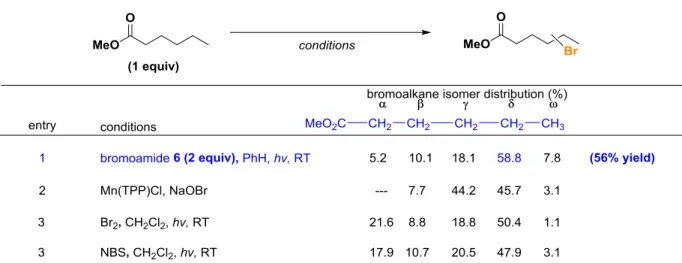
Next we surveyed the potential for electronic site selectivity in the C−H halogenation using methyl hexanoate as a test substrate (Table 2-4). The Mn-porphyrin-catalyzed bromination5a of this substrate is highly selective for the δ and γ sites, although there is little discrimination between these two positions (Table 2-4, entry 2). Functionalization using N haloamide 6 (2 equiv) leads to a δ- selective process, favoring functionalization of the methylene position furthest removed from the electron-withdrawing ester group (Table 2-4, entry 1). We also observe γ-functionalization, but bromination with reagent 6 provides good selectivity between the δ and γ sites (δ:γ = 3.2:1).
Table 2-4. Bromination of methylhexanoatea
31
functionalization was observed, clearly indicating the excellent potential for electronically dictated site selectivity using protected primary amines. The functionalizations of both hexanenitrile and heptan-2-one also proceeded with good δ selectivities (68.3% and 53.8%,respectively, Table 2-5 entries 2 and 3). The promising level of δ selectivity with heptan-2-one is intriguing given the known protocols for the α-halogenation of ketones using simple brominating agents (e.g.,NBS) and visible light.16 The reaction of pentyl trifluoroacetate also displayed good δ selectivity (66.6%, Table 2-5, entry 4). Bromination of n-hexane was 58.7% δ selective, indicating the possibility of a minor steric component in reactions of linear substrates (Table 2-5, entry5). A minor amount of dihalogenation of n-hexane was observed; therefore, a reaction using an excess of substrate was performed to determine the site selectivity. While further studies will seek reagents with improved selectivities, the efficiency of these reactions already positions this method as a practical (>50% yield) approach to C−H bromination.
32
Table 2-5. Electronically selective bromination of functionalized hydrocarbonsa
2.3.4 Substrate Scope – Complex Molecules
33
nitrogen- or oxygen-substituted adamantanes; the simple electrophilic halogenation of amino-adamantanes is unknown. The site-selective C−H bromination using N-bromoamides proved to be an excellent solution. Functionalization of the N-phthalimide derivative of memantine (Figure 2-3, entry 1) using N-bromoamide 5 delivered tertiary bromination product in good isolated yield (70%), with complete site selectivity. As observed in the reaction of adamantane, the amidyl radical favors C−H abstraction at the less-hindered tertiary C−H site.
Figure 2-3. Bromination of drug-like molecules
34
of (+)-sclareolide involves a large excess of substrate and proceeds with <5% conversion to a mixture of brominated derivatives.5d
2.3.5 Mechanistic Studies and Proposed Mechanism
In order to gain insight regarding the mechanism of the C−H halogenation we carried out a competitive kinetic isotope effect experiment between cyclohexane and d12- cyclohexane using reagent 6. We observed primary kinetic isotope effect (KIE) of kH/kD = 5.8 (Table 2-6). This KIE approaches the theoretical maximum for primary KIE values. This value is consistent with an irreversible hydrogen atom abstraction. Based on the magnitude of the value we predict and even degree of C-H bond breakage and H-N bond formation during the transition state. We also wanted to probe the KIE with respect to the other N-bromoimide reagents synthesized. Each reagent possessed a unique KIE value (values represent the averages of multiple experiments). The KIE
35
values range from kH/kD = 2.2-5.8, with all reagents exhibiting a large primary KIE. This data is consistent with a similar mechanism for each reagent, but differing C-H abstracting species. Therefore, each unique amidyl radical generated, possessed its own unique reactivity. Under identical conditions, neither Br2 nor N-bromosuccinimide delivered more than a trace amount of product. This is again consistent with an amidyl radical C−H abstraction step in our approach, as further supported by the site selectivity studies discussed above.
36
Figure 2-4. Radical clock experiments with N-bromoamide 6
37
Figure 2-5. Proposed mechanism for aliphatic C-H bromination with N-bromoamides
2.3.6 Substrate Scope – Bromination of activated C-H bonds
38
containing allylic, benzylic and acyclic tertiary C-H bonds to our reaction conditions. We found that in each case the reaction proceeds in good yield, with 1 equivalent of substrate and bromoimide after only short reaction times (Table 2-7). It is notable that in the presence of multiple activated C-H bonds, only mono-bromination occurs (Table 2-7, entry 2 and 5). The reactivity achieved here occurs with efficiency that cannot be achieved with NBS or Br2.
Table 2-7. Bromination of activated C-H bonds using N-bromoamidesa
2.4 Summary
39
selectivities that rival the most selective intermolecular C−H functionalizations known. Expansions of this approach to site selective C−H functionalization to other classes of small molecules and synthetic transformations are currently underway, with the ultimate goal of developing a set of easily accessed reagents capable of practical, predictable, and site-selective C−H functionalizations by way of tuned heteroatom-centered radicals.
2.5 Experimental Data 2.5.1 General Methods
40
Microlit Laboratories in Ledgewood, NJ. Thin layer chromatography (TLC) was performed on SiliaPlate 250µm thick silica gel plates provided by Silicycle. Visualization was accomplished with short wave UV light (254 nm), aqueous basic potassium permanganate solution, or ethanolic acidic p-anisaldehyde solution followed by heating. Flash chromatography was performed using SiliaFlash P60 silica gel (40-63 µm) purchased from Silicycle. Tetrahydrofuran, diethyl ether, and dichloromethane were dried by passage through a column of neutral alumina under nitrogen prior to use. All other reagents were obtained from commercial sources and used without further purification unless otherwise noted.
2.5.2 Compound Preparation Amide Synthesis
N-(tert-butyl)benzamide was synthesized according to literature procedures20 and purified via single solvent recrystallization from benzene. Physical and spectral data were in accordance with literature data.21
41
N-(tert-butyl)-4-nitrobenzamide was synthesized according to literature procedures1 and purified via single solvent recrystallization from benzene. Physical and spectral data were in accordance with literature data.23
42
To a 0 ºC solution of 3,5-bis(trifluoromethyl)benzoic acid (2.50 g, 9.61 mmol) in DCM (24 mL) and DMF (10 drops) was added oxalyl chloride (1.65 mL, 19.2 mmol) dropwise under an argon atmosphere. The solution was stirred at 0 ºC for 15 min then warmed to room temperature for 1.5 hours. The resultant yellow solution was evaporated to near dryness under reduced pressure to remove the DCM. The reaction mixture was dissolved in dry Et2O and cooled to 0 °C. Triethylamine (1.0 mL, 10.1 mmol) and trifluoroethylamine (0.780 mL, 10.1 mmol) were added simultaneously, dropwise. The solution was allowed to warm to room temperature and stirred overnight. The ammonium salts were filtered using vacuum filtration and washed with Et2O. The organic filtrate was concentrated under reduced pressure to give the crude product which was recrystallized from pentane to give N-(2,2,2-trifluoroethyl)-3,5-bis(trifluoromethyl)benzamide (2.9 g, 17.3 mmol, 90% yield) as a white solid.
43 Acetyl Hypobromite
The general procedure for the preparation of acetyl hypobromite was based on the method reported by Beebe and Wolfe.25 Carbon tetrachloride (105 mL) was freshly distilled into a flame-dreid flask and back filled with N2 - 5 mL was removed for future use. The flask was then wrapped in foil and silver acetate (3.30g , 20 mmol) was added. The resultant suspension was then cooled to 0 °C and elemental bromine (1.05 mL, 20 mmol) was added dropwise. The reaction mixture was then stirred in the dark for an additional 15 min at 0 °C followed by quickly filtering into a separate, foil wrapped, flame-dried flask with limited suction to remove the silver bromide formed in the reaction. The collected silver bromide was then washed with 2-3 mL of distilled CCl4. The collected orange solution was stored wrapped in foil at -10 °C and can be used with minimal decrease in concentration for 5 – 10 days. The concentration of acetyl hypobromite was determined by titration against triphenylphosphine : a known amount of PPh3 was dissolved in DCM (roughly 0.1M) in a flamed-dried vial. Acetyl hypobromite solution was added dropwise until the solution turned from colorless to yellow or the PPh3 was completely consumed as judged by TLC analysis. Concentrations typically ranged from 0.15 to 0.21M.
Note: Acetyl Hypobromite can also be prepared in DCM as described by Baran. However, for our
purposes we found that DCM solutions had to be used immediately and several equivalents of
44 N-Bromination with Acetyl Hypobromite
General Procedure : To a 250 mL flame dried, foil wrapped flask under N2, amide (2.50 g, 8.0 mmol) was added followed by acetyl hypobromite solution (63 mL, 12.0 mmol, 0.21M) in CCl4. The reaction was stirred at room temperature for 1-2 hours. When the reaction was complete as judged by 1H NMR analysis (1.5 hours usually sufficient) the reaction was concentrated under reduced pressure to give a yellow solid. The crude material was recrystallized from cold acetone and water to give 6 (3.05g, 7.78 mmol, 98% yield) as pale yellow crystals.
General storage: All N-Bromo reagents were stored in foil-wrapped vials in the freezer when not
in use. The reagents can be weighed out on the bench top without risk of decomposition.
45
Bromoamide 2 was synthesized via the general procedure described above in 93% yield (800 mg) as dark yellow crystals.
Analytical data for Bromoamide 2: 1H NMR (400MHz ,CHLOROFORM-d) = 7.69 - 7.62 (m, 2 H), 7.50 - 7.37 (m, 3 H), 1.60 - 1.55 (m, 9 H) ppm; 13C NMR (CHLOROFORM-d, 100 MHz) 177.17, 137.14, 130.90, 128.46, 127.89, 63.50, 28.70 ppm. IR (thin film, cm-1) 2974.6, 2932.2, 1661.4, 1524.5, 1482.9, 1451.2, 1392.4, 1363.4, 1285.3, 1192.8, 1112.7, 1025.9, 795.5, 718.4, 695.2; Elemental Analysis for [C11H14BrNO]; Theoretical = C: 51.58; H: 5.51; N: 5.47; Found = C: 52.64; H: 5.75; N: 5.57.
Bromoamide 3 was synthesized via the general procedure described above in 94% yield (380 mg) as an off-white powder.
46
Bromoamide 4 was synthesized via the general procedure described above in 97% yield (1.2 g) as a colorless solid.
Analytical data for Bromoamide 4: 1H NMR (400MHz ,CHLOROFORM-d) = 8.06 (s, 2 H), 8.04 (s, 1 H), 4.48 (q, J = 8.1 Hz, 2 H) ppm; 13C NMR (CHLOROFORM-d, 100 MHz) 170.12, 134.75, 132.62, 132.28, 131.94, 131.62, 128.30, 125.01, 124.97, 124.83, 124.03, 122.05, 121.32, 55.00, 54.64, 54.29, 53.97 ppm; IR (thin film, cm-1) 3289.9, 3095.2, 3008.4, 2965.0, 1823.4, 1659.5, 1397.2, 1377.9, 1342.2, 1279.5, 1259.2, 1151.3, 1056.8, 903.5, 847.5, 743.4, 702.9, 679.8, 563.1; Elemental Analysis for [C11H5BrF9NO]; Theoretical = C: 31.60; H: 1.21; N: 3.35; Found = C: 31.59; H: 1.20; N: 3.42.
Bromoamide 5 was synthesized via the general procedure described above in 98% yield (1.7 g) as a bright yellow powder.
47
700.9, 689.1, 530.2; Elemental Analysis for [C11H13BrN2O3]; Theoretical = C: 43.87; H: 4.35; N: 9.30; Found = C: 44.01; H: 4.34; N: 9.11.
Bromoamide 1 was not synthesized using acetyl hypobromite, but instead via the procedure reported by Nishida and coworkers.27 To a solution of benzamide (1.21g, 10mmol), sodium bromate (755 mg, 5mmol) and concentrated sulfuric acid (140uL, 2.5 mmol, 18.4M) in water, hydrobromic acid (750 uL, 47%, 6.7 mmol) was added with stirring. The reaction mixture was stirred an additional 10 min. The obtained precipitate was filtered with cold water and dried vacuum to give 1 (1.4 g, 6.8 mmol, 68% yield) as an off-white solid. Physical and spectral data were in accordance with literature data.
Substrate Synthesis
Note: Hydrocarbon substrates were obtained commercially and used without further purification
unless otherwise noted.
48
and the reaction was stirred at 0 °C for 10 min. The reaction was then allowed to warm to room temperature over 30 min. Phthalic Anhydride (1.24 g, 8.37 mmol) was then added and the reaction was heated to reflux overnight. The reaction was then diluted with Et2O and 1N HCl. The organic layer was separated and washed twice more with 1N HCl, and once with brine. The organic layer was then dried with magnesium sulfate and concentrated under reduced pressure. The crude material was purified using column chromatography (10% EtOAc/Hexanes) to isolate N-Phth Memantine (1.25 g, 3.92 mmol, 70% yield) as a white solid.
Analytical data for N-Phth Memantine: 1H NMR (600MHz ,CHLOROFORM-d) = 7.80 - 7.72 (m, 2 H), 7.71 - 7.63 (m, 2 H), 2.36 (br. s., 2 H), 2.28 - 2.21 (m, 1 H), 2.16 (s, 4 H), 1.49 (d, J = 12.5 Hz, 2 H), 1.34 (d, J = 12.1 Hz, 2 H), 1.31 - 1.24 (m, 1 H), 1.24 - 1.15 (m, 1 H), 0.91 (s, 6 H); 13C NMR (125 MHz ,CHLOROFORM-d) = 169.8, 133.6, 131.9, 122.5, 61.8, 50.3, 46.0, 42.5, 38.7, 32.6, 32.6, 30.4, 30.3 ppm, IR (thin film, cm-1) 3460.6, 2944.1, 2866.2, 1769.4, 1708.6, 1613.2, 1454.1, 1361.5, 1351.2, 1156.1, 1081.9, 1051.9, 871.7, 788.7, 717.4, 644.1; HRMS (ESI) Calcd. for [C20H23NO2+H]+ = 310.17, Found = 310.21.
49
organic layer was separated and washed 8 times with 100 mL of water to remove the residual phthalimide salt. The organic layer was then dried with magnesium sulfate and concentrated under reduced pressure. The crude material was purified using column chromatography (25% EtOAc/Hexanes) to isolate N-Phth pentane (3.45 g, 15.5 mmol, 82% yield) as a clear, yellowish liquid.
Analytical data for N-Pentyl Phthalimide: 1H NMR (600MHz ,CHLOROFORM-d) = 7.88 - 7.75 (m, 1 H), 7.73 - 7.59 (m, 2 H), 3.74 - 3.56 (m, 2 H), 1.75 - 1.57 (m, 2 H), 1.31 (br. s., 4 H), 0.94 - 0.79 (m, 3 H); 13C NMR (125MHz ,CHLOROFORM-d) = 168.4, 133.8, 132.1, 123.1, 37.9, 28.9, 28.2, 13.9 ppm; IR (thin film, cm-1) 3468.4, 3061.4, 2934.2, 1773.2, 1712.5, 1614.13, 1465.6, 1397.2, 1367.3, 1186.0, 1058.7, 980.6880.3, 793.5, 719.3, 620.0, 530.3; HRMS (ESI) Calcd. for [C13H15NO2+H]+ = 218.11, Found = 218.04.
50
yielded analytically pure N-Phth Cyclohexane (2.02 g, 8.8 mmol, 87% yield) as a white crystalline solid. Physical and spectral data were in accordance with literature data.28
Synthesis of Bromide Standards
Note: Bromide standards were obtained commercially and used without further purification unless
otherwise noted. Commercially obtained bromides include: bromocyclohexane,
bromocyclopentane, bromocycloheptane, exo-bromonorbornane, 1-bromoadamantane,
2-bromoadamantane.
51
52
Analytical data for β-Bromohexanoate: 1H NMR (600MHz ,CHLOROFORM-d) = 4.40 - 4.28 (m, 1 H), 3.76 - 3.66 (m, 3 H), 2.89 (d, J = 7.3 Hz, 2 H), 1.89 - 1.72 (m, 2 H), 1.63 - 1.51 (m, 1 H), 1.51 - 1.40 (m, 1 H), 0.93 (t, J = 7.5 Hz, 3 H); 13C NMR (125MHz ,CHLOROFORM-d) = 170.8, 51.9, 49.7, 44.1, 40.7, 20.7, 13.3 ppm; IR (thin film, cm-1) 1743.3, 1436.7, 1375.9, 1355.7, 1310.4, 1253.5, 1012.5, 934.3, 749.2; HRMS (ESI) Calcd. for [C7H13BrO2+H]+ = 209.01, Found = 208.97
53
Methyl 5-bromohexanoate: was synthesized via lactone opening with HBr using a method identical to the one described for methyl 4-bromohexanoate above in 72% yield (2.05 g).
Analytical data for δ-Bromohexanoate: 1H NMR (600MHz ,CHLOROFORM-d) = 4.11 (sxt, J = 6.5 Hz, 1 H), 3.66 (s, 3 H), 2.33 (t, J = 7.2 Hz, 2 H), 1.92 - 1.78 (m, 3 H), 1.77 - 1.72 (m, 1 H), 1.70 (d, J = 7.3 Hz, 3 H); 13C NMR (125 MHz ,CHLOROFORM-d) = 173.6, 51.6, 50.8, 40.2, 33.2, 26.4, 23.1 ppm; IR (thin film, cm-1) 1739.5, 1438.6, 1376.9, 1199.5, 10096.6, 982.5, 860.1, 773.3; HRMS (ESI) Calcd. for [C7H13BrO2+H]+ = 209.01, Found = 209.02
Methyl 6-bromohexanoate was synthesized via lactone opening with HBr using a method identical to the one described for methyl 4-bromohexanoate above in 95% yield (1.73 g). Physical and spectral data were in accordance with literature data.9
54
(10 mL). The reaction was allowed to reach room temperature and stirred for 7 hours until TLC showed complete consumption of the starting material. The reaction was quenched by the sequential slow addition of water (150 μL), 2.5M NaOH solution (300 μL), and water (450 μL ). The insoluble salts were removed via suction filtration and the reaction was concentrated under reduced pressure to 4-bromopentanol (350 mg, 82% yield) which was used in the next step without further purificationTriphenylphosphine (826 mg, 3.15 mmol) and phthalimide (463 mg, 3.15 mmol) were added to a solution of 4-bromopentanol (350 mg, 2.1 mmol) in THF (20 mL). Diisopropylazodicarboxylate (620 μL, 3.15 mmol) was then added dropwise and the reaction was allowed to stir at room temperature overnight. The reaction was then concentrated under reduced pressure and the crude reaction mixture was purified using column chromatography (10-20% EtOAc/Hexanes gradient) to give N-4-bromopentyl phthalimide (601 mg, 2.0 mmol, 96% yield) as a clear yellow oil.
55
2-Bromo-5-Cyanopentane was prepared via the method reported by Oae.31 Sodium cyanide (1.79 g, 36.5 mmol) was added to a boiling solution of EtOH (10 mL) and 1,4-dibromopentane (4.10 mL, 30.0 mmol). The reaction was stirred vigorously at reflux for 3 hours then cooled to room temperature. The ethanol was then directly distilled off and the remaining reaction mixture was poured into water. The oil was separated from the aqueous layer and dried with calcium chloride. The crude reaction mixture was distilled from calcium chloride (75-80 °C, 6 torr) to give 2-bromo-5-cyanopentane (3.26 g, 57% yield) as a pale liquid.
6-Bromoheptan-2-one was synthesized via the four step procedure shown above. The synthesis of hept-6-en-2-ol was performed as outlined by Perez-Castells et. al..32 To a 0 °C solution of PBr3 (150 μL, 1.57 mmol) in Et2O (4 mL) was added a solution of hept-6-en-2-ol (450 mg, 3.94 mmol) and pyridine (158 μL, 1.57 mmol) in Et2O (1 mL) dropwise. The reaction mixture was stirred at 0 °C for 5 hours then quenched with ice water, extracted with Et2O, dried with magnesium sulfate and concentrated under reduced pressure. (Note: If dibromophosphoric acid remains the reaction can be worked up with aqueous HBr to more fully convert the dibromophosphoric acid and
56
was quenched with 30% potassium bicarbonate solution (color change to green), diluted with Et2O, washed again with sodium bicarbonate, dried with magnesium sulfate and concentrated under reduced pressure. 6-bromoheptan-2-one (25 mg, 21% yield) was characterized without purification. Analytical data was consistent with literature data.33
Analytical data for 6-bromoheptan-2-one: 1H NMR (400MHz ,CHLOROFORM-d) = 4.09 (sxt,
J = 6.5 Hz, 1 H), 2.97 - 2.82 (m, 1 H), 2.48 - 2.41 (m, 2 H), 2.12 (s, 3 H), 1.83 - 1.71 (m, 3 H), 1.69 (d, J = 6.5 Hz, 3 H); HRMS (ESI) Calcd. for [C7H13BrO+H]+ = 193.01, Found = 193.20
1,2-trans bromocyclohexyl phthalimide was synthesized via the bromoimidiation of cyclohexene. N-Bromophthalimide (44.98 mg, 0.2 mmol) was dissolved in 1 mL of DCM and cyclohexene was added (30.38 uL, 0.3 mmol). The BF3•OEt2 (24 uL, 0.2 mmol) was then added and the reaction was stirred at room temperature in the dark for 20 minutes. The reaction was concentrated under reduced pressure and purified directly using column chromatography (10% EtOAc/Hexanes) to give the product as a colorless solid (40.0 mg, 0.13 mmol 65% yield). Analytical data were consistent with literature data.34
57
alcohol). To a solution of tosylate (100 mg, 0.25 mmol) in dry acetonitrile (5mL), dry lithium bromide was added (21.8 mg, 0.25 mmol) and the solution was heated to reflux overnight. The reaction showed only partial conversion to a mixture of the undesired elimination product as well as the desired bromide. After removal of the remaining lithium bromide with a water/Et2O extraction, the reaction was concentrated under reduced pressure and purified using column chromatography (10-15% EtOAc/Hexanes) to obtain the bromide standard (24.6 mg, 0.08 mmol, 32% yield) as a white powder.
Analytical data for 1,4-cis bromocyclohexyl phthalimide: 1H NMR (600MHz ,CHLOROFORM-d) = 7.95 - 7.82 (m, 2 H), 7.79 - 7.66 (m, 2 H), 4.68 (d, J = 2.6 Hz, 1 H), 4.28 - 4.09 (m, 1 H), 2.87 (dq, J = 3.3, 12.8 Hz, 2 H), 2.32 - 2.19 (m, 2 H), 2.03 - 1.88 (m, 2 H), 1.68 - 1.61 (m, 2 H); 13C NMR (125MHz ,CHLOROFORM-d) = 168.2, 133.9, 131.9, 123.1, 51.4, 49.7, 34.6, 24.4 ppm; IR (thin film, cm-1) 3459.7, 2254.4, 1767.4, 1701.6, 1465.6, 1375.0, 1253.5, 1114.65, 1059.7, 1020.2, 908.3, 719.3, 531.2; HRMS (ESI) Calcd. for [C14H14BrNO2+H]+ = 308.02, Found = 307.97.