HOW CONCEPTUAL-RELATIONAL WORDS ARE TAUGHT, USED, AND LEARNED: A CROSS-CASE ANALYSIS
Lisa Erwin-Davidson
A dissertation submitted to the faculty at the University of North Carolina at Chapel Hill in partial fulfillment of the requirements for the degree of Doctor of Philosophy in the Department
of Allied Health Sciences in the School of Medicine.
Chapel Hill 2019
©2019
ABSTRACT
Lisa Erwin-Davidson: How Conceptual-Relational Words are Taught, Used, and Learned: A Cross-Case Analysis
(Under the direction of Karen Erickson)
student use of CRWs. Children with CCN who had access to aided AAC used previously known and newly learned CRWs across multiple spaces. Children who did not have access to aided AAC demonstrated an understanding of many CRWs but had few opportunities to use them. This study contributes to our understandings of how interdependent teacher-student-context
To my late father, James Parks Erwin whose guiding presence I felt throughout this entire journey. To my children, Steve, Karina, Michael, and James who gave me the courage to take those first steps out the family door and onto a path toward a goal I had only dreamed about. To my brother Eric who imparted advice and humor at just the right times, and finally, to my mother
ACKNOWLEDGMENTS
“It's a dangerous business, Frodo, going out your door. You step onto the road, and if you don't keep your feet, there's no knowing where you might be swept off to.”
- J.R.R. Tolkien, The Lord of the Rings
Four years ago, I stepped out the door from the family home and onto a road with a clear destination in mind. I have to admit there were a few times when divergent paths threatened to sweep me off that road, but luckily, I had an advisor, friends, and family who helped me navigate around the bumps and barriers and guided me back to the main path. Thankfully, these people seemed to accept my numerous faults and maintain their belief in my scholarly potential.
My expert guide and mentor from start to finish was Karen A. Erickson. She was my trusted advisor, most excellent writing instructor, and academic inspiration. I intend to follow the well-worn path of Karen and her predecessors knowing that who I have become, and who I will be, is because of their hard work and dedication to the field of AAC.
TABLE OF CONTENTS
LIST OF TABLES ... XV LIST OF FIGURES ... XVI LIST OF ABBREVIATIONS ... XVIII
CHAPTER 1: INTRODUCTION ... 1
Statement of the Problem ... 1
Background of the Study ... 3
Conceptual relational words ... 4
CRWs on aided AAC systems in preschools ... 5
Participation in preschool among children with CCN. ... 6
The benefits of inclusive preschool classrooms for children with CCN. ... 8
Significance of the Study ... 9
Statement of Purpose ... 9
Rationale for a Qualitative Approach ... 10
Research Questions ... 10
Definition of Terms... 11
Children with complex communication needs. ... 11
Augmentative and alternative communication. ... 11
High-quality inclusive education. ... 11
Overview of Remaining Chapters ... 15
Summary ... 17
CHAPTER 2: A REVIEW OF THE LITERATURE ... 18
Teachers and Students Co-Create Conditions for Learning ... 18
Integration is not the same as inclusion. ... 20
Conditions for learning in high-quality preschools. ... 21
Teachers as Conduits for Student Learning ... 22
Teachers’ use pragmatics to achieve classroom synchrony. ... 23
Teachers’ use of nonverbal behaviors and nonverbal language. ... 24
A brief on how gestures facilitate concept learning. ... 25
Teacher-student attunement creates a relational learning space. ... 26
Teachers’ words can “do things”. ... 27
Preschoolers with Complex Communication Needs... 28
Student autonomy and AAC. ... 33
Considerations and Controversies in Vocabulary Selection ... 34
Conceptual core vocabulary. ... 38
Core vocabulary plus evidence-based communication interventions. ... 38
Controversies regarding vocabulary selection in aided AAC. ... 39
Conceptual Relational Words (CRWs): Foundational Vocabulary ... 42
CRWs are learned early. ... 43
By preschool, typically-developing children are using... 44
Sensorimotor Development Impacts Conceptual Language Development ... 44
Linking language and physiology. ... 46
CHAPTER 3: METHODS ... 53
Design ... 53
Setting Characteristics ... 54
Four classrooms bound by guiding principles and shared standards. ... 56
Four classrooms bound by economic realities and financial tensions ... 57
Federal grant funding for a “high-needs community”. ... 57
Accountability mandates, policies, and curricula. ... 59
CSEFEL. ... 60
Social Thinking Curriculum ... 61
Programmatic rules and instructional expectations. ... 61
Participant Recruitment and Inclusion Criteria... 62
Recruitment of teachers ... 62
Teacher inclusion criteria. ... 63
Adult instructional support staff. ... 64
Child inclusion criteria ... 65
Child participants. ... 66
The six students with complex communication needs. ... 66
Procedures ... 69
Participant observation... 69
Photographs... 70
Interviews ... 71
Data Analysis Procedures ... 74
Organization of raw data. ... 75
Reflexivity, Prolonged Engagement, and Positionality ... 78
Reflexive methods. ... 78
Advantages of prolonged engagement. ... 78
Past and present roles and intentional mental shifts ... 78
Summary ... 80
CHAPTER 4: RESULTS ... 81
The Dynamic Continuum ... 81
Influential teacher characteristics on a continuum. ... 84
Characteristic 1: Teachers’ verbal and nonverbal language. ... 85
Verbal language. ... 87
Communication style ... 88
Nonverbal language. ... 88
Synchronization. ... 88
Characteristic 2: Mediated learning through the effective use of material tools. ... 89
Characteristic 3: Moveable objects, tools, and mediums served as catalysts for CRWs. ... 91
Indirect learning observed with peers and provocative tools of play. ... 95
CRWs in solitary play with action figures and associated objects. ... 97
Missed opportunities to teach CRWs for the language of play. ... 99
CRWs in teacher-directed activities... 102
Theme 1: “All is All” with CRWs Abounding in Synchronous Spaces ... 107
Setting the stage for relational language. ... 108
Impact of pedagogical beliefs. ... 109
CRWs abound with interactional synchronicity. ... 111
Nick. ... 117
John. ... 120
Integrating and immersing for learning concepts. ... 123
Catalysts for CRWs... 127
The Principle of Relevance and provocations of CRWs. ... 131
An Activity that inhibited learning and use of CRWs. ... 133
CRWs dense in momentary exchanges across a variety of relational spaces. ... 133
CRWs at mealtime. ... 135
CRWs in solitary relations between agent and tools. ... 141
Teaching words or teaching behaviors? ... 143
Unexpected ways of learning CRWs ... 146
Summary. ... 147
Theme 2: “Joy and Comfort” with Concepts Developing in Caring Collaborations ... 149
CRWs in relational spaces throughout the day. ... 153
CRWs in songs and instructions. ... 155
CRWs in transitions. ... 156
CRWs while doing jobs in collaboration with others. ... 156
CRWs in group projects: Re-creating community with mind and hands ... 157
Meals: CRWs in directives and discourse. ... 160
Movement, play, and CRWs. ... 162
CRWs during teacher assessments... 164
CRWs abound during many shared readings. ... 166
Kiki’s embodied world. ... 167
Theme 3: “Bits and Pieces” with Concepts Learned in Fragmented Spaces ... 171
Big Island: Teacher-directed concept learning. ... 173
CRWs during shared reading ... 174
CRWs in relational islands... 176
Tiny Islands. ... 176
Islands of Production. ... 177
Lyle and Ms. Julie’s Island. ... 179
Opportunities and barriers to using CRWs. ... 183
Islands of Creation. ... 185
Impact of Social Thinking Curriculum on CRWs. ... 186
Summary. ... 189
Theme 4: “None or Some” Working in Relational Asynchrony ... 190
Where were relational spaces? ... 192
Scene 1 ... 193
Scene 2 ... 193
Chapter Summary ... 197
CHAPTER 5: DISCUSSION ... 201
Inclusion Across Cases ... 204
The Nature of Teachers’ Impact on Students’ Use and Learning of CRWs ... 205
Supporting relational language across relational spaces. ... 205
Verbal language components. ... 206
Communication style. ... 207
Nonverbal language and the nature and impact of pragmatics. ... 208
Sensorimotor and Conceptual Language Development ... 213
Embodied Cognition: Children Learned CRWs Dynamically... 215
Curricular Impacts and Unintended Barriers to Students with CCN ... 217
Practical Implications of the Ubiquity of CRWs ... 218
The Relationship between CRWs and core vocabulary in aided AAC. ... 219
Graphic symbols for behavioral management versus communication. ... 222
Aided language modeling and learning aided AAC ... 223
Communication partner strategies using aided AAC and missed opportunities. ... 224
Limitations and Future Directions ... 225
Conclusion ... 227
APPENDIX A: INTERVIEW QUESTIONS ... 229
APPENDIX B: DATA CROSSWALK AND TWO CODING MATRICES ... 231
APPENDIX C: OBSERVATION GUIDE ... 234
LIST OF TABLES
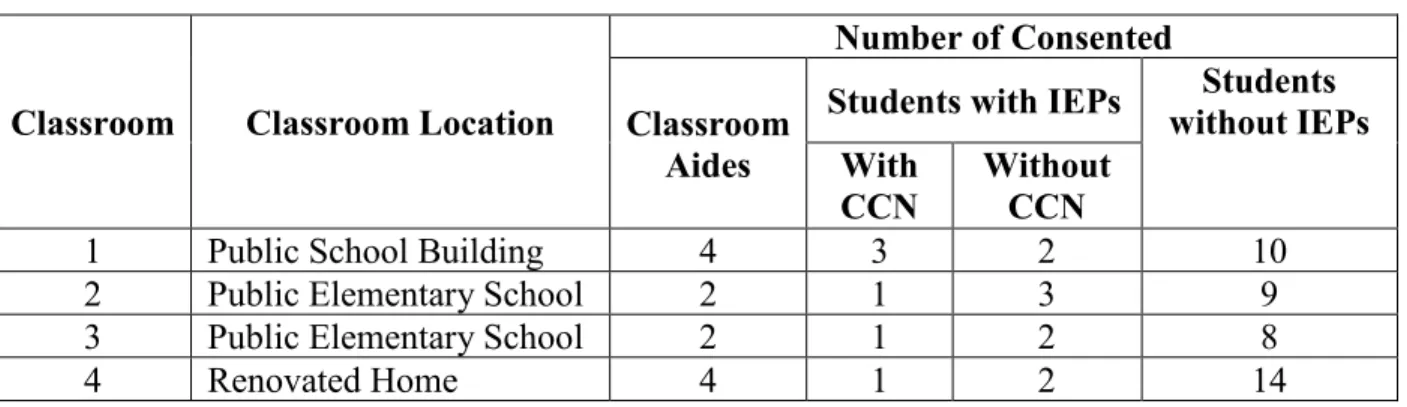
Table 3.1 Participants in Each Classroom ... 55
Table 3.2 Teacher Participant Demographics ... 64
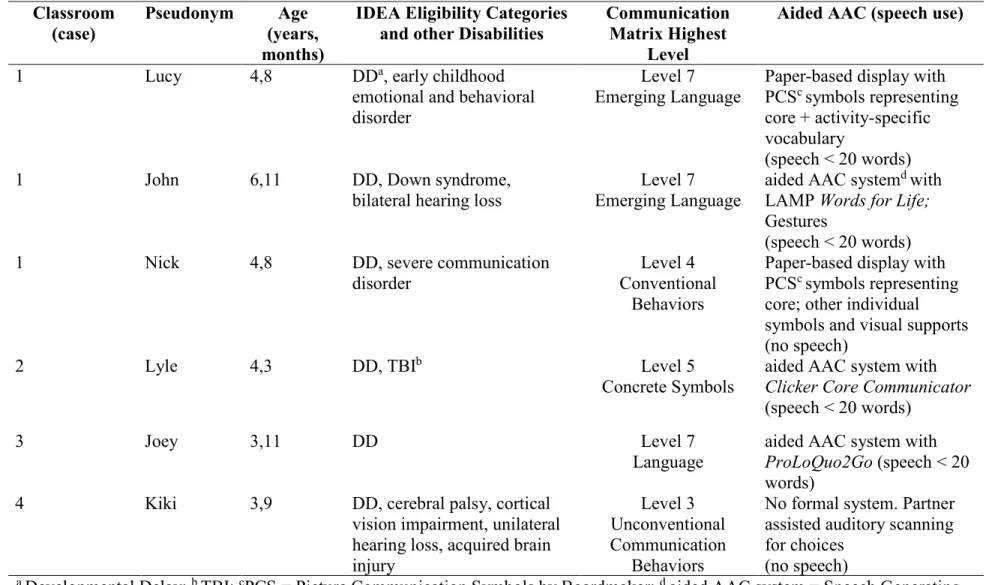
Table 3.3 Demographics of Child Participants with CCN ... 68
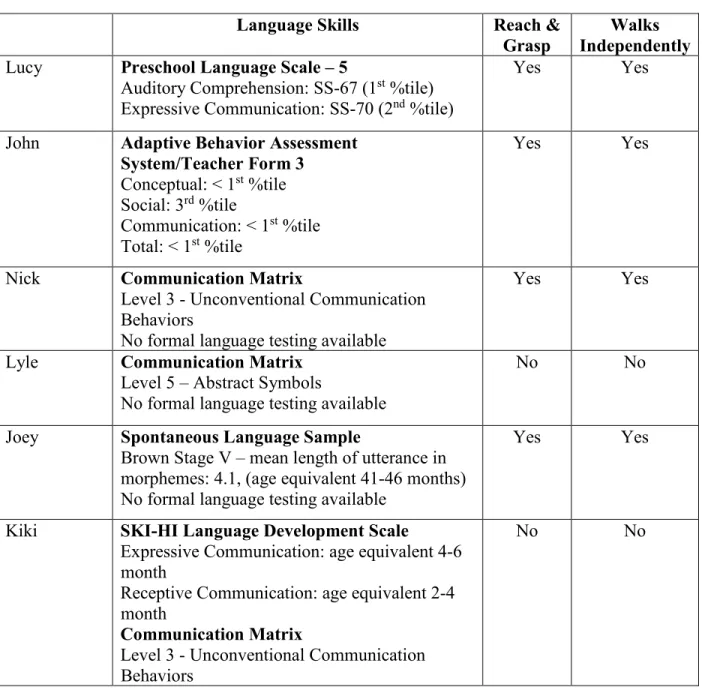
Table 3.4 Language and Motor Profiles of Student Participants with CCN ... 69
LIST OF FIGURES
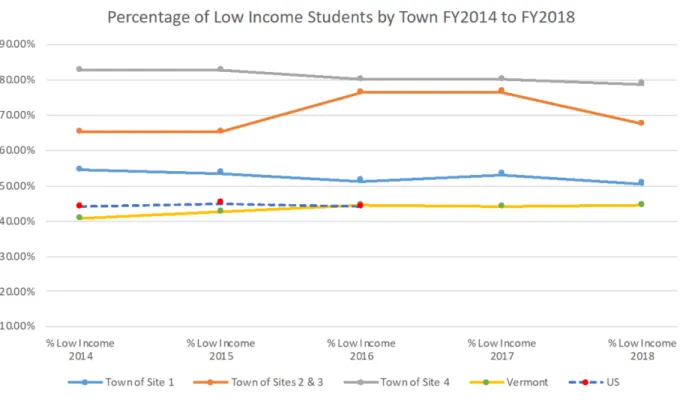
Figure 3.1 Percentage of low-income students by town ... 59
Figure 4.1 Continuum of characteristics impacting CRWs ... 82
Figure 4.2 Teacher uses ALM at a sand table with student ... 92
Figure 4.3 Dense use of CRWs at the water table ... 93
Figure 4.4 Changes in density of CRWs based on activity type and locus of control ... 94
Figure 4.5 Nick engaging in symbolic play for the first time ... 96
Figure 4.6 Nick’s 24 symbol AAC system available during play ... 98
Figure 4.7 CRWs in alphabet "writing" activities ... 103
Figure 4.8 Nick & Lucy’s 24 symbol aided AAC system at this mealtime ... 105
Figure 4.9 Five out of twelve symbols modeled at mealtime... 105
Figure 4.10 Lucy's aided AAC system ... 115
Figure 4.11 John's aided AAC system with symbol masking ... 121
Figure 4.12 Teacher figuring out how to find a word; John observing ... 122
Figure 4.13 Nick and John comparing the "same" words on aided AAC Systems ... 124
Figure 4.14 Three students sharing Nick's 36 Core AAC ... 124
Figure 4.15 CRWs abound with cultural tools and water ... 128
Figure 4.16 Object-action centered language of CRWs ... 129
Figure 4.17 CRWs are dense during fine-motor movements & versatile actions ... 132
Figure 4.18 Direct & indirect word learning during ALM ... 140
Figure 4.19 Using ALM & learning CRWs indirectly at mealtime ... 141
Figure 4.20 CRWs in self-talk while drawing ... 142
Figure 4.22 CRWs in action ... 159
Figure 4.23 Different types of CRWs used at mealtime ... 161
Figure 4.24 Teacher assessing progress on basic concepts ... 165
Figure 4.25 Lyle and his aided AAC system keyboard ... 174
Figure 4.26 Main page; 12 core words ... 180
Figure 4.27 Lyle's 45 symbol aided AAC system provided by SLP ... 184
Figure 4.28 CRWs abound when building with blocks ... 194
Figure 4.29 Joey building for the first time ... 195
LIST OF ABBREVIATIONS
AAC Augmentative and Alternative Communication ALM Aided Language Modeling
CHAPTER 1:INTRODUCTION
Statement of the Problem
Children with complex communication needs (CCN) are unable to use speech to meet their face-to-face communication needs (Beukelman & Mirenda, 2013). Augmentative and alternative communication (AAC) offers these students an array of aided (e.g., graphic symbols, tactile symbols, speech generating devices) and unaided (e.g., signs, gestures) means of
augmenting the speech they have or meeting their communication needs in the absence of speech. Learning to use aided AAC as a means of communication potentially opens doors to language learning and full participation, but it requires adults to make decisions regarding the words to represent and methods of instruction.
Researchers in the field of AAC acknowledge four important premises regarding the vocabulary children require as they learn to communicate using aided AAC. These premises hold that children with CCN require access to (a) a sufficient number of vocabulary concepts on their aided AAC systems (Light et al., 2004), (b) conceptual vocabulary that is highly useful for a variety of purposes and partners (Erickson & Geist, 2016; Geist, Hatch, & Erickson, 2014), (c) vocabulary concepts that can be generalized across contexts (Light et al., 2004), and (d) high quality teachers who offer multiple language learning opportunities and flexible instruction (Ruppar, Roberts, & Olson, 2017).
(Drager, Light, Speltz, Fallon, & Jeffries, 2003a). Second, vocabulary selected may be insufficiently flexible for use across partners and contexts (Geist et al., 2014). Third, children with CCN and developmental disabilities (DD) often enter preschool without access to, or
knowledge of, essential conceptual relational words (CRWs), which are a subset of basic concept words that are necessary for full participation in all learning contexts and many daily preschool interactions (Bracken & Crawford, 2010; Wilson, 2004).
In addition to the challenges with vocabulary selection and use of aided AAC, there are not always teachers knowledgeable regarding the communication-facilitating and language-developing strategies known to be beneficial to all children’s language development (Justice, Jiang, & Strasser, 2018). Nonetheless, current literature suggests that preschool teachers can have a huge impact on the learning of individual children who come to school with diverse experiences and needs (Pronin Fromberg, 2016). Children with CCN entering preschool who may be learning to communicate using aided AAC are reliant upon knowledgeable others for three major things. First, knowledgeable others (e.g., classroom educators and/or linguistically mature peers) may help them learn new concepts by facilitating direct and connecting
experiences (Pronin Fromberg, 2016) with new objects, materials and tools. Secondly,
The current study was designed to explore how exemplary preschool teachers, as
knowledgeable others, taught basic concept words to children with and without CCN, who may or may not have, aided AAC systems. Exemplary teachers typically know that building
vocabulary and learning language are the essential components of knowledge construction (Couse & Recchia, 2016). Despite teachers having their own instructional style and ways of managing a classroom, standard inclusive practices suggest exemplary teachers should know what their students need to learn for school readiness and academic achievement (National Professional Development Center on Inclusion). This study explored the dynamic
interrelationships between exemplary teachers and their students as they engaged in the
occupation of learning basic concepts around, and with, the available objects, materials and tools across classroom contexts.
Background of the Study
Inclusive preschool classrooms offer numerous embedded opportunities for all children to learn basic concepts (Bracken & Crawford, 2010), which are the essential components of
knowledge construction, vocabulary development, language development, school readiness, and academic achievement (Boehm, 2014; Bracken & Crawford, 2010). Basic concepts are the foundation of learning to read, understanding numeracy, categorizing, and following directions (Bracken & Crawford, 2010).
children are not given access to aided AAC that includes vocabulary that represents the words their peers use to talk about and learn basic concepts. McCarthy, Schwarz, and Ashworth (2017) further elucidated that across eight commercially available aided AAC systems frequently used in preschool and elementary schools, developmentally appropriate basic concept words for making comparisons, describing size differences, and communicating temporal relationships were missing. Without the opportunity to produce these essential language concepts during daily learning experiences, many children with CCN are essentially denied access to concepts critical for eventually learning to read, understand numeracy, categorize, and follow directions (Barker, Akaba, Brady, & Thiemann-Bourque, 2013; Musyoka & Diane Clark, 2017).
Conceptual relational words. Within this larger set of basic concepts is a subgroup of
relational vocabulary (coined by educational and developmental psychologists) called conceptual relational words (CRWs). There are five types of relational basic concepts or CRWs that are learned through the semantic linkages made between the socio-linguistic contexts and a child’s early sensory perceptions, physical interactions, and bodily actions in relation to self (Boehm, 1989, 2014; Cary, 2009; Facon, Magis, & Courbois, 2012; Gelman, 2009; Horowitz, McCarthy, Roth, & Marinellie, 2014; Loewenstein & Gentner, 2005; Waxman & Gelman, 2009). The five types of CRWs are: (a) spatial locative relational, which indicate direction and spatial location in relation to others or some standard (e.g., in/out, here/there); (b) attributive relational, which categorize things we perceive in our world by shape, size, color, condition, weight, quantity (e.g., big/little; some/all; same/different); (c) reflexive relational, which categorize things by whether they recur (e.g., again) or exist/no longer exist (e.g., all gone/more); (d) action relational, which imply movement in relation to others (e.g., go/stop); and (e) temporal relational, which
These five types of CRWs comprise 13-17% of all words preschool teachers use each day (McCarthy et al., 2017). They serve to shift cognitive focus away from the object to the
relationship between objects(Wu, Waller, & Chatterjee, 2007). Importantly, CRWs are the opposite of content words or concrete nouns because their usage can change from one situation to another (Seifert & Schwarz, 1991).
There is mounting evidence to suggest that if CRWs are frequently modeled and taught for cross-contextual communication, children with CCN at both the pre-symbolic and early symbolic levels will learn their representational meanings (Geist, Erickson & Hatch, 2016; Kent-Walsh & McNaughton, 2005; Kent-Kent-Walsh, Murza, Malani, & Binger, 2015). This is in contrast to earlier research that suggested CRWs were too difficult for children with DDs to understand because they had “less stable and tangible relationships with their referents and are later
developing words” (Facon, Magis, & Courboi, 2012, p. 61). In fact, evidence outside the field of AAC, such as in the fields of cognitive science (Mareschal & Quinn, 2001), developmental psychology (Booth et al., 2005), and educational research (Goldwater & Schalk, 2016) suggest a very early understanding of early categorical concept words, such as “same/different” (Booth, Waxman, & Huang, 2005; Goldwater & Schalk, 2016).
CRWs on aided AAC systems in preschools Preschool teachers or SLPs may not be
aware that the 25 most frequently used words by preschoolers are not nouns (Banagee, Dicarlo, & Buras Stricklin, 2003; Beukelman, Jones, & Rowan, 1989). If aided AAC supports in
Conceptual relational words are critically important for all children to learn in early development (Bracken & Crawford, 2010; McCarthy et al., 2017; Seifert & Schwarz, 1991) and should be part of the vocabulary on preschoolers’ aided AAC systems. CRWs on aided AAC systems for pre-symbolic or early symbolic communicators would give children an opportunity to direct others with just one word (e.g., go, up), combine words (e.g., it on, more go, not here), narrate (e.g., first, after) orcommunicate about early mathematical concepts, spatial relationships and classification skills (e.g., “They are same”; “I want some”). Unfortunately, preschoolers with CCN will face barriers to full participation in their preschool classroom if they do not have: (a) access to their own personal aided AAC systems, (b) instructors who know how to use effective communication partner strategies for modeling CRWs during instructional or non-instructional interactions (Shire & Jones, 2015), and/or (c) instructors and SLPs who are aware of the power of CRWs.
Participation in preschool among children with CCN. Children may arrive at
al., 2015) where they face all of the challenges of their peers in inclusive settings and have no opportunity to learn language from, or with, their same-age peers.
In the United States, there are 44 states that have not leveraged Early Learning Challenge funds to support preschool inclusion (US Department of Education, 2017). This is despite the fact that no studies in the last 40 years have indicated an academic advantage for these separate settings. Without more attention to inclusion beginning in preschool, children with disabilities will miss out on opportunities for equitable and successful learning opportunities (Yvonne Rafferty, Piscitelli, & Boettcher, 2003).
A benefit of inclusive preschool environments is that they provide preschoolers with CCN with access to more than just functional communication, but also to ongoing opportunities for cognitive and language development (Binger & Light, 2006). Unfortunately, even when they have access to inclusive classrooms, evidence suggests that there is a large percentage of
preschoolers with a variety of primary disabilities who require aided AAC but are still not getting it or instruction to help them learn it when they do have it (Binger & Light, 2006). A preschool classroom teacher may be the first person responsible for figuring out a way for
system the student may be unable to make language and communication gains.
Other research suggests that in the absence of systematic approaches for training teachers to include children with CCN in the classroom learning experiences, children with CCN may be further marginalized by not having access to the full range of social opportunities; either because of a limited number of communication partners or the lack of physical access to where other children are playing (Østvik, Balandin, & Ytterhus, 2017). In addition, because children with CCN are more likely to have concomitant sensorimotor impairments than their conventionally speaking peers (Erickson & Geist, 2016), further marginalization may occur if they are not given adapted access to the same socially and proprioceptive-rich preschool activities afforded to their physically-able peers. Lastly, evidence suggests that children with CCN, no matter what type of educational program they are in, need to have teachers who ensure that children have their own personal aided AAC system with a sufficient number of words, and the right type of words to expand a child’s symbolic communication (Erickson & Geist, 2016).
The benefits of inclusive preschool classrooms for children with CCN. Inclusive
academic (Musyoka & Diane Clark, 2017) and communication success (Bracken & Crawford, 2010).
Significance of the Study
Despite current understandings of the importance of preschool classrooms in building concept knowledge through engaging and interactive activities (Pronin Fromberg, 2016), we do not know how concept knowledge is taught to children (ages 36 – 60 months) who have CCN and may be learning to use aided AAC. We also do not know how preschool teachers teach CRWs to their students with CCN when they have little to no symbolic access to CRWs (via picture symbols, gestures, or speech). More specifically, we do not understand how or if teachers shift their instructional and/or communication style (Gillies, 2016; Reeve & Jang, 2006) between children with and without CCN when teaching academic concepts, especially CRWs, and we do not know the specific role that AAC plays in their instruction.
Statement of Purpose
The purpose of this study was to explore, and seek to understand, if and how four
purposefully selected inclusive preschool teachers shifted their communication and instructional style (Gillies, 2016; Reeve & Jang, 2006) between children with and without CCN during daily instruction and activities that support the learning of basic concepts and the words to talk about them. Particular attention was paid to the children with CCN and DD to better understand how they learned basic relational concepts (Boehm, 2014; Bracken & Crawford, 2010) if, and when, they were given varied opportunities and access to aided AAC, that sometimes did and
Rationale for a Qualitative Approach
A qualitative approach was used in the current study because it is ideal for identifying and understanding the features of children’s development within the daily occurrences of their classrooms (Fasse & Kolodner, 2013). This method was chosen to carefully examine the
instructional and social interactions between teachers and students within the existing routines of their preschool classrooms. Four purposefully sampled classrooms were observed for three-weeks each on a staggered schedule. This 12-week prolonged engagement allowed this researcher an opportunity to gain an in-depth understanding of each classroom. Research Questions
The research questions focused on the transactions between exemplary preschool teachers and all the students when knowledge is situated and constructed in the learning context of their high-quality inclusive preschool classrooms (Jordan, Carlilie, & Stack, 2008; Lave & Wenger, 1991). The specific research questions are guided by social constructivist theory (Vygotsky & Cole, 1978) and rooted in an interactional framework. The specific research questions were:
1. What is the nature of teacher instructional language or communication style relative to CRWs with children with and without CNN?
2. What opportunities exist for children with and without CCN to use and/or understand CRWs, and how do these opportunities impact all children’s learning of CRWs? 3. How do naturally occurring routines and contexts support and impact children with
and without CCN in learning and using CRWs?
Definition of Terms
Children with complex communication needs. When childrenare unable to use speech to meet their face-to-face communication needs, and the primary cause is not a hearing
impairment, they are said to have CCN (Beukelman & Mirenda, 2005). Children with CCN may have a variety of physical, cognitive, linguistic, and learning needs that prevent successful participation in their daily lives; a large part of which is spent in school. Supporting the needs of children with CCN may involve the use of wheelchairs for mobility, aided AAC for
communication, and assistive technology for learning.
Augmentative and alternative communication. AAC serves to augment or replace a
person’s impaired or non-functional speech (Beukelman & Mirenda, 2013). Aided AAC refers to the non-electronic and electronic systems that augment or replace non-functional speech
(Beukelman & Mirenda, 2013). The electronic or digital speech generating devices and apps (aided AAC systems) dedicated to spoken and written communication are called high-tech aided AAC. These aided AAC systems may be accessed by directly touching or looking at symbols (eye gaze or eye tracking), or through indirect methods that allow alternative input using mechanical or Bluetooth connections.
Low-tech aided AAC tends to be battery powered and may include simple, single message buttons or a small fixed set of buttons that produce single messages. No-tech or non-electronic aided AAC includes graphic symbols (photos, line drawings, colored pictures), tactile symbols, and objects. Unaided AAC refers to the things a person can naturally produce with their bodies, such as gestures, signs, body language, varied vocalizations, or speech approximations.
High-quality inclusive education. The primary features of high quality, inclusive early
Young Children (NAEYC) and the National Professional Development Center on Inclusion (NPDCI). Based on these standards, an early educational team should: (a) provide access to a wide range of activities and environments for every child by removing physical barriers; (b) offer multiple ways to promote learning and development through Universal Design for Learning (UDL) and Assistive Technology (AT); (c) use a range of instructional approaches to be child-centered, engaging and to promote a sense of belonging; and (d) embed instruction into daily activities using naturalistic interventions, scaffolding techniques and tiered models of
instructional support. Lastly, high quality, inclusive early education programs include early educational teams that ensure there are opportunities for communication and collaboration with families and professionals (Couse & Recchia, 2016).
concept language to be integrated with the content and within the contexts in all their interdependent dimensions (Barton & Smith, 2015; Larsson, 2015).
Exemplary teachers. Exemplary teachers are typically identified by peers and
administrators as having the knowledge, skills, and dispositions (NAEYC Joint Position Statement, 2002) to deliver successful and effective instruction providing modeling and scaffolding to individualize instruction while creating a community of learners. Exemplary teachers deeply understand the developmental heterogeneity of the children who enter their classrooms, and exemplary teachers in under-resourced communities are particularly sensitive to the diverse range of children’s prior experiences (Pronin Fromberg, 2016). This sensitivity makes them more intentional about creating environments that explicitly support the learning of basic concepts. Exemplary teachers are expected to work within a team structure and align goals from the IEP with the state standards to coordinate a high-quality level of instruction and offer strong environmental support (Fox, Hemmeter, Snyder, Binder, & Clarke, 2011). Exemplary teachers understand that their students need lots of practice using language to learn their basic concepts (Horn et al., 2000) for academic (Musyoka & Clark, 2017) and communication success (Bracken & Crawford, 2010), and they ensure that all of their students, with or without
communication disabilities, have access to critical concepts that build on their foundational language skills (Barker et al. 2013).
Conceptual Framework
This study is rooted in an interactional framework. The underlying epistemology
with which to communicate. Typically, a child begins to construct knowledge through the use of language in social contexts (Vygotskiĭ, 1978), and without doubt, there are interdependent influences on learning between the person, their behavior, and their environment (Bandura, 1989).
Bandura’s social cognitive theory has had a powerful impact on the study of children with CCN. Not only does this theory recognize the influential intrinsic biological factors that impact children (e.g., motor, sensory, attentional and cognitive abilities), but also acknowledges the impact of the extrinsic factors on language learning (Romski & Sevcik, 1996). The
surrounding ecological, social and environmental factors have an extrinsic influence on the ways children are taught and what they learn (Light & McNaughton, 2015; Romski, Sevcik, &
Adamson, 1997). These extrinsic factors may influence the academic curricula, the available learning tools or external mediators, and the vocabulary represented on aided AAC systems along with the associated instructional strategies (Romski et al., 1997). Ultimately, such extrinsic variables may impact how children learn conceptual language over time within the daily contexts of their inclusive classrooms.
Hellendoorn, & Jongmans, 2017; Perniss & Vigliocco, 2014; Smith & Thelen, 2003; Yu & Smith, 2012) falls under this broader dynamic systems theory.
This theoretical view acknowledges that conceptual learning (as a cognitive process) is tied to the body’s prior and past interactions, understandings and successful or unsuccessful sensorimotor experiences with the world. These understandings are ever changing depending on the environmental conditions, affordances provided, and feedback offered (Smith & Thelen, 1996, 2003). As Merleau-Ponty mused, “we are connected to the world through our bodies” (as cited in Bindeman, 2015, p. 8). This conceptual framework stands in opposition to traditional stage-based theories of conceptual development because it acknowledges that a child is part of a complex dynamic system, “in which the individual parts of a biological system work together to make up a larger, more complex, and coherent whole.” (Mulder et al., 2017, p. 3). Guided by Merleau-Ponty’s philosophical correlate of embodied dynamic systems theory, this more contemporary framework served to explain how children with and without CCN used their sensorimotor systems and as constructed by prior successes and failures, acted upon objects or entities afforded them just by “being-in-the-world” (Merleau-Ponty, 1945 as cited in Morris, 2008, p.372).
Overview of Remaining Chapters
The following chapters report on the investigation of the four exemplary teachers, the children with and without CCN they teach, and the classrooms where they all learn and interact with one another and other adults. Chapter 2 reviews the research relevant to the study.
Specifically, it reviews the research related to (a) teacher-student-context conditions and characteristics that impact language and concept development; (b) considerations and
and without aided AAC; (c) development and learning of basic concepts and conceptual relational language; and (d) the contributions of sensorimotor development and experiences on language and concept development theoretically grounded in embodied cognition-dynamic systems theory.
In Chapter 3, specifics regarding the research design and procedures for site recruitment and entry, the assemblage of data to enhance credibility, and procedures of data analysis are all described with particular attention to the purpose of integrating photographs into field note data. In addition, in-depth descriptions of the settings, teachers, and children with CCN and DD who participated in the study are provided. Reference to the extrinsic and ecological factors that impacted students’ learning and language are presented through the lens of Bourdieu (2005).
In Chapter 4, the findings are first presented with reference to a continuum-based
understanding of the ways that classrooms (people, spaces, materials, and learning opportunities) impact the use and learning of CRWs. A thematic analysis of the four cases is then presented sequentially from the most to least conducive to the production and comprehension of CRWs. Findings reveal that basic concept learning occurred dynamically across a variety of social and solitary spaces while children were engaged in the occupation of learning. An argument is made for rejecting dichotomous divisions of an inclusive space into “context” versus “out-of-context”, or “structured” versus “unstructured” because, in social spaces where students and teachers frequently move in relation to each other and objects, communication happens anywhere.
by Stone, Underwood, and Hotchkiss (2012), “is an ecological ensemble of relations including self, tools, tasks, and others that is intersubjectively constructed and sustained over time in formal and informal learning communities.” (p. 66). In the current study, each classroom was a unique relational habitus. These explanations will be discussed relative to the extant literature as reviewed in Chapter 2. To conclude, implications will be shared that support children’s access to flexible and highly useful conceptual relational words on aided AAC systems.
Summary
CHAPTER 2:A REVIEW OF THE LITERATURE
Teachers of inclusive preschool classrooms are responsible for creating dynamic learning spaces for their students with special needs (Couse, 2016). Teachers hold the power to provide engaging spaces for all students to learn, and they set the conditions that can expand upon children’s prior experiences and make new discoveries possible (Pronin Fromberg, 2016). The roles teachers take on and the language they use to instruct forms the learning environment, shapes students’ thinking, and impacts students’ engagement (Gillies, 2016; Hardman, 2008; Hestenes, Cassidy, & Niemeyer, 2004; Howe & Abedin, 2013).
Students enrolled in inclusive preschool classrooms are a diverse group of learners (Binger & Light, 2006; Couse, 2016). However, addressing the needs of children who arrive to class with significant cognitive, linguistic and/or sensorimotor disabilities requires close collaboration between special educators and classroom teachers (Kent-Walsh & Light, 2003). The subgroup of these students with complex communication needs (CCN) often have more significant and complex needs that differ based on their underlying congenital or acquired disabilities (Light & Mcnaughton, 2015; Therrien & Light, 2018), but they are homogeneous in their requirement of augmentative and alternative communication (AAC: Beukelman & Mirenda, 2013; Binger & Light, 2006).
Teachers and Students Co-Create Conditions for Learning
socially constructed classroom, language becomes the scaffold to situated learning (Lave & Wenger, 1991; Vygotskii & Cole, 1978), and conversely, learning necessitates the use and understanding of language. Children who understand and use language can learn to think and reason using the relevant information from their environment and more competent others (children or adults) (Bodrova & Leong, 2007; Bruner, 1985; Gillies, 2016; Rogoff, 1990). Although not termed as such, John Dewey an early educational philosopher (1899, 1916, 1938) and contemporary of Vygotsky also promoted educational models that were student-engaged, student-centered, and interest-led through experiential learning (Pace & Hemmings, 2007). These early researchers and philosophers understood that teacher characteristics, instructional abilities, attitudes and beliefs shaped how children of all abilities learned in their classrooms.
Shared philosophies, competencies, and abilities positively influence all children’s academic learning, language and communication development (Olson, Leko, & Roberts, 2016; von Tetzchner et al., 2005). In addition, learning together is more than just mixing students with and without disabilities together in the same location (Cameron, 2014; Olson et al., 2016). Well before the first reauthorization of IDEA in 1990 (Individuals with Disabilities Act of 1990, P.L. 94-142, § 3(a), 89 Stat. 774; Oct. 30, 1990) some research suggested that children with CCN when integrated into general education classrooms scored higher on social interaction than children in segregated classes, but this was only observed in restricted contexts (Jenkins, Speltz, & Odom, 1985 as cited in Rafferty, Piscitelli, & Boettcher, 2003).
at the benefits of mixing children with and without disabilities, but educators had still not figured out how to make pre-academic or academic learning possible for all students. In a study
addressing preschool integration versus inclusion, (Rafferty, Boettcher, & Griffin, 2001), the authors reported that parents were more likely to support inclusion for children with mild-moderate disabilities, but they felt separate classrooms or segregated settings were more appropriate for children with severe disabilities or behavioral or emotional problems. Fourteen years later, educators are still struggling with this issue. In fact, a 2010-2011 survey of 15 states (Kleinert et al., 2015) in the United States, about 93% of students with significant cognitive disabilities were educated in separate settings, with students who used aided AAC even less likely to be served in inclusive settings (Erickson & Geist, 2016). This is despite overwhelming evidence of the effective strategies for inclusion and knowing the numerous benefits of including students with the most significant disabilities in general education (Kleinert et al., 2015).
Unfortunately, there is still ambiguity about how children with severe disabilities should access the general education curriculum (Timberlake, 2014) and how paraprofessionals should be trained and used to help implement assistive technology and aided AAC (Dymond & Orelove, 2001; Giangreco & Suter, 2015; Olson et al., 2016; Timberlake, 2014). It is still common in the U.S. educational system for lead teachers to defer academic instruction to the individually assigned paraprofessionals (e.g., in one sample of 69 schools (Giangreco & Suter, 2015) an average of 48% of paraprofessionals were given 1:1 assignments). Students with CCN in early childhood settings are especially likely to receive their instruction from paraprofessionals (Douglas, Light, & McNaughton, 2013).
Integration is not the same as inclusion. Inclusionary practices that are best for children
language, and a shared competence in learning the child’s communicative behaviors and AAC systems (von Tetzchner et al., 2005). Long-term benefits of inclusion for both children with and without disabilities continue to emerge, such as gaining a world view of acceptance for
differences, initiating and maintaining friendships, and learning different ways to communicate with each other beyond speech (Gupta, Henninger IV, & Vinh, 2014). Paraprofessionals who are assigned to work with a student who requires aided AAC may also benefit from inclusion. They may learn through professional development training or team collaboration about immersive aided AAC approaches for improving students’ interactions with peers (Thiemann-Bourque, Feldmiller, Hoffman, & Johner, 2018).
These approaches may include learning evidence-based practices for communication partner strategies, language stimulation techniques, and communication facilitation techniques (Dodd & Gorey, 2014). When the paraprofessional works closely with the speech-language pathologist, special educator and classroom teacher it is possible to build a child’s social competence with peers and ensure that the child is truly included in many ways in the
community of early learners (Dodd & Gorey, 2014). Inclusionary practices are better outlined when describing conditions for learning in high-quality preschools.
Conditions for learning in high-quality preschools. Pronin Fromberg (2012, 2015)
active word learning; (b) extend opportunities to activate all senses when comparing/contrasting 2D and 3D objects and materials; (c) share and compare thoughts, feelings and beliefs that help children move from a person-centered to a decentered view for meaning-making; (d) imagine and play; playing with others advances cognitive and language development, builds social problem solving and perspective taking; (e) revisit and build on old knowledge to create new connections; and (f) build new knowledge with a sense of competence and confidence when meeting new challenges (Couse & Recchia, 2016). However, the teacher is responsible for establishing these conditions.
Teachers as Conduits for Student Learning
The way teachers use their instructional language and express their communication style unveils clues to their individual beliefs and underlying philosophies regarding how children learn (Gillies, 2016; Johnston, 2004; Khalil, Lazarowitz, & Hertz-Lazarowitz, 2009; Reeve & Jang, 2006). If early education teachers are knowledgeable of educational theories, then their theoretical frameworks can serve as useful guides for children’s learning, including how to deliver content in ways that are meant to help them explain how and why their students learn (Jaramillo, 1996). It is true that teachers may be unified in their sensitivity to the needs and circumstances of individual students, but they may operationalize and interpret educational learning theories somewhat differently (Hardman, 2008; Johnston, 2004; Korthagen, 2010).
language and literacy development for children with CCN and sensorimotor disabilities (Light & McNaughton, 2012; von Tetzchner et al., 2005), even if they have the knowledge of
differentiating instruction (Odom, Buysse, & Soukakou, 2011).
Evidence regarding early childhood education suggests that teachers of high-quality inclusive classrooms should understand the importance of shared communication for co-constructed learning (Couse, 2016). Moreover, these teachers should know how to create
language-rich experiences for students of mixed linguistic and cognitive abilities (Justice, 2004). However, these same teachers may not know how to fully include a child with CCN who uses a graphic form of language representation via aided AAC (von Tetzchner et al., 2005).
If the teacher does not have basic operational competence of a student’s aided AAC system or knowledge of evidence-based communication partner strategies to facilitate
communication between children with and without CCN, then full inclusion cannot be achieved (Kent-Walsh, Murza, Malani, & Binger, 2015; von Tetzchner et al., 2005). On top of this,
several studies suggest that inclusive preschool teachers talk less to students with disabilities and use primarily directive and prompted language without being finely tuned to children’s
expressive language levels (Girolametto, Hoaken, Weitzman, & van Lieshout, 2000; Kwon, Elicker, & Kontos, 2011).
Teachers’ use pragmatics to achieve classroom synchrony. Numerous studies over the
When teachers synchronize their nonverbal and verbal behaviors they can provide extensive feedback to children on the meanings of conversational exchanges (Clark, 2014). If children have established a trusting co-presence with the teacher, evidence suggests they pay more attention to their teacher around the mutually referenced items or entities (Clark, 2014). In this manner, common ground is forged and teachers and children operate in an interactional space where each influences the learning of the other (Maynard, 2012; Stone, Underwood, & Hotchkiss, 2012).
Pragmatic factors are human factors that play a central role in the process of acquiring a first language (Clark, 2014). When children enroll in preschool with minimal spoken language, a teacher’s ability to coordinate pragmatic and spoken language impacts the student’s linguistic understanding (Wagner, Malisz, & Kopp, 2014). In typical development, children get very good at paying attention to adult feedback to change their actions, correct linguistic errors, and
compare their own forms with conventional forms relevant to their own culture and language (Wharton, 2009a). Most teachers are very skilled at gaining and maintaining students’ attention by relying on their pragmatic language; gesture, visual gaze and verbal prosodics (Austin & Sweller, 2018; Clark, 2014)
Teachers’ use of nonverbal behaviors and nonverbal language. Nonverbal
communication, and preschool teachers and preschool students use many gestures in different and important ways to directly represent and communicate their thoughts (Austin & Sweller, 2018).
A brief on how gestures facilitate concept learning. Iconic gestures that may replicate or enact a conventional action (e.g., drinking out of a cup), visually represent a referential concept while telling a story (e.g., flapping arms to represent a bird flying), or aid in learning a new vocabulary concept (e.g., showing with hands more than/less than; heavy/light) (Rowe,
Silverman, & Mullan, 2013). Gesture has been shown to be especially important when a teacher introduces new concepts with pointing and tracing gestures facilitating concept learning to help add to the meaning or simplify complexity (Valenzeno, Alibali, & Klatzky, 2003). Evidence suggests that toddlers recall words better when taught with iconic gestures than through speech alone (Capone, 2007). It is possible “that teacher’s gestures facilitate students’ comprehension because they capture and maintain students’ attention.” (Valenzeno et al., 2003, p. 200).
Deictic gestures involve pointing, and often accompany words that refer to conceptual place (e.g., there, here, this, that) (Austin & Sweller, 2018). Deictic gestures “call attention to or indicate an object or event, such as pointing to or holding up an object to show someone.” (Crais & Ogletree, 2016, p. 13). These gestures are interpreted in context but can be used for different purposes understood through mutual reference (Crais & Ogletree, 2016). Both teachers/adults and children may use deictic gestures when giving directions or conveying information that is either contextualized or decontextualized (Austin & Sweller, 2018).
2018). Unfortunately, children with CCN who have concomitant sensorimotor deficits are often unable to produce gestures to convey meanings or see the gestures their peers have produced that might help them understand their peers. Therefore, teachers are left to support children with CCN through other forms of communication, including graphic symbols and other forms of aided AAC (Hyppa Martin, Reichle, Dimian, & Chen, 2013).
Teacher-student attunement creates a relational learning space. Paradise and Rogoff (2009) discuss a cross-cultural ethos of learning through observation via a perceptual attunement to each other in a shared social learning space. Preschool classrooms are an example of a shared social learning space in which some teachers are highly perceptive to the details of their
students’ movements, actions, behaviors, and moods. These teachers may demonstrate a natural awareness of the student’s visible but unspoken signals; that is, body movements, touches, posture, facial expressions, eye contact, and hand gestures (Hans & Hans, 2015).
Verbal and nonverbal relational awareness of others may occur in larger groups or in smaller play or learning groups of two to four children around mutually referenced objects, cultural tools or materials (Paradise & Rogoff, 2009). During natural social interactions within a social space, rapport and connections may be maintained by moving in a coordinated fashion with a communication partner (Bernieri, 1988; Schmidt, Morr, Fitzpatrick, & Richardson, 2012). Synchronous movements in classrooms may reflect “an active and involved type of positive rapport associated with feelings of high positive affect, motivation, interest, and talkativeness.” (Bernieri, 1988, p. 136). In addition, the words teachers use may add to this positive rapport and interest.
Teachers’ words can “do things”. In Jerome Bruner’s (1983) work on pragmatic
opportunism, he states "communication has practical repercussions: we do things with words" (Valsiner & Rosa, 2007, p. 257). The words teachers choose to use, how they express those words, and what kind of interactive feedback teachers expect from students unveil a continuum of belief system frames on how children should be educated (Johnston, 2012). This is
particularly evident when the teacher chooses to use evaluative or judgmental words when giving praise or feedback (e.g., “good job”) or instead uses process or causative feedback that
comments on the work done (e.g., “Look at how you…when you did [this], I understood [that].”) (Johnston, 2012).
(Reeve & Jang, 2006). This type of teacher talk is reported to support students’ autonomy and engagement in learning (Reeve & Jang, 2006; Reeve, Jang, Carrell, Jeon, & Barch, 2004). In contrast, teachers who use multiple directives, repeatedly provide solutions, use phrases such as “should do” or “ought to” or use frequent contingent reinforcers forgo relationship building language and instead use language to correct or shape behavior (Reeve & Jang, 2006).
The examination of teachers’ words and interactions with students during classroom instruction has typically been labeled dialogue (Howe & Abedin, 2013; Mercer & Dawes, 2008), teacher talk (Gillies, 2016) or accountable talk (Resnick, Asterhan, & Clarke, 2018). Empirical research into classroom dialogue, or teacher-student interaction, goes back about 40 years. A systematic review (Howe & Abedin, 2013) selected 158 studies that focused on characterizing dialogue after recording classroom lessons from both primary and secondary classrooms between 1971 and 2011. Results indicated that teachers in classrooms of diverse learners had difficulty finding the right dialogic balance between exploratory talk, classic initiation-response-evaluative feedback, and scaffolding (i.e., calibrating guidance towards the gradual reshaping of student understanding). The ability to use scaffolding talk is very important in an inclusive classroom with diverse learners (Bodrova & Leong, 2007), and, especially in a dialogic classroom, all members are expected to talk to engage and learn (Alexander, 2008). Therefore, an inclusive teacher who wishes to create a more dialogic classroom must ensure all her students have spoken language or alternative access to expressive language. How does that happen in classrooms where there are students with CNN?
Preschoolers with Complex Communication Needs
repetitious instruction (Erickson & Geist, 2016) to be successful learners. They also require multiple opportunities and supportive strategies to interact with peers so they may build relationships (Kent-Walsh & Light, 2003) and actively participate in their inclusive program (Chung & Carter, 2013; Therrien & Light, 2018). In public preschools, this is accomplished through a team that develops and implements an Individual Education Program (IEP) for each child with identified disabilities. The IEP team members are responsible for mitigating barriers of social interaction (Therrien & Light, 2018) by ensuring that preschool teachers, peers, and assigned paraprofessionals are knowledgeable of evidence-based communication partner strategies (Kent-Walsh, Murza, Malani, & Binger, 2015; Romski et al., 2010). Furthermore, the IEP team must take an interest in the vocabulary that is represented graphically on a child’s aided AAC system, and together with the AAC user, develop shared operational competence with the alternative form of expressive language so together they can solve everyday communication challenges (von Tetzchner et al., 2005). To that end, the impact of the social environment on the language development of children who use aided AAC cannot be underestimated (Tomasello, 2003).
for long-term vocabulary growth, language learning and academic success (Barker et al., 2013; Clarke, Soto, & Nelson, 2017; Romski, Sevcik, Barton-Hulsey, & Whitmore, 2015; Smith, 2015); and (c) a learning environment that focuses more globally on participation (Klang et al., 2016) than narrowly on activities, with emphasis on communication partner instruction
(including aided language modeling and communication facilitation strategies), promoting peer interactions, and ensuring all members of a learning community are co-constructing meaning (Kent-Walsh et al., 2015; Sennott, Light, & McNaughton, 2016; Therrien & Light, 2018; von Tetzchner et al., 2005).
A recent study (Justice et al., 2018) of 49 publicly funded preschools from low-income settings suggested that teachers’ communication-facilitating behaviors were most predictive of children’s vocabulary growth from preschool to kindergarten. While about 16% of the 330 children in the study were reported to have identified disabilities, it is unclear whether any had CCN. Nonetheless, the findings are compelling and support the growing body of literature that suggests that high-quality language instruction in early childhood is a critical predictor of future success in language and literacy development (Bodrova & Leong, 2007; Cabell et al., 2011).
Over 25 years of research supports the positive effects of aided AAC on the
communication, language and speech development skills of preschool-aged children with CCN (Light & McNaughton, 2015; Romski, Sevcik, Barton-Hulsey, & Whitmore, 2015). In a
of unaided and aided forms of AAC, with 62% of the preschoolers using gestures (unaided AAC), 63% using picture boards/books (aided AAC), 31% using objects (aided AAC), and relatively few (15% ) using speech generating devices (aided AAC) (Binger & Light, 2006).
A more recent federally funded longitudinal study (Wave 1, PEELS, 2006) reported that 93% of preschoolers enrolled in special education services received speech or language services, 34% received occupational therapy, and 21% received physical therapy (Markowitz et al., 2006). Nearly half of the preschoolers in this study had a primary disability of speech and language impairment (46%) and developmental delay (28%). No information was reported on whether these children had CCN or used AAC. The PEELS report also indicated that 89% of the preschool teachers supported social interactions between children with and without disabilities through structured play and situated tasks. More than three-quarters of the respondents reported that they prompted or reinforced student initiations or helped maintain interactions between students with and without disabilities. There was no information on whether these teachers used AAC (aided or unaided) during structured play or situated tasks or whether AAC was used to help students initiate communication or sustain interactions.
collaborated with the SLPs on AAC instruction, planning communication skill activities for the classroom, and embedding communication training throughout the day. Unfortunately, only 50% of the teachers reported collaborating with the SLP on providing AAC supports in the classroom. Moreover, about 44% of the teachers reported they received no AAC training from a specialist.
The data from the aforementioned 2018 survey is discouraging after years of research supporting positive communication and language outcomes as a result of aided AAC (Romski et al., 2015). Aided AAC has been shown to positively impact social communication functions (e.g. turn-taking, initiating, responding, commenting) (Thomas-Stonell, Robertson, Oddson, &
Rosenbaum, 2016), language development (i.e., utterance length and morphology) (Barker et al., 2013; Sutton, Soto, & Blockberger, 2002), vocabulary development and use and general
academic learning (Dennis, Erickson, & Hatch, 2014; Erickson, 2015). Repeated studies have shown that postponing consideration of aided AAC interventions and strategies for children with delayed communication and physical development is, “detrimental, to long-term speech and language development” (Cress & Marvin, 2003, p. 267).
The research is convincing; for children with CCN to be successful learners and full participants in school, they need access to AAC. However, improving language and
be given opportunities to make safe choices about their own actions, exercise some control over external demands, and to be educated (Beukelman & Mirenda, 2013; Kelly, 2012; Light & Mcnaughton, 2015)
Student autonomy and AAC. Federal law (Individuals with Disabilities Education
Act-IDEA 1997, 2004) mandates that children with disabilities have opportunities to develop autonomy and a sense of agency. In 2016, a national disability advocacy organization called TASH published this resolution: “The right to communicate is both a basic human right and the means by which all other rights are realized. All people communicate and are presumed to have an active interest in communicating their decisions and choices.”
In the United States, early education programs are often based on developing a sense of personal agency (Korthagen, 2010; New, 2016, as cited in Couse & Recchia, 2016). In
preschools, the development of personal agency may be built into the curricula based on self-determination theory (Lieber et al., 2008; Ryan & Deci, 2000). However, self-self-determination may only be interpreted at the classroom level as giving a child personal decision-making through controlled, binary choices, choices with safety limits (King & Howard, 2016; Korthagen, 2010; Ryan & Deci, 2000) or other on-the-spot adaptations.
Providing autonomy may mean the teacher ensures their students have access to early academic language (Barnes et al., 2016; Geist et al., 2014), access to language instruction
(Binger, 2008), and access to critical core concept words that allow communication across many activities, for different purposes, and with a variety of people (Erickson & Geist, 2016; Horn & Banerjee, 2009). Helping students with CCN develop a sense of independence and self-worth involves helping them understand that they are an agent of their own choices, capable of making an impact on their world, and that their actions are “free from undue external influence or interference” (Wehmeyer, 1992, p. 305). Thus, it is critical that both classroom teachers and related service providers (e.g., SLPs, occupational therapists, physical therapists, teachers of the deaf/hard of hearing or visually impaired, assistive technology team members) combine their efforts and expertise to strategically design AAC interventions that include communication partner and peer intervention strategies (Thiemann-Bourque et al., 2018), as well as language development instruction (Justice et al., 2018; Light et al., 2005; Romski, Sevcik, & Adamson, 1997; Sennott, Light, & Mcnaughton, 2016) for educational success.
Considerations and Controversies in Vocabulary Selection
One major part of AAC intervention is the appropriate selection of vocabulary.
use immersive AAC intervention techniques to support vocabulary development, teach language, and promote peer interactions (Andzik et al., 2018; Dodd & Gorey, 2014; Therrien & Light, 2018).
Vocabulary acquisition and selection have been an important research topic in the field of AAC for over 30 years (Beukelman, McGinnis, & Morrow, 1991; Fallon et al., 2001; Fried-Oken & More, 1992; Marvin et al., 1994). Beukelman, Jones, and Rowan (1989) conducted one of the first AAC studies to consider the importance of vocabulary selection in integrated
preschool classrooms. They recorded two to seven hours of spoken communication for six different typically-developing preschoolers (3 females/3 males), ages 3.8 - 4.9. Over two to eight days, they recorded approximately 3000 words. After conducting a “commonality of use”
analysis, the authors found that the “50 most frequently occurring words accounted for 60% of the total sample, while the 100 most frequently occurring words accounted for 73% of the total sample” (p. 246). This first study launched further research that helped clinicians and educators determine which words would be best to provide on a child’s first aided AAC system.
However, experimental studies suggest that focusing on the frequency of grammatical representations (e.g., pronouns, nouns, verbs, conjunctions) when selecting vocabulary to represent on aided AAC systems implies that graphic symbols are merely the “nonvocal translations of inner spoken language” (von Tetzchner, 2018, p. 1). While this may have some merit for children who are already beginning to combine speech, gestures and graphic symbols (symbolic communication) to increase utterance length, some grammatical function words, such as content nouns, may not have the same relevance to children who have no functional speech at all (Graf Estes, Evans, Alibali, & Saffran, 2007; Smith, 2015; von Tetzchner, 2018).
Further evidence has been accumulating that suggests that it is important for preschoolers to identify the essential meaning of words that are relevant to their world; this is a form of “essentialism” (Gelman, 2009). Essentialism and the Principle of Relevance (Sperber & Wilson, 1986, 1995) both focus on the ways children learn from others. For example, one study on children’s word-learning (Henderson, Sabbagh, & Woodward, 2013) suggested that typically-developing 4-year-olds were selectively attuned to relevant information from their own everyday conversations within their own linguistic community. The Principle of Relevance states that “human cognition is geared towards the maximizing of relevance...the benefit of acquiring a piece of information versus the effort required to process the information…it’s a quick way of determining what gets attended to and what does not” (Henderson et al., 2013, p.247).
The literature regarding typically developing children strongly suggests that an expansive oral vocabulary, language experience, and vocabulary instruction contribute substantially to later reading comprehension (Beck & McKeown, 1985, 2007; Dickinson & Porche, 2011) and
children’s conceptual language development; not just from adults, but from a child’s surrounding environment (Brown, 2015; Gelman, 2009; Waxman & Lidz, 2006). Unfortunately, evidence also continues to identify a widening gap in vocabulary knowledge between economically advantaged and disadvantaged children “that begins in preschool and persists through the school years and is an important correlate of poor school performance” (Blachowicz, Fisher, Ogle, & Watts-Taffe, 2006, p. 4)
Typically developing preschoolers show a burst of expressive vocabulary between ages 3 to 5 (Brassard & Boehm, 2007). Depending on what textbook is referenced, children between the ages of 36 months (3 years) and 72 months (6 years) demonstrate a wide range of
productive/expressive vocabulary anywhere from 800 to 5000 different words (Brassard & Boehm, 2007; Owens, 2012). The range varies widely depending on the child’s gender and opportunities available to hear words produced, as well as the mother’s education and
socioeconomic status (Hart & Risley, 1995). In contrast, the range of expressive vocabulary is severely restricted in young children with CCN, often fewer than 20 intelligible words, which leaves the child unable to meet their daily face-to-face communication needs (Beukelman & Mirenda, 2005). Yet we know that “vocabulary is the heart of oral language comprehension” (Marulis & Neuman, 2010, p. 300)
that a child’s ability to use a more flexible and precise vocabulary contributes more directly to the efficiency of communication (Paul, 2001).
Conceptual core vocabulary. This idea of using a small set of highly useful words, that
an aided AAC user can employ frequently and for a wide range of purposes has been found to maximize communication efficiency across contexts. This was an important research finding when it came to deciding on vocabulary for children’s AAC systems (Trembath et al., 2007; van Tilborg & Deckers, 2016; Yorkston, Dowden, Honsinger, Marriner, & Smith, 1988; Yorkston, Smith, & Beukelman, 1990). A small set of highly useful words, often conceptually-referenced core words, are important factors to consider for young emergent AAC communicators (Banajee et al., 2003; Snodgrass, Stoner, & Angell, 2013; van Tilborg & Deckers, 2016).
Granted, the initial frequency of word occurrence studies led to important developments in vocabulary selection for aided AAC for different age groups and purposes. For example, the work has been applied to students with significant cognitive disabilities to allow them “to engage, learn, and demonstrate knowledge in an academic environment” (Dennis, Erickson, & Hatch, 2013, p. 8). However, something isn’t working given that almost 70% of students with significant cognitive disabilities reported using aided AAC to augment or replace speech are only using single symbols for a restricted range of communication purposes (Erickson & Geist, 2016). Despite years of research and the availability of a variety of vocabulary selection techniques and tools developed and implemented over the last 25 years (e.g., Fallon et al., 2001; Morrow, Mirenda, Beukelman, & Yorkston, 1993), AAC practitioners continue to struggle with selecting vocabulary for emergent communicators.
Core vocabulary plus evidence-based communication interventions. In the field of
comprehensive approach for teaching children language and efficient communication using aided AAC (Erickson, Geist, Hatch, Greer, & Erwin-Davidson, 2016; Fallon et al., 2001; Fried-Oken & More, 1992; Romski, Sevcik, Cheslock, & Barton, 2006; Sennott et al., 2016; Sevcik, Romski, & Adamson, 2004; van Tilborg & Deckers, 2016). For example, approaches for instructing communication partners, peers, and teachers in how to model words on aided AAC systems during natural interactions are seen as critical (Kent-Walsh et al., 2015; Sennott et al., 2016; Therrien & Light, 2018).
Within inclusive classrooms that offer a socially-constructed learning environment, language learning is supported by more knowledgeable other(s) or guiding apprentice(s) (Mallory & New, 1994; Rogoff, 1990) who model and teach language and communication throughout the day. A number of studies espouse the usage theory (Tomasello, 2003) or the emergentist theory (Poll, 2011) of language development. These theories have been shown to be applicable to children with CCN learning to use graphic symbols in aided AAC. These theories support the necessity of learning language through repeated exposure or entrenchment while using the words multiple times while engaged in one’s daily activities (Zenner, Speelman, & Geeraerts, 2014). Through repeated usage, language can develop or emerge (Benjamin & Crow, 2013; Poll, 2011; Tomasello, 2003).
Controversies regarding vocabulary selection in aided AAC. Children who need to