THE DISCRETION-CAPACITY FRAMEWORK:
A CONCEPTUAL APPROACH TO ANALYZING THE DYNAMICS OF FEDERALISM AND SOCIAL POLICY
Christen Holly
A dissertation submitted to the faculty of the University of North Carolina at Chapel Hill in partial fulfillment of the requirements for the degree of Doctor of Philosophy in the Department of Public Policy.
Chapel Hill 2012
iii
ABSTRACT
CHRISTEN HOLLY: The Discretion-Capacity Framework: A Conceptual Approach to Analyzing the Dynamics of Federalism and Social Policy
(Under the direction of Daniel Gitterman)
v
ACKNOWLEDGEMENTS
I have often joked that if I were to host a party and invite every person who, during my graduate school career, has lent a sympathetic ear, offered words of
encouragement or pitched in during crunch times, I would need to book a suitably large arena. Perhaps the Dean Dome.
The faculty at UNC has been incredibly generous with its time and assistance. In particular, I would like to thank my committee chair, Dan Gitterman, for the
encouragement he provided all the way from pre-application to post-defense. He understood (better than I) how difficult it would be to balance the commitments of a family and a Ph.D. program, but his support was unwavering. I would have been unable to complete the program without it.
I would also like to thank the members of my committee for their time and thoughtful feedback. I was incredibly fortunate to assemble a committee of impressive academics with whom it was a pleasure to work. I have appreciated Christine Durrance’s friendship, Ashu Handa’s sense of humor, John Scott’s calm influence and Maureen Berner’s enthusiasm. I hope our paths will cross again.
after their departure, so I also credit their timely completion of the program with hastening my own!
I would have neither undertaken nor completed this course without the example and encouragement of my parents. I would like to thank my dad for his conviction that I could and should embark on this project and for showing an unflagging interest in my work. I would also like to thank my mom for modeling the type of mother that I aspire to be and complimenting my kids (and my parenting) whenever I worried over the impact of graduate school on their childhood. In the final weeks of writing, with the kids’ spring break upon me, my parents spirited away the children to give me ten days of
uninterrupted work time. It was a great adventure for the kids and an invaluable gift to me.
I would like to thank my five siblings for being on call for periodic crises of confidence over the past six years. Despite being engrossed in their own academic and professional pursuits, they always managed to lend support via phone, email or text just when I needed it most.
It takes a village to raise a child so I have many people to thank for their part in raising my four. I am eternally grateful to the friends, neighbors, and fellow soccer-parents who lightened my load when deadlines loomed. I would especially like to thank Mary Lile and my kids’ teachers for the loving care and instruction they provided during my absences.
I started graduate school when my fourth child was five weeks old and, as I prepare to submit my dissertation, her sixth birthday is less than a month away. In
vii
6,500 meals and at least as many snacks), celebrated twenty-four of their birthdays, collectively completed nineteen academic school years, and played in something on the order of 350 soccer games. I did my best to keep up but many thanks are due to Brendan, Justin, Ryan and Ellen for growing into happy, healthy, kind and intelligent young
people…in spite of their mother’s academic distractions.
The kids and I rely heavily on my husband, John. During the eighteen years of our marriage, he has been steady when I was frantic, spontaneous when I was cautious, reassuring when I was anxious and fun when I was serious. His love and support have enabled me to do more and none of this would have been possible without him.
TABLE OF CONTENTS
LIST OF TABLES ... xii
LIST OF FIGURES ... xiii
CHAPTER 1. AN ANALYSIS OF FEDERALISM AND SOCIAL POLICY ... 1
I. Toward an Explanation of Discretion and Capacity in Federalism ... 1
II. Grounding the Framework in the Academic Literature ... 3
Features of American Federalism ... 3
Federalism and the American Welfare State ... 4
Block grants as policy instruments ... 7
III. Formulating the Discretion-Capacity Framework ... 9
Discretion: A Function of Federal Parameters ... 11
Capacity: A Function of State Resources ... 13
Discretion and Capacity over Time ... 15
IV. Research Objectives ... 16
CHAPTER 2. METHODOLOGICAL APPROACH AND CASE SELECTION ... 18
I. Research Methodologies for Macro- and Micro-Level Analysis ... 18
Tension between a macro-level view of federalism and variable-driven analysis .... 20
Case-driven research as a methodology for macro-level analysis ... 26
II. Proposed Methodological Approach ... 27
ix
Sample Selection: States ... 29
CHAPTER 3. THE ORIGINS AND DESIGN OF TANF AND SCHIP ... 40
I. Policy Background: Setting the Stage for TANF and SCHIP ... 41
A Brief History of Cash Assistance in the United States ... 41
A Brief History of Child Health Insurance in the United States ... 43
The Shared Origins of TANF and SCHIP ... 44
II. Temporary Assistance for Needy Families (TANF) ... 46
III. State Children’s Health Insurance Program (SCHIP/CHIP) ... 49
IV. Discretion under TANF and SCHIP ... 51
CHAPTER 4. THE STATE CHILDREN’S HEALTH INSURANCE PROGRAM ... 55
I. SCHIP Timeline ... 55
1. State Implementations (1998-2001) ... 56
2. State Recessions (2001-2004) ... 58
3. State Optimizations 2004-2007 ... 59
4. Federal Restrictions (2005-2008) ... 61
5. Federal infusions (2009-2011) ... 65
II. SCHIP Case Studies ... 68
Ohio SCHIP Policy: Expanding Incrementally ... 68
California SCHIP Policy: Waxing and waning ... 73
North Carolina SCHIP Policy: Optimizing coverage ... 79
Texas SCHIP Policy: Limiting Liability ... 83
CHAPTER 5. TEMPORARY ASSISTANCE FOR NEEDY FAMILIES ... 91
I. TANF Timeline ... 91
1. State implementations: Transitioning from AFDC to TANF (1996-2001) ... 92
2. State recessions and circumvention (2001-2004) ... 97
3. Federal Restrictions: Deficit Reduction Act (2005-2008) ... 101
4. Federal Infusions: ARRA (2009-2011) ... 104
II. TANF Case Studies ... 106
Ohio TANF Policy: Building Momentum but Losing Ground ... 107
California TANF Policy: Reversing Course ... 113
North Carolina TANF Policy: Maintaining Effort ... 120
Texas TANF Policy: Laying Low ... 125
III. TANF and the Discretion-Capacity Framework ... 133
Discretion ... 133
Capacity ... 135
The Discretion-Capacity Framework ... 136
CHAPTER 6. COMPARING BLOCK GRANT PROGRAMS ... 138
I. Evolution of the SCHIP and TANF Block Grant Programs ... 138
II. The Discretion-Capacity Framework ... 143
Discretion ... 143
Capacity ... 143
Interconnected Constraints ... 147
CHAPTER 7. CONCLUSIONS ... 149
xi
Policy Regimes ... 149
Policy Feedback ... 151
Varieties of federalism ... 152
Race to the bottom ... 154
II. Methodological Limitations ... 155
III. The Future of SCHIP and TANF ... 157
IV. The Discretion-Capacity Framework and Future Research ... 159
LIST OF TABLES
Table 1: TANF and SCHIP Basic Facts ... 29
Table 2: Policy Regimes ... 31
Table 3: Selected characteristics of the sample states ... 33
Table 4: Medicaid, SCHIP and TANF Enrollment in the sample states ... 33
Table 5: SCHIP and TANF Expenditures in the sample states ... 34
Table 6: Samples’ portion of total SCHIP and TANF enrollment and expenditures ... 34
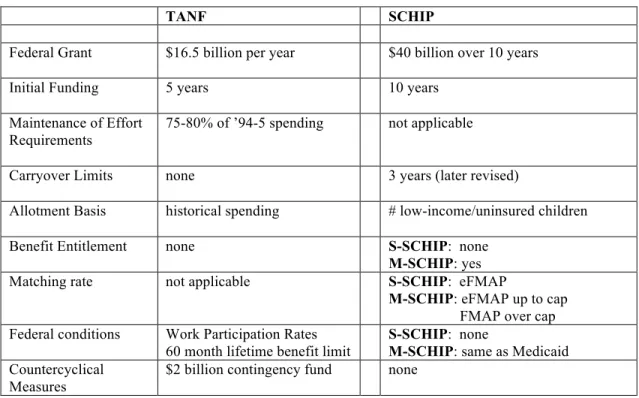
Table 7: TANF and SCHIP Key Block Grant Provisions ... 52
Table 8: SCHIP enrollment and expenditures for the United States, 2000-2009 ... 67
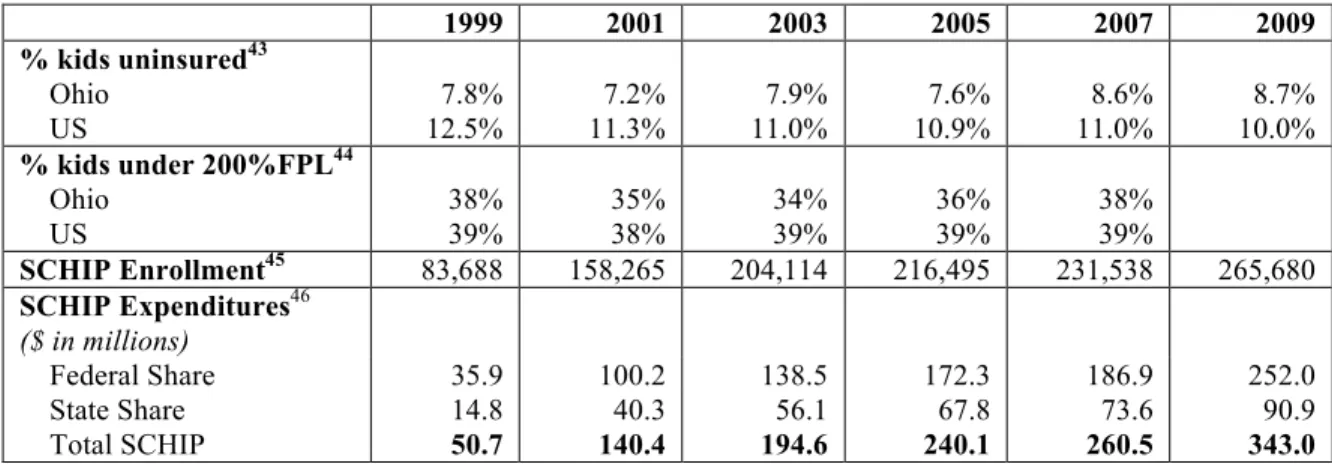
Table 9: SCHIP indicators for OHIO, 1999-2009 ... 72
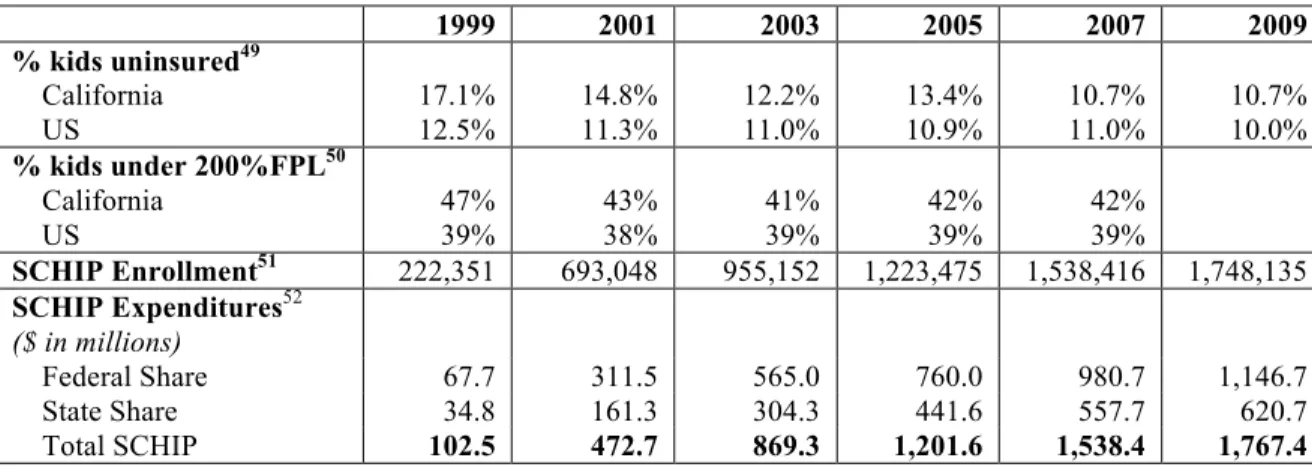
Table 10: SCHIP indicators for CALIFORNIA, 1999-2009 ... 78
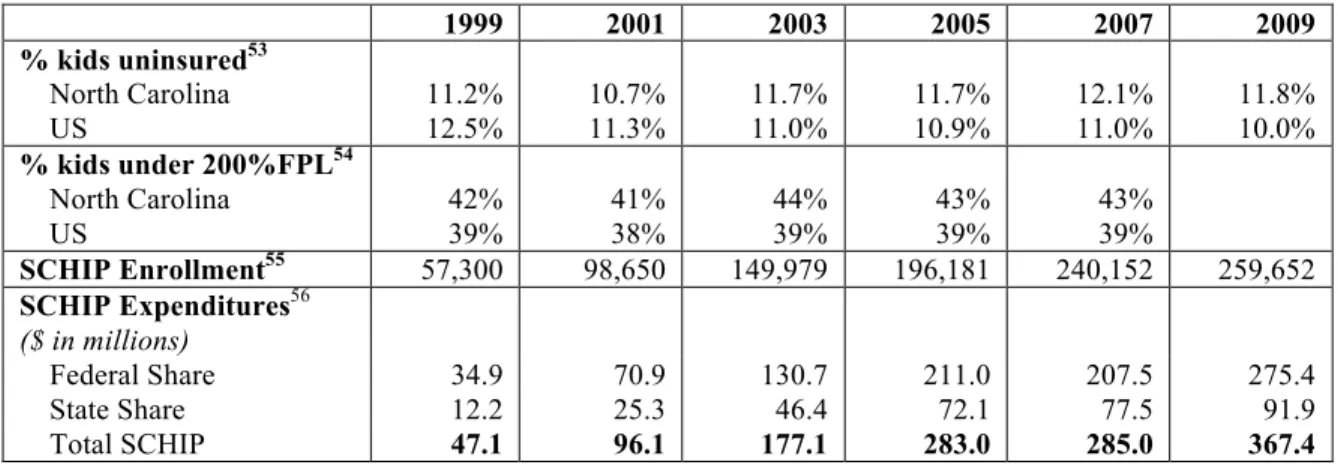
Table 11: SCHIP indicators for NORTH CAROLINA, 1999-2009 ... 82
Table 12: SCHIP indicators for TEXAS, 1999-2009 ... 87
Table 13: Select TANF indicators for the United States, 1996-2010 ... 106
Table 14: Selected TANF features for OHIO, 1996-2010 ... 107
Table 15: TANF indicators for OHIO, 1999-2009 ... 112
Table 16: Selected TANF features for CALIFORNIA, 1996-2010 ... 113
Table 17: TANF indicators for CALIFORNIA, 1999-2009 ... 120
Table 18: Selected TANF features for NORTH CAROLINA, 1996-2010 ... 121
Table 19: TANF indicators for NORTH CAROLINA, 1999-2009 ... 125
Table 20: Selected TANF features for TEXAS, 1996-2010 ... 126
xiii
LIST OF FIGURES
CHAPTER 1. AN ANALYSIS OF FEDERALISM AND SOCIAL POLICY
I. Toward an Explanation of Discretion and Capacity in Federalism
The discretion-capacity framework interprets the dynamics of federalism at work in American social policies. The conceptual framework highlights prevailing federal parameters and underlying capacity constraints and their impact on state policy choices, providing a coherent approach for describing the evolution of state policy choices and their feedback effects.
The proposed framework considers how federal parameters governing the three functional dimensions of federalism—financing, policy-making, and administration (Rich and White 1996)—determine the degree of discretion states retain over jointly managed social and health policies. Examples of federal actions that can expand or restrict discretion include redistribution of fiscal responsibility, revisions to policy content, imposition of administrative rules or waiver of statutory provisions.
Likewise, states’ capacity to respond can be expanded or restricted by changes in their own political, fiscal and/or structural resources. Together, discretion and capacity describe the contours of the policy environment, establishing boundaries on the feasible set of state policy choices.
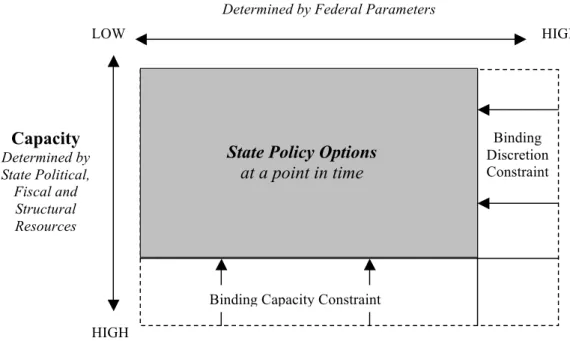
In simple terms, discretion is what a state is authorized to do within federal parameters and capacity is what a state is able to do given its resources. By juxtaposing these two variables on a two dimensional grid, actual state policy choices can be
2
Over time, changes occur in the broader political, economic and policy
environment. These changes can affect discretion (what the states are authorized to do) or capacity (what the states are able to do), but both impose constraints on states’ policy decisions. “Constraints” imply that federal parameters and state resources place boundaries or limits on state policy choices. Binding constraints can restrict policy choices and non-binding constraints can allow for new policy innovation.
Constraints on policy choices are understood to operate via complex political institutions that influence state policy responses and orient policy trajectories (March and Olsen 1984; Weaver and Rockman 1993). In practice, the precise mechanisms through which federal parameters govern state discretion are often embedded in the policy instrument that specifies the assignment of policy-making authority and fiscal responsibility. As such, a “policy” can be construed as an institution in its own right (Besley and Case 2000; Rigby 2007; Howlett 1991).
The analysis in the following chapters assumes that the policy instrument confers a specific set of institutional constraints. I focus on explaining how those constraints affected state policy choices and how state responses shaped subsequent federal policy decisions. Thus, the policy instrument is caste not only an institution, but also as a policy feedback mechanism (Skocpol and Amenta 1986; Pierson 1993; Grogan and Rigby 2009).
“block grant” designation, their specific funding provisions differ in important ways. Using the discretion-capacity framework to compare the two policy histories, I
demonstrate that the block grant, as a federalist funding structure, functions as a policy feedback mechanism in its own right.
II. Grounding the Framework in the Academic Literature
Features of American Federalism
Theoretical contributions in the federalism literature have explored the dominant characteristics of American federalism as a whole, at critical points in history and/or within a subset of social policies. The proliferation of labels describing the American federalist system demonstrates the range and complexity of its institutional arrangements. Scholars have characterized the distribution of policy making authority and funding responsibility across federal and state governments as a “marble cake” (Grodzins 1960), “centers of power” (Elazar 1984), dualist (Leach 1970), cooperative, competitive
(Tiebout 1956), coercive (Posner 2007), executive (Gais and Fossett 2005) and cyclical (Nathan 2006a). Rich and White (1996) simply begin their analysis of federalism and health policy with the observation that American federalism is “messy”.
Rather than defend a single depiction of American federalism, the discretion-capacity framework recognizes that each of these labels represents a unique configuration of constraints on state discretion. Reducing those configurations to underlying constraints clarifies how different models of federalism relate to each other and evolve, framing state policy responses over time.
4
9) and tempered with the observation that though states are structured as governments “in their own rights”, they are generally subordinate since Congress can choose “deference, displacement or interdependence” in dividing roles across the tiers of government (Derthick 2001, 44). This argument justifies a focus on the portion of the policy process that begins with implementation of federal legislation, observes state responses and considers how those responses shape future federal reauthorization efforts.
Federalism and the American Welfare State
Federalist institutions structure the relationship between federal and state governments and have been examined as explanatory variables for diversity in national and state level welfare state policies.
Academics are divided over whether the American federal structure has impeded or fueled the expansion of the welfare state at the national level. In the comparative welfare state literature, scholars come down firmly on the side of “impeded” (Esping-Andersen 1990; Steinmo and Watts 1995). Skocpol (1995), Hacker (2002), Howard (2002), Orloff (1988) and others recap the long history of American social policy with special emphasis on the institutional barriers that thwarted comprehensive social insurance schemes.
a product of the exit options inherent in American federalism, including policy preemption, circumvention, and failed implementations (Pierson 1995).
State level policy choices are understood to occur within the confines of federalist
institutional constraints, but exactly how those constraints affect state policy responses is also a subject of some controversy. Two theories from the institutionalism literature weigh heavily in the debate: rational choice and historical institutionalism (see discussion in Hall and Taylor 1996).
Drawing on rational choice principles from economics, political scientists have developed theories of public choice, including fiscal federalism (Tiebout 1956; Buchanan 1960; Oates 1972; Inman and Rubinfeld 1997; Musgrave 1997) that feature individuals’ choices as key drivers of political and social outcomes. They posit that rational, fully informed citizens (and by extension, businesses) face a market when choosing where to locate. Individuals move to areas where the balance of taxes and public services suits their preferences (maximizes their utility) and this exit option generally exerts downward pressure on taxes. The result can be a “race to the bottom” for the funding and provision of public social benefits.
Rational choice institutionalism emphasizes individual behavior and, to some extent, marginalizes the broader institutional context but it underscores a strategic calculus in decision-making that resurfaces in the discretion-capacity framework. Retaining this contribution from the rational choice literature, I turn to historical institutionalism to reposition institutions at the center of the policy-making process.
Historical institutionalism takes a broader view of the role of institutions in
6
framework.1 These theorists view institutions as “formal or informal procedures,
routines, norms and conventions embedded in the organizational structure of the polity” that act “as the principal factor structuring collective behavior” (Hall and Taylor 1996, 937-8).
However, historical institutionalism does not claim that institutions are the only “causal force” and leaves room for intervening contextual characteristics (Hall and Taylor 1996, 942). The discretion-capacity framework suggests that state capacity constraints, or state political, fiscal and structural resources, comprise the relevant set of contextual characteristics that mitigate or exacerbate institutional constraints to determine state policy responses. Rather than arguing that state actions are primarily motivated by a specific capacity constraint in isolation, synthesizing political, fiscal and structural characteristics under capacity permits a more textured view of states’ inclination and ability to pursue certain policy options.
The framework also draws from the historical institutionalism literature for insights concerning the role of past policy choices in influencing subsequent decisions. The American federalist structure magnifies the importance of “timing, sequence and self-reinforcing consequences of early policy decisions” (Hacker 2002) and historical institutionalism explores policy history as path dependent (Steinmo et al. 1992; Hall and Taylor 1996; Kato 1996) and/or as equilibria punctuated by critical junctures of change (Pierson 2000; Abbott 1990).
The discretion-capacity framework is consistent with a “punctuated equilibrium” model of policy change, in which policy outcomes, rather than being deterministic, are
1Rosenthal and Hoefler (1989) propose that the micro-level focus on individuals is the domain of
contingent on “structural factors such as…the ‘ordering’ of policy-relevant events” (Howlett and Rayner (2006, 2).
Block grants as policy instruments
Block grants have been caste as institutions in their own rights that distribute resources and authority (Pierson 1993; Rigby 2007; Grogan and Rigby 2009), a
perspective that heavily influences the orientation of the discretion-capacity framework. As such, the specific constraints of the policy instrument are key determinants of state social policy decisions. In the case of SCHIP and TANF, their respective block grant structures play important roles in shaping the state policy environment.
Inter-governmental grants can incorporate a number of different funding mechanisms. If grant structures were arrayed on a spectrum ranging from general revenue sharing to specifically directed categorical grants, block grants theoretically fall somewhere in the middle. In practice, most intergovernmental grants have evolved to include a blend of features from different grant structures.
Stenberg and Walker (1977, 34) define a block grant as “…a program in which funds are provided chiefly to general purpose governmental units in accordance with a statutory formula for use in a broad functional area largely at the recipient's discretion.” The degree of discretion distinguishes block grants from more specifically targeted categorical grants. The academic literature focuses on the tradeoffs in efficiency and effectiveness under different grant structures.
8
centralized tax collection efforts (Inman et al. 1975). In a federalist structure, grants can be used to redistribute funds to achieve equity objectives (McGuire in Inman et al. 1975; Ter-Minassian 1997; Oates 1999), align decision making more closely with recipients to promote effective policy decisions (Conlan 1988) and assign more discretion in policy-making to recipient states (Musgrave 1997). Federally-funded, state-administered social programs, in theory, therefore provide an optimal mix of efficient centralized revenue collections with more effective, efficient devolution of policy implementation (Conlan 1988; Ter-Minassian 1997).
In practice, a number of counter-arguments temper this optimistic view of intergovernmental grants. Devolved policy decisions reduce federal control over the direction of funds, which could be used in ways inconsistent with federal intent (Musgrave 1997) or to replace state own-expenditures (Chernick 1998). Federal conditions can be imposed to prevent these scenarios, but only at the expense of the efficiency gains which were often the original impetus for structuring the grant (Ter-Minassian 1997). Matching and maintenance of effort clauses are agreed to distort state expenditure patterns (Reischauer in Inman et al. 1975) though these feature prominently in the SCHIP and TANF programs.
Ingram (1977) and Nathan (1983) recognize that this universal appeal diminishes as federal legislators lose control over policy direction. Initial supporters may push for recentralization and/or retrenchment in later phases (Posner and Wrightson 1996). Grogan and Rigby (2009) note how this makes for odd alliances in block grant reauthorization efforts. Republicans, who traditionally supported devolved policy decision-making, may convert into ardent critics if progressive states expand policies beyond their interpretation of proper limits (Grogan and Rigby 2009). For these reasons, block grant provisions have been described as unstable over time (Chernick 1998; Posner and Wrightson 1996).
Grogan and Rigby (2009) consider early state SCHIP policy decisions as explanatory variables in subsequent federal policy choices, implicitly positioning the policy instrument as an institution and, explicitly, as a policy feedback mechanism. The discretion-capacity framework facilitates a view of federalism and social policy that puts the institutional structure of the SCHIP and TANF block grants at center stage,
demonstrating how federal parameters evolved over time, eliciting state policy responses that reflected their own political, fiscal and structural constraints and which, in turn, shaped future federal decisions.
In the next section, I draw from the scholarly literature to formulate the
discretion-capacity framework as an approach for exploring the dynamics of federalism at work in American social policies.
III. Formulating the Discretion-Capacity Framework
10
the broad range of relevant explanatory variables that stem from the federal structure of American government. Explanatory variables are classified in two categories: federal parameters on discretion and state capacity constraints. Figure 1 represents these two dimensions on a grid, where policy options are conceptualized as the shaded area within the grid at a particular point in time.
Discretion is limited by federal parameters that are imposed through the policy instrument, either in specific statutory provisions or their interpretation via extra-legislative rules and waivers. Thus, one set of institutional constraints stems from the central government’s role in defining state discretion over policy choices.
States respond to federal parameters in their policy choices but how they do so is filtered through specific configurations of state political, fiscal and structural resources. Thus, a second set of constraints originates from the states’ status as (somewhat) separate entities with varying levels of capacity for certain policy responses.
Figure 1: The Discretion-Capacity Framework
Capacity Determined by State Political, Fiscal and Structural Resources
HIGH
Discretion
Determined by Federal Parameters
HIGH LOW
Binding Capacity Constraint
Binding Discretion Constraint
State Policy Options
Discretion: A Function of Federal Parameters
Federal parameters are drawn from a finite set of mechanisms the federal government can employ to influence state policy decisions. For TANF and SCHIP, relevant parameters include legislative action, waivers and administrative directives.2 Active or binding parameters limit the level of state discretion and circumscribe the universe of policy options that a state is authorized to pursue. If a parameter is not invoked, it remains latent or non-binding, but its relevance persists in potential future applications.
The sequence of federal parameters reflects a certain temporal logic. Statutory provisions shape the initial policy environment and specify the funding arrangements, defining the possible set of state policy responses. As state implementations progress in agreement or conflict with federal intent, parameters can be restricted or relaxed through administrative directives, waivers, or statutory revisions.
Administrative Directives
States retain discretion over many program features and procedures under block grant provisions. While some scholars dismiss this type of discretion as glorified
customization of the state’s “administrative apparatus” (Bowman 2002, 14), a number of cross-state studies suggest that such choices are important determinants of policy
outcomes (Sommers 2005, 2006, 2007; Dick et al. 2002; Hill and Lutzky 2003; Kronebusch and Elbel 2004; Wolfe et al. 2005). The U.S. Department of Health and Human Services (HHS) oversees these decisions and retains the prerogative to issue
2 Judicial review can also impose parameters on state (and federal) policy decisions though it is outside the
12
guidance regarding their implementation. The Centers for Medicare and Medicaid Services (CMS) is the division responsible for SCHIP oversight while TANF falls under the jurisdiction of the Administration for Children and Families (ACF).
The increasing propensity for federal activism via administrative rules during the Clinton and Bush presidencies sparked a debate about “executive” federalism (Gais and Fossett 2005; Nathan 2006; Thompson and Burke 2006). All jointly managed federal-state programs are potentially subject to these interventions and the discretion-capacity framework illustrates how latent constraints are often invoked to spark policy changes at the state level.
Waivers
States can request relief from specific provisions of the Social Security Act in order to pursue modified policy objectives (via Section 1115 waivers) or to implement an alternate approach for achieving those objectives (HIFA demonstration projects).
Oversight agencies review these requests (henceforth generalized as waivers) and, generally in accordance with the current administration’s policy stance, approve or deny additional latitude in state policy choices. Over a program’s lifecycle (and under different presidents), waivers can make the difference between expansive or restrictive policy environments. Waiver use predated TANF and SCHIP, and continued after their enactment to sustain different state policy trajectories.
For the block grants under consideration, the discretion dimension incorporates the initial federal legislation that structured state policy choices and, in subsequent periods, the manipulation of parameters through legislative and administrative mechanisms.
Capacity: A Function of State Resources
A state’s capacity to implement social policies is shaped by state level political, fiscal and structural factors (Berry and Berry 1990; Leichter 1996; Thompson 2001; Gais and Fossett 2005). I highlight these three components to illustrate the variety of sources that can affect state policy choices. The components often generate conflicting
influences. For example, the political capacity may exist to expand programs but a state’s fiscal capacity may prohibit it. Identifying which components dominate state policy choices at different times helps explain state policy trajectories over time. Political Capacity
Political capacity refers to a state’s ability to garner bipartisan political support for funding social programs. The rational choice literature asserts that politicians respond strategically to incentive structures (Shepsle 1989; North 1990) and the TANF and SCHIP structures arguably provided financial incentives to expedite the mobilization of political resources.
14
Block grants in particular structure specific arrangements of political constraints in devolving policy-making authority to the states. Considered through the lens of the blame avoidance and credit claiming literature (Barfield 1981; Conlan 1988), the block grant’s devolution enables voters to credit state (and local) level policy actors with program successes (Conlan 1988).
Fiscal Capacity
In a matching grant, fiscal resources are dually determined by federal and state financial contributions. The federal portion conveys three potential constraints on capacity—the capped federal allotment, the federal prerogative to condition funding on compliance with statutory and/or administrative provisions, and the need to reauthorize federal funding after expiration of the original charter.
The state funding stream is also subject to competitive pressures from neighboring states, state balanced budget requirements and economic cycles. As discussed above, fiscal federalism theorizes that state capacity to raise taxes for redistributive social programs is limited by the threat of citizen migration to lower tax states (Inman and Rubinfeld 1997; Musgrave 1997; Oates 1999; Tiebout 1956). Most states have balanced budget provisions in their constitutions that exacerbate the fiscal impact of economic downturns on state budgets.
The federal fiscal contributions in TANF and SCHIP soften state fiscal constraints but, as mentioned above, are accompanied by limits on discretion. The framework
Structural Capacity
Along with the considerations described above, states’ policy choices reflect the socio-economic characteristics of their residents. These characteristics determine the need for social services and play into the design of state-level responses. The resulting infrastructure facilitates or impedes the states’ ability to respond to ongoing changes in the policy environment. Relative to political and fiscal capacity, structural capacity constraints tend to be more stable over time. The temporal disconnect between different types of constraints are consistent with the academic literature on historical
institutionalism and are discussed below.
Integrating state political, fiscal and structural characteristics under the heading of capacity permits a more textured view of states’ inclination and ability to expand social programs than could be inferred from one of the concepts in isolation. Understanding this relationship is fundamental in interpreting state choices within the boundaries established by federal parameters.
Discretion and Capacity over Time
16
In a comprehensive discussion of the temporal dimension in politics, Pierson (2004) notes the importance of including policy constraints along with other institutional considerations. Viewed over an appropriate time interval, institutional effects are multiple and may have unanticipated consequences (Pierson 2004). Some of these arise from the temporal disconnect between institutional design and implementation and others from the tension between the relative continuity of institutional constraints in an
otherwise dynamic environment (Pierson 2004, Chapter 4).
In the framework, the relative stability of structural constraints contrasts with the more volatile political and fiscal constraints. Highlighting the distinct influences of these constraints over time promotes a dynamic view of the impact of federalism on state policy choices. This perspective enhances the existing literature that portrays varieties of federalism as specific to a point in time.
The discretion-capacity framework depicts a sequence of constraints that govern state policy choices over time. It recognizes the breadth of factors that influence those responses and resists the tendency to identify a single explanatory variable. The discretion-capacity framework structures a view of American federalism in which institutional constraints are multiple, contingent and temporally discreet (Pierson 2004; Obinger et al. 2005).
IV. Research Objectives
1. To clarify the role of federal parameters in delimiting the feasible set of state policy choices (Chapter 3);
2. To assess variation in state responses over time (with respect to SCHIP in Chapter 4 and TANF in Chapter 5);
CHAPTER 2. METHODOLOGICAL APPROACH AND CASE SELECTION
This chapter explores the tension between the objectives and assumptions of ‘variable’-driven research methodologies and macro-level analysis. I then consider the characteristics of ‘case’-driven analysis that make it the preferred approach for the dissertation.3 The theoretical justification of the preferred research methodology is followed by specification of the selection process for the policies and states analyzed in the dissertation.
I. Research Methodologies for Macro- and Micro-Level Analysis
Ostrom (1995) comments on the distinction between macro- and micro-level analytical techniques. She observes that “[s]tudying micro-level phenomena requires micro-level theories and empirical methods appropriate to testing these theories” while “[m]acro-level phenomena…require their own theories and methods of empirical analysis,” reasoning that researchers are “viewing a complex mosaic of recursive processes” and “there is no single level that provides the best answer to all questions” (Ostrom 1995, 174-8).
In policy research, as in other social science disciplines, scholars seek “to establish a balance between the competing claims of complexity and generality” (Ragin
and Zaret 1983, 731). The research question, in focusing on macro- or micro-phenomena, determines the appropriate methodologies.
On one end of the spectrum, macro-analysts consider a case in rich detail,
exploring a range of explanatory factors that, in combination, produce certain outcomes. On the other, researchers interested in micro-level processes quantify variables, gathering large data sets and employing sophisticated statistical techniques to measure the effects of an independent (or explanatory) variable on a dependent variable (or outcome of
interest). This distinction can be described as the difference between case and variable-driven research (della Porta and Keating 2008).
In policy circles, these approaches have been embraced by different research communities. A large contingent of the academic community has gravitated towards micro-level inquiries, employing variable-driven research methodologies. This research focus dominates peer-reviewed journals in the social sciences.
A smaller academic contingent and research institutes (including government entities and independent think tanks)4 tend to take a macro-policy perspective, adopting case-driven approaches to produce descriptive narratives on policy developments.
There is certainly overlap and a number of well-known scholars continue to employ the case-driven, analytic narrative in academic policy research.5 However, I suggest that the two groups tend to favor different research methodologies, and the distinction is sufficient to warrant some justification for taking a case-driven approach in an academic research project.
4 For example, the Government Accountability Office (GAO), the Congressional Research Service (CRS),
the Center for Budget and Policy Priorities (CBPP), the Urban Institute, the Center for Law and Social Policy (CLASP), the Brookings Institution and others.
20
In academic circles, the discretion-capacity could be criticized for its failure to resolve policy endogeneity, a methodological issue specific to micro-level, variable-driven research that is, in certain peer-reviewed journals, central to the debate on federalism and social policy. The proposed framework neither seeks nor claims to resolve these issues. However, in light of that potential criticism, it seems important to distinguish between variable and case-driven research and demonstrate why the
methodological constraints of former should not be imposed on the latter.
In the next section, I justify the use of a case-driven approach and demonstrate how variable-driven techniques are incompatible with macro-level analysis.
Consequently, I claim that the assumptions limiting the specification of econometric models are not applicable to the discretion-capacity framework.
Tension between a macro-level view of federalism and variable-driven analysis
The objective of variable-driven research is to test a falsifiable hypothesis (Steinmo 2008; Ragin 2004), drawing evidence from a large number of cases to determine the causal relationship among relevant variables (della Porta and Keating 2008). The methodology rests on a number of assumptions that are problematic for macro-policy research in which state policy choices are the units of analysis. Before addressing those limitations, I offer a brief overview of the theoretical justification for using statistical methods to estimate the effect of causal conditions on outcomes of interest.
Given the challenges of conducting state-level randomized experiments, variable-driven analyses of state-level outcomes are, at best, quasi-experimental. These
Inference, which notes that units cannot be observed under both treatment and control conditions at the same time (see discussion in Holland 1986). Consequently, the
researcher is forced to make assumptions in order to estimate the treatment effect, or the effect of a causal condition on the outcome of interest.
Rubin’s model asserts that if a probability sample of sufficient size is drawn from the population and exposed to treatment then observed outcomes for the sample
approximate the outcomes for the population. Likewise, if another sample of different units is drawn and exposed to the control conditions then those outcomes approximate the outcome under control conditions for the entire population. The difference between these two yields the average treatment effect for the population. Several problematic issues arise in extending this logic to analyses of state policy choices.
First, this approach implies that universal laws exist (Ragin 2004, 127). Properly specified models ascertain whether causal conditions produce measurable effects on state policy choices. This assumes homogeneity of units and constant effects—that a causal condition in one state is also a causal condition in another state. In reality, it is uncertain that causal conditions hold across states, policies or time, even when controlling for observable relevant differences in state characteristics. If causal conditions do not hold then it is untrue that “permanent causes are systemic attributes of sampled units that characterize all units of the population” (Ragin and Zaret 1983, 743). In such a scenario, the theoretical justification for using variable-driven analysis is flawed.
States display considerable diversity across as many variables as a researcher can collect yet it is essential to variable-driven analysis that they are “homogeneous
22
used to make generalizations about other states, policies or time periods. It is difficult to construct a scenario in which causal conditions could be argued to have constant effects when the unit of analysis is the state. In fact, if the researcher is interested in the effect of federal legislation on state policy choices, the causal condition itself is often variable by definition. Federal social programs routinely include numerous state-specific provisions, grandfather clauses, waivers, and opt-out allowances that complicate clean definition of a causal condition.
Second, the methodology relies on statistical techniques to make causal inferences. Those techniques require the quantification of relevant variables, but consider the difficulty of quantifying concepts such as political ideology or past policy choices. Researchers have attempted to control for qualitative differences in state values by creating indices to quantify factors such as ideology (Berry et al 1998; Holbrook and Bibby 1999; Piven and Cloward 1988), policy entrepreneurialism (Weissert 1991;
Mintrom 1997), administrative responsiveness (Fossett and Thompson 2005) and interest group activity (Nownes and Neeley 1996; Nownes and Freeman 1998; Wolak et al 2002). Such metrics are difficult for researchers to construct and easy for critics to deconstruct. Their inclusion raises serious questions about the rigor of variable definition but their exclusion certainly leaves substantial room for unobserved heterogeneity in the error term.
Each state constitutes a unique environment that has been shaped over time by a combination of political actors, partisan ideologies, fiscal resources, demographic profiles and population characteristics, considerations that are difficult to model
effects of state political and economic variables on workers compensation policies. They first omit and then incrementally introduce political and economic variables to
demonstrate a significant impact on both the magnitude and direction of estimated effect sizes (Besley and Case 2000).
Third, Rubin’s model requires a “sample of sufficient size.” Considering the number of control variables required to minimize unobserved heterogeneity, the number of observations is often insufficient. Scholars of federalism who are interested in outcomes at the state level are faced with the reality that N=50 for each time period. Since panel data on states has not been consistently collected on many variables over a long period of time, it is often difficult to collect a sample size large enough to produce the necessary degrees of freedom to include a complete vector of control variables. Where panel data do exist on state policies, researchers are often faced with issues concerning consistent measurement and definition across states and even within states over time. This issue has been frequently cited in GAO reports on SCHIP and TANF in particular (Greenberg and Rahmanou 2005).
Fourth, Rubin’s model assumes that exposure to treatment is determined independently of outcome, treatment and control variables. Without the independence assumption, it is difficult to claim that the observed outcomes are attributable to the causal condition. As mentioned above, federal legislation often includes differential policy provisions for states based on socio-economic or fiscal indicators, which could present challenges to disentangling the effects from population characteristics.
24
control for state variations in an expenditure function are endogenous. For example, if state social policy choices are described as a function of federal policy parameters, state fiscal conditions (e.g. per capita income), state political characteristics (e.g. number of Democrats in state legislature) and a vector of time-variant state-level demographic variables, the following problematic arguments could be made: 1) that fiscal capacity is either caused by or causes certain political characteristics; 2) that demographic variables influence political composition or even; 3) that the specified causal direction could be reversed and that state policy choices dictate certain outcomes in terms of federal policy and its own fiscal or political characteristics. Any of the arguments above would violate important assumptions that underpin statistical models.
Yet federalism is inherently and simultaneously a political and fiscal proposition (Pierson 1995). Though endogeneity threatens statistical validity (Shadish, Cook and Campbell 2004), it is difficult to resolve methodologically when it persists in the actual policy environment (Besley and Case 2000).
Disentangling the institutional effects from the impact of state level characteristics on social policy presents a methodological quandary. Since quantitative or variable-driven empirical analysis of the effects of federalism on state policy is difficult to model econometrically, research questions consequently tend to cluster around the effects of state policy on enrollment (e.g. Kronebusch and Elbel 2004; Nicholson-Crotty 2007),
particulars and breathtaking in their collective scope, tend to sidestep positioning federalism as an explanatory variable.
There are, of course, exceptions to this generalization and a handful of scholars identify institutional constraints as key determinants of state policy decisions. Their results underscore the difficulty of imposing micro-level, variable-driven methods on essentially macro-level research questions.
For example, Grogan (1999) examines the impact of federal mandates on state policy choices concerning eligibility levels and benefit coverage in Medicaid and Assistance for Families with Dependent Children (AFDC, the pre-cursor to TANF) and finds that federally mandated expansions in one policy area tended to produce benefit reductions in areas where states retained discretionary power. Using state level political variables to control for ideological differences, a significant positive relationship is shown to exist between both Democratic and Republican control of the legislature and AFDC financial eligibility levels (Grogan 1999). This result illustrates possible
shortcomings of a necessarily simplified measure of political ideology and opens the door for criticisms of omitted and unobservable variables. The study also reports a puzzling negative relationship between benefit coverage and state tax-capacity and effort, which the author concedes “raises some concerns about model specification” (Grogan 1999, 27).
26
authors suggest they could be attributed to unobserved and omitted variables, including relative political power of beneficiary groups, institutional constraints, and increased state discretion over healthcare expenditures (Nicholson-Crotty et al. 2006).
While the Grogan (1999) and Nicholson et al. (2006) articles consider the effect of federal policies on state policy choices, as variable-driven analyses they encounter methodological hurdles related to policy considerations that are intrinsic to the federalist policy environment. In maintaining a macro-perspective, the discretion-capacity
framework acknowledges, but does not seek to resolve methodologically, the deeply inter-connected set of explanatory variables that influence state policy choices in the American federal system.
Case-driven research as a methodology for macro-level analysis
In case-driven research, cases are treated as interdependent wholes and the search for a simple cause and effect relationship is abandoned to allow for “mutual influence among many factors” (della Porta and Keating 2008, 27-30). A case study has been defined as “…a method for learning about a complex instance, based on a comprehensive understanding of that instance obtained by extensive description and analysis of that instance taken as a whole and in its context” (GAO/PEMD-91-10.1.9).
Ragin (2004, 132) emphasizes the importance of distinguishing between population characteristics and causal conditions in variable-driven research. This is challenging in the federalist context since causal conditions are likely combinatorial and temporally discreet. There might not exist generally applicable propositions about which variables are descriptive of the population and those which are causal.
Case-oriented researchers “anticipate finding several major causal pathways in a given body of cross-state evidence. A typical finding is that different causes combine in different and sometimes contradictory ways to produce roughly similar outcomes in different settings” (Ragin 2004, 134). A case-driven approach may be appropriate for researchers interested in identifying “patterns of multiple conjunctural causation” (Ragin 2004, 134).
Case-driven research promotes internal explanation that Ferejohn (2004, 150) defines as focusing on the “reasons for an action”. While the motivations for state policy choices are varied and context specific, patterns may exist that yield insights about how states respond to shifts in federal parameters.
II. Proposed Methodological Approach
This research takes a macro-level, case-driven methodology that allows for full consideration of the multi-factorial, time variant causal conditions characteristic of the federalist environment. In so doing, the dissertation does not follow the trend towards large N, quantitative analysis in academic policy research. The choice of a case-oriented approach facilitates a focus on states’ social policy decisions, and allows the
28
Case Selection: Block Grant Programs
I select two block grant programs to evaluate the role of federal parameters in delimiting state policy trajectories (Chapter 3) and analyze the variation in state policy responses over time (Chapters 4 and 5). Temporary Assistance for Needy Children (TANF) and the State Children’s Health Insurance Program (SCHIP, later shortened to CHIP) were created in the late 1990s to provide assistance to low-income families. This temporal proximity ensures a certain measure of consistency in the broader political and fiscal conditions under which the two programs evolved. As chronicled in Chapter 3, TANF and SCHIP were created during the Clinton presidency, in the aftermath of the failed healthcare reform effort. The programs were enacted by the 104th and 105th Congresses, respectively, which featured similar partisan characteristics.6
Relative to Medicaid, the Earned Income Tax Credit and other federal efforts to assist low-income families, SCHIP and TANF are small in terms of expenditures, but their impact on the debate over social policy provision in the United States has been unmistakable. Their distinct approaches to block grant funding influenced subsequent efforts to convert Medicaid into a block grant, provide fiscal support to the states under the American Reinvestment and Recovery Act (ARRA) and implement healthcare reform under the Patient Protection and Affordable Care Act (ACA).
TANF and SCHIP continued a devolutionary trend that originated during the 1970s under the Nixon administration. The two block grants are relatively young programs, but they renewed the debate over the proper assignment of authority and
6 In the 104th Congress, Republicans controlled both legislative bodies, by a margin of 52-48 in the Senate
responsibility among federal and state governments in social policy. Since their
enactment, they have endured periods of expansive and restrictive federal parameters and operated under variety of capacity constraints.
TANF and SCHIP share the basic block grant designation, but they differ in terms of federal parameters that define state policy options and orient state policy trajectories. They assign different levels of discretion to the states in determining policy content and incorporate distinct conditions for federal financial participation, which I explore in detail in Chapter 3.
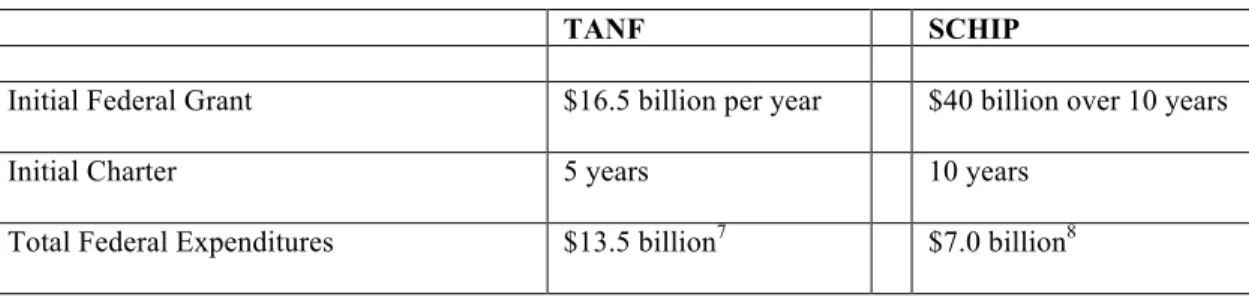
Table 1: TANF and SCHIP Basic Facts
TANF SCHIP
Initial Federal Grant $16.5 billion per year $40 billion over 10 years
Initial Charter 5 years 10 years
Total Federal Expenditures $13.5 billion7 $7.0 billion8
Sample Selection: States
I select four states to demonstrate the variation in state responses over time under each block grant program—Ohio, California, North Carolina and Texas. I draw on policy regimes proposed by Meyers et al. (2001) to select states for the sample.
Meyers et al. (2001) conduct a cluster analysis that defines different policy regimes based on states’ approaches to delivering support for low-income citizens. Where previous articles classified states along one or two designated dimensions related to policy outcomes (e.g. Berkman and O'Connor 1993; Berry et al. 1998; Cook et al.
7 Administration for Children and Families, federal expenditures on cash and non-cash assistance
(excluding ARRA) for FY2009
30
1992; Elazar 1984; Erikson et al. 1985, 1987 and 1989; Gray 1973; Grogan 1994; Hanson 1983; Hero and Tolbert 1996; Hill et al. 1995; Peterson and Rom 1989; Plotnick and Winters 1985; Ringquist et al. 1997; Sharkansky 1971; Sharkansky and Hofferbert 1969; Tweedie 1994; Savage 1978; Walker 1969), their framework incorporates multiple measures of state effort across eleven programs for low-income individuals.
Meyers et al. (2001) develop a definition of generosity that incorporates adequacy, inclusion and commitment and is measured across thirty-one dimensions, including state eligibility levels, benefit definition, inclusion rates, tax policy and availability/quality of services. They identify five policy regimes based on how states cluster on the measured dimensions. They designate the regimes as minimal, limited, conservative, generous or integrated to reflect state efforts to provide support to low income families.
Integrated policy regimes were at or significantly above the national average across all dimensions of adequacy, inclusion and commitment, funding relatively generous benefits with progressive tax systems (Meyers et al. 2001). Generous policy regimes are described as providing more generous and inclusive benefits than the national average, though on certain dimensions (e.g. tax policy) they score closer to the average (Meyers et al. 2001). Conservative policy regimes tend to perform lower on measures of income and employment support, but higher on policies that reinforce personal
dimensions” (Meyers et al. 2001). States in this group have a regressive tax structure and score poorly on measures of inclusion and adequacy of benefits for the low-income families.
Analysis conducted with data pre- and post-welfare reform suggests that state cluster designations were relatively stable over the 1994-1998 time interval (Meyers et al. 2001), but has not been repeated recently to determine whether those clusters hold over a longer period. I use the Meyers et al. (2001) typology to identify states that had
established different track records for providing support to low-income families at the start of the study period.
Consistent with the approach taken in the academic literature on varieties of federalism, the Meyers et al. (2001) policy regimes are structured as point-in-time
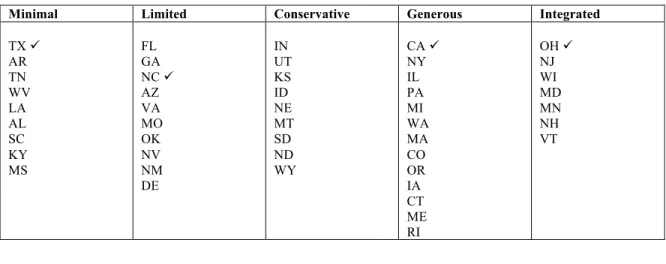
classifications. The discretion-capacity framework enhances their approach by including the temporal dimension. Table 2 presents states in each policy regime, shown in
descending order based on the number of low-income children in the state, with the sample states indicated. 9
Table 2: Policy Regimes
Minimal Limited Conservative Generous Integrated
TX ü
AR TN WV LA AL SC KY MS FL GA NC ü
AZ VA MO OK NV NM DE IN UT KS ID NE MT SD ND WY
CA ü
NY IL PA MI WA MA CO OR IA CT ME RI
OH ü
NJ WI MD MN NH VT
9 Policy regimes are from Meyers et al. 2001, 472. Order is based on the number of children living in
32
States were selected from the four policy regimes in which federal parameters were expected to act as binding constraints on state policy trajectories. Federal parameters were anticipated to act as lower bounds for states classified as minimal or limited policy regimes, and as upper bounds for states designated as generous or integrated. Conservative policy regimes were considered less likely to face binding federal parameters and this category was excluded to allow for more in-depth treatment of the sample states in the other four categories.
To explore the variation in state policy responses over time, I draw a purposive sample (GAO/PEMD-91-10.1.9) that includes four of the five social policy regimes identified by Meyers et al. (2001); represents the spectrum of socio-economic and
political conditions present in the country as a whole; and accounts for a significant share of the low-income children in the United States and the expenditures and enrollment for the policies under investigation.
Referring to Table 3, note that the proposed sample of states incorporates a range of socio-economic and political characteristics. The political indicators reflect the
percentage of time within the study period (1996-2010) that a Democrat (or a Democratic majority) held the political office. Fiscal measures (not shown) indicate variation both between states and, more notably, within states over time.10
10 Fiscal conditions are discussed at length in the text. They are excluded from the table since point-in-time
Table 3: Selected characteristics of the sample states rank in ()
US CA NC OH TX
Socio-economic
Median Household Income11
Poverty Rate by Household Income12 $49,945 14.3% $56,862 (13
th)
15.3% (16th) $43,229 (41 st)
16.9% (9th) $47,809 (31 st)
13.3% (26th) $47,143 (34 th)
17.3% (7th)
# children in low-income families, 000s13
% children in low-income families14 28.803 39% 3,931 (1 st)
42%
937 (9th)
43%
1,029 (7th)
38%
3,072 (2nd)
47%
children as % population15
% children uninsured16 10.0% 26% 10.7% 27% 11.8% 26% 8.7% 25% 16.5% 30%
Political Offices17
% time held by Democrats 1996-2010
State Governor State House/Assembly State Senate 29% 100% 100% 100% 71% 100% 21% 14% 0% 0% 43% 0%
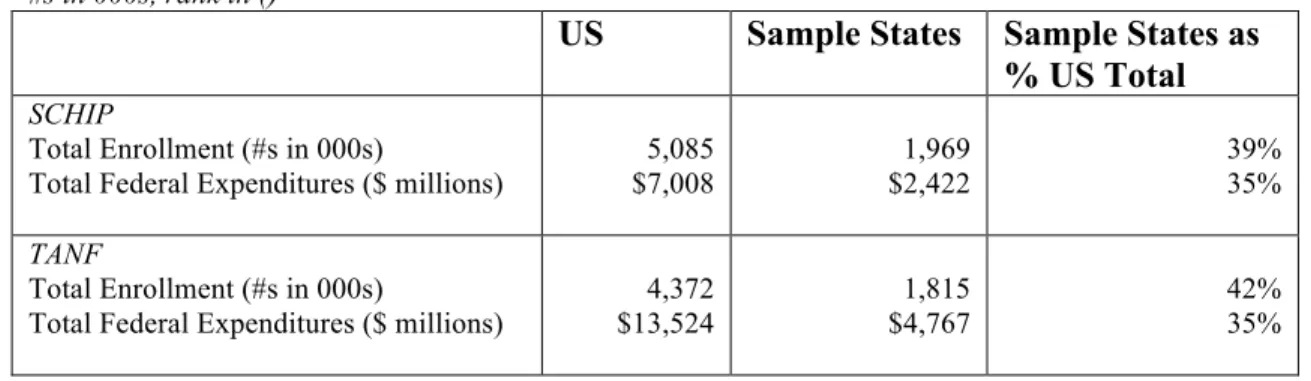
Table 4 and Table 5 illustrate the distribution of enrollment and expenditures across the sample states for each program. As summarized in Table 6, the sample represents 35 to 42% of total US enrollment and federal expenditures in each program.
Table 4: Medicaid, SCHIP and TANF Enrollment in the sample states #s in 000s, rank in ()
US CA NC OH TX
SCHIP18 5,085 1,115 (1st) 132 (10th) 160 (8th) 562 (2nd)
TANF19 4,372 1,416 (1st) 47 (24th) 237 (3rd) 115 (8th)
11 U.S. Census Bureau, 2009, Current Population Survey, ASES, 3 year average for 2007-2009
12 U.S. Census Bureau, 2009, Current Population Survey, ASES, 3 year average for 2007-2009
13 NCCP 2008, Table 2 (Number of Children in Low-income Families) Data shown for 2007
14 NCCP 2008, Table 3 (Percent of Children in Low-Income Families) Data shown for 2007
15 U.S. Census Bureau, 2009, Current Population Survey
16 U.S. Census Bureau, 2009, Table HIA-5
17 Calculation based on data from the National Council of State Legislatures, 1996-2010
18 Kaiser Commission on Medicaid and the Uninsured 2009, Publication #7642-05, point in time
enrollment for December 2009
34
Table 5: SCHIP and TANF Expenditures in the sample states $s in millions, rank in ()
US CA NC OH TX
SCHIP20
Federal State
$7,008 $3,038
1,259 (1st)
707 (1st) 238 (8 th)
90 (9th) 227 (9 th)
86 (10th) 698 (2 nd)
266 (2nd) TANF 21
Federal State
$13,524 $15,399
3,116 (1st)
3,179 (1st)
276 (13th)
300 (11th)
821 (3rd)
438 (8th)
554 (4th)
247 (14th)
Table 6: Samples’ portion of total SCHIP and TANF enrollment and expenditures22 #s in 000s, rank in ()
US Sample States Sample States as
% US Total SCHIP
Total Enrollment (#s in 000s)
Total Federal Expenditures ($ millions)
5,085 $7,008 1,969 $2,422 39% 35% TANF
Total Enrollment (#s in 000s)
Total Federal Expenditures ($ millions)
4,372 $13,524 1,815 $4,767 42% 35%
The case studies are used to illustrate variation in state policy responses over time. The objective of illustrative case studies is to add depth to a macro policy or program perspective (GAO/PEMD-91-10.1.9). Below, I provide background information on each state.
Ohio: An Integrated Policy Regime
Ohio has the largest population of low-income children among integrated policy regimes. Ohio is home to 1.03 million children living below 200% of the federal poverty level—equivalent to 38% of its population under 18, and on par with the national average
20 Centers for Medicare and Medicaid Services, FY2008 (prior to CHIPRA)
21 Administration for Children and Families, FY2009, Federal TANF funds include cash and non cash
assistance (excluding ARRA)
of 39% (see Table 3 above). Ohio households had a median income of $47,809 per year, slightly lower than the national average of $49,945, and ranking 31st out of 50 states. Approximately 8.7% of children in Ohio were considered uninsured, below the national average of 10%, and the lowest of the states in the sample.
The enhanced FMAP (eFMAP) used to calculate SCHIP matching payments, which ranges from 65 to 85%, was 74.58% for Ohio and its original federal allotment for the 1998-2007 period was approximately $1.24 billion (Herz et al. 2009). Ohio received $728 million per year in basic federal TANF allotments and did not qualify for
supplemental grants (Ways and Means 2007).
Compared to other states in the “integrated” category, Ohio’s relatively conservative political environment is unusual. Over the course of SCHIP history, Republicans held the governor’s seat (continuously until 2007), the Senate
(uninterrupted) and the House of Representatives (until the 2008 election) (NCSL). As an example of an integrated policy regime, I expect Ohio’s policy responses to push the limits on discretion imposed by federal parameters, optimizing the state’s
political, fiscal and structural resources to provide comprehensive benefits.
California: A Generous Policy Regime
California is the largest state in the nation and its population of low-income children represents 14-15% of the national total between 1997 and 2007 (NCCP 2008). California ranks first in all enrollment and expenditure measures of program size and was selected to represent “generous” social policy regimes.
36
uninsured, a figure that had dropped to 12.2% by 2003 and stabilized at around 10.5% at the end of the decade. Over the same time period, California closed the gap between its own rate of uninsurance and the national average, from 4.6 to 0.6 percentage points between 1999 and 2008 (U.S. Census Bureau, Table HIA-5).
The Californian median household income is $56,862, tracking above the national average of $49,945, putting California in the top quartile of states (U.S. Census Bureau Table H-8) and making it the wealthiest state in this sample on this measure.
California’s enhanced FMAP (eFMAP) was 65%, at the floor set for SCHIP matching payments and its initial federal allotment was $6.89 billion over the 1998-2007 period (Herz et al. 2009). California’s historical spending on AFDC qualified it for continued high levels of funding under TANF. California received an annual basic allotment of $3.7 billion, which accounted for more than 22% of the total federal funding available for TANF (Ways and Means 2007).
California’s political environment during the study period was marked by a high profile turnover of the governor’s seat. Governor Gray Davis (D) was successfully removed in a recall vote in July 2003 and Arnold Schwarzenegger (R) was elected in his place. Though the state Senate and General Assembly operated under Democratic majorities the entire period, a peculiarity of California law requires a two-thirds majority in both houses to approve budgets,23 and the Democrats never achieved a super-majority. As an example of a generous policy regime, I expect California’s policy responses to exploit the discretion afforded under federal parameters, drawing on the state’s
political, fiscal and structural resources to provide generous benefits.
North Carolina: A Limited Policy Regime
North Carolina was selected to represent the “limited” policy regime. While other regimes in this category are home to larger numbers of low-income children (NCCP 2008), the research for this dissertation was undertaken in North Carolina over a time period that coincided with the evolution of TANF and SCHIP described in the following chapters. Though smaller than other states in the sample, North Carolina nevertheless ranks between 8th and 10th on SCHIP expenditures and enrollment. Though only 24th in terms of TANF enrollment, state expenditures on that program exceed those in Texas, despite the enormous population differential (see Table 4 and Table 5 above).
Similar in size to Ohio, North Carolina is home to just under a million
low-income children, though they represent a larger share of its population under 18—43% to Ohio’s 38% (NCCP 2008, see Table 3 above). North Carolina households have a median income of $43,229 per year (below the national average of $49,945)—it ranks 41st out of 50 states, making it the poorest state in the sample on this measure.
38
North Carolina’s governor’s seat was held by a series of Democrats: Jim Hunt (1993-2001), Mike Easley (2001-2009) and Beverly Perdue (2009-present). While the state Senate operated under a Democratic majority continuously after 1998, leadership in the House changed hands twice over the period.
As an example of a limited policy regime, I anticipate that North Carolina’s policy responses will not exploit the discretion afforded under federal parameters, and that the state’s political, fiscal and structural resources will allow for the provision of more limited benefits.
Texas: A Minimal Policy Regime
Texas was selected to represent the “minimal” policy regimes. The state’s population of low-income children hovers around 10% of the national total over the period, second only to California (NCCP 2008), and by far the largest state with a minimal policy regime. SCHIP enrollment is consistent with the number of low-income children in the state, likewise ranking second nationally, however, with respect to TANF, the state ranks only 8th in terms of enrollment and 14th in terms of state expenditures (see Table 4 and Table 5).
More than three million children live below 200% FPL in Texas, about 47% of its population under the age of eighteen, considerably above the national average of 39% (NCCP 2008, see Table 3 above). Approximately 16.5% of children in Texas were counted as uninsured, again above the national average, and the highest rate of uninsurance in the country.
The enhanced FMAP (eFMAP) used to calculate SCHIP matching payments was 72.39% for Texas and its initial federal allotment was $4.48 billion over the 1998-2007 timeframe (Herz et al. 2009). With a history of low AFDC expenditures, Texas’s original allotment was $486 million, with supplemental grants of $53 million (Ways and Means 2007).
Consistent with other states in the “minimal” category, Texas has a conservative political environment. Over the course of SCHIP history, Republicans continuously held the governor’s seat and the Senate. The House had a Democratic majority until the 2004 election when the Republicans took over. Though the Republican majority diminished to a margin of only 2 seats in the 2008-2010 session, the subsequent election ushered in a landslide Republican majority, outnumbering the Democrats 101 to 49 (NCSL).
As an example of a minimal policy regime, I expect that federal parameters will function as a lower bound on Texas’s policy responses, with the state’s political, fiscal and structural resources acting as reinforcing constraints on benefit provision.
Conclusion
CHAPTER 3. THE ORIGINS AND DESIGN OF TANF AND SCHIP
In 1996, the Clinton Administration and a Republican Congress replaced the AFDC entitlement with the Temporary Assistance for Needy Families (TANF) block grant program, devolving authority for welfare policy decisions to the states (Fellowes and Rowe 2004; Kamerman and Kahn 2001) and allowing for increased diversity across state programs (Kamerman and Kahn 2001; Martinson and Holcomb 2002). A year later, the State Children’s Health Insurance program (SCHIP) block grant was created to serve low-income children who did not qualify for Medicaid (generally children whose families earned between 100 and 200% of the federal poverty level or FPL) but could not obtain private insurance.