Psychometric Evaluation of the IBD-Specific
Anxiety Scale: A Novel Measure of
Disease-Related Anxiety for Adolescents With IBD
Laura C. Reigada,
1PHD, Michael T. Moore,
2PHD, Christopher F. Martin,
3MSPH, and Michael D. Kappelman,
3,4MD
1
Department of Psychology, City University of New York at Brooklyn College, 2Derner School of Psychology, Adelphi University,3Center for Gastrointestinal Biology and Disease, University of North Carolina at Chapel Hill, and4Division of Pediatric Gastroenterology, University of North Carolina at Chapel Hill
All correspondence concerning this article should be addressed to Laura Reigada, Department of Psychology, City University of New York at Brooklyn College, 2900 Bedford Avenue, Brooklyn, NY 11210, USA. E-mail: [email protected]
Received May 4, 2017; revisions received September 5, 2017; accepted September 5, 2017
Abstract
Anxiety related to pediatric inflammatory bowel disease (IBD) is a common comorbidity; yet, this con-struct is understudied because of lack of available valid measurement.Objective The present study will report the preliminary validation of the 20-item IBD-Specific Anxiety Scale (IBD-SAS) in a large, geographically diverse sample of adolescents aged 12–18 years with IBD.Method A total of 281 adolescents, ages 12–18 (M¼14.8,SD¼1.78; 51% male), completed the IBD-SAS along with meas-ures of IBD-related quality of life, anxiety, depressive symptoms, and disease activity. Factor structure was assessed using exploratory and confirmatory factor analyses (EFA and CFA). Results EFA (Sample 1;n¼141) yielded one-, two-, three- and four-factor models. The CFA (Sample 2;n¼140) demonstrated that a four-factor model was superior to three- and two-factor model for the amended scale. In total, the IBD-SAS showed excellent internal consistency (Cronbach’sa¼.95) and was most strongly associated with health-related quality of life. Moderate to strong associations were observed between IBD-SAS and general measures of anxiety and depressive symptoms, and IBD disease activ-ity providing additional support that health-specific anxiety is a valid and distinct construct.
Conclusions Based on the results of this study, the IBD-SAS displayed adequate psychometric prop-erties and can meaningfully contribute to the assessment of IBD-specific anxiety in adolescents diag-nosed with IBD, thus filling an empirical and clinical need in this population.
Key words: adolescents; anxiety; assessment; chronic illness; inflammatory bowel disease.
Pediatric inflammatory bowel disease (IBD) is a chronic medical condition with no known cure. The onset of IBD is characterized by an acute phase sur-rounding the initial diagnosis of the illness, which can require invasive medical procedures (e.g., colonos-copy) and, in some cases, hospitalization. Disease symptoms vary, depending on the severity of inflam-mation and where it occurs on the gastrointestinal tract, and presence of extra-intestinal symptoms, but the most common symptoms include bowel movement
urgency, bloody stool, abdominal pain, and fatigue. Symptoms can range from mild to severe and are char-acterized by an unpredictable course with periods of active illness followed by periods of remission.
(Jackson, Clatworthy, Robinson, & Horne, 2010) as well as impact disease processes (Cohen, Janinicke-Deverts, & Miller, 2007;Segerstrom & Miller, 2004).
To address the emotional burden of this disease, a number of studies have focused on the identification and treatment of comorbid psychiatric conditions such as anxiety and depression as well as general emo-tional distress (seeGraff, Walker, & Bernstein, 2009;
Mikocka-Walus, Knowles, Keefer, & Graff, 2016 ;
Regueiro, Greer, & Szigethy, 2017for systematic re-view). Moreover, a recent practice guideline has also recommended the assessment and treatment of psy-chosocial health in youth with IBD (Rufo et al., 2012). Yet, there are no current validated measures for assessing IBD-specific anxiety. This is problematic, given that anxiety related to living with and managing a chronic medical condition may not be detected using traditional anxiety inventories (Woodward et al., 2016). Consequently, this lack of measurement likely precludes the full clinical assessment of anxiety in pe-diatric patients with IBD.
While it is generally believed that disease-specific anxiety is common among individuals living with the disease, studies of this construct are just beginning to emerge. A study of 294 adults with diagnosed IBD (Keeton, Mikocka-Walus, & Andrews, 2015) demon-strated that all participants, but 11, reported signifi-cant IBD-related concerns despite the majority (74%) being in remission. Concerns and worries were mea-sured using one open-ended question, and responses were then thematically coded. Four themes were iden-tified; they included concerns related to quality of life (51%), unpredictability (35%), symptoms (34%), and treatments (19%). A handful of other qualitative stud-ies also support the prevalence of IBD-specific distress related to managing the physical symptoms of IBD such as bowel movement urgency and fatigue (Czuber-Dochen, Dibley, Terry, Ream, & Norton, 2013;Dibley & Norton, 2013). These studies point to the need for more communication with medical pro-viders to manage symptoms and concerns.
Among pediatric samples, one small qualitative study suggests that youth diagnosed with IBD may be particularly susceptible to developing disease-specific fears because of having to balance uncertain periods of stable health status (Lynch & Spence, 2008), which can in turn contribute to a subjective sense of vulnera-bility (Nicholas et al., 2007). More recent evidence suggests that psychological interventions for individu-als with chronic illness and comorbid distress may only be efficacious when illness-specific perceptions are addressed (Knoop, van Kessel, & Moss-Morris, 2012; Wiborg, Knoop, Frank, & Bleijenberg, 2012), highlighting the need to measure and target disease-related emotional factors.
Little is known about the etiology, impact, or treat-ment of pediatric IBD-specific anxiety, in part, because of the lack of definition and instrumentation to measure this construct; thus, the IBD-Specific Anxiety Scale (IBD-SAS) was created. There are overlapping features between IBD-specific anxiety and somatic symptom dis-order. Somatic symptom disorder is an excessive focus on one or more somatic symptoms accompanied by marked distress or functioning impairment. Somatic symptoms can be related to a medical condition, but the distress is excessive than what would be expected; IBD-specific anxiety extends beyond significant focus and worry about physical symptoms, to include other areas of concern related disease management and adjustment. Specifically, IBD-specific anxiety is defined as worry that is disproportionate to context, or unrealistic overes-timation of negative outcomes, surrounding the reoccur-rence and implication of physical symptoms, treatment, and medical procedures associated with IBD (Casati, Toner, de Rooy, Drossman, & Maunder, 2000;
Dorrian, Dempster, & Adair, 2009). This anxiety may be present during disease relapse, as well as in periods of remission (Reigada et al., 2015).
The initial version of the IBD-SAS (Reigada et al., 2011) contained 11-items and was developed by a mul-tidisciplinary team of investigators including experts in the field of anxiety and pediatric chronic illness, gastro-enterologists, and families with children with IBD. The measure was further revised (to the current version) to include additional areas of disease concern (e.g., wor-ries pertaining to height, growth, medical treatment re-sponse, etc.). Revisions were informed by the clinical knowledge gained through the assessment and treat-ment of comorbid anxiety disorders in pediatric IBD in an open pilot (Reigada et al., 2015)and a randomized controlled trail. While the development of the IBD-SAS preceded publication of the Journal of Pediatric Psychology (JPP) guidelines for measure development (Holmbeck & Devine, 2009), the following strategies, that overlap with key features of the JPP criteria, were used to develop the IBD-SAS: (1) clearly establishing a research and clinical need for the instrument, and (2) consideration of content validity, which included (i) creating a well-defined construct with a specified pur-pose and target population; and (ii) item generation based on clinical experience, empirical literature, re-lated instruments, and consultation with experts and target population.
IBD-specific anxiety symptoms, rather than general anxiety or depressive symptoms, were associated with greater utilization of medical services and decreased social functioning among adolescents with IBD. In other studies, significant reductions in IBD-specific anxiety, measured by the IBD-SAS, was found imme-diately following receipt of a 13-week health sensitive cognitive behavioral treatment (Reigada, et al., 2015) and 3 months later. This finding provides preliminary evidence that the IBD-SAS may be sensitive to treat-ment effects.
The current scale includes 20 questions pertaining to how often, within the past 2 weeks, youth “worried” about their IBD symptoms and medical treatment, as well as their concerns regarding disease impact on school, social relations, and body image. Items are rated on a six-point Likert scale ranging from 0 to 5 six-points (0¼never, 5¼always) with higher scores relating to more IBD-specific anxiety. The analyses of the psychometric proper-ties and factor structure of the IBD-SAS have not previ-ously been conducted and is the rationale for the present study. Establishing a psychometrically sound instrument will provide a mechanism by which IBD-related anxiety can be identified, and subsequently treated, and allow for empirical testing of the impact of disease-specific anxiety on emotional and physical outcomes.
The aim of this study was to evaluate the psycho-metric properties of the IBD-SAS in a large, geographi-cally diverse sample of adolescents aged 12–18 years with IBD, namely, its factor structure, using explor-atory and confirmexplor-atory factor analyses (EFA and CFA), and internal consistency. We also sought to eval-uate the external validity of the IBD-SAS by examining the association between this measure with indices of IBD-related quality of life and IBD severity. We hy-pothesized that the IBD-SAS would have the strongest association with IBD health-related quality of life (HRQoL). IBD HRQoL assesses subjective perception of health state and includes several overlapping domains with IBD-SAS, including disease and bowel functioning as well as emotional and social functioning (Mouzas & Pallis, 2000). We predicted a low to mod-erate correlation between IBD-SAS and disease activity. While distress increases when disease is exacerbated (Mikocka-Walus, Knowles, Keefer, & Graff, 2016), we have demonstrated that IBD-specific anxiety is also fre-quently present when disease is in remission (Reigada et al., 2015). In addition, based on our previous work (Reigada et al., 2011), we expected a significant, mod-erate correlation between IBD-SAS and nondisease-specific measures of anxiety and depressive symptoms.
Methods
The present cross-sectional study is nested within an ongoing longitudinal, Internet-based study conducted
by the Crohn’s and Colitis Foundation of America (CCFA) Partners Kids and Teens Registry. The CCFA Kids and Teens registry is a large, geographically di-verse Internet-based cohort of children and adolescents diagnosed with IBD. Recruitment methods included e-mails to the CCFA registry, social media, print adver-tisements, word of mouth, and promotion at CCFA chapter meetings and fundraising events. Children and adolescents between the ages of 12 and 18 years, with a self-reported diagnosis of IBD (Crohn’s disease [CD], ulcerative colitis [UC], or indeterminate colitis) and Internet access met the inclusion criteria for this study.
Between March 2014 and August 2016, all eligible participants were offered the IBD-SAS at the time they completed the primary CCFA Partners survey, which included questions about participants’ demographics, HRQoL, mental health, and disease functioning. Two samples were collected to accomplish study aims. First, Sample 1 (n¼141) was collected for the EFA. Next, Sample 2 (n¼140) was collected for the CFA. The study protocol was approved by the institutional review board at the University of North Carolina, Chapel Hill, NC, and Vanderbilt University, Nashville, TN.
Measures
All measures included in this study were completed by adolescent participants. Symptoms of general anxiety and depression were measured using the Patient-Reported Outcome Measurement Information System (PROMIS; Ader, 2007). The pediatric version of the PROMIS is a modified version of the adult PROMIS (Irwin et al., 2010)and measures physical, mental, and social aspects of health using a Likert-type response scale ranging from 1Neverto 5Almost always. Each domain was measured using the four-item short forms. Scores for each domain are used to generate aT-score, with anMof 50 andSDof 10. Criterion validity and responsiveness of pediatric PROMIS have been demon-strated among a pediatric IBD sample (Arvanitis et al., 2016). For this study, internal consistency of PROMIS items was good (a¼88) and excellent (a ¼ .91) on anxiety and depression domain items, respectively.
IBD HRQoL was measured using the IMPACT-III (Otley et al., 2002). This instrument contains 35 ques-tions, on a five-point Likert scale, focusing on issues relat-ing to the bowel, body image, functional/social impairment, emotional impairment, tests/treatments, and systematic impairment. The full measure has documented construct validity and excellent reliability (a ¼ .92) (Otley et al, 2006). Internal consistency of IMPACT items in the current study sample was excellent (a¼.95). IBD-specific anxiety was measured using the 20-item IBD-SAS, which was described earlier.
Index (PUCAI; Turner et al., 2007) for CD and UC, respectively. These indices have been validated and are in wide use in both research and clinical care. The to-tal sum scores of the SCDAI and PUCAI were trans-formed into categorical activity: none (SCDAI<150; PUCAI<10), mild (SCDAI 150–218; PUCAI 10–34), moderate (SCDAI 219–450; PUCAI 35–65), and se-vere (SCDAI¼450þ; PUCAI¼65þ).
Statistical Analyses
EFA was used as a first step in identification of the fac-tor structure of the IBD-SAS in Sample 1 (n¼141), fol-lowed by CFA in Sample 2 (n¼140). For the initial EFA, factor structure of the IBD-SAS was conducted by examining the fit of one-, two-, three-, and four-factor models. We decided on the number of factors using both empirical (i.e., goodness-of-fit indices) and theoret-ical criteria (i.e., if the meaning of the factor is interpret-able) and the practical/clinical utility of the factor (e.g., do at least two items load onto all factors, are any of the items redundant). Good fit was indicated by SRMR values close to .08 or below, RMSEA values close to
.06, CFI values close to .95 or greater. CFA proce-dures were used to confirm superior model fit of empiri-cal and cliniempiri-cally relevant models derived from the EFA. All EFA and CFA analyses, except where indicated oth-erwise, were conducted using Mplus, version 7.2 (Muthe´n & Muthe´n, 1998–2014). Maximum like-lihood estimation was used for both EFA and CFA, while geomin rotation was used for EFA. An item was considered to load onto a parent factor if its standard-ized loading wasj.40j(Comrey & Lee, 1992). Items with loadings above this threshold on two or more fac-tors were considered to have cross-loaded.
Unstandardized Cronbach alpha coefficients were used to estimate internal item consistency of the total IBD-SAS and for each factor. Convergent validity of the IBD-SAS was examined using a series of correlational analyses (Pearson for continuous and Spearman for or-dinal variables) with measures theoretically expected to be moderately to strongly associated with IBD-specific anxiety, including IBD HRQoL (IMPACT-III), general (nonhealth focused) anxiety and depression (PROMIS), and IBD severity (PUCAI/SCDAI). Following conven-tion, a correlation between .40 and .59 was considered “moderate,” between .60 and .79 was considered “strong,” and>.80 was deemed “very strong” (Evans, 1996). SPSS Statistics software version 23 was used for descriptive, reliability, and validity analyses.
Results Participants
Combining Samples1 and 2, participants included 281 adolescents, ages 12–18 (M¼14.8, SD¼1.78) years; 51% were male. Most self-identified as Caucasian
(90%) and had a diagnosis of CD (79%). In total, 19% were diagnosed with IBD by the age of 10 years. Based on self-reported IBD activity (current), 68% (n¼192) were in remission, 18% (n¼50) had mild activity, 10% (n¼28) had moderate activity, and <1% (n¼1) had severe activity. Current corticoste-roid treatment was reported by 11% (n¼30) and more than half of the sample (n¼160, 57%) were on biologic therapy to treat their disease. Mother educa-tion level included less than high school (2%), high school (6%), some college (15%), college (42%), and graduate school (35%). Father education level in-cluded less than high school (1%), high school (13%), some college (16%), college (40%), and graduate school (30%). The sample was geographically diverse with participants residing in 40 U.S. states and 3 for-eign countries. Participant characteristics by Sample 1 and Sample 2 are displayed inTable I.
Item Distributions
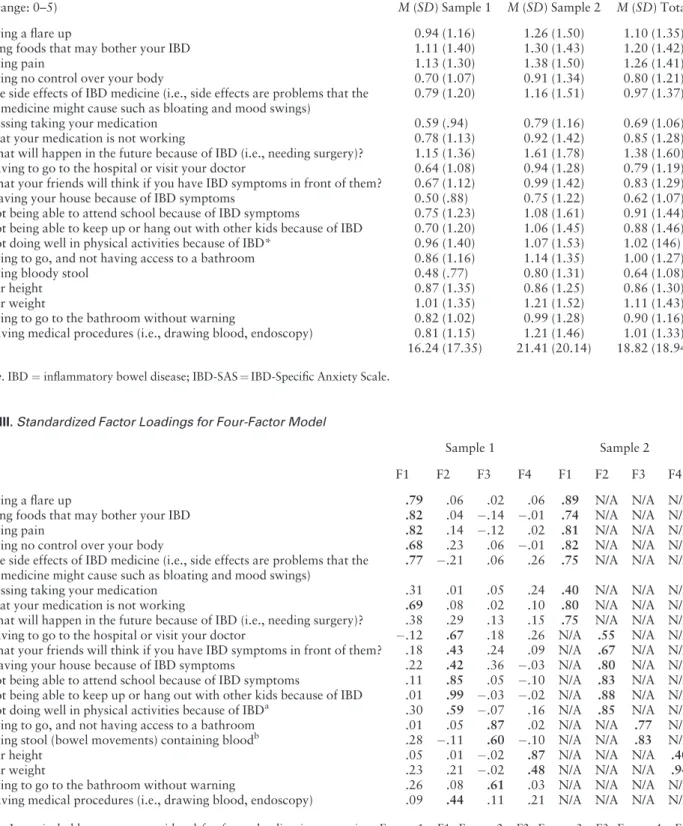
Table II displays item Ms and SDs for all IBD-SAS questions. The means were close to the lower bound of the 0–5 scale, ranging from .59 to 1.61. All items had a positive skew. The overall mean of the 20-item IBD-SAS across Samples 1 and 2 was 18.82 (SD¼18.94), with scores ranging between 0 and 75.
Exploratory Factor Analysis (Sample 1)
Comparison of fit and information indices suggested the superiority of a four-factor model (seeTable IIIfor factor loadings): v2(116)¼185.44, p<.001, CFI¼.97, RMSEA¼.07 (CFitp¼.08), SRMR¼.03, BIC¼7,068.45, followed by the three-factor model: v2(133)¼273.76, p<.001, CFI¼.84, RMSEA¼.09 (CFit p<.001), SRMR¼.04, BIC¼7,072.63; two-factor model: v2(151)¼397.12, p<.001, CFI¼.89,
RMSEA¼.11 (CFit p<.001), SRMR¼.06,
BIC¼7,106.92; and one-factor model:
v2(170)¼588.07, p<.001, CFI¼.82, RMSEA¼.13 (CFit p<.001), SRMR¼.07, BIC¼7,203.85. However, in the four-factor model, one factor was Table I.Characteristics of Participants by Sample
Variable Sample 1 (n¼141)
Sample 2 (n¼140)
AgeM(SD) 14.81 (1.78) 14.52 (1.93)
Male %s 57 45
Caucasian % 92 86
Mother’s educationM(SD) 4.01 (1.00) 4.04 (0.92) Father’s educationM(SD) 3.87 (1.03) 3.87 (1.05)
CD % 81 76
Age at diagnosisM(SD) 9.86 (3.13) 10.42 (3.21)
Note. Mother and father education scale is 1¼less than high school, 2¼high school, 3¼some college, 4¼college, and 5¼graduate school.
composed of only two items. A similar problem was present for the three-factor model.
Improvements to the four-factor model were made in light of the imperfect fit of the model, modification
indices suggesting areas of ill-fit, and review of item content. In total, two items were removed (from the model, they were administered to all participants) and the content of two items was changed on the basis of Table II.IBD-SAS Item Ms and SDs
Item (range: 0–5) M(SD) Sample 1 M(SD) Sample 2 M(SD) Total
4. Having a flare up 0.94 (1.16) 1.26 (1.50) 1.10 (1.35) 5. Eating foods that may bother your IBD 1.11 (1.40) 1.30 (1.43) 1.20 (1.42)
6. Having pain 1.13 (1.30) 1.38 (1.50) 1.26 (1.41)
7. Having no control over your body 0.70 (1.07) 0.91 (1.34) 0.80 (1.21) 10. The side effects of IBD medicine (i.e., side effects are problems that the
IBD medicine might cause such as bloating and mood swings)
0.79 (1.20) 1.16 (1.51) 0.97 (1.37)
13. Missing taking your medication 0.59 (.94) 0.79 (1.16) 0.69 (1.06) 14. That your medication is not working 0.78 (1.13) 0.92 (1.42) 0.85 (1.28) 20. What will happen in the future because of IBD (i.e., needing surgery)? 1.15 (1.36) 1.61 (1.78) 1.38 (1.60) 12. Having to go to the hospital or visit your doctor 0.64 (1.08) 0.94 (1.28) 0.79 (1.19) 15. What your friends will think if you have IBD symptoms in front of them? 0.67 (1.12) 0.99 (1.42) 0.83 (1.29) 16. Leaving your house because of IBD symptoms 0.50 (.88) 0.75 (1.22) 0.62 (1.07) 17. Not being able to attend school because of IBD symptoms 0.75 (1.23) 1.08 (1.61) 0.91 (1.44) 18. Not being able to keep up or hang out with other kids because of IBD 0.70 (1.20) 1.06 (1.45) 0.88 (1.46) 19. Not doing well in physical activities because of IBD* 0.96 (1.40) 1.07 (1.53) 1.02 (146) 2. Having to go, and not having access to a bathroom 0.86 (1.16) 1.14 (1.35) 1.00 (1.27) 3. Having bloody stool 0.48 (.77) 0.80 (1.31) 0.64 (1.08)
8. Your height 0.87 (1.35) 0.86 (1.25) 0.86 (1.30)
9. Your weight 1.01 (1.35) 1.21 (1.52) 1.11 (1.43)
1. Having to go to the bathroom without warning 0.82 (1.02) 0.99 (1.28) 0.90 (1.16) 11. Having medical procedures (i.e., drawing blood, endoscopy) 0.81 (1.15) 1.21 (1.46) 1.01 (1.33)
Total 16.24 (17.35) 21.41 (20.14) 18.82 (18.94)
Note. IBD¼inflammatory bowel disease; IBD-SAS¼IBD-Specific Anxiety Scale.
Table III.Standardized Factor Loadings for Four-Factor Model
Item Sample 1 Sample 2
F1 F2 F3 F4 F1 F2 F3 F4
4. Having a flare up .79 .06 .02 .06 .89 N/A N/A N/A
5. Eating foods that may bother your IBD .82 .04 .14 .01 .74 N/A N/A N/A
6. Having pain .82 .14 .12 .02 .81 N/A N/A N/A
7. Having no control over your body .68 .23 .06 .01 .82 N/A N/A N/A 10. The side effects of IBD medicine (i.e., side effects are problems that the
IBD medicine might cause such as bloating and mood swings)
.77 .21 .06 .26 .75 N/A N/A N/A
13. Missing taking your medication .31 .01 .05 .24 .40 N/A N/A N/A 14. That your medication is not working .69 .08 .02 .10 .80 N/A N/A N/A 20. What will happen in the future because of IBD (i.e., needing surgery)? .38 .29 .13 .15 .75 N/A N/A N/A 12. Having to go to the hospital or visit your doctor .12 .67 .18 .26 N/A .55 N/A N/A 15. What your friends will think if you have IBD symptoms in front of them? .18 .43 .24 .09 N/A .67 N/A N/A 16. Leaving your house because of IBD symptoms .22 .42 .36 .03 N/A .80 N/A N/A 17. Not being able to attend school because of IBD symptoms .11 .85 .05 .10 N/A .83 N/A N/A 18. Not being able to keep up or hang out with other kids because of IBD .01 .99 .03 .02 N/A .88 N/A N/A 19. Not doing well in physical activities because of IBDa .30 .59 .07 .16 N/A .85 N/A N/A
2. Having to go, and not having access to a bathroom .01 .05 .87 .02 N/A N/A .77 N/A 3. Having stool (bowel movements) containing bloodb .28 .11 .60 .10 N/A N/A .83 N/A
8. Your height .05 .01 .02 .87 N/A N/A N/A .40
9. Your weight .23 .21 .02 .48 N/A N/A N/A .94
1. Having to go to the bathroom without warning .26 .08 .61 .03 N/A N/A N/A N/A 11. Having medical procedures (i.e., drawing blood, endoscopy) .09 .44 .11 .21 N/A N/A N/A N/A
Note.Items in bold type were considered for factor loading interpretation. Factor 1¼F1; Factor 2¼F2; Factor 3¼F3; Factor 4¼F4; IBD¼inflammatory bowel disease.
a
these criteria. For example, a large, statistically signifi-cant modification index suggested the addition of cor-related residual terms between Items 1 and 2. Further inspection of these items revealed that they were al-most identical in content and, as a result, Item 1 was removed. A similar rationale was used with Items 11 and 12. Several authors have cautioned against under-taking model modifications purely on the basis of modification indices, as these changes are less likely to replicate in other samples. We have adopted this rec-ommendation and provide practical and theoretical justification for changes to the model from EFA to CFA.
The text of Item 19 was changed from Samples 1 to 2 from “Not doing well in sports or dancing because of IBD?” to “Not doing well in physical activities be-cause of IBD?” to capture physical activity broadly rather than specific activities. That is, children who did not play sports or dance might answer this item negatively, as originally worded, because it did not ap-ply to them, when their IBD may affect their perfor-mance in other physical activities in which they did participate. Additionally, Item 3 was revised from Samples 1 to 2 from “Having bloody stool” to “Having stool (bowel movements) containing blood” to increase clarity of wording. Item 1 was removed, as it was judged to be too similar to Item 2 and, thus, re-dundant. Item 11 was also removed as anxiety regard-ing “Havregard-ing medical procedures” is not, necessarily, specific to IBD, and it was felt that this item might as-sess more general anxiety related to medical proce-dures, as opposed to anxiety related to IBD, specifically. Finally, Items 13 and 20 were retained in CFA, despite factor loadings <.40 cutoff, as both items were deemed to be too clinically useful to drop and loaded significantly in CFA. Using this slightly amended and reduced item pool (now 18 items), the four-, three-, and two-factor models were submitted to CFA using Sample 2.
Confirmatory Factor Analysis (Sample 2)
CFA was conducted in an attempt to cross-validate the EFA results and compare the three models of the IBD-SAS. Comparison of fit and information indices suggested the superiority of a four-factor model (see
Table III for factor loadings): v2(129)¼259.19,
p<.001, CFI¼.92, RMSEA¼.09 (CFit p<.001), SRMR¼.05, BIC¼7,599.34, when compared with the three-factor model: v2(132)¼302.98, p<.001,
CFI¼.90, RMSEA¼.10 (CFit p<.001),
SRMR¼.06, BIC¼7,628.29; and two-factor model: v2(134)¼304.06, p<.001, CFI¼.90, RMSEA¼.10 (CFit p<.001), SRMR¼.06, BIC¼7,619.49. Factor 1 of the IBD-SAS had high loadings on items that assessed anxiety related to the occurrence of physical symptoms of IBD, in particular pain and disease
relapse, and the treatment of IBD-related symptoms. Factor 2 had high loadings on items that assessed anx-iety associated with the impact of IBD on engaging in social, physical, and school activities and general mo-bility (e.g., leaving the house). Factor 3 seems to re-flect anxiety related directly to bowel movements. Factor 4 seems to reflect anxiety related to height and weight disruption that can accompany IBD.
In Sample 2, all four factors of the IBD-SAS were significantly correlated. Factors 2 and 4 are the most highly intercorrelated, r (138)¼.93, p<.001, fol-lowed by Factors 1 and 2,r(138)¼.82,p<.001; and Factors 1 and 4,r(138)¼.71,p<.001. Factors 2 and 3, r (138)¼.53, p<.001, and Factors 3 and 4,
r(138)¼.47,p<.001, are also highly intercorrelated. Factors 1 and 3, however, are relatively orthogonal,
r(138)¼.25,p¼.02.
Reliability
The IBD-SAS showed excellent overall internal consis-tency (20-item; Cronbach’s a¼.95) and the deletion of two items (1 and 11) did not improve the overall re-liability of the scale (18-item;a¼.95). Factors 1 and 2 demonstrated excellent internal reliability (a¼.92 and .91, respectively), while Factor 3 was acceptable (a¼.73) and Factor 4 fell within the questionable range (a¼.66).
External Validity
On the PROMIS, T-score means were 46.76
(SD¼10.26) and 43.58 (SD¼8.65), for anxiety and depression, respectively. For the IMPACT, theMwas 134.31 (SD¼18.94). As shown inTable IV, correla-tion coefficients relevant to construct validacorrela-tion pro-vide support that the IBD-SAS has convergent validity, which is congruent with our hypotheses. The total 20-item IBD-SAS, as well as Factor 1 and Factor 2, dis-played a strong significant negative correlation with IBD HRQoL, measured by the IMPACT. IBD-SAS Factor 3 and Factor 4 had a negative moderate to strong relationship with IBD HRQoL. Significant pos-itive moderate to strong correlations were found be-tween total score and factors of the IBD-SAS and measures of anxiety, depression, and disease activity.
Discussion
Factor 2 had high loadings on worry items that were associated with the impact of IBD on engaging in so-cial and physical activities. Factor 3 related directly to worry regarding bowel movements. Factor 4 included worry related to height and weight disruption that can accompany IBD. Of note, some factors within the IBD-SAS were strongly correlated potentially suggest-ing the subscales measure slightly similar manifesta-tions of distress. Nonetheless, the four factors would be useful if clinicians or clinical researchers have a particular interest in assessing particular domains of concern.
Findings regarding convergent validity of the IBD-SAS are promising and provide preliminary support for use of the IBD-SAS as a brief instrument to exam-ine IBD-specific anxiety among adolescents diagnosed with IBD. Congruent with our a priori hypothesis, higher IBD-SAS scores were associated with lower HRQoL. That is, youth with increased worries about their IBD was likely to also reported having worsened HRQoL. While disease severity (Otley et al., 2002;
Perrin et al., 2008;van der Have et al., 2014) and in-ternalized conditions, including anxiety and depressive symptoms (Loonen, Grootenhuis, Last, Koopman, & Derkx, 2002) and psychiatric disorders (Gray, Denson, Baldassano, & Hommel, 2011), are estab-lished determinants of HRQoL, this report demon-strates that IBD-specific anxiety may also be strongly linked with HRQoL. Based on our sample, IBD-SAS displayed a stronger association with HRQoL com-pared with reports of general anxiety and depressive symptoms, and disease activity, suggesting these two constructs are more closely related supporting conver-gent validity.
The strong association between IBD-SAS and HRQoL, measured by the IMPACT-III, makes sense. The 35-item IMPACT-III measures patient perception of their health status and the impact of their illness on their physical, social, and emotional functioning (Otley et al., 2002). The IMPACT-III also includes six questions that assess worry or feeling afraid pertaining
to disease exacerbation, health problems in the future, presence of bloody stool, dating, and having an opera-tion. However, there are several key differences be-tween the IMPACT-III and IBD-SAS. The IBD-SAS captures worry over a specific 2-week timeframe, while the IMPACT-III does not specify a time frame. Furthermore, the questions pertaining to worry on the IMPACT-III are embedded in different domains, thus not easily usable, nor is there psychometric data that support the use of this measure in this manner. While both the IMPACT-III and the IBD-SAS capture other overlapping domains of interest including issues re-lated to school, body image, medication, and pain to name a few, the IBD-SAS captures how often one wor-ries about these domains, while the IMPACT-III assesses the degree to which youth perceive their IBD gets in the way, bothers them and the associated feel-ings (e.g., anger). Despite overlapping or convergent domains of interest between IBD-specific anxiety and HRQoL, there is a divergence between construct defi-nitions and in measurement, which supports the dis-tinction between these constructs.
The IBD-SAS was also strongly correlated with measures of general, nonhealth, measures of anxiety and depressive symptoms, and moderately associated with disease activity. The strength of these relation-ships was greater than expected. One study found that a disease-specific measure was superior to generic measures when examining quality of life in pediatric IBD, as it had fewer ceiling effects and demonstrated more variability in scores, suggesting greater sensitiv-ity to change (Loonen et al., 2002). In a similar fashion, this study provides preliminary support that IBD-specific anxiety may be more closely associated with HRQoL, and vice versa, compared with meas-ures used to detect psychiatric symptoms and disor-ders (e.g., social phobia, separation anxiety, generalized anxiety, and depression disorders) that are not necessarily circumscribed to disease adjustment. Furthermore, disease activity and IBD-specific anxiety are seemingly associated, but this relationship may be Table IV.Correlations Between IBD-Specific Anxiety Total and Factors With IBD HRQoL, Anxiety, Depression, and Disease Activity
Measure IBD-SAS F1 F2 F3 F4 IMPACT: HRQoL PROMIS: anxiety PROMIS: depression
IBD-SAS –
F1 .96 –
F2 .93 .84 –
F3 .74 .67 .63 –
F4 .61 .52 .50 .27 –
IMPACT: HRQoL .85 .81 .81 .61 .52 –
PROMIS: anxiety .65 .65 .58 .48 .40 .66 –
PROMIS: depression .67 .65 .61 .45 .49 .69 .68 –
Disease activity .55 .50 .52 .53 .26 .60 .35 .35
Note.All correlations significant atp<.01.
more complex as IBD-specific anxiety, by definition, can be present in the absence of disease activity.
Strengths of our study include the use of a novel, Internet-based cohort study, which allowed for a geo-graphically diverse sample and decoupled survey ad-ministration from clinic appointments. This is important, as it avoided the potential for over-estimation of anxiety when participants complete sur-veys at the time of stressful clinical encounters. Some limitations should be considered. All study data were based on adolescent self-report. However, prior work in our adult IBD cohort has demonstrated the validity of patient self-report of diagnoses of CD and UC (con-firmed by medical records in 96% of participants). Furthermore, constructs such as anxiety are most ap-propriately captured through self-report. The relative homogeneity of the participant sample with regard to race, parent education/socioeconomic status, and dis-ease severity is another limitation. Although the cur-rent sample is similar in demographic background to other samples previously reported in the literature (Gray et al., 2011; Mackner & Crandall, 2007), the extent to which our findings are generalizable to all adolescents with IBD, particularly those from lower socioeconomic status or from an ethnic minority back-ground, is unknown. Although participant disease se-verity at the time of survey administration varied, the majority of the adolescents fell within inactive or mild disease severity ranges. Patients with severe disease exacerbations may have been underrepresented in our study; therefore, it is unknown to what extent these findings generalize to patients during acute episodes of disease inflammation. Future studies using recruitment within medical settings may provide further informa-tion regarding IBD-specific anxiety in this pediatric condition. The variability in factor loadings between Samples 1 and 2, while not uncommon, also under-scores the importance of additional work replicating the factor structure found in the current study. Finally, correlations may be inflated because of common method variance.
Future validation research for the IBD-SAS is re-quired. The high correlation between factorscouldbe suggestive of a more complex, higher-order structure, where Factors 2 and 4 form a second-order factor. Future research should examine the possible interrela-tionships between the four factors of this scale and evaluate the potential for a higher-order structure. In addition, the clinical utility of this measure would be enhanced by establishing clinical cutoff scores and minimal important differences. However, it is likely that this measure will need to be used in tandem with some marker of disease activity or health status. For instance, when disease is in remission, elevated reports of IBD-specific anxiety are likely unwarranted and
may signal adolescents that need more support or psy-chological intervention (Reigada et al., 2014).
However, when disease is active, this measure may also be useful. Carrying on with normal activities when IBD symptoms are present (not severe) is typi-cally an important goal for the long-term functioning of children with IBD. Take for instance youth with fquent and unpredictable bowel movements. If they re-port high anxiety around bowel movements or bathroom access, they may require additional guid-ance to generate strategies (e.g., sit near the bathroom/ exit at restaurants and movies and download a rest-room locator application on their smartphone) and contingency plans (e.g., carry an emergency kit of wet wipes, an extra set of underwear and pants, and a plastic bag for soiled clothes) to increase confidence to continue to engage in their regular activities. Therefore, while the IBD-SAS can be used to detect potential pediatric IBD patients in distress, follow-up assessment and clinical judgment, which contextualize health anxiety symptoms within a health status frame-work, are recommended.
In conclusion, pediatric IBD patient medical care has begun to extend beyond the assessment and treat-ment of disease symptoms and managetreat-ment to incor-porate disease-related psychosocial factors that may also contribute to disease factors and quality of life. Our study findings may have important implications for clinicians and clinical researchers. Identifying young people for whom IBD-specific anxiety is a clini-cal issue is a criticlini-cal first step. The IBD-SAS is a psy-chometrically sound instrument that is brief and can be completed in waiting rooms, during medical visits, or between visits from the comfort of a patient’s own home. Health providers should consider querying patients directly about how disease-specific anxiety may impact IBD management and quality of life. When warranted, education and further support may alleviate mild anxiety, and when appropriate, a refer-ral to a mental health specialist should be provided. Clinical researchers can use the IBD-SAS to investigate factors that contribute to vulnerability for increased disease-specific anxiety, whether these symptoms con-tribute to disease processes (e.g., inflammation reoc-currence), and the degree to which these symptoms disrupt disease management as well as well-being and functioning.
Funding
This work was supported by a PSC-CUNY Award, jointly funded by the Professional Staff Congress and the City University of New York. Registry research was supported in part by grants from the Crohn’s and Colitis Foundation of America (CCFA).
References
Ader, D. N. (2007). Developing the patient-reported out-comes measurement information system (PROMIS). Medical Care,45, S1–S2.
Arvanitis, M., DeWalt, D. A., Martin, C. F., Long, M. D., Chen, W., Jaeger, B., . . . Kappelman, M. D. (2016). Patient-reported outcomes measurement information sys-tem in children with Crohn’s disease.Journal of Pediatrics, 174, 153–159.
Casati, J., Toner, B. B., De Rooy, E. C., Drossman, D. A., & Maunder, R. G. (2000). Concerns of patients with inflam-matory bowel disease.Digestive Diseases and Sciences,45, 26–31.
Cohen, S., Janicki-Deverts, D., & Miller, G. E. (2007). Psychological stress and disease.Journal of the American Medical Association,298, 1685–1687.
Comrey, A., & Lee, H. (1992).A first course in factor analy-sis. Hillsdale, NJ: Erlbaum.
Czuber-Dochan, W., Dibley, L. B., Terry, H., Ream, E., & Norton, C. (2013). The experience of fatigue in people with inflammatory bowel disease: An exploratory study. Journal of Advanced Nursing,69, 1987–1999.
Dibley, L., & Norton, C. (2013). Experiences of fecal incon-tinence in people with inflammatory bowel disease: Self-reported experiences among a community sample. Inflammatory Bowel Disease,19, 1450–1462.
Dorrian, A., Dempster, M., & Adair, P. (2009). Adjustment to inflammatory bowel disease: The relative influence of illness perceptions and coping. Inflammatory Bowel Diseases,15, 47–55.
Evans, J. D. (1996).Straightforward statistics for the behav-ioral siences. Pacific Grove, CA: Brooks/Cole Publishing. Graff, L. A., Walker, J. R., & Bernstein, C. N. (2009).
Depression and anxiety in inflammatory bowel disease: A review of comorbidity and management. Inflammatory Bowel Diseases,15, 1105–1118.
Gray, W. N., Denson, L. A., Baldassano, R. N., & Hommel, K. A. (2011). Disease activity, behavioral dysfunction, and health-related quality of life in adolescents with inflamma-tory bowel disease. Inflammatory Bowel Disease, 17, 1581–1586.
Holmbeck, G. N., & Devine, K. A. (2009). Editorial: An author’s checklist for measure development and validation manuscripts. Journal of Pediatric Psychology, 34, 691–696.
Irwin, D. E., Stucky, B. D., Thissen, D., DeWitt, E. M., Lai, J. S., Yeatts, K.,. . .DeWalt, D. A. (2010). Sampling plan and patient characteristics of the PROMIS pediatrics large-scale survey.Quality of Life Research,19, 585–594. Jackson, C. A., Clatworthy, J., Robinson, A., & Horne, R.
(2010). Factors associated with non-adherence to oral medication for inflammatory bowel disease: A systematic review. American Journal of Gastroenterology, 105, 525–539.
Keeton, R. L., Mikocka-Walus, A., & Andrews, J. M. (2015). Concerns and worries in people living with inflam-matory bowel disease (IBD): A mixed methods study. Journal of Psychosomatic Research,78, 573–578.
Knoop, H., van Kessel, K., & Moss-Morris, R. (2012). Which cognitions and behaviours mediate the positive ef-fect of cognitive behavioural therapy on fatigue in patients
with Multiple Sclerosis? Psychological Medicine, 42, 205–213.
Loonen, H. J., Grootenhuis, M. A., Last, B. F., Koopman, H. M., & Derkx, H. H. (2002). Quality of life in pediatric in-flammatory bowel disease measured by a generic and a disease-specific questionnaire. Acta Paediatrica, 91, 348–354.
Lynch, T., & Spence, D. (2008). A qualitative study of youth living with Crohn disease.Gastroenterology Nursing,31, 224–230.
Mackner, L. M., & Crandall, W. V. (2007). Psychological factors affecting pediatric inflammatory bowel disease. Current Opinion in Pediatrics,19, 548–552.
Mackner, L. M., Crandall, W. V., & Szigethy, E. M. (2006). Psychosocial functioning in pediatric inflammatory Bowel Disease.Inflammatory Bowel Diseases,12, 239–244. Mikocka-Walus, A., Knowles, S. R., Keefer, L., & Graff, L.
(2016). Controversies revisited: A systematic review of the comorbidity of depression and anxiety with inflammatory bowel diseases. Inflammatory Bowel Diseases, 22, 752–762.
Mouzas, I., & Pallis, A. (2000). Assessing quality of life in medical trials on patients with inflammatory bowel dis-ease.Annals of Gastroenterology,13, 261–263.
Muthe´n, L. K., & Muthe´n, B. O. (1998-2014). Mplus 7.2 [Computer software]. Los Angeles, CA: Author.
Nicholas, D. B., Otley, A., Smith, C., Avolio, J., Munk, M., & Griffiths, A. M. (2007). Challenges and strategies of children and adolescents with inflammatory bowel disease: A qualitative examination. Health and Quality of Life Outcomes,5, 28.
Otley, A., Smith, C., Nicholas, D., Munk, M., Avolio, J., Sherman, P. M., & Griffiths, A. M. (2002). The IMPACT questionnaire: A valid measure of health-related quality of life in pediatric inflammatory bowel disease. Journal of Pediatric Gastroenterology and Nutrition,35, 557–563. Otley, A., Xu, S., Yan, S., Olson, A., Liu, G., & Griffiths, A.
(2006). IMPACT-III is a valid, reliable and responsive measure of health-related quality of life in pediatric Crohn’s disease.Journal of Pediatric Gastroenterology & Nutrition,43, S49.
Perrin, J. M., Kuhlthau, K., Chughtai, A., Romm, D., Kirschner, B. S., Ferry, G. D., . . . Winter, H. S. (2008). Measuring quality of life in pediatric patients with inflam-matory bowel disease: Psychometric and clinical character-istics. Journal of Pediatric Gastroenterology and Nutrition,46, 164–171.
Regueiro, M., Greer, J. B., & Szigethy, E. (2017). Etiology and treatment of pain and psychosocial issues in patients with inflammatory bowel diseases.Gastroenterology,152, 430–439.
Reigada, L. C., Bruzzese, J. M., Benkov, K. J., Levy, J., Waxman, A. R., Petkova, E., & Warner, C. M. (2011). Illness-specific anxiety: Implications for functioning and utilization of medical services in adolescents with inflam-matory bowel disease.Journal for Specialists in Pediatric Nursing,16, 207–215.
disease and anxiety in pediatric medical settings. Cognitive and Behavioral Practice,21(4), 367–394.
Reigada, L. C., Polokowski, A. R., Walder, D. J., Szigethy, E. M., Benkov, K. J., Bruzzese, J. M., & Masia Warner, C. (2015). Treatment for comorbid pediatric gastrointestinal and anxiety disorders: A pilot study of a flexible health sensitive cognitive-behavioral therapy program.Clinical Practice in Pediatric Psychology,3, 314.
Rufo, P. A., Denson, L. A., Sylvester, F. A., Szigethy, E., Sathya, P., Lu, Y.,. . .Faubion, W. A. (2012). Health su-pervision in the management of children and adolescents with IBD: NASPGHAN recommendations. Journal of Pediatric Gastroenterology and Nutrition,55, 93–108. Segerstrom, S. C., & Miller, G. E. (2004). Psychological
stress and the human immune system: A meta-analytic study of 30 years of inquiry.Psychological Bulletin,130, 601.
Thia, K., Faubion, W. A., Loftus, E. V., Persson, T., Persson, A., & Sandborn, W. J. (2011). Short CDAI: Development and validation of a shortened and simplified Crohn’s
disease activity index.Inflammatory Bowel Disease,17, 105–111.
Turner, D., Otley, A. R., Mack, D., Hyams, J., De Bruijne, J., Uusoue, K.,. . .Griffiths, A. M. (2007). Development, vali-dation, and evaluation of a pediatric ulcerative colitis ac-tivity index: A prospective multicenter study. Gastroenterology,133, 423–432.
van der Have, M., van der Aalst, K. S., Kaptein, A. A., Leenders, M., Siersema, P. D., Oldenburg, B., & Fidder, H. H. (2014). Determinants of health-related quality of life in Crohn’s disease: A systematic review and meta-anal-ysis.Journal of Crohn’s and Colitis,8, 93–106.
Wiborg, J. F., Knoop, H., Frank, L. E., & Bleijenberg, G. (2012). Towards an evidence-based treatment model for cognitive behavioral interventions focusing on chronic fa-tigue syndrome.Journal of Psychosomatic Research,72, 399–404.