*Correspondence to Author: Ifesan, B.O.T
Department of Food Science and Technology, Federal University of Technology, Akure, Ondo State, Ni-geria
Email: bodewunmi2001@ yahoo. co.uk
How to cite this article:
Ifesan, B.O.T. Chemical Proper-ties of Mango Kernel and Seed and Production of Biscuit From Wheat-mango Kernel Flour Blends. International Journal of Food and Nutrition Research, 2017; 1:5.
eSciPub LLC, Houston, TX USA. Website: http://escipub.com/
International Journal of Food and Nutrition Research
(ISSN:2572-
8
7
84
)
Research Article IJFNR (2017) 1:5
Chemical Properties of Mango Kernel and Seed and Production of
Biscuit From Wheat-mango Kernel Flour Blends
Mango seed and kernel are regarded as waste and have been underutilized in the food industry. This study investigated the physicochemical and antioxidant properties of mango kernel and seed flour. In addition, mango kernel flour was employed as composite flour for biscuit production. Proximate composition of mango seed and kernel include; protein (3.58%-10.48%), fat (10.01%-18.00%), crude fibre (2.48%-2.63%) and carbohydrate (64.57%-75.80%). The result of functional properties of flour from mango seed revealed that the seed possessed oil (2.80 g/ml) and water absorption capacities (4.00g/ml) that were significantly higher than that of the kernel. However, the mineral analysis showed that mango kernel had values that were significantly higher than that of the seed in calcium (896.40 mg/100g: 4122.45 mg/100g), potassium (540.50 mg/100g: 376.27 mg/100g) and magnesium (814.53 mg/100g: 474.44 mg/100g). Antioxidant activities exhibited by mango kernel were significantly higher when compared to that of mango seed in the ability to scavenge 1,1-diphenyl-2-picrylhydrazyl (98.10%; 74.70%), ferric reducing properties(72.18 mg/100g; 52.65 mg/100g), flavonoid content (42.36 mg/100g; 19.01 mg/100g) and phenol (1222.13 mg/100g; 512.33 mg/100g). The proximate composition of the biscuits produced using wheat flour and mango kernel flour in different ratios;95%:5%, 90%:10% and 85%:15% revealed that biscuits from composite flour had protein content that were significantly higher than that of 100% wheat flour (control). Sensory results showed that biscuits from wheat- mango kernel flour were scored above average for overall acceptability.
Keywords: antioxidant activity; biscuit; mango seed and kernel; physicochemical property
Ifesan, B.O.T
Department of Food Science and Technology, Federal University of Technology, Akure, Ondo State, Nigeria
INTRODUCTION
Mango (Mangifera indica) is utilized for many purposes such as the young fruits whose tegu-ment have not yet hardened, are used in Asiat-ic countries as a vegetable, fresh or pAsiat-ickled. In Latin American countries, slightly unripe pulp is eaten with some salt. Ripened fruits are eaten fresh everywhere, to make juice or marmalade, also dried and made into candy. Mango seed kernel is a nutritional promising seed because of its high levels of carbohydrate and oil. Kaura et al. (2004) found that amylose content of man-go kernel starch was observed to be lower than those of corn and potato starches. Mango seed is very rich in vitamins, some minerals, glutamate, methionine, arginine, phenylalanine/tyrosine while lysine is the limiting amino acid (Fowomo-la, 2010). Mango seed is richer in vitamins than cassava (Okigbe, 1980). The presence of antiox-idant vitamins C, E and A suggests that mango seed could be used as an alternative source of these vitamins.
Several studies have shown that mango seed kernels contain various phenolic compounds and can be a good source of natural antioxidants (Puravankara et al., 2000; Abdalla et al., 2007). In addition, polyphenols from mango seed ker-nels were found to contain tannins, gallic acid, coumarin, ellagic acid, vanillin, mangiferin, ferulic acid, cinammic acid (Arogba, 1997). Composite flours from plant sources have been employed in the production of bread, biscuits or cookies (Olagunju and Ifesan, 2013; Nwosu et al., 2014; Ifesan et al., 2015).
Considerable amounts of mango seeds are dis-carded as waste and they account for 35%–55% of the fruit depending on the variety (Bhalerao et al., 1989). Furthermore, when discarded they constitute nuisance to the society and also a source of pollution. Research reports on prox-imate, mineral composition of mango seed is documented (Fowomola, 2010). However, there is dearth of literature on the use of mango seed or kernel in confectionery industry. Therefore we carried out this work to investigate the chemical composition of mango seed and kernel and the acceptability of wheat-mango kernel biscuits. MATERIALS AND METHOD
Sources of Materials
Ripe mangoes (Mangifera indica) were pur-chased from the local market in Akure, Ondo State, Nigeria. All other reagents used were of analytical grade.
Production of Mango kernel and seed flour
The mangoes were sorted, washed and both the peel and the pulp were manually removed from the mango using knife. The kernels were broken open manually and the seeds were removed. Both the mango seed and mango kernel were individually rinsed with water, oven dried at 50ºC and then milled into fine flour. The flours were kept in air tight plastic containers at room tem-perature during the analyses.
Determination of proximate analysis of flour from mango seed, kernel and wheat-mango kernel biscuit
The method of AOAC (2005) was used to de-termine the percentages of moisture contents, protein, crude fibre, fat and carbohydrate in the flours and biscuit.
Determination of functional properties of
mango seed and kernel flours
Bulk density was estimated as described by Monterio and Prakash (1994). Water and oil absorption capacities of flours were measured using centrifugation method (AOAC 2005). Dis-persibillity of mango seed and kernel flour was determined following AOAC (2005). About 15 g of the flour sample was measured into a 1000 ml measuring cylinder, 90 ml of water was add-ed and the solution was allowadd-ed to stand for 3 h. The final volume after 3 h was determined. Dispersibility was determined by subtracting the final volume from 100%.
Determination of mineral content of mango seed and kernel flour
The dry ashing technique as described by Os-hodi and Fagbemi (1992) was used for the de-termination of mineral composition (calcium, po-tassium, magnesium, iron and sodium) of mango seed and kernel flour.
flours
Determination of tannin content: About 0.2 g of flour sample was weighed into a 50 ml sample bottle. Ten milliliter of 70% aqueous acetone was added and properly covered. The bottles were placed in an ice bath shaker for 2 h at 30 0C. Each solution was then centrifuged and the su-pernatant stored in ice. About 0.5 ml of Folin Ci-ocateau reagent was added to both sample and standard (tannic acid solution) followed by 2.5 ml of 20% Na2CO3 the solutions were vortex and allowed to incubate for 40 min at room tempera-ture. Absorbance was read at 725 nm against a reagent blank concentration of the same solu-tion from where a standard tannic acid curve was prepared (Makkar and Goodchild, 1996).
Determination of phytate content: Phytate content of sample was determined according to the method of Wheeler and Ferrell (1971). Four grams of sample was soaked in 100 ml of 2% HCl for 3 h and then filter through a No 1 What man filter paper. About 25 ml was taken out of the filtrate and placed in a conical flask and 5 ml of 0.3% of ammonium thiocyanate solution was added as indicator. After which 53.5 ml distilled water was added to give it the proper acidity and this was titrated against 0.00566g per milliliter of standard iron (III) chloride solution that contain about 0.00195 g of iron per ml until a brownish yellow coloration persist for 5min.
Determination of oxalate content: Oxalate was determined by the method of Day and Un-derwood (1986). One gram of flour sample was soaked in 75 ml of 1.5N H2SO4 for an hour and then filtered through a No 1 Whatman filter pa -per. About 25 ml was taken out of the filtrate and placed inside a conical flask and this was titrated hot (80-90oC) against 0.1M KMnO
4 until a pink color that persisted for 15 s was obtained.
Water Extract Preparation: Five gram of
man-go seed and kernel flour were individually blend -ed with 25 ml distilled water and allowed to stand at room temperature for about 24 h. Aqueous ex-tract was obtained by filtering the mixture using a Whatman No 1 filter paper and the supernatant was used for antioxidant assays.
Determination of Total phenolic contentof mango seed and kernel flour: The total phenol content of the extract was determined using the
method reported by Singleton et al. (1999). Ap-propriate dilutions of the extracts were oxidized with 2.5 ml of 10% Follin-Coicalteau’s reagent (v/v) and neutralised by 2.0 ml of 7.5% sodium carbonate. The reaction mixture was incubated for 40 mins at 45 oC and the absorbance was read at 765 nm in the spectrophotometer. The total phenol content was subsequently calculat-ed.
Determination of Total Flavonoid content mango seed and kernel flour: The total flavo -noid content of the extracts were determined us-ing a slightly modified method reported by Bao
et al. (2005). Briefly, 0.5 ml appropriately diluted sample was mixed with 0.5 ml methanol, 50 µl of 10% AlCl3, 50 µl of 1M potassium acetate, 1.4 ml water, and allowed to incubate at room temperature for 30mins.The absorbance of the reaction mixture was subsequently measured at 415 nm.
Determination of ferric reducing properties (FRAP) mango seed and kernel flour: The re-ducing property of the extracts were determined by assesing the ability of the extract to reduce FeCl3 solution as described by Oyaizu (1986). A 2.5 ml aliquot was mixed with 2.5 ml of 200 Mm sodium phosphate buffer (pH 6.6) and 2.5 ml of 1% potassium ferricyanide. The mixture was in-cubated at 50 oC for 20 min, and then 2.5 ml of 10% trichloroacetic acid was added. This mixture was centrifuged at 650 rpm for 10 min.Then 5 ml supernatant was mixed with an equal volume of water and 1 ml of 0.1% ferric chloride. The absorbance was measured at 700 nm and ferric reducing antioxidant property was calculated. Determination of 1,1-diphenyl-2-picrylhydra-zyl(DPPH) free radical scavenging activity: The free radical scavenging ability of the extracts against DPPH free radical was evaluated as de-scribed by Gyamfi et al .(1999). An appropriate dilution of the extracts (1 ml) was mixed with 1 ml of 0.4 mM methanolic solution containing DPPH radicals, the reaction mixture was left in the dark for 30 mins and the absorbance was taken at 517 nm.
Composite Flour Formulation
Table 1: Formulation for the wheat-mango kernel composite flour
Composite flour Wheat flour (WF) (%) Mango kernel (MK) flour (100%)
Wheat flour (WF) 100 0
95%WF:5%MK 95 5
90%WF:10%MK 90 10
85%WF:15%MK 85 15
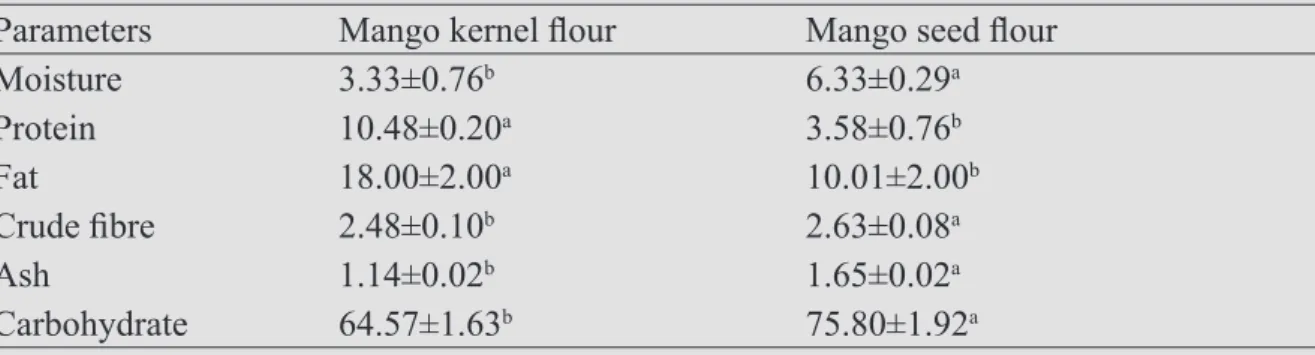
Table 2: Proximate composition (%) of mango kernel and seed flour Parameters Mango kernel flour Mango seed flour
Moisture 3.33±0.76b 6.33±0.29a
Protein 10.48±0.20a 3.58±0.76b
Fat 18.00±2.00a 10.01±2.00b
Crude fibre 2.48±0.10b 2.63±0.08a
Ash 1.14±0.02b 1.65±0.02a
Carbohydrate 64.57±1.63b 75.80±1.92a
Values with different superscripts along rows are statistically significant p≤0.05
Table 3: Functional properties of mango kernel and seed flour
Properties Mango kernel flour Mango seed flour
Oil absorption capacity (g/ml) 1.20±0.10b 2.80±0.10a
Water absorption capacity (g/ml) 2.60±0.21b 4.00±0.11a
Bulk density (g/ml) 2.55±0.05a 1.55±0.12b
Dispersibility (%) 40.49±0.60b 59.00±1.01a
Values with different superscripts along rows are statistically significant p≤0.05
Table 4: Mineral composition (mg/100g) of mango kernel and seed flour Mineral Mango kernel flour Mango seed flour
Calcium 896.40±0.53b 4122.45±0.39a
Potassium 540.50±0.50a 376.27±0.25b
Magnesium 814.53±0.50a 474.44±0.52b
Iron 70.33±1.53b 294.30±0.10a
Sodium 102.15±0.13b 344.14±0.13a
shown in Table 1.
Production of biscuits from Wheat Flour and mango kernel flour
Biscuits were produced as described by Olagun-ju and Ifesan (2013).The raw materials used in-clude flour (wheat and mango kernel flour) (100 g), sugar (10 g), margarine (30 g), salt (2 g), so-dium bicarbonate (1 g),water (50 ml), milk (10 g), vanilla flavour (2 ml). These were weighed appropriately and two stage creaming up meth-od was used. All the ingredients except flour were mixed thoroughly in a Kenwood mixer (a 3-speed hand mixer), it was then transferred to a bowl. The flour and sodium bicarbonate was added with continuous mixing for 15 min un-til smooth dough was obtained. A piece of this dough was cut, placed on a clean platform then rolled out using rolling pin until the desired uni-form texture and thickness of 0.44 cm was ob-tained. Biscuit cutter was used to cut the sheet of the dough into required shapes and sizes. These were transferred on to a greased (with marga-rine) baking tray. The baking was done at 200ºC and baked for 15 – 20 min. After baking, the hot biscuits were removed from the pan and placed on a clean tray to cool down. The biscuits were then packed after cooling in polyethylene satch-ets using an impulse sealing machine prior to further analysis.
Physical Characteristics of Biscuit
The weight, diameter, spread ratio and break-ability of the baked biscuits were determined as described by Ayo et al. (2007)
Sensory Evaluation
Biscuits made from wheat and mango kernel composite flour were subjected to sensory eval -uation using twenty (20) panelists drawn within the University community. Biscuits were evaluat-ed for taste, aroma, crispiness, colour and over-all acceptability. The ratings were on a 9-point hedonic scale ranging from 9 (like extremely) to 1 (dislikeextremely) (Solomakos et al., 2005). The control was biscuit made from 100% wheat flour. The mean scores were calculated using analysis of variance (ANOVA).
RESULTS AND DISCUSSION
Proximate composition of mango kernel and
seed flour
The moisture content of mango seed (6.33%) was higher than that of mango kernel (3.33%) (Table 2). The moisture content of a food is in-dicative of the dry matter in that food. However, low residual moisture content in flour product is advantageous in that microbial proliferation is reduced and storage life may be prolonged if stored inside appropriate packaging materials under good environmental conditions. Mango kernel flour possessed protein and fat content of 10.48%; 18.00% that were significantly higher than 3.58% and 10.01% of the seed flour, and the ash content from 1.14%-1.65%. The crude fi -bre (2.48%-2.63%) and very high content of car-bohydrate 64.57%-75.80%. Result revealed that mango seed and kernel flour were higher in pro -tein than cassava and plantain (2.63%; 2.30%) and in fibre than wheat flour (0.82%) and cassa -va flour (1.88%) (Mepha et al., 2007; Nwosu et al., 2014). The values for proximate composition recorded in this study are within the range previ-ously reported (Kayode et al., 2013).
Functional properties of Mango kernel and seed flour
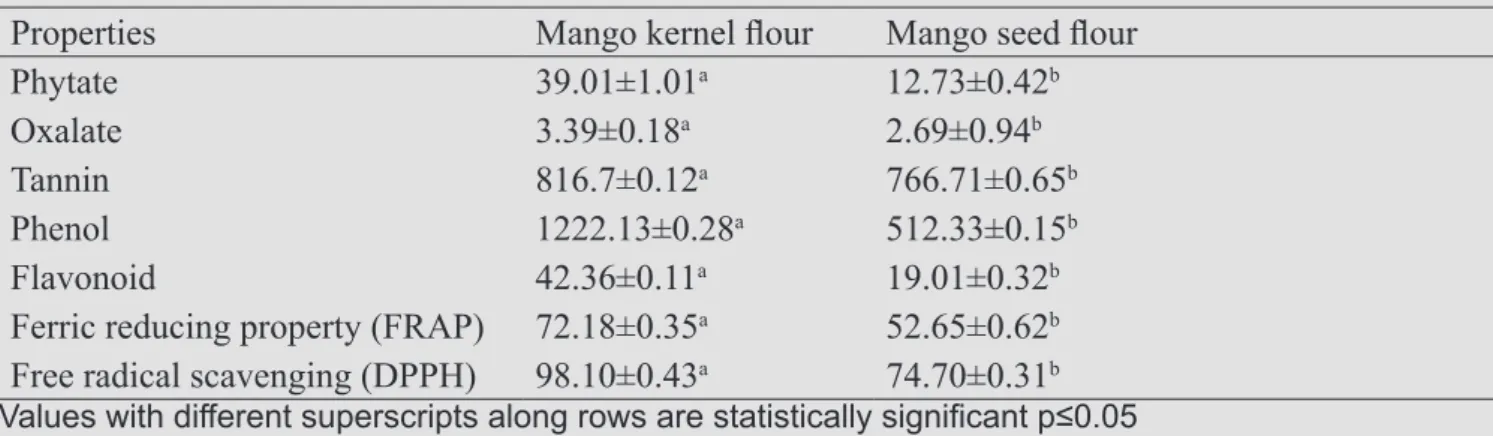
Table 5: Phytochemical and antioxidant (mg/100g) properties of mango kernel and seed flour Properties Mango kernel flour Mango seed flour
Phytate 39.01±1.01a 12.73±0.42b
Oxalate 3.39±0.18a 2.69±0.94b
Tannin 816.7±0.12a 766.71±0.65b
Phenol 1222.13±0.28a 512.33±0.15b
Flavonoid 42.36±0.11a 19.01±0.32b
Ferric reducing property (FRAP) 72.18±0.35a 52.65±0.62b Free radical scavenging (DPPH) 98.10±0.43a 74.70±0.31b
Values with different superscripts along rows are statistically significant p≤0.05
Table 6: Proximate composition (%) of wheat-mango kernel biscuit
Parameters 100%WF 95%WF:5%MK 90%WF:10%MK 85%WF:15%MK Moisture 6.00±1.00a 5.67±3.31a 5.23±0.06a 4.89±1.27a Ash 2.25±0.02c 2.30±0.01c 2.36±0.02b 2.44±0.01a Crude fibre 1.85±0.01b 1.77±0.01c 1.96±0.10a 1.64±0.01d Protein 9.74±0.01c 10.12±0.60b 11.76±0.02a 11.93±0.13a Fat 3.73±0.02b 3.97±0.01b 4.40±0.08a 4.63±0.01a Carbohydrate 76.43±0.01a 76.17±0.01a 74.29±0.02b 74.47±0.01b
Values with different superscripts along rows are statistically significant p≤0.05 WF: wheat flour; MK: mango kernel
Table 7: Physical properties of wheat-mango kernel biscuit
Parameters 100%WF 95%WF:5%MK 90%WF:10%MK 85%WF:15%MK Diameter (cm) 22.57±0.45a 20.53±0.67b 22.44±0.09a 22.45±0.60a Height (cm) 2.86±0.25b 3.00±0.12ab 3.29±0.25a 2.93±0.37ab Weight (g) 3.81±0.03b 3.54±0.01c 3.62±0.03c 4.46±0.09a Spread ratio 7.94±0.82a 6.85±0.06b 6.84±0.52b 7.65±0.29ab
Values with different superscripts along rows are statistically significant p≤0.05 WF: wheat flour; MK: mango kernel
Table 8: Sensory attributes of wheat-mango kernel biscuit
Sensory parameters 100%WF 95%WF:5%MK 90%WF:10%MK 85%WF:15%MK Taste 7.80±1.14a 5.80±2.09b 6.00±1.89b 5.20±2.39b Colour 7.20±1.14a 6.70±0.95ab 6.50±0.85ab 5.90±1.73b
Aroma 7.40±1.65a 6.30±1.25b 6.60±1.08b 6.20±1.10b
Overall acceptability 7.70±0.82a 6.30±0.95b 6.10±1.10b 5.60±2.07c
Ajanaku et al., 2012). Oil absorbing capacity of mango seed 2.80g/ml is significantly higher than that of mango kernel (1.20g/ml). Oil absorbing capacity (OAC) is an important factor in food ran-cidity, spoilage and flavour retention capability. The higher the OAC the better the capability of retaining flavour and the higher the chances of it going rancid.
Mineral composition of Mango kernel and seed flour
Table 4 shows that mango seed and kernel are rich in mineral, containing sodium (344.14 mg/100g; 102.15 mg/100g), potassium (376.27 mg/100g; 540.50 mg/100g), calcium (4122.45 mg/100g; 896.40 mg/100g), magnesium (474.44 mg/100g; 814.53 mg/100g), iron (294.30 mg/100g; 70.33 mg/100g). Mango seed is a good source of calcium when compared with that of cassava (Bede, 2010). Mango kernel contains higher calcium and iron than yellow maize (Da-kare et al., 2010). Potassium and iron are essen-tial nutrients and has important function in blood formation and synthesis of amino acids and pro-teins (Kittiphoom, 2012).
Phytochemical and antioxidant properties of mango kernel and seed flour
The phytochemical composition of mango ker-nel and seed flour shown on Table 5 revealed that the kernel possessed higher values than the seed. Phytate content (39.01 mg/100g; 12.73mg/100g), oxalate from 2.69 mg/100g-3.39 mg/100g and tannin (816.7 mg/100g; 766.71 mg/100g). The values obtained in this study are higher than those reported by Fowomola (2010) and lower than that of Kayode et al. (2013). Tan-nin form complexes with dietary proteins and car-bohydrates, as well as with enzymes (Naurato et al., 1999) and reduce the absorption of minerals such as iron and copper (Samman et al., 2001). However, chelation of these metals could some-times be beneficial as this is one of the mecha -nisms by which phenolic compounds exert their antioxidant activity (Bravo, 1998). Mango kernel contained higher concentration of flavonoid and phenol (42.36 mg/100g; 1222.13 mg/100g) when compared to the seed (19.01mg/100g; 512.33 mg/100g). Mango kernel has potent antioxidant activity with relatively high phenolic contents (Soong et al., 2004). Mango kernel demonstrat-ed DPPH radical scavenging ability and FRAP of
98.10 mg/100g and 72.18 mg/100g compared to mango seed (74.70 mg/100g; 52.65 mg/100g). The high antioxidant capacity observed in mango kernel is in line with previous reports (Kittiphoom et al, 2012; Ashoush and Gadallah, 2011). Proximate composition and physical proper-ties of wheat-mango kernel biscuit
The result of the proximate composition of the wheat flour, wheat flour (95%) + mango kernel flour (5%), wheat flour (90%) + mango kernel flour (10%), wheat flour (85%) + mango kernel flour (15%) showed that the wheat flour had the highest moisture content of (6.00%) followed by that of wheat flour (95%) + mango kernel flour (5%) (5.67%) while the wheat flour (85%) + man -go kernel flour (15%) had the lowest value with 4.89% (Table 6). The decrease in moisture con-tent with increase in level of substitution showed the certainty of prolonging the shelf-life of the product. It was observed that the protein content increased from 9.74 to 11.93% as the amount of mango kernel flour used increased. This result corroborates earlier reports of mango kernel as a good source of protein (Dakare et al., 2010). The carbohydrate content of the composite biscuit decreased with increased levels of mango ker-nel flour in the composite flours. For crude fibre, there is no significant difference p0.05 between control and wheat flour (90%) + mango kernel flour (10%) while there is a significant differ -ence p0.05 between control, wheat flour(95%) + mango kernel flour(5%) and wheat flour (85%) + mango kernel flour (15%). The fat content of the biscuit increased from 3.73% to 4.63%, which in-creased with increasing composition of mango kernel. It has been reported that mango kernel contain high amount of fat (Dakare et al., 2010). The ash content of the biscuit also increased with increase in composition of mango kernel flour. The control has the highest percentage of carbohydrate followed by wheat flour (95%) + mango kernel flour (5%), wheat flour (90%) + mango kernel flour(10%) then wheat flour (85%) + mango kernel flour (15%).
cm while it reduced gradually to 20.53 cm with 95:5 mango kernel flour incorporation. Thickness and spread ratio of control was 2.86 cm and 7.94 for the control respectively, both parameters in-creased for (95:5) and (85:5) mango kernel flour incorporation. Weight of the control biscuit was 3.81g and increased to 4.46g with incorporation of mango kernel flour. Sensory Attributes of wheat- mango kernel biscuit
Table 8 reveals the sensory attributes of biscuit from various blends of wheat flour and mango kernel flour. The addition of mango kernel de -creased the mean score of taste (7.80 to 5. 20), colour (7.20-5.90), aroma (7.40 to 6.20) and overall acceptability (7.70-5.60). It was observed that the control was significantly scored higher than those of wheat-mango kernel biscuit. How-ever, biscuits made from 5%-15% mango kernel flour were scored above average.
Conclusion
The physicochemical and phytochemical analy-ses carried out on mango kernel and seed re-vealed that they could be good source of bal-anced food material which could be utilized in food production especially confectionary indus-try. The utilization of mango kernel flour with wheat to produce biscuit resulted to a biscuit with improved protein content. Further study should be carried out to investigate the ability of the wheat-mango kernel biscuit to serve as a func-tional food.
Acknowledgments
The author is grateful to Mr.Babalola, Foluwaso. A. for his contribution to this research.
References
Abdalla, E. M., Darwish, S. M., Ayad, E. H. E. and El-Hamahmy, R. M. (2007). Egyptian mango by-prod-uct 1. Compositional quality of mango seed kernel. Food Chemistry 103: 1134–1140.
Adebowale, A.A., Sanni, L.O. and Onitilo, M.O. 2008. Chemical composition and pasting properties of
Tapi-oca grits from different cassava varieties and roasting
methods. Afr.J. Food Sci., 2:77-82.
Ajanaku, K.O., Ajanaku, C.O. Edobor-Osoh, A. and Nwinyi, O.C 2012. Nutritive value of Sorghum ogi
for-tified with groundnut seed (Arachishypogaea L.). Am.
J. Food Techonology., 7:82-88.
AOAC (2005). Official methods of analysis 18th edi
-tion.Association of Official Analytical Chemists. Vir -ginia, USA.
Arogba, S. S. 1997. Physical, chemical and function-al properties of Nigerian mango (Mangifera indica)
kernel and its processed flour. J. Science of Food
and Agriculture 73: 321–328.
Ashoush I.S. and Gadallah M.G.E. (2011). Utilization of mango peels and seed kernel powders as sources of phytochemicals in biscuit. World Journal of Dairy &Food Sciences 6 (1).: 35-42.
Ayo, J.A., Ayo, V.A., Nkama, I. and Adewori, R. (2007). Physicochemical, in vitro digestibility and or-ganoleptic evaluation of Acha-wheat biscuit
supple-mented with soybean flour. Nigerian Food Journal.
25:77-89.
Bao, J., Cai, Y., Sun, M., Wang, G. and Corke, H. (2005). Anthocyanins, Flavonoids and free radical scavenging activity of Chinese bayberry (Myrica ru-bra) extracts and their colour properties and stability. J. Agric and Food Chem. 53: 2327-2332.
Okigbe, B.N. (1980). Nutritional implications of proj-ects giving high priority to the production of staples of low nutritive quality: The Case for Cassava (Manihot esculenta, Crantz) in the Humid Tropics of West Afri-ca. Food and Nutrition Bulletin. 2 (4): 64pp.
Bhalerao, S. D., Mulmuley, G. V. Anathakrishna, S. M. and Potty, V. H. (1989). Wash and waste water management in food industry. Fruit and vegetable processing. Indian Food Packer 43(2): 5-11.
Bravo, L. (1998). Polyphenols: chemistry, dietary
sources, metabolism, and nutritional significance.
Nutrition Reviews, 56:317-333.
Dakare S.S., Usman, B.A, and Igwebuike, J.U. (2010). Replacement value of boiled Mango kernel
meal for maize in broiler finisher diets. ARPN Journal
of Agricultural and Biological Science, 5(1):47–52.
Day, R.A (Jnr) and Underwood, A.L. (1986). Quan-titative analysis. 5th edn Perantice- Hall Publication
pp 701.
Fowomola M. A. (2010). Some nutrients and antinu-trients contents of mango (Magnifera indica) seed. African Journal of Food Science 4: 472 – 476.
Gyamfi, M. A., Yonamine, M. and Aniya, Y. (1999).
Free radical scavenging action of medicinal herbs from Ghana: Thonningia sanguine an experimentally induced liver injuries. Gen. Pham. 32: 661-667.
indica L.). Food Chemistry 85: 131–140.
Kayode, R.M.O., Sani, A., Oladoye, C.O., Annongu, A.A., Arekemase, M. O., Obalowu, M.A. and Abdul-salam, K.O. (2013) Physico-chemical and anti-nutri-tional characterization of the kernels of some mango (Mangifera indica) cultivars grown in Western parts of Nigeria. Journal of Food Science and Quality Man-agement. 22: 1-8.
Kittiphoom, S. (2012). Utilization of Mango seed. In-ternational Food Research Journal 19: 1325-1335.
Makkar, M. and Goodchild, G. (1996).Quantification
of Tannins- A Laboratory Manual. Int. Centre Agric. Res. Aleppo, Syria.
Mepba, H.D., Eboh, L. and Nwaojigwa, S.U. (2007). Chemical composition, functional and baking
prop-erties of wheat-plantain composite flours. AJFAND
7:1-22.
Monteriro. P.V. and Praskash. V. (1994). Func-tional properties of homogenous protein fraction from peanut (Arachi hypogaea L.) J. Agric. Food Chem.42:274-278.
Naurato, N., Wong, P., Lu, Y., Wroblewski, K. and Bennick, A. (1999). Interaction of tannin with human salivary histatins. Journal of Agricultural and Food Chemistry, 47:2229-2234.
Nwosu, J.N., Owuamanam, C. I., Omeire, G. C. and Eke, C.C. (2014). Quality parameters of bread
pro-duced from substitution of wheat flour with cassava flour using soybean as an improver. American Jour -nal of Research Communication. 2:99-118.
Olagunju, A.I. and Ifesan, B.O.T. (2013). Nutritional Composition and Acceptability of Cookies Made from Wheat Flour and Germinated Sesame (Sesamum in-dicum) Flour Blends. British Journal of Applied Sci-ence and Technology, 3: 702-713.
Oshodi, A.A. and Fagbemi, T.N. (1992). Functional properties of defatted and protein isolate of Fluted
Pumpkin (Telfairia occidentalis) seed flours. Ghana
J. Chem. 1: 216-226.
Oyaizu, M. (1986). Studies on products of browning reaction: antioxidativeactivity of products of brown-ing reaction prepared from glucosamine. Japan J. Nutri. 44:307-315.
Puravankara, D., Bohgra, V. and Sharma, R. S. 2000.
Effect of antioxidant principles isolated from mango
(Mangifera indica L.) seed kernels on oxidative
stabil-ity of buffalo ghee (butter-fat). Journal of the Science
of Food and Agriculture 80 (4): 522-526.
Samman, S., Sandstrom, B., Toft, M. B., Bukhave, K., Jensen, M. Sorensen, S. S. and Hanseen, M. 2001. Green tea or rosemary extract added to foods
reduces non heme-iron absorption. American Journal of Clinical Nutrition, 73:607-612.
Singleton, V.L., Orthofer, R. and Lamuela-Raventos, R.M. (1999). Analysis of total phenols and other ox-idation substrates and antioxidants by means of Fo-lin–Ciocalteu reagent. Meth. Enzymol. 299:152–178.
Solomakos N, Govaris A, Koidis P, Botsoglou, N.
(2008). The antimicrobial effect ofthyme essential oil, nisin, and their combination against Listeria monocy-togenes in minced beef during refrigerated storage. Food Microbiol 25:120–127.
Soong, Y.Y. and Barlow, P. J. (2004). Antioxidant activity and phenolic content of selected fruit seeds. Food Chemistry, 88:411-417.
Wheeler, E. L and Furrel, R. A. (1971). A method for
phytic acid determination in wheat and wheat flour. J.