127
Screening of 33 Medicinal Plants for the Microelements
Content
Ducu Sandu
Ş
tef
1, Iosif Gergen
1, Teodor Ioan Tra
ş
c
ă
1, Monica H
ă
rm
ă
nescu
1,
Lavinia
Ş
tef
1, M
ă
rioara Drug
ă
1, Ramona Biron
1, Gabriel Heghedu
ş
-Mîndru
11 Banat's University of Agricultural Sciences and Veterinary Medicine,
300645, Calea Aradului, 119,Timişoara - România
Abstract
The microelements content of 33 medicinal plants was analyzed. The analysed microelements were: Iron, copper, zinc, manganese, cobalt, chromium, nickel, cadmium and lead. Mineral contents were determinate by flame atomic absorption spectrometry (F-AAS) with high resolution continuum source ContrAA 300 spectrometer. The contents in microelements for analysed samples were in range: 18.1 ppm (Symphytum officinale) - 1.4 ppm (Rhamnus frangula), for Copper; 26,2 ppm (Valeriana officinalis) – 4,3 ppm (Rhamnus frangula), for Zinc; 214 ppm. (Violae tricoloris herba) - 18 ppm (Equisetum arvense), for Manganese; 826 ppm (Calendula officinalis) - 23 ppm (Rhamnus frangula), for Iron. The microelements contents (Cu, Zn, Mn, Fe, Co, Cr, Ni, Cd and Pb) have grouped the analyzed medicinal plants in two main clusters. First main cluster was formed by other two groups.
Keywords: Cooper, iron, manganese, microelements, medicinal plants, Zinc
1. Introduction
Organic or inorganic salts are commonly present in foods as natural components, ingredients or additives. The latter are added to foods for a huge number of functional purposes. For instance, some of these act as flavouring, antimicrobial or pH control agents, and others as antioxidants and emulsifiers [1].
Mineral deficiency is usually caused by a low mineral content in the diet when rapid body growth is occurring and/or when there is poor absorption of minerals from the diet [2].
In this way, not only must the absolute amounts of minerals be increased in the edible portions of foods, but these minerals must also be in forms that are bioavailability for organism. 1
The metals contents of plants are variable, due to the factors like differences between the plants species, geographical area, conditions of drying process. Metals contents in soil are a great
* Ducu Stef, 0745625353, [email protected]
importance for their effect of animals and humans, through the biologic chain: soil – plant – feed and food. The accessibility of metals for plants depends on soil reaction, mineral colloids, soil humidity, microbiological activity and organic matter content [3].
Zinc is a constituent of about 300 enzymes and proteins that participate in all major metabolic processes. As an essential trace element Zinc can impair vital function either by deficiency or excess. Dietary reference values for Zinc suggested by various sources (WHO-1996) range from 9.4 to 11.0 mg/day for male adults and from 6.5 to 8.0 mg/day for female adults.
Manganese is one of the essential microelements for plants, animals and humans. It is both a constituent and an activator of several enzymes and proteins in plant, animal and humans, and has around 20 identified functions [4].
128 adding to the burden on the health system, affecting cognitive performance of children and reducing adult productivity. The World Bank, WHO and Harvard University, list iron deficiency anemia as entailing a higher overall cost than any other disease except tuberculosis [5].
Also, Iron (Fe) is recognized as one of the most important trace elements for animal growth [6]. To prevent and treat iron deficiency, exogenous inorganic iron supplementation was popular in the feed industry. Iron sources from feed ingredients and supplements vary widely in their bioavailability to the animal [7].
Copper is one of several trace heavy metals that are essential to life, despite being as inherently toxic as nonessential trace heavy metals (Cadmium, Lead). NRC (1994) requirement of Cu for broiler chickens is only 8 mg/kg. When included at higher dietary levels, so-called pharmacological levels, this element has found to be effective for lipid metabolism [8].
Lead is not an essential element for life and it is very toxic for the nervous system and the kidneys.
Chromium is involved in insulin function.
The goal of this paper was to analyse the microelements content for 33 medicinal plants (herbs). The analysed microelements were: zinc, manganese, iron, copper, cobalt, chromium, cadmium, lead and nickel.
2. Materials and methods
Medicinal plants or parts of them are used successfully in treatment of different kind of diseases for those therapeutically properties.
Medicinal plants samples preparation
Thirty three medicinal plants samples were collected of Romanian markets. The analysed medicinal plants are: Achillea millefolium, Arnica montana, Artemisia absinthium, Calendula officinalis, Capsella bursa pastoris, Chelidonium majus, Crataegus monogyna, Cynara scolymus, Echinaceae herba, Epilobium montanum, Equisetum arvense, Galium mollugo, Hippophae rhamnoides, Hypericum perforatum, Malva silvestris, Matricaria chamomilla, Melissae Folium, Mentha piperita, Phoeniculus, Pinus, Plantago major, Poligonum aviculare, Rhamnus
frangula, Rosa canina, Salix babylonica, Salvia officinalis, Symphytum officinale, Taraxacum officinale, Thy mi herba, Tilia platyphyllos, Urtica dioica, Valeriana officinalis, Violae tricoloris herba.
The metals content from medicinal plants samples were analysed after dry burning of 10g in the quartz capsules at 6500C for 4 hours. After
complete burning a nitric acid 0,5 N solution was added up to 50 ml. The solution obtained were used for total metals contents determination by flame atomic absorption spectrometry (F-AAS) with high-resolution continuum source.
Reagents
The standard solutions (1000 mg / l) were analytical grade from Riedel de Haen (Germany). The nitric acid 65% solution used was of ultra pure grade (Merck, Germany). All solutions were prepared using deionised water.
Metals content determination
Analysis of metals content was made with ContrAA-300, Analytik-Jena device, by flame atomic absorption spectrometry (FASS) in air/acetylene flame. The device working parameters (air, acetylene, optics and electronics) were adjusted for maximum absorption for each element. Acetylene was of 99.99& purity. Under the optimum established parameters, standard calibration curves for metals were constructed by plotting absorbency against concentration [9]. In a definite range for each metal a good linearity was observed. The correlation coefficient for the calibration curves (r2) ranged between
0.9745-0.9891. All analyses were made in triplicate and mean values were reported. All the values obtained for metals contents in analysed samples were calculated in mg/kg dry matter (ppm).
3. Results and discussion
The Cooper, Zinc, Manganese, Iron, Cobalt,
Nickel, Cadmium, Chromium, and Lead
129
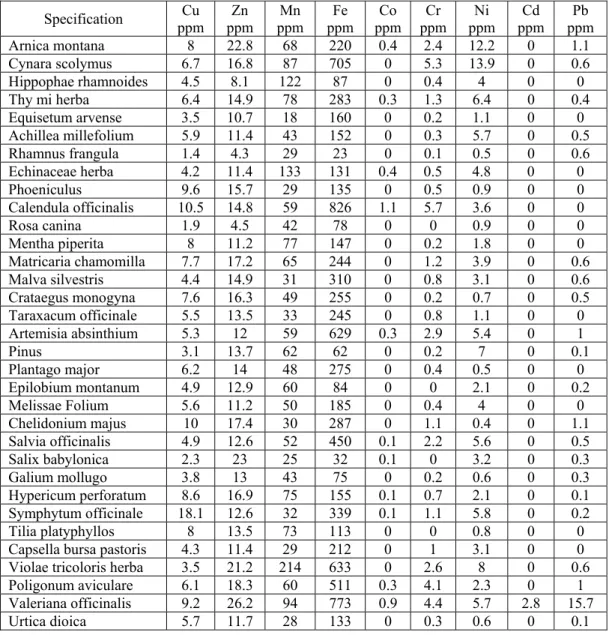
Table 1. The concentrations in Cooper, Zinc, Manganese, Iron, Cobalt, Chromium, Nickel, Cadmium and Lead in analyzed samples
Specification ppm Cu ppm Zn ppm Mn ppm Fe ppm Co ppm Cr ppm Ni ppm Cd ppm Pb Arnica montana 8 22.8 68 220 0.4 2.4 12.2 0 1.1 Cynara scolymus 6.7 16.8 87 705 0 5.3 13.9 0 0.6 Hippophae rhamnoides 4.5 8.1 122 87 0 0.4 4 0 0 Thy mi herba 6.4 14.9 78 283 0.3 1.3 6.4 0 0.4 Equisetum arvense 3.5 10.7 18 160 0 0.2 1.1 0 0 Achillea millefolium 5.9 11.4 43 152 0 0.3 5.7 0 0.5 Rhamnus frangula 1.4 4.3 29 23 0 0.1 0.5 0 0.6 Echinaceae herba 4.2 11.4 133 131 0.4 0.5 4.8 0 0
Phoeniculus 9.6 15.7 29 135 0 0.5 0.9 0 0 Calendula officinalis 10.5 14.8 59 826 1.1 5.7 3.6 0 0
Rosa canina 1.9 4.5 42 78 0 0 0.9 0 0 Mentha piperita 8 11.2 77 147 0 0.2 1.8 0 0 Matricaria chamomilla 7.7 17.2 65 244 0 1.2 3.9 0 0.6 Malva silvestris 4.4 14.9 31 310 0 0.8 3.1 0 0.6 Crataegus monogyna 7.6 16.3 49 255 0 0.2 0.7 0 0.5 Taraxacum officinale 5.5 13.5 33 245 0 0.8 1.1 0 0 Artemisia absinthium 5.3 12 59 629 0.3 2.9 5.4 0 1
Pinus 3.1 13.7 62 62 0 0.2 7 0 0.1
Plantago major 6.2 14 48 275 0 0.4 0.5 0 0 Epilobium montanum 4.9 12.9 60 84 0 0 2.1 0 0.2 Melissae Folium 5.6 11.2 50 185 0 0.4 4 0 0 Chelidonium majus 10 17.4 30 287 0 1.1 0.4 0 1.1 Salvia officinalis 4.9 12.6 52 450 0.1 2.2 5.6 0 0.5 Salix babylonica 2.3 23 25 32 0.1 0 3.2 0 0.3 Galium mollugo 3.8 13 43 75 0 0.2 0.6 0 0.3 Hypericum perforatum 8.6 16.9 75 155 0.1 0.7 2.1 0 0.1 Symphytum officinale 18.1 12.6 32 339 0.1 1.1 5.8 0 0.2 Tilia platyphyllos 8 13.5 73 113 0 0 0.8 0 0 Capsella bursa pastoris 4.3 11.4 29 212 0 1 3.1 0 0 Violae tricoloris herba 3.5 21.2 214 633 0 2.6 8 0 0.6 Poligonum aviculare 6.1 18.3 60 511 0.3 4.1 2.3 0 1 Valeriana officinalis 9.2 26.2 94 773 0.9 4.4 5.7 2.8 15.7 Urtica dioica 5.7 11.7 28 133 0 0.3 0.6 0 0.1
130
0 100 200 300 400 500 600 700 800 900
Linkage Distance poligonumsalvia
valeriana calendulaviolae artemisiacynara pinus epilobiumgalium rosa salix rhamnustilia hypericummentha urtica phoeniculusachillea equisetum echinaceaehyppophae symphytummalva chelidoniumplantago taraxacumcrataegus thymi capsella melissae matricariaarnica
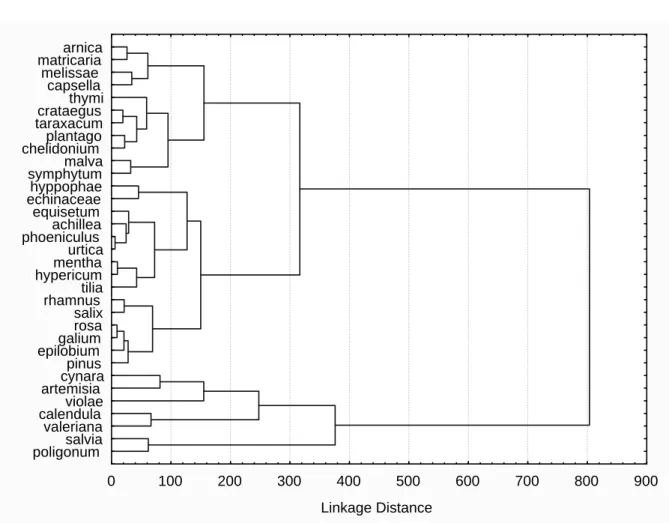
Figure 1 Clusters of medicinal plants using microelements
For cluster analysis it was used Statistica-6 software. The coefficients of matrix correlation of variables are presented in Table 2.
Table 2 The correlation coefficients of the microelements concentrations of medicinal plants
Microelements Cu Zn Mn Fe Co Cr Ni Cd Pb
Cu -
Zn 0.30 -
Mn -0.08 0.26 -
Fe 0.33 0.46 0.34 -
Co 0.30 0.39 0.19 0.63 -
Cr 0.29 0.47 0.29 0.93 0.70 -
Ni 0.11 0.39 0.45 0.45 0.25 0.55 -
Cd 0.17 0.46 0.16 0.41 0.54 0.36 0.11 -
Pb 0.17 0.50 0.16 0.45 0.54 0.41 0.16 0.99 - Marked correlations are significant at p < 0.05
The consistent correlation was found between Fe and Cr (0.93), Co and Cr (0.70) and Cd and Pb (0.99).
Copper deficiency in humans is a rare exception, and would not occur if Cu content were more than 2 mg in the daily diet. The national accepted limit for Cooper in tea is 50.0 mg/Kg (Ordinance 975/1998). For analysed samples Symphytum officinale has the highest content in Cooper (18.1 ppm), followed by Calendula officinalis (10.5
ppm), Chelidonium majus (10.0 ppm) and Phoeniculus (9.6 ppm). Rhamnus frangula has the smallest Cooper concentration (1.4 ppm).
131 Rhamnus frangula (4.3 ppm) and the higher for Valeriana officinalis (26.2 ppm).
Manganese In humans, the range between
deficiency and toxicity of Mn is narrow. The recommended ESADDI values for adults range from 2 to 5 mg Mn/day [10]. The contents in Mn for analysed samples were in range 18.0 – 214.0 ppm. The low content was determinated for Equisetum arvense (18.0 ppm) and the highest for Violae tricoloris herba (214.0 ppm).
Iron can not produce toxic effects in usual amounts. Nevertheless, the sum of published data suggests that Fe repletion beyond requirement may be hazardous [11,12].
Calendula officinalis has the greatest content in Iron (826.0 ppm), followed by Valeriana officinalis (773 ppm) and Cynara scolymus (705 ppm). Rhamnus frangula has the smallest content in Fe (23.0 ppm).
Nickel is an essential element for animal nutrition. Excessive soluble Ni compounds are hepatotoxic and nephrotoxic but as aerosols or dusts, insoluble Ni compounds or elemental Ni are very toxic (carcinogenic), justifying a lot of country imposed restricted limits, 0.05-1 mg/m3 [13].
Cynara scolymus has the great content in Nickel (13.9 ppm), followed by Arnica montana (12.2 ppm).
The higher quantity of chromium was determinate for Calendula officinalis (5.7 ppm). For Tilia platyphyllos, Salix babylonica, Rosa canina and Epilobium montanum were not detected chromium content.
The effects of Cadmium are only partially understood. Cadmium interferes with the uptake, transport and use of different macro- and micronutrients, especially Iron and Zinc.
Cadmium inhibit or activate a great enzymes number, like those rich in accessible sulfhydryl groups [14]. Also for a large nomber of medicinal herbs were not registered cobalt and cadmium contents.
Lead is not an essential element for life and it is very toxic for the nervous system and for the kidneys. The national accepted limit for Lead in tea is 5.0 mg/Kg (Ordinance 975/1998).
The microelements contents (Cu, Zn, Mn, Fe, Co, Cr, Ni, Cd and Pb) have grouped the analyzed medicinal plants in two main clusters. First main cluster was formed by other two groups. First group contained Arnica montana, Matricaria chamomilla, Melissae Folium, Capsella bursa
pastoris, Thymi herba, Crataegus monogyny, Taraxacum officinale, Plantago major,
Chelidonium majus, Malva silvestris, and
Symphytum officinale. All these medicinal plants had a medium content in Fe (185-339 ppm). The second group of the first main cluster was formed by Hippophae rhamnoides, Echinaceae herba, Equisetum arvense, Achillea millefolium, Phoeniculus, Urtica dioica, Mentha piperita, Hypericum perforatum, Tilia platyphyllos, Rhamnus frangula, Salix babylonica, Rosa canina, Galium mollugo, Epilobium montanum, and Pinus
characterized by small Fe concentrations, in range 87 -160 ppm. High Mn contents were determinated for Hippophae rhamnoides (122 ppm) and Echinaceae herba (133 ppm). The smallest contents in Cu were obtained for
Rhamnus frangula, Salix babylonica, Rosa canina, Pinus, Epilobium montanum, Galium mollugo,
ranged 1.4 – 4.9 ppm. Mentha piperita, Hypericum perforatum, and Tilia platyphyllos had appropriate contents in Cu (8.0 – 8.6 ppm) and Mn (73 – 77 ppm).
The second main cluster grouped Cynara scolymus, Artemisia absinthium, Violae tricoloris herba, Calendula officinalis, Valeriana officinalis, Salvia officinalis, Poligonum aviculare. The highest content in Fe characterized this cluster (450-826 ppm).
4. Conclusions
The contents in microelements for analysed samples were in range: 18.1 ppm (Symphytum officinale) - 1.4 ppm (Rhamnus frangula), for Copper; 26,2 ppm (Valeriana officinalis) – 4,3 ppm (Rhamnus frangula), for Zinc; 214 ppm. (Violsae tricoloris herba) - 18 ppm (Equisetum arvense), for Manganese; 826 ppm (Calendula officinalis) - 23 ppm (Rhamnus frangula), for Iron. The microelements contents (Cu, Zn, Mn, Fe, Co, Cr, Ni, Cd and Pb) have grouped the analyzed medicinal plants in two main clusters. First main cluster was formed by other two groups.
Acknowledgements
132 References
1. Lindsay, R. C. Food Additives. In O. Fennema (Ed.), Food chemistry, 1996,(3rd ed., pp. 767-823). New York: Marcel Dekker.
2. Favier, A. E. Nutritional and clinical factors affecting the bioavailability of trace elements in humans. In U. Schlemmer (Ed.), Proceedings of the international conference bioavailability: Nutritional, chemical and food processing implications of nutrient availability, 1993, 93.
3. Kabata A.and Pendias H. Trace Elements in Soils and Plants, 3rd Edition, CRC Press, Boca Raton, Fl., 2001, p. 365.
4. M.K. Mondal, T.K. Das, P. Biswas , C.C. Samanta, B. Bairagi. Influence of dietary inorganic and organic copper salt and level of soybean oil on plasma lipids, metabolites and mineral balance of broiler chickens, Animal Feed Science and Technology 139, 2007, 212– 233
5. Murray, C. and Lopez, A.. The Global burden of disease (vol. 1). Geneva: WHO, 1996.
6.Brock, J.H. Iron in infection, immunity, inflammation and neoplasia. In: Brock, J.H., Halliday, J.W., Pippard, M.J., Powell, L.W. (Eds.), Iron Metabolism in Health and Disease. W.B. Saunders, London, 1994, pp. 354-389.
7. Rincker, M.J., Clarke, S.L., Eisenstein, R.S., Link, J.E., Hill, G.M. Effects of iron supplementation on binding activity of iron regulatory proteins and the subsequent effect on growth performance and indices of hematological and mineral status of young pigs. J. Anim. Sci. 2005, 83, 2137-2145.
8. Chowdhury, S.D., Paik, I.K., Namkung, H., Lim, H.S. Responses of broiler chickens to organic copper fed in the form of copper-methionine chelate. Anim. Feed Sci. Technol., 2004, 115, 281–293.
9. Gergen I., Gogoaşă I., Drăgan Simona, Moigrădean Diana, Hărmănescu Monica. Heavy metal status in fruits and vegetables from a non-poluted area of Romania (Banat County). Metal Elements in Environment, Medicine and Biology, Gârban Z., Drăgan P. (Eds. Symp. Series), Tome VII, Publishing House Eurobit, Timişoara, 2006, p. 149-165.
10. Schäfer U. Manganese, In: Elements and their Compounds in the Environment, 2nd Ed., Edited by
Merian E., Anke M., Ihnat M., Stoepler M., Wiley-VCH, Weinheim, 2004, p. 901-930.
11. Schumann K. and Elsenhans B. Iron, In: Elements and their Compounds in the Environment, 2nd Ed.,
Edited by Merian E., Anke M., Ihnat M., Stoepler M., Wiley-VCH, Weinheim, 2004, p. 811-823
12. Schumann, K. Safety aspects of iron in food. Ann Nutr. Metab., 2001, 45, p. 91-101.
13. Sunderman F.W.Jr. Nickel, In: Elements and their Compounds in the Environment, 2nd Ed., Edited by Merian E., Anke M., Ihnat M., Stoepler M., Wiley-VCH, Weinheim, 2004, p. 841-865.
14. Vollenweider Pierre, Claudia Casio, Madeleine S. Gunthardt-Goerg, Catherine Keller. Localization and effects of cadmium in leaves of a cadmium-tolerant willow (Salix viminalis L.). Part II: Microlocalization and cellular effects of cadmium, Environmental and Experimental Botany, 2006, 58, p. 25-40.
*** Excerpt from Romanian Ministry of Public Health
Ordinance no 975/1998. Maximum limits accepted for heavy metal in foods.