Visit the National Academies Press online and register for...
Instant access to free PDF downloads of titles from the
Distribution, posting, or copying of this PDF is strictly prohibited without written permission of the National Academies Press. Unless otherwise indicated, all materials in this PDF are copyrighted by the National Academy of Sciences.
Request reprint permission for this book
10% off print titles
Custom notification of new releases in your field of interest Special offers and discounts
NATIONAL ACADEMY OF SCIENCES NATIONAL ACADEMY OF ENGINEERING INSTITUTE OF MEDICINE
NATIONAL RESEARCH COUNCIL ISBN
978-0-309-28951-1
288 pages 8.5 x 10
PAPERBACK (2014)
James W. Pellegrino, Mark R. Wilson, Judith A. Koenig, and Alexandra S.
Beatty, Editors; Committee on Developing Assessments of Science
Proficiency in K-12; Board on Testing and Assessment; Board on Science
Education; Division on Behavioral and Social Sciences and Education;
National Research Council
Committee on Developing Assessments of Science Proficiency in K-12
James W. Pellegrino, Mark R. Wilson, Judith A. Koenig, and Alexandra S. Beatty, Editors Board on Testing and Assessment
Board on Science Education
THE NATIONAL ACADEMIES PRESS 500 Fifth Street, NW Washington, DC 20001 NOTICE: The project that is the subject of this report was approved by the Governing Board of the National Research Council, whose members are drawn from the councils of the National Academy of Sciences, the National Academy of Engineering, and the Institute of Medicine. The members of the committee responsible for the report were chosen for their special competences and with regard for appropriate balance.
This study was supported by the S. D. Bechtel, Jr. Foundation, the Carnegie Corporation of New York under Contract No. B8834, and the William and Flora Hewlett Foundation under Contract No. 2012-7436. Any opinions, findings, conclusions, or recommendations expressed in this publication are those of the authors and do not necessarily reflect the views of the organizations or agencies that provided support for the project.
International Standard Book Number-13: 978-0-309-28951-1 International Standard Book Number-10: 0-309-28951-3 Library of Congress Control Number: 2014937574
Additional copies of this report are available from the National Academies Press, 500 Fifth Street, NW, Keck 360, Washington, DC 20001; (800) 624-6242 or (202) 334-3313; http://www.nap.edu.
Copyright 2014 by the National Academy of Sciences. All rights reserved. Printed in the United States of America
Suggested citation: National Research Council. (2014). Developing Assessments for the Next Generation Science
Standards. Committee on Developing Assessments of Science Proficiency in K-12. Board on Testing and Assessment and
Board on Science Education, J.W. Pellegrino, M.R. Wilson, J.A. Koenig, and A.S. Beatty, Editors. Division of Behavioral and Social Sciences and Education. Washington, DC: The National Academies Press.
The National Academy of Sciences is a private, nonprofit, self-perpetuating society of distinguished scholars engaged in scientific and engineering research, dedicated to the furtherance of science and technology and to their use for the gen-eral welfare. Upon the authority of the charter granted to it by the Congress in 1863, the Academy has a mandate that requires it to advise the federal government on scientific and technical matters. Dr. Ralph J. Cicerone is president of the National Academy of Sciences.
The National Academy of Engineering was established in 1964, under the charter of the National Academy of Sciences, as a parallel organization of outstanding engineers. It is autonomous in its administration and in the selection of its members, sharing with the National Academy of Sciences the responsibility for advising the federal government. The National Academy of Engineering also sponsors engineering programs aimed at meeting national needs, encourages education and research, and recognizes the superior achievements of engineers. Dr. C. D. Mote, Jr., is president of the National Academy of Engineering.
The Institute of Medicine was established in 1970 by the National Academy of Sciences to secure the services of eminent members of appropriate professions in the examination of policy matters pertaining to the health of the public. The Institute acts under the responsibility given to the National Academy of Sciences by its congressional charter to be an adviser to the federal government and, upon its own initiative, to identify issues of medical care, research, and education. Dr. Harvey V. Fineberg is president of the Institute of Medicine.
The National Research Council was organized by the National Academy of Sciences in 1916 to associate the broad community of science and technology with the Academy’s purposes of furthering knowledge and advising the federal government. Functioning in accordance with general policies determined by the Academy, the Council has become the principal operating agency of both the National Academy of Sciences and the National Academy of Engineering in pro-viding services to the government, the public, and the scientific and engineering communities. The Council is administered jointly by both Academies and the Institute of Medicine. Dr. Ralph J. Cicerone and Dr. C. D. Mote, Jr., are chair and vice chair, respectively, of the National Research Council.
COMMITTEE ON DEVELOPING ASSESSMENTS OF SCIENCE PROFICIENCY IN K-12
JAMES W. PELLEGRINO (Cochair), Learning Sciences Research Institute, University of Illinois atChicago
MARK R. WILSON (Cochair), Graduate School of Education, University of California, Berkeley RICHARD M. AMASINO, Department of Biochemistry, University of Wisconsin–Madison EDWARD H. HAERTEL, School of Education, Stanford University
JOAN HERMAN, National Center for Research on Evaluation, Standards, and Student Testing, University of California, Los Angeles
RICHARD LEHRER, Department of Teaching and Learning, Peabody College of Vanderbilt University
SCOTT F. MARION, National Center for the Improvement of Educational Assessment, Inc. PETER McLAREN, Rhode Island Department of Education
KNUT NEUMANN, Leibniz Institute for Science and Mathematics Education, University of Kiel WILLIAM PENUEL, School of Education, University of Colorado at Boulder
HELEN R. QUINN, SLAC National Accelerator Laboratory, Stanford University BRIAN J. REISER, School of Education and Social Policy, Northwestern University
KATHLEEN SCALISE, Educational Methodology, Policy and Leadership, University of Oregon JEROME M. SHAW, Education Department, University of California, Santa Cruz
NANCY BUTLER SONGER, School of Education, University of Michigan, Ann Arbor
ROBERTA TANNER, Retired Physics Teacher, Thompson School District, Loveland, Colorado CATHERINE J. WELCH, Department of Psychological and Quantitative Foundations, Educational
Measurement, and Statistics, University of Iowa
JUDITH A. KOENIG, Study Director, Senior Program Officer ALEXANDRA S. BEATTY, Senior Program Officer
STUART W. ELLIOTT, Director of Board on Testing and Assessment HEIDI SCHWEINGRUBER, Senior Program Officer
MARTIN STORKSDIECK, Director of Board on Science Education KELLY N. ARRINGTON, Senior Program Assistant
BOARD ON TESTING AND ASSESSMENT
EDWARD HAERTEL (Chair), School of Education, Stanford University GARY CHAMBERLAIN, Department of Economics, Harvard University MARK DYNARSKI, Pemberton Research, LLC
DAVID J. FRANCIS, Texas Institute for Measurement, Evaluation, and Statistics, University of Houston
JOAN HERMAN, National Center for Research on Evaluation, Standards, and Student Testing, University of California, Los Angeles
MICHAEL KANE, Test Validity, Educational Testing Service, Princeton, New Jersey SHARON LEWIS, Council of the Great City Schools
ROBERT MARE, Department of Sociology, University of California, Los Angeles DIANA C. PULLIN, School of Education, Boston College
ANN MARIE RYAN, Department of Psychology, Michigan State University
BRIAN STECHER, Education Program, The RAND Corporation, Santa Monica, California JOHN ROBERT WARREN, Department of Sociology, University of Minnesota
MARK R. WILSON, Graduate School of Education, University of California, Berkeley REBECCA ZWICK, Research and Development, Educational Testing Service, Santa Barbara,
California
BOARD ON SCIENCE EDUCATION
HELEN R. QUINN (Chair), SLAC National Accelerator Laboratory, Stanford University GEORGE BOGGS, Palomar College, San Marcos, California
MELANIE COOPER, Department of Chemistry, Michigan State University RODOLFO DIRZO, Department of Biology, Stanford University
JACQUELYNNE ECCLES, Department of Psychology, University of Michigan, Ann Arbor JOSEPH FRANCISCO, Department of Chemistry, Purdue University
MARGARET A. HONEY, New York Hall of Science
SUSAN KIEFFER, Department of Geology, University of Illinois, Urbana MATTHEW KREHBIEL, Kansas State Department of Education MICHAEL LACH, Urban Education Institute, University of Chicago
LYNN LIBEN, Department of Psychology, The Pennsylvania State University BRIAN REISER¸ School of Education and Social Policy, Northwestern University MARSHALL “MIKE” SMITH, Carnegie Foundation for the Advancement of Teaching
ROBERTA TANNER, Retired Physics Teacher, Thompson School District, Loveland, Colorado SUZANNE WILSON, Department of Teacher Education, Michigan State University
YU XIE, Department of Sociology, University of Michigan, Ann Arbor
MARTIN STORKSDIECK, Director
T
he U.S. public education system has seen many reform efforts come and go, and the claim that few leave lasting benefits after they are out of fashion can be made with some credibility. The 2012 A Framework forK-12 Science Education: Practices, Crosscutting Concepts, and Core Ideas offers
the promise of something quite different. The framework proposed a dramatic rethinking of science education grounded in a thoughtful analysis of the reasons science education has fallen short. With its insistence that science education inte-grate the practices, disciplinary core ideas, and crosscutting concepts of science and engineering in a coherent fashion across the K-12 years, the framework estab-lished goals that cannot be achieved through tinkering. Implementing its vision will require a thorough rethinking of each element of science education, including science assessment.
Assessments, understood as tools for tracking what and how well students have learned, play a critical role in the education system—from classrooms to state houses. Frequent misapplication of these tools and misuse of their results have tarnished their reputation. But the new K-12 framework makes clear that such tools, reflecting new modes of assessment designed to measure the integrated learning it envisions, will be essential. Our committee was asked to develop an approach to science assessment that would support attainment of this vision as it has been elaborated in the Next Generation Science Standards: For States, By
States, which were developed in response to the framework. Both documents are
new, and the changes they call for are barely under way, but new assessments will be needed as soon as states and districts begin the process of implementing the
Next Generation Science Standards (NGSS) and changing their approach to sci-ence education. This meant that our committee had to work quickly to assemble and evaluate a wide range of information related to research and practice and to assimilate thinking and perspectives from across many disciplines.
With funding from the S. D. Bechtel, Jr. Foundation, the Carnegie
Corporation of New York, and the William and Flora Hewlett Foundation, the National Research Council (NRC) established the Committee on Developing Assessment of Science Proficiency in K-12 to carry out a consensus study under the aegis of the Board on Testing and Assessment and the Board on Science Education. The committee was asked to recommend strategies for developing assessments that measure student proficiency in science as laid out in the new K-12 science education framework.
The committee benefited from the work of many others, and we wish to thank the many individuals who assisted us. We first thank the sponsors who sup-ported this work: the S. D. Bechtel, Jr. Foundation, the Carnegie Corporation of New York, and the William and Flora Hewlett Foundation. We particularly thank the representatives from the sponsoring groups for their ongoing assistance and insights about the project: Andres Henriquez with Carnegie; Dennis Udall with Hewlett; and Soo Venkateson with Bechtel.
During the course of its work, the committee met four times, including two public sessions. The first public session was held in Palo Alto, California, at the offices of the Moore Foundation. We thank the staff at the Moore Foundation, particularly Janet Coffey, for their gracious hospitality in hosting this meet-ing. At this meeting, we heard from representatives of the two Race to the Top Assessment Program consortia with regard to their plans for using computer-based assessments, performance tasks, and other innovative approaches to assessing English language arts and mathematics that might be applied to assessment of sci-ence. We thank Jeff Nelhaus and Enis Dogan for their presentations on the work of the Partnership for Assessment of Readiness for College and Careers, and we thank Joe Wilhoft and Stan Rabinowitz for their presentations on the work of the Smarter Balanced Assessment Consortia.
The second meeting included a public workshop designed for the commit-tee to learn more about innovative approaches to science assessment. We thank Alan Friedman, former member of the National Assessment Governing Board, and Peggy Carr, with the National Center for Education Statistics, for their pre-sentation about the Computer Interactive and Hands-On Science Assessment of the National Assessment of Educational Progress; Rosemary Reshetar, with the
College Board, for her presentation about the newly revised Advanced Placement assessment in biology; Edys Quellmalz, with WestEd, for her presentation about the SimScientist Program; and Joseph Krajcik, with Michigan State University, for his presentation about the Investigating and Questioning our World through Science and Technology Program.
The workshop also provided time for the committee to learn more about science assessments that are currently used in some states, as well as time for state science instruction and assessment specialists to discuss the assessment challenges associated with the NGSS. To organize this part of the workshop, we coordi-nated our plans with David Heil and Sasha Burchuk, the State Collaborative on Assessment and Student Standards (SCASS) in science. The SCASS is supported by the Council of Chief State School Officers (CCSSO) and includes 29 science instruction and assessment experts in 16 states. David and Sasha were key in arranging for the wide participation of those experts in the workshop and helped us select SCASS members to serve on workshop panels. We are very grateful for the time, effort, and insights David and Sasha contributed toward making the workshop a success. We also thank the CCSSO for covering their financial contri-bution for the workshop.
We offer appreciation to all the state science instruction and assessment specialists who made presentations at the workshop, including Robin Anglin, West Virginia Department of Education; Anita Bernhardt, Maine Department of Education; Melinda Curless, Kentucky Department of Education; Jeff Greig, Connecticut State Department of Education; Susan Codere Kelly, Michigan Department of Education; Matt Krehbiel, Kansas State Department of Education; Shelley Lee, Wisconsin Department of Public Instruction; Yvette McCulley, Iowa Department of Education; Beverly Vance, North Carolina Department of Public Instruction; and James Woodland, Nebraska Department of Education. Their information and insights were very helpful to the committee.
After the workshop, we followed up with state instruction and assessment specialists to learn more about their science assessments. These conversations pro-vided a great deal of background information, and we are grateful for the infor-mation and insights we received. We thank Rachel Aazzerah, Oregon Department of Education; Catherine Bowler, Massachusetts Department of Education; Liz Butner, Connecticut Department of Education; Dawn Cameron, Minnesota Department of Education; Gail Hall, Vermont Department of Education; Saundra Hamon, Kentucky Department of Education; Lauren Monowar-Jones, Ohio
Department of Education; Judy Pinnsonault, New York State Department of Education; and Brad Talbert, Utah Department of Education.
The report includes numerous examples of assessment tasks that measure science learning as envisioned in the framework and the NGSS, most of which were originally developed by committee members. Three of these examples were developed by scholars outside of the committee: Geneva Haertel and Daisy Rutstein with SRI International; Thomas Matts and Trevor Packer with the Advanced Placement Program at the College Board; and Edys Quellmalz with WestEd. We thank them for their generosity in allowing us to use their examples.
We are especially indebted to Stephen Pruitt with Achieve, Inc., who coordi-nated the efforts to develop the NGSS. Stephen provided us with ongoing informa-tion about the development of the standards and answered all of our quesinforma-tions. We sincerely appreciate his responsiveness.
The committee gratefully acknowledges the dedicated effort provided by the staff of the Board on Testing and Assessment (BOTA) and the Board on Science Education (BOSE), who worked directly on this project. Stuart Elliott, director of BOTA, and Martin Storksdieck, director of BOSE, provided leadership in moving this project forward, and their insights and guidance throughout the course of the study were invaluable. We thank Heidi Schweingruber of BOSE for her insights about the NGSS and the implications for instruction and assessment. The commit-tee also thanks Kelly Arrington, senior project assistant, for her exceptional orga-nizational skills and her close attention to detail. Kelly handled all of the admin-istrative details associated with four committee meetings, held in a variety of locations, and a workshop attended by more than 100 people, and she provided critical support in preparing the manuscript.
Most especially, we express our appreciation for the extraordinary work done by Judy Koenig and Alix Beatty of BOTA in assembling critical information and in the drafting and editing of this report. Their efforts enabled the committee to push forward and meet multiple challenges related to project timelines, as well as the challenges of substantive issues regarding the design and use of educational assessments in general and for science in particular.
We also thank members of the Office of Reports and Communication of the Division of Behavioral and Social Sciences for their dedicated work on this report. We are indebted to Eugenia Grohman for her sage advice in editing numerous versions of this manuscript. We thank Kirsten Sampson Snyder for her work in coordinating a very intense review process and Yvonne Wise for shepherding the manuscript through myriad stages of production.
This report has been reviewed in draft form by individuals chosen for their diverse perspectives and technical expertise, in accordance with procedures approved by the NRC’s Report Review Committee. The purpose of this indepen-dent review is to provide candid and critical comments that will assist the institu-tion in making its published report as sound as possible and to ensure that the report meets institutional standards for objectivity, evidence, and responsiveness to the charge. The review comments and draft manuscript remain confidential to protect the integrity of the process.
We thank the following individuals for their review of this report: Charles W. (Andy) Anderson, Department of Teacher Education, Michigan State
University; William B. Bridges, Department of Engineering (emeritus), California Institute of Technology; Derek Briggs, Research and Evaluation Methodology, School of Education, University of Colorado at Boulder; Angela DeBarger, Center for Technology in Learning, SRI International; George DeBoer, Project 2061, American Association for the Advancement of Science; Richard Duran, School of Education, University of California, Santa Barbara; Sean Elkins, Science Academic Program Consultant, Kentucky Department of Education; Brian Gong, Center for Assessment, Dover, New Hampshire; David Klahr, Department of Psychology, Carnegie Mellon University; Matt Krehbiel, Science Education Program, Kansas State Department of Education; Peter Labudde, Centre of Science and Technology Education, University of Applied Sciences and Arts Northwestern Switzerland; Richard C. Larson, Engineering Systems Division, Massachusetts Institute of Technology; Steven Long, Science Department, Rogers High School, Rogers, Arizona; Karen Mitchell, Association of American Medical Colleges; Mark D. Reckase, Department of Counseling, Educational Psychology and Special Education, Michigan State University; Eugenie C. Scott, National Center on Science Education, Oakland, California; Lorrie A. Shepard, School of Education, University of Colorado at Boulder; and Rebecca Zwick, Gevirtz Graduate School of Education, University of California, Santa Barbara, and Statistical Analysis, Data Analysis, and Psychometric Research, Educational Testing Service.
Although the reviewers listed above provided many constructive comments and suggestions, they were not asked to endorse the content of the report nor did they see the final draft of the report before its release. The review of this report was overseen by Lauress Wise, with HumRRO, and May Berenbaum, with the University of Illinois at Urbana-Champaign. Appointed by the NRC, they were responsible for making certain that an independent examination of this report was carried out in accordance with institutional procedures and that all review
com-ments were carefully considered. Responsibility for the final content of this report rests entirely with the committee and the institution.
Finally, as cochairs of the committee, we thank all our fellow committee members for their dedication and outstanding contributions to this project. They actively assisted in all stages of this project, including planning the public work-shop and making presentations, selecting and developing examples of assessment tasks, and writing and rewriting multiple drafts of this report. Their contributions during the late stages of the report’s development, when sections of the report had to be revised on very tight schedules, are especially appreciated. They gave gener-ously of their time and intellects throughout the project. We believe their contri-butions ensure that the final product is understandable to a variety of audiences and fully portrays the complex issues associated with developing the new science assessments that will be needed.
James W. Pellegrino and Mark R. Wilson, Cochairs Committee on Developing Assessments of Science Proficiency in K-12
Summary 1
1 Introduction 11
Context, 12
Need for Fundamental Change, 15 Committee’s Approach, 16
Guide to the Report, 19
2 Assessments to Meet the Goals of the Framework 25
The Framework’s Vision for K-12 Science Education, 25 Dimensions of the Framework, 28
Dimension 1: Scientific and Engineering Practices, 29 Dimension 2: Crosscutting Concepts, 30
Dimension 3: Disciplinary Core Ideas, 31
Integration: Three-Dimensional Science Learning, 31
Learning Progressions: Developing Proficiency Over Time, 33 Supporting Connections Across Disciplines, 37
Example 1: What Is Going on Inside Me?, 38 Instructional Context, 38
Assessment, 39
Conclusions, 43
Assessing Three-Dimensional Learning, 44
Assessing the Development of Three-Dimensional Learning Over Time, 44
Breadth and Depth of Content, 45
3 Assessment Design and Validation 47
Assessment as a Process of Evidentiary Reasoning, 48 Construct-Centered Approaches to Assessment Design, 50 Illustrations of Task-Design Approaches, 56
Evidence-Centered Design —Example 2: Pinball Car Task, 56 Construct Modeling: Measuring Silkworms, 65
Validation, 76
Conclusion and Recommendation, 80
4 Classroom Assessment 83
Assessment Purposes: Formative or Summative, 84 Characteristics of NGSS-Aligned Assessments, 86 Variation in Assessment Activities, 87
Tasks with Multiple Components, 88 Making Connections, 90
Learning as a Progression, 90 Six Examples, 92
Example 3: Measuring Silkworms, 93 Example 4: Behavior of Air, 94 Example 5: Movement of Water, 99
Example 6: Biodiversity in the Schoolyard, 104 Example 7: Climate Change, 110
Example 8: Ecosystems, 115 Lessons from the Examples, 123 Types of Assessment Activities, 123 Interpreting Results, 125
Using Multiple Practices, 126 Professional Development, 128 Conclusions and Recommendations, 129
5 Assessment for Monitoring 133 Current Science Monitoring Assessments, 135
Including Performance Tasks in Monitoring Assessments, 137 Measurement and Implementation Issues, 138
Examples, 140
Implications for Assessment of the NGSS, 142 Design Options, 144
Assumptions, 145
Two Classes of Design Options, 147 On-Demand Assessment Components, 147
Classroom-Embedded Assessment Components, 165 Collections of Performance Tasks, 166
Maintaining the Quality of Classroom-Embedded
Components, 171
Taking Advantage of Technology, 175 Variations in Item-Response Formats, 177 Assessing Challenging Constructs, 183 Task Surrounds, 187
Conclusions and Recommendations, 189
6 Designing an Assessment System 193
Rationale for a Systems Approach, 194 Value of a System of Assessments, 196 Curriculum and Instruction, 196 Accountability Policies, 198
Communicating Assessment Results, 199 System Components, 200
Classroom Assessments, 201 Monitoring Assessments, 202
Indicators of Opportunity to Learn, 203
Understanding the System Components and Their Uses, 205 Examples of Alternative Science Assessment Systems, 207 Example 1, 209
Example 2, 211
7 Implementing a Science Assessment System 217 Gradual Implementation, 218
Equity and Fairness, 221 Technology, 226
Costs, 227
Recommendations, 230
References 235
Appendixes
A Workshop Agenda 253
SUMMARY
S
cience education is facing dramatic change. The new A Framework forK-12 Science Education: Practices, Crosscutting Concepts, and Core Ideas
(hereafter, referred to as “the framework”) and the Next Generation Science
Standards: For States, By States are designed to guide educators in significantly
altering the way science is taught—from kindergarten through high school (K-12). The framework is aimed at making science education more closely resemble the way scientists actually work and think. It is also aimed at making instruction reflect research on learning that demonstrates the importance of building coherent understandings over time.
The framework structures science learning around three dimensions: the
practices through which scientists and engineers do their work; the key crosscut-ting concepts that link the science disciplines; and the core ideas of the disciplines
of life sciences, physical sciences, earth and space sciences, and engineering and technology. It argues that they should be interwoven in every aspect of science education, most critically, curriculum, instruction, and assessment. The framework emphasizes the importance of the connections among the disciplinary core ideas, such as using understandings about chemical interactions from physical science to explain biological phenomena.
We use the term “three-dimensional science learning” to refer to the integra-tion of these dimensions. It describes not the process of learning, but the kind of thinking and understanding that science education should foster. The framework and the Next Generation Science Standards (NGSS) are also grounded in the ideas
that science learning develops over time and assessments will need to mark stu-dents’ progress toward specific learning objectives.
This new vision of science learning presents considerable challenges—but also a unique and valuable opportunity for assessment. Existing science assess-ments have not been designed to capture three-dimensional science learning, and developing assessments that can do so requires new approaches. Rethinking sci-ence assessment in this way also offers an opportunity to address long-standing problems with current approaches. In this context, the following charge was given to the Committee on Developing Assessments of Science Proficiency in K-12:
The committee will make recommendations for strategies for developing assessments that validly measure student proficiency in science as laid out in the new K-12 science educa-tion framework. The committee will review recent and current, ongoing work in science assessment to determine which aspects of the necessary assessment system for the frame-work’s vision can be assessed with available techniques and what additional research and development is required to create an overall assessment system for science education in K-12. The committee will prepare a report that includes a conceptual framework for science assessment in K-12 and will make recommendations to state and national policy makers, research organizations, assessment developers, and study sponsors about the steps needed to develop valid, reliable, and fair assessments for the framework’s vision of science education. The committee’s report will discuss the feasibility and cost of its recommendations.
AN ASSESSMENT SYSTEM
The NGSS describe specific goals for science learning in the form of performance
expectations—statements about what students should know and be able to do at
each grade level—and thus what should be tested at each grade level. Each perfor-mance expectation incorporates all three dimensions, and the NGSS emphasize the importance of the connections among scientific concepts. The NGSS’s performance expectations place significant demands on science learning at every grade level. It will not be feasible to assess all of the performance expectations for a given grade level during a single assessment occasion. Students will need multiple—and varied—assessment opportunities to demonstrate their competence on the perfor-mance expectations for a given grade level (Conclusion 2-3).1
1The conclusion and recommendation numbers refer to the report’s chapters and the order in
In addition, the effective evaluation of three-dimensional science learning will require more than a one-to-one mapping between the performance expecta-tions and assessment tasks. More than one assessment task may be needed to adequately assess students’ mastery of some performance expectations, and any given assessment task may assess aspects of more than one performance expecta-tion. Moreover, to assess both understanding of core knowledge and facility with a practice, assessments may need to probe students’ use of a given practice in more than one disciplinary context. Assessment tasks that attempt to test practices in isolation from one another may not be meaningful as assessments of the three-dimensional science learning called for by the NGSS (Conclusion 2-4).
To adequately cover the three dimensions, assessment tasks will need to con-tain multiple components, such as a set of interrelated questions. It may be useful to focus on individual practices, core ideas, or crosscutting concepts in a specific component of an assessment task, but, together, the components need to support inferences about students’ three-dimensional science learning as described in a given performance expectation (Conclusion 2-1).
Measuring the learning described in the NGSS will require assessments that are significantly different from those in current use. Specifically, the tasks designed to assess the performance expectations in the NGSS will need to have the follow-ing characteristics (Conclusion 4-1):
• include multiple components that reflect the connected use of different scien-tific practices in the context of interconnected disciplinary ideas and cross-cutting concepts;
• address the progressive nature of learning by providing information about where students fall on a continuum between expected beginning and ending points in a given unit or grade; and
• include an interpretive system for evaluating a range of student products that are specific enough to be useful for helping teachers understand the range of student responses and provide tools for helping teachers decide on next steps in instruction.
Designing specific assessment tasks and assembling them into tests will require a careful approach to assessment design. Some currently used approaches, such as evidence-centered design and construct modeling, do reflect such design through the use of the fundamentals of cognitive research and theory. With these approaches, the selection and development of assessment tasks, as well as the
scoring rubrics and criteria for scoring, are guided by the construct to be assessed and the best ways of eliciting evidence about students’ proficiency with that con-struct. In designing assessments to measure proficiency on the NGSS performance expectations, the committee recommends the use of one of these approaches (Recommendation 3-1).
More broadly, a system of assessments will be needed to measure the NGSS performance expectations and provide students, teachers, administrators, policy makers, and the public with the information each needs about student learning (Conclusion 6-1). This conclusion builds on the advice in prior reports of the National Research Council. We envision a range of assessment strategies that are designed to answer different kinds of questions with appropriate degrees of speci-ficity and provide results that complement one another. Such a system needs to include three components:
1. assessments designed to support classroom instruction,
2. assessments designed to monitor science learning on a broader scale, and 3. a series of indicators to monitor that the students are provided with
ade-quate opportunity to learn science in the ways laid out in the framework and the NGSS.
CLASSROOM ASSESSMENTS
Classroom assessments are an integral part of instruction and learning and should include both formative and summative tasks: formative tasks are those that are specifically designed to be used to guide instructional decision making and lesson planning; summative tasks are those that are specifically designed to assign stu-dent grades.
The kind of instruction that will be effective in teaching science in the way the framework and the NGSS envision will require students to engage in scien-tific and engineering practices in the context of disciplinary core ideas—and to make connections across topics through the crosscutting ideas. To develop the skills and dispositions to use scientific and engineering practices needed to fur-ther their learning and to solve problems, students need to experience instruction in which they (1) use multiple practices in developing a particular core idea and (2) apply each practice in the context of multiple core ideas. Effective use of the practices often requires that they be used in concert with one another, such as in supporting explanation with an argument or using mathematics to analyze data (Conclusion 4-2).
Assessment activities will be critical supports for this instruction. Students will need guidance about what is expected of them and opportunities to reflect on their performance as they develop proficiencies. Teachers will need information about what students understand and can do so they can adapt their instruction. Instruction that is aligned with the framework and the NGSS will naturally provide many opportunities for teachers to observe and record evidence of students learning. The student activities that reflect such learning include developing and refining models; generating, discuss-ing, and analyzing data; engaging in both spoken and written explanations and argu-mentation; and reflecting on their own understanding. Such opportunities are the basis for the development of assessments of three-dimensional science learning.
Assessment tasks that have been designed to be integral to classroom instruction—in which the kinds of activities that are part of high-quality instruc-tion are deployed in particular ways to yield assessment informainstruc-tion—are begin-ning to be developed. They demonstrate that it is possible to design tasks that elicit students’ thinking about disciplinary core ideas and crosscutting concepts by engag-ing them in scientific practices and that students can respond to them successfully (Conclusion 4-3). However, these types of assessments of three-dimensional science learning are challenging to design, implement, and properly interpret. Teachers will need extensive professional development to successfully incorporate this type of assess-ment into their practice (Conclusion 4-4).
State and district leaders who design professional development for teachers should ensure that it addresses the changes posed by the framework and the NGSS in both the design and use of assessment tasks as well as instructional strategies. Professional development has to support teachers in integrating practices, cross-cutting concepts, and disciplinary core ideas in inclusive and engaging instruction and in using new modes of assessment that support such instructional activities (Recommendation 4-1).
Curriculum developers, assessment developers, and others who create instruc-tional units and resource materials aligned to the new science framework and the NGSS will need to ensure that assessment activities included in such materials (such as mid- and end-of-chapter activities, suggested tasks for unit assessment, and online activities) require students to engage in practices that demonstrate their understanding of core ideas and crosscutting concepts. These materials should also attend to mul-tiple dimensions of diversity (e.g., by connecting with students’ cultural and linguistic resources). In designing these materials, development teams need to include experts in science, science learning, assessment design, equity and diversity, and science teaching (Recommendation 4-2).
MONITORING ASSESSMENTS
Assessments designed for monitoring purposes, also referred to as external assess-ments, are used to audit student learning over time. They are used to answer impor-tant questions about student learning such as: How much have the students in a cer-tain school system learned over the course of a year? How does achievement in one school system compare with achievement in another? Is one instructional technique or curricular program more effective than another? What are the effects of a particular policy measure such as reduction in class size?
To measure the NGSS performance expectations, the tasks used in assessments designed for monitoring purposes need to have the same characteristics as those used for classroom assessments. But assessments used for monitoring pose additional chal-lenges: they need to be designed so that they can be given to large numbers of stu-dents, to be sufficiently standardized to support the intended monitoring purpose, to cover an appropriate breadth of the NGSS, and to be feasible and cost-effective for states.
The multicomponent tasks needed to effectively evaluate the NGSS performance expectations will include a variety of response formats, including performance-based questions, those that require students to construct or supply an answer, produce a product, or perform an activity. Although performance-based questions are especially suitable for assessing some aspects of student proficiency on the NGSS performance expectations, it will not be feasible to cover the full breadth and depth of the NGSS performance expectations for a given grade level with a single external assessment comprised solely or mostly of performance-based questions: performance-based ques-tions take too much time to complete, and many of them would be needed in order to fully cover the set of performance expectations for a grade level. Consequently, the information from external on-demand assessments (i.e., assessments that are administered at a time mandated by the state) will need to be supplemented with information gathered from classroom-embedded assessments (i.e., assessments that are administered at a time determined by the district or school that fits the instructional sequence in the classroom) to fully cover the breadth and depth of the performance expectations. Both kinds of assessments will need to be designed so that they produce information that is appropriate and valid to support a specific monitoring purpose (Recommendation 6-1).
Classroom-embedded assessments may take various forms. They could be self-contained curricular units, which include instructional materials and assessments pro-vided by the state or district to be administered in classrooms. Alternatively, a state or district might develop item banks of tasks that could be used at the appropriate time
in classrooms. States or districts might require that students in certain grade levels assemble portfolios of work products that demonstrate their levels of proficiency. Using classroom-embedded assessments for monitoring purposes leaves a number of important decisions to the district or school; quality control procedures would need to be implemented so that these assessments meet appropriate technical stan-dards (Conclusion 5-2).
External assessments would consist of sets of multicomponent tasks. To the extent possible, these tasks should include—as a significant and visible aspect of the assessment—multiple, performance-based questions. When appropriate, computer-based technology should be used to broaden and deepen the range of performances used on these assessments (Recommendation 6-2).
Assessments that include performance-based questions can pose technical and practical challenges for some monitoring purposes. For instance, it can be dif-ficult both to attain appropriate levels of score reliability and to produce results that can be compared across groups or across time, comparisons that are impor-tant for monitoring. Developing, administering, and scoring the tasks can be time consuming and resource intensive. To help address these challenges, assessment developers should take advantage of emerging and validated innovations in assess-ment design, scoring, and reporting to create and impleassess-ment assessassess-ments of three-dimensional science learning (Recommendation 5-2). In particular, state and local policy makers should design the external assessment component of their systems so that they incorporate the use of matrix-sampling designs whenever appropriate (rather than requiring that every student take every item).
INDICATORS OF OPPORTUNITY TO LEARN
Indicators of the opportunity to learn make it possible to evaluate the effectiveness of science instructional programs and the equity of students’ opportunity to learn science in the ways envisioned by the new framework. States should routinely col-lect information to monitor the quality of the classroom instruction in science, the extent to which students have the opportunity to learn science in the way called for in the framework, and the extent to which schools have the resources needed to support learning (such as teacher qualification and subject area peda-gogical knowledge, and time, space, and materials devoted to science instruction) (Recommendation 6-6).
Measures of the quality and content of instruction should also cover inclu-sive instructional approaches that reach students of varying cultural and linguistic backgrounds. Because assessment results cannot be fully understood in the absence
of information about the opportunities to learn what is tested, states should col-lect relevant indicators—including the material, human, and social resources avail-able—to support student learning so they can contextualize and validate the infer-ences drawn from assessment results (Recommendation 7-6). This information should be collected through inspections of school science programs, surveys of students and teachers, monitoring of teacher professional development programs, and documentation of curriculum assignments and student work.
IMPLEMENTATION
The assessment system that the committee recommends differs markedly from current practice and will thus take time to implement, just as it will take time to adopt the instructional programs needed for students to learn science in the way envisioned in the framework and the NGSS. States should develop and imple-ment new assessimple-ment systems gradually and establish carefully considered priori-ties. Those priorities should begin with what is both necessary and possible in the short term while also establishing long-term goals leading to implementation of a fully integrated and coherent system of curriculum, instruction, and assessment (Recommendation 7-1).
The committee encourages a developmental path for assessment that is “bot-tom up” rather than “top down”: one that begins with the process of designing assessments for the classroom, perhaps integrated into instructional units, and moves toward assessments for monitoring. In designing and implementing their assessment systems, states will need to focus on professional development. States will need to include adequate time and resources for professional development so that teachers can be properly prepared and guided and so that curriculum and assessment developers can adapt their work to the vision of the framework and the NGSS (Recommendation 7-2).
State and district leaders who commission assessment development should ensure that the plans address the changes called for by the framework and the NGSS. They should build into their commissions adequate provision for the sub-stantial amounts of time, effort, and refinement that are needed to develop and implement the use of such assessments: multiple cycles of design-based research will be necessary (Recommendation 7-3).
Existing and emerging technologies will be critical tools for creating a sci-ence assessment system that meets the goals of the framework and the NGSS, particularly those that permit the assessment of three-dimensional knowl-edge, as well as the streamlining of assessment administration and scoring
(Recommendation 7-7). States will be able to capitalize on efforts already under way to implement the new Common Core State Standards in English language arts and mathematics, which have required educators to integrate learning expectations and instruction. Nevertheless, the approach to science assessment that the commit-tee recommends will still require modifications to current systems. States will need to carefully lay out their priorities and adopt a thoughtful, reflective, and gradual process for making the transition to an assessment system that supports the vision of the framework and the NGSS.
A fundamental component of the framework’s vision for science education is that all students can attain its learning goals. The framework and the NGSS both stress that this can only happen if all students have the opportunity to learn in the new ways called for and if science educators are trained to work with mul-tiple dimensions of diversity. A good assessment system can play a critical role in providing fair and accurate measures of the learning of all students and providing students with multiple ways of demonstrating their competency. Such an assess-ment system will include formats and presentation of tasks and scoring procedures that reflect multiple dimensions of diversity, including culture, language, ethnicity, gender, and disability. Individuals with expertise in diversity should be integral participants in developing state assessment systems (Recommendation 7-5).
A
Framework for K-12 Science Education: Practices, Crosscutting Concepts, and Core Ideas (National Research Council, 2012a, hereafter referred toas “the framework”) provided the foundation for new science education standards, which were published the following year (NGSS Lead States, 2013). The framework is grounded in a new vision for science education from kindergar-ten through high school (K-12): that all students—not just those who inkindergar-tend to pursue science beyond high school—will learn core scientific ideas in increasing depth over multiple years of schooling. It calls for an approach to education that closely mirrors the way that science is practiced and applied, and it focuses on the cumulative learning opportunities needed to ensure that (National Research Council, 2012a, p. 1):
[By] the end of 12th grade, all students have some appreciation of the beauty and wonder of science; possess sufficient knowledge of science and engineering to engage in public discussions on related issues; are careful consumers of scientific and technological infor-mation related to their everyday lives; are able to continue to learn about science outside school; and have the skills to enter careers of their choice, including (but not limited to) careers in science, engineering, and technology.
The framework cites well-known limitations in K-12 science education in the United States—that it “is not organized systematically across multiple years of school, emphasizes discrete facts with a focus on breadth over depth, and does not provide students with engaging opportunities to experience how science is actu-ally done” (p. 1). To address these limitations, the framework details three
dimen-INTRODUCTION
sions for science education—the practices through which scientists and engineers do their work, the key crosscutting concepts for all disciplines, and the core ideas of the disciplines—and it argues that the dimensions need to be interwoven in every aspect of science education, including assessment.
Developing new assessments to measure the kinds of learning the framework describes presents a significant challenge and will require a major change to the sta-tus quo. The framework calls for assessments that capture students’ competencies in performing the practices of science and engineering by applying the knowledge and skills they have learned. The assessments that are now in wide use were not designed to meet this vision of science proficiency and cannot readily be retrofitted to do so. To address this disjuncture, the Committee on Developing Assessments of Science Proficiency in K-12 was asked to help guide the development of new science assessments.
The committee was charged to make recommendations to state and national policy makers, research organizations, assessment developers, and funders about ways to use best practices to develop effective, fair, reliable, and high-quality assessment sys-tems that support valid conclusions about student learning. The committee was asked to review current assessment approaches and promising research and to develop both a conceptual framework for K-12 science assessment and an analysis of feasibility issues. The committee’s full charge is shown in Box 1-1.
CONTEXT
Science education has been under a great deal of scrutiny for several decades. Policy makers have lamented that the United States is falling behind in science, technology, engineering, and mathematics (STEM) education, based on international compari-sons and on complaints that U.S. students are not well prepared for the workforce of the 21st century (see, e.g., National Research Council, 2007). The fact that women and some demographic groups are significantly underrepresented in postsecondary STEM education and in STEM careers is another fact that has captured attention (Bystydzienski and Bird, 2006; National Research Council, 2011a; Burke and Mattis, 2007). The framework discusses ways in which some student groups have been excluded from science and the need to better link science instruction to diverse stu-dents’ interests and experiences.1
1See Chapter 11 of the framework (National Research Council, 2012a) for discussion of these
Researchers, educators, and others have argued that a primary reason for the problems is the way science is taught in U.S. schools (see, e.g., National Research Council, 2006; National Task Force on Teacher Education in Physics, 2010; Davis et al., 2006; Association of Public and Land-grant Universities, 2011). They have pointed out specific challenges—for example, that many teachers who are responsible for science have not been provided with the knowledge and skills required to teach in the discipline they are teaching or in science education2— and the lack of adequate instructional time and adequate space and equipment for investigation and experimentation in many schools (OECD, 2011; National Research Council, 2005). Another key issue has been the inequity in access to instructional time on science and associated resources and its influence on the per-formance of different demographic groups of students. Others have focused on a broader failing, arguing that K-12 science education is generally too disconnected from the way science and engineering are practiced and should be reformed. The framework reflects and incorporates these perspectives.
The framework’s approach is also grounded in a growing body of research on how young people learn science, which is relevant to both instruction and
2This critique is generally targeted to both middle and secondary school teachers, who are
usually science specialists, and elementary teachers who are responsible for teaching several subjects.
BOX 1-1
STATEMENT OF TASK
The committee will make recommendations for strategies for developing assessments that validly measure stu-dent proficiency in science as laid out in the new K-12 science education framework. The committee will review recent and current, ongoing work in science assessment to determine which aspects of the necessary assessment system for the framework’s vision can be assessed with available techniques and what additional research and development is required to create an overall assessment system for science education in K-12. The committee will prepare a report that includes a conceptual framework for science assessment in K-12 and will make recom-mendations to state and national policy makers, research organizations, assessment developers, and study spon-sors about the steps needed to develop valid, reliable, and fair assessments for the framework’s vision of science education. The committee’s report will discuss the feasibility and cost of its recommendations.
assessment. Researchers and practitioners have built an increasingly compelling pic-ture of the cumulative development of conceptual understanding and the importance of instruction that guides students in a coherent way across the grades (National Research Council, 2001, 2006). A related line of research has focused on the impor-tance of instruction that is accessible to students of different backgrounds and uses their varied experiences as a base on which to build. These newer models of how stu-dents learn science are increasingly dominant in the science education community, but feasible means of widely implementing changes in teacher practice that capitalize on these ideas have been emerging only gradually.
The new framework builds on influential documents about science education for K-12 students, including the National Science Education Standards (National Research Council, 1996) the Benchmarks for Science Literacy: A Tool for Curriculum
Reform (American Association for the Advancement of Science, 1993, 2009), and
the Science Framework for the 2009 National Assessment of Educational Progress (National Assessment Governing Board, 2009). At the same time, the landscape of academic standards has changed significantly in the last few years, as the majority of states have agreed to adopt common standards in language arts and mathematics.3
National and state assessment programs, as well as international ones, have been exploring new directions in assessment and will be useful examples for the devel-opers of new science assessments. Two multistate consortia received grants under the federal Race to the Top Assessment Program to develop innovative assessment in language arts and mathematics that will align with the new Common Core State Standards. The Partnership for Assessment of Readiness for College and Careers (PARCC) and the Smarter Balanced Assessment Consortium (SBAC) are working to develop assessments that can be implemented during the 2014-2015 school year.4 We have followed their progress closely, but our recommendations for science assess-ment are completely separate from their work. Examples from international science assessments and the approach to developing assessments for the revised Advanced Placement Program in high schools in biology are other valuable models.
3The Common Core State Standards have been adopted by 45 states, the District of Columbia,
four territories, and the U.S. Department of Defense Education Activity. For more information, see http://www.corestandards.org/ [August 2013].
4For details, see http://www2.ed.gov/programs/racetothetop/index.html [June 2013]. Information
about PARCC, SBAC, and the Common Core State Standards can be found, respectively, at http:// www.parcconline.org/about-parcc, http://www.smarterbalanced.org/, and http://www.corestandards. org/ [June 2013].
New standards, called the Next Generation Science Standards (NGSS), have been developed specifically in response to the approach laid out in the frame-work by a team of 26 states that are frame-working with Achieve, Inc. The develop-ers included representatives from science, engineering, science education, higher education, and business and industry (NGSS Lead States, 2013). Draft versions of the document were subjected to revisions based on extensive feedback from stakeholders and two rounds of public comment. The NGSS team also worked to coordinate the new science standards with new Common Core State Standards in English language arts and mathematics so that intellectual links among the disciplines can be emphasized in instruction. Preliminary drafts were available in May 2012, January 2013, and the final version of the NGSS was released in April 2013.
NEED FOR FUNDAMENTAL CHANGE
The new K-12 science framework provides an opportunity to rethink the role that assessment plays in science education. The most fundamental change the frame-work advocates—that understanding of core ideas and crosscutting concepts be completely integrated with the practices of science—requires changes in the expec-tations for science assessment and in the nature of the assessments used.
At present, the primary purpose of state-level assessment in the United States is to provide information that can be used for accountability purposes. Most states have responded to the requirements of the No Child Left Behind Act of 2001 (NCLB) by focusing their assessment resources on a narrow range of assessment goals. In science, NCLB requires formal, statewide assessment once in three clus-ters of grades (3-5, 6-9, and high school).5 That is, unless a state does more than NCLB requires, students’ understanding of science is formally evaluated only three times from kindergarten through grade 12, usually with state assessments that are centrally designed and administered. This approach to assessment does not align with the goals of the new framework: it does not reflect the importance of students’ gradual progress toward learning goals. Monitoring of student learning is important, but most current tests do not require students to demonstrate knowl-edge of the integration between scientific practices and conceptual understanding. The NGSS, for example, include an expectation that students understand how the way in which scientific phenomena are modeled may influence conceptual
standing, but few current science assessments evaluate this aspect of science. Thus, aligning new tests with the framework’s structure and goals will require the use of a range of assessment tools designed to meet a variety of needs for information about how well students are learning complex concepts and practices.
Among the states, the time, resources, and requirements for testing students in science vary widely: states each have devised their own combination of grades tested, subject areas covered, testing formats, and reporting strategies. Most states rely heavily on assessments that are affordable, efficient, and easily standardized: these are generally easy-to-score multiple-choice and short open-ended questions that assess recall of facts. Assessments used as benchmarks of progress, and even those embedded in curriculum, often use basic and efficient paper-and-pencil formats.
Although the various state science assessments often provide technically valid and reliable information for specific purposes, they cannot systematically assess the learning described in the framework and the three-dimensional per-formance standards described in the NGSS. New kinds of science assessments are needed to support the new vision and understanding of students’ science learning. Developing an assessment program that meets these new goals presents complex conceptual, technical, and practical challenges, including cost and effi-ciency, obtaining reliable results from new assessment types, and developing complex tasks that are equitable for students across a wide range of demographic characteristics.
COMMITTEE’S APPROACH
The committee’s charge led us first to a detailed review of what is called for by the framework and the NGSS. We were not asked to take a position on these documents. The framework sets forth goals for science learning for all students that will require significant shifts in curriculum, instruction, and assessment. The NGSS represent a substantial and credible effort to map the complex, three-dimen-sional structure of the framework into a coherent set of performance expectations to guide the development of assessments (as well as curriculum and instruction). The committee recognizes that some mapping of this kind is an essential step in the alignment of assessments to the framework, and the NGSS are an excellent beginning. We frequently consulted both documents: the framework for the vision of student learning and the NGSS for specific characterization of the types of out-comes that will be expected of students.
We also examined prior National Research Council reports, such as
Knowing What Students Know (National Research Council, 2001) and Systems for State Science Assessment (National Research Council, 2006), and other
materi-als that are relevant to the systems approach to assessment called for in the new framework. And we explored research and practice in educational measurement that are relevant to our charge: the kinds of information that can be obtained using large-scale assessments; the potential benefits made possible by technologi-cal and other innovations; what can be learned from recent examples of new approaches, including those used outside the United States; and the results of attempts to implement performance assessments as part of education reform mea-sures in the 1980s and 1990s. Last, we examined research and practice related to classroom-based assessments in science and the role of learning progressions in guiding approaches to science curricula, instruction, and assessment.
As noted above, this project was carried out in the context of developments that in many cases are rapidly altering the education landscape. The committee devoted attention to tracking the development of the NGSS and the implementa-tion of the new Common Core State Standards.6 As this report went to press, 11 states and the District of Columbia had adopted the NGSS.7 The work of PARCC and SBAC, which are developing assessments to align with the Common Core State Standards and have explored some current technological possibilities, has also been important for the committee to track. However, we note that both con-sortia were constrained in their decisions about technology and task design, both by the challenge of assessing every student every year, as mandated by NCLB for mathematics and language arts, and by a timeline for full implementation that left little space for exploration of some of the more innovative options that we explored for science.
This committee’s charge required a somewhat unusual approach. Most National Research Council committees rely primarily on syntheses of the research literature in areas related to their charge as the basis for their conclusions and rec-ommendations. However, the approach to instruction and assessment envisioned in the framework and the NGSS is new: thus, there is little research on which to base our recommendations for best strategies for assessment. Furthermore, the
6For details, see http://www.corestandards.org/in-the-states [June 2013].
7As of April 2014, the states were California, Delaware, Illinois, Kansas, Kentucky, Maryland,
development of the NGSS occurred while our work was underway, and so we did not have the benefit of the final version until our work was nearly finished.
In carrying out our charge, we did review the available research in relevant fields, including educational measurement, cognitive science, learning sciences, and science education, and our recommendations are grounded in that research. They are also the product of our collective judgment about the most promising ways to make use of tools and ideas that are already familiar, as well as our col-lective judgment about some tools and ideas that are new, at least for large-scale applications in the United States. Our charge required that we consider very recent research and practice, alongside more established bodies of work, and to develop actionable recommendations on the basis of our findings and judgments. We believe our recommendations for science assessment can be implemented to sup-port the changes called for in the framework.
Much of our research focused on gathering information on the types of sci-ence assessments that states currently use and the types of innovations that might be feasible in the near future. We considered this information in light of new assessment strategies that states will be using as part of their efforts to develop language arts and mathematics assessments for the Common Core through the Race to the Top consortia, particularly assessments that make use of constructed-response and performance-based tasks and technology-enhanced questions. To help us learn more about these efforts, representatives from the two consortia (PARCC and SBAC) made presentations at our first meeting, and several com-mittee members participated in the June 2012 Invitational Research Symposium on Technology Enhanced Assessments, sponsored by the K-12 Center at the Educational Testing Service. That symposium focused on the types of innovations under consideration for use with the consortia-developed assessments, including the use of technology to assess hard-to-measure constructs and expand accessibil-ity, the use of such innovative formats as simulations and games, and the develop-ment of embedded assessdevelop-ments.
We took a number of other steps to learn more about states’ science assess-ments. We reviewed data from a survey of states conducted by the Council of State Science Supervisors on the science assessments they used in 2012, the grades they tested, and the types of questions they used. Based on these survey data, we identified states that made use of any types of open-ended questions, performance tasks, or technology enhancements and followed up with the science specialists in those states: Massachusetts, Minnesota, New Hampshire, New York, Ohio, Oregon, Rhode Island, Vermont, and Utah.
During the course of our data gathering, a science assessment specialist in Massachusetts organized a webinar on states’ efforts to develop performance-based tasks. Through this webinar we learned of work under way in Connecticut, Ohio, and Vermont. Members of the committee also attended meetings of the State Collaborative on Assessment and Student Standards (SCASS) in science of the Council of Chief State School Officers (CCSSO) and a conference on building capacity for state science education sponsored by the CCSSO and the Council of State Science Supervisors.
We also held a public workshop, which we organized in conjunction with the SCASS. The workshop included presentations on a range of innovative assess-ments, including the College Board’s redesigned Advanced Placement Biology Program, the 2009 science assessment by the National Assessment of Educational Progress that made use of computer-interactive and hands-on tasks, WestEd’s SimScientist Program, and curriculum-embedded assessments from the middle school curriculum materials of IQWST (Investigating and Questioning our World through Science and Technology, Krajcik et al., 2013). SCASS members served as discussants at the workshop. The workshop was an opportunity to hear from researchers and practitioners about their perspectives on the challenges and possi-bilities for assessing science learning, as well as to hear about various state assess-ment programs. The workshop agenda appears in Appendix A.
GUIDE TO THE REPORT
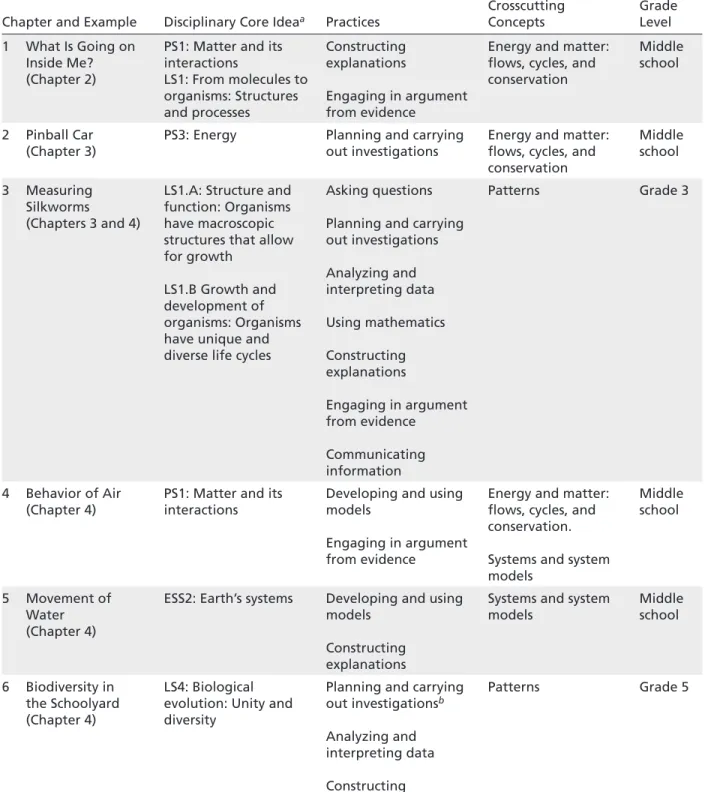
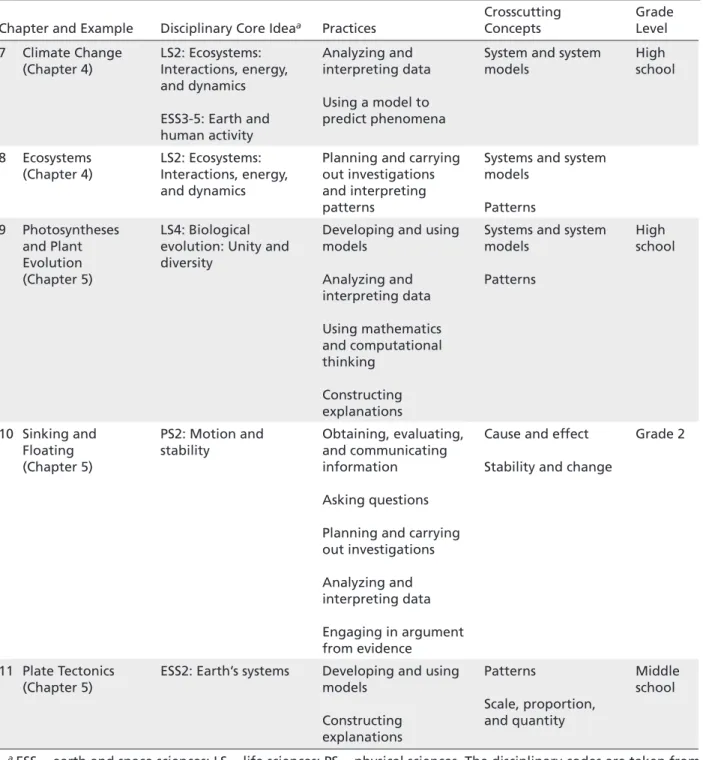
Throughout the report the committee offers examples of assessment tasks that embody our approach and demonstrate what we think will be needed to measure science learning as described in the framework and the NGSS. Because the final version of the NGSS was not available until we had nearly completed work on this report, none of the examples was specifically aligned with the NGSS per-formance expectations. However, the examples reflect the ideas about teaching, learning, and assessment that influenced the framework and the NGSS, and they can serve as models of assessment tasks that measure both science content and practice.8 The examples have all been used in practice and appear in Chapters 2, 3, 4, and 5: see Table 1-1 for a summary of the example tasks included in the
8These examples were developed by committee members and other researchers prior to this