Success in Adding Value: The Case of the
Agro-Processing Sector in
Ghana, West Africa
Leigh Anne Yow
April 23, 2002
Ghanaian roadside trader women
Athena Foods employees at work
Golden Harvest Cashew Packaging
Table of Contents
List of Tables………..ii
List of Figures………..………..……..iii
List of Abbreviations………..……….………..iv
Acknowledgments………….………..v
Abstract………..…vi
Introduction ………..…1
Why Ghana?………3
Methodology………...…..9
Structure of the paper………..….…10
The case of Ghana……….……….….…12
TIP and TIRP……….…..…16
Hypothesis and Central Argument……….……20
Key Insights………21
Framework for the Discussion of NTEs: Global Commodity Chain…23 Findings: Three key themes..………27
Leverage of resources through organizational arrangements and mergers……….………28
Interfirm knowledge transfer………..…...36
Novel combination of information and inputs……….…43
Implications for Policy.………48
References……….……..…59
Technical Appendices……….….…….61
Appendix A. Diagrammatical representation of TIP/TIRP Program Theory ……….………..……62
Appendix B. Key informant interview topics .………..…………..…63
Appendix C. Modified diagrammatical representation of TIP/TIRP program theory ….………..….…65
Appendix D. List of interviewees………...…66
List of Tables
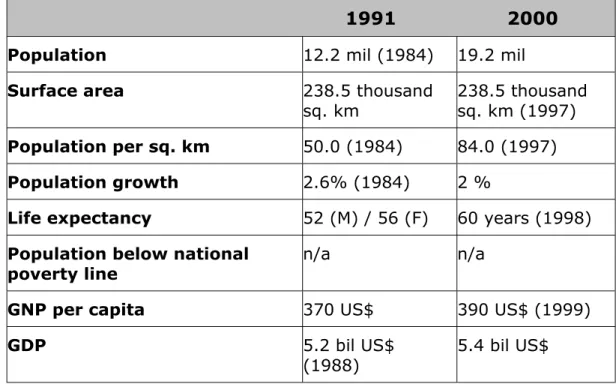
Table 1. Ghana at a Glance (1991-2000)……….…….……….….…12
Table 2. Contribution to GDP by Sector, 1990-99 at Constant 1990 Prices ……….………15
Table 3. Comparison of Pre- and Post-TIP Indicator Values
List of Figures
Figure 1. Map of Northern Africa and the country of Ghana.…….….…13
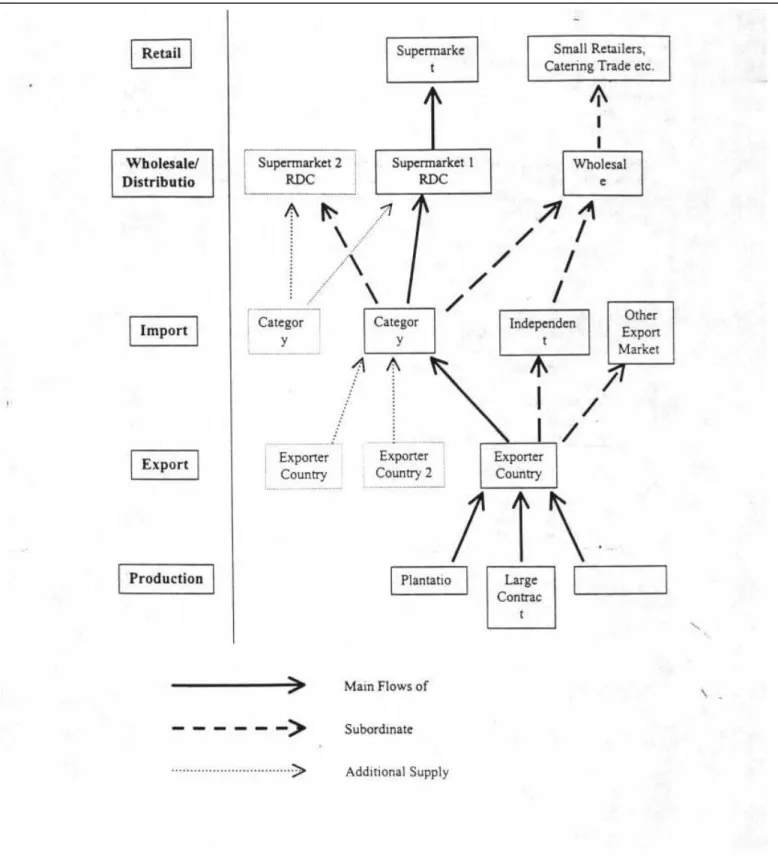
Figure 2. Produce flows and players in the Fresh Fruit and
List of Abbreviations
African Growth and Opportunity Act (AGOA) European Union (EU)
Federation of Associations of Growers and Exporters (FAGE) Federation of Chilean Agro-processors (FEPACH)
Fresh Fruits and Vegetables (FFV) Ghana Export Promotion Council (GEPC) Government of Ghana (GOG)
Gross Domestic Product (GDP) Horticulture Export Group (HEG)
Institute of Statistical, Social and Economic Research (ISSER) International Monetary Fund (IMF)
Ministry of Trade and Industry (MOTI) Multinational Corporations (MNCs) National Democratic Congress (NDC) National Patriotic Party (NPP)
Non-governmental Organization (NGO) Non Traditional Export (NTE)
North Carolina (NC)
Quality, Reliability and Efficiency (QRE) Research Triangle Park (RTP)
Sanitary and Phytosanitary (SPS)
Seafreight Pineapple Exporters Group (SPEG) Sigma One Corporation (SOC)
Trade and Investment Program (TIP)
Trade and Investment Reform Program (TIRP) United Kingdom (UK)
United States of America (US)
United States Agency for International Development (USAID) Value Added Production (VA)
Value Added Tax (VAT)
Acknowledgments
My sincere thanks to those who have made this project a success, from its inception, to the research opportunity, to the writing, and lastly, the completion of the final product.
For the report framework, I would like to thank:
• Meenu Tewari, for her suggestion of Judith Tendler’s capapble work as a guide for the structure of this report
For the research opportunity, I would like to thank Sigma One Corporation. Their staff both in the US and Ghana made the collection of the data possible: • Dr. Joseph Goodwin, for his patience while briefing me on the current
situation in Ghana
• Ms. Esther Ofosuapea, for her administrative expertise
• Mr. Emmanuel Owusu, for his keen sense of measurement proxies and data availability in Ghana
• Mr. Emmanuel Ahwireng, for his flexibility
• Mr. Abrar Sattar, for his efficient instructional capabilities • All listed interviewees, for the generosity with their time
For the conscientious help and critiques during the writing of the report, I would like to thank:
• Meenu Tewari, who helped me produce from my very rough draft in December to a finely-tuned argument in April
• Roberto Quercia, for his willingness to suggest and teach a class that very effectively instructed me how even to approach the writing of a draft
Finally, for the completion of the final product, I would like to thank: • My sister, Jan Yow, for her willingness to read and critique a very long
document at very late hours (and after all that, the kindness to say she even thought it was good!)
• My fiancee, Jon Friesen, who took time from his busy law school schedule to do what law students do best: read and critique my argument
Abstract
Agricultural entrepreneurs in developing countries have begun to look toward value-added (VA) production as the next key strategy for economic growth. Increasing competition due to the globalization of production and trade has led a growing number of developing countries to encourage exports as important part of improving international competitiveness. This strategy is consistent with the current consensus in the literature. The strategy further suggests targeting non-traditional exports (NTEs) to diversify the economy. VA production is a way to increase the amount of price control over NTEs, and improve the income potential for developing countries. For this reason, this research explores why some Ghanaian agricultural firms have succeeded at VA exports and others have not. In addition, it looks at what conclusions can we draw about what firms, business associations, and the government can do in developing countries to stimulate and encourage VA production.
The argument of this research paper is that in successful cases, the achievement of viable VA production was the result of a sequence of steps. These steps form the three themes that this paper will discuss within the context of Ghana. The first, leverage of resources through organizational arrangements and mergers, helps firms to capitalize on the assets of other organizations through vertical and horizontal linkages. The second, interfirm knowledge transfer, occurs between buyers, industry cohorts and entrepreneurial partners. It allows firms to
experiment with new procedures, and compare their results with other firms’. The third, novel combination of information and inputs, enables firms to take advantage of their flexibility and creativity to quickly identify alternative courses of action, thus avoiding failure.
The implication of these findings for firms is that those who exhibit the three characteristics above are more likely to be successful at shifting to VA production than those who do not. The implications for business associations is that they must play a key role by keeping the necessary information flowing through a network that has vertical and horizontal exchanges. The implication for the state is a role of economic stabilization and sustenance of a legal and business
Introduction
Agricultural entrepreneurs in developing countries have begun to look
toward value-added (VA) production as the next key strategy for economic
growth. In the past decade, as countries around the globe have opened up to
freer trade, production has become more internationalized. One result is that
competition has dramatically intensified. In this increasingly globalized
environment, a growing number of developing countries have begun to
encourage exports as a key development strategy. Among donor and policy
circles, a consensus is emerging that sustained export growth is important to
increase the competitiveness of national and regional economies. The sense is
that sustained exports in the face of intensified international competition calls for
an inevitable shift from the export of commodities to value added exports.
The literature cites several reasons for this shift toward non-commodity
exports. Many developing countries have economies too small for growth to be
sustained by the size of their domestic markets. Therefore they must trade to
have access to the technology, equipment, and other goods and services that
they cannot efficiently produce. These same countries have historically relied on
the trade of traditional commodity exports such as rice, grain, cocoa, or
industrial metals. In extremely competitive markets, they must accept a
uniform price as determined by the world market. Thus, in these markets they
are “price-takers”. Many donor agencies and non-governmental organizations
countries powerless to control the future of their economies against the
fluctuations and cyclical declines of commodity markets, as well as the low
income elasticity of demand for traditional commodities (Sigma One Corporation
TIRP technical proposal, 1998).
Ghana, West Africa, has also found itself facing the economic challenges
discussed above. To combat these challenges, Ghana has recently embarked on
an ambitious journey to reach middle-income status by the year 2020, a
campaign christened “Vision 2020”. Their goal is to become the “Gateway of
Africa”: the entry point for all of West Africa’s international trade. Ghana is
among a handful of good performers in Africa. Nonetheless, it faces powerful
challenges in successfully breaking into export markets. The challenges that
Ghana, and other countries like Kenya and Nigeria, face in exporting traditional
commodities is evidence of the value of the consensus converging in the
international development literature on non-traditional exports (NTEs) as a viable
developmental strategy [Harris-Pascal et. al. (1998); Barrett et. al. (1997);
Gereffi (1994)].
Many policymakers see diversification of a country’s exports to those on
which the country has not historically focused as a way to improve the country’s
ability to sustain a stable economic base, and thus begin to grow. However, if
this diversification of exports is only to more commodities, although
non-traditional ones, that does not solve the problem of being subject to low world
importance is what types of diversified exports will be able to demand a higher
price in the world market, and how producers can learn how to shift to the
production of these more sophisticated products.
Agricultural entrepreneurs have begun to address this question with the
promotion of value-added (VA) production. “Value added” (VA) production can
be defined as “an increase in the amount of money a producer can charge for a
product resulting from its transformations at a particular stage of production.”1
The various VA products can utilize the tools of marketing or branding to
increase the amount consumers will pay for the product on the market. In this
sense, the use of VA products is an important way to capitalize on an economy’s
diversification program in order to get the most return on their investment.
Why Ghana?
This research places the case of Ghana within the context of the current
VA debate. Aided by this placement, this research makes a very necessary
contribution. There is a substantial amount of the current literature about the
constraints of value added production and the Fresh Fruit and Vegetable trade
between East Africa and Europe on which this report builds. However, very little
research is available in the literature that examines other parts of Africa, and
their links to the United States (US). To examining the ways that the constrains
currently addressed in the literature have manifested themselves in West Africa,
as well as the innovative ways that entrepreneurs in countries like Ghana are
responding to them, more fully rounds out the literature on this subject.
The US government’s new initiative to stimulate economic growth in
Africa, via the African Growth and Opportunity Act (AGOA), gives my report
findings additional merit. More information about the nature of West Africa’s
development constraints will aid policymakers in evaluating the impact that
AGOA will have on the continent. Therefore, given Ghana’s potential for
leadership in the region, an investigation of how some of its firms have met the
challenge of value added production will be very useful in the determination of
future policies in this area.
In addition, the government of Ghana (GOG) is in the process of
partnering with the United States government development agency, the US
Agency for International Development (USAID) to address these concerns. Since
1992, the two countries have collaborated on programs aimed at developing
Ghana’s NTE sector, and improving the VA production in the country. From 1992
to 1998, the countries jointly launched the Trade and Investment Program (TIP)
with the objective to "increase private sector non-traditional exports, and
improve the enabling environment for private sector export firms". Among other
products, these non-traditional agricultural exports included the production and
important institutional contribution by TIP. TIP created numerous business
associations as well as a federation to oversee them. As this paper will point
out, these associations play a very significant role in successful upgrading to VA
production.
The follow-up to the TIP program is the Trade and Investment Reform
Program (TIRP). It began in 1998 and will run until 2002. TIRP builds on the
success of TIP by expanding the diversification mandate to address issues of
business linkage development and policy reform. TIRP, therefore, has two
components. The first is increased private enterprise performance. The goal of
this component is to help local entrepreneurs develop commercial linkages with
domestic and foreign buyers. The second is improved policy environment and
financial intermediation. This component’s goal is the reformation of broader
macroeconomic and trade sector policies aimed at creating a legal and business
environment that better meets the needs of the growing private sector. These
programs illustrate Ghana’s commitment to change, as well as highlight the
importance of a strong institutional structure in successful VA production
upgrades.
This paper will take just one of the industries on which TIP focused, the
pineapple industry, to illustrate the key themes of successful VA production
discovered in Ghana’s agro-processing sector. It will look at why some
agricultural firms have succeeded at VA exports while others have not. In
associations, and the government in developing countries can do to stimulate
and encourage VA production.
I expected to find a situation on the ground in which access to capital
was the main constraint, given the emphasis in the literature, in governmental
and in donor accounts on the importance of access to working and expansion
capital. Indeed, my research results show that among the key constraints facing
Ghana’s VA producers are lack of sufficient access to capital (due to import
constraints, lack of access to long-term credit, and lack of sufficient investor
interest), a lack of necessary infrastructure (especially cooling chains), and the
ultimate lack of governmental provision in these areas.
However what was surprising, and what becomes an important
contribution of this study, is that I found that despite their common problems,
some firms were doing better than others. Therefore, it is the goal of this
research to explain how this is so, and examine how some firms got around the
same problems that were holding back other firms.
The three factors I found to be critical were (1) advantageous
organizational arrangements, (2) the use of innovative problem solving
techniques, and (3) the ability to learn from industry counterparts. These are
the key reasons why some firms have succeeded despite these constraints.
One can draw several conclusions from the results. One interpretation, in
the case of organizational arrangements and mergers, is that these relationships
networking that facilitate interfirm knowledge transfer. Another interpretation,
of the significance of this learning process, is that it is important to have
opportunities for entrepreneurs to network (at a local, regional, national, and
international level) in order to learn more innovative ways to produce. One can
make a final interpretation, regarding the novel combinations of information and
inputs companies create, some of which are facilitated by the learning they do
from observing other entrepreneurs. These combinations are important because
they highlight the flexibility and creativity inherent in private enterprise that
allows them to take advantage of VA production and ultimately surmount the
obstacles they encounter along the way.
These interpretations have implications for the program, policy, and future
research in the area. With respect to the program, informants suggest that it
should have a narrower focus on the stimulation of VA production, as opposed to
covering such a broad range of policy issues from fiscal and monetary policy to
labor and trade regime policy. The research detailed in this report also suggests
more attention be placed on developing organizational arrangements. These
arrangements allow firms to take advantage of the knowledge and contacts of
their industry members to help them better meet the challenges encountered in
VA production.
With respect to policy implications, the informants recommended
improved duty drawback policies that would reduce the reimbursement delays.
incentives for VA production through improved infrastructure such as
cold-storages and better financing options.
However, my research shows that VA upgrading is not just about cold
storages and logistics. What is different about NTEs and what makes NTEs
difficult for poor regions is the critical nature of product quality (Dolan and
Tewari, 2001). This includes the freshness of the fruits and vegetables in the
cold storages, and therefore refrigerated storages are critical. Unlike grain
storages, refrigerated storage and transport facilities are extremely costly, and
often exceed the cost that single producers can bear. Therefore, a case can be
made here for the government to treat them as public goods and provide them
as collective facilities.
Regarding the impact of these results on firms, business organizations,
and the state, this report concludes that firms who implement the innovative
practices identified here are more likely to be successful at shifting to VA
production. Business associations play a key role in that success by keeping the
necessary information flowing through a network that has vertical and horizontal
exchanges. The vertical information exchange occurs through forward and
backward linkages connecting nodes of production in a commodity chain. The
horizontal exchange occurs between the nodes of production and international
donor consultants, governmental extension agents, and industry counterparts
from other countries. The state’s role then becomes one of economic
private enterprise, as well as working with local groups to help them gain entry
into such a market network.
Finally with respect to future research, the interpretations and implications
in this report should be further developed and explored. In addition, a more
comprehensive, quantitative, and generalizable study of the agro-processing
sector in Ghana would certainly shed more light on the current situation. These
further endeavors in VA production will help focus it as a lens through which
policy makers can view the real issue at hand of production, trade, and its effect
on development at the firm level.
Methodology
The methodology used is a “One group design” comparison, including a
“Before and after a program initiation” evaluation of the Trade and Investment
Reform Program (TIRP) program. The qualitative data source is formal,
in-person interviews with topic-oriented, open-ended questions. Topic areas were
Financial Markets, the Trade Regime, Productivity and Profitability, Labor,
Organizational structure, Transparency/Equality, and Improved GOG services
(Appendix B). Further concept measurements are the following: Value added
production will be defined as a firm producing and selling at least one product
that has experienced at least one upgrade from a raw to processed product.
Success will be defined in a variety of ways. It is the ability of an organization to
today’s ag-export markets such as timely delivery, high quality, and low cost. In
addition, firms entering new markets or surpassing challenges will also be
considered evidence of success.
Additionally, I would like to clarify that the research detailed is a look at
the agro-processing sector in Ghana, and not intended to be a comprehensive,
quantitative, or highly generalizable study. A small sample size and the scarcity
of firm-level data in a developing country are among the obstacles to be
overcome for future research projects that build on this one. However, this
introductory study of one of the most important economic sectors in Ghana
offers particular insights into the challenges the VA poses, and serves as a
concrete example of what has been done successfully, and what has not. It
strives to place Ghana’s VA experience within context of the current literature
debate, which will be an effective starting point for the discussion.
Structure of the paper
My goal in this paper is to explore the reasons why some firms in Ghana
have succeeded at VA exports and others have not. In addition, I will draw
conclusions about what firms, business associations, and government can do to
stimulate and encourage VA production. In the introduction of the report, I
briefly outline the rationale for the study of VA production, as well as define it. I
detail the contribution this research makes to the current literature, and touch on
Then, I introduce the case study of Ghana that examines the pineapple
industry in Ghana. I will use this industry to illustrate key themes I found across
the agricultural sector, and note what steps countries like Ghana are taking to
improve this production. This discussion will include the implementation of TIP
and TIRP whose goals I summarize. Finally, I lay out my argument that in the
successful cases of VA production, access to capital was not a unique enabler but
the result of a sequence of steps that led up to it including the firms’
participation in helpful organizational arrangements, innovative problem solving,
and interfirm knowledge transfer.
Next, I review the current debates and issues in the literature with respect
to VA production. This section outlines the theoretical framework for the paper,
that of Gereffi’s Commodity Chain. It highlights the key players in such a chain,
and discusses to position in which Ghana finds itself within this framework.
In the Findings section, I discuss the three key themes found throughout
Ghanaian agricultural firms and business organizations that constitute my
argument. They deal with how firms are able to overcome the constraints of VA
production. This section also discusses the implications of these findings.
In the Implications for Policy section, I discuss the policy implications of
these themes, and begin to draw conclusions about what firms, business
The case of Ghana
Ghana, West Africa (Table 1), is facing the economic challenges of a small
domestic market, and lack of control over the prices of the commodities it
exports: traditionally cocoa, gold, and aluminum.
Table 1. Ghana at a Glance (1991-2000)
To combat this, Ghana has recently embarked on an ambitious journey to reach
middle-income status by the year 2020, christened Vision 2020. Due to their
strategic location (Figure 1), their goal is to become the “Gateway of Africa”, the
entry point for all of West Africa’s international trade. Agricultural entrepreneurs 1991 2000
Population 12.2 mil (1984) 19.2 mil
Surface area 238.5 thousand
sq. km 238.5 thousandsq. km (1997)
Population per sq. km 50.0 (1984) 84.0 (1997)
Population growth 2.6% (1984) 2 %
Life expectancy 52 (M) / 56 (F) 60 years (1998)
Population below national
poverty line n/a n/a
GNP per capita 370 US$ 390 US$ (1999)
GDP 5.2 bil US$
(1988) 5.4 bil US$
in the country of Ghana have begun to address this challenge in various ways,
one of which is VA production.
Figure 1. Map of Northern Africa and the country of Ghana
This focus of this research is value added (VA) agricultural production
because the labor and economy of the majority of developing countries is
dependent on the agricultural sector. The majority of NTE literature tends to
target agricultural products. Products range from meats (beef and poultry);
seafood (fish, shrimp, tuna); and nuts (cashews and brazil); to beans (coffee and
products seem to be the most readily available in lesser-developed countries,
and simultaneously the highest in demand by more developed countries. Fresh
fruits and vegetables (FFV) are particularly in demand by the more developed
countries, especially during their off-season of production. It is primarily this
demand for year-round produce in these countries that drives much of the
international commerce between the lesser and more developed countries and,
consequently what drives the NTE literature.
This is the case in Ghana. Among the various sectors of the economy of
Ghana, the food and agricultural sector appears to be the most important in
terms of its contribution to the gross domestic product (GDP), foreign exchange
earnings, tax revenue, employment and as a source of income for the citizens.
For instance, in 1999, agriculture’s contribution to the GDP in 1990 constant
prices was estimated by the Ghanaian Statistical Services to be about
40.5%. This looks like it has declined considerably from about 50% during the
last two decades. However, this decline is mainly due to the expansion of the
service sector. The estimates for the other major sectors of the economy,
industry and services, in 1999 were estimated at 27.6% and 31.9%, respectively
Table 2: Contribution to GDP by Sector, 1990-99 at Constant 1990 Prices (Percentage)
Given the importance of agriculture in Ghana, many entities there—the
government, Grower/Exporter Associations, even the producers themselves—are
advocating VA agro-processing as the key to export success. However, not
much of substance appears to have been achieved. In a recent news article in
Ghana, the Deputy Trade and Industry Minister, Boniface Abu Sadique, told
manufacturers to “add value to products”. He said that, “It is government’s
policy to add value to our primary products for export.” (Daily Graphic, Accra,
6/28/01). He said this, presumably, because he is aware of the increased
price-control a country has over its VA products. Likewise, the Vegetable Producers
and Exporters Association of Ghana has recently added a new objective to their
mission statement: “To encourage processing as a means of adding value to Year Agriculture Services Industry All
1990 43.5 42.4 14.1 100 1991 43.3 42.8 13.9 100 1992 41.4 44.4 14.2 100 1993 40.5 45.3 14.2 100 1994 40.8 31.3 27.9 100 1995 40.6 31.5 27.9 100 1996 40.8 31.3 27.9 100 1997 40.4 31.6 28.0 100 1998 40.6 32.1 27.4 100 1999 40.5 31.9 27.6 100
products” (Gyamfi, 2001). The seriousness of the intent of this commitment is
evidenced by their on-going partnership with USAID in the TIP and TIRP
programs.
TIP and TIRP
It is important to note that the move toward VA production has not just
been left solely for the market to decide, but supported in important coalitions
between industry, key public institutions, and donor agencies. Key institutions
like the GOG and USAID have implemented two programs aimed, in part, at
developing Ghana’s NTE sector, and improving VA production in the country.
These programs are the Trade and Investment Program (TIP) from 1992-1998,
and the Trade and Investment Reform Program (TIRP) from 1998 to the present.
Since 1992, the GOG and USAID have collaborated on programs targeted
at Trade and Investment. The key actors in this endeavor include the
government of Ghana (Ministry of Trade and Industry [MOTI], Ministry of
Finance [MOF]); Ghanaian exporting firms (Agriculture, Manufacturing sectors,
etc.); Monitoring organizations (International Monetary Fund [IMF], World Bank
[WB]); Governmental Aid organizations (USAID); and NGOs (National and
International Consulting firms such as Sigma One Corporation in Research
Triangle Park (RTP), NC; International Aid organizations such as CARE, etc.).
In 1992, USAID/GOG launched the “Trade and Investment Program” (TIP)
improve the enabling environment for private sector export firms". These
exports included pineapples, cashews, bananas, and yams. Under TIP,
pineapples increased in volume and value. TIP ended in 1998. Currently, there
are around 10 major raw pineapple producer or exporters, and numerous smaller
organizations and small farmers. In addition, there are two major value-added
producers doing juice concentrate and chilled sliced fruits. Associational
representation comes from the Horticultural Exporters and Growers Association
(HEG), and the Seafreight Pineapple Exporters of Ghana group (SPEG).2
When TIP was completed in 1998, USAID judged the program
successful (Table 3) based on the fact that it surpassed its targets in nominal
value of NTEs, number of new full-time jobs in NTEs, and number of firms
participating in NTEs (Ariza-Nino et. al., 1996).
A major contribution of TIP was its establishment of various product
associations including the Ghana Yam Producers and Exporters Association, the
2
They are preparing to merge in the coming year.
Table 3. Comparison of Pre- and Post-TIP Indicator Values to Program Goals
1993 1995-6 TIP Goal
Value of NTEs $72 mil $388 mil $250 mil
Number of Direct Full
time equivalent jobs 11,999 64,667 42,000
Organization for Export Development of Seafood, and the Horticulturalists
Association of Ghana. Encompassing the product associations is one umbrella
organization, the Federation of Associations of Ghanaian Exporters (FAGE). TIP
created FAGE in 1992 to be a credible private sector partner to the government,
and to unify a fragmented private sector front. According to the Executive
Director of FAGE (Augustine Adongo), the organization initially had difficulty
fulfilling this role. TIP established the organization using top down methods, and
therefore grassroots private sector support was more difficult to get. Many in
the private sector did not trust, nor were not interested in working with, an
organization created by the National Democratic Congress (NDC) government.3
During the past three to five years, FAGE has mainly had a lobbying role,
but is now repositioning itself to provide more services and products. These
include weekly fruit and vegetable price reports in the national newspaper,
training opportunities (“Strategic Management: Growing Your Business in a
Hostile Environment”; Computer courses); internet use; web page designing and
hosting services for exporters; and a resource library.
The Trade and Investment Reform Program (TIRP) is the follow-up to the
TIP program. It began in 1998 and will run until 2002. TIRP builds on the
success of TIP by expanding the diversification mandate to address issues of
business linkage development and policy reform. TIRP, therefore, has two
components. The first is increased private enterprise performance. The goal of
this component is to help local entrepreneurs develop commercial linkages with
domestic and foreign buyers. The second is improved policy environment and
financial intermediation. This component’s goal is the reformation of broader
macroeconomic and trade sector policies aimed at creating a legal and business
environment that better meets the needs of the growing private sector. The
GOG is supporting TIRP’s efforts by declaring the new millennium as the “Golden
Age of Business”.
Appendix A details TIRP’s program theory with respect to VA. As the
diagram shows, my initial hypothesis was that one of the key explanations for
why some firms succeed at VA and others do not is related to their respective
access to capital. However, as this report will show, the ingredients of successful
VA production are more diverse than just access to capital. A review of the
secondary data as well as the stakeholder interviews reveals that the firms’
ability to form advantageous organizational arrangements and mergers, find
innovative solutions to challenges, and to gain knowledge from multiple sources
are also important factors. Thus, this project will examine several firms who
have been successful at VA production, and others who have not with the goal of
determining how these factors influence their achievements.
An important point to be made here is that success can look different at
different points in the program. As mentioned above, USAID has one set of
criteria that it is uses to evaluate TIP and TIRP, but my research conducted on
the ground allows me to elaborate on the criteria for success, thus accounting for
several aspects of success that a narrower focus would miss. For example, firms
entering new markets or surpassing challenges, too, can be considered evidence
of success.
Thus, beginning with a look at TIP and TIRP, my research was framed as
an evaluation of Ghana’s VA initiatives in agro-processing. I wanted to examine
how VA production was playing out on the ground with agricultural producers in
Ghana. Given the rhetoric of the Ghanaian government and their successful
involvement in TIP and TIRP, I went into the field expecting to find many
examples of companies doing VA production. I was surprised to have trouble
finding more than a handful of companies engaging in it. I then looked at why
some of those agro-processors were successful doing VA production and others
were not. When I asked this question, my respondents indicated initially that the
main issue was lack of access to capital, both working and expansion.
Hypothesis and Central Argument
My preliminary hypothesis, therefore, was that the key for successful VA
producers was adequate access to capital. During my analysis of the data, I did
find that access to capital was a problem. However, looking deeper, I found that
the answer was much more complicated and interlinked with other issues. In
part, the cases in which firms had been successful with VA production, there was
taking advantage of an opportunity to link up with outside buyers. Or, they were
doing something innovative in response to a local problem that improved their
reputation abroad, and caught the attention of foreign buyers. What followed
the attention received, were connections, capital, markets and technical
assistance.
My argument, then, is that in the successful cases access to capital was
more often than not the result of a sequence of steps. These steps form the
three themes that this paper will discuss within the context of Ghana. They are
(1) taking advantage of organizational arrangements (finding buyers, linking up
with outside partners); (2) learning from those buyers and partners, and (3)
finding innovative solutions to daily production challenges. My research results
show that access to capital had more to do with these three steps than with
simply getting a loan, or receiving infusions of donor capital.
Key insights
In exploring the practices of some successful agro-processing firms, this
paper highlights various ways that these firms and regions are meeting the
challenges they have faced. It also examines how they have succeeded in
meeting these challenges in developmental ways that generate learning that has
broader spillover effects. From these stories, this sub-section extracts a list of
One, it is important that my initial hypothesis—infusion of capital was the
main way successful firms overcame VA production constraints—is part, but not
all of the answer. Two, just as important as capital access is how efficiently and
creatively that capital is obtained and used. In cases of success, it will be used
to foster effective organizational arrangements that yield improved opportunities
for learning and novel combination of information and inputs.
Three, also significant is the identification of a clear pattern underlying
successful VA production in pineapples in Ghana, and that the unit of analysis of
that success for policy analysis is not just the individual firm, but the group
network of associations and the relationships contained therein. Four, a
significant lesson is the realization that a commodity web, more so than just a
commodity chain, exists to link the various players engaged in VA production.
This web, then, is the supporting structure that nourishes the success of the
entire operation. Five, a final lesson to focus on is that novel combination of
information and inputs is a very important skill for entrepreneurs to have and
one that merits policies and programs that encourage its nurture and
improvement.
A Framework for the discussion of NTEs: the Global
Commodity Chain
The framework that has been commonly used to understand the
production of non-traditional agricultural exports is the global commodity chain.
particular industry is not a lone unit, but connected by both backward and
forward links to its suppliers and buyers respectively (Gereffi, 1994). The main
actors are clear, but the industry is not uniform (Harris-Pascal et. al., 1998).
Nevertheless, it is possible to provide a general characterization of the
relationships (Figure 2). Players in this chain in the African FFV trade typically
include Retailers/Buyers (Supermarket chains, Small retailers, Catering trade,
Wholesale); Wholesale/Regional Supermarket Distributor; Importers (Category
Figure 2. Produce flows and players in the Fresh Fruit and Vegetable
The buyers are the main actors. They drive the global commodity chain
for the FFV trade by demanding certain standards from the chain (for example:
top quality product, consistency of product quality, reliability of supply, efficiency
(QRE); and conformance with external standards, value added). Some will have
multiple category managers for the same product line while others will have just
one or two. They are responsible for interpreting the desires of customers and
society and shaping the chain to meet them. The Regional Supermarket
Distributor is the intermediary between Category Managers and Supermarkets.
Importers manage a particular range or ‘category’ of fresh produce. Previously
they were wholesalers. They take responsibility for developing new sources of
supply, supporting producers and monitoring performance. Some managers own
exporters and plantations in Africa. Some will supply one or two supermarkets,
while others will have multiple customers. They are typically proactive in
research, design, and innovation. They play a role in translating new product
ideas into viable production, processing and transport, performing market
research, keeping abreast of competitors’ retail offers, and monitoring and
auditing production.
Some African exporters have their own category manager in the place to
where they export (for example, the United Kingdom [UK]), but it varies
considerably the extent to which they source their products from their own farms
They perform trials for new varieties and seek to adapt crops that have been
successful in other countries to their own growing environment.
Producers are often large operations, and owned by exporters. They,
also, are proactive in research, design, and novel combination of information and
inputs. In the context of the African FFV trade, Ghana is considered primarily
considered a “producer”. As Gereffi points out, this location in the chain feels
considerable pressure from the end-buyers of their product which accounts for a
number of the challenges Ghana, like other developing countries, must overcome
to be successful at VA agricultural production.
The nature of these links with global buyers highlights both the upside
and the downside of an NTE program. While it gives local agro-processors
access to global markets, unless certain criteria are met, the insertion of a small
developing export trade program into a powerful buyer driven chain may foster
dependence on those buyers, and offer few positive spillover effects in the form
of local inter-firm linkages. In addition, these narrow dependencies of local firms
on large foreign buyers tend to foster vertical, rather than horizontal
relationships (Harris-Pascal et. al., 1998).
An additional caveat for a lesser-developed country attempting to newly
establish itself in highly competitive and developed export markets is to make
sure the government provides the necessary support in infrastructure, financial
sector development and policy environment (Harris-Pascal, et. al., 1998).
importance for firms to engage in innovative problem solving and learning
among firms (Harris-Pascal, et. al., 1998 and Perez-Aleman, 2000).
Thus, this research places the case of Ghana within the context of the
current VA debate using the framework of the global commodity chain. Does
Ghana attribute any importance of VA over commodity production in its
agricultural sector? Do Ghanaian producers and exporters face similar
constraints to those the literature highlights? What are the ways that Ghanaians
surmount the obstacles they face in VA production? The next section of this
research report will address these questions and more, as we move into a
discussion of the research findings.
Findings: Three key themes
Three key themes arose from the interviews regarding how firms are able
to overcome the constraints of value added production. The themes observed
were, one, the use of both horizontal and vertical organizational arrangements to
leverage information and resources found in other organizations; two, the
creation of innovative ways to access scarce resources; and three, the ability to
learn from a variety of resources.
When examining these themes, it is important to note the significance of
the following evidence of success in the Ghanaian pineapple industry. Success in
undertaking VA agricultural exports in a developing country is not easy (Dolan
experiences. VA production entails the need to meet demanding quality
requirements including consistency of top quality production, efficiency,
innovation, and a viable company size (Harris-Pascal et. al., 1998). In addition,
Barrett (1997) as well as Raikes and Gibbon (2000) mentioned the need for
investments in infrastructure such as airport facility cold stores.
In addition to experiencing similar constraints as pointed out in the
literature, the key informants in Ghana identified other constraints. These were
lack of access to capital (specifically delays in return receipt of duty drawbacks,
access to long-term credit, and lack of sufficient investor interest); infrastructure
issues (primarily the absence of a cooling chain from farm to port); and finally,
lack of sufficient government provisions in the above-mentioned areas.
Thus, one can see the numerous barriers to entry for these countries, and
therefore the added significance of their success in this area. In the following
three sections we will explore what this success looks like by examining each of
these themes in turn.
Leverage of resources through organizational arrangements
and mergers
Firms consolidate to take advantage of situations that can lead to access
to capital. Upon first glance at the situation in Ghana, access to capital did
indeed present itself as a problem. The leverage of resources through
otherwise unavailable to them such as capital, credit, expertise, innovation via
expanded contacts and economies of scale.
In horizontal linkages and mergers, firms either collaborated with other
firms in their industry (in the form of business associations such as SPEG) or
consolidated with other firms of a similar type (the conglomeration of separate
pineapple growers into one organization). Vertical mergers and linkages
generally take the form of collaboration between a producer and a supplier (for
example, organic pineapple growers receiving technical training from the organic
juice producer), or the consolidation of a producer and supplier (the addition of
exporting firms to the aforementioned conglomeration of pineapple growers).
One big advantage of this consolidation—the reduction in time lost due to
numerous transactions—is detailed in the NTE literature. Routinely, time is lost
complying with traceability requirements. These require documentation by
producers to prove safety in food production and preparation, labor ethics,
environmental protection, safe chemical use, and animal welfare. They are
becoming an important concern of consumers, and therefore of buyers and
producers. Producers are therefore required to document each step of the
production process now more that ever. This makes for an additional burden on
the part of exporters, as the buyers push back the due diligence responsibility to
them.
The nature of this burden is an inherent disadvantage for smaller
exporter said, “I would much rather work with one farm of 100 acres than 100
farms of one acre.” In Kenya, smaller farmers have minimized these
transactions costs by forming produce groups of 30-40 farmers called a “Woni”
The Woni can then bulk the produce, check quality and traceability, and ensure
that each box can be traced back to the groups and individual farmers. The
Woni is responsible for transporting the produce to the appointed collection point
at the agreed-upon times, keeping records, and paying the members. This
organization appears to be a good arrangement for both growers and exporters
(Barrett et. al., 1997).
In Ghana, an example of this type of organizational arrangement and
linkages that overcome the constraint of VA production is the company of Farma
Pine. This firm is a WB-financed pineapple conglomerate that linked 5 pineapple
co-ops and 2 exporters. I consider this firm successful because of the way its
innovative organizational arrangement has allowed it to meet the new demands
on agricultural production that increased international competition has imposed.
Farma Pine has met these demands with the help of TechnoServe. Farma
Pine’s collaboration with them provided the credibility needed to obtain a World
Bank small business loan for five years. The increased confidence afforded by
the World Bank’s stamp of approval has had a spillover effect in local financial
markets. The improved credibility increased the ease with which they can
One can see another example of the power of organizational arrangement
in the case of Henri Wientjes. He is a Dutch 30-year veteran Banana producer in
Ghana who started his own company called “WIENCO”. I consider him
successful because of his ability to survive and even grow his business during the
past 30 years of Ghana’s tumultuous economic situation. In his case, he
surmounts the challenge of access to capital by seeking credit via his
organizational contacts in Europe. By virtue of having grown up in the
Netherlands, as well as having extensive business abroad, he has cultivated
financial sources outside of Ghana, where they are tenuous at best. In this
situation, it is important to differentiate between the issues of the relationship
versus access to capital. The fact is that the nature of the relationship between
Mr. Wientjes and his European contacts is ultimately what generated the capital.
As the example of Athena Foods’ shows, native Ghanaians, too, are
capable of establishing external financial relationships, but it is much harder. If
they have not lived abroad, or otherwise had meaningful contact with external
funders, the only other opportunity for interaction is via involvement in viable
business associations. Through these associations, they have access to other
Ghanaian firms who have made these contacts, and who can offer technical
advice and contact names. Since this type of information is often proprietary,
and the firms therefore have little incentive to make it generally available, it
presents an opportunity for the government to facilitate the activities of business
Effective governmental intervention is an example of one success strategy
that the literature cites. Structuring financial incentives to foster ag-export
development is one of the most effective roles for the government. Barrett et.
al. (1997) says the government should be proactive, as in Kenya, supporting the
private sector industry through a tight-regulatory framework. This strategy
includes a framework for financial services and incentives. While the
government is discouraged to be the primary force of scarce resource allocation,
it does need to play the role of establishing a favorable business and legal
environment within which private enterprise can flourish. Often, governments
attempt to take a “hands-off” role in the development of a country’s private
sector, which ends up being very detrimental in the areas of infrastructure and
financial sector development. This effect is an observation that has caused
WIENCO’s president much concern.
As will be elaborated on in the policy implications section, Mr. Wientjes
was especially emphatic about the financing options, saying the amount of
government-level funding to encourage production and export growth is very
low. He believes the government needs to take the lead in making cheap
money—with performance requirements—available to encourage VA production.
Without these incentives, Ghana will be in a much worse position to produce the
amount of products that will meet world demands.
In addition to the aforementioned types of arrangements, Athena Foods is
foreign aid money. Athena Foods is a Ghanaian pineapple juice producer. I
consider it an example of a successful VA producer because of its innovative
ability to adjust and respond to the new demands placed on today’s ag-export
markets, as well as its demonstrated ability to enter new markets. Athena
Foods’ ability to adjust and respond innovatively to new demands is through its
novel combination of information and inputs. This aspect is addressed in more
detail in the section below.
Regarding its ability to enter new markets, an example is the joint venture
into which it has recently entered with a Danish company via DAN-AIDA, the
Danish International Development Aid organization. This situation has helped
Athena Foods access more capital for VA upgrades. Simultaneously, Athena
Foods’ business successful relationship with this company improves its
international credibility. That has simultaneously opened up new markets for the
company as well. In addition to their traditional market in Ghana, they now have
access to the prestigious European Union (EU) market. Athena Foods’ medium
term goal is to be perceived in the EU as a good and dependable supply source
of juice concentrate. In addition to the EU market, the company finds that with
every one or two shipments, they get a new inquiry on their product. These
inquiries have come from places like Eastern Europe, Bulgaria, Israel, and Spain.
Spain expressed an interest in a long-term contract through an intermediary.
Athena Foods’ international involvement has also spawned new regional
supply currently of organic pineapple, there is a possibility that they may begin
to supply Athena Foods with organic fruits until more farmers in Ghana are
trained and certified to produce them.
The NTE literature cites the ability to attract viable funding opportunities
as high on the list of recommendations for developing countries with particularly
scarce sources of capital, both financial and human. Attracting funding from
domestic investors and foreign aid programs for these investments and
organizational restructuring activities is a viable option. The traditional
international funding agencies such as the World Bank and International
Monetary Fund can provide assistance, as was seen in the case of Farma Pine.
However, this assistance often comes with many additional performance
requirements, and may prove more difficult to utilize. A firm’s situation is more
flexible and viable if such funding is stretched by complementing it with
additional sources of external funding.
Many regions have worked to attract such types of innovating funding
opportunities to help expand their agro-exports. Barrett et. al. (1997) notes that
the easy availability of soft finance from bi- and multi-lateral aid agencies from
all over the world for export from Africa has been a key factor in the expansion
of its FFV trade. Cut-flower exporters have been the latest to benefit, with public
finance available for cool chain development of main cool stores at Nairobi built
with soft loans from Japanese aid. In Ghana, the “Ghana Fresh Company” is an
airport in Accra was built via a private joint venture between Ghana and
Zimbabwe primarily to store the latter’s cut flowers. However, after the builders
did a survey to determine potential uses for the facility, they found that
cold-store space is very much in demand among Ghanaian agricultural producers. So,
they built the facility larger than originally planned to allow for additional space
to be sold (Gyamfi, 2001). However, the overall demand has been so great, that
the extra space is rather expensive, and has not been sufficient to meet it.
Thus, the issue of cold-stores remains a challenge in Ghana.
Regarding the literature’s information on funding sources in the coffee and
tea sector, Japanese companies and a wider range of multinational companies
(MNCs) with coffee interests have formed joint ventures with Latin American
instant coffee producers. Some of these ventures have built their own roasting
and instant coffee production capacity in the Far East. Raikes and Gibbon (2000)
claim that this dynamic seems to have passed Africa by. Based on my findings, I
would argue that there is growing evidence in Africa that indicates otherwise.
Turning to the question of what these results imply, we see that one
interpretation is that these relationships are important for establishing the
horizontal and vertical linkages needed for networking that facilitate interfirm
knowledge transfer and novel combination of information and inputs, both to be
discussed in more detail below. This research indicates that success in VA
production does have a pattern, and that the unit of analysis is not just the
firm is a part. This distinction regarding the unit of analysis is important for two
main reasons. One reason is because this perspective is different from the
current trend in the literature to focus either on macroeconomic policy change at
the national level, or individual firm practices at the local level. However,
precisely as a result, they miss out on the dynamic that my research has shown
to be essential to firm success in making the transition from the production of
traditional to VA products.
The other reason that the unit of analysis is important is because it
impacts the way programs and policies should be designed and implemented to
best take advantage of the group dynamics. Under the TIP and TIRP programs,
special attention was paid to creating the institutions needed to capitalize on this
dynamism. This research now indicates the need for a stronger focus to be
placed on helping the individual firms take better advantage of those
organizations.
Interfirm knowledge transfer
Through horizontal and vertical organizational interactions, firms find
ways, in the context of chronic failure or extreme uncertainty, to do something
via the implementation of experimental ideas coupled with the constant
reflection and monitoring of their results. The organizational relationships
discussed here impact the learning processes they facilitate by providing
doing things such as producing, funding, innovating, and sourcing materials.
The literature refers to this concept as “learning by monitoring” (Sabel, 1996;
Perez-Aleman, 2000). Firms start with what they know best as a benchmark,
then implement ideas within the current situation to see what works and what
does not. They expose themselves to other firms’ experiences to compare how
they fared in comparison. The element of comparison is a key part of this
learning.
A recent study of Chilean tomato paste producers showed that this
process of learning operated at many levels of the economy (firms, associations,
the state), and guides the communication between economic actors. The state
encouraged creation of relations among and within firms, or between the state
and the economy, that continually fostered flows of knowledge and maximized
the possibility of learning and improving production performance (Perez-Aleman,
2000; Damiani, 1999).
In all these accounts of learning by comparison and observation, the
government has a critical role to play. The government has the responsibility of
of facilitating these relationships, to avoid having the producers rely solely on
their foreign buyers to teach them how to do successful agro-export. Therefore,
small producers are not left to become too dependent upon, and thus vulnerable
to, large buyers (Harris-Pascal et. al., 1998). In the case of Chile, Perez-Aleman
(2000) demonstrates one way the government can fulfill this responsibility. To
association in Chile (FEPACH—Federation of Agro-processors) into an
organization that very effectively facilitates relationships among and within firms
in the Agro-processing industry.
The implementation of this concept is significant because firms take
advantage of a variety of learning resources to overcome constraints to VA
production. The horizontal and vertical relationships of the nature discussed
above facilitate the companies’ abilities to draw on a variety of learning
resources.
According to the literature, lack of necessary infrastructure and technology
is commonly found to be a shortage of airport-based cold stores, packaging
equipment, and refrigerated transport (Barrett et. al., 1997; Raikes and Gibbon,
2000). This deficiency is the initial barrier to entry of developing countries into
the export of NTE products. These infrastructural investments are very
important to meet the high food quality demands placed on exports by
international buyers such as perishability, attractive food presentation, as well as
reliability of supply (Harris-Pascal et. al., 1998; Barrett et. al., 1997).
The Ghana Vegetable Exporter/Grower Association (VEAPEG) illustrates an
example of learning about infrastructural investments that demonstrates their
tremendous importance. The international aid organization CARE organized and
funded a trip for representatives of VEAPEG to learn about charcoal-based
buildings that cool on-farm commodities without the use of electricity. This is
cooling technologies. It allows smaller producers the ability to keep their
products fresh from the moment of harvest, therefore keeping them attractive
and enabling their timely arrival to the marketplace.
In addition, this is an example of the essential communication that the
literature cites must occur between area and regional producers. It is of utmost
importance to be able to continually meet upgrading demands (Harris-Pascal et.
al., 1998). Without it, producers and exporters will be unware of the constantly
changing needs of their customers with respect to quantity and quality, and the
always heightened international standards of food safety, as well as the use of
new technology.
Foreign aid consultants are also key players in helping developing
countries meet VA upgrading challenges. Organizations like Sigma One
Corporation (Research Triangle Park, NC), TechnoServe (Norwalk, Connecticut),
and AMEX International (Washington, DC) are examples of US-based
non-governmental organizations in Ghana providing technical consultants via USAID.
Other consultants operate in Ghana via alternate international donor funding.
These organizations provide various services including technical training and
capacity building, policy analysis and reform recommendation, and the building
of business linkages between Ghanaians and local, regional, and global
entrepreneurial partners. For example, one of TechnoServe’s newest projects is
cashew production and processing. On the production end, the TechnoServe
ways so they remain wholly intact until arrival to the processing house. On the
processing end, they have trained Ghanaians in business management skills to
run the processing facility as well as manage the cashew farmers.
An example of policy analysis and reform recommendation is Sigma One
Corporation’s work to help Ghana’s Ministry of Employment and Manpower
reform the country’s labor code. Sigma One’s analysts worked with government
officials to analyze the code, and the submitted recommendations at a major
labor conference in 1999. Sigma One judged its work successful when all of the
suggested recommendations were either addressed or allowed by the draft of
the new labor code (R. Franklin, 2001).
An example of building linkages between Ghanaian and other
entrepreneurial partners is AMEX International’s work to link up the local artisan
cooperative with similar cooperatives in the US that sell international handicrafts.
This type of linkage not only helps the Ghanaian producer to learn how to
improve their product, but also gives them channels through which to access
new markets for it (Armah, 2001).
In addition to technical consultants, the NTE literature cites additional
sources of knowledge to do VA upgrades. One source is the buyer itself, who
tends to push the more labor-intensive activities—like packaging—back down the
commodity chain toward the producers. Another source of knowledge is larger
producers in the industry. Unfortunately, this method is not well developed in
with smaller enterprises, who do not have the money to pay for in-house
knowledge, could be very advantageous for the smaller producers.
Business associations are important in meeting the needs of smaller
producers who do not have the capital they need individually to access certain
resources. Therefore, in addition to partnering with larger producers who have
the know-how and equipment needed, smaller agricultural firms can also use
equipment collectively purchased by their commodity or business association
(Perez-Aleman, 2000). This type of advantage to being a member of such an
organization is very useful in giving smaller businesses the edge (and equipment)
they need to be competitive with the larger producers.
A cold-storage chain is essential for producers in developing countries to
meet the international demands of quality such as freshness, attractiveness of
presentation, and just-in-time delivery. In the case of Ghana, VEAPEG’s goal for
solving the need for an unbroken cold-storage chain from farm to market is to
buy a refrigerated van in the next two years as a complement to the charcoal
houses they learned about in Kenya (Gyamfi, 2001). Thus, the initial learning
about feasible infrastructure in Kenya has lead to a continued upgrading process
which is leading Ghana closer to being highly competitive on the world market.
Finally, according to the key informants, the impact of Business
Associations has been limited, despite the literature’s identification of their
the government for pineapple sea shippers. On an additional positive note,
VEAPEG reports one of its new objectives is to encourage VA production.
Nevertheless, reports from several interviewees indicate that historically, these
associations have been moreover just “talk shops”. This is unfortunate, because
another important point the literature makes is that regions can maximize their
effectiveness in distribution of trade information via producer and export
associations (Barrett et. al., 1997; Perez-Aleman, 2000; Damiani, 1999). Without
an effective organizational structure, much opportunity is lost to capitalize on the
collective strengths of a region’s industry.
This ability to learn from the implementation and subsequent monitoring
of techniques from various sources is significant because it further emphasizes
the “connectedness” concept of Gereffi’s commodity chain. It indicates that each
stage of production, especially production intended for international markets, is
not a process separate from the other production processes that supply it and
that it, in turn, supplies. It is part of an entire chain that is intimately affected by
its suppliers and buyers.
However, this research goes further, beyond exploring the concept of a
commodity chain. It indicates the increasing importance of a type of “commodity
web” that includes not only the vertical (forward and backward) linkages of the
commodity chain, but also the horizontal inputs of information from international
donor consultants, governmental extension agents, and industry counterparts
This web can be organized either by product, sector, or distribution chain.
Athena Foods is a case of the web as defined by a product. They specifically
align themselves with those pineapple producers whose product is unfit for raw
export, but has all the characteristics needed for high quality juice production.
In the case of SPEG, the members are networked based on sector (pineapple
growers) as well as distribution chains (they band together to ship pineapples by
sea). Thus, the respective commodity webs are the supporting structure that
nourishes the success of each of these VA enterprises.
Novel combination of information and inputs
Novel combination of information and inputs is significant because if a
resource becomes unavailable or is not accessible in the needed form (for
example, capital, raw inputs, complementary/auxiliary inputs, etc.) entrepreneurs
are flexible and creative enough to quickly identify alternatives and thus avoid
failure. This phenomenon of innovation is very dynamic and highlights the
entrepreneur’s ability to use production flexibility to his or her advantage.
The literature is clear that it is important for firms of developing countries
to bring some portion of product innovation in-house (Harris-Pascal et. al.,
1998; Barrett et. al., 1997). This recommendation helps to avoid one of the
greatest developmental challenges that producers and their exporters face,
which is becoming too dependent on their overseas buyer for business. With all