ARTIGO ORIGINAL
Vitamin B12 Deficiency in Type 2 Diabetes Mellitus
Défice de Vitamina B12 na Diabetes
Mellitus
Tipo 2
1. Serviço de Endocrinologia. Hospital de Egas Moniz. Centro Hospitalar de Lisboa Ocidental. Lisboa. Portugal. 2. Serviço de Patologia Clínica. Hospital de Egas Moniz. Centro Hospitalar de Lisboa Ocidental. Lisboa. Portugal. Autor correspondente: Carlos Tavares Bello. [email protected]
Recebido: 17 de fevereiro de 2016 - Aceite: 09 de maio de 2017 | Copyright © Ordem dos Médicos 2017
Carlos Tavares BELLO1, Ricardo Miguel CAPITÃO1, João Sequeira DUARTE1, Jorge AZINHEIRA2, Carlos VASCONCELOS1
Acta Med Port 2017 Oct;30(10):719-726 ▪ https://doi.org/10.20344/amp.8860
RESUMO
Introdução: A diabetes mellitus tipo 2 é uma entidade comum, afetando até 13,1% da população portuguesa. Para além das conhecidas
complicações micro e macrovasculares, as iatrogenias medicamentosas tornaram-se uma crescente preocupação contribuindo para as observadas alterações das recomendações terapêuticas, que cada vez mais privilegiam a segurança em detrimento da eficácia. A metformina é o agente farmacológico de primeira linha na maioria dos doentes com diabetes mellitus tipo 2, contudo, está descrita a associação com défice de vitamina B12 em até 30% dos doentes. Os autores descrevem a prevalência de défice de vitamina B12 numa população diabética e os possíveis fatores associados à mesma.
Material e Métodos: Foi efectuado um estudo retrospectivo, observacional no qual foram registados os dados clínico-laboratoriais de
doentes com diabetes mellitus tipo 2 com doseamentos de B12 na última década (2005 - 2016). Foram excluídos doentes submetidos a cirurgia bariátrica e com síndromes malabsorptivos conhecidos. Foi efectuada análise estatística dos dados e os resultados foram considerados estatisticamente significativos para p < 0,05.
Resultados: Foram estudados 1007 doentes com uma idade média de 66,4 ± 12,2 anos e 11 ± 10,4 anos de evolução da diabetes
mellitus tipo 2, das quais 58% eram mulheres. Apresentavam uma elevada prevalência de complicações: doença renal diabética 47,7%, neuropatia 9,2%, retinopatia 14,9%, doença coronária 8,4%, doença vascular cerebral 10,9% e doença arterial periférica 5,5%. O défice de B12 (< 174 ng/dL) foi documentado em 21,4% da população e neste subgrupo constatou-se uma idade mais avançada (68,4 vs 65,8 anos; p = 0,006), maior duração da diabetes (13,35 vs 10,36 anos; p = 0,001), maior prevalência de retinopatia (20,9% vs 13,3%; p = 0,005) e disfunção tiroideia (34% vs 23,7%; p = 0,002). O défice de B12 foi mais frequente nos doentes expostos à metformina (24,7% vs 15,8%; p = 0,017), antiagregantes (25,4% vs 16,2%; p < 0,001) e bloqueadores dos canais de cálcio (26,8% vs 18,2%; p = 0,001). Após ajuste para factores de confundimento, a metformina, hipotiroidismo, idade e anos de evolução da diabetes mellitus tipo 2 mantiveram uma associação estatisticamente significativa, o que não se verificou com a retinopatia e os bloqueadores dos canais de cálcio.
Discussão: Apesar do desenho retrospectivo, os resultados alertam para a elevada prevalência do défice de vitamina B12 na
população com diabetes mellitus tipo 2. O presente estudo demonstra que o risco parece ser maior em populações com idades mais avançadas, com maior tempo de evolução da diabetes mellitus, com hipotiroidismo e sob metformina.
Conclusão: São necessários mais estudos para que se possam identificar os factores de risco para o défice de B12. O reconhecimento
ABSTRACT
Introduction: Type 2 diabetes mellitus is a common disease, affecting up to 13.1% of the Portuguese population. In addition to the
known micro and macrovascular complications, drug side effects constitute a major concern, leading to changes in the treatment guidelines, which favor safety over efficacy. Metformin is the first-line pharmacological treatment for most patients with type 2 diabetes mellitus; however, it has been associated with vitamin B12 deficiency in up to 30% of treated patients. The authors describe the prevalence of vitamin B12 deficiency in a diabetic population and explore the possible underlying factors.
Material and Methods: Retrospective, observational study. Clinical and laboratory data of type 2 diabetes mellitus patients whose
vitamin B12 status was evaluated in the last decade (2005 - 2016) were analyzed. Patients with known malabsorptive syndromes or having undergone bariatric surgery were excluded from the study. Statistical analysis of the data was done and the results were considered statistically significant at p values < 0.05.
Results: The study included a total of 1007 patients (58% women) with a mean age of 66.4 ± 12.2 years and 11 ± 10.4 years of type
2 diabetes mellitus duration. These patients had a high prevalence of complications: diabetic renal disease 47.7%, neuropathy 9.2%, retinopathy 14.9%, coronary artery disease 8.4%, cerebrovascular disease 10.9%, and peripheral arterial disease 5.5%. Vitamin B12 deficiency (< 174 ng / dL) was present in 21.4% of the population and this subgroup was older (68.4 vs 65.8 years, p = 0.006), had a longer type 2 diabetes mellitus duration (13.35 vs 10.36 years; p = 0.001), higher prevalence of retinopathy (20.9% vs 13.3%; p = 0.005) and thyroid dysfunction (34% vs 23.7%; p = 0.002). Vitamin B12 deficiency was also more frequent in patients treated with metformin (24.7% vs 15.8%; p = 0.017), antiplatelet agents (25.4% vs 16.2%, p < 0.001), and calcium channel blockers (26.8% vs 18.2%; p = 0.001). After adjustment for possible confounders, the variables associated with B12 deficiency were: metformin, hypothyroidism, age and type 2 diabetes mellitus duration.
Discussion: Despite the retrospective design, the results report a high prevalence of vitamin B12 deficiency in the type 2 diabetic
population. This study also demonstrates that the B12 deficiency risk is higher in older people, with longer diabetes mellitus duration, hypothyroidism and treated with metformin.
Conclusion: Further studies are needed to identify the risk factors for the B12 deficit. The recognition of these variables will contribute
to optimize the screening and prevention of the B12 deficiency in type 2 diabetes mellitus.
ARTIGO ORIGINAL
INTRODUCTION
Diabetes mellitus (DM) is a common medical condition affecting 8.3% of the world population (415 million peo-ple), 13.1% of the Portuguese population and still clearly underdiagnosed despite the implementation of screening programmes.1,2 DM is associated to acute (hyperglycaemic crisis – diabetic ketoacidosis and hyperglycaemic hyperos-molar non-ketotic coma) and chronic complications (micro and macrovascular). Even though asymmetries regarding the development of these complications can be explained by genetic polymorphisms, glycaemic control and cardio-vascular risk factor management remain as the mainstay of therapy.3 Glucose-lowering therapy can be associated to a higher prevalence of adverse events and even to an increased mortality4 and therefore relevant changes have been introduced into the most recent guidelines and safety is currently favoured over efficacy and effectiveness. Since the publication of the UK Prospective Diabetes Study (UK-PDS), metformin became first-line pharmacotherapy agent in most patients with type-2 diabetes mellitus (DM2) and considered as first-line agent whenever no contraindication exist (kidney or liver failure, medical and surgical compli-cations and tissue hypoperfusion).5 Apart from the feared lactic acidosis, a high prevalence of vitamin B12 deficiency has been described in patients on metformin therapy (up to 30%)6 and related to time of metformin exposure and cu-mulative dose. Complex mechanisms have been described as well as different therapeutic options (from vitamin sup-plementation to calcium supsup-plementation). Apart from met-formin, hypothyroidism and proton-pump inhibitors (PPIs) therapy have also been recognized as causes for vitamin B12 deficiency. This study aimed at the identification of the prevalence of vitamin B12 deficiency and associated vari-ables in a group of patients with DM2.
MATERIAL AND METHODS
This was a retrospective and observational study involv-ing all the patients with DM2 havinvolv-ing attended the Endocri-nology & Diabetes outpatient clinic of a central and univer-sity hospital from Jan 2005 to Dec 2016 and in whom the measurement of vitamin B12 was obtained. Patients having undergone bariatric surgery and previously diagnosed with malabsorption syndrome were excluded from the study. A convenience sample involving patients with at least one measurement of vitamin B12 over the past 10 years of follow-up has been used. A chemiluminescence (Immulite®, Siemens, 2000) assay has been used for measuring vita-min B12 levels using a normal range between 174 and 600 ng/L. The presence of vitamin B12 deficiency was defined for patients with levels <174 ng/L or in patients on vitamin
B12 supplementation therapy.
Diabetes mellitus was diagnosed during a medical ex-amination according to glycaemic and medical criteria de-scribed in 2016 ADA Standards.3
Demographic characteristics, comorbidities, target or-gan damage and therapy data were assessed and com-pared between the different populations according to serum levels of vitamin B12, based on patient’s computerized clini-cal record and on the cliniclini-cal laboratory database.
Diagnostic criteria for the different comorbidities were obtained from each patient’s clinical record apart from the ICD-9 codification and including the following:
• Dyslipidaemia: patients on lipid-lowering drug thera-py or with levels of LDL or non-HDL cholesterol over the recommended targets according to the 2016 ESC guidelines6 or meeting the criteria for metabolic syndrome (triglyceride >150 mg/dL and HDL-cho-lesterol <40 and <50 mg/dL - in men and women, respectively);
• High blood pressure: patients on antihypertensive medication (except on beta-blockers) or with blood pressure consistently ranging at levels of 140 / 90 mmHg of higher taken at least on two different visits; • Diabetic nephropathy: patients presenting with at
least two estimated glomerular filtration rate (eGFR) values <60 mL / min / 1.73 m2 obtained by the CKD-EPI formula or with the presence of detectable albu-minuria obtained at least twice;
• Coronary heart disease: patients with an history of previous acute coronary events, stable angina or with tests showing the diagnosis (exercise stress test, stress echocardiography or coronary angiogra-phy);
• Cerebrovascular disease: patients with previous acute cerebrovascular events (stroke or transient ischaemic attack);
• Peripheral artery disease: patients with intermittent claudication and imaging results compatible with the diagnosis (arterial Doppler or angiography of lower extremities);
• Diabetic retinopathy: diagnosed by an ophthalmolo-gist;
• Neuropathy: abnormalities in at least two tests (ther-mal sensitivity, monofilament, Achilles tendon reflex or vibratory perception), suggestive symptoms (hy-poaesthesia/paraesthesia, pain with no other iden-tifiable cause) or screening tests in case of a sus-pected autonomic neuropathy;
• Smoking: defined as the presence of active smoking dessas variáveis contribuirá para optimizar o rastreio e prevenção do défice de B12 na diabetes mellitus tipo 2.
ARTIGO ORIGINAL at the time of the study or within one year before a
vitamin B12 measurement;
• Obesity: body mass index ≥ 30 kg/m2;
· Hypothyroidism: patients with primary and second-ary hypothyroidism were included in the study (high and normal-low TSH levels, respectively and low free-T4 levels);
• Psoriasis: diagnosed by a dermatologist;
• Depression: diagnosed by a general practitioner or psychiatrist.
The testing values presented in the study correspond to the mean value of the measurements obtained over the past decade, except regarding vitamin B12 levels, in which the lowest value was considered. Data regarding pharma-cological therapy were obtained from the patient’s medical diary regarding vitamin B12 levels. Descriptive statistical methods have been used and the results were presented as mean and standard deviation. Student’s t-test was used for the analysis of continuous variables and chi-square for categorical variables. Univariate linear models were used
for the comparison between categorical variables adjusted for confounding factors (metformin and PPIs therapy, hypo-thyroidism, patient’s age and DM duration). Statistical sig-nificance was considered for p < 0.05. IBM Statistics SPSS® (20th version) software has been used.
RESULTS
A group of 1,007 patients has been selected, based on the presented criteria (58% female, mean age 66.4 ± 12.2). Mean DM duration was 11 ± 10.4 years and the following prevalence of complications was found: diabetic nephropa-thy (DN) 47.7%, neuropanephropa-thy 9.2%, retinopanephropa-thy 14.9%, coro-nary heart disease (CHD) 8.4%, cerebrovascular disease (CVD) 10.9% and peripheral artery disease (PAD) 5.5%. A mean HbA1c level of 7.39% ± 1.53% has been found and 45.3% of the patients presented with A1c levels <7%. A mean vitamin B12 level of 337 ± 191.2 ng/L has been found and 21.4% of the patients presented with a deficien-cy (< 174 ng/L or on vitamin B12 supplementation). When both groups of patients (with and without deficiency) were
Table 1 - Characterisation of variables according to vitamin B12 levels
Total population
(n = 1,007) Vitamin B12 deficiency(n = 215) No deficiency(n = 792) p
Age 66.36 ± 12.2 68.4 ± 12.3 65.8 ± 12.1 0.006
DM duration (years) 11.0 ± 10.4 13.35 ± 11.2 10.36 ± 10.1 0.001
HbA1c (%) 7.39 ± 1.53 7.27 ± 1.4 7.43 ± 1.6 0.187
MCV (fL) 88.58 ± 7.2 88.35 ± 8.4 88.64 ± 6.8 0.68
Values are presented as mean and standard deviation. DM: diabetes mellitus; MCV: mean corpuscular volume
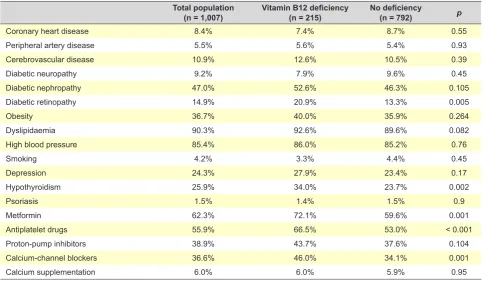
Table 2 - Prevalence of comorbidities and therapies in our group of patients according to the levels of vitamin B12
Total population
(n = 1,007) Vitamin B12 deficiency(n = 215) No deficiency(n = 792) p
Coronary heart disease 8.4% 7.4% 8.7% 0.55
Peripheral artery disease 5.5% 5.6% 5.4% 0.93
Cerebrovascular disease 10.9% 12.6% 10.5% 0.39
Diabetic neuropathy 9.2% 7.9% 9.6% 0.45
Diabetic nephropathy 47.0% 52.6% 46.3% 0.105
Diabetic retinopathy 14.9% 20.9% 13.3% 0.005
Obesity 36.7% 40.0% 35.9% 0.264
Dyslipidaemia 90.3% 92.6% 89.6% 0.082
High blood pressure 85.4% 86.0% 85.2% 0.76
Smoking 4.2% 3.3% 4.4% 0.45
Depression 24.3% 27.9% 23.4% 0.17
Hypothyroidism 25.9% 34.0% 23.7% 0.002
Psoriasis 1.5% 1.4% 1.5% 0.9
Metformin 62.3% 72.1% 59.6% 0.001
Antiplatelet drugs 55.9% 66.5% 53.0% < 0.001
Proton-pump inhibitors 38.9% 43.7% 37.6% 0.104
Calcium-channel blockers 36.6% 46.0% 34.1% 0.001
Calcium supplementation 6.0% 6.0% 5.9% 0.95
ARTIGO ORIGINAL compared, patients with B12 deficiency were older (68.4 65.8 years; p = 0.006), presented with a longer DM duration vs. (13.35 vs. 10.36 years; p = 0.001), showed higher preva-lence of retinopathy (20.9% vs. 13.3%; p = 0.005) and hypo-thyroidism (34.0% vs. 23.7%; p = 0.002) (Table 1 and 2). A higher prevalence of vitamin B12 deficiency has been found in patients with CVD and DN, while it was lower in patients with CHD, however with no statistical significance.
Higher metformin (72.1% vs. 59.6%; p = 0.001), anti-platelet drug (66.5% vs. 53%; p < 0.001) and calcium-chan-nel blocker (CCB) (46% vs. 34.1%; p = 0.006) exposure has been found in patients with vitamin B12 deficiency. Most patients on antiplatelet drugs were on aspirin; amlodi-pine, followed by lercanidiamlodi-pine, were the mostly prescribed CCBs. No statistically significant differences were found between specific drugs from each drug class vs. the preva-lence of vitamin B12 deficiency. Mean corpuscular volume (MCV), an indirect marker of vitamin B12 deficiency, was not elevated in the group of patients with deficiency, as it would be expected. No asymmetries regarding glycaemic or lipid control were found between both groups. Metformin was the mostly prescribed hypoglycaemic drug in patients
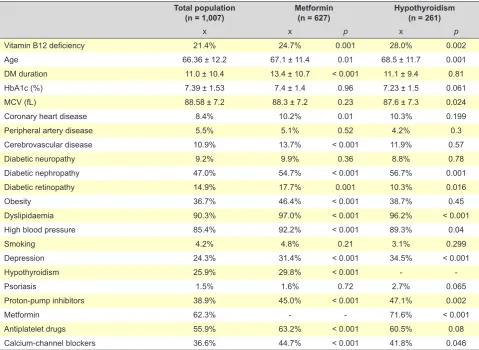
with vitamin B12 deficiency, while similar prescriptions of the remaining hypoglycaemic drugs (oral and injectable) were found in both groups. Subgroups of patients present-ing with factors statistically associated with lower levels of vitamin B12 were analysed (Table 3 and 4).
From the abovementioned factors, only hypothyroidism and metformin therapy were clearly associated with vitamin B12 deficiency. The authors have described the charac-teristics of these subgroups, in which patient’s older age, higher prevalence of target organ damage and comorbidi-ties (CHD, CVD, DN, dyslipidaemia, high blood pressure, depression) as well as higher use of PPIs, metformin, CCBs and antiplatelet drugs are worth mentioning. A statistically significant association has remained in the subgroups of patients with no described association between antiplatelet drug therapy and vitamin B12 deficiency, upon adjustment for confounding factors (metformin and PPIs therapy, hy-pothyroidism, patient’s age and DM duration) (p = 0.032), while statistically significant association between retinopa-thy and CCBs therapy with vitamin B12 deficiency was lost (p = 0.064 and p = 0.16 respectively).
The group of patients on metformin therapy presented
Table 3 - Characteristics of our group of patients, grouped according to metformin exposure and hypothyroidism
Total population
(n = 1,007) Metformin(n = 627) Hypothyroidism(n = 261)
x x p x p
Vitamin B12 deficiency 21.4% 24.7% 0.001 28.0% 0.002
Age 66.36 ± 12.2 67.1 ± 11.4 0.01 68.5 ± 11.7 0.001
DM duration 11.0 ± 10.4 13.4 ± 10.7 < 0.001 11.1 ± 9.4 0.81
HbA1c (%) 7.39 ± 1.53 7.4 ± 1.4 0.96 7.23 ± 1.5 0.061
MCV (fL) 88.58 ± 7.2 88.3 ± 7.2 0.23 87.6 ± 7.3 0.024
Coronary heart disease 8.4% 10.2% 0.01 10.3% 0.199
Peripheral artery disease 5.5% 5.1% 0.52 4.2% 0.3
Cerebrovascular disease 10.9% 13.7% < 0.001 11.9% 0.57
Diabetic neuropathy 9.2% 9.9% 0.36 8.8% 0.78
Diabetic nephropathy 47.0% 54.7% < 0.001 56.7% 0.001
Diabetic retinopathy 14.9% 17.7% 0.001 10.3% 0.016
Obesity 36.7% 46.4% < 0.001 38.7% 0.45
Dyslipidaemia 90.3% 97.0% < 0.001 96.2% < 0.001
High blood pressure 85.4% 92.2% < 0.001 89.3% 0.04
Smoking 4.2% 4.8% 0.21 3.1% 0.299
Depression 24.3% 31.4% < 0.001 34.5% < 0.001
Hypothyroidism 25.9% 29.8% < 0.001 -
-Psoriasis 1.5% 1.6% 0.72 2.7% 0.065
Proton-pump inhibitors 38.9% 45.0% < 0.001 47.1% 0.002
Metformin 62.3% - - 71.6% < 0.001
Antiplatelet drugs 55.9% 63.2% < 0.001 60.5% 0.08
Calcium-channel blockers 36.6% 44.7% < 0.001 41.8% 0.046
ARTIGO ORIGINAL
with more severe target organ damage and higher coexist-ence with hypothyroidism and depression. Patients with hy-pothyroidism had similar age, lower MCV values and higher metformin exposure when compared to the remaining pa-tients. Higher prevalence of target organ damage and co-morbidities (except hypothyroidism, psoriasis and smoking) were found in patients on antiplatelet drug therapy.
DISCUSSION
A high prevalence of vitamin B12 deficiency in patients with diabetes was found in this study. The presence of a deficiency was found in 21.4% of the patients with DM2, according to the cut-off points defined by the Department of Clinical Pathology at our hospital, while widely varying prev-alence rates can be found in literature, ranging between 4.3 and 30%,7,8 possibly reflecting four issues:
1. Different laboratory methods are available and the required technical specificity regarding blood sam-pling prevents from establishing consensual thresh-olds. This is reflected not only in different cut-off
points for vitamin B12 deficiency, as well as in the subdivision of patients with borderline deficiency and clear deficiency in different studies.
2. The development of more reliable techniques for the measurement of vitamin B12 levels is crucial, as high rates of false positives and negatives (50%) are involved in current techniques.9 Therefore, indirect markers of vitamin B12 deficiency have been used in many studies, including methylmalonic acid (MMA), homocysteine and holotranscobalamin. With the use of this methodology, new patients were diagnosed with deficiency and were described as presenting with ‘subclinical’ deficiency. These markers also pre-sent limitations in terms of sensitivity and specificity, mainly when used separately and can be appropri-ately used for the confirmation of any clinically or laboratory suspected vitamin B12 deficiency, even though no sufficient data still exist to support this ap-proach. In addition, the clinical meaning of the early detection of a deficiency by using these methods
Table 4 - Characteristics of our group of patients grouped according to the presence of retinopathy and antiplatelet drug + calcium-channel blockers therapy
Total population
(n = 1,007) Retinopathy (n = 150) Antiplatelet drugs(n = 563)
Calcium-channel blockers (n = 369)
x x p x p x p
Vitamin B12 deficiency 21.4% 30.0% 0.005 25.4% < 0.001 26.8% 0.001
Age 66.36 ± 12.2 69.1 ± 9.5 0.003 69.0 ± 10.0 < 0.001 70.4 ± 9.6 < 0.001 DM duration 11.0 ± 10.4 20.1 ± 11.9 < 0.001 13.2 ± 11.0 < 0.001 15.3 ± 10.5 < 0.001
HbA1c (%) 7.39 ± 1.53 7.8 ± 1.4 0.001 7.4 ± 1.5 0.44 7.4 ± 1.3 0.799
MCV (fL) 88.58 ± 7.2 88.8 ± 6.3 0.73 88.5 ± 6.7 0.71 87.8 ± 6.5 0.017
Coronary heart disease 8.4% 18.7% < 0.001 13.9% < 0.001 13.0% < 0.001 Peripheral arterial disease 5.5% 16.0% < 0.001 8.7% < 0.001 7.0% 0.092
Cerebrovascular disease 10.9% 18.0% 0.003 15.1% < 0.001 15.4% < 0.001
Diabetic neuropathy 9.2% 32.7% < 0.001 13.5% < 0.001 13.3% 0.001
Diabetic nephropathy 47.0% 81.3% < 0.001 58.8% < 0.001 63.7% < 0.001
Diabetic retinopathy 14.9% - - 22.2% < 0.001 21.7% < 0.001
Obesity 36.7% 52.7% < 0.001 41.9% < 0.001 50.1% < 0.001
Dyslipidaemia 90.3% 98.0% 0.001 98.2% < 0.001 98.9% < 0.001
High blood pressure 85.4% 99.3% < 0.001 95.7% < 0.001 100.0% < 0.001
Smoking 4.2% 5.3% 0.44 5.2% 0.08 5.1% 0.24
Depression 24.3% 34.7% 0.001 28.4% 0.001 27.6% 0.062
Hypothyroidism 25.9% 18.0% 0.016 28.1% 0.08 29.5% 0.046
Psoriasis 1.5% 0.7% 0.37 1.4% 0.84 0.8% 0.178
Proton-pump inhibitors 38.9% 48.7% 0.008 46.5% < 0.001 57.5% < 0.001
Metformin 62.3% 74.0% 0.001 70.3% < 0.001 75.9 < 0.001
Antiplatelet drugs 55.9% 83.3% < 0.001 - - 75.6% < 0.001
Calcium-channel blockers 36.6% 53.3% < 0.001 49.6% < 0.001 -
ARTIGO ORIGINAL is not consensual and therefore, as not universally available, these are still underused. 3. The presence of other factors also associated with a deficiency has not been assessed in most stud-ies (Table 5) therefore preventing from establishing a correlation between metformin exposure and vitamin B12 deficiency.9
4. Different characteristics of the populations have been found among the different studies.10 The in-creased prevalence of vitamin B12 deficiency with patient’s age can be associated with mechanisms of cellular ageing and a subsequent reduction in the absorption capacity, with the higher use of pharma-cological therapies for other pathologies and with a lower intake.
Metformin therapy is clearly associated with an in-creased risk for vitamin B12 deficiency (OR 2.92) in a dose and time-dependent manner.9 There is no consensual pathophysiological explanation underlying the association between metformin therapy and vitamin B12 deficiency, even though it is considered that metformin has an impact on normal functioning of the intrinsic factor – vitamin B12 complex through calcium dependent mechanisms. This deficiency can be reverted with supra-physiological doses of vitamin B12 and/or with calcium supplementation.11,12 No lower deficiency was found in our group of patients on calcium supplementation. In addition, the higher deficiency found in patients on CCBs therapy was not statistically sig-nificant upon adjustment for confounding factors and the rationale for this association lacks scientific evidence. How-ever, an interaction of CCBs with the calcium receptors in the ileum (influenced by metformin) may be involved and therefore with an impact on the absorption of vitamin B12. Apart from the use of vitamin B12 and calcium supplemen-tation, metformin removal can also be considered in the management of vitamin deficiency, even though this is not a frequently used approach as biguanide drugs are so highly efficient in DM control and in the reduction of complications,
as well as due to the relatively simple treatment with vitamin B12 supplements.
Hypothyroidism is a recognized aetiology of vitamin B12 deficiency and underlying causes include the own hormone deficiency and/or the association of autoimmune thyroiditis with pernicious anaemia. Varying prevalence of deficiency has been found, according to the analysis that was used and ranging from 6.3 to 55.5% and 9 to 40.5% in hypothy-roidism and autoimmune thyroiditis, respectively. The pres-ence of an atrophic gastric and bowel mucosa is usually found in hypothyroidism, as well as a myxedematous infil-tration of the bowel wall with a subsequent reduction in the absorption capacity. In addition, around 12% of the patients with hypothyroidism present with pernicious anaemia.13 The real impact of antiplatelet drug therapy in the circu-lating levels of vitamin B12 is still unclear. A limitation of the benefits of using vitamin B complex supplements for cer-ebrovascular prevention with the use of antiplatelet drugs has been described in one study. The authors have sug-gested that the homocysteine-lowering effect of vitamin B complex is reduced by antiplatelet drugs.14
Vitamin B12 deficiency is associated with potentially life-threatening clinical consequences: it is a recognized cause of megaloblastic anaemia and pancytopenia, due to the induction of deficient erythrocyte nuclear maturation and ineffective erythropoiesis, respectively; vitamin B12 has a crucial role in the development, myelinisation and mainte-nance of the central nervous system and its deficiency is associated with an abnormal function of the central (early cognitive impairment and proprioceptive deficits) as well as the peripheral and autonomic nervous system (orthos-tatic hypotension, sensory deficits, among others). Differ-ent causes have been described and must be searched for, even though they do not explain for any delayed replace-ment therapy in most of the patients, as this attitude may increase the chance for the development of complications.9 This study involved the description of a representa-tive group of elderly patients with diabetes, with a high
Table 5 - Causes of vitamin B12 deficiency8
Cause of vitamin B12 deficiency
Reduced intake Vegetarian diet, starvation
Malabsorption syndromes Pernicious anaemia
Atrophic gastritis
Post-gastrectomy, ileal resection, bariatric surgery Crohn’s disease with terminal ileitis
Bacterial overgrowth syndrome Exocrine pancreatic insufficiency Hypothyroidism
Imerslund–Gräsbeck syndrome
Drugs Metformin
Proton-pump inhibitors Colchicine
Alcoholism
ARTIGO ORIGINAL prevalence of micro and macrovascular complications and
long duration.
Interestingly, the prevalence of diabetic retinopathy was significantly higher in the group of patients with deficiency. This association remains underestimated, despite having already been previously described.15 The impact of a vita-min B12 deficiency in cognition and neuropathy is based on stronger scientific evidence and therefore these complica-tions have been obviously more emphasized in literature. Serum vitamin B12 levels are related inversely to homo-cysteine, the latter being usually related to macrovascular disease. More recently, a cross-sectional case-control study involving a group of 400 patients has found an association between vitamin B12 deficiency and microvascular disease (retinopathy). The authors of this study have considered that this was due to the impact of homocysteinaemia on healthy retinal microvasculature. No differences regarding DM duration or metabolic control were found between both groups of patients, therefore removing some confounding factors.15 In our study, the association between vitamin B12 deficiency and retinopathy was lost when adjusted for con-founding factors (metformin or PPIs therapy, hypothyroid-ism, patient’s age and DM duration) and a real association is therefore questionable.
A trend towards higher macrovascular damage, mainly regarding cerebrovascular disease, has also been found in our study, in patients with vitamin B12 deficiency.
The retrospective nature of the study is one of its limita-tions regarding the definition of a correlation. All the possible causes for a vitamin B12 deficiency were also not ruled out (the determination of anti-intrinsic factor and/or anti-parietal cell antibodies among others was only obtained in a few patients). There are no data regarding the indirect mark-ers of vitamin B12 deficiency (homocysteine, MMA and hol-otranscobalamin), which are considered as more reliable markers of deficiency. No correlation has been established between laboratory parameters and the clinical data. In ad-dition, the measurement of vitamin B12 levels was not en-tirely random as it was obtained based on clinical elements in some patients and based on laboratory abnormalities in others, which can be considered as a potential selection bias probably explaining for the high prevalence of the defi-ciency.
This study was the first ever documenting a higher prev-alence of vitamin B12 deficiency in patients on antiplatelet drug therapy. This is the second study suggesting an asso-ciation between vitamin B12 deficiency and diabetic retin-opathy and reinforcing the high prevalence of a deficiency in diabetic patients on metformin therapy. This study also supports the low sensitivity of the values of MCV with a sus-pected vitamin B12 deficiency. The results suggested that MCV is not a reliable criterion for the diagnosis of a vitamin B12 deficiency, namely in patients with hypothyroidism.
CONCLUSION
This study allowed for the conclusion that vitamin B12 deficiency is frequently found in patients with DM2, mainly in elderly patients, with longer diabetes duration, hypothy-roidism and on metformin therapy. The subtle presenta-tion (both clinically and showing laboratory abnormalities [MCV]) of vitamin B12 deficiency may occur and screening with the measurement of vitamin B12 levels or other mark-ers is the only way it can be detected and corrected. This is the first study ever documenting a higher prevalence of the deficiency in patients on antiplatelet drug therapy and the second ever suggesting a higher prevalence of diabetic retinopathy in patients with vitamin B12 deficiency.
HUMAN AND ANIMAL PROTECTION
The authors declare that the followed procedures were according to regulations established by the Ethics and Clini-cal Research Committee and according to the Helsinki Dec-laration of the World Medical Association.
DATA CONFIDENTIALITY
The authors declare that they have followed the proto-cols of their work centre on the publication of patient data.
CONFLICTS OF INTEREST
The authors declare that there were no conflicts of inter-est in writing this manuscript.
FINANCIAL SUPPORT
The authors declare that there was no financial support in writing this manuscript.
REFERENCES
1. International Diabetes Federation. IDF Diabetes Atlas, 7th ed. Brussels:
IDF; 2015.
2. Observatório Nacional da Diabetes. Diabetes Factos e Números: o Ano de 2014. Lisboa: ONC; 2015.
3. American Diabetes Association. Standards of Medical Care in Diabetes – 2017. Diabetes Care. 2017;40:s64-74
4. Gerstein HC, Miller ME, Byington RP, Goff DC Jr, Bigger JT, Buse JB, et al. Effects of intensive glucose lowering in type 2 diabetes. N Engl J Med. 2008;358:2545-59.
5. King P, Peacock I, Donnelly R. The UK prospective diabetes study (UKPDS): clinical and therapeutic implications for type 2 diabetes. Br J Clin Pharmacol. 1999;48:643–8.
ARTIGO ORIGINAL
Rehabilitation (EACPR). Atherosclerosis. 2016;253:281-344.
7. Qureshi SA, Ainsworth A, Winocour PH. Metformin therapy and assessment for vitamin B12 deficiency: is it necessary? Pract Diabetes. 2011;28:302–4.
8. Aroda VR, Edelstein SL, Goldberg RB, Knowler WC, Marcovina SM, Orchard TJ, et al. Long-term metformin use and vitamin B12 deficiency in the Diabetes Prevention Program Outcomes Study. J Clin Endocrinol Metab. 2016;101:1754–61.
9. Stabler SP. Clinical practice. Vitamin B12 deficiency. N Engl J Med. 2013;368:149-60.
10. Liu Q, Li S, Quan H, Li J. Vitamin B12 status in metformin treated patients: Systematic review. PLoS One. 2014;9:e100379.
11. Reinstatler L, Qi YP, Williamson RS, Garn JV, Oakley GP Jr. Association of biochemical B12 deficiency with metformin therapy and vitamin B12
supplements: the National Health and Nutrition Examination Survey, 1999-2006. Diabetes Care. 2012;35:327–33.
12. Bauman WA, Shaw S, Jayatilleke E, Spungen AM, Herbert V. Increased intake of calcium reverses vitamin B12 malabsorption induced by metformin. Diabetes Care. 2000;23:1227-31.
13. Wemeau JL, Proust-Lemoine E, Ryndak A, Vanhove L. Thyroid autoimmunity and polyglandular endocrine syndromes. Hormones. 2013;12:39-45.
14. Hankey GJ, Eikelboom JW, Yi Q, Lees KR, Chen C, Xavier D, et al. Antiplatelet therapy and the effects of B vitamins in patients with previous stroke or transient ischaemic attack: a post-hoc subanalysis of VITATOPS, a randomised, placebo-controlled trial. Lancet Neurol. 2012;11:512–20.