Available on-line at: www.oapub.org/edu
doi: 10.5281/zenodo.3733824 Volume 6 │ Issue 3 │ 2020
THE EFFECT OF A 24-WEEK GREEK TRADITIONAL
DANCES PROGRAM ON THE CARDIORESPIRATORY
FITNESS OF ADULT PEOPLE
Alexandros G. Malkogeorgos1i, Styliani A. Malkogeorgou1, Eirini A. Argiriadou1, Argirios F. Mavrovouniotis2, Fotios I. Mavrovouniotis1
1School of Physical Education and Sport Sciences,
Aristotle University of Thessaloniki, Greece
2School of Medicine, Faculty of Health Sciences,
Aristotle University of Thessaloniki, Greece
Abstract:
The aim of the present study was to examine the effects of a Greek traditional dances program on adult people cardiorespiratory fitness. For this purpose, 40 sedentary healthy
adults, 23 women and 17 men, aged 35-55 years, who didn’t participate in any group or
individual exercise, physical activity or dancing program for the past six months, were randomly chosen and separated to an experimental and a control group. The subjects of the experimental group (n=20, 12 women and 8 men) attended a Greek traditional dances program of moderate intensity, at a frequency of three training sessions per week, for 60 minutes each, while the subjects of the control group (n=20, 11 women and 9 men) were asked to continue their daily habits for the same period. Maximal aerobic capacity
(VO2max) was assessed for both groups before and after the 24-week period by the
implementation of the Rockport one-mile walk test. Before and after the 24-week period, resting heart rate (RHR), diastolic blood pressure (DBP), and systolic blood pressure (SBP) were, also, measured. For the statistical analysis the Statistical Package for Social Sciences ver. 23.0 for windows was used. No significant difference was found in the baseline measures between the two groups. After the participation in the 24-week Greek
traditional dances program, VO2max of the experimental group increased significantly
from 35,95+4,3 ml/kg/min to 38,91+3,7 ml/kg/min (t=-6,204, p<0,001). Changes in DBP and SBP to the desirable direction were found. More specifically, DBP decreased from 79,4+7,6 mmHg to 78,8+7,6 mmHg (t=0,399, p>0,05), and SBP decreased from 125,6+7,7 mmHg to
122,6+7,7 mmHg (t=2,198, p<0,05). No significant difference was found after the 24-week period for the control group. The results allow us to use Greek traditional dances as an alternative and, also, effective form of physical activity that may help in improving aerobic capacity and may bring favorable changes in cardiorespiratory status of adult people.
Keywords: folk dance, aerobic capacity, VO2max, blood pressure
1. Introduction
Dance is a very common leisure activity (McCord, & Patterson, 1989) and an alternative form of exercise of mild to moderate intensity (Mavrovouniotis et al., 2010; Wyon, & Redding, 2005). As an alternative form of exercise versus traditional exercise for many is an enjoyable choice and offers unique opportunities to develop new skills in a team environment (Lobo, & Winsler, 2006). Furthermore, dance is a safe form of exercise with a low chance of injuries compared to other types of exercise (Anagnostopoulou et al., 2017; Malkogeorgos et al., 2010; Malkogeorgos et al., 2011a).
Participation in dance is popular and people dance for fun, recreation, social reasons and more and more for better health (Costa et al., 2013; Keogh et al., 2009; Pilch et al., 2015). Dancing is an excellent way to promote physical, psychological and social benefits (Burkhardt, & Brennan, 2012; Caldwell et al., 2005; Malkogeorgos et al., 2011b; Mavrovouniotis, & Argiriadou, 2008).
Psychological and social benefits include better overall health and an improved sense of well-being (Costa et al., 2013; Keogh et al., 2009; Pilch et al., 2015). Berrol et al. (1997) ascertained that the participation in dancing programs, of 45 min duration, once a week, for five months, improved the psychological state of old people who suffered from stroke, traumatic brain injury and cerebral vascular accidents. Berryman-Miller (1988) found out that the 8-month application of a dancing program in individuals aged 55 to 85 years old, affected self-esteem and well-being positively and led to mood state improvement. In addition, other authors suggest that dancing causes anxiety and neuromuscular tension reduction, and, also, causes psychological and physical calm (Garnet, 1974; Keuttel, 1982; Leste, & Rust, 1984; Payne, 1992; Stanton-Jones, 1992; Steiner, 1992).
participants benefit from improving aerobic capacity (Allen, & Wyon, 2008; Hui et al., 2009).
Moreover, significant higher mean values have been found in VO2max of dancers,
beginners or advanced, compared with sedentary people (Chatfield et al., 1990; Beck et al., 2018; Novak et al., 1978; Prashobhith, 2015). Thus, dancers demonstrate significantly
higher values in VO2max than sedentary individuals (Angioi et al., 2009; Chmelar et al.,
1988; Dahlstrom et al., 1996; Guidetti et al., 2008; Malkogeorgos et al., 2013; Martyn-Stevens et al., 2012; Twitchett et al., 2010). As for middle-aged participants in dance-based exercise programs, they showed significantly better aerobic capacity, balance, strength, body fat and flexibility after the participation in the program compared to sedentary control group (Chatfield et al., 1990; Gupta et al., 2004; Murrock, & Gary, 2010; Koutedakis, & Jamurtas, 2004).
However, on reviewing the literature, it seems that there is a lack of research efforts noted regarding the effectiveness of Greek traditional dances on improving cardiorespiratory fitness. Thus, the aim of the present study was to examine the effects of a 24-week Greek traditional dances program on the cardiorespiratory fitness of healthy adult men and women.
2.Material and Methods
2.1 Sample
From the lists of the members kept in a Cultural Club of Moudania City in Halkidiki-Greece, forty-six members, men and women, that fulfilled the inclusion criteria, that is age 35-55 years old, no participation in any group or individual exercise, physical activity or dancing program for the past six months, and no health problem, permanent medication, or any form of diet, were randomly chosen. Subsequently, a communication/invitation to each chosen member, in regard to the research was made. After that, a total of forty-three men and women volunteered to participate in the research.
A written informed consent for the participation in the research was obtained from each subject. All the subjects had to agree that they will not participate in any other group or individual exercise, physical activity or dancing program for the duration of the experiment, that is a 24-week period. After that, forty sedentary healthy adults, 23 women and 17 men, volunteered to participate in the research. The subjects separated randomly to an experimental group (n=20, 12 women and 8 men) and a control group (n=20, 11 women and 9 men).
2.2 Procedure
aim of the research was given to the participants, without any briefing relative to previous research findings.
Subsequently, the subjects of the experimental group participated in a 24-week group program of Greek traditional dances performance of moderate intensity, at a frequency of three training sessions per week, for 60 minutes each. Each Greek traditional dances session included the warming up for 8-12 min which contained dances of low intensity, the main part for 40-45 min which contained dances of moderate to high intensity and the cool-down for 5-7 min which contained dances of low intensity for recovery. Concerning the main part, the dances intensity ranged from 60% to 75% of the
maximum HR, which corresponds to 40-60% of VO2max (moderate intensity) (Swain et
al., 1994; Tanaka et al., 2001; Uth et al., 2004). There were frequent rhythm alternations so that the subjects could keep dancing continuously throughout each dance session. The performed Greek traditional dances were from different areas of Greece. The program contained a variety of dances, regarding the rhythm, the kinetic repertoire and the style. All participants attended at least 80% of Greek traditional dances sessions.
At the same 24-week period, the subjects of the control group were asked to continue their daily habits without any changes as it was recorded at the beginning of the research. Measurements and each session of Greek traditional dances were conducted by a single, male investigator, teacher of physical education with extensive practical experience in Greek traditional dances.
2.3 Measurements
A. Anthropomorphological Measurements
Measurements of body mass (weight) and height were taken place once, before the 24-week Greek traditional dances program, for both groups. Body mass was measured using a Microlife WS80 electronic scale with a precision of 0.1 kg. Body height was measured with a precision of 0.5 cm using a Seca 216 height measuring.
B. RHR
RHR was measured with a Polar - Sport Tester (M 400).
C. Blood pressure
SBP and DBP were measured with an electronic blood pressure monitor (Omron M6 comfort).
RHR, SBP and DBP measurements were carried out with each subject in a resting position for at least 10 min, in the morning, between 8.00 and 10.00 before noon, after 12 hours of caffeine consumption avoidance. RHR, DBP, as well as SBP for the subjects of the experimental group were measured before and after the 24-week Greek traditional dances program, while for the subjects of the control group before and after the 24-week period.
D. VO2max
For the evaluation of VO2max of the subjects of both groups, the Rockport one-mile walk
reliability of over 93% (Kline et al., 1987; Hageman et al., 2001; Pober et al., 2002). The
Rockport equation for the evaluation of VO2max is:
VO2max = 132,853 – 0,0769W – 0,3877A + 6,315G – 3,2649T – 0,1565H
Where: W=weight in pounds, A=age in years, G=gender and as for women G=0, while for men G=1, T= time in minute, and H= heart rate in beats per minute measured immediately after the end of walking.
For VO2max evaluation, the subjects of the experimental group performed the
Rockport one-mile walk test before and after the 24-week Greek traditional dances program, while the subjects of the control group before and after the 24-week period.
2.4 Statistical analysis
For the statistical analysis the statistic packet SPSS/PC Version 23.0 for windows was used. The collected data were analyzed by computing mean and standard deviation. All
dependent variables, namely VO2max, RHR, SBP, and DBP were found to be normally
distributed using the Kolmogorov-Smirnov tests of normality. Independent samples t-tests were used to determine if significant mean differences existed in baseline measurements between participants of the two groups. Paired t-tests and ANOVA with repeated measures were used to determine if significant pre- to post-test differences existed (before and after the Greek traditional dances program as for intervention group, and before and after the 24-week period as for control group). The level of significance was set to p<0,05.
3.Results
In Table 1 the anthropomorphological characteristics of experimental group that attended the Greek traditional dances program, and control group are presented. Independent samples t-tests showed that there was no significant difference between the two groups, concerning the anthropomorphological characteristics.
Table 1: Anthropomorphological characteristics of experimental and control group
Parameters Experimental Group
Mean±SD
Control Group
Mean±SD
Age (years) 41,7±5,5 41,85±7,3
Height (m) 1,73±0,1 1,72±0,09
Body mass (kg) 78,77±18,5 81,90± 17,8
Descriptive statistics for VO2max assessed prior to and following the 24-week Greek
Figure 1: VO2max for Greek traditional dances group and control group before and after the 24-week period
As it is observed, there was a significant increase in VO2max (8,23%) for the
experimental group after the participation in the 24-week Greek traditional dances
program. On the contrary, there was observed a slight decrease in VO2max for the control
group after the 24-week period (Figure 1, Table 2).
Descriptive statistics for RHR assessed prior to and following the 24-week Greek traditional dances program for the experimental group and prior to and following the 24-week period for the control group, as well as the significance of any demonstrated change are shown in Figure 2 and Table 2.
Figure 2: RHR for Greek traditional dances group and
It is obvious that RHR was almost unchangeable for the experimental group after the participation in the 24-week Greek traditional dances program, while there was observed a slight increase in RHR for the control group after the 24-week period (Figure 2, Table 2).
Descriptive statistics for SBP assessed prior to and following the 24-week Greek traditional dances program for the experimental group and prior to and following the 24-week period for the control group, as well as the significance of any demonstrated change are shown in Figure 3 and Table 2.
Figure 3: SBP for Greek traditional dances group and
control group before and after the 24-week period
As it is observed, there was a significant decrease in SBP (2,8%) for the experimental group after the participation in the 24-week Greek traditional dances program. On the contrary, there was observed a slight increase in SBP for the control group after the 24-week period (Figure 3, Table 2).
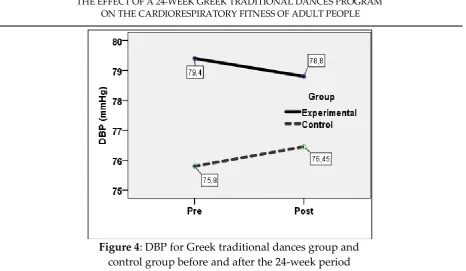
Figure 4: DBP for Greek traditional dances group and control group before and after the 24-week period
As it is observed, there was no significant difference in DBP in both groups after the 24-week period. However, Greek traditional dances group presented a tendency for reduction in DBP from 79,4 to 78,8 mmHg (0,8%), while control group presented a slight increase in DBP (Figure 4, Table 2).
Table 2: Descriptive data, and degree of change ofcardiorespiratory
variables of experimental and control group Group Pre 24 weeks
M+SD
Post 24 weeks M+SD
t & p Change
VO2max
(ml/kg/min)
Experimental 35,95±4,3 38,91±3,7 t=-6,204 p<0,001 ↑
Control 35,36± 6,8 35,21± 6,4 NS ↓
t & p NS
RHR
(beats/min)
Experimental 69,4±9,4 69,2± 8,3 NS ↓
Control 70,4± 9 71,5±8,4 NS ↑
t & p NS
SBP
(mmHg)
Experimental 125,6± 7,7 122,05± 8,7 t=2,198 p<0,05 ↓
Control 120,85±10,8 121,05±11,2 NS ↑
t & p NS
DBP
(mmHg)
Experimental 79,4±7,6 78,8± 7,6 NS ↓
Control 75,8± 9 76,45± 7,4 NS ↑
t & p NS
The results of the independent samples t-tests showed that at the baseline there was no significant difference between the two groups for all dependent variables, showing that the two groups are similar. In addition, the results of the paired t-tests and repeated
measures ANOVAs, didn’t demonstrate any significant difference for the control group
ANOVAs, demonstrated significant differences between the two measures, pre- and post-the 24-week Greek traditional dances program, for the cardiorespiratory parameters. Finally, these results show that after the participation in the Greek traditional dances program, all the measured cardiorespiratory variables were changed to the
desirable direction, as there were observed an increase in VO2max, and decreases in RHR,
SBP, as well as in DBP (Table 2).
4. Discussion
The results of the present research showed that the individuals of the experimental group after their participation in the Greek traditional dances program increased significantly
their aerobic capacity. More specifically, the VO2max of the participants in the 24-week
Greek traditional dances program was increased from 35,95+4,3 ml/kg/min to 38,91+3,7 ml/kg/min, which corresponds to an 8,23% increase. In agreement, concerning traditional dances, it has been found that traditional dances bring about positive effects on the cardiorespiratory fitness of the participants. More specifically, Tai Chi, a Chinese traditional form of dance that like the Greek traditional dances can be performed in pairs or in a line (Judge, 2003; Li et al., 2001) may improve cardiovascular system function (Petrillo, 2000). In addition, the participation in Turkish traditional dances can lead to improvements in fitness (Eyigor et al., 2009). Similarly, Korean traditional dances have a
positive impact on participants’ functional status (Song et al., 2004). Moreover, subjects who participated in an ancient tradition Sardinian folk dance, Ballu Sardu, increased their aerobic capacity (Cugusi et al., 2015).
As for Greek traditional dances, a research of Mavrovouniotis et al. (2018) provides evidence for the effectiveness of the participation in a 12-week Greek traditional dances program at a frequency of three sessions per week, 50 minutes each, in improving cardiorespiratory fitness of postmenopausal women, aged 55-68 years. In similar results were led Denazi et al. (2013), who implemented a 14-week training program in Greek traditional dances at a frequency of three sessions per week, for 50 minutes each in women 60-78 years old. More specifically, the researchers found that the participants in the Greek traditional dances program improved significantly their aerobic endurance as
measured by “the 6-minute walk” task, while no significant improvement was observed in the control group. In addition, Tsimaras et al. (2010) found that the participation in a 12-week Greek traditional dances program improved significantly the aerobic capacity of adults with hearing loss.
Moreover, in the present study after the participation in Greek traditional dances program SBP and DBP showed a desirable decreasing trend. In agreement with our study, Feairheller et al. (2014) presented similar findings after 6 months of aerobic exercise training in African Americans. More specifically, after the six-month training the
subjects increased significantly VO2max. However, aerobic exercise training did not alter
best types of exercise for lowering blood pressure include walking, jogging, cycling,
swimming, dancing, Zumba dance (Maciejczyk, & Feć, 2013).
Thus, it could be said that dancing and in particular Greek traditional dance is an effective form of physical exercise that helps to improve aerobic capacity (McCord, & Patterson, 1989). Besides, the participation in activities such as traditional dancing
requires a great deal of physical effort (Maciejczyk, & Feć, 2013; Jitesh, & Devi, 2016). Greek traditional dances, particularly, include a big total of performed steps, a variety of simple kinetic patterns performed with appropriate intervals and frequent rhythm alternations. Moreover, it has been found out that during the one hour Greek traditional dances session, which is a typical duration for the programs of Greek traditional dances, the mean performed steps were 4721,29+469,094 and the mean travelled distance was 1,414+0,15 km, as they were measured by the Omron pedometers. However, when dancing Greek traditional dances many other movements, such as foot skips, arsis, etc., except clear steps as well as hand movements are performed that, probably, cannot be measured (Argiriadou et al., 2013). Consequently, it could be said that a Greek traditional dances session includes a great amount of performed movements, indicating that they, indeed, constitute a physical activity that may contribute to the improvement of physical fitness (Argiriadou et al., 2013; Argiriadou, 2018; Balady, & Weiner, 1987; Byrne, 1991; Klissouras, 2004; Papanikolaou, 1993).
Regarding intensity, other forms of dance such as ballet sets or modern dance class are between low and moderate intensities and within the aerobic training zone (60-90%HR max) (Rodrigues-Krause et al., 2014; Wyon et al., 2004). As for Greek traditional
dances, exercising in them has increased old and middle-aged people’s HR significantly
and approximately 63%-65% and 77,4% of their HRmax, respectively, was activated
(Argiriadou et al., 2013; Argiriadou, 2018; Mavrovouniotis et al., 2010; Mavrovouniotis et al., 2018). In agreement, in the present study, the intensity of Greek traditional dances
sessions was ranged to 40-75% of VO2max or to 69,9%±7,5% of HRmax. Thus, Greek
traditional dances constitute a physical activity of moderate intensity, of approximately 3-5 METs (Argiriadou et al., 2013; Argiriadou, 2018; Balady, & Weiner, 1987; Byrne, 1991; Klissouras, 2004; Papanikolaou, 1993). This exercise intensity can develop and maintain
middle-aged people’s cardiorespiratory fitness (American College of Sports Medicine,
1995). It is worth mentioning that according to the Guidelines for Exercise Testing and Prescription individuals should perform exercise between 64% to 94% of HRmax or 40%
to 85% of VO2max to improve cardiovascular fitness (Thompson et al., 2010; Garber et al.,
Besides high cardiorespiratory fitness level is associated with lower mortality (Farrel et al., 2002).
5.Conclusion
Greek traditional dancing is a very common, pleasant and socializing activity for middle-aged people, and it is an alternative and, also, effective form of physical exercise that helps improving aerobic capacity. The participation in Greek traditional dances requires an appropriate level of physical effort and may lead the cardiorespiratory variables into changes to the desirable direction. With this way dancers may approach an appropriate level of fitness. The wide variety of Greek traditional dances, concerning technique, rhythm, and duration, allows the design of sessions with a variety of dances mild to intense, aiming on the best possible benefits in cardiorespiratory fitness. Consequently, Greek traditional dances constitute an alternative and, also, effective form of physical activity that may help in improving aerobic capacity and may bring favorable changes in cardiorespiratory status of adult people.
Conflicts of interest
The authors declare that there are no conflicts of interest.
About the Authors
Alexandros G. Malkogeorgos is a specialized educational staff, at Aristotle University of Thessaloniki, Department of Physical Education and Sport Science at Thessaloniki, and he teaches Greek Traditional Dances. He has a MSc in Exercise and Health. He is a PhD student at Aristotle University of Thessaloniki at Thessaloniki and his research area is dance and health, fitness and motor development.
Styliani A. Malkogeorgou has a BSc in Psychology and a MSc in Clinical Cognitive Neuroscience, from Sheffield Hallam University, United Kingdom. Moreover, she is a student at Aristotle University of Thessaloniki, Department of Physical Education and Sport Science at Thessaloniki.
Eirini A. Argiriadou is an assistant professor in Greek Traditional Dance, at Aristotle University of Thessaloniki, Department of Physical Education and Sport Science at
Serres. Her research area includes the effect of dance on the development of children’
cognitive, emotional and psychomotor domain, as well as on the quality of life of adults, middle-aged and elderly people. Moreover, her research interests are the effect of Greek Traditional Dances as an alternative form of aerobic exercise on life, on health status, on prevention of physical and mental health disorders of the participants.
Fotios I. Mavrovouniotis is a professor in Exercise and Physical Health, at Aristotle University of Thessaloniki, Department of Physical Education and Sport Science at Thessaloniki. His research areas include the effect of the exercise in mechanism of coagulation-fibrinolysis, blood lipids and obesity. In applications of exercise in people with chronic diseases and the preventive role of exercise and dance (dance therapy) in health and quality of life.
References
Allen, N., & Wyon, M. (2008). Dance Medicine: Artist or Athlete. SportEX Medicine, 35, 6-9.
American College of Sports Medicine. (1995). ACSM’s guidelines for Exercise Testing and Prescription (5th ed., pp. 93-119). Baltimore, MD: Williams & Wilkins.
Anagnostopoulou, E., Argiriadou, Eir., Mavrovouniotis, F., & Mavrovouniotis, A. (2017). The examination of injuries in dancers. World Journal of Research and Review, 5(6), 67-74.
Angioi, M., Metsios, G., Koutedakis, Y., & Wyon, M. A. (2009). Fitness in contemporary dance: a systematic review. International journal of sports medicine, 30(07), 475-484.
Argiriadou, Eir. (2018). Greek Traditional Dances and health effects for middle-aged and elderly people- A review approach. World Journal of Research and Review, 6(6), 16-21.
Argiriadou, Eir., Mountakis, C., Konstadinakos, P., Zakas, A., Mavrovouniotis, F., & Mavrovounioti, Ch. (2013). The physiological effects of Greek traditional dances on mood states of middle-aged people. Sport- und Präventivmedizin, 43(2), 4-6. Argiriadou, Eir., Mavrovouniotis, F., Mavrovouniotis, A., Mavrovounioti, Ch., Nikitaras,
N., & Mountakis, C. (2017). Greek traditional dances program and self-evaluated effects and changes in life. World Journal of Research and Review, 5(6), 19-24. Balady, G.J., & Weiner, D.A. (1987). Exercise testing for sports and the exercise
prescription. Cardiology Clinics, 5(2), 183-196.
Beck, S., Wyon, M.A., & Redding, E. (2018). Changes in Energy Demand of Dance Activity and Cardiorespiratory Fitness During 1 Year of Vocational Contemporary Dance Training. The Journal of Strength & Conditioning Research, 32(3), 841-848.
Berrol, F.C., Wee, L.O., & Katz, S.S. (1997). Dance/movement therapy with older adult who have sustained neurological insult: A demonstration project. American Journal of Dance Therapy, 19 (2), 135-160.
Burkhardt, J., & Brennan, C. (2012). The effects of recreational dance interventions on the health and well-being of children and young people: a systematic review. Arts and Health, 4(2), 148-161.
Byrne, K.P. (1991). Understanding and managing cholesterol: A guide for wellness professional. Champaign, IL: Human Kinetics.
Caldwell, K., Henshaw, L., & Taylor, G. (2005). Developing a framework for critiquing health research. Journal of Health, Social and Environmental Issues, 6(1), 45-54. Chatfield, S.J., Byrnes, W.C., Lally, D.A., & Rowe, S. (1990). Cross-sectional physiologic
profiling of modern dancers. Dance Research Journal, 22(1), 13-19.
Chmelar, R.D., Schultz, B.B., Ruhling, R.O., Shepherd, T.A., Zupan, M.F., & Fitt, S.S. (1988). A physiologic profile comparing levels and styles of female dancers. The Physician and sports medicine, 16(7), 87-96.
Costa, M.S., Ferreira, A.D.S., & Felicio, L.R. (2013). Static and dynamic balance in ballet dancers: a literature review. Fisioterapia e Pesquisa, 20(3), 299-305.
Cugusi, L., Massidda, M., Matta, D., Garau, E., Cesare, R., Deidda, M., Satta, G., Chiappori, P., Solla, P., & Mercuro, G. (2015). A New Type of Physical Activity
from an Ancient Tradition: The Sardinian Folk Dance “Ballu Sardu”. Journal of
Dance Medicine & Science, 19(3), 118-123.
Dahlstrom, M., Inasio, J., Jansson, E., & Kaijser, L. (1996). Physical fitness and physical effort in dancers: a comparison of four major dance styles. Impulse, 4(3), 193-209. Denazi, E., Mavrovouniotis, F., Kouidi, E., Deligiannis, A., & Argiriadou, Eir. (2013). The
effect of a Greek traditional dances program on functional capacity in elderly women. Sport- und Präventivmedizin, 43(1), 6-11.
Eyigor, S., Karapolat, H., Durmaz, B., Ibisoglu, U., & Cakir, S. (2009). A randomized controlled trial of Turkish folklore dance on the physical performance, balance, depression and quality of life in older women. Archives of Gerontology and Geriatrics, 48(1), 84-88.
Farrel, S., Braun, L., Barlow, C., Cheng, Y., & Blair, S. (2002). The relation of body mass index, cardiorespiratory fitness, and all-cause mortality in women. Obesity Research, 10(6), 417-423.
Feairheller, D.L., Diaz, K.M., Kashem, M.A., Thakkar, S.R., Veerabhadrappa, P., Sturgeon, K.M., Ling, C., Williamson, S.T., Kretzschmar, J., Lee, H., Grimm, H., Babbitt, D.M., Vin, C., Fan, X., Crabbe, D.L., & Brown, M.D. (2014). Effects of Moderate Aerobic Exercise Training on Vascular Health and Blood Pressure in African Americans. The Journal of Clinical Hypertension, 16(7), 504-510. Doi: 10.1111/jch.12328.
Foulds, H.J., Bredin, S.S., Charlesworth, S.A., Ivey, A.C., & Warburton, D.E. (2014).
Exercise volume and intensity: a dose–response relationship with health benefits.
European Journal of Applied Physiology, 114(8), 1563-1571.
fitness in apparently healthy adults: guidance for prescribing exercise. Medicine and science in sports and exercise, 43(7), 1334-1359.
Garnet, E.D. (1974). A Movement Therapy for Older People, In K. Mason (Eds.), Dance Therapy: Focus Dance VII, (pp. 59-61). Washington D.C.: American Association for Health, Physical Education and Recreation Publication.
Guidetti, L., Emerenziani, G.P., Gallotta, M.C., Da Silva, S.G., & Baldari, C. (2008). Energy cost and energy sources of a ballet dance exercise in female adolescents with different technical ability. European Journal of Applied Physiology, 103(3), 315-321.
Gupta, A., Fernihough, B., Bailey, G., Bombeck, P., Clarke, A., & Hopper, D. (2004). An evaluation of differences in hip external rotation strength and range of motion between female dancers and non-dancers. British Journal of Sports Medicine, 38(6), 778-783.
Hageman, P.A., Walker, S.N., Pullen, C.H., & Pellerito, P. (2001). Test-retest reliability of
the Rockport Fitness Walking Test and other fitness measures in women ages 50–
69 years. Journal of Geriatric Physical Therapy, 24(2), 7-11.
Hopkins, D.R., Murrah, B., Hoeger, W.W.K., & Rhodes, R.C. (1990). Effect of low- im¬pact aerobic dance on the functional fitness of elderly women. The Gerontologist, 30(2), 189-192.
Hui, E., Chui, B.T.K., & Woo, J. (2009). Effects of dance on physical and psychological well-being in older persons. Archives of gerontology and geriatrics, 49(1), e45-e50. Jitesh, S., & Devi, G. (2016). Effect of zumba dance on blood pressure. Journal of
Pharmaceutical Sciences and Research, 8(6), 501-505.
Judge, J.A. (2003). Balance training to maintain mobility and prevent disability. American Journal of Preventive Medicine, 25, 150-156.
Keogh, J W., Kilding, A., Pidgeon, P., Ashley, L., & Gillis, D. (2009). Physical benefits of dancing for healthy older adults: a review. Journal of Aging & Physical Activity, 17(4), 479-500.
Keuttel, T.J. (1982). Affective change in dance therapy. American Journal of Dance Therapy, 5, 55-64.
Kline, G.M., Porcari, J.P., Hintermeister, R., Freedson, P.S., Ward, A., McCarron, R.F., Ross, J., & Rippe, J. (1987). Estimation of VO2 max from a one-mile track walk,
gender, age, and body weight. Medicine and Science in Sports and Exercise, 19(3),
253-259.
Klissouras, V. (2004). Ergophysiology (vol. I). Athens: Medical Pubs. P.Ch.Paschalidis (in greek).
Koutedakis, Y., & Jamurtas, A. (2004). The Dancer as a Performing Athlete. Sports Medicine, 34(10), 651-661.
Leste, A., & Rust J. (1984). Effect of dance on anxiety. Perceptual and Motor Skills, 58, 767-772.
older persons: a randomised controlled trial. Annals of Behavioral Medicine, 23(2), 139-146.
Lindheim, S., Notelovitz, M., Feldman, E., Larsen, S., Khan, F., & Lobo, R. (1994). The independent effects of exercise and estrogen on lipids and lipoproteins on postmenopausal women. Obstetrics & Gynecology, 83, 167-172.
Maciejczyk, M., & Feć, A. (2013). Evaluation of aerobic capacity and energy expenditure
in folk dancers. Human Movement, 14(1), 76-81. Doi: 10.2478/humo-2013-0007. Malkogeorgos, A., Argiriadou, E., Mavrovouniotis, F., & Zaggelidis, G. (2010). The
frequency of injuries in Greek traditional dances. Scientific Report Series Physical Education and Sport, 14, 105-107.
Malkogeorgos, A., Mavrovouniotis, F., Zaggelidis, G., & Ciucurel, C. (2011a). Common dance related musculoskeletal injuries. Journal of physical education and sport, 11(3), 259-266.
Malkogeorgos, A., Zaggelidou, E., & Georgescu, L. (2011b). The effect of dance practice on health. Asian Journal of Exercise & Sports Science, 8(1), 100-112.
Malkogeorgos, A., Zaggelidou, E., Zaggelidis, G., & Galazoulas, C. (2013). Physiological elements required by dancers. Sport Science Review, 22(5-6), 343-368.
Martyn-Stevens, B.E., Brown, L.E., Beam, W.C., & Wiersma, D.L. (2012). Effects of a dance season on the physiological profile of collegiate female modern dancers. Medicina Sportiva, 16(1), 1-5.
Mavrovouniotis, F., & Argiriadou, Eir. (2008). Dance, Old People and Psychosomatic Health. Inquiries in Sport & Physical Education, 6(2), 222-231.
Mavrovouniotis, F.H., Argiriadou, E.A., & Papaioannou, C.S. (2010). Greek traditional dances and quality of old people's life. Journal of Bodywork and movement therapies, 14(3), 209-218.
Mavrovouniotis, F., Proios, M., Argiriadou, Eir., & Soidou, Andr. (2013). Dynamic balance in girls practicing recreation rythmic gymnastics and Greek traditional dances. Science of Gymnastics Journal, 5(1): 61-70.
Mavrovouniotis, F., Kontaxi, E., Argiriadou, Eir., & Deligiannis, A. (2018). The effectiveness of 12-week Greek Traditional Dances training for improving postmenopausal women cardiorespiratory fitness. Journal of Social Science Research, 12(2), 2661-2679.
McCord, P., & Patterson, N.P. (1989). The effect of low impact dance training on aerobic capacity, submaximal heart rates and body composition of college-aged females. J Sports Med Phys Fitness, 29(2), 184-188.
Murrock, C.J., & Gary, F.A. (2010). Culturally specific dance to reduce obesity in African American women. Health Promotion Practice, 11(4), 465-473.
Novak, L.P., Magill, J.A., & Schutte, E. (1978). Maximal oxygen intake and body composition of female dancers. European Journal of Applied Physiology and Occupational Physiology, 39(4), 277-282.
Payne, H. (1992). Dance movement therapy: Theory and practice. London: Tavistock/ Routledge.
Petrillo, F. (2000). Tai Chi Fountain of Youth. Black Belt Magazine, February.
Pilch, W.B., Mucha, D.M., Pałka, T.A., Suder, A.E., Piotrowska, A.M., Tyka, A.K., Tota, Ł.M., & Ambroży, T. (2015). The influence of a 12-week program of physical activity on changes in body composition and lipid and carbohydrate status in postmenopausal women. Menopause Review, 14(4), 231-237.
Pober, D.M., Freedson, P.S., Kline, G.M., McInnis, K.J., & Rippe, J.M. (2002). Development and validation of a one-mile treadmill walk test to predict peak oxygen uptake in healthy adults ages 40 to 79 years. Canadian Journal of Applied Physiology, 27(6), 575-588.
Prashobhith, K.P. (2015). Effect of low impact aerobic dance exercise on VO 2 Max among sedentary men of Kannur (District) of Kerala. American International Journal of Research in Humanities, Arts and Social Sciences, 10(2), 197-199.
Ribeiro-Nunes, S.M., Irene-Monte, A.S., Ferreira-Emygdio, R., & Knackfuss, M.I. (2007). Folk-dancing and walking: a comparative study of college students' calorific output. Revista de Salud Pública, 9(4), 506-515.
Song, R., June, K.L., Kim, C.G., & Jeon, M.Y. (2004). Comparisons of motivation, health behaviours and functional status among elders in residential homes in Korea. Public Health Nursing, 21, 361-371.
Stanton-Jones, K. (1992). An Introduction to Dance Movement Therapy in Psychiatry. London: Tavistock /Routledge.
Steiner, M. (1992). Alternatives in Psychiatry Dance Movement Therapy in the community. In H.Payne (Eds.), Dance Movement Therapy: Theory and Practice (pp. 141-162). London: Tavistock /Routledge.
Swain, D.P., Abernathy, K.S., Smith, C.S., Lee, S.J., & Bunn, S.A. (1994). Target heart rates
for the development of cardiorespiratory fitness. Medicine and Science in Sports and
Exercise, 26(1), 112-116.
Tanaka, H., Monahan, K.D., & Seals, D.R. (2001). Age-predicted maximal heart rate revisited. Journal of the American College of Cardiology, 37, 153-156.
Thompson, W.R., Gordon, N.F., & Pescatello, L.S. (2010). American College of Sports Medicine Guidelines for Exercise Testing and Prescription.
Tsimaras, V.K., Kyriazis, D.A., Christoulas, K.I., Fotiadou, E.G., Kokaridas, D.G., & Angelopoulou, N.A. (2010). The effect of a traditional dance training program on the physical fitness of adults with hearing loss. The Journal of Strength & Conditioning Research, 24(4), 1052-1058.
Twitchett, E., Angioi, M., Koutedakis, Y., & Wyon, M. (2010). The demands of a working day among female professional ballet dancers. Journal of Dance Medicine & Science, 14(4), 127-132.
Uth, N., Sørensen, H., Overgaard, K., & Pedersen, P.K. (2004). Estimation of V̇O 2max
World Health Organization (2010). Global recommendations on physical activity for health. Geneva, World Health Organization, 2010. Retrieved from: http://apps.who.int/iris/bitstream/10665/44399/1/9789241599979_eng.pdf
Creative Commons licensing terms