1
Cognitive Factors Predicting
Variation in Arithmetic
Performance
Imogen Sinead Anne Long
University College London
A thesis submitted for the degree of Doctor of
Philosophy (PhD)
2
Declaration
I, Imogen Long, confirm that the work presented in this thesis is my own. Where information has been derived from other sources, I confirm that this has been indicated in the thesis.
4
Abstract
Children begin to develop mathematical knowledge from a young age in varying degrees. For this reason, it is important to identify which cognitive skills are foundations to later mathematical knowledge and which are the most important for numerical development. This thesis focuses on some of the earliest cognitive processes involved in arithmetic (addition and subtraction) abilities in typically developing children between the ages of 4 and 8. Arithmetic abilities are an important outcome for children of this age and is predictive of later, more advanced arithmetic and mathematical skills. Therefore, identifying foundational factors is important for educational practices and for theories of typical and atypical arithmetic development. Three studies focused on three cognitive factors: sensori-motor skills including finger awareness, pattern understanding and symbolic number knowledge. The first two predictors were examined whilst controlling for important predictors of arithmetic including age, number knowledge, executive function and spatial skills. We showed firstly that sensori-motor skills are less important predictors of arithmetic than number knowledge and counting. Next, the potential causal relationship between number knowledge and arithmetic was examined via a training study. Our findings suggest that training in number knowledge can improve numerical and arithmetic outcomes, although we failed to reach significance due to a lack of power. Finally, we examined pattern understanding using a large patterning battery and are the first study to show that different pattern tasks (numbers, letters, shapes and objects) load onto one factor. Moreover, this factor is a unique and significant predictor of arithmetic. Together, these studies help to outline the shape of arithmetic development in typically developing children.
6
Impact statement
The studies presented within this thesis have provided an outline for some of the cognitive factors which may be implicated in arithmetic development in children. This is important for academic theories of typical and atypical numerical development, as well as being important for educational practices.
Throughout the studies presented, the research techniques and tasks show good reliability and are methodologically sound. One study has been published in the Journal of Experimental Child Psychology. The study was deemed appropriate for publication due to importance of a new and reliable finger gnosis task which highlights the importance of including reliable tasks in research. Moreover, the task was used in collaboration with academics in Australia investigating arithmetic development and culminated in a second paper, under review. The impact of this study is that researchers have a greater understanding of how finger awareness may (or may not) be important in numerical development.
In educational research it is important to identify factors which can be examined and trained in school-aged children. In one study, pattern understanding was identified as an important factor for arithmetic development. This is a skill that is already taught in schools despite a need for more scientific evidence to support the relationship with arithmetic. Therefore, the evidence we report can provide some support for the potential usefulness of teaching pattern skills at schools. Importantly, the study identified all types of pattern tasks across a range of stimuli (numbers, letters, shapes and objects) as important predictors of arithmetic. Therefore, teachers can teach pattern understanding with a range of different tasks which may increase attention and interest; an important consideration for educators and cognitive researchers alike. Overall, the studies presented in this thesis have important implications for both academic research and educational practices. The findings have been presented at conferences and to teachers at schools (via posters and oral presentations). This shows how research can make an impact in the wider society and may lead to changes or improvements in educational practices.
8
Acknowledgements
Firstly, I would like to thank my supervisor Professor Charles Hulme, my secondary supervisor Professor Chris Donlan and my collaborator Dr Kelly Burgoyne for their support and guidance during the last four years. I am grateful for the comments and insight that they have provided which has enabled me to complete this thesis and all the research I have conducted during my time at UCL. To Dr Francina Clayton and Dr Gill West, you have been great to work with and I thank you both for your advice and support in all matters academic!
To my family and friends, I want to say thank you. Firstly, to my parents: I could not have done this without you. Your support and assurance in my abilities gave me the confidence to apply for the PhD and see it through to the end. To my brothers and friends for providing a great distraction from work. And last but not least to Michael for your continued love and support throughout some of the most difficult times, I am very grateful. I could not have done this without you.
Finally, I would like to thank the schools, teachers and children who so generously took the time to take part in my studies. Also, to the many research assistants who helped me to collect data, and to my collaborators in Australia who helped me to collect important data towards my first publication.
10
Contents Page
Chapter 1. Thesis overview ... 16
1.1 Early arithmetic ... 16
1.1.1 Counting ... 16
1.1.2 Basic addition ... 18
1.1.3 Mathematics disorder ... 19
1.2 Overview of the three studies ... 20
1.2.1 Study 1: Sensori-motor skills ... 20
1.2.2 Study 2: Training in symbolic number knowledge ... 22
1.2.3 Study 3: Pattern understanding ... 23
1.3 Use of number tasks across the studies ... 25
1.3.1 Arithmetic ... 25
1.3.2 Counting ... 26
1.3.3 Symbolic number knowledge ... 26
1.4 Theories of numerical development ... 26
1.5 Summary ... 29
Chapter 2. Predictors of arithmetic ... 30
2.1 Preverbal numerical skills ... 30
2.1.1 Approximate comparison tasks ... 32
2.1.2 Symbolic comparison tasks ... 33
2.1.3 A relationship with arithmetic? ... 33
2.2 Symbolic number knowledge ... 36
2.2.1 The relationship between symbolic skills and arithmetic ... 37
2.3 Domain-general predictors of arithmetic ... 39
2.3.1 Memory ... 39
2.3.2 Executive Function... 41
11
2.4 Spatial abilities ... 46
2.4.1 Spatial skills and arithmetic ... 47
2.5 Summary ... 48
Chapter 3. Study 1: Finger gnosis and other sensori-motor skills as predictors of arithmetic development ... 49
3.1 Gerstmann’s syndrome... 49
3.1.1 Functional account ... 50
3.1.2 Localizationist account... 50
3.2 Sensori-motor abilities and arithmetic – the evidence ... 51
3.3 Method ... 55
3.3.1 Participants ... 55
3.3.2 Test and procedures... 56
3.4 Results ... 59
3.4.1 Correlations ... 59
3.4.2 Finger gnosis, sensori-motor skills and arithmetic ... 60
3.4.3 Predictors of calculation ability ... 61
3.5 Discussion ... 63
3.5.1 Sensori-motor skills and arithmetic ... 63
3.5.2 The functional and localizationist accounts ... 64
3.5.3 Numerical measures ... 67
3.5.4 Limitations ... 68
Chapter 4. Study 2: Training early number knowledge using app-based game. The transfer to arithmetic and numerical skills. ... 70
4.1.1 Training symbolic number knowledge... 70
4.1.2 The present study ... 75
4.2 Method ... 76
12
4.2.2 Measures ... 77
4.2.3 Training procedure ... 79
4.3 Results ... 82
4.3.1 Effectiveness of the training games ... 82
4.3.2 Group analyses ... 85
4.4 Discussion ... 86
4.4.1 Our study lacks power ... 87
4.4.2 Theoretical issues ... 89
4.4.3 Training in letter knowledge ... 90
4.4.4 Why are symbolic number skills related to arithmetic? ... 90
4.4.5 Conclusions ... 90
Chapter 5. Study 3: The role of patterning skills in predicting later arithmetic abilities ... 92
5.1 Patterning skills ... 92
5.1.1 Development of patterning ... 93
5.1.2 Patterning and arithmetic ... 94
5.1.3 Teaching patterning ... 98
5.1.4 The present chapter ... 100
5.2 Method ... 101
5.2.1 Participants ... 101
5.2.2 Design and procedure ... 101
5.3 Results ... 110
5.3.1 Patterning tasks ... 111
5.3.2 Correlations ... 112
5.3.3 Modelling relationships between measures ... 114
5.3.4 Predictors of arithmetic ... 117
13
5.4.1 Pattern tasks ... 120
5.4.2 Pattern understanding predicts unique variation in arithmetic ... 121
5.4.3 Why does pattern understanding predict arithmetic? ... 122
5.4.4 Executive function and spatial skills ... 123
5.4.5 Limitations and further work ... 124
5.4.6 Conclusion ... 125
Chapter 6. General discussion ... 126
6.1 Key findings ... 126
6.1.1 Sensori-motor skills ... 126
6.1.2 Symbolic number training ... 127
6.1.3 Patterning ... 129
6.2 The importance of symbolic number knowledge ... 130
6.3 Theories of numerical development ... 132
6.4 Practical limitations of developmental research ... 134
6.5 Educational implications ... 136
14
List of Tables
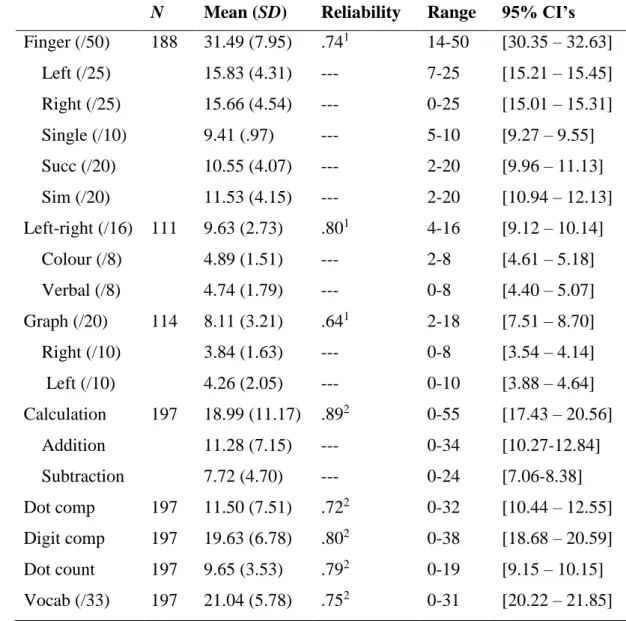
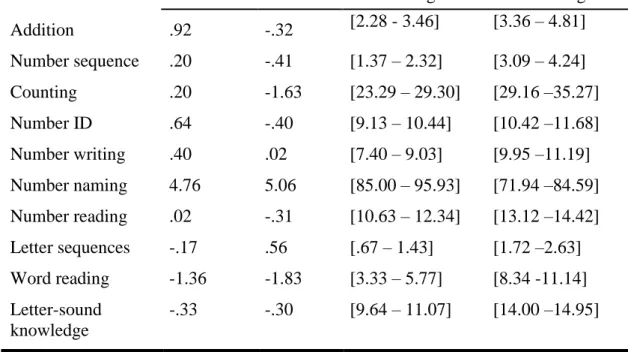
Table 3.1 Descriptive statistics (means, standard deviations, and ranges), reliabilities
and 95% confidence intervals for all measures. ... 60
Table 3.2 Correlations between measures. ... 62
Table 4.1 Means, standard deviations, ranges and effect sizes on all outcome measures at t1 and t2 for all groups. ... 83
Table 4.2 Unstandardized coefficients (B) for number versus control and letters versus control and 95% confidence intervals (CI) for pre- and post-training. ... 86
Table 5.1 Descriptive statistics, reliabilities (α) and 95% confidence intervals for all measures. ... 113
Table 5.2 Correlations among measures. ... 115
Table 5.3 Factor loadings for patterning factor. ... 116
Table 5.4 Factor loadings for arithmetic factor. ... 116
Table 5.5 Factor loadings for executive function... 117
List of Figures
Figure 1.1 A simplified version of Dehaene’s Triple Code Model Processing (Dehaene & Cohen, 1995). ... 27Figure 2.1 Components of number knowledge taken from Merkley & Ansari (2016). ... 36
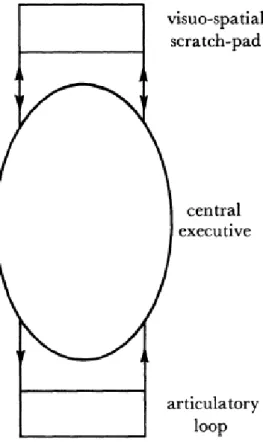
Figure 2.2 A simplified representation of the working memory model taken from Baddeley (1992). ... 41
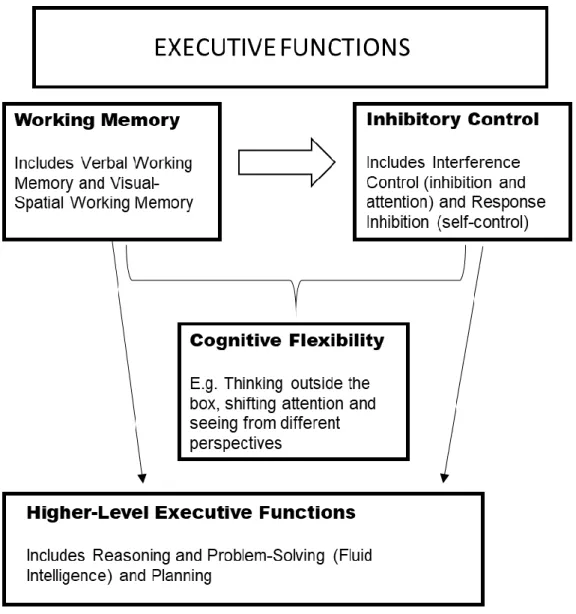
Figure 2.3 Simplified model adapted from (Diamond, 2013). Executive function and related terms. ... 43
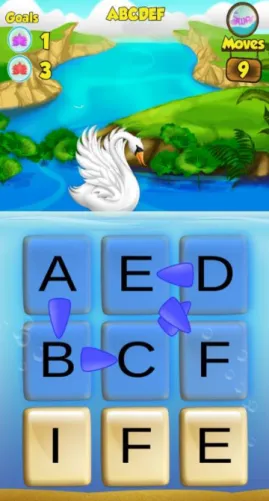
Figure 4.1 Example array in the numbers game (left) and letters game (right) with a correct sequence created. ... 80
Figure 4.2 Example of screen for Number Game Level 3 (left) and Letters Game Level 5 (right)... 81
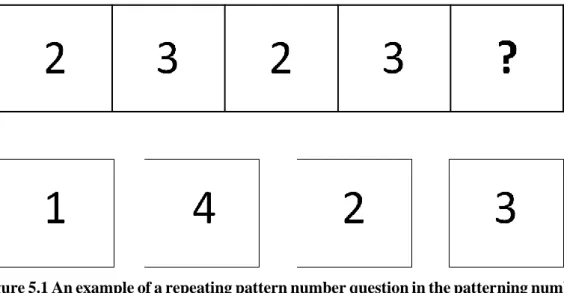
Figure 5.1 An example of a repeating pattern number question in the patterning numbers test. ... 103
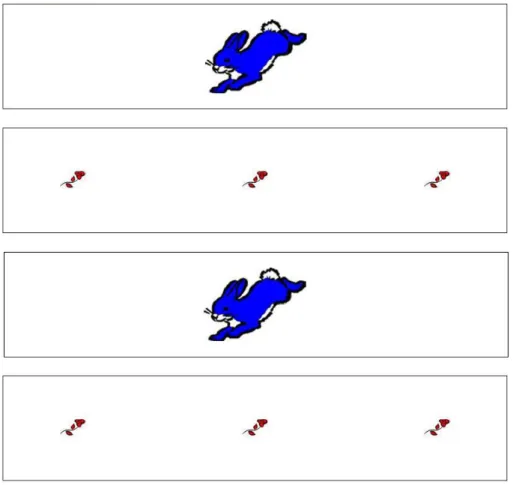
Figure 5.2 Demonstration trial. ... 107
15
Figure 5.4 Example of a windows task. ... 109 Figure 5.5 Hidden shapes test. ... 110 Figure 5.6 Example of the stacks test. ... 111 Figure 5.7 Mean levels of performance on pattern tasks (error bars represent standard error). ... 112 Figure 5.8 Path diagram showing significant and unique predictors of arithmetic (age is not significant but is retained in the model). * p < .05. ... 118
16
Chapter 1.
Thesis overview
We use numbers every day and in all aspects of life, and a basic understanding of symbols and quantities is required to complete simple tasks such as telling the time, paying for groceries, getting on the right bus and counting change. For this reason, numerical understanding of Arabic digits and associated quantities is a critical part of development, and a focus of early education. These foundational numerical skills are crucial for mastering arithmetic (addition, subtraction, multiplication and division) which, in turn are a critical educational outcome (Duncan et al., 2007).
This thesis presents three studies which examine arithmetic development in children. Each study aims to identify which cognitive skills may be important factors in arithmetic development for children between four and eight years old. The three studies are described in full in Chapters 3, 4 and 5 and an overview of these studies is provided later in this chapter.
1.1 Early arithmetic
Early arithmetic is considered to include addition, subtraction, multiplication and division. Children will follow a basic learning trajectory of simple addition (which is akin to counting) and simple subtraction, first orally and then with symbols. Only after several years of formal education will children tackle multiplication and division. As the research presented for this thesis lies in early numerical development, addition and subtraction skills will be examined. The outline of how these skills develop will now be presented.
1.1.1 Counting
Early addition skills are essentially an extension of counting. For example, in the sum 2+1 children simply need to count on from 2 to reach the answer. Therefore, understanding how counting develops is an important part of understanding early arithmetic.
Children will typically learn the counting sequence once they have acquired some language and will quickly become proficient, at least to the number ten. In a series of studies examining how children develop counting skills, Gelman and Gallistel (1986) suggest that learning progresses through “how to count” principles. Initially, children
17
may simply recite the count sequence, before understanding that effective counting relies upon the following principles: one-to-one principle (count each item only once), stable ordering (count words appear in the same order, “one, two, three…”), cardinality principle (the last number counted is equal to the total number in the set), order irrelevance (count items in any order) and item-kind irrelevance (all objects can be a count entity).
Knowledge of the counting principles is demonstrated in a range of studies which use counting violation methods. For example, in Gelman, Meck and Merkin (1986) children from 3- to 5- years of age watched a puppet counting a number of objects correctly or incorrectly. Even younger children were reported to identify the correct and incorrect trials, showing high sensitivity to counting errors and knowledge of the one-to-one and cardinality principles. In a further study, the same children exhibited knowledge of the order irrelevance principle in a “Doesn’t Matter” task, in which they were able to correctly count items in an unconventional order, such as by starting from the middle of a row rather than the edge. Evidence such as this has led some theorists to conclude that children have an inherent understanding of the basic counting principles (Gelman and Gallistel, 1986; Gelman & Meck, 1983; 1986).
Inherent knowledge has been disputed by some because of evidence showing that children need to first learn to count before mastering the counting principles. For example, Wynn (1990) used three different counting tasks to examine the cardinality principle in 2-3 year old children. Although able to count objects well, some younger children failed to demonstrate the same knowledge when counting actions and sounds. Moreover, the same children failed to provide a puppet with the correct number of toys in a later “give-N” task with younger children simply grabbing a seemingly random number of objects. In all tasks, only children over 3.5 years of age were able to show consistent counting knowledge for larger digits (up to six items). Evidence such as this has led Rittle-Johnson and Siegler (1998) to propose that counting principles develop through practice, and thus argue that procedural knowledge (the ability to solve problems) is required before conceptual knowledge (understanding principles that govern the counting domain) can develop.
Regardless of the way that children learn the counting principles, these skills are essential as a foundation for the development of basic addition and subtraction (see
18
Koponen et al., 2013; 2016). After all, simple addition is essentially an extension of counting skills, particularly in the early developmental stages when children will use count objects to summate different amounts.
1.1.2 Basic addition
Children may begin to perform simple addition sums as soon as they learn the count sequence (Bisanz, Sherman, Rasmussen, & Ho, 2005). Initially, basic sums may be demonstrated verbally and with the assistance of objects, such as toys or bricks. Once a child enters formal education there is a focus on progressing from a verbal number system to one which includes symbolic knowledge. Learning to associate number names with the associated Arabic digit appears to be relatively straightforward, although studies examining this are fewer than those examining the verbal number system (Fayol & Seron, 2005).
Children are required to learn to associate the sound a number makes with the written code, known as the Arabic digit (e.g. 4). During this learning process, the child must also learn to associate the magnitude that these figures represent. Simply learning the way that numbers are written appears to be relatively straight forward for most children at school. However, learning the associated magnitudes appears to take a bit longer and is a more complex and potentially more critical aspect of number knowledge. Learning symbolic number skills is a crucial component in learning arithmetic because most educators will require children to read and write basic sums within the first few years of formal schooling. The following chapter (Chapter 2) is dedicated to describing the process of symbolic number learning and evaluating evidence which examines how this skill may be implicated in numerical and arithmetic development.
When computing verbal or written sums, children appear to use a variety of different methods, all of which rely on children understanding the counting principles (Siegler & Jenkins, 2014). Let us take an example of the sum: 2 + 3. Younger children may use the simplest, sum or count-all method which involves counting all the objects and applying the cardinality principle (last object counted is total number in sequence). A more mature approach would be to use a count-on principle which would involve counting on from two (count-from-first approach), or more effective, counting on from three (min approach). The min approach is the most effective method because it
19
involves the least counting, and Siegler and Jenkins (1989) report that it is used by around nine percent of 4-5 year-olds. The authors report that most children of this age (34%) will use the simple sum approach (e.g. count two, then count three and then add together). Other approaches include retrieval (22%), finger recognition (11%) and guessing (2%). Retrieval is possible once children have practised addition and subtraction sums such that they are able to store these sums in memory and therefore retrieve rather than compute the answer.
Overall, what appears to be important in arithmetic development is that children are able to recite the count sequence and learn how to count objects. Children can then learn basic addition and subtraction before committing basic sums to memory through practice. The exact way that a child computes a sum will vary and will become more efficient with increased practice and age. Memory is implicated in basic computation both via the long-term store (once children have sufficient experience) and the short-term store during the time of computation (see Section 2.3.1 for a fuller discussion of memory).
1.1.3 Mathematics disorder
Mathematics disorder, also known as developmental dyscalculia, are terms used to describe those who fail to learn arithmetic and numerical skills as expected. The Diagnostic and Statistical Manual of Mental Disorders (4th addition) and the World
Health Organisation define mathematics disorder as a failure to grasp numerical concepts and in particular arithmetic despite adequate schooling and intelligence. It appears in around 3-6% of the population, although this number differs depending on the research and definition used.
Alongside a difficulty in learning basic arithmetic, children with mathematics disorder will typically use immature strategies to complete calculations and will be slower than peers to commit sums to memory. This may manifest in low arithmetic fluency scores due to an inability to rapidly solve calculations, or a failure to learn the sums correctly. Importantly, it appears that numerical difficulties persist despite adequate intelligence, and therefore this cannot be the only cause of mathematics disorder, although intelligence is implicated in numerical learning (see Butterworth, 2009 for a review). Knowledge of mathematics disorder is in its infancy in comparison to other developmental disorders such as dyslexia, and considerably more work needs to be
20
done with both typical and atypical populations to better understand the nature and causes of this disorder.
1.2 Overview of the three studies
Understanding how children develop basic arithmetic abilities is critical for researchers because it is an important milestone in early education. Although research into numerical learning continues to progress, there are still many unanswered questions.
One of the challenges for researchers examining arithmetic development is that there are multiple ways in which children are able to compute a basic sum. Take for instance the sum 3+4. To reach the answer 7 children can use one of many methods including (but not restricted to): counting all individually, counting on from 3, counting on from 4, using memory/learning by rote. Alongside this is the challenge of understanding which skills are most critical and the time at which these are most prevalent. For example, we know that children are required to have a basic understanding of the count sequence to compute basic addition and subtraction, and an understanding of Arabic digits for written sums, but how important are these skills compared to more general abilities including attention, memory and spatial skills? More complex still is understanding how children will go on to develop more advanced arithmetic abilities such as multiplication and division and understanding how early number skills relate to these later abilities, and more advanced skills such as geometry and algebra. The studies presented in this thesis aim to examine which of these skills may be most important in the development of arithmetic.
1.2.1 Study 1: Sensori-motor skills
The first correlational study (discussed in full in Chapter 3) examines how some sensori-motor abilities are related to arithmetic. Sensori-motor skills relate to how well children can combine sensory and motor information and some researchers have examined the potential relationship between some sensori-motor skills and arithmetic in young children (e.g. Fayol, Barrouillet, & Marinthe, 1998; Noël, 2005).
One sensori-motor measure that is common across these studies is finger gnosis, the ability (or inability) to identify which finger is pressed without visual assistance. One
21
potential reason for a relationship with finger gnosis (and other sensori-motor skills) and arithmetic is that fingers are used functionally in learning to count (a functional account – see Butterworth, 1999). Another potential explanation for a relationship is the localizationist account (see Noël, 2005) which proposes that some sensori-motor abilities, including finger gnosis, are associated with similar neural regions as arithmetic and other numerical abilities.
A primary focus for the first study was to create a methodologically sound research design, largely because of limitations in previous evidence. To do this, previous measures were adapted to increase reliability and reduce numerical confounds. Moreover, a range of additional numerical tasks were included in the test battery to act as control measures (an important part of correlational designs and something rarely addressed in previous research). In the study, children underwent tests on a range of sensori-motor skills, including finger gnosis, alongside a range of numerical-based outcome measures including an arithmetic fluency task, a dot counting task and measures of magnitude comparison. Previous studies have generally failed to control for such a wide range of skills. Our results clearly showed, in contrast to some previous evidence, that the sensori-motor skills were less well correlated with arithmetic than numerical abilities. It is likely that the stronger relationship reported in previous evidence is due, in part, to the failure to control for other predictors of arithmetic. The most important factors in predicting variation in arithmetic were shown to be numerical measures, specifically counting and symbolic magnitude comparison which remained as unique and significant predictors after controlling for age. Our timed counting task required children to count dots and write the associated Arabic digit, and the finding that counting and arithmetic were strongly linked was not surprising given that early arithmetic is essentially an extension of the counting principles (however, see a discussion of potential limitations of the dot counting task in Section 6.2). Our symbolic number comparison task required children to identify which of two Arabic digits (numbers 1-9) is larger. Performance on this task correlated well with arithmetic, in line with previous evidence (see Section 2.2.1). This finding was the basis to investigate symbolic number skills further, and the potential causal relationship with arithmetic.
22
1.2.2 Study 2: Training in symbolic number knowledge
A training study was run to examine whether training in symbolic number skills can transfer to arithmetic. The study is described in full in Chapter 4.
In the training sessions, children played a computerised game (played on a tablet). The game was invented by researchers in the Department of Language and Cognition at University College London (Newton, Bruce & Donlan, 2016). Based on observation of the common challenges encountered in number sequences tasks in adults with aphasia (De Luccia & Ortiz, 2014) and children with Developmental language Disorders (Donlan, Cowan, Newton & Lloyd, 2007), the software was developed to address these issues in both populations. The game was funded by ‘seedcorn’ and organised by UCL and a useable prototype was developed in conjunction with the gaming software company SoftV.
Players in the game create numerical and/or alphabetical sequences. The numerical sequences game involves number knowledge learning (number identification and ordering) and therefore was deemed an appropriate training design to examine potential transfer to arithmetic. Other children in the study either played the letter sequences game (experimental control) or were a business-as-usual group (no training). Groups were based on randomised stratified sampling of pre- training arithmetic score. Having three groups was beneficial as it allows us to understand better the value of the game itself rather than a) effects found due to attention from an experimenter or b) general learning within the study period. One limitation of having three conditions is that this limits the sample sizes for each group which reduces power.
To evaluate the effectiveness of the training game, we compared performance of the number game condition to the baseline condition across all post-training scores (controlling for pre-training scores). Similarly, we measured the difference between the letter training game and baseline control. The results showed that those in the number training condition scored more highly than the baseline condition on numerical scores post-training. Conversely, those in the letter training group showed no difference in numerical post-training scores compared to those in the baseline condition. These results allude to a specific effect of the number game on numerical and arithmetic outcomes. However, no improvements were at significant levels, which
23
is likely due to a lack of power as the sample size was relatively small and the training time relatively short. A full discussion of the limitations of power, including the reasons why we chose the training time and sample size are presented in Section 4.4. Alongside the issue of power, there were some practical limitations to the study. The primary concern was that children did not enjoy playing the game. This is likely because the first two levels of the game were very challenging; it had been developed such that the player is required to have a good grasp of number knowledge in order to complete the opening level and therefore those children of lower ability struggled to the play the game and found it demotivating. Other children reported finding the game repetitive and boring, even when capable of playing it. Moreover, the letter game was not, as originally thought, of equivalent difficulty to the number game. This is because children of this age are not taught number and letter names at equivalent time points (see Section 4.3). These limitations (discussed in full in Section 4.4) led to a decision that the design of the game and the pre- and post- tests were not appropriate for children of this age group and therefore adaptations would need to be made before any additional data were collected.
Due to limited time and finances, it was not possible to adapt the game within the timeframe of my PhD and therefore this study was deemed to be a pilot and another avenue was explored for a final study. The training design is currently being prepared for roll-out out on a larger scale with changes to the game in development to make it more appropriate for children of this age. The study was instrumental in my understanding of some of the practical elements that are found when conducting training studies and when testing young children.
1.2.3 Study 3: Pattern understanding
For the final study (presented in full in Chapter 5) we considered other ways that symbolic number knowledge is involved in studies examining arithmetic development. Typically, this is via a range of overt symbolic number knowledge tasks such as number reading, number identification or symbolic comparison (as we had used in my first two studies). However, it also appeared in the literature in a more surprising way, through patterning.
24
Pattern tests commonly require children to identify the missing number at the end of a sequence using either repeating (1,2,1,2__) or increasing (1,3,5,7__) patterns. Researchers have shown that combined scores on these two types of pattern test correlate with arithmetic (e.g. Lee et al., 2012; Schmerold, 2015). However, the vast majority of these studies do not control for number knowledge despite number knowledge being implicated in understanding number patterns. It is arguable that repeating number patterns do not rely on number knowledge as children may use perceptual skills to identify the correct response. However, increasing patterns do
require number knowledge. For example, to identify what comes next in the following pattern 3,6,9,12 children must be able to identify the number that they are reading and know the number sequence. This is symbolic number knowledge but measured with the addition of pattern understanding and therefore leading to the question: is it symbolic number knowledge that is predicting arithmetic here, or is it patterning skills? A failure to control for number knowledge in previous literature means this question has been largely unanswered.
To examine whether patterning is important in predicting arithmetic, rather than symbolic number knowledge, we designed a pattern understanding battery which included a range of stimuli (numbers, letters, objects and shapes) and different pattern types (increasing, repeating and rotating). The pattern battery was large enough (120 items in total) to allow for analyses across the different stimuli. Importantly, symbolic number knowledge and other numerical skills were controlled to assess whether a potential relationship was driven by number skills or pattern abilities. Moreover, other control measures were included in the design such as spatial skills and executive function. These are domain-general skills associated with both patterning and arithmetic (see Section 2.3). In keeping with the first correlational study, a range of important factors were controlled to create a methodologically sound design and to allow conclusions to be drawn about the specific relationship between patterning and arithmetic.
The results showed that pattern tasks remained significantly correlated with arithmetic after controlling for a range of skills including number knowledge. To investigate how the patterning stimuli were related to each other, an exploratory factor analysis was conducted which showed that across the different stimuli, pattern tasks could be
25
identified as a single factor. This factor remained a significant predictor of arithmetic after controlling for a range of numerical and other predictors including executive function and spatial skills. This finding suggests something specific about the relationship between patterning and arithmetic, although the reasons for this relationship are not clear. It is possible that patterning is a domain-general skill which relates to arithmetic and other developmental milestones, including reading. Alternatively, patterning may be specifically related to arithmetic because arithmetic may, in part, require an understanding of patterns: e.g. 2+3 is the same as 3+2. These potential reasons are discussed in detail in Section 5.4.3.
Across all three studies, we investigated a range of numerical predictors of arithmetic and, in the pattern study, some domain-general predictors of arithmetic. Symbolic number knowledge was measured across all three studies and was consistently well correlated with arithmetic. Number knowledge remained as a unique predictor of arithmetic in Study 1 and was the focus of the training in Study 2.
1.3 Use of number tasks across the studies
Across all three studies a range of arithmetic and number tasks were chosen. These were chosen predominantly because they were tasks used in previous similar studies or because they are considered relevant skills in theories of arithmetic development (see Section 1.4).
1.3.1 Arithmetic
Fluency (timed) addition and subtraction tasks were used to measure arithmetic across all three studies. Timed tasks measure the fluency of arithmetic and reduce the chances of ceiling scores. This is particularly important for the first and third studies when children (aged 5-7) made few errors. In the second study (where children were in the first year of formal schooling and aged 4-5) the length of time given for the addition task was greater, and subtraction was not measured. This difference reflects the importance of designing measures which are appropriate for the ages of the children in the study.
26
1.3.2 Counting
Counting was measured in all three studies. In the second study, counting was measured via a rote counting task in which children were required to count up from one and stopped when they made a mistake (maximum count to 50). A more complex dot counting task was used in the first and third study as the children were older. In these studies, children were required to count the total number of dots presented and write or verbalise the response within a given time-frame. One of the reasons for using a fluency task is that children of this age (5-7) are generally very good at counting and therefore timed tasks will reduce ceiling scores.
1.3.3 Symbolic number knowledge
Number knowledge is considered a critical part of numerical development (Merkley & Ansari, 2016) and therefore was measured in each of the studies conducted. In the first study, number knowledge was measured via a symbolic magnitude comparison task: compare two digits and identify the larger. This requires an understanding of number identification (knowing the associated sound for an Arabic digit) alongside an understanding of the magnitude or order in which digits appear. One reason for using this task in the first study was an interest in examining whether approximate (dots) or symbolic (digits) comparison tasks are more highly correlated with arithmetic. In the second and third studies, symbolic number skills were measured via number identification and number reading tasks. The former required children to identify a number (from an option of four potential responses) and in the latter to read a digit shown to them. Numbers used in these tests were 1-1000. One benefit of measuring symbolic number knowledge this way is that it uses a wider range of numbers than a symbolic comparison task which relies only on the digits 1-9. The identification and reading tasks do not require as much of an understanding of magnitude as a symbolic comparison task likely does, although some understanding of place value is required to read and identify larger numbers which reflects, in turn, some understanding of number ordering and magnitude.
1.4 Theories of numerical development
Early arithmetic skills require children to understand the verbal count sequence, the order in which numbers appear and the related quantities, or magnitudes of the
27
associated digits. Alongside this is the need to understand the Arabic digit in written form and associate this with the verbal code. These skills are conveyed in Dehaene’s ‘Triple Code Model of Numerical Processing’ (e.g. Dehaene, 2001) which is one of the more prominent theories of numerical processing.
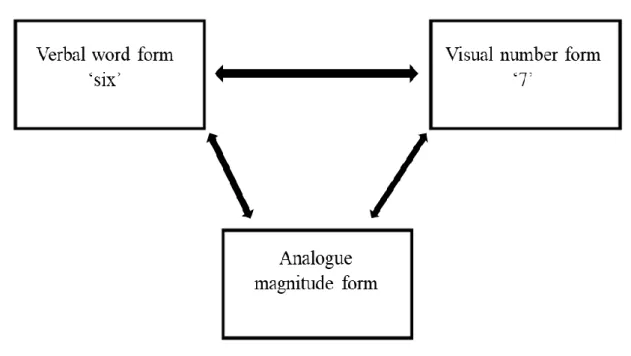
In Dehaene’s model, numbers are processed according to three mental representations of a number: Visual Number Form, Verbal Number Form and Analogue Number Form. The way that these three processes interact is depicted in Figure 1.1.
Figure 1.1 A simplified version of Dehaene’s Triple Code Model Processing (Dehaene & Cohen, 1995).
Dehaene’s core number model argues that the verbal form is linked to language abilities and the visual form linked to visuospatial skills. These two processes are linked to the third component, analogue magnitude. All three processes are related to one another and therefore may be examined via similar tasks which assess all components, but which may draw more strongly on one. For example, approximate comparison tasks are a good measure of the analogue magnitude, counting tasks can be for the verbal form and written arithmetic measure the visual form. The analogue magnitude is considered the most important component because without having a developed concept of the magnitude (quantity meaning) of a number, processing of digits, including arithmetic, is not possible.
This simplistic model is used for both adults and children although some argue these processes must be different. One prominent development theory by Carey (2009)
28
suggests that number skills are learnt in qualitative stages in which the child will develop the conceptual understanding of number over time (see also Sarnecka, 2015). In this view, the innate analogue representation of number is linked to the exact number system via counting and culturally specific learning (e.g. the Arabic digit system and English language) which results over time in a full mental representation of number. What is evident (from different research studies and in contrasting theories) is that children improve the ability to understand, represent and manipulate numbers with age. Therefore, age is an important consideration in the studies presented in this thesis.
So far, the position assumed is that children are required to understand numbers (i.e. conceptual knowledge) in order to solve basic sums. This view does not consider learning arithmetic by rote, which may be one ways that addition and subtraction sums are computed. Integrated theory (Siegler & Braithwaite, 2017) argues that arithmetic facts and procedures are learnt best when children have a complete understanding of number, and that this understanding of number will then, in turn, lead to a better understanding of later numerical skills such as fractions and algebra. This perception is critical for the studies presented in this thesis which, as with the other theories, assume that children need an understanding of digits and magnitude in order to calculate sums. Evidence that this is important comes from studies which examine arithmetic errors. For instance, Siegler and Braithwaite (2017) show that children are more likely to calculate an incorrect answer which is close in size to the correct answer. Also, they show that children are quicker to identify an answer shown as incorrect when the answer is further from the correct answer (e.g. 5+3=15 is quicker to respond “incorrect” than 5+3=9). This thesis takes the view that a full understanding of number is critical and aims to further investigate the skills which are most important for this learning.
It is also important to discuss the role of other factors in learning arithmetic, such as environment and domain-general skills, in the early years. These may act as important factors in predicting how well children learn to associate numbers with magnitudes, and thus show number knowledge (e.g. Merkley & Ansari, 2016). Many studies and indeed theories of numerical development fail to include the importance of domain-general predictors and the relative contribution of domain-general skills is not well known.
29
This is something that is specifically looked at in the final study undertaken and discussed in more detail in Section 2.3.
1.5 Summary
This introductory chapter firstly outlined the typical trajectory of arithmetic development which includes learning the basic count sequence and developing basic addition and subtraction skills. To learn more complex addition and subtraction (arithmetic) children must develop an understanding of number knowledge which is the identification, order and magnitude of a number. Some theorists suggest that number knowledge and counting are innate skills, with others suggesting practice and exposure is important for development. Either way, it appears that these skills are critical for the development of arithmetic. The next chapter evaluates previous evidence investigating a link between magnitude knowledge, number skills and arithmetic.
30
Chapter 2.
Predictors of arithmetic
This chapter evaluates evidence examining the role of some potentially important predictors of arithmetic, including numerical (domain-specific) predictors and non-numerical (domain-general) predictors. Numerical predictors include preverbal and approximate number skills, as well as symbolic number knowledge. The domain-general predictors discussed are memory, executive function and spatial skills. All of the factors that are discussed in this chapter will feature across the three studies that were conducted for the purposes of this thesis.
2.1 Preverbal numerical skills
Children appear to possess some numerical skills before being able to speak and one suggestion is that preverbal numerical skills are the foundation to later numerical abilities, and thus children with poor basic number perception will go on to develop poor arithmetic (e.g. Dehaene, 2010). As basic number perception abilities do not rely on exact counting skills, this system is commonly referred to as an approximate number system, and a common way to measure it is through nonsymbolic magnitude comparison tasks.
Evidence for an innate approximate number system comes from infant and animal studies which support the existence of some basic numerical processing abilities, including the ability to discriminate between different quantities and show sensitivity to numerical manipulations (see Dehaene, 1997 for a review). Animal research has demonstrated this through both observational evidence (animals instinctively pick the larger of two selections of food, Kilian, Yaman, von Feren & Gunturkun, 2003; West & Young, 2002) and examples from animals who have been trained on basic numerical tasks. For instance, Church and Meck (1984) trained rats to press specific levers depending on the number of flashes from a light. Furthering this, chimpanzees have been shown to possess more advanced numerical discrimination abilities, comparable to addition. Rumbaugh, Savage-Rumbaugh and Hegel (1987) gave two chimpanzees the choice of taking chocolates from two trays containing two piles of chocolate. Rather than using basic perceptual skills, the chimpanzees had to sum the number of chocolates in each pile, and on each tray, to identify which tray contained the most chocolate. As both chimps reliably chose the tray with the most (total) chocolates, the
31
authors suggest these animals possess some basic calculation abilities. This ability has been reported in other studies in which chimps have been trained in basic counting and addition (see Boysen & Berntson, 1989). Such clear demonstrations of numerical aptitude make sense from an evolutionary perspective and has led some to suggest that some basic numerical abilities, particularly numerical discrimination, are a primitive skill (e.g. Butterworth, 1999; Dehaene, 1997).
Infant studies provide evidence that parallel the findings from animal studies, with particularly robust evidence of early approximate number discrimination abilities. For example, Xu & Spelke (2000) demonstrated numerical discrimination in 6-month-old infants (N = 16) whereby infants would habituate (become bored) after repeated exposure to 8 dots, but then dishabituated (showed interest) when 16 dots were presented. Similar findings are reported for discrimination between 16 and 32 dots (Xu, Spelke, & Goddard, 2005) and, importantly, both tests controlled for surface area differences, suggesting the discriminations are numerical in nature. However, infants do not appear able to distinguish between 8 and 12 dots suggesting a numerical discrimination ability for a 2:1, but not 3:1, ratio (Xu & Spelke, 2000). Similar findings have been reported from studies using cross-modal discrimination and numerical change detection (Izard, Sann, Spelke, & Streri, 2009; Starr, Libertus, & Brannon, 2013a).
Going one step further, Wynn (1992) suggests that infants possess some basic arithmetic abilities for dealing with small numbers of items. In the study, 5-month-old infants (N = 32) were shown basic (1+1 or 2-1) addition and subtraction sums played out with small toy objects. Infants sat in front of a small theatre set-up and observed one toy placed on the “stage”. Then, a screen was added, and a second toy was placed behind the screen. In the impossible events, the screen was removed and only one toy remained. In possible events, the screen was removed, and two objects remained as expected. Wynn found that infants looked longer at the impossible events rather than possible events and surmised that these longer looking times, indicating surprise, suggest that infants as young as five months have some understanding of number quantity which is greater than simply discrimination, and perhaps evidence of a basic exact numerical system (Wynn, 1992).
32
Evidence of these basic numerical skills in young infants supports the claim that infants are born with an innate number system (Dehaene, 1997). What is less clear is if these early numerical abilities are important predictors of the development of later numerical and arithmetic skills. Typically, evidence for this comes from approximate number discrimination tasks which do not require exact understanding of numerosity. In approximate magnitude comparison tasks, the participant is required to determine which of two nonsymbolic (e.g. dot) sets has the larger numerosity. As this does not require verbal information, and does not rely on any counting abilities, it is considered to assess early approximate number skills. Conversely, symbolic magnitude tasks (choose the larger of two Arabic digits) are a comparable measure used to assess magnitude abilities relying on knowledge of the symbolic (and exact) number system. 2.1.1 Approximate comparison tasks
In a typical approximate number discrimination task, a participant is presented with two dot sets on the left and right side of a screen and is required to identify which dot set contains the larger number of dots. It is important that the dots are not counted, but rather that the discrimination is determined using an approximate judgement (quick reaction times can provide support of this). The difficulty of the task is manipulated in two main ways. Firstly, if the overall quantity of dots in each array is increased, the task is more challenging. For example, choosing the larger of 10 or 20 dots is more difficult than choosing the larger of 5 or 10 dots. Secondly, the ratio difference between the dot arrays can be manipulated, with more challenging discrimination involving larger ratios. For example, a 12 to 9 dot ratio is 0.75 which is harder than a 6 versus 12 dot task which has a smaller ratio of 0.5.
It is also important to control for surface area which should be matched across the two arrays. Clearly, a larger dot array with a larger surface area is easier to discriminate than two dot arrays with equal area but different numerosity. Although most studies have attempted to control for this, there is debate about how possible it is to measure dot discrimination without including confounds such as dot size, density and area. For example, Gebuis and Reynvoet (2011) showed that number of items in a set cannot be extracted without the use of visual cues and suggest that approximate number processing is a challenge to measure. Despite this, approximate number tasks have
33
remained a common way of assessing numerical discrimination within the literature, although controlling for potential confounds is clearly an important consideration. The dot discrimination score is typically based on overall accuracy, for example gain one point for each correct discrimination. A reaction time may be included as evidence that the task was completed without counting (counting will take longer than an approximate discrimination). Other researchers have used a Weber fraction (w) ratio to determine the difficulty of the discrimination task. This is the ratio between the two digits (with a ratio of 1:2 digits being easier to discriminate than 13:14, for example). The Weber fraction can be applied to many stimuli (e.g. sound, light intensity) and has been argued to provide a precise representation of approximate number acuity. At some point, an individual will reach a ratio at which they can no longer discriminate between the two digits and importantly, w appears to increase over time as children become more accurate and better able to distinguish between greater ratios and smaller numerical distance (Halberda, Mazzocco, & Feigenson, 2008). This finding has implications for the approximate number sense theory as it shows that this system can change, develop and improve with age which may be linked to developing later arithmetic.
2.1.2 Symbolic comparison tasks
Symbolic comparison tasks are much the same as approximate tasks except that participants are required to identify the larger of two Arabic digits. Typically, numbers used will be between 1 and 9 (inclusive) and the numbers will be presented in the same size. As with approximate number tasks, the ratio and number discrimination will affect the difficulty of the task, and performance is related to the level of difficulty in children and adults. One limitation of these tasks is that they cannot be presented to young or preverbal children as this task requires the child to have some understanding of Arabic digits and their associated magnitudes.
2.1.3 A relationship with arithmetic?
There is evidence to suggest that both approximate and symbolic comparison tasks correlate with arithmetic, although for some time, the relationship between approximate comparison tasks and arithmetic dominated the literature. Many researchers found evidence that early approximate comparison abilities (between the
34
ages of 2-5) relate to later arithmetic, with some suggesting it acts as a foundation for later numerical abilities (e.g. Feigenson, Libertus, & Halberda, 2013; Gilmore, McCarthy, & Spelke, 2010; Halberda et al., 2008; Libertus, Feigenson, & Halberda, 2011; 2013; Lyons & Beilock, 2011; Marle, Chu, Li, & Geary, 2014; Mazzocco, Feigenson, & Halberda, 2011; Piazza et al., 2010).
In one longitudinal design, Mazzocco, Feigenson and Halberda (2011) found that an approximate comparison score at 3-years-old predicted standardised maths scores (Test of Early Mathematics Ability; TEMA; Ginsburg & Baroody, 2003) three years later (N = 17). Starr, Libertus and Brannon (2013b) reported that numerical discrimination ability at 6-months of age (N = 48) correlated with math score (TEMA) three years later (r = 0.28, p < .03) predicting a small but unique proportion of the variance in arithmetic (β = .31, p = 0.02). Similarly, Ceulemans et al. (2015) found that approximate number abilities at 18 months (N = 31) correlated with arithmetic and counting at 24 months (r = .31, r = .38, respectively), although infant number discrimination at 8-months and arithmetic at 48-months were not correlated.
Although these findings appear to show a relationship between early approximate number abilities and later arithmetic, the strength of this relationship is not clear. For example, when Starr, Libertus, & Brannon (2013b) controlled for IQ, the strength of the relationship was weakened. Approximate number abilities and IQ accounted for only a small variation in arithmetic (R2 = 28%) and IQ was the stronger unique predictor of later numerical abilities (β = .45, p = .001) (although see a critical review of this study by Cragg & Inglis, 2013). Ceulemans et al. (2015) report no unique linear relationship between infant number discrimination and later exact number abilities, when IQ was controlled. A meta-analysis by Chen and Li (2014) reports that in cross-sectional studies (36 samples) approximate skills and arithmetic show a weak correlation (r = .20) and longitudinal studies (6 samples) revealed a similarly small prospective relationship (r =.24). Moreover, much of the positive literature supporting a relationship suffers from small sample sizes and a failure to include important numerical and cognitive predictors of arithmetic, such as symbolic number knowledge.
A recent meta-analysis by Schneider and colleagues (2016) reports that of 45 articles (284 effect sizes and 17,201 participants) approximate comparison tasks were
35
correlated with arithmetic, but effect sizes were lower for approximate (r = .24, 95%
CI [.20, .28]) than symbolic (r = .30, 95% CI [.24, .36]) tasks. Furthermore, when symbolic number skills are controlled, both the correlational and longitudinal relationship between approximate number tasks and arithmetic is weakened (Castronovo & Göbel, 2012; Clarke & Shinn, 2004; Fuhs & McNeil, 2013; Göbel, Watson, Lervåg, & Hulme, 2014; Holloway & Ansari, 2009; Long et al., 2016; Lyons, Price, Vaessen, Blomert, & Ansari, 2014; Sasanguie, De Smedt, Defever, & Reynvoet, 2012; Sasanguie, Göbel, Moll, Smets, & Reynvoet, 2013; Xenidou-Dervoua et al., 2017).
Göbel et al. (2014) examined the predictive power of the approximate number system (measured by an approximate comparison task) in 173 children in the first year of school. The results showed that although approximate comparison correlated with arithmetic, it was not a unique and significant predictor of arithmetic 11 months later when other factors such as symbolic number knowledge (e.g. number identification) were controlled. Similarly, Lyons et al. (2014) examined the role of number knowledge and approximate comparison in predicting arithmetic in 1,391children in the first six years of school. Although correlated, approximate comparison was not a unique or significant predictor of arithmetic across any of the year groups when other symbolic number skills were considered. Furthermore, Xenidou-Dervoua et al. (2017) found in a large sample of kindergarten children (N = 326) that approximate comparison was a weaker longitudinal predictor of later maths achievement (including arithmetic) than symbolic comparison over three years. Importantly, these studies have large sample sizes and control for other important predictors of arithmetic (e.g. working memory and IQ) which is commonly lacking for studies supporting a role of approximate number abilities in predicting arithmetic.
If approximate number sense is the foundation to later arithmetic, it is arguable that training in discrimination abilities should improve later arithmetic. There is some evidence for this claim with one training study finding evidence that training children in approximate tasks can improve exact number skills and arithmetic (Hyde, Khanum, & Spelke, 2014) and another reports improvements in adult participants (Park & Brannon, 2014). However, a recent study trained children in both approximate number skills and exact number skills and found that only those children trained in exact
36
symbolic number skills, or exact and dot but not dot alone improved significantly on arithmetic outcomes (Honoré & Noël, 2016). This is discussed in more detail in Chapter 4.
Taken together, it seems that although correlated with arithmetic, approximate number skills appear to play a less important role than some other predictors of arithmetic.
2.2 Symbolic number knowledge
Symbolic magnitude comparison tasks rely on children’s ability to identify two numbers and know which of these numbers is larger. These skills are part of number knowledge defined by Merkley and Ansari (2016) as a combination of understanding the identity (symbol 4 is verbal code “four”), the cardinality (4 represents four objects) and the ordinality (4 comes before 5 and after 3) of a number (see Figure 2.1).
Figure 2.1 Components of number knowledge taken from Merkley & Ansari (2016).
The authors argue that symbolic number knowledge is not fully acquired until children have mastered cardinality which is considered the ability to associate the magnitude of a number with its verbal code. This is mirrored in the counting development literature which suggests that more advanced counting skills, relying on an understanding of cardinality, are more important for predicting later number abilities than basic rote counting (e.g. knowing the count sequence) (e.g. Nguyen et al., 2016). Symbolic number knowledge is typically measured via tasks which require the child to identify Arabic digits, and/or the cardinality of a digit. Symbolic magnitude comparison tasks, akin to approximate comparison tasks, are perhaps the most
37
common method used to assess number knowledge. Symbolic comparison tasks rely on children understanding the identity and order or magnitude of a number, typically for Arabic digits 1-9. Larger numbers can be tested via number identification tasks in which children identify which number matches that read aloud by an experimenter. The options will typically be similar to the target number (e.g. 71 or 171 for target 17). This relies on advanced number identification including the understanding of place value. Finally, ordinality can be measured via number sequences tasks. For example, identify if numerical sequences are presented in the correct order or fill in the missing number from a sequence.
2.2.1 The relationship between symbolic skills and arithmetic
Symbolic number measures (however tested) appear to be stronger predictors of arithmetic than approximate number abilities (e.g. Göbel et al., 2014; Lyons et al., 2014; Schneider et al., 2016; Xenidou-Dervoua et al., 2017). Additionally, these skills remain robust predictors of arithmetic after controlling for other cognitive factors implicated in arithmetic such as general cognitive skills including executive function and reading abilities (Durand, Hulme, Larkin, & Snowling, 2005; Lyons et al., 2014; Vanbinst, Ansari, Ghesquière, & De Smedt, 2016).
Vanbinst et al. (2016) tested 74 children at the start of third grade and again one year later. Symbolic skills (measured via a symbolic comparison task) uniquely predicted 16% of the variation in arithmetic (β = .41, p < .001), considerably more than either reading (β = -.22, p - .05, unique R2 = 4%) or non-verbal IQ (β = -.19, p =.07, unique
R2 = 3%). Interestingly, the predictive power of symbolic comparison in arithmetic was similar to that of phonological awareness in reading (unique R2 =16%) suggesting that the ability to identify digits and associate with a magnitude should be a focus of educational practices and interventions, as phonological awareness has been for reading development (see Hulme & Snowling, 2009).
Merkley and Ansari (2016) propose that early exact number skills are the foundation to later arithmetic, and it is this system which should be the focus of numerical development literature. Some convincing evidence for this proposal comes from studies examining early number and general cognitive skills, which support a critical role for these early symbolic number skills in predicting later arithmetic. Duncan et al. (2007) used six longitudinal data sets to examine the predictive nature of school entry
38
level abilities including numerical knowledge, reading, attention and domain-general cognitive abilities (e.g. social skills). Across all six studies, children’s numerical abilities at the start of school were shown to significantly predict later arithmetic, and a meta-analysis of these findings showed this was the single most important predictor of later achievement (followed by reading and then attention).
Similarly, Nguyen et al. (2016) examined performance in number skills at preschool (N = 1,375) and compared to mathematical performance (including arithmetic) in the fifth grade. Number knowledge tasks (measured via tasks assessing knowledge of counting and cardinality principles) were the best longitudinal predictors of later mathematical achievement (β = .42, SE = .04, p < .001) after controlling for other numerical skills (patterning tasks and geometry measures) and domain-general measures (e.g. socio-economic status; SES). Entry level exact numerical skills, measured by tasks assessing knowledge of the counting and cardinality principles, appear to be the most important foundation to later numerical skills (Koponen, Aunola, Ahonen, & Nurmi, 2007; Merkley & Ansari, 2016; Nguyen et al., 2016; Torbeyns, Gilmore, & Verschaffel, 2015) and, importantly, play a more critical role than other cognitive abilities (including literacy and attention) and general predictors of academic achievement (e.g. SES and home environment). Moreover, as the relationship between early counting abilities and later arithmetic appears to be mediated via symbolic number knowledge (Purpura, Baroody & Lonigan, 2013) it is proposed that this ability should be the focus of developmental research.
One outstanding question is why there is variation in the development of symbolic number knowledge. One possible suggestion is that the innate number system includes exact, as well as approximate, number skills and that it is this system which leads directly to the development of later exact number skills (e.g. Wynn, 1998). Evidence for this comes from studies suggesting that, with exception of the digit 0, children appear to learn to associate Arabic digits and magnitude relatively easily (Hughes, 1986; Wellman & Miller, 1986). Learning to represent ‘zero’ as a quantity appears to be problematic, even for adults who show longer reading times for this digit (Brysbaert, 1995). Wynn (1998) suggests that children learn symbolic and magnitude associations via the innate core number system which does not encompass the number zero, as this represents ‘nothing’ and thus is not represented in the system.
39
An alternative suggestion is that children may learn to associate numbers and quantities through practice with physical objects (Hughes, 1986). As zero cannot be represented by a physical quantity, children may struggle to learn what this number represents. This is perhaps a more convincing argument, considering the lack of evidence for a direct relationship between preverbal exact skills and later arithmetic. Moreover, children’s knowledge of numbers in pre-school is largely related to parental income and socio-economic status (Cirino, 2011; Chu, van Marle, & Geary, 2016; Duncan et al., 2006; Fuchs, Geary, Fuchs, Compton, & Hamlett 2016; Levine, Suriyakham, Rowe, Huttenlocher, & Gunderson, 2010; Welsh, Nix, Blair, Bierman, & Nelson, 2010) suggesting that understanding symbolic number is based upon a combination of general cognitive skills, home environment and teaching.
Whether symbolic number knowledge is learned through an innate number system, or via practice and exposure, it is clear from the literature that early knowledge of symbols appears to be a strong predictor of arithmetic, and relatively more important than other cognitive skills (such as reading or intelligence).
2.3 Domain-general predictors of arithmetic
So far, the cognitive predictors that have been discussed in relation to the development of arithmetic have been domain-specific predictors. These skills (for example magnitude comparison and number knowledge) are considered domain-specific because performance may affect numerical abilities but might not affect performance in other academic skills. On the other hand, researchers have investigated the role of domain-general predictors and number development (e.g. Duncan et al., 2007). Domain-general skills such as intelligence and memory are considered to affect more than one academic attainment skill, for instance numerical and literacy skills. Memory, executive function and spatial awareness are domain-general skills commonly associated with arithmetic development. These skills will be first described, then the way to measure these variables will be explained before finally discussing the relationship these have with arithmetic.
2.3.1 Memory
Memory is very important for both computing and storing calculations. Older children will typically commit arithmetic sums (including addition, subtraction and
40
multiplication) to long-term memory through practice and exposure. For arithmetic problems which have not been learned and stored in long-term memory, children must use working memory to compute an answer (Adams & Hitch, 1997).
Baddeley (1992) defines working memory as a temporary storage system responsible for performance of cognitive tasks. Working memory is further divided into three interacting subsystems of a central executive (a central processing system) which is further separated into two “slave systems”, an articulatory or phonological loop (responsible for storing phonological information) and visuo-spatial scratch-pad (for visual/spatial information). An important characteristic of working memory is that the system is limited in capacity and information stored only temporarily.
Working memory is thought to be required for the performance of many cognitive skills including reading, problem solving and general learning. Importantly, it is closely linked to arithmetic. Take, for example, the sum 5 + 4. For young children who have not yet learned the answer to this, they must place these numbers in short-term memory and then process the answer. It is the coupling of short-term storage and simultaneous processing which is a critical component of the working memory system. Solving the sum may involve phonological information if the numbers are presented orally and/or visual information if the numbers are presented in written or symbolic form. According to Baddeley’s model, the related subsystems will deal with the relevant information (e.g. articulatory loop for a verbal sum) and interact with the central executive to solve the problem.
Others have commented that the visuo-spatial sketch-pad, which may deal with spatial awareness, could be involved if children are using spatial skills to solve the calculation (see Section 2.4). Working memory is also considered an important part of executive function, a general term for different processes involved in attention, inhibition and control (see Section 2.3.2).