
Faculty of Arts and Education English
DISSERTATION
Marika Kjellén Simes
Room for Improvement?
A comparative study of Swedish learners’
free written production in English
in the foreign language classroom
Marika Kjellén Simes
Room for Improvement?
A comparative study of Swedish learners’
free written production in English
in the foreign language classroom
Marika Kjellén Simes. Room for Improvement? A comparative study of Swedish
learners’ free written production in English in the foreign language classroom and in immersion education
DISSERTATION
Karlstad University Studies 2008:32 ISSN 1403-8099
ISBN 978-91-7063-191-7 © The Author
Distribution:
Faculty of Arts and Education English
651 88 Karlstad 054-700 10 00
Abstract
The present study examines the effects of immersion education on the English of two groups of advanced Swedish learners at upper secondary school. In immersion education, or CLIL, subject content is taught through a second language as a means of enhancing target language competence. In this study, language proficiency was measured in terms of the ratio of low frequency vocabulary (LFV) and the ratio of motivated tense shift (MTSh) in the learners’ free written production in English. An additional aim was to see whether the results were related to the students’ motivation as reported in a questionnaire.
This longitudinal study was based on three sets of narratives, written by 86 students, half of them enrolled at the International Baccalaureate Diploma Programme (IB) where English is the medium of instruction, and the other half at national programmes (NP), where English is studied as a foreign language. At the outset, the IB and NP groups had similar results on a general diagnostic test, which was the basis for the formation of three subgroups: I, II and III, with above average, average and below average scores respectively. Mean LFV and MTSh ratios as well as different kinds of motivation were compared, both overall and in the subgroups.
The IB students overall, and those in subgroup III in particular, showed the best results. As to the overall results, the IB students used significantly higher mean ratios of LFV and MTSh than the NP students in the final set of compositions. There were also a number of motivational factors that were stronger in the IB students.
As to the subgroups, the most interesting results were found in subgroups I and III. While the IB students in subgroup I had high mean ratios already in the first composition, and retained them over time, their use of MTSh tended to grow subtler. The NP students had lower mean results initially, and while their mean MTSh ratio increased and ended up on a level similar to that of the IB students, their mean LFV ratio remained low.
In subgroup III the results of the IB and NP students diverged over time. While the IB students progressed as reflected in their mean LFV and MTSh ratios, the NP students tended to regress. The difference in mean LFV ratios was statistically significant. The IB students were also better motivated than their NP peers. In all, this study suggests that immersion education has positive target language effects, especially on less proficient but motivated students.
Keywords: Immersion education, CLIL, International Baccalaureate, advanced L2 learners, upper secondary school, L2 learning, L2 acquisition, free written production, low-frequency vocabulary, tense shift, motivation, mastery orientation, intrinsic motivation, sociocultural attitudes
Acknowledgements
There are many people who have contributed to this study, and I am indebted to them all. First of all, I would like to thank all the students who willingly supplied me with material to work with, and their teachers who generously gave me class time to collect it. It was a treat working with those imaginative compositions!
Secondly, I have been very fortunate to have had two extraordinary and truly knowledgeable advisors, Solveig Granath and Moira Linnarud, to whom I would like to express my warmest gratitude. Moira Linnarud, who is now Professor Emerita, was the one who inspired me to focus on linguistics in the first place, and who encouraged me to become a doctoral student. She has been a great support, in particular during the first stages of planning and during the nerve-wracking data collection, and has contributed throughout with her amazing ability to recognise possibilities, solutions and essentials. After Moira’s retirement it was Professor Solveig Granath who took over and she has expertly and tirelessly guided me throughout the process of writing this dissertation. I am deeply indebted to Solveig for the generous amounts of extremely valuable comments, advice and encouragement she has given me. I am also grateful that she never saw my family’s temporary move to England as an obstacle, which made it possible for us to actually go through with our enterprise.
I also owe many thanks to other colleagues on the linguistics side of the English department: Michael Wherrity, whose magic way with words has helped improve my text, June Miliander, who has always shared her experience and given me the kindest support and encouragement, Erica Sandlund, whose comments have always been wise and encouragingly formulated, and last but not least my fellow PhD student Pia Sundqvist, who took it upon herself to be my toughest critic and gave me a multitude of valuable comments. I would also like to thank Thorsten Schröter, former PhD colleague who is now at Mälardalen University, for all his comments and support, as well as my PhD colleague Julie Skogs at Dalarna University. I am also very grateful to Marie Källkvist, Lund University, for her constructive and very valuable comments at the final seminar.
Linguistics aside, there are other fields where I have received valuable help: I would like to thank Hugo Wikström, who enlightened me in matters of statistics, and Marie Petterson, who, whenever computer problems arose, kindly and patiently helped me sort them out. I am also indebted to Andreas Nyström, who solved the last computer-related problems for me.
Lastly, I would like to take this opportunity to thank my beloved family for putting up with me during my PhD years. They have been a fantastic anchor, keeping me attached to the important aspects of life when I might otherwise have drifted off with the inevitable tides of PhD studies: My husband Erik, the pillar of my life who is prepared to help at all times, and whose patience and perseverance make him master situations that appear disastrous to me; my two wonderful sons, Egil and Nial, who brighten and give joy to my life, and who bravely plunged into the deep waters of English submersion education and came out excellent swimmers (with a lovely Cumbrian accent...); and my parents, Erika and Ingemar Kjellén, who have supported me, their only child, throughout my life. While my German-born mother gave me the gift of growing up a bilingual, which was probably what originally raised my interest in languages, my father is an anglophile who has discussed matters of English linguistics with me all my life. He once worked on what would have been a groundbreaking PhD thesis on the prosody in Edmund Spenser’s The Faerie Queene. Due to various circumstances, among others my birth, he gave it up and went back to teaching. Since he has always taken the keenest interest in my studies, I dedicate this book to him.
Table of contents
1 Introduction and aims... 1
1.1 Background ... 1
1.2 Aims ... 4
1.3 Outline of the thesis... 5
2 On bilingualism and bilingual education... 6
2.1 Bilingualism... 6
2.1.1 Bilingual societies... 6
2.1.2 Becoming bilingual ... 8
2.1.3 Bilingualism and cognition ... 10
2.2 Bilingual education... 11
2.2.1 Various types of bilingual education ... 12
2.2.2 The International Baccalaureate ... 16
2.2.3 Empirical studies on the effects of immersion education... 17
3 Motivation and learning... 23
3.1 Different approaches to motivation ... 23
3.1.1 Historical background... 24
3.1.2 Cognition ... 24
3.1.3 Goal-directed activities ... 27
3.1.4 Affective factors ... 29
3.1.5 The impact of cultural and social context ... 29
3.2 Assessment of motivation... 32
4 Vocabulary acquisition and use... 34
4.1 Definition of lexical items... 34
4.2 Vocabulary in the mental lexicon... 37
4.2.1 Word forms and meaning... 38
4.2.2 Links between words ... 39
4.2.3 Storage of words... 40
4.2.4 Bilingual aspects... 42
4.3 Vocabulary acquisition theories... 44
4.3.1 Stages within vocabulary learning strategies ... 44
4.3.2 Viable strategy use ... 45
4.3.3 Reading ... 46
4.4 Vocabulary proficiency... 48
4.4.1 Receptive / Productive vocabulary ... 48
4.4.2 Word frequency ... 49
4.4.3 Measuring vocabulary proficiency... 51
4.5 Empirical studies on L2 vocabulary... 54
5 On the use of verbs... 57
5.1 Tense and aspect ... 57
5.1.1 Indicating time references ... 57
5.1.2 Tense in context ... 60
5.1.2.2 Conversation in narratives... 62
5.1.2.3 Generic statements and meta-comments ... 63
5.2 Tense and aspect in learner language... 63
5.2.1 The meaning-oriented approach ... 64
5.2.2 The form-oriented approach... 65
5.2.2.1 Tense and aspect morphology ... 66
5.2.2.2 Lexical aspect ... 67
5.2.2.3 Text structures from a discourse perspective ... 69
5.2.3 Tense shift ... 71
6 Material and methods ... 75
6.1 General description of the study... 75
6.2 6.2 Participants ... 76 6.2.1 Participating schools ... 76 6.2.2 Informants... 77 6.2.3 Selection of NP informants... 79 6.3 Ethical considerations... 81 6.4 Material ... 82 6.4.1 Compositions ... 82 6.4.2 Questionnaire... 84 6.5 Methods of analysis... 85
6.5.1 Quality of the productive vocabulary ... 85
6.5.1.1 Word count ... 85
6.5.1.2 Frequency bands... 86
6.5.1.3 Measuring low-frequency vocabulary ... 88
6.5.2 Motivated and random tense shift ... 90
6.5.2.1 Verb count... 90
6.5.2.2 Classifications of tense shift... 92
6.5.2.3 A global text perspective ... 94
6.5.2.4 Direct and indirect speech... 95
6.5.2.5 Generic statements and meta-comments ... 97
6.5.2.6 Measuring motivated and random tense shift ... 98
6.5.3 Questionnaire: Study on motivation ... 99
6.5.4 Basis of comparison ... 100
7 Measuring the quality of productive vocabulary: Analysis and results...102
7.1 Overall comparison of vocabulary quality for NP and IB... 102
7.2 Comparison of vocabulary quality for subgroups I, II and III ... 104
7.2.1 Comparison of vocabulary quality in subgroup I... 104
7.2.2 Comparison of vocabulary quality in subgroup II ... 106
7.2.3 Comparison of vocabulary quality in subgroup III ... 107
7.3 An analysis of the LFV in the compositions ... 109
7.3.1 Vocabulary use in compositions with a high LFV ... 111
7.3.1.1 Passages from the first set of compositions ... 111
7.3.1.2 Passages from the third set of compositions ... 114
7.3.2.1 Passages from the first set of compositions ... 117
7.3.2.2 Passages from the third set of compositions ... 119
7.4 Vocabulary quality: Summary and conclusion... 121
8 The use of tense shift: Analysis and results...124
8.1 Overall comparison of the use of tense shift for NP and IB... 124
8.2 Comparison of the use of tense shift in subgroups I, II and III ... 127
8.2.1 Comparison of the use of tense shift in subgroup I ... 129
8.2.2 Comparison of the use of tense shift in subgroup II ... 132
8.2.3 Comparison of the use of tense shift in subgroup III... 134
8.3 Tense shift in sample compositions ... 138
8.4 Tense shift: summary and conclusion ... 151
9 Motivation: Analysis and results...153
9.1 Self-efficacy ... 153
9.1.1 Overall comparison between NP and IB ... 154
9.1.2 Comparison of the subgroups ... 154
9.2 Intrinsic motivation... 154
9.2.1 Overall comparison between NP and IB ... 155
9.2.2 Comparison of the subgroups ... 156
9.3 Goal orientation ... 157
9.3.1 Overall comparison between NP and IB ... 157
9.3.2 Comparison of the subgroups ... 158
9.4 Affective factors ... 158
9.4.1 Overall comparison between NP and IB ... 159
9.4.2 Comparison of the subgroups ... 159
9.5 Social factors ... 160
9.5.1 Overall comparison between NP and IB ... 160
9.5.2 Comparison of the subgroups ... 161
9.6 Motivation: Summary and conclusion... 161
10 Summary and conclusions ...163
10.1 Summary... 163
10.2 How representative is the study? ... 166
List of tables
Table 6.1 Participation rates...78
Table 6.2 Scores on the diagnostic test...79
Table 6.3 Distribution of NP students...80
Table 6.4 Distribution of IB students...80
Table 6.5 The division into subgroups, based on diagnostic test results... 101
Table 6.6 The distribution according to sex in the subgroups... 101
Table 7.1 Overall comparison of mean LFV ratios... 103
Table 7.2 Paired mean differences between the overall NP and IB mean LFV ratios... 103
Table 7.3 Mean LFV ratios for NP subgroups I, II and III... 104
Table 7.4 Mean LFV ratios for IB subgroups I, II and III... 104
Table 7.5 Comparison of mean LFV ratios in subgroup I... 105
Table 7.6 Paired mean differences between the NP and IB mean LFV ratios in subgroup I... 105
Table 7.7 Comparison of mean LFV ratios in subgroup II... 106
Table 7.8 Paired mean differences between the NP and IB mean LFV ratios in subgroup II... 107
Table 7.9 Comparison of mean LFV ratios in subgroup III... 108
Table 7.10 Paired mean differences between the NP and IB mean LFV ratios in subgroup III... 108
Table 7.11 Illustration of lemma classifications in the compositions... 111
Table 8.1 Overall comparison of mean MTSh ratios... 125
Table 8.2 Paired mean differences between the overall NP and IB mean MTSh ratios... 125
Table 8.3 Overall comparison of mean RTSh ratios... 126
Table 8.4 Paired mean differences between the overall NP and IB mean RTSh ratios... 126
Table 8.5 Mean MTSh ratios for NP subgroups I, II and III... 127
Table 8.6 Mean MTSh ratios for IB subgroups I, II and III... 128
Table 8.7 Mean RTSh ratios for NP subgroups I, II and III... 128
Table 8.8 Mean RTSh ratios for IB subgroups I, II and III... 128
Table 8.9 Comparison of mean MTSh ratios in subgroup I... 129
Table 8.10 Paired mean differences between the NP and IB mean MTSh ratios in subgroup I... 129
Table 8.11 Comparison of mean DS MTSh proportions in subgroup I...130 Table 8.12 Comparison of mean RTSh ratios in subgroup I... 130 Table 8.13 Paired mean differences between the NP and IB
mean RTSh ratios in subgroup I... 131 Table 8.14 Comparison of mean MTSh ratios in subgroup II... 132 Table 8.15 Paired mean differences between the NP and IB
mean MTSh ratios in subgroup II... 132 Table 8.16 Comparison of mean DS MTSh proportions in subgroup II... 133 Table 8.17 Comparison of mean RTSh ratios in subgroup II... 133 Table 8.18 Paired mean differences between the NP and IB
mean RTSh ratios in subgroup II... 133 Table 8.19 Comparison of mean MTSh ratios in subgroup III... 134 Table 8.20 Paired mean differences between the NP and IB
mean MTSh ratios in subgroup III... 134 Table 8.21 Comparison of mean DS MTSh proportions in subgroup III... 135 Table 8.22 Comparison of mean RTSh ratios in subgroup III... 136 Table 8.23 Paired mean differences between the NP and IB
mean RTSh ratios in subgroup III... 136
List of figures
Figure 5.1 Schematic representation of the semantic
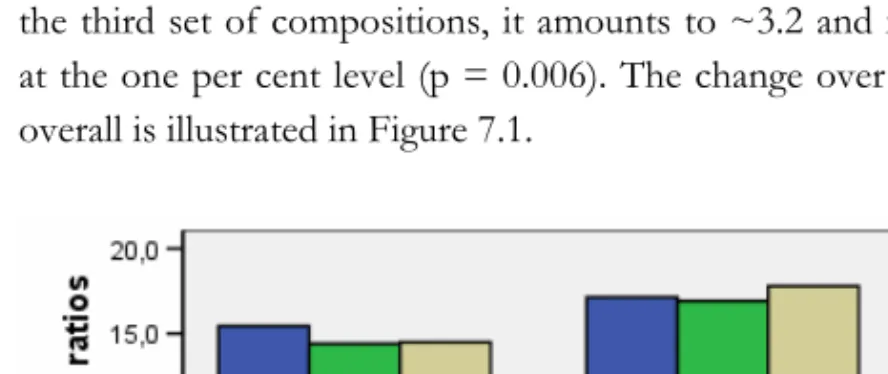
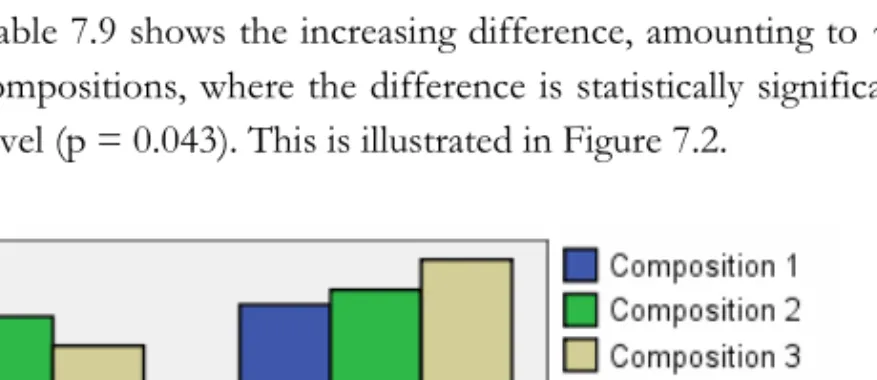
categorisation of verbs... ..68 Figure 6.1 Collection of material...76 Figure 7.1 Overall comparison between NP and IB mean LFV ratios... 103 Figure 7.2 Comparison between NP and IB mean LFV ratios
in subgroup III... 108 Figure 8.1 Overall comparison between NP and IB
mean MTSh ratios... 126 Figure 8.2 Comparison between NP and IB mean MTSh ratios
in subgroup III... 135 Figure 8.3 Comparison between NP and IB mean RTSh ratios
1
Introduction and aims
1.1 Background
“English is important”, writes one of the students who participated in this study. In its capacity of prestigious world language, English holds a unique position in the everyday life of many students, where it is used in numerous contexts. As another student puts it: “In the case of English, I suppose there is a constant connection through TV, radio and music”. The status of English is reflected in the Swedish school system, where it has a place among the mandatory subjects required at upper secondary school (Skolverket, 2008). Also, most career opportunities presuppose solid knowledge of English. Such knowledge can be achieved in different ways, but, there is a widespread belief that a naturalistic approach, where meaning is central, produces better results than direct instruction (Baker, 2001:87). The easiest way to reach naturalistic authenticity is to spend time in the target language society, but, by supplementing the focus on form with an emphasis on meaning, it is also possible to create authentic conditions in the foreign language classroom (Salili & Tsui, 2005:136).
In the classroom situation it is possible to take the naturalistic approach one step further: all subjects can be taught through the medium of the target language. This is not a novelty; for instance, in the Roman Empire the medium of instruction was Latin and in the British colonies it was English (Sylvén, 2004:1). Today, the use of a language other than one’s native language as the medium of instruction can be referred to in many different ways, e.g. as bilingual education, content-based language learning, plurilingual education and immersion education (Nixon, 2000:7). In Europe, there is a consensus to use
Content and Language Integrated Learning (CLIL), in Swedish referred to as SPRINT (språk- och innehållsintegrerad inlärning och undervisning) (Nixon, 2000:7). However, how language and content is to be integrated tends to differ between implementers (Met, 1999:3).
The term immersion education was first used in a series of studies in St. Lambert, Canada in the 1960s, conducted by Lambert and Tucker (de Courcy, 2002:2). They found that the immersion method was a very successful way of making students proficient users of a target language, in this case French (Lambert & Tucker, 1972:203ff). Other studies found immersion education to be more effective than any other form of language learning apart from living
and going to school in the foreign country where the language is spoken natively (see. e.g. Lambert, 1990; Met, 1987). However, it has gradually become clear that implementation of immersion education outside of Canada has failed to show the same rate of success (European Commission, 2005:7).
The first Swedish attempt at immersion education was conducted in the late 1970s (Åseskog, 1982), and during the 1990s, immersion education (or CLIL) gained increasing popularity (see e.g. Viberg, 1997:9). According to figures from 2000, CLIL was offered at 4% of all compulsory schools and 20% of all upper secondary schools, the target language most often being English (Nixon, 2000:3). There are two typical varieties of English CLIL in Sweden. The by far most widespread variety implements CLIL within the Swedish national curriculum, while the other can be found within an international school: the International Baccalaureate (Nixon, 2000:24). The International Baccalaureate was founded in Geneva in 1968, and initially its diploma programme was only offered by seven participating schools, two in the UK and one each in the USA, Switzerland, Lebanon, Iran and Denmark (International Baccalaureate Organization, 2008.). Today, the International Baccalaureate programmes range from the primary years to the diploma programme, and they are offered in 126 countries at over 2,000 schools. In Sweden, the diploma programme of the International Baccalaureate is taught through English, but it can also be taught through French or Spanish. Since assessment is partly carried out by external examiners, standardised use of written target language is emphasised.
In the light of the popularity of immersion education, in Sweden and elsewhere, it is important to find out whether there actually are gains in overall proficiency when English is used as the medium of instruction. If there are, this would speak in favour of instituting immersion education. Despite this need for information, there is a lack of empirical studies on the effects of immersion education on the target language. The empirical studies that have been made tend to focus not only on target language proficiency, but on native language proficiency and subject knowledge as well (see e.g. Washburn, 1997; Wode, 1999; Sylvén, 2004; Dalton-Puffer, forthcoming; Vollmer, forthcoming). Two Swedish studies (Sylvén, 2004; Washburn, 1997) could not link the CLIL method within the Swedish national curriculum to significant language proficiency gains. Rather, Sylvén found that proficiency was related to students’ extracurricular activities and Washburn’s study showed that subject content results of CLIL students were inferior to those of their peers in traditional education. However, other European studies suggest that the CLIL method
promotes specific language competencies on the one hand, and is valuable to students with average proficiency on the other (Vollmer, forthcoming; Dalton-Puffer, forthcoming). Having said that, it should be borne in mind that it is difficult to compare the results of studies on different forms of CLIL since, as mentioned above, their implementation differs (Met, 1999:3). CLIL in Sweden is not necessarily comparable to CLIL in other parts of Europe, and CLIL within the Swedish national curriculum is likely to differ from the International Baccalaureate. One of the differences between the latter two is that written production in English is a recurrent feature in the International Baccalaureate, whereas CLIL students in the national curriculum rarely engage in any writing activities (Dalton-Puffer, fortcoming:15). To date, very few studies have been done in Sweden that actually compare the English proficiency of International Baccalaureate students with that of their peers at national programmes, where English is taught as a subject only. The present study aims to partly rectify that situation.
Still, it is not only the way students learn English in school that influences their proficiency. Another influential factor is the amount of English input students encounter in their spare time. For instance, Swedish students can access subtitled English-speaking films on TV and in cinemas, and popular music tends to have English lyrics. There are also books and magazines in English, computer games, e-mail and interactive internet sites, like chat-groups. Furthermore, student motivation needs to be taken into consideration. The learning of an additional language has been described as a “social psychological phenomenon” (Gardner, 1985:2), a view that implies that the students’ English proficiency may at least to a certain extent be affected e.g. by their attitude towards language learning in general and towards English (both language and culture) in particular (MacIntyre, 2002:50; Gardner, 1985:2; Gardner & Lambert, 1972:3, 12ff). Consequently, even if students in immersion education turn out to be more proficient in English than their peers in the foreign language classroom, it is not necessarily the medium of instruction as such that is the sole reason for it.
There are numerous studies dealing with motivation in education, but very few deal with the influence of extracurricular input on proficiency (see, however, Sundqvist, forthcoming). When it comes to studies on the effects of immersion education, the majority of the studies on immersion education are concerned with native language development and academic knowledge. As pointed out above, studies actually comparing target language proficiency of students in immersion education with students taught English as a subject only
are rare. In this respect, the present study might contribute valuable knowledge. Also, it may be of interest to those directly involved, such as teachers, students and parents, to know more about to what degree using English as the medium of instruction promotes students’ proficiency in English.
1.2 Aims
The primary aim of this study was to see whether students who received all their instruction in the target language, in this case English, became more proficient in their use of English than students who were taught English as a subject only. A second aim was to examine to what degree the initial proficiency of the participating students could be used to explain their development over time. Finally, based on responses to a questionnaire, this study aimed at determining in how far the students’ proficiency could be explained in terms of their motivation.
My approach was to base the study on upper secondary students’ use of English in free, written compositions. In all, 86 students participated in this longitudinal study, spanning two school years. Half of them (43) were enrolled in the International Baccalaureate diploma programme with English as the medium of instruction, and the rest (also 43) were students at traditional national programmes, where English is taught as a subject only. During the two years of the study, each student wrote three compositions. It was this material that served as the basis for the present study.
In this study, the degree of proficiency exhibited by the students was determined based on their use of vocabulary and verb tense. Since my intention was to measure positive rather than negative features such as the number of errors, I investigated students’ use of low-frequency vocabulary and the proportion of motivated tense shift in the compositions.
It is my hope that this study will further an understanding as to how English as the medium of instruction contributes to students’ proficiency in English, and, at the same time, indicate other important factors which concurrently influence the students’ performance. I also hope that the study will, to some extent, give an insight into how students’ proficiency in English can develop over time.
1.3 Outline of the thesis
This introductory chapter is followed by four background chapters. Chapter 2, which deals with bilingualism and bilingual education, discusses bilingualism from an individual as well as a societal perspective, and examines different types of bilingual education, with a focus on the International Baccalaureate. Chapter 3 discusses different approaches to motivation in education. Chapter 4 gives a background to vocabulary acquisition and use, and includes a discussion of different definitions of lexical items, links between words and ways of measuring vocabulary proficiency. Finally, chapter 5 is devoted to theoretical approaches to the use of verbs and deals specifically with tense in context from a discourse perspective.
Material and methods are presented in detail in chapter 6. After that follow three chapters of results and analyses. Chapter 7 presents the measurement of vocabulary quality, and the findings are illustrated with passages from the compositions. A small-scale analysis of the low-frequency vocabulary in some of the compositions is also included. Chapter 8 is devoted to the results of the survey of verb tense shift and contains samples of full-length compositions by way of illustration. Chapter 9 presents the results on motivation and shows in what ways different aspects of motivation can help explain the results that were accounted for in chapters 7 and 8. The final chapter, chapter 10, is the summary and conclusion.
2
On bilingualism and bilingual education
One major aim of the present study was to see whether bilingual education has an impact on students’ proficiency in the target language. In this section, I will therefore briefly discuss bilingualism as such, both as a societal and individual phenomenon. I will also describe various types of bilingual education, with a specific focus on the International Baccalaureate and the situation in Sweden. The terminology used for English as the target language needs to be commented on, since it has changed over the years. Originally, a distinction was made according to the environment in which non-native speakers were learning English. Consequently, if the learning took place in a non-native English environment, e.g. in Japan or Sweden, the term that was used was English as a foreign language (EFL). If, on the other hand, the learning took place in an English language environment, e.g. by immigrants to the U.K. or the U.S., the term English as a second language (ESL) was used. Today, the environment distinction tends no longer to be made, and ESL has become a standard term for the learning of English by non-native speakers, at least in Asia and North America (see e.g. Nayar, 1997). In this thesis, however, the foreign language term is used in places where a distinction needs to be made.
2.1 Bilingualism
It has been estimated that somewhere between half to two thirds of the world’s population are bilingual, and that the number is increasing (Baker, 2001:43). Moreover, bilingualism can be found in all countries, social classes and age groups. There are different perspectives on bilingualism. For instance, a societal approach allows for reflection on which language is used for which societal functions. From an individual’s point of view, it is of interest to know in which order the languages are learnt, and what effects bilingualism may have on a person. Questions such as these will be discussed in the following sections.
2.1.1 Bilingual societies
Bilingual societies can comprise different kinds of bilingualism. On the one hand, bilingualism can be based on ethnicity, in which case it can be referred to as folk bilingualism (de Mejía, 2002:40f). As such, it describes situations where
ethnic groups within a society speak different languages. The language of the larger, or more powerful, group is referred to as the majority language. It enjoys a certain amount of prestige as it comes to be associated with education, prosperity and power. At the other end of the scale we find ethnic groups that are smaller, or less powerful, and their languages are referred to as minority languages. To be able to function in society, these people have to acquire the majority language. Consequently, the use of a minority language tends to be restricted to the realm of the family and the local community (Baker, 2001:45).
Another kind of bilingualism is dependent on social class, and one term used for this kind of bilingualism is elite bilingualism (de Mejía, 2002:5, 40f). We find elite bilingualism, for example, when people with a high socio-economic standing by choice learn an internationally prestigious language such as English, French, German or Spanish. As a consequence, these individuals gain access to the global market, which is an advantage if they want to advance economically and socially. De Mejía (2002:41) suggests that elite bilingualism can be seen as “a valuable personal possession which is consciously chosen and worked for”. However, she also points out that some researchers do not find the term elite bilingualism entirely suitable (de Mejía, 2002:42f). For instance, in societies such as the Scandinavian countries, the learning of foreign languages is not reserved for a small elite, but is rather seen as a prerequisite for anyone aiming at a middle-class job (de Mejía, 2002:42). In small countries like these, the mastery of foreign languages is simply a necessity, since the rest of the world takes little interest in learning one’s own. Another argument against the term elite bilingualism is based on the notion that today it is not only a small elite that is globally mobile. Rather, middle-class employees are sent abroad by their companies or, in Europe, many people take the opportunity to find jobs within the European Union. For these reasons, some researchers prefer to instead use phrases like prestigious bilingualism, voluntary bilingualism or enrichment bilingualism (de Mejía, 2002:42f).
The kind of bilingualism that prevails in a society tends to influence the future of the languages concerned. In the case of folk bilingualism, the first language of ethnic groups speaking a minority language is often less prestigious than the majority language. As a result, the majority language tends to take over and replace the first language in these groups. Using terminology coined by Lambert (1974:119), this kind of situation is described as subtractive bilingualism, which results in monolingualism (Baker, 2001:58, 114f). In the case of elite bilingualism, by contrast, the attitude towards bilingualism is positive. While proficiency in the second language is positively associated with
future prospects, it poses no threat to the first language. As a result, there is an additive situation, where the two languages develop alongside each other (Baker, 2001:58, 114f). Traditionally, the approach to bilingualism differs between countries. According to Baker (2001:58), England and the USA are examples of countries where bilingualism tends to be subtractive, resulting in English monolingualism, while bilingualism tends to be additive in e.g. Sweden, where bilingualism is highly valued and needed. Josephson (2004:128), however, points out that in Sweden the approach to bilingualism is linked to the status of each language. Thus, the additive approach tends to be reserved for prestigious languages, preferably English, while bilingualism involving low status languages is most likely to be subtractive.
2.1.2 Becoming bilingual
Bilingualism can arise both in childhood and in adult life. In childhood bilingualism, the two languages can be acquired either simultaneously, which is the case for example in families where the parents have different native languages which are both used in the communication with their child, or sequentially, e.g. when a child learns one language at home and another in nursery or elementary school (Baker, 2001:87). Simultaneous bilingualism means that neither of the two languages concerned can be considered as the first language on its own, but rather the two together (de Mejía, 2002:46). In sequential childhood bilingualism, it is clear which language comes first, and bilingualism is acquired either informally, e.g. in nursery school, or formally, e.g. in school (Baker, 2001:93). In informal situations there is an emphasis on meaning rather than form, which is a typical feature of the subconscious process of language acquisition. Formal learning, on the other hand, typically takes place in foreign language classes, where language gains may follow upon conscious processes involving knowledge about the language. The focus is often on form rather than content, which is a typical feature of language learning (Baker, 2001:87, 113f; Krashen, 1977:152f; 1981:1f; 1985:1). Still, formal and informal learning can overlap, for instance when language education is made more naturalistic and less formal, bridging learning and acquisition. Reflecting on empirical research, Baker (2001:93) sees content-based language learning as a successful way to becoming bilingual, whereas foreign language learning appears less likely to lead to bilingualism. However, he points out that the success rate of foreign language learning differs between countries, with lower
rates in e.g. the USA and higher rates in e.g. the Netherlands, Sweden and Singapore. Baker attributes such outcome differences to the social, cultural, economic and political context surrounding the individual learner (Baker, 2001:93f). Here, Josephson’s (2004:128) point about language prestige can also help explain the difference in success rates. In an English-speaking society it would be less likely for a foreign language to have a status similar to that of English. In small countries such as the Netherlands, Sweden and Singapore, on the other hand, there is a dependence on international contacts. A world language would therefore be likely to enjoy at least the same prestige as the native language, which would make people more apt to learn it.
The ability to become bilingual is sometimes referred to as age related. However, there is no straightforward link between age and second language (or L2) proficiency (Singleton, 2004:226f). Rather, it appears that the effect of age differs between L2 features (Hyltenstam & Abrahamsson, 2001:155). For instance, children seem to pick up the sound system of a new language more quickly than adults, which tends to give them pronunciation benefits. Adults, on the other hand, who have more developed intellectual skills, have an initial advantage in e.g. morphology, and when it comes to learning a language in a formal context, e.g. in the classroom (Singleton, 2004:226f). Still, on the whole, age seems to be just one factor that helps explain successful language learning, along with e.g. motivation, learning context, length of exposure to and gains from knowing the target language.
Another aspect of bilingualism is the many-faceted nature of language proficiency. Apart from the four language skills of listening, speaking, reading and writing, there are a number of sub skills, such as pronunciation and grammatical correctness that need to be mastered. When it comes to the ability in each of these sub skills, each bilingual person has their own profile (Baker, 2001:4). Moreover, bilinguals’ use of their languages can be restricted to specific contexts or domains, e.g. by using one language for social interaction and the other for work (Baker, 2001:7). Within each of these sub skills and domains, the abilities of bilinguals might range from “native-like control” to “tourists with a few phrases”, and there seems to be no perfect way of finding a suitable level for a breaking point (Baker, 2001:6). In fact, it is common for bilinguals to be stronger in one of their languages in some, or all, contexts. However, the relative dominance of the languages can change over time (Baker, 2001:9). Nevertheless, one definition that has been favoured is that of balanced bilinguals, where the two languages are considered equally well developed. Such
a concept, however, does not imply that the actual ability level is the same between individuals.
The discussion on different learning situations and outcomes shows that bilingualism is neither uniform nor static. Rather, bilingual people all differ as regards their ability and the relative balance of each of the two languages, whether this ability is developing or decreasing, the age at which they acquired each language and the context in which the languages are used. The motivation for learning an additional language may also differ in that it can be elective, i.e. resulting from an active choice e.g. in school, or it can be circumstantial, arising in situations where people have to learn a language to be able to function in society, which is reflected in the case of immigrants (Baker, 2001:3).
2.1.3 Bilingualism and cognition
In the assessment of the linguistic competence of bilinguals, there are two main ways of regarding the languages involved (Grosjean, 1985; 1994:1657). One view is to think of bilinguals as simply having access to two languages. This is referred to as the monolingual view, according to which bilinguals are expected to perform equally well in both languages, regardless of context and task. The other is holistic, and sees being proficient in two languages as a factor per se, which adds a linguistic dimension to an individual. In accordance with this view, language assessment should not be limited to specific tasks, but be based on the bilingual’s general linguistic competence. Also, bias caused by domain-specific skill limitations should be avoided by allowing and evaluating mixtures of the two languages concerned (Grosjean, 1985:477; 1994:1658).
Over time, there has been a change in the way the linguistic competence of bilinguals has been regarded by linguists (Baker, 2001:7f). From the 19th
century up until the 1960s, there was a tendency to view linguistic skills in terms of a weighing scales or a balance, where being more proficient in one language was automatically assumed to imply a lower level of proficiency in the other (Baker, 2001:135). It was also believed that the brain was designed to have room for only one language, and that the storage of a second language would intrude on the storage of other types of learning. Consequently, bilingualism was believed to cause cognitive problems. Early studies supported these beliefs, but to later generations of researchers it was evident that the studies had had serious shortcomings (Baker, 2001:136). For instance, they were found to have been limited in scope as it was the bilinguals’ competence in the weaker
language that had been tested and compared to the linguistic competence of monolinguals. Also, the results of the studies had not been tested for statistical significance, and it turned out that some results could have arisen by chance. Baker (2001:139f) reports that in the 1930s, a re-evaluation of bilingualism was undertaken. It began when researchers took socioeconomic factors into consideration, finding that bilingualism did not affect a person’s IQ.
Later on, in the early 1960s, a more holistic approach was taken. It was found that bilingualism could actually lead to cognitive advantages. In a groundbreaking study, using a broader measurement of intelligence than IQ, Peal and Lambert found that bilinguals enjoyed several intellectual advantages (Peal & Lambert, 1962:20f). These advantages have been described in the following way: “greater mental flexibility; the ability to think more abstractly, more independently of words, providing superiority in concept formation; that a more enriched bilingual and bicultural environment benefits the development of IQ; and that there is a positive transfer between a bilingual’s two languages facilitating the development of verbal IQ” (Baker, 2001:141). Although Baker (2001:141) points to a number of shortcomings in Pearl and Lambert’s study, the impact of the level of bilingualism being one, he nevertheless states that subsequent research has mainly confirmed Pearl and Lambert’s results. What has happened since the 1960s, though, is that research in this area has moved on from IQ testing to the areas of “thinking styles, strategies and skills” (Baker, 2001:142). For instance, findings suggest that divergent, or creative, thinking is stronger in bilinguals and that bilingualism is positively related to metalinguistic abilities (Baker, 2001:145, 152). However, there are limitations to the findings on bilingualism and cognition. For instance, de Mejía (2002:40) notes that the studies tend to have been made on additive bilingualism, and thus mainly concern the acquisition of majority or world languages. This suggests that the results on the cognitive effects of bilingualism might have been influenced by factors such as motivation and prestige. Baker (2001:158) points out that when comparing monolinguals and bilinguals it is hard to ensure that the participants vary only with respect to language. Again, there could be other factors influencing the results.
2.2 Bilingual education
The underlying values of the politics on bilingualism and bilingual education differ. Ruíz (1984) suggested three perspectives on the subject. The first is that
bilingualism is believed to cause problems, e.g. cognitively, since individuals have to operate in two languages, and socially, since bilingualism can divide a country into two conflicting groups. In such cases, language transfer into majority language monolingualism is likely to be promoted, so as to ensure assimilation and harmony between language groups (Baker, 2001:110ff). The second view is that bilingualism is perceived as a right, which means that a minority language is promoted by way of enabling its speakers to use their native language in all contexts, without being discriminated against. The third view sees bilingualism as a resource, either in terms of economy or socially and culturally. On an individual basis, bilingualism could for instance be favoured for employment and career reasons, or even for affective reasons (Baker, 2001:110ff). However, there is a tendency for the prestige of the languages concerned to influence the view on bilingualism. A world language tends to be seen as a resource, while low status minority languages tend to be seen as causing problems (Baker, 2001:374f).
In the following sections I will discuss different forms of bilingual education, reflecting different views on bilingualism. I will also briefly discuss the International Baccalaureate and some aspects of bilingual education in Sweden.
2.2.1 Various types of bilingual education
There are many different ways in which a new language can be learnt. In informal cases a language can be acquired subconsciously, ‘on the streets’, being based on communication and content (Krashen, 1981:1f). Formal language learning, on the other hand, takes place in the classroom. It could be in a majority language environment, where majority language children take a language as a subject among other subjects. In such a context the focus is linguistic and the majority language serves as the instruction medium (Baker, 2001:194). There are also language intensification programmes, where the number of hours assigned to a specific language is higher than usual (de Mejía, 2002:45). What is typical of the latter two cases is that the target language is not used as the means of communication in a learner’s native society (Stern, 1983:15f). Also, the aim is one of limited bilingualism (Baker, 2001:194).
A completely different approach to language learning can be seen in
submersion education. This term describes situations where minority language children go to majority language schools and are left more or less to their own
devices to keep up with the majority language curriculum. This form of education is bilingual in that it deals with bilingual children, but it is the majority language that is the medium, and monolingualism and not bilingualism that is the aim (Baker, 2001:204). Baker uses the metaphor of a swimming pool, which the minority language students are thrown into at the deep end and where they “may either sink, struggle or swim” (Baker, 2001:195). Under these circumstances the target language tends to be a majority language that is used as the official means of communication in society (de Mejía, 2002:46). The educational aim is assimilation into a monolingual society (Baker, 2001:194).
Various forms of bilingual education can be found somewhere in between the two extremes described above. What they have in common is that there are two languages that are used as mediums of instruction. As a result, the focus is not solely on the languages involved, but just as much on academic achievement in the subject areas (de Mejía, 2002:46). However, there are different kinds of bilingual education, depending upon whether bilingualism is the aim or if there just happen to be bilingual children in the classroom. A number of factors need to be taken into consideration: the languages that are used in the home, the languages used in school, the languages used in the community and the status of these languages. Another difference can be found in the aims of the bilingual education. One aim could be to promote a shift from a minority language to a majority language and thereby result in assimilation, which is referred to as transitional bilingual education (de Mejía, 2002:43f). Another aim could be to serve to maintain knowledge of a minority language within a majority language community, e.g. by preserving heritage languages. This is referred to as maintenance bilingual education (Baker, 2001:192, 209; de Mejía, 2002:43f). Through an emphasis on development and extension of the minority language, the maintenance model can be taken one step further, into the enrichment bilingual education model. There, the social status of the two languages concerned is perceived as being equal (de Mejía, 2002:45). There are two different types of bilingual education that serve as examples of enrichment bilingual education: immersion education and dual language bilingual education. Unlike submersion education (discussed above), which aims at subtractive bilingualism, enrichment bilingual education deals with additive bilingualism.
In dual language bilingual education, each class is composed of an equal number of minority and majority language children, and the aim is to make both groups relatively balanced bilinguals (Baker, 2001:212). The minority language is used for at least 50% of the total time of instruction. In each period
of instruction only one language is used, which means that language learning is content based (Baker, 2001:213). It is possible to divide the time between the two languages either by using the two languages on alternate days, or by having some subjects taught in the minority language and the rest in the majority language. However, it has been pointed out that subject division could lead to an unwanted situation where prestigious subjects are taught in one of the languages while less prestigious subjects are taught in the other. Such a division could influence the pupils’ perception of the status of the languages (Baker, 2001:217).
In immersion education the target language serves as a medium of instruction. The focus is on teaching content rather than teaching the language, and the aim is bilingualism (Baker, 2001:194). The first language is supported by the school and can be used in the classroom so as to ensure additive bilingualism (Baker, 2001:207). The pupils’ contact with the other language is restricted to the classroom, and the classroom culture reflects that of the local community (Swain & Johnson, 1997:15). Immersion education can differ in terms of the age at which immersion begins, ranging from early kindergarten years to late secondary level, and also to its degree, ranging from partial to total (Baker, 2001:205). Enrollment is voluntary, which in effect makes it a matter of parental choice. One famous example of immersion education already mentioned (see 1.1) was the one in St. Lambert, French-speaking Canada, in the 1960s. There, English-speaking parents took the initiative for their children to be taught through French. (Lambert & Tucker, 1972:1ff) The idea was that their children would become proficient enough in French to be able to hold key positions in society, jobs in which bilingualism was a prerequisite (Wode, 1999:25). As it turned out, these programmes showed impressive results in terms of target language learning. However, their success might not only be linked to immersion education per se, since enrollment was voluntary and the success may therefore have reflected socio-economic and political factors (de Mejía, 2002:26). Also, immersion education has been regarded as being similar to elite bilingualism, in that it tends to attract mostly pupils from a higher socio-economic background, which might also have an influence on the results (see de Mejía, 2002:45).
Lastly, there are international schools. Basically, there are two kinds of international schools, one representing national schools for children who live somewhere other than in their native country, and the other having a global perspective, serving to reflect global values set by e.g. the UN (de Mejía, 2002:14). However, in order to ensure large enough classes, there is a tendency
for these kinds of schools not to limit their focus to expatriate children, but to promote the enrollment of local children. International schools tend to be monolingual, but as the medium of instruction often tends to be a second language to a majority of the pupils, many schools are classified as bilingual (de Mejía, 2002:15). In international schools, the medium of instruction tends to be referred to as a second language, since in school it is the medium of instruction that functions as the official means of communication. It is argued that although the school setting is a limited context, the students still spend a large part of their day there, and therefore can be said to learn the target language in a target language environment (Garner, 1990:2). The medium of instruction is most likely to be English, although there are other languages that are used as well (de Mejía, 2002:14). Often, the English of international schools has been found to contain ‘un-English’ expressions and grammar, caused by the influence of the local language (Carder, 1991:110).
In Sweden, the majority of all immersion education, or CLIL, is implemented within the Swedish national curriculum (Nixon, 2000:24). English may be used for teaching in one or more subjects and over various periods of time (Nixon, 2000:35ff). The degree of immersion differs between compulsory school and upper secondary school. In compulsory school there is a statute that says that no more than 50% of the teaching may be through English (Sveriges Riksdag, 2003). Accordingly, the degree of immersion is only allowed to be partial. At upper secondary school, however, immersion education can be total (Sveriges Riksdag, 1999). According to figures from 2000, the degree of teacher competence in the target language differs as well, with 75% of teachers being qualified to teach English in compulsory school, and 42% at upper secondary school (Nixon, 2000:3). The predominant target language for CLIL is English (~75%), but there are other target languages as well, e.g. German, French, Spanish and Finnish. Most commonly, CLIL is offered at municipal schools, but it is also offered at independent schools (Nixon, 2000:12). In the case of English, there is for instance Internationella Engelska Skolan (IES; the International English School /my translation/), where half of the teaching is done through English, by teachers who, predominantly, are native speakers of English (Internationella Engelska Skolan, 2008). Currently, the IES has eight middle schools (years 6-9) and one upper secondary school, and it is expanding. Among the schools offering CLIL outside of the Swedish national curriculum, the international programmes of the International Baccalaureate are the most common ones. The International Baccalaureate will be described in the next section.
2.2.2 The International Baccalaureate
Because the present study is based on informants from the International Baccalaureate, this section briefly outlines the creation and function of the world-wide set of international programmes of the International Baccalaureate. The planning of the programmes began in the early 1960s, when, under the supervision of UNESCO, a project was set up to create an international secondary school programme. Examination was not only to be global, but also recognised by the universities in the participating countries (de Mejía, 2002:19). As a result, the International Baccalaureate (henceforth IB) was founded in 1968. It was decided that the organisation would keep in close contact with UNESCO and the governments concerned. According to the IB’s home page, their aim is to “help develop the intellectual, personal, emotional and social skills to live, learn and work in a rapidly globalizing world” (International Baccalaureate Organization, 2008.). The curriculum is described as being composed of “the best from many different countries rather than the exported national system of any one”, and “international-mindedness” is encouraged. Furthermore, students are encouraged to “ask challenging questions, to critically reflect, to develop research skills, to learn how to learn and to participate in community service”. It is the main regions and stakeholder groups represented in the IB who elect the council that governs the IB, and the organisation is managed by a director general along with around 300 employees. The IB has no schools of their own, but cooperates with schools that share the IB’s “commitment to international education”, so called “world schools”. These schools pay an annual fee to the IB, which, among other things, is used to pay for student assessment and teacher training. There are 2,060 world schools in 125 countries, enrolling over 540,000 students. The world schools offer three programmes, the first for ages 3-12, the second for ages 11-16 and the third for ages 16-19. The third programme is called the diploma programme and includes a final examination leading to a qualification for world-wide university studies. The IB programme can be taught in English, French or Spanish, and in the diploma programme the students are assessed both internally, by their teachers, and externally, by examiners. The examiners’ assessment serves to promote objectivity and reliability, and weighs more heavily than the internal assessment. A further requirement is an extended essay of 4,000 words. All examinations are conducted in English.
The IB programmes have been described as demanding, in that they attract academically gifted and motivated students (Nixon, 2001:27). High
academic outcomes are confirmed by Hertberg-Davis and Callahan (2007:37), who refer to studies on subject content in America where IB students were found to outperform non-IB students. At the same time the authors point out that such studies are few, and also that they do not account for background variables such as aptitude and motivation. The latter is an important issue, since Hertberg-Davis and Callahan describe the IB programme as specifically suited for gifted students. If IB students are indeed a select group, positive academic outcomes might come as no surprise. Moreover, it should be pointed out that there was no second language involved in these studies, which focused on American students taking the IB programme in English.
2.2.3 Empirical studies on the effects of immersion education
As reported above, the Canadian immersion programmes have been very successful. Research on the effects of immersion education has suggested a complete absence of negative influence on L1, subject matter and cognitive development (Wode, 1999:26). At the same time, large target language gains have been observed, above all in the receptive domain. There have been a multitude of other studies on the effects of immersion education, but it should be noted that the results might be affected by differences as to students’ age at the time of introduction of immersion education and its degree. For instance, the first Canadian immersion programmes were early immersion programmes (Lambert & Tucker, 1972:216), and it has been suggested that this gives the best target language results, although late immersion students seem to catch up in the long run (Cummins & Swain, 1986:38f). As regards the degree to which immersion is implemented, the delayed effect found in late immersion has been found in partial immersion as well (Cummins & Swain, 1986:39). Nevertheless, in a study on immersion education in Germany, Wode (1999:30) found that partial immersion had very positive effects. In fact, immersion students tended to make similar gains irrespective of the degree to which immersion had been implemented. Another important factor is teachers’ target language competence. In Canadian immersion education the teachers are native speakers of French (Dalton-Puffer, forthcoming:2), and this tends to be the case also in German-French bilingual education (Mäsch, 1993:157f). In other countries, however, subject teachers who are native speakers of the target language might not be all that common.
In Sweden, it is highly desirable to become proficient in English, and Swedish-English immersion education has status. De Mejía, for instance, points to similarities between Swedish-English immersion programmes and Canadian immersion programmes as regards socio-economic and political influence on the outcomes (de Mejía, 2002:218). English is a prestige language, and its prestige has been seen as the factor that ensures the success of immersion education in English (Josephson, 2004:128, 139f). Like de Mejía (2002:218), Josephson points out that immersion classes are mainly composed of motivated middle-class students, a circumstance that he identifies as the main explanation that this kind of education is able to hold up to the standards.
In spite of the widespread implementation of immersion education in Sweden, Swedish studies on its outcomes have been sparse. Mainly, there have been concerns about the effects of immersion education in three fields, namely subject content, first language and target language. As regards subject content, a case study at upper secondary school by Knight (1990) showed no negative effects. Washburn, however, questions the effects of CLIL in a study of upper secondary students’ academic abilities (Washburn, 1997:261f, 319f). The reason was that the CLIL students’ grades fell behind those of the control groups in the subjects they took in English. Some of the teachers and half of the students in the CLIL group thought that their achievements had been negatively affected by the use of English as the medium of instruction. Such negative effects contradict the Canadian findings and Washburn’s results have fuelled a discussion on domain losses as a consequence of immersion education. Josephson, for example, has noted that immersion students with Swedish as their first language fail to master their academic subject in their native tongue, a phenomenon which he attributes to their not being familiar with the subject-specific vocabulary (Josephson, 2004:132ff). Consequently, Josephson argues, students in immersion education are not able to use their native tongue in their subject-specific abstract thinking and problem solving, which has been found to affect their academic abilities in a negative way. Domain losses in CLIL students’ subject knowledge were also found by Lim Falk (forthcoming), who suggests that many CLIL students do not have sufficient knowledge in English to be able to profit from immersion education. The European Commission, however, claims that this type of concern is mainly a Swedish feature, and that research in Finland has showed that, by and large, such fears are unfounded (European Commission, 2006:53). Moreover, de Courcy, for instance, reports on French immersion in Australia, where students’ grades suffered initially but, after some time, rose back to levels that the students considered to be normal
(de Courcy, 1997:51). The Austrian researcher Dalton-Puffer (forthcoming) reports on a study that shows CLIL in a much more favourable light than the Swedish one, namely a Belgian study in which CLIL students reach higher levels of subject knowledge than students in traditional education (Dalton-Puffer, forthcoming:4). Dalton-Puffer attributes these results to Vollmer’s statement that “bilingual learners seem to have a higher level of frustration tolerance than monolingual ones, and a stronger sense of perseverance” (Vollmer, forthcoming:188). Concerns about subject knowledge were rejected also in a Hungarian study, where it was found that CLIL students were accepted into university to no lesser degree than regular students (Bognár, 1999:119f). However, it should be noted that the CLIL students in Bognár’s study had been admitted because of their academic achievements on an entrance examination, which is likely to have influenced the outcome of the study.
Another fear about immersion education is that it might have negative effects on the students’ native language. Such concerns have been expressed not only in Sweden, but in Norway, Iceland, Lithuania and in the Flemish community in Belgium as well (European Commission, 2006:53). Already in the early 1990s, results from a small-scale Swedish study showed that a majority of the immersion students in the study thought that their Swedish had deteriorated to some degree (Hägerfelth, 1992:28; 1993:43f). Two linguistic studies in this field, both undergraduate, compare immersion students’ use of Swedish in writing with that of students who were taught in Swedish only. The first study (by Alvtörn) was designed as an error analysis, and its results showed that CLIL students made significantly more errors in their Swedish writing than the non-immersion students. Their errors occurred in a variety of linguistic fields, among others word choice (as cited in Skolverket, 2001b:21f). The second study compared the degree of English influences in the written Swedish of IB students and a control group taught in Swedish (Käll, 2006). There, it was found that the IB students used significantly more anglicisms, and that the influence of English was especially notable in morphology and in the lexicon, but that it could also be seen in syntax. Moreover, the study suggested that the influence from English was most evident in the linguistically weakest students. In Nixon’s interviews with CLIL teachers, however, no concerns whatsoever were raised about the CLIL students’ command of the Swedish language (Nixon, 2001:37f). As a basis for their positive evaluation, the teachers referred to results on both national and local tests. Still, teachers at upper secondary school pointed out domain loss among their CLIL students (Nixon, 2001:38).
According to Lim Falk (forthcoming), the influence of CLIL on students’ knowledge in Swedish is not so much a question of deterioration, but rather of development not taking place due to domain loss.
The negative effects of immersion education on Swedish have been further emphasised in a government report, where Hyltenstam (2002:64f) went as far as to compare CLIL with submersion rather than immersion education, thereby hinting that the negative effects of subtractive bilingualism are a potential outcome for the Swedish language. His argument was that the advantages of immersion education found in Canada could not be applied to a Swedish context, because in Sweden the medium of instruction (English) has a higher status than the native language. This would result in Swedish being in a much riskier position than English in the Canadian case, where students immerse in a minority language (French). Hyltenstam also pointed out that the Swedish government had not been seriously interested in assessing CLIL’s effects on the students’ knowledge in subject content and Swedish (Hyltenstam, 2002:64f). In an earlier report for the Swedish National Agency for Education, Nixon (2000:48f) suggested that such assessment should be made, possibly by having schools regularly administer joint subject matter tests in Swedish to their CLIL classes as well as to parallel classes who are taught the same subjects in Swedish.
The third major question about immersion education regards its effects on the target language. To the best of my knowledge, there have been no Swedish studies on IB in this field, only on other forms of CLIL, and the results have not been all that favourable. In two early studies, CLIL students reached better results in English than their peers, although statistical significance was either never reached (Åseskog, 1982) or tested (Knight, 1990). In Washburn’s (1997:319) case studies, the CLIL students’ proficiency in English did not differ significantly from that of a control group, apart from the CLIL students being more fluent in spoken English. Sylvén (2004), in her study on general vocabulary proficiency, found that although CLIL students did acquire a larger vocabulary than students with traditional English learning, this might well have to do with the fact that the CLIL students read more English than their peers in their spare time. Again, the Swedish findings contradict the Canadian studies. In part, this could have to do with CLIL teachers’ proficiency in English. As early as in 1993, Hägerfelth raised concerns about this, and proposed that some sort of national standard ought to be set for teachers’ target language proficiency (Hägerfelth, 1993:40f). Falk (2000) also discusses teacher competence in English, and focuses on immersion education from the






![Table 7.11 Illustration of lemma classifications in the compositions Thorén, > year 9 basic Thorén, < year 9 beyond basic Collins Cobuild, frequency bands 4 - 5 talk develop Collins Cobuild, frequency bands 0 - 3 forest [3] graduati](https://thumb-us.123doks.com/thumbv2/123dok_us/9821166.2868712/126.892.116.464.138.286/illustration-classifications-compositions-thorén-thorén-collins-frequency-frequency.webp)
![Synthesis and investigation of antimicrobial properties of pyrrolidine appended calix[4]arene](data:image/gif;base64,R0lGODlhAQABAIAAAP///wAAACH5BAEAAAAALAAAAAABAAEAAAICRAEAOw==)