EUA Trends and learning
structures in higher education
reports series
page
Trends I G.Haugh, J, Kirstein, 1999
2
Trends II G.Haug, C.Tauch, 2001
63
Trends III S.Reichert, C.Tauch, 2003
142
Trends IV S.Reichert, C.Tauch, 2005
274
Trends in Learning
Structures in Higher
Education (I)
by Guy Haug and Jette Kirstein
1999
Trends in Learning Structures in Higher Education
by Guy Haug and Jette Kirstein
7 June 1999
Part I TRENDS AND ISSUES IN LEARNING STRUCTURES IN HIGHER EDUCATION IN EUROPE ... 5 PART II Information on Learning Structures in Higher Education in the EU/EEA Countries ... 19 The Sorbonne Declaration of 25 May 1998: what it does say, what it doesn’t ... 57
The project is undertaken by the Confederation of European Union Rectors’ Conferences and the Association of European Universities (CRE) with financial support from the European Commis-sion (agreement no. 98-01-CER-CER-0642-00).
The report is the result of the studies undertaken and expresses the points of view of the authors and not those of the European Commission, the Confederation and the CRE.
Introduction
The report on the project, Trends in Learning Structures in Higher Education, is hereby presented as a background paper for the Bologna Forum on 18-19 June 1999. The report comprises information on and analyses of current trends in higher education structures in the Member States of the European Union and the European Economic Area. The objective of the project has been to provide an outline and overview of learning structures in higher education and a comparative analysis of the different systems embodying these structures, thereby offering a tool to identify possible divergences and convergences in the national and institutional policies.
Background
At the Sorbonne Forum on 25 May 1998, the (then) Italian Minister, Prof. BERLINGUER, extended an invitation to fellow Ministers in charge of higher education in other countries to attend a follow-up meeting in Bologna in 1999. The Sorbonne Forum was organised in connection with the celebrations of the 800th anniversary of the University of Paris-Sorbonne, with the assistance of the French Conference of University Presidents (CPU). At this meeting the Sorbonne Declaration was adopted, and a ”Joint Declaration on Harmonisation of the Architecture of the European Higher Education System” was signed by the four Ministers of France, Germany, Italy, and the United Kingdom. Invitations to the Bologna Forum have been forwarded from the Italian Minister, Mr. Ortensio ZECCHINO, to Minister colleagues and from the Rettore F. ROVERSI-MONACO of the University of Bologna to higher education institu-tions and other stakeholders in higher education throughout Europe.
As part of the preparations for the planned Bologna Forum, the Confederation of European Union Rec-tors’ Conferences undertook, in co-operation with the Association of European Universities (CRE), a project for the European Commission (DG XXII), on Trends in Learning Structures in Higher Education.
The Project
The aim of the Trends in Learning Structures in Higher Education project has been to provide an over-view of structures throughout the European Union and the European Economic Area and an outline of areas of divergence and convergence within these learning structures.
The project has been composed of three major strands: data collection, comparative analysis and valida-tion of results and revision of report. The project has been under constant time constraint and this has implied a limitation of the countries studied, to the EU and EEA countries. Another result of the time constraints has been that the two parts of the report, the structural overview and the comparative analysis, have not been combined into one single paper. As part of the follow-up to the project after the Bologna Forum, comments from the different stakeholders will be included and a second phase of the project will involve other European countries, notably countries seeking accession to the European Union.
The preparations for the Bologna Forum were discussed at an informal meeting of the EU Ministers of Education and at a meeting of Directors-General of Higher Education and Presidents of Rectors’ Confer-ences of the Member States of the European Union, in October 1998 during the Austrian Presidency. A Steering Committee was established to assist in the preparations of the Bologna Forum, consisting of Directors-General of Higher Education of the following countries: Austria (Chair), Germany, Finland, and Italy, with representation from the French Ministry of Education and Rectors’ Conference (CPU) and from the UK. The Steering Committee has also functioned as a sounding board for the project and has provided validation of preliminary project results. The role of the Steering Committee in the follow-up process of the project is of vital importance. The Confederation and the Association of European Univer-sities have participated in Steering Committee meetings, as have the two experts, appointed by the two organizations to undertake the data collection and comparative analyses and syntheses.
As coordinator of the project, the Confederation would like to thank the two experts, Ms. Jette KIRSTEIN and Dr. Guy HAUG for their invaluable and untiring efforts, the results of which are now available. The Confederation would also like to thank the Steering Committee members who have
con-tributed with helpful validation and criticism. A special word of thanks is due to the organizations from whom important input has been obtained, in particular the national rectors’ conference secretariats, the EURYDICE Office and the ACA Secretariat in Brussels, ESIB (the National Unions of Students in Europe) and the NARICs throughout the EU and EEA countries. The project would not have been possible without the financial support provided by the European Commission, and the Confederation would like to thank the European Commission for its financial contribution as well as for contributions to the project in the form of publications, documentation material and helpful comments.
Part I TRENDS AND ISSUES IN LEARNING STRUCTURES
IN HIGHER EDUCATION IN EUROPE
(G.Haug)
The main purpose of this paper is to provide information and observations on the current structure, recent trends and possible avenues for change in the architecture of higher education systems in Europe. It should be seen both as a follow up document to the Sorbonne Declaration of May 1998 and an input to the Bologna meeting of ministers/governments and higher education representatives in June 1999.
A survey and discussion of the architecture of higher education systems covers by definition all the various types of higher education, even though some of the topics may be more specifically relevant for the sub-system of university education. While the focus is on member countries of the European Union (EU) and European Economic Area (EEA) the overall perspective within which trends and issues emerge in higher education is in many respects that of Europe as a whole.
Given the scope and complexity of the spectrum of issues to be covered, this report will not deal with the fol-lowing items, even though they are an important and integral part of the overall architecture of higher education in Europe:
- European directives setting out specific rules for the preparation of, and access to, certain professions; - structure of the curricula leading to these professions in the European Union.
Within the framework as set out above, this paper will try
- to map main areas of convergence and divergence in the structure of the various systems and sub-systems of higher education in Europe,
- to identify significant trends in Europe and the global environment which may have an effect on these struc-tures,
- and to indicate possible ways towards greater convergence and effectiveness in the future.
HIGHER EDUCATION STRUCTURES: HOW CONVERGENT ARE THEY ?
Even more systems than countries in Europe
One of the key conclusions coming out of the survey carried out by Jette Kirstein (cf Part II of this document) as well as of other sources is that the overall picture of studies, curricula and degrees is indeed extremely complex and varied, as a consequence of major differences in such key factors as:
- type, breadth and duration of secondary education, with obvious consequences concerning age and preparation for further studies;
- the existence or not of sub-systems of higher education, their respective role and size and the relationship between them, in particular possibilities to transfer from one to the other;
- access into higher education (from open choice to various forms of selection and numerus clausus in all or some sectors);
- study fees (from gratuity to differential or generalised systems of tuition fee);
- huge differences in the organisation of studies in terms of calendar (from annual courses to block modules), choice (varying from set curricula to nearly free choice), frequency and type of examinations (continuous examinations, final exams per credit, or only block examination after several semesters of study);
- and of course, the structure, duration, number and type of degrees that can be earned.
A major conclusion is that comparisons between degrees and degree structure made within such an environment can only be meaningful within certain limits. They become irrelevant if the various factors shaping their exis-tence in a given national system are ignored. In the pages that follow, many comparisons will nonetheless be made, always with this fundamental remark in mind, even though it will not be repeated.
Whether officially unitary or binary, the architecture of national systems can be extremely complex, with up to 100 different academic qualifications and very many different curricula linked by a variety of “bridges”. It is important to point out in this respect that a potential European framework of qualifications cannot be less com-plicated than the most comcom-plicated of the national systems.
No convergence around a strict “3-5-8” model
The Sorbonne Declaration recommends that studies should be organised in an undergraduate cycle leading to a first qualification and a graduate cycle leading to a master or doctoral degree, but it does not provide an indica-tion on the duraindica-tion of these cycles. An extensive debate has nonetheless taken place about this issue, based on the assertion in the Attali report to the French government about the existence (or emergence) of a (single) European model of higher education based on a sequence of studies and degrees of 3-5-8 years. A model strictly following this pattern does not exist.
There is little convergence around a first degree after 3 years.
No one country in Europe has such a system across the board in all sectors of higher education or all disciplines. In the UK, while most bachelor degrees indeed take 3 years to complete, there are many which take longer (typically 4 years), especially (but not only) courses involving a period of work-based learning (sandwich model) or integrated study abroad (e.g. in modern languages). Nearly all degrees are now “Honours” (as op-posed to “ordinary”) degrees; the difference is neither in duration nor in a significantly different profile of the curriculum; honours degrees include a thesis and can only be achieved with certain grades (as opposed to a simple pass/fail system). In some fields such as engineering, curricula lead straight to a master degree (M.Eng) with no intermediary bachelor. In Scotland, the first degree normally takes 4 years to complete and is usually called a bachelor degree (but in some cases, a master degree).
In Denmark and Finland, bachelor courses last are 3 years but do not exist in all fields. In other countries with bachelor degrees, their duration also varies between 3 and 4 years, e.g. in Ireland, Malta, Iceland, as well as in the Czech Republic and Slovakia.
Where bachelor studies are based on a credit system, students may influence the duration of their studies and finish in slightly less time than the normal duration of the curriculum, or extend their studies part time over a much longer period. The actual length of the programme is then best not expressed in terms of years or semes-ters, but in the number of credits that need to be acquired. With the development of part-time studies and life-long learning, this is bound to become more prominent in the debate about the structure of qualifications at national and European level.
As can be seen from the tables prepared by Jette Kirstein there are numerous study programmes, both at univer-sities and at other institutions of higher education leading to a first degree after 4 years. This is also the case in many countries not included in the tables, e.g. for most Licences in Switzerland.
A very obvious phenomenon is that the duration of first degree studies (whether leading to a bachelor or not) varies significantly in many countries depending on the discipline (not mentioning medical studies which are longer everywhere), e.g. in Sweden, the Netherlands or Germany. Engineering, law or teacher training studies tend to be different from other disciplines. Even in systems where bachelor degrees have been introduced in other topics, certain curricula in engineering and technology lead straight to the master level (e.g. in Denmark, Finland, UK).
Moreover, it should be remembered that in most countries (e.g. Austria, Denmark, Germany, Italy, France, Greece and many others), there are huge differences between the official and the real duration of studies, with many students taking up to 7 years to complete a 4 or 5-year curriculum; comparisons based on the official duration of degrees and a possible alignment of systems on this basis would be meaningless if they were not combined with measures aimed at reducing the real duration to the theoretical duration of studies.
A final but very important observation about the first step in the 3-5-8 model is that it fails to pay attention to the large number of higher education students enrolled in short, sub-degrees studies of 1 or 2 years in various types of institutions, e.g. IUTs at French universities, Tecnico Superior in Spain or HND courses at British Colleges of Further Education. The relationship between these studies and bachelor/master courses should be seen as an
integral part of the overall structure of higher education, especially in the perspective of the growing role for higher education in lifelong learning.
Many master level courses in Europe last about 5 years
Where master programmes are separated from undergraduate studies, their length varies from one to two years. In the UK many taught master programmes last only one year, while more research-based ones tend to be longer; yet, there is no direct link between the nature of the programme (taught, research, or often a combination of both) and its duration. Many other countries have longer, 2-year programmes, both for “professional” and “research” master degrees.
Nonetheless, and even bearing in mind the above observations concerning credit systems and the different lengths of studies depending on the discipline, there is a significant level of convergence in Europe around master level degrees achieved in a total of about 5 years, either in long curricula with no intermediate point of exit, or in a sequence organised in different ways: 4 years + 1, or 3 + 2, or sometimes 2 + 3 (at French Grandes Ecoles).
There are of course exceptions, some of them very specific (e.g. graduates of Oxford or Cambridge are awarded a master degree after a set period of time, without any additional study or examination) and others of a more general nature: the French Maîtrise can be completed in 4 years (the view is often held that the first “real” qualification in France is the Maîtrise, not the Licence) and, depending on their choices, British students can possibly add a one-year master programme to a 3-year bachelor course.
Long one-tier curricula of officially 5 years or slightly less or more are traditional in Germany, Austria, Switzer-land, Italy and until recently also prevailed in Sweden and Finland. In nearly all these countries, significant drop-out rates and the extension of studies well beyond the official duration have been observed, as will be noted later on.
There is no 8-year standard duration for doctoral studies
The comparison and recognition of doctoral studies and titles are not a problem area, at least not from the academic point of view. But there is no evidence that a Doctorate or Ph.D. normally takes 8 years: this is an area of high volatility, with actual duration varying more according to discipline than to national degree systems. A small number of countries have intermediate doctoral titles (with potentially misleading names such as Lisen-ciaatti in Finland or M.Phil in the UK) or have – especially in Central and Eastern Europe - a “higher doctorate” (or a “habilitation”) as the highest degree for an academic career.
There is, therefore, not much ground to conclude that European higher education systems should converge on a system where the 3 main levels of qualifications are earned after 3, 5 and 8 years of study. However, are there any external reasons for a move in this direction ?
Is there an “Anglo-Saxon” or US model ?
Among the fears heard in the debate about the value of a 3-5-8 model was the possibility that Europe might just import a foreign, “Anglo-Saxon” (and mainly American) model.
What the British and the US system, as well as those of the numerous countries which took inspiration from them (in the Commonwealth, all over Latin America and Asia and more recently in former communist countries) all share in common is a basic structure differentiating undergraduate and graduate studies. Their definition, organisation, content, respective role and size may be very different according to country and subject; the line of divide between them may be blurred and their articulation may be shifting. But the broad distinction between an undergraduate and a (post)graduate level is so widespread around the world that not also having it would make continental Europe an ever more isolated island of relative incompatibility. The Sorbonne Declaration was more than justified to promote a move in this direction.
Yet, a single “model” for the structure of courses and degrees does not exist and there is no established or generalised international standard. The growing diversity of British bachelor degrees and master courses has already been mentioned. What may be less well known is that the US system also features a great variety of curricula, degrees and lengths behind a seemingly standardised system.
A first important comment is that years or even semesters are not a helpful way to express the length of studies in the US. All courses are based on credits, and students can accelerate their studies in several ways (“advanced placement” while they are still in secondary education, extra courses per semester, summer studies). Contrary to Europe, tuition fees are based on the number of credits taken and are not calculated on a semester or annual basis.
Nearly one half of all US students do not study towards a bachelor degree but an “associate degree” in Arts, Science or Applied Science. They are enrolled at 2-year “community colleges” which are mainly vocational in orientation but open access to further studies at universities for a minority of their students, usually on the basis of a convention with a local university in the same state. Community colleges are an essential part of the US higher education system, and omitting them in transatlantic comparisons leads to gross misrepresentations. There is a great variety of bachelor degrees in the US. Most are much less “professionalised” than their Euro-pean counterparts and some of the most prestigious ones are those completed at independent Colleges of Liberal Arts which offer a 4-year general education curriculum in humanities and sciences. Degree holders can nonethe-less enter the labour market (given better employment opportunities and different recruitment habits). The most prestigious universities would not recruit master students mainly from their own undergraduate programmes but preferably from Colleges or other universities. Professional studies in e.g. Law or Medicine start only after the bachelor level and lead to specific degrees. Master programmes last 2 years, and in some areas (e.g. manage-ment) the most prestigious ones are only accessible after an extended period of successful professional experi-ence.
The US system is also changing. The problems inherent in the very flexible, “boneless” or “cafeteria” model have been recognised and most universities now offer more structured degrees based on a series of core courses and a more limited choice of electives; comprehensive essays or examinations have been re-introduced in many curricula. The value of broadly-based, long curricula is being acknowledged in areas such as engineering, where leading universities have designed “co-terminal” programmes leading after 5 years to the simultaneous award of a master and bachelor degree. Another major difference to (continental) Europe is that professional titles such as architect or engineer are usually conferred on graduates in relevant areas by professional bodies and only after a period of 3 to 5 years in professional life.
The main conclusion of these observations is that the US system has its own structure, logic, history and also its own weaknesses and difficulties. It exercises an influence on other systems in the world, including Europe, and is also influenced by features in the European system. Attempts to replicate parts of the system in Europe in isolation from their underlying educational and broader social infrastructure would be doomed. Europe needs to develop its own system(s) to suit its own needs - but of course not in isolation from world developments as was pointed out above.
MAIN TRENDS AFFECTING THE ARCHITECTURE OF EUROPEAN HIGHER EDUCATION QUALIFICATIONS
Trend towards shorter studies
A major trend that can be noticed in many countries is towards the reduction of the real duration of studies. Denmark and Austria seem to disagree about who has the “slowest” students on earth, graduating after some 7-8 years from courses that last officially 5 years. A similar problem has long been reported from Germany, Italy or the Netherlands, and only about one third of students completing a French Maîtrise do so in just the planned 4 years.
Possible explanations suggested for this drift include: - encyclopedic programmes
- graduate unemployment
- free education often combined with low motivation resulting from default choices for studies without any selection process at the entry
- part time work (an argument not very convincing in itself in the light of comparisons with the UK, the US or Ireland where most students finish on time).
Amongst the negative consequences of this phenomenon are :
- high drop-out rates, especially in the first years, as shown in surveys carried out by the OECD;
- late entry on the labour market (at the age of 28 or even 30 years), which is increasingly seen as a competitive disadvantage in the labour market when graduates from other systems start their career at the age of 22 or 23, when obsolescence of knowledge is quicker than ever and when employers see time management as an indicator of future performance;
- lack of attractiveness for foreign students;
- unnecessarily high costs for students/families and public resources;
- undemocratic aspects of systems where the sheer length of studies may discourage students from less favoured social backgrounds and constitutes a formidable obstacle for lifelong learners;
- additional difficulties to attract students to such areas as science and technology, where enrolments fell in many countries, resulting in foreseeable skill shortages in key economic sectors.
Governments in many countries have tackled this issue for more than a decade, but with increased determination in recent years. Their first efforts seem to have gone into bringing actual duration more in line with official duration, mainly through financial measures such as the limitation of the duration of grants (e.g. Germany, Netherlands, Denmark), their transformation into loans if the normal duration is exceeded by more than a year (Netherlands, Denmark), the exclusion of “late” students from the count on which state grants to institutions is based (Finland) or differential tuition fees for undergraduate and postgraduate studies (Ireland, or UK in a different way).
The attention paid by many governments in Europe to the development of a strong, competitive but shorter non-university sector, as well as the increasing shift of student enrolments towards this type of higher education, also point in the direction of shorter studies.
More recently, governments have articulated plans to reduce the theoretical duration of studies, and the attrac-tiveness of models featuring shorter first qualifications followed by postgraduate studies for a smaller number of students has grown. The move towards bachelor and master degrees in countries where they are not traditional can also be explained in these terms.
A growing wave of new bachelor/master courses
Even though the phenomenon is far from generalised, there is currently an accelerating move in favour of the introduction of bachelor degrees in systems that hitherto had mainly, or only, long curricula with no exit point before the master level.
In addition to the UK and Ireland, two other countries introduced bachelor degrees in most subject areas a few years ago: Denmark in 1988, and Finland in stages after 1994. Both countries report that the reform was not really successful, with the vast majority of students continuing for the master degree and employers showing little interest in holders of a bachelor degree. In Denmark it was however observed that the reform led to a redistribution of students after the bachelor according to the areas of specialisation offered by universities other than their own.
In Germany an amendment to the federal law on higher education in 1998 allowed universities and Fach-hochschulen located in interested Länder to set up new bachelor and master degrees. Bachelor courses may last from 6 to 8 semesters, and master courses from 2 to 4 semesters; when offered as consecutive steps in a long curriculum their aggregate duration cannot exceeding a total of 10 semesters. New courses may replace tradi-tional ones or run in parallel, but no additradi-tional public money is provided. Institutions are expected to arrange for students to finish on time. The law also provides for the introduction of a credit accumulation and transfer system. The system will be evaluated after 5 years.
A survey of the approximately 80 bachelor and master courses that were started in the autumn of 1998 shows that :
- most courses are in science and technology (while none in law and hardly any in humanities or social science, except management);
- most use English only or in various combinations with German; - few explicitly refer to ECTS credits;
- whether offered as separate programmes or as consecutive steps of a long programme, most bachelors are in 6, and most masters in 4 semesters, with various possibilities to earn a German Diplom on top of the bachelor or master degree, often after an additional period of study;
- there is one rather non typical programme leading in 8 semesters to a Fachhochschule degree and simultane-ously an American MBA.
The profiling of these new courses, the relationship they establish between the traditional German Diplom or
Magister and bachelor and master degrees, the response from students enrolled in new and traditional pro-grammes, and the attitude of employers should soon provide very interesting information on the future of two-tier courses in Germany.
The Austrian government has just finalised a draft amendment to the law on higher education which proposes a move along similar lines as in Germany: introduction of bachelor courses on a voluntary basis in replacement of existing curricula, bachelors in 3-4 years, but masters in 1 year except at universities of Arts, no extra funding. In Italy, a major reform is in progress and includes the following measures:
- across-the-board introduction of a “short” laurea after 3 years and a new “specialised laurea” after 2 more years;
- introduction of a generalised system of credits;
- creation of evaluation agencies in 5 broad disciplinary fields to assess the teaching performance of universities, with financial consequences on the amount of the state grant to institutions.
In France, the bachelor and master levels should be “underlined” in the existing multilayer system of national
diplômes, but without a quality review and a revamp of the underlying curricula - except that a “professional licence” aimed at providing an more effective access to the labour market after theoretically only 3 years should be introduced.
Several countries in Central/Eastern Europe have also introduced bachelor and master degrees as part of the reform of their higher education systems.
In many other countries, the possibility for institutions to create bachelors and/or masters exists and has been used to various extents. In Norway, international curricula taught in English exist as a separate educational line. In Sweden, national degrees are translated into English and presented as appropriate as a bachelor or a master degree.
After the introduction of the various reforms described above, only a few countries in the EU/EEA area seem not to have, or not to be experimenting with two-tier curricula (Greece, Netherlands).
Blurring of boundaries between university and non-university sectors
In several countries with a binary system of higher education, the boundaries between the university and non-university sub-systems are more and more blurred as a result of a whole series of changes in the higher educa-tion landscape:
- in several countries (e.g. Belgium (Fl), the Netherlands or Denmark) students enrolled at universities are now in the minority, and in many others growth in the non-university sector is stronger;
- new laws covering the whole of higher education were passed to submit all institutions to the same rules (as in Sweden, or the new Polish law), or to create common bodies for such purposes as evaluation (e.g. Portugal) or comprehensive qualification frameworks (Scotland);
- German Fachhochschulen and Dutch Hogescholen have been officially authorised to call themselves Univer-sity of Applied Science/of Professional Studies in their international publications and dealings;
- through international cooperation agreements, many institutions opened for their students study possibilities that were not easily accessible at home because of regulatory limitations (e.g. where a Fachhochschule student earns a British master degree which can then be used to gain access to doctoral studies at a German university);
- the possibilities have increased in most countries to transfer credits or otherwise get recognition from universi-ties for studies completed in the non-university sector (in particular direct access to master or doctoral studies); - non-university institutions have been authorised to offer full degrees (e.g. licençados at Portuguese Politec-nicos), masters (as planned in the Netherlands) or Ph.D. programmes (Sweden, Norway);
- in several countries, small specialised colleges have been merged into more comprehensive, bigger institutions, more able to gain visibility and compete regionally or internationally.
While some countries have confirmed their interest in keeping a binary system (e.g. Ireland), the question of its eventual transformation into a unitary system comprising different types of institutions of equal status is being debated in several others. Growing competition for students, status and money is likely to increase pressures in this direction, with obvious consequences for the overall architecture of higher education systems and qualifica-tion frameworks.
Credit systems gain ground around ECTS
A growing number of countries and institutions have adopted or are adopting (Germany, Italy, Swiss universi-ties) credit systems for the transfer and, to a lesser extent, for the accumulation of academic credits. Over two thirds of all EU/EEA countries apply credit systems, either introduced by national law or by agreement between the institutions themselves. Notable exceptions are France, Austria, Belgium (Fr) and Greece.
All existing systems are seen as compatible with ECTS, although with some reservations in the case of Spain and Portugal where credits are based on contact hours rather than student work load as in ECTS. The new Italian system should be per cent in line with ECTS and should also favour the development of credit-rated lifelong learning activities. In all systems the transfer of credits remains the responsibility of the institution to which the student applies.
As could be expected, the move towards credits goes together with a move towards a system of 2 semesters as the main organisation of the academic year. With the exception of Spain, all EU/EEA countries use semesters as their main or only system, although not always in the same way (as evidenced by e.g. the Italian “compact semesters” which correspond to an annual course condensed in one semester) or not always in a format com-patible with international standards.
Efforts are being developed in several countries, notably in the UK (CATS, SCOTCATS) to work out credit accumulation and transfer systems covering academic as well as vocational institutions.
More autonomy, more evaluation
In many cases, there is a marked movement towards a greater autonomy of universities, and in some cases of other institutions of higher education as well. Recent laws in Austria, Italy, Finland or Poland all go in this direction, even though university autonomy still means very different things in different countries, for instance with respect to rules concerning the utilisation of state grants, staff management, the possibility or not to select students, raise tuition fees or award degrees, etc.
At the same time, this movement has been accompanied by the inception of new, more stringent or more detailed procedures for quality assurance and evaluation. In some cases, a single system of evaluation covers all sectors of higher education (e.g. in Portugal or the UK). The new Italian agency is planned to cover both research (as before) and teaching (new) and will be assisted by 5 more specialised bodies for each of the broad fields of disciplines that have been identified. The new agency arranged in Germany at the KMK will accredit the new bachelor/master courses in cooperation with regional and specialised (subject-based) agencies. The Netherlands is also planning a new, independent accreditation agency.
Results of evaluation of the teaching performance of institutions tend to be more and more taken into account for the calculation of the amount of state grants to institutions.
Higher education in Europe is confronted with a new environment marked by globalisation, new communication technologies, English as a lingua franca, increased competition and growing commercialisation.
The most visible consequence of these trends is the rapid emergence of a whole new educational sector along-side the traditional, national, state-regulated and often free higher education in European countries:
- foreign/overseas universities increasingly recruit paying students in Europe; it has not been sufficiently noticed that in the early 1990s for the first time, the number of Europeans studying in the USA exceeded the number of American students in Europe, a trend which has been accentuated in the meantime and may well continue, as American universities increase their marketing efforts in Europe as a response to the Asian and Latin American crises;
- foreign universities open branch campuses in European countries, either under the direct control of the home university, or via a franchising agreement with a local institution in Europe; students may sometimes earn the foreign degree without leaving their country, or they must move abroad to finish their studies and earn the degree;
- the offer of distance education originating overseas increases rapidly; some is produced by established open universities, some by commercial providers (like the University of Phoenix, which is in the process of opening a series of delivery points in major European cities), this kind of transnational education may well be booming in the years ahead, with the development of lifelong learning delivered in modules through small, private institu-tions in many countries in Europe.
The recent and potential growth of this new educational sector has been largely ignored by universities and governments alike in Europe. Yet there must be reasons for its expansion, over and beyond the fact that transna-tional education is usually in English. Transnatransna-tional education is often based on professional marketing of a type unknown to the vast majority of (continental) European universities, and on educational packages combined with good quality services for accommodation and computer equipment. But at a deeper level, there are may well be more unpleasant explanations, such as the unflattering opinion which many foreign students seem to have of service and attention to student needs in Europe, or the willingness of European students to pay abroad for something they feel they do not get at home.
Transnational education has become an important export commodity. The estimated contribution of foreign students to the US economy is US$ 7.5 billion in 1998. This represents a formidable and growing challenge to Europe, from two different perspectives:
- most universities and governments in Europe are very poorly prepared to compete in this new world market and most do not compete at all; a growing awareness of these developments and of the diminishing attractive-ness of Europe as a destination for students and scholars from the world is an important motive underpinning the Sorbonne Declaration and reforms in countries like Germany; the development of new curricula, understandable credit systems and framework qualifications may contribute to improving the situation;
- transnational education raises a whole series of issues related to quality control and recognition issues, both for education originating from within Europe and from non-European providers. These issues are still absent from political agendas.
POSSIBLE WAYS INTO THE FUTURE
The purpose of this section is to identify areas for action and priorities which may foster the desired conver-gence and transparence in the structure of qualifications in Europe.
Conditions for meaningful bachelor degrees
- The introduction of bachelor degrees should not be a simple re-labelling or re-packaging of existing pro-grammes, but correspond to the development of new curricula or of the qualitative improvement of existing courses.
- They should open real possibilities on the European labour market, and for this purpose be broadly based, prepare students to a way of reasoning and learning, whether their main emphasis is scientific, professional or technological.
- Bachelor degrees with such differentiated profiles could be offered by universities as well as other higher education institutions.
- Higher education institutions should be interested in the successful completion of bachelor programmes within the allowed period of time. Low dropout and failure rates should be considered as important performance indicators.
- All bachelors should open the possibility to access to postgraduate studies, but not all applicants should be automatically accepted.
- Postgraduate studies which are in a different subject, a different institution, or a different country and language as those of the bachelor studies, should be specifically encouraged – especially for students who spend a sub-stantial period in professional life before starting studies towards a master degree; this would contribute to diversifying profiles and would facilitate cross-fertilisation between students from different backgrounds;
- New bachelor and master degrees should be accredited, both nationally and also, where possible, by independ-ent, disciplined-based bodies at a European level (cf infra, section on evaluation in subject areas). In most cases, new bachelors and masters will co-exist with traditional degrees and diplomas which have been known and accredited for a long time, and their development would no doubt be impeded in case they were not accredited. - Students should be properly informed of what is expected or required of them.
- Employers should be encouraged to hire bachelors and should therefore be properly informed and associated to the development and evaluation process.
If the above conditions were encouraged by authorities, it should be possible to limit the main risks associated with the introduction of new degrees, which could be summarised as follows:
- new names without qualitative change/improvement, leading to situations where new bachelor degrees would be seen nothing more than an intermediary step in traditional, long studies;
- even longer studies, in case bachelor degrees do not open real employment possibilities or are seen as a sec-ond-best choice by those who cannot gain admission to postgraduate studies;
- more confusion and complexity resulting from the addition of new degrees to an already long and complex list of qualifications, especially if the two sets of qualifications are not clearly separated or co-exist too long. A common, but flexible frame of reference for qualifications
A rigid, uniform model (like the 3-5-8model) is neither desirable nor feasible in the European higher education environment.
A survey of existing systems in Europe and elsewhere seems to point instead to an architecture based on 4 steps corresponding to various entry levels into professional life or to progress steps in studies: (the lengths indicated should be understood as corresponding to the normal duration needed to accumulate the necessary number of academic credits to reach the corresponding level):
- sub-degree level: about 2 years
- degree level (bachelor): no less than 3, no more than 4 years - master level: about 5 years in higher education
- doctoral level: about 8 years in higher education.
Such a frame of reference, which allows for flexibility and can accommodate the needs of particular disciplines or countries, would be nonetheless in line with the common goals and similar format of reforms in progress. It would offer the following positive features:
- inclusion of sub-degree studies into the overall frame, with enhanced possibilities of transfer of relevant credits towards further study in a global lifelong system;
- possibility to organise bachelors in 3 or 4 years; 4-year courses are common in many countries in Europe, more compatible with national regulations which reserve access to certain positions to holders of an academic degree, and allow for more diversified curricula in legal, scientific or technological fields that need to start with the
acquisition of a broad theoretical basis. Time for practical work, research projects or a language component could in certain cases be added to basic 3-year bachelor degrees.
- In a small number of disciplines or at a small number of institutions, curricula leading straight to the master level could be accommodated;
- the average duration of bachelors may change with time, as a response to factors pushing in opposite direc-tions; tradition, tuition-free systems, recruitment habits may for temporarily point towards 4-year courses, while the pressure to reduce public spending, the development of lifelong learning or the competition for students may point towards 3-year bachelors.
Another interesting aspect is that such a frame would be in line with the proposal put forward in the Dearing report for the UK, which distinguishes the following levels and corresponding ECTS credits:
Sub-degree: Certificate (60 ECTS credits) Diploma (120 ECTS credits) Degree level: Bachelor (180 ECTS credits) Honours (240 ECTS credits) Postgraduate: Master (300 ECTS credits) Ph.D. (--).
The re-separation of degree studies into (ordinary) bachelor and honours levels in this model provides an easy correspondence to the 3 or 4 year courses mentioned earlier on.
With such a template for degrees/qualifications, institutions or countries could locate their own degrees at the appropriate level, thus fully respecting the authority of governments and the autonomy of institutions while at the same time using common references.
A certain alignment in vocabulary would be desirable in order to avoid obvious discrepancies (e.g. licence in 3 years in France and 4 years in Belgium and Switzerland) and designations that may be misleading (e.g. licence
designating a level other than a first degree). More subtle differences (e.g. between a M.Sc. in Engineering and a M.Eng) could also be addressed in due time. The work of the British QAA aiming at a clearer definition of postgraduate studies and qualifications could be used as a starting point for such an exercise.
ECTS also as a credit accumulation system
The current version of ECTS is mainly a credit transfer system which has been developed in the wake of the EU programmes for cooperation and mobility in higher education. Its additional use for the purpose of credit accu-mulation at higher education institutions could help to mobilise the potential in Europe for more flexibility, diversity and efficiency. It would also ease increased mobility and make European higher education more understandable to students (and employers) from elsewhere (most credit accumulation systems currently in use in the world have been adopted or adapted from the US credit system, a fact which has in no small measure contributed to the massive enrolments of students from these countries in the US).
Over time, the widespread use of ECTS as a European credit accumulation and transfer system could lead to the emergence of a system that:
- would be applicable to all sectors of higher education (along the British CATS model which increasingly also covers further education);
- would cover all forms of learning: full or part-time as well as lifelong learning, coursework as well as inde-pendent essays, internships or previously acquired knowledge;
- would allow transfers across the whole of Europe, with recognition given for equivalent (rather than identical) learning abroad;
- would accommodate a diversity of highly structured as well as more free-choice curricula; - would ease responsiveness to various student needs and changing employment profiles; - would be compatible with a European framework of qualifications as outlined above;
- and would fully respects the autonomy of institutions (no obligation to recognise, except within the framework of freely entered exchange agreements).
Although credits are based on theoretical study times, credit systems can contribute to reducing the real duration of studies as well as the failure rate.
ECTS is able to handle the variety of grading systems in use in Europe. These should be kept and a simple pass/fail system (i.e. a system not recognising different levels of performance) should be avoided.
Given the still limited experience of most higher education teachers and administrators with credit systems in general and with ECTS in particular, the arrangement of short information and training seminars would be useful in order to dissipate misconceptions as well as fears and avoid distortions in the development of the system .
The European dimension of quality assurance and evaluation in subject areas
The introduction of new curricula and a frame of reference for qualifications will increase the need for quality assurance without boundaries and comparative evaluation of curricula and learning in Europe.
European dimension in quality assurance
In recent years, more and more countries have introduced quality assurance agencies, either governmental or independent, either covering the whole spectrum of higher education or only part of it. The debate about what a degree should mean and what guarantees it should provide to learners and stakeholders (“graduateness”) has been first launched in Britain and has spread to other countries. It reflects the shift in focus from inputs (pro-grammes, teaching) to outputs (knowledge and competencies, learning). While it is essential to maintain and even stimulate diversity of learning possibilities in terms of goals, profile, content and methods, there is also a need for convergence in quality assurance standards and procedures as well as for information and data sharing across Europe. The appointment of experts from other European countries to the commissions of national quality assurance agencies, as well as to peer review teams visiting universities, would be easy to implement and pro-vide information of a qualitatively different type. Independent quality assurance agencies should be increasingly encouraged to work in as European networks.
Subject-based evaluation at European level
Over and above this, there a pressing need to develop another type of evaluation based not on national systems or institutions but on subjects areas, disciplines or professions. A missing element in Europe is that institutions do not have independent European bodies to which they could turn for evaluation of their curricula non biased by national stakes.
There is a need in Europe to filling this vacuum and to create a number of agencies which: - would include representatives from relevant higher education institutions and networks; - would be independent from national as well as European authorities;
- would set minimal (or “threshhold”) standards for a discipline or range of disciplines; quality is easier to measure, and quality improvement is easier initiated, at the level of subjects than at whole institutions; - would award quality labels based on European standards, and not distorted by national league tables; this
would correspond to a type of independent “accreditation” with no binding consequences for authorities; - would publish the list of courses or degrees who satisfied the requirements;
- would inform unsuccessful applicants of the deficiencies explaining their rejection, - would not establish rankings or league tables.
New bodies of this type could draw on the work of existing or future European-wide disciplinary networks, from where they could also draw part of their experts. Such European networks have an important role to play and should be supported by institutions and authorities in their efforts:
- to compare existing curricula and learning paths; meaningful comparison and mapping of curricula are only possible at the level of a discipline; comparative surveys of curricula would sometimes show that what is deemed impossible in one country already exists in another;
- to disseminate information on study possibilities in Europe in each field of specialisation;
- and to help determine the core knowledge and competencies which learners should acquire for entry and success in the European labour market (the debate about “graduateness” has shown that this is significantly easier and more productive on a discipline than on an institutional basis).
An example of how subject-based evaluation can be developed on a European scale is given the EQUIS initia-tive in the area of business and management studies. EQUIS was developed independently and on a fully
volun-tary basis by a network of higher education institutions working in cooperation with industry. It has the follow-ing objectives:
- to provide an instrument for comparison and benchmarking;
- promote a shared vision of quality standards in full respect of diversity; - accelerate quality improvement throughout Europe;
- provide market information;
- establish an accreditation process through the award of a European Quality Label. A number of leading man-agement schools have already gone through the process and won EQUIS accreditation; other applicants have been informed of the improvements they would need to make in order to qualify.
EQUIS could be seen as an example of what could constitute the second, still under-developed pillar of evalua-tion and accreditaevalua-tion in Europe. Next to naevalua-tional systems dealing mainly with instituevalua-tional evaluaevalua-tion and accreditation, European-wide, independent subject-based evaluation should emerge as an essential constituent part of the European higher education landscape.
The much needed move in this direction at the European level would only benefit from the development of similar independent, subject based accreditation agencies in the countries of Europe. There are encouraging initiatives in this direction in Italy (where specialised agencies are planned in 5 broad subject areas) and Ger-many (where the new accreditation agency for bachelors/masters will approve independent regional agencies for programmes in one or several Länder as well as specialised agencies e.g. for engineering programmes). The Netherlands also has plans for an independent accreditation agency.
New learning opportunities in Europe
Credit systems, an understandable framework of qualifications, increased quality assurance with a stronger European dimension, and an increasingly more European labour market would provide a whole range of new and more flexible learning opportunities benefiting all students, whether fulltime, part time or lifelong learner, whether mobile or studying at home, whether for study, an internship or employment for graduates. Mobility would be structurally eased and should become more rewarding from a qualitative point of view.
Student mobility programmes should nonetheless be further developed to stimulate and guide access to these new learning opportunities, and access to grants should be made simpler for students. The flexibility allowed by credit systems should allow a greater variety of study abroad profiles, especially for students not participating in exchange programmes during their initial studies who could nonetheless keep their credits for the purpose of resuming studies in a different country at a later stage.
New forms of mobility for teachers and administrative staff at higher education institutions should be encour-aged and receive support, especially for the development of the European dimension (including the European labour market dimension) of new curricula as they are developed, and for the collaborative work within the framework of subject-based networks.
A role for short master courses
As mentioned earlier, European institutions should consider the setting up of short (1 year worth of credits) master degrees (taught in English where appropriate, possibly by teams of teachers from different countries); students who received their bachelor degree from an institution in one country should be specifically encouraged to do their master studies at another institution in another country. This type of sequential (or vertical) mobility - as opposed to the integrated or horizontal mobility promoted by existing programmes - could make a decisive contribution towards such important goals as:
- the consolidation of the new bachelor/master sequence;
- the provision of a good basis for credit accumulation and transfer; - the diversification of the profile of students arriving on the labour market;
- the emergence of a new type of graduates fit for the European labour market with degrees from two countries and extensive first-hand experience in another country;
- quality improvement through comparison and internationalisation.
- making study in Europe more attractive to overseas students that currently enrol predominantly at US (though also British or Australian) universities; being internationally competitive on the postgraduate sector is particu-larly important, as the demand is high (the proportion of foreign students at US universities is 3 times higher for postgraduate than undergraduate studies) and future leaders – whom it would be important to attract to European universities in higher numbers- are to be found mostly at this level.
An increased role for NARICs/ENICs
The role of the network of centres for the recognition of foreign degrees and studies (NARIC/ENIC network) will become even more important than before; their cooperation in sharing data, comparing methods and proce-dures and disseminating information should be encouraged and supported. Active support should also be given to the issuing and use of the Diploma Supplement, which provides - in a standardised way - information on the content, character and level of a particular qualification. The application of the Lisbon convention on the recog-nition of foreign qualifications should also help bring about new impetus for mobility.
Counselling with a European dimension
The survey of the first years of “tertiary education” carried out by the OECD, as well as a impressive number of national enquiries and reports, have shown the essential role of information and counselling, and the severe consequences when students enter study courses which they have not chosen or are confronted with require-ments they did not expect or cannot meet. It has also been shown that insufficient information and family sup-port – when it is not counterbalanced by some kind of psychological encouragement from professional advisors – is a major obstacle for students (both fulltime and lifelong learners) from less privileged social backgrounds. A recent survey carried out by ESIB and its member student unions has shown that the majority of students do not think that the studies they are pursuing in their country prepare them for employability on a European labour market. This represents a challenge both for educators and for counsellors.
Additional efforts should be made both at European, national and institutional level to raise the level of informa-tion to students and ensure a better fit between expectainforma-tions of the instituinforma-tions and their students. The same applies concerning employment or internship opportunities in other countries.
The development of this essential dimension of a European space for higher education – and employment - would need to be treated as a strategic priority. This would involve in particular:
- an effort to produce and disseminate information and databases that can be directly used by counsellors and students;
- a concerted plan to train counsellors and career advisers to the European dimension in education and training (far beyond the dissemination of information on existing programmes like ERASMUS).
WHAT KIND OF EUROPEAN HIGHER EDUCATION SPACE ?
The European space for higher education which should be built up in the years ahead should be characterised by key attributes which could serve as guideline principles. The key words should be:
- quality: reforms concerning credit systems or degree structures cannot substitute efforts to improve and guar-antee quality in curricula, teaching and learning;
- mobility: the most powerful engine for change and improvement in higher education in Europe has come and will come from growing awareness of alternative approaches and best practice in other countries;
- diversity: measures not respecting the fundamental cultural, linguistic and educational diversity in Europe could jeopardise not only the progress already made, but the perspective of continuing convergence in the future;
- openness: higher education must be developed within a European framework but at the same time in a world-wide perspective based on competition and cooperation with other regions in the world.
Guy HAUG 7 June 1999
An analysis of the Sorbonne Declaration of 25 May 1998 (What it says, what it doesn’t) is provided as an annex to this report.
An executive summary and a list of references (documents, interviews) and persons who were kind enough to contribute information, opinions or comments for this report will be added before the Bologna meeting of 18 June.
PART II Information on
Learning Structures in Higher Education
in the EU/EEA Countries
(J.Kirstein )
Contents
Information on Learning Structures in Higher Education in the EU/EEA countries 1. Introduction
2. National frameworks for higher education institutions and qualifications 2.1. Diversification of institutions
2.2. Non-official and/or international/transnational higher education 2.3. National higher education qualification frameworks and structures 3. Access and admission requirements
4. Quality assurance and accreditation/recognition procedures 5. International credit transfer and recognition systems
6. Organization of the academic year 7. Tuition fee systems
8. Student support systems
9. International student and career guidance systems
Annex one: Country profiles of higher education systems Tables:
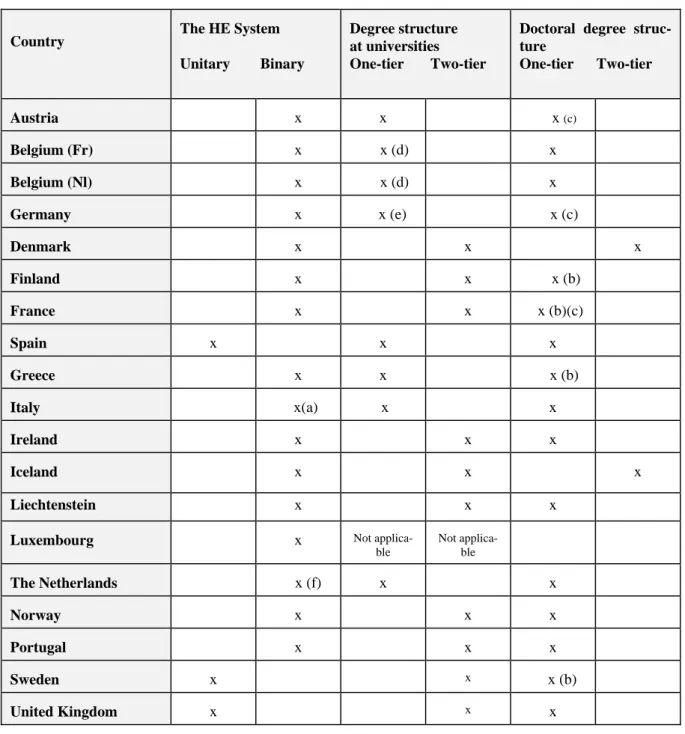
Table 1: Higher education systems and degree structures
Table 2: Higher education qualifications according to number of years of higher education Table 3: Admission to higher education
Table 4: Credit transfer systems
Table 5: Organization of the academic year
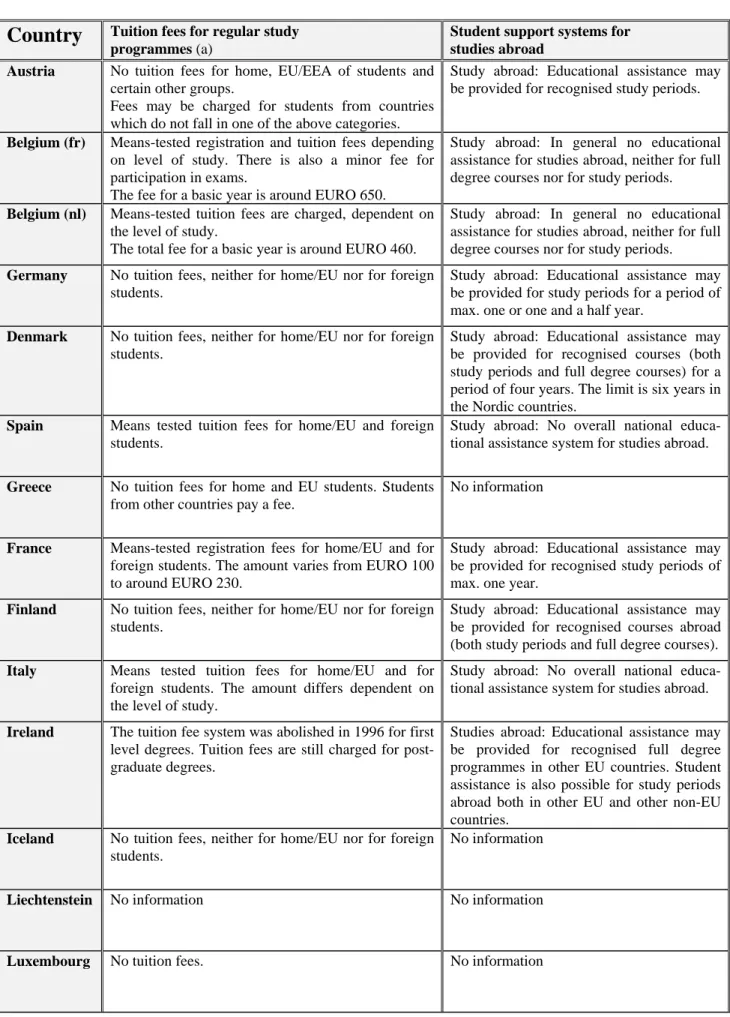
Table 6: Tuition fees and student support systems for study abroad References
This study has been based primarily on information from written sources such as the ”Guide to higher education systems and qualifications in the EU and EEA countries”, web page information from Eurydice and the individual countries as well as on information collected from national rectors’ conferences, national NARIC offices and other sources in the spring of 1999. The interpretation of the information and its presentation are, however, solely the responsibility of the author. Unfortunately, generalisations and simplifications seem un-avoidable when explaining national higher education systems in a condensed way while at the same time allowing for comparisons. I should be happy to receive remarks, corrections and supplementary information on the presentation for an improved final version.
Copenhagen, 7 June 1999 Jette Kirstein (e-mail: [email protected])
Information on learning structures in higher education in the EU/EEA
countries
1. Introduction
This study merely intends to give a fairly condensed and concentrated outline of some of the main trends of the higher education systems in the EU/EEA countries, illustrating the present institutional structures as well as national frameworks of higher education qualifications. Information will also be provided on other aspects of importance for discussions on mobility, transparency and convertibility such as credit and recognition systems, quality assurance, tuition fees and some of the more practical arrangements such as the organisational frame-work of the academic year and international student and career guidance possibilities. The study shows not only diversification of the systems, in many ways rooted in the national traditions of a specific country, but also some major common tendencies. Furthermore, major efforts seem to be used to, on the one hand, preserve the cultural diversity of a specific educa-tional system and, on the other hand, promote internaeduca-tional co-operation, mobility and pean/international employability of students and the international competitiveness of Euro-pean higher education institutions.
Summing up, comprehensive information on all these extensive and diversified developments can only give a glimpse of what is emerging in higher education in Europe. Furthermore, it should be noted that any comparison of higher education systems and identification of com-mon trends can only be considered as fairly simplifying generalisations. Thus, further infor-mation has to be sought in more extensive descriptions and comparative analyses and publica-tions on the various education systems; special reference is made to the European Commis-sion publication “A guide to higher education systems and qualifications in the EU and EEA countries and Eurydice publications”, cf. references.
2. National frameworks for higher education institutions and qualifications
2.1. Diversification of institutions
Looking world-wide into the institutional structures of the various higher education systems, one sees a highly diversified system. But two different tendencies prevail:
1) A so-called unitary or comprehensive system where most higher education is catered for by universities or university-like institutions, offering both general academic degrees and more professionally oriented programmes of various length and level.
2)
2) A so-called binary or dual system with a traditional university sector based more or less on the Humboldt university concept and a separate and distinct non-university higher education sector.
The developments towards a more comprehensive university system as well as the develop-ment of a strong non-university higher education sector have introduced a broader definition of the concept of a university distinct from the traditional continental European definition of a
university as an institution with intensive co-operation and co-ordination between teaching and learning and self-contained academic progression in studies, leaving a high degree of learning to individual studies.
In the unitary system, the study programmes offered are often much more diversified in level, character and academic and theoretical orientation than in traditional universities in a binary system. Many programmes are fairly professionally oriented with periods of practice. This system has so far been dominant in Anglo-American countries like the UK and USA and in a few other countries which have adopted similar higher education systems, e.g. Sweden. How-ever, characteristics of unitary systems can also be found in a few other countries with differ-ent educational traditions as e.g. Spain and Italy.
The binary systems of some countries have so far entailed a fairly clear difference between universities offering the theoretically and research-based programmes and the non-university institutions offering high level professionally oriented programmes. However, in many coun-tries the differences are becoming less obvious due to on the one hand a growing academic development in the non-university sector, also in the postgraduate and applied science field, and on the other hand universities’ growing involvement in covering more professionally oriented activities.
The major objectives behind the establishment of professionally oriented higher education institutions parallel to the university sector seem to be very similar in most countries, viz. - to offer more professionally oriented and vocationally/economically relevant types of
education in order to meet a labour market demand for such candidates
- to cater for a growing number of higher education applicants without substantially in-creasing governmental expenditure for higher education
- to cater for non-traditional groups of students in a more innovative manner
- to offer primarily teaching oriented programmes with some use of applied research - to upgrade existing vocationally oriented post-secondary education.
Germany was one of the first countries to introduce a distinct higher education sector with its own goals and mission alongside the universities - the Fachhochschulen - already in the 70-ies. Austria, Belgium, Finland and the Netherlands are some of the countries that have fol-lowed.
The UK, on the other hand, had a binary system until 1991 where it was partly given up and polytechnics were given the status of universities. This process was due to various develop-ments in society and in both sectors which made the differences between universities and polytechnics more and more unclear and indistinguishable
The present trend seems to be that most countries (e.g. Austria, B (Nl), B (Fr), Finland, Ger-many and Ireland) which have or are developing a distinct binary system want to keep it, but with a clear intention to build on the specific qualities and characteristics of each sector as well as to establish more flexibility, interlinkages and co-operation between the sectors. In a few other countries there seems to be a tendency to an even closer cooperation and integration of the two sectors. (e.g. Norway).
An OECD report on redefining tertiary education makes the same observations about a grow-ing diversity in European higher education systems and states that it is less important whether
countries have a unitary or a binary structure than that learners be provided with a diversity of learning structures, pathways and programmes sufficiently interrelated to permit ready move-ment between them. Furthermore, the report recommends that credit transfer systems as well as the articulation of programmes and institutions be strengthened. The latter seems to be very important allowing for fair assessment of a degree regardless of its origin from a university or a non-university institution. One of the major obstacles to recognition today is that nationally as well as internationally non-university degrees sometimes have difficulties in being recog-nised or getting credits if recognition is sought in relation to a university degree.
Annex I and tables 1 and 2 describe in more detail the present higher education structures in the EU/EEA countries with indication of some major developments.
2.2. Non-official and/or international/transnational higher education
Another observation concerning diversification relates to the development of more and more non-official, private or international institutions and/or qualifications.
The various types and forms of private and international qualifications are growing, and lack of information on the official status of an institution or qualification in the country of “origin” often makes it difficult to recognise or place them in the context of national qualifications. It seems important when discussing a common framework of qualifications to find ways to incorporate these types of qualifications. There seems to be a tendency to doubt automatically the quality of a non-official/transnational qualification because of the existence of a number of not very serious institutions. This creates difficulties and it seems important to find ways to make a differentiation and to establish quality control mechanisms.
There are few data on the number and different types of non-official educational offers in different countries as by nature they do not belong to a national system and consequently are not registered in the same way as national qualifications. The European countries have very different types of legislation concerning the establishment and recognition procedures of these institutions. However, several national as well as international initiatives seem to be under way to cope with this development and to find ways to establish some kind of international regulations or quality control.
In 1998 a study was carried out by Panthion University of Social and Political Sciences, Greece, on non-official education in Europe. The report deals with the growing evidence throughout the European Union, and southern European countries in particular, of the increas-ing non-formal educational provision at tertiary level and with the lack of adequate mecha-nisms of regulation and transparency in quality assurance and quality control as well as lack of criteria for establishing parity of the titles awarded with those of the formal higher educa-tion system in each country.
Within the framework of the Council of Europe and UNESCO/CEPES two different working parties have been established to investigate various aspects of transnational qualifications: One working party has prepared recommendations on international access qualifications, and another has been set up to deal with the issues of quality and assessment of non-official and transnational education and to propose guidelines for the recognition of qualifications granted by these types of institutions.