NO. 0920 S P D I S C U S S I O N P A P E R
Labor Laws in Eastern
European and Central Asian
Countries: Minimum Norms
and Practices
Arvo Kuddo
November 2009
Labor Laws in Eastern European and Central Asian Countries:
Minimum Norms and Practices
Arvo Kuddo
November 2009
The World Bank
Human Development Network Social Protection & Labor Team
Abstract
This study focuses on internationally accepted labor standards and norms governing the individual employment contract, including ILO conventions and recommendations, EU labor standards (Directives) and the European Community Social Charter (Charter of Fundamental Social Rights of Workers). The study also analyzes relevant provisions in the main labor law of each Eastern European and Central Asian (ECA) country associated with commencing or terminating employment and during the period of employment. References are made to relevant practices from EU15 countries. Overall, despite similar origin of country labor laws, the current set of labor regulations in the region provides a wide array of legal solutions. The minimum content of the employment contract in most ECA countries coincides, and goes
beyond, the requirements of the labor standards even in the countries that are non-signatories
of relevant treaties. Some of these entitlements, however, have the potential to adversely affect labor market participation.
Keywords: Labor law, Labor standards, Employment contract, Working time, Annual leave, Contract termination, Minimum wage.
JEL classification: J41, J80, J81, J83, K31.
Table of Contents
CHAPTER 1. NEW REQUIREMENTS TO LABOR LAWS ... 1
CHAPTER 2. ENTRY INTO EMPLOYMENT ... 8
2.1. MANDATORY PROVISIONS OF EMPLOYMENT CONTRACT ... 8
2.2. WORKING AGE AND STATUTORY RETIREMENT AGE ... 11
2.3. TERM OF EMPLOYMENT CONTRACT ... 13
2.4. PROBATIONARY PERIOD... 18
2.5. OTHER FLEXIBLE FORMS OF LABOR CONTRACT ... 19
2.6. TRANSFER OF UNDERTAKINGS... 23
CHAPTER 3. MINIMUM WAGES ... 25
3.1. STANDARDS ON MINIMUM WAGES ... 25
3.2. HOW MINIMUM WAGES ARE SET? ... 27
3.3. LEVEL OF MINIMUM WAGES AND COVERAGE ... 29
CHAPTER 4. WORKING HOURS ... 33
4.1. STANDARDS ON WORKING HOURS ... 33
4.2. PART-TIME WORK ... 35
4.3. OVERTIME ... 39
4.4. NIGHT WORK ... 42
4.5. WORK ON WEEKENDS AND PUBLIC HOLIDAYS ... 43
CHAPTER 5. LEAVE POLICIES ... 45
5.1. ANNUAL PAID AND UNPAID LEAVE ... 45
5.2. MATERNITY LEAVE ... 48
5.3. PARENTAL AND PATERNITY LEAVE ... 52
5.4. ADMINISTRATIVE LEAVES ... 55
CHAPTER 6. CONTRACT TERMINATION ... 58
6.1. MINIMUM REQUIREMENTS ... 58
6.2. PROCEDURAL INCONVENIENCES ... 62
6.3. ADVANCE NOTICE... 65
6.4. SEVERANCE PAY ... 67
6.5. SPECIAL FUNDS FOR SEVERANCE PAY ... 71
6.6. COLLECTIVE REDUNDANCIES ... 73
CONCLUSION ... 77
REFERENCES ... 80
List of Figures
FIGURE 1: TAX COMPLIANCE IN CIS, SEE, EU8, AND ECA COUNTRIES (2005) ... 7
List of Tables TABLE 1: KEY SMEINDICATORS IN THE NON-FINANCIAL BUSINESS ECONOMY IN EU27 AND EU10STATES (2005) ... 3
TABLE 2: SHARE OF EMPLOYEES WITH TEMPORARY CONTRACTS BY COUNTRY AND SEX (2Q2008)... 15
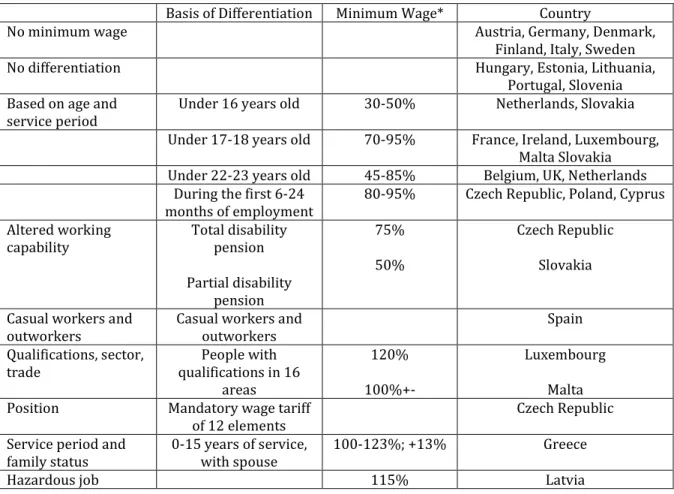
TABLE 3: MINIMUM WAGE DIFFERENTIATION IN THE EUMEMBER STATES,2005 ... 28
TABLE 4: MINIMUM WAGES,AVERAGE WAGES, AND THE OFFICIAL MINIMUM SUBSISTENCE LEVEL IN SOME OF THE COUNTRIES OF THE CIS IN 2007(PER MONTH; IN NATIONAL CURRENCY) ... 31
TABLE 5: PART-TIME EMPLOYMENT (% OF TOTAL EMPLOYMENT) BY COUNTRY AND SEX (2Q2008) ... 36
TABLE 6: PREMIUM FOR OVERTIME WORK IN EU15COUNTRIES IN 2007/08 ... 41
TABLE 7: ANNUAL LEAVE ENTITLEMENTS IN EU15COUNTRIES IN 2007/08 ... 48
TABLE 8: TOTAL FERTILITY RATE, AND CHILDREN AT PRESCHOOL INSTITUTIONS ... 49
TABLE 9: ADMINISTRATIVE LEAVES IN CISSTATES (2002 AND 2006) ... 56
TABLE 10: LABOR TURNOVER IN CISSTATES IN 2006(EXCEPT SMALL FIRMS) ... 58
TABLE 11: MANDATED NOTICE PERIOD AND SEVERANCE PAY FOR REDUNDANCY DISMISSAL AFTER 20YEARS OF CONTINUOUS EMPLOYMENT IN EU15COUNTRIES (2007/08) ... 66
LIST OF ANNEX TABLES TABLE A1: MAIN LABOR MARKET INDICATORS IN ECACOUNTRIES;STATUTORY PENSIONABLE AGE AND MINIMUM AGE OF ENTRY INTO EMPLOYMENT ... 91
TABLE A2: NUMBER OF RATIFIED ILOCONVENTIONS,ACCEPTED PARAGRAPHS OF EUROPEAN SOCIAL CHARTER,RANK IN EMPLOYING WORKERS INDEX ... 92
TABLE A3: LIST OF THE REVIEWED NATIONAL LABOR LAWS IN ECACOUNTRIES ... 93
TABLE A4: LIST OF ILOCONVENTIONS AND RECOMMENDATIONS, AND EULEGISLATION DISCUSSED IN THE PAPER ... 94
TABLE A5: CHARACTERISTICS OF EMPLOYING WORKERS INDICES IN ECACOUNTRIES ... 95
TABLE A6: PROBATIONARY (TRIAL)PERIOD, AND CONDITIONS FOR FIXED-TERM CONTRACTS IN LABOR LEGISLATION IN ECACOUNTRIES ... 98
TABLE A7: MINIMUM WAGES IN ECACOUNTRIES ... 105
TABLE A8: OVERTIME LIMITS AND WAGE PREMIUM FOR OVERTIME,NIGHT AND WEEKEND WORK ... 109
TABLE A9: ANNUAL PAID AND UNPAID LEAVE, AND FAMILY LEAVE ... 118
TABLE A10: PAID MATERNITY LEAVE,PARENTAL LEAVE AND PATERNITY LEAVE IN ECACOUNTRIES... 127
TABLE A11: ADMINISTRATIVE LEAVE ARRANGEMENTS IN ECACOUNTRIES ... 133
TABLE A12: RESTRICTED RIGHT TO TERMINATE EMPLOYMENT OF SPECIALLY PROTECTED WORKERS IN CASE OF LAYOFFS IN ECACOUNTRIES ... 136
TABLE A13: MINIMUM ADVANCE NOTICE AND SEVERANCE PAYMENTS PRECONDITIONED BY CHANGES IN THE VOLUME OF PRODUCTION,ECONOMIC AND TECHNOLOGICAL CONDITIONS AND CONDITIONS OF ORGANIZATION OF WORK, AS WELL AS BY PRODUCTION NEEDS IN ECACOUNTRIES ... 142
Acronyms and Abbreviations ALMPs Active labor market programs
BEEPS Business Environment and Enterprise Performance Survey CEE Central Eastern Europe
CIS Commonwealth of Independent States
EBRD European Bank for Reconstruction and Development ECA Eastern Europe and Central Asia
EPL Employment protection legislation
EU European Union
EUR Euro
FYR Former Yugoslav Republic GDP Gross domestic product
ILO International Labor Organization
ICT Information and telecommunication technology LFS Labor force survey
NFBE Non-financial business economy NGO Non-governmental organization
OECD Organization for Economic Cooperation and Development
Q Quarter
SEE South East Europe
SME Small and medium size enterprise USSR Union of Soviet Socialist Republics
Introduction1
As the result of systemic changes in the economy and society, rather than cyclical only, in the last two decades the world of work has radically changed in Eastern European and Central
Asian (ECA) countries.2
The labor relationship has been influenced by aspects of the sociocultural and psychological transition of the society. The ideologies of employees of the state-owned firms, or state and collective farms, have been replaced by those of owners, employers, entrepreneurs, wage earners of private firms, or the self-employed. These aspects have induced new work ethics and discipline. The previous universal and mandatory system of job security and employment stability has been replaced by a more liberal institutional framework for firings and hirings, and more flexible labor relations overall. These changes have shaped the dynamics and content of labor legislation, and labor market institutions in the region.
Transition reforms have led to rapid structural shifts in the economy by the ownership of firms, in their structure by sectors, occupations, or skills in demand. Many new alternative forms of engagement and jobs have been generated, including in the informal sector. Widespread non-participation but also unemployment has become a common phenomena. Instead of a state-run planned economy, the rules and regulations of product and labor markets now dominate.
In the socialist period, since employment was an obligation of every individual in the
working age bracket, participation rates were relatively high.3
Currently, reflecting the impact of transition reforms on labor markets, the employment rate in the region varies from 43 percent in FYR Macedonia and 45 percent in Serbia to 75 percent in Latvia and 76 percent in Estonia (in 2006; population aged 15-59; UNICEF 2008). Unemployment in turn is as high as 36 percent in Macedonia but only 5.6 percent in Lithuania (Annex Table A1). The overall business environment, including labor legislation and other labor market institutions, heavily contributes to such outcomes.
In the pre-reform period, in the USSR, the highest employment rates were registered in the Baltic republics. According to the 1989 census, in Estonia 86.1 percent of the working age population (ages 16-54/59) was engaged in “socially useful work” and 7.7 percent studied in day-time schools; 29.4 percent of pensioners also worked, including almost 60 percent in the first five years after retirement age. Employment rates were also high in other Baltic republics: in Latvia, it equaled 87 percent of working-age population and in Lithuania, 84 percent. The situation was similar in Central Eastern European countries (CEE).
1 We would like to acknowledge the valuable comments and suggestions provided by Rita Almeida, Pilar Salgado-Otónel and César Chaparro Yedro in the writing of this paper.
2 In this paper, ECA countries are divided into three subgroups as follows. EU10: Czech Republic, Hungary, Poland, Slovakia, Slovenia, Estonia, Latvia, Lithuania, Bulgaria and Romania; South East Europe (SEE): Albania, Bosnia and Herzegovina, Croatia, Montenegro, Serbia and FYR Macedonia; Commonwealth of Independent States (CIS): Belarus, Moldova, Russian Federation, Ukraine, Armenia, Azerbaijan, Kazakhstan, Kyrgyzstan, Tajikistan, Uzbekistan (no data are available on Turkmenistan). EU15 includes Austria, Belgium, Denmark, France, Finland, Germany, Greece, Ireland, Italy, Luxembourg, the Netherlands, Portugal, Spain, Sweden and the United Kingdom.
At the time of socialism, a job was guaranteed to all graduates. Moreover, graduates had compulsory assignments for their first jobs and as a rule, young specialists had to serve at least three years in their first assignment. Lengthy continuous service, possibly a lifetime spent with the same employer, was the ruling model. Fixed-term or part-time employment was an exception, surrounded by legislative restrictions and limitations, and a change of ownership, bankruptcy and group dismissals were unthinkable.
The right of the employer (e.g., the state enterprise or organization, the state or collective farm) to terminate employment was highly restricted by law and by the bureaucratic barriers created by the trade unions. A worker's lifetime-career was not split into separate periods of individual employment. Instead, it was considered as one continuum, an uninterrupted process, even if it happened to be spent with a series of state employers. This used to mean that rights and benefits, connected to seniority (e.g., notice periods, annual holiday, wage category or certain premiums) were, in general, conditional on an employee’s work experience accumulated over the course of a lifetime. Employers had incentives to retain rather than dismiss employees during slow periods (i.e., to fend against unplanned labor shortages). In the rare event that a company was restructured and employees were dismissed, they were always placed with another state enterprise (For a detailed discussion, see Lehoczky et al. 2005).
Within the region, the reconciliation of social and economic functions of the enterprise had been viewed as complementary. The better the economic results of the enterprise and the higher its productivity, the higher would be the social funds for collective consumption and the share of these benefiting each employee. Enterprise-based services and the provision of non-wage benefits included housing, preschool education, recreational facilities, catering, and medical care. Enterprises were responsible for the delivery of family benefits for working parents. Some social activities, such as housing construction or establishing kindergartens, were even incorporated into the state plans and considered to fulfill the state social program. This view contrasts with a purely economic concept of an enterprise, with the sole objective being to maximize profits.
The labor market in the economies of the former Yugoslavia was shaped by the particular legacy of the “self-management” system for enterprises, and the existence of the so-called social ownership, which led to a high level of job protection and overall rigidity, and to
widespread labor hoarding (See World Bank 2004).4
In the self-management system, changes for economic, technological or other reasons were decided upon by the worker’s council. It could be expected that workers would not opt for technological improvements and other organizational changes if job loss was a possibility.
Under the self-management system, employment relationships were not viewed as relationships between two parties, the employer and the employee. Instead, they were viewed as relationships of mutual dependency, reciprocity and solidarity between workers using the resources in social ownership and, on the basis of the right to self-management under the law, deciding
themselves on their rights and obligations stemming from the work (Končar 2008).
4
Social ownership was defined as a common property of all people working with resources in a social ownership.
Since there is strong evidence that the origin of a country’s laws is an important determinant of its regulatory approach, in labor as well as in other markets (Botero et al. 2004), these and many other historical factors have an impact on the development of labor law in ECA countries. Despite major revisions in the 1990s and 2000s, the ideology of the current labor laws (labor codes) in many countries in the region still dates back to the 1970s, 1980s or early 1990s when the laws were first adopted.
Only two ECA countries still have old laws in effect, albeit amended numerous times. The Code of Laws on Labor of Ukraine (The Labor Code) of 1971, as amended, is the principal legislative act governing employment relationships in Ukraine. It bears the legacy of socialist labor relations, providing fairly strong employee protection and detailed regulations of almost every possible aspect of labor relations (Kupets and Leshchenko 2008). The Polish Labor Code adopted in June 1974, albeit amended numerous times and harmonized with the European Union laws, remains the main and binding labor law in the country.
Various institutional arrangements can provide employment protection: the private market, labor legislation, collective bargaining agreements and, not the least, court interpretations of legislative and contractual provisions. Legislation may set only minimum standards, which are extended by collective agreements. On the basis of these norms, parties – either in a collective or in an individual agreement – are free to negotiate terms exceeding the respective minimum standards.
Labor law, which governs subordinate employment, is based on the need to protect the worker, who is regarded – legally and socially – as being in the weaker bargaining position. Furthermore, in many ECA countries, work can also be performed on the basis of civil law contracts that are used for the work carried out by self-employed persons as well as to govern short-term employment relationships.
Employment law protects workers from arbitrary or unfair treatment while addressing labor market failures to deliver efficient and equitable outcomes, such as insufficient information, potential discrimination against vulnerable groups and incomplete insurance of workers against the risks of losing their job (Pierre and Scarpetta 2007). Reforms in labor legislation primarily affect hired employment in the formal sector, although there is some evidence of spillover effects to the informal sector. Hired employment, which is largely formal, differs significantly by country: from 34-41 percent of the total employment in Albania, Azerbaijan, Georgia and Uzbekistan to 93 percent in Russia and 94 percent in Belarus (CIS STAT 2007). Employment in civil services and in public services may constitute around half or more of the hired employment in the formal sector in some ECA countries and can be governed by separate pieces of labor legislation – more generous and protective than entitlements in the Labor Code or Labor Act. For example, in Hungary, the 1992 legislation created three laws, with three different types of employment status identified as “employee”, “public employee” and “civil servant” (Lehoczky et al. 2005).
Employment in particular firms may also be governed by local (internal) regulatory acts, which define the procedure of work at the enterprise and enumerate duties in greater detail. These acts, however, may not provide conditions for the employees, which would be less favorable than those established by the main labor law, other laws and normative acts.
The main labor law provides only for minimum legislative requirements that employers and employees must comply with on commencing or terminating employment and during the period of employment. Other legislative acts, internal regulations or collective agreements may provide supplementary guarantees to workers.
To this end, this study will first focus on internationally accepted labor standards and norms
governing the individual employment contract vis-à-vis three sets of documents.5 All ECA
countries have ratified the eight ILO core Conventions (except Uzbekistan, which has not ratified Conventions No. 87 and 138). These fundamental Conventions, except on the
minimum age, will not be a topic of this report.6 As far as the ratification of other ILO
Conventions is concerned, the countries vary significantly from twelve conventions ratified by Uzbekistan and 16 conventions ratified by Georgia to 82 conventions ratified by Bulgaria
and 81 conventions by Poland (See Annex Table A2).7 Next, most ECA countries are bound
by the norms of the European Social Charter. This is a document signed by the members of the Council of Europe in Turin, on 18 October 1961 in which they agreed to secure to their populations the specified social rights in order to improve standards of living and social well-being. It was later revised in Strasbourg in May 1996. Nineteen ECA countries have ratified the Social Charter but the number of accepted paragraphs of the Charter varies from 25 in Latvia to 95 in Slovenia (Annex Table A2). In addition, Serbia, Montenegro and Russia have
signed the Social Charter.8 Finally, the EU defines minimum requirements for employment
issues through Directives. There are currently 21 Directives in force in the area of Labor
Law, the most important of which are also discussed in this paper.9
Although formally these three sets of international documents are binding only to signatories, other non-signatory countries are increasingly aligning their labor legislation according to the norms and regulations stipulated in these treaties. The basic provisions and norms listed in the above-mentioned international treaties, conventions and directives form internationally accepted minimum labor standards will be discussed in greater detail in this study. It will also summarize and refer to country implementation reports and other EU and OECD documents.
10
5 For the list of ILO Conventions and Recommendations, and EU legislation discussed in the paper, see Annex Table A1.
6 ILO core conventions include: the Freedom of Association and Protection of the Right to Organize Convention, 1948 (No. 87); the Right to Organize and Collective Bargaining Convention, 1949 (No. 98); the Forced Labor Convention, 1930 (No. 29); the Abolition of Forced Labor Convention, 1957 (No. 105); the Minimum Age Convention, 1973 (No. 138); the Worst Forms of Child Labor Convention, 1999 (No. 182); the Equal Remuneration Convention, 1951 (No. 100); and the Discrimination (Employment and Occupation) Convention, 1958 (No. 111).
7 http://www.ilo.org/global/What_we_do/InternationalLabourStandards/lang--en/index.htm. 8 http://www.coe.int/t/dghl/monitoring/socialcharter/Presentation/Overview_en.asp.
9 A Directive is a type of EU law that sets out minimum standards and requires Member States to achieve a particular result by a certain deadline without defining the precise form or method of implementation.
10 The terms “Implementation”, “Compliance” and “Effectiveness” are commonly used interchangeably; however, they are different. Implementation refers to the measures taken by states for the conventions to take effect within the framework of their domestic law. Compliance looks at whether countries in fact adhere to the provisions of the treaties and implementing measures they have undertaken. This is more difficult than measuring implementation and it goes beyond looking at domestic rules and regulations. Strict (full) compliance is rarely – if ever – achieved. The determination of the ‘acceptable level’ would in any case prove extremely
Second, the study will analyze relevant provisions in the main labor law of each ECA country, be it the labor code, law or act, law on labor relations, employment contracts act, or law on employment relationships associated with commencing or terminating employment and during the period of employment. It will also analyze the design features of some key issues attached to the individual employment contract. (The list of labor laws from 27 ECA
transition countries is presented in Annex Table A3.)11
The study is based on a comparative analysis of the main indicators/parameters of the individual contract particular to the labor law of each country. It is intended as a sourcebook for practitioners from the ECA region who are working on reforming the labor legislation in their respective countries. Relevant characteristics of the labor law in ECA countries are largely presented in the Annexes. Therefore, the study will look into suggested labor norms, regulations and entitlements through the prism of ILO-relevant conventions and recommendations, EU labor standards (Directives) and the European Community Social Charter (Charter of Fundamental Social Rights of Workers). The list of relevant ILO Conventions and Recommendations and EU labor legislation is presented in Annex Table A4. References are made to practices from EU15 countries.
The main findings of the paper are as follows:
• Despite common roots, each of the ECA countries has its own history of labor law
development, with differing labor market conditions and contrasting legal and social security systems. Some countries, such as Slovenia (1990), Hungary and Estonia (1992), Kyrgyzstan (1994), or Albania, Croatia and Uzbekistan (1995), adopted new labor laws early on while other countries aligned the existing laws to prevailing labor market conditions by amending particular provisions. At that time, the laws still reflected the legacy of the previous system when the legislation was created mainly to govern the employment relationships of persons working for large production enterprises.
• Over the last decade, a second generation of reforms in labor legislation has been
carried out in many ECA countries. Ten countries became a member of the European
Union, which required transposing the whole acquis communautaire into the national
labor law, and most other countries have also overhauled their labor laws. In recent years, new labor laws have been adopted in Estonia and Montenegro (2008), the Czech Republic and Georgia (2006), FYR Macedonia and Serbia (2005), and Armenia and Kyrgyzstan (2004). Kyrgyz Republic and FYR Macedonia amended their labor laws in 2009. Legislative reforms in this area are ongoing.
• The minimum content of labor regulations governing the employment contract in
most ECA countries coincides, and goes beyond, the requirements of the ILO
difficult due to the subjective nature of the exercise. Related to compliance is the issue of the effectiveness of a treaty. A country may be compliant, but the treaty may be ineffective in attaining its objectives (See, for example, Weiss and Jacobson 1998).
11 From Bosnia and Herzegovina (B&H), two labor laws are discussed, the Labor Code of the Federation of B&H, and the Labor Code of the Republic of Srpska (the third labor law from Brcko District was not available). Kosovo still has an interim labor law (the Essential Labor Law from 2001). The Labor Code of Turkmenistan was also unavailable.
Conventions, the European Social Charter, or EU Directives even in the countries which are non-signatories of relevant treaties.
• ECA countries are making adjustments in their regulatory frameworks that reduce and eliminate unnecessary rigidities in order to ensure that the benefits to enterprises entering the formal sector outweigh the costs of working within the rules of the formal economy. Overall, in the last two decades reform of the national employment protection legislation has focused on easing existing regulation to facilitate more contractual diversity. Fixed-term contracts, part-time contracts, on-call contracts, zero-hour contracts, contracts for workers hired through temporary employment agencies, freelance contracts, etc., have become an established feature of modern labor markets. Recent reforms are largely associated with easing the recourse to temporary forms of employment while leaving existing provisions for regular or permanent contracts practically unaltered.
• In most ECA countries, collective bargaining is not very widespread and collective
agreements are relatively weak. Thus, the role of legislation as a safeguard for workers is much more essential than, for example, in EU15 countries where the majority of workers are somehow covered by collective arrangements. Moreover, very often firm-level trade unions, if any, are under strong management influence. They are unable to push employers to increase wages or at least to pay them on time, to lessen staff reduction and to improve working conditions. Some countries, most notably Montenegro and Romania, have mixed systems with a combination of both law and collective bargaining, giving general or sectored collective agreements the force of law by creating procedures to make them ‘generally binding’.
• Nevertheless, in many ECA countries, the labor law remains in some important ways
too prescriptive for today’s realities. Employment protection legislation could be restricted to focus on core and enforceable labor standards, and to provide a greater role for trade unions and employers’ associations in order to determine employment relations through collective bargaining, with the aim of finding the balance between flexibility and security.
The study is organized as follows. In Chapter 1, we briefly discuss the factors that instigate modernization (or “flexibilization”) of the labor laws in ECA countries. In Chapter 2, we present the rules and regulations attached to commencing employment, as well as emerging forms of contractual relationships. In Chapter 3, the focus is shifted towards the establishment of the minimum wage, and implications of minimum wages on labor market outcomes. In Chapter 4, we report provisions associated with leave and holidays. Chapter 5 presents main rules and regulations associated with termination of employment contracts. The Conclusion closes with a brief assessment of the main findings and best practices.
Chapter 1. New Requirements to Labor Laws
Flexible labor legislation is essential for promoting the creation of new businesses, growth of established firms, and job creation. A task of the labor law and other labor market institutions is to balance the need to protect workers’ rights with the need to increase flexibility in the labor market, and to establish a more conducive environment for the creation of productive employment opportunities and the enhancement of social dialogue.
Most recently the European Commission, as well as ILO, has been promoting a concept of flexicurity, which is described as an optimal balance between labor market flexibility and
security for employees against labor market risks.12
Flexible and reliable contractual arrangements (from the perspective of the employer and the employee, of “insiders’ and “outsiders”) through modern labor laws, collective agreements, and work organization.
The concept is a response to the needs that European labor markets are facing. Flexicurity policies can be designed across four policy components (EC 2008):
Comprehensive lifelong learning strategies ensuring that citizens have the opportunity to have high quality initial education, that they complete at least their secondary education and that they acquire new skills and upgrade existing skills throughout their working lives. It is also about ensuring that enterprises invest more in human capital and allow employers to develop their skills.
Effective active labor market policies helping the unemployed return to work through job placement services and labor market programs, such as training and job creation. Job search courses and job clubs have been shown to be among the most effective measures in helping the unemployed find a job.
Modern social security systems, especially adequate unemployment benefits to act as a safety net when people change jobs, as well as healthcare benefits in case they fall ill and pensions for when they retire.
Further reforms in labor legislation and other labor market institutions constitute an integral part of the reforms in the overall business environment. As noted by the European Commission’s Green Paper, ”the modernization of labor law constitutes a key element for the success of the adaptability of workers and enterprises” (EC 2006). This is especially true for many ECA countries that struggle with low labor force participation and employment levels, high unemployment and a significant informal employment.
12 The term “flexibility” includes several dimensions. It can refer to employers’ desire for variable (flexible) labor inputs, in terms of numbers employed or hours worked, to match changes in demand for products or services. It can also refer to changing the tasks and skills of employees to increase productivity. The first type is sometimes described as ‘external’, ‘quantitative’ or ‘numerical’ flexibility; the second as ‘internal’, ’qualitative’; or ‘functional’ flexibility. It can also refer to employees’ desire for variable (flexible) contractual arrangements and working conditions to match changing private and domestic needs. Flexibility may concern different forms of contractual arrangement (including ‘atypical work’), particularly as regards working time, to better suit the work-life balance.
There is a large international literature documenting empirical evidence that flexible labor legislation contributes to better labor market outcomes in terms of higher overall labor force participation and employment. Stricter EPL in turn is associated with a lower turnover in the labor market and a greater prevalence of temporary jobs, with both jobs and unemployment spells tending to last longer (See, for example, Scarpetta 1996; Nickell, 1997; Elmeskov, Martin and Scarpetta, 1998; Bertola, Boeri and Cazes 1999; Blanchard and Wolfers, 2000; Nickell and Layard, 2000; Blanchard and Portugal, 2001; Young 2003; Di Tella and
MacCulloch, 2005; Allard 2005; Bassanini and Duval 2006; Amable et al. 2007).13
In 2003 the report to the European Council from the European Employment Task Force, chaired by Wim Kok, observed that as a result of rigid employment protection legislation (EPL), a two-tier labor market might emerge divided between the permanently employed and the relatively well-protected "insiders" and "outsiders", including those unemployed and detached from the labor market as well as those precariously and informally employed. The latter occupy a grey area where basic employment or social protection rights may be significantly reduced, giving rise to a situation of uncertainty about future employment prospects (EC 2003).
Empirical results from OECD countries suggest that mandatory dismissal regulations have a depressing impact on productivity growth in industries where layoff restrictions are more likely to be binding. (For an overview of the literature on linkages between job protection legislation and productivity, see Bassanini, Nunziata and Venn 2009.) Strict labor regulation is also associated with a larger unofficial economy, especially in countries with limited enforcement capacity, and with a higher share of self-employment (Grubb and Wells 1993; Botero et al. 2004; OECD 2008; Djankov and Ramalho 2009). Rigid EPL tends not only to discourage hiring and firing, but may also slow down adjustment to shocks and impede the reallocation of labor. Typically, strict EPL makes it harder for certain groups, including youth, women, and displaced older workers, to enter or re-enter the labor market, at least on an open-ended contract.
14
The European Commission “Employment in Europe 2006” report refers to findings that stringent employment protection legislation tends to reduce the dynamism of the labor market, worsening the prospects of women, youth and older workers. The report underlines that deregulation "at the margin", while keeping stringent rules for regular contracts largely intact, tends to favor the development of segmented labor markets with a negative impact on productivity. It also stresses that workers feel better protected by a support system in case of unemployment than by employment protection legislation (EC 2006).
Literature is emerging on the impact of EPL in transition countries (Riboud et al. 2002; Cazes and Nesperova 2003; Micevska 2004; Rutkowski and Scarpetta 2005). Based on the analysis of EPL in eight transition countries, Cazes and Nesporova (2003) concluded that the
13
For an overview of the findings from the 29 selected studies on the effects of EPL on labor market performance in OECD countries, see OECD 1999; and from 11 other studies, see OECD 2004.
14 In a study carried out in Argentina, Mexico and Venezuela, workers who moved from formal to informal wage employment experienced a decline in monthly earnings, while the reverse move produced the opposite effect. Moreover, moves by women from informal to formal yielded the largest gains. The lowest-earning workers had a greater incentive to opt out of formality, which increased the likelihood of remaining in poverty (Duryea et al 2006).
impact on labor market performance and labor market flows in transition countries seems to be rather modest. Based on the analysis of labor data, Haltiwanger and others (2003) found that rigid employment protection legislation is associated with lower employment rates and a higher long-term unemployment share. However, these relationships differ between OECD and transition economies. In particular, transition economies experience a weaker (less negative) relationship between the employment rate and EPL but a stronger (more positive) relationship between EPL and long-term unemployment.
The need for a shift towards more flexible work organization structures, de-standardization of employment contracts and diversification of working time arrangements in the economies in the ECA region is driven by numerous factors. Although still less than in EU15 countries, there is an increasing demand for non-standard forms of employment contracts, be it fixed-term, part-time, on-call, zero-hour, teleworking, freelance or hirees through temporary employment agencies. These can differ significantly from the standard contractual model in terms of the degree of employment and income security and the relative stability of the associated working and living conditions.
Among EU10 countries, between 54 percent in Slovakia to 78 percent in Estonia of the non-financial business economy workforce was employed in SMEs, with less than 250 persons (Table 1). Employment in the SME sector is, in particular, driven by an increasing share of micro enterprises employing less than 10 people as well as by small enterprises employing between 10 and 50 employees; it is the primary generator of new employment. In some of the ECA countries, such as the Czech Republic, Hungary and Poland, micro enterprises account for over 30 percent of the jobs in the non-financial business economy, and flexibility of labor regulations is often the key for their survival (Eurostat 2006). However, current labor laws to a large extent were designed keeping in mind the needs of large enterprises.
Table 1: Key SME Indicators in the Non-financial Business Economy In EU27 and EU10 States (2005)
Number of enterprises, 1000’ Number of persons employed, 1000’ Value added (EUR billion)
Share of SME in national total, % Number of enterprises Number of persons employed Value added EU-27 19602 85000 3090 99.8 67.1 57.6 Bulgaria 240 1318 5 99.7 72.6 53.2 Czech R. 878 2461 30 99.8 68.9 56.7 Estonia 38 305 4 99.6 78.1 75.1 Latvia 62 469 5 99.7 75.6 71.1 Lithuania 93 619 5 99.7 72.9 58.5 Hungary 556 1783 20 99.8 70.9 50.2 Poland 1405 5289 59 99.8 69.8 48.4 Romania 410 2463 13 99.5 60.8 48.4 Slovenia 88 371 8 99.7 66.4 60.6 Slovakia 42 501 7 98.8 54.0 44.5
Note: Tthe non-financial business economy excludes agriculture, public administration and other-non-market services, as well as the financial services sector.
In the last two decades, there has been a major shift from less skilled, blue-collar manufacturing jobs towards more skilled, white-collar service sector jobs. Employment in the service sector predominates throughout ECA, except Armenia and Tajikistan (CIS STAT 2008). In the pre-transition period, the service sector was extremely underdeveloped; therefore, it has had the highest capacity to absorb surplus labor.
The increased exposure to international market forces adds to the labor market risk inherent to economic growth (Boeri, Helppie and Macis 2008). So, in terms of enhancing the competitiveness of the business and investment climate, it is beneficial for the countries in transition to have a “competitive” labor law, in particular, in order to attract foreign investors. Recent studies indicate that greater flexibility in the host country’s labor market relative to that in the investor’s home country is associated with larger foreign direct investment flows (Javorcik and Spatareanu 2004).
Rapid demographic changes, including ageing of the population, intensive labor migration, prolonged education and changes in the way households now allocate their time and income, trigger the need for more flexibility for employees, too. In the interest of improving their work–life balance, workers need more choices regarding working time arrangements, especially during the “rush hour” of their life when working, caring and education pressures come together.
Also in light of EU15 experience, the countries in the region could consider adopting a lifecycle approach to work that may require shifting from the concern to protect particular jobs through stringent labor legislation to a framework of support for employment security, including social support and active labor market measures in order to assist workers during periods of transition. In particular, recent experience shows that moderately strict EPL, when combined with a well-designed system of unemployment benefits and a strong emphasis on active labor market programs, can help create a dynamic labor market while also providing adequate employment security to workers (OECD 2006). This is particularly important in a world characterized by the gradual disappearance of life-long jobs and an increasing need for job mobility.
Bargaining on terms and conditions of employment should become more market-driven in order to overcome current rigidities. In this regard, social dialogue in ECA countries should play a much bigger role in framing collective and/or firm-level solutions enabling "insiders" as well as "outsiders" to successfully transition between different employment situations while also assisting businesses to respond more flexibly to the demands of an economy and to changes in the competitive landscape. Employment protection legislation could be restricted to focus on core and enforceable labor standards and provide a greater role for trade unions and employers associations to determine employment relations through collective bargaining, with the aim to find the balance between flexibility and security.
Trade unions are best positioned to assess the situation in their enterprises and industries and, through collective bargaining, develop rules that determine such important matters as wages, benefits, and overtime and part-time work arrangements but that also strengthen surveillance in the fight against undeclared work. In light of a sharp drop in union density, and limited
labor bargaining–especially at the firm level, the role and importance of trade unions and
collective bargaining in the ECA region has significantly diminished.15
Nevertheless, employers’ organizations in the region tend to be even less organized. These associations have the difficult task of organizing enterprises not only with divergent interests but also very often are competitors or critically intertwined in a buyer-supplier relationship. In other words, at first sight it seems easier for the employers to organize given their small numbers, lower turnover rates, stronger networks and resources. In reality, employers have a more fragmented and specialized organizational structure than workers.
In countries where collective bargaining is not very widespread and collective agreements are relatively weak, the role of legislation as a safeguard for workers is much more essential than in countries where the majority of workers are covered by collective arrangements. In many ECA countries, employment laws are often ineffective because of evasion, weak enforcement
and failure to reach the informal sector. Even though labor legislation might be rigid de jure,
de facto it is not enforced and is widely evaded. Achieving greater labor market flexibility through non-enforcement of laws is not an optimal choice because it undermines the rule of law, exposes firms to costly uncertainty, impedes decent formal employment growth and leaves workers without adequate protection (Rutkowski and Scarpetta 2005).
Wage arrears are proof of the state’s inability to protect the basic rights of workers. Especially in a time of economic downturn, accumulated wage arrears tend to rapidly increase. They reached 8.7 billion rubles in Russia by the end of the first quarter of 2009 (a threefold increase over the same period a year ago), and 1.6 billion grivnas in Ukraine (US$200 million, or more than double the amount a year ago). In Latvia, in the fourth quarter of 2008, 6.4 percent of employees experienced wage arrears (Kuddo 2009). Therefore, as noted by the previous ILO Director General, “Labor legislation without good inspection is an exercise in ethics, but not a binding social discipline.” (World Bank 2007d).
Many ECA countries need to develop modern Labor Inspectorates to effectively enforce core worker rights, to supervise the implementation of labor regulations and to provide technical assistance and advisory services to enterprises. Labor inspection is more than a mere bureaucratic organization, or simply a technical “tool”. As highlighted by ILO, it is “a force for reform and a powerful means of initiating change” (ILO 2003). The 2006 ILO General Survey Report of the Committee of Experts on the Application of Conventions and Recommendations underscored this, calling on governments to recognize the “vital contribution to development and social cohesion made by an effective labor inspection service.” (ILO 2006). Labor inspectors can also play an important educative role by working with firms and workers to encourage compliance.
The enforcement of laws on minimum wages is a prime example. In Romania, enforcement reisdes with labor inspectorates and specialized supervisory bodies of the Ministry of Labor
15 The highest union density rate among ECA countries for which the data are available is reported in Ukraine, 96 percent (the percentage of wage employees affiliated to labor unions), and the lowest in Estonia, nine percent. (Lawrence and Ishikawa 2005; Kupets and Leshchenko 2008). The weighted average for union density in 10 new EU Member States is 22 percent, while the density in the 15 “old” EU Member States is 30 percent. In most CIS states, the union density rate is still relatively high, for example, around 75 percent in Russia while in Georgia only 13 percent of labor, by the government data, is unionized.
and Social Protection. In the case of Ukraine, financial bureaus, the State Tax Inspectorate, and the Procurator General and its direct reports are responsible for enforcing the minimum wage legislation (Annex Table A7). In Russia and Ukraine, trade unions are involved in monitoring compliance; and although sanctions for non-compliance are regulated, enforcement is weak, inspections are infrequently carried out due to a lack of resources and fines are rarely imposed. This would suggest that minimum wages would have little impact since the wage is paid at the discretion of the employer with little government oversight, or if there is, little cost of punishment.
International studies of best practice highlight a number of characteristics of high-quality, well-functioning labor inspection services. These include adequate resources (both staff and infrastructure); recruitment and training policies designed to attract and retain high quality inspectors; central administration to improve consistency and reduce duplication; preventive targeting of firms based on risk; integration of different types of inspections to reduce the inspection burden on business; and a focus on prevention and education as well as enforcement (OECD 2008; Schrank and Piore 2007; ILO 2006; Treichel 2004). Good cooperation is, in particular, required between the labor inspectorate and other agencies, social partners, institutions and NGOs.
It is the recommendation of ILO (2006) that advanced countries have at least one labor inspector per 10,000 employed persons and that transition countries have one inspector per 20,000 employed persons. In the CEE, Hungary, Poland and the Slovak Republic meet the recommended number of inspectors for advanced countries, and the Czech Republic meets the transition country guidelines.
In addition to significant employment in the informal sector (see, for example, Schneider 2007), significant informal employment occurs in the formal sector (hired employment) as well.16
Figure 1
According to the Business Environment and Enterprise Performance Survey (BEEPS) of firms in ECA, the average percent of workforce reported for tax purposes was 90 percent. At either extreme, Albania and Macedonia reported 75 and 79 percent, respectively, and Armenia reported 96 percent. In addition, a significant share of hired employees work without written labor contracts, in violation of labor laws. As for wages, the rate of tax compliance in 2005 was on average in ECA 86 percent of the wage bill that has to be taxed
by law and is reported by employers to tax authorities ( ).
16
On the concepts of “employment in the informal sector” and “informal employment”, see Hussmanns 2004 and ILO 2000.
Figure 1: Tax Compliance in CIS, SEE, EU8, and ECA Countries (2005)
Source: EBRD-World Bank Business Environment and Enterprise Performance Survey (BEEPS) (2005).
Thereby, by making labor regulations more flexible, the government can encourage informal businesses to operate formally and create more jobs. This expands the reach of regulation and the associated social protections to more people, benefiting especially the young and women. Finally, lack of public awareness on legal rights associated with employment may also impair the enforcement of the law in a number of countries. Workers should know their legal rights and how to enforce them. Evidence, to the contrary, suggests that public opinion is often ill-informed. Running campaigns to inform individuals of their legal labor-related rights is thus crucial. 92.1 91.1 87.9 89.8 88.0 88.8 84.6 86.4 80.0 82.0 84.0 86.0 88.0 90.0 92.0 94.0 CIS EU8 SEE ECA
Percent of w age bill reported f or tax purposes
Percent of w orkf orce reported f or tax purposes
Chapter 2. Entry into Employment
The most important document that sets out the individual rights and obligations of the parties to an employment relationship is the employment contract. This is also the most important contract in their lifetime for the majority of people in the region. In the socialist system, an employment relationship existed between the worker and state/public organization or enterprise; under current labor laws, it is between an employer (or in some countries, such as in Ukraine, defined in the law as between the owner of an enterprise, organization or
institution or the authorized agency thereof, or a natural person) and an employee.17
The existence of an employment relationship is internationally recognized in ILO Employment Relationship Recommendation No. 198 (2006) by the following:
a. The fact that the work: is carried out according to the instructions and under the control of another party; involves the integration of the worker in the organization of the enterprise; is performed solely or mainly for the benefit of another person; must be carried out personally by the worker; is carried out within specific working hours or at a workplace specified or agreed by the party requesting the work; is of a particular duration and has a certain continuity; requires the worker's availability; or involves the provision of tools, materials and machinery by the party requesting the work.
b. Periodic payment of remuneration to the worker; the fact that such remuneration constitutes the worker's sole or principal source of income; provision of payment in kind, such as food, lodging or transport; recognition of entitlements such as weekly rest and annual holidays; payment by the party requesting the work for travel undertaken by the worker in order to carry out the work; or absence of financial risk for the worker.
2.1. Mandatory Provisions of Employment Contract
Except short-term or casual work arrangements, employment relationships in all ECA countries should be legitimated in a written employment contract. The only exception is the new Georgian Labor Code from 2006, which equally endorses verbal contracts by stating that the employment agreement is executed in writing or verbally but the employer must issue a certificate of employment upon request of the employee that includes data on performed
labor, labor compensation and duration of the employment agreement. De facto oral work
17
The definition of the terms "employee", “employer”, "contract" and "employment relationship" is left to national legislation. The Directive 2002/14/EC of the European Parliament and of the Council of 11 March 2002 establishing a general framework for informing and consulting employees in the European Community provides the following definitions in very general terms: (a) "employer" means the natural or legal person party to employment contracts or employment relationships with employees, in accordance with national law and practice; (b) "employee" means any person who, in the Member State concerned, is protected as an employee under national employment law and in accordance with national practice.
agreements are common in many countries in the region. In Armenia, according to the 2004 labor force survey (LFS), 23 percent of employees in firms and organizations worked based on an oral agreement, evidence that it is necessary to deepen the legal and contractual regulation of labor relations (NSS 2005).
Council Directive 91/533/EEC of 14 October 1991 on an employer's obligation to inform employees of the conditions applicable to the contract or employment relationship stipulates that an obligation to inform employees in writing of the main terms of the contract or employment relationship shall not apply to employees having a contract or employment relationship:
(a) with a total duration not exceeding one month, and/or - with a working week not
exceeding eight hours; or
(b) of a casual and/or specific nature provided, in these cases, that its non-application
is justified by objective considerations.
In Estonia, an oral employment contract may be entered into only for employment for a term of less than two weeks while in Bosnia and Herzegovina, the duration of such an engagement without a contract can last up to two months. Slovakian legislation considers two exceptions, neither of which gives rise to an employment relationship. The first exception affects the relationship known as contract for work, defined for a contract whose duration does not exceed 300 hours per year. The second refers to contracts for work by a student, understood as those held between an employer and a student of a high school or a university, as long as the duration of work does not exceed 20 hours per week in a maximum twelve month average.
Furthermore, by the Directive, the employee must be provided with information on any change in the essential elements of the contract or employment relationship except in the event of a change in the laws, regulations and administrative or statutory provisions.
The same Directive lists the essential aspects of the contract or employment relationship of which an employee should be notified:
(a) the identities of the parties;
(b) the place of work; where there is no fixed or main place of work, the principle
that the employee is employed at various places and the registered place of business or, where appropriate, the domicile of the employer;
(c) (i) the title, grade, nature or category of the work of the employee; or (ii) a brief
specification or description of the work;
(d) the date of commencement of the contract or employment relationship;
(e) in the case of a temporary contract or employment relationship, the expected
(f) the amount of paid leave to which the employee is entitled or, where this cannot be indicated when the information is given, the procedures for allocating and determining such leave;
(g) the length of the periods of notice to be observed by the employer and the
employee should their contract or employment relationship be terminated or, where this cannot be indicated when the information is given, the method for determining such periods of notice;
(h) the initial basic amount, the other component elements and the frequency of
payment of the remuneration to which the employee is entitled;
(i) the length of the employee's normal working day or week;
(j) where appropriate, (i) the collective agreements governing the employee's
conditions of work; or (ii) in the case of collective agreements concluded outside the business by special joint bodies or institutions, the name of the competent body or joint institution within which the agreements were concluded.
This information may be given to the employee, not later than two months after the commencement of employment, in the form of: (a) a written contract of employment; and/or (b) a letter of engagement; and/or (c) one or more written documents, where one of these documents contains at least all of the information listed in (a), (b), (c), (d), (h) and (i). Permitting an employee to commence work is equivalent to entering into an employment contract, regardless of whether the employment contract has been formalized.
The minimum content of the employment contract in most of the EU10 countries coincides, and even goes beyond, the requirements of the Directive. However, legislation exists where the content does not cover the list of issues contained in the Community regulation; this is the case of the Czech and Slovakian legislation. For example, the Czech national law does not oblige to inform on employment conditions relative to the title, grade, nature or category of the work, the date of the commencement of the contract, the duration of the contract, in the case of temporary employment and, where appropriate, the collective agreements of application.
The European Social Charter asks the signatories to ensure that workers are informed in written form, as soon as possible, and in any event not later than two months after the date of commencing their employment, of the essential aspects of the contract or employment relationship. The labor legislation in most ECA countries is stricter in this regard: as a rule, an employee cannot commence work without an employment contract being signed. The Polish Labor Code stipulates that if an employment contract is not made in writing, an employer shall, not later than on the day of the commencement of work, provide the employee with written confirmation of the identities of the parties, the type of contract and the terms. The remaining information required by the Directive should be given separately, also in writing, to the employee within seven days from the date of commencement of work. In Serbia and FYR Macedonia, as in a few other countries, the employer is obliged to register all new employment contracts with the public employment service (PES), mainly for health and social insurance purposes. In the Ukraine, only a labor contract between an employee
and an individual employer should be registered with the state employment service where the individual resides within one week of actually starting work. This exacerbates the already-heavy work load of the PES, although electronic submissions of the contracts was recently instated.
Regulations for non-compliance with these provisions varies throughout the region. On one side of the spectrum, especially in the Western Balkan countries, labor inspectors can fine the employer on the spot if they find out that somebody is engaged in the firm without a written employment contract, for example, in Montenegro. On the other side, the Estonian law formalizes the process by creating two copies of the employment contract (one held by the employer and the other by the employee), national law does not state any legal ramifications for cases of non-compliance with the written contract.
2.2. Working Age and Statutory Retirement Age
The legal rights of children and young people at employment are protected in many international treaties.18
In addition, the ILO Worst Forms of Child Labor Convention No. 182 (1999) obliges each member state that ratifies the Convention to take immediate and effective measures to secure the prohibition and elimination of the worst forms of child labor as a matter of urgency. There are two classifications: (i) unconditional forms of worst child labor and (ii) hazardous work. The former is slavery and practices similar to slavery (sale, trafficking, debt bondage, serfdom, compulsory or forced labor–including compulsory recruitment of children for armed conflicts). The latter includes work that, by its nature or under the circumstances that it is carried out, is likely to harm the health, safety or morals of children.
According to the ILO Minimum Age Convention No. 138 (1973), a minimum age for admission to employment or work within its territory shall not be less than the age of completion of compulsory schooling and, in any case, shall not be less than 15 years. National laws or regulations may permit the employment or work of persons 13 to 15 years of age in light work that is (a) not likely to be harmful to their health or development and (b) not such as to prejudice their attendance at school, their participation in vocational orientation or training programs approved by the competent authority or their capacity to benefit from the instruction received.
The EU's Charter of Fundamental Rights states that the employment of children is prohibited. The minimum age of admission to employment may not be lower than the minimum school-leaving age, without prejudice to such rules as may be more favorable to young people and except for limited derogations. Young people admitted to work must have working conditions appropriate to their age and be protected against economic exploitation and any work likely to harm their safety, health or physical, mental, moral or social development or to interfere with their education.
18 “Young person” means any person under 18 years of age; “child” means any young person of less than 15 years of age or who is still subject to compulsory full-time schooling under national law; ”adolescent” means any young person of at least 15 years of age but less than 18 years of age who is no longer subject to compulsory full-time schooling under national law.
The European Social Charter prescribes that the minimum age of admission to employment shall be 15 years, subject to exceptions for children employed in prescribed light work without harm to their health, morals or education. Also the minimum age of admission to employment shall be 18 years with respect to prescribed occupations regarded as dangerous or unhealthy. The labor laws should provide additional guarantees to young people under 18 years of age, such as the prohibition of night work; the right to a minimum of four weeks' annual holiday with pay; the accounting of time spent by young persons in vocational training during the normal working hours with the consent of the employer shall be treated as forming part of the working day; and so on.
Similar provisions are stipulated in the Council Directive 94/33/EC of 22 June 1994 on the protection of young people at work, namely that the minimum working or employment age is not lower than the minimum age at which compulsory schooling as imposed by national law ends or 15 years in any event. In addition, the maximum working time of young people should be strictly limited, for example, for adolescents to 8 hours a day and 40 hours a week, and for each 24-hour period, a minimum rest period of 12 consecutive hours.
In the Soviet Union, the working age was defined as from age 16 to up to 55 for females, and 60 for males. Therefore, in CIS states the minimum age for entering into an employment contract is still 16 years (with the exception of Azerbaijan); yet, in most EU10 and SEE countries (except Albania, Bulgaria, Lithuania, Poland and Romania), it is 15 years (See Annex Table A1). For example, the Uzbek Labor code stipulates that the employment shall be allowed from the age of 16 years. A 15 year old may be employed with the written consent of a parent or a guardian.
In most ECA countries, the legal pensionable age has been kept low for a long time. Partly this is explained by the low life expectancy in the region, and partly by the poor health status of many pensioners, reflecting the extremely bad working and living conditions in the past in socialist industries, enterprises or regions. Prior to the transition, the standard legal retirement age in socialist countries (except Poland) was 55 for females and 60 for males. For retirees having a sufficient service length in the Far North and Far East regions of the USSR, the pension age was 55 years for men and 50 years for women. Furthermore, various early retirement schemes were available, thus making the effective retirement age even lower. By international conventions and treaties, the definition of a statutory pensionable age is left to the countries themselves, and currently there is a great variance of retirement ages: from 65 for both males and females in Bosnia and Herzegovina; 65 for males and 60 for females in Albania, Croatia, Georgia and Poland to the still low 60 for males and 55 for females in Belarus, Moldova, Russia and Uzbekistan (See Annex Table A1).
The differences in life expectancy at retirement between the EU15 and ECA countries are
much less pronounced.19
19 See, for example, http://data.un.org/Search.aspx?q=life+expectancy.
In some transition countries, such as in Russia, it is complicated to prove the necessity of raising the retirement age when life expectancy at birth but also at retirement is low and declining.
Given the demographic trend towards ageing of the working population, various international documents call for elimination of any legal and administrative obstacles to the employment of older workers. EU Council recommendation 82/857/EEC of 10 December 1982 on the principles of a Community policy with regard to retirement age suggests that (i) as from a specified age, and if necessary within an age limit, employed persons should be free to choose the age from which they could take their retirement pensions; and, (ii) failing that, and provided that the system stipulates a specific age for the granting of a pension, employed persons should have the right, during a specified period, to apply for a pension in advance of the prescribed age or to defer it beyond that age.
Furthermore, flexibility as regards the pension age can also be achieved whereby entitlement to a retirement pension arises after a given number of years of occupational activity or membership of an insurance scheme. Several ECA countries have incorporated relevant guarantees into their labor legislation, which will be discussed below. Some countries have introduced early retirement schemes for purely labor market reasons. For example, in FYR Macedonia, unemployed females aged 57 and over and males aged 59 and over are provided early retirement allowance until they reach the retirement age of 62 or 64 years respectively and are entitled to an old-age pension. This allowance is financed from the regular budget of the Employment Agency. By the end of 2007, beneficiaries (but only 21,300 individuals) comprised 86 percent of all the recipients of the unemployment benefit, and high costs are increasingly crowding-out alternative expenditures, such as on active labor market programs (ALMPs).
2.3. Term of Employment Contract
A contract of employment can be concluded for an indefinite term, for a fixed term or for the time of completion of a specified task. Usually in the absence of an agreement, to the contrary, an employment relation is established for an indefinite duration.
In labor legislation in the region, most attention is paid to relevant arrangements associated with fixed-term employment, which in the socialist period was deemed to be an exceptional form of employment, conditioned by the nature of work or by other objective conditions. In recent years, fixed-term work has been increasing not only in EU15 countries but in ECA
countries as well.20 Fixed-term contracts are heavily concentrated among young people (in
the EU close to 40 percent for individuals aged 15-24) and also among other labor market entrants, the unemployed, those with the lowest education levels - in general among people
who have weaker bargaining power.21
20 The term 'fixed-term worker' means a person having an employment contract or relationship entered into directly between an employer and a worker where the end of the employment contract or relationship is determined by objective conditions such as reaching a specific date, completing a specific task, or the occurrence of a specific event.
On the other hand, especially for these workers, fixed-term work can provide a bridge into employment and an opportunity to gain experience and skills. This is especially true for first time workers who lack experience and are given an opportunity to be trained and to receive an income; businesses receive incentives to hire and
21
An overview of fixed-term contracts in EU15 countries see: http://ec.europa.eu/employment_social/labour_law/docs/fixed_term_impl_eu15_en.pdf
keep theses workers once they have learnt the necessary skills. It is also more important in the primary, service and construction sectors than in manufacturing.
By Eurostat data, almost 15 percent of women employees and around 14 percent of men were
employed in jobs with fixed-term contracts in the EU as a whole in 2005.22
The main findings of the referred study on fixed-term contracts in the EU are:
A significant proportion of whom worked in fixed-term jobs because they could not find a permanent job.
• 7.5 percent of all women employees and 6.7 percent of men in 2005 were employed in fixed-term jobs involuntarily.
• The share of both women and men employed in fixed-terms jobs and those employed in such jobs involuntarily increased between 2000 and 2005.
• Almost a third of women and men employees under age 30 had fixed-term contracts in 2005, of which around 40 percent were employed in fixed-term jobs involuntarily.
• The largest shares of involuntary fixed-term employees were in agriculture, and
among those employed in private households.
• A much larger share of employees in elementary occupations were employed in
fixed-term jobs involuntarily than those employed as managers, professionals and technicians.
• Some 43 percent of women and 48 percent of men employed in fixed-term jobs
involuntarily had contracts of less than six months.
Therefore, a disproportionate number of young men and women under 30 works in jobs with fixed-term contracts, partially because they are employed on temporary training or probationary contracts. Furthermore, men and women in elementary occupations, as well as agricultural workers, are more likely to be employed in fixed-term jobs involuntarily. While among managers, only 1 percent of men and women were employed in fixed-term jobs involuntarily, among workers in elementary occupations the ratio was 14 percent for women and 15 percent for men, and among skilled agricultural workers, 17 percent and 13 percent respectively (Eurostat 2008).
In ECA countries, the proportion of fixed-term workers is 27 percent in Poland but only 1 percent in Romania. This might be partly explained by restrictions in labor legislation. In Romania, fixed-term contracts are prohibited for permanent tasks and the maximum duration is 24 months, whereas in Poland there is no restriction on the use and maximum duration of fixed-term contracts. The main reasons for working in temporary jobs (fixed-term contracts) are commonly that respondents cannot find a permanent job or that they have a contract for the probationary period.