QUANTITATIVE ANALYSIS OF ELEMENTARY PRE-SERVICE TEACHER AND EDUCATOR PREPARATION PROGRAM PERFORMANCE ON THE MISSOURI
CONTENT ASSESSMENTS BY RACE, ETHNICITY, GENDER, PROGRAM SELECTIVITY AND MINORITY-SERVING INSTITUTION STATUS ________________________________________________________________
A Dissertation Presented to
the Faculty of the Graduate School at the University of Missouri-Columbia
____________________________________________________________ In Partial Fulfillment
of the Requirements for the Degree Doctor of Education
______________________________________________________ by
MICHAEL A. McBRIDE
Dr. Timothy J. Wall, Dissertation Supervisor DECEMBER, 2016
The undersigned, appointed by the dean of the Graduate School, have examined the dissertation entitled
QUANTITATIVE ANALYSIS OF ELEMENTARY PRE-SERVICE TEACHER AND EDUCATOR PREPARATION PROGRAM PERFORMANCE ON THE MISSOURI
CONTENT ASSESSMENTS BY RACE, ETHNICITY, GENDER, PROGRAM SELECTIVITY AND MINORITY-SERVING INSTITUTION STATUS presented by Michael A. McBride
a candidate for the degree of doctor of education
and hereby certify that, in their opinion, is worthy of acceptance.
________________________________________________ Professor Timothy Wall
________________________________________________ Professor Carole A. Edmonds
________________________________________________ Professor Matthew Symonds
________________________________________________ Professor Dave Oehler
DEDICATION
I would like to begin my dedications with my wife, Brooke. You have exhibited patience, kindness and understanding through this entire process. I hope that the
completion of this dissertation will bring you as much joy and relief as it does me. Thank you for being a wonderful wife, mother to our son, companion and confidant. You are my inspiration and the shade tree in our garden. I love you B, always and forever.
To my son Bryant, who even at the age of 9 months is an inspiration to me, I say thank you. You are proof of so much goodness to me. Wherever you go, whatever you do, whoever you become know that I love you and always will, no matter what.
I must thank my parents for preparing me for this. My father taught me how to work hard and to love family. He is a great example of what a man and father should be and I hope to live up to him as much as I am able. My mother taught me how to dream and believe in myself, to show kindness and patience. She is an example of what love should be. I could not have asked for a better childhood and I thank you both for it. I love you both more than I say.
To my siblings, I love all of you. Jimmie, you’ve taken care of me in so many ways, trying to show me how to be a grown up for 40 years and taking care of nearly every vehicle I’ve ever owned. Angela, you have been an enormous inspiration to me. You have truly shown that faith is power. And to Michele, Bruce, Claire, Autumn, and Vivian…all I can say is that I love all of you very much. Thank you for welcoming me and making me part of your family for two summers. Hanging out with you was my favorite part of those summers!
To Justin, you are an inspiration to me and everyone you know. You are proof that when the worst happens, you can rise above it. You have been to the other side of the world and back. I hope you have many more travels.
To the stockmen, my oldest friends, you’re still my brothers. To TJ, Leroy, Erik, you are the guys I will never forget and the times we spent together were some of the best of my life. To Dan, you taught me that life is very, very fragile, even for the best people I know. It took me years to learn this lesson. I hope to see you again someday.
ACKNOWLEDGEMENTS
I would like to acknowledge Dr. Tim Wall, my mentor, advisor and friend. If I have success in this program or as a professional it is due to you. Also, I would like to acknowledge the kindness and generosity of Dr. Carole Edmonds, who has helped so many reach this goal. Finally, I would like to thank Dr. Dave Oehler, Dr. Matt Symonds, and all of the faculty and colleagues who have contributed to this work.
TABLE OF CONTENTS
ACKNOWLEDGEMENTS ... ii
LIST OF TABLES ... viii
LIST OF FIGURES ... ix
ABSTRACT ...x
Section 1. INTRODUCTION TO THE BACKGROUND OF THE STUDY ...1
Statement of the Problem ...3
Purpose of the Study ...5
Research Questions ...6
Conceptual Framework ...7
Accountability: Function and issues ...7
Cultural synchronicity and accountability ...9
Design of the Study ...10
Setting ...10
Participants ...12
Data collection tools ...12
Data analysis ...13
Assumptions ...16
Design controls ...17
Definitions of key terms...18
Significance of the Study ...21
Practice ...21
Impact on educator preparation programs ...21
Minority-serving institution educator preparation programs ...22
Scholarship ...22
Achievement gaps by race/ethnicity ...22
Achievement gaps by gender ...23
Summary ...23
2. PRACTITIONER SETTING FOR THE STUDY ...25
History of Organization ...26
Department of Elementary and Secondary Education ...26
Educator preparation program history ...26
Organizational Analysis ...28
Symbolic frame ...29
Structural frame ...30
Human resources frame ...31
Political frame ...32
Leadership Analysis ...33
Leadership: Styles approach ...33
Leadership and action logic ...36
Implications for Research in the Practitioner Setting ...37
Accountability ...37
Cultural synchronicity ...37
Summary ...38
3. SCHOLARLY REVIEW FOR THE STUDY ...39
Introduction to the Problem ...39
Purpose of the Study ...40
Conceptual Framework ...40
Accountability theory ...40
Cultural synchronicity theory ...41
Elementary Education Pre-Service Teachers ...41
International elementary education pre-service teachers ...42
National elementary education pre-service teachers ...43
Missouri and elementary education pre-service teachers ...45
Successful preparation of elementary teachers ...47
Reported surplus of elementary teachers ...49
Evidence for the need for elementary education teachers. ...50
Specific areas of need ...51
Elementary teacher certification and race ...55
Jim Crow schools ...56
Race and high school graduation ...56
Achievement gaps and school environment ...57
Assessment of Educator Preparation Programs ...59
Educator preparation program types ...59
Educator preparation program accountability policy ...59
Educator preparation program accrediting organizations ...61
External pressures ...62
Educator preparation program detractors...63
Missouri Educator Gateway Assessments ...63
Accountability Foundations ...67
Accountability: Shortcomings ...67
Accountability: Potential solutions ...70
Accountability and pre-service teacher certification ...70
Accountability and educator preparation programs ...72
Summary ...73
4. CONTRIBUTION TO PRACTICE ...75
Quantitative Analysis of Missouri Teacher Licensure Exams through the Lens of Social Justice ...77
References ...129
5. CONTRIBUTION TO SCHOLARSHIP ...132
Elementary Pre-Service Teacher and Educator Preparation Program Performance on the Missouri Content Assessments by Race, Ethnicity, Gender, Program Selectivity and Minority-Serving Institution Status ...133
6. SCHOLARLY PRACTITIONER REFLECTION ...168
Educational Leader ...168
Organizational analysis ...168
Growth as a leader ...170
Educational leadership opportunities ...173
Campus leadership ...173
State level leadership ...174
National level leadership...175
Scholar ...176
Scholarly feedback ...176
Reading and writing as a scholar ...177
Seizing opportunities ...178
Teaching ...179
Diversity and social justice ...180
Conclusions ...181
REFERENCES ...183
APPENDIX ...201
IRB APPROVAL ...201
LIST OF TABLES TABLES
1. Table 1. Research Questions and Null Hypotheses………. 6 2. Table 2. Summary of Analyses Used by Research Question……….13
LIST OF FIGURES FIGURES
1. Figure 1. Preparation Program Foci and Potential Outcomes……… 9
ABSTRACT
This study investigated whether differences existed in Missouri teacher
certification assessment scores based on Elementary Pre-Service Teacher race, ethnicity and gender, as well as the selectivity level or Minority-Serving Institution status of Educator Preparation Program attended by the Elementary Pre-Service Teacher. These assessment scores were used as accountability measures in Missouri. Elementary Pre-Service Teachers were certified to teach in Missouri based partially on their certification assessment scores. These scores were also used to determine which Educator Preparation Programs maintain state accreditation.
The researcher focused on one of the Missouri teacher certification assessments, the Elementary Education Multi-Content Assessment. This assessment was required for any Elementary Pre-Service Teacher seeking elementary education teacher certification in Missouri. The Multi-Content Assessment includes four subtests covering subject matter in: English; mathematics; science; and social studies.
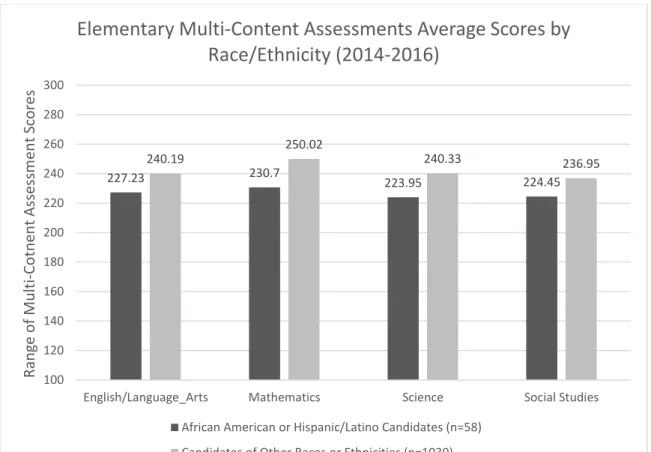
This study concluded that there were significant differences in scores based on: race and ethnicity; gender; preparation program selectivity level; and preparation program status as a Minority-Serving Institution. Furthermore, the study found that modifying mandated cut scores could mitigate race/ethnicity-based differences for three of the four subtests. The study also indicated that Pre-Service Teachers who identified as African American or Hispanic were more likely to fail at least one subtest and therefore fail to be recommended for teacher certification. The researcher recommended these assessments, their cut scores and accompanying accountability policies be reviewed.
SECTION ONE
INTRODUCTION TO THE BACKGROUND OF THE STUDY Various accountability constructs have existed to verify that Elementary Pre-Service Teachers (PSTs) and their Educator Preparation Programs (EPPs) met standards set forth by state and federal agencies (Angrist & Guryan, 2004; Berk, 1995; Blackford, Olmstead, & Stegman, 2012; Chung, 2008; Darling-Hammond, Amrein-Beardsley, Haertel, & Rothstein, 2012; Department of Elementary and Secondary Education, 2014a, 2014b, 2015b, September 23, 2016e; Duckworth, Peterson, Matthews, & Kelly, 2007; Edmonds, 2014; Flippo & Canniff, 2000; Henry, Kershaw, Zulli, & Smith, 2012; Larsen & Calfee, 2005; U.S. Department of Education, 2000). Standards for PSTs and EPPs typically included benchmarks based on PST standardized exam scores (Wakefield, 2003). This was the case in Missouri (Department of Elementary and Secondary Education, 2014b, 2015b, September 23; Gitomer, Latham, & Ziomek, 1999; Honawar, 2007; Sawchuk, 2010; Wakefield, 2003).
To be recommended for teacher certification in Missouri PSTs must have passed a certification exam in a subject matter area required by the Missouri State Board of
Education (MOSBOE) and enforced by the Department of Elementary and Secondary Education (DESE) (DESE, 2014b). The MOSBOE instituted the Missouri Content Assessments (MCA) for this purpose in September, 2014 (DESE, 2014b). These assessments were subcontracted for development by a national testing company, Evaluation Systems Pearson (Evaluation Systems Pearson, 2009).
The Missouri Content Assessments (MCA) were the final step in a line of accountability measures for PSTs. These other accountability measures included grade
point averages, general education assessments, performance evaluations, observational assessments, and a work styles inventory (DESE, 2014b).
EPPs were accredited by state and federal entities to ensure a quality educator workforce (Council for the Accreditation of Educator Preparation, 2016; Department of Elementary and Secondary Education, 2014a). These accreditation methods sought to maintain accountability among EPPs. EPP accountability was based on a variety of formal and informal assessments (Ameter, Douglas, Ferris & Goka, 2006; DESE, 2014a). These measures ranged from standardized tests to observation forms to performance assessments (Larsen & Calfee, 2005). In many states, including Missouri, failure to meet prescribed accountability benchmarks began a process to remediate the issue or close the EPP (DESE, 2014a). DESE has used aggregate testing data for this purpose since 2014 (DESE, 2014a).
However, Wakefield (2003) indicated that there was never a strong relationship between standardized testing scores and teacher performance. Also, PSTs from
historically marginalized populations, such as individuals of African American or Hispanic descent, performed more poorly than PSTs who were White on high-stakes standardized examinations (Edmonds, 2014; Horn, 2003; Nettles, Scatton, Steinberg & Tyler, 2011; Taylor, 2013; Wakefield, 2003; Wall, 2008). Standardized assessments were therefore barriers to PSTs of color becoming teachers (Bennett, McWhorter, & Kuykendall, 2006; Horn, 2003). In addition, since these scores were typically tied to EPP accountability measures, these assessments could have had a disproportionately negative impact on (EPPs) that cater to a more diverse PST population.
Statement of the Problem
The problem under investigation was the lack in knowledge of whether
differences existed in Missouri Content Assessment scores between PSTs from different racial and ethnic backgrounds and gender identities. In addition, there was a lack of knowledge of whether a difference existed in Missouri Content Assessment scores between PSTs who attended EPPs of different selectivity levels and EPPs with different statuses as Minority-Serving Institutions (MSI).
The Missouri Educator Gateway Assessments (MEGA) were a suite of
assessments utilized for Missouri teacher preparation accountability purposes for both PSTs and EPPs (DESE, 2014b). These assessments included; two standardized exams, the Missouri General Education Assessment (MoGEA) and the Missouri Content Assessments (MCA); a work-style inventory known as the Missouri Educator Profile (MEP); an observation form completed during student teaching known as the Missouri Educator Evaluation System (MEES), and a performance assessment known as the
Missouri Pre-Service Teacher Assessment (MoPTA). Of the two standardized exams, the MoGEA has been researched for significant differences in PST scores based on race, ethnicity and gender. College students were required to pass the MoGEA to enroll in any Missouri EPP (DESE, 2014b).
The MoGEA was a general education assessment developed by Pearson Education to act as a gatekeeper to teacher preparation. Pearson was a large,
standardized test development company with assessments used by over 450 credentialing organizations worldwide (Evaluation Systems Pearson, 2009). Pearson assessments were used for accountability purposes in teacher preparation, the military, government hiring,
healthcare, and other fields (Evaluation Systems Pearson, 2009). Edmonds (2014) analyzed the MoGEA and concluded that female PSTs and PSTs of color received scores that were statistically significantly lower than those of White or male PSTs, which precluded female PSTs and PSTs of color from enrolling in Missouri EPPs. The MoGEA, Edmonds (2014) concluded, decreased the diversity of the educator labor supply in Missouri.
While the MoGEA was the gateway assessment to enter educator preparation programs in Missouri, the Missouri Content Assessments was required for teacher certification and are taken near the conclusion of educator preparation programs. These assessments covered different content areas, one for each type of teacher certification in Missouri. A passing score was required in each content area test before PSTs were certified to teach in that area (Pearson, 2015). The Missouri Content Assessment was first implemented in September 2014 (DESE, 2014b). This study investigated the presence of statistically significant performance differences for PSTs in the Missouri Content Assessments based on PST race, ethnicity or gender and the selectivity level and MSI status of the EPP which the PST attended.
Following Edmonds’ (2014) research about the MoGEA, this study sought to fill a similar gap in the literature regarding the Missouri Content Assessments. In particular, this research aimed to determine if these assessments disproportionately penalized EPPs with more diverse PST populations. The full effect of the MCA’s on the diversity of Missouri teachers was not determined. But, if the effect of these assessments was similar to the MoGEA and other standardized exams, the MCA’s may have had a winnowing effect on Missouri teacher racial, ethnic and gender diversity. Also, MSI status of each
educator preparation program and the selectivity level of each institution were analyzed as well in regards to PST Missouri Content Assessment scores.
DESE used the Missouri Content Assessments as accountability measures both for PSTs and their EPPs. However, since assessments of this type historically shown significant differences in achievement between historically marginalized and non-marginalized populations, these assessments may have had negative unintended consequences in two ways: reducing PST diversity; and reducing the likelihood that EPPs serving diverse PSTs had an equitable chance to score well on these accountability measures.
While the percentage of teachers of color increased since 1988, the percentage increase in K-12 students of color was larger (Villegas, Strom, & Lucas, 2012). Recent research indicated that learners of color learned better from teachers of color (Goldhaber & Hansen, 2010; Irvine, 1990, Wakefield, 2003). Therefore, the closure of this gap was vital to equitable education (Ravitch, 2013). In addition, state and federal accountable strategies judged EPPs by how well their program completers fared on standardized exams (U.S. Department of Education, 2000). The problematic issue was that PSTs of color generally fared less well on standardized exams than White counterparts (Edmonds, 2014; Flippo & Canniff, 2000; Nettles et al., 2011; Wall, 2008).
Purpose of the Study
The purpose of this study was to fill the gap in the knowledge as to whether differences existed in PST scores on the Missouri Content Assessments (MCA) based on PST racial, ethnic and gender diversity or based on the selectivity level or MSI-status of the EPP the PST attended. The following research questions in Table 1 guided inquiry.
Research Questions Table 1
Research Questions and Null Hypotheses
Research Question Null Hypothesis
1. What are the descriptive summary statistics for the study participants when broken down by race, ethnicity, gender, institutional selectivity and MSI status?
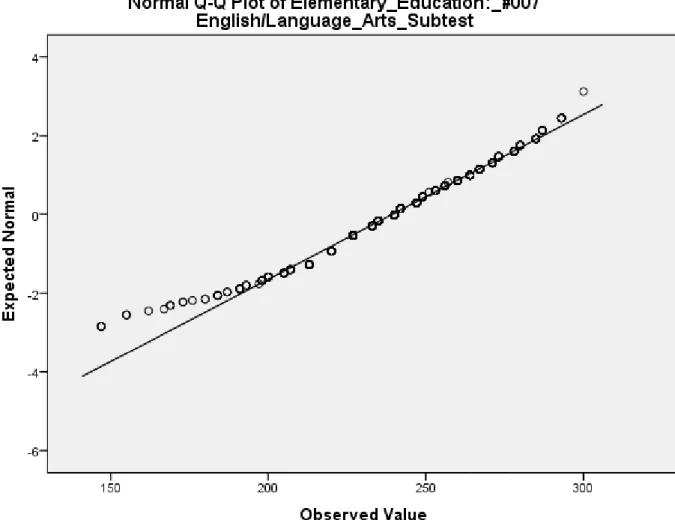
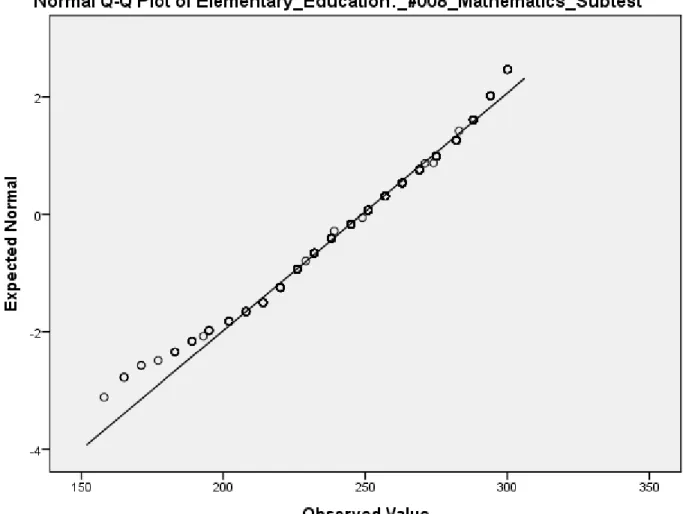
2. Do statewide scores on the Elementary
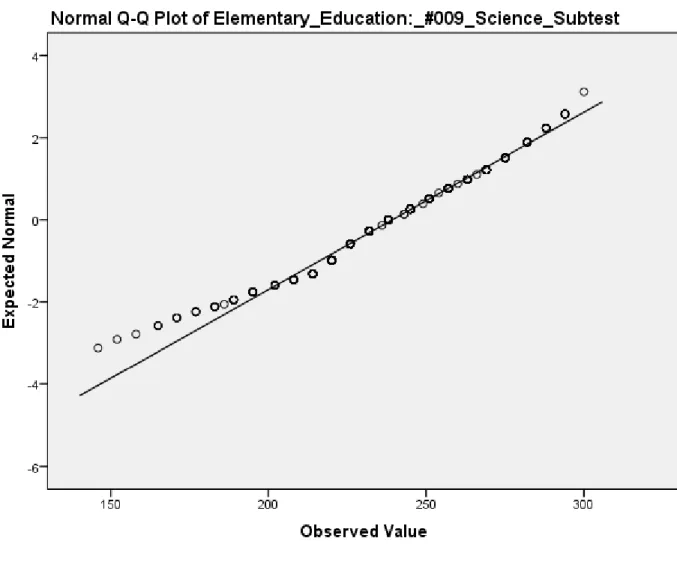
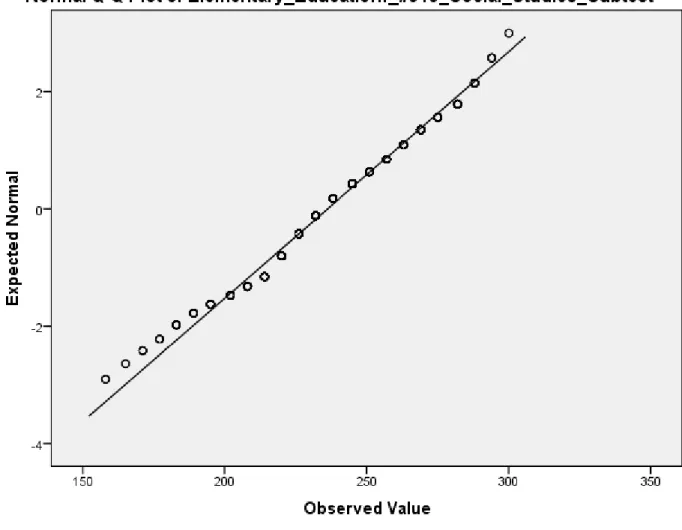
Education MCA subtests since September 2014 represent a normal distribution?
H01: Statewide scores on the Elementary Education MCA since September 2014 represent a normal distribution.
3. Is there a difference in Elementary Education MCA subtest scores for the following
demographic variables? a. Ethnic origin b. Race
c. Gender
H02: There is no difference in Elementary Education MCA mean subtest scores between demographic variables.
4. When composite ACT score is used as a covariate, is there a difference in Elementary Education MCA subtest scores for the following demographic variables?
a. Ethnic origin b. Race
c. Gender
H03: There is no difference in Elementary Education MCA mean subtest scores between demographic variables when composite ACT is used as a covariate.
5. How will establishing cut scores at different preset Standard Error of Measurement (SEM) levels affect PSTs?
H04: Establishing cut scores at different preset Standard Error of Measurement (SEM) levels will not affect the PST licensure results in populations that have been historically marginalized
6. What is the likelihood of racially and ethnically diverse PSTs earning access to the profession because of MEGA?
H05: There is no difference between PSTs of diverse backgrounds and White PSTs’ abilities to access the teacher profession due to MEGA 7. Is there a difference in Elementary Education
MCA subtest scores for the following institution-level variables?
a. Selectivity level b. MSI status
H06: There is no difference in Elementary Education MCA mean subtest scores between institutional variables
Note. MCA = Missouri Content Assessment; MSI = Minority-Serving Institution; MEGA = Missouri Educator Gateway Assessment; PST = Pre-Service Teacher.
Conceptual Framework
This study focused on the use of accountability strategies by accrediting bodies on PSTs seeking certification and Educator Preparation Programs (EPPs) seeking
accreditation. These accountability measures were utilized by the MOSBOE and DESE to ensure that PSTs were prepared to teach and that EPPs prepared PSTs according to standards (DESE, 2014b). To better illustrate the construct of accountability, this section reviewed: accountability as a conceptual framework; how it operates; problems
associated with current accountability strategies; and potential fixes. Accountability: Function and Issues
Anderson (2009) stated that accountability is a relationship between the accounter and the accountable. In this relationship the accounter held the power. The accounter sought to reward or punish good or bad outcomes by the accountable. According to this theory, these rewards and punishments ensured the accountable follows due diligence to ensure work is considered good by the accounter. In the best case scenario, the
However, the use of the accountability construct has led to negative outcomes on both sides of the relationship. Accounters may have appeared to be blameless when accountees produced data that failed to meet goals (Anderson, 2009). This may have led accountees to unethical behavior, such as hiding results or obscuring unfavorable
information. These unintended consequences may have decreased validity in the accountability process.
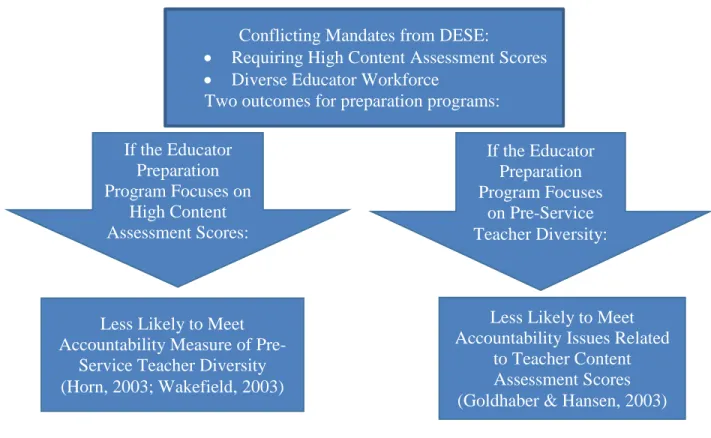
This accountability conceptual framework may have led to a perception of hopelessness among EPPs. DESE has indicated that EPPs were responsible both to recruit and retain PSTs from diverse backgrounds and ensure that these PSTs passed content assessments at a level deemed appropriate. Some EPPs may have considered both of these endeavors important but difficult to attain simultaneously. The following figure was influenced by research from Goldhaber and Hansen (2010).
Figure 1. Preparation Program Foci and Potential Outcomes
Figure 1. Accounters MOSBOE and DESE required that EPPs recruit and complete PSTs with high content assessment scores and diversity. Often, these goals were mutually exclusive and EPPS that focus on one were more likely to face accountability issues related to the other.
Cultural Synchronicity and Accountability
Cultural synchronicity referred to favorable academic outcomes of pairing
students and teachers based on cultural similarity (Irvine, 1990). This was especially the case among students from historically marginalized populations (Allen, et al., 2011). African American teachers were more likely to set higher expectations for African American students and attribute racial achievement gaps to lower expectations
(Uhlenberg and Brown, 2002). Pitts (2007) reported that high school seniors achieved higher graduation exam scores in districts with a similar race and ethnicity ratio between
Conflicting Mandates from DESE:
Requiring High Content Assessment Scores Diverse Educator Workforce
Two outcomes for preparation programs:
If the Educator Preparation Program Focuses on Pre-Service Teacher Diversity: If the Educator Preparation Program Focuses on High Content Assessment Scores:
Less Likely to Meet Accountability Measure of
Pre-Service Teacher Diversity (Horn, 2003; Wakefield, 2003)
Less Likely to Meet Accountability Issues Related
to Teacher Content Assessment Scores (Goldhaber & Hansen, 2003)
assessments were more likely to remove diverse teachers from the workforce,
student/teacher cultural matches were more important to student success than teacher licensure exam scores. These findings indicated that accountability measures focused solely on subject matter assessment scores were more likely to lower achievement among Pk-12 students from historically marginalized populations.
Design of the Study
This study employed a quasi-experimental design, as participants were selected by convenience and not randomly assigned to groups (Creswell, 2014). Randomly assigning PSTs to different EPPs, based on selectivity and Minority-Serving Institution (MSI) status would have resulted in an experiment with more valid data. However, this would have removed a great deal of personal choice on the part of the PSTs and was impossible. The researcher contacted assessment coordinators at educator preparation programs around Missouri and requested PST Missouri Content Assessment data, as well as test taker demographic data, with all identifying student data removed.
Setting
The setting of this study was a public, four-year EPP located within Missouri. This study included quantitative data since the test scores were reported on a range of 100-300 (DESE, 2014b). Even though the Missouri Content Assessments included a variety of exams that covered every possible certification a Missouri teacher could earn, the passing score for any of these exams was 220. This value was a Panel Based Cut Score (PBCS), meaning that Pearson suggested this score be the passing score for each test (DESE, 2014a). This score was on a scale of 100-300 (DESE, 2014a). The
ethnicity, gender, selectivity of EPP attended and Minority-Serving Institution (MSI) status of EPP attended (Edmonds, 2014).
Pearson considered four other potential cut scores besides the PBCS for each MCA. Pearson set these potential cut scores at one and two standard errors of measure (SEM) above and below the PBCS. A Standard Error of Measurement is the standard deviation of test scores one hypothetical student would provide if they took a test many times. In other words, the Standard Error of Measurement is a way to estimate how reliable the test is towards estimating a concept known as a true score. This true score is what the student should receive on the test if all factors such as fatigue and sampling error were held as constants (Thorndike, 2005). The smaller a Standard Error of Measurement, the more accurate a test is at estimating a test taker’s true score. The Standard Error of Measurement also acts like standard deviation. One Standard Error of Measurement below and above the PBCS should include 68% of all attempts if the same student took the test many times. Two standard errors of measure below and above the PBCS should capture 95% of attempted scores by that student. Even if a PST’s
hypothetical true score was above the PBCS, due to a variety of factors the PST may score lower on that day on that assessment and fail to pass the assessment. Lowering the cut score from the PBCS to a score one or two SEM below the PBCS would substantially increase the probability that the PST would receive a passing score regardless of their performance on an individual day.
The ACT was used as one of the covariates in this study. The ACT was a standardized multiple choice assessment commonly used as a college entrance
have taken the ACT. If a PST did not have an ACT score they would not have been used in this analysis. In addition, individuals with low socioeconomic status (SES), female and non-White test takers typically scored lower on the ACT (Wall, 2008). Using ACT as a covariate would have helped to remove the impact of Socioeconomic Status (SES) from the study.
Participants
These PSTs were of different races, ethnicities and genders at EPPs of different Minority-Serving Institution (MSI) status and selectivity levels, who took the Elementary Education Missouri Content Assessment beginning in fall 2014.
Participants were chosen from PSTs at EPPs in Missouri because these were the only PSTs affected by the Missouri Content Assessments. PSTs enrolled at MSI’s or non-MSI’s were chosen because MSI’s were vital to the process of creating a racially and ethnically diverse teacher workforce (AACTE, 2013; Brooks et al., 2012). Also, MSI PSTs were less likely to pass standardized exams (Steinberg & Weiner, 2015). These were the students most likely to be deleteriously affected by the Missouri Content Assessments. In addition, all standardized test scores were related to each other,
including ACT (Wall, 2008). Educator preparation programs which had different levels of selectivity used different ACT scores for initial student acceptance (Wall, 2008). Therefore, EPP selectivity level of each PST was collected as well.
Data Collection Tools
For data collection tools, the researcher was dependent on educator preparation program assessment staff who reply to the request for data. These data included an excel sheet with lists of student data, including race, ethnicity and gender, along with Missouri
Content Assessment scores. It excluded individual PST identifying information. Since no individual student data was viewed, the researcher applied for institutional review board exempt status. In the hopes of avoiding program embarrassment due to lack of PST diversity, or the inability to produce PSTs who successfully passed these exams, no program was identified by name. There were two Minority-Serving Institutions (MSI) in Missouri, and data from these programs were aggregated to avoid program identification. Data Analysis
The researcher analyzed this data with the statistical analysis software Statistical Package for the Social Sciences (SPSS) to generate descriptive statistics and quantitative results via an ANOVA (Field, 2013). If differences in groups were found, the researcher conducted Tukey post hoc analyses to determine which specific groups had significant differences (Neter, Kutner, Nachtsheim & Wasserman, 1996). Finally, the researcher used a Z test of proportions to determine if there was a statistically significant difference in the percent of PSTs able to pass each assessment based on race, ethnicity, gender, EPP selectivity or EPP MSI status (Milton & Arnold, 2003).
Table 2
Summary of Analyses Used by Research Question
Research Question Analysis Strategy Independent and Dependent Variables and Covariate
Data Visualization Strategy
1. Participant
descriptive summary statistics
Frequencies Pie chart, by race,
ethnicity, gender, selectivity and MSI status
2. Distribution Kolmogorov-Smirnov and data displays
Q-Q plots 3. Demographic
variable differences
Independensamples t-test
IV: PST race, and ethnicity, gender DV: MCA subtest scores t-test tables Histograms of mean score differences between groups 4. Demographic variable differences
ANCOVA IV: PST race,
ethnicity, gender DV: MCA subtest scores
CV: ACT score
ANCOVA table
5. Cut score effect on demographic variables
Z-test of proportions IV: Proportion of PSTs from each racial/ethnic/gender subgroup who passed MCA at each potential cut score DV: Z score giving probability that any difference between PST groups
happened by chance
________________________________________________________________________
Note. MCA = Missouri Content Assessment; MSI = Minority-Serving Institution; MEGA = Missouri Educator Gateway Assessment; PST = Pre-Service Teacher.
Limitations
Limitations included in this study mainly focused on the EPPs participating. There were no financial or technical incentives for EPPs to participate. Assessment directors from each EPP sent data only if each director’s supervisors approved the researcher’s request, and if the assessment directors had time and inclination to reply.
Another limitation of the EPP-based analysis was that PSTs self-selected which program they attended. This analysis would have had higher validity if the PSTs were randomly assigned to each program. That would not be possible. Finally, while a major focus of this study had to do with PST assessment performance, this study also focused on the average performance of all PSTs from different EPPs. A related limitation was that there were only two Minority-Serving Institutions (MSI) in Missouri. Both had
6. Diverse PSTs’ abilities to pass the MEGA exams
Chi-squared test IV: MCA passage status, PST race, ethnicity and gender DV: Difference between PSTs of different
races/ethnicities/gen ders to pass MCA
Histogram percentages of diverse PSTs from different institutions as education major passing the MCA
7. Institution variable differences
ANOVA, Post-Hoc Tukey, independent-samples t-test
IV: Selectivity, MSI status
DV: MCA subtest scores
ANOVA, Tukey and t-test tables Histograms of mean score differences between groups
One final limitation was the overlap of MSI and open-enrollment status. The only open-enrollment EPPs included in this study were also the only MSIs involved.
Therefore, conclusions may be difficult to interpret as to whether they were influenced by an EPPs status as an MSI or as an open enrollment EPP.
Delimitations
Only PSTs who attended Missouri EPPs between 2014 and 2016 and attempted the Elementary Education Multi-Content Assessment were included in this study. It was possible for PSTs who completed preparation programs in other states to take the Multi-Content Assessments and seek certification to teach in Missouri. These data were not included in the study. There also was no opportunity to randomly assign PSTs to different EPPs (Creswell, 2014).
In addition, there were 56 Missouri Content Assessments (DESE, 2014). This study only focused on the four Elementary Education Multi-Content Assessments required of Elementary Education PSTs.
These PSTs must have been age 18 or older and must have sought certification since September 1, 2014. This is when the Missouri Content Assessments became required for Missouri teacher certification (DESE, 2014).
Assumptions
The assumptions related to this study were focused on the Missouri Content Assessment scores. The researcher assumed that these scores represented the PSTs’ best efforts. Also, the researcher assumed that only PST data was submitted by EPPs. Some EPPs requested program faculty take this assessment in hopes of acquainting themselves with it to better prepare PSTs. EPPs were asked to remove this data before sending
results to the researcher. Finally, the researcher assumed these scores were from PSTs who wanted to become teachers and attended each EPP as opposed to individuals who wished to become certified to teach and only claimed an EPP as a home program while never attending it. The researcher only wanted data from PSTs who had completed an EPP program since September 2014.
Design Controls
The researcher put some design controls into this study to maintain focus. This study analyzed data only from the Elementary Education Multi-Content Assessment. This assessment included four subtests that must be passed with a score of 220 on a scale of 100-300. These subtests included: English language arts; math; science; and social studies. The Missouri Content Assessments covered over 50 content areas, but targeting on the Elementary Education subtests maintained focus while providing a large enough sample size to be analyzed quantitatively. Only data from Missouri EPPs was collected. Theoretically, PSTs from outside of Missouri could have taken these content assessments to become certified to teach in Missouri. But, since this study focused on PSTs and EPPs from Missouri, only data from Missouri EPPs were collected. While data on all attempts from each PST were collected, only the first two attempts counted towards EPP
accountability measures. The researcher only collected data from PSTs who completed an MCA since September 1, 2014. This is the date when the MCA policy went into effect. Before this date PSTs were required to complete a different assessment, the PRAXIS II (DESE, 2014b).
Definition of Key Terms
Since this study utilized terminology specific to the setting of educator preparation and associated accountability efforts, the following terms are defined for clarification purposes.
Accountee. In accountability theory, an accountee is the entity which must provide proof that goals have been reached. These must be provided to the accounter in order to receive reward or punishment.
Accounter. In accountability theory, the accounter is in the position of power. The accounter reviews findings submitted by the accountee. The accounter then uses these findings to provide either reward or punishment to the accountee based upon prearranged guidelines agreed upon by all parties.
C-BASE (College Basic Academic Subjects Examination). The CBASE is precursor to the MoGEA, used before September 2014. The CBASE is a general education assessment required of college students to pass before gaining admittance to any Missouri EPP. Different from the MoGEA, an overall average score was needed in the CBASE before college students could become a Missouri PST. Current PSTs must pass all four MoGEA subtests.
Educator Preparation Program (EPP). An EPP is program developed to prepare college students to become a teacher or other type of educator. While these have
typically been housed with Institutions of Higher Education (IHE), new programs have been developed by private companies.
Evaluation Systems Pearson. Also known as “Pearson”, this is a company which has developed most of the assessments included under the banner of MEGA. This includes the MoGEA, the MEP and the MCA.
Department of Elementary and Secondary Education (DESE). DESE is the Missouri office responsible for certification of teachers. DESE enforces assessment policy put forth by the state board of education, including the utilization of MEGA.
Institution of Higher Education (IHE). An IHE is either a college or university. In this study, all EPPs are housed within a larger IHE.
Missouri Content Assessments (MCA). The MCAs are the final assessments required for certification of Missouri PSTs. Each MCA is a multiple choice, standardized exam designed to test teacher content knowledge. There are over 50 MCAs, each
covering a separate content area.
Missouri Multi-Content Assessments. The Multi-Content Assessments are the MCAs required of Missouri elementary education teachers before certification. Instead of one content exam, like most MCAs, these include four separate subtests for different content areas. These subtests include English/language arts, mathematics, science and social studies.
Missouri Educator Evaluation System (MEES). Part of MEGA, the MEES is currently an observational form used to assess a PST during their student teaching semester. This form is used formatively and summatively by a university supervisor and at least one cooperating teacher. The form is based entirely on Missouri teacher
Missouri Educator Profile (MEP). The MEP is a workstyles inventory.
Developed by Pearson, this assessment attempts to gather data from PSTs on their traits as a worker. It has been designed to work as an advisement tool at EPPs.
Missouri Educator Gateway Assessments (MEGA). MEGA is an umbrella term that includes all new Missouri educator assessments used since 2013. This includes the MoGEA, MEP, MEES, MCA and MoPTA.
Missouri General Education Assessment (MoGEA). The MoGEA is a general education assessment developed by Pearson. PSTs are required to pass the MoGEA before admittance to an EPP. The MoGEA was originally composed of five subtests prior to September, 2015. However, it has been revised to include only four. PSTs must pass each subtest separately.
Missouri Pre-Service Teacher Assessment (MoPTA). The MoPTA is a
performance assessment developed by ETS. The MoPTA is completed by a PST during their student teaching experience and is scored off campus by scorers hired, prepared and paid by ETS. The 2015-2016 school year was the first full implementation of this
assessment.
Minority-Serving Institution (MSI). An MSI is any IHE that have either historically or currently serve an ethnically or racially diverse population.
PRAXIS II. The PRAXIS II is a multiple choice, standardized exam developed by ETS and used in many states as a final assessment before PSTs become certified to teach. Like the MCA, a PRAXIS II exists for any possible teaching content area. The PRAXIS
Standard Error of Measurement (SEM). In testing, the SEM is the standard deviation of an imaginary sample of scores created if an individual could take the same assessment many times. Once an assessment has a cut score, the SEM is used as a way to create higher or lower options for the cut score that may allow for the influence of outside factors on test taker performance. Since factors unrelated to test knowledge can impact test performance, such as personal issues, the SEM is used as a way to estimate a “true score” of the test-taker who has the knowledge to pass an assessment should receive if all other factors are nullified.
True score. Hypothetical score a test-taker should receive on the test if all factors such as fatigue and sampling error are held as constants (Thorndike, 2005). The smaller a Standard Error of Measurement, the more accurate a test is at estimating a test taker’s true score.
Significance of the Study Practice
Impact on educator preparation programs. In addition to individual PSTs, Missouri Content Assessment scores had an impact on Missouri educator preparation programs. The Department of Elementary and Secondary Education (DESE) was the accrediting body for Educator Preparation Programs (EPP) in Missouri. DESE began to use data benchmarks, including scores on the Missouri Content Assessment, to determine which EPPs stay open (DESE, 2014a). DESE’s benchmark for a program’s aggregate scores on the Missouri Content Assessments was an 80% passage rate within the PST’s first two attempts (DESE, 2014a). In other words, at least 80% of program completers
did not meet this benchmark the EPP began a three year process of focused improvement (DESE, 2014a). If an EPP did not meet the 80% benchmark within three years, the Missouri State Board of Education began proceedings to close that program. So, aggregate passage rate for the Missouri Content Assessments were vital to EPPs in Missouri.
serving institution educator preparation programs. Minority-Serving Institution (MSI) EPPs were vital to the development of competent multicultural pedagogy (AACTE, 2013; Brooks et al., 2012). However, PSTs at MSI’s typically performed worse on educator preparation standardized exams than PSTs at non-MSI institutions (Steinberg & Weiner, 2015). DESE was evaluating educator preparation programs on whether PSTs were able to pass the Missouri Content Assessments (DESE, 2014a). If EPPs did not meet state benchmarks for Missouri Content Assessment passage rates, DESE began proceedings to remediate the program or close the EPP within three years. Therefore, it was vital that assessment scores did not have significant differences based on MSI status. Otherwise, these MSI’s may been more likely to close and the state would have lost resources vital to effective multicultural pedagogy among teachers. Scholarship
Achievement gaps by race/ethnicity. The achievement of a high school diploma was a vital factor toward long-term economic independence. High school dropouts were 20% less likely to be employed than high school graduates (Sum, Khatiwada, McLaughlin, & Palma, 2009). High school dropout rates fell overall in recent years but were still higher among African American and Hispanic students (Cataldi, Laird & KewalRamani, 2009).
There were many barriers to high school diplomas for students of color (Annie E. Casey Foundation, 2006; Boser, 2014a; Cataldi, Laird & KewalRamani, 2009; National Center for Education Statistics, 2010). Racial stereotypes perpetuated an achievement gap between students of different races (Kellow & Jones, 2008). Sometimes even counselors and school administrators acted as barriers to Hispanic males finishing high school (Clark, Ponjuan, Orrock, Wilson & Flores, 2013).
Teachers of color had a positive impact on student success (Goldhaber & Hansen, 2010; Steinberg & Weiner, 2015). This phenomenon has been termed cultural
synchronization (Steinberg, 2015). Through cultural synchronization, teachers of color were found to teach students of color more effectively than White teachers who scored higher on standardized teacher exams (Goldhaber & Hansen, 2010).
Achievement gaps by gender. Edmonds (2014) found statistically significant differences between male and female PST scores in the MoGEA. Female PSTs scored lower on all MoGEA subtests except for the writing subtest. This was typical, based on research indicating that females did not perform as well in science and math standardized exams than male students, even if the female students received higher course grades in these areas (Halpern et al., 2007; Louis & Mistele, 2012). The study sought to determine if there were similar significant differences in scores related to gender in the Pearson-developed Missouri Content Assessment as those found in the Pearson-Pearson-developed MoGEA.
Summary
Previous research has shown that African American, Hispanic and female college students were less likely to score well on Pearson’s standardized gateway exam to enter
educator preparation programs in Missouri, the MoGEA (Edmonds, 2014). Pearson also developed the Missouri Content Assessments, which acted as teacher certification exams for new Missouri teachers. If there were significant differences based on whether or not the PST identified with a historically marginalized population, these content assessments may have also reduced teacher diversity in the state. This study endeavored to determine if there was a significant difference in PST scores on the Missouri Content Assessments based on PST race, ethnicity, gender, educator preparation program selectivity and whether the program was in a Minority Serving Institution.
The researcher requested anonymous PST data from Missouri educator preparation programs. This included Missouri Content Assessment scores, PST race, ethnicity and gender, all analyzed with a quantitative analysis. The significance of this study included potential influence on Missouri PST testing policy. This could have included modification of these tests or passing scores to improve validity. Finally, the hope was that K-12 students of color would be positively impacted by an influx of qualified teachers of color who were not invalidly and unnecessarily removed from the teaching pool. In a new era of increased national racial tensions, any improvement in the ability of students of color to complete high school should be seen as a valuable boon to increasing equity.
SECTION TWO
PRACTITIONER SETTING FOR THE STUDY
The Department of Secondary Education (DESE) had a goal to become a top 10 program by 2020. A goal of this “top 10 by 20” initiative was to develop effective educators (DESE, 2016f). Ensuring this development within DESE falls under the purview of the Office of Educator Quality (DESE, 2016d). The Office of Educator Quality sought to:
Set standards for the development of all pre-service educators Accredit educator preparation programs in Missouri
Issue certificates to educators in the Missouri school system Assist with the review of certificate-holder misconduct Develop evaluation models for school personnel
Deliver educator development programs for current educators at the state level
There were a variety of routes to prepare a pre-service educator to meet state standards and reach certification requirements (DESE, 2016e). These included the “traditional” route of a brick and mortar Institutions of Higher Education (IHE). This included completing all requirements for a degree that was created to prepare PSTs for the rigors of becoming an educator. Individuals could have also followed an alternative route. An individual who held a degree in a content area could have completed an abbreviated program meant to prepare them for the DESE teacher certification exam. Many of these alternative certification programs were also housed in brick and mortar IHE’s. Once certified to teach, these completers were free to teach in Missouri. A more
formalized version of the alternative route option was the nationally-used American Board of Certification for Teacher Excellence (ABCTE) (American Board, 2016).
ABCTE was a for-profit organization. Educators could have also completed certification requirements for temporary authorization, as an out-of-state applicant and also after completing a doctoral program in a content area. However, the most common routes were traditional and alternative certification, whether through a Missouri IHE or a national for-profit organization.
History of the Organization Department of Elementary and Secondary Education
The Missouri State Board of Education was added to the Missouri constitution in 1945 (DESE, 2016a). The board of education set policies for DESE (DESE, 2016c). Since 2010, the goal of DESE has been to develop a continuous improvement model that would bind together disparate centers of education: public schools, educator preparation programs and professional organizations (Hairston, 2014).
Educator Preparation Program History
In 1842, Missouri State Superintendent of Public Schools Minor reported on the need for “Encouragement of Teachers” (Phillips, 1911). The superintendent reported that Missouri needed to prepare individuals to be teachers through the use of “Normal
Schools”, which were used successfully to prepare teachers in Holland and Prussia. These pleas continued throughout the tenure of several more state superintendents until Superintendent Davis in 1855. Superintendent Davis outlined a plan for the state to cover the expense of selecting and educating prospective teachers. This was followed with a similar plea in 1857 from the state teachers’ association. The association requested that
Normal Schools, outside of other IHE’s, be developed to help cultivate effective teachers. The Civil War promptly ended these aspirations and following 1865 the process of
building public support and planning outside of the Missouri legislature had to begin again. Finally, after Superintendent Parker made a plea in 1870, and the establishment of a successful, privately-funded Normal School in Kirksville, Missouri, the state granted funds for the purpose of creating and sustaining Normal Schools. The schools ran year round using four 10-week semesters, including a week off for Christmas. The Normal Schools supplied teachers through five districts, including the Northeast area, the Northwest, Southeast, Southwest and Central Missouri. Lincoln Institute, specifically created to educate African Americans, was created in 1866 from donations of Black Civil War soldiers. Taken over by the state in 1870, a program to create teachers was always part of its mission (Phillips, 1911).
In 1909, the consideration of a “certification” for teachers came into mind during a meeting of state education leaders in St. Louis (Phillips, 1911). If, among other steps, a student could complete an A.B. degree, the student could receive a three year teaching certificate. These teachers then received a lifetime certification upon completion of at least 16 months of successful teaching during that time.
Teacher requirements tended to loosen or become more stringent based on the number of individuals in the profession. For instance, while the American Council on Education first put forth a National Teacher’s Examination covering content in the 1930’s, following a teacher shortage at the beginning of World War II, many
These teacher requirements again tightened following the launch of Sputnik in 1957 (Williams,2009). Teachers were blamed in part for American science falling behind that of the Soviet Union. With these condemnations, and also noting that traditional EPPs were not attracting enough PSTs of color to education, alternative certification routes were touted as a way to lure both PSTs of color and experts from other fields into teaching (Haberman, 1991). At the time of writing, there were 41 EPPs in Missouri and many included an alternative certification pathway (Hairston, 2014).
In order to track the success or failure of these new endeavors, a data strategy was devised (Hairston, 2014). This called for the creation of a “Missouri Comprehensive Data System.” Through this system, Educator Preparation Program (EPP) would be assessed using an Annual Performance Report. If program PSTs performed well on the assessments included in this report, programs would be allowed to continue functioning. However, if a program’s assessment scores fell below accepted benchmarks that EPP would begin a three year period of review. If improvements were not made, these programs would face closure at the end of three years.
Organizational Analysis
Bolman and Deal (2008) intimated that organizations could be viewed using the following frames: symbolic; structural; human resources; and political. Following the conceptual framework of accountability, the two organizations reviewed in this study were an accounter and accountee. In this case, the accountee was Missouri EPPs. The accounter was DESE.
Symbolic Frame
The symbolic frame consisted of the development of a culture, complete with symbols and ceremonies meant to pass on this culture (Bolman &Deal, 2008). EPPs, especially those located in brick and mortar IHE’s, utilized a variety of symbolic theatre. This included student organizations, classes, buildings, and graduations. These
organizations had histories, formal and informal, passed on through different procedures. Awards were given for high achievement, such as high grades or certificates. Also, different campuses had different cultures. MSI’s, for instance, typically had histories that differed quite a bit from large, land grant institutions.
DESE did not have as much culture as EPPs. DESE did have activities that would traditionally be considered “symbolic.” This government office in the state of Missouri awarded accreditation to EPPs. This consisted of bestowing the ability of EPPs to recommend PSTs for certification. This included a website that certification officers at all EPPs were required use. In addition, DESE provided certification to PSTs, which gave PSTs the right to teach in Missouri. This could have been viewed as a symbolic stepping stone that all teachers must complete. Beyond this, DESE did not provide much in the way of culture to EPPs or teachers.
As an accounter, DESE did not generally utilize the symbolic frame to hold EPPs accountable. DESE did not take into account the type of culture on each EPP. This was an important part of an EPP’s story. EPPs that typically enrolled PSTs with a lower SES could have been held accountable using different means than an EPP that generally enrolled suburban, higher SES PSTs. DESE provided accountability services to both
EPPs and PSTs, but there was little culture passed on to either accountee. Perhaps the only culture that DESE may have passed on was one of accountability.
Structural Frame
EPPs followed a structured process to recruit, retain and produce teachers. These processes included instruction provided by faculty, and field experiences provided in a clinical setting where PSTs observed classrooms and practiced teaching. A final clinical experience, known commonly as student teaching, was typically completed. During student teaching PSTs completed twelve to sixteen weeks of supervised teaching practice. The PSTs partnered with and were supervised by a representative from the local EPP and an on-site cooperating teacher who worked at the school in question. Student teaching was a requirement for alternative certification programs as well as traditional programs. In the case of alternative certification EPPs, the PST was already teaching, typically with a temporary certification, and so completing this student teaching requirement would have been convenient for them. PSTs completed coursework, received grades and completed clinical experiences. If a PST was successful at all of this, the PST graduated and was recommended for certification.
Through the structural frame DESE acted as accounter for both PSTs and EPPs. DESE’s structure did not affect PSTs until the PSTs were recommended for certification by EPPs. At that point, DESE either complied or denied the recommendation. The PST was contacted by DESE and could either begin to teach or was required to pass further assessments. Regarding EPPs, DESE’s structure operated through the use of an Annual Performance Report (APR). DESE has mandated EPPs provide PST completer
assessment data on an annual basis. These data were reviewed and if EPPs did not meet preset benchmarks DESE began a three year process of remediation or closure.
Human Resources Frame
The human resources frame was defined by the development of individuals. Since the main goal of EPPs is the development of teachers, these institutions were linked strongly with the human resources frame. This link was intrinsic whether the EPP was traditional, located in brick and mortar institutions of higher education, or an alternative program. Traditional EPPs, generally through course instructors, on-site supervisors and K-12 students with whom PSTs interacted, individually worked with PSTs to find weaknesses and develop these until the PSTs were effective educators. Different alternative certification EPPs may have offered differing levels of support. These alternative programs developed educators who were already employed as teachers but had not completed a preparation program. Alternative certification programs required that PSTs attended some classes and complete commensurate coursework. Then, like traditional programs, PSTs were required to pass any state-required assessments. The role of a cooperating or mentoring teacher or teacher was vital in this process regardless of how the EPP functioned.
Regarding DESE, the Office of Educator Quality ensured that PSTs were fully prepared to teach by reviewing assessment data. While acting as an accounter, DESE did little to develop these PSTs. DESE focused on making sure that PSTs passed all required assessments, but did not seek out these PSTs and provide means to improve themselves. Likewise, DESE did not provide resources to develop EPPs, but only acted as an
The frame most closely associated with cultural synchronicity was human
resources. The human resources frame focused on developing individuals to their utmost abilities (Bolman & Deal, 2008). The use of cultural synchronicity in Pk-12 classrooms has led to more positive academic and disciplinary outcomes for students of diverse backgrounds (Goldhaber & Hansen, 2010). So, strategies that improved the likelihood of cultural synchronicity in classrooms improved a school in the human resources frame. Additionally, ensuring that PSTs from diverse backgrounds finished their EPP programs and reached the teaching field was another implementation of the human resources frame. These PSTs were developed to their fullest potentials and then provided many positive impacts in the world at large.
Political Frame
The political frame focused on the use of power within an organization to determine who accessed finite resources (Bolman & Deal, 2008). Within EPPs, there may have been power struggles between either IHE faculty or clinical supervisors and PSTs. Faculty and supervisors had legitimate, expert power over PSTs, and could potentially negatively influence PSTs. However, PSTs were not competing with faculty or supervisors for resources. These types of competition did exist between EPPs. EPPs competed for a finite number of PSTs and state funding. To that end, bigger EPPs with more funding sources could have done more through recruitment strategies to ensure large numbers of PSTs enroll. In addition, larger EPPs could have afforded to hire assessment professionals or purchase software to track data and ensure PSTs were prepared for any assessment.
The political frame was most closely associated with accountability theory. The political frame was focused on the use of types of power to acquire and use limited resources (Bolman & Deal, 2008). By using legitimate power, the MOSBOE has made policy initiating the use of the MEGA suite of assessments, including the MCA (DESE, 2014b). DESE has implemented this policy. The accounter, in this case DESE,
monitored EPP and PST performance on the MCA and provided rewards or punishments based on results.
DESE wielded a great deal of political power over EPPs. As accounters, this was self-evident. However, if DESE enacted policies that award some EPPs and punish others based on the diversity of their PST student body this would have been a misuse of political power. An example would have been if EPPs were held accountable with PST assessment data, and PSTs from traditionally marginalized populations historically performed worse on these assessments. This would have been severely detrimental use of political power for EPPs that catered to these PSTs, especially MSI’s.
Leadership Analysis
The relationship between DESE, EPPs and PSTs was viewed through different lenses of leadership theory. These different theories of leadership were known as the styles approach, path-goal theory and action-logic steps put forth in the Harvard Business Review. Below is a review of how DESE utilized these theories to act as a leader for both EPPs and PSTs.
Leadership: Styles Approach
The styles approach described behaviors related to leadership as either task behaviors or relationship behaviors (Northouse, 2013). Task behaviors focused on
achieving the goals of the group while relationship behaviors centered on making team members feel comfortable and secure. The use of these types of behaviors led to the development of a “Leadership Grid” put forth by Blake and McCanse (1991). This grid acted on an axis of levels of task and job requirements, known as “Concern of Results” and people-centered requirements, known as “Concern for People.” Low concern for results and concern for people was known as “impoverished leadership”, whereby team members neither felt safe nor were developed, and where results were not reached. The opposite end of that spectrum was “team management” where high concern for people and high concern for results led to a high-functioning team where all members felt valued and developed.
Using the styles approach as a template, the leadership put forth by DESE could have best been described as high concern for results and low concern for people. DESE was focused on using an accountability structure to ensure that EPPs and PSTs completed required functions, in this case meeting requirements for accreditation and certification. DESE did offer a wide variety of webinars and supports, however these were all linked to ensuring EPP and PST accountability (DESE, 2015b). DESE, as an entity, did not offer supports for PSTs nor resources for EPPs to develop as institutions. In Northouse (2013), this was known as Authority-Compliance Management. Under this style, leaders saw followers solely as instruments to complete a task (Northouse, 2013). According to Northouse, DESE could have received better results while focusing on how to take more interest in relationships and developing both the EPPs and PSTs.
Leadership: Path-Goal Theory
Another leadership theory DESE implemented was Path-Goal Theory (Northouse, 2013). Under this theory, leaders attempted to determine how to properly motivate followers in order to achieve goals (Northouse, 2013). Based on expectancy theory, Path-Goal Theory assumed subordinates will only be motivated enough to complete tasks if subordinates: felt qualified and prepared for the task; believed tasks would end with a specific outcome; and believed efforts would result in sufficient reward. As in the name of the theory, leaders led subordinates down a path on the way to a goal. However, obstacles appeared. It was up to the leader at that time to determine the best way to motivate subordinates to overcome this obstacle. The leader took into account the characteristics of subordinates and the task at hand, and then used them to determine which type of motivation would best inspire the subordinates to overcome the obstacle. The leader then defined goals, clarified the path, removed obstacles and provided support to get the subordinate to the goal.
While Path-Goal theory defined different leadership behaviors, DESE’s behavior most closely resembled the behavior denoted as “Directive.” Under directive behavior, leaders provided very clear standards of what needed to be done and how to do it. This type of behavior worked well for followers who are dogmatic and when tasks were confusing and complex. This leadership style may work best for DESE’s situation.
What creates a good teacher is complex. A teacher cannot just be someone who is intelligent, but also someone who can communicate and relate to students. In turn, the work of an EPP is complex. Developing teachers is not just a matter of coursework. PSTs must be given opportunities for field experience and feedback from education
experts on how to improve while maintaining motivation. Therefore, DESE has put forth well-defined standards for teachers (DESE, 2013), and clear expectations for EPPs through the APR process. Therefore, the use of a directive leadership approach in the Path-Goal theory of leadership by DESE is a good fit.
Leadership and Action Logic
The Harvard Business Review published an excellent article indicating that effective leadership should be developed over time (Rooke & Torbert, 2011). The article outlined seven types of “action logic” that leaders used to make decisions and motivate subordinates. To become more effective, leaders moved down a continuum from less effective to more so. The lowest level of action logic put forth in this article was “opportunistic.” This type of action logic was defined by mistrust and egocentrism. These leaders focused on wins for themselves and used any means necessary to reach goals. Followers were typically miserable over the long term. While this was the lowest point on the spectrum, six steps higher was the “alchemist” action logic. Leaders who used this kind of logic typically strove for system-wide or society-wide change, and altered organizations innovatively. Leaders could have used different types of logic depending on the situation and used methods outlined in the article to progress along the continuum.
The research defined DESE’s managerial style in this paradigm as “achiever.” Achievers focused on deliverables and created a positive work environment. While this type of logic was focused on achieving goals, it did not lend itself to innovation.
Achiever was more of a managerial style than a leadership style. Achievers met goals, of which DESE certainly had many.
Implications for Research in the Practitioner Setting
This study could lead to more research based on EPP and PST accountability measures and the impact these measures and their associated policies had on cultural synchronicity.
Accountability
The relationship between the accounter parties in Missouri educator preparation and those identified as the accountable should be studied. Accounters set policy, require data from accountable parties, and in return provided punishments or rewards (Anderson, 2009). In this case, MOSBOE and DESE qualified as the accounters. DESE collected data from both accountable parties in this case. These parties were the EPPs and PSTs. PSTs passed each subtest of the Multi-Content Assessment and once achieved, along with other requirements, DESE granted teacher certification (DESE, 2014b). EPPs were required to reach an 80% passage rate in the Multi-Content Assessment for their program completers, or DESE began a three year period to remediate the issue or potentially close the program. These relationships could be researched more following this study. For instance, if the Multi-Content Assessment was shown to disproportionately remove PSTs from historically marginalized populations or to disproportionately punish EPPs with a more diverse PST population, then these assessments or their impact should be studied more deeply. Changes to policies enforcing these accountability relationships may reduce the percentage of diverse PSTs removed from the workforce. Likewise, EPPs that cater to PSTs from traditionally marginalized racial, ethnic and gender groups would be less likely to face closure due to assessment results.