Concordia University - Portland Concordia University - Portland
CU Commons
CU Commons
Ed.D. Dissertations Graduate Theses & Dissertations
7-2019
How White Professors of Diversity-Focused Courses in Teacher
How White Professors of Diversity-Focused Courses in Teacher
Education Programs Experience and Engage White Preservice
Education Programs Experience and Engage White Preservice
Teachers in Conversations Focused on Race
Teachers in Conversations Focused on Race
Sarah Brubaker
Concordia University - Portland
Follow this and additional works at: https://commons.cu-portland.edu/edudissertations
Part of the Education Commons
CU Commons Citation CU Commons Citation
Brubaker, Sarah, "How White Professors of Diversity-Focused Courses in Teacher Education Programs Experience and Engage White Preservice Teachers in Conversations Focused on Race" (2019). Ed.D. Dissertations. 387.
https://commons.cu-portland.edu/edudissertations/387
This Open Access Dissertation is brought to you for free and open access by the Graduate Theses & Dissertations at CU Commons. It has been accepted for inclusion in Ed.D. Dissertations by an authorized administrator of CU
Concordia University–Portland College of Education Doctorate of Education Program
WE, THE UNDERSIGNED MEMBERS OF THE DISSERTATION COMMITTEE CERTIFY THAT WE HAVE READ AND APPROVE THE DISSERTATION OF
Sarah Humphrey Brubaker
CANDIDATE FOR THE DEGREE OF DOCTOR OF EDUCATION
Julie McCann, Ph.D., Faculty Chair Dissertation Committee La’Toya Thomas-Dixon, Ed.D., Content Specialist
Patricia Shopland, Ed.D., Content Reader
Concordia University–Portland
How White Professors of Diversity-Focused Courses in Teacher Education Programs Experience and Engage White Preservice Teachers in Conversations Focused on Race
Sarah Humphrey Brubaker Concordia University–Portland
College of Education
Dissertation submitted to the Faculty of the College of Education in partial fulfillment of the requirements for the degree of
Doctor of Education in Transformational Leadership
Julie McCann, Ph.D., Faculty Chair Dissertation Committee La’Toya Thomas-Dixon, Ed.D., Content Specialist
Patricia Shopland, Ed.D., Content Reader
Concordia University–Portland
Abstract
This dissertation explored how White professors of diversity-focused courses in teacher
education programs experienced and engaged White preservice teachers in conversations focused on race. This study was framed and guided by a conceptual framework of social
constructionism, critical race theory (CRT), and critical Whiteness studies (CWS). This qualitative single case study explored the experiences and strategies of eight White professors who taught diversity-focused courses in teacher education programs. The study was specifically guided by two research subquestions: (a) How do White professors of diversity-focused courses experience the process of engaging White preservice teachers in conversations focused on race? (b) What are the strategies utilized in conversations focused on race in diversity-focused courses, and how effective are they perceived to be by White professors of the diversity-focused courses in engaging White preservice teachers in conversations focused on race? Through In Vivo,
Emotions, and Values codings as first cycle coding methods and Pattern coding as a second cycle coding method, six major themes emerged from the data. Findings indicated that while many White preservice teachers often initially responded negatively to discussions about race, it was possible for White professors of diversity-focused courses to interrupt students’ White identity and White normativity through intentional and facilitated experiences with racial diversity and multimodal education.
Keywords: diversity-focused education, conversations focused on race, White preservice teachers, White professors, pedagogical strategies
Dedication
To the participants of this study, who are working humbly and rigorously to interrupt Whiteness and White normativity in future educators and to cultivate racial awareness and literacy for anti-racist allies and advocates.
Acknowledgements
All praise be to Jesus for the promise that His future kingdom will be perfect and all things will be re-ordered as they were meant to be. I am thankful that not only will His future kingdom be perfectly equitable and just, but that He has also called us to participate in working towards social and spiritual equity and justice now.
I would like to thank Dr. Julie McCann, my dissertation committee chair, for her constant and encouraging support during the process of completing this dissertation. I would also like to thank Dr. La’Toya Thomas-Dixon, and Dr. Patricia Shopland, my committee members, for their encouragement and commitment to making my work critical, excellent, and rigorous. Thank you all.
I would like to thank my family who supported me throughout this process, who encouraged me when I felt like quitting and who continuously and graciously reminded me of the bigger picture. Specifically, I would like to thank my mom for her hours of reading and editing my work for clarity and errors.
Finally, I would like to thank my friends for their overwhelming love and encouragement during this process. Specifically, I would like to thank Asia and Sarah for combing through and editing dissertation drafts. I would also specifically like to thank Daisy, Nicole, Jessy, Mary, Anne, and Vivek for their prayer, encouragement, and excitement over my work. My GCM and Monday Night Dinner families demonstrated such love to me by listening, praying, encouraging, and offering reprieve from the monotony and challenges of the research, analysis, and writing processes.
Table of Contents Abstract ... ii Dedication ... iii Acknowledgements ... iv List of Tables ...x List of Figures ... xi Chapter 1: Introduction ...1
Background Content, History, and Conceptual Framework for the Problem ...2
Statement of the Problem ...6
Purpose of the Study ...7
Research Questions ...7
Rationale, Relevance, and Significance of the Study ...8
Definition of Terms...9
Summary ...11
Chapter 2: Literature Review ...13
Study Topic ...14 Context ...15 Significance...16 Problem Statement ...17 Organization ...18 Conceptual Framework ...18 Social Constructionism ...19
Critical Whiteness Studies ...22
Integration ...24
Review of Research Literature and Methodological Literature ...25
White Preservice Teachers Engaging in Conversations Focused on Race ...26
Experiences of Professors of Diversity-Focused Courses ...31
Pedagogical Strategies for Engaging in Conversations Focused on Race ...34
Review of Methodological Issues ...37
Synthesis of Research Findings ...39
White Preservice Teachers Engaging in Conversations Focused on Race ...39
Experiences of Professors of Diversity-Focused Courses ...41
Pedagogical Strategies for Engaging in Conversations Focused on Race ...42
Critique of Previous Literature ...43
Summary ...46
Chapter 3: Research Methodology...48
Research Question ...50
Purpose and Design of the Study ...51
Purpose of Study ...51
Design of Study...52
Research Population and Sampling Method ...54
Instrumentation ...56
Data Collection ...56
Pre-Study Surveys ...56
One-On-One Interviews ...59
Online Asynchronous Focus Group ...61
Identification of Attributes ...65
Data Analysis Procedures ...66
Limitations and Delimitations of the Research Design ...69
Validation ...69
Credibility ...69
Dependability ...70
Expected Findings ...72
Ethical Issues ...72
Conflict of Interest Assessment ...72
Researcher’s Positionality ...72
Ethical Issues in the Study ...73
Summary ...75
Chapter 4: Data Analysis and Results ...76
Description of the Sample ...77
Research Methodology and Data Analysis ...81
Research Methodology ...81
Data Analysis ...86
Summary of the Findings ...87
Presentation of Data and Results ...90
Research Subquestion #1 ...91
Theme 2: White Preservice Teachers’ Superficiality ...99
Theme 3: White Preservice Teachers’ Spectrum of Responses...103
Research Subquestion #2 ...109
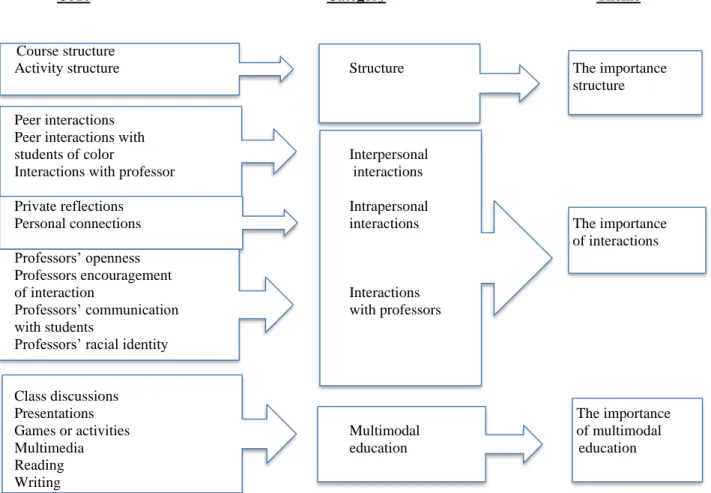
Theme 4: The Importance of Structure ...109
Theme 5: The Importance of Interactions ...113
Theme 6: The Importance of Multimodal Education ...123
Summary ...129
Chapter 5: Discussion and Conclusion ...131
Introduction ...131
Summary of the Results ...131
Discussion of the Results ...140
White Preservice Teachers’ Backgrounds ...140
Required Time and Space ...141
Interactions and Experiences ...142
Mitigated and Facilitated Information and Experiences ...145
Multimodal Interactions ...147
Challenges for Professors ...149
Discussion of the Results in Relation to the Literature...153
Whiteness and White Normativity ...153
Difficulty with and Negative Responses to Conversations Focused on Race ...154
Pedagogical Strategies ...157
Professors’ Racial Identity ...159
Limitations ...162
Study Sample ...162
Instrumentation ...163
Implication of the Results for Practice, Policy, and Theory ...164
Practice ...164
Policy ...166
Theory ...169
Recommendations for Further Research ...172
Conclusion ...173
References ...176
Appendix A: Email Draft to Potential Participants ...189
Appendix B: Informed Consent ...190
Appendix C: Email Draft of Pre-Study Survey to Participants (Qualtrics) ...192
Appendix D: Email for Participant-Generated Reflection Prompt ...193
Appendix E: Email Directions for Online Asynchronous Focus Group ...194
Appendix F: Semistructured One-on-One Interview Questions ...196
Appendix G: Online Focus Group Facilitation Prompts...199
List of Tables
List of Figures
Figure 1 Structural framework of influences in education according to critical race theory ... 21
Figure 2 Society and systemic construction and maintenance of White hegemony ... 24
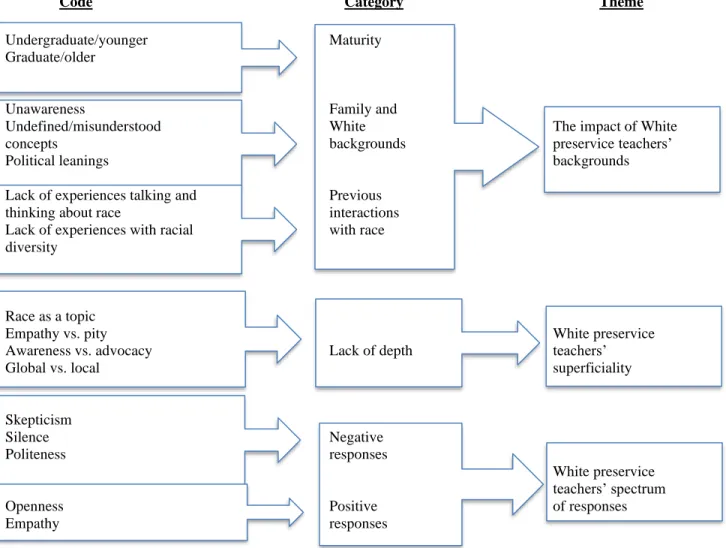
Figure 3 Research subquestion #1: Organization of codes, categories, and themes ... 89
Chapter 1: Introduction
For every White teacher in the United States, there are approximately 10 students of color (National Center for Education Statistics, 2016, 2017). While the number of students of color is projected to increase from what was 49% in 2012 to 55% in 2024, the number of White teachers has remained in the mid-80% range for the last several decades (U.S. Department of Education, 2016). White teachers, then, will increasingly be responsible for teaching racially diverse students and will likely be the racial minority in their own classrooms. The increasing racial diversity in classrooms increases the responsibility for White preservice teachers to be able to successfully teach racially diverse students, which is problematic because research has reported that White preservice teachers maintain stereotypic and deficit thinking, prejudice, and bias against students of color, and avoid talking about race (Crowley & Smith, 2015; Nelson & Guerra, 2014; Picower, 2009).
White teachers’ racial awareness, the ability to identify race as a social construction and the ways in which race impacts the way people experience living in society, is a critical aspect of teaching in racially diverse classrooms (Goodman, 1970; Ladson-Billings, 1998; Sleeter, 2016). When race is unrecognized as an impactful factor in how people experience and function in society, it can lead to the belief that unsuccessful students have some type of deficit within themselves or their communities that contribute to their lack of academic success. Several researchers reported White preservice teachers’ inability to identify race as an impacting factor in society help to maintain deficit thinking, the belief that students of color are less intelligent and/or value education less than their White counterparts (Marx, 2004; Pimentel, 2010). Deficit thinking may lead White preservice teachers to believe that one of their jobs in the classroom is to fix their students of color and to offset their deficits (Anderson, 2013; Marx, 2004; Nelson &
Guerra, 2014). Though diversity-focused courses are required by many teacher education programs, race and issues related to race are often not required components, leading to the maintenance of implicit bias, racial stereotypes and prejudices (Gordon, 2005; National Council Accreditation of Teacher Education, 2008; King & Butler, 2015). Although many teacher education programs do include diversity-focused courses, previous research has shown that content and discussions about race are not necessarily included (Gordon, 2005). The efficiency of teacher education programs to prepare White teachers to successfully teach racially diverse students is, therefore, called into question. This research study, then, focused on how White professors of diversity-focused courses experience and engage White preservice teachers in conversations focused on race.
Background Context, History, and Conceptual Framework for the Problem
The cultural and social normalization of Whiteness and White culture is a result and continuation of White hegemony, leadership and dominance by White people over non-White people and is maintained through the social construction of race. The social constructionism theory contends that all knowledge and meaning are created from socially constructed norms or ideologies, including race (Berger & Luckmann, 1966; Serge, 2016). Critical Race Theorists assert that race has been socially constructed and reified over years, maintaining and reproducing institutionalized racism and White normativity (Ladson-Billings & Tate, 1995). White identity, White hegemony, and White normativity are displayed in educational institutions where students of color are less likely to be placed into enrichment tracks and are, conversely, more likely to be disciplined or identified as having either behavioral issues or special needs (Anderson, 2013; Walker, 2011). Because 83% of current primary and secondary school teachers in the United States are White, White normativity is reproduced structurally and subconsciously through the
educational system (Crowley & Smith, 2015). Even though many preservice teachers are expected to take at least one diversity-focused course during their teacher education program, White racial identity often allows for avoidance and interruption of discussions about race during a diversity-focused course (Galman, Pica-Smith, & Rosenberger, 2010; Gordon, 2005). Without critical self-reflection and racial awareness, it is difficult to interrupt the reproductive and
institutional racism in the educational system (DiAngelo, 2012; Sleeter, 2008).
Previous literature reported the frustration that many professors of diversity-focused courses experience when trying to engage White students in conversations focused on race (Galman et al., 2010; Gayles, Kelly, Grays, Zhang, & Porter, 2015; Gorski, 2016) . Many studies described professors experiencing White preservice teachers’ use of defense mechanisms through arguments such as individualism, colorblindness, meritocracy, and victimization (Choi, 2008; Crowley & Smith, 2015; DiAngelo, 2011; Durham-Barnes, 2015; Picower, 2009). Each type of argumentation has been reported to help White preservice teachers maintain silence or avoid conversations about issues related to race.
The argument for individualism, used to avoid engagement and responsibility in racial issues, presupposes that each person is responsible only for individual actions and should be judged based on individual behavior (DiAngelo, 2012; Vaught & Castagno, 2008). Defining racism as overt words or actions against people of color allows White preservice teachers the ability to negate issues of race or distance themselves from conversations about race and racism with such claims as, “I have never owned slaves” or “I have never used the n-word” (Choi, 2008; DiAngelo, 2011). Choi (2008) claimed the argument of individualization is used by White preservice teachers during discussions about race because it calls for personal rather than systemic transformation, thus granting the ability to avoid or disengage in race issues.
Colorblindness ideology is another defense mechanism and argument that White preservice teachers utilize to avoid or disengage from conversations focused on race.
Colorblindness ideology denies the existence of any type of personal or structural racialized privilege (Choi, 2008; Mason, 2016; Ullucci, 2012). Several scholars reported White preservice teachers responding to discussions about race with claims that they only see students not their race (Sleeter, 2001; Ullucci, 2012; Walker, 2011). Claiming to be colorblind affords White preservice teachers the ability to avoid responsibility for the impact of race issues while simultaneously minimizing or invalidating the experiences of students of color. Colorblindness is closely related to the belief in meritocracy as both support the pre-supposition that race has no impact on an individual’s success or social and economic mobilization (Philip & Benin, 2014; Ullucci, 2012).
Meritocracy is the belief that people who work hard and make moral decisions will be able to earn their ways to whatever goal they have; the American Dream (DiAngelo, 2011; Settlage, 2011). Many White Americans believe that anyone, regardless of race or
socioeconomic status, will be able to earn success and achievement through diligent work and morality (Choi, 2008; Ullucci, 2012; Whiting & Cutri, 2015). Meritocracy is a common
response to issues related to race because it denies there are privileges and advantages for White people, which set them up for success (DiAngelo, 2011; McIntosh 1989; Picower, 2009). Meritocracy, like colorblindness, espouses that society has progressed to a post-racist society, to the point that race does not affect the ability to succeed and achieve (Choi, 2008; DiAngelo, 2011). White privilege, therefore, has been reported to be a difficult concept for White preservice teachers, and which professors have had a difficult time discussing in diversity-focused courses (Durham-Barnes, 2015; Picower, 2009). When White preservice teachers
believe society is meritocratic, it is difficult for them to understand White privilege and allows for claims of racial victimization.
Finally, previous research reported many White preservice teachers claims of
victimization to avoid racialized conversations or situations (DiAngelo, 2012; Picower, 2009). Several studies reported claimed racial victimization occurred when White preservice teachers felt uncomfortable or defensive during conversations about or situations with race and racial diversity (DiAngelo, 2012; Moon, 2016; Picower, 2009). Victimization can be manifested either passively or aggressively and often includes claims of feeling fear during a conversation or situation regarding race (DiAngelo, 2012). Using the defensive argument of victimization not only allows White preservice teachers to evade discussing race, but it also changes the roles of people of color from victims to perpetrators, impacting interactions between White teachers and their students of color (DiAngelo, 2012).
DiAngelo (2012) asserted that many of these responses to and engagements with discussions about race by White preservice teachers are impacted by White fragility. White fragility is the state in which White people, when confronted with a conversation or situation about race, become so uncomfortable they attempt to remove themselves from that situation (DiAngelo, 2012). These attempts can be made by claiming fear, guilt, misunderstanding, ignorance, engaging in argumentation, or even simply maintaining silence. The combination of White normativity, the manifestations of White racial identity, and the increasing racial diversity in classrooms demonstrate the need for research into how professors of diversity-focused courses experience and engage White preservice teachers in conversations about race.
White identity and White normativity are both consciously and subconsciously
maintained in White preservice teachers. Critical race theorists and critical Whiteness studies theorists maintain that the social construction of Whiteness and its attached normativity and hegemony are deeply ingrained in society (Guess, 2006; Ladson-Billings & Tate, 1995; Nayak, 2007). While Critical Race theorists maintain racism will never be overcome in the United States (Ladson-Billings & Tate, 1995), Critical Whiteness theorists contend that small and individual change can occur through the racial-awareness of individual White people (Nayak, 2007). According to the NCATE’s (2008) diversity standard, the NCATE (2008) expects that upon completion of a teacher education program, White preservice teachers will be able to successfully teach and interact with racially diverse learners and their families. Within teacher education programs, the expectation for racial diversity awareness and literacy can and should take place in diversity-focused courses or in courses infused with racial diversity components.
However, both previous and current research studies reported that White in-service teachers who have gone through the diversity-focused courses required in teacher education programs, and White preservice teachers currently enrolled in teacher education programs were not prepared to successfully teach racially diverse students (Nelson & Guerra, 2014; Picower, 2009; Whiting & Cutri, 2015). The expectation of an educator’s ability to teach and interact with racially diverse students and their families places the onus of challenging and transforming deeply ingrained race ideology onto the professors of diversity-focused courses. The challenge of engagement and transformation cannot take place without difficult and critical conversations about race and issues related to race. This study, therefore, sought to extend the literature by exploring how White professors of diversity-focused courses experienced and engaged White preservice teachers in conversations focused on race (DiAngelo, 2011; King & Butler, 2015;
Ladson-Billings & Tate, 1995; Matias, Viesca, Garrison-Wade, Tandon, & Galindo, 2014; NCATE, 2008; Nelson & Guerra, 2014; Segall & Garrett, 2013; Sleeter, 2016; Vaught & Castagno, 2008).
Purpose of the Study
The purpose of this study was to develop a deeper understanding of how White professors who taught diversity-focused courses experienced and engaged White preservice teachers in conversations focused on race. Understanding the experiences and strategies of White professors who teach diversity-focused courses in teacher education programs can illuminate how White preservice teachers engage in discussions about race as well as effective pedagogical and discourse strategies. It can also extend discussion on needed professional and institutional development to improve the racial awareness and teaching methods of White professors of diversity courses. Finally, it can extend dialogue regarding the ways in which professors of diversity-focused courses can experience community and be supported through the complexity and difficulty of diversity-focused content.
Research Questions
This study sought to add to the knowledge gained through previous research studies regarding how White professors of diversity-focused courses experience and engage White preservice teachers in conversations about race by exploring the following research question:
1. How do White professors of diversity-focused courses in teacher education programs engage in and experience conversations focused on race with White preservice teachers?
The specific subquestions explored were:
a. How do White professors of diversity-focused courses experience the process of engaging White preservice teachers in conversations focused on race?
b. What are the strategies utilized in conversations focused on race in diversity-focused courses, and how effective are they perceived to be by White professors of the diversity-focused courses in engaging White preservice teachers in
conversations focused on race?
Rationale, Relevance, and Significance of the Study
The purpose of this study was to explore how White professors, specifically those teaching diversity-focused courses, experienced and engaged White preservice teachers in conversations focused on race. Because of the disparity between the increasing number of non-White students in the American educational system and the unchanging and overwhelming number of White educators within the system, it is crucial that White preservice teachers engage in critical and reflective discussions about race. Previous studies corroborated the difficulty both White preservice teachers and White professors themselves have in talking about race and racism (Galman et al., 2010; Gayles et al., 2015; Picower, 2009). Critical Whiteness studies theorists contend White hegemony and normativity cannot be challenged until White people are able to critically reflect on the reality of White racial identity and the systems put in place to maintain White racial supremacy (Matias & Mackey, 2015). As cultural and social constructs are partly passed down in the educational system, it is critical that White professors of diversity-focused courses and White preservice teachers are aware of and able to discuss issues of race and racism.
Exploring how White professors experienced and engaged White preservice teachers in discussions about race could offer implications for engaging and alleviating hostility and
resistance offered by White preservice teachers. The ability for White preservice teachers to teach students of all races successfully is crucial for social and racial equity. However, without reflection and awareness of their White racial identity, White preservice teachers were unable to critically explore their race, the implications of their race, institutional racism in the educational system, or the racialized experiences of their students (DiAngelo, 2012; Matias & Mackey, 2015). The exploration of how White professors experienced and engaged White preservice teachers in conversations focused on race might primarily be used for discussion regarding effective or needed pedagogical and discourse strategies for White professors. Secondarily, this study may offer implications for discussions on professional and institutional development of racial awareness identity, race-issues awareness, and race dialogue training (Galman et al., 2010; Gayles et al., 2015; Gordon, 2005). Finally, this study may offer a sense of validation,
comradery, and community for professors of diversity-focused courses in teacher education courses who feel isolated as a result of the uniqueness of their course content (Gordon, 2005; Gorski, 2016).
Definition of Terms Key conceptual terms for this study are defined below:
Diversity focused-courses. Courses with specific objectives, content, or pedagogical skills directed at increasing the knowledge and pedagogy of preservice teachers to successfully teach racially, ethnically, and culturally diverse students (Arsal, 2015).
Professors of diversity-focused courses. Higher education faculty members in teacher education programs who teach courses specifically focused on educating preservice teachers on diversity issues, pedagogy, and ways to engage diverse learners and their families.
White normativity. The normalization of White culture, dress, speech, and behavior, which are then, either consciously or subconsciously, constructed to be the overarching standard by which all peoples are judged and measured. White normativity is often invisible and is manifested by the belief that White culture, backgrounds, and experiences are universal and normal (DiAngelo, 2012; Sleeter, 2016; Ward, 2008).
White identity. The ideological and racial identity that results from the normalization of Whiteness and White hegemony. Due to social dominance or White hegemony, White
normativity, the lack of contact with racial diversity, and internalized ideologies and stereotypes of people of color, White people are often oblivious to their race, the social positionality their race affords them, and the impact that Whiteness has on people of color. Ultimately, White identity is manifested in the taking for granted or being unaware of status and privilege, which come from being White (DiAngelo, 2011; Lawrence & Tatum, 1997)
Deficit thinking. The belief that non-White, non-English speaking students are at disadvantages due to deficits in their communities, families, or intellectual abilities. Deficit thinking charges families and students, rather than the educational system, for academic and social failures and promotes the belief that White teachers must fix the deficits within students’ lives (Anderson, 2013; Nelson & Guerra, 2014; Walker, 2011).
Social constructionism. The sociological theory that holds that all reality, including belief and meaning, are the result of communal standards formed by a dominant group. Social constructionism is concerned with epistemology, specifically societal epistemology, and the ways in which individuals within societies practice everyday life; creating and reifying reality. Social constructionists affirm the subjectivity of reality and assert the plurality of experiences
recognizing each society gives value to certain concepts or ideologies, which then maintain dominance in culture (Berger & Luckmann, 1966; Kim, 2001; Serge, 2016)
Critical race theory. Critical race theorists argue racism is both active and normalized in society within the United States. Critical race theory (CRT) is predicated on the assumptions that racism is ordinary in society and the institutional structures of the United States advantage White people and disadvantage people of color. CRT theorists hold that because racial inequity and bias are so deeply engrained systemically and socially in people, they will be not be changed (Harris, 2012; Ladson-Billings, 1998; Ladson-Billings & Tate, 1995).
Critical Whiteness studies. Critical Whiteness studies (CWS) theorists presuppose that White racial supremacy and hegemony were purposefully created and are intentionally
reproduced in every aspect of society. CWS contends, however, that White hegemony can be deconstructed through racialized self-awareness. CWS is the study of how Whiteness (the normalization of White dominant culture) is engaged, repeated, and expressed, and it focuses on the ways in which White racial supremacy can be dismantled. CWS theorists neither call for the destruction of the White race nor the condemnation or guilt of White people, but rather for racial awareness to eradicate White racial supremacy (Guess, 2006; Matias & Mackey, 2015; Nayak, 2007).
Pedagogical strategies. The strategies used to engage, teach, and encourage student participation in race conversations. Different scholars have utilized different strategies for engaging White preservice teachers in discussion about race such as journal reflections, small group facilitation, democratic processes, and media and text analysis (Gayles et al., 2015; Pimentel, 2010; Durham-Barnes, 2015).
Chapter 1 Summary
This study explored the experiences White professors who taught diversity-focused courses had in engaging White preservice teachers in conversations focused on race. Specifically, it explored the experiences that White professors had in interacting with White students during discussions about race as well as the strategies used to talk about race and issues related to race. Chapter 2 will review previous literature and research studies regarding White preservice teachers’ interaction with discussions about race, White professors’ experiences in those discussions, and the strategies utilized in those discussions. Chapter 3 will review and rationalize the research methodology and design of the study, and will include data collection methods, data analysis choices, rationales, and procedures. Chapter 3 will also review all information regarding participation in the study and refer to all participant and data collection documentation. Chapter 4 of the dissertation will review and present the findings of the study from the data collection methods. Chapter 5 will include a discussion of the findings,
Chapter 2: Literature Review
Projections estimate that by 2023, racial and ethnic minorities will make up the majority of school students in the United States (U.S. Census, 2008). Conversely, the vast majority of the educational workforce remains approximately 83% White (U.S. Department of Education, 2016). As diversity increases in the United States educational system so does the need for teachers to be able to teach and interact with racially diverse students and their families. As a result of the increased segregation in the United States, many White preservice teachers have very little interactions or experiences with racial diversity (Fischer, 2011; Orfield, Kuscera, & Siegel-Hawley, 2012). The lack of interactions and experiences with racial diversity in combination with the social construction of racial ideology and identity from family, friends, and the media, has impacted White preservice teachers’ ability to critically think about and discuss issues related to race and to engage in diverse settings (Banks, 2006; Gordon, 2005). With the majority of preservice teachers identifying as White, it is accordingly important that teacher education programs engage White preservice teachers in conversations focused on race (Chavez-Reyes, 2012; Gayles et al., 2015).
Diversity-focused courses have been established to educate and engage students on issues of diversity, including how to effectively teach and interact with racially diverse students and their families (Pollock, Deckman, Mira, & Shalaby, 2010). The ability to teach diverse students is recognized to be such a crucial component of teacher education that the National Council for Accreditation of Teacher Education (NCATE; 2008) affirms diversity as one of its six core standards for accrediting teacher preparation programs. The NCATE (2008) asserts that in addition to being able to teach and interact in culturally competent ways with diverse groups of students and families, teacher candidates should also be able to help diverse students learn in
ways most effective for each student’s specific culture and background. Scholars such as Banks (2006), Gay (1990), Milner (2009), and Sleeter (2001) have urged teacher education programs to infuse diversity components throughout teacher preparation curriculum, and to require at least one course focusing solely on diversity issues such as race. Some teacher education programs still do not include the NCATE’s (2008) suggested amount of diversity components (King & Butler, 2015), and some leave diversity to be undefined and ambiguous; leaving the content of those courses to the discretion of individual professors (Gordon, 2005).
Study Topic
This study explored how White professors of diversity-focused courses experienced and engaged White preservice teachers in conversations focused on race. White preservice teachers’ resistance to engage in discussions about race is well documented in previous research studies (Crowley & Smith, 2015; Galman et al., 2010; Picower, 2009). It is less common, however, to find research specifically exploring how professors experience engaging White preservice teachers in conversations about race (Dyce & Owusu-Ansah, 2016; Gorski, 2016). This research is significant in view of the fact that many White in-service teachers, after having completed required diversity-focused courses in teacher education programs, still maintained stereotypic and deficit thinking, prejudice, bias towards students of color, and the inability to discuss race (Milner, 2009; Nelson & Guerra, 2014; Segall & Garrett, 2013; Vaught & Castagno, 2008). This research study, therefore, explored how White professors of diversity-focused courses in teacher education programs experienced and engaged White preservice teachers in conversations focused on race.
Context
The purpose of diversity-focused courses in teacher education programs are to engage students in intellectual and experiential knowledge about diversity, social justice, and equity values (Kumar & Hamer, 2012). The contextual need for the exploration of the experiences of professors of diversity courses begins with Whiteness, or White normativity, the cultural and social normalization and dominance of White racial culture, standards, and expectations (DiAngelo, 2016). White hegemony, the dominance, whether subtle or explicit, of White
peoples over non-White peoples, has been maintained throughout the history of Anglo-European colonization (Andrews, 2016; Gibbons, 2016; Spanierman & Smith, 2017). Due to social
dominance, lack of contact with diversity, and internalized understanding and stereotypes of people of color, many White preservice teachers are racially illiterate, or oblivious to their own race and the effects their race has in society (DiAngelo, 2011; Lawrence & Tatum, 1997). Because Whiteness, and the dominance obtained through it, is typically invisible to White
people, White preservice teachers tend to avoid uncomfortable and confrontational conversations about race (Philip & Benin, 2014; Picower, 2009).
Previous literature identified several ways in which White preservice teachers respond to and engage in conversations regarding race: claiming individuality, espousing colorblind
ideology, arguing for meritocracy, and claiming racial victimization. Individualist claims
presuppose people, rather than institutions, are racist (DiAngelo, 2011). Choi (2008) claimed the argument of individualization is used because it calls for personal rather than systemic
transformation, thereby granting White preservice teachers the ability to avoid or disengage from race dialogue and issues. Colorblind ideology, like individualism, denies the existence of any type of institutional racialized privilege and invalidates any racialized experiences. White
preservice teachers have been reported to claim they do not see race, they only see students (DiAngelo, 2011; Picower, 2009). Colorblindness is closely related to meritocracy, which is the belief that people who work hard and make moral decisions will be successful. Race, according to the myth of meritocracy, is not a variable in peoples’ personal, academic, or professional success, and does not impact the way they experience living in society (Choi, 2008; Whiting & Cutri, 2015). Many White preservice teachers claim that they are victimized not only by reverse racism, where people of color are institutionally favored, but also by the discomfort, fear, and guilt which often accompany racialized conversations or situations (DiAngelo, 2012; Picower, 2009).
Significance
Significant work has been done to explore and document the need for diversity-focused courses in teacher education programs (DiAngelo, 2012; Gordon, 2005; Nelson & Guerra, 2014; Picower, 2009). Previous literature has also documented the extensive investigation into the beliefs and experiences of White preservice teachers (Durham-Barnes, 2015; Picower, 2009; You & Matteo, 2013). Less research, however, is dedicated to exploring the experiences and pedagogies of the professors responsible for teaching concepts related to race (Gordon, 2005; Gorski, 2016). The combination of the vast majority of the educational workforce identifying as White along with the implicit bias that accompanies White normativity indicates a significant need to explore the experiences and strategies of diversity-focused professors in discussing race with White preservice teachers (Gorski, 2012; Whiting & Cutri, 2015). This research study is significant in adding to and extending previous literature concentrating on White professors of diversity-focused courses and the pedagogical strategies utilized in conversations about race.
This study additionally provides implications both for professional and institutional development in racial identity awareness and racial literacy and pedagogies for discussing race.
Problem Statement
Many White preservice teachers have had minimal experiences with and exposure to racial diversity, resulting in stereotypic, deficit, and bias thinking towards students of color (Fischer, 2011; Kumar & Hamer, 2012). In addition to holding stereotypic, deficit, and bias thinking towards students of color, many White preservice teachers had difficulty discussing race and racism issues (Picower, 2009; Whiting & Cutri, 2015). White preservice teachers with stereotypic, deficit, and bias thinking, then, become teachers who are not only unable to
successfully teach students from diverse backgrounds, but also reproduce both White normativity and its ramifications in the classroom (Nelson & Guerra, 2014; Sleeter, McIntyre, & Demers, 2016). Because professors of diversity-focused courses in teacher education programs are responsible for preparing and equipping future teachers to teach in diverse classrooms, their strategies and experiences in engaging discussions about race should be explored.
Understanding these experiences and strategies offers implications for how diversity-focused professors can engage White preservice teachers in difficult conversations about race. This study additionally offers discussions about curriculum in teacher education programs and professional development for professors who teach diversity-focused courses. The specific research question this study explored was:
1. How do White professors of diversity-focused courses in teacher education programs engage in and experience conversations focused on race with White preservice teachers?
The specific subquestions explored were:
a. How do White professors of diversity-focused courses experience the process of engaging White preservice teachers in conversations focused on race?
b. What are the strategies utilized in conversations focused on race in diversity-focused courses, and how effective are they perceived to be by White professors of the diversity-focused courses in engaging White preservice teachers in conversations focused on race?
Organization
This literature review is organized by exploring research that reports the ways in which White preservice teachers engage conversations about race. Next, the experiences of the
professors of diversity-focused courses in engaging White students in discussions about race are explored. Finally, the strategies and pedagogies that professors of diversity-focused courses utilize while engaging White students in conversations about race are explored.
Conceptual Framework
The intrinsic and structural racism that inhabits the educational system and the ways in which it supports and sustains White hegemony demand exploration into the experiences of those responsible for challenging the worldview and ideologies of future White teachers. Professors of diversity-focused courses in teacher education programs are tasked to engage White students’ socially constructed realities and ideologies within Whiteness (Ladson-Billings, 1998; Ladson-Billings & Tate, 1995; Sleeter, 2016). This research study combined concepts from social constructionism, critical race theory (CRT), and critical Whiteness studies (CWS) to understand how White professors of diversity-focused courses experience and engage White preservice teachers in conversations focused on race.
Social Constructionism
Social constructionism theorists assert that knowledge is subjective and created through interactions with the world. Knowledge and meaning, additionally, are constructed from social and contextual sources (Guterman, 2006; Sommers-Flanagan & Sommers-Flanagan, 2012). Because reality is a communal construct, the values and ideals that are percieved as normative and acceptable or, conversely, inappropriate and unacceptable are based on social acceptance of the dominant group (Berger & Luckmann, 1966). Social constructionism theorists maintain that authority figures within a society either create or are provided with social meaning and
knowledge, and then determine how and to whom that knowledge is dispersed (Berger &
Luckmann, 1966). Construction of epistemologies that question, expose, or challenge dominant social construction are viewed as threatening and deemed to be contradictory and dangerous to social welfare, meaning it is difficult to deconstruct the social construction of the dominant group (Berger & Luckmann, 1966). Two types of socialization reproducing the social
construction of the dominant group are: (a) socialization whereby group values and experiences are conformed to the already constructed reality, and (b) the process whereby society accepts and internalizes what has been constructed and transforms it from a construct to a societal and
individual objectivity (Berger & Luckmann, 1996; Serge, 2016).
The social construction of Whiteness and the resulting consequences of inequity in society, specifically in educational institutions, influence students’, parents’, faculty, staff, and school leaders’ beliefs and experiences (Guess, 2006; Nayak, 2007; Norris, 2016; Sleeter et al., 2016). The preservation and continued manifestations of historical and modern racism and inequity in education require the exploration of the experiences and strategies of professors
whose role it is to challenge and deconstruct such social constructions in preservice teachers (Alt, 2017; Atwater, 1996; Ladson-Billings & Tate, 1995). Social constructionism is a logical framework in researching racial diversity issues in education because it underscores knowledge as a collaborative and interactive practice whereby meaning is created through social experiences and interactions (Berger & Lockmann, 1966; Holzner, 1972; Serge, 2016). Alt (2017) contended that there are three formative tenets of constructionism, which involve cognition, affection, and behavior; each of which contribute to social meaning and normativity. The interactive nature of learning and meaning construction occurs between students as peers and between students and professors (Alt, 2017; Kim, 2001; Serge, 2016). The result of these interactions is either the reproduction of social construction or the confrontation of previously constructed meaning and ideologies resulting in transformation, which leads to cognitive dissonance (Alt, 2017; Atwater, 1996; Mezirow, 1991).
Critical Race Theory
Critical race theorists contend racism is both normal and intentional within the systemic structures of the United States (Harris, 2012; Ladson-Billings & Tate, 1998). Education as an institution, then, has not only been built upon and influenced by White racial supremacy, but continues to assist in maintaining it (Atwater, 1996; Ladson-Billings, 1998; Philip & Benin, 2014). Harris (2012) rhetorically queried how society can be intrinsically racist while legal and civil legislation appear to promote and enforce equity and anti-discrimination. Crenshaw (2011), however, contended that this paradox is possible because civil rights legislation strategically obscures rather than destroys racism.
Figure 1 illustrates this researcher’s original illustration of the integration of CRT and social constructionism in the maintenance and reproduction of White hegemony and normativity
within the educational system. The foundational entity in facilitating White racial supremacy in the educational system, according CRT, is American hegemony and normativity. Anglo-American hegemony and normativity then foster and maintain White identity (or Whiteness), which are further reified through socially constructed experiences. The social constructions of students and professors then, either consciously or subconsciously, are brought into teacher education programs (Guess, 2006; Serge, 2016; Spanierman & Smith, 2017). The result of social and institutional construction is continuing inequity in school systems such as educational
resource allocation, inequity in educational policies, and the maintenance of deficit and stereotypic thinking toward students of color (Anderson, 2013; Ladson-Billings & Tate, 1995; Matias & Mackey, 2015; Philip & Benin, 2014).
Figure 1. Structural framework of influences in education according to critical race theory. A significant portion of research relating to race in teacher education primarily explored White students’ experiences of, responses to, and impact by multicultural and diversity-focused
Anglo-American power and control of structures and institutions = White hegemony
White normalization White identity Teacher education
programs
School systems: segregation, inequity in educational resources,
deficit thinking, stereotypes, educational policies (tracking programs, behavioral referrals, etc.)
education (Bowman, 2009, 2010; Cole & Zhou, 2013; Dyce & Owusu-Ansah, 2016). The hegemony and normativity of Whiteness and the resulting assumptions are difficult to detect and often require external experiences or confrontations to stimulate cognitive dissonance, which can then result in critical acknowledgement and self-awareness (Guess, 2006; Mason, 2016; Serge, 2016; Sleeter, 2017). The inability to detect or reflect on the outward symbols of White racial supremacy, such as using racial stereotypes, committing microaggressions, and engaging in deficit thinking places substantial cognitive and emotional expectations on professors of
diversity-focused courses (Gayles et al., 2015; Gorski, 2016; Shim, 2018). Additionally, because of the entrenched and invisible nature of Whiteness as a social construct, White professors who teach diversity-focused courses manage numerous pairing of paradoxical views and interactions within themselves as well as with their students (Galman et al., 2010; Gayles et al., 2015; Gorski, 2016). While Critical Race theorists do not believe White hegemony can be abolished, they do assert the possibility of acknowledgement and interruption, which can deconstruct socially constructed race norms (Harris, 2012; Ladson-Billings, 2001; Ladson-Billings & Tate, 1995). Critical Whiteness Studies
Whiteness as a dominant social construct creates a foundational need for diversity-focused courses in teacher education programs (Guess, 2006; Sleeter, 2016). Critical Whiteness studies (CWS) theorists contend that while Whiteness is mutable and offers privileges to those who are members of the dominant group, it is a social construct and thus able to be changed and weakened to achieve a more equitable society (Nayak, 2007). A fundamental aspect of CWS is the pressure to intervene in and control the replication of Whiteness and the unearned privileges bound to it (Nayak, 2007). Whiteness is the foundation for all institutional structures in the United States and, as Allen (2001) contended, has directed both historical and current society.
Philip and Benin (2014) argued that teacher education programs, even those focused on social justice and equity outcomes, still maintain and propagate White normativity. The United States educational system has been built on and continues to operate within White middle-class
America’s concepts of meritocracy and success (Anderson, 2013; Ladson-Billings & Tate, 1995; Matias & Mackey, 2015; Sleeter, 2001). Students, most often students of color, who struggle to assimilate into the expectations of the predominantly White female education workforce are labeled as “at risk” or having “behavior problems,” over-placed into special education classes, and under-placed into enrichment tracks (Anderson, 2013; Walker, 2011).
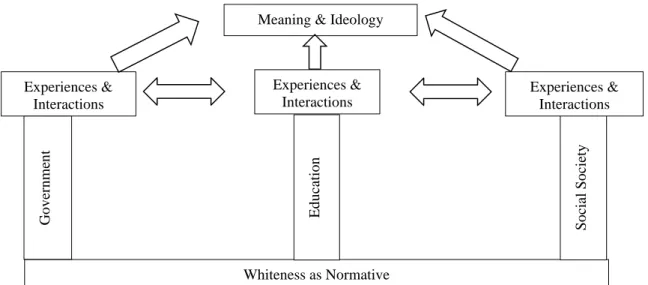
Diversity-focused courses in teacher education programs provide preservice teachers, particularly White preservice teachers, cognitive and experiential opportunities to see and discuss the realities of race (Gay, 2002; Gorski, 2012; Sleeter, 2016). Without acknowledging White normativity as the foundations of institutions such as government, education, and social society, recognition of the ways in which Whiteness is experienced and infused into meaning cannot be acknowledge or questioned (Matias & Mackey, 2015; Nayak, 1997). The lack of awareness and acknowledgement of White normativity continue in teacher education programs, resulting in inequity for students of color (Ladson-Billings & Tate, 1995; Matias & Mackey, 2015;). Figure 2 depicts this researcher’s original illustration of the social construction of White identity
through the lens of CWS, which is founded upon White normativity and then maintained through aspects of government and society; reproducing experiences and meaning.
Figure 2. Societal and systemic construction and maintenance of White hegemony. Integration
The integration of social constructionism, CRT, and CWS comprised the conceptual framework that this study employed to explore the experiences and strategies of White
professors engaging White preservice teachers in discussions about race. Social constructionism is intrinsically linked to CRT and CWS because any identification of systemic and societal inequities, including within the education system, threaten and cause cognitive, affective, social, and behavioral dissonance (Berger & Luckmann, 1966; Holzner, 1972; Serge, 2016). Current social construction formulated around race has benefitted the dominant group for so long that any dissonance resulting from new experiences or realities regarding race is reformulated, rather than analyzed, to remain non-threatening (Berger & Luckmann, 1966). Hence, overt racism has been reformulated into modern racism through individualism, colorblind ideology, reversal of victimization, and arguments for meritocracy (Andrews, 2016; Choi, 2008; DiAngelo, 2012). The practical forms of modern racism, then, are accepted by the dominant group in society and
Meaning & Ideology
Experiences & Interactions Whiteness as Normative Go v er n m en t E d u ca tio n So cial S o ciety Experiences & Interactions Experiences & Interactions
demonstrated through increased segregation (Gibbons, 2016), White flight (DiAngelo, 2010), educational tracking programs (Anderson, 2013, Walker, 2011), and over-representation of students of color in behavioral and special-needs groups in schools (Swadener, 2010).
Multicultural and diversity education theorists aspire to transform educational policies and practices in order for each student to have equal opportunity for success (Banks, 2006; Kumar & Hamer, 2012; Sleeter, 2016). A means to accomplish this in teacher education programs is by incorporating diversity-focused courses, experiences with diversity, and diverse institutional climates which might highlight and work to interrupt the inherent inequity of the current social system (Holzner, 1972). White hegemonic “ideologies . . . are structured on the collective level around authorities and loyalties [and] become directly constitutive of the
structure itself” (Holzner, 1972, p. 147). The construction of ideologies is a crucial rationale for an exploration of the experiences of experts of diversity knowledge. Professors of diversity-focused courses have the ability and opportunity to utilize their intellectual and experiential authority on the social construction of societal norms in interactions with White preservice teachers (Berger & Luckmann, 1966; Gorski, 2016; Holzner, 1972; Serge, 2016).
Review of Research Literature and Methodological Literature
The following section is a review of previous literature conducted on issues related to White preservice teachers, diversity-focused education, and White professors of diversity focused courses. This section is organized by first a discussion of literature regarding White preservice teachers engaging in conversations focused on race, the experiences of professors teaching diversity-focused courses, and pedagogical strategies for discussing race with White preservice teachers. Following the discussion of previous literature, this section will review the methodological choices of researchers conducting research related to White preservice teachers
discussing race and the experiences of professors teaching diversity-focused courses. The following section offers a synthesis of previous research followed, finally, by a critique of that research.
White Preservice Teachers Engaging in Conversations Focused on Race
There is a much literature devoted to exploring White preservice teachers’ responses to content related to race in teacher education programs. The most commonly reported responses were various forms of resistance wherein White students worked to interrupt or avoid discussing race. White preservice teachers’ resistance to race conversations has been reported to take the form of silence, denial, dismissal, minimization, joking, and re-direction (LaDuke, 2009; McIntyre, 1997; Picower, 2009). Haviland (2008) labeled these resistance responses as “White educational discourse,” in which issues related to race are overlooked and avoided in order to maintain White hegemony. White educational discourse works from the presupposition that racism is personal rather than institutional. The belief in personal rather than systemic racism has led to the belief that racism exists in a good/bad binary (DiAngelo, 2016; Haviland, 2008). The good/bad binary of racism drove White preservice students to resist and renegotiate
conversations focused on race to maintain the image of good White nonracist people (DiAngelo, 2016). Scholars such as DiAngelo (2016) and Gayles et al. (2015) argued that content and discussions about race and racial identity are crucial in teacher education programs because without them, White preservice teachers’ racial identities remain unchallenged and undeveloped. Unchallenged White racial identities were then manifested in the classroom and directly
impacted students of color (Gordon, 2005; Nelson & Guerra, 2014).
Crowley and Smith (2015) used CWS as a conceptual framework in a collective case study to explore how White preservice social studies teachers interacted in conversations about
race. In the study, Crowley and Smith (2015) included 27 preservice teachers (20 White students and seven students of color) from the researchers’ methods-based education course. Data were collected through fieldworker observations, seminar transcripts, participant reflections, and participant-generated artifacts. Data were first analyzed through line-by-line coding followed by axial coding to identify themes across all forms of data collection. The two major themes
identified from the data were: (a) White students’ inability to see race as a structural issue, and (b) White students understanding Whiteness through their personal experiences.
While participants in Crowley and Smith’s (2015) case study were able to understand the concept of White privilege, they were unable to connect it to a structural or institutional system of racism. White participants defined racism as individual, overt, and malicious action or speech against people of color. White preservice teachers also defended the concept of reverse racism and used the existence of social programs, such as affirmative action, to resist and minimize the impact of White privilege. Participants expressed positive views towards stereotypes
rationalizing them as ways to understand unknown and different people and circumstances. Participants judged different styles of speech, dress, and personal behavior through the standard set by White normativity and used their own lenses and personal experiences to validate or invalidate issues related to race. Crowley and Smith (2015) postulated that because participants did not have explicit or visible interactions with racial diversity, they assumed their experiences were objective and that people of color also did not have experiences explicitly related to race. Because many of the White participants did not have experiences regarding race or that explicitly contrasted or showcased their privilege with those of non-privileged identities, the common assumption was, with the exception of a few individuals, White people and people of color had the same experiences.
Durham-Barnes (2015) reported the minimization of White privilege, expressions of White guilt, over-participation in discussions, and discomfort were common during
conversations about race with White preservice teachers. The data were collected primarily through focus groups where preservice teachers watched and then discussed the documentary The Color of Fear (Wah, 1994). Durham-Barnes (2015) was specifically interested in exploring: (a) how White preservice teachers engage in discussions focused on race, and (b) the ways in which the racial make-up of a group and/or the race of the facilitator impacted White student’s participation. Each of the 21 participants was enrolled in a diversity-focused course; 18 of the students identified as White and six identified as students of color. Participants were placed into five groups of between three and seven members, with three groups comprised of all-White participants and two comprised of a mix of White preservice teachers and preservice teachers color. As a result of the interest in the impact of the race of the facilitator on the participants’ discussions about race, the race of the facilitator was noted in each group. Two of the three all-White participant groups were led by Black facilitators, and all-White facilitators led the remaining all-White group and both mixed-race participant groups. Data were collected through entrance surveys, focus group transcriptions, and exit surveys. Pre-study surveys identified participants’ interactions with and attitudes towards race issues and racial diversity. Focus group questions were semistructured and related to specific people or issues shown in the documentary. Finally, exit surveys, which identified participants’ experiences, willingness, and comfort in the
discussions were compared to the entrance surveys. The focus groups were individually
examined, manually coded, and then compared both with each other group individually and then with all groups as a whole.
Pre-surveys in Durham-Barnes’ (2015) study revealed that 81% of participants grew up in racially homogenous communities, 33% had few opportunities to engage in conversations about race prior to college, and less than 50% believed talking about race was challenging and crucial for social development. The dominant themes that emerged from data analysis were: (a) White privilege, (b) White guilt, (c) discomfort, (d) the absence of a social consciousness, and (e) feeling powerless against structural racism. One group of all-White participants struggled to accept White privilege and expressed discomfort at the emotional expressiveness of the
characters in the documentary who were people of color. In this same group, no one challenged or disagreed with each other while discussing race in the focus group. White participants in all groups wrestled with defining Whiteness, and many White males felt uncomfortable discussing race openly for fear of being seen as racist. Those White preservice teachers who did
acknowledge White privilege experienced feelings of powerlessness to stimulate social change. The mixed-race groups, however, engaged in more critical discussions than the all-White participant groups. Exit surveys indicated that while some White participants expressed feeling uncomfortable discussing race in general, many experienced particular discomfort while
discussing race with facilitators of color.
Pollock et al. (2010) used in-class discussions and journal reflections to explore (a) what skills educators needed in order to be successful in engaging race issues in the classroom and, (b) how courses and professional development could be improved for successful engagement with race issues. Based on the question, “What can I do?” the researchers examined major themes or “tensions” in participant-generated reflections. Three major themes were repeatedly mentioned in student journals: (a) concrete pedagogies, (b) the efficacy of personal antiracism in structural racism, and (c) personal wrestling with racial identity. The study took place in a half-semester
course focused on race with 51 enrolled teacher candidates. Data were collected through fieldworker observation notes during small and large-group discussions and journal reflections. Participants were given the choice of whether or not to submit their journal reflections at the end of the semester for the research study; 33 of the 51 enrolled students chose to submit their journals. Because the researchers felt the reflection journals contained more reflective and analytical discussions than the group discussions, journal data were analyzed primarily and discussions data were analyzed secondarily. Journals were collectively read and coded using discourse analysis in exploring content related to the three themes or tensions.
Pollock et al. (2010) described participants’ struggles to find concrete opportunities to participate in antiracist teaching in the midst of structural inequity. Most of the White preservice teachers were more aware of their limitations rather than their potential. According to the
researchers, this mode of thinking allowed participants to resist antiracist teaching principles and strategies due to perceived difficulty and time consumption. White preservice teachers argued that because antiracist pedagogy was too difficult and required too much time, they must be content with being good rather than antiracist teachers. Pollock et al. (2010) actively sought to decrease feelings of defensiveness and resistance during the course, and therefore explicitly communicated the purpose of both the course and the research study was to focus on principles and strategies for antiracist teaching rather than personal racism. Many White participants, however, still avoided or interrupted discussions about race by lamenting that either the material was too abstract or too concrete, or they could not engage in antiracist teaching until they
personally and individually developed racial literacy. However, while many participants
complained about needing concrete content in the course to participate in discussions, they were not able to discuss specific and concrete strategies for personal racial awareness and literacy.
Experiences of Professors of Diversity-Focused Courses
Several key studies explored the experiences that professors of diversity-focused courses have with engaging White preservice teachers in conversations focused on race. Many studies exploring professors of diversity-focused courses reported professors’ experiencing White preservice teachers’ resistance of discussing concepts or issues relating to race.
Dunn, Dotson, Ford, and Roberts (2014) used qualitative research to investigate the experiences of four professors of diversity-focused courses with preservice teachers. The researchers began the reflective research study as a result of the frustration of talking about discussions about race moving from being productive to unproductive and even damaging. Data were collected from four professors of diversity-focused courses in a teacher education program. Each professor critically reflected on their own experience in engaging student resistance during diversity-focused courses. The researchers focused on resistance to race issues, language
diversity, sexuality issues, and issues surrounding intersectionality.
Dunn et al. (2014) reported preservice teachers’ resistance of the stated areas of diversity. However, White preservice specifically resisted talking about race by minimizing structural racial inequity and arguing social programs, such as affirmative action, prove the existence of reverse racism. Researchers described White students entering conversations focused on race with presuppositions of White normativity, which impacted their ability to engage in meaningful and critical conversations. White preservice teachers believed that race was objective, it did not personally affect them as White students, and it was more important to engage with the objective rather than the subjective. Dunn et al. (2014) reported, however, that several strategies were effective in interacting with students in conversations about race including: personal reflections on diversity, diverse site visits, projects focused on diversity, and self-reflections on identity
privileges. These strategies were found to be beneficial because they engaged students in peer conversations and allowed the professor to facilitate conversations rather than deliver lectures. White professors in particular reported not only experiencing difficulty while engaging White preservice teachers in discussions about race, but also in grappling with their own White racial identity (Galman et al., 2010; Gordon, 2005). Sleeter (2017) urged teacher education programs to include professional development for faculty members to identify, work through, and develop awareness and of their own racial identities. Gordon (2005) expressed concern that teacher education programs reify White normativity because the majority of professors
responsible for engaging White preservice teachers in racial awareness and literacy are White and lack racial awareness and racial literacy themselves.
Gordon (2005) critically reflected on her own conflict in engaging White teacher candidates in conversations about race and the difficulty of regulating her own White racial identity. Gordon (2005) specifically explored the ways in which her personal desire for and employment of colorblindness ideology impacted her ability to facilitate discussions about race with White students. Additionally, Gordon (2005) investigated the ways that other White professors within the studied teacher education program addressed or did not address race in their courses. To do so, Gordon (2005) created and dispersed a Diversity Inventory survey to the other professors in the teacher education program how race, class, and gender topics were
discussed in class.
Results indicated only one out of seven professors specifically named race as an issue of diversity on the survey. While all faculty members, the vast majority of whom were White, claimed to incorporate a significant amount of diversity content in their courses, none included content relating to race. Gordon (2005) acknowledged a lack of clear definition of diversity